


Abstract
Adolescence is marked by significant emotional changes, which may be intensified by the presence of a rare respiratory disease. The purpose of this study was to explore the psychological outcomes and challenges associated with these conditions during adolescence. Following the PRISMA guidelines, a systematic review was conducted in Web of Science, ProQuest and Scopus databases, identifying 677 articles. Following screening, 18 studies met the inclusion criteria and three additional eligible studies were identified through manual snowball searching, resulting in 21 studies included in the final synthesis. Most studies focused on symptoms of anxiety and depression as key psychological variables. Some also assessed health-related quality of life, psychological comorbidities, treatment adherence, disease knowledge and perceived self-efficacy. Most studies focused on adolescents with cystic fibrosis, whereas evidence concerning primary ciliary dyskinesia was considerably more limited (20 studies included participants with cystic fibrosis and 3 with primary ciliary dyskinesia; 1 study included both conditions). Findings regarding anxiety, depressive symptoms, and health-related quality of life were heterogeneous across studies. Despite the adequate methodological quality of these studies in general, the findings highlight inconsistent conclusions in the literature, with no clear consensus on the extent or nature of the psychological impact. There is a clear need for further high-quality research to better understand the psychological difficulties and consequences associated with rare respiratory diseases during adolescence. Regular psychological assessment may be considered part of multidisciplinary care to identify psychological difficulties and support the well-being of adolescents with CF and PCD. The main limitations were the heterogeneity of study populations and methodologies, the predominance of cross-sectional designs, and the restriction of the search to three databases.
1. Introduction
In recent years, the prevalence and clinical burden of chronic diseases (CDs) have increased, while advances in diagnosis and treatment have contributed to improved survival and life expectancy [1,2,3,4]. Despite these advances, chronic diseases continue to impose substantial physical, psychosocial, and healthcare-related burdens [5,6,7,8,9]. These challenges may be particularly relevant during adolescence, a developmental period characterized by major emotional, cognitive, and social changes.
Rare diseases represent a heterogeneous group of conditions that can involve substantial physical and psychosocial consequences despite their low individual prevalence [10,11]. The variability and chronicity of these conditions may affect patients’ quality of life and psychosocial well-being [12,13,14,15,16]. These consequences may become particularly relevant during adolescence, when young people are simultaneously managing developmental demands and the challenges associated with living with a chronic condition.
Despite its classification as a rare disease, Cystic Fibrosis (CF) is the most prevalent autosomal recessive genetic disorder among the Caucasian population, with a prevalence of 1–5/10,000 worldwide and 1/5000 in Europe [10]. The condition is primarily characterized by reduced function of the CF transmembrane conductance regulator (CFTR) protein and can manifest at any age [17]. Common clinical presentations include pancreatic insufficiency, biliary cirrhosis, chronic sinusitis, chronic obstructive bronchial infections, and infertility [18], progressing to the loss of lung function over time [19]. Respiratory complications arising from this condition are responsible for the majority of morbidity and mortality rates [20]. In recent years, the development of effective therapeutic interventions for the treatment of CF has been underway. These novel therapies utilize specific molecules that target specific genetic mutations, known as CFTR modulators, with the aim of enhancing lung function and quality of life in patients with this condition [21]. Despite this, CF continues to cause significant life impairment, affecting physical (e.g., physical health, pain, and sleep problems) [22,23,24,25], social (e.g., loss of independence) [26,27] and psychological (e.g., reduced quality of life and anxious and depressive symptomatology) [28,29,30] domains. These physical, social, and psychological difficulties may also be associated with challenges in treatment adherence [31].
Although exhibiting symptomatic differences with respect to CF, Primary Ciliary Dyskinesia (PCD) is also a rare genetic condition in which the function of the motile cilia is altered, presenting a wide clinical heterogeneity, primarily at the respiratory level [32]. PCD typically manifests in early childhood and is characterized by substantial clinical heterogeneity, particularly in respiratory symptoms and disease progression [33,34,35]. Patients may experience recurrent respiratory infections, chronic respiratory symptoms, progressive impairment of pulmonary function, and structural lung changes over time [34,35]. The increasing recognition of PCD has contributed to greater awareness of its prevalence and clinical burden [36]. However, diagnosis remains challenging because there is no single diagnostic test that accurately identifies all affected individuals [37,38]. As a result, treatment approaches have frequently been informed by evidence from more prevalent respiratory diseases, including CF [39,40].
Adolescence represents a developmental stage characterized by significant emotional, cognitive, and social changes, during which vulnerability to psychological difficulties may increase [41]. The development of anxiety, depression, and other emotional problems during this period has been associated with multiple interacting factors, including chronic stress exposure, illness-related uncertainty, social limitations and family dynamics [42,43,44,45]. In the context of chronic diseases, these psychosocial stressors may contribute to increased emotional vulnerability and difficulties in psychological adjustment among adolescents.
In adolescents living with chronic disease, these developmental demands may interact with disease-related stressors, including chronic symptoms, treatment burden, uncertainty, and limitations in social or academic functioning [43,44,45,46,47,48,49,50,51,52,53,54]. Previous research has reported greater psychological and psychosocial difficulties among adolescents with chronic conditions, including symptoms of anxiety and depression and poorer health-related quality of life compared with healthy peers [43,52,53,54].
Although CF and PCD are distinct clinical entities, both are considered chronic rare respiratory diseases characterized by persistent respiratory symptoms, demanding daily treatment regimens, frequent medical monitoring, and progressive pulmonary impairment [35,40]. These shared clinical characteristics may significantly interfere with emotional adjustment, autonomy development, social functioning, and health-related quality of life during adolescence [48,52]. Furthermore, treatment approaches in PCD are frequently informed by evidence derived from CF due to similarities in respiratory manifestations and disease management [41].
Although psychological difficulties associated with CF have been relatively well documented, particularly in relation to anxiety, depression, psychosocial burden, and health-related quality of life [12,30], findings specifically focused on adolescence remain heterogeneous across psychosocial domains [48]. In contrast, the psychosocial impact of PCD during adolescence has received considerably less attention [33]. Consequently, the available evidence remains fragmented, particularly regarding whether similar psychological and psychosocial patterns are observed across CF and PCD. Synthesizing the evidence from both conditions may therefore help clarify the psychological difficulties and psychosocial challenges reported during adolescence and identify areas in which evidence remains limited.
Accordingly, the purpose of this systematic review was to synthesize the available evidence regarding psychological and psychosocial outcomes associated with cystic fibrosis and primary ciliary dyskinesia during adolescence, with particular attention given to anxiety, depressive symptoms, health-related quality of life, and other psychosocial domains. By integrating evidence from both conditions, this review aimed to identify common and condition-specific psychological challenges and to highlight gaps in the current literature. To address this critical gap in the scientific literature, this study employs a systematic review method to answer the following research question: What psychological difficulties and psychosocial challenges are associated with cystic fibrosis and primary ciliary dyskinesia during adolescence?
2. Materials and Methods
2.1. Proceeding
2.1.1. Study Selection and Screening
This systematic review was conducted in accordance with the Preferred Reporting Items for Systematic Review and Meta-Analyses (PRISMA) guidelines [55]. This research was registered in PROSPERO with registration number CRD42024610000.
The research question guiding this systematic review was formulated according to previous recommendations for systematic reviews and was defined as follows: “What psychological difficulties and psychosocial challenges are associated with cystic fibrosis and primary ciliary dyskinesia during adolescence?” [56].
The Scopus, Web of Science (WoS) Core Collection, and ProQuest databases were utilized for the search. A preliminary investigation into the extant literature was conducted to identify the descriptors that would most effectively capture the essence of the case at hand, to help refine the search strategy. The final search question used was as follows: (psychol OR psychosoc) AND (adolesc*) AND (“cystic fibrosis” OR “primary ciliary dyskinesia”)**. Subsequent to the initial review of the extant literature, a series of filters were applied to refine the search. Initially, the terms were required to appear in the title, abstract, and keywords. For the WoS database, the “Topic” (TS) option was selected, encompassing the title, abstract, keyword, and author keywords. In the ProQuest database, the “Noft” option was employed, specifying any field except the full text. For the Scopus database, the “Article title, Abstract, Keywords” option was chosen. Additionally, a language filter was implemented, selecting English and Spanish, and documents were restricted to article and reviews, though the latter were not included in the final review but were utilized for the manual search.
In the case of the term “adolesc”, the root was included to ensure the inclusion of all words containing it (e. g., adolescence, adolescents, etc.). The search strategy was refined by including both “psychol” and “psychosoc” as search terms to ensure the identification of studies addressing psychological and psychosocial outcomes. n the final analysis, the search terms “respiratory disease/illness”, lung disease/illness”, and “rare disease/illness” were entered, yet the results obtained were scant and did not identify a clear relationship between psychological aspects and rare respiratory diseases. Consequently, we opted to refine and adjust our search strategy, specifying the names of the rare respiratory diseases we wanted to investigate: cystic fibrosis and primary ciliary dyskinesia, in the subsequent search.
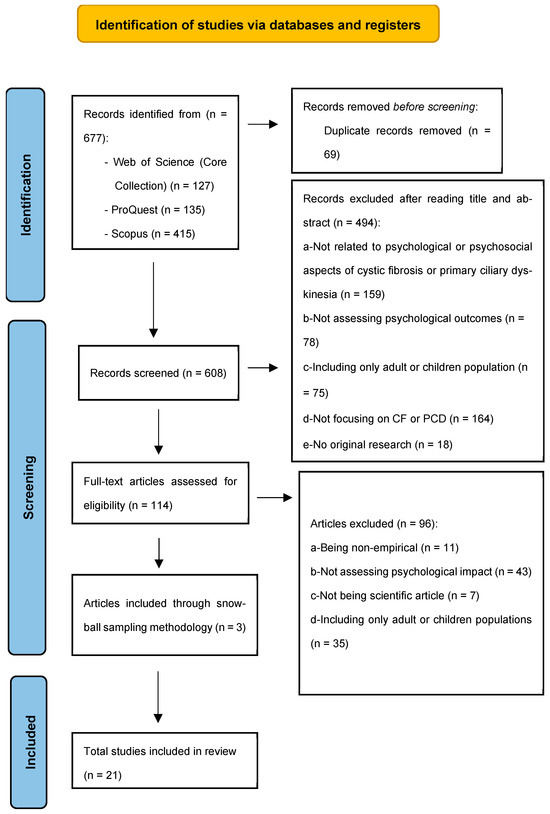
The database searches were conducted before the screening and selection process described in this review. The search was restricted to studies published between 2014 and 2024. This period was selected to focus the review on contemporary evidence concerning psychological and psychosocial outcomes in adolescents with CF and PCD. This refinement yielded 415 articles from Scopus, 135 from ProQuest, and 127 from Web of Science.
All articles were uploaded to Covidence [57], a tool that facilitates systematic reviews through online data selection and extraction. A total of 69 articles were automatically excluded due to their redundancy, i.e., they were duplicates. Two authors (JM and ER) then independently reviewed the titles and abstracts of the articles, excluding those that did not meet the predetermined inclusion criteria. Articles excluded by one author or presenting conflicts were reviewed and reevaluated individually according to the inclusion and exclusion criteria. Disagreements between the two authors were resolved through dialog, therefore eliminating the need for a third reviewer. Following the resolution of these conflicts, each author individually read the full text to determine article eligibility. Cohen’s Kappa (κ) was calculated to assess inter-rater agreement [58], with values between −1 and 0.40 considered unsatisfactory, 0.41 to 0.75 satisfactory and ≥ 0.76 excellent [59]. In our case, Cohen’s Kappa value for title and abstract screening was 0.81; and Cohen’s Kappa value for full-text review was 0.9.
Following full-text assessment, 18 studies met the eligibility criteria and were included from the database search. Subsequently, three additional eligible studies were identified through manual snowball searching [60]. Therefore, the final sample consisted of 21 studies included in the review.
The selection process for the articles included in this systematic review is outlined in Figure 1, which presents a flow diagram illustrating the data and information utilized to address the research question posed in this study, in accordance with the guidelines outlined in the PRISMA guide for systematic reviews [55].
Figure 1.
PRISMA flowchart.
2.1.2. Inclusion and Exclusion Criteria
The selection of articles was predicated on the following inclusion criteria: (a) the article under consideration had to relate psychological aspects to cystic fibrosis or primary ciliary dyskinesia; (b) the article had to focus on the psychological impact of these diseases on adolescents; (c) the study had to evaluate adolescents; (d) the article had to be an empirical scientific article published in a scientific journal; (e) the article had to be published in English or Spanish; (f) the article had to be published from 2014 to 2024; (g) the text had to be accessible through the databases of the University of Valencia.
With regard to the exclusion criteria, the following factors were considered: (a) studies that did not address psychological aspects; (b) studies that did not include the adolescent population; (c) studies that did not examine the psychological impact of cystic fibrosis and primary ciliary dyskinesia; (d) studies specifically focused on the psychological impact of the COVID-19 pandemic in adolescents with CF or PCD; (e) studies that focused on chronic diseases in general or only on non-respiratory rare diseases; (f) studies that focused on specific intervention programs; (g) studies that validated assessment instruments; (h) articles published in conference proceedings, books or book chapters, technical reports, doctoral theses, or non-scientific articles; (i) narrative or systematic reviews articles; (j) full-text articles that were not accessible.
The searches were conducted during the study period preceding the screening and selection process reported in this review.
2.2. Data Extraction
The final results of the present study are presented in a table that includes the following information for each article (Table S1 available in Supplementary Material): author(s), year of publication, title, country, participants, study design, variables analyzed and instruments used, results, and main conclusions.
2.3. Quality Assessment Methodology
The quality of the selected articles was determined by the two authors (JV and ER) who carried out their evaluation in a blinded and independent manner. These authors based their evaluation on the CASP Checklists developed in the Critical Appraisal Skills Programme according to the type of article to be analyzed. The checklists are as follows: the Cross-Sectional Studies Checklist for Cross-Sectional articles [61]; the Case–Control Studies Checklist [62] for case–control articles; and the Cohort Studies Checklist [63] for longitudinal studies. The objective of this instrument is to evaluate the validity of the results through a series of inquiries that address different aspects related to the methodology and robustness of data collection and analysis, as well as the validity of the results obtained in the different studies.
The CASP checklists were used as structured critical appraisal tools. Each item was assessed using the response categories “Yes”, “No”, or “Can’t tell”. No numerical overall or global quality score was calculated. Instead, the results of the appraisal were synthesized narratively to identify methodological strengths and limitations across the included studies. After completion of the checklists independently by both reviewers, the ratings were compared and discrepancies were discussed until consensus was reached.
The results of this analysis are summarized int Tables S2–S4 (all available in Supplementary Material), which present the final ratings assigned by both reviewers to each checklist question, relative to the various studies.
3. Results
3.1. Study Characteristics
The main characteristics of the included studies are summarized in Table 1. Detailed information regarding the extracted variables, instruments, results, and conclusions of each study is available in Supplementary Table S1.
The included studies varied in terms of country, sample characteristics, and methodological design. Most studies used cross-sectional designs and focused on anxiety, depressive symptoms, psychological well-being, and health-related quality of life.
3.1.1. Participants
The 21 studies included in this review evaluated adolescents with cystic fibrosis (CF) and/or primary ciliary dyskinesia (PCD), although several studies also included children, young adults, adults, caregivers, or comparison groups. Therefore, total study sample sizes were not considered equivalent to adolescent sample sizes. Where adolescent-specific information was reported, the adolescent subgroup, age range, and relevant findings were extracted and considered in the synthesis. Across the included studies, the age ranges and population definitions varied, reflecting differences in study design and eligibility criteria. These differences should be considered when interpreting the findings. Furthermore, nine studies included parents or primary caregivers as additional respondents [64,65,66,67,68,69,70,71,72], particularly in relation to emotional functioning and psychological symptomatology, while six studies included comparison groups of sick adults [68,69,71,72,73,74]. The nine remaining studies also included children [64,65,70,72,75,76,77,78,79], although the results corresponding to adolescents were analyzed separately. Information regarding participants’ ethnicity was inconsistently reported across studies. It is noteworthy that all adolescents included in the study had either cystic fibrosis or primary ciliary dyskinesia. Most included studies focused on CF, whereas substantially fewer studies included adolescents with PCD. PCD-specific evidence was therefore considerably more limited than CF-specific evidence [70,72,77].
3.1.2. Research Design and Sample Selection
Regarding the collection of samples, the included studies clearly described the methodology employed for the selection of participants. Given the predominance of cross-sectional studies that focused on specifical clinical populations, the sample was predominantly collected in specialized medical centers, hospitals or foundations [73]. A longitudinal methodology was employed in two of the studies [65,79]. However, only five studies with individuals with CF [75,76,78,80] or PCD [77] compared it with another sample of healthy adolescents (control group) that shared the same characteristics as the others. In the study conducted by Şenses-Dinç et al. [75], the control group consisted of adolescents with bronchiectasis without CF and healthy adolescents.
3.1.3. Representativeness
Regarding the representativeness of the samples included in the studies, adolescent-specific sample sizes varied considerably across studies, and several studies did not report adolescent subgroup sizes separately. Therefore, the representativeness of the adolescent samples could not be consistently assessed across all included studies. The issue of dropout rate was not addressed in any of the studies, leaving the relevant rate unknown.
3.1.4. Variables
The clinical and sociodemographic variables that were analyzed in the majority of the studies were generally consistent across studies (e.g., age, gender, sex, height, weight, FEV1%, time and number of hospitalizations due to disease exacerbations, etc.).
The geographical distribution of the studies showed that five studies (23.8%) were conducted in the United States [64,65,66,71,81], two (9.5%) in Turkey [75,76], two (9.5%) in Italy [68,73], three (14.3%) in Australia [78,82,83], two (9.5%) in the Netherlands [72,79], and two (9.5%) in Spain [70,77]. One study (4.8%) was conducted in each of the United Kingdom, Poland, Canada, and North Macedonia [31,67,80]. In addition, one multicenter study [69] included participants from nine countries: Belgium, Germany, Italy, Spain, Sweden, the Netherlands, Turkey, the United Kingdom, and the United States.
With respect to psychological variables, sixteen studies specifically evaluated anxious and depressive symptomatology. Of the remaining studies, two exclusively assessed depression [78,81], another two solely assessed anxiety [80,82] and one did not assess either anxiety or depression [64]. Furthermore, ten studies examined the quality of life of the clinical sample [31,64,66,70,72,75,76,78,79,83].
Two studies evaluated self-efficacy [67,83]. One of the articles [80] variables related to personality were evaluated in their study. Conversely, another study [31] examined variables associated with sleep quality, with a particular focus on insomnia. One study [82] considered variables related to bullying and victimization at school and high school. Notably, the study [64] was the sole investigation that evaluated the executive function variable within this population. Two papers [70,77], were the only ones to assess psychological well-being and threat of illness, respectively. Finally, metacognitions were the focus of a single article [83].
Table 1.
The characteristics of the studies included in the systematic review.
3.1.5. Specification of Inclusion and Exclusion Criteria in Studies
Ten studies specified inclusion and exclusion criteria for sample collection [31,64,66,69,70,74,77,78,79,81], while nine did not report such criteria to filter the sample [65,67,71,72,73,75,80,82,83]. In two studies, the inclusion and exclusion criteria were reported in half [68,76].
3.1.6. Main Results of the Psychological Variables
The main psychological outcomes identified across the included studies are summarized in Table 2.
Table 2.
Summary of main psychological findings in studies including adolescents with cystic fibrosis (CF) and primary ciliary dyskinesia (PCD).
Overall, the reviewed evidence indicates that adolescents with cystic fibrosis and primary ciliary dyskinesia may experience difficulties related to emotional symptoms, health-related quality of life, social functioning, and adaptation to chronic disease. Although most available evidence comes from adolescents with cystic fibrosis, studies involving primary ciliary dyskinesia indicate comparable psychosocial challenges, particularly regarding quality of life and emotional adjustment.
Regarding specific psychological domains, anxiety and depressive symptoms were the most frequently evaluated outcomes among adolescents with CF and PCD.
A synthesis of the reviewed studies reveals a paucity of consistent findings, with results from studies on this topic often being both heterogeneous and contradictory. Initially, six of the 21 included studies reported elevated levels of anxious and depressive symptomatology [68,69,74,76,78] in adolescents with CF and PCD [72] in comparison to their healthy peers.
Conversely, other studies have reported contrasting findings, five of the 21 included studies identified adequate levels [82] or low rates of anxiety and depression in adolescents with the disease [67,71,81] along with adequate overall quality of life [79]. In one study reported (4.80%), no significant differences were found in patients with CF or PCD and the control group of healthy adolescents in quality of life [78].
Concurrently, numerous articles underscore the elevated prevalence of comorbidity among patients with CF, three studies reported psychological disorders comprising a significant proportion [75,76,81]. Anxiety and depression exhibit a high degree of comorbidity [68,69], with elevated levels of one symptomatology frequently being associated with higher levels of the other. Consequently, elevated levels of anxiety and depression have been found to be associated with diminished quality of life in these patients [72,75,78]. Regarding suicidal ideation, one study reported the presence of suicidal ideation or suicidal intent among a subgroup of adolescents with CF who presented depressive symptoms [68]. However, these findings should be interpreted cautiously given the characteristics of the subgroup assessed. Furthermore, five studies reported a positive relationship between older age and higher levels of anxiety and depression, as well as greater deterioration in quality of life [69,73,74,79,83].
A single study [31] examined the relationship between sleep quality, particularly insomnia, and anxiety and depression variables, as well as quality of life in these adolescents. The study’s findings indicated that insomnia was associated with higher levels of anxious-depressive symptomatology and a lower quality of life among patients with CF.
In a longitudinal study [65], the authors observed that a strategy of blunting, defined as the act of distracting oneself from problems, predicted reduced anxiety and depression in young people with CF. Conversely, monitoring did not emerge as a predictor of this symptomatology, although it was associated with changes in it.
A separate study [82] revealed that a significant proportion of adolescents with CF had experienced bullying at some point during their school years. While this phenomenon is not exclusively experienced by individuals with the disease, in these reported cases, bullying was directly associated with CF, with teasing and insults being the most prevalent forms of bullying.
Finally, although the present work does not focus on the physical aspects of the disease itself, one study [66] found that physical pain in adolescents with CF was positively associated with greater symptoms of anxiety and depression, as well as lower health-related quality of life in these patients. Conversely, it was also observed that individuals reporting more anxious–depressive symptoms experienced more intense pain of longer duration. Higher depressive symptoms were associated with greater pain intensity, whereas anxiety was associated with changes in pain intensity.
3.1.7. Quality Assessment
Tables S2–S4 (available in Supplementary material) present the responses of the evaluations conducted by two independent reviewers (JV and ER). These reviewers reached a consensus for each checklist item, in accordance with the guidelines provided by the CASP Checklists [61,62,63].
The appraisal identified several methodological strengths across the included studies, but also recurring limitations related to study design, participant selection, confounding, statistical reporting, and generalizability.
Overall, the included studies adequately described their objectives; however, methodological differences and limitations were identified across study designs. The methods employed for participant recruitment and enrollment were generally described; however, the level of methodological detail varied between studies. Sample sizes were generally adequate, although differences in study design and statistical approaches may influence the interpretation of findings. The case–control studies generally described the selection of control groups; however, information regarding comparability between groups and potential sources of bias was not consistently reported. However, information regarding the methodological procedures used to define and classify study groups was not consistently reported, which may represent a potential source of bias.
The results of most studies were clearly presented. The majority of the included studies employed standardized and validated instruments in different languages to assess psychological outcomes. However, some studies did not provide sufficient information regarding the assessment tools used. A significant number of cross-sectional or case–control did not provide information regarding the data collection format, the location, or the rationale behind the selected methods. Furthermore, the possibility of the influence of the confounders on the results obtained, as well as the way in which they were controlled for in the statistical analyses, was also not specified. In the case of case–control studies, the majority failed to provide explicit information on the relevant characteristics necessary for controlling confounding variables, limiting the ability to determine whether groups were comparable regarding relevant characteristics beyond the exposure of interest. Additionally, the absence of clear measures of association in the latter study hinders the ability to ascertain the precise magnitude of the observed differences between the groups, other than to conclude that they were statistically significant. This limitation restricts the assessment of the clinical relevance of these results. Longitudinal studies generally provided additional information regarding temporal changes; however, differences in methodology still need to be considered when interpreting their findings.
The methodological rigor of several cross-sectional studies was limited by the absence of comprehensive statistical analyses and insufficient reporting of some statistical parameters.
While the checklist does not address this in specific terms, it is important to note that the absence of blinding procedures during participant selection and assessment should also be considered as a potential source of bias. In all cases, the researchers are aware of participants’ status of those assigned. The extent to which the participants have knowledge about the research question and the intervention is not specified in any case.
The results reported in the included studies provide valuable information regarding psychological outcomes in adolescents with CF and PCD; however, their generalizability should be interpreted with caution due to differences in study populations and methodologies.
Potential confounding was not consistently addressed across the included studies. Several cross-sectional and case–control studies did not clearly report whether relevant demographic or clinical variables were considered potential confounders or whether statistical adjustment was performed. In addition, some studies reported statistically significant findings without providing sufficient measures of association to evaluate their magnitude or clinical relevance. These limitations were considered when interpreting the findings and contribute to the uncertainty surrounding the observed relationships.
4. Discussion
The primary objective of this study was to address the following research question: What psychological difficulties and psychosocial challenges are associated with Cystic Fibrosis and Primary Ciliary Dyskinesia during adolescence? Given the low prevalence of these diseases on a global scale, they often receive minimal attention from public health initiatives, which hinders access to comprehensive care. However, individuals and families affected by these conditions face the daunting challenge of navigating this unprotected state with limited resources to cope [11]. These diseases may be associated with higher levels of adolescents’ vulnerability to psychological difficulties [43,52]. However, the adaptability and flexibility that characterize this stage of life can serve as a protective factor against the physical and psychological problems that may arise [49]. Consequently, there is a need to continue developing and implementing prevention programs targeting this demographic, in conjunction with the provision of psychological interventions for individuals exhibiting psychopathology.
The reviewed studies reported heterogeneous findings, making it difficult to establish clear conclusions regarding the research question. The majority of articles focused on the study of anxious and depressive symptomatology as psychological variables. A number of studies have also examined health-related quality of life, the presence of comorbid psychological disorders, adherence to treatment, knowledge about the disease, and perceived self-efficacy. For instance, some studies reported elevated levels of anxious symptomatology, depressed mood, and diminished quality of life among adolescents with CF or PCD. Conversely, other studies observed no significant disparities in anxiety, depression or quality of life between adolescents with these diseases and their healthy peers.
Technological advancements are facilitating the development of treatments that prolong life expectancy in these patients, thereby requiring patients to adapt to new life circumstances and long-term disease management challenges. This potential adjustment to their lives could be a contributing factor to the observed higher levels of anxious and depressive symptoms in older patients.
In addition to disease-related factors, adolescence constitutes a developmental period marked by heightened emotional sensitivity and is associated with higher levels of vulnerability to anxiety and depressive symptomatology. In the context of chronic respiratory diseases, prolonged stress exposure, illness-related uncertainty, treatment burden, and social limitations may interact with developmental challenges and contribute to difficulties in psychological adjustment. These psychosocial stressors may be relevant to the elevated emotional distress and reduced quality of life reported across several studies included in this review.
Despite these findings, the existing literature on the psychological impact of CF or PCD in adolescents remains limited. These rare respiratory diseases have been associated with reduced quality of life and physical and psychosocial difficulties [12,15,22,23,24]. In many cases, these psychological difficulties have been associated with poorer medical outcomes [31]. Despite the fact that these diseases reduce life expectancy, the improvements in treatment have introduced new challenges that necessitate adaptation [48,50,52].
In patients with CF, elevated levels of depression and anxiety have been observed [28,29,30], alongside lower health-related quality of life [84], difficulties with treatment adherence, and poorer medical outcomes [85]. Psychological interventions have demonstrated efficacy and effectiveness in addressing the consequences of this disease, reducing the emotional distress experienced in these cases and facilitating coping and adjustment to the disease [86]. However, while the majority of studies have focused on CF, some have examined the psychosocial consequences of PCD. For instance, one study [87] found that health-related quality of life was particularly impacted in patients with PCD, with some results exhibiting significant similarity to those observed in CF. Concurrently, other studies have identified a diminished quality of life among individuals with PCD [88].
Despite the existing body of literature on the subject, current studies highlight an existing gap in the knowledge of how these rare respiratory diseases affect this population of adolescents, making it difficult to develop specific interventions focused on improving these aspects. The present study’s focus on this developmental stage stems from the significant developmental plasticity characteristic of this stage, which offers important opportunities for intervention and adapting [89], in the face of the challenges intrinsic to it and those derived from the presence of a rare disease such as CF or PCD [9,43,54,90].
Several methodological limitations should be considered when interpreting these findings. Many studies relied on relatively small clinical samples recruited from specialized centers, which may limit the generalizability of the results. In addition, the predominance of cross-sectional designs and self-report measures may increase the risk of reporting bias and limit causal interpretation.
Furthermore, we must point out that age ranges could vary across studies because several investigations included adolescents together with younger or older participants.
A limitation of the present systematic review is the scope of the literature search, which was restricted to databases accessible through the University of Valencia, specifically ProQuest, Scopus and Web of Science Collection Core. Consequently, the potential inclusion of pertinent studies from alternative databases or those with restricted access may have been precluded, which could be associated with the comprehensiveness of the results obtained. The authors acknowledge that the absence of MEDLINE/PubMed, Embase, and PsycINFO may have limited the comprehensiveness of the search and is therefore considered a methodological limitation of the review. Conversely, the present study focused exclusively on CF and PCD, due to the paucity of studies on other rare diseases with similar clinical respiratory manifestations or treatment requirements. Nonetheless, their consideration could have enriched the analysis and allowed for a broader comparison of the psychological impact of these diseases on the adolescent population.
5. Conclusions
This systematic review indicates that adolescents with cystic fibrosis and primary ciliary dyskinesia may experience psychological difficulties, particularly anxiety, depressive symptoms, and reduced health-related quality of life. However, the available evidence is heterogeneous, and most studies used cross-sectional designs with variable sample characteristics and methodological approaches. Associations between psychological outcomes and clinical, treatment-related, or psychosocial factors were reported in several studies, but these findings should not be interpreted as evidence of causality. The evidence concerning PCD is considerably more limited than that concerning CF. Further well-designed longitudinal studies using clearly defined adolescent samples and standardized outcome measures are needed to clarify the magnitude and determinants of psychological and psychosocial difficulties in this population.
Supplementary Materials
The following supporting information can be downloaded at https://www.mdpi.com/article/10.3390/adolescents6050075/s1, Table S1: Summary of studies; Table S2: CASP Checklist for Cross-Sectional Studies; Table S3: CASP Checklist for Case–Control Studies; and Table S4: CASP Checklist for Cohort Studies.
Author Contributions
Conceptualization, E.R.-J., J.M.-Á., S.V.-M. and M.P.-M.; methodology, E.R.-J., J.M.-Á., S.V.-M. and M.P.-M.; formal analysis, E.R.-J., J.M.-Á., S.V.-M. and M.P.-M.; writing—original draft preparation, E.R.-J., J.M.-Á. and S.V.-M.; writing—review and editing, E.R.-J., S.V.-M. and M.P.-M.; supervision, S.V.-M. and M.P.-M.; project administration, M.P.-M.; funding acquisition, M.P.-M. All authors have read and agreed to the published version of the manuscript.
Funding
This research was funded by Grant (CIAICO/2023/014) funded by Dirección General de Ciencia e Investigación de la Generalitat Valenciana, subvenciones para grupos de investigación consolidados—AICO 2024 (CIAICO 2023).
Institutional Review Board Statement
Not applicable.
Informed Consent Statement
Not applicable.
Data Availability Statement
All data referenced in the paper are fully available within the paper itself.
Conflicts of Interest
The authors declare no conflicts of interest.
Abbreviations
The following abbreviations are used in this manuscript:
| CD | Chronic disease |
| CF | Cystic Fibrosis |
| PCD | Primary Ciliary Dyskinesia |
References
- Alenzi, E.O.; Fatima, W.; Amara, A.; Imran, M.; Shah, S.S.H.; Elbilgahy, A.A.; Fawzy, M.S.; Abu-Negm, L.M.; Mujtaba, M.A.; Jacinto-Caspillo, I.; et al. A systematic review of chronic diseases and their prevalence among the population of Northern Borders Province (NBP) in Saudi Arabia. J. Multidiscip. Healthc. 2023, 16, 1047–1056. [Google Scholar] [CrossRef] [Scilit] [PubMed]
- Harris, M.L.; Egan, N.; Forder, P.M.; Loxton, D. Increased chronic disease prevalence among the younger generation: Findings from a population-based data linkage study to inform chronic disease ascertainment among reproductive-aged Australian women. PLoS ONE 2021, 16, e0254668. [Google Scholar] [CrossRef] [Scilit] [PubMed]
- Eaton, C.K.; Beachy, S.; McLean, K.A.; Nicolais, C.J.; Bernstein, R.; Sáez-Clarke, E.; Quittner, A.L.; Riekert, K.A. Misunderstandings, misperceptions, and missed opportunities: Perspectives on adherence barriers from people with cystic fibrosis, caregivers, and CF team members. Patient Educ. Couns. 2020, 103, 1587–1594. [Google Scholar] [CrossRef] [Scilit] [PubMed]
- Kazmerski, T.M.; Stransky, O.M.; Lee, M.; Prangley, K.A.; Jain, R.; Georgiopoulos, A.M.; Shaw, D.S.; Taylor-Cousar, J. Assessing the health impacts of parenthood on people with cystic fibrosis: The HOPeCF prospective cohort protocol. BMJ Open Respir. Res. 2024, 11, e002383. [Google Scholar] [CrossRef] [Scilit] [PubMed]
- World Health Organization. Noncommunicable Diseases. 2025. Available online: https://www.who.int/news-room/fact-sheets/detail/noncommunicable-diseases (accessed on 3 October 2025).
- Hacker, K. The burden of chronic disease. Mayo Clin. Proc. Innov. Qual. Outcomes 2024, 8, 112–119. [Google Scholar] [CrossRef] [Scilit] [PubMed]
- Swathi, M.; Manjusha, S.; Vadakkiniath, I.J.; Gururaj, A. Prevalence and correlates of stress, anxiety, and depression in patients with chronic diseases: A cross-sectional study. Middle East Curr. Psychiatry 2023, 30, 42. [Google Scholar] [CrossRef] [Scilit]
- Runions, K.C.; Vithiatharan, R.; Hancock, K.; Lin, A.; Brennan-Jones, C.G.; Gray, C.; Payne, D. Chronic health conditions, mental health and the school: A narrative review. Health Educ. J. 2020, 79, 471–483. [Google Scholar] [CrossRef] [Scilit]
- Postigo-Zegarra, S.; Schoeps, K.; Pérez-Marín, M.; Lacomba-Trejo, L.; Valero-Moreno, S. Personal and family factors for emotional distress in adolescents with chronic disease. Front. Psychol. 2024, 14, 1304683. [Google Scholar] [CrossRef] [Scilit] [PubMed]
- Orphanet. About Rare Diseases. 2024. Available online: https://www.orpha.net/en/other-information/about-rare-diseases (accessed on 25 November 2024).
- EURORDIS. What Is a Rare Disease? Available online: https://www.eurordis.org/es/what-is-a-rare-disease/ (accessed on 25 November 2024).
- Harrigan, M.; Georgiopoulos, A.M.; Quittner, A.L.; Smith, B.; Douglas, T.A. Psychosocial and mental health in cystic fibrosis in the modern era of care: Time to evolve. BMJ Open Respir. Res. 2025, 12, e002606. [Google Scholar] [CrossRef] [Scilit] [PubMed]
- Akkus, P.Z.; Hizal, M.G.; Bahadur, E.I.; Ozmert, E.N.; Polat, S.E.; Ozdemir, G.; Karahan, S.; Yalcin, E.; Dogru Ersoz, D.; Kiper, N. Developmental and behavioral problems in preschool-aged primary ciliary dyskinesia patients. Eur. J. Pediatr. 2019, 178, 995–1003. [Google Scholar] [CrossRef] [Scilit] [PubMed]
- Ferraro, V.A.; Castaldo, R.J.; Tonazzo, V.; Zanconato, S.; Carraro, S. Lung function in children with primary ciliary dyskinesia. Children 2023, 10, 290. [Google Scholar] [CrossRef] [Scilit] [PubMed]
- Li, S.; Douglas, T.; Fitzgerald, D.A. Psychosocial needs and interventions for young children with cystic fibrosis and their families. Paediatr. Respir. Rev. 2023, 46, 30–36. [Google Scholar] [CrossRef] [Scilit] [PubMed]
- Kouis, P.; Goutaki, M.; Halbeisen, F.S.; Gioti, I.; Middleton, N.; Amirav, I.; Israeli PCD Consortium; Barbato, A.; Italian PCDConsortium; Behan, L.; et al. Prevalence and course of disease after lung resection in primary ciliary dyskinesia: A cohort and nested case-control study. Respir. Res. 2019, 20, 118. [Google Scholar] [CrossRef] [Scilit] [PubMed]
- Yu, E.; Sankari, A.; Sharma, S. Cystic Fibrosis. In StatPearls; StatPearls Publishing: Treasure Island, FL, USA, 2024. [Google Scholar]
- Ong, T.; Ramsey, B.W. Cystic fibrosis—A review. JAMA 2023, 329, 1859–1871. [Google Scholar] [CrossRef] [Scilit] [PubMed]
- Begum, N.; Byrnes, C.A.; Cheney, J.; Cooper, P.J.; Fantino, E.; Gailer, N.; Grimwood, K.; GutierrezCardenas, D.; Massie, J.; Robertson, C.F.; et al. Factors in childhood associated with lung function decline to adolescence in cystic fibrosis. J. Cyst. Fibros. 2022, 21, 977–983. [Google Scholar] [CrossRef] [Scilit] [PubMed]
- Santana, N.N.; de Miranda Chaves, C.R.; Goncalves, C.P.; Gomes Junior, S.C.S. Factors associated with quality of life in children and adolescents with cystic fibrosis. Rev. Paul. Pediatr. 2020, 38, e2018397. [Google Scholar] [CrossRef] [Scilit] [PubMed]
- Guo, J.; Garratt, A.; Hill, A. Worldwide rates of diagnosis and effective treatment for cystic fibrosis. J. Cyst. Fibros. 2022, 21, 456–462. [Google Scholar] [CrossRef] [Scilit] [PubMed]
- Papale, M.; Manti, S.; Presti, S.; Mollica, F.; Parisi, G.F.; Leonardi, S. Sleep respiratory disorders in children and adolescents with cystic fibrosis and primary ciliary dyskinesia. Children 2023, 10, 1707. [Google Scholar] [CrossRef] [Scilit] [PubMed]
- Feiten, T.; Silva Flores, J.; Rovedder, P.; Dalcin, P.T.; Ziegler, B. Physical activity and quality of life of children and adolescents with cystic fibrosis: A cross-sectional study. Fisioter. Mov. 2020, 33, e003370. [Google Scholar] [CrossRef] [Scilit]
- Scully, K.J.; Jay, L.T.; Freedman, S.; Sawicki, G.S.; Uluer, A.; Finkelstein, J.S.; Putman, M.S. The relationship between body composition, dietary intake, physical activity, and pulmonary status in adolescents and adults with cystic fibrosis. Nutrients 2022, 14, 310. [Google Scholar] [CrossRef] [Scilit] [PubMed]
- Puppo, H.; Torres-Castro, R.; Vasconcello-Castillo, L.; Acosta-Dighero, R.; Sepulveda-Caceres, N.; Quiroga-Maraboli, P.; Romero, J.E.; Vilaro, J. Physical activity in children and adolescents with cystic fibrosis: A systematic review and meta-analysis. Pediatr. Pulmonol. 2020, 55, 2863–2876. [Google Scholar] [CrossRef] [Scilit] [PubMed]
- Melton, K.; Liu, J.; Sadeghi, H.; George, M.; Smaldone, A. Predictors of transition outcomes in cystic fibrosis: Analysis of national patient registry and CF RISE (Responsibility, Independence, Self-care, Education) data. J. Pediatr. 2024, 265, 113812. [Google Scholar] [CrossRef] [Scilit] [PubMed]
- Singh, J.; Towns, S.; Jayasuriya, G.; Hunt, S.; Simonds, S.; Boyton, C.; Middleton, A.; Kench, A.; Pandit, C.; Keatley, L.R. Transition to adult care in cystic fibrosis: The challenges and the structure. Paediatr. Respir. Rev. 2022, 41, 23–29. [Google Scholar] [CrossRef] [Scilit] [PubMed]
- Liu, F.F.; Lew, A.; Andes, E.; McNamara, S.; Cassidy, J.; Whitmore, S.; Plunkett, R.; Ong, T. Implementation strategies for depression and anxiety screening in a pediatric cystic fibrosis center: A quality improvement project. Pediatr. Pulmonol. 2020, 55, 3328–3336. [Google Scholar] [CrossRef] [Scilit] [PubMed]
- Lord, L.; McKernon, D.; Grzeskowiak, L.; Kirsa, S.; Ilomaki, J. Depression and anxiety prevalence in people with cystic fibrosis and their caregivers: A systematic review and meta-analysis. Soc. Psychiatry Psychiatr. Epidemiol. 2023, 58, 287–298. [Google Scholar] [CrossRef] [Scilit] [PubMed]
- Mursaloglu, H.H.; Yilmaz Yegit, C.; Ergenekon Almala, P.; Gokdemir, Y.; Eralp, E.E.; Karakoc, F.; Nasr, S.Z.; Karadağ, B.T. Screening of depression and anxiety in adolescents with cystic fibrosis and caregivers in Turkey by PHQ-9 and GAD-7 questionnaires. Pediatr. Pulmonol. 2021, 56, 1514–1520. [Google Scholar] [CrossRef] [Scilit] [PubMed]
- Tomaszek, L.; Debska, G.; Cepuch, G.; Kulpa, M.; Pawlik, L.; Broniatowska, E. Evaluation of quality of life predictors in adolescents and young adults with cystic fibrosis. Heart Lung 2019, 48, 159–165. [Google Scholar] [CrossRef] [Scilit] [PubMed]
- Behan, L.; Leigh, M.W.; Dell, S.D.; Quittner, A.L.; Hogg, C.; Lucas, J.S. Validation of pediatric health-related quality of life instruments for primary ciliary dyskinesia (QOL-PCD). Pediatr. Pulmonol. 2019, 54, 2011–2020. [Google Scholar] [CrossRef] [Scilit] [PubMed]
- Halbeisen, F.S.; Pedersen, E.S.L.; Goutaki, M.; Spycher, B.D.; Amirav, I.; Boon, M.; Cohen-Cymberknoh, M.; Crowley, S.; Emiralioglu, N.; Haarman, E.G.; et al. Lung function from school age to adulthood in primary ciliary dyskinesia. Eur. Respir. J. 2022, 60, 2101918. [Google Scholar] [CrossRef] [Scilit] [PubMed]
- O’Connor, M.G.; Mosquera, R.; Metjian, H.; Marmor, M.; Olivier, K.N.; Shapiro, A.J. Primary ciliary dyskinesia. Chest Pulm. 2023, 1, 100004. [Google Scholar] [CrossRef] [Scilit] [PubMed]
- Lucas, J.S.; Davis, S.D.; Omran, H.; Shoemark, A. Primary ciliary dyskinesia in the genomics age. Lancet Respir. Med. 2020, 8, 202–216. [Google Scholar] [CrossRef] [Scilit] [PubMed]
- Horani, A.; Ferkol, T.W. Understanding primary ciliary dyskinesia and other ciliopathies. J. Pediatr. 2021, 230, 15–22.e1. [Google Scholar] [CrossRef] [Scilit] [PubMed]
- Wei, S.; Xie, H.; Cheng, Y. Progress in diagnosis of primary ciliary dyskinesia. J. Paediatr. Child Health 2022, 58, 1736–1740. [Google Scholar] [CrossRef] [Scilit] [PubMed]
- Dunsky, K.; Menezes, M.; Ferkol, T.W. Advances in the diagnosis and treatment of primary ciliary dyskinesia: A review. JAMA Otolaryngol. Head Neck Surg. 2021, 147, 753–759. [Google Scholar] [CrossRef] [Scilit] [PubMed]
- Paff, T.; Omran, H.; Nielsen, K.G.; Haarman, E.G. Current and future treatments in primary ciliary dyskinesia. Int. J. Mol. Sci. 2021, 22, 9834. [Google Scholar] [CrossRef] [Scilit] [PubMed]
- De Jesus-Rojas, W.; Reyes-De Jesus, D.; Mosquera, R.A. Primary ciliary dyskinesia diagnostic challenges: Understanding the clinical phenotype of the Puerto Rican RSPH4A founder mutation. Diagnostics 2021, 11, 281. [Google Scholar] [CrossRef] [Scilit] [PubMed]
- Silvers, J.A. Adolescence as a pivotal period for emotion regulation development. Curr. Opin. Psychol. 2022, 44, 258–263. [Google Scholar] [CrossRef] [Scilit] [PubMed]
- Finlay-Jones, A.L.; Parkinson, A.; Sirois, F.; Perry, Y.; Boyes, M.; Rees, C.S. Web-based self-compassion training to improve the well-being of youth with chronic medical conditions: Randomized controlled trial. J. Med. Internet Res. 2023, 25, e44016. [Google Scholar] [CrossRef] [Scilit] [PubMed]
- Nabors, L. Chronic illness and anxiety in children. In Anxiety Management in Children with Mental and Physical Health Problems; Springer International Publishing: Cham, Switzerland, 2020; pp. 85–99. [Google Scholar]
- Consortium, C.; Warschburger, P.; Petersen, A.C.; von Rezori, R.E.; Buchallik, F.; Baumeister, H.; Holl, R.W.; Minden, K.; Müller-Stierlin, A.S.; Reinauer, C.; et al. A prospective investigation of developmental trajectories of psychosocial adjustment in adolescents facing a chronic condition—Study protocol of an observational, multi-center study. BMC Pediatr. 2021, 21, 394. [Google Scholar] [CrossRef] [Scilit] [PubMed]
- Chen, M.J.; Ren, L.Y.; Jiang, H.; Wang, Y.X.; Zhang, L.P.; Dong, C.Q. Discrepancies in perceived family resilience between adolescents with chronic illness and parents: Using response surface analysis to examine the relationship with adolescents’ psychological adjustment. BMC Psychiatry 2024, 24, 475. [Google Scholar] [CrossRef] [Scilit] [PubMed]
- Bierlaagh, M.C.; Muilwijk, D.; Beekman, J.M.; van der Ent, C.K. A new era for people with cystic fibrosis. Eur. J. Pediatr. 2021, 180, 2731–2739. [Google Scholar] [CrossRef] [Scilit] [PubMed]
- McBennett, K.A.; Davis, P.B.; Konstan, M.W. Increasing life expectancy in cystic fibrosis: Advances and challenges. Pediatr. Pulmonol. 2022, 57, S5–S12. [Google Scholar] [CrossRef] [Scilit] [PubMed]
- Dobra, R.; Carroll, S.; Davies, J.; Dowdall, F.; Duff, A.; Elderton, A.; Georgiopoulos, A.M.; Massey-Chase, R.; McNally, P.; Puckey, M.; et al. Exploring the complexity of cystic fibrosis (CF) and psychosocial wellbeing in the 2020s: Current and future challenges. Paediatr. Respir. Rev. 2024, 51, 15–23. [Google Scholar] [CrossRef] [Scilit] [PubMed]
- Finlay-Jones, A.; Boyes, M.; Perry, Y.; Sirois, F.; Lee, R.H.; Rees, C. Online self-compassion training to improve the wellbeing of youth with chronic medical conditions: Protocol for a randomised control trial. BMC Public Health 2020, 20, 1045. [Google Scholar] [CrossRef] [Scilit] [PubMed]
- Cronly, J.A.; Duff, A.J.; Riekert, K.A.; Fitzgerald, A.P.; Perry, I.J.; Lehane, E.A.; Horgan, A.; Howe, B.A.; Ni Chroinin, M.; Savage, E. Health-related quality of life in adolescents and adults with cystic fibrosis: Physical and mental health predictors. Respir. Care 2019, 64, 406–415. [Google Scholar] [CrossRef] [Scilit] [PubMed]
- Goldsweig, B.; Kaminski, B.; Sidhaye, A.; Blackman, S.M.; Kelly, A. Puberty in cystic fibrosis. J. Cyst. Fibros. 2019, 18, S88–S94. [Google Scholar] [CrossRef] [Scilit] [PubMed]
- Russo, K. Assessment and treatment of adolescents with chronic medical conditions. J. Health Serv. Psychol. 2022, 48, 69–78. [Google Scholar] [CrossRef] [Scilit] [PubMed]
- Kim, E.; Lee, Y.M.; Riesche, L. Factors affecting depression in high school students with chronic illness: A nationwide cross-sectional study in South Korea. Arch. Psychiatr. Nurs. 2020, 34, 164–168. [Google Scholar] [CrossRef] [Scilit] [PubMed]
- Cobham, V.E.; Hickling, A.; Kimball, H.; Thomas, H.J.; Scott, J.G.; Middeldorp, C.M. Systematic review: Anxiety in children and adolescents with chronic medical conditions. J. Am. Acad. Child Adolesc. Psychiatry 2020, 59, 595–618. [Google Scholar] [CrossRef] [Scilit] [PubMed]
- Page, M.J.; McKenzie, J.E.; Bossuyt, P.M.; Boutron, I.; Hoffmann, T.C.; Mulrow, C.D.; Shamseer, L.; Tetzlaff, J.M.; Akl, E.A.; Brennan, S.E.; et al. The PRISMA 2020 statement: An updated guideline for reporting systematic reviews. J. Clin. Epidemiol. 2021, 134, 178–189. [Google Scholar] [CrossRef] [Scilit] [PubMed]
- Frandsen, T.F.; Nielsen, M.F.B.; Lindhardt, C.L.; Eriksen, M.B. Using the full PICO model as a search tool for systematic reviews resulted in lower recall for some PICO elements. J. Clin. Epidemiol. 2020, 127, 69–75. [Google Scholar] [CrossRef] [Scilit] [PubMed]
- Kellermeyer, L.; Harnke, B.; Knight, S. Covidence and Rayyan. J. Med. Libr. Assoc. 2018, 106, 580–583. [Google Scholar] [CrossRef] [Scilit]
- Orwin, R.G.; Vevea, J.L. Evaluating coding decisions. In The Handbook of Research Synthesis and Meta-Analysis, 2nd ed.; Cooper, H., Hedges, L.V., Valentine, J.C., Eds.; Russell Sage Foundation: New York, NY, USA, 2009; pp. 177–203. [Google Scholar]
- Hernández-Nieto, R. Contributions to Statistical Analysis: The Coefficients of Proportional Variance, Content Validity and Kappa; Universidad de Los Andes: Mérida, Venezuela, 2002. [Google Scholar]
- Naderifar, M.; Goli, H.; Ghaljaie, F. Snowball sampling: A purposeful method of sampling in qualitative research. Strides Dev. Med. Educ. 2017, 14, e67670. [Google Scholar] [CrossRef] [Scilit]
- Critical Appraisal Skills Programme (CASP). CASP Checklist: Cross-Sectional Studies; CASP: Oxford, UK, 2023; Available online: https://casp-uk.net/casp-tools-checklists/cross-sectional-studies-checklist/ (accessed on 30 August 2026).
- Critical Appraisal Skills Programme (CASP). CASP Checklist: Case-Control Studies; CASP: Oxford, UK, 2023; Available online: https://casp-uk.net/casp-tools-checklists/case-control-study-checklist/ (accessed on 30 August 2026).
- Critical Appraisal Skills Programme (CASP). CASP Checklist: Cohort Studies; CASP: Oxford, UK, 2023; Available online: https://casp-uk.net/casp-tools-checklists/cohort-study-checklist/ (accessed on 30 August 2026).
- Borschuk, A.P.; Filigno, S.S.; Opipari-Arrigan, L.; Peugh, J.; Stark, L.J. Psychological predictors of nutritional adherence in adolescents with cystic fibrosis. Clin. Nutr. ESPEN 2019, 33, 143–147. [Google Scholar] [CrossRef] [Scilit] [PubMed]
- Bennett, D.S.; Kane, M.; Aramburo, M.; Varlotta, L. Monitoring and blunting as predictors of internalizing symptoms among youths with cystic fibrosis. Child. Health Care 2015, 44, 155–168. [Google Scholar] [CrossRef] [Scilit]
- Blackwell, L.S.; Quittner, A.L. Daily pain in adolescents with CF: Effects on adherence, psychological symptoms, and health-related quality of life. Pediatr. Pulmonol. 2015, 50, 244–251. [Google Scholar] [CrossRef] [Scilit] [PubMed]
- Faint, N.R.; Staton, J.M.; Stick, S.M.; Foster, J.M.; Schultz, A. Investigating self-efficacy, disease knowledge and adherence to treatment in adolescents with cystic fibrosis. J. Paediatr. Child Health 2017, 53, 488–493. [Google Scholar] [CrossRef] [Scilit] [PubMed]
- Graziano, S.; Spanò, B.; Majo, F.; Righelli, D.; Vincenzina, L.; Quittner, A.; Tabarini, P. Rates of depression and anxiety in Italian patients with cystic fibrosis and parent caregivers: Implementation of the Mental Health Guidelines. Respir. Med. 2020, 172, 106147. [Google Scholar] [CrossRef] [Scilit] [PubMed]
- Quittner, A.L.; Goldbeck, L.; Abbott, J.; Duff, A.; Lambrecht, P.; Solé, A.; Tibosch, M.M.; Bergsten Brucefors, A.; Yüksel, H.; Catastini, P.; et al. Prevalence of depression and anxiety in patients with cystic fibrosis and parent caregivers: Results of the International Depression Epidemiological Study across nine countries. Thorax 2014, 69, 1090–1097. [Google Scholar] [CrossRef] [Scilit] [PubMed]
- Valero-Moreno, S.; Montoya-Castilla, I.; Pérez-Marín, M. A comparative study among adolescents with cystic fibrosis and primary ciliary dyskinesia and their caregivers: Psychological aspects. Ansiedad Estrés 2024, 30, 8–16. [Google Scholar] [CrossRef] [Scilit]
- Vassilopoulos, A.; Swartz, M.; Paranjape, S.; Slifer, K.J. Adolescent and caregiver mental health, pulmonary function, and healthcare utilization in pediatric cystic fibrosis. Child. Health Care 2022, 51, 199–212. [Google Scholar] [CrossRef] [Scilit]
- Verkleij, M.; Appelman, I.; Altenburg, J.; Twisk, J.; Quittner, A.L.; Haarman, E. Anxiety and depression in Dutch patients with primary ciliary dyskinesia and their caregivers: Associations with health-related quality of life. ERJ Open Res. 2021, 7, 00274–02021. [Google Scholar] [CrossRef] [Scilit] [PubMed]
- Catastini, P.; Di Marco, S.; Furriolo, M.; Genovese, C.; Grande, A.; Iacinti, E.; Iusco, D.R.; Nobili, R.M.; Pescini, R.; Ragni, R.; et al. The prevalence of anxiety and depression in Italian patients with cystic fibrosis and their caregivers. Pediatr. Pulmonol. 2016, 51, 1311–1319. [Google Scholar] [CrossRef] [Scilit] [PubMed]
- Duff, A.J.A.; Abbott, J.; Cowperthwaite, C.; Sumner, C.; Hurley, M.A.; Quittner, A. Depression and anxiety in adolescents and adults with cystic fibrosis in the UK: A cross-sectional study. J. Cyst. Fibros. 2014, 13, 745–753. [Google Scholar] [CrossRef] [Scilit] [PubMed]
- Senses-Dinç, G.; Özçelik, U.; Çak, T.; Dogru-Ersöz, D.; Çöp, E.; Yalçin, E.; Çengel-Kültür, E.; Pekcan, S.; Kiper, N.; Ünal, F. Psychiatric morbidity and quality of life in children and adolescents with cystic fibrosis. Turk. J. Pediatr. 2018, 60, 32–40. [Google Scholar] [CrossRef] [Scilit] [PubMed]
- Gundogdu, U.; Fis, N.P.; Eralp, E.E.; Karadag, B.T. Major depression and psychiatric comorbidity in Turkish children and adolescents with cystic fibrosis. Pediatr. Pulmonol. 2019, 54, 1927–1935. [Google Scholar] [CrossRef] [Scilit] [PubMed]
- Valero-Moreno, S.; Castillo-Corullón, S.; Montoya-Castilla, I.; Pérez-Marín, M. Primary ciliary dyskinesia and psychological well-being in adolescence. PLoS ONE 2020, 15, e0227888. [Google Scholar] [CrossRef] [Scilit] [PubMed]
- Vandeleur, M.; Walter, L.M.; Armstrong, D.S.; Robinson, P.; Nixon, G.M.; Horne, R.S.C. Quality of life and mood in children with cystic fibrosis: Associations with sleep quality. J. Cyst. Fibros. 2018, 17, 811–820. [Google Scholar] [CrossRef] [Scilit] [PubMed]
- van Horck, M.; Winkens, B.; Wesseling, G.; de Winter-de Groot, K.; de Vreede, I.; Jöbsis, Q.; Dompeling, E. Factors associated with changes in health-related quality of life in children with cystic fibrosis during 1-year follow-up. Eur. J. Pediatr. 2017, 176, 1047–1054. [Google Scholar] [CrossRef] [Scilit] [PubMed]
- Pop-Jordanova, N.; Demerdzieva, A. Emotional health in children and adolescents with cystic fibrosis. Pril. (Makedon Akad. Nauk Umet. Odd. Med. Nauki) 2016, 37, 65–74. [Google Scholar] [CrossRef] [Scilit] [PubMed]
- Ploessl, C.; Pettit, R.S.; Donaldson, J. Prevalence of depression and antidepressant therapy use in a pediatric cystic fibrosis population. Ann. Pharmacother. 2014, 48, 488–493. [Google Scholar] [CrossRef] [Scilit] [PubMed]
- Branch-Smith, C.; Shaw, T.; Lin, A.; Runions, K.; Payne, D.; Nguyen, R.; Hugo, H.; Balding, L.; Cross, D. Bullying and mental health amongst Australian children and young people with cystic fibrosis. Am. J. Orthopsychiatry 2018, 88, 402–412. [Google Scholar] [CrossRef] [Scilit] [PubMed]
- Russell, J.K.; Strodl, E.; Kavanagh, D.J. Correlates of distress in young people with cystic fibrosis: The role of self-efficacy and metacognitive beliefs. Psychol. Health 2021, 36, 1497–1513. [Google Scholar] [CrossRef] [Scilit] [PubMed]
- Quittner, A.L.; Abbott, J.; Hussain, S.; Ong, T.; Uluer, A.; Hempstead, S.; Lomas, P.; Smith, B. Integration of mental health screening and treatment into cystic fibrosis clinics: Evaluation of initial implementation in 84 programs across the United States. Pediatr. Pulmonol. 2020, 55, 2995–3004. [Google Scholar] [CrossRef] [Scilit] [PubMed]
- Abbott, J.; Havermans, T.; Järvholm, S.; Landau, E.; Prins, Y.; Smrekar, U.; Staab, D.; Verity, L.; Verkleij, M.; ECFS Mental Health Working Group. Mental health screening in cystic fibrosis centres across Europe. J. Cyst. Fibros. 2019, 18, 299–303. [Google Scholar] [CrossRef] [Scilit] [PubMed]
- Campagna, G.; Tagliati, C.; Giuseppetti, G.M.; Ripani, P. Treatment of psychological symptoms in patients with cystic fibrosis. J. Clin. Med. 2024, 13, 5806. [Google Scholar] [CrossRef] [Scilit] [PubMed]
- Gut, G.; Bar-Yoseph, R.; Hanna, M.; Brandl, N.; Alisha, I.; Rizik, S.; Pollak, M.; Hakim, F.; Amirav, I.; Bentur, L.; et al. Pulmonary functions, nasal symptoms, and quality of life in patients with primary ciliary dyskinesia (PCD). Pediatr. Pulmonol. 2024, 59, 688–694. [Google Scholar] [CrossRef] [Scilit] [PubMed]
- Firat, M.; Bosnak-Guclu, M.; Sismanlar-Eyuboglu, T.; Tana-Aslan, A. Respiratory muscle strength, exercise capacity and physical activity in patients with primary ciliary dyskinesia: A cross-sectional study. Respir. Med. 2022, 191, 106719. [Google Scholar] [CrossRef] [Scilit] [PubMed]
- Best, O.; Ban, S. Adolescence: Physical changes and neurological development. Br. J. Nurs. 2021, 30, 272–275. [Google Scholar] [CrossRef] [Scilit] [PubMed]
- Alderman, E.M.; Breuner, C.C.; Grubb, L.K.; Powers, M.E.; Upadhya, K.K.; Wallace, S.B.; Committee on Adolescence. Unique needs of the adolescent. Pediatrics 2019, 144, e20193150. [Google Scholar] [CrossRef] [Scilit] [PubMed]

Disclaimer/Publisher’s Note: The statements, opinions and data contained in all publications are solely those of the individual author(s) and contributor(s) and not of MDPI and/or the editor(s). MDPI and/or the editor(s) disclaim responsibility for any injury to people or property resulting from any ideas, methods, instructions or products referred to in the content. |
© 2026 by the authors. Licensee MDPI, Basel, Switzerland. This article is an open access article distributed under the terms and conditions of the Creative Commons Attribution (CC BY) license.