


Abstract
A new species of the tiny tree stylommatophoran snails in the genus Sitala H. Adams, 1865, is described based on specimens recently discovered in dry evergreen and dry dipterocarp forests on limestone hills and in agricultural plantations near limestone hills in Loei Province, northeastern Thailand. The new species is characterized by a high, pyramid-shaped, thin, and translucent yellowish-brown shell with a sharp peripheral keel. Although its external shell morphology resembles that of Sitala liricincta (Stoliczka, 1871), the new species can be distinguished by its greater number of whorls (9¼). Comparative anatomical analysis further revealed significant interspecific differences in genital organs, particularly in the length and shape of the vagina, and in the proportions of the penis, epiphallus, and penial caecum. This discovery is the first verified record of the genus Sitala in Thailand.
1. Introduction
The genus Sitala H. Adams, 1865 was proposed by Wallace [1] and is currently classified in the family Helicarionidae Bourguignat, 1877, subfamily Durgellinae Godwin-Austen, 1888, Tribe Durgellini Godwin-Austen, 1888 [2]. Members of this genus are characterized by a short to high conoidal to subtrochiform shell, thin, consisting of many, usually spirally ribbed or striated whorls, base convex, narrowly or indistinctly umbilicated; peristome thin, simple [3,4,5,6,7]. Blanford & Godwin-Austen [4] used shell morphology, radular characters, and the genital system as key diagnostic features identifying members of Sitala.
The type species, Helix infula W. H. Benson, 1848, was originally described from the Rajmahal Hills, India, and has also been recorded from Arakan, Bassein, and Moulmein in Myanmar [4,8,9]. The genus is widely distributed across approximately 18 countries in South and Southeast Asia, China, Madagascar, Australia, and Africa (Table 1 and Figure 1) [4,5,6,7,8,10,11,12,13]. Sitala currently comprises 102 nominal species [2]. Four species have previously been reported from Thailand (Table 2); Sitala insularis von Möllendorff, 1894 from Samui Island and Kanchanaburi Province [7,11]; Sitala trochurus (von Möllendorff, 1883) from Chiang Dao at an elevation of 1800 m [14,15,16]; Sitala liricincta (Stoliczka, 1871) from Phetchaburi Province [7]; and Sitala attegia (W.H. Benson, 1859) [7]. However, information on the anatomy of the reproductive organs is unavailable for most of these species. Detailed descriptions and illustrations of the reproductive organs are available for only the type species, Sitala infula (W.H. Benson, 1848) and Sitala attegia (W.H. Benson, 1859) [3,4,17].
Tiny, leaf-dwelling tree snails with conoidal shells were collected from dry evergreen and dry dipterocarp forests [18,19], as well as from agricultural plantations [20] in the limestone hill area, Loei Province, northeastern Thailand. According to shell and radula morphology, these specimens closely resemble Sitala infula (W.H. Benson, 1848) and S. liricincta (Stoliczka, 1871) (see Figures 5 and 10 of plate XVIII in Stoliczka [3]; Figure 78 in Blanford & Godwin-Austen [4]) and were therefore previously identified as “Sitala sp.” [19,20]. However, examination of the reproductive anatomy revealed distinct morphological differences from previously described congeners, supporting recognition of these specimens as a new species of the genus Sitala. Therefore, the present study formally describes and illustrates this new species based on shell morphology, radular characters, and reproductive anatomy and provides additional information on the occurrence and diversity of Sitala in Thailand.
Figure 1.
Geographic distribution of the genus Sitala based on locality records compiled from published literature and taxonomic sources. (a) Overall distribution of Sitala across its known geographic range; (b) enlarged view of South and Southeast Asia. Red circles represent previously reported locality records, while the blue triangle indicates the S. chorchati sp. nov. record from Mueang Loei, Loei Province, northeastern Thailand.
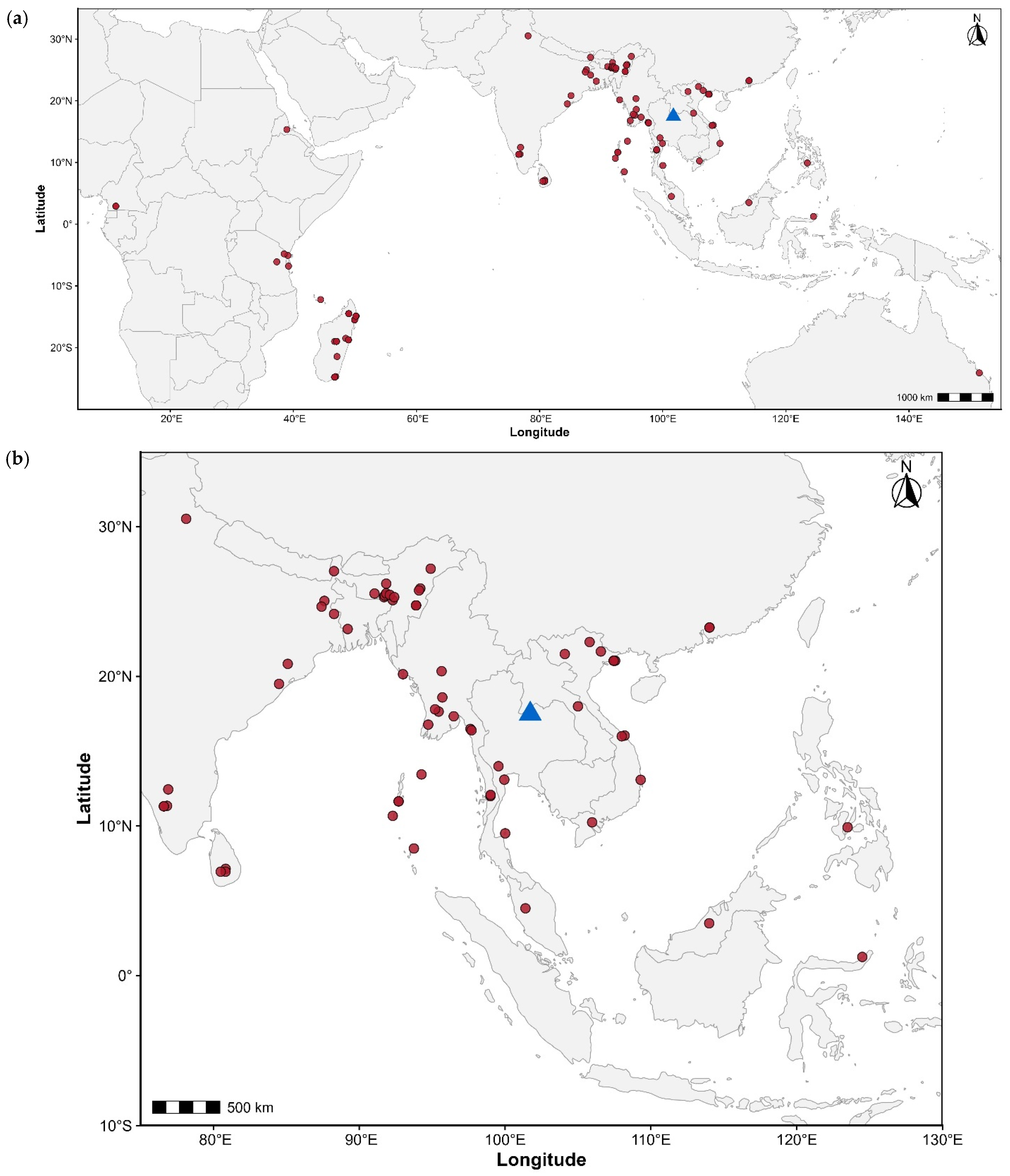
Table 1.
Nominal species of Sitala and their reported distribution.
Table 2.
List of nominal species of Sitala reported from Thailand (Siam).
2. Materials and Methods
Land snail specimens were collected during November 2021 to August 2022 from dry evergreen and dry dipterocarp forests on limestone hill and agricultural plantations adjacent to limestone hills in Loei Province, northeastern Thailand (Figure 1). The number of whorls were counted from complete adult shells (n = 11). Shell height (SH), shell width (SW), aperture height (AH), and aperture width (AW) were measured by using digital vernier calipers (Electronic Digital Calliper S.H.) (n = 11). Shells and radulae (n = 3) were examined and photographed by a scanning electron microscope (JEOL JSM-6610LV, JEOL Ltd., Tokyo, Japan) at the Medical Science Research Equipment Center, Faculty of Medicine, Chiang Mai University, Chiang Mai Province, Thailand. Adult specimens (n = 3) were dissected under a stereomicroscope to examine the reproductive system. Radulae were extracted from the buccal mass and radula sac by soaking in 5% NaOH solution prior to examination. Taxonomic identification and comparison were based on von Möllendorff [11], Gude [13], Blanford & Godwin-Austen [4], and Fischer-Piette et al. [5].Shell, genital, and radular characters were examined following Blanford & Godwin-Austen [4].
The type materials were deposited in the following institutions: NHLRU, Natural History Museum of Loei Rajabhat University (Loei, Thailand); and NHMSU, Natural History Museum, Mahasarakham University (Maha Sarakham, Thailand).
3. Results
Taxonomy
Superfamily Helicarionoidea Bourguignat, 1877
Family Helicarionidae Bourguignat, 1877
Subfamily Durgellinae, Godwin-Austen, 1888
Tribe Durgellini Godwin-Austen, 1888
Genus Sitala H. Adams, 1865
Type species.-Helix infula Benson, 1848
Diagnosis of genus. -Shell turbinoid, thin and translucent, conic or pyramid in shape, outlines, spire conical, consisting of 5.5–7 convex striated whorls. Protoconch and subsequent whorls covered with spiral sculpture, base convex. Umbilicus minute, partially covered. Aperture lack teeth. Peristome thin, simple and not expanded [4,5,17]. Penis, vagina, and spermatheca (gametolytic sac) connect to atrium; Penis long, subcylindrical. Epiphallus short, with a simple epiphallic caecum produce into penial retractor. Vas deferens entering epiphallus laterally. Vagina very short (or absent), depending on the position at which the spermatheca enter the genital tract near the atrium [17]. Free oviduct relatively long. Spermathecal stalk enlarges basally; reservoir elongated and embedded in spermoviduct. Amatorial organ (Sarcobellum) present or absent.
Sitala chorchati Tanmuangpak & S. Tumpeesuwan, sp. nov.
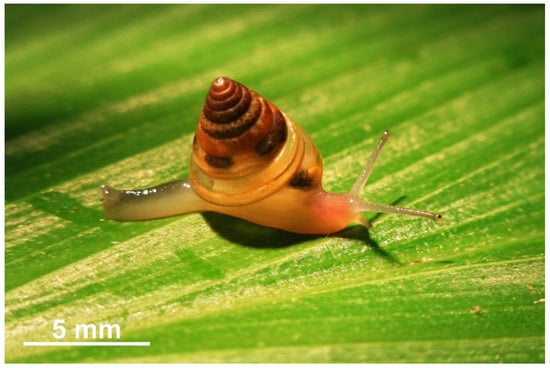
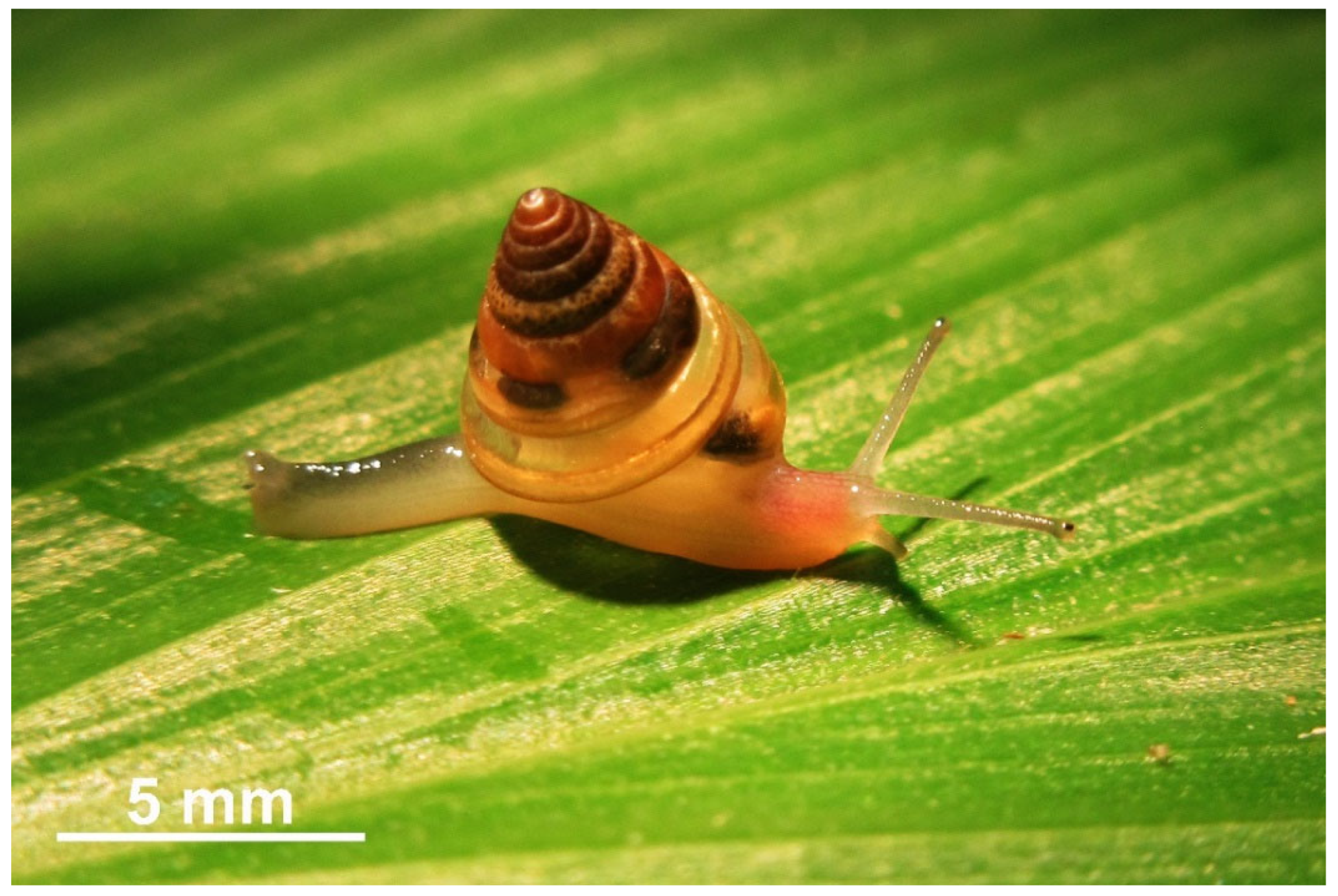
Figure 2.
Live snail, S. chorchati sp. nov., paratype NHLRU080. Photograph: Kitti Tanmuangpak.
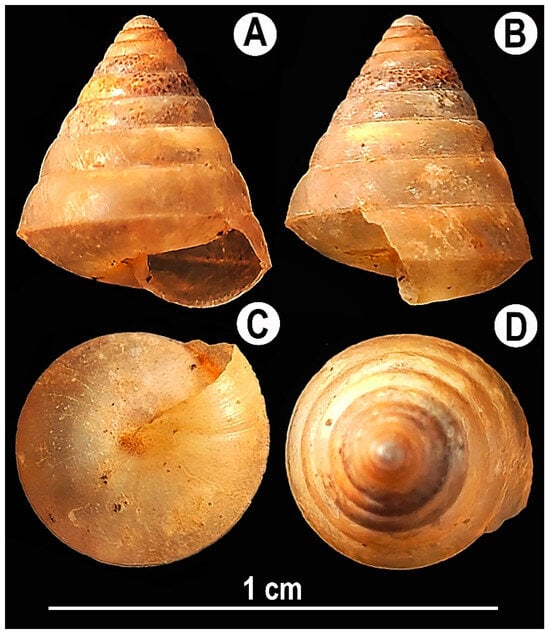
Figure 3.
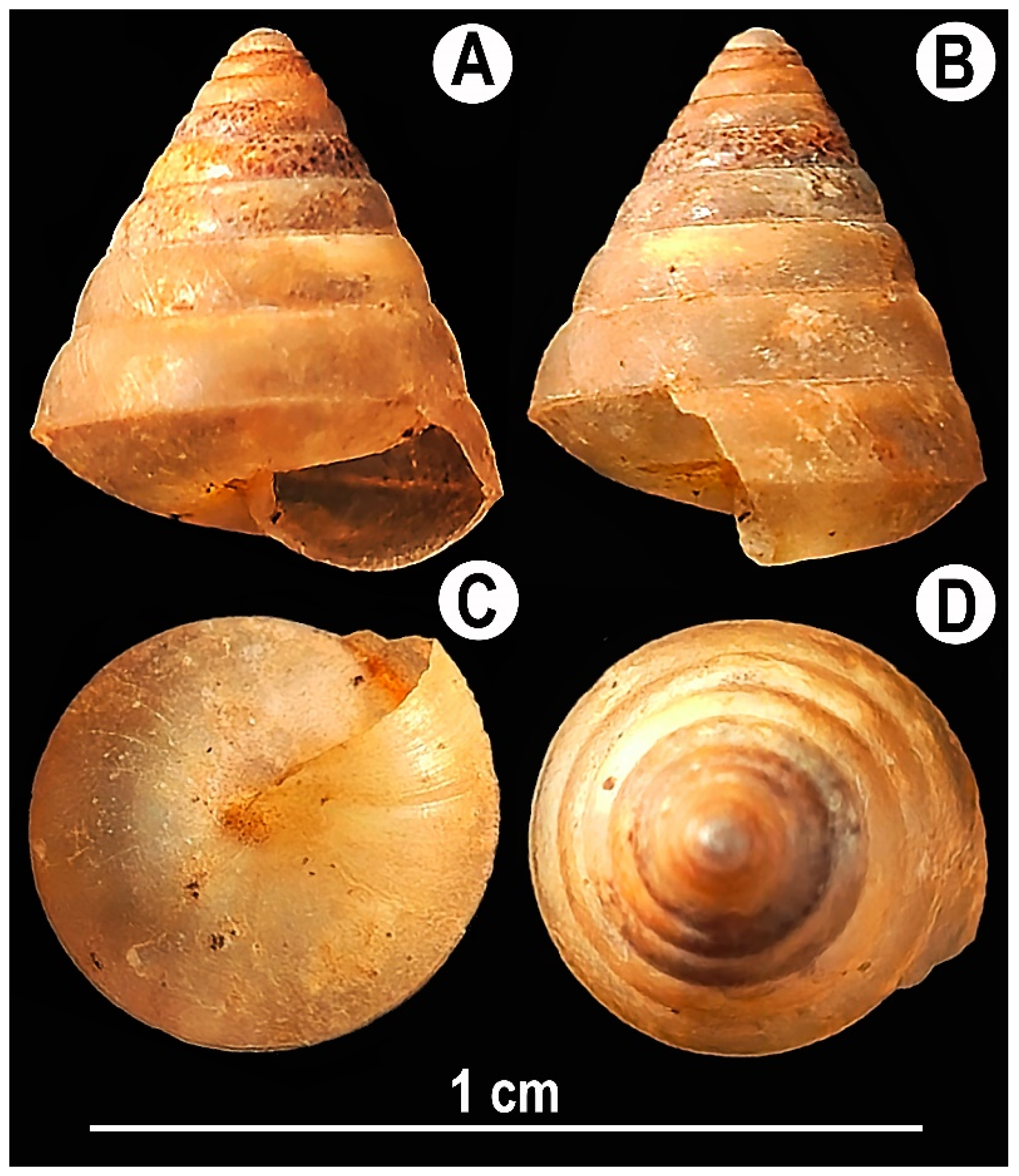
Shell morphology of S. chorchati sp. nov., holotype NHLRU079. (A), Apertural view; (B), Lateral view; (C), Ventral view; (D), Dorsal view. Photograph: Kitti Tanmuangpak.
Figure 4.
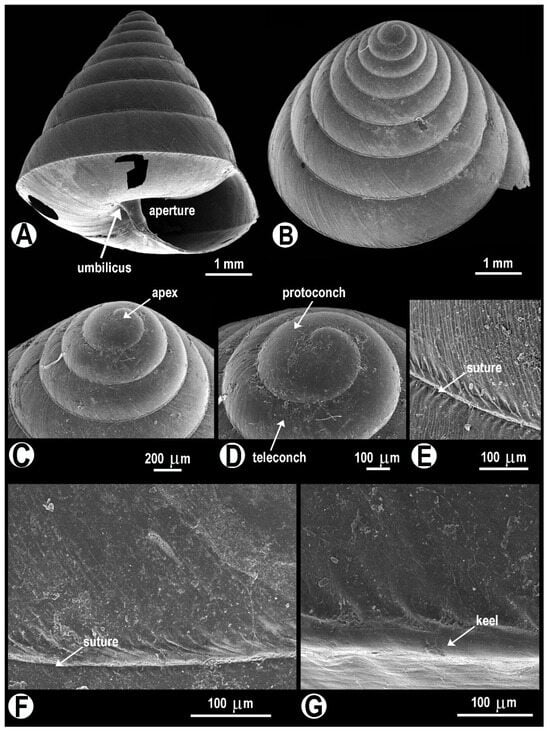
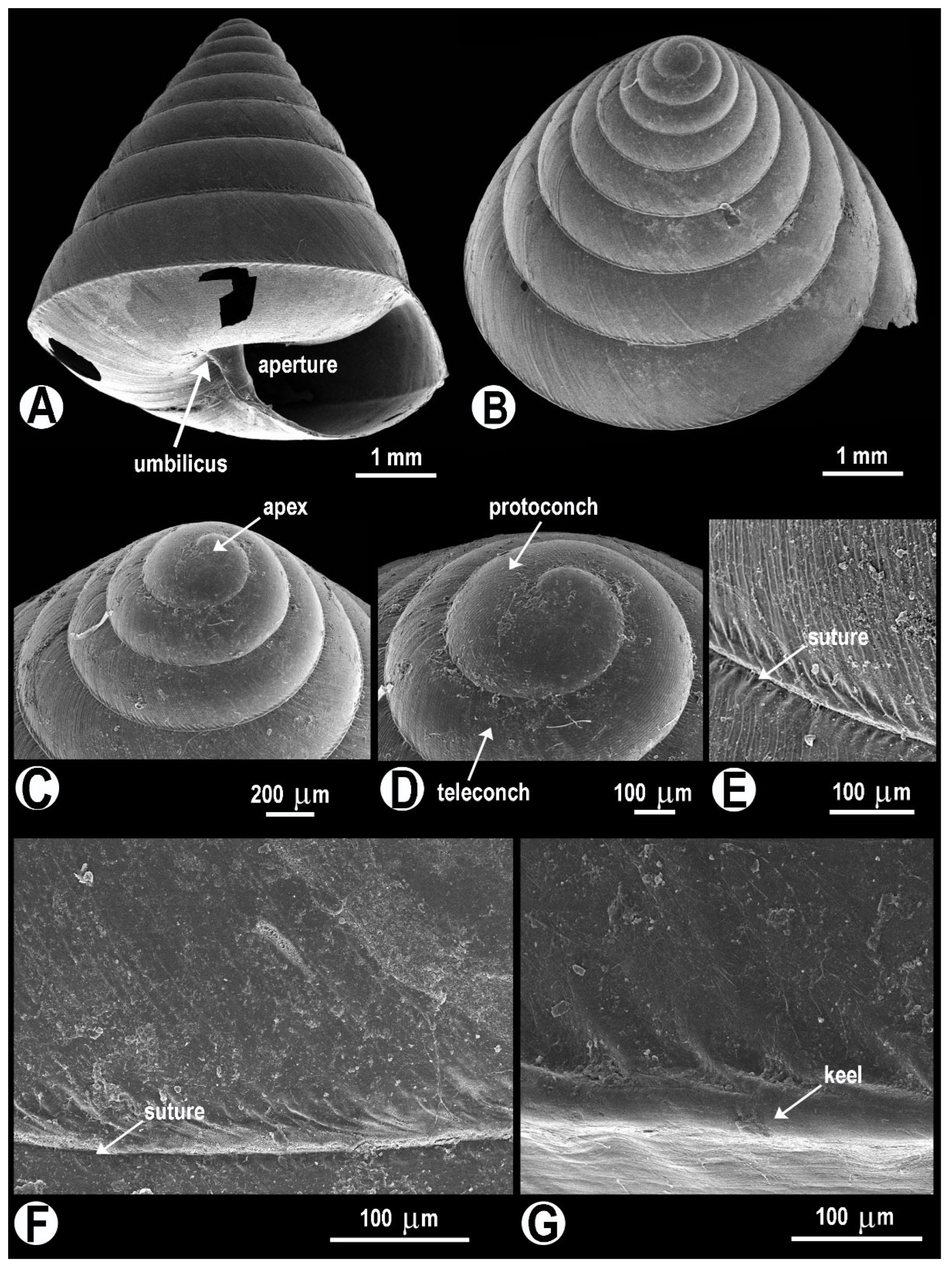
Shell morphology of S. chorchati sp. nov., paratype NHLRU081. (A), Apertural view; (B), Latero-dorsal view; (C), Apex (arrow); (D), Protoconch and teleconch (arrow); (E), Suture of 1st whorl (arrow); (F), Suture of last whorl; (G), Keel of body whorl (arrow). Photograph: Kitti Tanmuangpak.
Figure 5.
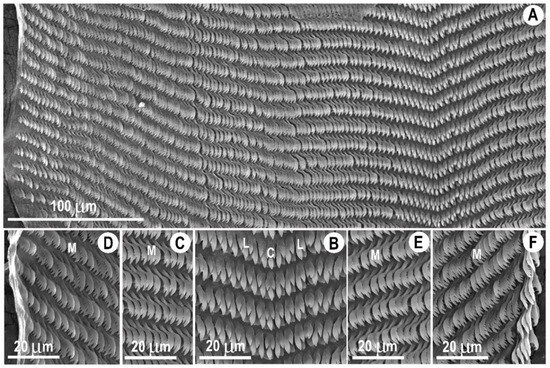
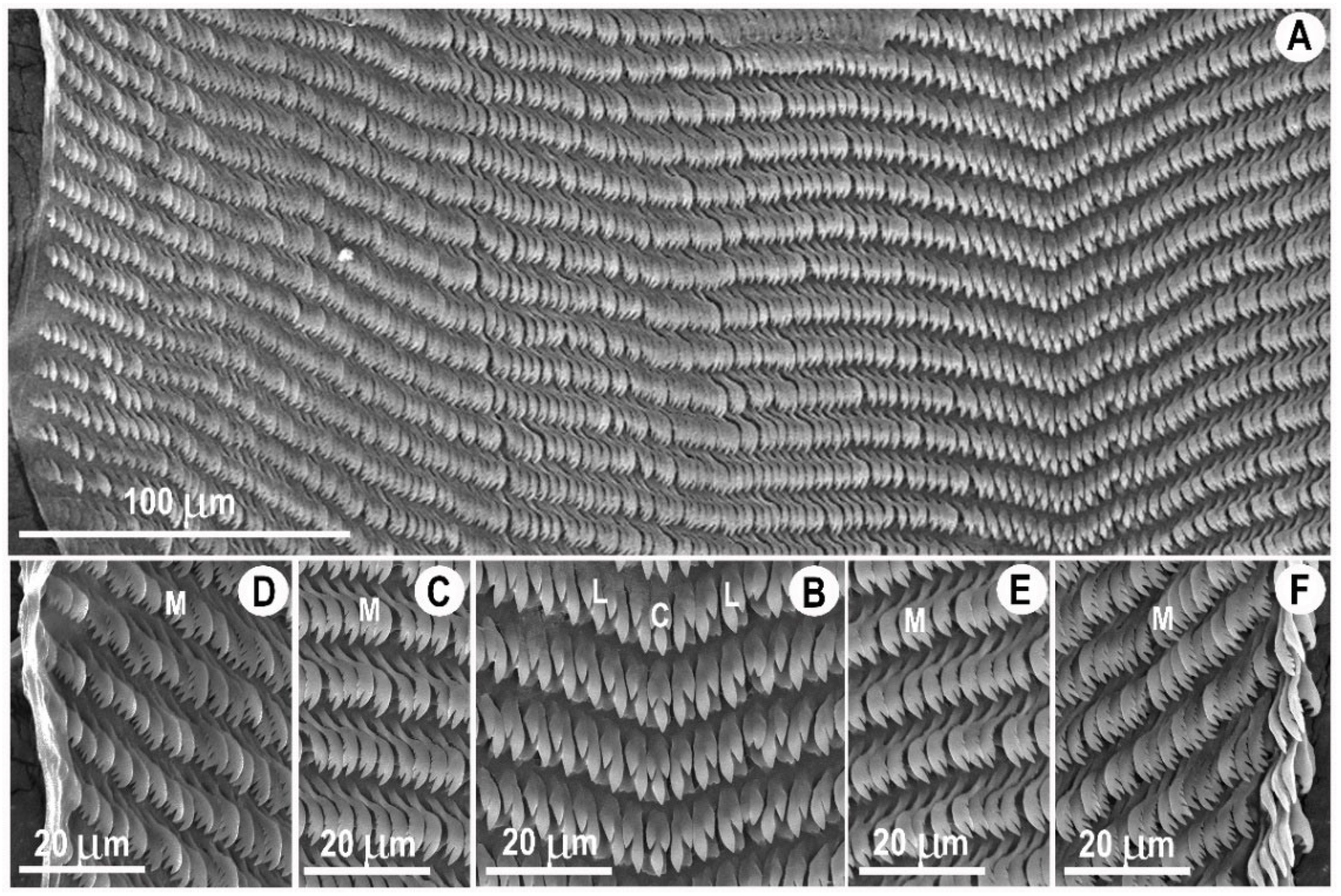
Radula morphology of S. chorchati sp. nov., paratype NHLRU084. (A) Wide-angle view of radula; (B) Close-up view at middle part of radula; (C) Close-up view at left side of radula; (D) Close-up view at the outermost left side of radula; (E) Close-up view at right side of radula; (F) Close-up view at the outermost right side of radula; Abbreviations: C = central tooth; L = lateral teeth; M = marginal teeth. Photograph: Kitti Tanmuangpak.
Figure 6.
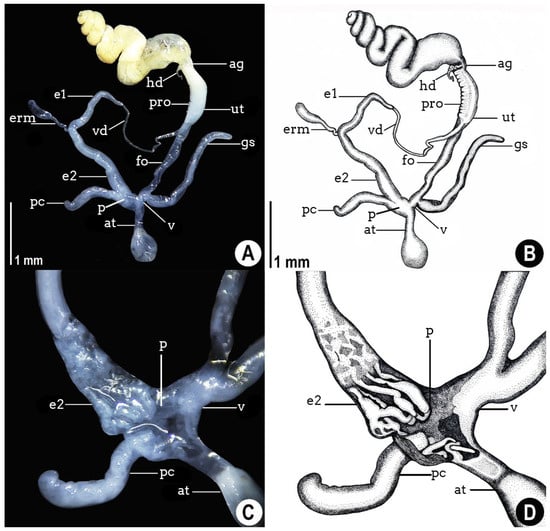
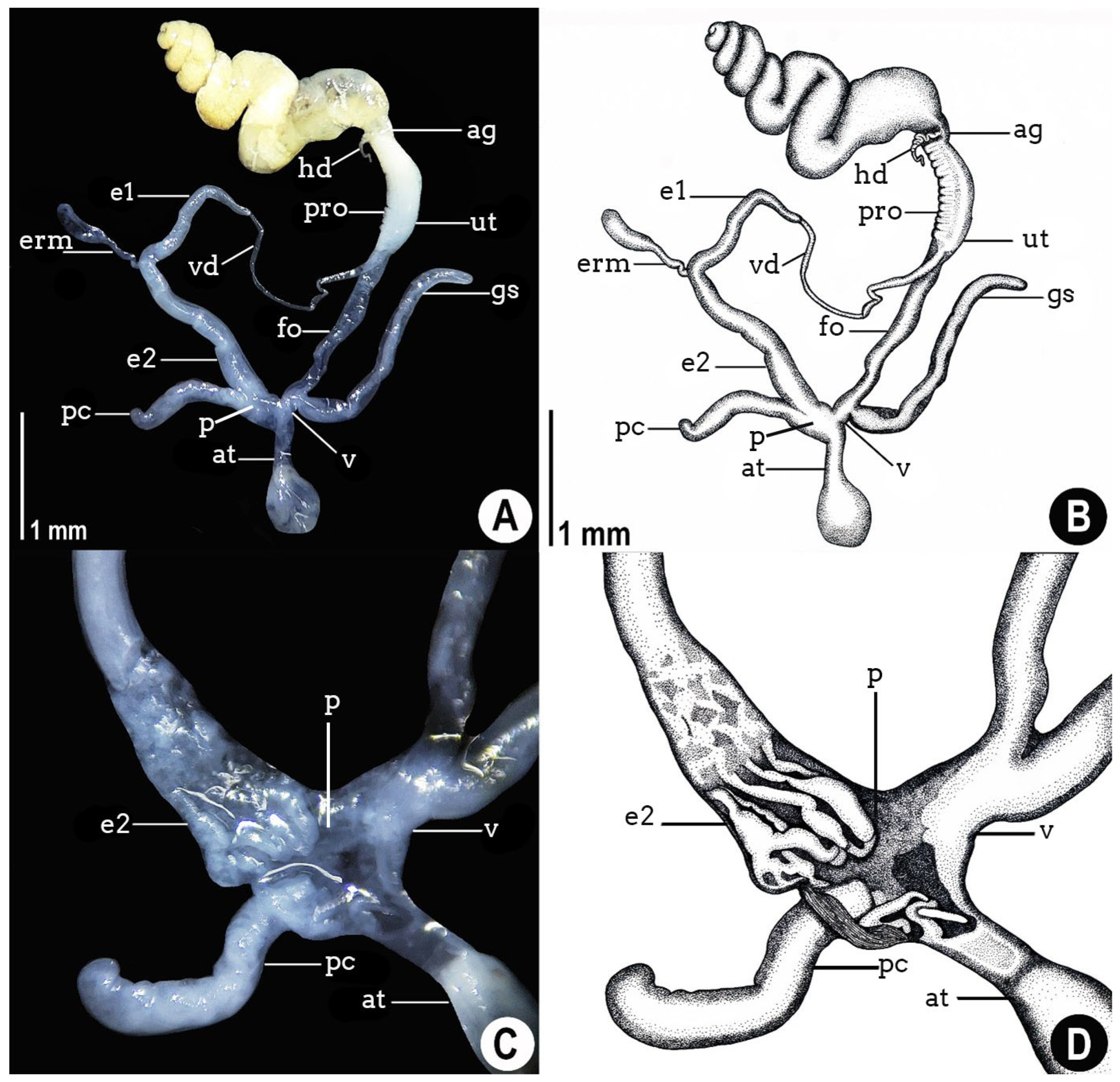
Genital system of S. chorchati sp. nov., paratype NHLRU084. (A), genital system; (B), schematic drawing of genital system; (C), the penis lumen; (D), schematic drawing of the penis lumen. Abbreviations: ag = albumin gland; at = atrium; e1 = proximal part of epiphallus; e2 = distal part of epiphallus; fo = free oviduct; hd = hermaphroditic duct; p = penis; pc = penial caecum; erm = epiphallic retractor muscle; pro = prostate; gs = gametolytic sac; ut = uterus; v = vagina; vd = vas deferens. Photograph and illustration: Kitti Tanmuangpak.
Sitala sp.—Tanmuangpak [18]: 95–96, Figures 4.44–4.45.
Sitala sp.—Tanmuangpak [19]: 241–242, 244, 247, 250, 253, Figures 12–16.
Material examined. Holotype: THAILAND, one adult empty shell; Loei Province, Mueang Loei District, rubber plantation area; 28.xi.2021. leg. Tanmuangpak, K.; (NHLRU079) (Figure 3), Paratypes: THAILAND, four specimens preserved in 70% ethanol for examination of the genital system and radula (NHLRU080–083); six shells (NHLRU084–089); two specimens preserved in 70% ethanol (NHMSU-00073); two shells (NHMSU–00074). All paratypes were collected from the same locality as holotype, leg. Tanmuangpak, K.17.xii.2021.
Type locality. Rubber plantation adjacent to a limestone hill in Mueang Loei District, Loei Province, northeastern Thailand (17.566002° N, 101.853354° E).
Measurements. Holotype: SH = 5.28 mm, SW = 4.86 mm, AH = 1.71 mm, AW = 2.71 mm (Table 3). Paratypes: (10 specimens). SH = 4.12–5.28 mm, SW = 3.72–4.86 mm, AH = 1.28–1.85 mm, AW = 2.00–2.71 mm (Table 3).
Table 3.
Shell measurements of S. chorchati sp. nov. from the type locality. SH: shell height, SW: shell width, AH: aperture height, AW: aperture width.
Diagnosis. Sitala chorchati sp. nov. is similar in shell morphology to Sitala attegia (Benson, 1859) and Sitala liricincta (Stoliczka, 1871), particularly in having shell conical, high spire shell, thin and translucent. Differing from both species in smaller shell and a greater number of whorls, 4.12–5.28 mm and 9¼ whorls, whereas 5.8 mm and 6½–7 whorls in S. liricincta, and 7–12 mm and 6½–8 whorls in S. attegia (Table 4).
Table 4.
Comparison of shell, radula, and genital system of S. chorchati sp. nov., S. infula., S. attegia and S. liricincta.
Description. Shell conical, thin and translucent, with a very high pyramid-shaped spire; yellowish-brown, and quite glossy (Figure 3) Umbilicus very narrow and deep (Figure 4A). Apex obtuse (Figure 4A–D). Shell with 9¼ whorls; whorls convex and separated by a distinct suture. Protoconch comprising 1½ whorls, smooth and obtusely tipped, with some corrosion and a thin periostracum (Figure 2, Figure 3 and Figure 4), protoconch color paler than teleconch (Figure 3D). Protoconch and whorls 2–3 relatively smooth, with indistinct growth lines. Whorls 4–9 with slightly elevated, rather oblique, and very fine growth lines that are not densely spaced. Body whorl is the largest, with a very sharp keel around its periphery (Figure 3A,B and Figure 4A). Keel slightly and irregularly crenate (Figure 4G). No trace of spiral elements intersecting the ribs. Shell base convex, becoming distinctly convex near the peripheral keel. Suture clearly raised and crossing the growth lines (Figure 4E,F). Aperture rather rectangular; peristome sharp. Base of columella expended, translucent, and non-reflective (Figure 4A).
Radula morphology. (n = 3) (Figure 5) Radula composed of 122–125 transverse rows of teeth (123 ± 1.52), with 215–223 teeth per row. Radula formula: (100–103) + (7–8) + 1 + (7–8) + (100–103). Central tooth (C) small, tricuspid, elongated triangular, lancelate and pointed mesocone. Lateral teeth (L) bicuspid and conspicuously larger than the other teeth, each consisting of a slender and large lancelate endocone, and a smaller elongated triangular ectocone. Seven or eight lateral teeth present on each side of the central tooth; first tooth largest, with successive teeth gradually decreasing in size outwards. Marginal teeth (M) start at 9–10th teeth outwards from central teeth, this order almost lateral pointed with 2–7 cusps on the outer side. A total of 100–103 marginal teeth present on each side of the central tooth.
Genital system. (Figure 6) Atrium very large and longer than vagina. Vagina and penis connect to the atrium, very short. Penial caecum (pc) long cylindrical, connected to the distal end of the penis. Epiphallus long cylindrical in shape, connected to the distal end of the penis. Epiphallic retractor muscle (erm) connected with the middle portion of the epiphallus, dividing the epiphallus into two parts (e1 and e2). e1 long cylindrical in shape, tapering distally toward e2 and the vas deferens. Internal wall of the proximal portion of the epiphallus with five short longitudinal pilasters. Vas deferens long, slender tube, entering the epiphallus apically. Vagina very short, free oviduct long cylindrical. Gametolytic sac large and long cylindrical tube, with the anterior portion larger than the central portion, and connected to vagina at the position very close to atrium, the distal end slender and curved. Uterus large, with a very thin prostate gland adhering to it. Hermaphroditic duct large, loosely convoluted. Albumin gland large yellowish.
Etymology. The specific epithet “chorchati” is given in honour of Admiral Chorchat Gra-tes of the Royal Thai navy, former Deputy Chief of Defence, an independent conchologist and owner of a private shell collection in Bangkok, Thailand.
Animal and ecology. Living animals have cream-colored bodies and yellowish-orange feet, greyish horny of distal tail, while their heads and tentacles are rather grayish, with dark gray eyes located at the tip of tentacle (Figure 2). This species was found on the leaves of many tree species, particularly rubber trees in agricultural plantations.
Distribution. This species is known only from Mueang Loei District, Loei Province, northeastern Thailand, where it occurs in agricultural plantations adjacent to limestone hills and in natural forests associated with limestone areas.
Differential diagnosis. S. chorchati sp. nov. from Mueang Loei District, Loei Province is most similar in shell shape to S. liricincta from Phetchaburi Province, Thailand. It can be distinguished from S. liricincta by its smaller shell, greater number of whorls, and spiral striation. Sitala chorchati sp. nov. has 9¼ whorls, a shell height of 4.12–5.28 mm, and spiral striation absent compared with 6½–7 whorls, a shell height of approximately 5.8 mm, and 4–6 strong spiral ribs presente on each whorl surface in S. liricincta. The new species is further distinguished by differences in the reproductive anatomy, particularly the proportions and morphology of the vagina, penis, epiphallus, and penial caecum.
4. Discussion
The newly described species, Sitala chorchati sp. nov., is classified to the genus Sitala based on its similarity of shell morphology and radula morphology to the type species, Sitala infula (Benson, 1848), while the genital system of the new species resembles those of Sitala attegia (Benson, 1859) (see Stoliczka [3]; Blanford & Godwin-Austen [4]). Nevertheless, S. chorchati sp. nov. exhibits a distinctive combination of shell, radular, and genital characters that clearly differentiates it from these congeners.
The shell morphology of S. chorchati sp. nov. is most similar to S. infula, S. attegia, and S. liricincta. However, the new species is distinguished by its greater number of whorls and smaller shell size (Table 4). S. chorchati sp. nov. has 9¼ whorls and a shell height of 4.12–5.28 mm, compared with 5½–7 whorls and a shell height of 5.5–7.3 mm in S. infula, 6½–8 whorls and 7–12 mm in S. attegia, and 6½–7 whorls and approximately 5.8 mm in S. liricincta. In addition, the absence of strong spiral ribs in S. chorchati sp. nov. further distinguishes it from S. attegia and S. liricincta, both of which possess prominent spiral ribs.
Radular morphology provides additional evidence supporting the distinctiveness of S. chorchati sp. nov. The most conspicuous difference is the number of teeth per transverse row. S. chorchati sp. nov. possesses 215–223 teeth per row, whereas S. infula and S. attegia have been reported to possess 307–321 and 400 teeth per row, respectively. Differences are also evident in the arrangement of the lateral and marginal teeth, as reflected in their respective radular formulae. These differences demonstrate substantial variation in radular morphology among the compared species and provide useful characters for species-level discrimination within Sitala.
The genital system serves as the most definitive anatomical criterion for separating the new species. Comparative examinations revealed that the new species possesses a very short penis and vagina, long cylindrical spermatheca, and penial caecum connected to the distal end of the penis. In contrast, S. infula and S. attegia possess long cylindrical penis without penial caecum, and lack a distinct vagina, while their spermatheca are club-shaped. The amatorial organ (sarcobellum) is absent in S. infula but present in S. attegia [3,4]. Thus, although individual shell characters overlap among Sitala species, the combination of shell, radular, and genital characters provides strong morphological evidence supporting the recognition of S. chorchati sp. nov. as a distinct species.
S. chorchati sp. nov. was found in both natural forests associated with limestone hills and agricultural plantations in Loei Province, northeastern Thailand. Its occurrence in both natural and human-modified habitats suggest the ability of the genus to adapt to varied ecological conditions. The species is currently known only from Mueang Loei District, indicating a potentially restricted geographical distribution. The discovery of this species contributes to the documented diversity of Sitala in Thailand and emphasizes the importance of limestone-associated habitats and their surrounding landscapes for maintaining terrestrial gastropod diversity. Further surveys of limestone areas in northeastern Thailand and adjacent regions are needed to clarify the distribution, habitat associations, and conservation status of this newly described species.
5. Conclusions
This taxonomic study provides a description of a previously unrecognized tiny tree snail species, Sitala chorchati sp. nov., from Loei Province, northeastern Thailand. Although the new species shares the characteristic conical shell morphology of the genus Sitala, it is clearly distinguished from morphologically similar congeners by a unique combination of shell, radular, and reproductive system organ characters, including its small shell size, greater number of whorls, distinct radular formula, very short penis and vagina, long cylindrical gametolytic sac, and well-developed penial caecum. These morphological and anatomical differences provide evidence supporting the recognition of S. chorchati sp. nov. as a distinct species. The occurrence of S. chorchati sp. nov. in both limestone-associated natural forests and adjacent agricultural plantations further contributes to our understanding of the diversity and habitat associations of Sitala in Thailand. As the species is currently known only from Mueang Loei District, additional surveys are needed to determine its geographical range, habitat requirements, population status, and potential conservation needs. Future molecular and phylogenetic studies would also be valuable for confirming its evolutionary relationships within Sitala and improving our understanding of the biogeographic history and diversification of the genus in Southeast Asia.
Author Contributions
Conceptualization, K.T., B.N., S.T. and C.T.; methodology, C.T. and K.T.; software, B.N., U.C., N.T. and C.T.; validation and formal analysis, K.T., S.T. and C.T.; investigation, K.T. and C.T.; resources, K.T. and C.T.; data curation, K.T., S.T. and C.T.; writing—original draft preparation, K.T. and C.T.; writing—review and editing, S.T., N.T. and C.T.; visualization, K.T., N.T. and C.T.; supervision, S.T. and C.T.; project administration, C.T.; funding acquisition, K.T. and C.T. All authors have read and agreed to the published version of the manuscript.
Funding
This research was funded by Thailand Science Research and Innovation (TSRI) and Resource Base Development under the Master Plan of the Plant Genetic Conservation Project under the Royal Initiative of Her Royal Highness Princess Maha Chakri Sirindhorn (RSPG), Loei Rajabhat University Project, 2023.
Data Availability Statement
All data generated in this study are included in the published article.
Acknowledgments
This research project was financially supported by Thailand Science Research and Innovation (TSRI) for the corresponding author and Resource Base Development under the Master Plan of the Plant Genetic Conservation Project under the Royal Initiative of Her Royal Highness Princess Maha Chakri Sirindhorn (RSPG), Loei Rajabhat University” Project, 2023.for the first author. We are very grateful to everybody who assisted with the land snail collection, our sincere gratitude to Nual-anong Wichaikul of the Centre for Scientific and Technological Equipment at Suranaree University of Technology and Thippawan Yasanga of the Research Instrument Center, Faculty of Medicine, Chiang Mai University for their valuable support in sample processing and SEM work. This research was performed in accordance with the Animal Care and Use Protocol Review No. IACUC-MSU-003-042/2025.
Conflicts of Interest
The authors declare no conflicts of interest.
References
- Wallace, A.R. List of the Land Shells Collected by Mr. Wallace in the Malay Archipelago, with Descriptions of the New Species by Mr. Henry Adams. Proc. Zool. Soc. Lond. 1865, 1865, 405–416. [Google Scholar]
- MolluscaBase eds. Helicarionidae Bourguignat, 1877. Available online: https://www.molluscabase.org/aphia.php?p=taxdetails&id=816175 (accessed on 4 January 2026).
- Stoliczka, F. Notes on Terrestrial Mollusca from the Neighbourhood of Moulmein (Tenasserim Provinces), with Descriptions of New Species. J. Asiat. Soc. Bengal Part II 1871, 40, 217–259. [Google Scholar]
- Blanford, W.T.; Godwin-Austen, H.H. The Fauna of British India, Including Ceylon and Burma. Mollusca. Testacellidae and Zonitidae; Taylor and Francis: London, UK, 1908. [Google Scholar]
- Fischer-Piette, É.; Blanc, C.P.; Blanc, F.; Salvat, F. Gastéropodes Terrestres Pulmonés; Faune de Madagascar: Paris, France, 1994; Volume 83. [Google Scholar]
- Emberton, K.C.; Slapcinsky, J.; Campbell, C.A.; Rakotondrazafy, J.A.A.; Emberton, J.D. Terrestrial Mollusks of Andriantantely Massif, Eastern Madagascar, with Descriptions of 36 New Species (Gastropoda: Caenogastropoda; Pulmonata). Arch. Molluskenkd. Int. J. Malacol. 2010, 139, 71–141. [Google Scholar] [CrossRef] [Scilit]
- Sutcharit, C.; Tongkerd, P.; Panha, S. Land Snails: The Invaluable Bio-Resources for the Kingdom of Thailand; Zino Publishing: Bangkok, Thailand, 2018. [Google Scholar]
- Benson, W.H. XV.—Characters of Seven New Species of Helix, with Amended Descriptions of Some Species Previously Described, and Notes on Others Requiring Remark. Ann. Mag. Nat. Hist. 1848, 2, 158–164. [Google Scholar] [CrossRef] [Scilit]
- Raheem, D.C.; Taylor, H.; Ablett, J.; Preece, R.C.; Aravind, N.A.; Naggs, F. A Systematic Revision of the Land Snails of the Western Ghats of India. Trop. Nat. His. 2014, 14, 1–294. [Google Scholar] [CrossRef] [Scilit]
- Gredler, V.M. Zur Conchylien-Fauna von China. XV. Stück. Nachrichtsblatt Dtsch. Malakozool. Ges. 1890, 22, 33–41. [Google Scholar]
- von Möllendorff, O.F. On a Collection of Land-Shells from the Samui Islands, Gulf of Siam. Proc. Zool. Soc. Lond. 1894, 1894, 146–156. [Google Scholar]
- Schileyko, A.A. Check-List of Land Pulmonate Molluscs of Vietnam (Gastropoda: Stylommatophora). Ruthenica 2011, 21, 1–68. [Google Scholar]
- Gude, G.P.L.K. Description of Nine New Species of Helicoid Land Shells. J. Malacol. 1905, 12, 11–14. [Google Scholar]
- Solem, A. Some Non-Marine Mollusks from Thailand, with Notes on Classification of the Helicarionidae. Spolia Zool. Musei Hauniensis 1966, 24, 1–110. [Google Scholar]
- Panha, S. A Checklist and Classification of the Terrestrial Pulmonate Snails of Thailand. Walkerana 1996, 19, 31–40. [Google Scholar]
- Hemmen, J.; Hemmen, C. Aktualisierte Liste Der Terrestrischen Gastropoden Thailands. Schriften Malakozoologie 2001, 18, 35–70. [Google Scholar]
- Schileyko, A.A. Treatise on Recent Terrestrial Pulmonate Molluscs, Part 9: Helicarionidae, Gymnarionidae, Rhysotinidae, Ariophantidae. Ruthenica 2002, 1167–1307. [Google Scholar]
- Tanmuangpak, K.; Tumpeesuwan, C.; Tumpeesuwan, S. Diversity of Land Snails in Phu Pha Lom Forest Park at Muang District, Loei Province. J. Sci. Technol. Mahasarakham Univ. 2012, 8, 15–26. [Google Scholar]
- Tanmuangpak, K. Species Diversity, Abundance, Distribution and Habitat Relationship of Land Snails in Phu Pha Lom Limestone Area, Loei Province. Ph.D. Thesis, Mahasarakham University, Maha Sarakham, Thailand, 2016. [Google Scholar]
- Tanmuangpak, K. Diversity, Relative Abundance and Distribution of Land Snail in the Agricultural Areas at Nam Suay Subdistrict, Mueang Loei District, Loei Province. Khon Kaen Agric. J. 2025, 53, 241257. [Google Scholar] [CrossRef]
- Hutton, T.; Benson, W.H. On the Land and Freshwater Shells of the Western Himalaya. J. Asiat. Soc. Bengal 1838, 7, 211–218. [Google Scholar]
- Preece, R.C.; White, T.S.; Raheem, D.C.; Ketchum, H.; Ablett, J.; Taylor, H.; Webb, K.; Naggs, F. William Benson and the Golden Age of Malacology in British India: Biography, Illustrated Catalogue and Evaluation of His Molluscan Types. Trop. Nat. His. 2022, 1–434. [Google Scholar] [CrossRef] [Scilit]
- Kasigwa, P.F. Snail Arboreality: The Microdistribution of Sitala jenynsi (Gastropoda: Ariophantidae). S. Afr. J. Zool. 1999, 34, 154–162. [Google Scholar] [CrossRef] [Scilit]
- Kasigwa, P.F.; Mrema, A.J.; Allen, J.A. Predation by Mongooses, Rodents and Snails on Sitala jenynsi (Per.), Achatina fulica Bowdich and Other Land Snails in Coastal Tanzania. J. East Afr. Nat. Hist. Soc. Natl. Mus. 1983, 179, 1–10. [Google Scholar] [CrossRef] [Scilit]
- Godwin-Austen, H.H. Land and Freshwater Mollusca of India, Including South Arabia, Baluchistan, Afghanistan, Kashmir; Taylor and Francis: London, UK, 1882. [Google Scholar]
- Kalita, G. Land Snails of Guwahati, Assam, India. J. Threat. Taxa 2022, 14, 21845–21852. [Google Scholar] [CrossRef] [Scilit]
- Blanford, W.T.; Blanford, H.F. Contributions to Indian Malacology, No. II. J. Asiat. Soc. Bengal 1861, 30, 347–366. [Google Scholar]
- Jickeli, C.F. Diagnosen Neuer Mollusken Aus Meiner Reiseausbeute. Malakozool. Bl. 1873, 20, 99–108. [Google Scholar]
- Jickeli, C.F. Fauna der Land-und Süsswasser-Mollusken Nord-Ost-Afrika’s; Nova acta Academiae Caesareae Leopoldino-Carolinae Germanicae Naturae Curiosorum; E. Blochmann: Dresden, Germany, 1874; Volume 37. [Google Scholar]
- Morelet, A. Récolte de M. Bewsher à l’île d’Anjouan (Comores). J. Conchyliol. 1879, 27, 308–315. [Google Scholar]
- von Möllendorff, O.F. Diagnosen Neuer Chinesischer Arten. Nachrichtsblatt Dtsch. Malakozool. Ges. 1883, 15, 98–101. [Google Scholar]
- von Möllendorff, O.F. Materialien Zur Fauna von China. IV. Die Zonitiden. Jahrb. Dtsch. Malakozool. Ges. 1883, 10, 356–373. [Google Scholar]
- Bourguignat, J.R. Mollusques de l’Afrique Équatoriale: De Moguedouchou a Bagamoyo et de Bagamoyo Au Tanganika; D. Dumoulin et cie: Paris, France, 1890. [Google Scholar]
- Godwin-Austen, H.H. On a Collection of Land Shells Made in Borneo by Mr. Everett, with Descriptions of Supposed New Species. Part II. Zonitidae and Helicinidae. Proc. Zool. Soc. Lond. 1891, 59, 22–47. [Google Scholar]
- Sarasin, P.; Sarasin, F. Die Land-Mollusken von Celebes; Materialien zur Naturgeschichte der Insel Celebes; C. W. Kreidel’s Verlag: Wiesbaden, Germany, 1899; Volume 2, p. 248. [Google Scholar]
- von Möllendorff, O.F. Zur Binnenmollusken-Fauna Annams III [Part 1]. Nachrichtsblatt Dtsch. Malakozool. Ges. 1900, 32, 117–121. [Google Scholar]
- von Möllendorff, O.F. Zur Binnenmollusken-Fauna Annams III [Part 2]. Nachrichtsblatt Dtsch. Malakozool. Ges. 1900, 32, 129–139. [Google Scholar]
- von Möllendorff, O.F. Diagnosen Neuer von H. Fruhstorfer in Tongking Gesammelter Landschnecken [Part 1]. Nachrichtsblatt Dtsch. Malakozool. Ges. 1901, 33, 65–81. [Google Scholar]
- von Möllendorff, O.F. Diagnosen Neuer von H. Fruhstorfer in Tongking Gesammelter Landschnecken [Part 2]. Nachrichtsblatt Dtsch. Malakozool. Ges. 1901, 33, 110–119. [Google Scholar]
- Bavay, A.; Dautzenberg, P. Description de coquilles nouvelles de l’Indo-Chine (3e suite). J. Conchyliol. 1904, 51, 201–236. [Google Scholar]
- Preston, H.B. Descriptions of New Species of Land, Marine and Freshwater Shells from the Andaman Islands. Rec. Zool. Surv. India 1908, 2, 187–210. [Google Scholar] [CrossRef] [Scilit]
- Preston, H.B. Fauna of British India including Ceylon and Burma, Mollusca (Freshwater Gastropoda and Pelecypoda); Taylor & Francis: London, UK, 1915; 244p. [Google Scholar]
- Thiele, J. Ueber Einige Hauptsächlich Afrikanische Landsnecken. Sitzungsberichte Ges. Naturforschender Freunde Berl. 1931, 1930, 392–403. [Google Scholar]
- Thiele, J. Die von Oskar Neumann in Abessinien Gesammelten Und Einige Andere Afrikanische Landschnecken. Sitz.-Berichte Ges. Naturforschender Freunde Berl. 1933, 134, 280–323. [Google Scholar]
- Iredale, T. Systematic Notes on Australian Land Shells. Rec. Aust. Mus. 1933, 19, 37–59. [Google Scholar] [CrossRef] [Scilit]
- Iredale, T. A Basic List of the Land Mollusca of Australia. Aust. Zool. 1937, 8, 287–333. [Google Scholar]
- Cox, J.C. On Some New Species of Australian Land Shells. Proc. Zool. Soc. Lond. 1868, 1867, 722–726. [Google Scholar]
- Saurin, E. Coquilles Nouvelles de l’Indochine. J. Conchyliol. 1953, 93, 113–120. [Google Scholar]
- Raamah, R.; Lillo, E.; Alcazar, S.; Colita, L.; Caballero, J.; Baltazar, A. Species Composition, Relative Abundance, and Distribution of Land Snail Species in Mt. Lantoy Key Biodiversity Area, Cebu, Philippines. Biodiversitas 2020, 21, 5438–5447. [Google Scholar] [CrossRef] [Scilit]
- Emberton, K.C.; Pearce, T. Helicarionid Snails of Mounts Mahermana, Ilapiry, and Vasiha, Southeastern Madagascar. Veliger 2000, 43, 218–247. [Google Scholar]
- Verdcourt, B. A New Species of Sitala H. Adams from the Usambara Mts., Tanzania (Mollusca: Urocyclidae). Arch. Molluskenkd. 1977, 108, 51–52. [Google Scholar]
- Emberton, K.C.; Griffiths, O.L. Pulmonate Land Mollusks from Three Rainforest Transects in Northeastern Madagascar: Part 2 of 2, with Descriptions of 21 New Species: (Gastropoda: Pulmonata: Stylommatophora). Arch. Molluskenkd. Int. J. Malacol. 2009, 138, 169–203. [Google Scholar] [CrossRef] [Scilit]
- Gerlach, J.; Griffiths, O.; Slapcinsky, J. Non-Marine Molluscs of the Northern Narinda Karst, North-Western Madagascar. Bull. Fla. Mus. Nat. Hist. 2023, 60, 1–55. [Google Scholar] [CrossRef] [Scilit]

Disclaimer/Publisher’s Note: The statements, opinions and data contained in all publications are solely those of the individual author(s) and contributor(s) and not of MDPI and/or the editor(s). MDPI and/or the editor(s) disclaim responsibility for any injury to people or property resulting from any ideas, methods, instructions or products referred to in the content. |
© 2026 by the authors. Licensee MDPI, Basel, Switzerland. This article is an open access article distributed under the terms and conditions of the Creative Commons Attribution (CC BY) license.