


Abstract
Mexico is a global hotspot for plant diversity, yet its floristic inventory remains incomplete. Understanding whether taxonomic discovery is advancing evenly is essential for guiding future work. Here, we ask what the taxonomic, geographic, and methodological patterns of species proposals reveal about the current state of and persistent gaps in Mexican floristics. To address this, we synthesized the taxonomic, geographic, and methodological patterns of all new embryophyte species published for Mexico from 2000 to 2025. We compiled a database of 2822 new extant and fossil species, showed an average annual rate of 108.3 species, and analyzed collection records, authorship, institutional participation, publication timelines, and diagnostic evidence. The most diverse families were Asteraceae (278), Orchidaceae (230), and Fabaceae (202), while Tillandsia (69) and Salvia (67) were the most prolific genera. Oaxaca, Chiapas, and Jalisco concentrated the highest number of novelties. National collectors (566) and authors (520) played a predominant role, with Mexican institutions, led by Universidad Nacional Autónoma de México, Instituto de Ecología, and Universidad de Guadalajara, contributing the largest proportion of species; 93% of holotypes are housed in national herbaria, which contrasts with the historical pattern in other countries. Morphological data alone supported 80% of proposals, and only 2.5% explicitly stated a species concept. While 61% of species were published within 20 years of collection, some took over a century to be published. Our findings reveal sustained progress and strong national leadership in floristic knowledge, but also highlight persistent geographic, taxonomic, and editorial asymmetries. We emphasize the urgent need to strengthen taxonomic infrastructure, digitize collections, ensure generational turnover, and support Mexican scientific journals to secure the country’s taxonomic sovereignty.
1. Introduction
Mexico possesses one of the most continuously studied floras, with an estimated 23,500 to 29,000 species of vascular plants [1,2,3,4,5,6], yet the national inventory remains far from complete. This gap between estimated and documented diversity is a clear manifestation of the Linnean shortfall, which frames the urgency of ongoing taxonomic work. The number of new species published annually is estimated to range between 70 and 100 [7,8,9], demonstrating that botanical exploration is a dynamic and ongoing process [10,11]. In the context of the Anthropocene, characterized by high extinction rates, climate change, and alterations in biogeochemical cycles [12,13,14], the documentation of biodiversity is a priority. Furthermore, analyzing this diversity allows us to understand aspects not only of the native and endemic flora, but also of the taxonomists, their institutions, and the methodologies employed.
The diversity of species published each year reflects the heterogeneity of the Mexican flora (Figure 1). Likewise, it is the result of the interaction between the underlying biological richness of taxa and regions, and the temporal dynamics of taxonomic effort. As expected, the most diverse families globally (e.g., Asteraceae, Orchidaceae, and Fabaceae) and the federal entities with high biodiversity (e.g., Oaxaca, Chiapas, and Veracruz) concentrate the largest proportion of novelties, reflecting a pattern consistent with their known richness [2,15,16]. However, the publication of new taxa does not necessarily follow a constant rate; on the contrary, it may present differential peaks in response to the completion of specific revisions or monographs, such as those documented for Coccoloba [17], Ipomoea [18], Salvia [19], or Quercus [20], affecting both diverse and less-studied groups. In this context, fluctuations in the number of annual publications primarily constitute a bias inherent to the history of floristic research. Therefore, while it is undeniable that the floristic knowledge of Mexico is dynamic, an analysis of what is happening with taxa and in the different regions of the country is required to understand the mosaic of the national flora.
Figure 1.
Species selected from families with the highest number of species published between the years 2000–2025 in Mexico. The species were selected to illustrate the taxonomic and morphological diversity of recent discoveries. (A) Dahlia parvibracteata, Asteraceae. (B) Myrmecophila christinae, Orchidaceae. (C) Diphysa yucatanensis, Fabaceae. (D) Coutaportla helgae, Rubiaceae. (E) Tillandsia religiosa, Bromeliaceae. (F) Bessera elegantissima, Asparagaceae. (G) Dudleya hendrixii, Crassulaceae. (H) Dictyanthus nichongus, Apocynaceae. (I) Mammillaria occulta, Cactaceae. (J) Salvia madrigalii, Lamiaceae. (K) Euphorbia breedlovei, Euphorbiaceae. (L) Chusquea septentrionalis, Poaceae. (M) Peperomia inversa, Piperaceae. (N) Justicia cardinalis, Acanthaceae. (O) Eleocharis tenarum, Cyperaceae. (P) Calcicola parvifolia, Malpighiaceae. (Q) Monstera florescanoana, Araceae. (R) Ceratozamia delucana, Zamiaceae. (S) Cestrum sotonunezii, Solanaceae. (T) Ipomoea macdonaldii, Convolvulaceae. Photos from iNaturalistMx are used under the terms of the Creative Commons license [CC BY-NC 4.0]. (A) Arturo Castro Castro. (B) Maribel Martínez. (C) Andy Jones. (D) J. Fernando Pío León. (E) José Javier Barrios Flores. (F) fabrice82. (G) James Bailey. (H) Leonardo O. Alvarado-Cárdenas. (I) Pasicam. (J) Ignacio Torres-García. (K) Dale Lee Denham-Logsdon. (L) Heriberto Ávila-González. (M) Carlos Domínguez-Rodríguez. (N) Donají Graham. (O) Diego. (P) Barry Sullender. (Q,R) Sarahí Díaz-Mota. (S) David Uriostegui Farias. (T) Carlos Domínguez-Rodríguez.
Alongside the number of species, there are the authors and collectors of the Mexican flora. Examining the productivity of botanists transcends mere individual recognition; it serves to identify those who provide material to herbaria and systematists, and how knowledge of the flora is being contributed. It also helps us understand centers of continuous taxonomic work, collaboration networks, and the health of this scientific discipline in the country. Previous studies have highlighted the contribution of institutions such as the Universidad Nacional Autónoma de México (UNAM) and the Instituto de Ecología (INECOL) [6,8,9]. An updated analysis can reveal emerging trends, the consolidation of new research groups, and potential gaps in expertise in particular botanical families.
Concurrently, species proposals may be undergoing a paradigmatic transition. The incorporation of molecular data in phylogenies, genomic analyses, and ecological niche modeling has become a recurrent tool in scientific practice, as well as in the proposal of species or other taxa hypotheses (e.g., [21,22]). These methodological approaches contribute to the knowledge of the Mexican flora. Identifying the tools being used in species recognition, as well as the theoretical aspects supporting proposals, requires an evaluation in this first quarter of the century.
A synthetic analysis of species published in this century not only quantifies diversity but also allows for the analysis of taxonomic, geographic, and methodological patterns, which are essential for understanding the landscape of national botany in the 21st century. Our objectives are: (1) to quantify the richness and taxonomic composition of Embryophyta, in order to understand possible patterns of diversity within the groups and potential publication rates; (2) to analyze the geographic distribution of extant and fossil species published between 2000 and 2025, to determine whether there are uneven results in states that have historically been diverse and well-collected; (3) to identify the most prolific collectors, (4) authors, and (5) institutions, understanding the dominant patterns in these areas; (6) to determine in which collections the type specimens of Mexican species are housed and calculate the time intervals between specimen collection and formal publication of each taxon; (7) to review the different publications where new species are being proposed, and (8) the theoretical and methodological approaches applied therein, with the aim of determining where national publications stand in documenting floristic diversity, as well as identifying the types of evidence and the concept of “species” is applied in taxonomic research. This work not only evaluates the effort of national taxonomy but also seeks to inform future strategies for documenting and conserving Mexico’s plant diversity in the face of growing anthropogenic pressures.
2. Materials and Methods
2.1. Sampling and Taxonomic Diversity
Knowledge of new species proposals for Mexican Embryophyta in the 21st century, both extant and fossil, was obtained through the review of protologues, taxonomic and monographic treatments, as well as phylogenetic studies. For this section, we consulted the digital platforms IFNI [23], IPNI [24], Tropicos [25], World Flora Online [26], and Plants of the World Online [27]. Likewise, to complement the bibliographic search, we used Google Scholar [28] and ISI Web of Knowledge [29] with the following terms: “species complex”, “species delimitation”, “new species”, “Mexico”, “plant”, and “sp nov.” From the resulting works, we selected studies proposing species published between 2000 and 2025. Discrepancies among sources, such as taxonomic status, publication year, or authorities, were resolved by consulting the protologue, and only records that were verifiable against an original publication were retained. All the information on the new species resulted in a database with 49 columns (Supplementary Material S1) including, for each species, taxonomic placement (order, family, genus), publication year, journal, authors, country, institutions, main collector, collection year, type locality and herbarium, distribution by state, species concept, and data types used (morphological, ecological, molecular, etc.).
All species analyzed in this study are referred to here as proposed species or published species. The selection and analysis of published taxa only included the taxonomic category of species. Subspecies, varieties, or form categories were not included in the analysis since, besides their analysis corresponding to a different study, many of them are currently subordinated as synonyms [24,25,26,27]. The current acceptance or synonymy of the species studied here was not analyzed. Although this is an important aspect that may affect the final number of species, it requires a study focused on determining the stability of names, a topic that is beyond the scope of this work. In the case of fossil species, these were distinguished from extant species by explicit mention in the protologue; only fossil taxa published as new species were included, whereas fossil occurrences or recombinations were excluded.
The temporal trend in the proposal of new species was evaluated based on the total number of species published per year. To statistically evaluate patterns in the publication of new species, three complementary tests were applied: (1) the Mann–Kendall test to detect monotonic trends; (2) the Pettit test to identify abrupt change points in the series mean; and (3) a structural breakpoint analysis. The Mann–Kendall and Pettit tests were run with the trend package [30] and the structural breakpoint analysis with the strucchange package [31] (Supplementary Figure S1).
Additionally, the 20 botanical families with the highest richness of published species were identified, and their trends were analyzed independently. To understand species diversity in the categories of orders/families and families/genera, a count of each taxonomic level was performed. From this information, an accumulative graph was generated to show the 20 orders and 20 families with the highest number of published species. All the graphs were created in R version 4.5.1 [32], using the following libraries: dplyr [33], ggplot2 [34], tidyr [35], and treemapify [36].
2.2. Diversity by State
Using distribution data from the protologues, a richness map was generated to identify the states with the highest diversity of new species published in the present century. The bubble map was created in R version 4.5.1 [32], using the following libraries: dplyr [33], ggplot2 [34], and RColorBrewer [37]. The information on distribution is based solely on publication data; therefore, current distribution is not taken into account in this analysis. Consequently, the results should be interpreted in accordance with this approach.
2.3. Collectors
Regarding collector information (Supplementary Material S2), only the name of the first collector (Principal_collector) was retrieved for each type specimen. Names and nationalities of each collector on the list were obtained through searches in “Principales colectores de plantas vasculares de México” [38], the “Index of Botanists” of the Harvard University Herbaria (https://kiki.huh.harvard.edu/databases/botanist_index.html; accessed on 12 December 2025), Global Plants on JSTOR (https://plants.jstor.org/), and the “Catálogo de autores de plantas vasculares de México” [39]. Collectors with incomplete or ambiguous information were excluded from the analyses. We acknowledge that analyzing only the first collector may underrepresent the contribution of co-collectors and field teams, and may bias estimates toward principal investigators or institutional collectors. This limitation should be considered when interpreting collector productivity and nationality patterns. All the graphs were created in R version 4.5.1 [32], using the libraries ggraph [40], igraph [41,42,43], tidygraph [44], and tidyr [35].
2.4. Authors
For the analysis of the relationship between the most prolific authors and the diversity of botanical families to which the new species belong, a bipartite network was constructed. In the case of taxonomic authorities for each species, all authors were included in the Supplementary Material S3 (Author 1, Author 2, etc.). Names, nationalities, and affiliations of each systematist were also obtained from the protologues and resources mentioned in the previous section. The analysis was restricted to the 20 Mexican authors with the highest number of species. For this section, “naturalized authors” refers to foreign-born researchers who have established long-term professional affiliations with national institutions and have acquired Mexican citizenship. The graph was created in R version 4.5.1 [32], using the libraries ggraph [40], tidygraph [44], and tidyr [35].
2.5. Institutions
To identify the authors’ institutions, information was taken from the protologues and the various previously mentioned information sources (Supplementary Material S4). To understand the relationship between institutions and authors and the botanical families they work with, a network graph (nodes) was generated. Network analysis was used because it provides a quantitative and visual way to examine the structure of co-occurrence and affiliation among authors, institutions, and botanical families, revealing specialization patterns and collaborative clusters that simple frequency counts cannot capture. Due to the amount of data obtained and for an approximation of national botany, only Mexican or naturalized authors were selected for this section. The graph was created in R version 4.5.1 [32], using the libraries ggraph [40] and plotly [45].
2.6. Biological Collections
The analysis of the location of type specimens was performed by searching both the protologues and the virtual databases TROPICOS, JSTOR, and IBDATA. To identify the country of location of herbaria, the Index Herbariorum [46] and the Red de Herbarios Mexicanos [47] were consulted. The number of species deposited in different herbaria was quantified, and those with the highest species values were graphed, along with the countries/continents where the highest number is found. The graph was created in R version 4.5.1 [32], using the libraries ggraph [40] and plotly [45].
To understand the pattern of collection and publication of species, a survival analysis was performed, following the proposal of Bebber et al. [48], which gives an idea of whether the biodiversity is deposited in collections or is the result of recent exploratory work. The analysis includes the collection-to-publication interval; the time-to-event was defined as the number of years between the year of collection of the type specimen and the year of formal publication. Species with a confirmed publication date were treated as events, whereas species not yet published by the end of the study period (2025) were right-censored at the interval between their collection year and 2025. The graph was created in R version 4.5.1 [32], using the libraries ggraph [40], and plotly [45].
2.7. Publications
Information for the analysis of the different works where new species were published was taken from the protologues. The country of origin of each publication was consulted on the journal’s webpage and in the IPNI [24] and Tropicos [25] databases.
2.8. Species Concept and Data Types
Information for this section was obtained from the original publications. Data types were grouped into three categories for quantification: morphological, ecological, and molecular. All information was listed in the text. Species concepts were considered “explicitly stated” only when authors named or defined a concept in the text or cited a specific conceptual framework; implicit operational criteria were not counted.
3. Results
3.1. Taxonomic Diversity
Between 2000 and 2025, a total of 2822 new extant and fossil species were published for science, with an average of 108.3 (15.9 SD, min. 83, max. 152) species proposed annually. The year 2010 stands out, with 152 species, while 2003 and 2017 have the lowest values (Figure 2). Statistical tests found no significant temporal trend (Mann–Kendall: T = 0.084, p = 0.566), change point (Pettitt: p = 1.0), or structural break, indicating that interannual fluctuations, including the lows of 2003 and 2017, reflect random variation around the mean rather than changes in the dynamics of species publication over the study period (Supplementary Figure S1). These 2822 species are distributed across 748 genera, 153 families, and 57 orders. The plants compiled in this work belong to all major groups of Embryophyta, where angiosperms presented the highest number of records (2684 spp., 95%). This indicates that recent publications are not anomalous from a taxonomic standpoint, but rather reflect the current composition of the national flora. The remaining 5% comprises gymnosperms, ferns, lycophytes, and bryophytes, contributing at least one new species. Notably, 200 (7%) species corresponding to fossil diversity highlight that 21st century taxonomic work in Mexico has integrated both living and extinct lineages.
Figure 2.
Number of new species per year during the 21st century. (A) General trend of the total species published annually. (B–D) Number of species published per year for the 20 botanical families with the highest accumulated richness, divided into three groups according to their ranking positions: (B) families 1st to 7th place, (C) families 8th to 14th place, and (D) families 15th to 20th place. The colors of each point and line in (B–D) correspond to one of the 20 families with the most species published in this century.
The 10 orders with the highest number of new species in the last 25 years have accumulated 2074 species, representing 73.5% of all new species (Figure 3). Among these, Asparagales (372), Asterales (298), Gentianales (268), Poales (245), Lamiales (221), and Fabales (205) stand out. At the family level, of the 153 recorded here, 20 contribute the highest number of new species (69%) (Figure 3). The taxa with the highest values were Asteraceae (278), Orchidaceae (230), Fabaceae (202), Rubiaceae (159), and Bromeliaceae (147). This group includes a gymnosperm (Zamiaceae, with 32 species) in 18th place. Among these megadiverse families, six present three or more years with 10 or more published species, with Asteraceae and Orchidaceae standing out as having the highest numbers, while the rest of the families show only one or two years with a high number of proposed species (Figure 2).
Figure 3.
Species richness by major orders and botanical families. (A) Orders of Embryophyta with the highest number of new species published and the proportion contributed by their main family. (B) Most diverse botanical families and the proportion contributed by the genus with the highest number of published species. Color-segmented bars indicate the internal contribution of specific families and genera, respectively. Abbreviations in parentheses correspond to the first three letters of the taxonomic group name.
The genera with the highest number of published species were Tillandsia (69), Salvia (67), Agave (53), Hechtia (52), and Echeveria (50), all with 50 or more proposed species (Figure 3). Two of these genera belong to the Bromeliaceae family (Tillandsia and Hechtia), and together they account for more than 50% of the species proposed for that family.
3.2. Diversity by Federal Entities of Mexico
During this century, new species were recorded for all federal entities of the country (Figure 4). The five states with the highest number of species were Oaxaca (651), Chiapas (409), Jalisco (362), Guerrero (307), and Veracruz (271). The states with the lowest number of new species correspond to Mexico City (14) and Tlaxcala (9). The majority of species (2188) were originally published as being exclusive to a single entity; the rest were found in two or more states. Furthermore, 2649 species were recorded as endemic to Mexico, while the remaining 173 were published with distributions extending to neighboring countries such as Guatemala, Belize, and the United States.
Figure 4.
Richness of new species, published between 2000 and 2025, by state of Mexico.
3.3. Collectors of Diversity
Sampling efforts leading to the discovery of new species involved the participation of 922 collectors from 30 countries. Among them, researchers of Mexican (566) and American (234) nationalities stand out for their contribution. Regarding Mexican collectors, they have recorded a total of 2604 species based on their collections, representing 92.27% of the species published in this period.
Notably, about 27% of the findings (732 species) are concentrated in the fieldwork of 30 individuals, of which 21 are of national origin and 9 are of a different nationality (Table 1). Within this group, the contributions of D.E. Breedlove (USA) and S. Zamudio (Mexico) stand out, whose collections support 64 and 51 species, respectively.
Table 1.
List of the top 20 collectors with the highest number of specimens contributed for species proposals, with their respective nationalities.
3.4. Taxonomists Publishing
Regarding the authors of the species, 988 were recorded in total, belonging to 48 nationalities, of which 520 are Mexican. Of the total authors, 20 published about 50% of the species, and three of them exceeded 100 species—B.L. Turner (160), A.L. Borhidi (136), and G.L. Nesom (101)—and were all of a different nationality. However, among the 20 most productive authors, 14 are Mexican (Table 2, Figure 5).
Table 2.
List of the top 20 authors and their respective countries, with the highest number of published species and the number of families they belong to.
Figure 5.
Bipartite network showing the relationship between the 20 Mexican authors with the highest number of new species (left) and the corresponding botanical families (right). Node size is proportional to the number of species, while family node size is proportional to the number of authors they connect with.
3.5. Taxonomic Research Centers
The authors belong to 304 institutions distributed across 40 countries. Most institutions correspond to the USA (111), followed by Mexico (81), Germany, Canada, and the United Kingdom (9). Although there are more foreign institutions, the highest number of authors is mainly affiliated with Mexican centers (Figure 6), such as the Universidad Nacional Autónoma de México (188), Universidad de Guadalajara (66), Instituto Nacional de Ecología (48), and Instituto Politécnico Nacional (28). A total of 105 independent authors from 14 different countries were recorded (Table 3), indicating that individuals without formal institutional affiliations are contributing to taxonomic work.
Figure 6.
Network graph between institutions of Mexican authors and families in which they have published new species. The blue circles represent the institutions where the different species are being published. The orange circles represent the families to which each published species belongs, and each line color corresponds to a different family. The thickness of the line corresponds to the number of researchers at each institution working on that family. Institutions: Asociación Orizabeña de Orquideología (AOO), Benemérita Universidad Autónoma de Puebla (BUAP), Bosque La Primavera (BLP), Botanical Research Institute of Texas (BRIT), Centro de Investigación Científica de Yucatán (CICY), Centro de Investigación Científica y de Educación Superior de Ensenada (CICESE), Centro de Investigaciones Biológicas del Noroeste (CIBN), Centro Instituto Nacional de Antropología e Historia, Coahuila (CINAH Coahuila), Chiba University (UCh), Colegio de Posgraduados (COLPOS), Comisión Nacional para el Conocimiento y Uso de la Biodiversidad (CONABIO), Consejo Nacional de Humanidades, Ciencias y Tecnologías (CONAHCYT), Desert Botanical Garden (DBG), El Colegio de la Frontera Sur (CFS), Grupo de Ecología y Conservación de Islas (GECI), Grupo de Estudio de Cactáceas y Vida Silvestre del Occidente (GECVSO), Grupo Evolución. S.C. De C.V (GEVo), Harvard University (HU), Independent (Independent), Instituto Nacional de Estadística y Geografía (INEGI), Instituto Chinoin (ICH), Instituto de Ecología del Estado de Guanajuato (IEEG), Instituto de Historia Natural y Ecología (INHNE), Instituto Nacional de Ecología (INECOL), Instituto Politécnico Nacional (IPN), Instituto Potosino de Investigación Científica y Tecnológica (IPICYT), Instituto Saynes de Investigaciones sobre Cultura, Lengua y Naturaleza (ISICLN), Instituto Tecnológico de Chetumal (ITCh), Instituto Tecnológico de Ciudad Victoria (ITCV), Instituto Tecnológico del Valle de Oaxaca (ITVO), Iowa State University (ISU), Jardín Botánico Araceario Thomas B. Croat (JBATBC), Jardín Botánico de Vallarta (JBV), Jardín botánico El Charco del Ingenio (JBCI), Jardín Botánico Regional de Cadereyta “Ing. Manuel González de Cosío” (JBRC), Jardín Etnobotánico de Oaxaca (JEBO), Louisiana State University (LSU), Massey University (MU), Museo de Historia Natural de Tamaulipas (MHNAT), Museo del Desierto (MD), Museo Paleontológico de Múzquiz (MUZ), Orchidarc, Registered Charity (ORC), Programa Salvadoreño de Investigación sobre Desarrollo y Medio Ambiente (PSIDMA), Rikagaku Kenkyūsho (RIKEN), Royal Botanic Garden Edinburgh (RBGE), Royal Botanic Gardens (RBG), Secretaría de Medio Ambiente del Estado de Veracruz (SMAEV), Secretaría de Medio Ambiente e Historia Natural (SMAHN), Sky Island Alliance (SIA), Smithsonian Institution (SI), Sociedad Mexicana de Cactología (SMC), Sociedad para el Estudio de los Recursos Bióticos de Oaxaca (SERBO), Tecnológico Nacional de México (TNM), Tel Aviv University (TAU), UC Davis Center for Plant Diversity (UCDavis), Unión de Comunidades Indígenas de la Zona Norte del Istmo A. C. (UCIZNI), Universidad Autónoma Agraria Antonio Narro (UAAAN), Universidad Autónoma Chapingo (UACh), Universidad Autónoma de Aguascalientes (UAA), Universidad Autónoma de Campeche (UAC), Universidad Autónoma de Chihuahua (UAChi), Universidad Autónoma de Ciudad Juárez (UACJ), Universidad Autónoma de Guadalajara (UAG), Universidad Autónoma de Guerrero (UAgue), Universidad Autónoma de Nayarit (UAN), Universidad Autónoma de Nuevo León (UANL), Universidad Autónoma de Querétaro (UAQ), Universidad Autónoma de San Luis Potosí (UASLP), Universidad Autónoma de Sinaloa (UASin), Universidad Autónoma de Tamaulipas (UAT), Universidad Autónoma de Yucatán (UAY), Universidad Autónoma de Zacatecas (UAZ), Universidad Autónoma del Estado de Hidalgo (UAEH), Universidad Autónoma del Estado de México (UAEM), Universidad Autónoma del Estado de Morelos (UAEMo), Universidad Autónoma Indígena de México (UAIM), Universidad Autónoma Metropolitana (UAM), Universidad de Ciencias y Artes de Chiapas (UNICACH), Universidad de Guadalajara (UdeG), Universidad de la Sierra Juárez (UNSIJ), Universidad de León (UDL), Universidad de Loyola del Pacífico (ULP), Universidad de Sonora (UNISON), Universidad Estatal Amazónica (UEA), Universidad Jesuita de Guadalajara (UJG), Universidad Juárez Autónoma de Tabasco (UJAT), Universidad Michoacana de San Nicolás de Hidalgo (UMSNH), Universidad Nacional Autónoma de México (UNAM), Universidad Politécnica del Mar y la Sierra (UPMS), Universidad Veracruzana (UV), Universidad Federal Rural de Pernambuco (UFRPE), Universidades para el Bienestar Benito Juárez García (UBBJG), University of Alberta (UofA), University of California (UC), University of Connecticut (UConn), University of Illinois Springfield (UIS), University of KwaZulu-Natal (UKZN), University of Michigan (UMich), University of Salamanca (USAL), University of Texas at Brownsville (UTB), University of Wisconsin (UWis), Vivero Proyecto Digitostigma (VPD).
Table 3.
List of the top 20 institutions with the highest number of published species and authors.
3.6. The Repositories of Biodiversity
Holotypes of new species are deposited in 153 different collections, of which 56 are Mexican (Figure 7). The herbaria with the highest number of holotypes are MEXU (740), IBUG (225), TEX (208), IEB (200), and FCME (104), all with more than 100 species, and four of them are Mexican. The countries with the highest number of holotypes are Mexico and the United States, with 1975 and 709, respectively. Of the total type specimens deposited in herbaria, it was found that 577 species lack any type specimen in any Mexican collection.
Figure 7.
Representation of holotypes by herbarium and geographic region. (A) Frequency of holotypes housed in different botanical institutions, showing the top 20 herbaria with the highest number of type specimens. (B) Accumulated distribution of type specimens according to the country or continent of the institution. The color of the bars in the graph is used only to distinguish between the different groups.
The time interval between the collection of specimens and their publication as a new species ranges from the same year of collection to over 170 years, although 61% fall within the first 20 years (Figure 8). In this period, most species are proposed one (272 spp.) or two (265 spp.) years after being collected. A notable finding is that 71 species were published in the same year of collection. On the other hand, 45 species were published over 100 years after their collection (Figure 8). Clematis variifolia W.T. Wang., at 177 years, is the species with the longest elapsed period, published from a specimen deposited in a Swedish herbarium without any duplicate in Mexico.
Figure 8.
Time interval between biological collection and species publication. (A) General view of the historical temporal gap divided by decades. (B) Breakdown of the first decade, which concentrates the highest frequency of biological publication. Numerical values above the bars represent the total number of species per interval. The color of the bars represents a gradient from the highest to the lowest number of published species, with purple indicating the greatest diversity and pink indicating the fewest species.
3.7. Scientific Literature
New species were published in 160 journals from 35 different countries. Ten of these journals concentrate on more than 50% of the recorded taxa (Table 4). Phytotaxa (363) and Acta Botanica Mexicana (265) were the journals with the highest number of publications. Notably, of all registered publications, only 21 are Mexican, and these contributed 662 taxa (23.45% of the total). Most journals are from the United States (48), and together they account for 1221 proposed species (43.26% of the total).
Table 4.
List of the top 20 publications with the highest number of published species.
3.8. Species Concept and Data Types
Of all new species published this century, only 72 (2.5%) include a species concept as part of their hypothesis framework (Table 5). In total, 10 different concepts were used, with the cohesive concept [49] being the most used, with 32 mentions, followed by the morphological [50] with 16 and the unified [51] with eight.
Table 5.
List of species concepts used explicitly and the number of published species.
The evidence used in the publication of new species was varied, including morphological, ecological, and molecular data. However, karyological, embryological, and geometric morphometric data were also used. In the analyzed works, over 80% (2315 spp.) used only morphological evidence, while 5.8% (166) used a combination of morphology and ecology, and 4.5% used morphology with molecular evidence (127).
4. Discussion
Floristic knowledge is a continuous and constantly evolving work of revision. The systematic study of plants not only reveals their species counts and distributions, how they are studied, and where their specimens are deposited, but also provides insight into the state of national botany.
The total known embryophyte taxa for the country exceeds 25,000 species, with approximately 50% endemism, distributed across over 2000 genera and 382 families [5,52,53,54]. Likewise, the country is recognized as a center of diversity and the fourth richest in vascular plant species, after China, Colombia, and Madagascar [5]. During the present century, 2822 species have been published, with an average annual rate of 108.3 ±15.9 species, peaking at 152 in 2010 and minimum values of 83 in 2003 and 2017. These interannual peaks and lows of publication output may be explained by the dynamics of taxonomy, including the completion of revisions, the activity of specialized research groups, and the availability of material from poorly explored regions. This pattern is consistent with the idea that taxonomic output is pulsed rather than linear, even when the long-term average remains stable (Supplementary Figure S1; mean publication rate = 108.3 spp./yr; Mann–Kendall τ = 0.084, p = 0.566; Sen’s slope = 0.21 spp./yr).
Furthermore, all major groups of Embryophyta (Bryophyta s.l., Lycophyta, Polypodiophyta, Gymnospermae, Angiospermae) have at least one new species proposed. However, for Bryophyta s.l., only fossil species from the Miocene (23 to 5 million years ago (Ma)) have been published [55]. Of these living and extinct embryophytes, 10 orders and 20 families contribute over 50% of the species diversity, mainly dominated by angiosperms, of which nine orders and seven families have over 100 species. The orders Asparagales, Asterales, Lamiales, Fabales, and Gentianales are the most diverse (Figure 3). This pattern is consistent with these groups including one or more highly diverse families that also reach their peak richness in the tropics, a pattern recovered at the continental level [2]. At the family level, it is confirmed that the most diverse continue to contribute the majority of new taxa. The families Asteraceae, Orchidaceae, and Fabaceae stand out by contributing over 200 new taxa (Figure 2 and Figure 3). Besides being very diverse groups that are present in almost the entire country, they are also the most collected groups nationally [38]. This allows for more information on morphological and molecular variation, and organism distribution, potentially supporting proposals for new species. This taxonomic output, however, has been uneven among families (Figure 2). In contrast, most of the remaining families (e.g., Bromeliaceae, Rubiaceae, Apocynaceae), although of significant diversity, concentrate their production in one or two specific years, often coinciding with the publication of revisions: for example, Piperaceae [56] and Cyperaceae [57], which had events of 10 or more new species. This pattern highlights that, while certain highly diverse families generate novelties consistently, others require concentrated efforts that translate into specific peaks of description.
At the genus level, Tillandsia (69 spp.), Salvia (67 spp.), Agave (53 spp.), Hechtia (52 spp.), and Echeveria (50 spp.) contributed the highest number of new species between 2000 and 2025 (Figure 2 and Figure 3). Unlike previous studies [5], genera such as Euphorbia do not appear among the top five in this period, suggesting a change in the rate of discovery or a bias towards groups that have been revised more recently. Notably, two of them, Tillandsia and Hechtia (Bromeliaceae), together account for over 50% of the new species proposed for that family, evidencing intense taxonomic activity in these groups, which is associated with their high endemism in Mexico [58,59,60]. The presence of Salvia, Agave, and Echeveria in the top positions reinforces the importance of the country’s arid and semi-arid zones as sources of taxonomic novelties [61,62,63].
Overall, proposals for new species in Mexico have a relatively stable average annual rate (~108 species/year). This pattern is determined not only by the inherent diversity of the groups but also by the history of collection efforts, the existence of active specialists, and the publication of taxonomic revisions. Additionally, the integration of fossil and extant species proposals is essential for understanding the evolutionary and biogeographic history of the Mexican flora, not merely its present-day richness. All this reflects a sustained effort in the study of the Mexican flora (see following sections).
4.1. Where Are the Taxa?
Species distribution shows a somewhat expected pattern, with the most diverse states, Oaxaca, Chiapas, Jalisco, Guerrero, and Veracruz, contributing the highest number of new species (Figure 4). This suggests they continue to be highly explored and collected states. Furthermore, Guerrero [64,65], Jalisco [66], Oaxaca [64,67], and Veracruz [68,69] have recent floristic approaches. Likewise, these states, along with Michoacán, Puebla, and Querétaro, have ongoing taxonomic treatments (e.g., Flora del Bajío y de Regiones adyacentes, Flora de Guerrero, Flora de Tehuacán-Cuicatlán, Flora de Veracruz), which not only aid in understanding the regional flora but also in the publication of new species, a pattern observed in other countries [2,70]. It is noteworthy that the northern states, Durango and Nuevo León, are also among the 10 most diverse. These states lack comprehensive flora works, evidencing recent exploratory and taxonomic work, as well as specialists and institutions participating in species proposals [71,72,73,74,75].
In addition to the work carried out in these areas, these 10 diverse states are associated with some of the country’s mountain ranges (Sierra Madre Occidental, Oriental, or del Sur) and, in certain cases, with slopes facing either the Pacific Ocean or the Atlantic, or the most important river basins, such as the Balsas and Papaloapan. This allows for altitudinal gradients, mosaics of microclimatic conditions, and numerous vegetation types that, in sum, have been considered important factors for speciation [10,76]. This contributes to explaining why there are so many new species from these states.
Another important fact is that Mexico remains a center of endemism, as nearly 80% of the published species are restricted to the country. In this sense, fossil species contributed 200 endemic species, mainly from the Chiapas and Coahuila regions, which are fossiliferous zones that are under continuous analysis. Both cases reflect that the country is a cradle and museum of taxon diversity [10], as well as a living laboratory for studying the evolution of the national and global flora.
4.2. Travelers and Tireless Collectors
Biodiversity collectors provide the raw material for proposals of botanical novelties or any other part of taxonomic work [38]. Knowledge of the country’s flora has a long history of explorers [77]: for example, Sessé and Mociño [78], Galeotti [79], Andrieux [80], Pringle [81], among others.
In the present work, at least 922 scientific collectors have been documented, of which 566 are Mexican and the rest are of other nationalities. In the last evaluation, Mexico recorded 6500 collectors, of which 610 have 500 or more unique collections [38]. Our results show coherence with the previously mentioned authors, where D. Breedlove, J. Rzedowski, E. Martínez-Salas, and G.B. Hinton are among the top ranks (Table 1). Of the total collectors recorded in the present century, only 100 contribute 50% of the collections that served as the basis for proposing new species. In these last 25 years, collection in the country has been carried out by individuals from over 32 nationalities, with Mexicans leading this area. Among the first 20 most prolific collectors, there are 14 Mexicans, who together contributed nearly 400 new species. Among them, S. Zamudio, J. Rzedowski, and E. Martínez Salas stand out, whose total work exceeds 10,000 specimens [38], and over 30 of these collections were new species. Likewise, the effort of their work has been recognized by proposing them as eponyms for several species; such as Euphorbia zamudioi V.W. Steinm. [82], Bernardia rzedowskii A. Cerv. [83], Lonchocarpus martinezii M. Sousa [84], among others. Another aspect consistent with Murguía-Romero et al. [38] is the scarce representation of women among the top 20 collectors, with only three contributing to this category (Ana Rosa López-Ferrari, Xóchitl Marisol Cuevas-Figueroa, and Graciela Calderón). This is an aspect that has not changed in the documentation of Mexican collectors [77] and requires attention.
It is noteworthy that historical collectors such as D. Breedlove (1939–2012) and C.G. Pringle (1838–1911) continued to contribute specimens for proposing new species in the country, with 64 and 16, respectively. This result reflects the extensive collections of both botanists, with over 72,000 and 500,000 specimens, respectively, and their long expeditions in different Mexican states [85,86].
4.3. Botanists and Institutions
According to the count of the Botanical Society of Mexico, there are approximately 300 plant systematists in the country, a very low number for its territorial extension and enormous diversity. Our results documented a total of 988 authors from over 40 nationalities, but more than 50% are Mexican (Table 2). Of course, not all of these 520 authors are necessarily taxonomists, as they may include collectors, ecologists, or other colleagues without systematic training who contributed substantially to the proposals. Even if we subtract 100 authors corresponding to retired, deceased, or non-practicing systematists, we still have over 400 botanists. This approximation helps to gauge that the number of professionals linked to plant taxonomy in Mexico could be higher than the current estimates suggest. This is good news, as it represents an increase in trained personnel, considering that low recruitment of taxonomists has been suggested [7,87]. Furthermore, although no age assessment was made, we can note that among the 20 most prolific authors, four are under 50 years old (Figure 5), indicating that the presence of young researchers among the most productive is encouraging active participation in documenting the Mexican flora.
However, a larger community has not translated into higher output, given that the annual rate of species publication has remained essentially constant over 25 years (Figure 2, Supplementary Figure S1), indicating no fundamental acceleration in the rate of species publication, despite the global expansion of molecular tools, digitized collections, and open access publishing that could have been expected to increase it. This suggests that the limiting factor is not only the number of trained people, but the conditions in which they work. In addition, numerical increase is insufficient if not accompanied by the hiring of more systematists for generational replacement in institutions, continuous funding, institutional revaluation of taxonomy [87,88], and stronger taxonomic infrastructure, including digitized collections and molecular laboratories.
Directly linked is the role of scientific institutions, which represent fundamental spaces for the taxonomist’s work. The participation of 304 institutions from 40 countries reflects the global character of documenting Mexico’s flora. However, it is confirmed that Mexican institutions have contributed the highest number of species (Table 4, Figure 6). The preeminence of UNAM (705 spp.), INECOL (305), UdeG (302), and IPN (169) is consistent with their role as centers housing various herbaria and human capital [6]. UNAM stands out for housing numerous collections, including the National Herbarium (MEXU), the most important collection in the country with a long tradition in floristic research [38,70]. Likewise, UNAM contributes the highest number of national systematists addressing a wide range of groups, such as the most diverse ones: Asteraceae, Fabaceae, Orchidaceae, and Apocynaceae, among others. INECOL, for its part, has been key in projects like the Flora de Veracruz and Flora del Bajío, and together with the Universidad de Guadalajara, they have consolidated groups of taxonomists in different parts of the country [70,72].
The presence of the Missouri Botanical Garden, the University of Michigan, and the University of Texas among the top institutions confirms the importance of international collaboration in studying the Mexican flora. These alliances have been crucial for undertaking large-scale projects, such as the Flora Mesoamericana, a co-edition between the Missouri Botanical Garden, UNAM, and the Natural History Museum of London [25], which laid the foundations for regional floristic knowledge. Without diminishing external ties, the role of Mexican institutions addressing the greatest diversity of families is noteworthy; this underscores that the floristic knowledge of the country is consolidated within its own scientific institutions. This distribution also suggests efforts to strengthen taxonomy in Mexico, especially in academic centers outside the country’s center or established groups, so they can serve as pillars for present and future floristic research.
4.4. Stored Plant Diversity
Biological collections are the premier repositories of botanical knowledge. These institutions are constantly growing, and their specimens form the basis for all taxonomic work and other disciplines [77,89]. In Mexico, 84 different collections have been recognized, and in five herbaria (MEXU, ENCB, XAL, IBUG, IEB), over 60% of the specimens are stored, along with the type specimens with which taxon names are associated [6,46].
Of the 2822 species published this century, type specimens are located in 56 national herbaria and 97 foreign ones, with the USA standing out among the latter (Figure 6 and Figure 7). In Mexico, MEXU, IBUG, IEB, FCME, UAMIZ, and XAL house 50% of the type material in the country. These herbaria are linked to the institutions with the most taxonomists and plant groups studied (Figure 7). Only 577 (7% of the total) type specimens are not found in any Mexican collection. This result is positive, as over 90% of type specimens are in the country. Although we do not have information on how many types were deposited in foreign herbaria prior to this century, historically, these materials from megadiverse countries were mainly deposited in European and North American herbaria. This reflected colonial collection practices and asymmetrical access to botanical knowledge [87,88]. Therefore, the high percentages of type specimens preserved in Mexican herbaria are not merely a technical outcome but a reversal of the historical world trend, indicating the consolidation of the national taxonomic infrastructure, legal frameworks, and local scientific capacity [89,90].
As collections are dynamic knowledge institutions, they also house specimens that, upon subsequent analysis, may be proposed as new species. The relationship between collection and formal publication as new species shows similarity to that proposed by Bebber et al. [48] and Villaseñor [7]. However, the important difference is that about 50% of species were published within the first 10 years, particularly the first two (Figure 8), while 54% rely on collections from 11 or more years ago, with 45 species taking over 100 years to be recognized. This increase in species publication rates for some groups reflects the result of collaborative work, access to digital collection information, and other databases [91,92]. In this context, biological collections continue to represent fundamental infrastructure and provide an invaluable opportunity to continue documenting the past, present, and future floristic diversity of both diverse and little-studied taxa. Likewise, they allow promoting the conservation and sustainable use of biodiversity in a megadiverse region like Mexican territory. Therefore, investing in the curation, digitization, and accessibility of biological collections is essential for understanding and protecting the natural richness of a region, as well as accelerating the identification of information gaps [93].
4.5. Botanical Literature
Publications are an important source for knowledge transmission and also a necessary requirement for the valid proposal of names [94]. Of the total journals registered here, 10 have published 60% of the new Mexican species, of which eight are foreign, mainly North American. Among the top three are Phytotaxa (first) and Phytoneuron (third), despite both being recently established in 2009 and 2011, respectively, while Acta Botanica Mexicana, created in 1988, ranks second. The 21 Mexican journals or publications registered contributed 8% of the new species, while 92% were published in foreign journals, with the United States standing out, with 48 journals and 15% of the taxa.
The analyzed data reveal the predominance of foreign journals and the relevant but secondary presence of national publications. The leadership of journals like Phytotaxa (363 spp.) and Phytoneuron (192 spp.) is due to their relative speed, visibility, and no mandatory fees, leading the former to publish over 25% of all new species annually [15]. Likewise, the dominance of American and European journals (Brittonia, Acta Botanica Hungarica, Kew Bulletin, PhytoKeys, etc.) could reflect different aspects. On one hand, it suggests a global collaboration network that is necessary for knowledge dissemination [95], as well as for generating more robust scientific proposals; this is quite clear from the diverse institutions and numerous nationalities of authors (Table 4). On the other hand, it could also indicate a questionable practice where megadiverse countries provide specimens, but developed countries take editorial credit [96].
Despite this, Acta Botanica Mexicana is the main national forum and the second in total importance, with 265 species published. Its permanence in international indices, bilingual policy, speed, and free publication have been key for Mexican taxonomists not to lose visibility. Similar circumstances can be seen in Revista Mexicana de Biodiversidad (88 spp.), Botanical Sciences (63 spp.), and Ibugana (56 spp.). However, other journals (e.g., Cactáceas y Suculentas Mexicanas, Lacandonia, among others) due to multifactorial issues, mainly monetary, cannot compete with privileged international editorial groups [94]. Furthermore, Mexican scientific policy has favored foreign journals, mainly those with high impact factors, as well as those indexed in commercial publication databases like Clarivate and Scopus, disincentivizing local publication and, to some extent, delaying systematics in Latin America [7,97]. Therefore, policies are needed that value and equitably support national journals. Megadiverse countries need to strengthen their own taxonomic and editorial infrastructure, as it is essential for local and global biodiversity knowledge and conservation [95,97,98].
4.6. Systematic Theory and Practices
The activity of systematists is fundamental for numerous disciplines, as species have been considered the fundamental unit for biodiversity study [15,21], and much has been written about them conceptually [51,99]. Likewise, the use of new tools and data for the study and proposal of new species and other taxa has been growing [22]. Our results show that only 2.5% of publications explicitly state which species concept they have used, and it is in the last five years that most of these were recorded. Due to the limited data on the use of species concepts, it is not possible to determine whether this is a trend that will change over time, but it highlights an issue that has received little attention in publications on new species. This does not mean that systematists lack a theoretical basis for what species are or how they are proposed, only that they do not make it explicit in the manuscripts. Of about 30 known species concepts [51], the most used was Templeton’s cohesive concept [49], followed by the morphological [100]. We consider that the explicit statement of species concepts is as important as any methodology followed in the work. This allows understanding how authors construct taxonomic hypotheses and, consequently, to corroborate or refute them. Likewise, systematists could explore new theoretical proposals that allow integrating diverse data and methods.
Regarding the information sources used in species proposals, we observed that morphology remains the basis for their publication, followed by molecular data using phylogenetic tools (Table 5). This panorama reflects a documentation of the flora consolidated in morphology, where molecular data are increasingly incorporated but not generalized. Although molecular tools and procedures have been facilitated globally [22,95], the lack of resources, time, or access to such techniques remains a real barrier in many Mexican institutions, which partially justifies the persistence of approaches based almost exclusively on morphology. However, morphology remains a fundamental tool for analysis at numerous scales and should not be underestimated. Furthermore, the observation of macro- and micromorphology is an inexhaustible source of information, and thus remains a primary source of evidence. The perspective of biodiversity systematization should complement information with greater theoretical explicitness and novel methodological applications.
5. Conclusions
Floristic knowledge in Mexico has grown steadily in this century, with national collectors and researchers playing a leading role. However, these advances also have structural asymmetries that could limit the sustainability of the country’s floristic knowledge. Systematic progress remains concentrated in a few plant families and orders, as well as in the most diverse states of the country. Although it is important not to neglect these groups and areas, taxonomic revisions of less diverse groups are required, as well as the implementation of systematic collection programs, floristic works, and taxonomic treatments for geographic gaps.
About institutions and human resources, the number of active collectors and systematists in the country is clearly insufficient for the national extension and diversity, and institutions like UNAM, UAM, IPN, and UdeG sustain most of the effort. This is a more complex and structural problem that necessitates the opening of new positions for plant taxonomists, researchers, and technicians in universities, as well as regional institutions and herbaria in the coming years, accompanied by repatriation grants for Mexicans trained abroad, as well as the application of a gender perspective to ensure more inclusive integration in all areas of the workforce. Likewise, continued training of personnel in the systematic area is required, contributing not only to the mentioned deficiencies but also to generating new ideas to understand the flora.
With regard to the collections, our findings reveal a historical contrast, as there is no evidence of scientific colonialism and the collections are almost entirely owned by the institutions themselves. However, access to herbarium information requires a national program for the massive digitization and georeferencing of all type specimens and other specimens deposited in Mexico. This could further contribute to the analysis and rapid publication of species, as observed in this century.
On the editorial front, much remains to be done. It is important to note that this is not about undermining the importance of publishing in foreign journals and the crucial nature of international links. However, it is necessary to modify the evaluation criteria for professional incentives so that indexed national journals have the same weight as foreign ones and that other indicators of work quality are used rather than impact factors.
Finally, regarding systematic activity, it is essential to continue strengthening the theoretical and practical work of our profession. It is imperative to make species hypotheses explicit, as well as to seek new data and tools to explain floristic diversity.
In summary, Mexican plant taxonomy has made substantial progress in numerous aspects but faces challenges to maintain future taxonomic sovereignty. Therefore, it requires the implementation of these and other actions in the medium and long term.
Supplementary Materials
The following supporting information can be downloaded at https://www.mdpi.com/article/10.3390/taxonomy6040062/s1. Supplementary Material S1: A complete database of the 2822 new species of Mexican embryophytes in the 21st century, including both extant and fossil species; Supplementary Material S2: A database that lists information about collectors, including the name of the first collector (Principal_collector) for each type specimen, their nationality, and the number of new species published from their collections; Supplementary Material S3: A database that lists information about the authors of species published in the 21st century, including their nationality, the number of new species they have published, and the number of families to which those species belong; Supplementary Material S4: A database that lists information about institutions, including the abbreviation, their country, the number of new species published by the members of their institution, the number of families to which those species belong, and the authors affiliated with these institutions; Supplementary Figure S1: Annual richness of newly published species and temporal trend analyses. (A) Number of new species per year (2000–present) with a linear regression line (dashed red) and 95% confidence interval (shaded area). The Mann–Kendall test revealed a statistically significant monotonic trend (τ = 0.084, p < 0.001); Sen’s slope indicates an average increase of 0.21 species per year. (B) Change-point analysis using the Pettitt test. The dashed vertical line marks the year 2021 as the point of significant shift in the central tendency of the series (p = 1); horizontal segments represent the mean number of species before (gray) and after (orange) the detected change point. (C) Structural breakpoint analysis of the time series. The optimal number of breakpoints was zero (BIC = 0); the horizontal dashed line represents the grand mean of the series.
Author Contributions
Conceptualization, L.O.A.-C.; methodology, L.O.A.-C., C.S.I.-H., D.Q.B., C.J.R.-D., S.D.M., C.S.-S., E.E.-R., J.F.P.-L., C.Á.-C., J.Á.B.-F., E.H.-C., N.J.-B., P.G.M.-R., R.R.-B. and P.V.-R.; formal analysis, L.O.A.-C., C.S.I.-H., D.Q.B. and C.J.R.-D.; investigation, L.O.A.-C., C.S.I.-H., D.Q.B., C.J.R.-D., S.D.M., C.S.-S., E.E.-R., J.F.P.-L., C.Á.-C., J.Á.B.-F., E.H.-C., N.J.-B., P.G.M.-R., R.R.-B. and P.V.-R.; data curation, L.O.A.-C., C.S.I.-H., D.Q.B., C.J.R.-D. and S.D.M.; writing—original draft preparation, L.O.A.-C.; writing—review and editing, L.O.A.-C., C.S.I.-H., D.Q.B., C.J.R.-D., S.D.M., C.S.-S., E.E.-R., J.F.P.-L., C.Á.-C., J.Á.B.-F., E.H.-C., N.J.-B., P.G.M.-R., R.R.-B. and P.V.-R.; funding acquisition, L.O.A.-C. All authors have read and agreed to the published version of the manuscript.
Funding
This research was funded by L.O.A.-C., J.F.P.-L. and E.E.-R.’s operating budget as full-time researchers in Universidad Nacional Autónoma de México, Instituto de Ecología, and Instituto Politécnico Nacional, respectively.
Data Availability Statement
All the information is available as Excel sheets, included as Supplementary Materials.
Acknowledgments
We thank Erick A. García-Trejo and Nidia Mendoza Díaz, as well as four anonymous reviewers, for their useful suggestions for improving this manuscript. We thank the different users of the Naturalista platform for their images for Figure 1 of this article. We thank Lynna Kiere for her help with proofreading the English of this paper.
Conflicts of Interest
The authors declare no conflicts of interest.
References
- Mittermeier, R.A.; Goettsch Mittermeier, C. Megadiversity: Earth’s Biologically Wealthiest Nations; CEMEX: Mexico City, Mexico, 1997; ISBN 978-968-6397-50-5. [Google Scholar]
- Ulloa, C.U.; Acevedo-Rodríguez, P.; Beck, S.; Belgrano, M.J.; Bernal, R.; Berry, P.E.; Brako, L.; Celis, M.; Davidse, G.; Forzza, R.C.; et al. An Integrated Assessment of the Vascular Plant Species of the Americas. Science 2017, 358, 1614–1617. [Google Scholar] [CrossRef] [Scilit] [PubMed]
- Dirzo, R.; Gómez, G. Ritmos Temporales de la Investigación Taxonómica de Plantas Vasculares en México y una estimación del número de especies conocidas. Ann. Mo. Bot. Gard. 1996, 83, 396. [Google Scholar] [CrossRef] [Scilit]
- Espejo-Serna, A.; López-Ferrari, A.R.; Ugarte, I.S. A Current Estimate of Angiosperm Diversity in Mexico. Taxon 2004, 53, 127–130. [Google Scholar] [CrossRef] [Scilit]
- Villaseñor, J.L. Checklist of the Native Vascular Plants of México. Rev. Mex. Biodivers. 2016, 87, 559–902. [Google Scholar] [CrossRef] [Scilit]
- Sosa, V.; Alvarado-Cárdenas, L.O.; Duno De Stefano, R.; González-Gallegos, J.G.; Hernández-Sandoval, L.; Jiménez-Rosenberg, R.; Ochoterena, H.; Rodríguez, A.; Vibrans, H.; Angulo, D.F. The Online Flora of Mexico: eFloraMEX. Bot. Sci. 2023, 101, 324–340. [Google Scholar] [CrossRef] [Scilit]
- Villaseñor, J.L. ¿La crisis de la biodiversidad es la crisis de la taxonomía? Bot. Sci. 2015, 93, 3–14. [Google Scholar] [CrossRef] [Scilit]
- Sánchez-Sánchez, C.D. 2022, Un año récord en descubrimientos botánicos para México. Macpalxóchitl 2023, 2, 34–42. [Google Scholar]
- Sánchez-Sánchez, C.D.; Velázquez-Ríos, P.; Barajas, J.A. Especies nuevas de plantas mexicanas publicadas en 2023. Macpalxóchitl 2024, 5, 15–23. [Google Scholar]
- Sosa, V.; Nova, J.A.D. Endemic angiosperm lineages in Mexico: Hotspots for conservation. Acta Bot. Mex. 2012, 100, 293–315. [Google Scholar]
- Goettsch, B.; Urquiza-Haas, T.; Koleff, P.; Acevedo Gasman, F.; Aguilar-Meléndez, A.; Alavez, V.; Alejandre-Iturbide, G.; Aragón Cuevas, F.; Azurdia Pérez, C.; Carr, J.A.; et al. Extinction Risk of Mesoamerican Crop Wild Relatives. Plants People Planet 2021, 3, 775–795. [Google Scholar] [CrossRef] [Scilit]
- Dirzo, R.; Raven, P.H. Global State of Biodiversity and Loss. Annu. Rev. Environ. Resour. 2003, 28, 137–167. [Google Scholar] [CrossRef] [Scilit]
- Martínez-Meyer, E.; Sosa-Escalante, J.E.; Álvarez Noguera, F. El estudio de la biodiversidad en México: ¿una ruta con dirección? Rev. Mex. Biodivers. 2014, 85, S01–S09. [Google Scholar] [CrossRef] [Scilit]
- Intergovernmental Science-Policy Platform on Biodiversity and Ecosystem Services (IPBES). Available online: https://www.ipbes.net (accessed on 3 June 2026).
- Christenhusz, M.J.M.; Byng, J.W. The number of known plants species in the world and its annual increase. Phytotaxa 2016, 261, 201–217. [Google Scholar] [CrossRef] [Scilit]
- Villaseñor, J.L. Diversidad y distribución de la familia Asteraceae en México. Bot. Sci. 2018, 96, 332–358. [Google Scholar] [CrossRef] [Scilit]
- Ancona, J.J.; Ortiz-Díaz, J.J.; Hernández-Ledesma, P. Eight new species of Coccoloba Sect. Campderia (Polygonaceae, Eriogonoideae) from Mexico and Central America. Acta Bot. Mex. 2025, 132, e2435. [Google Scholar] [CrossRef] [Scilit]
- Wood, J.R.I.; Muñoz-Rodríguez, P.; Williams, B.R.M.; Scotland, R.W. A foundation monograph of Ipomoea (Convolvulaceae) in the New World. PhytoKeys 2020, 143, 1–823. [Google Scholar] [CrossRef] [Scilit] [PubMed]
- González-Gallegos, J.G.; Bedolla-García, B.Y.; Cornejo-Tenorio, G.; Fernández-Alonso, J.L.; Fragoso-Martínez, I.; García-Peña, M.D.R.; Harley, R.M.; Klitgaard, B.; Martínez-Gordillo, M.J.; Wood, J.R.I.; et al. Richness and distribution of Salvia Subg. Calosphace (Lamiaceae). Int. J. Plant Sci. 2020, 181, 831–856. [Google Scholar] [CrossRef] [Scilit] [PubMed]
- Valencia, A.S. Diversidad del género Quercus (Fagaceae) en México. Bot. Sci. 2004, 75, 33–53. [Google Scholar] [CrossRef] [Scilit]
- Peterson, A.T.; Soberón, J. Species distribution modeling and ecological niche modeling: Getting the concepts right. Nat. Conserv. 2012, 10, 102–107. [Google Scholar] [CrossRef] [Scilit]
- Maya-Lastra, C.A.; Alvarado-Cárdenas, L.O.; del Rodriguez-Gómez, F.C.; Urrea-Galeano, L.A.; Villaseñor, J.L.; Ruiz-Sanchez, E. The mexican flora as a case study in systematics: A meta-analysis of GenBank accessions. Bot. Sci. 2022, 100, S66–S82. [Google Scholar] [CrossRef] [Scilit]
- The International Fossil Plant Names Index (IFPNI). Available online: https://www.ifpni.org (accessed on 3 June 2026).
- International Plant Names Index (IPNI). Available online: https://www.ipni.org/ (accessed on 18 June 2026).
- Tropicos. Available online: https://tropicos.org/projects/FM/ProjectWebPortal/Page/Home (accessed on 3 June 2026).
- World Flora Online (WFO). Available online: http://www.worldfloraonline.org. (accessed on 3 June 2026).
- Plant of the World Online (POWO). Available online: https://powo.science.kew.org/ (accessed on 3 June 2026).
- Google Scholar. Available online: https://scholar.google.com.mx/ (accessed on 3 June 2026).
- ISI Web of Knowledge (WoK). Available online: www.webofknowledge.com (accessed on 3 June 2026).
- Pohlert, T. Trend: Non-Parametric Trend Tests and Change-Point Detection 2015; R Core Team: Vienna, Austria, 2015. [Google Scholar]
- Zeileis, A.; Leisch, F.; Hornik, K.; Kleiber, C. Strucchange: An R Package for Testing for Structural Change in Linear Regression Models. J. Stat. Softw. 2002, 7, 1–38. [Google Scholar] [CrossRef] [Scilit]
- R Core Team. R: A Language and Environment for Statistical Computing 2025; R Core Team: Vienna, Austria, 2025. [Google Scholar]
- Wickham, H.; François, R.; Henry, L.; Müller, K.; Vaughan, D. A Grammar of Data Manipulation 2026; R Core Team: Vienna, Austria, 2026. [Google Scholar]
- Wickham, H. Ggplot2: Elegant Graphics for Data Analysis; Springer: New York, NY, USA, 2016; ISBN 978-3-319-24277-4. [Google Scholar]
- Wickham, H.; Vaughan, D.; Girlich, M. Tidyr: Tidy Messy Data 2026; CRAN: Vienna, Austria, 2026. [Google Scholar]
- Wilkins, D. Treemapify: Draw Treemaps in “Ggplot2” 2026; CRAN: Vienna, Austria, 2026. [Google Scholar]
- Neuwirth, E. RColorBrewer: ColorBrewer Palettes 2022; CRAN: Vienna, Austria, 2022. [Google Scholar]
- Murguía-Romero, M.; Ortiz, E.; Serrano-Estrada, B.; Villaseñor, J.L. Main collectors of Mexico’s vascular plants: A catalogue built from online databases. Rev. Mex. Biodivers. 2022, 93, e934044. [Google Scholar] [CrossRef] [Scilit]
- Villaseñor, J.L. Catálogo de Autores de Plantas Vasculares de México, 1st ed.; Instituto de Biología: Mexico City, Mexico; Comisión Nacional para el Conocimiento y Uso de la Biodiversidad: Mexico City, Mexico, 2001; ISBN 978-968-36-9091-3. [Google Scholar]
- Pedersen, T.L. Ggraph: An Implementation of Grammar of Graphics for Graphs and Networks 2025; CRAN: Vienna, Austria, 2025. [Google Scholar]
- Csárdi, G.; Nepusz, T. Igraph—Network Analysis Software. Available online: https://igraph.org/ (accessed on 3 August 2026).
- Antonov, M.; Csárdi, G.; Horvát, S.; Müller, K.; Nepusz, T.; Noom, D.; Salmon, M.; Traag, V.; Welles, B.F.; Zanini, F. Igraph Enables Fast and Robust Network Analysis across Programming Languages. arXiv 2023, arXiv:2311.10260v1. [Google Scholar]
- Csárdi, G.; Nepusz, T.; Müller, K.; Horvát, S.; Traag, V.; Zanini, F.; Noom, D. Igraph for R: R Interface of the Igraph Library for Graph Theory and Network Analysis 2026; Zenodo: Geneva, Switzerland, 2026. [Google Scholar]
- Pedersen, T.L. Tidygraph: A Tidy API for Graph Manipulation 2024; CRAN: Vienna, Austria, 2024. [Google Scholar]
- Sievert, C. Interactive Web-Based Data Visualization with R, Plotly, and Shiny; Chapman and Hall/CRC the R series; CRC Press, Taylor and Francis Group: Boca Raton, FL, USA, 2020; ISBN 978-1-138-33145-7. [Google Scholar]
- Thiers, B. Index Herbariorum: A Global Directory of Public Herbaria and Associated Staff. In William Lynda Steere Herb; New York Botanical Garden: Bronx, NY, USA, 2025. [Google Scholar]
- Red de Herbarios Mexicanos. Available online: https://herbanwmex.net/portal/index.php (accessed on 26 May 2026).
- Bebber, D.P.; Carine, M.A.; Wood, J.R.I.; Wortley, A.H.; Harris, D.J.; Prance, G.T.; Davidse, G.; Paige, J.; Pennington, T.D.; Robson, N.K.B.; et al. Herbaria are a major frontier for species discovery. Proc. Natl. Acad. Sci. USA 2010, 107, 22169–22171. [Google Scholar] [CrossRef] [Scilit] [PubMed]
- Templeton, A. The meaning of species and speciation: A genetic perspective. In Speciation and Its Consequences; Sinauer associates: Sunderland, MA, USA, 1989; pp. 3–27. ISBN 978-0-87893-657-1. [Google Scholar]
- Cronquist, A. Once again, what is a species? In Biosystematics in Agriculture; Romberger, J.A., Ed.; Allanheld, Osmun & Co.: Montclair, NJ, USA, 1978; pp. 3–20. [Google Scholar]
- De Queiroz, K. Species concepts and species delimitation. Syst. Biol. 2007, 56, 879–886. [Google Scholar] [CrossRef] [Scilit] [PubMed]
- Delgadillo-Moya, C. Biodiversidad de Bryophyta (Musgos) en México. Rev. Mex. Biodivers. 2012, 85, S100–S105. [Google Scholar] [CrossRef] [Scilit]
- Delgadillo Moya, C.; Juárez-Martínez, C. Biodiversidad de Anthocerotophyta y Marchantiophyta en México. Rev. Mex. Biodivers. 2012, 85, S106–S109. [Google Scholar] [CrossRef] [Scilit]
- Alvarado-Cárdenas, L.O.; Islas-Hernández, C.S. Florilegio Mexicano. Las 30 Familias Botánicas Más Diversas; Primera edición.; Sociedad Botánica de México A. C. Editores: Mexico City, Mexico, 2025; ISBN 978-970-96714-0-7. [Google Scholar]
- Juárez-Martínez, C.; Córdova-Tabares, V.M.; Estrada-Ruiz, E. A new fossil species of a Liverwort of the Frullania Genus (Frullaniaceae, Marchantiophyta) from the Miocene Amber of Simojovel de Allende, Chiapas, Mexico. J. S. Am. Earth Sci. 2024, 137, 104858. [Google Scholar] [CrossRef] [Scilit]
- Callejas Posada, R. Piperaceae. In Flora Mesoamericana; Gerrit, D., Ulloa Ulloa, C., Hernández, H.M., Knapp, S., Eds.; Universidad Nacional Autónoma de México: Mexico City, Mexico; Missouri Botanical Garden Press: Mexico City, Mexico; the Natural History Museum (Londres): Mexico City, Mexico, 2020; ISBN 978-1-935641-20-9. [Google Scholar]
- Lois, R.; Reznicek, A.A.; González-Elizondo, M.S.; Cano, A.; Acedo, C.; Jiménez-Mejías, P. When basics are much needed: Morphometric exploration of twenty-one known species of the Neotropical Carex Sect. Fecundae (Cyperaceae) reveals eighteen neglected new species. Bot. J. Linn. Soc. 2025, 212, boaf097. [Google Scholar] [CrossRef] [Scilit]
- Espejo, A.; López-Ferrari, A.R.; Till, W. Dos nuevas especies de Tillandsia (Bromeliaceae) de México. Acta Bot. Mex. 2008, 85, 45–62. [Google Scholar] [CrossRef] [Scilit]
- Espejo-Serna, A.; López-Ferrari, A.R.; Ramírez-Morillo, I.; Martínez-Correa, N. Dos nuevas especies de Hechtia (Bromeliaceae) de México. Acta Bot. Mex. 2007, 78, 97–109. [Google Scholar] [CrossRef] [Scilit]
- Hernández-Cárdenas, R.A.; Siekkinen, A.; Espejo-Serna, A.; López-Ferrari, A.R. Seven new species of Hechtia (Bromeliaceae; Hechtioideae) from Puebla, Mexico. Syst. Bot. 2022, 47, 190–207. [Google Scholar] [CrossRef] [Scilit]
- Bedolla García, B.Y.; Zamudio, S. Four new species of Salvia (Lamiaceae) from Central Mexico. Phytotaxa 2015, 217, 35–52. [Google Scholar] [CrossRef] [Scilit]
- Martínez-Gordillo, M.J.; De Santiago Gómez, J.R.; Fragoso-Martínez, I. Salvia ayecarrenoi (Lamiaceae), una nueva especie con estambres exsertos de Guerrero, México. Acta Bot. Mex. 2023, 130, e2232. [Google Scholar] [CrossRef] [Scilit]
- García Mendoza, A.J.; Franco Martínez, I.S.; Sandoval Gutiérrez, D. Cuatro especies nuevas de Agave (Asparagaceae, Agavoideae) del sur de México. Acta Bot. Mex. 2019, 126, e1461. [Google Scholar] [CrossRef] [Scilit]
- Aragón-Parada, J.; Rodríguez, A.; Munguía-Lino, G.; De-Nova, J.A.; Salinas-Rodríguez, M.M.; Carrillo-Reyes, P. Las plantas vasculares endémicas de la Sierra Madre del Sur, México. Bot. Sci. 2021, 99, 643–660. [Google Scholar] [CrossRef] [Scilit]
- Alvarado-Cárdenas, L.O.; Jiménez-Ramírez, J.; Fonseca, R.M.; Martínez-Gordillo, M.; Cruz-Durán, R.; de Santiago-Gómez, R.; Valencia-Ávalos, S.; Islas-Hernández, C.S.; Lozada-Pérez, L.; Velázquez, E.; et al. Listado florístico del estado de Guerrero. In Estudios Florísticos en Guerrero; Facultad de Ciencias, UNAM: Mexico City, Mexico, 2025; ISBN 978-607-587-986-4. [Google Scholar]
- Gudiño-Cano, A.K.; De-Nova, J.A.; Ortíz, E.; Vargas-Ponce, O.; Carrillo-Reyes, P.; Munguía-Lino, G.; Villaseñor, J.L.; Ruiz-Sanchez, E. Inventario de la flora vascular de Jalisco, México. Bot. Sci. 2025, 103, 176–206. [Google Scholar] [CrossRef] [Scilit]
- Sandoval Gutiérrez, D. El Endemismo en la Flora Vascular de Oaxaca. Ph.D. Thesis, Programa de Posgrado en Ciencias Biológicas, Instituto de Biología, Universidad Nacional Autónoma de México, Mexico City, Mexico, 2026. [Google Scholar]
- Ibarra-Manríquez, G.; Cornejo-Tenorio, G.; Sinaca-Colín, S. Lo pasado, pasado: Actualización taxonómica y distribución geográfica de la flora vascular de la Estación de Biología Tropical Los Tuxtlas, Veracruz, México. Rev. Mex. Biodivers. 2025, 96, e965749. [Google Scholar] [CrossRef] [Scilit]
- Ruiz Gómez, M.G.; Gómez Díaz, J.A.; Krömer, T. Las plantas vasculares endémicas de Veracruz: Análisis de 30 años de conocimiento. Bot. Sci. 2025, 103, 876–898. [Google Scholar] [CrossRef] [Scilit]
- Sosa, V.; Davila, P. Una evaluación del conocimiento florístico de México. Ann. Mo. Bot. Gard. 1994, 81, 749–757. [Google Scholar] [CrossRef] [Scilit]
- Estrada-Castillón, E.; Villarreal-Quintanilla, J.Á.; Salinas-Rodríguez, M.M.; González-Rodríguez, H.; Jiménez-Pérez, J.; García-Aranda, M. Flora and phytogeography of Cumbres de Monterrey National Park, Nuevo León, México. J. Bot. Res. Inst. Tex. 2013, 7, 771–801. [Google Scholar]
- González-Elizondo, M.S.; González-Elizondo, M.; López-Enríquez, I.L.; Tena-Flores, J.A.; González-Gallegos, J.G.; Ruacho-González, L.; Melgoza-Castillo, A.; Villarreal-Quintanilla, J.Á.; Estrada-Castillón, A.E. Diagnóstico del conocimiento taxonómico y florístico de las plantas vasculares del Norte de México. Bot. Sci. 2017, 95, 760–779. [Google Scholar] [CrossRef] [Scilit]
- Heynes-Silerio, S.A.; González-Elizondo, M.D.S.; Ruacho-González, L.; González-Elizondo, M.; López-Enríquez, I.L. Vegetación de humedales del municipio de Durango, Durango, México. Rev. Mex. Biodivers. 2017, 88, 358–364. [Google Scholar] [CrossRef] [Scilit]
- Villaseñor, J.L.; Encina-Domínguez, J.A.; Estrada-Castillón, E.; Hinton, G.S.; Mora-Olivo, A.; Ortiz, E.; Villarreal-Quintanilla, J.A. Diversidad florística de la región noreste de México, estados de Coahuila, Nuevo León y Tamaulipas. Bot. Sci. 2023, 101, 1301–1319. [Google Scholar] [CrossRef] [Scilit]
- Suárez, F.; Sarabia, A.; Sanzana, P.; Latorre, C.; Muñoz, J.F. The Quebrada Negra Wetland study: An approach to understand plant diversity, hydrology, and hydrogeology of High-Andean Wetlands. WIREs Water 2024, 11, e1683. [Google Scholar] [CrossRef] [Scilit]
- Villaseñor, J.L.; Ortíz, E. Biodiversidad de las plantas con flores (división Magnoliophyta) En México. Rev. Mex. Biodivers. 2014, 85, S134–S142. [Google Scholar] [CrossRef] [Scilit]
- Rzedowski, J.; Calderón de Rzedowski, G.; Butanda, A. Los Principales Colectores de Plantas Activos en México Entre 1700 y 1930; Instituto de Ecología, A.C. (INECOL): Mexico City, Mexico; Comisión Nacional para el Conocimiento y Uso de la Biodiversidad (CONABIO): Mexico City, Mexico, 2009. [Google Scholar]
- McVaugh, R. El itinerario y las colectas de Sesse y Mociño en México. Bot. Sci. 1969, 30, 137–142. [Google Scholar] [CrossRef] [Scilit][Green Version]
- McVaugh, R. Galeotti’s botanical work in Mexico: The numbering of his collections and a brief itinerary. Contrib. Univ. Mich. Herb. 1978, 11, 291–297. [Google Scholar]
- Sousa, S.M. Itinerario Botánico de G. Andrieux En México. Taxon 1979, 28, 97–102. [Google Scholar] [CrossRef] [Scilit]
- Gilman, A.; Barrington, D.C.G. Pringle: Botanist, traveler, and the “Flora of the Pacific Slope” (1881–1884). Madroño 2019, 66, 30–32. [Google Scholar] [CrossRef] [Scilit]
- Steinmann, V.W.; Carrillo-Reyes, P. A revision of the new world Euphorbia adiantoides Complex (Euphorbiaceae). Phytotaxa 2018, 350, 201–222. [Google Scholar] [CrossRef] [Scilit]
- Cervantes, A.; Flores Olvera, H. Six new mexican species of Bernardia (Euphorbiaceae). Bot. J. Linn. Soc. 2005, 149, 241–256. [Google Scholar] [CrossRef] [Scilit][Green Version]
- Sousa, M. Standleyi, una nueva sección del género Lonchocarpus (Leguminosae), nuevas especies y subespecie para Mesoamérica y Sudamérica. Acta Bot. Mex. 2009, 86, 39–69. [Google Scholar] [CrossRef] [Scilit][Green Version]
- Nicholson, R. The splendid haul of Cyrus Guernsey Pringle. Arnoldia 2001, 61, 1–9. [Google Scholar] [CrossRef] [Scilit]
- Daniel, T.F.; Almeda, F. Dennis Breedlove, an appreciation. Taxon 2012, 61, 1137–1139. [Google Scholar] [CrossRef] [Scilit]
- Löbl, I.; Klausnitzer, B.; Hartmann, M.; Krell, F.-T. The silent extinction of species and taxonomists—An appeal to science policymakers and legislators. Diversity 2023, 15, 1053. [Google Scholar] [CrossRef] [Scilit]
- Engel, M.S.; Ceríaco, L.M.P.; Daniel, G.M.; Dellapé, P.M.; Löbl, I.; Marinov, M.; Reis, R.E.; Young, M.T.; Dubois, A.; Agarwal, I.; et al. The taxonomic impediment: A shortage of taxonomists, not the lack of technical approaches. Zool. J. Linn. Soc. 2021, 193, 381–387. [Google Scholar] [CrossRef] [Scilit]
- Tomaszewski, D.; Walas, Ł.; Guzicka, M. Tracing holotype trajectories: Mapping the movement of the most valuable herbarium specimens. Plants People Planet 2025, 8, 1304–1321. [Google Scholar] [CrossRef] [Scilit]
- Yang, Y. Holdings of type specimens of plants in herbaria of China. Biodivers. Sci. 2012, 20, 512–516. [Google Scholar] [CrossRef] [Scilit]
- Villaseñor, J.L.; Meave, J.A. Floristics in Mexico today: Insights into a better understanding of biodiversity in a megadiverse country. Bot. Sci. 2022, 100, S14–S33. [Google Scholar] [CrossRef] [Scilit]
- Li, X.; Yang, D.; Wang, L.; Wiens, J.J. The past and future of known biodiversity: Rates, patterns, and projections of new species over time. Sci. Adv. 2025, 11, eadz3071. [Google Scholar] [CrossRef] [Scilit] [PubMed]
- Ulrich, G.F.; Guggisberg, A.; Pellissier, L.; Fischer, M.C.; Widmer, A. Herbarium digitisation sheds light on historical distribution and drivers of population extinction of a Peat Bog Specialist. Plants People Planet 2025, 8, 1334–1344. [Google Scholar] [CrossRef] [Scilit]
- Agosti, D.; Egloff, W. Taxonomic information exchange and copyright: The Plazi approach. BMC Res. Notes 2009, 2, 53. [Google Scholar] [CrossRef] [Scilit] [PubMed]
- Simões, A.R.G.; Leliaert, F.; Bramley, G.L.C.; Clark, R.P.; Smith, R.J.; Luján, M.; Ondo, I.; Brown, M.J.M.; Ameka, G.K.; Lukhoba, C.W.; et al. Equipping the next generation of plant taxonomists: Insights and recommendations. Trends Plant Sci. 2026, 31, 677–691. [Google Scholar] [CrossRef] [Scilit] [PubMed]
- Paknia, O.; Rajaei, S.H.; Koch, A. Lack of well-maintained natural history collections and taxonomists in megadiverse developing countries hampers global biodiversity exploration. Org. Divers. Evol. 2015, 15, 619–629. [Google Scholar] [CrossRef] [Scilit]
- Michán, L. Las revistas y la institucionalización de la sistemática en América Latina. Rev. Mex. Biodivers. 2009, 80, 105–117. [Google Scholar] [CrossRef] [Scilit]
- Thomson, S.A.; Pyle, R.L.; Ahyong, S.T.; Alonso-Zarazaga, M.; Ammirati, J.; Araya, J.F.; Ascher, J.S.; Audisio, T.L.; Azevedo-Santos, V.M.; Bailly, N.; et al. Taxonomy based on science is necessary for global conservation. PLoS Biol. 2018, 16, e2005075. [Google Scholar] [CrossRef] [Scilit] [PubMed]
- Fitzhugh, K. The inferential basis of species hypotheses: The solution to defining the term ‘species’. Mar. Ecol. 2005, 26, 155–165. [Google Scholar] [CrossRef] [Scilit]
- Mayr, E. The Growth of Biological Thought: Diversity, Evolution, and Inheritance; Belknap Press of Harvard Univ. Press: Cambridge, MA, USA, 1982; ISBN 978-0-674-36446-2. [Google Scholar]
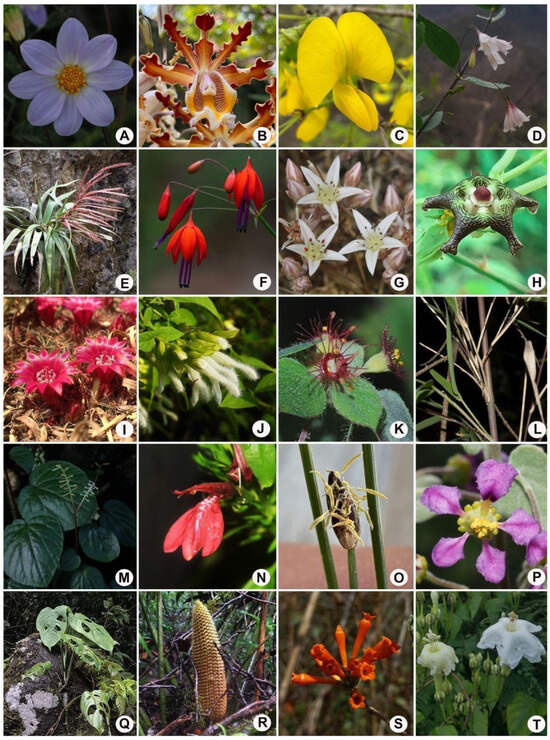
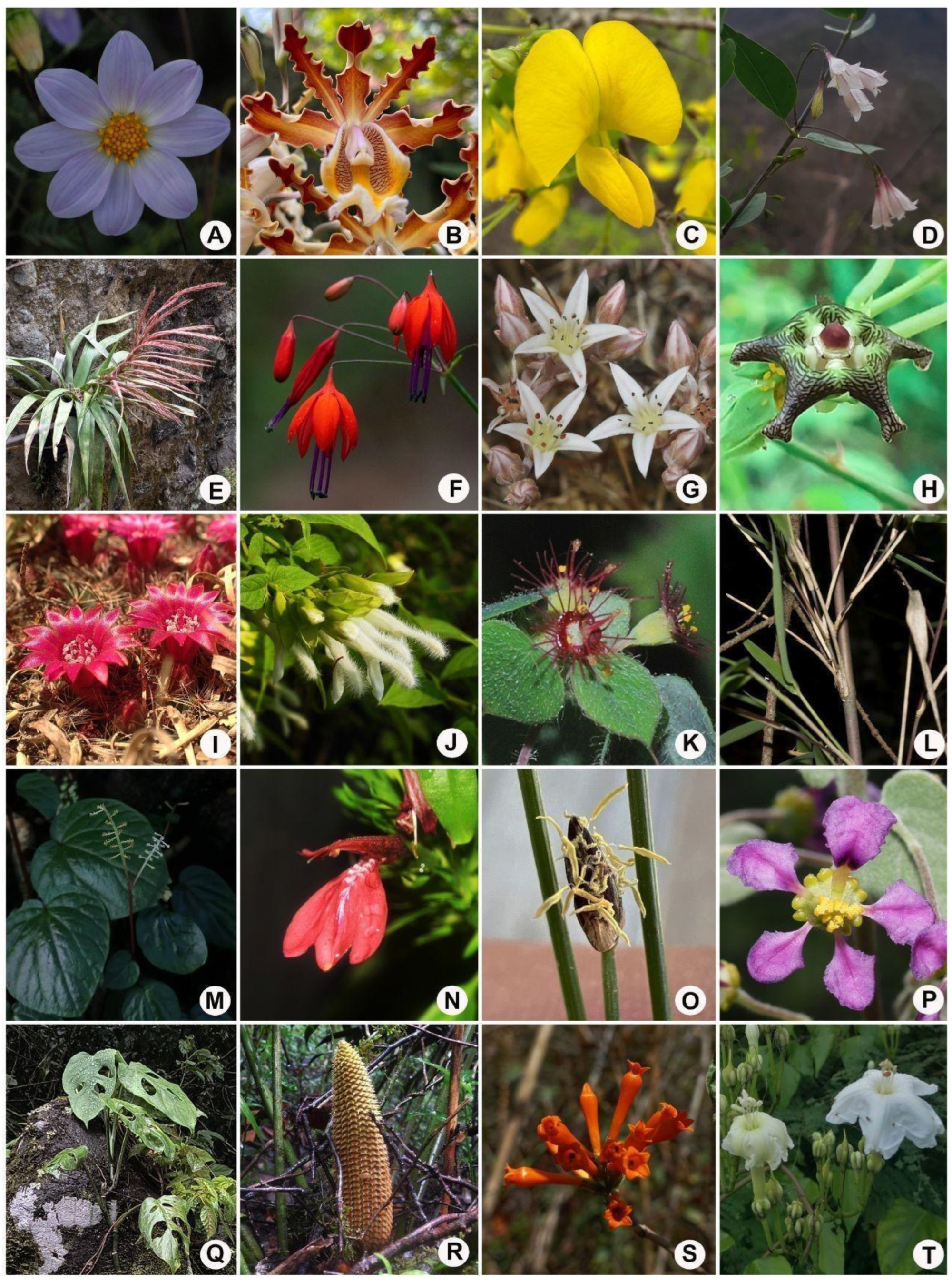
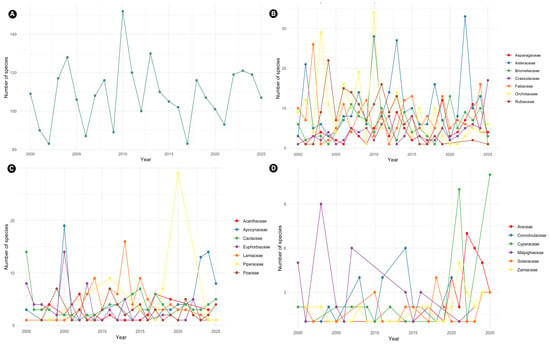
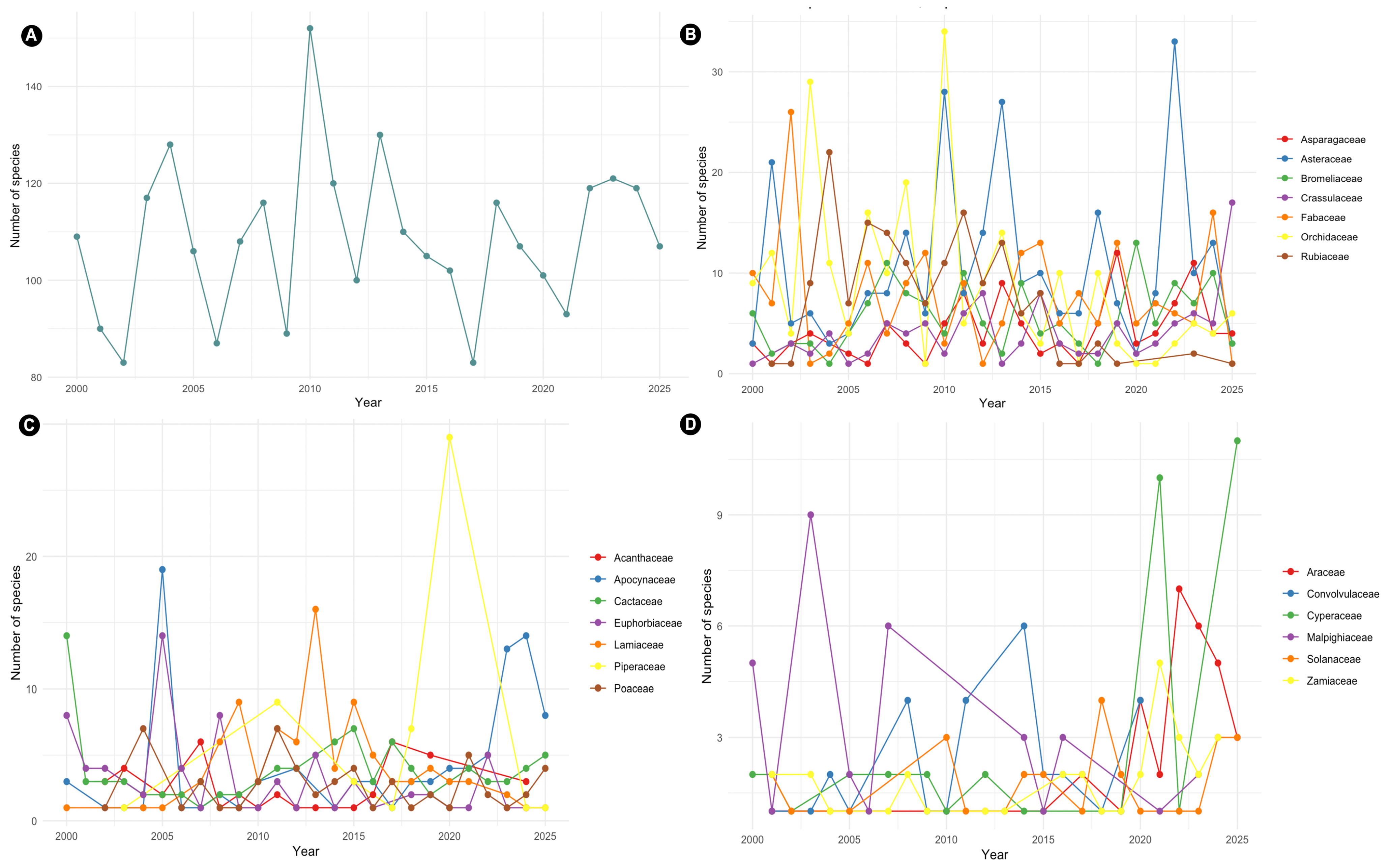
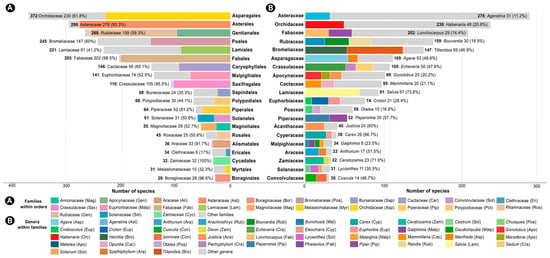
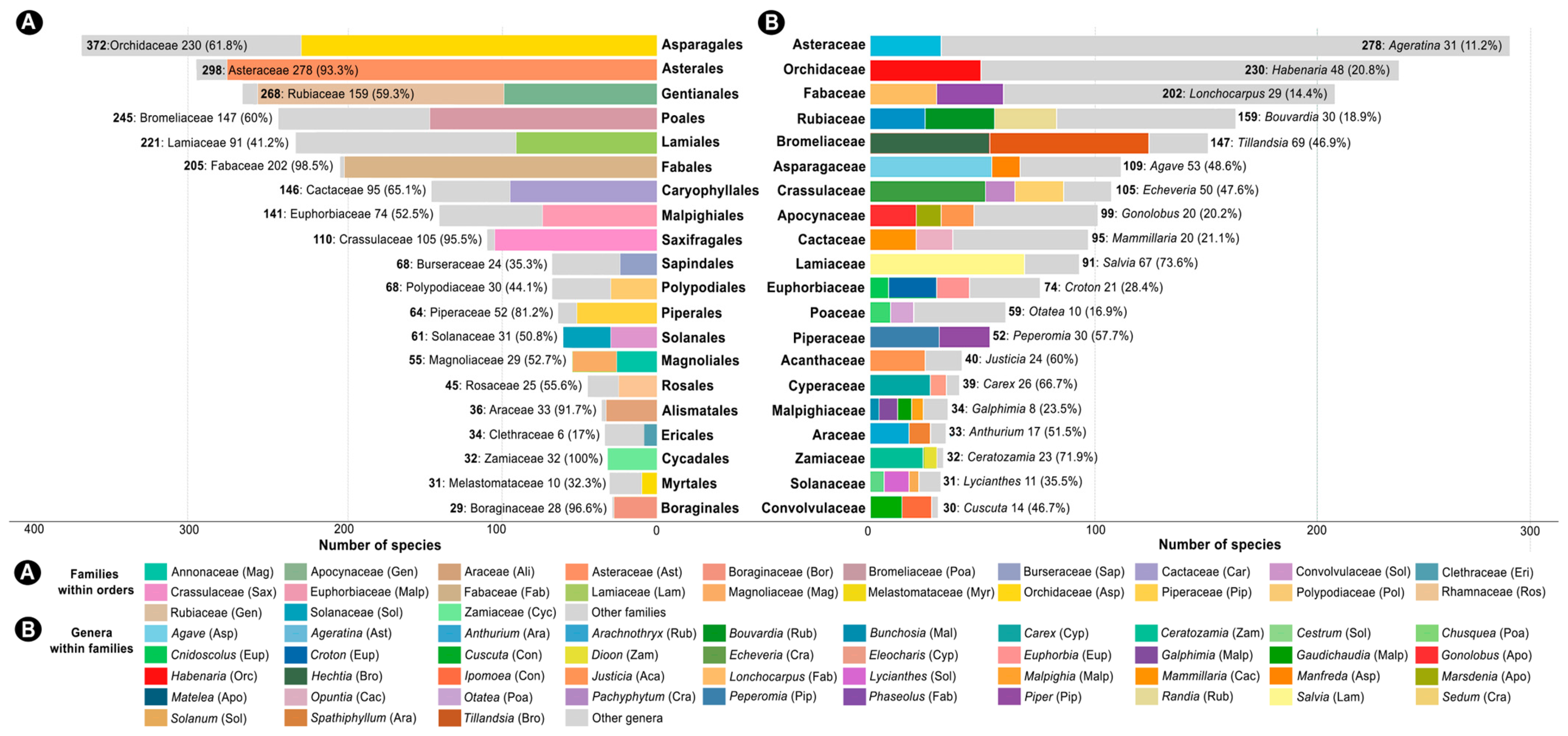
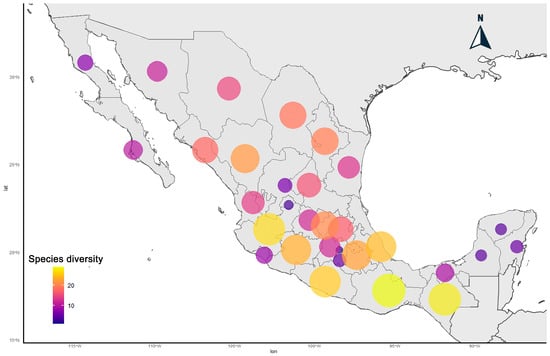
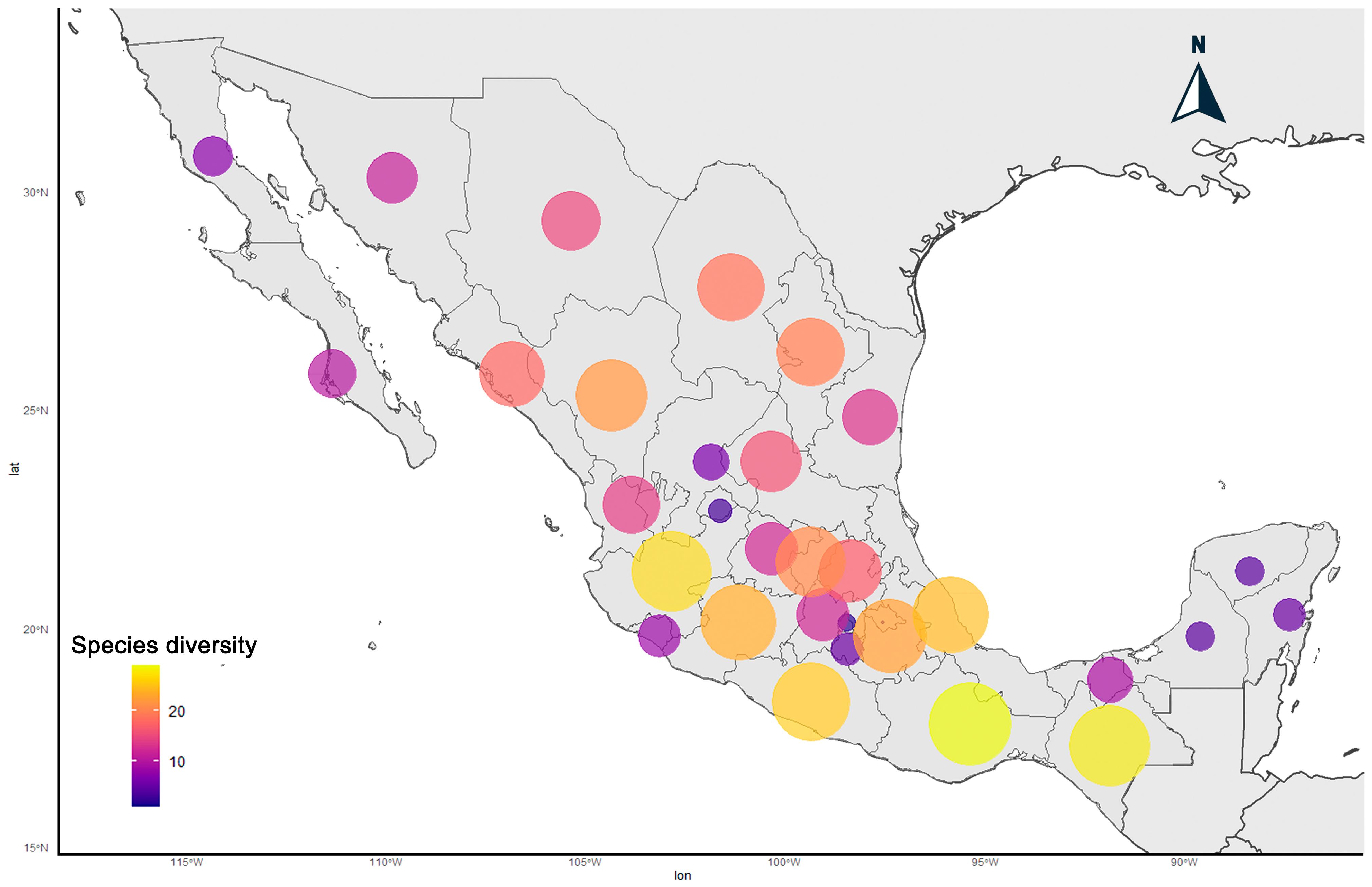
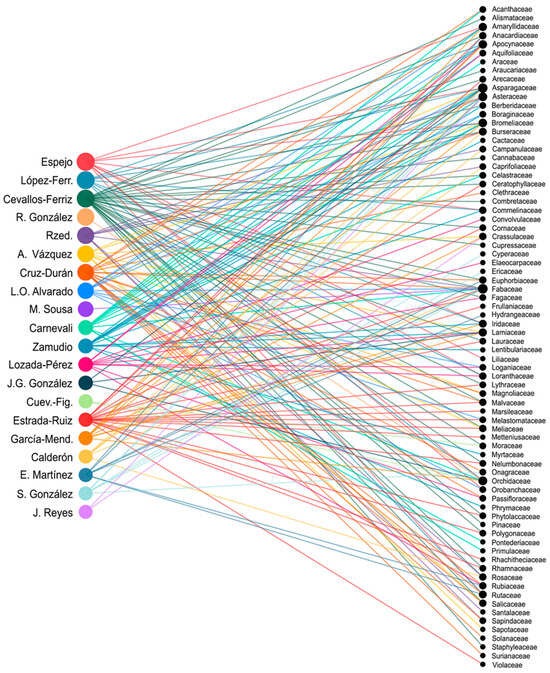
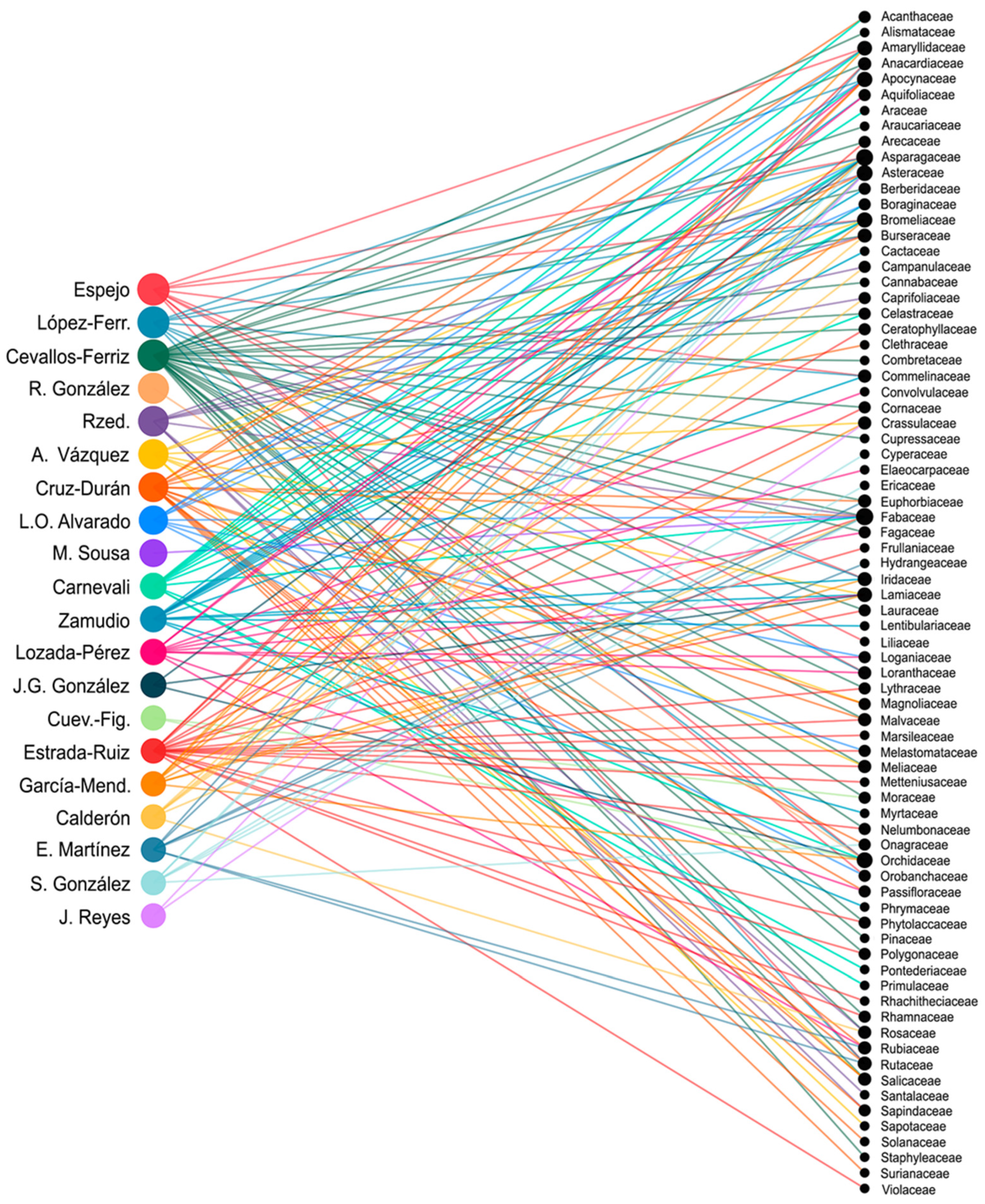
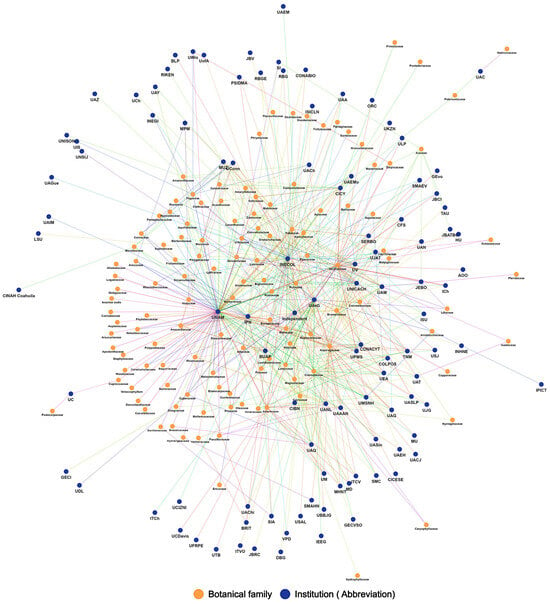
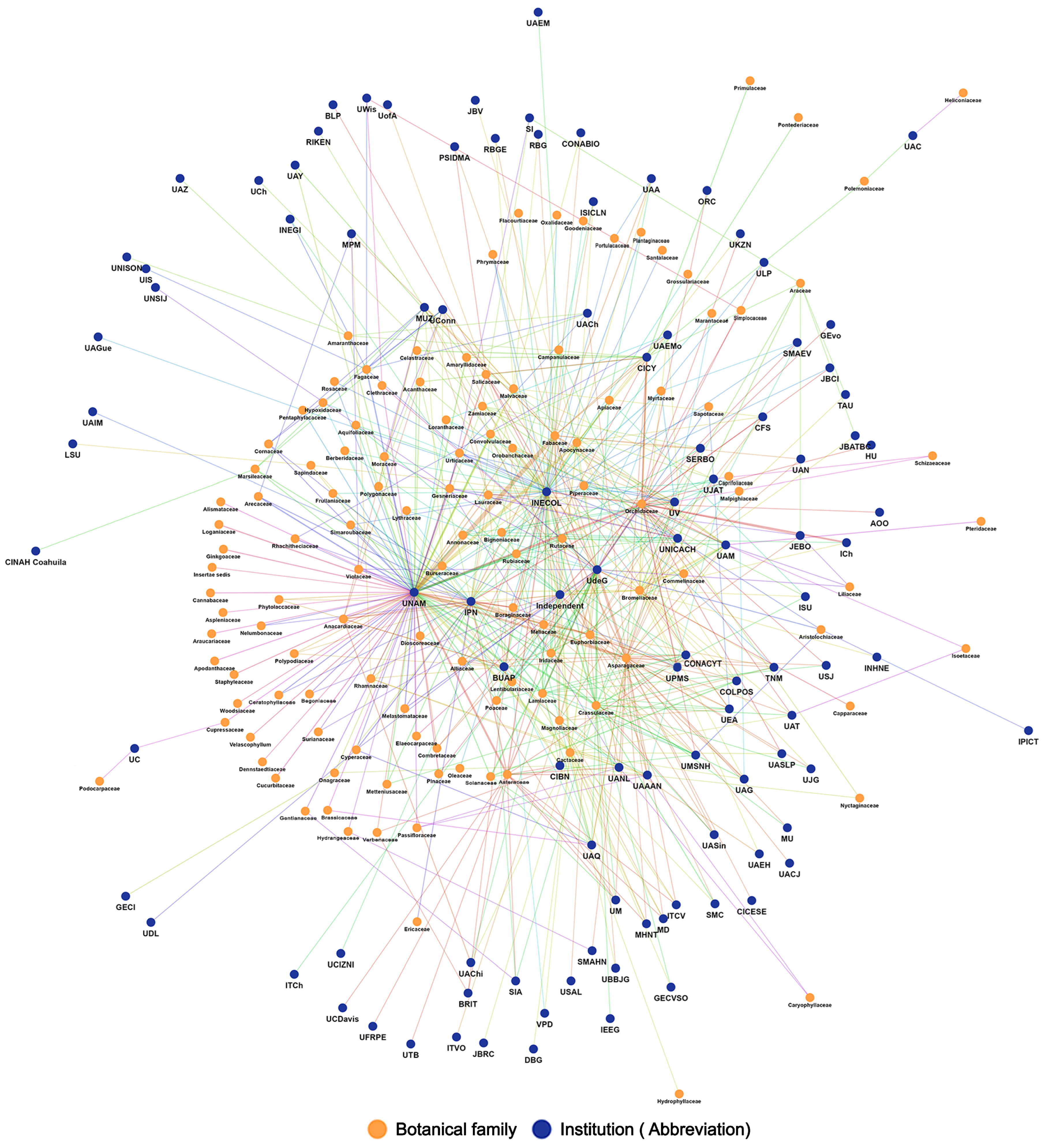
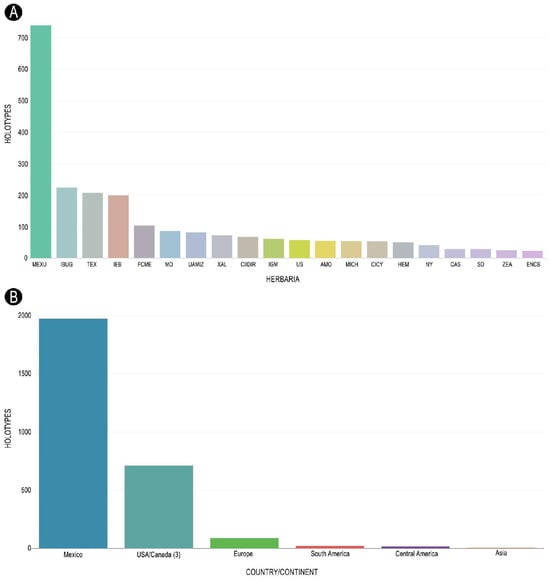
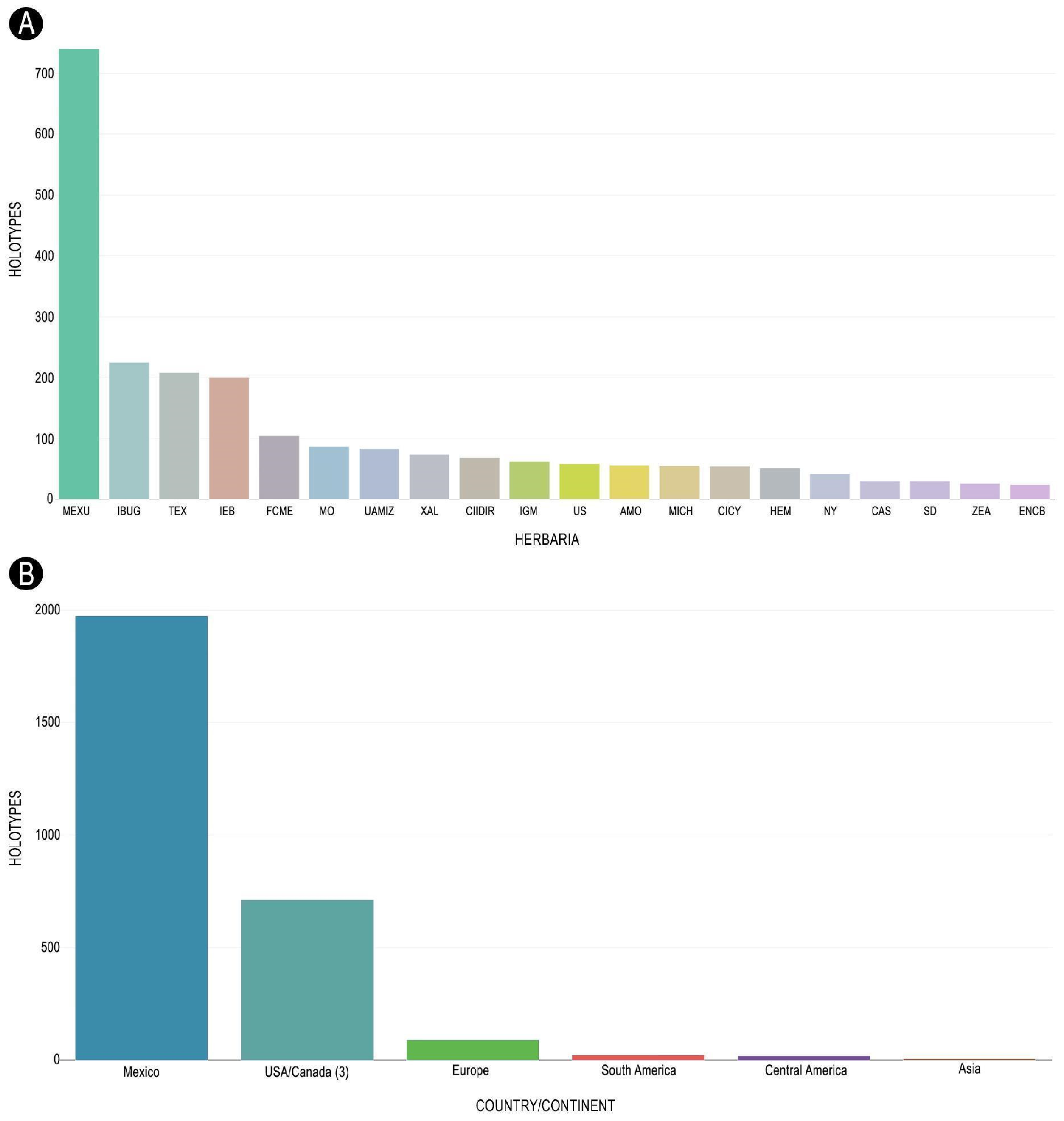
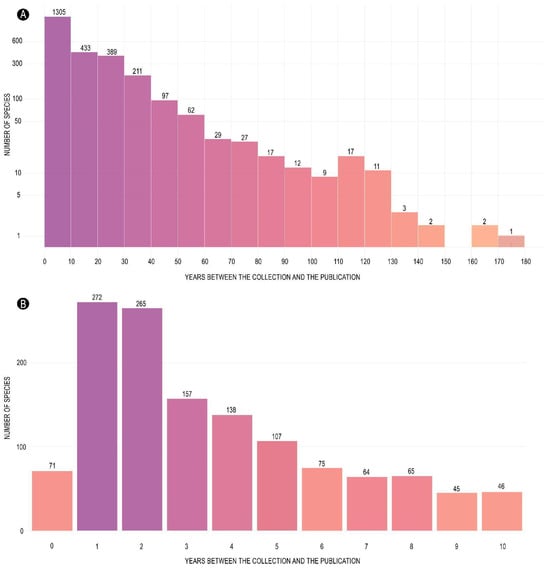
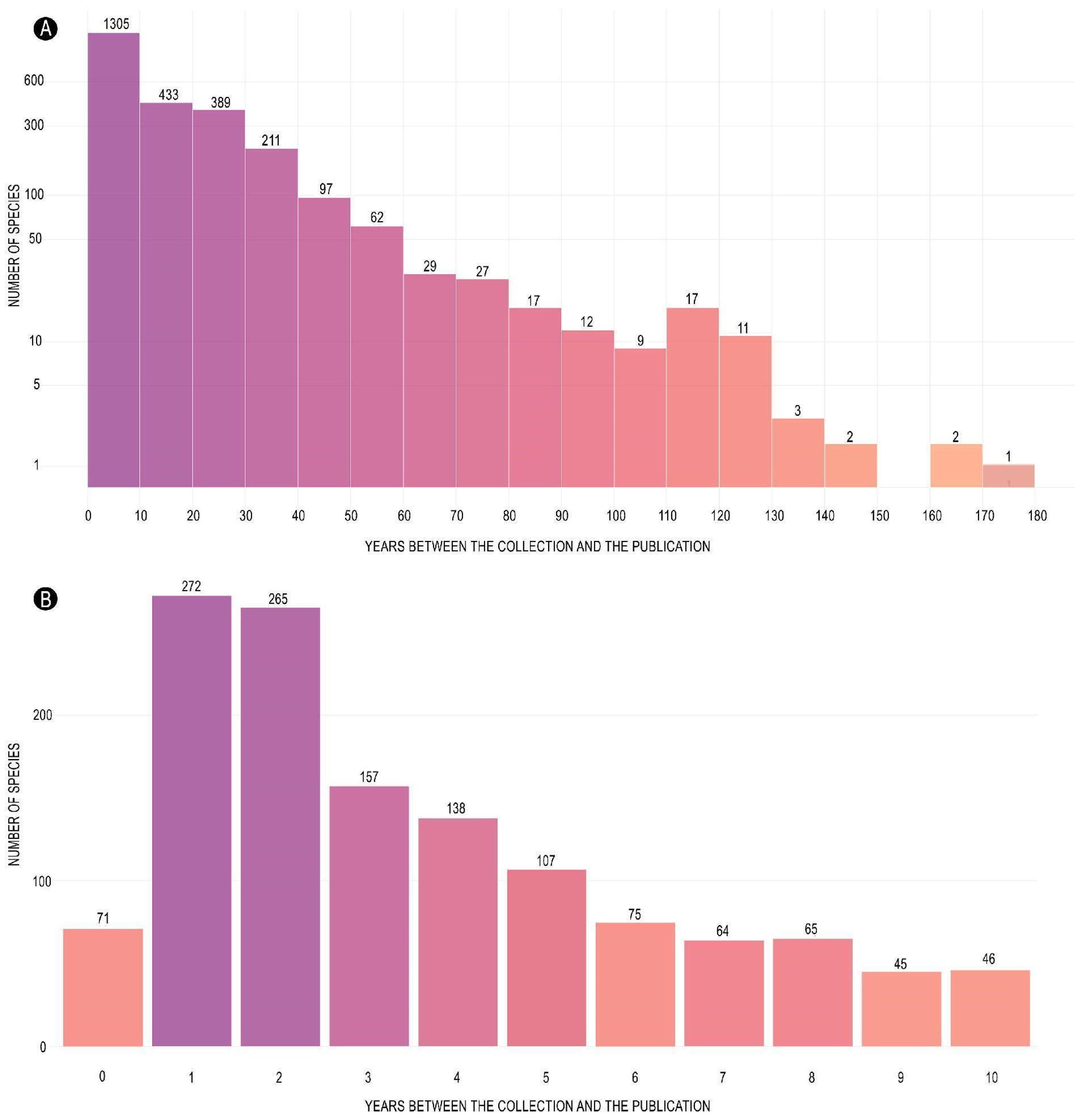

Disclaimer/Publisher’s Note: The statements, opinions and data contained in all publications are solely those of the individual author(s) and contributor(s) and not of MDPI and/or the editor(s). MDPI and/or the editor(s) disclaim responsibility for any injury to people or property resulting from any ideas, methods, instructions or products referred to in the content. |
© 2026 by the authors. Licensee MDPI, Basel, Switzerland. This article is an open access article distributed under the terms and conditions of the Creative Commons Attribution (CC BY) license.