


Abstract
This study presents a cytogenetic and comparative analysis of three rare terrestrial orchid species from Thailand: Habenaria janellehayneana, H. rhodocheila, and Nervilia khaoyaica. Somatic chromosome numbers, karyotype structures, and chromosomal morphology were investigated using conventional cytological techniques. The results revealed that both H. janellehayneana and H. rhodocheila possess a chromosome number of 2n = 42 with a fundamental number (NF) of 84, whereas N. khaoyaica has 2n = 36 and NF = 72. Karyotype formulas were determined as 11m + 10sm for H. janellehayneana, 21m for H. rhodocheila, and 2m + 16sm for N. khaoyaica, all indicating symmetrical karyotypes. Multivariate analyses, including Principal Component Analysis (PCA) and hierarchical clustering, were applied to both morphological and karyological datasets. The results demonstrated clear separation between genera along the primary component axis, while species within Habenaria were distinguished along the secondary axis. Karyotype-based PCA further supported distinct chromosomal patterns among all three species, despite identical chromosome numbers in the two Habenaria taxa. This study provides the first cytogenetic report for these species and highlights the importance of chromosome structure, particularly centromere position and arm ratio, in species delimitation. The findings contribute valuable baseline data for taxonomy, evolutionary studies, and conservation of Orchidaceae in Thailand.
1. Introduction
Orchidaceae is one of the largest and most diverse angiosperm families, with more than 25,000 described species and c. 800 genera, showing wide variation in morphology, life form and ecology across tropical and temperate regions (Wang et al., 2024; POWO, 2026) [1,2]. Many orchids are narrowly distributed, highly specialized, and disproportionately threatened by habitat loss and fragmentation, making robust taxonomic and evolutionary frameworks crucial for their conservation and sustainable use (Wraith et al., 2020; Zhou et al., 2021; Vitt et al., 2023; IUCN, 2026) [3,4,5,6].
Molecular phylogenetic studies have substantially improved the understanding of evolutionary relationships within Orchidaceae and demonstrated that chromosomal evolution should be interpreted within a phylogenetic framework. Previous phylogenetic analyses based on plastid and nuclear DNA sequences consistently placed Nervilia Comm. ex Gaudich. as an isolated and early-diverging lineage within Epidendroideae, indicating a long and independent evolutionary history distinct from many derived orchid groups (Gale et al., 2018; Gale et al., 2025) [7,8]. In contrast, Habenaria Willd. belongs to the tribe Orchideae, subtribe Habenariinae, and represents one of the most species-rich terrestrial orchid lineages characterized by extensive morphological diversification and widespread polyploidy (Bateman et al., 2003; Jin et al., 2017; Moraes et al., 2025) [9,10,11]. Phylogenetic studies further suggest that Habenaria has undergone rapid diversification associated with ecological specialization and repeated chromosomal changes, including dysploidy and polyploidization. Consequently, comparison between Habenaria and Nervilia provides an opportunity to evaluate cytogenetic differentiation between two phylogenetically distant terrestrial orchid lineages with contrasting evolutionary histories.
The present study selected these genera because they represent distinct evolutionary and taxonomic contexts within Orchidaceae. Habenaria species are members of a highly diverse and taxonomically complex lineage in which chromosomal variation may contribute to species diversification, whereas Nervilia represents a comparatively isolated lineage for which cytogenetic information remains extremely limited despite recent advances in molecular systematics. Therefore, investigating chromosome number, karyotype structure, and chromosomal morphology in these rare Thai taxa not only provides baseline cytotaxonomic data, but also contributes to understanding patterns of chromosomal evolution across phylogenetically divergent orchid groups.
Chromosome data are widely regarded as fundamental characteristics in plant systematics, because chromosome number and morphology provide independent evidence for taxonomic relationships and evolutionary divergence (Moraes et al., 2012; Moraes et al., 2016; Moraes et al., 2017; Weiss–Schneeweiss and Schneeweiss, 2013; Baranow et al., 2022) [12,13,14,15,16]. Karyotype analyses, including arm length, centromere position and chromosome type, can reveal polyploidy, dysploidy and structural rearrangements that clarify relationships among closely related taxa and illuminate mechanisms of speciation (Weiss–Schneeweiss and Schneeweiss, 2013; Baranow et al., 2022; Turco et al., 2023; Turco et al., 2024) [15,16,17,18]. Despite their importance, cytogenetic data remain incomplete for many angiosperm groups, including Orchidaceae, where chromosome numbers and detailed karyotypes are known for only a fraction of the described diversity (Baranow et al., 2022; Daviña et al., 2009) [16,19].
Within Orchidaceae, terrestrial taxa of the tribe Orchideae show remarkable chromosomal diversity, with chromosome numbers ranging from 2n = 32 to 72 (Luo, 2004) [20], and evidence that repeated change in the basic number from x = 7 to x = 8 has been important in their evolution (Kashyap and Mehra, 1983) [21]. In the large and taxonomically complex genus Habenaria, most species appear stabilized around hexaploid levels (n = 21), but multiple somatic numbers (e.g., 2n = 32, 42, 44, 48, 50, 64, 80) and chromosomal races have been documented, indicating both polyploidy and aneuploidy in karyotype evolution (Daviña et al., 2009; Luo, 2004; Kashyap and Mehra, 1983; Felix and Guerra, 1998; Felix and Guerra, 2005) [19,20,21,22,23]. Detailed studies in Asian Habenaria show that unusual counts such as 2n = 32 and 64 are rare and may represent derived cytotypes within the genus (Luo, 2004) [20].
Cytological information for the terrestrial genus Nervilia remains extremely sparse compared to its high species richness and complex biogeographic history (Gale et al., 2015; Gale et al., 2018; Gale et al., 2025) [7,8,24]. Molecular phylogenetic work has revealed that Nervilia is an isolated basal epidendroid lineage with extensive cryptic speciation across Africa, Asia and Oceania, but almost all inferences on diversification and species limits have so far relied on DNA sequence and morphology rather than karyotype data (Gale et al., 2018; Gale et al., 2025) [7,8]. Given that chromosome numbers in orchids generally span 2n = 10–240 and frequently change via dysploidy and polyploidy (Moraes et al., 2017; Baranow et al., 2022; Daviña et al., 2009) [14,16,19], basic karyological information for Nervilia is critically needed to complement ongoing phylogenetic and taxonomic studies.
Terrestrial orchids of genera such as Habenaria and Nervilia contribute substantially to the floristic diversity of Asian forest habitats, yet many species are rare, localized, or of uncertain taxonomic status, complicating conservation planning (Gale et al., 2015; Gale et al., 2018; Gale et al., 2025; Kurzweil, 2009; Kurzweil et al., 2023) [7,8,24,25,26]. For these taxa, chromosome numbers, fundamental numbers (NF) and detailed karyotype formulas are still poorly documented, limiting comparative studies and the systematic use of chromosomal characters in taxonomy and conservation assessments (Baranow et al., 2022; Turco et al., 2023; Daviña et al., 2009) [16,17,19].
The significance of chromosomal data in plant taxonomy and evolution has been emphasized by earlier research. At both the generic and subspecific genome levels, chromosome shape offers important information on taxonomic relationships. Therefore, the morphology and structure of chromosomes serve as a key foundation for plant systematics (Weiss–Schneeweiss and Schneeweiss, 2013; Turco et al., 2023) [15,17]. The chromosomal structure of a number of Orchidaceae species has been revealed by earlier research, although limited information is known about karyological studies (Felix and Guerra, 1998; Felix and Guerra, 2005; Daviña et al., 2009; Gale et al., 2015; Moraes et al., 2025) [11,19,22,23,24]. In this context, cytogenetic characterization of rare Thai species of Habenaria and Nervilia is needed to establish baseline information on somatic chromosome number and karyotype structure, enable comparison with related Orchidaceae lineages, and generate additional characters that may support species delimitation and conservation assessment. This study therefore focuses on the somatic chromosomes and karyotype morphology of three rare terrestrial orchids from northeastern Thailand: Habenaria janellehayneana Choltco, B.Moloney & Yong, H. rhodocheila Hance, and Nervilia khaoyaica Suddee, Watthana & S.W.Gale.
2. Materials and Methods
2.1. Sample Collection
Habenaria janellehayneana is a lithophytic terrestrial orchid endemic to Phitsanulok Province, northern Thailand, growing on moss-covered rocky substrates in subtropical forest at ca. 200–1000 m elevation (Kurzweil, 2009; Thummavongsa et al., 2025) [25,27]. H. rhodocheila is a more widespread species distributed from southern China through Thailand, Myanmar, and Indochina to Peninsular Malaysia and the Philippines [25,26], occurring in shaded tropical and subtropical evergreen forests. Both Habenaria species are rare in Thailand and are cultivated as ornamental plants (Thummavongsa et al., 2025) [27]. Nervilia khaoyaica is a terrestrial orchid endemic to Nakhon Ratchasima Province, northeastern Thailand, known from a restricted number of populations in dry evergreen forest (Gale et al., 2015) [24]. All three species are listed under CITES Appendix II as members of Orchidaceae. No formal IUCN Red List assessments are currently available for any of the three species.
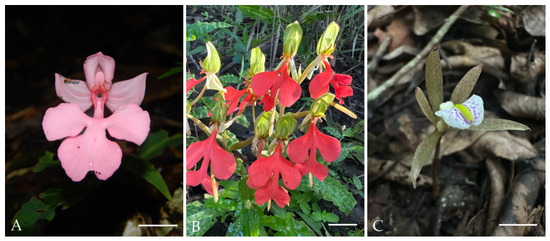
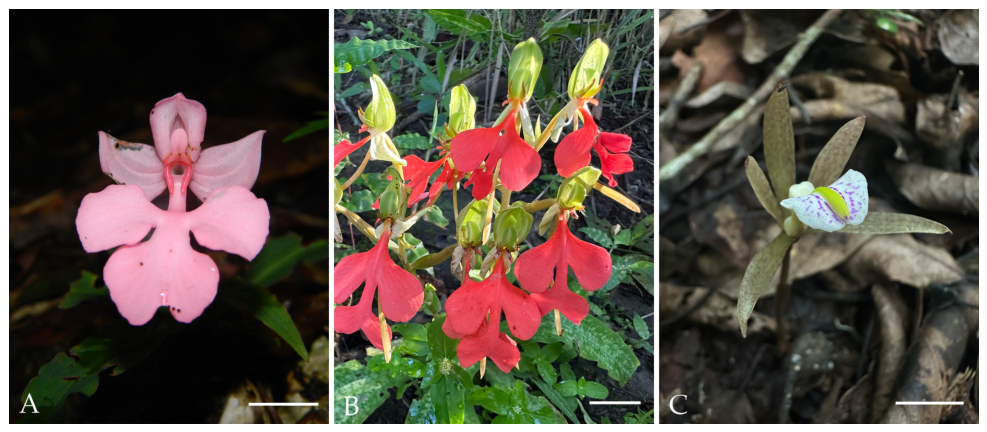
Three rare species of the Orchidaceae were collected from natural habitats, northeastern Thailand, as follows: H. janellehayneana (coll. no. T. Chanokkhun 434) from Phitsanulok province, H. rhodocheila (coll. no. T. Chanokkhun & C. Musimun 667) and N. khaoyaica (coll. no. T. Chanokkhun 587) from Nakhon Ratchasima province. All specimens were deposited at SUT Herbarium. Figure 1 illustrates the floral characteristics of the species examined in this study.
Figure 1.
The flowers of rare Orchidaceae plants in this study: (A) Habenaria janellehayneana (B) H. rhodocheila Hance, (C) N. khaoyaica. Scale bars 1 cm.
2.2. Chromosome Number and Karyotype Study
Young roots of three rare species within the Orchidaceae were pretreated with paradichlorobenzene (HiMedia, Mumbai, India) at 4 °C for 6 h, then fixed in an ethanol–acetic acid (3:1, v/v) (Ethanol: RCI Labscan Ltd., Bangkok, Thailand; Acetic acid: Loba Chemie Pvt., Ltd., Mumbai, India) at room temperature for 30 min. The fixed material was subsequently stored at 4 °C until further analysis. Samples were rinsed with distilled water, hydrolyzed in 1 M hydrochloric acid (HCl; Elago Enterprises Pvt. Ltd., Cheeybrook, Australia) at 60 °C for 5 min, and rinsed again with distilled water. Root tips were stained with 2% aceto-orcein (Loba Chemie Pvt. Ltd., Mumbai, India) and examined using the squash technique, then observed under a light microscope (Zeiss Axiostar Plus, Göttingen, Germany) at 1000× magnification, following the method outlined by Saensouk and Saensouk (2022) [28]. Ten metaphase plates were photographed for chromosome counting. Karyotype formulas were determined based on measurements of metaphase chromosomes and chromosome morphology was characterized according to standard cytological terminology (Saensouk and Saensouk, 2022; Levan et al., 1964) [28,29].
2.3. Statistical Analysis
Multivariate analysis of chromosomal morphological characteristics was conducted using quantitative parameters, including short arm length (Ls), long arm length (Ll), total chromosome length (LT), arm ratio (RL), and centromeric index (CI), to examine patterns of variation and relationships among three terrestrial orchid species. Principal Component Analysis (PCA) was applied to the dimensionality of the dataset and summarize the structure of variation among variables (Bro and Smilde, 2014) [30]. The analysis was conducted based on the variance–covariance matrix of the quantitative data. Principal components were derived according to their eigenvalues and the proportion of variance explained by each component, using SPSS version 29 (IBM Corp., New York, NY, USA).
Hierarchical Clustering Analysis was conducted to assess karyotype similarity among three terrestrial orchid species. Pairwise distances between samples were calculated using Euclidean distance, and clustering was performed using the unweighted pair group method with arithmetic mean (UPGMA). A dendrogram was constructed to illustrate the structural relationships among the samples (Rohlf and Fisher, 1968; Rodrigues and Diniz–Filho, 1998) [31,32].
The goodness of fit between the dendrogram structure and the original distance matrix was evaluated using the cophenetic correlation coefficient, calculated as the correlation between the Euclidean distances and the cophenetic distances derived from the dendrogram (Gomes et al., 2019) [33].
3. Results
3.1. Chromosome Number and Karyotype Structure
The chromosome numbers were performed on 10 metaphase plates for each species. A comparison of the three species (Table 1) shows that both H. janellehayneana and H. rhodocheila share the same somatic chromosome number (2n = 42) and NF (84), consistent with the common hexaploid level reported for Habenaria. In contrast, N. khaoyaica exhibits 2n = 36, matching the typical base number x = 18 for Nervilia. Although all species possess symmetrical karyotypes, they differ in the proportion of metacentric and submetacentric chromosomes, overall chromosome size, and centromeric index (CI) distribution. These cytogenetic differences correspond with their morphological distinctions (Table 1 and Table 2), supporting species-level and genus-level separation.
Table 1.
An overview of the cytogenetic profiles, distribution status, traditional uses, and studied populations of the three Orchidaceae species investigated in this study. Chromosome abbreviations: m, metacentric; sm, submetacentric.
Table 2.
Comparative analysis of the dominant morphological characteristics among the three Orchidaceae species investigated in this study.
These cytogenetic differences, together with variations in overall chromosome size and CI distribution, correspond with their morphological distinctions (Table 1 and Table 2), supporting both species-level and genus-level separation. In addition, all three are rare species; H. janellehayneana and N. khaoyaica are endemic, while both Habenaria species are used as ornamental plants (Thummavongsa et al. 2025) [27].
Cytogenetic investigations indicated significant differences in chromosome number, karyotype organization, and quantitative chromosomal shape across the three terrestrial orchid species studied. Detailed results for each species are provided below.
3.1.1. Habenaria janellehayneana
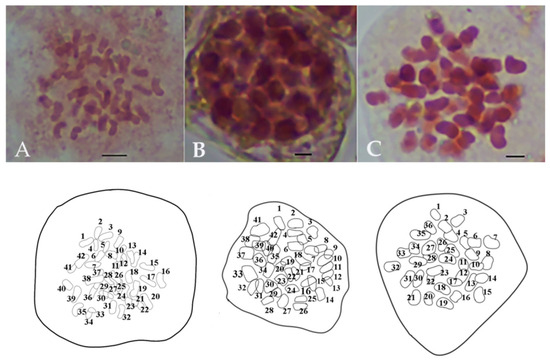
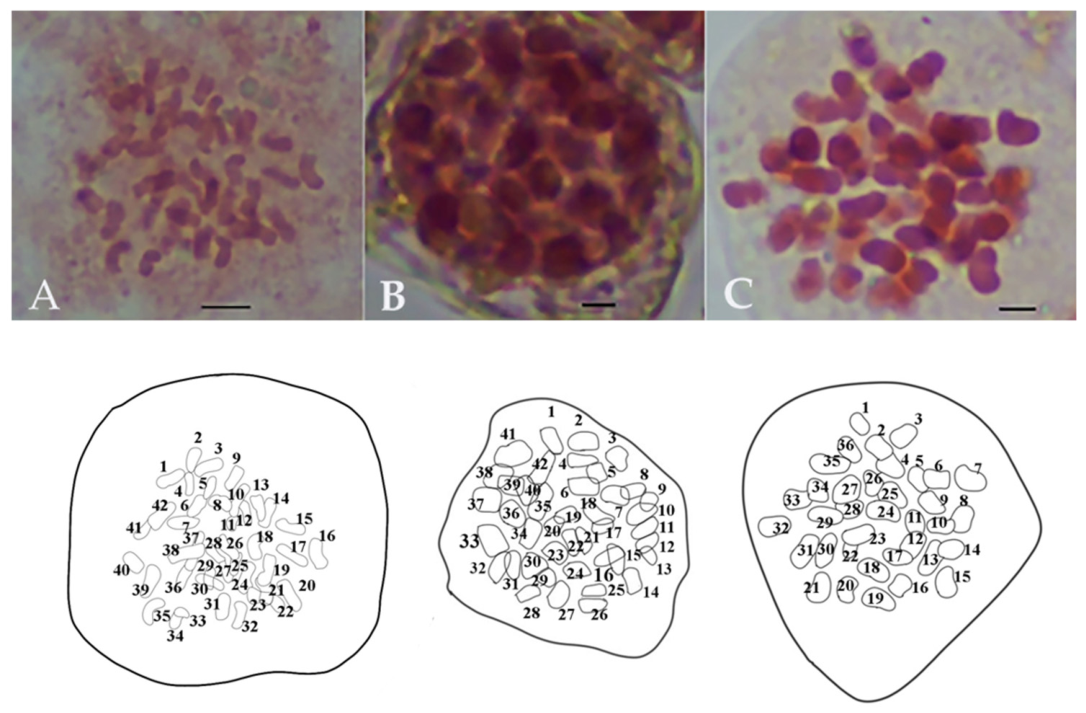
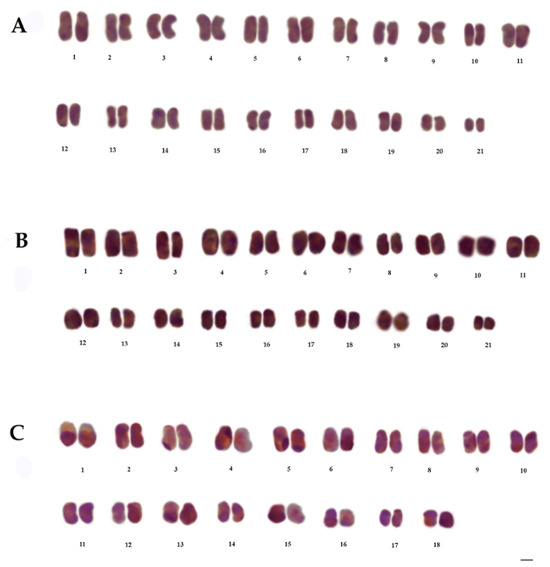
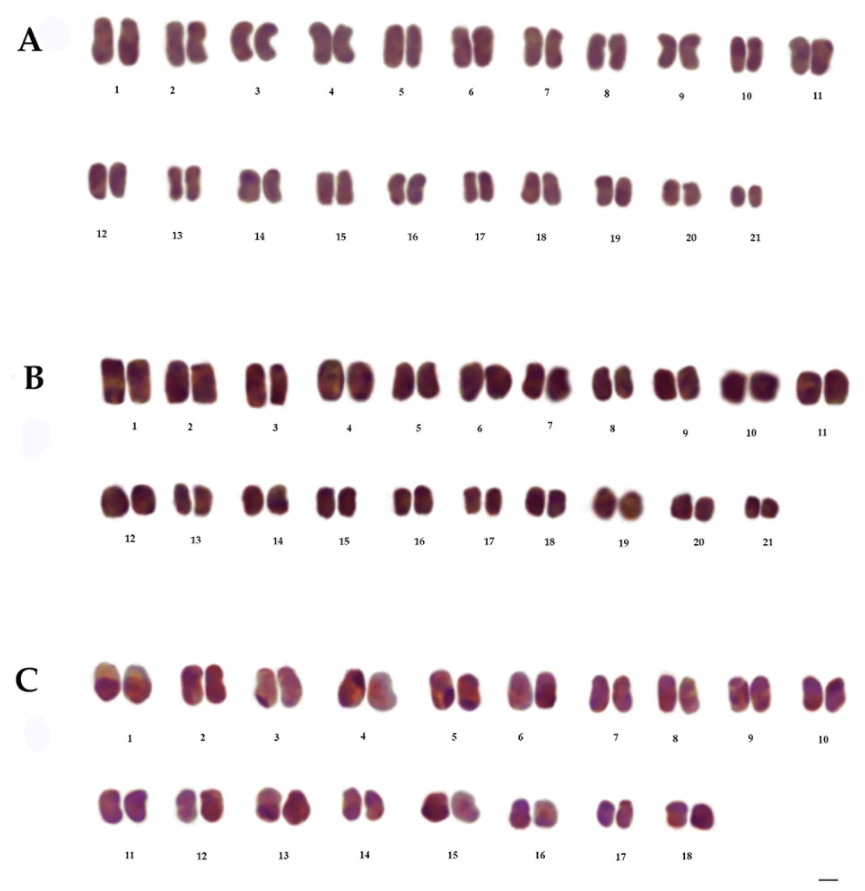
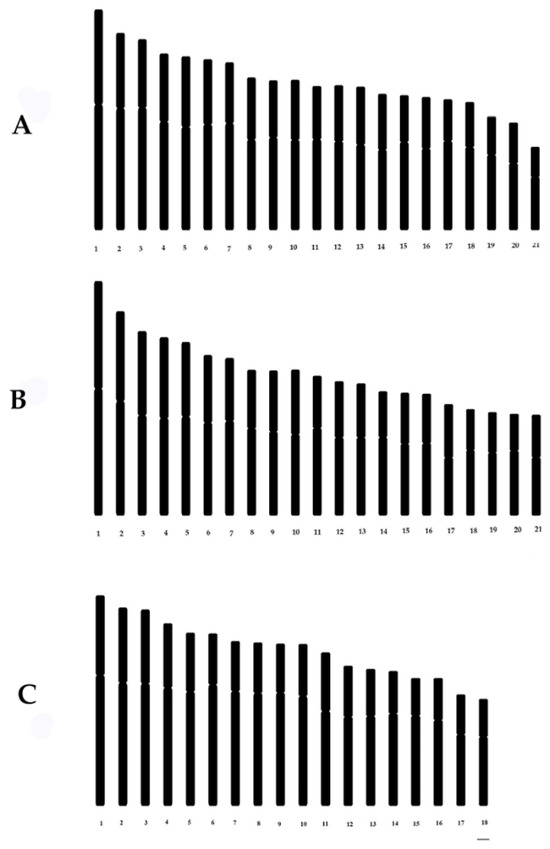
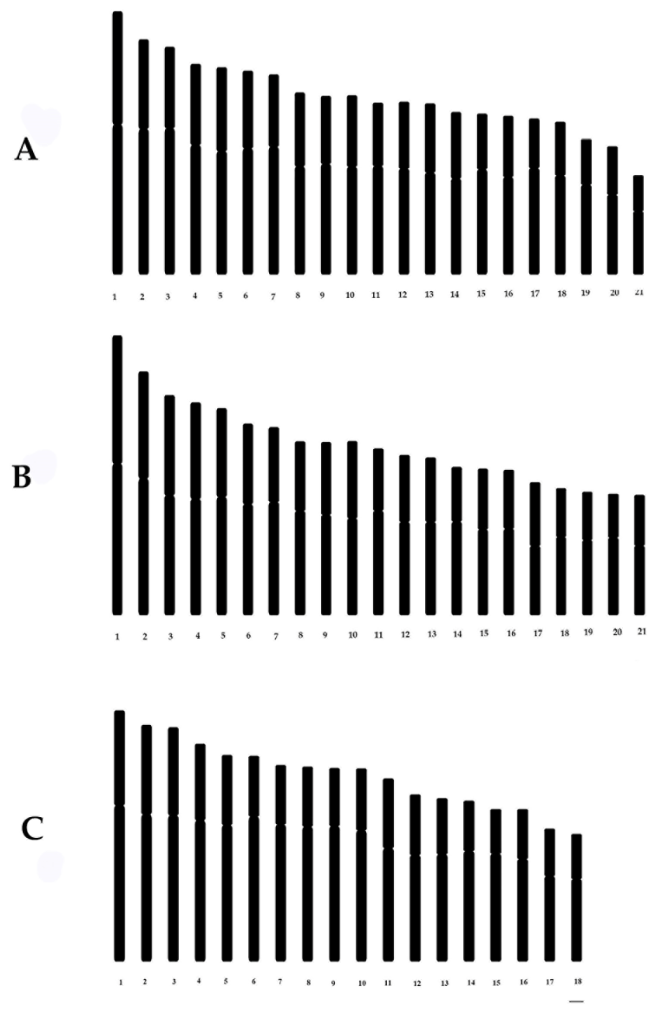
Somatic chromosome counts of H. janellehayneana revealed a chromosome number of 2n = 42 anda fundamental number (NF) of 84 (Table 1, Figure 2A). This study represents the first report of the karyotype of H. janellehayneana, which consists of 11 pairs of metacentric and 10 pairs of submetacentric chromosomes. The resulting karyotype formula, 11m + 10sm, indicates a symmetrical chromosome arrangement (Table 3, Figure 3A), as determined by arm ratio characteristics. The short arm lengths range from 0.68 ± 0.01 to 2.15 ± 0.01 μm, while the long arms vary from 1.22 ± 0.01 to 2.88 ± 0.01 μm. Total chromosome lengths span 1.91 ± 0.01 to 5.03 ± 0.01 μm. The relative length of the chromosomes (RL) is in the ranges from 0.02 ± 0.01 to 0.06 ± 0.01%. The centromere index (CI) ranges from 0.57 ± 0.01 to 0.68 ± 0.02 (Table 3). The mean chromosome lengths and CI values were used to arrange the chromosomes into a standardized ideogram, ordered by decreasing size from left to right (Figure 4A). This study also provides the first report of the NF value, karyotype structure, and ideogram of H. janellehayneana.
Figure 2.
Photomicrographs (above) with drawings (below) of somatic phase: (A) Habenaria janellehayneana (2n = 42), (B) H. rhodocheila (2n = 42), (C) Nervilia khaoyaica (2n = 36). Scale bars = 10 µm.
Table 3.
Mean length of short arm chromosome (Ls), long arm chromosome (Ll), total arm chromosome (LT), relative length (RL) and centromeric index (CI) of Habenaria janellehayneana 2n = 42.
Figure 3.
Karyotype of (A) Habenaria janellehayneana, (B) H. rhodocheila, (C) Nervilia khaoyaica. Scale bar = 10 µm.
Figure 4.
Ideogram of (A) Habenaria janellehayneana, (B) H. rhodocheila, (C) Nervilia khaoyaica. Scale bar = 10 µm.
3.1.2. Habenaria rhodocheila
Somatic chromosome counts of H. rhodocheila revealed a chromosome number of 2n = 42 and an NF of 84 (Table 1, Figure 2B). This is the first study showing the karyotype of H. rhodocheila, which consists of 21 pairs of metacentric chromosomes. The karyotype formula is 21m, which is a symmetrical karyotype (Table 4, Figure 3B). This karyotype is classified as symmetrical due to the arm ratio. The length of the short arms ranges from 0.63 ± 0.01 to 1.83 ± 0.01 μm, the long arms range from 0.98 ± 0.01 to 2.16 ± 0.01 μm, and the total length of the chromosome ranges from 1.72 ± 0.01 to 3.99 ± 0.01 μm. The relative length of the chromosomes (RL) is in the range. The mean chromosome length and CI values range from 0.03 ± 0.01 to 0.07 ± 0.01%, and the centromere index (CI) range from 0.51 ± 0.01 to 0.63 ± 0.01 (Table 4). The mean chromosome lengths and CI were used to arrange the chromosomes into an ideal order, with decreasing size from left to right (Figure 4B). This study also provides the first report of the NF chromosome number, karyotype, and ideogram of H. rhodocheila.
Table 4.
Mean length of short arm chromosome (Ls), long arm chromosome (Ll), total arm chromosome (LT), relative length (RL) and centromeric index (CI) of Habenaria rhodocheila 2n = 42.
3.1.3. Nervilia khaoyaica
Somatic chromosome counts of N. khaoyaica revealed a chromosome number of 2n = 36, with an NF of 72 (Table 1, Figure 2C). This study provides the first report of the karyotype of N. khaoyaica, which consists of two pairs of metacentric and 16 pairs of submetacentric chromosomes. The karyotype formula is 2m + 16sm, indicating a symmetrical karyotype (Table 5, Figure 3C). This karyotype is classified as symmetrical due to the arm ratio. The lengths of the short chromosome arms range from 0.72 ± 0.01 to 1.55 ± 0.03 μm, whereas the lengths of the long arms range from 1.32 ± 0.04 to 2.51 ± 0.02 μm. Total chromosome lengths range from 2.05 ± 0.03 to 4.07 ± 0.03 μm. The relative length of the chromosomes (RL) is in the range. The mean chromosome length and CI values range from 0.04 ± 0.02 to 0.08 ± 0.01%, and the centromere index (CI) range from 0.61 ± 0.01 to 0.70 ± 0.03 (Table 5). The mean chromosome lengths and CI were used to arrange the chromosomes into an ideal order, with decreasing size from left to right (Figure 3C). This study also provides the first report of the NF chromosome number, karyotype, and ideogram of N. khaoyaica.
Table 5.
Mean length of short arm chromosome (Ls), long arm chromosome (Ll), total arm chromosome (LT), relative length (RL) and centromeric index (CI) of Nervilia khaoyaica 2n = 36.
3.2. Principal Component Analysis (PCA) and Hierarchical Clustering Analysis of the Morphology
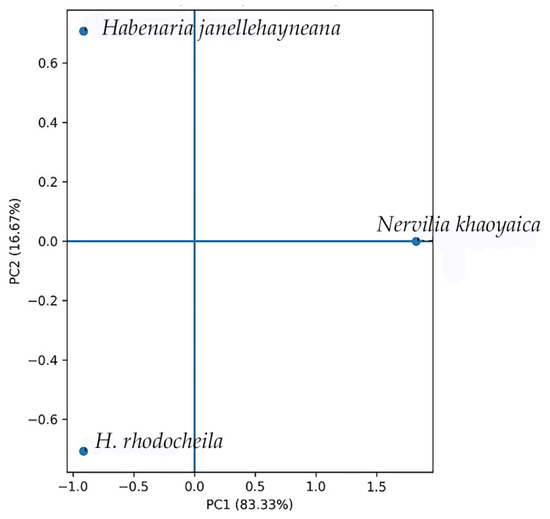
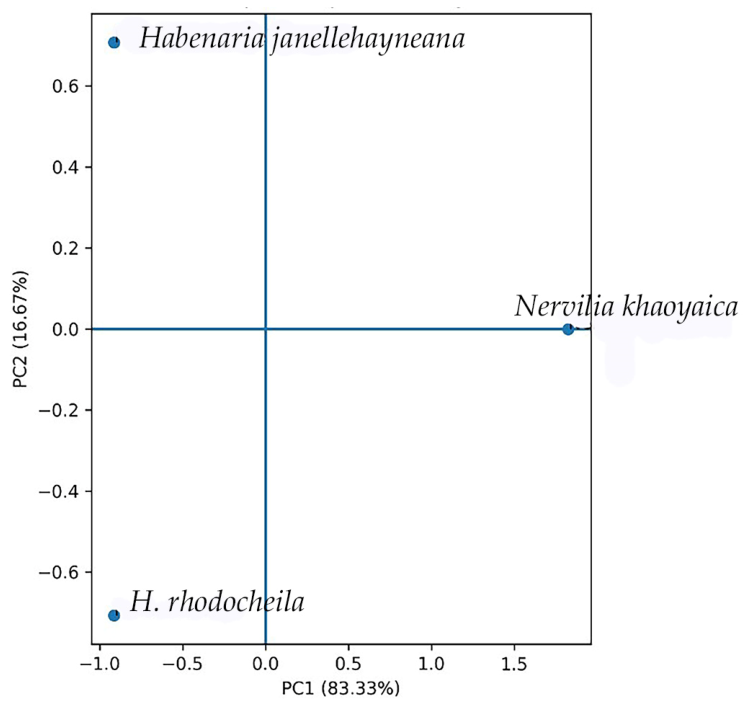
Principal component analysis (PCA) of morphological data from three terrestrial orchid species, Habenaria janellehayneana, H. rhodocheila, and Nervilia khaoyaica, showed that principal component 1 (PC1) had an eigenvalue of 2.50 and explained 83.33% of the data variance (Cumulative Percent), while principal component 2 (PC2) had an eigenvalue of 0.50 and explained less of the data variance (16.67%; Figure 5).
Figure 5.
Principal Component Analysis (PCA) of morphological characters showing clear separation between Habenaria and Nervilia along PC1 (83.33%), while PC2 (16.67%) further differentiates species within Habenaria. This pattern reflects morphological divergence at both intergeneric and interspecific levels.
The species distribution on the PCA graph shows that PC1 clearly distinguishes the genus Habenaria from Nervilia, with N. khaoyaica on the positive side of the PC1 axis, while H. janellehayneana and H. rhodocheila are on the negative side of the axis. For the second principal component (PC2), it was found that it could differentiate between species within the genus Habenaria, with H. janellehayneana and H. rhodocheila located separately along the PC2 axis, reflecting some differences in morphological characteristics, especially in reproductive structure features such as stigma morphology.
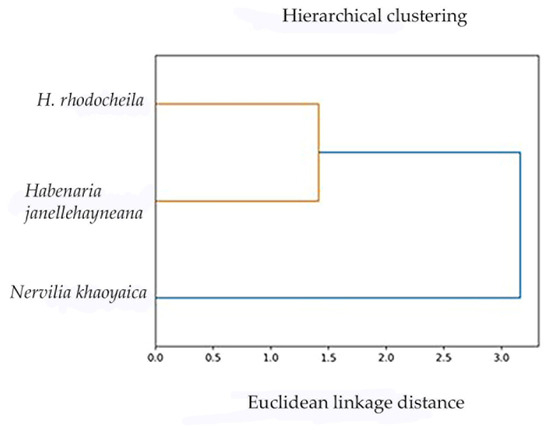
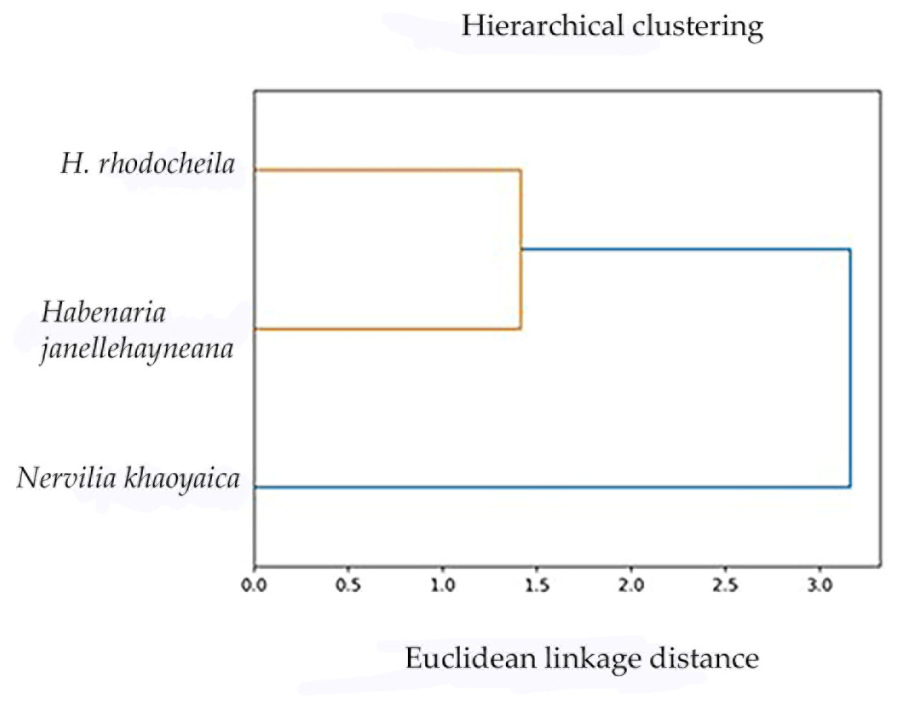
Euclidean hierarchical clustering analysis revealed that the three terrestrial orchids can be divided into two main groups: the Habenaria group, comprising H. janellehayneana and H. rhodocheila, which were initially clustered together, and the N. khaoyaica group, which is clearly separated from the Habenaria group (Figure 6). The dendrogram structure is consistent with the PCA analysis results, showing close relationships within the same genus and significant differences between genera. Furthermore, the cophenetic correlation coefficient (CCC) is approximately 0.90, indicating that the dendrogram can adequately describe inter-species morphological information and is reliable in representing the clustering structure.
Figure 6.
Hierarchical clustering dendrogram based on morphological characters of three orchid taxa, constructed using Euclidean distance method. Habenaria janellehayneana and H. rhodocheila are grouped together, indicating close morphological similarity, whereas Nervilia khaoyaica forms a distinct cluster. The cophenetic correlation coefficient (CCC = 0.90) indicates a high level of agreement between the dendrogram and the original distance matrix.
Both PCA and hierarchical clustering analyses yielded consistent results, clearly separating the Habenaria and Nervilia groups and showing species-level differences within the Habenaria genus. This demonstrates that morphological data can be used to classify the taxonomic relationships of these three orchid species.
3.3. Principal Component Analysis (PCA) and Hierarchical Clustering Analysis of Chromosomal Morphology
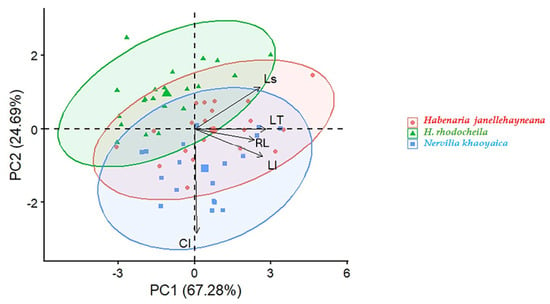
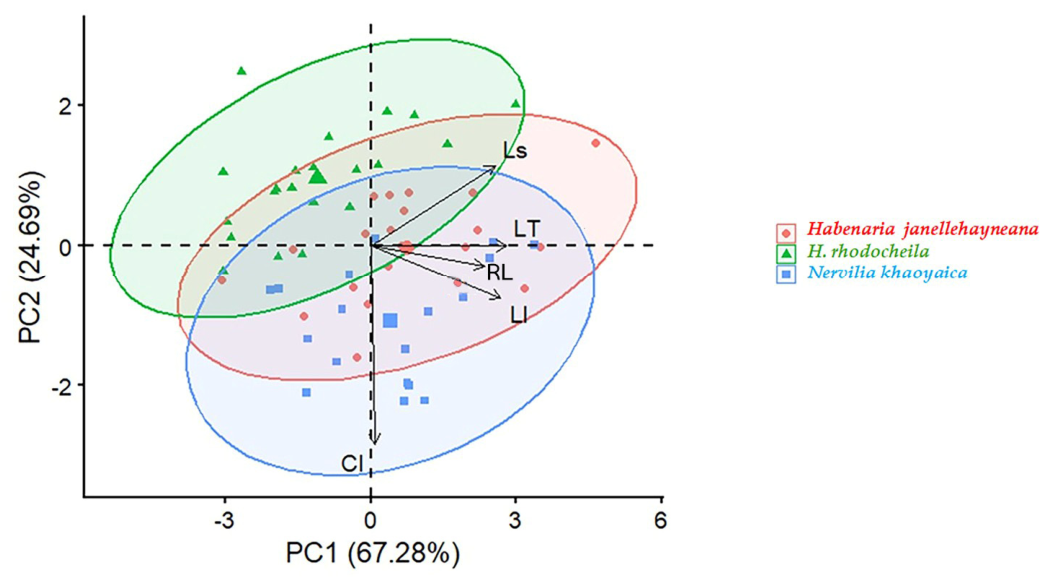
Principal Component Analysis (PCA) of chromosomal morphology, comprising short arm length (Ls), long arm length (Ll), total chromosome length (LT), relative length (RL), and centromere index (CI), of three terrestrial orchid species: H. janellehayneana, H. rhodocheila, and N. khaoyaica, explained 91.97% of the total variance. Principal component axis 1 (PC1) and principal component axis 2 (PC2) explained 67.28% and 24.69% of the variance, respectively (Figure 7). This demonstrates that the karyotypical morphology of the three samples exhibits distinct patterns of variation that clearly differentiate H. janellehayneana, H. rhodocheila, and N. khaoyaica. Considering the direction of each karyotypic variable, it indicates that chromosome arm length and chromosome size (Ll, LT, Ls, and RL) have a positive correlation. Principal element 1 (PC1) plays a crucial role in the distribution of H. janellehayneana, while the chromosome centromere index (CI) has a negative correlation with principal element 2 (PC2) and a stronger correlation with the position of N. khaoyaica. H. rhodocheila shows a clear opposite correlation to CI, reflecting a different karyotype structure. This demonstrates that chromosome centromere indices and chromosome arm length ratios are important factors in determining group differentiation. PCA clustering supports the finding that the three species exhibit karyotypical differences consistent with species identification, particularly the clear separation of N. khaoyaica from the two species in the genus Habenaria. The loci of H. janellehayneana and H. rhodocheila, despite sharing the same karyotype but exhibiting opposing distributions, indicate structural differences in chromosome sets at the species level, although some intraspecies variation remains. Therefore, it can be concluded that karyotypical morphology, especially chromosome centromere indices and chromosome arm length ratios, can be used for both species and genus differentiation. And it clearly supports the separate taxonomic status of H. janellehayneana, H. rhodocheila, and N. khaoyaica.
Figure 7.
Principal Component Analysis (PCA) of karyotypes in Habenaria janellehayneana, H. rhodocheila, and Nervilia khaoyaica. Ls: short arm length, Ll: long arm length, LT: total chromosome length, RL: relative length, CI: centromere index.
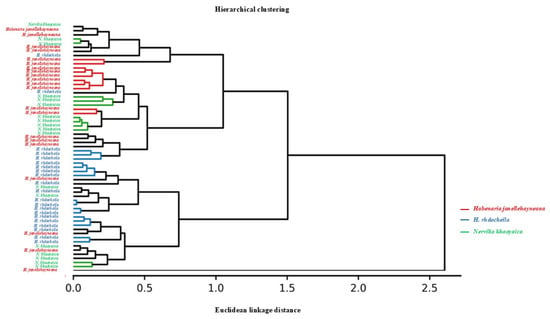
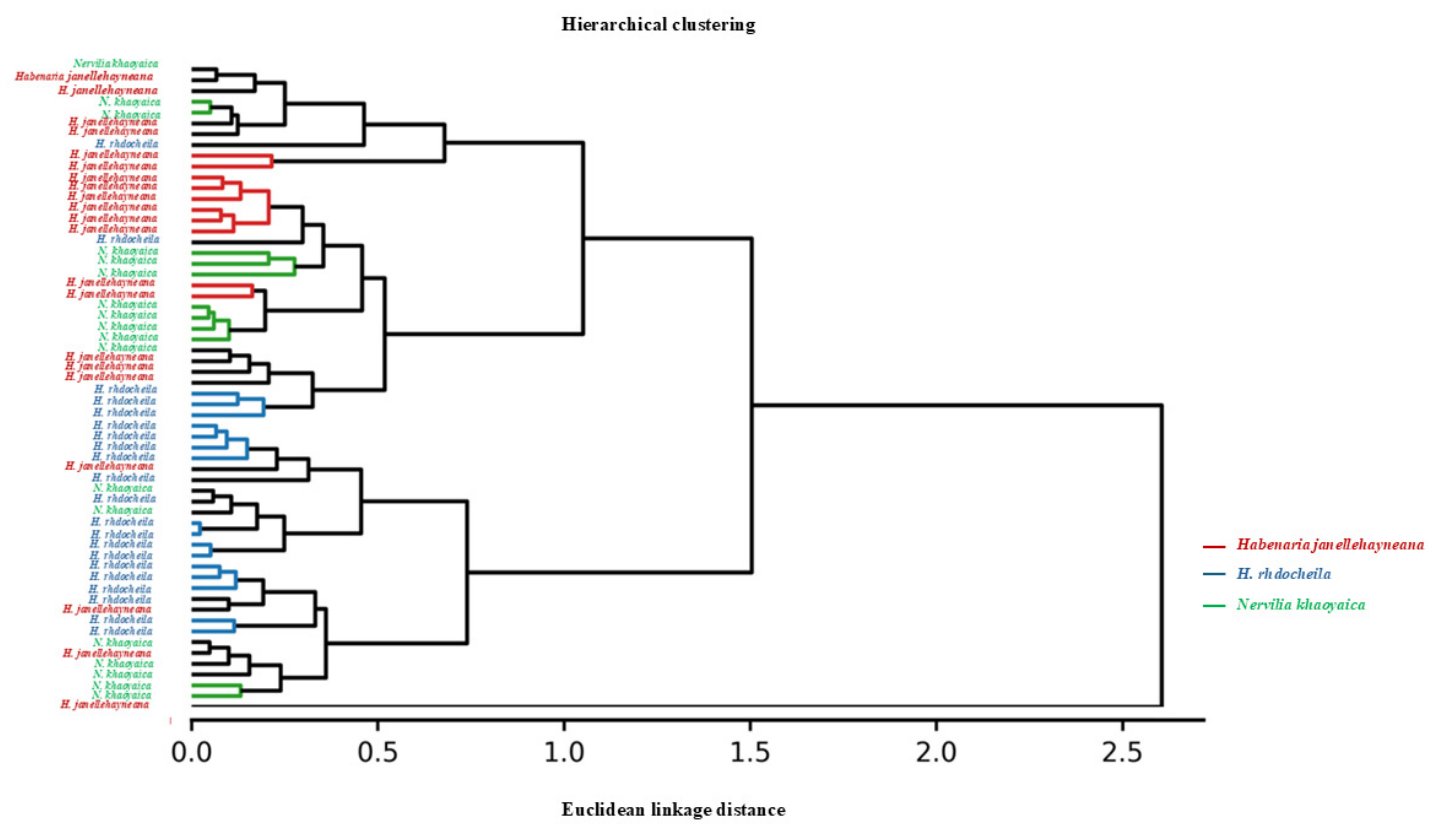
For Hierarchical clustering analysis of chromosomal morphology, analyzing the relationship between three plant species using hierarchical clustering, based on karyotype data and Euclidean distance calculations, revealed clear plant differentiation. Karyotype data used in the analysis included short arm length (Ls), long arm length (Ll), total chromosome length (LT), relative length (RL), and centromere index (CI). The clustering results showed that H. janellehayneana, and N. khaoyaica were initially grouped together before branching out and merging with other species. Their Euclidean distance was lower compared to clustering with H. rhodocheila, indicating that these two species share a more similar karyotype structure and chromosome composition (Figure 8).
Figure 8.
The hierarchical clustering analysis of karyotypes in the orchid species Habenaria janellehayneana, H. rhodocheila, and Nervilia khaoyaica. The dendrogram illustrates the relationships in karyotype similarity based on quantitative chromosomal data, using Euclidean distance and the UPGMA clustering method. Branch colors represent the different species. The clustering pattern clearly demonstrates the separation among species, reflecting distinct differences in their karyotype structures.
Conversely, H. rhodocheila exhibits greater divergence from this group, indicating differences in overall karyotyping characteristics. These differences include variations in chromosome size, proportion of chromosome types, and internal chromosome arrangement, resulting in a more branched structure compared to the other two species. Dendrograms derived from karyotyping data show the highest structural proximity of chromosomes between H. janellehayneana, and N. khaoyaica.
Furthermore, H. rhodocheila exhibits greater overall karyotypical variation and is separated into distinct groups in the clustering hierarchy. Therefore, the assessment of the agreement between the original distance matrix and the dendrogram structure using the cophenetic correlation coefficient under the average linkage method yielded a value of 0.740. This indicates that the clustering can reasonably reflect the distance relationship of karyotypical data, and the dendrogram structure is acceptable in its representation of data differentiation patterns. This clustering supports the idea that karyotypical morphology can be used to differentiate the three orchid species and demonstrates significant chromosomal differences between species.
3.4. Principal Component Analysis (PCA) and Hierarchical Clustering Analysis of the Morphological and Chromosomal Data of Three Terrestrial Orchid Species: H. janellehayneana, H. rhodocheila, and N. khaoyaica
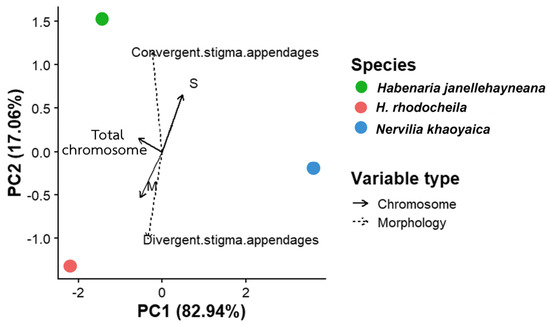
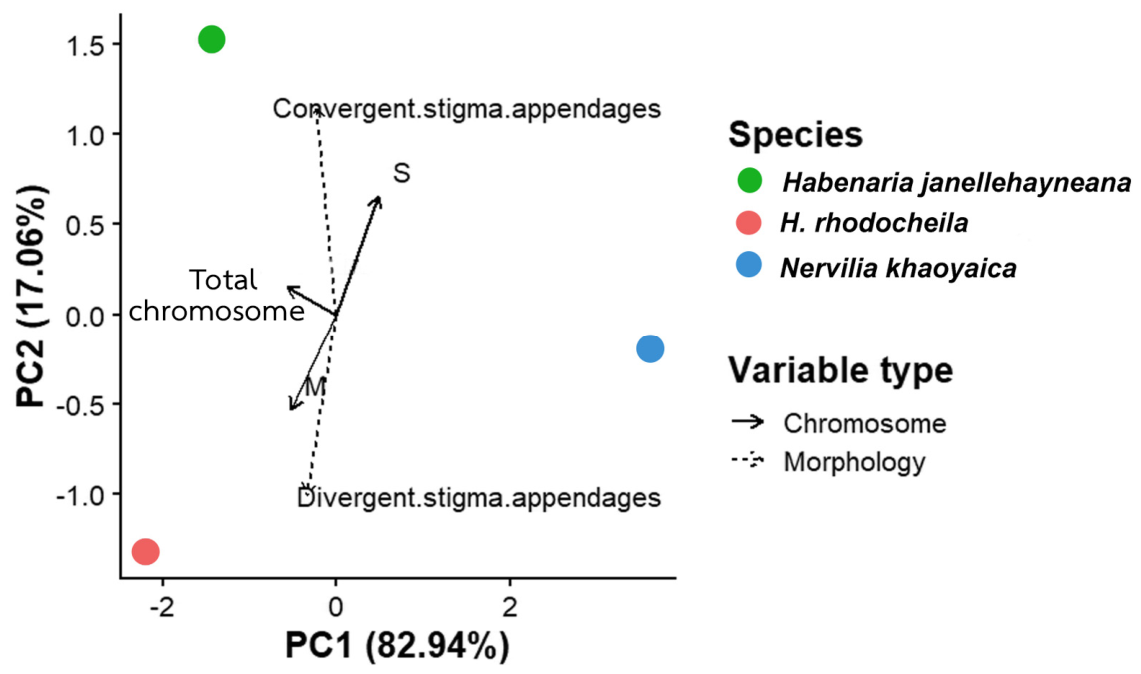
Principal component analysis (PCA) of morphological and chromosomal data from three terrestrial orchid species, H. janellehayneana, H. rhodocheila, and N. khaoyaica, showed that principal components 1 (PC1) and 2 (PC2) had eigenvalues of 14.9286 and 3.0714, respectively. They explained 82.94% and 17.06% of the data variation, respectively, with cumulative variations of 82.94% (PC1) and 100.00% (PC1 + PC2), indicating that the first two principal components explained all the data (Figure 9). The PCA biplot clearly shows that PC1 is the main axis that distinguishes N. khaoyaica from the Habenaria group. In relation to chromosome shapes, including the number of S (Submetacentric) and M (Metacentric) chromosome shapes, and some aspects of stigma morphology, PC2 shows the separation of H. janellehayneana from H. rhodocheila, which is related to differences in stigma morphology. This is considered a key variable in species differentiation within the same genus.
Figure 9.
Principal component analysis (PCA) biplot based on combined karyological and morphological characters of Habenaria janellehayneana, H. rhodocheila, and Nervilia khaoyaica. The first two principal components explained 82.94% (PC1) and 17.06% (PC2) of the total variance, respectively. Points represent species, while arrows indicate the direction and contribution of variables to each principal component. Solid arrows correspond to chromosome-related variables, whereas dashed arrows represent morphological characters (convergent and divergent stigma appendages). The separation of species along PC1 highlights major differences between N. khaoyaica and the two Habenaria species, while PC2 further distinguishes H. janellehayneana from H. rhodocheila. M: Metacentric, S: Submetacentric.
The vector analysis within the biplot confirms that the length and orientation of these variable arrows correlate with their statistical influence; chromosomal attributes exhibit strong loading for genus-level clustering, while stigma morphology represents the key variance required for species-level delimitation within Habenaria. Consequently, these findings suggest that while karyotypic stability or shifts in chromosome symmetry are robust indicators of phylogenetic distance at the genus level, the evolution of specialized reproductive structures like the stigma provides the necessary morphological resolution to identify discrete species within a shared lineage. This integrated approach underscores the importance of combining cytogenetic data with reproductive morphology to resolve complex taxonomic boundaries in Orchidaceae, ensuring that both broad evolutionary trends and specific ecological adaptations are captured within the systematic framework.
The PCA biplot showed clear separation among the three orchid species based on combined morphological and chromosomal variables (Figure 9). Chromosomal variables, including chromosome type composition and arm ratio, were strongly associated with PC1, whereas stigma morphology contributed primarily to PC2. N. khaoyaica was clearly separated from the two Habenaria species along PC1, while H. janellehayneana and H. rhodocheila were separated along PC2.
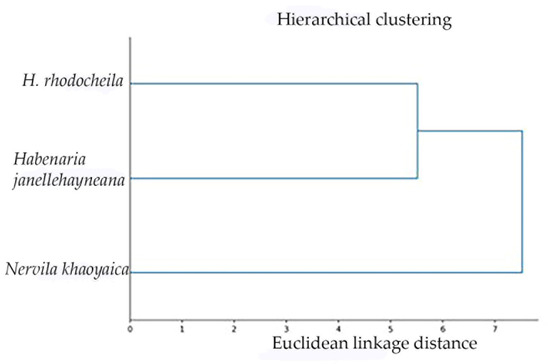
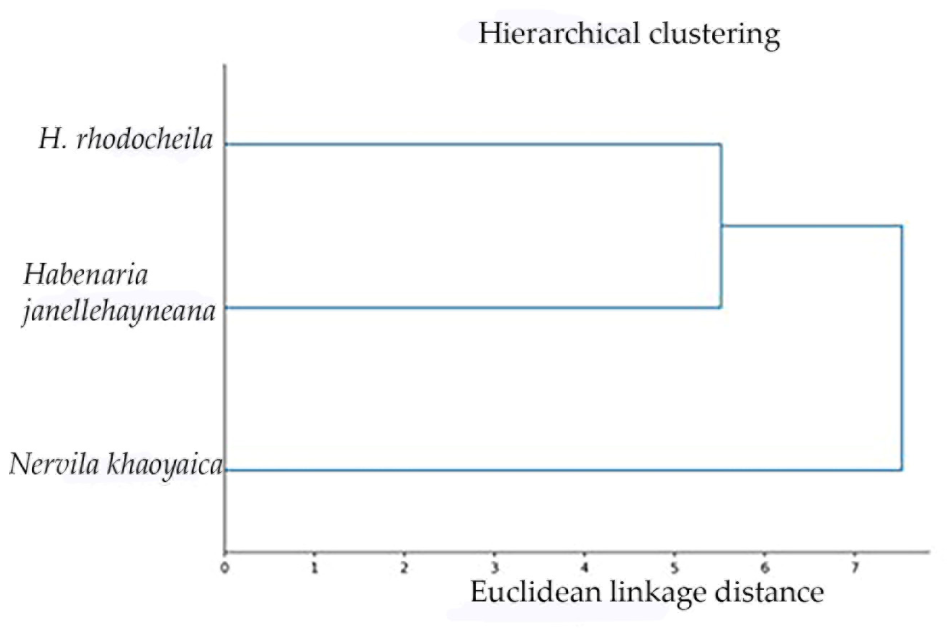
A hierarchical clustering analysis using Euclidean spacing and UPGMA, based on morphological and chromosomal data, revealed the relationship patterns among the three terrestrial orchid species (Figure 10). The analysis showed that H. janellehayneana and H. rhodocheila were clustered together at approximately 5.0 Euclidean distance, indicating high similarity in both karyotype and morphology. This reflects a close taxonomic relationship within the genus Habenaria. In contrast, N. khaoyaica, clearly separated in the dendrogram, shows significant differences in karyotype, morphology, and chromosomal composition. The cophenetic correlation coefficient (CCC) of 0.991 shows a high degree of compatibility with the data structure, suggesting the dendrogram’s ability to adequately describe the data structure. Despite limitations due to the sample size and the characteristics of the data used for analysis.
Figure 10.
Hierarchical clustering dendrogram of Habenaria janellehayneana, H. rhodocheila, and Nervilia khaoyaica based on combined karyological, morphological, and chromosomal composition data. The analysis was performed using Euclidean distance on standardized variables and the UPGMA (average linkage) method.
4. Discussion
The present study clearly demonstrates that subtle karyotypic variation, even among taxa sharing identical chromosome numbers, can provide important evidence for species delimitation and generic classification within Orchidaceae. These findings are consistent with current trends in orchid cytotaxonomy, which increasingly emphasize chromosomal architecture, centromere position, karyotype symmetry, and heterochromatin distribution patterns rather than relying solely on chromosome number (Turco et al., 2023; Turco et al., 2024; Moraes et al., 2025) [11,17,18]. In Orchidaceae, one of the most evolutionarily diverse angiosperm families, relatively stable chromosome numbers may obscure extensive structural genomic reorganization accumulated during lineage diversification, particularly among terrestrial orchids exhibiting highly similar morphological characteristics. Consequently, the integration of cytogenetic evidence with morphological datasets has become an essential systematic approach for resolving taxonomic complexity, reconstructing evolutionary relationships, and identifying genetically distinct conservation units within rapidly diversifying orchid lineages (Baranow et al., 2022; Turco et al., 2024) [16,18].
In Habenaria, the occurrence of 2n = 42 in both H. janellehayneana and H. rhodocheila corresponds to the chromosome number most frequently reported throughout the genus and related members of Orchideae. Historically, this chromosomal complement has generally been interpreted as a hexaploid derivative based on the classical assumption that x = 7 represents the ancestral basic chromosome number, whereas n = 21 constitutes the common gametic complement (Kashyap and Mehra, 1983; Luo, 2004; Felix and Guerra, 1998; Felix and Guerra, 2005) [20,21,22,23]. However, recent phylogenetically informed analyses by Moraes et al. (2025) [11] proposed x = 10 as the ancestral base chromosome number for both Orchideae and Habenariinae, thereby substantially revising long-standing hypotheses regarding chromosome evolution in these groups. This reinterpretation suggests that the recurrent occurrence of 2n = 42 may not merely represent classical polyploidization, but could instead reflect a more complex evolutionary history involving ancient dysploid reduction, secondary polyploidy, and repeated genomic restructuring during lineage diversification. Such an interpretation is particularly significant because it aligns chromosomal evolution more closely with molecular phylogenetic evidence demonstrating dynamic genome evolution throughout Orchidaceae.
Although H. janellehayneana and H. rhodocheila share identical chromosome numbers, the contrasting proportions of metacentric and submetacentric chromosomes indicate substantial structural differentiation within their genomes. These differences may have arisen through several chromosomal mechanisms, including pericentric inversions, reciprocal translocations, unequal transpositions, or localized heterochromatin amplification, all of which are recognized as major drivers of karyotype evolution in orchids (Moraes et al., 2017; Turco et al., 2023; Turco et al., 2024; Moraes et al., 2025) [11,14,17,18]. Structural rearrangements of this nature may reduce chromosomal compatibility during meiosis, thereby promoting reproductive isolation without altering chromosome numbers. Consequently, such processes may facilitate cryptic speciation, particularly in terrestrial orchid groups exhibiting strong ecological differentiation. Comparable patterns have been reported in several orchid lineages, including Maxillariinae and Sobralieae, where closely related species retain stable chromosome numbers despite exhibiting marked karyotypic divergence (Moraes et al., 2012; Moraes et al., 2016; Moraes et al., 2017) [12,13,14]. Therefore, the present findings support the hypothesis that fine-scale chromosomal rearrangements constitute one of the principal mechanisms driving species diversification in terrestrial orchids.
Furthermore, the relatively symmetrical karyotypes observed in both Habenaria species suggest the retention of comparatively conserved chromosomal organization. According to the classical concept proposed by Stebbins (1971) [34], karyotypes dominated by metacentric chromosomes and exhibiting low asymmetry are generally interpreted as representing less evolutionarily derived chromosomal conditions, whereas increased asymmetry is often associated with chromosomal specialization and advanced lineage divergence. Nevertheless, the coexistence of overall karyotype symmetry with detectable structural differentiation indicates that chromosomal evolution in orchids may proceed through gradual internal genomic reorganization rather than through drastic alterations in chromosome number or gross morphology. This pattern of “conservative chromosomal evolution” may partly explain why Orchidaceae exhibits exceptionally high morphological and ecological diversity despite maintaining relatively stable chromosome numbers across many evolutionary lineages.
In contrast, N. khaoyaica exhibited a markedly distinct cytogenetic profile characterized by 2n = 36 and a predominance of submetacentric chromosomes. The reduction in chromosome number relative to Habenaria likely reflects descending dysploidy, a process widely recognized as a major mechanism underlying chromosome evolution in Orchidaceae and numerous monocotyledonous groups (Moraes et al., 2017; Moraes et al., 2025) [11,14]. Descending dysploidy commonly involves chromosome fusion events followed by genomic stabilization through inversions, segmental losses, and heterochromatin reorganization, processes that may ultimately generate reproductive barriers and accelerate lineage divergence. The more asymmetrical karyotype observed in Nervilia may additionally indicate a more evolutionarily derived genomic condition associated with increased chromosomal dynamism. This interpretation is consistent with broader evolutionary trends observed across monocot lineages, in which dysploidy has played a significant role in promoting genomic diversification and ecological adaptation.
The pronounced cytogenetic differentiation between Nervilia and Habenaria further supports the placement of these genera within distinct higher-level evolutionary lineages. Importantly, this cytological divergence corresponds closely with differences in morphology, reproductive biology, ecology, and biogeographical distribution between the two groups. Such congruence between morphological and cytogenetic evidence highlights the importance of integrative taxonomy in orchid systematics, particularly in groups characterized by extensive morphological convergence or phenotypic plasticity, where classification based solely on external morphology may be insufficient or misleading. Consequently, the present study reinforces the critical role of cytogenetic evidence in clarifying species boundaries, reconstructing evolutionary histories, and improving systematic resolution within Orchidaceae.
The clear separation of Nervilia from Habenaria in the PCA analysis supports substantial divergence in both chromosomal and morphological organization between the two genera. Chromosomal variables contributed strongly to genus-level separation, whereas stigma morphology provided additional resolution between species within Habenaria. These findings suggest that karyotypic characteristics may reflect broader evolutionary divergence, while reproductive morphology contributes to species-level differentiation. The integration of cytogenetic and morphological evidence therefore provides a useful framework for resolving taxonomic complexity in terrestrial orchids.
Collectively, the present findings demonstrate that fine-scale karyotype variation provides valuable taxonomic information even among orchid taxa sharing identical chromosome numbers. The integration of cytogenetic and multivariate approaches therefore offers an effective framework for resolving species boundaries and evolutionary differentiation in morphologically complex terrestrial orchids.
The cytogenetic differences observed between Habenaria and Nervilia should also be interpreted in light of their phylogenetic divergence within Orchidaceae. Molecular phylogenetic studies have demonstrated that Nervilia occupies an isolated basal position within Epidendroideae, whereas Habenaria belongs to the more derived terrestrial lineage of Orchideae/Habenariinae (Bateman et al., 2003; Gale et al., 2018; Jin et al., 2017; Moraes et al., 2025) [7,9,10,11]. This deep evolutionary separation may partly explain the substantial differences in chromosome number, karyotype organization, and centromeric structure observed between the two genera in the present study. The predominance of submetacentric chromosomes and the distinct chromosome number in N. khaoyaica may reflect an independent trajectory of chromosomal evolution associated with long-term genomic isolation. In contrast, the relatively conserved chromosome number but structurally differentiated karyotypes observed in Habenaria are consistent with patterns of rapid diversification and recurrent chromosomal restructuring previously proposed for Habenariinae. These findings support the view that chromosomal morphology provides complementary evidence for evolutionary divergence and reinforces the importance of integrating cytogenetics with molecular phylogenetic frameworks in orchid systematics.
5. Conclusions
This study provides the first comprehensive cytogenetic characterization of H. janellehayneana, H. rhodocheila, and N. khaoyaica from Thailand. Although the two Habenaria species share the same chromosome number (2n = 42), they differ in karyotype structure, highlighting the importance of chromosomal morphology in species differentiation. In contrast, N. khaoyaica exhibits a distinct chromosome number (2n = 36) and karyotype pattern, supporting its clear separation from Habenaria. The combined use of cytogenetic and multivariate analyses effectively discriminates between closely related species and genera, demonstrating that karyotype characteristics, particularly centromere position and chromosome arm ratios, are valuable taxonomic markers. These findings contribute important baseline data for the systematics and conservation of Orchidaceae and emphasize the need for further cytogenetic studies in understudied orchid taxa.
Author Contributions
Conceptualization, S.W., S.S. and N.M.; methodology, C.M., S.S., K.K. and N.M.; software, K.K. and S.S.; validation, S.W., S.S., P.S. and N.M.; formal analysis, S.W., S.S., K.K. and N.M.; investigation, S.W., C.M., S.S., P.S., N.M.; resources, C.M., K.K., S.S., and N.M.; data curation, S.W.,C.M., S.S. and N.M.; writing—original draft preparation, S.W., C.M., K.K. and S.S.; writing—review and editing, S.W., S.S., P.S., and N.M.; visualization, S.W., S.S., K.K. and N.M.; supervision, N.M., S.S.; project administration, N.M.; funding acquisition, N.M. All authors have read and agreed to the published version of the manuscript.
Funding
This research was funded by Suranaree University of Technology (SUT), Thailand Science Research and Innovation (TSRI) and National Science, Research and Innovation Fund (NSRF): NRIIS 204272.
Data Availability Statement
All data supporting this study are included in the manuscript. Raw data are available from the corresponding author upon reasonable request.
Acknowledgments
The authors thank Thotsaporn Chanokkhun for assistance with photography and collection. We are grateful to Curt H. Barnes for proofreading the English language of the manuscript. A permit for this research was provided by the Department of National Parks, 161 Wildlife and Plant Conservation of Thailand.
Conflicts of Interest
The authors declare no conflicts of interest.
References
- Wang, Y.; Wang, H.; Ye, C.; Wang, Z.; Ma, C.; Lin, D.; Jin, X. Progress in systematics and biogeography of Orchidaceae. Plant Divers. 2024, 46, 425–434. [Google Scholar] [CrossRef] [Scilit] [PubMed]
- POWO. Plants of the World Online; Royal Botanic Gardens, Kew. Available online: https://powo.science.kew.org/ (accessed on 15 April 2026).
- Wraith, J.; Norman, P.; Pickering, C. Orchid conservation and research: An analysis of gaps and priorities for globally Red Listed species. Ambio 2020, 49, 1601–1611. [Google Scholar] [CrossRef] [Scilit] [PubMed]
- Zhou, Z.; Shi, R.; Zhang, Y.; Xing, X.; Jin, X. Orchid conservation in China from 2000 to 2020: Achievements and perspectives. Plant Divers. 2021, 43, 343–349. [Google Scholar] [CrossRef] [Scilit] [PubMed]
- Vitt, P.; Taylor, A.; Rakosy, D.; Kreft, H.; Meyer, A.; Weigelt, P.; Knight, T. Global conservation prioritization for the Orchidaceae. Sci. Rep. 2023, 13, 6718. [Google Scholar] [CrossRef] [Scilit] [PubMed]
- IUCN Standards and Petitions Committee. Guidelines for Using the IUCN Red List Categories and Criteria, Version 15.1; IUCN: Gland, Switzerland, 2026. [Google Scholar]
- Gale, S.W.; Duangjai, S.; Li, J.; Ito, Y.; Watthana, S.; Termwutthipreecha, P.; Cheuk, M.L.; Suddee, S. Integrative analyses of Nervilia (Orchidaceae) section Linervia reveal further undescribed cryptic diversity in Thailand. Syst. Biodivers. 2018, 16, 377–396. [Google Scholar] [CrossRef] [Scilit]
- Gale, S.W.; Li, J.; Suddee, S.; Traiperm, P.; Peter, C.I.; Buruwate, T.; Crain, B.J.; McCormick, M.K.; Whigham, D.F.; Musthofa, A.; et al. Molecular phylogenetic analyses reveal multiple long-distance dispersal events and extensive cryptic speciation in Nervilia (Orchidaceae), an isolated basal Epidendroid genus. Front. Plant Sci. 2025, 15, 1495487. [Google Scholar] [CrossRef] [Scilit] [PubMed]
- Bateman, R.M.; Hollingsworth, P.M.; Preston, J.; Luo, Y.-B.; Pridgeon, A.M.; Chase, M.W. Molecular phylogenetics and evolution of Orchidinae and selected Habenariinae (Orchidaceae). Bot. J. Linn. Soc. 2003, 142, 1–40. [Google Scholar] [CrossRef] [Scilit]
- Jin, W.-T.; Schuiteman, A.; Chase, M.W.; Li, J.-W.; Chung, S.-W.; Hsu, T.-C.; Jin, X.-H. Phylogenetics of subtribe Orchidinae s.l. (Orchidaceae; Orchidoideae) based on seven markers (plastid matK, psaB, rbcL, trnL-F, trnH-psbA, and nuclear nrITS, Xdh): Implications for generic delimitation. BMC Plant Biol. 2017, 17, 222. [Google Scholar] [CrossRef] [Scilit] [PubMed]
- Moraes, A.P.; Vale, A.A.D.; Santos, R.R.; Venturini, D.G.S.V.; Felix, L.P.; Mercado Ruaro, P.; Chaves, G.A.S.; Batista, J.A. Chromosome number overview in Habenaria (Habenariinae, Orchideae, Orchidaceae): A new smallest diploid number and insight on chromosome number evolution in a karyotypically variable genus. Bot. J. Linn. Soc. 2025, boaf088. [Google Scholar] [CrossRef] [Scilit]
- Moraes, A.P.; Leitch, I.J.; Leitch, A.R. Chromosome studies in Orchidaceae: Karyotype divergence in Neotropical genera in subtribe Maxillariinae. Bot. J. Linn. Soc. 2012, 170, 29–39. [Google Scholar] [CrossRef] [Scilit]
- Moraes, A.P.; Olmos Simões, A.; Ojeda Alayon, D.I.; de Barros, F.; Forni-Martins, E.R. Detecting mechanisms of karyotype evolution in Heterotaxis (Orchidaceae). PLoS ONE 2016, 11, e0165960. [Google Scholar] [CrossRef] [Scilit] [PubMed]
- Moraes, A.P.; Koehler, S.; Cabral, J.S.; Gomes, S.S.L.; Viccini, L.F.; de Barros, F.; Felix, L.P.; Guerra, M.; Forni-Martins, E.R. Karyotype diversity and genome size variation in Neotropical Maxillariinae orchids. Plant Biol. 2017, 19, 298–308. [Google Scholar] [CrossRef] [Scilit] [PubMed]
- Weiss-Schneeweiss, H.; Schneeweiss, G.M. Karyotype Diversity and Evolutionary Trends in Angiosperms. In Plant Genome Diversity; Greilhuber, J., Dolezel, J., Wendel, J., Eds.; Springer: Vienna, Austria, 2013; Volume 2, pp. 209–230. [Google Scholar]
- Baranow, P.; Rojek, J.; Dudek, M.; Szlachetko, D.L.; Bohdanowicz, J.; Kapusta, M.; Jędrzejczyk, I.; Rewers, M.; Moraes, A.P. Chromosome number and genome size evolution in Brasolia and Sobralia (Sobralieae, Orchidaceae). Int. J. Mol. Sci. 2022, 23, 3948. [Google Scholar] [CrossRef] [Scilit] [PubMed]
- Turco, A.; Albano, A.; Medagli, P.; Wagensommer, R.P.; D’Emerico, S. Comparative cytogenetics of the 36-chromosome genera of the Orchidinae subtribe (Orchidaceae) in the Mediterranean region: A Summary and New Data. Plants 2023, 12, 2798. [Google Scholar] [CrossRef] [Scilit] [PubMed]
- Turco, A.; Wagensommer, R.P.; Medagli, P.; Albano, A.; D’Emerico, S. Advances in the study of Orchidinae subtribe (Orchidaceae) species with 40, 42 chromosomes in the Mediterranean region. Diversity 2024, 16, 41. [Google Scholar] [CrossRef] [Scilit]
- Daviña, J.R.; Grabiele, M.; Cerutti, J.C.; Hojsgaard, D.H.; Almada, R.D.; Insaurralde, I.S.; Honfi, A.I. Chromosome studies in Orchidaceae from Argentina. Genet. Mol. Biol. 2009, 32, 811–821. [Google Scholar] [CrossRef] [Scilit] [PubMed]
- Luo, Y.B. Cytological studies on some representative species of the tribe Orchideae (Orchidaceae) from China. Bot. J. Linn. Soc. 2004, 145, 231–238. [Google Scholar] [CrossRef] [Scilit]
- Kashyap, S.K.; Mehra, P.N. Cytological investigations on West-Himalayan orchids. Tribe Orchideae. Cytologia 1983, 48, 633–646. [Google Scholar] [CrossRef] [Scilit]
- Felix, L.P.; Guerra, M. Cytogenetics studies on species of Habenaria (Orchidoideae, Orchidaceae) occurring in the northeast of Brazil. Lindleyana 1998, 13, 224–230. [Google Scholar]
- Felix, L.P.; Guerra, M. Basic chromosome numbers of terrestrial orchids. Plant Syst. Evol. 2005, 254, 131–148. [Google Scholar] [CrossRef] [Scilit]
- Gale, S.W.; Li, J.; Kinoshita, A.; Yukawa, T. Studies in Asian Nervilia (Orchidaceae) V: Nervilia futago, a cryptic new species from southwest Japan confirmed by morphological, cytological, and molecular analyses. Syst. Bot. 2015, 40, 413–425. [Google Scholar] [CrossRef] [Scilit]
- Kurzweil, H. The genus Habenaria (Orchidaceae) in Thailand. Thai For. Bull. (Bot.) 2009, 37, 7–105. [Google Scholar]
- Kurzweil, H.; Ormerod, P.; Sathish Kumar, C. The genus Habenaria (Orchidaceae) in Myanmar. Thai For. Bull. (Bot.) 2023, 51, 98–156. [Google Scholar] [CrossRef] [Scilit]
- Thummavongsa, T.; Musimun, C.; Watthana, S.; Muangsan, N. Flowering, fruit set and breeding systems of Habenaria janellehayneana and H. rhodocheila in Phu Hin Rong Kla National Park, Thailand. Biodiversitas 2025, 26, 3246–3251. [Google Scholar] [CrossRef] [Scilit]
- Saensouk, P.; Saensouk, S. Karyological study of five species Boesenbergia (Zingiberaceae) in Thailand. Cytologia 2022, 87, 123–128. [Google Scholar] [CrossRef] [Scilit]
- Levan, A.; Fredga, K.; Sandberg, A.A. Nomenclature for centromeric position on chromosomes. Hereditas 1964, 52, 201–220. [Google Scholar] [CrossRef] [Scilit]
- Bro, R.; Smilde, A.K. Principal component analysis. Anal. Methods 2014, 6, 2812–2831. [Google Scholar] [CrossRef] [Scilit]
- Rohlf, F.J.; Fisher, D.R. Tests for Hierarchical Structure in Random Data Sets. Syst. Biol. 1968, 17, 407–412. [Google Scholar] [CrossRef] [Scilit]
- Rodrigues, F.; Diniz-Filho, J. Hierarchical structure of genetic distances: Effects of matrix size, spatial distribution and correlation structure among gene frequencies. Genet. Mol. Biol. 1998, 21, 233–240. [Google Scholar] [CrossRef] [Scilit]
- Gomes, G.; Baba, V.; Santos, O.; Sudré, C.; Bento, C.; Rodrigues, R.; Gonçalves, L. Combinations of distance measures and clustering algorithms in pepper germplasm characterization. Hortic. Bras. 2019, 7, 171–179. [Google Scholar] [CrossRef] [Scilit]
- Stebbins, G.L. Chromosomal Evolution in Higher Plants; Edward Arnold: London, UK, 1971. [Google Scholar]

Disclaimer/Publisher’s Note: The statements, opinions and data contained in all publications are solely those of the individual author(s) and contributor(s) and not of MDPI and/or the editor(s). MDPI and/or the editor(s) disclaim responsibility for any injury to people or property resulting from any ideas, methods, instructions or products referred to in the content. |
© 2026 by the authors. Licensee MDPI, Basel, Switzerland. This article is an open access article distributed under the terms and conditions of the Creative Commons Attribution (CC BY) license.