


Abstract
The ‘Tenuifoliae irises’ are a distinctive group of beardless, rhizomatous perennial irises, which are characterised by their somewhat vertical rhizomes, typically clothed at the apex with long maroon-brown, sharp fibrous remains of leaf sheaths; perianth tube long, filiform to scapiform; stigma bilobed; capsules often trigonous to six-ribbed, apically beaked; and seeds angulose to subcubic or pyriform, lacking fleshy appendages, and with testa hard, irregularly wrinkled. The representatives of the aggregate are mostly native to the dry steppes and grasslands from lowland to high mountain habitats of Central and Eastern Asia, extending westwards to the Black Sea and Caspian regions. Morphological classification of the ‘Tenuifoliae irises’ recognises about ten to eleven species, which are arranged into two genera, Sclerosiphon and Cryptobasis. Diverse molecular research recovered members of the ‘Tenuifoliae irises’ in contrasting placements within the ‘Iris-flower clade’. Sometimes, Sclerosiphon was sister to Eremiris, but Cryptobasis aligned with the ‘Spuria irises’ (Chamaeiris) and the ‘Spanish irises’ (Xiphion and related genera); in other cases, both Sclerosiphon and Cryptobasis formed a clade sister to Chamaeiris, or Cryptobasis alone was identified as the basal member of the Iris s.l. clade, positioned immediately after Siphonostylis. To examine these taxonomic discrepancies within a rigorous molecular systematic framework and using 12 reliably authenticated specimens, we generated 24 sequences of the matK gene (12) and the trnL (UAA)–trnF (GAA) loci (12) from members of the ‘Tenuifoliae irises’. These sequences were subsequently incorporated into a comprehensive dataset of the ‘Iris-flower clade’, enabling a broader analytical assessment. The obtained three-taxon statement hierarchy of patterns and maximum likelihood phylogenetic trees both recover the ‘Tenuifoliae irises’ as monophyletic and sister to Chamaeiris, and in turn to the ‘Xiphion s.l. clade’. We also found Sclerosiphon and Cryptobasis as sister genera. The morphological and karyological data supporting those relationships are discussed, which allow getting back to Rodionenko’s sources and recovering Sclerosiphon in his original sense, alongside Cryptobasis. Furthermore, the molecular results allow us to expand Sclerosiphon to include the Eastern Chinese members of the aggregate. In consequence, five new combinations (one series and four species) are established in the genus, one lectotype is designated, and data on nomenclature, distribution and ecology of the accepted species are reported.
1. Introduction
When considered in its broadest sense, the genus Iris L. (Iridaceae) is among the most diverse and well-known genera in Asparagales, encompassing nearly 300 species that are widely distributed across the Northern Hemisphere [1]. From a morphological perspective, irises (‘rainbow flowers’) exhibit a considerable degree of diversity with regard to both vegetative and floral characteristics, which is frequently associated with geographical or ecological radiation [2,3,4]. Furthermore, the cytogenetic variability observed in the group is characterised by a range of basic chromosome numbers, x = 7–12, and frequent occurrence of polyploidy, allopolyploidy, disploidy and aneuploidy processes [5,6]. Irises are a highly popular choice among gardeners and have a significant economic impact on the horticultural trade. These plants have been used as ornaments throughout the world since antiquity, as well as for medicinal, culinary and industrial purposes [7,8]. The group also comprises a number of exceptional model systems in the field of evolutionary biology, most notably those employed for the study of hybridisation and speciation in plants [2,9,10]. Indeed, forced hybridisation is the origin of thousands of garden cultivars of irises [11,12], and reticulate hybridisation and allopolyploidy [13] are also responsible for speciation events in the genus.
However, the classification of the irises is intricate, and the placement of certain groups remains contentious or unresolved. Furthermore, new findings in eastern Asia [14,15] are challenging the current classification and suggesting that the taxonomic arrangement of certain groups should be revised. In addition, the majority of the morphological characteristics that are widely employed for the classification of most groups have been shown to be of limited utility and have been identified as homoplastic in the phylogenies derived from DNA sequencing [16,17,18]. In fact, molecular work involving members of the major taxa (subgenera, sections, etc.) of Iris s.l. (the ‘Iris-flower clade’ sensu Mavrodiev et al. [19]) yielded phylogenies in which morphologically close groups resulted genetically incoherent [20,21,22,23]. Additionally, many of the broadly accepted infrageneric taxa [24] were found to be non-monophyletic, and hence they should not be utilised as proper taxonomic entities as currently circumscribed [6,23]. This conclusion, however, was evident even when considered solely from a standard morphological perspective [3,4,7,25].
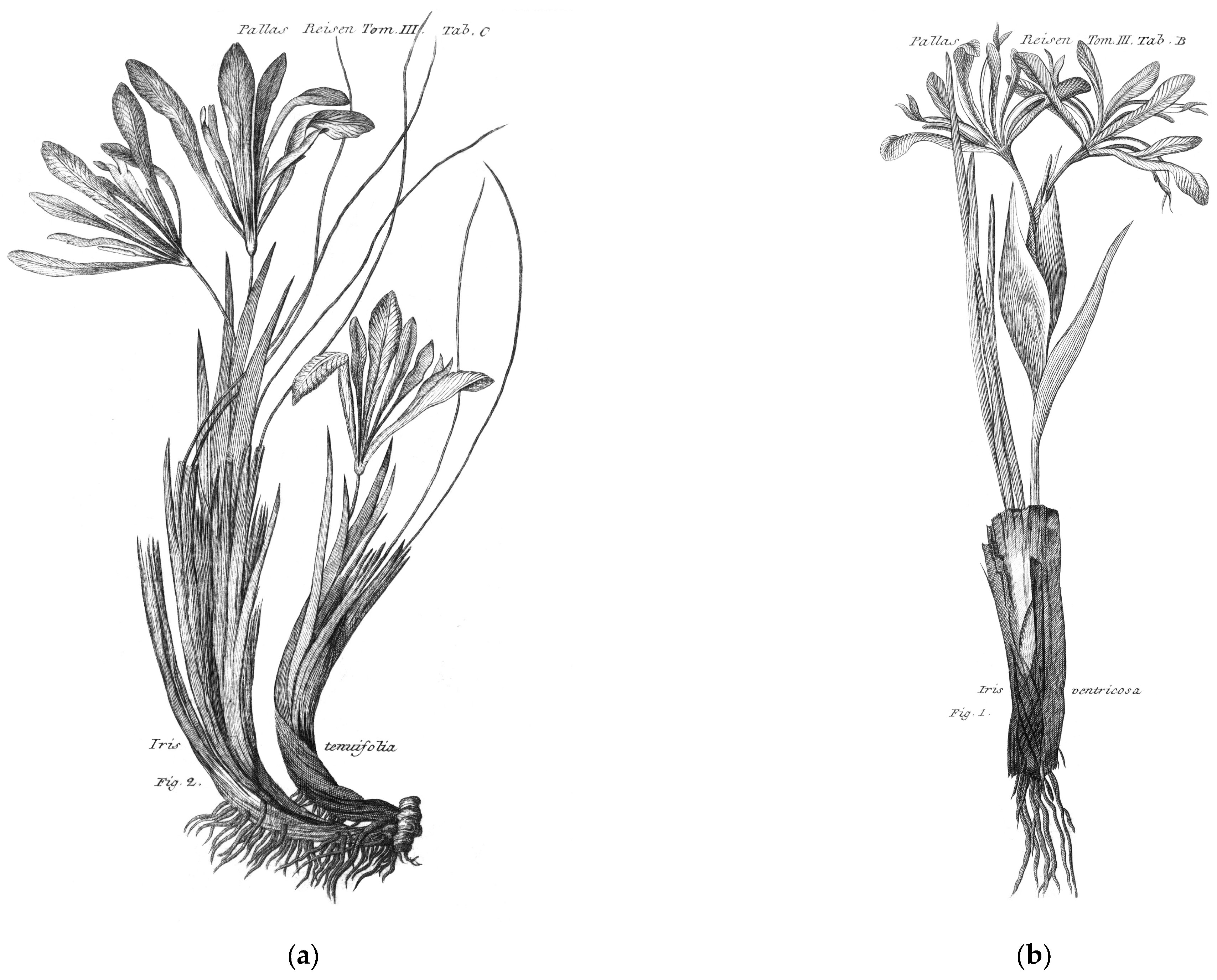
In this scenario, alternative treatments have been proposed by some authors, in which morphologically well-characterised groups are accepted at generic rank. One of these was Nevski [26], who described both Sclerosiphon and Cryptobasis in his multigeneric treatment of the irises from Kugitang-tau (Turkmenistan), in Central Asia. Among other Iris segregated genera, this author accepted Iris s.str, Xyridion Fourr. (currently Chamaeiris Medik.) and Juno Tratt., as well as Cryptobasis Nevski and Sclerosiphon Nevski; these latter two were characterised with a brief diagnosis. Regarding Cryptobasis, it initially comprised both C. thianschanica (Maxim.) Nevski (Iris tenuifolia var. thianschanica Maxim.), the type species, which is often synonymised with C. loczyi (Kanitz) Ikonn. (Iris loczyi Kanitz) [27], and the closely related C. tenuifolia (Pall.) Nevski (I. tenuifolia Pall.) (Figure 1a). The genus was distinguished from Pseudo-iris Medik., a name rejected against Limniris (Tausch) Rchb., nom. cons. [28], based on the presence of a protracted flower tube and a distinctive wrinkled testa of seeds. Similarly, Sclerosiphon first encompassed the sole species S. songaricum (Schrenk ex Fisch. & C.A.Mey.) Nevski (Iris songarica Schrenk ex Fisch. & C.A.Mey.) and was distinguished from Cryptobasis by its shorter tube becoming rigid after anthesis. In that context, Rodionenko [29] expanded the genus Sclerosiphon to include the morphologically similar species, I. ventricosa Pall. (Figure 1b) and I. bungei Maxim., based on their elongated stems and shorter corolla tubes. At that time, these features were key in helping to distinguish between Sclerosiphon and Cryptobasis (Figure 1).
After Nevski’s 1937 description [26], both Cryptobasis and Sclerosiphon entered a long period of nomenclatural obscurity. Consequently, these names were excluded from subsequent systematic literature concerning the genus Iris, including comprehensive monographic treatments [24]. In these works, the taxa were omitted even as nomenclatural synonyms, a tendency that persisted until the early twenty-first century [3]. The few exceptions to this trend include a brief but noteworthy nomenclatural note by Ikonnikov [27] and a primary study by Mavrodiev [3], published thirty years after Ikonnikov’s contribution. The latter provided a detailed morphological description of the monocarpic shoots, the life history and the flowers of the westernmost Cryptobasis populations, which were concurrently elevated to specific rank under the latter generic name (see below). In a subsequent publication, Mavrodiev and Alexeev [4] further refined and expanded the morphological framework established by Mavrodiev [3] for Cryptobasis, including (among other points) the description of seedlings.
The conclusions of Ikonnikov, Mavrodiev, and Alexeev were completely accepted by the Russian monographer of the genus Iris, Georgi I. Rodionenko (1913–2014) [25,29], one of the most renowned contemporary botanists who contributed extensively to the knowledge of Asian irises throughout his long career. Among the taxa he characterised and recognised at the generic rank is Sclerosiphon, a genus which was revised in a paper [29] dedicated to the memory of Sergey Ikonnikov. As noted by Rodionenko, the expedited preparation of the manuscript was prompted by a personal request made by Ikonnikov during their final meeting. Sclerosiphon is distributed across Central Asia, from the Caspian area and Iran to Manchuria and central China [6], and is often considered a member of Iris ser. Tenuifoliae (Diels) G.H.M.Law., along with the morphologically and biogeographically close Cryptobasis [24]. In fact, the series takes its name from Iris tenuifolia (Figure 1a), which is a member of the latter genus, C. tenuifolia.
Over the past two decades, molecular research has shown that Sclerosiphon and Cryptobasis belong to the beardless/uncrested subgroup of irises, i.e., I. subg. Limniris (Tausch) Spach, as defined by Mathew [24]. However, contrasting placements have often been reported for each genus, which can be justified to some extent on morphological grounds due to their multiple connections with other beardless (‘Apogon’) irises.
Tillie et al. [20] recovered I. bungei as sister to I. anguifuga Y.T.Zhao, an enigmatic Chinese species exhibiting a peculiar morphology that related it, to some extent, to Sclerosiphon songaricum [30]. Mathew [24] had previously considered I. anguifuga to be a deviant member of the ‘Tenuifoliae irises’. In fact, those former species were sister to the Xiphion Mill. clade and both clades were sister to Iris kolpakowskiana Regel (Alatavia Rodion.). The Chamaeiris clade was finally sister to all the others, forming the so-called ‘Spuriae-Tenuifoliae alliance’ [31]. Analogous results were found in research conducted by Makarevitz et al. [32] on Siberian irises, in which a clade encompassing I. loczyi, I. ventricosa and I. tenuifolia was identified as sister to Chamaeiris. Related to this issue, Hall [33] found morphological connections between Iris tenuifolia and I. anguifuga, due to the presence of distinctive broad filaments much shorter than the anthers, a character that linked both latter species to the ‘Syriacae irises’ (Syrianthus M.B.Crespo, Mart.-Azorín & Mavrodiev). However, in the phylogenetic tree of Tillie et al. [20], this latter group was recovered in a sister clade encompassing members of Iridodictyum Rodion. and Hermodactylus tuberosus (L.) Mill.
Figure 1.
General habit of members of the “Tenuifoliae irises”: (a) Iris tenuifolia Pall. (Cryptobasis tenuifolia (Pall.) Nevski); and (b) I. ventricosa Pall. (Sclerosiphon ventricosum (Pall.) Rodion.). Original illustrations from Pallas’s [34] protologues.
On the contrary, the molecular work of Wilson [22,35] presented a significantly different phylogenetic scenario as regards the relationships of Sclerosiphon and Cryptobasis to other ‘Apogon’ groups. Although sampling was limited to one sequence per each of these two genera, they were recovered in clades where their phylogenetic position did not align with the morphology or biogeography of the remaining members. First, the sample of Sclerosiphon songaricum nested in the ‘subg. Limniris I’ clade (or ‘core Limniris’ sensu [22]) as sister of Iris lactea Pall. [22,35], a member of Eremiris (Spach) Rodion. Secondly, the sample of Cryptobasis loczyi (I. loczyi) was surprisingly recovered as sister to I. longipetala Herb. and I. missouriensis Nutt. [35], within the ‘subg. Limniris III’ clade (sensu [22]), which corresponds to Dielsiris M.B.Crespo, Mart.-Azorín & Mavrodiev (I. subsect. Longipetalae Diels). However, that connection received weak statistical support.
In a similar way, Mavrodiev et al. [19] amalgamated most of the confident molecular data available in GenBank at the time to generate a comprehensive phylogeny of the ‘Iris-flower clade’, which was used by Crespo et al. [6] to establish a multigeneric arrangement of irises. Their phylogenetic trees [19] included four samples of the ‘Tenuifoliae irises’ (I. songarica, I. ventricosa, I. tenuifolia and I. loczyi) and found that they nested within two distant clades. Firstly, the sequence of I. songarica (Sclerosiphon) was recovered as sister to I. lactea (Eremiris) in all their analyses, which paralleled Wilson’s [22] results of 2011. Secondly, the remaining three sequences of that group formed a consistent clade, which nested alongside members of the ‘Xiphion clade’ [18,19], far apart from the ‘Longipetalae irises’. As I. loczyi was included in this latter clade, it was consequently assimilated to Cryptobasis. Despite the morphological connections of I. songarica being weak with I. lactea but stronger with I. loczyi, the authors dismissed the idea of phylogenetic closeness between Sclerosiphon and Cryptobasis, and both genera were reorganised to match the molecular results. In accordance, Sclerosiphon was treated as monotypic, comprising solely S. songaricum, and Cryptobasis was expanded to encompass the remaining members of the ‘Tenuifoliae irises’ [6], including C. mariae Mavrodiev and C. regelii (Maxim.) M.B.Crespo, Mart.-Azorín & Mavrodiev (Iris regelii Maxim.). In line with this approach, Sennikov et al. [36] treated both genera as sections, i.e., I. sect. Sclerosiphon (Nevski) Sennikov & F.O.Khass. and I. sect. Tenuifoliae (Diels) Doronkin, in the still broadly conceived Iris s.l. In addition, Crespo et al. [18] have recently expanded their sampling of the ‘Iris-flower clade’ to incorporate species of the ‘Tenuifoliae irises’ from eastern China, namely I. qinghainica Y.T.Zhao and I. kobayashii Kitag. The results were fully consistent with their 2015 phylogeny [19], with the latter two species being placed in the Cryptobasis clade, distant from S. songaricum.
In the last decade, many complete genomes of Asian irises have been sequenced (see [17,37,38,39,40]), providing new insights into some contentious groups. The recent description of Portiodora M.B.Crespo, Mart.-Azorín & Mavrodiev [18] is a good example of this. The increasing amount of new molecular data currently favours a reappraisal of controversial taxonomic and phylogenetic topics, such as the apparent non-monophyly of the ‘Tenuifoliae irises’, among others.
In that context, the primary aims of the present contribution were: (i) to evaluate the phylogenetic position of Sclerosiphon songaricum in the ‘Iris-flower clade’ through a comprehensive taxonomic approach; and (ii) to revise the relationships between Sclerosiphon and Cryptobasis, the two groups usually regarded as members of ‘Iris ser. Tenuifoliae’. In order to achieve this, data from new molecular analyses (both Three-Taxon Statement and Maximum Likelihood approaches), including newly generated plastid sequences of members of the ‘Tenuifoliae irises’ clade, were integrated alongside a re-evaluation of morphological, ecological, karyological, chorological and phylogenetic data. Accordingly, the generic independence of Sclerosiphon and Cryptobasis is upheld, albeit a new arrangement is proposed that basically gets back to Rodionenko’s sources. In addition, the results of the current study offer a more precise representation of the internal relationships within the multigeneric configuration of the ‘Iris-flower clade’.
2. Materials and Methods
Morphological data were obtained from observations on fresh material, digitised images and vouchers, including nomenclatural types, from the herbaria ABH, B, BM, BP, E, HNWP, IATM, IBSC, IFP, IRKU, K, KUFS, KUN, LD, LE, LINN, MHA, MICH, MO, MW, MZ, NY, P, PE, S-GH, TASH, TI, TK, US, WUK, and XJBI (acronyms according to Thiers [41]), as well as from the protologues of the concerned names. Over 150 herbarium vouchers were analysed. A selection of these is shown in Appendix A, with the most relevant ones presented as Supplementary Figures. Vouchers cited in the text and in the Appendix A include in brackets the herbarium acronym and barcode number assigned to each specimen when available. Nomenclatural issues agree with the Madrid Code (ICN; [42]).
Chromosome numbers presented for the accepted taxa correspond to the first published confident counts; other additional data can be accessed in Chromosome Counts Database-CCDB (http://ccdb.tau.ac.il/Angiosperms/Iridaceae/Iris/; accessed on 8 December 2025).
Using 12 reliably authenticated specimens and following previously published protocols [16,19,20,21], we generated 12 sequences of the matK gene and 12 of the trnL (UAA)–trnF (GAA) loci. A complete summary of the sequences added to the expanded 206-taxa dataset from Mavrodiev et al. [19], comprising both newly obtained data and sequences retrieved from GenBank (https://www.ncbi.nlm.nih.gov/Taxonomy/Browser/wwwtax.cgi?id=1043429; accessed 20 July 2024), is provided in Table S1.
Following Mavrodiev et al. [19], we analysed the resulting cpDNA alignment using the Three-Taxon Statement and Maximum Likelihood methods (hereinafter referred to as 3TA and ML, respectively). For corresponding references and details on 3TA, see the legend of Figure S1, Table S2 and Mavrodiev et al. [19]. The simple and straightforward “Matrix Representation with Parsimony” (MRP) approach (summarised and implemented in Mesquite v. 4.02; https://www.mesquiteproject.org/, accessed on 31 October 2025) was used to merge the results of the separate 3TA hierarchies (Table S2) instead of the Robinson–Foulds method (reviewed in Mavrodiev et al. [19]), as in our previous study [19]. The ML analysis was conducted in IQ-TREE v. 2.1.2 (https://iqtree.github.io/; accessed on 20 July 2024), as implemented in CIPRES (https://www.phylo.org/; accessed on 20 July 2024). To evaluate the reliability of the resulting topology, we used the approximate likelihood ratio test (aLRT). Following standard practice, the aLRT values for branches are reported as measures of clade support. In other words, the aLRTs are generally interpreted as indicating a valuable statistical support for a given clade (see [19] for references, and the legend of Figure S2 for more details). The resulting trees (Figure 2, Figures S1 and S2) were interpreted in light of the morphological data of the related clades.
Figure 2.
Summarised relationships within the ‘Iris-flower clade’ showing the position of Sclerosiphon and Cryptobasis: (a) Cladogram representing the summary of hierarchy patterns based on the results of eight 3TA of cpDNA sequence data (see Figure S1); and (b) Cladogram representing the summary of conventional molecular ML analysis of the cpDNA sequence data (see Figure S2).
3. Results
The tree from Figure 2a summarises the 3TA hierarchy of patterns (Figure S1) representing the MRP supertree constructed from eight cladograms (Table S2), based on the results of eight 3TA analyses of the Iris s.l. + outgroups supermatrix (213 terminals plus an operational outgroup; see below). Each of the eight cladograms is either a strict consensus of several or multiple most-parsimonious trees or a single most-parsimonious tree (see Table S2). Only variable conventional DNA characters were included in the 3TA analyses, and the values for the operational outgroup were fixed based on the 50% majority-rule consensus of the initial conventional DNA alignment. As stressed in Crespo et al. [18], unlike ML analysis, statistical support in 3TA is optional and not required for validating the hierarchy of patterns, as this method is not focused on the probabilistic measures of confidence (see Mavrodiev et al. [19] for references).
The ML cladogram (Figure 2b) represents the most probable and well-resolved maximum likelihood tree (lnL = −48,682.3924) (Figure S2), inferred using IQ-TREE from a plastid supermatrix of conventional Iris s.l. and outgroup taxa (218 terminals, 8501 nucleotide sites, both variable and constant). The best-fit model, TVM + F + I + G4, was automatically selected by IQ-TREE according to the Schwarz (Bayesian) Information Criterion. Statistical support was assessed using the approximate Likelihood Ratio Test (aLRT) (see Mavrodiev et al. [19] for references).
The general topology and internal relationships of clades in both trees (Figure 2) match the results previously obtained by the authors [18,19] from a narrower database (201 ingroup plus five outgroup taxa). The essential exception, however, is the position of Sclerosiphon, which is now placed in both cases as sister to Cryptobasis, far apart from Eremiris (Figure 2, Figures S1 and S2).
The ML analysis (Figure 1b and Figure S2) recovers the newly defined Sclerosiphon clade as strongly supported (99% aLRT) and comprising three subclades. The first, the ‘Ventricosae aggregate’, includes two S. ventricosa samples as sister to S. bungei (94%/88% aLRT). The latter subclade is a non-supported sister to a second, well-supported subclade (96% aLRT) uniting the Chinese species S. kobayashii and S. qinghainica. Together, the ‘Ventricosae aggregate’ and the S. kobayashii plus S. qinghainica clade are defined as the non-supported sister of the third well-supported (99% aLRT) Sclerosiphon s.str. subclade, comprising all three samples analysed of S. songaricum (Figure S2).
The Sclerosiphon clade is strongly supported as sister to the Cryptobasis clade (99%/99%/98% aLRT). Within Cryptobasis, C. loczyi forms a most basal well-supported subclade (98% aLRT), sister to a clade including all members of the ‘C. tenuifolia aggregate’ (87% aLRT). The latter is structured into the westernmost C. mariae clade (76% aLRT), sister to Central Asian C. regelii (76% aLRT), with Daurian C. tenuifolia s.str. sister to the clade (C. mariae + C. regelii) (87%/76% aLRT) (Figure S2).
The Sclerosiphon + Cryptobasis clade (99% aLRT) is sister to the Chamaeiris clade (99% and 88% aLRT, respectively). Together they appear as a non-supported sister to the clade Alatavia (100% aLRT) + (Iridodictyum + Hermodactylus + Syrianthus) (100% aLRT), which is sister to the Xiphion s.str. clade (100%/100%/98% aLRT) (Figure 2 and Figure S2). At the same time, the Xiphion s.l. (Figure 2b and Figure S2) clade is itself strongly supported (100%/100% aLRT) as sister to the recently described monotypic Portiodora (Figure S2). Relationships among the remaining clades within broadly defined Iris (Iris-flower clade) match previous studies by the authors [18,19].
Cladistic 3TA produced similar relationships: the Sclerosiphon clade is sister to the Cryptobasis clade, which is no longer the most basal member of the Iris s.l. clade (Figure 2a and Figure S1) [18,19]. The Sclerosiphon + Cryptobasis clade is sister to the Chamaeiris clade. The clade Sclerosiphon + Cryptobasis + Chamaeiris is sister to the clade comprising Iridodictyum, Hermodactylus, and Syrianthus, which is in turn sister to the monophyletic Xiphion s.str. (Figure S1). At the same time, the Xiphion s.l. clade (Figure 2a and Figure S1) is sister to Portiodora.
The major differences between the 3TA and ML results (Figure 2, Figures S1 and S2) include the placement of Alatavia, which appears as sister to the Sclerosiphon + Cryptobasis clade within the 3TA hierarchy (Figure 2a and Figure S1), as well as the different relationships recovered within the Sclerosiphon clade, where the ‘Ventricosae aggregate’ (see above) is sister to the clade (S. songaricum + (S. qinghainica + S. kobayashii)) (Figure S1).
4. Discussion
4.1. Circumscription and Relationships of the ‘Tenuifoliae Irises’
The distinctiveness of the ‘Tenuifoliae irises’ was first documented by Baker [43], who established the informal ‘Group of I. tenuifolia’, characterised by exhibiting linear leaves, a caulescent habit and a long perianth-tube. This group initially encompassed I. tenuifolia, I. ventricosa, I. songarica and I. macrosiphon Torr., the latter of which is currently considered a member of Limniris sect. Californicae (Diels) Rodion. Subsequent authors partially adopted Baker’s proposal, albeit this resulted in taxonomic aggregates being described under different names and with different circumscriptions.
On the one hand, Dykes [11] accepted ‘The Tenuifolia Group’ to include I. tenuifolia, I. ventricosa and I. bungei Maxim., while placing I. songarica within ‘The Spuria Group’, and regarding it as a “connecting link” between these two aggregates. Indeed, flowers exhibit a striking resemblance to those of Chamaeiris, primarily due to the comparable colour patterns and the shape of perianth pieces. However, the overall flower structure and the features of leaves, fruits and seeds are quite distinctive. The nomenclature of the group was later validated by Diels [44] as I. sect. Apogon subsect. Tenuifoliae Diels, accepting Dykes’s circumscription. This arrangement was adopted by Fedtschenko [45] in her treatment of irises for Flora of the USSR, but she broadened the so-called ‘Group 2. Iris tenuifolia’ to include I. songarica along with those former three species. Lawrence [46] included, solely, the type species, I. tenuifolia, albeit as I. ser. Tenuifoliae (Diels) G.H.M.Law. Later, Rodionenko [47] revived I. subsect. Tenuifoliae, reorganising it into two series: (i) ser. Tenuifoliae for I. tenuifolia and I. loczyi (the ‘Tenuifoliae group’); and (ii) ser. Ventricosae Rodion. for I. ventricosa, I. bungei and I. songarica, which had well-developed flowering stems and inflated and multi-nerved spathes. More recently, he transferred all members of the latter series into Sclerosiphon [29], whereas the former ser. Tenuifoliae was narrowed to Cryptobasis. Current treatments of the ‘Tenuifoliae irises’ generally align with Mathew’s [24] proposal, which expanded the group to encompass ten or eleven species [12], including the ‘Ventricosae’, the ‘Tenuifoliae’, and other taxa occurring in central and eastern China (see [48]), which included the intriguing I. anguifuga. However, some analyses have found this latter species to be embedded in Chamaeiris [18,19,20], thus necessitating further research to elucidate its true relationships.
In such broader configuration, the ‘Tenuifoliae irises’ are morphologically characterised [6,12,18,24] by their small, somewhat vertical rhizomes, apically clothed with long maroon-brown, sharp fibrous remains of leaf sheaths; stem absent to well-developed; leaves slender, often terete (thread-like); perianth tube long (3.5–15 cm), filiform to scapiform; stigma bilobed; capsules often six-ribbed, apically beaked; seeds angulose to subcubic, sometimes pyriform, lacking fleshy appendages; and testa hard, irregularly wrinkled at least on the back, sometimes almost smooth on lateral faces or shortly winged on angles. Defined in this way, the group comprises beardless rhizomatous, tufted perennial plants, native to the lowlands and high mountain regions within Central and Eastern Asia [48], with some species extending westwards to the Black Sea and Caspian regions, where they thrive in dry steppes and grasslands [3,4,12,29].
Despite the undeniable morphological consistency of the whole aggregate, the phylogenetic placement of members of the ‘Tenuifoliae irises’ (sensu [24]) has been controversial, since many published analyses did not recover monophyly of the aggregate. In our obtained trees (Figure 2, Figures S1 and S2), the ‘Sclerosiphon-Cryptobasis clade’ (virtually coincident with Mathew’s ‘Tenuifoliae irises’) stands as a well-supported sister to Chamaeiris, which corroborates previous results on the ‘Tenuifoliae-Spuriae alliance’ [20,31]. One of the most reliable morphological features supporting close connections between Sclerosiphon and Cryptobasis is the production of intravaginal shoot renewal [3], which is responsible for the typically dense tufted growth of the ‘Tenuifoliae irises’. The strictly intravaginal monocarpic shoots of Cryptobasis and Sclerosiphon consistently produce well-developed prophylls and are not monocyclic; rather, they persist for two years or more. This character distinguishes them from most other genera within the Iris s.l. clade. Consequently, the bases of these perennial shoots are frequently enveloped in the persistent remains of the foliage of previous years, resulting in a highly distinctive, densely tufted life history (habit). This feature is atypical among irises [3,4], perhaps with the possible exception of certain ‘Lacteae irises’ (‘Ensatae irises’ sensu auct.), namely Eremiris lactea (Pall.) Rodion. (reviewed in [4]), in which, conversely, intra-vaginal shoots have not yet been documented. Such peculiar, tufted growth is typically the result of leaf blade breakage at a similar level towards the end of the growing season, leaving bundles of tough and durable sheaths attached to the rhizomes [29]. This phenomenon requires further investigation and has been shown to create a defensive cover for rhizomes and associated buds, safeguarding them from low winter frosts, excessively high summer temperatures, and dry winds [49]. For example, in the genus Cryptobasis, leaves become increasingly brittle during the latter half of the summer. This mechanical fragility is mostly attributed to the extensive development of aerenchyma within the leaf blade [4].
Due to the exceptional contractility of the root system, the shoot bases within both Cryptobasis and Sclerosiphon remain deeply placed in the soil. This mechanism facilitates the profound burial (and by this way defends) of the renewal buds of plants in both genera [3,4]. Curiously, decoctions of both intensively developed roots and rhizomes of C. tenuifolia are often employed in traditional Mongolian medicine to treat kidney disorders and hypertension [50].
The close molecular connection between Sclerosiphon and Cryptobasis is in full accordance with the available partial phylogenies based on narrow samplings [20,32], as well as with the traditional classifications of the group based on morphology [11,24,29,43,44]. However, it does not align with previous complementary phylogenetic results [19,21,22,35] from larger databases encompassing sequences of most taxonomic groups of the ‘Iris-flower clade’, in which monophyly of the ‘Tenuifoliae irises’ (sensu [24]) was not recovered. In these studies, members of Sclerosiphon and Cryptobasis were found to nest into two distinct clades, supporting generic segregation of both genera [6] in accordance with Rodionenko’s [29] morphologically based proposal. Specifically, Cryptobasis was found to be closely related to Chamaeiris, while Sclerosiphon was sister to Eremiris.
The apparent inconsistency between the molecular results from large and narrow databases with regard to the contrasting position of Sclerosiphon prompted an investigation into the factors contributing to this discrepancy, which appears to be at odds with the morphological evidence. The sequence of “Iris songarica Schrenk” in Wilson’s trees [22,35], which was collected in Kazakhstan (Wilson MB07-14, RSA), emerged as a strongly supported member of the Eremiris clade in our previous phylogenetic tree of 2025 (see Figure S2 in Crespo et al. [18]), together with samples of E. lactea (Pall.) Rodion., E. pallasii (Fisch.) Doronkin and E. oxypetala (Bunge) Rodion. This suggests that the sequence may perhaps belong to E. lactea, the only member of the genus occurring in Kazakhstan [36].
Conversely, the sample of “Iris sogdiana Bunge” (a true member of Chamaeiris) in Wilson’s trees [22,35] was said to correspond to the collection Goldblatt & Porter 12233 (MO-4864161), which was also harvested in Kazakhstan (“Almaty, ca. 10 km N of Tamgali rock painting site, May 2003”). However, this herbarium voucher was originally identified as Iris songarica by Goldblatt, which we confirm here. Consequently, the sequence labelled ‘I. sogdiana’ in our 2014 [19] trees should indeed belong to the true Sclerosiphon songaricum, but it nested within the ‘Spuriae group’ (namely, alongside the ‘Foetidissimae irises’) in the Chamaeiris clade. Further study is required to resolve the enigmatic potential non-monophyly of S. songaricum, and therefore, the sequences generated from Goldblatt & Porter 12233 (MO-4864161) were discarded in the present analyses (Figures S1 and S2). Instead, 10 new sequences from five fully checked collections of S. songaricum, harvested across a vast territory ranging from northern Iran to eastern Kazakhstan (Table S1), were incorporated into the current dataset (Figures S1 and S2). As outlined above (see Section 3), Sclerosiphon was recovered as monophyletic (Figures S1 and S2), encompassing both nearly homonymous clades, Sclerosiphon s.str. (S. songaricum) and Sclerosiphon s.l., with robust support (99% aLRT) within the ML framework (Figure S2).
The Sclerosiphon s.l. clade is sister to Cryptobasis (Figures S1 and S2) (99%/99% aLRT), and both in turn (clade (Cryptobasis + Sclerosiphon)) are sister to Chamaeiris (Figures S1 and S2) (99%/88% aLRT), which corroborates the monophyly of both the ‘Tenuifoliae clade’ and the so-called ‘Tenuifoliae-Spuriae Alliance’ [31]. Furthermore, the current dataset incorporates a new I. sogdiana sequence of the matK gene (MZ-054598; TASH-20192306) (Table S1), which unsurprisingly falls as sister to the ‘Spuriae group’ subclade in the Chamaeiris clade (Figures S1 and S2) (both received 88% aLRT, respectively). In any case, both Sclerosiphon and Cryptobasis are no longer recovered in our trees as members of the Limniris clade (I. subg. Limniris core; see [15,22,35]), which definitively corroborates previous results from narrower datasets, as cited above see [20,32].
The aforementioned confusion of samples appears to be the origin of the mistaken interpretation of Sclerosiphon as a sister group to Eremiris in our previous molecular trees [18,19]. It mostly led to a new circumscription of Cryptobasis and Sclerosiphon in a sense mismatching Rodionenko’s [29] arrangement, which is revised below.
4.2. The Sclerosiphon Clade and Its Relationship to Cryptobasis
Our novel analyses, which incorporate new sequences of putative members of the ‘Tenuifoliae irises’, yield samples arranged into two monophyletic sister groups (Figures S1 and S2), each comprising the types of Sclerosiphon or Cryptobasis. Both genera are monophyletic (Figures S1 and S2) and recovered with robust statistical support (99% and 98% aLRT, respectively) within the ML framework (Figure S2). Furthermore, their sister-group relationship received equivalent support (99% aLRT) (Figure S2). As previously stated, the resulting ‘Sclerosiphon-Cryptobasis clade’ is virtually indistinguishable from the ‘Tenuifoliae irises’ group (sensu [24]), as evidenced by all the aforementioned shared features. This fact may be used, however, to treat both groups as belonging to a single genus, potentially Cryptobasis. Nevertheless, a comprehensive analysis of the obtained phylogenetic results, in conjunction with a revised interpretation of the extant morphological and biogeographical data, supports the acceptance of Sclerosiphon and Cryptobasis as distinct genera (Figure 3). This solution is more consistent with the rationale behind the multi-generic arrangement of the ‘Iris-flower clade” [6].
Figure 3.
General aspects of the two genera in the ‘Tenuifoliae irises’: (a) Sclerosiphon songaricum (Schrenk ex Fisch. & C.A.Mey.) Nevski from Ispahan, Iran (photo by Frédéric Médail, 21 May 2016); (b) Cryptobasis tenuifolia (Pall.) Nevski from Ömnögovi, Bulgan, Mongolia (photo by Urgamal Magsar, 22 July 2017). Images from iNaturalist.
Rodionenko’s [29] seminal treatment of Sclerosiphon, which included S. ventricosum and S. bungei (the ‘Ventricosae group’) alongside the type, S. songaricum, is entirely congruent with our current trees (Figures S1 and S2). Furthermore, these reveal that the analysed members of the ‘Tenuifoliae irises’ occurring in Eastern China are nested within the Sclerosiphon clade, albeit forming a separate subclade whose relationships to the two remaining groups are not fully resolved. In light of the above, our broadened circumscription of Cryptobasis [6], which partly coincides with the one proposed here for Sclerosiphon (see Section 4.3), should be disregarded.
Members of Sclerosiphon exhibit remarkable morphological synapomorphies (Table 1, Figure 3a), such as the well-developed and often visible flowering stems, albeit sometimes short and almost hidden among the remains of dead leaves and sheaths; flowers usually numerous (2–5) per monocarpic shoot; spathes often markedly swollen; perianth with a relatively short tube 0.3–7(–9) cm, not clearly scapiform, barely projecting from the spathes; outer segments of corolla patent to subpatent, often spatulate with haft much longer than limb; capsule reticulate-nerved, unclearly 6-ribbed, often with a long beak; seeds short cylindrical, subcubic to pyriform, lacking fleshy appendages; and testa irregularly wrinkled on the back, often almost smooth on lateral faces. Seed dispersal is probably facilitated in most species of the genus by the effect of wind on the protruding, withered stems.
Table 1.
Main features defining Sclerosiphon and Cryptobasis in their new circumscriptions.
Some of these features had previously been listed [6,29], albeit others are newly reported here (Table 1, Appendix B). In addition, it is also noteworthy that the three species first included in Sclerosiphon by Rodionenko [29] exhibit a remarkable anatomical character in the initial stages of seed germination, in which the cotyledon stalk is provided with six vascular bundles in cross section. This character is apparently unique in the context of the ‘Iris-flower clade’ and appears to play a crucial role in increasing the survival of seedlings in extremely dry environments [29,47,49].
Aside from the species included in our trees, other Chinese taxa of the ‘Tenuifoliae irises’ also exhibit those gross morphology characteristics and are included in Sclerosiphon here; however, the aforementioned anatomical features of seedlings should be checked in those species. Nonetheless, the only exception to this is the case of Iris anguifuga [48], an enigmatic species said to be morphologically close to S. songaricum, although showing a quite specialised rootstock, non-grooved stylar branches, and the ovary not concealed within floral bracts [51]. The species produces a peculiar bulb-like organ during summer dormancy, which subsequently develops into a rhizome in the autumn. Following fruit release, the majority of the structure withers away, leaving the rhizome apex to form a new bulb-like resting organ [52]. This unique feature relates I. anguifuga to Syrianthus and Hermodactylus, which are also connected to the true bulbous irises of the ‘Xiphion s.l. clade’ [6]. In this regard, Rodionenko [49] hypothesised that I. anguifuga should be considered as the “putative ancestor” of the ‘Spuriae group’ (Chamaeiris ser. Spuriae (Diels) M.B.Crespo), and to a certain extent, the “evolutionary link” with Sclerosiphon [29]. Consequently, he placed the species in the monotypic genus Ophioiris (Y.T.Zhao) Rodion. [51]. Our current molecular results do not support generic segregation of I. anguifuga but seem to confirm its positioning within the Chamaeiris clade, as found in our previous research [19]. This provides some degree of support for Rodionenko’s [29,49] evolutionary hypothesis, as well as several morphological characteristics (e.g., the overall habit, the morphology of flower and fruit, and the nectarotheca structure with external secretion of nectar drops) support this placement [6]. However, as Tillie et al. [20] recovered I. anguifuga as sister to I. bungei (Sclerosiphon), further analyses incorporating new sequences of the species would provide valuable insights into its phylogenetic history. In addition, although the available chromosome counts are still limited (see below), members of Sclerosiphon in its extended sense apparently show basic numbers x = 7, 8, 9.
Regarding the ‘Cryptobasis clade’ in our trees, it encompasses C. loczyi and the aggregate of C. tenuifolia (‘Iris tenuifolia’ sensu auct.) (Figure 3b). This is fully consistent with the original narrow circumscription of the genus [3,4,27]. Prospective morphological synapomorphies of this entire clade (Table 1, Appendix B) are the reduced (absent) or inconspicuous flowering stems, concealed among the remains of dead twisted leaves and sheaths; flowers 1–2 per monocarpic shoot spathes not swollen; corolla with a very long tube up to 15 cm, often clearly scapiform, much exceeding the spathes; outer floral segments (falls) erect to erect-patent, often spatulate to broadly pandurate, with haft about slightly shorter to longer than limb; capsule not reticulate-nerved, often prominently 6-ribbed, with a short beak; seeds angulose to subcubic, lacking fleshy appendages; and testa irregularly wrinkled all over, sometimes shortly winged at angles. As the capsules mature within the protective fibrous layer of leaves and sheaths, seeds are sometimes expelled up to 2–3 m away upon dehiscence to ensure dispersal [49].
Traditional taxonomic treatments accept solely two members. On the one hand, Cryptobasis loczyi (C. tenuifolia var. thianschanica Maxim.) is usually recognised by its broad, flattened, subensiform leaves (3–7 mm wide), provided with two parallel veins on edges; large spathes (ca 10–15 × 1.5 cm); and cylindrical to ovoid, large capsules (ca 4–7 × 2 cm). It was described from Ganzu in central-western China (holotype: BP-69376), and occurs across the mountain regions of central Asia (i.e., Afghanistan, China, Iran, Kazakhstan, Kyrgyzstan, Mongolia, Pakistan, Tajikistan, Turkmenistan, and Uzbekistan). On the other hand, the aggregate of C. tenuifolia is characterised by its narrower, terete to filiform leaves (1–6 mm wide); smaller spathes (ca 5–10 × 0.8–1 cm); and globose to ovoid, smaller capsules (ca 3–4.5 × 1–2 cm). Members of this aggregate are widespread in the lowland dry regions from the Black Sea and Caspian regions eastwards to Manchuria (i.e., China, Kazakhstan, Mongolia, and Russia). The chromosome counts in this group point to probable base chromosome numbers x = 7, 10.
The C. tenuifolia aggregate is frequently considered to be a morphologically variable group. Pallas’s [34:714] original conception of his Iris tenuifolia was indeed broad enough to encompass the full range of variation within the entire complex. In fact, the Linnaean herbarium (LINN) and the British Museum Natural History (BM) conserve a variety of historical vouchers harvested by Pallas across the majority of the distribution area of the aggregate, extending from Crimea to Dauria (Transbaikalia, Eastern Siberia, Russia). These were labelled ‘Iris tenuifolia Pall.’ or ‘I. juncifolia Pall.’ [53], an invalid name lacking a description or diagnosis (‘nomen nudum’) that is often treated in synonymy of the former, although both apparently belong to distinct entities (see below and also Figures S3–S5). Similarly, ‘I. acaulis Pall.’ [34:213] is a name often synonymised with C. tenuifolia, which was applied to plants observed in Dauria, on 27 May 1772, albeit it apparently was not validly described. Indeed, Pallas did not associate it with its own description or diagnosis, but rather with the sentence ‘Anh. Num. 67, Pl. C. Figure 2’. This refers to the protologues of both I. flavissima Pall. (described as num. 67 in the Annex of his Reise) and I. tenuifolia (illustrated in Plate C, Figure 2 of num. 66 in the same Annex). For this reason, we consider ‘I. acaulis’ to be a confusing name that should be rejected, despite the fact that its epithet precisely describes one of the key morphological synapomorphies of Cryptobasis, i.e., the reduced flowering stems (Table 1).
A comprehensive analysis of Central Asian collections reveals the presence of at least three distinct species in the C. tenuifolia aggregate, each with well-defined morphological and biogeographical characteristics.
Firstly, the typical C. tenuifolia s.str. (Figure 3b) exhibits prophylls of the vegetative shoots up to 3–5 cm in length; filiform leaves (1–3 mm wide), with up to 16 nerves in cross section; falls spatulate to oblanceolate, smooth or rarely inconspicuously minute papillate, with haft about equalling to slightly shorter than limb; and the perianth tube 3.5–6.5 cm long [4]. It is the easternmost member of the group, which was described from “Davuria” (Dauria) (lectotype: LINN-61.13; isolectotypes: BM-000958407, BM-000958410; Figure S3), and extends to the neighbouring areas of Mongolia and northeastern China. Chromosome counts of C. tenuifolia s.str. yielded 2n = 28 (Russia, Transbaikalia, Ononsky District) [54]. Although Zhao et al. [48] reported the number 2n = 14, this result appears not to have been confirmed subsequently. However, there is nothing unexpected in the fact that both polyploid and diploid plants have been reported for the region. The inconsistency of these records indicates promising avenues for future karyosystematic research.
Secondly, C. regelii is often considered a “dwarf form” of C. tenuifolia [24,55], smaller in all its parts. Retrospectively, such a conclusion appears naive and morphologically simplistic, particularly given the geographic and ecological provenance of the montane C. regelii. Both the morphology of its monocarpic shoots and its life history necessitate a dedicated, separate investigation. As the specific rank of this taxon was traditionally unrecognised a priori, its morphological characteristics were never subject to rigorous research, as the detailed study of morphology is fundamentally contingent upon a proper taxonomic attention. At the same time, there are no grounds for the a priori rejection of the species status of C. regelii, as summarised by the first author of this study, the presence of a dense band of noticeable long hyaline papillae covering the haft of falls is a unique diagnostic feature for the species (Figure S4), which can be considered the southwestern vicariant of the C. tenuifolia. Furthermore, a remarkable mechanism of active seed dispersal (ballistoschory) was attributed by Ikonnikov to Pamirian plants of C. tenuifolia in his personal note to Rodionenko [49]; however, it is highly probable that this peculiar mechanism (apparently unique within the Iris s.l. clade [29]) pertains specifically to C. regelii. For example, no such dispersal tool was observed during long-term field investigations of C. mariae populations in the Lower Volga (see below) [3]. This ballistic (catapult-like) seed discharge prevents entrapment within the persistent dry basal leaf sheaths [49] and, of course, implies unique capsular anatomy, the specific characters of which warrant further histomorphological investigation.
Cryptobasis regelii was described from the low- and medium-elevation mountains of Kuiankus (Qoianköz Village), district of Kuldscha (Yining), in the border region of Ili, in Xinjiang Province, China (lectotype: LE-00050098; isolectotypes: LE-00050097, LE-00050099, LE-01017915, LE-01048119, BM-000958414, K-000499044; Figure S4). A second locality was referred to as “Songaria: Alatau (Semenow)”, which corresponds to the voucher labelled “Alatau Songaricus, Ters-Akkon Thal, 3000 ft, meadow, May 1857, Semenow 125” (as ‘I. humilis’, LE-00050100 [digital image!]), from the Semirechye area, in the border between southeastern Kazakhstan (modern Eskeldi and Kerabulak districts of the Jetisu Region) and northern Kyrgyzstan. The species appears to be restricted to the dry and cold plains of eastern Almaty region and western Xinjiang, probably spreading to southwestern Mongolia as well as northeastern Kyrgyzstan. The two analysed accessions from GenBank (ZhouSL-Qitai-Z088, XJBI-00056335; and Q-061, IBSC-0813069) were harvested in the western areas of Xinjiang Province (see Table S1) and primarily identified as ‘Iris tenuifolia’; the study of the extant herbarium voucher (IBSC-0813069) [56], alongside their positioning in the phylogenetic trees, confirmed that they should belong to C. regelii. Furthermore, chromosome counts for plants collected in Zhinishke village (Kegensky district, Almaty Region, eastern Kazakhstan), within the putative distribution of C. regelii, yielded 2n = 20 [57], which is an outstanding number for the aggregate. This count, however, should be verified, since the closely related C. loczyi is also present in that area, albeit usually at higher elevations, and both could be confused.
Thirdly and finally, the original description of I. tenuifolia does not provide sufficient evidence to refer the morphologically similar plants found in the Lower Volga region to this species [3]; these plants were subsequently described as C. mariae [3]. The latter taxon is the westernmost member of the C. tenuifolia aggregate, which is easily recognised by its long prophylls of the vegetative shoots (up to 6–15 cm in length), unifacial, clearly terete to slightly flattened, broader leaves (3–6 mm wide), with 20–30 nerves in cross section; broadly pandurate falls, with haft about equalling to slightly longer than limb (the latter observation according to the first author of this study); and the perianth tube, up to 15 cm long (always longer than 6.5 cm) [3,4]. A distinctly terete (rounded) cross-section is already observable in the blade of the first (after cotyledon) and second seedling leaves of this species [4]. The holotype of C. mariae (MW-0021781) was collected in the southern vicinity of Volgograd, on the Yergeni (Ergeni) hills near ‘Old Sarepta’ (Volgograd region, southeastern European Russia) [3] (see also BM-000958409, BM-000832615, BM-000832616, LINN-HL61.14; Figure S5a,b), and the species broadly extends from Crimea (where it is currently believed to be extinct) to eastern Kazakhstan (e.g., see BM-000832618, BM-000958408, LINN-HS92.30; Figure S5c,d). The distribution of the species in the Western Tien-Shan region (e.g., MW-0816637) and the huge Lake Balkhash area (e.g., MW-0816650) requires further clarification. As noted earlier, the original description of I. tenuifolia does not provide sufficient evidence to equate this species with the morphologically similar specimens found in the Lower Volga region, southwestern Russia [3,4]. It is worth mentioning again that series of Pallas’s original collections at LINN and BM, which were gathered between Crimea and the Volga region in June 1773 and labelled ‘I. tenuifolia Pall.’ or ‘I. juncifolia Pall.’ (nom. nud.), indeed correspond to C. mariae. Thus, Pallas had indeed accepted the plants later described as C. mariae at the species rank, but he did not provide a formal description. Chromosome counts for this latter species are still lacking.
The phylogenetic position of samples of those four species in our trees (Figure 2, Figures S1 and S2) is well supported by the cited morphological features, with both C. mariae and C. regelii being sister to C. tenuifolia, and all three in turn sister to C. loczyi.
4.3. Taxonomic Arrangement of Sclerosiphon
According to the aforementioned data, the genus Sclerosiphon is regarded here as distinct from Cryptobasis and expanded to accommodate the predominantly Eastern Chinese members of I. ser. Tenuifoliae. Therefore, in addition to the three species initially included by Rodionenko [29], four more are here transferred to Sclerosiphon. Furthermore, the genus is arranged into two series as follows:
Sclerosiphon Nevski in Trudy Bot. Inst. Akad. Nauk S.S.S.R., Ser. 1, Fl. Sist. Vyssh. Rast. 4: 331 (1937) ≡ Iris sect. Sclerosiphon (Nevski) Sennikov & F.O.Khass. in Pl. Diversity Centr. Asia 2(1): 4 (2023). Type (holotype): S. songaricum (Schrenk) Nevski. Figure 4a.
Figure 4.
Type species of the two series accepted in Sclerosiphon: (a) S. songaricum (Schrenk ex Fisch. & C.A.Mey.) Nevski (ser. Sclerosiphon); and (b) S. ventricosum (Pall.) Rodion. (ser. Ventricosa). For label translation, see type specimens of each species name in the text.
- Ser. Sclerosiphon
Diagnosis: The reproductive growth of the monocarpic shoot (flowering stem or peduncle) is well-developed, normally branched; perianth tube short, up to 0.5–0.7 cm long; stylar crests long and narrowly triangular, about one third the length of the style, and almost entire on margins. x = 9.
- Sclerosiphon songaricum (Schrenk ex Fisch. & C.A.Mey.) Nevski in Trudy Bot. Inst. Akad. Nauk S.S.S.R., Ser. 1, Fl. Sist. Vyssh. Rast. 4: 331 (1937) ≡ Iris songarica Schrenk ex Fisch. & C.A.Mey., Enum. Pl. Nov. 1: 3 (1841), basion. ≡ Joniris songarica (Schrenk ex Fisch. & C.A.Mey.) Klatt in Bot. Zeitung (Berlin) 30: 502 (1872). Lectotype (designated by Boltenkov in Boltenkov & Schröder in Phytotaxa 387(4): 290. 2019): [KAZAHKSTAN.] Nugym am Ajagus, 30 May1840, A.Schrenk s.n. (LE-00050105 [digital image!]); isolectotypes LE-00050106, LE-00050107, LE-01017906, LE-01017907 [digital images!]. Figure 4a.
- =
- Iris songarica var. multiflora Kuntze in Trudy Imp. S.-Peterburgsk. Bot. Sada 10: 242 (1887) ≡ Iris multiflora (Kuntze) W.J.Zinger in Trudy Bot. Sada Imp. Yur’evsk. Univ. 2(3): 163 (1901). Lectotype (designated by Boltenkov in Boltenkov & Schröder in Phytotaxa 387(4): 290. 2019): TURKMENISTAN. [Ahal Region], Bei Askabad in der Sandwüste, [fl.], May [18]86, Kuntze (Herb. no. 599) (NY-00319391 [digital image!]
Chromosome number: 2n = 18 [57,58].
Notes: Grassy slopes, fixed dunes, sandy and gravelly soil; 1300–3700 m. The species is broadly distributed from the Caspian region to eastern China [6], i.e., Afghanistan, Kazakhstan, Kyrgyzstan, Turkmenistan, Pakistan, Mongolia, Russia and western China (Xinjiang, Xizhang = Tibet) [36,59]. Its presence in Gansu, Hebei, Heilongjiang, Jilin, Liaoning, Nei Mongol, Ningxia, Qinghai, Shaanxi, Shandong, and Shanxi should be confirmed, as it may correspond entirely or in part to S. farreri [48]. Figure 4a and Figure S6.
- b.
- Ser. Ventricosa (Rodion.) M.B.Crespo, Mart.-Azorín & Mavrodiev, comb. nov. ≡ Iris subsect. Tenuifoliae ser. Ventricosae Rodion., Rod Iris-Iris: 189 (1961), basion. Type: S. ventricosum (Pall.) Rodion. Figure 4b.
Diagnosis: The reproductive growth of the monocarpic shoot (flowering stem or peduncle) is well-developed or very short and hidden among basal remains of leaves and sheaths, not branched; perianth tube often longer, 0.3–7(–9) cm long; stylar crests broadly triangular, about one fourth the length of the style, and toothed or fringed on margins. x = 7, 8.
Notes: Tentatively, we include in this series all members in the genus, with the exception of the type. Although the resulting group is heterogeneous, further data on morphology and karyology will enable a more accurate classification in the future.
- 2.
- Sclerosiphon ventricosum (Pall.) Rodion. in Bot. Zhurn. (Moscow & Leningrad) 91(12): 1897 (2006) ≡ Iris ventricosa Pall., Reise Russ. Reich. 3: 712 (1776), basion. ≡ Xyridion ventricosum (Pall.) Klatt in Bot. Zeitung (Berlin) 30: 500 (1872) ≡ Cryptobasis ventricosa (Pall.) M.B.Crespo, Mart.-Azorín & Mavrodiev in Phytotaxa 232: 61 (2015). Lectotype (designated as ‘type’ by Grubov in Trudy Bot. Inst. Akad. Nauk S.S.S.R., Rast. Tsentral. Azii 7: 97. 1977): [RUSSIA. Transbaikal Region:] Dauriae, Pallas s.n. (BM-000958411!); isolectotype: B-W-01007 [digital image!]. Figure 4b.
Chromosome number: 2n = 28 [60].
Notes: Sandy grasslands, dunes. The species is spread across eastern Russia, Mongolia and northern China (Heilongjiang, Jilin, Liaoning, Nei Mongol, Hebei, Qinghai, Xinjiang) [48,59,61]. Figure S7a,b.
- 3.
- Sclerosiphon bungei (Maxim.) Rodion. in Bot. Zhurn. (Moscow & Leningrad) 91(12): 1897 (2006) ≡ Iris bungei Maxim. in Bull. Acad. Imp. Sci. Saint-Pétersbourg, sér. 3, 26: 509 (1880), basion. ≡ Cryptobasis bungei (Maxim.) M.B.Crespo, Mart.-Azorín & Mavrodiev in Phytotaxa 232: 61 (2015). Lectotype (designated as ‘typus’ by Grubov in Trudy Bot. Inst. Akad. Nauk S.S.S.R., Rast. Tsentral. Azii 7: 91. 1977): MONGOLIA. Zakildak, Schabartu, 21 May 1831 [sphalm. 1830], Bunge (LE-01011529 [digital image!]).
Chromosome number: 2n = 14, 32.
Notes: Sandy grasslands, deserts, dunes. The species is spread across eastern Russia, Mongolia and central-northern China (Gansu, Nei Mongol, Ningxia, Shanxi) [48,59,61]. Figure S7c,d.
- 4.
- Sclerosiphon cathayensis (Migo) M.B.Crespo, Mart.-Azorín & Mavrodiev, comb. nov. ≡ Iris cathayensis Migo in J. Shanghai Sci. Inst. Sect. 3, 4: 140 (1939), basion. ≡ Cryptobasis cathayensis (Migo) M.B.Crespo, Mart.-Azorin & Mavrodiev in Phytotaxa 232: 61 (2015). Lectotype: CHINA. [Jiangsu = Kiangsu Province,] Chinkiang (Zhenjiang), Chulinssu, 24 April 1935, H. Migo s.n. (SH, currently PE-00033956 [digital image!]); isolectotype: IBSC-0628579, WUK-0163361 [digital images!].
Note: Open hillsides, grasslands. The species occurs in southeastern China (Anhui, Hubei, Jiangsu, Zhejiang) [48,59]. Figure S8a.
- 5.
- Sclerosiphon farreri (Dykes) M.B.Crespo, Mart.-Azorín & Mavrodiev, comb. nov. ≡ Iris farreri Dykes in Gard. Chron., ser. 3, 57: 175 (1915), basion. ≡ Cryptobasis farreri (Dykes) M.B.Crespo, Mart.-Azorin & Mavrodiev in Phytotaxa 232: 61 (2015). Holotype: CHINA. [Gansu (‘Kansu’) Province], South Kansu, Mi S’an, abundant by the upland tracks and in open places in the hill valleys, not below 9000 ft nor above 10,000 ft, 20 July 1914, Farrer F-325 (E-00381801 [digital image!])
- =
- Iris polysticta Diels in Svensk Bot. Tidskr. 18: 428 (1924). Lectotype (designated here): [CHINA.] Prov. Sze-ch’uan [Sichuan], reg. bor.: 8 km west of Sung-pan bushy meadow, ca. 3200 m s.m., 9 July 1922, H. Smith 2496 (K-000499072!); isolectotype: BM-000958421 [digital image!], E-00381800 [digital image!], LD-1693734 [digital image!].
- =
- I. songarica var. gracilis Maxim. in Bull. Acad. Imp. Sci. Saint-Pétersbourg, sér. 3, 26: 510 (1880) ≡ I. maximowiczii Grubov in Trudy Bot. Inst. Akad. Nauk S.S.S.R., Rast. Tsentral. Azii 7: 93 (1977), syn. subst. Lectotype (designated as ‘typus’ by Grubov in Trudy Bot. Inst. Akad. Nauk S.S.S.R., Rast. Tsentral. Azii 7: 93. 1977): [CHINA.] Tsinghai [Qinghai], Nan-Shan, jugum a fluvio Tetung boream versus in vallibus rivulorum alpinorum, 4 July 1872, Przewalski 129 (LE-01011513 [digital image!]).
Note: Open Picea forests, meadows, sunny banks and damp places near riversides; 2500–3700 m. The species is known from central-western China (Gansu, Qinghai, Sichuan, Yunnan, Xizhang = Tibet) [59,61]. Its presence in Ningxia and Shaanxi [48] should be confirmed. Figure S8b.
- 6.
- Sclerosiphon kobayashii (Kitag.) M.B.Crespo, Mart.-Azorín & Mavrodiev, comb. nov. ≡ Iris kobayashii Kitag. in J. Jap. Bot. 9: 249 (1933), basion. ≡ Cryptobasis kobayashii (Kitag.) M.B.Crespo, Mart.-Azorin & Mavrodiev in Phytotaxa 232: 61 (2015). Holotype: CHINA. [Manchuria], Fêng-T’ien Province [Liaoning Province]: Nan-kuan-ling, 10 May 1933, M. Kobayashi (TI-00367018 [digital image!]).
Note: Dry hillsides. The species is restricted to northeastern China (southern Liaoning) [48,61]. Figure S9a.
- 7.
- Sclerosiphon qinghainicum (Y.T.Zhao) M.B.Crespo, Mart.-Azorín & Mavrodiev, comb. nov. ≡ Iris qinghainica Y.T.Zhao in Acta Phytotax. Sin. 18: 55 (1980), basion. ≡ Cryptobasis qinghainica (Y.T.Zhao) M.B.Crespo, Mart.-Azorin & Mavrodiev in Phytotaxa 232: 61 (2015). Holotype: CHINA. Qinghai: On a hill near the Qinghai Lake (Lacus Qinghainicus), 28 June 1958, P.C. Tsoong 8266 (HNWP, n.v.).
Note: Sunny grasslands, mountainsides, loess hills; 2500–3100 m. The species is known solely from northwestern China (southwestern Gansu and northeastern Qinghai) [48,61]. Figure S9b.
4.4. Closing Comments
As noted above, Rodionenko [29] advocated in 2006 for the recognition of segregated rhizomatous genera within Iris s.l., a conceptual framework he refined in a series of subsequent publications culminating in his 2013 monograph [25]. This final work is a semipopular yet comprehensive synthesis and summary of over five decades of research by a preeminent authority on Iridaceae. The contemporary splitting of the Iris s.l. clade [2,6,18,19,23] is attributed mostly to the mid-2000s extreme taxonomic decision to subsume the leopard lily, Belamcanda chinensis (L.) Redouté (Ixia chinensis L.), in Iris under the name I. domestica (L.) Goldblatt & Mabb. (reviewed in [6,19]), despite its distinct morphology and historical exclusion from that genus. Paraphrasing Carl Skottsberg’s well-known ‘lumping’ aphorism, which was originally voiced in response to the splitting of Pinus L., one might argue today that, if Belamcanda can be subsumed within Iris, then anything becomes possible in plant taxonomy.
However, the exceptional morphological diversity inherent to Iris per se (i.e., excluding Belamcanda) is sufficient, in itself, to warrant recognition of multiple genera within it [3,4,7,24,29,47,49,51]. Rodionenko’s later systematic studies (e.g., [24,29,49,51]), produced by an expert who never included Belamcanda into Iris (nor ever hinted at this possibility in his works), best illustrate this point. His narrow taxonomic treatment of the genus was independent of the phylogenetic position of Belamcanda in molecular trees [24,29,49,51] and was always grounded on classical morphological and biogeographical arguments. Thus, from the perspective of such an expert monographer, the rhizomatous irises warranted multigeneric taxonomic treatment based solely on morphological grounds, regardless of the nested position of Belamcanda within the Iris s.l. clade.
Critically, morphology remained the primary and almost exclusive criterion in Rodionenko’s systematic methodology (e.g., [24,47,49]). This approach stands in great contrast to contemporary ‘lumping’ strategies, which prioritise simplified taxonomic schemes and rigid ad hoc interpretations of monophyly (as if Hennig had denied that a tribe could be monophyletic and thus must be accepted at the generic rank), often at the expense of a nuanced understanding of the taxonomic diversity within Iridaceae. For example, Rodionenko’s recognition of both Juno and Sclerosiphon at generic rank [24,29,47] emphasises that these taxa occupy disparate morphological universes, a reality often overlooked by modern taxonomic abstract formalisms, e.g., [36]. Ultimately, in light of recent molecular data, the nearly 65-year-old morphological justification for the generic rank of bulbous irises [47], paired with the morphological arguments for the generic status of Cryptobasis and Sclerosiphon, presented or summarised herein, necessitates the splitting of the heterogeneous Iris s.l. This requirement remains independent of the phylogenetic placement of Belamcanda, even in the hypothetical absence of its nesting within the Iris s.l. clade.
5. Conclusions
The phylogenetic placement of members of the ‘Tenuifoliae irises’ (I. ser. Tenuifoliae sensu [24]), i.e., genera Cryptobasis and Sclerosiphon, has been a subject of debate in recent decades. Despite the apparent morphological consistency of the group, it was not recovered as monophyletic in comprehensive trees encompassing samples of all iris aggregates. While Cryptobasis was closely related to Chamaeiris and the ‘Xiphion s.l. clade’, or defined as the most basal genus of the Iris s.l. clade after Siphonostylis, Sclerosiphon was more closely related to Eremiris and Joniris [18,19,35]. This fact determined the taxonomic arrangement of both Sclerosiphon, which was reduced solely to the type species (S. songaricum), and Cryptobasis, which was widened to include the remaining ‘Tenuifoliae irises’ [6].
The addition of new plastid sequence data, generated from full-checked collections of both genera, to our comprehensive ‘Iris-flower clade’ dataset, has provided novel insights into the circumscription and internal relationships of Cryptobasis and Sclerosiphon. The new expanded trees recovered both genera as sister taxa, and both in turn were sister to Chamaeiris. This approach enables us to get back to Rodionenko’s sources [29] and reorganise Sclerosiphon in accordance with his seminal arrangement, while also incorporating into the latter genus most of the eastern Chinese members, which are commonly classified within the ‘Tenuifoliae irises’ [24,48].
The sister relationship between Sclerosiphon and Cryptobasis would be argued to synonymise both generic names. However, within the classic taxonomic tradition, the unique combination (reviewed in [62]) of morphological, karyological and biogeographical features displayed by each taxon, alongside their monophyly in the cladograms and phylogenetic trees, supports generic rank for both the Asian Sclerosiphon and the Eurasian Cryptobasis. This solution aligns with the rationale presented by Mavrodiev et al. [19] and Crespo et al. [18] for a multigeneric arrangement of the ‘Iris-flower clade’. For example, like the results of our current molecular analyses, both Cryptobasis and Sclerosiphon appeared as sister terminals within the morphological identification key of Crespo et al. [18], which is slightly improved here (Appendix B). Such an exact correspondence (‘fourth parallelism’ [19,63]) between molecular and morphological data cannot be a random coincidence. Our study once again demonstrates the importance of pattern-cladism [64], and particularly 3TA (reviewed in [64]), for addressing complex, applied problems in plant systematics [6,18,19,23].
Nonetheless, further work is still required to incorporate sequences of the remaining Chinese members of Sclerosiphon, along with additional sequences of I. anguifuga, to verify their phylogenetic position in the frame of the clades constituting the former ‘Spuriae-Tenuifoliae alliance’ [31].
Supplementary Materials
The following supporting information can be downloaded at: https://www.mdpi.com/article/10.3390/taxonomy6020024/s1, Table S1: Summary of GenBank accessions, collections, isolates, and voucher specimens. Information regarding newly added accessions from reference [18] is also provided (highlighted in blue), as well as newly generated sequences (in orangish); Table S2: Summary of input data for the final 3TA cladogram construction (Figure 1). Each row corresponds to a separate 3TA analysis and summarises the number of non-operational outgroup terminals, the number of three-taxon statements, the number of resulting hierarchies (trees), tree length, and tree retention index; Figure S1: Hierarchy patterns representing the MRP supertree (see Materials and Methods) constructed from eight cladograms (Table S2), based on the results of eight 3TA analyses of the Iris s.l. + outgroups supermatrix (213 terminals plus an outgroup). Each of the eight cladograms is either a strict consensus of several or multiple most-parsimonious trees or a single most-parsimonious tree (see Table S2); Figure S2: Maximum likelihood tree (lnL = −48672.3924) inferred from a plastid supermatrix of Iris s.l. and outgroup taxa (218 terminals) using IQ-TREE and presented as a cladogram. The best-fit model, TVM+F+I+G4, was automatically selected by IQ-TREE according to the Schwarz (Bayesian) Information Criterion. The aLRT support values (see Materials and Methods) were rounded to the nearest whole number and shown above or below branches when equal to 75% or higher.; Figure S3: Cryptobasis tenuifolia (Pall.) Nevski. Pallas’s type vouchers labelled Iris tenuifolia Pall.: (a) Lectotype: “In arenosis Davuriae” (LINN-61.13); (b–c) Isolectotypes: “Davuria” (BM-000958407, BM-000958410); Figure S4: Cryptobasis regelii (Maxim.) M.B.Crespo, Mart.-Azorín & Mavrodiev. Type material of Iris regelii Maxim.: (a) Lectotype: [CHINA. Xinjiang Province], “Kuiankus [Qoianköz Village], auf den Bergspitze, in Rasen, 3000’, 19 April 1877, A. Regel 311” (LE-00050098); (b) Isolectotype: “Kuiankus, nördl[ich]. vom Ili, 3000’, [Iter Turkestanicum] 19 April 1877, A. Regel 311” (LE-00050097); (c) Close-up view of the original drawing by Maximowicz, on a piece of paper attached to the lectotype; (d) Close-up view of a dissected flower on the isolectotype voucher, showing the hairy outer segments; Figure S5: Cryptobasis mariae Mavrodiev. Pallas’s type vouchers labelled Iris juncifolia Pall. (nom. nud.): (a) “In arenosis ad Volgam lecta” (LINN-HL61.14); (b) “In arenosis sublimosis deserti Volgensis” (BM-000958409); (c) “In arenosis versus mare Caspium” and “In collibus ad Sarpam” [Volgograd] (BM-000958408); (d) “Tauria” [Crimea]” (LINN-HS92.30); Figure S6: Sclerosiphon ser. Sclerosiphon. Sclerosiphon songaricum: (a) General aspect of a flowering individual (Iran: Rahjerd Qom Province; photo by MRN, 5 May 2024); (b) Detail of flowers and spathes at anthesis (Iran: Kashan Ispahan; photo by Frédéric-Médail, 21 May 2016); (c) Detail of flowers at anthesis and withering, with swollen bracts (Uzbekistan: Nurobod; photo by Karimov Boburbek, 8 May 2025); (d) Ripening fruits (Kazakhstan, Zhambyl District; photo by Alexander Dubynin, 11 June-2024). Images from iNaturalist; Figure S7: Sclerosiphon ser. Ventricosa. Sclerosiphon ventricosum: (a) General aspect of a flowering individual (China: Hebei, Chingli; photo by Xiqueliang K. Dong, 18 May 2024); (b) Detail of flowers and spathes at anthesis (China: Heilongjiang, Daqing; photo by Plebejus Hang, 19 May 2024). Sclerosiphon bungei: (c) General aspect of a flowering individual (Mongolia: Ömnögovi, Khan Khongor; photo by Morkvonork, 22 May 2019); (d) Detail of open fruits with ripe seeds (Mongolia: Ömnögovi, Khanbogd; photo by Urgamal Magsar, 2 August 2025). Images from iNaturalist; Figure S8: Sclerosiphon ser. Ventricosa. Sclerosiphon cathayense: (a) General aspect of a flowering individual (China: Jiangsu, Nanjing; photo by Sybil-1111, April 2024). Sclerosiphon farreri: (b) Detail of a flower at anthesis (China: Sichuan, Ruoergai; photo by Mengshuai Ge, 2 July 2024). Images from iNaturalist; Figure S9: Sclerosiphon ser. Ventricosa. Sclerosiphon kobayashii: (a) General aspect of a flowering plant (China: Shandong, Jinan; photo by Friendsofausers, April 2024). Sclerosiphon qinghainicum: (b) General aspect of a flowering plant at anthesis (China: Qinghai, Haiyan, near Qinghai Lake; photo by Mengshuai Ge, 16 June 2024). Images from iNaturalist.
Author Contributions
The following individual contributions were made: Conceptualisation, M.B.C. and E.V.M.; methodology, M.B.C., M.M.-A. and E.V.M.; formal analyses, M.B.C. and E.V.M.; investigation, M.B.C., M.M.-A. and E.V.M.; writing—original draft preparation, M.B.C.; writing—review and editing, M.B.C., M.M.-A. and E.V.M.; herbarium and laboratory work, M.B.C. and E.V.M. All authors have contributed substantially to the general discussion of results and taxonomic treatment. All authors have read and agreed to the published version of the manuscript.
Funding
This research was partly supported by the grants UADIF23–32, UADIF24–25, UAUSTI23–12, UAUSTI24–01, VIGROB22–166, VIGROB23–166 and VIGROB24–166, from diverse programmes of the University of Alicante (Spain).
Institutional Review Board Statement
Not applicable.
Data Availability Statement
DNA sequences referred to in the present research are available at GenBank (https://www.ncbi.nlm.nih.gov/genbank/).
Acknowledgments
The curators of the herbaria cited in the text are thanked for images and/or information on iris materials. Ivan Tatanov (LE), Colin Robinson (MO), and Diego Tavares-Vasques (TI) are especially thanked for sending digital images, including types, of Sclerosiphon and Cryptobasis taxa from their respective collections. Andrey Sytin (LE), Alexander Sukhorukov (M.V. Lomonossov Moscow State University, Moscow, Russia) and Mehmet Fırat (Van Yüzüncü Yıl University, Van, Türkiye) are highly acknowledged for kindly providing reliable material for the molecular work. We also thank Andrey Sytin for helpful clarification notes regarding the thin details of Pallas’s travels during 1772–1773. Jim Murrain (Kansas, Missouri) shared his observations on some members of the ‘Tenuifoliae irises’. Contributors to the GBIF and iNaturalist platforms are also thanked for generously facilitating their images and data for research purposes. Mengshuai Ge (Peking University, Beijing, China) is thanked for kindly providing high-quality pictures of Sclerosiphon farreri. Two anonymous reviewers provided constructive feedback that contributed to enhancing the text. The Florida Museum of Natural History (University of Florida, USA) and Profs Doug and Pam Soltis (University of Florida, USA) are highly acknowledged for facilitating the molecular part of the study and for their various support.
Conflicts of Interest
The authors declare no conflicts of interest. The funders had no role in the design of the study; in the collection, analyses, or interpretation of data; in the writing of the manuscript; or in the decision to publish the results.
Appendix A. Selected Studied Material
Cryptobasis loczyi (Kanitz) Ikonn.: AFGHANISTAN. Kapisa: Panjsher Tal, zwischen Zenya und Kharu (69/43-35/25), 2100 m a.s.l., 24 May 1973, O. Anders 9839 (KUFS 009502 [digital image!]). CHINA. Kan-szu N. 82. In m. Nan-san collinis circa Czia-kou-ye, 10 June 1879, L. de Loczy 82 (BP-69376 [digital image!]); Xinjiang: Urumqi, Dabancheng, Chaiwopu, 1715 m a.s.l., 14 May 2021, B. Liu et al. 12039 (PE-02442372 [digital image!]); Tibet (Xizhang): Dingjie, Sar, Guoqing, 4300 m a.s.l., 19 June 2018, PE Tibet Expedition Team 7545 (PE-02331899 [digital image!]). IRAN. 25 m[iles]. N. of Quchan. Limestone baserock, in grass on a slight N-facing slope, but sunny, 23 April 1971, R.B. Gibbons & L. Gibbons 61 (K-002984203!). KAZAKHSTAN. Almatythal bei Kuldscha [sphalma. “Werny”], 3000–6000‘, April 1878, A. Regel (LE-00050119 [digital image!], LE-01017381 [digital image!]). KYRGYZSTAN. Osh Region. Osh district, at the foot of the Tur-Ulgan Pass; upper Taldyna River, 2 June 1913, O. von Knorring 407 (LE-01220940). PAKISTAN. Baluchistan: Whrjak Pass, 11 April 1888, J.F. Duthie 8716 (K-002984206!).
Cryptobasis mariae Mavrodiev: KAZAKHSTAN. Aktobe Region: Sandy desert Malye Barsuki, dune-ridge sands near the experimental station, 7 May 1931, E. Serova s.n., det. by N. Pavlov (MW-0816640!); Shalkar (formerly Chelkar) District, 100 km NE of Shalkar (Chelkar), sandy-loam plain, 24 May 1963, Anonymous s.n., det. by [E.L.] Nukhimovsky (MW-0816641!); [Desert] Bolshie Barsuki, sandy massif, 3 May 1934, M.S. Kolikov s.n. (MW-0816642!); [Desert] Malye Barsuki … dune-ridge sands, 30 April 1930, T. Astapova s.n. (MW-0816643!); Same locality, 20 June 1930, T. Astapova & N.H. Samsel s.n. (MW-0816648!); [Bayganin district,] surroundings of the [railway] station Karauylkeldy, 5 km W of collective farm Sary-Kuduh, on sand, 20 July 1949, E. Vostokova s.n. (MW-0816647!); [Mugalzhar district], 25–30 km SW of the town of Emba, Kumzhargan sands along the right bank of the Emba River, 23 June 1987, V.D. Bochkin s.n. (MHA-0011069!); [West Kazakhstan] 26–28 kilometres from the village [illegible], 16 June 1936, G.V. Mikeshin s.n. (MHA-0011070!) (the herbarium label erroneously states “East Kazakhstan” instead of “Western Kazakhstan”); Alma-Ata Region: Prope Ilijskaja, in desertis arenosis ad ripas dextras fl. Ili, 18 April 1934, A. Geld 5535 (US-3030416, MICH-1723269 [digital images!]); Atyrau (Guryev) Region: 70–75 km south of the settlement Kulsary, Karakum desert [Pre-Aral Karakums], dense turf-covered sodded sands, 2–4 May 1983, I. Rusanovich, A.E. Matsenko & S.M. Udintseva s.n. (MHA-0011239, MHA-0011240!, MHA-0011241!); Ulytau Region: Zhezkazgan District, 48°34′17″ N 70°49′482 E [Loc-44], 434 m a.s.l., 22 April 2025, J.L. Villar et al. s.n. (ABH!); Kostanay Region: Auliekol district… near the village Aksuat, sandy steppe south of the village, 5 June 1945, A. Voronov 11 (MW-0816657!); [Turgay Region], 27 April 1898, I. Kryukov s.n. (MW-0816658!, MW-0816661!); Turgay Region, 14 July 1898, I. Kryukov 179 (MW-0816659!); Naurzum State Reserve, 1 km north of the village Aksuat, sandy hill, 5 July 1935, A. Demidova s.n. (MW-0816660!). Kyzylorda Region: Kazalinsk (Kazaly) district, right high bank of the Syr Darya near the river mouth, semi-fixed sands, 17 May 1972, L. Vorontsova s.n. (MW-0816636!); Plants of the Syr-Darya Valley, Karmakshy district, right bank of the Syr Darya between stations Horhut [Hor-Hut] and Djurmen-Tube [Dirmentob], on dunes, 12 June 1930, M.I. Nazarov 13211 (MW-0816638!); Aral Scientific-Industrial Expedition Herbarium (1921), northern shore of the Bay of Bolshoy Saryshyganak between the town [Aralsk?], the port of Aral and [illegible] of Shaposhnikov, sandy-wormwood steppe, scattered, 1 June 1921, I.A. Raykova s.n. (MW-0816639!); Karaganda Region: Shet, 47°55′22″ N 74°02′20″ E [Loc-48], 671 m a.s.l., 23 April 2025, J.L. Villar et al. s.n. (ABH!); West Kazakhstan Region: Volga–Ural sands [Ryn-Peski, Ryn-Desert], 11 May 1950, S.A. Nikitin s.n. (MW-0816644!). RUSSIA. Astrakhan region: In arenosis versus Mare Caspium, Pallas s.n. (BM-000958408); In arenosis sublimosis deserti Volgensis, Pallas s.n. (BM-000958409!); Die Pflanzen der Bukejewschen Kirgisen-Horde. 1855 (Ryn-Peski Sanddunen, Gross. Bordo, Bisch-tau, Jakschibisch-tau, Arsagar, Baskuntschatskoje See, et cet.). in deserto, ? 1855, S.J. Gremiatschensky s.n. (MW-0294587!); Crimea Region: Tauria, Pallas s.n. (BM-000832618); Orenburg region: Genning’s Herbarium, Orenburg (MW-0294589!); Volgograd Region: Krasnoarmejsk district of Volgograd, in sand near Old Sarepta, rare, 25 April 2001, E.V. Mavrodiev s.n. (holotype:, MW-0021781!); In arenosis ad Volgam lecta, Pallas s.n. (LINN-61.14!); In arenosis montium Sarepta, 23 April 1879, A. Becker s.n. (BM-000832616!); Plants of Sarepta, [A.] Becker s.n. (MW-0294588!); Imperial Moscow Society of Naturalists Herbarium, plants of Sarepta, ? 1836, Eversmann s.n. (MW-0294586!). In collibus ad Sarpam, Pallas s.n. (BM-000958408!).
Cryptobasis regelii (Maxim.) M.B.Crespo, Mart.-Azorín & Mavrodiev: CHINA. Xinjiang Province: Kuiankus [Qoianköz Village], auf den Bergspitze, in Rasen, 3000‘, 19 April 1877, A. Regel 311 (LE-00050098, LE-01048119 [digital images!]); Kuiankus, nördl[ich]. vom Ili, 3000’, [Iter Turkestanicum] 19 April 1877, A. Regel 311 (LE-00050097, LE-00050099, LE-01017915 [digital images!], BM-000958414!, K-000499044!); Althynemel, cacumine Kuiankus, 3 m[ilium]. p[edum]., 20 April 1877, A. Regel (LE-01017914 [digital image!]); single and in patches near Kuiankus Mountain at the beginning of Althynemel, 19 April 1877, A. Regel 200 (LE-01048119 [digital image!]); Changji Hui, Fukang, Shixi Oilfield, 4 May 2014, J. Qiu Q-061 rec. 778579 (IBSC-0813069 [digital image!]). KAZAKHSTAN. Semirechye [Jetisu Region, Eskeldi and Kerabulak districts:] Alatau Songaricus: Fers [Ters] Akkon Thal, 3000 ft, meadow, May 1857, Semenow 125 (LE-00050100 [digital image!].
Cryptobasis tenuifolia (Pall.) Nevski: CHINA. Nei Mongol (Inner Mongolia): Tumed Left Banne, Taigemu, 1045 m a.s.l., 29 May 2018, H Kowaki (IATM-0001987 [digital image!]). MONGOLIA. Domod, Vallée du Kéroulen, 1100 m a.s.l., 26 May 1896, J. Chaffanjon (P-02162675!); Gobi, sandy shrub steppe on the raft between Tuin and Tatsin-Gol rivers, 13 Sept 1924, N.V. Pawlow s.n. (MW-0173997!). RUSSIA. [Transbaikalia in part of former Chita Region]: In arenosis Davuriae [=Lakes Torei, 28 May 1772], P.S. Pallas s.n. (LINN-61.13, BM-000958407, BM-000958410 [digital images!]); Borzinsky District, Skotoimport, 8 July 1974, N. Martynova s.n. (IRKU-029230 [digital image!]); P. N. Krylov Herbarium at Tomsk University, named after V.V. Kuibyshev. Agin National Okrug [Agin Buryat-Mongol National Okrug]: southwestern shore of Lake Nozhiy, feather-grass steppe, 11 June 1969, L.P. Sergievskaya s.n. (TK [digital image!]).
Sclerosiphon bungei (Maxim.) Rodion.: CHINA. Nei Mongol: Ikhen-gung, prope stationem meterologicam, 30 May 11931, F. Mühlenweg 5600 (S-GH-2613 [digital image!]); Hutjertu gol, Camp. VIII, 2 June 1927, D. Hummel 1078 (S-15-6106); Wang Yeh Fu, 1750–2125 m a.s.l., 4–26 May 1923, B.C. Ching 27 (NY-04354533 [digital image!]). MONGOLIA. Zakildak, Schabartu, 21 May 1831 [sphalm. 1830], A. Bunge s.n. (LE-01011529 [digital image!]); Mongolia australis, inter juga Suma-hada et Inschan, ? 1871, N.M. Przewalski (E-00381809 [digital image!]); Shabarakh Usu, Outer Mongolia, dry sand wash, ? 1925, R.W. Chaney 50 (K-002930114!); South Gobi Aimag [Ömnögovi Province]: Galdyn Gobi Desert, 190 km south of Dalanzadgad, among saxaul open woodland, 24 June 1980, I.A. Gubanov 5668 (MW-0173886!).
Sclerosiphon cathayensis (Migo) M.B.Crespo, Mart.-Azorín & Mavrodiev: CHINA. Jiangsu [=Kiangsu Province,] Chinkiang (Zhenjiang), Chulinssu, 24 April 1935, H. Migo s.n. (PE-00033956, IBSC-0628579, WUK-0163361 [digital images!]); Chinkiang, April 1890, Herb. W.L. Carles (E-001326219 [digital image!); Anhui Province: Langya Mount, 20 April 1954, J.S. Yue 94 (NAS-00555011 [digital image!]); Shandong Province: Jinan, Zhangqiu, Hushan Forest Park, 282 m a.s.l., 11 July 2015, R. Bu & X.W. Xin Lilan795 (KUN-1480755 [digital image!]).
Sclerosiphon farreri (Dykes) M.B.Crespo, Mart.-Azorín & Mavrodiev: CHINA. [Gansu (‘Kansu’) Province], South Kansu, Mi S’an, abundant by the upland tracks and in open places in the hill valleys, not below 9000 ft nor above 10,000 ft, 20 July 1914, Farrer F-325 (E-00381801 [digital image!]); Sichuan (‘Sze-ch’uan’) Province, reg. Bor.: 8 km west of Sung-pan bushy meadow, ca. 3200 m a.s.l., 9 July 1922, H. Smith 2496 (K-000499072!, BM-000958421, E-00381800, LD-1693734 [digital images!]); Tangut Region (prov. Kansu): Tsinghai, Nan-Shan, jugum a fluvio Tetung boream versus in vallibus rivulorum alpinorum, 4 July 1872, Przewalski 129 (LE-01011513 [digital image!]); Tangut Region (prov. Kansu): Jugum inter Nan Shan et Don Kym ad M. Rakogol in fruticetis alpinis, 10–22 July 1880, Przewalski 532 (LE-01011513 [digital image!]).
Sclerosiphon kobayashii (Kitag.) M.B.Crespo, Mart.-Azorín & Mavrodiev: CHINA. [Manchuria], Fêng-T’ien Province [Liaoning Province]: Nan-kuan-ling, 10 May 1933, M. Kobayashi s.n. (TI-00367018 [digital image!]); Liaoning Province: Suizhong. Jianghuang, 19 April 1961, F.P. Yun s.n. (IFP-15405008 [digital image!]).
Sclerosiphon qinghainicum (Y.T.Zhao) M.B.Crespo, Mart.-Azorín & Mavrodiev: CHINA. Qinghai province: Huangnan, Henan Mongol., Taohe area, by Yanqu River, Serlung Xiang, Serlung., 3520 m a.s.l., 30 June 1997, D.G. Long et al. 647 (E-00141059 [digital image!]); Kansu [Gansu] province: T’ao River basin: Chohi, on grassy slopes of Tacho bank, May 1925, J.F. Rock 12100 (E-00711845 [digital image!]); occasional on the hot loess downs above the Da Jung river, between Bridge-head of the Halls or Heaven on very torrid banks, 20 May [1914], R. Farrer & W. Purdom F-497 (E-00711846 [digital image!]).
Sclerosiphon songaricum (Schrenk ex Fisch. & C.A.Mey.) Nevski: CHINA: Xinjiang, Songarie Steppenhügeland am Aarjsu, 16 May 1843, Schrenk s.n. (P-02162397!); Sichuan, Tongolo (Principauté de Kiala), ? 1893, J.A. Soulié 353 (P-02162398!). IRAN. Sarakhs, 220 m a.s.l., 23 May 1972, H. Foroughi 5284 (K-002984463!). KAZAHKSTAN. Ad fl. Ajagus, 30 May 1840, A. Schrenk s.n. (LE-01017907, LE-0050105, LE-0050106, LE-0050107, LE-01017906 [digital images!]); Kyzylorda Region: Aral District, 150 km east of Aralsk, sandy desert, June 1960, Gorsky & Popov s.n. (MW-0816599!); Mangystau Region: Mangyshlak, sands near “Aktobe” (?), 10 May 1906, V. Dubyansky 268 (LE-1236078 [digital image!]); [Jambyl Region]: Moyynkum District, river Shu, sandy soils along the road (loc-7), 44°07′01″ N 73°28′15″ E, 399 m a.s.l., 16 April 2025, J.L. Villar et al. s.n. (ABH!); Almaty Region: Almaty, ca. 10 km N of Tamgali rock painting site, May 2003, Goldblatt & Porter 12233 (MO-4864161 [digital image!]). TURKMENISTAN. Ahal Region, Bei Askabad in der Sandwüste, [fl.], May [18]86, Kuntze (Herb. no. 599) (NY-00319391 [digital image!]). UZBEKISTAN. Bukhara occidentalis, Kermine [Navoi], 25 April-7 May 1884, A. Regel s.n. (P-02162410!); Kyzye Kum [Kyzylkum] Desert, 1822 m a.s.l., 10 May 2014, S. Hang et al. 17290 (KUN-1254242 [digital image!]).
Sclerosiphon ventricosum (Pall.) Rodion.: CHINA. Manchuria, 17 June 1927, E. Licent 8040 (K-002930587!); North Manchuria (The Khingan Province): Czagan-nur, Barga, 12 August 1934, Roerich Expedition 431 (US-1657419 [digital image!]); Nei Mongol: Chahar Province, Darkhan-Wang, 11 August 1935, Roerich Expedition 793 (US-1658453 [digital image!]). MONGOLIA. Eastern Mongolia, Dsjiring Gol, 2 June 1924, E. Licent 7302 (K-002930118!, MW-0735266 [digital image!]); western spur of the Greater Khingan, Valley of the Numergiin Gol [Nömrög-Gol] River, 28 June 1987, R.V. Kamelin et al. 732 (MW-0174022 [digital image!]). RUSSIA. [Transbaikalia in part of the former Chita region,] Dauriae, Pallas s.n. (BM-000958411!, B-W-01007 [digital image!]); Transbaikal District: road to Krasnokamensk, near village Soktuy-Milozan, Leymus-feather-grass steppe, 767 m a.s.l., 50°09430′ N, 117°85595′ E, 5 June 2021, E.V. Boltenkov s.n. (MW-0973148 [digital image!]); 15 km from Kailastuy Station on the road to Bogdanovka, meadow [slope?] 23 June 1972. V. Kuvaev et al. 210-3 (MW-0048974!, duplicate: TK [digital image!]); Olovyanninskiy District: Plants of Southeastern Transbaikalia, East Siberian Krai, Byrkinsky [modern Olovyanninskiy] district, Argun River between Staryi and Novyi Tsuryukhaitsy (?), Upland steppe, 50°18′ N 119°11′ E, ? 1931, M.I. Nazarov 13610 (MW-0048978 [digital image!]).
Appendix B. Identification Key
The dichotomous key for identification of genera in the ‘Iris-flower clade’ that was previously published by Crespo et al. [18] is updated below to refine differentiation between Cryptobasis and Sclerosiphon in their new circumscriptions. The couplet number corresponds to its position in the aforementioned key.
- 23.
- The reproductive growth of the monocarpic shoot (flower stem or peduncle) is reduced; spathes not swollen; outer segments of corolla erect to erect-patent, often spatulate to broadly pandurate, with haft slightly shorter to longer than limb; perianth tube scapiform, 6.5–15 cm long; stylar crest triangular-lanceolate to oblong-lanceolate, irregularly toothed on margins; capsule 6-ribbed, not reticulate-nerved, unbeaked or with a short beak ................................................... Cryptobasis
- –
- The reproductive growth of the monocarpic shoot (flower stem or peduncle) is well-developed, rarely short; spathes often markedly swollen; outer segments of corolla patent to subpatent, often spatulate, with haft much longer than limb; perianth tube not scapiform, 0.3–7(–9) cm long; stylar crests narrowly triangular-lanceolate to linear, with slightly crenate to almost entire margins; capsule trigonous, reticulate-nerved, long beaked ........................................................................ Sclerosiphon
References
- Goldblatt, P.; Manning, J.C.; Rudall, P. Iridaceae. In The Families and Genera of Flowering Plants; Kubitzki, K., Ed.; Springer: Berlin/Heidelberg, Germany; New York, NY, USA, 1998; Volume 3, pp. 295–333. [Google Scholar]
- Mavrodiev, E.V.; Gómez, J.P.; Mavrodiev, N.E.; Melton, A.E.; Martínez-Azorín, M.; Crespo, M.B.; Robinson, S.K.; Steadman, D.W. On biodiversity and conservation of the Iris hexagona complex (Phaeiris, Iridaceae). Ecosphere 2021, 12, e03331. [Google Scholar] [CrossRef] [Scilit]
- Mavrodiev, E.V. Typha tichomirovii Mavrodiev and Cryptobasis mariae Mavrodiev: New species from South-East European Russia and Middle Asia. Bull. Mosc. Soc. Nat. Biol. Ser. 2002, 107, 77–79. (In Russian) [Google Scholar]
- Mavrodiev, E.V.; Alexeev, Y.E. Morphological and biological features of the genus Cryptobasis (Iridaceae) in the context of its taxonomy. Bot. Zhurn. 2003, 88, 50–55. (In Russian) [Google Scholar]
- Goldblatt, P.; Takei, M. Chromosome cytology of Iridaceae—Patterns of variation, determination of ancestral base numbers, and modes of karyotype change. Ann. Mo. Bot. Gard. 1997, 84, 285–304. [Google Scholar] [CrossRef] [Scilit]
- Crespo, M.B.; Martínez-Azorín, M.; Mavrodiev, E.V. Can a rainbow consist of a single colour? A new comprehensive generic arrangement of the ‘Iris sensu latissimo’ clade (Iridaceae), congruent with morphology and molecular data. Phytotaxa 2015, 232, 1–78. [Google Scholar] [CrossRef] [Scilit]
- Crespo, M.B.; Herrero, A.; Quintanar, A. Iridaceae. In Flora Iberica; Rico, E., Crespo, M.B., Quintanar, A., Herrero, A., Aedo, C., Eds.; Real Jardín Botánico, CSIC: Madrid, Spain, 2013; Volume 20, pp. 400–491. [Google Scholar]
- Crișan, I.; Cantor, M. New perspectives on medicinal properties and uses of Iris sp. Hop Med. Plants 2016, 24, 24–36. [Google Scholar] [CrossRef] [Scilit]
- Anderson, E. Introgressive Hybridization; John Wiley & Sons Inc.: London, UK; Chapman and Hall: New York, NY, USA, 1949; pp. 1–109. [Google Scholar]
- Arnold, M.L.; Ballerini, E.S.; Brothers, A.N. Hybrid fitness, adaptation and evolutionary diversification: Lessons learned from Louisiana irises. Heredity 2012, 108, 159–166. [Google Scholar] [CrossRef] [Scilit]
- Dykes, W.R. The Genus Iris; Cambridge University Press: Cambridge, UK, 1912; pp. 1–245. [Google Scholar]
- SGBIS—Species Group of the British Iris Society (Ed.) A Guide to Species Irises: Their Identification and Cultivation; Cambridge University Press: Cambridge, UK, 1997; pp. 172–195. [Google Scholar]
- Choi, B.; Weiss-Schneeweiss, H.; Temsch, E.M.; So, S.; Myeong, H.-H.; Jang, T.-S. Genome Size and Chromosome Number Evolution in Korean Iris L. Species (Iridaceae Juss.). Plants 2020, 9, 1284. [Google Scholar] [CrossRef] [Scilit]
- Su, X.X. A New Species of Iridaceae from Fujian Province—Iris fujianensis. J. Fujian For. Sci. Technol. 2024, 51, 101–103. [Google Scholar]
- Jiang, X.F.; Yang, Y.; Liu, J.F.; Xie, Y.P. Iris cangshanensis (Iridaceae), a new species from southwest China. Nord. J. Bot. 2024, 2024, e04400. [Google Scholar] [CrossRef] [Scilit]
- Guo, J.; Wilson, C.A. Molecular phylogeny of crested Iris based on five plastid markers (Iridaceae). Syst. Bot. 2013, 38, 987–995. [Google Scholar] [CrossRef] [Scilit]
- Choi, T.-Y.; Lee, S.-R. Complete plastid genome of Iris orchioides and comparative analysis with 19 Iris plastomes. PLoS ONE 2024, 19, e0301346. [Google Scholar] [CrossRef] [Scilit] [PubMed]
- Crespo, M.B.; Martínez-Azorín, M.; Mavrodiev, E.V. Watching the South China Sea—Portiodora (Iridaceae), a New Genus for Iris speculatrix Based on Comprehensive Evidence: The Contribution of Taxonomic Resolution to Biodiversity Conservation. Biology 2025, 14, 1767. [Google Scholar] [CrossRef] [Scilit] [PubMed]
- Mavrodiev, E.V.; Martínez-Azorín, M.; Dranishnikov, P.; Crespo, M.B. At least 23 genera instead of one: The case of Iris L. s.l. (Iridaceae). PLoS ONE 2014, 9, e106459. [Google Scholar] [CrossRef] [Scilit] [PubMed]
- Tillie, N.; Chase, M.W.; Hall, T. Molecular studies in the genus Iris L.: A preliminary study. Ann. Bot. 2001, 58, 105–112. [Google Scholar]
- Wilson, C.A. Phylogeny of Iris based on chloroplast matK gene and trnK intron sequence data. Mol. Phylogenet. Evol. 2004, 33, 402–412. [Google Scholar] [CrossRef] [Scilit] [PubMed]
- Wilson, C.A. Subgeneric classification in Iris re-examined using chloroplast sequence data. Taxon 2011, 60, 27–35. [Google Scholar] [CrossRef] [Scilit]
- Crespo, M.B.; Martínez-Azorín, M.; Mavrodiev, E.V. “Reticulata irises”: A nomenclatural and taxonomic synopsis of the genera Alatavia and Iridodictyum (Iris subg. Hermodactyloides auct., Iridaceae). Plant Biosyst. 2024, 158, 763–787. [Google Scholar] [CrossRef] [Scilit]
- Mathew, B. The Iris, 2nd ed.; Timber Press: Portland, ON, USA, 1989; pp. 1–215. [Google Scholar]
- Rodionenko, G.I. Approaching the Mysteries of Nature (Irises as My Destiny); St. Petersburg Publishing and Printing College: St. Petersburg, Russia, 2013; p. 243. (In Russian) [Google Scholar]
- Nevski, S.A. The flora of the Kugitang-tau and its foothills. Trudy Bot. Inst. Akad. Nauk SSSR Ser. 1 Fl. Sist. Vyssh. Rast. 1937, 4, 199–346. (In Russian) [Google Scholar]
- Ikonnikov, S.S. Notes on the floras of Badakhshan and Pamir. Nov. Sist. Vyss. Rastenii 1972, 9, 300–304. (In Russian) [Google Scholar]
- Crespo, M.B.; Alonso, M.A. (2073) Proposal to conserve the name Pseudiris Chukr & A. Gil against Pseudo-iris Medik. (Iridaceae), or to conserve Limniris against Pseudo-iris. Taxon 2012, 61, 684–685. [Google Scholar]
- Rodionenko, G.I. On the independence of the genus Sclerosiphon (Iridaceae). Bot. Zhurn. 2006, 91, 1895–1898. (In Russian) [Google Scholar]
- Zhao, Y.T. Some notes on the genus Iris of China. Acta Phytotax. Sin. 1980, 18, 53–62. [Google Scholar]
- Hall, T.; Tillie, N.; Chase, M.W. A re-evaluation of the bulbous irises. Ann. Bot. 2001, 58, 123–126. [Google Scholar]
- Makarevitch, I.; Golvonina, K.; Scherbik, S.; Blinov, A. Phylogenetic relationships of the Siberian iris species inferred from noncoding chloroplast DNA sequences. Int. J. Plant Sci. 2003, 164, 229–237. [Google Scholar] [CrossRef] [Scilit]
- Hall, T. Relationships within genus Iris, with special reference to more unusual species grown at Kew. CIS-Newsletter 2013, 57, 10–22. [Google Scholar]
- von Pallas, P.S. Reise Durch Verschiedene Provinzen des Russischen Reichs; Kaiserliche Akademie der Wissenschaften: St. Petersburg, Russia, 1776; Volume 3(1–2), p. 760. [Google Scholar]
- Wilson, C.A. Phylogenetic relationships among the recognized series in Iris Section Limniris. Syst. Bot. 2009, 34, 277–284. [Google Scholar] [CrossRef] [Scilit]
- Sennikov, A.N.; Khassanov, F.; Ortikov, E.; Kurbonaliyeva, M.; Tojibaev, K.S. The genus Iris L. s. l. (Iridaceae) in the Mountains of Central Asia biodiversity hotspot. Plant Divers. Cent. Asia 2023, 2, 1–104. [Google Scholar] [CrossRef] [Scilit]
- Liu, Z.; Yu, X.; Cui, P.; Tian, X. The complete chloroplast genome of Iris tectorum (Iridaceae). Mitochondrial DNA Part B 2020, 5, 1561–1562. [Google Scholar] [CrossRef] [Scilit]
- Siu, T.-Y.; Wong, K.-H.; Kong, B.L.-H.; Wu, H.-Y.; But, G.W.-C.; Shaw, P.-C.; Lau, D.T.-W. The complete chloroplast genome of Iris speculatrix Hance, a rare and endangered plant native to Hong Kong. Mitochondrial DNA Part B 2022, 7, 864–866. [Google Scholar] [CrossRef] [Scilit] [PubMed]
- Kamra, K.; Jung, J.; Kim, J.H. A phylogenomic study of Iridaceae Juss. based on complete plastid genome sequences. Front. Plant Sci. 2023, 14, 1066708. [Google Scholar] [CrossRef] [Scilit]
- Li, Y.-N.; Yan, J.; Zheng, Y.-X. Complete chloroplast genome and phylogenetic analysis of Iris confusa (Iridaceae). Mitochondrial DNA Part B 2025, 10, 1121–1125. [Google Scholar] [CrossRef] [Scilit]
- Thiers, B. Index Herbariorum: A Global Directory of Public Herbaria and Associated Staff (Continuously Updated). Available online: http://sweetgum.nybg.org/ih/ (accessed on 8 December 2025).
- Turland, N.J.; Wiersema, J.H.; Barrie, F.R.; Gandhi, K.N.; Gravendyck, J.; Greuter, W.; Hawksworth, D.L.; Herendeen, P.S.; Klopper, R.R.; Knapp, S.; et al. International Code of Nomenclature for Algae, Fungi, and Plants (Madrid Code); University of Chicago Press: Chicago, IL, USA, 2025; [Reg. Veg. 162]; Available online: https://www.iaptglobal.org/_functions/code/madrid (accessed on 8 December 2025).
- Baker, J.G. A synopsis of the known species of Iris. VIII. Gard. Chron., new ser. 1876, 6, 143–144. [Google Scholar]
- Diels, L. Iridaceae. In Die Natürlichen Pflanzenfamilien, 2nd ed.; Engler, A., Prantl, K., Eds.; W. Engelmann: Leipzig, Germany, 1930; Volume 15a, pp. 463–505. [Google Scholar]
- Fedtschenko, B.A. Iridaceae. In Flora of the U.S.S.R.; Komarov, V.L., Ed.; Akademiya Nauk SSSR: Leningrad, Russia, 1935; Volume 4, pp. 498–588. (In Russian) [Google Scholar]
- Lawrence, G.H.M. A reclassification of the genus Iris. Gentes Herb. 1953, 8, 346–371. [Google Scholar]
- Rodionenko, G.I. The Genus Iris L. (Questions of Morphology, Biology, Evolution and Systematics); British Iris Society of London, Trans.; V.L. Komarov Botanical Institute, Academy of Sciences of the USSR: Leningrad, Russia, 1961; pp. 1–222. (In Russian) [Google Scholar]
- Zhao, Y.T.; Noltie, H.J.; Mathew, B.F. Iridaceae. In Flora of China; Flora of China Editorial Committee, Ed.; MBG Press: Beijing, China; Science Press: St. Louis, MO, USA, 2000; Volume 24, pp. 297–313. [Google Scholar]
- Rodionenko, G.I. On systematics and phylogeny of “beardless irises” (Iridaceae). Bot. Zhurn. 2008, 93, 321–329. (In Russian) [Google Scholar]
- Ligaa, U.; Ninjil, N.; Davaadorj, T.; Lkhagvadorj, B.; Erdenetuya, N. Medicinal Plants of Mongolia Used in Western and Eastern Medicine, 2nd ed.; Imunal Press: Ulaanbaatar, Mongolia, 2015; pp. 1–652. [Google Scholar]
- Rodionenko, G.I. Ophioiris, a new genus of the family Iridaceae. Bot. Zhurn. 2004, 89, 1359–1361. (In Russian) [Google Scholar]
- Murrain, J. (Kansas City, MO, USA). Personal communication, 2014.
- von Pallas, P.S. Bemerkungen auf Einer Reise in Die Südlichen Statthalterschaften des Russischen Reichs in den Jahren 1793 und 1794; Gottfried Martini: Leipzig, Germany, 1799; Volume 1, pp. 94, 113. [Google Scholar]
- Doronkin, V.M.; Krasnikov, A.A. Cytotaxonomic studies in some Siberian species of the genus Iris (Iridaceae). Bot. Zhurn. 1984, 65, 683–685. (In Russian) [Google Scholar]
- Regel, E. Descriptiones Plantarum Novarum et Minus Cognitarum, Fasciculus VII. Trudy Imp. S.-Peterburgsk. Bot. Sada 1879, 6, 289–538. [Google Scholar]
- Song, F.; Lian, J.; Liu, Z.L.; Li, X.J.; Huang, W.D.; Zhao, X.; Yan, X.; Jin, L.; Jin, G.Z.; Zhao, X.Y.; et al. A DNA Barcode Reference Library of Native Seed Plants in Chinese Dryland Regions. Sci. Data 2025, 12, e2008. [Google Scholar] [CrossRef] [Scilit]
- Zakharyeva, O.I. Chromosome numbers of some flowering plants from the Caucasus and Middle Asia. Bot. Zhurn. 1985, 70, 1699–1701. (In Russian) [Google Scholar]
- Chakhgari, M.; Mozafari, J.; Lahiji, M.F. Karyotypic study in some Iranian Iris species populations. Int. J. Agron. Plant Prod. 2013, 4, 3651–3658. [Google Scholar]
- Waddick, J.W.; Zhao, Y.T. Iris of China; Timber Press: Portland, OR, USA, 1992; pp. 1–192. [Google Scholar]
- Probatova, N.S. Chromosome numbers of plants of the Primorsky Territory, the Amur River basin and Magadan region. Bot. Zhurn. 2006, 9, 491–509. [Google Scholar]
- Grubov, V.I. Iridaceae Juss. In Plants of Central Asia; Grubov, V.I., Ed.; Science Publishers: Leningrad, Russia; Volume 7, pp. 88–102. (In Russian)
- Mavrodiev, E.; Yurtseva, O. “A character does not make a genus, but the genus makes the character”: Three-taxon statement analysis and intuitive taxonomy. Eur. J. Taxon. 2017, 377, 1–7. [Google Scholar] [CrossRef] [Scilit]
- Williams, D.M.; Ebach, M.C. The reform of palaeontology and the rise of biogeography—25 years after ‘ontogeny, phylogeny, paleontology and the biogenetic law’ (Nelson, 1978). J. Biogeogr. 2004, 31, 685–712. [Google Scholar] [CrossRef] [Scilit]
- Williams, D.M.; Ebach, M.C. Cladistics: A Guide to Biological Classification, 3rd ed.; Systematics Association Special Volume Series; Cambridge University Press: Cambridge, UK, 2020; Volume 88, pp. 1–446. [Google Scholar]
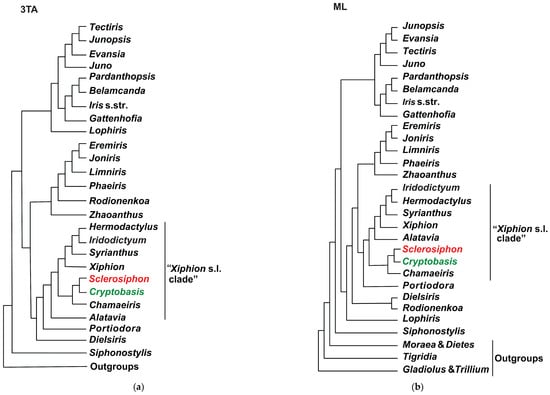
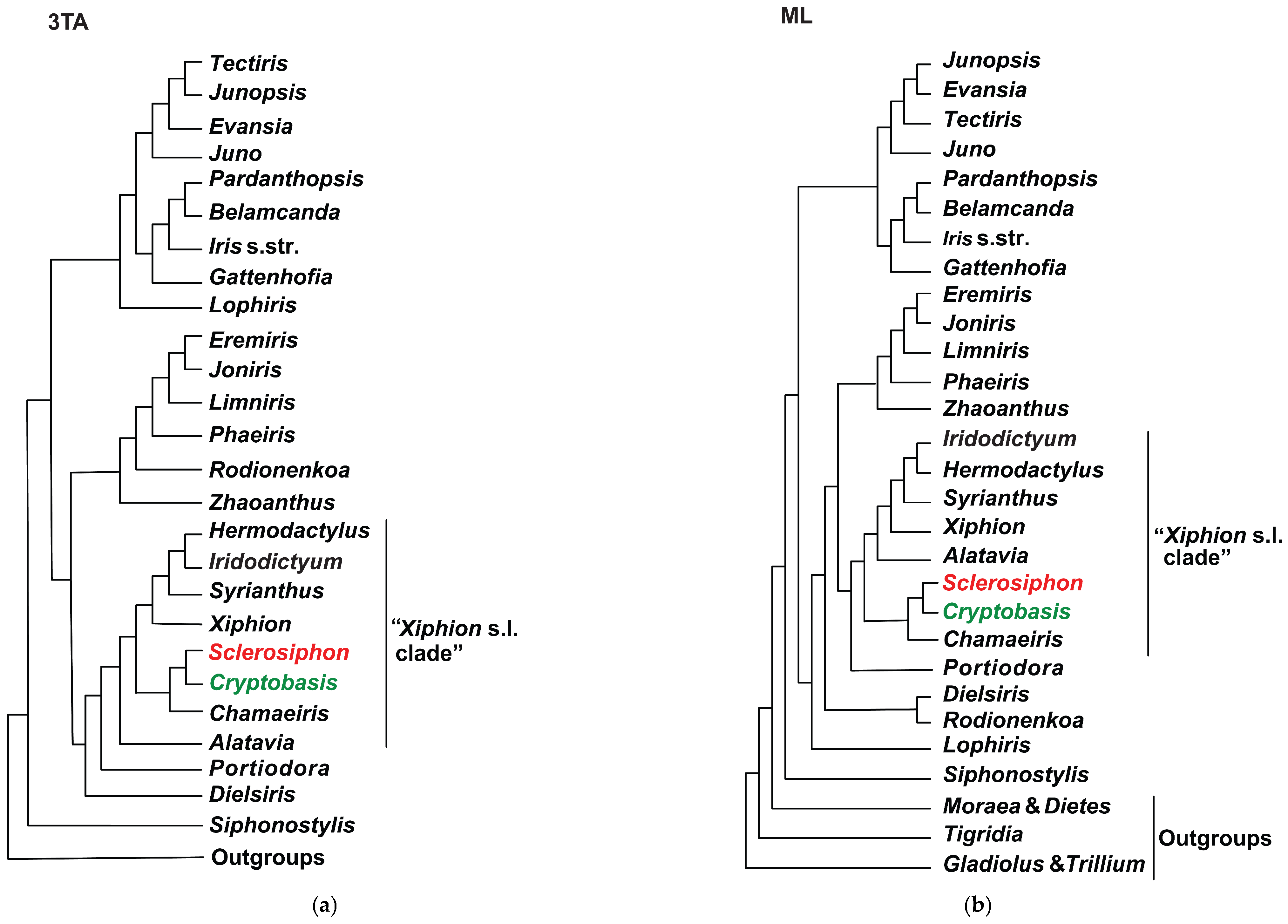
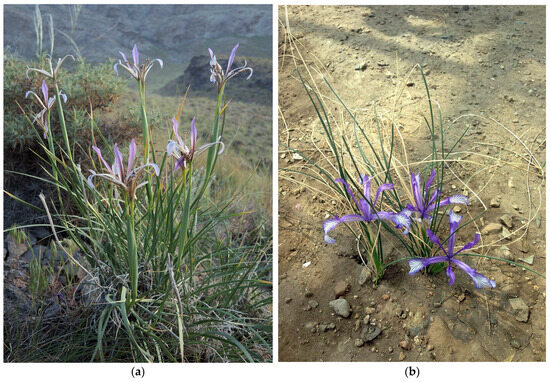
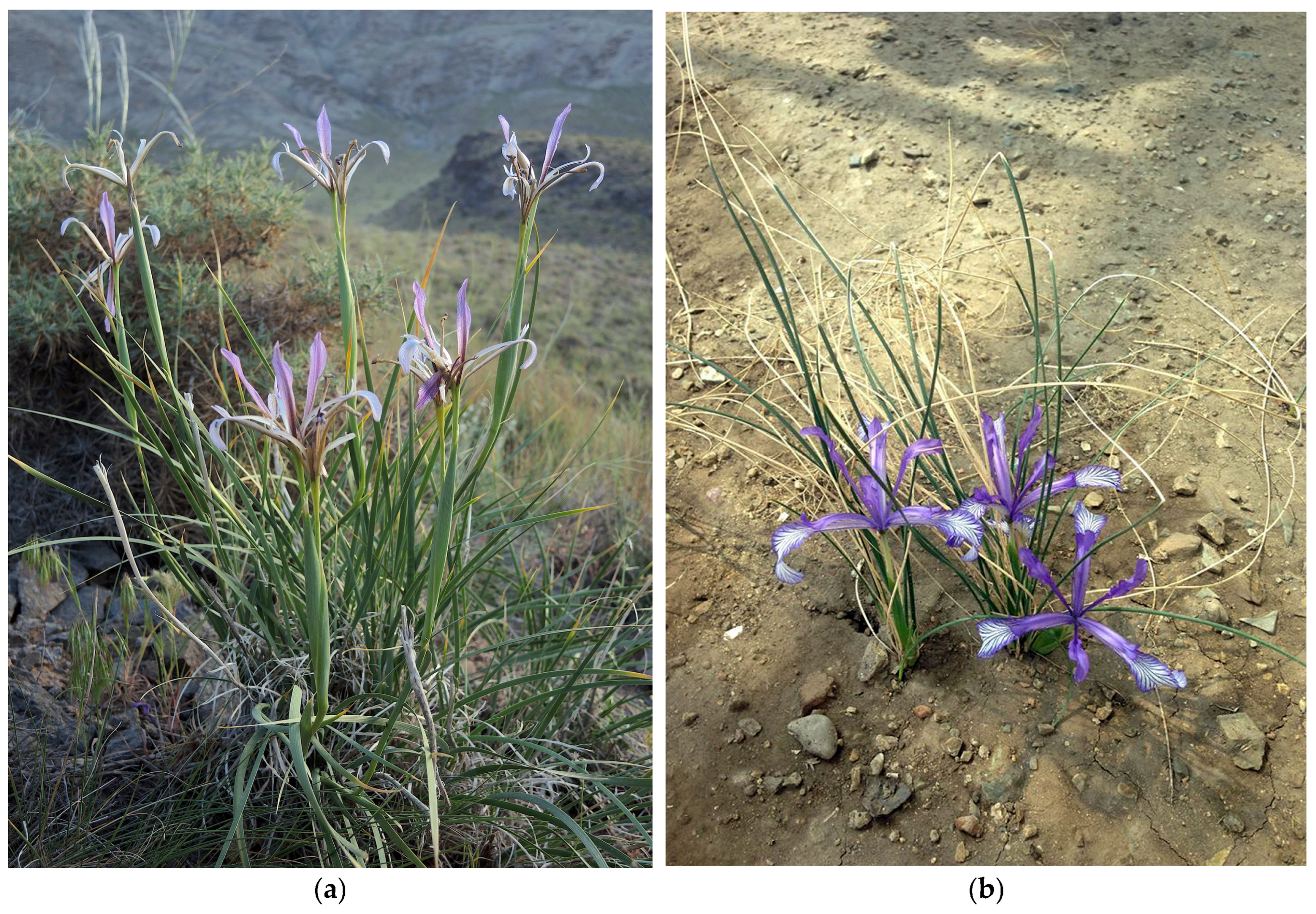
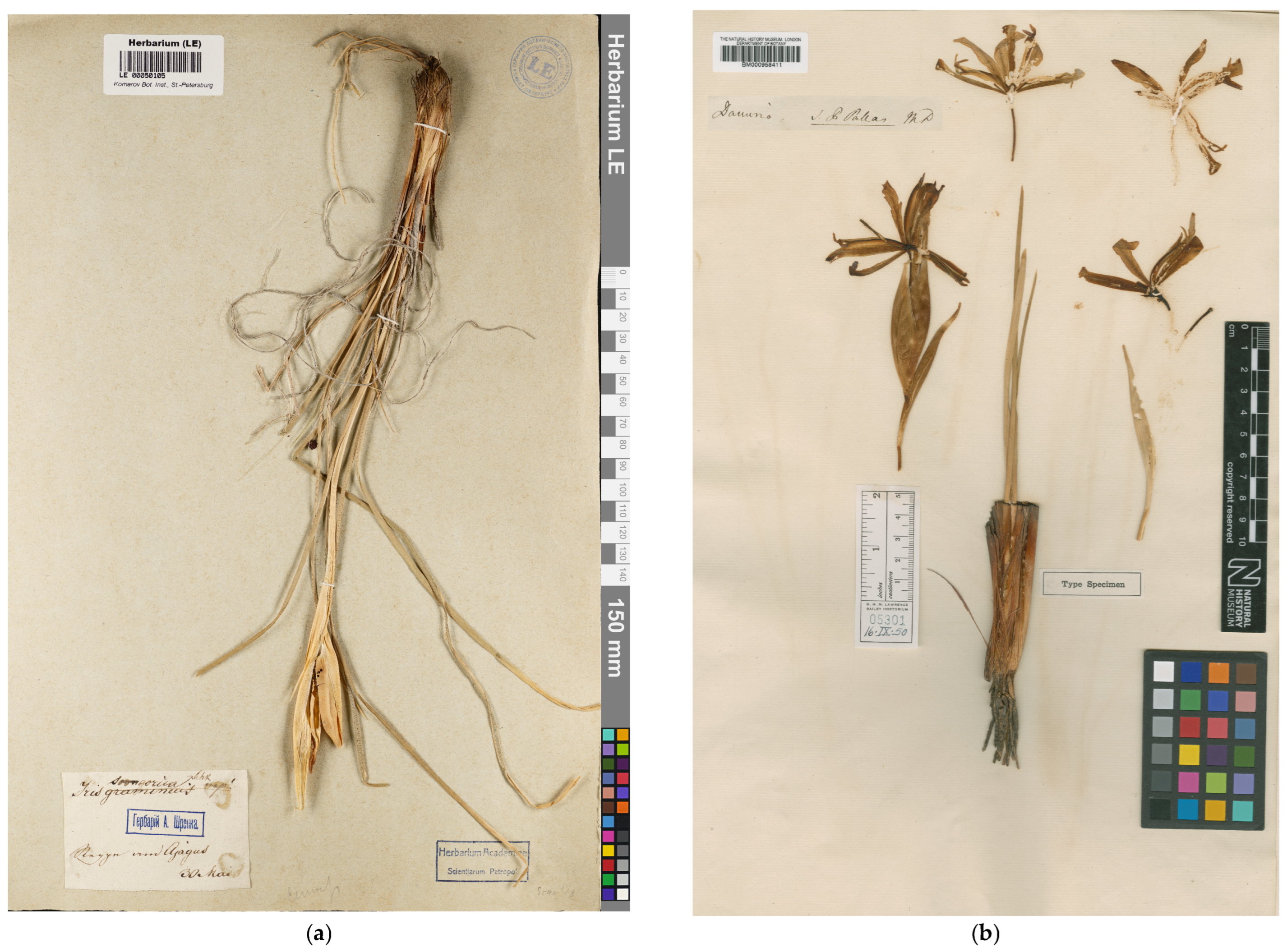

Disclaimer/Publisher’s Note: The statements, opinions and data contained in all publications are solely those of the individual author(s) and contributor(s) and not of MDPI and/or the editor(s). MDPI and/or the editor(s) disclaim responsibility for any injury to people or property resulting from any ideas, methods, instructions or products referred to in the content. |
© 2026 by the authors. Licensee MDPI, Basel, Switzerland. This article is an open access article distributed under the terms and conditions of the Creative Commons Attribution (CC BY) license.