


Abstract
The Ouenza open-pit mine is one of Algeria’s major iron ore producers, where efficient blasting and fragmentation control are essential to maintaining stable, productive mining operations. The primary objective of this study is to quantitatively assess the agreement between predicted and measured rock fragmentation at the Ouenza open-pit mine. The research methodology includes a comprehensive analysis of blasting parameters. Field experiments used four blasts, all executed with the same blasting plans on the same working face to ensure comparability. The rock fragmentation was precisely measured and analyzed using the advanced image-processing software Wip-Frag to determine the particle-size distribution. The Kuz–Ram model predicted the fragment size distribution using the same blasting design implemented in the field, and the predicted fragmentation was quantitatively evaluated against Wip-Frag measurements using the coefficient of determination (R2), root mean square error (RMSE), and mean absolute error (MAE). The statistical evaluation yielded an R2 of 0.9095, an RMSE of 9.71%, and an MAE of 6.54%, indicating good overall agreement between the predicted and measured fragmentation, despite noticeable deviations in the coarse-fragment size range. The observed discrepancies were mainly associated with potential inaccuracies in the field implementation of the designed blast pattern, limited compliance with blasting procedures, and the natural heterogeneity of the rock mass. The results show that comparing Wip-Frag measurements with Kuz–Ram predictions is an effective way to identify discrepancies between predicted and actual fragmentation and to determine the field factors driving these differences. These findings provide practical insights into blast implementation and fragmentation control under actual mining conditions.
1. Introduction
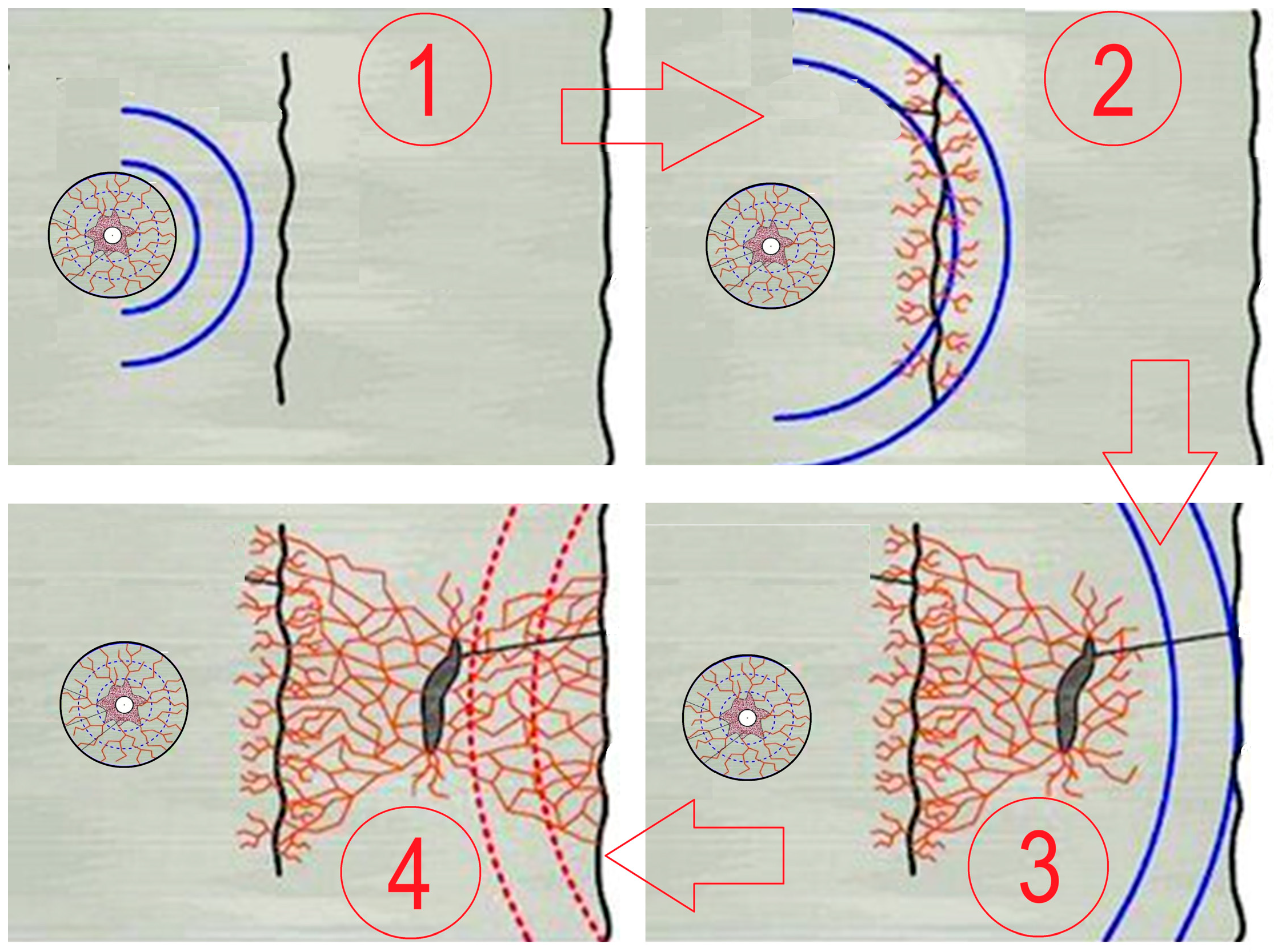
Mining plays a critical role in extracting valuable mineral resources and significantly contributes to a nation’s economic development [1,2,3]. The use of explosives in mining dates back to the 17th century, when black powder was first employed for rock fragmentation in mining and construction projects. Approximately 120 years ago, mechanical methods for rock fragmentation were introduced, marking a significant technological advancement in the field [4,5,6,7]. Using chemical energy from explosives for rock fragmentation is far more cost-effective than other forms of mechanical energy [8]. Today, drilling and blasting remain indispensable techniques for rock excavation in the mining and transportation sectors [9]. With 80% of daily mineral production originating from open-pit mining, its impact on the global industry is substantial [10]. Rock fragmentation by blasting is a complex, dynamic process arising from the interaction between the rock mass and the explosives [11]. The process unfolds in several stages: explosive decomposition into high-pressure gases, stress-wave propagation, rock fracturing, gas-driven crack expansion, and fragment ejection (Figure 1) [12]. Theoretical studies of rock blasting remain challenging due to the complexity of the blasting process and the rock’s response to explosives [13,14,15]. Developing a comprehensive theory of rock-mass destruction requires consideration of the rock’s physical and mechanical properties and the explosives’ energetic characteristics [16]. Accurate rock characterization and fragmentation analysis enable the design of customized blasting operations and can lead to precise predictions of fragmentation quality [17]. In practice, blasting operations rely heavily on engineering experience [18]. Blasting should be designed to achieve an optimal particle size distribution for downstream processes such as loading, hauling, and crushing, as these operations are directly influenced by the size of the blasted rock fragments [19].
Furthermore, fragmentation directly affects drilling and blasting costs and the profitability of subsequent operations [20,21]. Poor fragmentation can create significant economic challenges, as oversized blocks require secondary blasting, while excessive fines increase costs because they consume more explosives [22]. Effective blasting begins by identifying the factors that influence drilling and blasting operation. Based on these factors, researchers then develop a well-designed blasting model [23]. Blasting performance is influenced by both controllable factors, such as design parameters, and uncontrollable factors, including the rock mass’s intrinsic characteristics [24,25]. Assessing rock fragmentation has long interested mining engineers seeking to optimize blasting processes [26,27]. Fragment size distribution is typically assessed using the Kuz–Ram model or image analysis techniques [28]. While the Kuz–Ram model is widely used due to its simplicity, it often overestimates fragment sizes [29]. In contrast, image analysis software such as Wip-Frag provides a reliable and accurate method for determining particle size distribution in fragmented rock piles [30,31]. This technique has been extensively used in the mining industry for many years [32].
Despite the widespread use of the Kuz–Ram model to predict blast-induced fragmentation, discrepancies between model predictions and actual field fragmentation remain poorly understood, particularly under real operating conditions where field implementation of the designed blast pattern and natural rock-mass variability may influence fragmentation outcomes. This study quantitatively evaluates the agreement between predicted and measured fragmentation using statistical performance indicators (R2, RMSE, and MAE).
Figure 1.
Schematic representation of blasting stages: (1) hole radius, (2) radial cracking, (3) elastic limit, (4) ductile deformation and fragmentation [26].
2. General Setting
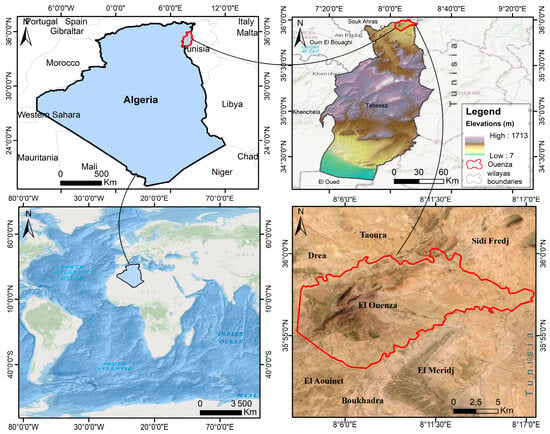
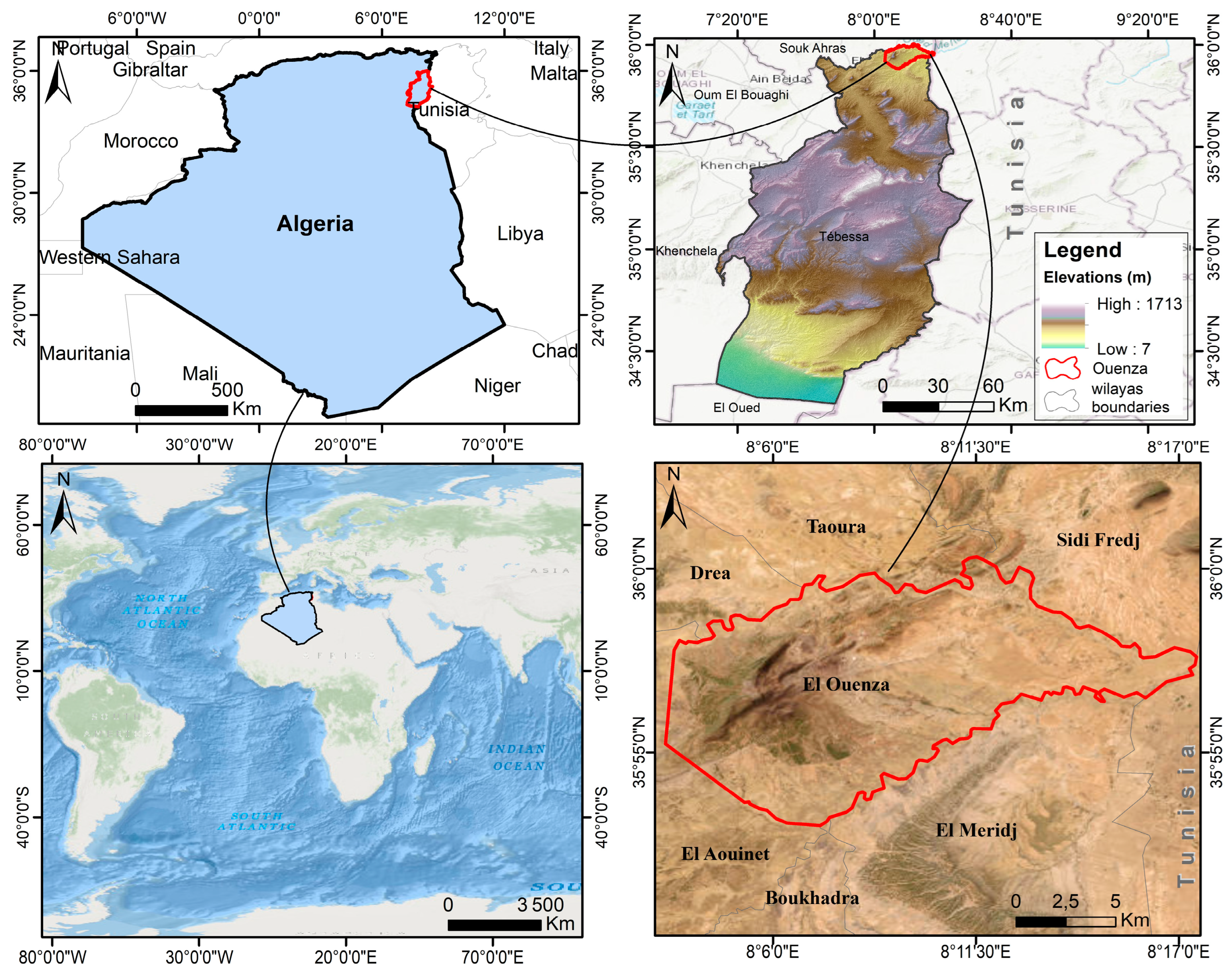
The Ouenza iron deposit is located in northeastern Algeria, approximately 160 km south of the city of Annaba and 72 km from the administrative center of Tebessa (Figure 2). Situated in the Eastern Saharan Atlas near the Algerian–Tunisian border, the Ouenza massif is a prominent geological feature [33]. This deposit is one of the primary sources of iron ore for Algeria’s metallurgical industry, with extraction conducted through large-scale open-pit mining operations [34].
Figure 2.
Geographical location of Ouenza region.
Geographically, the Ouenza massif lies within a subsiding basin in the foreland of the North African orogeny, a region characterized by complex tectonic activity. The area is part of a folded autochthonous zone marked by numerous Triassic evaporitic diapirs, which are intersected by Tertiary grabens [35]. These geological features have played a significant role in shaping the deposit’s mineralogical and structural characteristics.
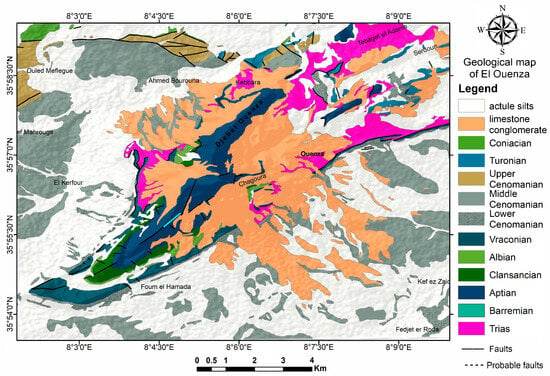
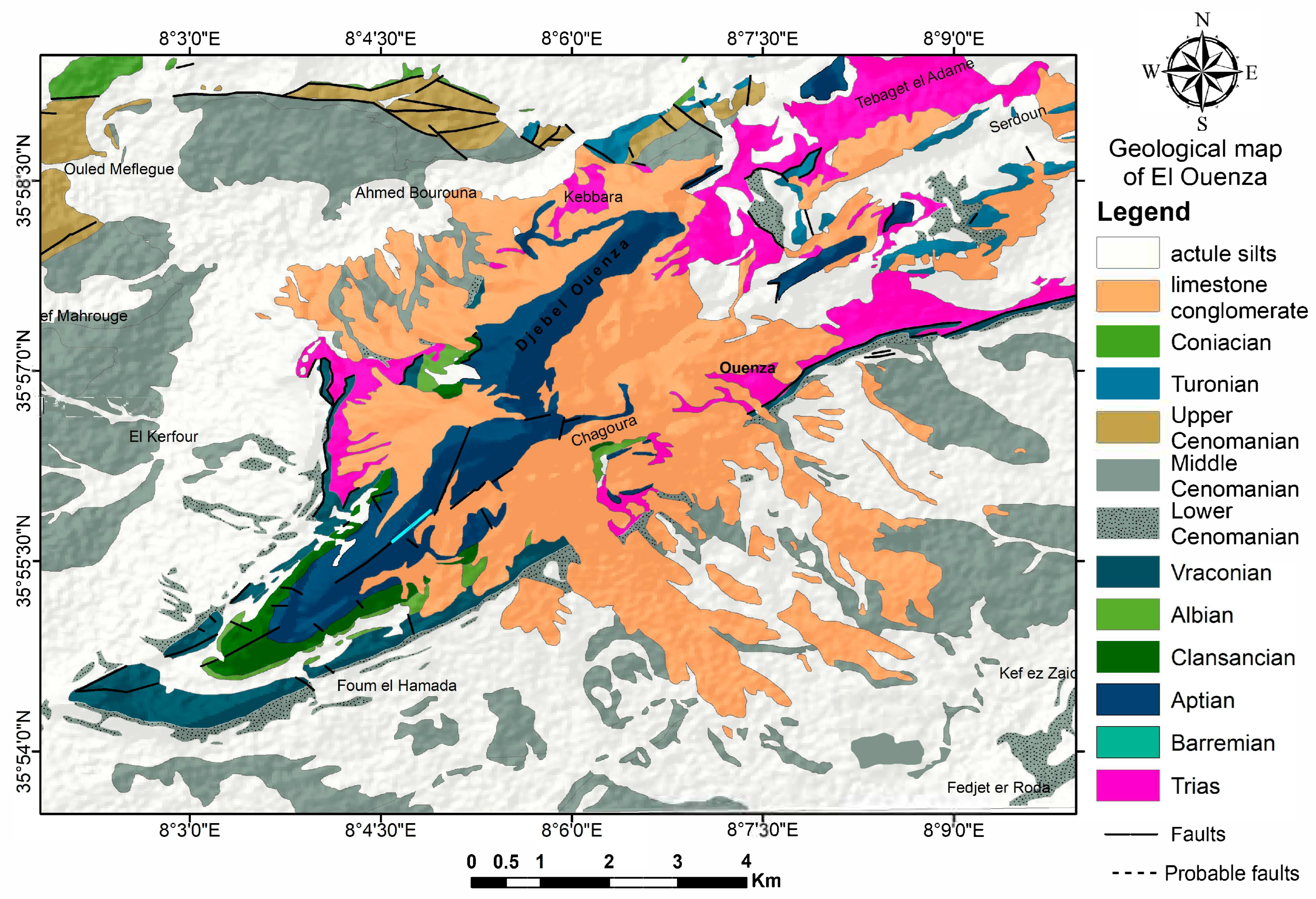
The Triassic outcrops associated with the Ouenza diapir are divided into three distinct zones: a central zone where the Triassic series is deeply buried, and two lateral shoulders formed by the extrusion of evaporitic materials over overturned Aptian–Albian strata [36]. This structural configuration has created favorable conditions for the formation of iron ore deposits (Figure 3).
Figure 3.
Geological map of Ouenza region.
The iron ore in the Ouenza deposit occurs as irregular accumulations within Aptian reef limestone [37]. The mineralization process was facilitated by extensive fracturing (faults and fissures), which allowed ferrous salt solutions to impregnate the limestone beds. Over time, these solutions transformed calcium carbonate into iron carbonate, resulting in the formation of powerful mineralized zones [38]. The primary ore consists of iron carbonate (siderite), while secondary mineralization has formed hematite by oxidation of iron carbonates [39].
The physical and mechanical properties of the iron-bearing rock in the Ouenza deposit are crucial for understanding its response to blasting and fragmentation. These factors significantly impact the efficiency of blasting operations and the quality of fragmentation. Table 1 summarizes the key properties, including uniaxial compressive strength, dry unit weight, Young’s modulus, and cohesion, all determined through laboratory testing.
Table 1.
Main physical and mechanical characteristics of the iron rock in the case study.
The geological complexity of the Ouenza deposit, along with its tectonic and mineralogical characteristics, poses unique challenges for mining operations. The heterogeneity of the rock mass, shaped by faulting and fracturing, significantly affects blasting efficiency and the resulting particle size distribution. A thorough understanding of these geological factors is crucial for optimizing blasting parameters and enhancing fragmentation outcomes in open-pit mining.
3. Materials and Methods
This study methodology includes a comprehensive analysis of the factors influencing rock fragmentation under the specific conditions at the Ouenza mine. We conducted four field blasts using the same blast scheme and platform to ensure consistency. We determined the particle size distribution using advanced image processing techniques with Wip-Frag software. We then applied the Kuz–Ram model to estimate fragment sizes based on the same blast scheme. We compared the field results obtained using Wip-Frag with the Kuz–Ram model predictions.
3.1. Blasting Design Parameters
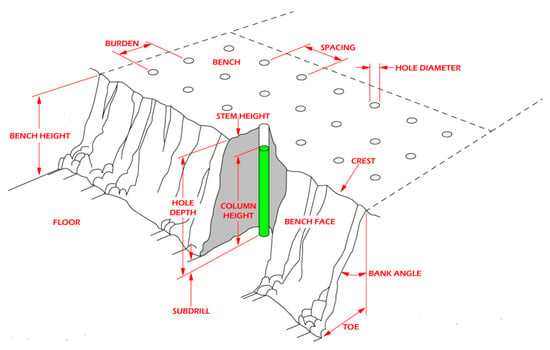
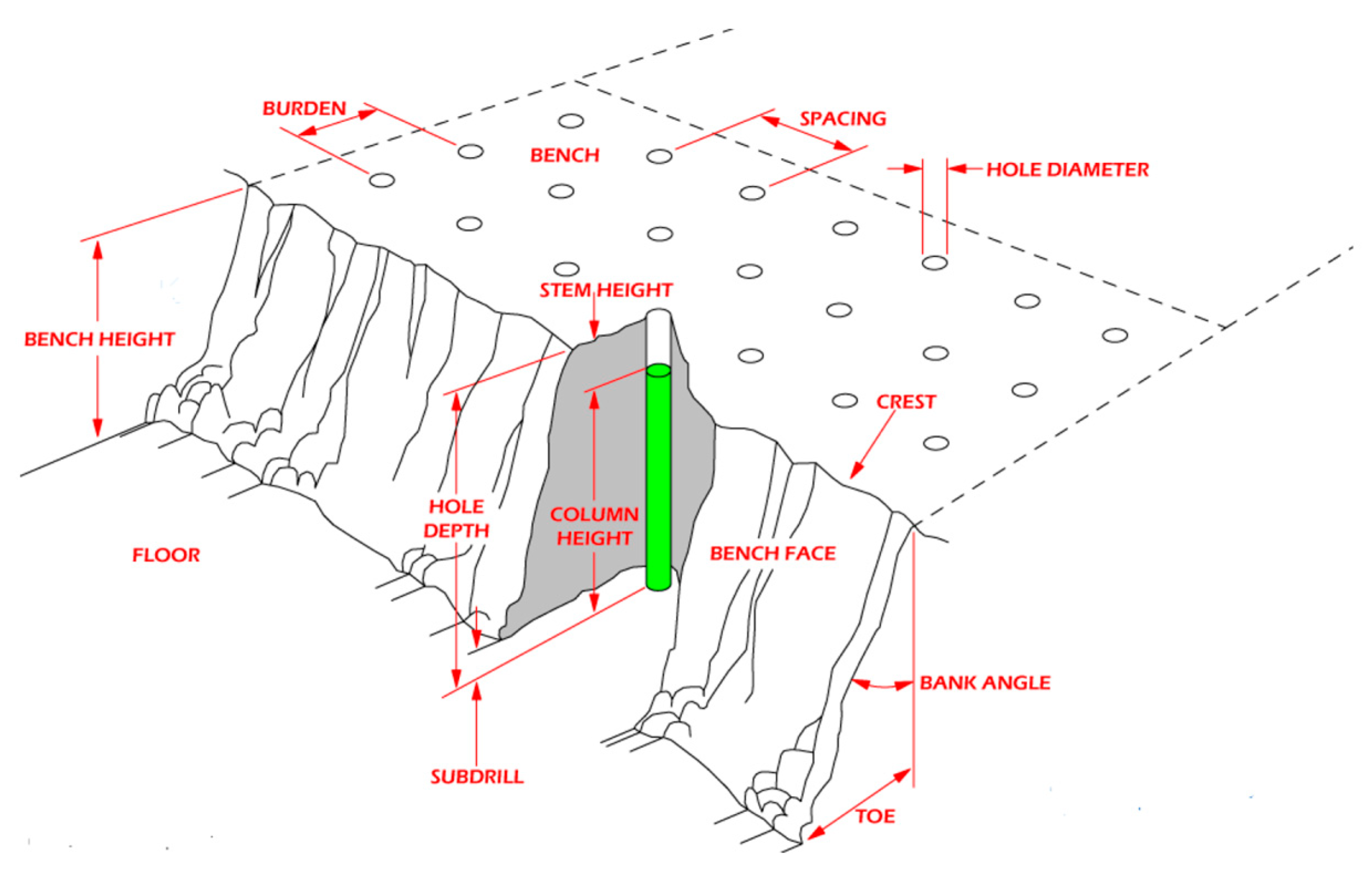
Figure 4 summarizes the engineering and operational parameters that control blasting results. These parameters include hole diameter, platform height, spacing, payload, and explosive charge, which directly affect fragmentation efficiency and oversized blocks’ formation.
Figure 4.
Geometrical parameters influencing blast outcomes [40].
3.2. Fragmentation Assessment Techniques
Fragmentation can be assessed using direct and indirect methods. Direct methods require significant effort and time [41]. Indirect methods include observation techniques, experimental models, and digital image processing [42]. Digital image analysis, particularly with Wip-Frag software, is widely used in the mining industry because of its speed, accuracy, and ability to reduce human error [43].
For this study, we photographed muck piles using calibrated field cameras. We took multiple images from randomly selected locations across the entire muck pile to account for spatial heterogeneity and particle segregation. A safety helmet served as a reference scale, and images were acquired under diffuse lighting at an appropriate camera distance to optimize fragment delineation. We processed the images using Wip-Frag to identify individual fragments and generate granulometric curves, manually correcting fragment boundaries where needed.
3.3. Kuz–Ram Model Implementation
The Kuz–Ram empirical model developed by Cunningham was applied without local recalibration of its empirical equations or coefficients to predict fragmentation sizes and optimize blasting parameters. The input parameters include rock properties, explosive characteristics, and blast design variables [44]. The blasting operations used a mixed explosive charge composed of 65% Anfomil and 35% Marmanite III. For the Kuz–Ram calculations, we adopted an RWS value of 82 relative to ANFO to represent the energetic characteristics of the explosive mixture used in the field blasting operations.
The model equations are defined as follows:
where:
X50 = Mean particle size of muckpile (cm);
A = Rock factor;
K = Powder factor (kg/m3);
Q = Quantity of explosive in the blast hole (kg);
RWS = Relative Weight Strength to ANFO.
where:
R (x) = % passing through a screen opening of size X;
X = Screen size (cm);
Xc = The characteristic size (cm);
n = Uniformity index.
The uniformity index (n) is derived from:
where:
n = Uniformity index of the Kuz–Ram model;
B = Burden (m);
S = Spacing (m);
d = Hole diameter (mm);
w = Standard deviation of drilling precision (m);
L = Charge length (m);
H = Bench height (m);
P = Factor of staggered drilling pattern.
4. Results and Discussion
4.1. Fragmentation Analysis and Oversized Block Formation
This study examined the fragmentation results from four blasts conducted at the Ouenza iron mine in Tebessa, Algeria. The blasts used identical design parameters, as detailed in Table 2.
Table 2.
Blasting plan parameters used in the Ouenza mine.
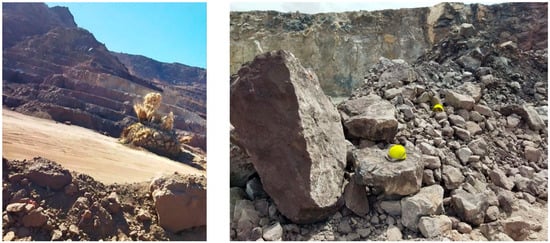
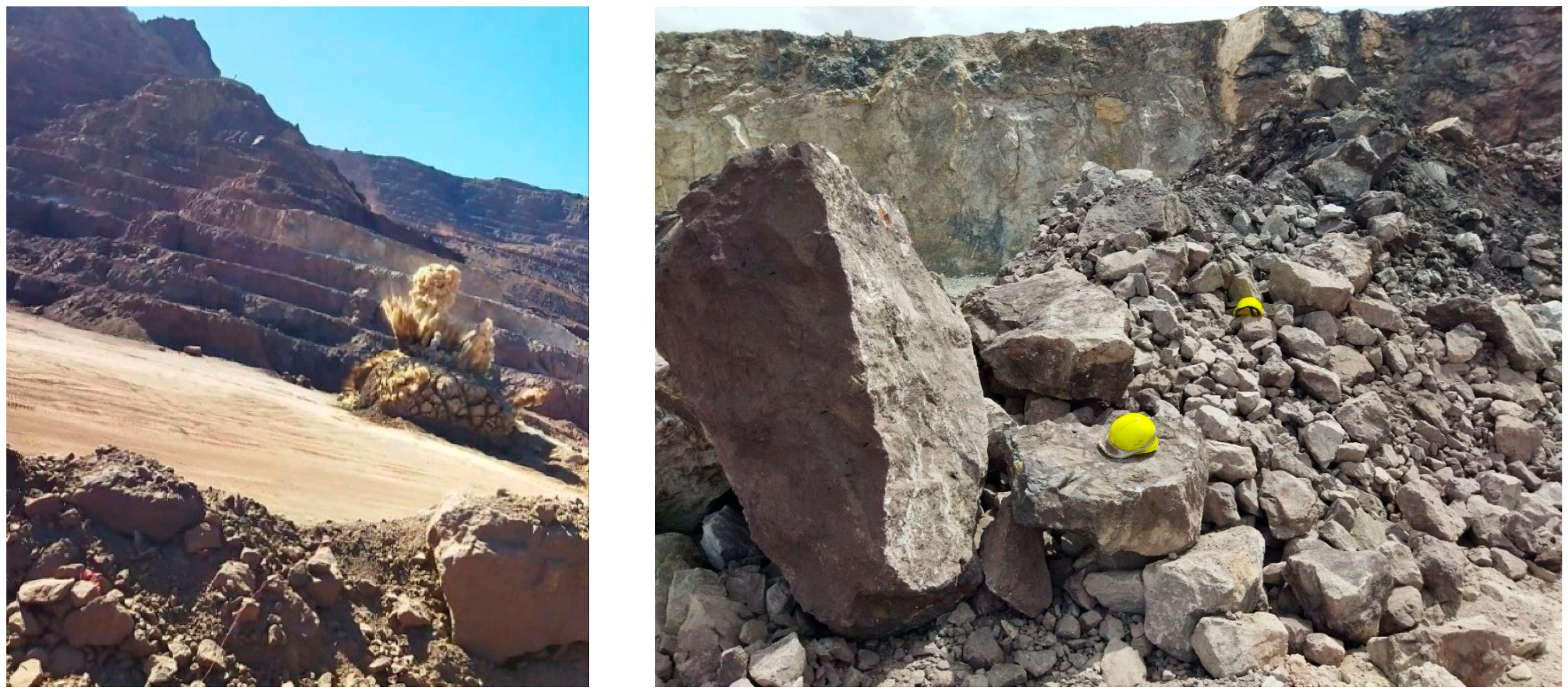
After each blasting operation, multiple photos were taken to minimize errors and ensure accurate analysis. The blast results were captured from various angles and analyzed using Wip-Frag 3 to assess the particle size distribution. In this study, fragments with a diameter greater than 1000 mm were classified as oversized blocks, corresponding to the maximum allowable feed size of the primary crusher. To enhance measurement accuracy, helmets of known dimensions were placed in different positions to provide a dual-scale (Figure 5).
Figure 5.
View of the blasting operation results.
4.2. Fragmentation Results Obtained Using Wip-Frag
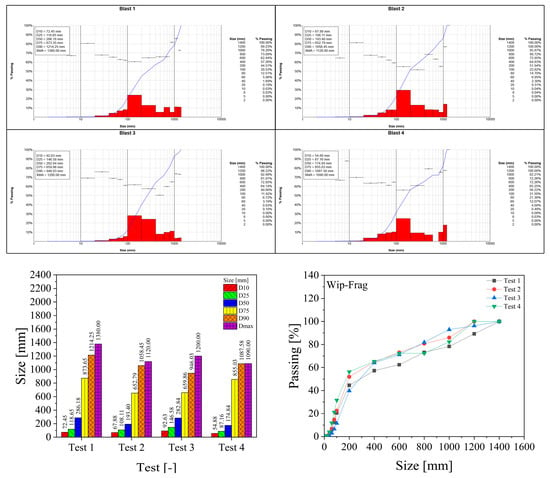
After processing the images with Wip-Frag, we present representative results for the average fragmentation below (Figure 6).
Figure 6.
Particle size distribution of blasted rocks using Wip-Frag.
4.3. Fragmentation Prediction Using the Kuz–Ram Model
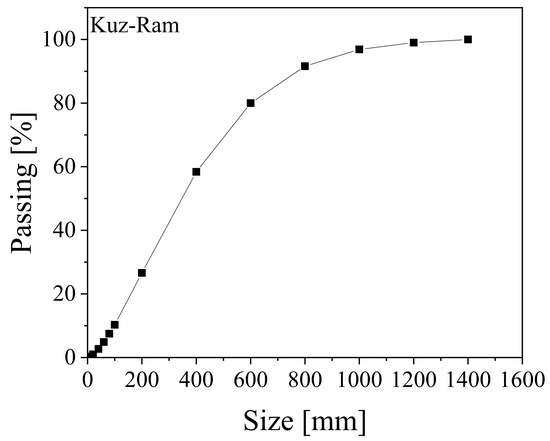
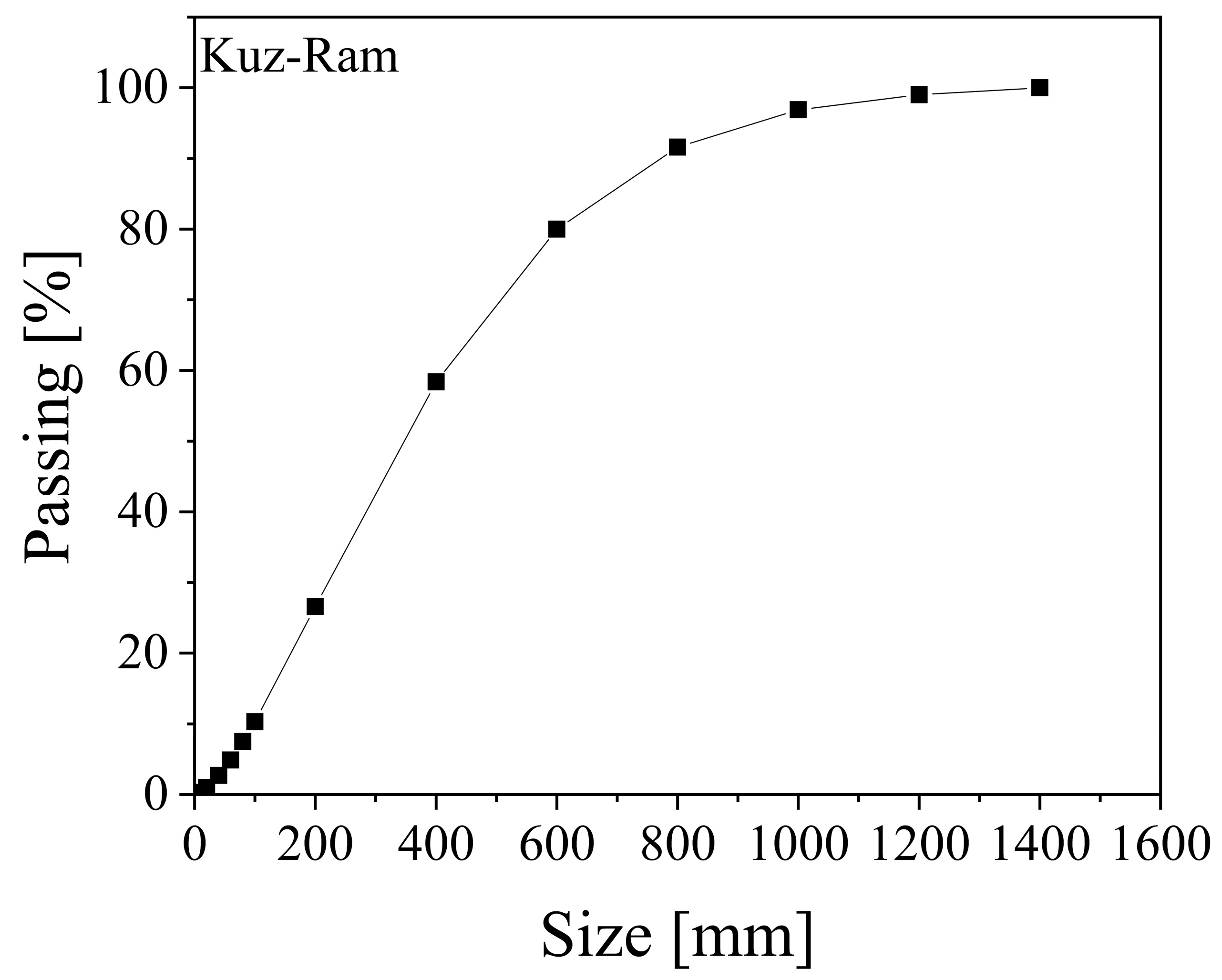
The Kuz–Ram model predicted the particle size distribution based on the detonation plan parameters. The model’s predictions, shown in Figure 7, estimated a large-mass proportion of 3.1%, which is significantly lower than the field results obtained from Wip-Frag.
Figure 7.
Granulometric curve of the Kuz–Ram model predictions for the implemented blasting plan.
4.4. Comparative Analysis of Fragmentation Results
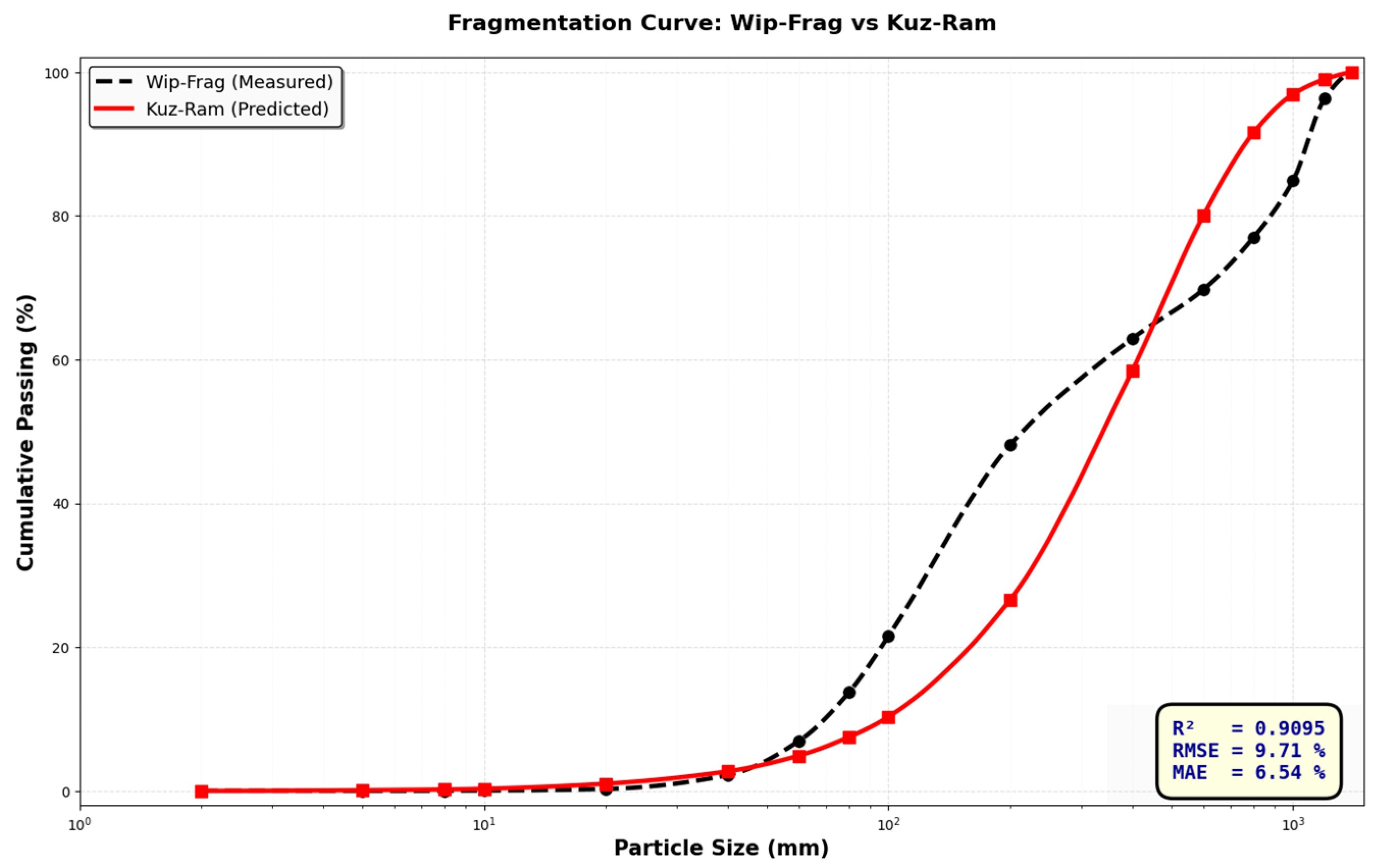
A comparison of the Wip-Frag and Kuz–Ram results (Table 3 and Table 4 and Figure 8) revealed notable differences in the fragmentation distributions. The Wip-Frag program measured a proportion of oversized blocks approximately 2.5 to 7 times higher than that predicted by the Kuz–Ram model.
Table 3.
Particle size distribution of blasted rocks using Wip-Frag.
Table 4.
Particle size distribution of blasted rocks predicted using Kuz–Ram.
Figure 8.
Comparison of granulometric curves: Kuz–Ram predictions vs Wip-Frag results.
For the statistical comparison, the Wip-Frag fragmentation curve used to calculate R2, RMSE, and MAE was obtained by averaging the measured fragmentation curves from the four blasts. The statistical evaluation (R2 = 0.9095, RMSE = 9.71%, and MAE = 6.54%) indicates that the Kuz–Ram model adequately reproduces the overall trend of the fragmentation curve. The deviations between predicted and measured fragmentation were more pronounced in the coarse fragment size range, suggesting that field implementation conditions may have contributed to the observed differences. Although the Kuz–Ram calculations assume ideal blasting conditions, the measured field fragmentation is also affected by variations in rock-mass structure, drilling accuracy, execution of the designed blast pattern, and adherence to blasting procedures. These factors can locally influence rock fracturing and contribute to observed differences between the predicted and measured coarse fragment proportions. Therefore, the combined use of Kuz–Ram predictions and Wip-Frag field measurements provides a practical approach for understanding the geological and operational factors underlying the discrepancies between predicted and measured fragmentation.
5. Conclusions
This research study analyzed the fragmentation outcomes of four blasts conducted under identical design parameters at the Ouenza iron mine in northeastern Algeria. This study used two primary tools: Wip-Frag software for digital image analysis of fragmentation and the Kuz–Ram empirical model to predict particle size distribution. The primary objective was to evaluate the agreement between fragmentation predicted by the Kuz–Ram model and fragmentation measured by Wip-Frag image analysis, and to identify the factors responsible for the observed discrepancies. The proposed Wip-Frag and Kuz–Ram comparison provides a practical framework for assessing fragmentation predictions in various quarries and mines while accounting for site-specific geological and operational conditions.
The findings revealed noticeable variations in fragmentation results across the four blasts, despite identical blasting parameters and execution on the same bench. The WipFrag analysis showed an oversized block proportion of 8% to 22%, confirming that rock-mass characteristics influence blasting outcomes. In contrast, the Kuz–Ram model predicted a much higher proportion of optimal fragment sizes, with 97% of fragments falling within the desired range. Statistical evaluation (R2 = 0.9095, RMSE = 9.71%, MAE = 6.54%) showed good agreement between Kuz–Ram predictions and measured fragmentation, despite significant deviations in the coarse-fragment range. The observed variations in the size range of coarse fragments may reflect the rock-mass structure and field conditions that were not included in theoretical blast calculations.
The findings indicate that improving fragmentation quality requires strict adherence to the designed blasting parameters, continuous training for personnel involved in drilling and blasting operations, and integrating empirical prediction models with field-based image analysis. These measures can help control blast execution and compare predicted fragmentation with field measurements, improving the understanding and management of fragmentation variability under actual mining conditions.
Author Contributions
Conceptualization, A.T. and O.Z.; methodology, H.D.; software, A.T.; validation, A.T., O.Z. and K.K.; formal analysis, A.A.B.; investigation, A.A.B.; resources, T.B.; data curation, K.K.; writing—original draft preparation, A.T.; writing—review and editing, A.T.; visualization, T.B. All authors have read and agreed to the published version of the manuscript.
Funding
This research was funded by the deanship of scientific research at Northern Border University, Arar, Saudi Arabia (Project No. NBU-CRP-2026-1706).
Data Availability Statement
The original contributions presented in this study are included in the article. Further inquiries can be directed to the corresponding author.
Acknowledgments
The authors sincerely thank the Laboratory for Hydraulic Developments and Environment, University Mohamed Khider of Biskra, for providing essential logistical assistance. Khaled Kefi extends his appreciation to Northern Border University, Saudi Arabia, for supporting this work through project number (NBU-CRP-2026-1706).
Conflicts of Interest
The authors declare no conflicts of interest.
References
- Tabet, A.; Nouioua, I.; Fehdi, C.; Zerzour, O.; Mehidi, Y. Contribution to the analysis of the stability of an open pit mine: Case of the Kef Essnoun phosphate mine, Tebessa north-east Algeria. J. Fundam. Appl. Sci. 2019, 11, 1344–1353. [Google Scholar]
- Tabet, A. Evolution et Caractérisation Géomécanique du Glissement du Gisement de Phosphate: Cas de Kef Essnoun-Bir el Ater—NE Algérien. Ph.D. Thesis, Echahid Cheikh Larbi Tebessi University, Tebessa, Algeria, 2020. [Google Scholar]
- Mebarkia, M.; Abdelmalek, A.; Aoulmi, Z.; Louafi, M.; Tabet, A.; Benselhoub, A. Synergistic prediction of penetration rate in Boukhadhra mining using regression, design of experiments, fuzzy logic, and artificial neural networks. Technol. Audit. Prod. Reserves 2024, 78, 32–42. [Google Scholar] [CrossRef] [Scilit]
- Al-Bakri, A.; Hefni, M. A Review of Some Nonexplosive Alternative Methods to Conventional Rock Blasting. Open Geosci. 2021, 13, 431–442. [Google Scholar] [CrossRef] [Scilit]
- Khebbab, R.; Remli, S.; Tamang, M.; Fellouh, N.; Tabet, A.; Berdoudi, S.; Ferhi, H. Enhancement of blasting techniques for reducing seismic and acoustic nuisances: A case study of El-Hassa Quarry, Algeria. Geomat. Landmanag. Landsc. 2024, 4, 61–75. [Google Scholar] [CrossRef] [Scilit]
- Taiwo, B.O.; Yewuhalashet, F.; Ogunyemi, O.B.; Babatuyi, V.A.; Okobe, E.I.; Orhu, E.A. Quarry Slope Stability Assessment Methods with Blast Induced Effect Monitoring in Akoko Edo, Nigeria. Geotech. Geol. Eng. 2023, 41, 2553–2571. [Google Scholar] [CrossRef] [Scilit]
- Safak, S. A New Hyperbolic Function Approach of Rock Fragmentation Size Distribution Prediction Models. Symmetry 2024, 16, 979. [Google Scholar] [CrossRef] [Scilit]
- Chandrahas, N.S.; Choudhary, B.S.; Venkataramayya, M.S.; Fissha, Y.; Taiwo, B.O. An Investigation of the Cumulative Impact of Decking Length and Firing Pattern on Blasting Results. J. Min. Environ. 2025, 16, 97–110. [Google Scholar] [CrossRef]
- Lu, W.; Yang, J.; Chen, M.; Zhou, C. An Equivalent Method for Blasting Vibration Simulation. Simul. Model. Pract. Theory 2011, 19, 2050–2062. [Google Scholar] [CrossRef] [Scilit]
- Batouche, T.; Dinar, H.; Tabet, A.; Hadji, R.; Zedam, R.; Zerzour, O. Mitigating environmental impacts of phosphate blasting through optimized techniques in northeastern Algeria. Euro-Mediterr. J. Environ. Integr. 2025, 10, 5441–5453. [Google Scholar] [CrossRef] [Scilit]
- Babaeian, M.; Ataei, M.; Sereshki, F.; Sotoudeh, F.; Mohammadi, S. A New Framework for Evaluation of Rock Fragmentation in Open Pit Mines. J. Rock Mech. Geotech. Eng. 2019, 11, 325–336. [Google Scholar] [CrossRef] [Scilit]
- Tabet, A.; Benyoucef, A.A.; Zerzour, O.; Batouche, T.; Achour, Z.E. Analysis and Improvement of the Frag-mentation Quality of Blasted Rock Using Digital Image Processing: The Case of the Kef Lahmer Quarry, N-E Algeria. Geomat. Landmanag. Landsc. 2024, 87–99. [Google Scholar] [CrossRef] [Scilit]
- Zhu, Z. Numerical Prediction of Crater Blasting and Bench Blasting. Int. J. Rock Mech. Min. Sci. 2009, 46, 1088–1096. [Google Scholar] [CrossRef] [Scilit]
- Bakhshandeh Amnieh, H.; Bidgoli, M.H.; Mokhtari, H.; Bazzazi, A.A. Application of Simulated Annealing for Optimization of Blasting Costs Due to Air Overpressure Constraints in Open-Pit Mines. J. Min. Environ. 2019, 10, 903–916. [Google Scholar] [CrossRef] [Scilit]
- Bastami, R.; Aghajani Bazzazi, A.; Shoormasti, H.H.; Ahangari, K. Prediction of Blasting Cost in Limestone Mines Using Gene Expression Programming Model and Artificial Neural Networks. J. Min. Environ. 2020, 11, 281–300. [Google Scholar] [CrossRef] [Scilit]
- Kononenko, M.; Khomenko, O. New Theory for the Rock Mass Destruction by Blasting. Min. Miner. Depos. 2021, 15, 111–123. [Google Scholar] [CrossRef] [Scilit]
- Monjezi, M.; Baghestani, M.; Afzal, P.; Yarahmadi Bafghi, A.R. Investigation on Relationship between Rock Characteristics and Blasting Fragmentation Using Fractal Analysis. J. Min. Environ. 2026, 17, 309–320. [Google Scholar] [CrossRef]
- Miao, S.; Konicek, P.; Pan, P.Z.; Mitri, H. Numerical Modelling of Destress Blasting e A State-of-the-Art Review. J. Sustain. Min. 2022, 21, 278–297. [Google Scholar] [CrossRef] [Scilit]
- Amin, I.; Salman, S. Fragmentation Analysis of Blasted Rock Using WipFrag Image Analysis Software. J. Mines Met. Fuels 2022, 70, 263–267. [Google Scholar] [CrossRef] [Scilit]
- Tabet, A.; Zerzour, O.; Dinar, H.; Nouioua, I.; Benyoucef, A.A.; Batouche, T.; Rebouh, N. Geophysical Monitoring of Landslide Reactivation at Kef Essnoun Phosphate Mine, Northeastern Algeria. Min. Metall. Explor. 2026, 43, 1–15. [Google Scholar] [CrossRef] [Scilit]
- Tavakol Elahi, A.; Hosseini, M. Analysis of Blasted Rocks Fragmentation Using Digital Image Processing (Case Study: Limestone Quarry of Abyek Cement Company). Int. J. Geo-Eng. 2017, 8, 16. [Google Scholar] [CrossRef] [Scilit]
- Li, E.; Yang, F.; Ren, M.; Zhang, X.; Zhou, J.; Khandelwal, M. Prediction of Blasting Mean Fragment Size Using Support Vector Regression Combined with Five Optimization Algorithms. J. Rock Mech. Geotech. Eng. 2021, 13, 1380–1397. [Google Scholar] [CrossRef] [Scilit]
- Fattahi, H.; Ghaedi, H.; Armaghani, D.J. Enhancing Blasting Efficiency: A Smart Predictive Model for Cost Optimization and Risk Reduction. Resour. Policy 2024, 97, 105261. [Google Scholar] [CrossRef] [Scilit]
- Mohamed, M.T. Artificial Neural Network for Prediction and Control of Blasting Vibrations in Assiut (Egypt) Limestone Quarry. Int. J. Rock Mech. Min. Sci. 2009, 46, 426–431. [Google Scholar] [CrossRef] [Scilit]
- Sharma, A.; Mishra, A.K.; Choudhary, B.S.; Meena, R. Impact of Blast Design Parameters on Rock Fragmentation in Building Stone Quarries. Curr. Sci. 2019, 116, 1861–1867. [Google Scholar] [CrossRef] [Scilit]
- Batouche, T.; Tabet, A.; Zerzour, O.; Hadji, R.; Benyoucef, A.A.; Moueri, A.; Dinar, H. Optimizing Rock Fragmentation in Open Pit Mining: Blasting Plan Refinement Using WipFrag and Kuz-Ram Method. Geomat. Landmanag. Landsc. 2025, 4, 77–89. [Google Scholar] [CrossRef] [Scilit]
- Manzoor, S.; Gustafson, A.; Schunnesson, H.; Tariq, M.; Wettainen, T. Rock Fragmentation Measurements in Sublevel Caving: Field Tests at LKAB’s Malmberget Mine; Australian Centre for Geomechanics: Crawley, Australia, 2022; pp. 381–392. [Google Scholar]
- Lawal, A.I. A New Modification to the Kuz-Ram Model Using the Fragment Size Predicted by Image Analysis. Int. J. Rock Mech. Min. Sci. 2021, 138, 104595. [Google Scholar] [CrossRef] [Scilit]
- Olamide Taiwo, B. Improvement of Small-Scale Dolomite Blasting Productivity: Comparison of Existing Empirical Models with Image Analysis Software and Artificial Neural Network Models. J. Min. Environ. 2022, 13, 627–641. [Google Scholar] [CrossRef]
- Tabet, A.; Zezour, O.; Dinar, H.; Batouche, T.; Ben Youcef, A.A.; Moussaoui, M.; Lamouri, B. Optimization of the powder factor during rock masses blasting according to their intrinsic properties. Int. J. Min. Geo-Eng. 2026, 60, 161–170. [Google Scholar]
- Taiwo, B.O.; Famobuwa, O.V.; Mata, M.M.; Sazid, M.; Fissha, Y.; Jebutu, V.A.; Akinlabi, A.A.; Ogunyemi, O.B.; Ozigi, A. Granite Downstream Production Dependent Size and Profitability Assessment: An Application of Mathematical-Based Artificial Intelligence Model and WipFrag Software. J. Min. Environ. 2024, 15, 497–515. [Google Scholar] [CrossRef]
- Menacer, K.; Saadoun, A.; Hafsaoui, A.; Fredj, M.; Tabet, A.; Boudjellal, D.E.; Boukarm, R.; Nakache, R. Stemming Materials Assessing and Its Effect on Rock Fragmentation Using Digital Image Analysis at Chouf Amar Quarry, M’sila, Algeria. J. Min. Environ. 2025, 16, 1623–1635. [Google Scholar] [CrossRef] [Scilit]
- Zerzour, O.; Gadri, L.; Hadji, R.; Mebrouk, F.; Hamed, Y. Geostatistics-Based Method for Irregular Mineral Resource Estimation, in Ouenza Iron Mine, Northeastern Algeria. Geotech. Geol. Eng. 2021, 39, 3337–3346. [Google Scholar] [CrossRef] [Scilit]
- Bouzenoune, A.; Lécolle, P. Petrographic and Geochemical Arguments for Hydrothermal Formation of the Ouenza Siderite Deposit (NE Algeria). Miner. Depos. 1997, 32, 189–196. [Google Scholar] [CrossRef] [Scilit]
- Zerzour, O.; Gadri, L.; Hadji, R.; Mebrouk, F.; Hamed, Y. Semi-Variograms and Kriging Techniques in Iron Ore Reserve Categorization: Application at Jebel Wenza Deposit. Arab. J. Geosci. 2020, 13, 820. [Google Scholar] [CrossRef] [Scilit]
- Bouzenoune, A.; Rouvier, H.; Thibieroz, J. Trias de I’Ouenza: Contexte Diapirique, Zonation Minéralogique et Conséquences Métallogéniques. Bull. Serv. Géologique l’Algérie 1996, 6, 3–24. [Google Scholar]
- Haythem, D.; Khiari, A.; Zineb, M.; Taib, H.; Hana, N.; Bilal, B. Uplifted Marine Terraces by Active Coastal Tectonic Deformation along the East of Algiers: Implications for African and European Plate Convergence and Sea-Level Curves. Bol. Geol. Min. 2023, 134, 57–67. [Google Scholar] [CrossRef] [Scilit]
- Oussama, Z. Exploitation Sélective Des Gisements de fer en Algérie: Cas de la Mine de L’ouenza, Ne Algérie. Ph.D. Thesis, Echahid Cheikh Larbi Tebessi University, Tebessa, Algeria, 2020. [Google Scholar]
- Bouzenoune, A.; Rouvier, H.; Thibieroz, J. Chronologie relative et conditions de mise en place des mineralisations du massif de l’ouenza (algeriene). Bull. Serv. Géologique L’algérie 2006, 17, 3–27. [Google Scholar]
- Mutinda, E.K.; Alunda, B.O.; Maina, D.K.; Kasomo, R.M. Prediction of Rock Fragmentation Using the Kuz-netsov-Cunningham-Ouchterlony Model. J. South. Afr. Inst. Min. Metall. 2021, 121, 107–112. [Google Scholar] [CrossRef] [Scilit]
- Ansari, A.A.M.A.; Seervi, V.; Kishore, N.; Singh, N.P. An Investigation into the Effect of Rain on Fragmented Coal: A Case Study. J. Inst. Eng. (India) Ser. D 2024, 105, 581–594. [Google Scholar] [CrossRef] [Scilit]
- Omotehinse, A.O.; Taiwo, B.O. A Comparative Analysis on the Performance of Modified Kuz–Ram and Kuz-netsov–Cunningham–Ouchterlony Models on Small and Large Diameter Drill-Hole Blasts. Rock Mech. Rock Eng. 2023, 56, 4251–4269. [Google Scholar] [CrossRef] [Scilit]
- Yilmaz, O. Rock Factor Prediction in the Kuz–Ram Model and Burden Estimation by Mean Fragment Size. Geomech. Energy Environ. 2023, 33, 100415. [Google Scholar] [CrossRef] [Scilit]
- Das, R.K.; Dhekne, P.Y.; Murmu, S. Development of a Multiplication Factor for the Kuz-Ram Model to Match the Fragment Size Obtained from Wipfrag Image Analysis. J. Mines Met. Fuels 2023, 71, 2414–2425. [Google Scholar] [CrossRef] [Scilit]

Disclaimer/Publisher’s Note: The statements, opinions and data contained in all publications are solely those of the individual author(s) and contributor(s) and not of MDPI and/or the editor(s). MDPI and/or the editor(s) disclaim responsibility for any injury to people or property resulting from any ideas, methods, instructions or products referred to in the content. |
© 2026 by the authors. Licensee MDPI, Basel, Switzerland. This article is an open access article distributed under the terms and conditions of the Creative Commons Attribution (CC BY) license.