


Abstract
While multi-view visualization systems are widely used for mining vehicle teleoperation, they often impose high cognitive load and restrict operator attention. To explore a more efficient alternative, this study evaluated a merged-view interface that integrates multiple camera perspectives into a single coherent display. In a controlled experiment, 35 participants navigated a teleoperated robot along a 50 m lab-scale path representative of an underground mine under both multi-view and merged-view conditions. Task performance and eye-tracking data—including completion time, path adherence, and speed-limit violations—were collected for comparison. The merged-view system enabled 6% faster completion times, 21% higher path adherence, and 28% fewer speed-limit violations. Eye-tracking metrics indicated more efficient and distributed attention: blink rate decreased by 29%, fixation duration shortened by 18%, saccade amplitude increased by 11%, and normalized gaze-transition entropy rose by 14%, reflecting broader and more adaptive scanning. NASA-TLX scores further showed a 27% reduction in perceived workload. Regression-based sensitivity analysis revealed that gaze entropy was the strongest predictor of efficiency in the multi-view condition, while fixation duration dominated under merged-view visualization. For path adherence, blink rate was most influential in the multi-view setup, whereas fixation duration became key in merged-view operation. Overall, the results indicated that merged-view visualization improved visual attention distribution and reduced cognitive tunneling indicators in a controlled laboratory teleoperation task, offering early-stage, interface-level insights motivated by mining-relevant teleoperation challenges.
1. Introduction
Mining vehicle teleoperation systems enable operators to control machinery remotely through real-time video and sensor feedback, enhancing situational awareness, improving safety, and increasing operational efficiency in mining operations. These systems have become integral to industry, extending human capabilities and significantly mitigating risks associated with underground and surface mining activities [1,2]. Teleoperation systems have evolved from basic remote-control mechanisms into sophisticated platforms incorporating advanced robotics, real-time data analytics, and immersive telepresence technologies to allow more precise and safer handling of mining tasks [3].
Traditional multi-view teleoperation systems, while providing extensive situational awareness through multiple camera feeds, introduce some challenges in mining operations. These systems require operators to simultaneously monitor several screens, each displaying different perspectives of the operational environment. This setup can lead to high cognitive loads, resulting in cognitive tunneling [4]. This phenomenon refers to a state in which an individual’s cognitive processing becomes overly focused on a specific task, object, or aspect of the environment due to high cognitive load, leading to reduced awareness of peripheral information or potential hazards. This narrowing of attention can result in decreased situational awareness and impaired decision-making, particularly in dynamic or complex environments [5]. Cognitive tunneling can be particularly dangerous in mining, where overlooking changes in the environment, such as the stability of mine walls or the position of other equipment, can lead to accidents.
Guided by three research questions:
RQ1: How does merged-view visualization affect teleoperation efficiency compared to the multi-view interface?
RQ2: How does visualization design influence operator gaze behavior and cognitive load?
RQ3: Which visual-attention features (fixation, saccade amplitude, blink rate, gaze entropy) most strongly predict performance under each interface?
This study investigates how different visualization types in teleoperation systems influence cognitive load and operational performance in mining vehicle teleoperation. Using a controlled experiment with 35 participants, the study compares merged-view and traditional multi-view interfaces to evaluate how visualization layout affects operator attention and behavior. The primary objective was not only to compare task performance metrics but to examine whether visual discontinuities in multi-view displays contribute to cognitive tunneling, as quantified through eye-tracking metrics that capture attentional distribution and visual scanning efficiency. Task performance measures—such as completion time, path adherence, and speed-limit violations—were included as complementary behavioral indicators to contextualize the cognitive findings rather than as standalone performance objectives. The contributions of this research are as follows:
- A comprehensive evaluation framework that integrates eye-tracking metrics with robotic performance, offering deeper insights into how visualization styles shape operator attention and situational awareness.
- Predictive modeling and sensitivity analysis that identify the most influential visual-attention features on task outcomes and demonstrate how their importance shifts between multi-view and merged-view conditions.
These contributions underscore the critical role of visualization techniques in reducing cognitive load and enhancing operational safety. By integrating eye-tracking with performance metrics, this study establishes a robust framework for evaluating teleoperation interfaces, with implications for future advancements in mining automation, cognitive ergonomics, and human factor engineering.
It is important to note that this study is exploratory and conducted at a laboratory scale. Accordingly, the findings are derived from controlled experimental conditions and focus on how visualization layout influences visual attention, cognitive load, and operator behavior. While the study is motivated by challenges commonly encountered in mining teleoperation, the results provide early-stage, interface-level insights that inform the design and evaluation of teleoperation systems in mining applications.
The remainder of this paper is organized as follows. Section 2 reviews relevant literature and highlights the significant prior studies. Section 3 describes the research methodology, including the experimental setup, equipment, and participant details. Section 4 presents and discusses the results. Finally, Section 5 concludes the paper and summarizes the key findings and implications of this study.
2. Literature Review
Building on the notion of cognitive tunneling, visual tunneling—or perceptual tunneling—occurs when an operator’s visual attention becomes overly concentrated on a single display or area, causing peripheral information or hazards to be overlooked. This narrowed focus can manifest in diverse settings—from driving and surveillance to teleoperation, undermining situational awareness and safety [6].
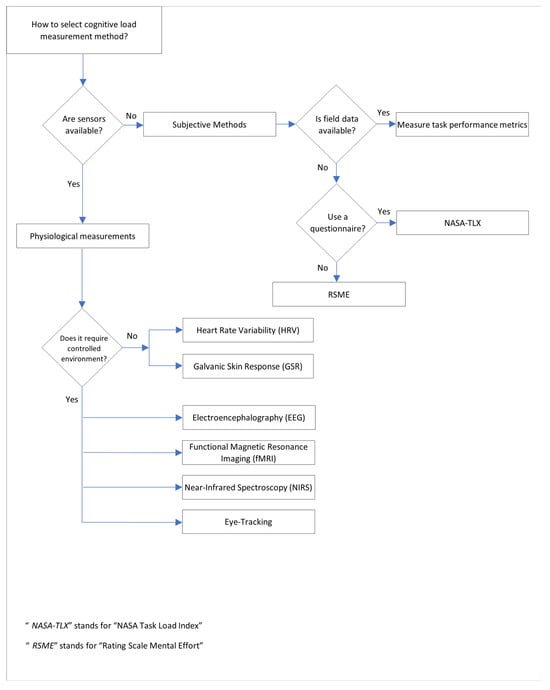
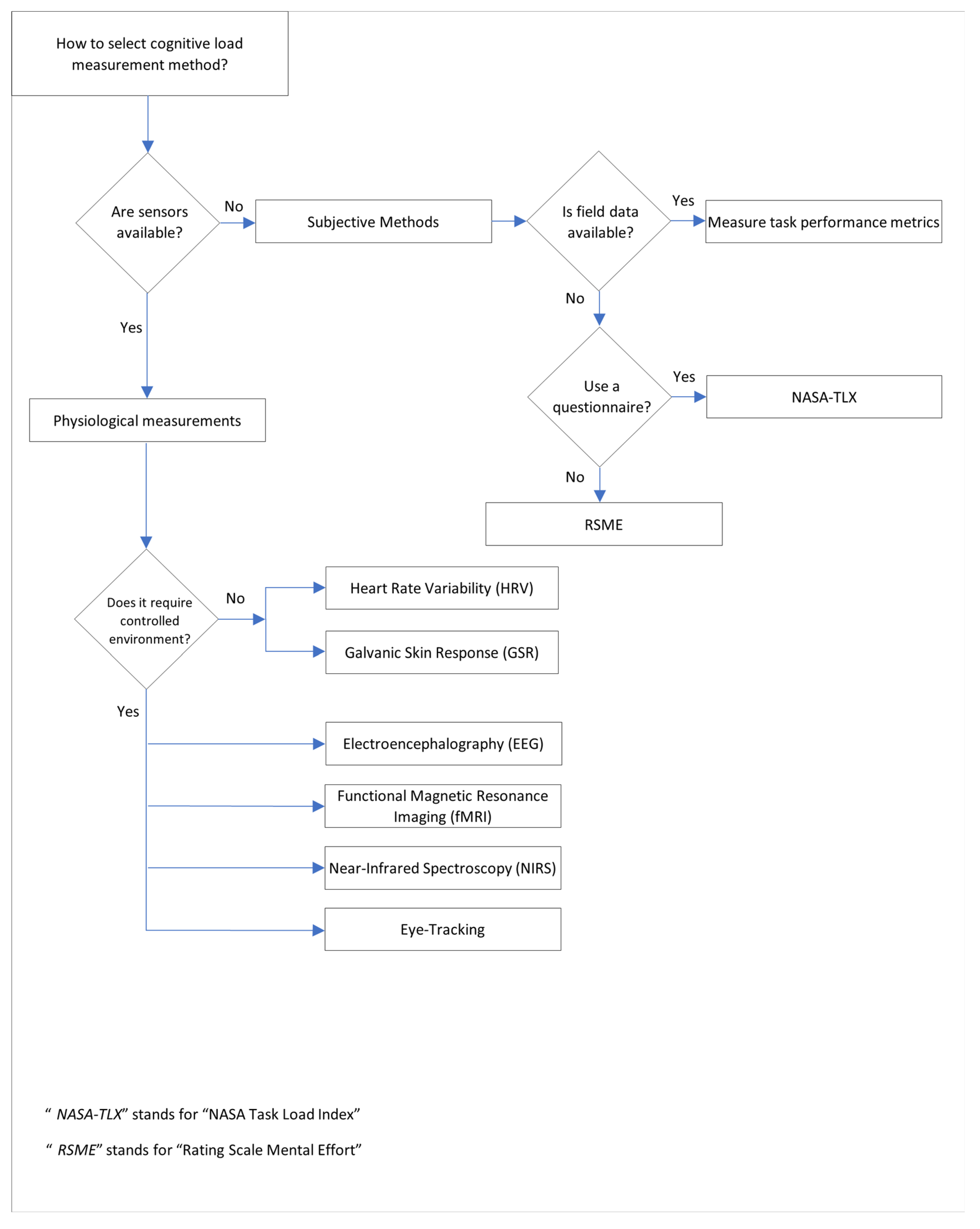
Measuring cognitive load in drivers or operators involves assessing attentional focus, situational awareness, and task performance while considering the potential impacts of cognitive workload and distraction. While there may not be a standardized method for measuring cognitive load specifically, researchers often employ a combination of techniques from fields such as human factor engineering, cognitive psychology, and transportation safety [7]. Figure 1 is an author-developed synthesis based on multiple human factors sources.
Figure 1.
The common methods for measuring cognitive load and the criteria for using them.
As shown in Figure 1, various methods are used to assess cognitive load, each with specific strengths and weaknesses. Subjective Methods like NASA-TLX and RSME involve self-reported assessments and are simple to administer but can suffer from subjective bias and memory reliance [8]. Task Performance Metrics offer direct quantitative data such as completion times and error rates, providing clear performance indicators but not necessarily revealing the reasons behind performance changes. Physiological methods for measuring cognitive load use body responses like heart rate and brain activity to objectively gauge cognitive stress. However, they can be intrusive and often require controlled environments for accurate readings [9].
Physiological measures such as Heart Rate Variability (HRV) and Galvanic Skin Response (GSR) provide objective indicators of cognitive load, though they require sensors that may be intrusive for operators [10,11]. GSR reflects changes in skin conductivity driven by sympathetic nervous system activity and increases under stress or high mental workload, making it useful for detecting cognitive strain during teleoperation tasks [12,13]. Electroencephalography (EEG) offers high-temporal-resolution insights into brain activity but demands controlled environments and extensive setup [14]. Functional MRI provides excellent spatial resolution yet is costly and restricts movement, while near-infrared spectroscopy (NIRS) offers a less intrusive alternative with reduced spatial resolution.
Compared to these methods, eye tracking provides detailed, non-intrusive measurements of visual attention—capturing fixation duration, saccades, pupil dilation, and blink rate—without disrupting natural behavior. Modern eye-tracking systems function reliably in both laboratory and semi-realistic operational environments, making them well suited for analyzing cognitive processing, attention allocation, and interface usability in dynamic teleoperation settings [15,16]. Their combination of precision, practicality, and minimal intrusiveness positions eye tracking as one of the most versatile and informative tools for evaluating operator workload and human–machine interaction [17,18].
Measuring cognitive load through eye tracking entails a meticulous analysis of participants’ visual attention and fixation patterns while remotely controlling devices. Research in this area has examined both foundational developments in eye-tracking technology and practical applications across domains such as human–computer interaction, driving, wearable computing, and teleoperation. Beesley et al. [19] conduct a comprehensive overview of eye-tracking research, emphasizing its methodological advantages and contributions to attention studies. Majaranta et al. [20] discuss recent advances in eye tracking and gaze estimation, highlighting practical applications and design considerations for optimizing system usability across tasks. This section is organized into three main subsections: blink rate and pupil dynamics (Section 2.1), which discusses how pupil size and blink frequency reflect cognitive and perceptual load; fixations and saccades (Section 2.2), which considers how eye movements and related metrics indicate task difficulty and processing effort; and gaze patterns (Section 2.3), which explores how gaze behavior informs workload, task performance, and interface design in complex operational settings. By presenting the literature in these categories, this study highlights key findings, methodological approaches, and gaps, particularly the lack of studies investigating merged-view teleoperation systems for reducing cognitive load and enhancing safety in mining operations.
2.1. Blink Rate and Pupil Dynamics as Indicators of Cognitive Load
Biondi et al. [21] examined pupil size and blink rate as indicators of cognitive load in automotive manufacturing. Both metrics increased under higher cognitive demands in an auditory n-back task, while physical task duration had no effect on blink rate—indicating that cognitive challenge, rather than physical effort, primarily drives these ocular responses. Chen et al. [22] used blink patterns collected from eyeglass-mounted cameras to estimate perceptual and cognitive load in wearable computing. They found that blink rate, duration, and interval measures effectively distinguished levels of perceptual load and marked task transitions, but were less sensitive to changes in cognitive load alone. Magliacano et al. [23] analyzed how cognitive load impacts eye blink rate (EBR) through an auditory oddball task involving active and passive listening. Their results showed that EBR increases during active engagement tasks, suggesting a direct correlation between cognitive load and blinking behavior, particularly in tasks that do not require visual attention. Alyan et al. [24] examined blink-related EEG activity to assess cognitive load in driving and found that proactive (anticipatory) tasks imposed significantly higher cognitive load than reactive tasks. Their results highlight how different driving demands manifest in EEG-based workload indicators. Chen et al. [25] examined cognitive load through pupil diameter and blink rate in human-centered design. Their research supports that pupil diameter is a reliable indicator of cognitive load, particularly under conditions of low perceptual load, while blink rate is more reflective of perceptual demands, not just cognitive load. Rosenfield et al. [26] focused on how cognitive demand affects blink rate during reading tasks from digital and printed sources. They found that increased cognitive demands substantially reduce blink rate, showing that cognitive load has a greater influence on blinking than the medium of reading.
2.2. Eye Movements: Fixations, Saccades, and Task Difficulty
Biswas et al. [27] developed an algorithm to detect saccadic intrusion (SI) using an eye gaze tracker to assess drivers’ cognitive load and hazard perception. They conducted several studies that showed SI velocities increased with cognitive load and distraction, suggesting SI as a viable real-time indicator of cognitive state and hazard awareness in driving. Zagermann et al. [28] investigated how eye-tracking metrics correlate with cognitive load during visual computing tasks. Their study found that increased fixation duration and faster saccades are strongly linked to higher cognitive load, indicating deeper cognitive processing. Pupil dilation also increases with task difficulty, demonstrating its reliability as an indicator of cognitive load, though environmental factors such as lighting require controlled study conditions to ensure precision. Stuyven et al. [29] investigated the effects of cognitive load on saccadic eye movements by comparing prosaccades and antisaccades. Their findings indicated that cognitive load increases latencies and error rates in antisaccade tasks, which require inhibiting automatic responses, suggesting that even automatic eye movements like prosaccades are influenced by cognitive load. Hsu et al. [30] explored cognitive load modulation of distractor processing using pupillary responses in saccade tasks. They found that dark distractors increased pupillary dilation more in anti-saccade tasks, supporting the load theory of attention. However, bright distractors did not significantly affect pupillary responses, indicating a nuanced impact of cognitive load on distractor processing. Fadardi et al. [31] examined how cognitive load affects saccadic and post-saccadic eye movements during a visual discrimination task. Increased cognitive load led to longer saccade and fixation latencies, which indirectly affected task performance by limiting fixation duration on targets, highlighting the role of eye movements in processing efficiency under load. Krejtz et al. [32] analyzed the effectiveness of pupil diameter and microsaccades as indicators of cognitive load during mental arithmetic tasks. Their study showed that changes in pupil diameter and microsaccade magnitude successfully differentiated task difficulty levels, underscoring their potential as reliable cognitive load measures.
2.3. Gaze Pattern and Visual Attention in Complex Tasks
Sato et al. [33] studied gaze patterns in multi-display systems for teleoperated disaster response robots. Their analysis of gaze patterns by work states revealed that different views affect task performance, suggesting that optimizing display configurations based on gaze data can improve operational efficiency in complex scenarios. Zhang et al. [34] explored the use of saccade response tests (SRT) to assess mental workload in robot teleoperation using head-mounted displays (HMDs). They compared SRT to the Situation Present Assessment Method (SPAM), finding that SRT was significantly faster (291 ms vs. 3125 ms) and more effectively correlated with task performance metrics like collisions and completion times. SRT also distinguished between high-performing and low-performing operators, suggesting its efficiency in real-time cognitive workload assessment in industrial settings. Upasani et al. [35] researched cognitive load measurement using eye-tracking in Physical Human–Robot Interaction (PHRI) during a virtual pick-and-place task. They adjusted joint stiffness in the robot to vary task difficulty and monitored eye-tracking metrics like Stationary Gaze Entropy and pupil diameter. The results showed that these metrics effectively indicated cognitive load levels, predicting task success with high sensitivity and accuracy. This suggests that eye-tracking can help adapt robotic systems to user workload variations. Pillai et al. [36] investigated the use of eye-gaze metrics to detect cognitive load in a driving simulator. By analyzing pupil dilation, eye movements, and blinks, they assessed the effectiveness of metrics like the nearest neighbor index (NNI) and entropy in eye movements. Their findings indicated that these eye-gaze metrics provided meaningful insights into the cognitive load, offering potential improvements for driver monitoring systems in automated vehicles.
According to the literature review, to the best of the authors’ knowledge, no study has specifically investigated the improvement of traditional teleoperation systems by demonstrating that merged-view teleoperation systems can reduce cognitive load and enhance the safety of mining operations. Previous research has primarily focused on single-display or multi-view configurations, emphasizing user workload, attention distribution, and visual behavior in isolated tasks such as driving or robotic manipulation. However, these studies often overlooked how integrating multiple perspectives into a unified display could influence operators’ scanning efficiency, situational awareness, and decision-making in complex environments like mining.
Additionally, while several works have explored the role of physiological and gaze-based indicators—such as fixation duration, blink rate, and gaze entropy—in measuring cognitive load, few have combined these metrics with task performance measures (e.g., path adherence, completion time) to assess the practical impact of visualization design on operational safety. The absence of such integrative evaluations leaves a critical gap in understanding how perceptual attention translates into behavioral outcomes during real-world teleoperation tasks.
The current study aims to fill that gap by presenting an integrated experimental framework that jointly evaluates eye-tracking indicators and robotic performance metrics under both multi-view and merged-view teleoperation interfaces. By comparing these two visualization modes, the research not only quantifies differences in cognitive load and attention distribution but also provides evidence-based insights into how merged-view designs can mitigate cognitive tunneling and improve both efficiency and safety. In doing so, it bridges the gap between theoretical attention models and applied teleoperation operations.
3. Methodology and Experiment Design
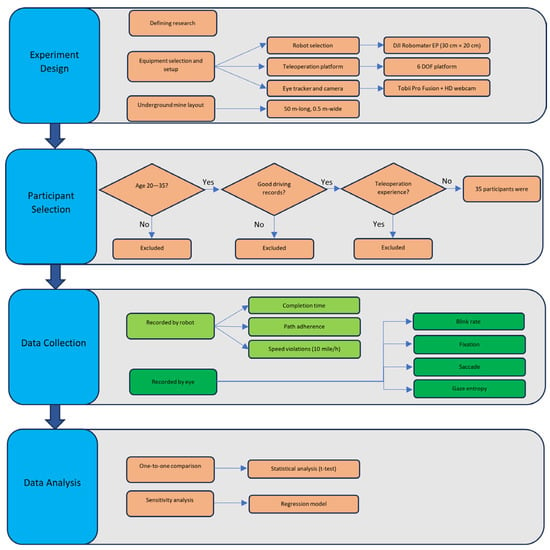
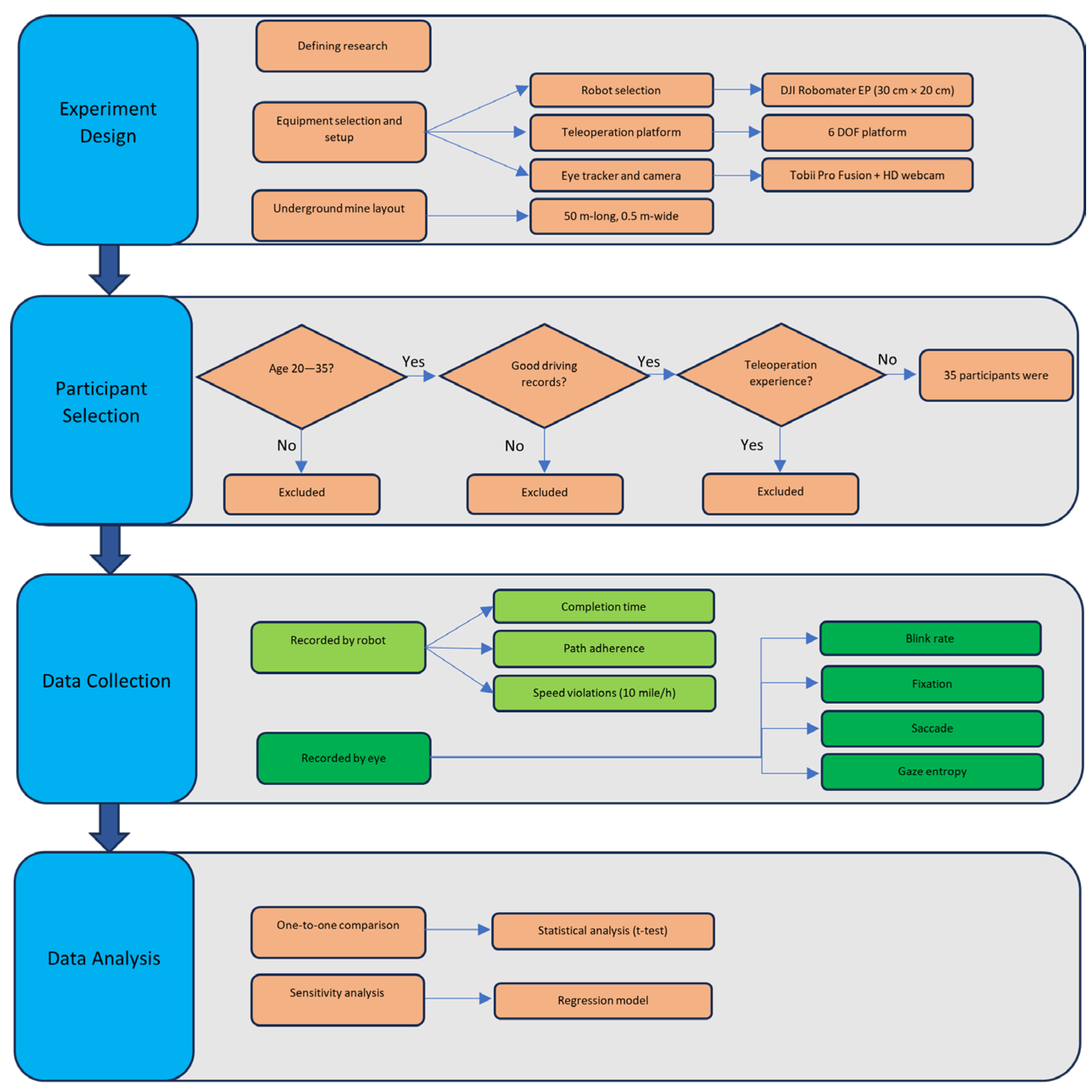
This section delineates the proposed methodology for comparing traditional mining vehicle multi-view teleoperation systems with merged-view systems. The study utilizes a controlled experimental design to evaluate how these systems impact operator cognitive load and task performance in a simulated operational environment. Figure 2 indicates the proposed methodology for investigating the concept of merged-view and traditional teleoperation systems.
Figure 2.
The proposed step-by-step methodology for this study.
3.1. Experiment Design
The experiment was designed to evaluate how different visualization modes—multi-view and merged-view—affect teleoperation performance and cognitive load under a realistic mining scenario. The setup aimed to replicate operational challenges encountered in underground mining, where narrow pathways demand precise spatial judgment and continuous situational awareness.
- Robot Platform and Camera Configuration
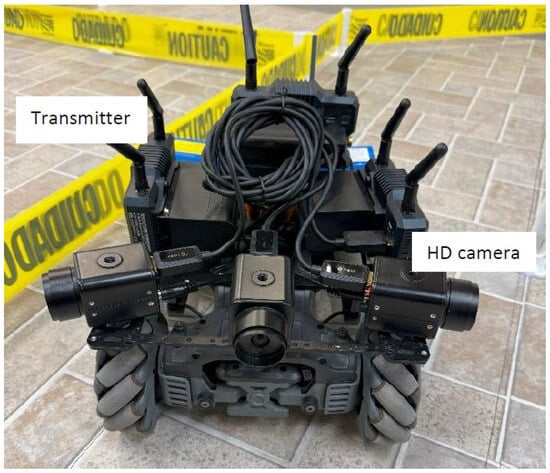
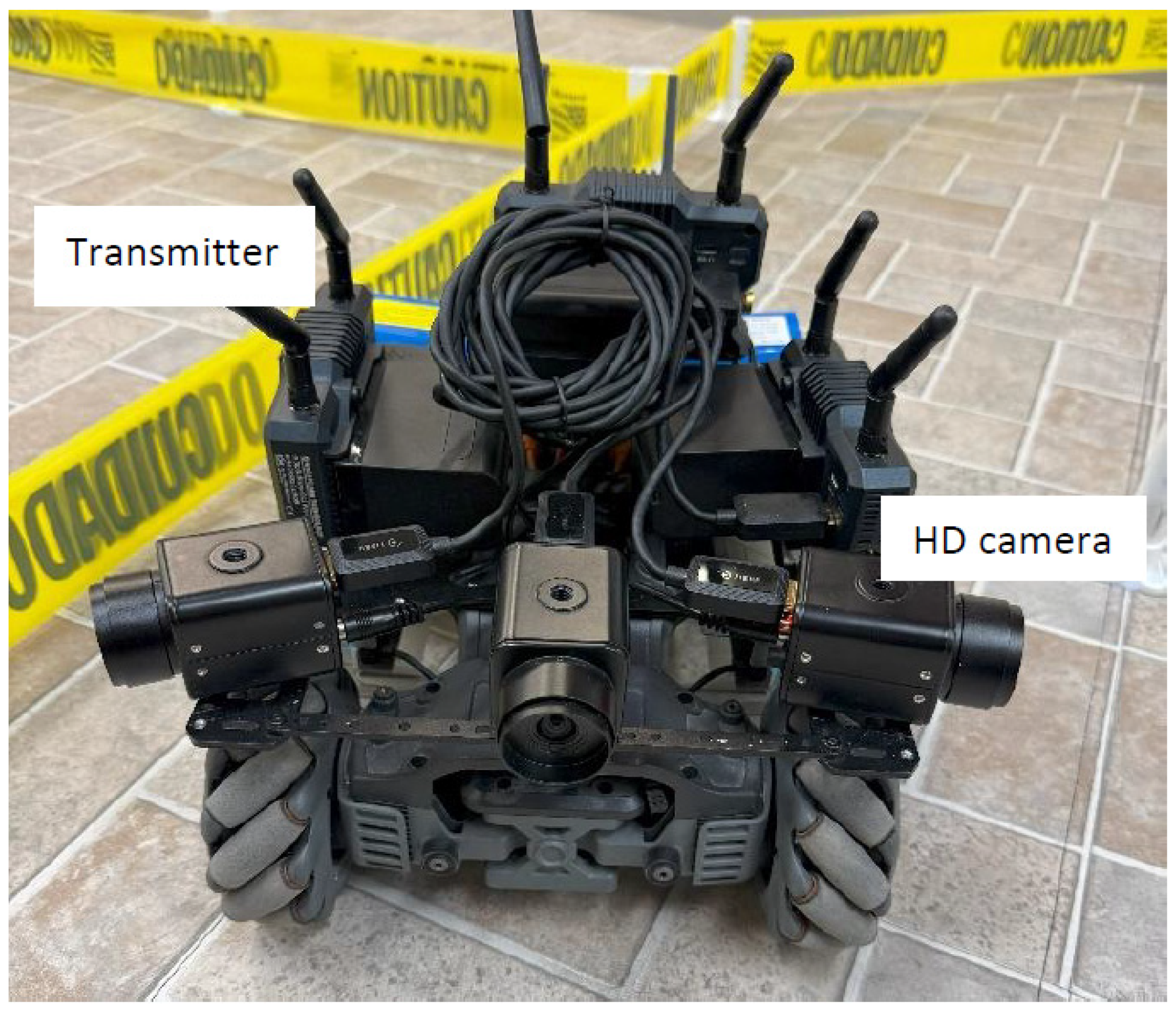
The teleoperated vehicle (Figure 3) used in this experiment was the DJI Robomaster EP (DJI, Shenzhen, China), selected for its compact footprint (30 cm × 20 cm) and high maneuverability, which made it ideal for navigating narrow, curved paths similar to underground mine drifts.
Figure 3.
The final version of the customized robot.
Three HD cameras were mounted at the front of the robot to simulate a panoramic operator view. The left and right cameras were positioned at approximately 45° outward angles relative to the central axis, providing overlapping fields of view that together captured over 130° of the forward environment. The center camera was aligned along the robot’s longitudinal axis to deliver a true forward-facing perspective. This configuration minimized blind spots while maintaining spatial continuity for both visualization interfaces.
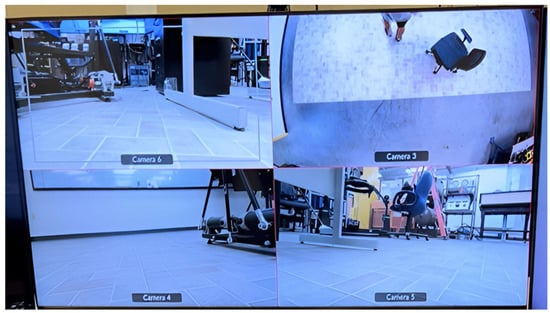
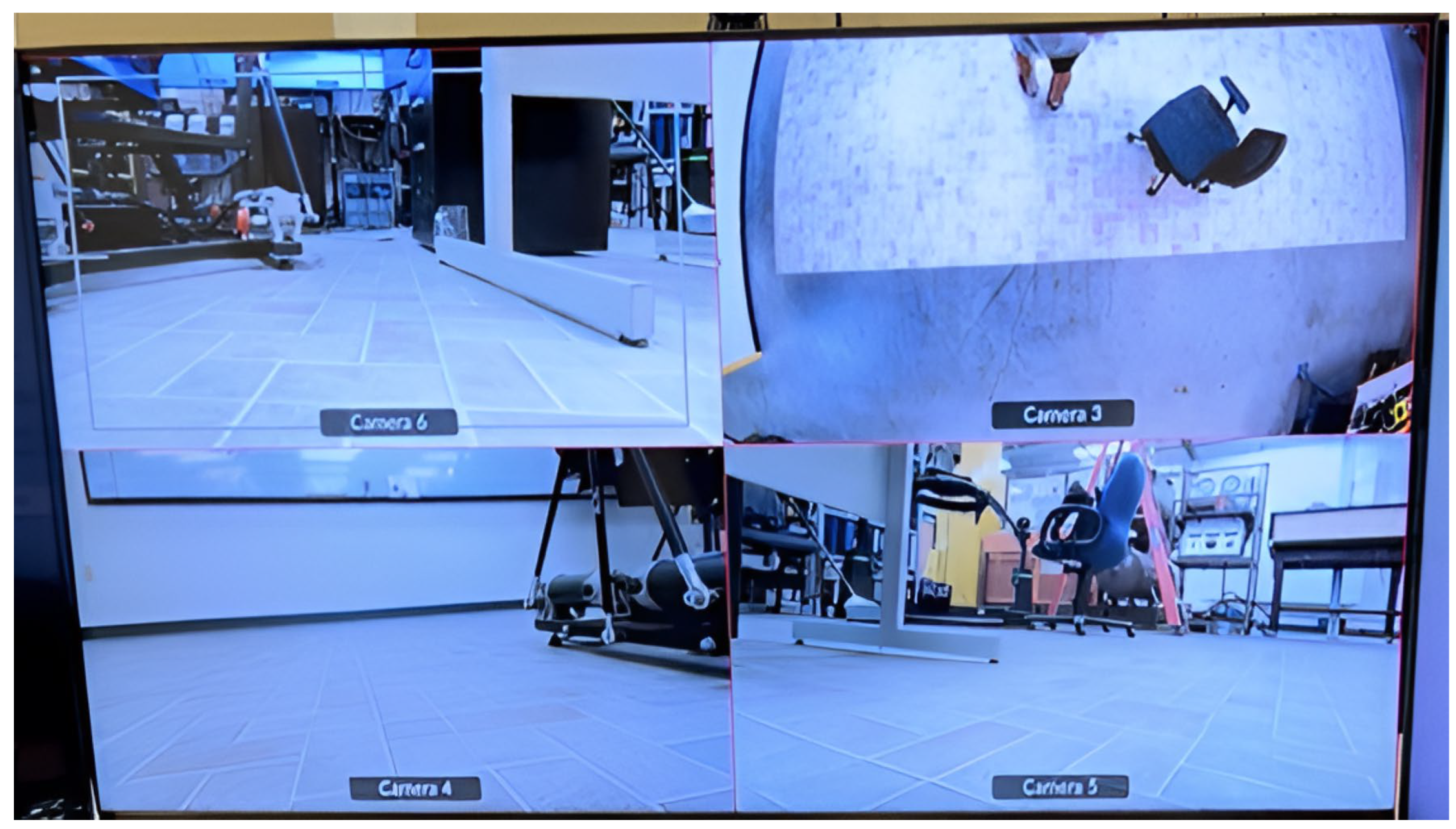
Camera orientation was refined through iterative pilot testing to balance image overlap and distortion, ensuring that both multi-view and merged-view systems produced clear, comparable perspectives. The Hollyland Mars 4K transmission system (Hollyland, Shenzhen, China) was selected for its sub-50 ms latency and reliable signal integrity under laboratory RF interference, ensuring that all camera feeds were synchronized with minimal delay—an essential requirement for teleoperation safety and precision. In addition to the three forward-facing cameras, a ceiling-mounted overhead camera in the lab provided a live bird’s-eye view (BEV) of the course. This stream was presented as the fourth pane in the multi-view interface, giving operators a global spatial reference for lane positioning and turn geometry.
- Display Configuration and Operator Interface
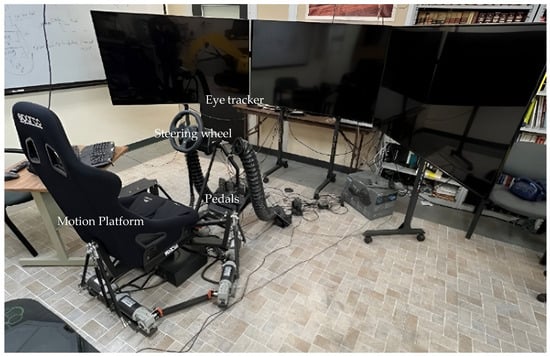
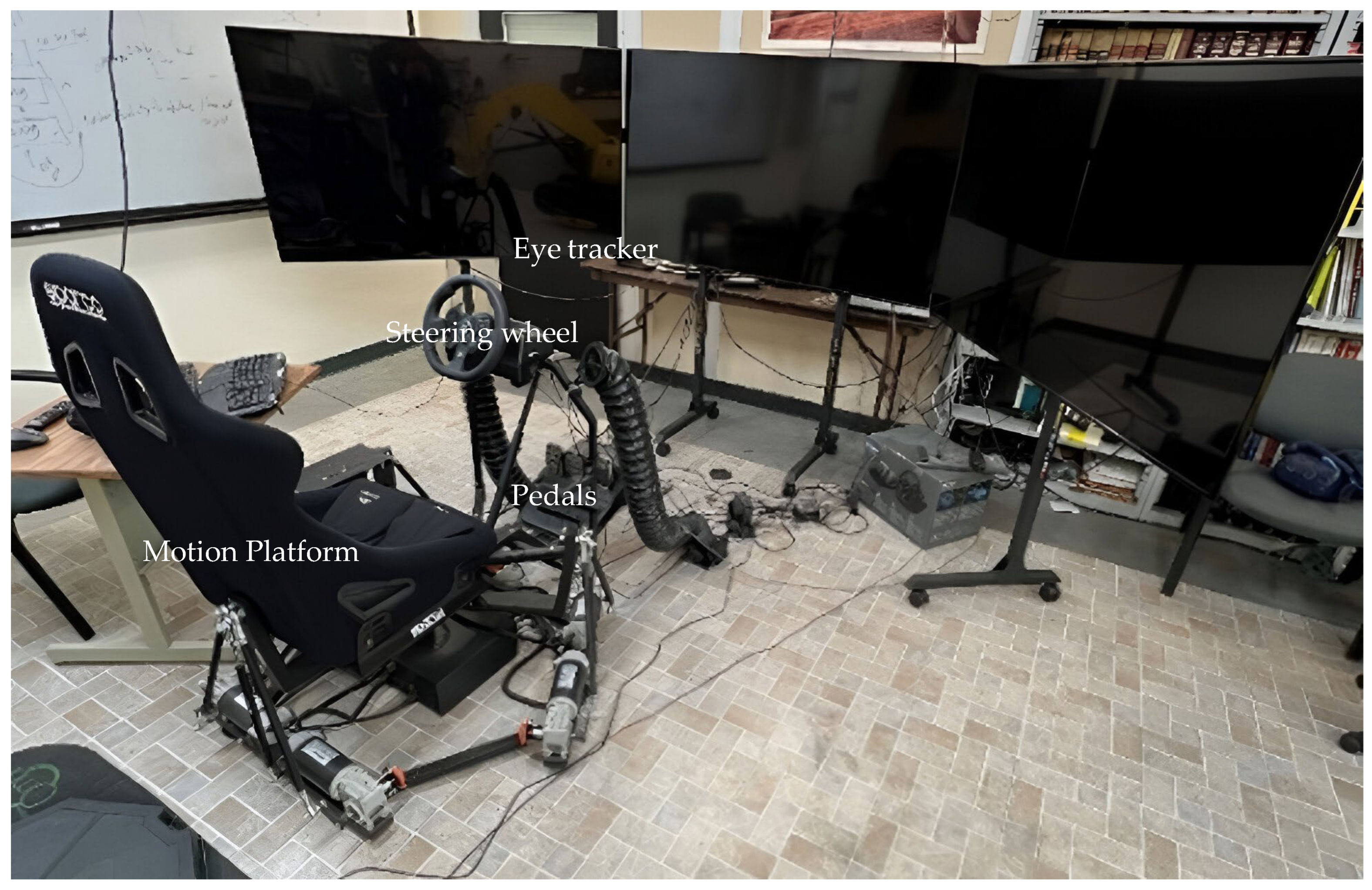
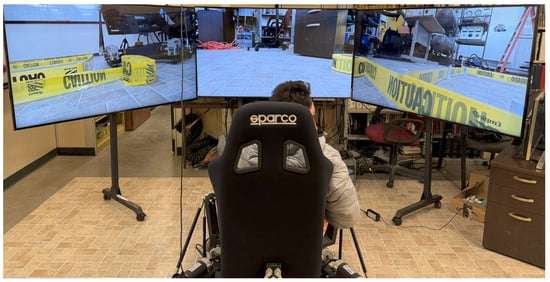
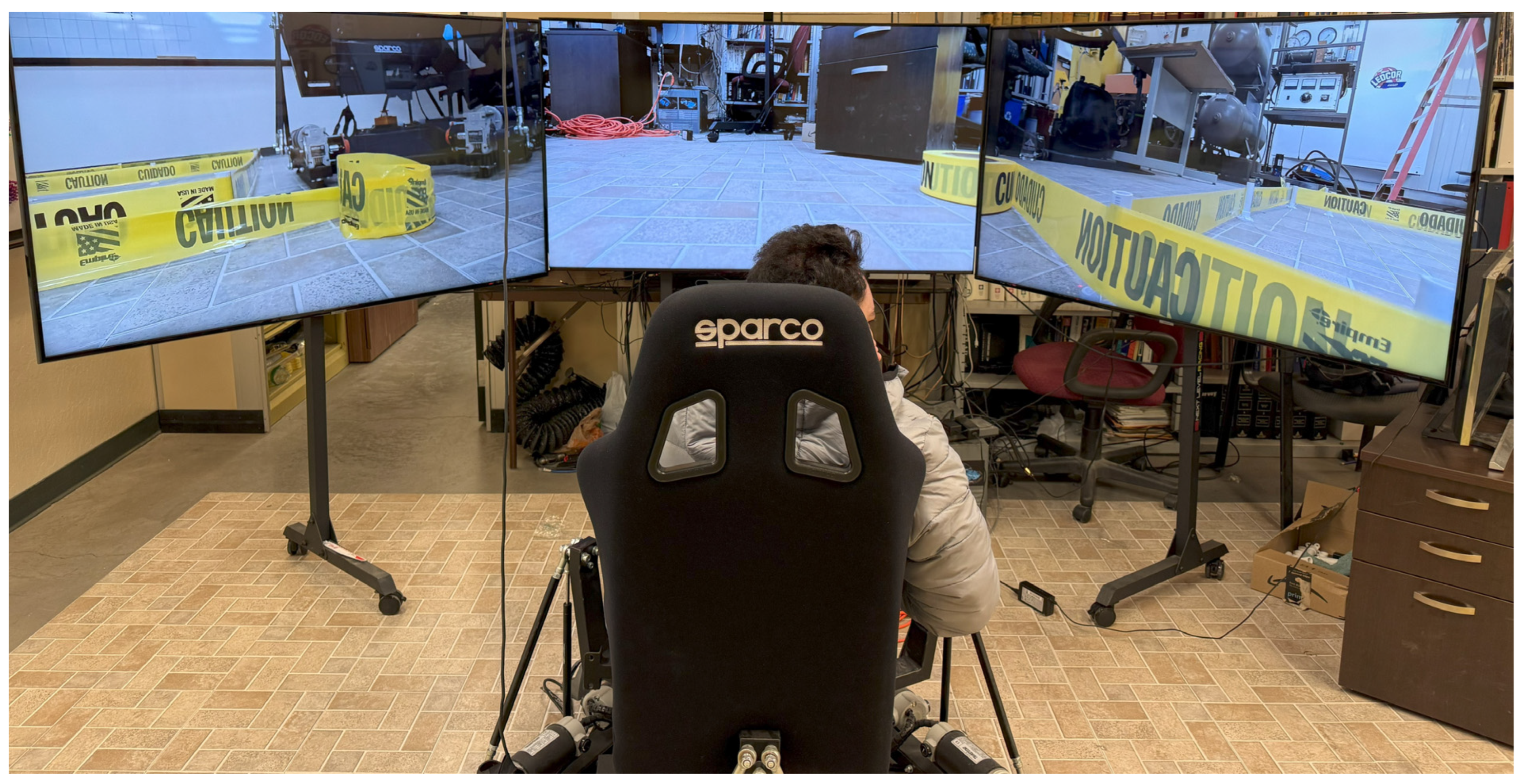
The operator control station (Figure 4) consisted of three 65-inch UHD displays (3840 × 2160 px) arranged in an arc formation at approximately 60° intervals, forming a 180° horizontal field of view. This configuration allowed natural head and eye movement across the display set, improving spatial awareness and reducing abrupt attention shifts.
Figure 4.
The teleoperation system setup used in the experiment.
Two distinct visualization conditions were tested:
- Multi-view interface: As indicated in Figure 5, the center monitor was split into four panes showing the left, center, and right forward camera streams plus the overhead bird’s-eye view (BEV).
- Merged-view interface: As indicated in Figure 6, camera streams were stitched into a single panoramic composite, distributed seamlessly across all screens.
Figure 5.
Multi-view visualization type.
Figure 6.
Merged-view visualization type.
The system was mounted on a 6-DOF motion platform, providing synchronized motion cues (pitch, roll, and vibration feedback) to enhance realism and spatial immersion. Participants used a Logitech steering wheel and pedal set, offering precise control inputs and naturalistic driving ergonomics similar to heavy-equipment operation.
- Eye-Tracking and Measurement Instruments
A Tobii Pro Fusion eye tracker (Tobii AB, Stockholm, Sweden) was installed below the central display, sampling gaze data at 60 Hz with a spatial accuracy of approximately 0.5° visual angle. This model was selected for its remote tracking capability, which allows participants to move naturally without wearing intrusive headgear—an important factor for preserving naturalistic eye behavior in teleoperation contexts. The integrated HD webcam was used for blink validation and facial expression monitoring.
Eye-tracking data were synchronized with robot telemetry (completion time, lateral deviation, and speed) through the Tobii SDK(V2), ensuring time-locked correspondence between visual attention and driving behavior. The sampling frequency was chosen to balance temporal resolution with robustness to noise, capturing fixations (>80 ms) and saccades (>1° displacement) reliably during active driving.
- Path Design
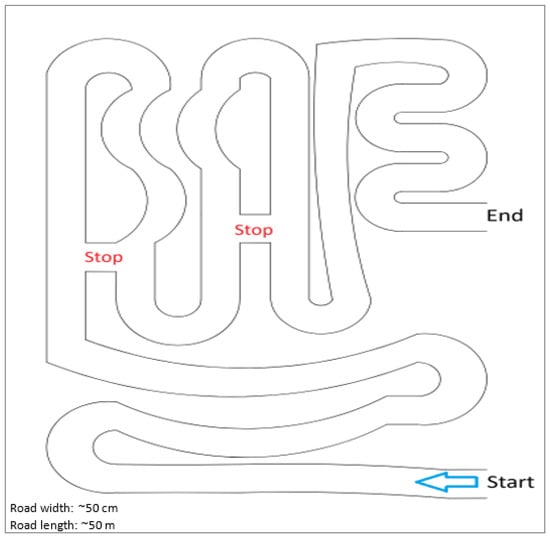
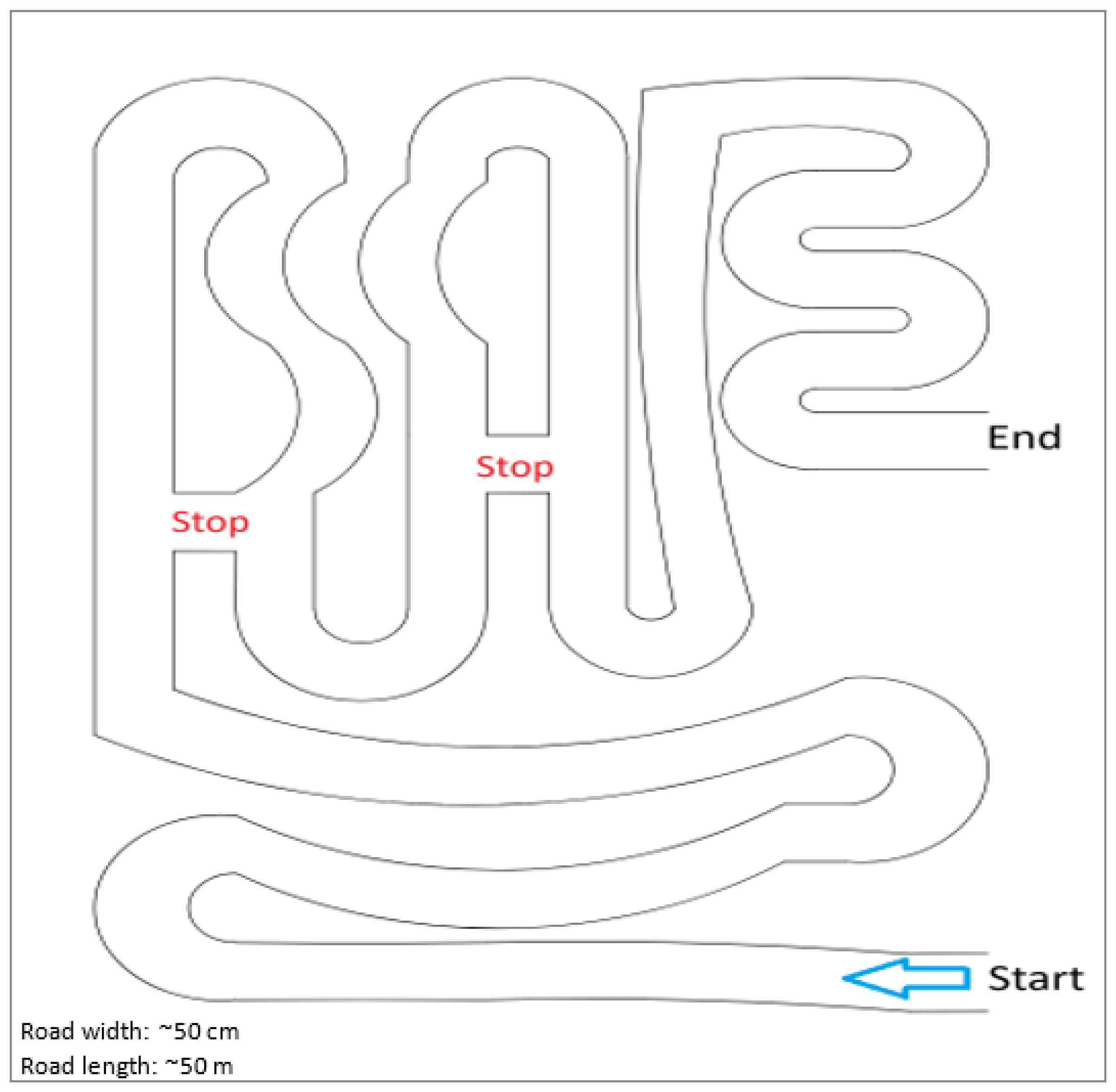
The driving path (Figure 7) was a 50 m-long, 0.5 m-wide track designed to replicate the visual, spatial, and operational challenges commonly encountered in underground mining teleoperation. Although constructed in a laboratory environment, the layout was engineered based on typical drift geometries, width constraints, and maneuvering tasks observed in hard-rock underground mines. To ensure mining relevance, the design was reviewed in consultation with underground mine engineers and operators familiar with teleoperated LHD and haulage systems.
Figure 7.
Layout of the teleoperation path for the experiment.
The track incorporated three categories of challenges that reflect real underground navigation demands:
- Narrow Drift Sections:
Several straight and curved segments were modeled to compress the operator’s field of view and to require sustained steering accuracy, mirroring the alignment demands of driving between walls.
- 2.
- Tight Turns and:
The course included multiple sharp cornering elements, representing tight drift intersections. These regions are known to elevate workload during teleoperation because operators must rely entirely on visual feeds to estimate turning radius, vehicle offset, and obstacle clearance.
- 3.
- Structured Hazard-Stop Zones:
Two mandatory stop points were incorporated to simulate routine underground safety procedures, including radio call-in stations, visibility-restricted junctions, and speed-controlled hazard verification zones.
Including the stops allowed to (1) introduce realistic workload fluctuations and (2) capture visual-attention shifts under predictable stopping and re-acceleration demands. Because underground teleoperation typically occurs at low speeds and over extended periods of visual monitoring, the entire track was compressed into a 5–6-min fatigue-inducing scenario. This allowed the study to incorporate multiple driving difficulties within a short, repeatable trial while maintaining ecological validity.
Importantly, the goal was not to reproduce a specific mine layout but to construct a representative, mining-informed driving environment that:
- Requires continuous steering adjustments;
- Demands precise path adherence;
- Includes operationally realistic safety stops;
- Amplifies the visual fragmentation created by multi-camera teleoperation systems.
This design ensured that performance differences between multi-view and merged-view interfaces were observed under conditions that closely approximate the attentional and spatial demands of underground vehicular teleoperation.
To ensure reproducibility and clarity, the entire laboratory apparatus is summarized in Table 1 and described in the subsections below.
Table 1.
Laboratory Equipment and Specifications.
3.2. Participant Selection
A total of 50 participants were initially recruited, out of which 35, including 21 males and 14 females (mean age = 26.3 ± 3.1 years), met the inclusion criteria. The selection process followed a systematic screening protocol with decision-based inclusion and exclusion steps:
- Age range (20–35 years): chosen to minimize age-related variability in visual acuity, cognitive processing speed, and reaction time.
- Good driving record: verified through self-report to ensure adequate vehicle-handling experience and motor coordination.
- No prior teleoperation experience: ensured unbiased performance by eliminating skill carryover from previous exposure.
- Basic familiarity with joystick or steering controls: confirmed through a short pre-test, ensuring intuitive interaction with the control system.
Participants who failed any criteria were excluded. The final cohort represented a demographically homogeneous group suitable for analyzing human performance without confounding experience effects.
Table 2 summarizes the demographic characteristics of the participant group. The distribution shows a concentration of participants in the mid-to-late twenties, with representation from both academic and mining-related backgrounds.
Table 2.
Participant Demographics Summary (N = 35).
Prior to testing, all participants completed a training trial that consisted of a 3-min familiarization run using the multi-view interface. No performance was recorded, and participants were not allowed more than one attempt. The merged-view interface was not shown during training to avoid bias. The goal was to familiarize themselves with the control setup, driving mechanics, and visual interface. Participants completed both visualization conditions using a counterbalanced within-subjects design. To prevent order or learning effects, participants were randomly assigned to one of two groups: half completed the Multi-View condition first, and half completed the Merged-View condition first. A mandatory three-day washout period was imposed between the two sessions to minimize skill carryover and short-term memory effects.
To ensure methodological consistency, the study intentionally did not allow participants to reach a mastery level before the test runs. This design choice was developed in consultation with underground mining teleoperation experts and was based on several considerations.
First, preventing mastery avoids ceiling effects that would otherwise mask interface-driven differences between the multi-view and merged-view systems. Mining experts noted that early-stage teleoperation behavior reveals visualization-related challenges—such as cognitive tunneling and fragmented attention—much more clearly than fully trained performance.
Second, limiting training ensured comparability across participants. Allowing extended practice would introduce divergent learning trajectories, making it difficult to attribute performance differences to the visualization interfaces rather than to skill acquisition.
Finally, this approach aligns with human factors research practices, where early-stage or novice operators are frequently used to isolate the specific influence of interface design on cognitive load and visual attention, independent of long-term operator expertise.
3.3. Data Collection & Analysis
We recorded raw gaze streams at 60 Hz together with tracker validity flags, time-aligned to robot telemetry (i.e., completion time, lateral deviation, and speed). All trials were analyzed for their full duration from start to finish. Eye-tracking and telemetry streams were time-aligned over each participant’s complete run in both visualization conditions. The speed-limit threshold was set to 10 mph (16.1 km/h); whenever the robot exceeded this limit, the motion platform’s seat actuators delivered haptic feedback, and the event was logged as a speed-limit violation. Table 3 gives the type of collected data and their definitions.
Table 3.
The type and definitions of collected data.
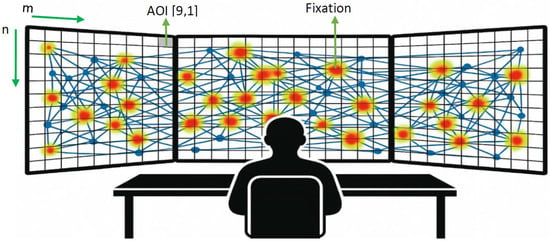
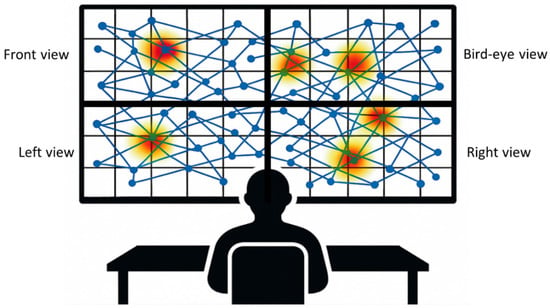
After initial preprocessing, which involved removing invalid samples and resampling each trial to a common timeline, gaze points were mapped to display-specific Areas of Interest (AOIs) to facilitate entropy analysis. Specifically, the cleaned and time-aligned gaze streams were assigned to AOIs as illustrated in Figure 8 for the merged-view teleoperation system and Figure 9 for the multi-view teleoperation system. Subsequently, we computed a set of metrics—including entropy-based measures, fixation characteristics, and saccade parameters—detailed in Table 4. This approach allowed for a systematic quantification of visual attention distribution and gaze dynamics across the different teleoperation display configurations.
Figure 8.
How gaze entropy, fixation, and saccades are calculated in the merged-view teleoperation system.
Figure 9.
How gaze entropy, fixation, and saccades are calculated in the multi-view teleoperation system.
Table 4.
Gaze entropy, fixation, and saccade calculation.
3.4. Sensitivity Analysis
To evaluate the contribution of visual-attention features to operational efficiency and safety, predictive models were first fitted that link fixation duration, saccade amplitude, blink rate, and gaze entropy to two key outcomes: completion time (representing task efficiency) and path adherence (representing operational safety). Sensitivity analysis was then performed on these models to assess the relative influence of each feature. Conducting the analysis separately for the multi-view and merged-view conditions will allow for identifying which attentional features exert a stronger or weaker influence in each interface, thereby highlighting shifts in operator behavior when transitioning between visualization modes. All regression analyses were conducted using the Ordinary Least Squares (OLS) approach implemented in Python’s (V3.8) stats model package. Coefficients and standard errors will follow the usual OLS closed-form estimates. Standard errors are computed from the estimated covariance matrix of the parameters, and t-statistics and p-values are derived under the assumption of normal residuals. Standardized coefficients (β*) are obtained by z-scoring both predictors and outcomes before model fitting, allowing for direct comparison of relative feature importance.
4. Results and Discussion
This section presents a comprehensive analysis of the experimental data to evaluate how different visualization types influence cognitive load and operational performance in mining teleoperation systems. This study compares a merged-view teleoperation system with a traditional multi-view system using data collected from 35 participants in a controlled experimental setup. The analysis focuses on quantifying gaze behavior, attention distribution, and task performance metrics to identify key differences between the display configurations.
4.1. Task Performance Metrics
Operator task performance was evaluated by three key measures: task completion time, path adherence (measured as deviation from the ideal trajectory), and the number of speed-limit violations.
Paired-samples t-tests (α = 0.05) revealed significant effects of view condition on all three metrics:
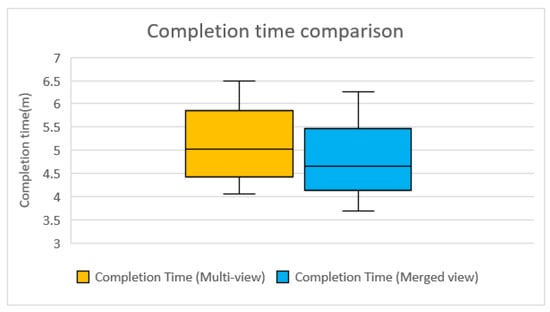
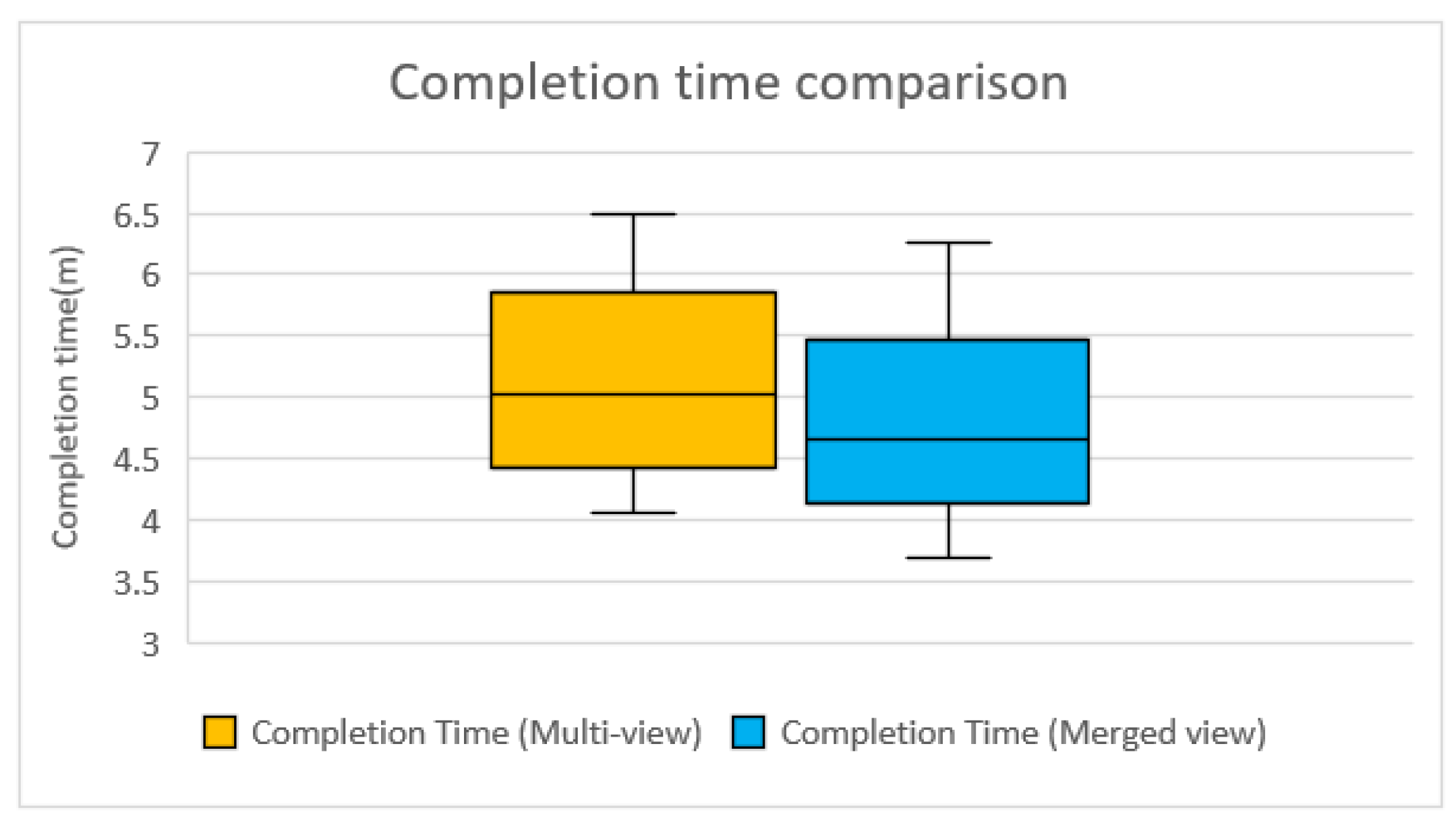
- Task Completion Time: As shown in Figure 10, participants completed the course faster in the merged-view condition (M = 4.7 ± 0.12 min) compared with the multi-view condition (M = 5.1 ± 0.3 min), t(34) = 16.02, p < 2 × 10⁻¹⁶. This result indicates differences in task efficiency under the two visualization layouts within a controlled experimental setting, reflecting changes in visual processing and attention rather than operational productivity.
Figure 10.
Path completion time comparison.
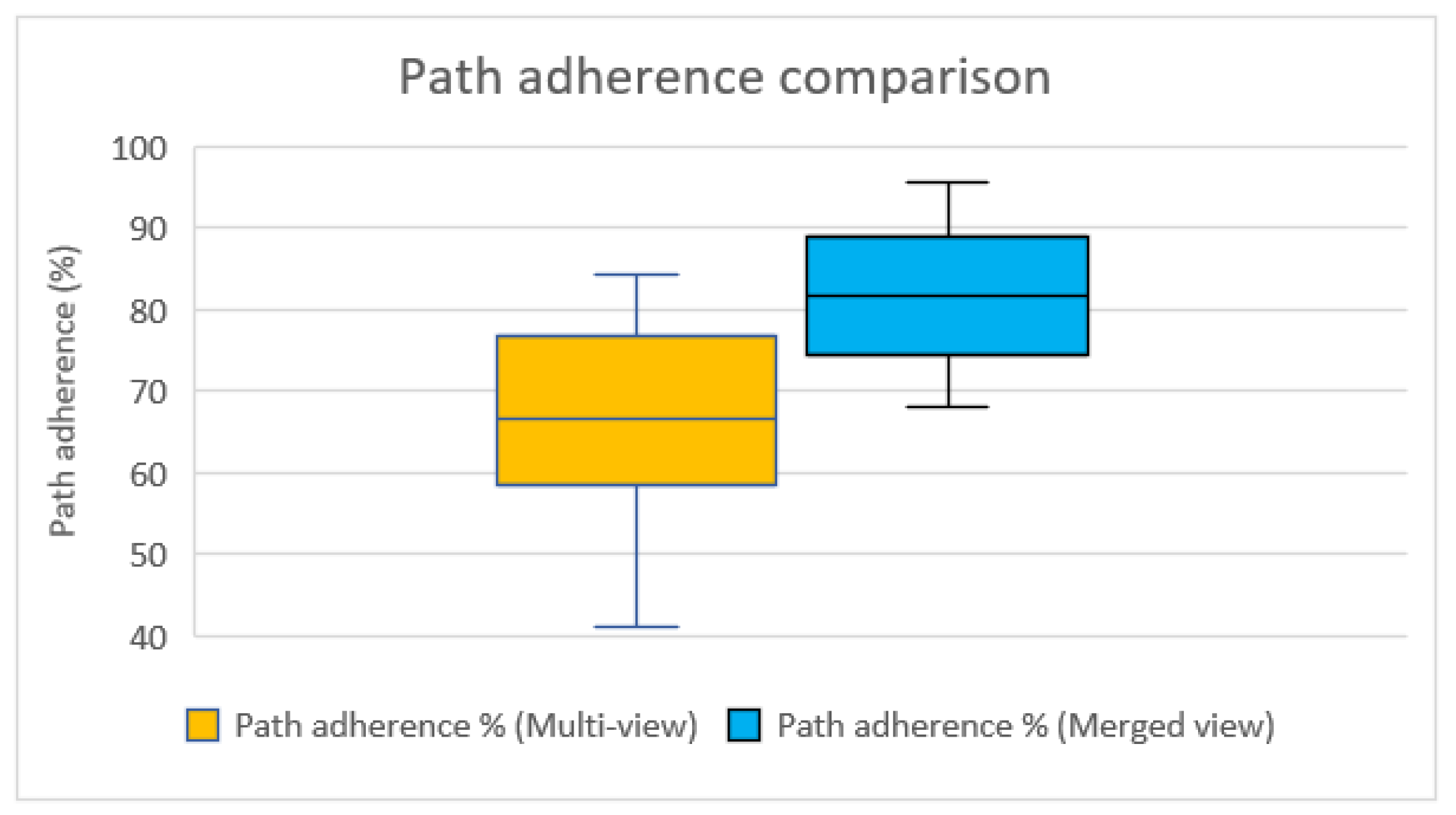
- Path Adherence: As shown in Figure 11, lateral deviation was lower in the merged-view condition (M = 81.3 ± 1.39%) than in the multi-view condition (M = 66.95 ± 2.05%), t(34) = 14.18, p < 10−15. Participants maintained a steadier trajectory with fewer edge drifts when visual information was consolidated.
Figure 11.
Path adherence comparison.
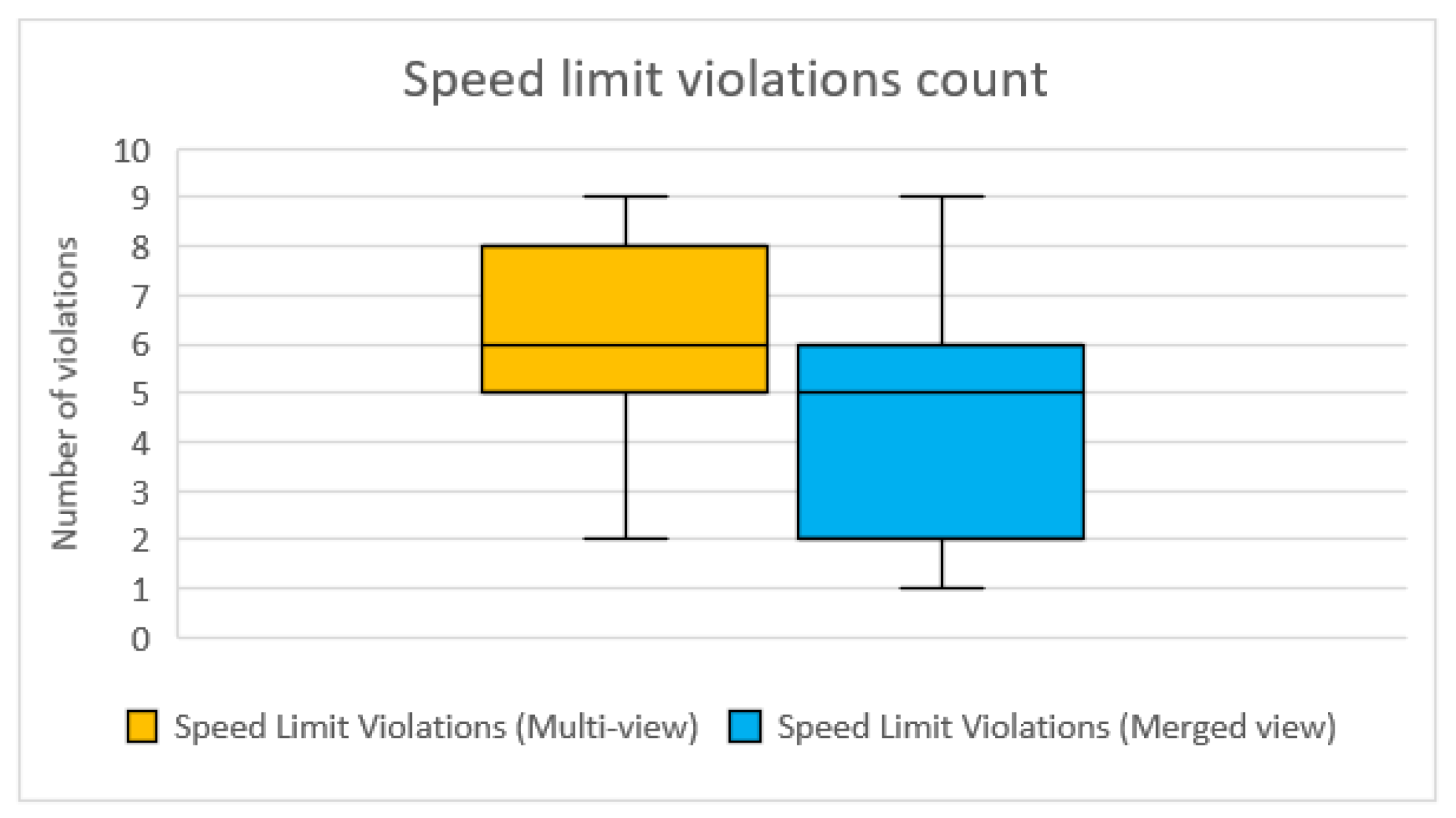
- Speed-Limit Violations: As shown in Figure 12, fewer speed violations occurred in the merged-view condition (M = 4.4 ± 0.5) compared to the multi-view condition (M = 6.09 ± 0.35), t(34) = 4.04, p = 0.0003.
Figure 12.
Speed limit violation comparison.
While some absolute differences in task performance appear modest when considered individually, the observed improvement is supported by the convergence of multiple independent measures. Consistent changes were identified across behavioral metrics and eye-tracking indicators, including blink rate, fixation duration, saccade amplitude, and normalized gaze-transition entropy. In mining teleoperation contexts—where tasks are repetitive and safety-critical—even small improvements in operator attention and behavior may be operationally meaningful. These performance differences reflect behavioral responses associated with visual-attention mechanisms, offering meaningful insights for interface design in teleoperated mining operations.
4.2. Eye-Tracking Metrics
In the eye-tracking phase, operator gaze behavior was recorded at 60 Hz via a tracker, yielding a continuous stream of pixel-coordinate data and timestamps. From this raw signal, four principal metrics were extracted: (1) fixation count and mean fixation duration to assess sustained attention on predefined areas of interest, (2) saccade amplitude and peak velocity to characterize rapid shifts in visual focus, (3) blink rate as an objective indicator of cognitive workload and fatigue, and (4) gaze distribution measures—including entropy and area-of-interest dwell times to quantify the spatial breadth of visual scanning under each teleoperation scenario.
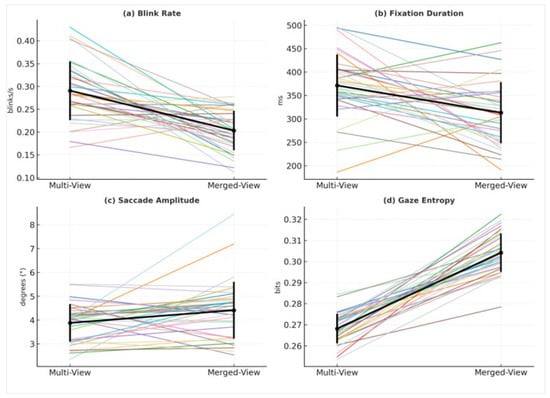
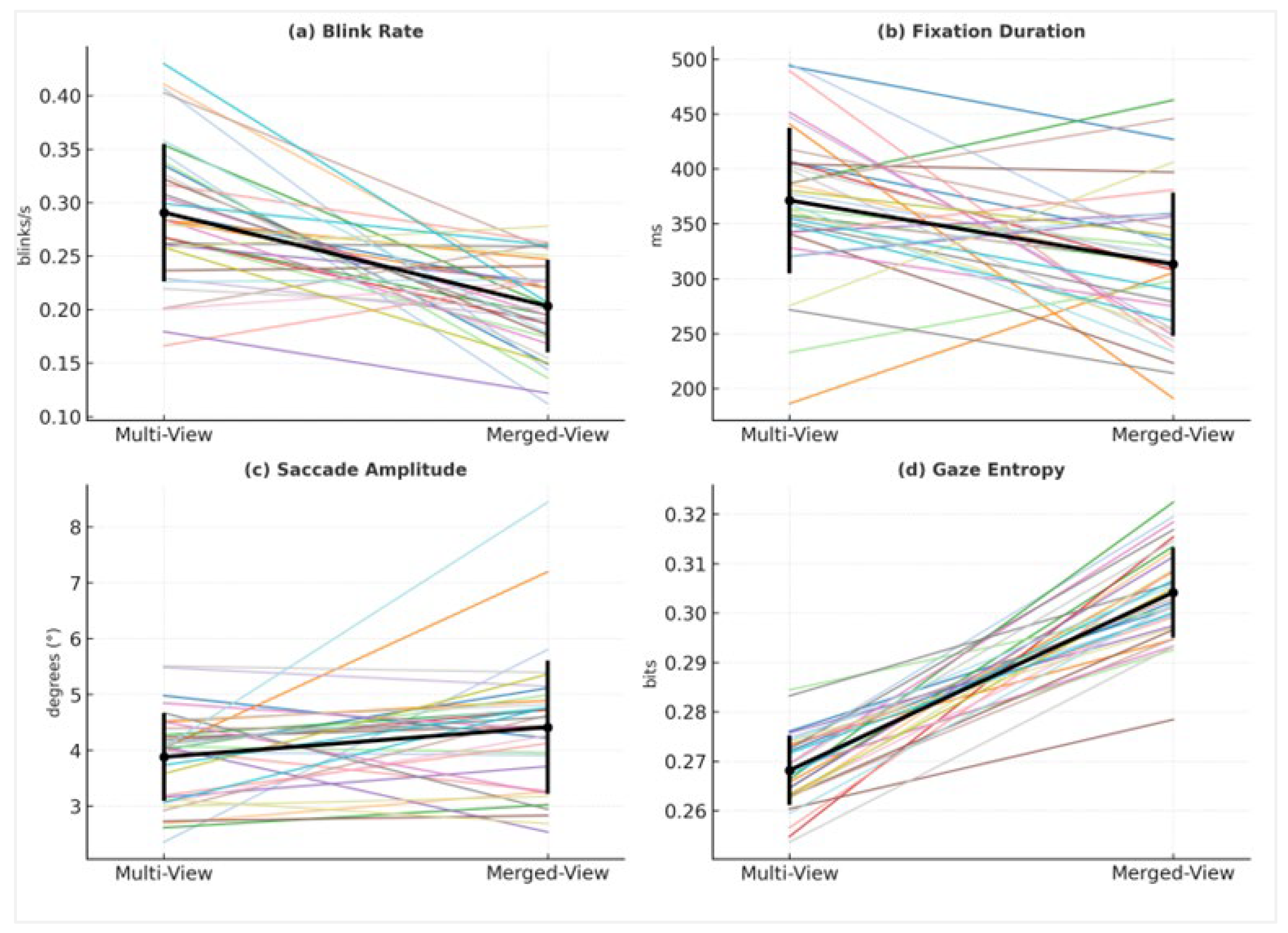
Figure 13 illustrates the paired, within-subject changes in each eye-tracking metric across the two visualization conditions. Each colored line represents one participant’s transition from the multi-view to the merged-view interface, while the bold black line indicates the group-level trend. This visualization highlights the consistency of the interface effect across individuals: most participants show decreases in blink rate and fixation duration, alongside increases in saccade amplitude and gaze-transition entropy when using the merged-view display.
Figure 13.
Comparison of eye-tracking metrics across visualization modes (a) Blink rate (blinks/s), (b) Fixation duration (ms), (c) Saccade amplitude (°), and (d) Gaze entropy.
- Blink Rate
Blink frequency was computed as the total number of eye-tracker “blink” events divided by the active recording duration. This yielded one blink-rate value per participant per scenario. The mean blink rate decreased from 0.30 blinks/s (±0.07) in the multi-view to 0.21 blinks/s (±0.05) in the merged-view condition, representing an approximate 30% reduction (p < 0.001). This decline is consistent with reduced cognitive strain and visual fatigue when operating under the merged-view interface.
- Fixation Duration
The average fixation duration decreased markedly under the merged-view condition, from 380 ± 74 ms in multi-view to 310 ± 62 ms, an 18% reduction (p < 0.01). Shorter fixations indicate that participants gathered visual information more efficiently, scanning the environment with greater agility. This pattern aligns with theories of distributed attention and improved situational awareness when perceptual fragmentation across monitors is minimized.
- Saccade Amplitude
Saccade amplitude increased substantially in the merged-view interface (4.2° ± 1.1°) compared to the multi-view (3.8° ± 0.9°), showing an 11% gain (p < 0.001). Larger saccades reflect broader gaze excursions across the visual scene, suggesting that participants explored more of the display area rather than fixating narrowly on a single feed. This finding supports the notion that the merged-view promoted more global scanning behavior.
- AOI Transition Entropy
Entropy analysis revealed a substantial increase in visual exploration under merged-view conditions. Normalized gaze-transition entropy (H*) increased from 0.268 ± 0.007 in the Multi-View condition to 0.305 ± 0.008 in the Merged-View condition, representing a ~14% increase in visual distribution diversity (t ≈ 4.1, p < 0.001). This rise indicates that operators engaged in broader, more balanced visual exploration when using the merged-view interface. By integrating multiple camera feeds into a single continuous display, the system reduced cognitive tunneling and encouraged more adaptive attention shifts across the visual workspace.
4.3. Subjective Workload (NASA-TLX)
Subjective workload was quantified using the NASA-TLX across six dimensions: mental demand, physical demand, temporal demand, performance, effort, and frustration. Across participants, the multi-view condition produced a mean overall workload score of 62.4 ± 4.1, whereas the merged-view condition resulted in a significantly lower score of 45.5 ± 3.8, corresponding to a 27% reduction in perceived workload. All subscales showed improvement. Mental demand decreased from 68.2 to 49.7, physical demand from 42.5 to 31.4, temporal demand from 64.1 to 52.8, and effort from 71.3 to 50.2. Frustration also dropped markedly, from 58.7 in multi-view to 39.6 in merged-view, and participants rated their own performance higher under the merged-view interface (from 55.9 to 70.4). These reductions align with eye-tracking results such as lower blink rate (−29%) and shorter fixations (−18%), confirming that the merged-view interface eases cognitive load and supports smoother, less stressful teleoperation.
4.4. Sensitivity Analysis Results
Regression models were fitted with completion time (Equation (1)) and path adherence (Equation (2)) as dependent variables, and fixation duration, saccade amplitude, blink rate, and gaze entropy as predictors. Standardized coefficients (β*) were used to assess the relative influence of each variable.
where Pi is Path adherence, Ti denotes completion time, Fi presents mean fixation duration, Si describes mean saccade amplitude, Bi describes blink rate, and Hi characterizes gaze entropy. Results are presented separately for each outcome and interface condition.
- Completion Time—Multi-View
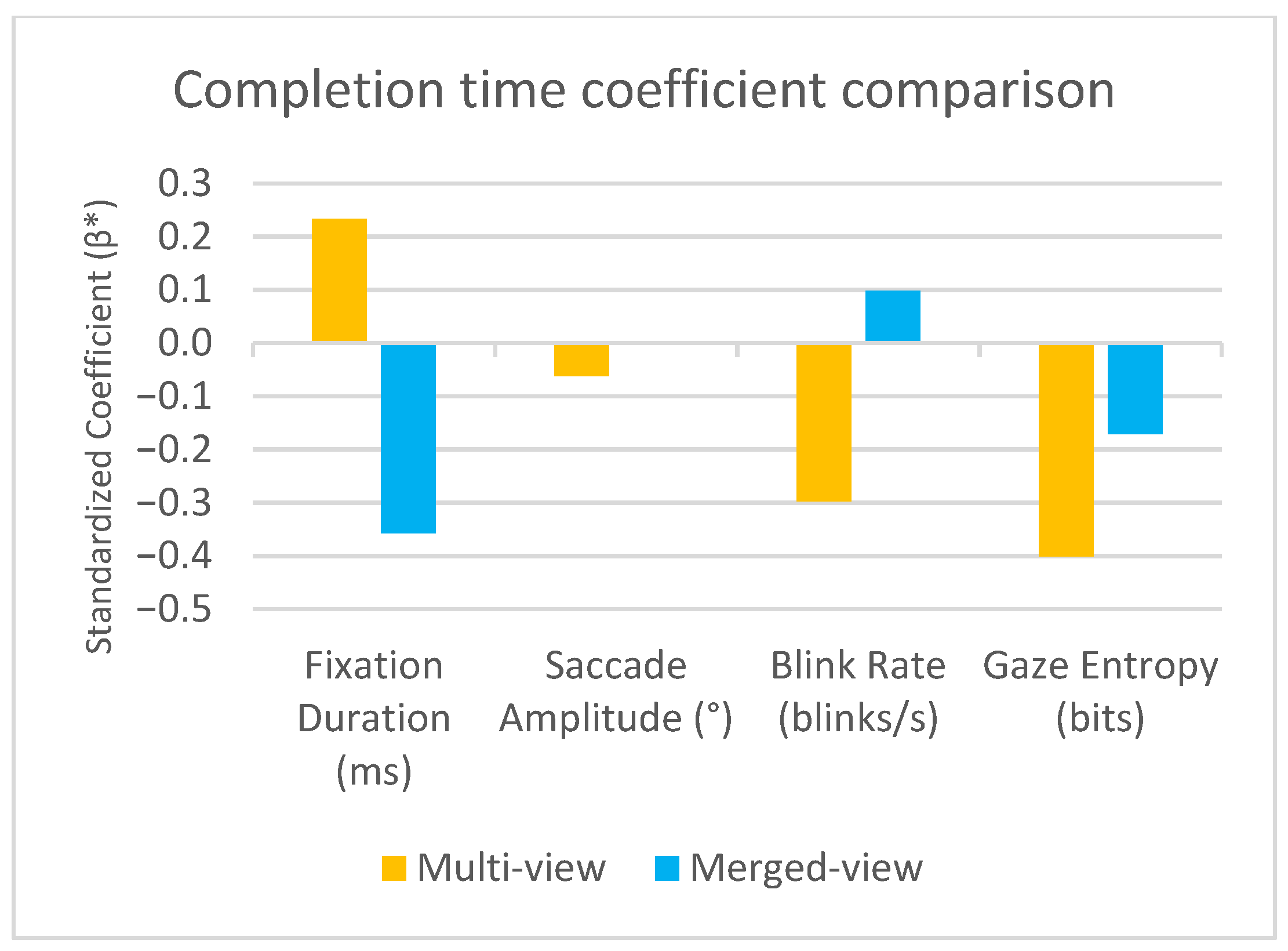
Table 5 presents the regression results for completion time under the multi-view condition. Among the four visual-attention metrics, gaze entropy emerged as the only statistically significant predictor (β* = −0.400, p = 0.017). This finding indicates that participants who distributed their visual attention more broadly across the multiple camera views completed the teleoperation task faster. In other words, those who avoided concentrating on a single display and instead maintained a more balanced scanning strategy were more efficient at interpreting spatial cues and steering the vehicle. Fixation duration and blink rate showed moderate, though not statistically significant, effects: longer fixations and frequent blinking were generally associated with slower completion times, consistent with elevated cognitive load and momentary lapses in visual sampling. Saccade amplitude contributed minimally, suggesting that in fragmented multi-view setups, the width of visual shifts alone is less influential than the distribution of attention. Overall, this pattern supports the concept of visual tunneling in multi-monitor teleoperation systems, where operators who fail to diversify gaze across panels may become cognitively overloaded and operate more slowly.
Table 5.
Regression results for Completion Time (Multi-View).
- Completion Time—Merged-View
Under the merged-view condition (Table 6), the predictors of efficiency changed notably. Here, fixation duration became the dominant factor (β* = −0.357, p = 0.043), indicating that participants who spent less time fixating on individual visual elements completed the route more quickly. This reflects more agile visual sampling and faster information uptake when all perspectives are integrated into a coherent panoramic view. In contrast, saccade amplitude, blink rate, and gaze entropy did not significantly affect completion time, suggesting that once spatial continuity is restored in the merged-view interface, efficiency depends less on scanning breadth and more on the tempo of information processing. The negative coefficient of fixation duration highlights a shift from spatial distribution (important in multi-view) to temporal efficiency in merged-view operation—where shorter, more frequent fixations allow operators to integrate visual information seamlessly. These results reinforce that merged-view visualization reduces fragmentation, enabling operators to manage cognitive resources more effectively and complete tasks faster.
Table 6.
Regression results for Completion Time (Merged-View).
- Path Adherence—Multi-View
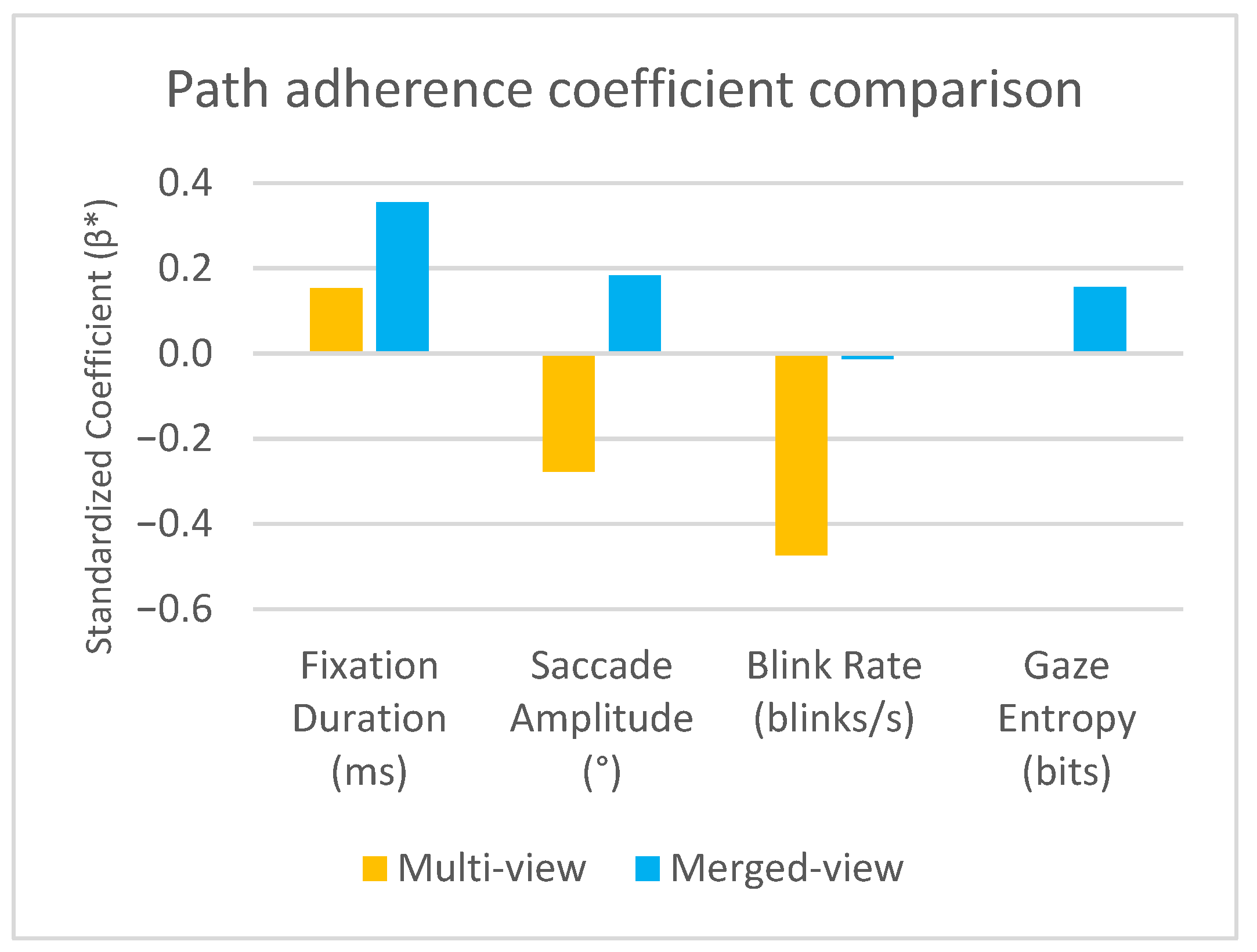
As summarized in Table 7, blink rate was the significant negative predictor of path adherence (β* = −0.473, p = 0.011) in the multi-view condition. Higher blink frequency correlated with poorer adherence, indicating that frequent disengagements from the visual scene [37]—likely linked to cognitive fatigue or excessive workload—reduced the operator’s ability to maintain stable steering. While fixation duration and saccade amplitude showed smaller, non-significant effects, their negative tendencies align with the notion that unstable gaze behavior undermines continuous control in fragmented displays. This emphasizes the challenge of maintaining attention across multiple simultaneous viewpoints, where even brief visual interruptions (blinks) can cause lane-deviation errors. The result aligns with workload theories suggesting that frequent eye blinks reflect momentary visual disengagement and working-memory saturation, both of which hinder fine motor adjustments during teleoperation. Thus, in multi-view systems, visual stability and continuous engagement are critical for maintaining safe path following.
Table 7.
Regression results—Path Adherence (Multi-View).
- Path Adherence—Merged-View
In contrast, Table 8 shows that fixation duration was the most significant positive predictor of path adherence in the merged-view setup (β* = 0.355, p = 0.045). Operators who maintained slightly longer, more stable fixations tended to control the robot with greater precision and fewer lateral drifts. This suggests that, within a unified visual frame, extended fixations on relevant spatial cues—such as lane boundaries or obstacles—support precise maneuvering and improved trajectory stability. Unlike in the multi-view setup, where long fixations indicated overload, in merged-view they appear to reflect focused situational monitoring rather than cognitive strain. Blink rate and saccade amplitude were not significant, confirming that the integrated visual layout reduces the need for rapid gaze shifts or excessive scanning. Overall, these findings imply that merged-view visualization fosters a more deliberate and steady gaze strategy, translating into improved control accuracy and reduced navigation errors.
Table 8.
Regression results—Path Adherence (Merged-View).
- Multicollinearity Check (VIF Analysis)
To ensure that the predictors did not exhibit problematic multicollinearity, Variance Inflation Factors (VIFs) were computed for each visual-attention feature. All VIF values ranged between 1.2 and 2.5, well below the commonly accepted threshold of 5, indicating that the predictors were sufficiently independent. This confirms that the observed effects of fixation duration, saccade amplitude, blink rate, and gaze entropy on performance outcomes are not confounded by shared variance among predictors.
To better illustrate these differences, Figure 14 compares the relative importance of each feature for completion time across multi-view and merged-view conditions. In the multi-view condition, gaze entropy shows the strongest influence on task efficiency, confirming that a wider distribution of visual attention improves completion speed when multiple feeds are shown separately. In the merged-view condition, fixation duration becomes dominant, meaning that operators who spend shorter, more efficient fixations achieve faster task completion. The overall shift from spatially distributed (entropy-driven) to temporally efficient (fixation-driven) strategies visually demonstrates how merged-view integration changes cognitive processing during teleoperation.
Figure 14.
Relative standardized coefficients (β*) indicate feature importance for completion time.
Figure 15 compares the relative importance of features for path adherence across the two conditions. In the multi-view interface, blink rate exerts the strongest negative effect, indicating that frequent blinking and temporary visual disengagement degrade steering stability. In the merged-view interface, fixation duration becomes the primary positive predictor, reflecting the benefit of sustained visual focus when all spatial cues are unified. Together, the plots show a behavioral transition: multi-view systems rely on maintaining distributed attention to manage fragmentation, whereas merged-view systems benefit from steady, task-focused gaze control that supports both precision and safety.
Figure 15.
Relative standardized coefficients (β*) indicating feature importance for path adherence.
- Limitations of this study
Some limitations should be considered when interpreting the findings. First, although the participant pool included a mix of university students, graduate researchers, individuals with mining backgrounds, and even a small number of haul-truck operators, the sample still does not fully represent the performance characteristics of experienced underground teleoperators. Professional operators may exhibit more refined gaze strategies, better hazard anticipation, and different workload responses than the mixed-experience group tested here. Thus, the results should be interpreted as behavioral trends under controlled conditions rather than absolute performance benchmarks for expert miners.
Second, the experiment was conducted in a controlled laboratory environment. While the path was designed in consultation with mining engineers to emulate the visual and operational challenges of underground navigation—including tight corridors, sharp turns, and hazard zones—the lab setup did not replicate dust, vibration, low-light conditions, vehicle motion, or ambient noise typical of underground mines. These real-world stressors may influence both operator attention and driving performance.
Third, the study focused on forward-facing cameras. Real underground teleoperation often requires monitoring rear and lateral views, especially during loading, dumping, or reversing. Adding those perspectives may alter gaze distribution and cognitive load.
Finally, gaze-entropy values depend on how Areas of Interest (AOIs) are defined and how the grid is segmented. Using alternative AOI sizes or finer-grained grids may yield different absolute entropy values, though relative differences between visualization modes would likely remain consistent.
These limitations point to opportunities for future research involving expert operator cohorts, more realistic mining conditions, additional sensory modalities, and expanded camera configurations to further validate and extend the findings.
5. Conclusions
This study presented a comprehensive evaluation of multi-view and merged-view teleoperation interfaces in a mining context, integrating both eye-tracking metrics and operational performance data to quantify how visualization design influences operator efficiency, safety, and cognitive load. The merged-view interface—by combining multiple camera perspectives into a single continuous field of view—demonstrated clear advantages across several performance dimensions. Participants completed the 50 m teleoperation path approximately 6% faster, maintained 21% higher path adherence, and committed 28% fewer speed-limit violations compared to the traditional multi-view configuration. Eye-tracking results revealed substantial changes in visual behavior under the merged-view mode, including a 29% decrease in blink rate, an 18% reduction in fixation duration, an 11% increase in saccade amplitude, and a 14% rise in gaze-transition entropy. These shifts reflect a transition from localized and repetitive attention patterns to broader, more adaptive scanning that enhances situational awareness. NASA-TLX ratings further supported these findings, indicating a 27% reduction in perceived workload. Regression-based sensitivity analysis revealed meaningful differences in the cognitive mechanisms underlying performance across visualization modes. Under the multi-view condition, gaze entropy was the most significant predictor of efficiency, suggesting that operators who distributed their attention across multiple panels achieved faster task completion. In contrast, fixation duration became the dominant predictor in the merged-view condition, representing faster visual sampling and more efficient information processing. For safety-related outcomes, blink rate and gaze entropy were most influential in the multi-view setup—indicating that frequent disengagement and fragmented attention reduced path stability—whereas fixation duration emerged as the primary predictor of path adherence under merged-view visualization, reflecting steadier gaze behavior and improved trajectory control. Collectively, these results demonstrate that merged-view interfaces reduce cognitive tunneling and improve operational performance by promoting a balanced distribution of visual attention. The findings also emphasize that efficiency and safety are governed by distinct visual-attention mechanisms and therefore may not be optimized simultaneously through a single visualization approach. From a design research standpoint, these findings motivate future investigation into adaptive or hybrid interfaces that dynamically adjust camera perspectives based on task demands—providing wider situational context during navigation and focused imagery during precise control operations. The integration of eye-tracking data with performance-based sensitivity analysis provides a reproducible methodology for identifying which attentional features most strongly drive specific operational outcomes. Importantly, this research demonstrates how human-centered visual-attention analysis can be applied to the evaluation of teleoperation interfaces in laboratory settings motivated by mining-relevant challenges. The findings inform early-stage interface evaluation and support evidence-based design considerations for teleoperated mining systems. Future work focuses on validating these findings with professional operators and in higher-fidelity environments before extending conclusions to real-world and full-scale mining operations.
Author Contributions
Conceptualization, A.K.P. and J.S.; Methodology, A.K.P., A.M.-M. and J.S.; Software, A.K.P. and M.S.; Validation, J.S.; Formal analysis, A.K.P. and A.M.-M.; Investigation, A.K.P., M.S. and A.M.-M.; Resources, M.S.; Data curation, A.K.P.; Writing-original draft, A.K.P.; Writing-review & editing, A.M.-M.; Supervision, J.S.; Project administration, A.M.-M. and J.S.; Funding acquisition, J.S. All authors have read and agreed to the published version of the manuscript.
Funding
This research was funded by Centers for Disease Control and Prevention grant number [75D30119C06044].
Institutional Review Board Statement
Not applicable.
Informed Consent Statement
Informed consent was obtained from all subjects involved in the study.
Data Availability Statement
Data is unavailable due to privacy or ethical restrictions.
Acknowledgments
This study is a part of the project supported by the Center for Disease Control and Prevention and the National Institute for Occupational Health and Safety under contract number 75D30119C06044. The authors are responsible for this project’s recommendations, conclusions, and findings. The outcomes do not necessarily reflect the views of the National Science Foundation, the Center for Disease Control and Prevention, or the National Institute for Occupational Health and Safety.
Conflicts of Interest
The authors declare no conflict of interest.
References
- Hainsworth, D.W. Teleoperation user interfaces for mining robotics. Auton. Robot. 2001, 11, 19–28. [Google Scholar] [CrossRef] [Scilit]
- Larsson, J.; Broxvall, M.; Saffiotti, A. An evaluation of local autonomy applied to teleoperated vehicles in underground mines. In Proceedings of the 2010 IEEE International Conference on Robotics and Automation, Anchorage, AK, USA, 3–7 May 2010; pp. 1745–1752. [Google Scholar] [CrossRef] [Scilit]
- Molaei, F.; Rahimi, E.; Siavoshi, H.; Afrouz, S.G.; Tenorio, V. A comprehensive review on internet of things (IoT) and its implications in the mining industry. Am. J. Eng. Appl. Sci. 2020, 13, 499–515. Available online: https://hal.science/hal-02940030/ (accessed on 3 November 2024). [CrossRef] [Scilit]
- Dirkin, G.R. Cognitive Tunneling: Use of Visual Information under Stress. Percept. Mot. Ski. 1983, 56, 191–198. [Google Scholar] [CrossRef] [Scilit]
- Sato, R.; Kamezaki, M.; Niuchi, S.; Sugano, S.; Iwata, H. Cognitive untunneling multi-view system for teleoperators of heavy machines based on visual momentum and saliency. Autom. Constr. 2020, 110, 103047. [Google Scholar] [CrossRef] [Scilit]
- Wickens, C.D.; Alexander, A.L. Attentional Tunneling and Task Management in Synthetic Vision Displays. Int. J. Aviat. Psychol. 2009, 19, 182–199. [Google Scholar] [CrossRef] [Scilit]
- Kaber, D.B.; Endsley, M.R. The effects of level of automation and adaptive automation on human performance, situation awareness and workload in a dynamic control task. Theor. Issues Ergon. Sci. 2004, 5, 113–153. [Google Scholar] [CrossRef] [Scilit]
- Hart, S.G.; Staveland, L.E. Development of NASA-TLX (Task Load Index): Results of Empirical and Theoretical Research. Adv. Psychol. 1988, 52, 139–183. [Google Scholar]
- Ledger, H. The effect cognitive load has on eye blinking. Plymouth Stud. Sci. 2013, 6, 206–223. Available online: https://pearl.plymouth.ac.uk/cgi/viewcontent.cgi?article=1311&context=tpss (accessed on 23 April 2024).
- Landi, C.T.; Villani, V.; Ferraguti, F.; Sabattini, L.; Secchi, C.; Fantuzzi, C. Relieving operators’ workload: Towards affective robotics in industrial scenarios. Mechatronics 2018, 54, 144–154. [Google Scholar] [CrossRef] [Scilit]
- Wang, Z.; Reed, I.; Fey, A.M. Toward Intuitive Teleoperation in Surgery: Human-Centric Evaluation of Teleoperation Algorithms for Robotic Needle Steering. In Proceedings of the 2018 IEEE International Conference on Robotics and Automation (ICRA), Brisbane, Australia, 21–25 May 2018; pp. 5799–5806. [Google Scholar] [CrossRef] [Scilit]
- Shi, Y.; Ruiz, N.; Taib, R.; Choi, E.; Chen, F. Galvanic skin response (GSR) as an index of cognitive load. In Proceedings of the CHI07: CHI Conference on Human Factors in Computing Systems, San Jose, CA, USA, 28 April–3 May 2007; pp. 2651–2656. [Google Scholar] [CrossRef] [Scilit]
- Sam, Y.T.; Natarajan, M.; Gombolay, M. “Stress and Performance in Human-Robot Space Teleoperation Tasks”, in Proc. ICSR Workshop Human-Robot Interaction for Space Robotics (HRI-SR), 2020. Available online: https://bpb-us-e1.wpmucdn.com/sites.gatech.edu/dist/d/958/files/2023/04/Stress_and_Performance_in_Human_Robot_Space_Teleoperation_Tasks-1.pdf (accessed on 10 April 2025).
- Rojas, R.F.; Debie, E.; Fidock, J.; Barlow, M.; Kasmarik, K.; Anavatti, S.; Garratt, M.; Abbass, H. Electroencephalographic Workload Indicators During Teleoperation of an Unmanned Aerial Vehicle Shepherding a Swarm of Unmanned Ground Vehicles in Contested Environments. Front. Neurosci. 2020, 14, 40. [Google Scholar] [CrossRef] [Scilit]
- Zheng, Z.; Gao, S.; Su, Y.; Chen, Y.; Wang, X. Cognitive load-induced pupil dilation reflects potential flight ability. Curr. Psychol. 2023, 42, 24871–24881. [Google Scholar] [CrossRef] [Scilit]
- Zagermann, J.; Pfeil, U.; Reiterer, H. Studying eye movements as a basis for measuring cognitive load. In Proceedings of the CHI’18: CHI Conference on Human Factors in Computing Systems, Montreal, QC, Canada, 21–26 April 2018. [Google Scholar] [CrossRef] [Scilit]
- Vogels, J.; Demberg, V.; Kray, J. The index of cognitive activity as a measure of cognitive processing load in dual task settings. Front. Psychol. 2018, 9, 2276. [Google Scholar] [CrossRef] [Scilit] [PubMed]
- Guo, Y.; Freer, D.; Deligianni, F.; Yang, G.-Z. Eye-Tracking for Performance Evaluation and Workload Estimation in Space Telerobotic Training. IEEE Trans. Hum.-Mach. Syst. 2022, 52, 1–11. [Google Scholar] [CrossRef] [Scilit]
- Beesley, T.; Pearson, D.; Le Pelley, M. Eye Tracking as a Tool for Examining Cognitive Processes. In Biophysical Measurement in Experimental Social Science Research: Theory and Practice; Academic Press: Cambridge, MA, USA, 2019; pp. 1–30. [Google Scholar] [CrossRef] [Scilit]
- Majaranta, P.; Bulling, A. Eye Tracking and Eye-Based Human–Computer Interaction. In Advances in Physiological Computing; Springer: London, UK, 2014; pp. 39–65. [Google Scholar]
- Biondi, F.N.; Saberi, B.; Graf, F.; Cort, J.; Pillai, P.; Balasingam, B. Distracted worker: Using pupil size and blink rate to detect cognitive load during manufacturing tasks. Appl. Ergon. 2022, 106, 103867. [Google Scholar] [CrossRef] [Scilit]
- Chen, S.; Epps, J. Blinking: Toward wearable computing that understands your current task. IEEE Pervasive Comput. 2013, 12, 56–65. [Google Scholar] [CrossRef] [Scilit]
- Magliacano, A.; Fiorenza, S.; Estraneo, A.; Trojano, L. Eye blink rate increases as a function of cognitive load during an auditory oddball paradigm. Neurosci. Lett. 2020, 736, 135293. [Google Scholar] [CrossRef] [Scilit]
- Alyan, E.; Arnau, S.; Reiser, J.E.; Getzmann, S.; Karthaus, M.; Wascher, E. Blink-related EEG activity measures cognitive load during proactive and reactive driving. Sci. Rep. 2023, 13, 1–12. [Google Scholar] [CrossRef] [Scilit]
- Chen, S.; Epps, J. Using Task-Induced Pupil Diameter and Blink Rate to Infer Cognitive Load. Hum.-Comput. Interact. 2014, 29, 390–413. [Google Scholar] [CrossRef] [Scilit]
- Rosenfield, M.; Jahan, S.; Nunez, K.; Chan, K. Cognitive demand, digital screens and blink rate. Comput. Hum. Behav. 2015, 51, 403–406. [Google Scholar] [CrossRef] [Scilit]
- Biswas, P.; Prabhakar, G. Detecting drivers’ cognitive load from saccadic intrusion. Transp. Res. Part F Traffic Psychol. Behav. 2018, 54, 63–78. [Google Scholar] [CrossRef] [Scilit]
- Zagermann, J.; Pfeil, U.; Reiterer, H. Measuring Cognitive Load using Eye Tracking Technology in Visual Computing. In Proceedings of the Sixth Workshop on Beyond Time and Errors on Novel Evaluation Methods for Visualization, Baltimore, MD, USA, 24 October 2016. [Google Scholar] [CrossRef] [Scilit]
- Stuyven, E.; Van der Goten, K.; Vandierendonck, A.; Claeys, K.; Crevits, L. The effect of cognitive load on saccadic eye movements. Acta Psychol. 2000, 104, 69–85. [Google Scholar] [CrossRef] [Scilit]
- Hsu, Y.; Baird, T.; Wang, C. Investigating cognitive load modulation of distractor processing using pupillary luminance responses in the anti-saccade paradigm. Eur. J. Neurosci. 2020, 52, 3061–3073. [Google Scholar] [CrossRef] [Scilit]
- Fadardi, M.S.; Fadardi, J.S.; Mahjoob, M.; Doosti, H. Post-saccadic Eye Movement Indices Under Cognitive Load: A Path Analysis to Determine Visual Performance. J. Ophthalmic Vis. Res. 2022, 17, 397–404. [Google Scholar] [CrossRef] [Scilit]
- Krejtz, K.; Duchowski, A.T.; Niedzielska, A.; Biele, C.; Krejtz, I. Eye tracking cognitive load using pupil diameter and microsaccades with fixed gaze. PLoS ONE 2018, 13, e0203629. [Google Scholar] [CrossRef] [Scilit] [PubMed]
- Sato, R.; Kamezaki, M.; Sugano, S.; Iwata, H. Gaze pattern analysis in multi-display systems for teleoperated disaster response robots. In Proceedings of the 2016 IEEE International Conference on Systems, Man, and Cybernetics (SMC), Budapest, Hungary, 9–12 October 2016; pp. 3534–3539. [Google Scholar] [CrossRef] [Scilit]
- Zhang, G.; Hansen, S.H.; Behrens, O.R.; Hansen, J.P. Saccade response testing during teleoperations with a head-mounted display. Cogn. Technol. Work. 2024, 26, 127–138. [Google Scholar] [CrossRef] [Scilit]
- Upasani, S.; Srinivasan, D.; Zhu, Q.; Du, J.; Leonessa, A. Eye-Tracking in Physical Human–Robot Interaction: Mental Workload and Performance Prediction. Hum. Factors 2024, 66, 2104–2119. [Google Scholar] [CrossRef] [Scilit] [PubMed]
- Pillai, P.; Balasingam, B.; Kim, Y.H.; Lee, C.; Biondi, F. Eye-Gaze Metrics for Cognitive Load Detection on a Driving Simulator. IEEE/ASME Trans. Mechatron. 2022, 27, 2134–2141. [Google Scholar] [CrossRef] [Scilit]
- Stern, J.A.; Boyer, D.; Schroeder, D. Blink rate: A possible measure of fatigue. Hum. Factors 1994, 36, 285–297. [Google Scholar] [CrossRef] [Scilit]

Disclaimer/Publisher’s Note: The statements, opinions and data contained in all publications are solely those of the individual author(s) and contributor(s) and not of MDPI and/or the editor(s). MDPI and/or the editor(s) disclaim responsibility for any injury to people or property resulting from any ideas, methods, instructions or products referred to in the content. |
© 2026 by the authors. Licensee MDPI, Basel, Switzerland. This article is an open access article distributed under the terms and conditions of the Creative Commons Attribution (CC BY) license.