


Abstract
Single-player role-playing games (RPGs) combine two promises that do not always align: delivering a compelling narrative experience (world, characters, choices, and consequences) while sustaining a demanding ludic trajectory in which players face obstacles, master systems, and progress over time. This Systematic Literature Review (SLR) synthesizes existing evidence on the evolution of narrative and challenge in single-player RPGs from a player-centered perspective, with particular attention paid to immersion, engagement, flow, and perceived agency. A multi-database search strategy was conducted across Google Scholar, Scopus, IEEE Xplore, and the ACM Digital Library using query strings targeting narrative/agency, challenge and dynamic difficulty adjustment (DDA), adaptive difficulty, and the historical evolution of RPG narrative design, following a Preferred Reporting Items for Systematic Reviews and Meta-Analyses (PRISMA)-reported selection flow and Rayyan-supported screening. From 423 identified records, duplicates and non-eligible records were removed through staged screening, yielding 43 reports sought for retrieval; because six were not accessible in full text at consolidation, the synthesis was conducted on 37 full-text articles. The findings indicate (i) a predominance of work on narrative and agency, where agency is framed as a design effect rather than merely the presence of explicit branching choices; (ii) a recent rise in challenge/adaptation research, frequently tied to flow, fairness, and differentiated player profiles; and (iii) the emergence of artificial intelligence (AI)-driven approaches, including non-player character (NPC) systems, combat AI, reinforcement learning, and large language model (LLM)-based narrative control, which amplify core design trade-offs between narrative coherence and perceived agency. Beyond synthesizing a dispersed body of literature, the review contributes an integrated player-centered analytical framework that brings together narrative, challenge, and player experience, while also highlighting the need for more consistent measurement practices, stronger comparative designs, and longer-term empirical work in single-player RPG research.
Keywords:
single-player RPG; narrative; player agency; challenge; adaptive difficulty; DDA; player experience; game AI 1. Introduction
Single-player role-playing games (RPGs) are one of the most persistent and influential formats in digital video games because they combine, within the same system, two promises that do not always reconcile easily: on the one hand, offering players a narrative experience (world, characters, conflicts, choices, consequences, and dramatic progression); on the other, sustaining a demanding gameplay trajectory in which players face obstacles, master rules, make strategic decisions, and feel their competence grows over time. This tension between the “intended experience” and its practical execution is recurrent in the literature on difficulty and player experience [1] and intersects with experience-oriented perspectives that frame involvement through the balance between challenge and competence (flow) and through design factors such as goals, feedback, and control (GameFlow) [2,3], particularly in RPG contexts [2,3]. In practical terms, this means that the player experience in single-player RPGs rarely depends only on a “good story” or “good combat”, but on how narrative and challenge are articulated over dozens of hours: how the game controls (or releases) pacing; how it introduces complexity; how it structures exploration and progression through clear goals, feedback, and a sense of control [2,3]; how it turns decisions into consequences; and how it avoids making the player feel bored, overwhelmed, or disconnected from what the story is trying to build.
This review is particularly timely. Our results show that research on narrative and challenge in games—including single-player RPG contexts—has intensified markedly in recent years, reaching a clear peak in 2025 (see Section 3.1. This acceleration coincides with two converging fronts: (i) increased attention to challenge regulation through adaptive difficulty, DDA, and fairness- and player profile-sensitive approaches; and (ii) the rise in AI-driven systems applied to design and player experience, including more autonomous NPC behavior and emerging LLM-mediated narrative systems. Together, these developments make the narrative–challenge trade-offs more explicit by reshaping perceived agency, pacing, coherence, and fairness, reinforcing the need for a structured synthesis of the evidence.
Over time, the genre’s evolution has made this balance even more critical. The shift from more rigid structures and text-centered interfaces to broader, more cinematic worlds increased narrative ambition and the variety of play styles, but also amplified classic tensions: choices that promise agency and impact, yet may be “sold” primarily as a feeling within structural constraints [4]; narrative urgency that conflicts with free exploration and alternative routes; and power progression that can trivialize encounters, disrupting the challenge curve described as part of the intended experience [1]. In parallel, studies on world-building and spatial organization suggest that how space communicates story and guides exploration directly influences player involvement [5] and, even in customized computer RPG environments, there is evidence that features such as interaction with characters and the ability to manipulate the fictional world support engagement patterns [6]. For these reasons, from a player-centered perspective, “narrative” and “challenge” should be read as dimensions that influence each other: narrative can increase the meaning of challenge and make overcoming it memorable [7], but challenge can also interrupt narrative involvement when it becomes repetition, a barrier, or noise in progression [1].
Although they are familiar concepts, “narrative”, “agency”, and “challenge” appear in the literature with different—and sometimes overlapping—meanings. In single-player RPGs, “narrative” may refer both to plot and cutscenes and to narrative distributed across quests, dialog, environmental lore, and even the rules themselves, as often discussed in work on storytelling and meaning-making in digital games [8]. “Agency”, in turn, may mean explicit branching choice, as in choice-based RPGs studied through narrative rhetoric [9], or systemic freedom to solve problems in multiple ways, as is common in open-world accounts where agency is negotiated between perceived freedom and an invisible architecture of progression [4]. “Challenge” may be understood as numerical difficulty, cognitive demands (planning, builds, resource management), or deliberate friction designed to produce meaning; here, the distinction between measured difficulty and difficulty as felt by the player is especially useful [10], particularly when the goal is to discuss experience rather than parameterization alone. In this review, “RPG” refers to single-player digital RPGs characterized by persistent character progression and a quest/progression structure, covering both action-oriented and systems-heavy variants. While the player experience implications of challenge differ between real-time and turn-based combat, both are included because they represent distinct ends of how RPGs operationalize agency, progression, and perceived difficulty.
In temporal terms, the review covers the period from 1990 to 2025, which corresponds to the earliest study identified in the final corpus and to the endpoint of the search process. Although the title refers to the “last 35 years”, the distribution of included studies is uneven across that interval: the early decades are comparatively sparse, while the corpus becomes markedly denser after 2020. This pattern likely reflects both the historical dispersion of research on RPG narrative/challenge and the more recent growth of work on player experience, adaptive systems, and AI-mediated design.
Across the evolution of single-player RPGs, the relationship between narrative and challenge has become increasingly difficult to balance. As the genre moved from more rigid, text-centered structures toward more cinematic, exploratory, and systems-rich experiences, it expanded both narrative ambition and variation in player trajectories. This shift amplified recurring tensions already identified in the literature: agency is often experienced within structural limits [4], open exploration can conflict with pacing and urgency [5], and progression can either reinforce or trivialize challenge depending on how it is regulated [1].
For this reason, narrative and challenge are better understood here as interdependent design dimensions rather than separate features. Narrative can give meaning to obstacles, progression, and effort [7], while challenge can shape pacing, competence, and the felt continuity of the experience [1,10]; when poorly calibrated, either can weaken the other. More recent work on adaptive difficulty and DDA makes this interdependence even more visible, since these approaches attempt to regulate challenge while also affecting fairness, perceived agency, and coherence [11,12].
Approaching this evolution therefore requires looking beyond isolated emblematic cases and beyond analytically segmented accounts. Existing studies often focus on representative games to discuss agency [4], world-building and exploration [5], or difficulty and player experience [1,12], but relatively few integrate these axes in a way that is directly useful for understanding how single-player RPGs balance coherence, agency, pacing, and fairness from the player’s perspective.
This review addresses that problem by providing a structured, player-centered synthesis of how narrative design and challenge design have evolved together in single-player RPGs over time. Its main added value lies in bringing together strands of the literature that are often treated separately—narrative and agency, challenge and difficulty regulation, and player experience—within a single analytical framework. In doing so, the review clarifies the main recurring trade-offs in the field, including agency versus constraint, coherence versus freedom, and challenge versus fairness, while also identifying methodological gaps that limit cross-study comparability. Beyond organizing prior work, the article offers a clearer interpretive framing that may support both scholarly analysis and design-oriented decision-making in single-player RPG research.
Objectives and Research Questions
Building on this framing, this systematic review synthesizes existing knowledge on the evolution of narrative and challenge in single-player role-playing games (RPGs), and on how this evolution is associated in the literature with dimensions of player experience (immersion, engagement, and perceived agency). More specifically, the review addresses four linked analytical needs derived from the gap identified above: (i) to clarify how narrative design has evolved; (ii) to clarify how challenge and progression have evolved; (iii) to identify recurring tensions and trade-offs between these dimensions; and (iv) to determine what kinds of evidence currently support claims about their effects on player experience.
To guide the analysis, the following research questions are defined:
- RQ1: How does the literature describe the evolution of narrative design in single-player RPGs (structure, presentation, choice, and consequences) over time?
- RQ2: How does the literature describe the evolution of challenge and progression mechanics in single-player RPGs (difficulty, progression, risk/reward, pacing, combat systems, and resources) over time?
- RQ3: What patterns and trade-offs are identified in the interaction between narrative and challenge (e.g., agency vs. constraints, narrative pacing vs. difficulty barriers, exploration freedom vs. dramatic coherence)?
- RQ4: What evidence exists regarding the impact of narrative and challenge on player experience (immersion, engagement, perceived agency, satisfaction), and which methods/approaches are used to capture that perspective?
The remainder of the article is organized as follows. Section 2 describes the review methodology, including the search strategy, PRISMA-reported selection flow, and study classification criteria. Section 3 presents the results of the synthesis. Section 4 interprets the identified patterns in relation to the research questions. Finally, Section 5 summarizes the main conclusions, limitations, and future research directions.
2. Methodology
This research was conducted as an SLR, with the aim of identifying, selecting, and synthesizing the relevant literature on the evolution of narrative and challenge in single-player RPGs, and on how these elements are associated with a player-centered perspective (e.g., immersion, engagement, and perceived agency). The process was organized into sequential stages that ensure traceability of decisions, from the initial collection of records to the final inclusion of studies. To make the selection flow transparent and auditable, the pathway of identification, screening, eligibility assessment, and inclusion was structured and reported using the Preferred Reporting Items for Systematic Reviews and Meta-Analyses (PRISMA) framework.
The bibliographic search was conducted across multiple sources: Google Scholar, Scopus, IEEE Xplore, and the ACM Digital Library. This combination was adopted to balance breadth and reproducibility across the interdisciplinary areas relevant to the topic, including game studies, game design, human–computer interaction/user experience (HCI/UX), player experience research, and game artificial intelligence. Google Scholar was retained for its broad coverage and sensitivity to dispersed literature, while Scopus, IEEE Xplore, and the ACM Digital Library were used to strengthen coverage of curated and peer-reviewed venues, particularly in HCI, game technology, interactive systems, and digital games research. Given the hybrid nature of the topic—bridging narrative, game systems, and player experience—a multi-database strategy was considered more appropriate than a single-source approach for identifying studies distributed across different scientific communities and publication venues.
2.1. Search Strategy and Queries
The search strategy was developed iteratively, testing and refining terms to balance two goals that often conflict: ensuring sufficient breadth so as not to “miss” relevant studies, while reducing noise from domains outside the review scope (e.g., Massive Multiplayer Online (MMO)/Massive Multiplayer Online Role-Playing Game (MMORPG), online multiplayer, and tabletop). During this exploratory phase, several combinations were tested; however, to keep this section reproducible and focused, the main search strings (S1–S4) that supported the final set of analyzed records are presented below.
The search process was conducted iteratively across the selected databases, with query structures adapted where necessary to accommodate differences in indexing logic, search syntax, and filtering options between platforms. The same conceptual search blocks were preserved across databases in order to maintain comparability, while minor syntax adjustments were introduced to ensure functional equivalence of the searches. This approach supported both reproducibility and domain-sensitive coverage, reducing the likelihood that relevant studies indexed in venue-specific databases—particularly ACM and IEEE—would be omitted.
Conceptually, the queries were organized into four blocks and then applied, with syntax adaptations when required, across Google Scholar, Scopus, IEEE Xplore, and the ACM Digital Library: (i) narrative and agency in single-player RPGs; (ii) challenge/difficulty (including dynamic difficulty adjustment (DDA)) and player experience in RPGs; (iii) adaptive difficulty and player experience in digital games (to support the challenge/experience dimension, even when the literature is not limited to RPGs); and (iv) the historical evolution of narrative design in digital RPGs (CRPG/JRPG), to explicitly capture history/evolution-oriented studies.
- (S1) Agency + narrative in single-player RPGs
‘‘player agency’’ (RPG OR ‘‘role-playing game’’ OR CRPG)
(‘‘single-player’’ OR ‘‘single player’’)
(narrative OR storytelling OR dialogue OR quest)
-MMO -MMORPG -tabletop -‘‘Dungeons & Dragons’’ -D&D
- (S2) DDA/challenge + player experience in RPGs
‘‘dynamic difficulty adjustment’’
(‘‘role-playing game’’ OR CRPG OR JRPG OR ‘‘action RPG’’)
(‘‘player experience’’ OR immersion OR flow
OR engagement OR enjoyment OR evaluation OR ‘‘user study’’ OR experiment)
-multiplayer -online -MMO -MMORPG -tabletop -LARP -‘‘Dungeons & Dragons’’
- (S3) Historical evolution of narrative design in digital RPGs
(‘‘computer role-playing game’’ OR CRPG OR JRPG OR ‘‘role-playing game’’)
(‘‘narrative design’’ OR ‘‘quest design’’ OR ‘‘dialogue system’’
OR ‘‘branching narrative’’)
(history OR evolution OR historiography)
-tabletop -MMO -MMORPG -multiplayer -online -LARP -Dungeons -Dragons
- (S4) Adaptive difficulty + player experience in digital games
‘‘adaptive difficulty’’
(‘‘player experience’’ OR immersion OR flow OR engagement OR enjoyment
OR ‘‘user study’’ OR evaluation OR experiment)
(game OR videogame OR ‘‘video game’’)
-education -rehabilitation -therapy -classroom -serious
After retrieval, records from all databases were aggregated and organized in Rayyan [13], enabling duplicate removal, systematic logging of screening decisions, recording of exclusion reasons, and tracking of full-text assessments.
2.2. Selection Process and PRISMA Flow
Selection was conducted in sequential stages and reported using PRISMA, with counts and exclusion reasons recorded at each phase. The initial set of identified records was 423. After removing 11 duplicates, 7 records were excluded due to predefined exclusion keywords appearing in the title, and 23 were excluded due to foreign language, resulting in 382 records for screening. During screening (title/abstract), 246 records were excluded because their primary focus did not align with the review scope, leaving 136 reports for eligibility assessment. At this stage, 93 reports were excluded for analyzing games outside the scope, resulting in 43 reports sought for retrieval; 6 were not retrieved because the full texts were inaccessible due to paywall restrictions at the time of consolidation. Therefore, the synthesis was conducted on 37 full-text articles (Figure 1).
Figure 1.
PRISMA flow diagram of study selection.
2.3. Research Variables and Measurement Criteria
The variables analyzed in this systematic review were identified based on recurring themes across the included studies and organized into three main dimensions: (1) narrative design, (2) challenge/progression, and (3) player-centered experience. The first dimension captures how studies describe narrative in single-player RPGs, including presentation modes (dialog, cutscenes, environmental storytelling), structure (linear, branching, or emergent), quest design, and choice-and-consequence mechanisms. The second dimension captures how studies conceptualize challenge and progression, including difficulty (modes, scaling, gating), resource pressure, combat demands, progression curves, and—when applicable—adaptive approaches (e.g., DDA/adaptive difficulty). The third dimension captures how the literature addresses the player perspective through constructs such as immersion, engagement, flow, perceived agency, satisfaction, frustration, and perceived fairness/control.
These variables were extracted from each study based on explicit references to design mechanisms, analytical constructs, and reported effects on player experience. When empirical evaluation was present, measurement criteria were recorded according to the method used (e.g., questionnaires, interviews, controlled play sessions, telemetry/behavioral indicators, or qualitative coding). This structured classification enables comparison across studies from different traditions, reduces terminological ambiguity (e.g., “agency” as branching vs. “agency” as perceived control), and supports a consistent synthesis of how narrative and challenge evolve and interact in player experience.
2.4. Rationale for a Systematic Review Methodology
A systematic review was selected because relevant research on narrative, agency, challenge, and player experience in single-player RPGs is distributed across multiple research areas—including game studies, game design, HCI/UX, player experience research, and game artificial intelligence—and frequently uses partially incompatible definitions for central concepts. An SLR provides a transparent and reproducible process to identify, filter, and synthesize evidence, reducing biases typical of narrative reviews and increasing the reliability of the trends and conclusions presented.
This methodological choice was particularly important in the present case because the topic sits at the intersection of narrative design, gameplay systems, and player-centered evaluation, with relevant studies often dispersed across different publication cultures and indexing environments. For this reason, the review adopted a multi-database search strategy rather than relying on a single source, combining broad and curated databases to improve both disciplinary coverage and reproducibility. This strengthens the review’s ability to identify studies published in venue-specific communities—including HCI, game AI, and digital games research—while maintaining a traceable and auditable screening process.
In addition, the aim of this review is not only to describe isolated mechanisms, but to identify evolutionary patterns over time and recurring trade-offs between narrative and challenge from a player-centered perspective. Organizing and reporting the selection flow using PRISMA makes explicit how many studies were found, how many were excluded (and why), and which set was effectively analyzed—thereby strengthening the methodological credibility of the work and facilitating comparisons across studies with different approaches, publication types, and analytical traditions.
2.5. Methodological Criteria
2.5.1. Publication Type Eligibility and Treatment of Gray Literature
The review prioritized peer-reviewed journal articles, conference papers, and book chapters. However, selected gray literature sources—particularly student theses—were considered eligible when they met all of the following conditions: (i) direct relevance to at least one research question; (ii) sufficient methodological or analytical transparency to support interpretive synthesis; (iii) clear institutional provenance (e.g., identifiable university affiliation, examination context, and supervisory structure); and (iv) a non-redundant contribution to the corpus.
Gray literature sources were not retained automatically on the basis of topic alone. When a source was judged peripheral to the RPG-specific synthesis, insufficiently transparent in its analytical or methodological framing, or redundant relative to stronger peer-reviewed studies, it was excluded from the final review corpus. Publication type alone was therefore not treated as an exclusion criterion, but as a factor considered jointly with relevance, transparency, and evidentiary contribution.
2.5.2. Narrative-Focused Studies
A study was classified as narrative-focused when its dominant contribution addressed narrative mechanisms in single-player RPGs (e.g., storytelling structures, dialog systems, quest design, branching narratives, world-building, or agency as a narrative construct), even if it included references to difficulty/progression only as secondary context.
2.5.3. Challenge/Progression-Focused Studies
A study was classified as challenge/progression-focused when its dominant contribution addressed challenge mechanisms (e.g., difficulty, balancing, progression, resource pressure, combat demands, scaling/adaptation) and their design implications in contexts compatible with single-player RPGs, even if narrative was used primarily as framing.
2.5.4. Player-Centered Measurement Studies
A study was classified as player-centered (empirical/measurement) when it explicitly evaluated player experience using empirical methods (e.g., questionnaires, interviews, controlled sessions, telemetry, or qualitative analysis), focusing on dimensions such as immersion, engagement, perceived agency, flow, satisfaction, frustration, or perceived fairness/control.
2.5.5. Handling Overlaps in Categorization
Because many studies address more than one dimension (e.g., agency and difficulty, or narrative pacing and challenge), each study was classified according to its dominant focus, while secondary tags were also recorded when contributions to other dimensions were relevant. When a study combined design discussion with empirical evaluation, priority was assigned to the primary type of contribution (e.g., if the core of the work is measurement results, it was classified as player-centered; if measurement is marginal and the core is design analysis, it was classified by the dominant design axis). This approach reduces ambiguities in hybrid cases and keeps the synthesis consistent, while acknowledging that narrative and challenge frequently intersect in single-player RPG design.
2.6. Risk of Bias Considerations
Given the heterogeneous and predominantly conceptual nature of the included studies, a formal quantitative risk-of-bias tool (e.g., ROB2, RoBINS-I) was not applied. The corpus comprises theoretical analyses, qualitative case studies, prototype reports, conceptual syntheses, and exploratory empirical works, many of which do not follow standardized experimental designs suitable for conventional bias assessment frameworks.
Instead, methodological robustness was considered through qualitative appraisal of clarity of research objectives and framing; transparency of methodological description (where empirical work was conducted); explicit reporting of data collection and analysis procedures; internal coherence between theoretical framing and conclusions; publication type and institutional provenance; and alignment between reported findings and study design.
This appraisal was particularly important for non-peer-reviewed sources. Student theses and other gray literature records were only retained when they provided sufficient methodological or analytical transparency and a non-redundant contribution to the review questions. Sources that were topically relevant but peripheral to the final synthesis, or insufficiently robust in relation to the retained corpus, were excluded during final appraisal rather than treated as equally weighted evidence.
Because the review performs a narrative thematic synthesis rather than a quantitative meta-analysis, the emphasis is placed on identifying recurring conceptual patterns and methodological tendencies rather than estimating pooled effect sizes. Accordingly, the conclusions should be interpreted as integrative and interpretive rather than statistically generalizable.
Following this appraisal, 4 studies in the final corpus were treated as interpretatively weaker relative to the rest of the evidence base. These were retained because they met the minimum relevance and transparency criteria established for gray literature, but they were given less interpretive weight during synthesis due to their non-peer-reviewed student thesis format and comparatively lower evidentiary robustness.
2.7. Certainty of Evidence
Given the qualitative and conceptually heterogeneous nature of the included corpus, a formal certainty-of-evidence framework such as GRADE was not applied. The studies span theoretical analyses, qualitative case studies, exploratory experiments, design prototypes, and conceptual syntheses, which vary substantially in methodological structure and outcome reporting. As such, direct comparison of effect magnitudes or standardized outcome measures is not feasible.
Instead, certainty was appraised narratively across three dimensions: 1. Methodological transparency—Clarity in reporting research design, procedures, and analytical approach. 2. Conceptual coherence—Internal consistency between theoretical framing, research questions, and conclusions. 3. Convergence across studies—Recurrence of similar findings, themes, or trade-offs across independent works.
Certainty is considered moderate for broad conceptual trends consistently reported across multiple studies—such as the framing of agency as a design effect, the experiential gap between objective and perceived difficulty, and the growing role of adaptive systems in regulating player experience. Certainty is considered low to moderate for claims regarding causal relationships between narrative–challenge calibration and measurable player experience outcomes, given the limited number of longitudinal or controlled empirical studies in the corpus.
Because the review synthesizes interpretive and methodological tendencies rather than pooled quantitative effects, conclusions should be understood as integrative and theory-informed rather than statistically definitive. Future research employing standardized measurement instruments, longitudinal designs, and cross-study comparability would strengthen the certainty of evidence in this domain.
The final corpus was also strengthened through a selective treatment of gray literature. Student theses were not excluded a priori, but only retained when they met explicit relevance and transparency criteria. This reduces the influence of weaker non-peer-reviewed material on the final synthesis, while preserving technically or analytically useful contributions in areas where the literature is still emerging, such as adaptive systems and AI-assisted game design.
The presence of 4 interpretatively weaker studies does not materially alter the broad conceptual conclusions of the review, because no central claim is supported exclusively by these sources. Instead, they function as secondary or illustrative support in areas where the literature is still emerging, while the main trends reported in the review are corroborated by stronger peer-reviewed and/or methodologically clearer studies.
3. Results
3.1. Study Distribution and Research Activity
Figure 2 presents the distribution of studies by year. A clear concentration in recent work is observed, with a peak in 2025. This recent intensification appears to follow two strong fronts: (i) growing interest in difficulty/adaptation (dynamic difficulty adjustment (DDA), adaptive difficulty, perceived fairness, and embedded support mechanisms) [11,14,15]; and (ii) the emergence of approaches associated with artificial intelligence (AI) applied to design and player experience, including non-player character (NPC) systems, combat management, and LLM-mediated interactions [16,17,18,19].
Figure 2.
Number of studies per year.
This pattern reinforces that, although there are foundational contributions on perceived difficulty (e.g., the shift from “objective” to “subjective” difficulty) [10], much of the current debate is moving toward how narrative and challenge are experienced (flow, immersion, perceived agency) and how dynamic systems (DDA, AI, and LLM-supported interaction) can regulate or structure that experience [11,12,17,19].
3.1.1. Methodological Characterization of the Corpus by Year
Beyond the temporal distribution, it is useful to briefly summarize what each study in the corpus is. Table 1 presents, in chronological order (1990–2025), the reference author (year) and a short description of its methodological framing/approach. This overview makes it possible to observe, over time, a shift from more conceptual contributions toward a growing number of prototypes, empirical studies, and proposals involving artificial intelligence (AI), DDA, and structured interactive systems.
Table 1.
Methodological characterization of the corpus by year (1990–2025).
3.1.2. Empirical Evidence in the Corpus
To clarify the current status of empirical evidence in the field, Table 2 summarizes the empirical studies retained in the final corpus. For the purposes of this summary, empirical evidence refers to studies that report primary data collection, user testing, experimental comparison, mixed-methods analysis, or qualitative analysis grounded in identifiable empirical material. Using this criterion, 14 of the 37 included studies () were classified as empirical. One additional conference contribution with an empirical orientation [29] was not counted in this proportion because it was presented in the corpus primarily as a preliminary protocol rather than as a completed empirical study.
Table 2.
Empirical studies in the final corpus: design and main empirical conclusion ( of 37; ).
3.2. Theoretical Framing and Recurring Analytical Lenses
At the conceptual level, the studies tend to cluster around three main lenses. The first is an experiential lens, in which difficulty and adaptation are discussed as mechanisms to sustain desirable states (e.g., flow, engagement, satisfaction, and perceived fairness/control) [11,12,17]. In this line of work, difficulty is treated less as a fixed parameter and more as something that depends on the player’s perception and on the balance between challenge and competence [10].
The second lens is narrative/agency, where research examines how choices, consequences, narrative structure, and design constraints shape perceived agency and meaning-making. This includes approaches grounded in narrative theory applied to games (e.g., rhetorical narrative and analyses of choice-based games) [9], empirical work on dialog-choice design and its effects on identification and transportation [21], semiotic and ludonarrative readings that connect space, quests and gameplay to values and meaning-making [33], and broader discussions of storytelling in digital games as a central axis of the medium [8].
The third lens is computational and systemic, centered on artificial intelligence (AI), where studies examine non-player characters (NPCs), combat-management systems, and adaptation mechanisms (including DDA with reinforcement learning) and their relationship to challenge, progression, and player experience [14,16,18,26]. A particular case within this front is the use of large language models (LLMs) to structure or mediate interaction, where the central concern becomes balancing narrative coherence with agency [19,32].
3.3. Dominant Themes and Research Foci
When organized by dominant focus, the studies show a predominance of contributions on narrative/agency, followed by challenge/difficulty, and AI/adaptation. Table 3 summarizes this distribution ().
Table 3.
Distribution of studies by dominant focus ().
In terms of objects of analysis, it is common to rely on emblematic cases to discuss the narrative–agency tension (e.g., Skyrim, dialog-choice RPG structures, and LLM-mediated conversational scenarios) [4,9,19,21,24] and the experience of “difficult” challenge (e.g., Elden Ring discourse and embedded support mechanics under pressure) [1,15,35]. There are also studies that analyze world design and exploration as supports for agency (e.g., world-building and exploration-oriented design) [5].
3.4. Findings on Narrative and Agency in Single-Player RPGs
Across narrative/agency-focused studies, agency is consistently framed as a design effect rather than merely the presence of explicit choices. At a higher level, the literature converges on three broad ideas. First, agency depends on how games structure action, consequence, and interpretation, rather than on choice quantity alone [7,9,22]. Second, agency in RPGs is often negotiated through world design, exploration, pacing, and the player’s sense of freedom within underlying constraints [4,5,8]. Third, more recent work extends this discussion to dialog-choice design and LLM-mediated interaction, suggesting that perceived agency is shaped both by how options are presented and by how systems preserve coherence while allowing improvisation [19,21].
To systematize these contributions without repeating study-specific detail in the main text, Table 4 summarizes—chronologically—the studies in the corpus that report findings directly related to narrative and/or agency in RPGs (or RPG-like experiences), highlighting in 1–2 sentences the main insight of each work.
Table 4.
Findings on narrative and agency relevant to RPGs (2005–2025).
Taken together, these findings suggest that agency in RPGs does not reduce to decision menus. It is constructed through the interaction of choice architecture, world-building, exploration, pacing, rules, and constraints, and is therefore strongly tied to how players perceive freedom, control, and consequence [4,5,7,8,9,19,21,22]. At the same time, the literature highlights a recurring trade-off: strengthening narrative coherence and impact often requires more structure, whereas maximizing perceived freedom can expose the limits of the underlying design architecture [4,9,22].
3.5. Findings on Challenge, Difficulty, and Adaptation
Across the corpus, the literature on challenge and difficulty shows a clear conceptual shift: rather than treating difficulty as a purely technical property of the system, many studies frame it as an experienced relationship between ability, expectations, context, and interpretation [1,10]. At a broad level, three tendencies stand out. First, difficulty is increasingly discussed as something felt rather than simply measured, which helps explain why numerical tuning alone does not guarantee the intended player experience [10]. Second, more recent work links challenge regulation to experiential constructs such as flow, engagement, and perceived fairness [11,12]. Third, challenge is increasingly approached as something that can be supported, orchestrated, or automated through adaptive systems, combat AI, and reinforcement learning-based mechanisms [14,18,26].
To avoid repeating study-specific detail in the main text, Table 5 compiles—chronologically (2009–2025)—the studies in the corpus that report findings directly related to difficulty, challenge, and adaptation, summarizing in one to two sentences the main takeaway of each work.
Table 5.
Findings on difficulty, challenge, and adaptation (2009–2025).
Taken together, these findings suggest that challenge in RPGs is no longer well described as a fixed obstacle level or balancing parameter. Instead, it is increasingly understood as an experiential variable shaped by perception, adaptation, social interpretation, and system design [1,10,35]. More recent work reinforces this shift by linking challenge to flow, fairness, and continuity of experience, while also treating adaptation as a mechanism for calibrating demanding play across different player profiles [11,12]. At the same time, the literature shows that the automation of challenge through combat AI, adaptive orchestration, and reinforcement learning introduces new design possibilities, but also raises questions about transparency, fairness, and how players interpret system intervention [14,16,18,26].
3.6. Narrative–Challenge Relationship and Effects on Player Experience
Within the analyzed corpus, the relationship between narrative and challenge appears mainly in two recurring forms: mutual reinforcement and design tension. In the first case, challenge can intensify narrative meaning by foregrounding constraint, effort, and persistence [1,7,35]. In the second, systems must balance player freedom and consequence against coherent narrative progression, pacing, and controllable challenge curves—a tension that becomes especially visible in adaptive and AI-driven approaches [15,32].
To avoid repeating study-specific detail in the main text, Table 6 synthesizes—chronologically—the studies that explicitly address this relationship and the associated effect on player experience.
Table 6.
Narrative–challenge relationship and effects on experience.
Taken together, the corpus most consistently links narrative–challenge effects on experience to flow, engagement, perceived fairness, and perceived agency [2,3,11,12]. More broadly, the studies suggest that challenge can deepen narrative involvement when it is experienced as meaningful and fair, but can also undermine agency or immersion when adaptation becomes opaque, overly directive, or functionally restrictive [15,32].
3.7. Synthesis of Main Findings
Overall, the results indicate: (i) a predominance of studies on narrative/agency, often grounded in game analysis, narrative theory, dialog-choice design, and more recently LLM-mediated interaction [4,5,9,19,21]; (ii) a recent growth in interest in difficulty/adaptation, frequently associated with flow, fairness, differentiated player profiles, and the experiential consequences of embedded support systems [11,12,15]; and (iii) the emergence of AI-based approaches for NPCs, combat, and dynamic adaptation, as well as for supporting narrative coherence in single-player RPG experiences [16,18,19,26,32]. In parallel, “hard games” (e.g., Souls-like titles and Elden Ring) recur as reference cases for discussing how challenge shapes experience, persistence, and meaning-making—both inside and outside the game [1,7,15,35].
Taken together, these results suggest that the literature can be interpreted through three interdependent analytical dimensions: narrative design as the organization of agency, challenge design as the regulation of felt experience, and computational systems as mediators of coherence, adaptation, and player-facing control.
4. Discussion
4.1. Conceptual Approaches and Theoretical Framings
Rather than pointing to isolated trends, the corpus suggests that research on single-player role-playing games (RPGs) is organized around a shared design problem: how to align meaningful agency, calibrated challenge, and continuity of experience. Across the reviewed studies, three interdependent interpretive lenses recur.
The first is experiential, in which difficulty and adaptation are treated less as fixed parameters and more as regulators of flow, engagement, satisfaction, and perceived fairness [11,12]. This perspective also builds on the broader argument that difficulty should be understood as an experiential condition rather than merely a technical setting [1,10].
The second lens is narrative/agency-oriented, where meaning emerges through the structuring of choices, consequences, constraints, and exploration. In this line, open-world studies show how perceived freedom can be rhetorically produced within underlying structural limits [4], while work on interactive narrative and dialog design highlights how agency is shaped by decision architecture and by the contrast between available options [9,21].
The third lens is computational/systemic, where adaptive systems and AI reconfigure both challenge and the conditions of narrative coherence. This includes AI-driven NPC behavior and combat orchestration [16,18], reinforcement learning-based adjustment and adaptive mechanics [14,37], and LLM-driven interaction as a new way of mediating narrative progression and player action [19,32]. More broadly, this systemic lens is reinforced by work arguing that AI increasingly mediates personalization, engagement, and design responsiveness in games [17].
These lenses are most useful when read together rather than in isolation. Several studies suggest that challenge becomes meaningful not simply because it is difficult, but because it is interpreted through narrative context, agency, fairness, and persistence [1,7]. This is further reinforced by work showing that persistence under demanding play is also sustained by social and interpretive practices outside the game itself [35].
Likewise, agency is not only a matter of available options, but of how systems make action legible, consequential, and experientially coherent. This view connects debates on player expression and authorship [27] with analyses of perceived agency in open worlds and decision-driven play [4,21]. Taken together, the corpus supports a broader interpretive framing in which narrative design organizes how agency becomes legible, challenge design regulates how experience is felt over time, and computational systems increasingly mediate how both are adjusted, coordinated, or constrained.
4.2. Evolutionary Trends in Narrative and Challenge in Single-Player RPGs
From this perspective, the evolution described in the corpus is not simply a movement toward “more story” or “more adaptation”. It is better understood as a progressive externalization of trade-offs that were already present in earlier RPG forms. As games expanded in scope, freedom, and systemic complexity, the tension between authored coherence and player variability became more visible; likewise, as difficulty ceased to be treated as a fixed parameter, challenge increasingly came to be discussed in terms of fairness, flow, and player profile sensitivity. What changes over time is therefore not only the sophistication of narrative and challenge systems, but the degree to which their interdependence must be actively managed.
On the narrative axis, the literature suggests a shift from broader discussions of storytelling and agency in digital games toward analyses that identify more concrete design mechanisms in RPGs and adjacent formats. Earlier discussions tend to frame narrative and agency at a more general conceptual level [8], whereas later work increasingly examines how these are organized through open-world structure, exploration, world-building, and dialog architecture [4,5]. Work on interactive narrative also reinforces that agency depends not only on branching form, but on how choices are framed and contrasted in moment-to-moment play [9,21].
Other studies extend this narrative perspective by treating temporal constraint as a design lever that shapes ludonarrative rhythm and meaning [31]. Practice-based and macro-level reflections also suggest that contemporary RPG-related design increasingly connects narrative ambition with production choices, broader processes of ludification, and evolving sociotechnical roles for games and AI [28,38].
At the same time, this narrative evolution should not be read as uniform across all RPG configurations. Open-world and CRPG-oriented cases tend to foreground systemic or exploratory agency [4,5], whereas more choice-centered, dialog-driven, or LLM-mediated structures foreground rhetorical and decision-based agency [9,19,21]. This review does not attempt a formal subtype-by-subtype taxonomy, but these differences function as important boundary conditions for interpreting the field’s broader patterns.
On the challenge axis, the corpus points to a transition from models distinguishing “objective” and “subjective” difficulty toward approaches that seek to operationalize this gap through adaptive regulation. Foundational work emphasizes that measured and perceived difficulty do not fully coincide [10], while broader theoretical discussion frames difficulty as something tied to interpretation, motivation, and lived experience [1]. More recent approaches then build on this gap by treating challenge as something to calibrate in relation to flow, engagement, perceived fairness, and differentiated player profiles [11,12].
This shift is reinforced by growing interest in systemic and automated solutions. These include reinforcement learning-based DDA and adaptive mechanics [14,37], as well as AI-supported combat orchestration in action RPG contexts [18]. In this later framing, challenge is less often treated as a static balancing variable and more often as an experiential condition that must remain intelligible and sustainable over time.
Here too, subtype differences matter. High-difficulty action RPG and Souls-like discussions tend to frame challenge as persistence, friction, and meaning-making under pressure [15,35]. By contrast, adaptive difficulty research more often frames challenge as something to regulate so that demanding play remains fair, intelligible, and experientially sustainable across different player profiles [11,12].
4.3. Trade-Offs and Narrative–Challenge Interventions
A cross-cutting contribution of the corpus is that the narrative–challenge interaction is rarely “harmonious by default”; it involves trade-offs. Rather than appearing as isolated design problems, these trade-offs point to a broader recurring issue in single-player RPGs: the need to preserve meaning, pacing, and coherence without making agency feel narrowed, artificial, or unfair. In game-studies terms, these tensions can be read as degrees of ludonarrative harmony (when narrative framing and gameplay incentives reinforce each other) or ludonarrative dissonance (when narrative stakes and mechanical pressures pull the player in different directions). A recurring example is the conflict between agency and authorial control/coherence: in choice-based RPGs, design rhetoric can reinforce narrative responsibility and a sense of control [9], but it also exposes structural limits (what can be chosen and what cannot). Empirical work on dialog choices suggests that even the presentation structure of options matters: preserving an opposing option may strengthen identification and transportation, indicating that perceived agency depends not only on consequences, but also on the architecture of alternatives offered to the player [21]. In open worlds, this tension often takes the form of perceived freedom versus an invisible architecture of quests, progression, and objectives [4]. In this context, pacing-related constraints such as temporal pressure or exploration-guiding structures are not merely restrictions; they function as design mechanisms for regulating how freedom is experienced, and may either strengthen continuity or weaken perceived agency depending on how visible or rigid they become [4,31]. In highly challenging games, the tension shifts: constraints and harshness may strengthen meaning and persistence [7], but they can also become alienating for some player profiles in the absence of appropriate accommodation or calibration, with challenge shaping perceived fairness and motivation [1].
The introduction of AI and adaptive systems makes these trade-offs even more explicit. On one hand, AI-driven NPC systems can increase challenge and support skill development [16], combat AI can act as a lever for challenge variety and replayability [26], and combat-management systems can actively orchestrate how pressure is distributed across encounters [18]. However, these systems also raise the risk of undermining expectations of fairness and clarity if adaptation is opaque or inconsistent [11]. Some proposals extend adaptation to the player’s affective state, using facial-expression recognition to inform interventions during play with the aim of sustaining flow [23]. On the other hand, LLM-based narrative systems foreground the problem of maintaining narrative adherence (coherence, milestones, consistency) without suffocating agency [32]. Recent work suggests that graph-structured LLM interactions may partially address this by separating freeform dialog generation from explicit state tracking and goal progression [19]. At the same time, pilot evidence on embedded support mechanics suggests that technically available options may still become functionally constrained, producing a “forced-choice effect” that weakens perceived agency and shifts attention away from role-based immersion [15]. Even in more local components such as companions, increasing independence may strengthen credibility and emergent narrative [36], but it requires careful balance with the player’s agency over the party. What these interventions reveal is that more adaptive or intelligent systems do not remove the underlying tension between freedom and control; instead, they relocate it into questions of transparency, interpretability, and player trust. These results also resonate with debates on authorship and expression [27], and with design discussions of playfulness via agency [25].
Taken together, the corpus suggests that the same interaction logic recurs across otherwise different RPG configurations: narrative design defines what kinds of actions feel meaningful, challenge design regulates the effort through which those actions are lived, and adaptive or systemic layers shape whether that relationship is ultimately perceived as coherent, fair, and agency-supporting. In open-world cases, this often appears as freedom negotiated against quest and progression structure [4]; in high-difficulty cases, as meaning reinforced through harshness and persistence [7,35]; and in AI- or LLM-mediated cases, as a trade-off between dynamic responsiveness and explicit authorial or systemic control [19,32]. The main implication is that narrative–challenge trade-offs should not be treated as exceptions to good design, but as a central condition of how single-player RPGs organize player experience.
4.4. Evidence on Player Experience Impact and Methodological Limits of the Corpus
Although the literature frequently discusses immersion, engagement, and perceived agency, the empirical basis for these claims remains uneven and methodologically heterogeneous. Much of the corpus approaches player experience indirectly, through conceptual analyses of challenge, agency, and meaning-making under constraint [1,7,22], through socially oriented accounts of how difficulty is reinterpreted and endured [35], or through models such as flow, GameFlow, and adaptive difficulty that explain how challenge may regulate experience [2,3,11,12]. More direct empirical evidence exists, but in a more limited subset of studies: RPG-focused work links perceived challenge to narrative immersion [29,30], while newer prototype- and system-oriented studies examine how dialog architecture, forced-choice dynamics, and structured LLM interactions shape perceived agency, identification, immersion, and coherence [15,19,21].
Taken together, these studies support the importance of narrative–challenge calibration for player experience, but they also show that the field currently has stronger evidence for recurring mechanisms than for robustly comparable effects across studies. The corpus contains valuable prototypes, case studies, and exploratory user studies, but relatively few controlled, longitudinal, or cross-study comparable designs. This limits direct comparison and broader generalization, and points to the need for future work that more consistently combines measures of perceived agency and narrative coherence [4,19], measures of felt challenge such as fairness, frustration and progression [10,15], and the mediating role of systems such as adaptation, AI, and companions [18,36]. From a practical perspective, current evidence is therefore more useful for identifying design tensions and likely mechanisms than for prescribing universally transferable design rules.
4.5. Responses to the Research Questions
- RQ1 (evolution of narrative design).
The literature suggests that narrative design in single-player RPGs evolved from broader discussions of storytelling and agency toward more explicit attention to the mechanisms through which agency is structured in play. In this later framing, world-building, exploration, pacing, temporal constraint, and dialog architecture become central to how narrative meaning is produced and experienced [8,31]. More recent work further indicates that this evolution extends into system-mediated forms of agency, including LLM-based interactions in which player expression is partially shaped through dynamic but state-aware structures [4,19,21].
- RQ2 (evolution of challenge and progression).
The literature describes challenge as evolving from a relatively static notion of difficulty toward a more experiential and regulative one, in which challenge is increasingly framed in relation to what players feel as fair, engaging, or sustainable over time [1,10]. This shift is especially visible in work on adaptive difficulty, DDA, and AI-supported systems, where progression and combat pressure are discussed as variables that can be actively calibrated in relation to flow, fairness, and player profile differences [11,12,18].
- RQ3 (narrative–challenge patterns and trade-offs).
The most consistent pattern is that narrative and challenge interact through trade-offs rather than stable harmony. Across the corpus, agency is repeatedly negotiated against structural control, narrative coherence, and progression constraints, while challenge can either reinforce meaning or restrict expression depending on how it is framed and regulated [4,9]. These tensions become particularly visible in difficult-play contexts, embedded-support designs, and AI- or LLM-mediated systems, where the central issue is not simply whether players are free, but whether freedom, fairness, and coherence remain legible at the same time [7,15,19,32].
- RQ4 (impact on experience and methods used).
There is clear evidence that narrative and challenge shape immersion, engagement, and perceived agency, but the methodological basis for these claims remains heterogeneous. The corpus combines conceptual and interpretive accounts with prototypes, qualitative studies, and a smaller set of empirical evaluations, which together support the importance of narrative–challenge calibration while limiting direct comparability across studies [7,22,35]. More specifically, RPG-focused empirical work links perceived challenge to narrative immersion [30], while flow- and GameFlow-oriented approaches reinforce the importance of challenge, goals, feedback, and control as experience-shaping factors [2,3,12].
5. Conclusions
This Systematic Literature Review (SLR) synthesized the available evidence on the evolution of narrative and challenge in single-player role-playing games (RPGs) from a player-centered perspective. Based on a final corpus of 37 full-text articles selected through a PRISMA-reported process, the review shows that narrative, challenge, and player experience are most usefully understood as interdependent design dimensions rather than as isolated axes of analysis.
Taken together, the literature indicates that both agency and challenge have shifted away from being treated as discrete design features and toward being understood as relational and experiential concerns. Agency depends on how action, consequence, pacing, and world interaction are structured in ways that remain meaningful to players [4,5,21], while challenge is increasingly framed as a felt and regulated experience shaped by perception, fairness, and adaptation [10,11,12]. Recent AI- and LLM-related work makes this convergence particularly visible by showing how coherence, responsiveness, and player-facing control must be negotiated together [14,18,19].
A central conclusion of the review is that the narrative–challenge relationship is better understood as a recurring trade-off than as a stable harmony. Systems that intensify meaning, coherence, or challenge may also narrow perceived freedom, while systems that maximize flexibility may expose the structural limits of agency or weaken experiential consistency [7,15]. The core design problem is therefore not whether narrative or challenge should dominate, but how both can be calibrated so that agency, fairness, coherence, and involvement remain legible at the same time.
From a design and research perspective, the review contributes a usable interpretive framing: narrative design organizes how agency becomes meaningful, challenge design regulates how experience is felt over time, and computational systems increasingly mediate how both are coordinated, personalized, or constrained. This framing is valuable not only for synthesizing prior work, but also for clarifying where the field still remains limited—particularly in the uneven comparability of empirical evidence, the underdevelopment of subtype-sensitive analysis, and the need for longer-term studies capable of examining how different player groups experience narrative–challenge configurations over time.
Limitations of the Review
This review has several limitations that should be considered when interpreting its conclusions. First, although the search strategy was strengthened through the use of multiple databases, coverage still varies across platforms, and some publication venues may remain unevenly indexed. Second, the corpus remains methodologically heterogeneous, spanning theoretical papers, qualitative case studies, prototypes, exploratory empirical works, and a limited number of retained student theses. These non-peer-reviewed sources were not included automatically, but only when they met explicit relevance, transparency, and non-redundancy criteria. Within the final corpus, four studies were treated as interpretatively weaker and were therefore used with greater caution during synthesis. Third, because the review relies on qualitative thematic synthesis rather than meta-analysis, the conclusions should be read as integrative and theory-informed rather than statistically generalizable. Fourth, six reports could not be retrieved in full text due to paywall restrictions at the time of consolidation and were therefore excluded from final synthesis, which may have slightly affected corpus composition. Finally, categorizing studies by dominant focus (narrative vs. challenge vs. AI vs. experience) inevitably involves interpretive decisions in hybrid cases, even though the “dominant focus” criterion helps maintain consistency.
6. Future Research Directions
Future research should extend and deepen the findings of this review by addressing the identified gaps and building a more robust basis for understanding how narrative and challenge shape player experience in single-player RPGs. A first clear avenue concerns the need for greater consistency in measuring constructs that are frequently referenced but not always operationalized in comparable ways across studies—such as perceived agency, immersion, flow, perceived fairness, and frustration. The corpus suggests that much of the difficulty debate depends on the gap between “measured difficulty” and “felt difficulty” [10], and that adaptation/DDA proposals attempt precisely to regulate this experience in order to sustain flow and engagement [11,12]. Future work would therefore benefit from more consistent instruments (questionnaires and behavioral metrics) and clearer evaluation protocols that enable comparison across games, subgenres, and player profiles.
A second essential direction is the development of longer-term and longitudinal studies. Many works discuss the impact of challenge on persistence, meaning-making, and social experience (e.g., communities and support practices around hard games) [35], but there is limited evidence on the stability of these responses over time and across different phases of play (early game, mid-game, end-game). This gap is particularly relevant for adaptive difficulty and DDA: flow- and fairness-oriented proposals [11,12] may have different effects after novelty wears off, or once players begin to detect adaptation patterns. Future studies should test not only whether an approach “works”, but when and for whom it works—considering player profiles, prior experience, and preferences for autonomy/control.
Third, the literature points to the need to better understand narrative–challenge trade-offs across different RPG architectures and subtype traditions. In open worlds, agency is often “negotiated” between perceived freedom and structural constraints [4], whereas in choice-based RPGs, agency may be amplified by rhetorical decision structures but limited by narrative and design inevitabilities [9]. Empirical work on dialog-choice design further suggests that agency-related outcomes depend not only on consequences, but also on the contrast and framing of available options [21]. In “hard games”, challenge can reinforce meaning and interpretive agency [1,7], but it can also raise accessibility pressures and concerns about heterogeneous player responses, where adaptive mechanisms may be relevant [15]. Future research should therefore explicitly compare these contexts (e.g., open-world, choice-based, action RPG, and high-difficulty/Souls-like structures) and map which combinations of narrative and challenge mechanisms best support engagement, coherence, perceived agency, and fairness. Such work would be especially valuable as a focused extension of the broader synthesis offered here, rather than as a level of subtype decomposition fully pursued in the present review.
A further priority is the study of how narrative–challenge configurations are experienced by different player groups. The current corpus discusses immersion, engagement, fairness, and agency largely at an aggregate level, but there is still limited differentiation by prior genre literacy, preferred play style, tolerance for frustration, accessibility needs, or motivation for role-play versus mastery. Future work should therefore compare how different player profiles interpret challenge, agency, and coherence, and whether the same design solution is experienced as empowering, restrictive, fair, or intrusive depending on the player’s background and expectations.
A fourth direction concerns the emerging role of artificial intelligence (AI) in the design and experience of single-player RPGs. The corpus indicates clear growth in approaches using AI for NPCs, combat, and increasing challenge/replayability [16,18,26], as well as DDA and adaptive mechanics supported by reinforcement learning [14,37]. In parallel, LLM-based narrative systems introduce distinct challenges, where the core problem is maintaining coherence and narrative milestones without suffocating agency [19,32]. Future research should therefore study not only technical “effectiveness”, but also experienced effects: the transparency/visibility of adaptation, perceived fairness, narrative consistency, the interpretability of AI-driven decisions, and how players understand agency when parts of the system are generative, adaptive, or state-managed.
Finally, given the methodological and publication-type heterogeneity observed in the corpus, a practical direction is the development of more standardized synthesis and comparison frameworks for single-player RPG research. This includes defining recommended minimum indicators for empirical studies (e.g., perceived agency + perceived difficulty + engagement/flow + perceived fairness), clarifying operational taxonomies for “agency”, “difficulty” and “adaptation”, and distinguishing more clearly between outcome-based agency, perceived agency, and choice architecture [10,21,27]. Such an effort would be particularly useful for more directly connecting academic evidence to design decisions—helping translate theoretical debates about narrative and challenge into measurable, replicable criteria for RPG development and analysis.
Author Contributions
Conceptualization, J.A., V.C., and J.M.D.; methodology, J.A., V.C., and J.M.D.; investigation, J.A., V.C., and J.M.D.; resources, J.A., V.C., and J.M.D.; writing—original draft preparation, J.A.; writing—review and editing, J.A., V.C., and J.M.D.; supervision, V.C. and J.M.D. All authors have read and agreed to the published version of the manuscript.
Funding
This paper was funded by national funds and FCT/MCTES (PIDDAC), through the Foundation for Science and Technology, I. P. (FCT) under the scope of the project UID/05549/2025 (https://doi.org/10.54499/UID/05549/2025) and LASI-LA/P/0104/2020 (https://doi.org/10.54499/LA/P/0050/2020).
Institutional Review Board Statement
Not applicable.
Informed Consent Statement
Not applicable.
Data Availability Statement
All data analyzed in this study are derived from publicly available academic publications cited in the reference list. The search strings and selection process are fully reported in Section 2 to ensure reproducibility. No new datasets were generated.
Conflicts of Interest
The authors declare no conflicts of interest.
References
- Juul, J. Fear of Failing? The Many Meanings of Difficulty in Video Games. In The Video Game Theory Reader 2; Wolf, M.J.P., Perron, B., Eds.; Routledge: New York, NY, USA, 2009; pp. 237–252. Available online: https://jesperjuul.net/text/fearoffailing/ (accessed on 15 April 2026).
- Csikszentmihalyi, M. Flow: The Psychology of Optimal Experience; Harper & Row: New York, NY, USA, 1990; Available online: https://files.blogs.baruch.cuny.edu/wp-content/blogs.dir/2418/files/2013/04/Mihaly-Csikszentmihalyi-Flow.pdf (accessed on 15 April 2026).
- Sweetser, P.; Johnson, D.; Wyeth, P.; Anwar, A.; Meng, Y.; Ozdowska, A. GameFlow in Different Game Genres and Platforms. Comput. Entertain. 2017, 15, 1–24. [Google Scholar] [CrossRef] [Scilit]
- Nijtmans, H. The Inevitable Fate of the “Dragonborn”: Selling Player Agency in The Elder Scrolls V: Skyrim. In Video Games and Spatiality in American Studies; De Gruyter Oldenbourg: Berlin, Germany, 2022. [Google Scholar] [CrossRef] [Scilit]
- Knott, J. World-Building Narratives for Video Game Design: The Last of Us and Skyrim. BLOOM 2020—Showcase for CCI103, 2020. Available online: https://bloom.csu.edu.au/2020/wp-content/uploads/2020/10/KNOTT-James-for-CCI103-BLOOM.pdf (accessed on 15 April 2026).
- Zhong, L. Investigating Students’ Engagement Patterns and Supporting Game Features in a Personalized Computerized Role-Playing Game Environment. J. Educ. Comput. Res. 2022, 61, 578–604. [Google Scholar] [CrossRef] [Scilit]
- Aarseth, E. A Narrative Theory of Games. In Proceedings of the International Conference on the Foundations of Digital Games (FDG ’12), Raleigh, NC, USA, 29 May–1 June 2012; Association for Computing Machinery: New York, NY, USA, 2012; pp. 129–133. [Google Scholar] [CrossRef] [Scilit]
- Melnic, D. The Emergence of Meaning: Storytelling and Agency in Digital Games. J. Stud. Res. Lang. Lit. 2020, 8–9, 12–19. Available online: https://csap.uvt.ro/jsrll/JSRLL%208&9.pdf#page=12 (accessed on 15 April 2026).
- Mateas, M.; Stern, A. Interaction and Narrative. In The Game Design Reader: A Rules of Play Anthology; Salen, K., Zimmerman, E., Eds.; MIT Press: Cambridge, MA, USA, 2005; pp. 642–669. Available online: https://www.researchgate.net/publication/264868585_INTERACTION_AND_NARRATIVE_A_Ap_pp_pr_ro_oa_ac_ch_he_es_s (accessed on 15 April 2026).
- Constant, T.; Levieux, G.; Buendia, A.; Natkin, S. From Objective to Subjective Difficulty Evaluation in Video Games. In Human-Computer Interaction—INTERACT 2017; Springer: Cham, Switzerland, 2017. [Google Scholar] [CrossRef] [Scilit]
- Sakyev, T. Game Difficulty Balancing: Adaptive Difficulty and Its Effect on Player Experience. Preprints 2025. [Google Scholar] [CrossRef] [Scilit]
- Chen, P.; Yuan, C. How Do Different Forms of Dynamic Difficulty Adjustment Most Effectively Sustain Player Flow? University of Gothenburg: Gothenburg, Sweden, 2025. [Google Scholar] [CrossRef] [Scilit]
- Ouzzani, M.; Hammady, H.; Fedorowicz, Z.; Elmagarmid, A. Rayyan—A web and mobile app for systematic reviews. Syst. Rev. 2016, 5, 210. [Google Scholar] [CrossRef] [Scilit] [PubMed]
- Gannavarapu, K. Dynamic Difficulty Adjustment in Games Using Reinforcement Learning. Master’s Thesis, Purdue University, West Lafayette, UN, USA, 2025. [Google Scholar] [CrossRef]
- Atkinson, F.; Pruszko, L. Player Agency Under Constraint: A Pilot Study on the Forced-Choice Effect in Narrative Difficulty Design. In Proceedings of the 2025 Conference on Creativity and Cognition (C&C ’25), Virtual, 23–25 June 2025; ACM: New York, NY, USA, 2025. [Google Scholar] [CrossRef] [Scilit]
- Theodoropoulos, A.; Lepouras, G. AI-Driven NPCs Enhancing Player Challenges and Skill Development in Games. In Proceedings of the CHIGreece 2025: 3rd International Conference of the ACM Greek SIGCHI Chapter, Syros, Greece, 24–26 September 2025. [Google Scholar] [CrossRef] [Scilit]
- Blessing, A.I.; Macheal, E.; Brown, J. AI in Gaming: Enhancing User Experience and Engagement. Article/Report. 2025. Available online: https://www.researchgate.net/publication/390058081_AI_in_Gaming_Enhancing_User_Experience_and_Engagement (accessed on 15 April 2026).
- Mi, Q.; Gao, T. Improved Belgian AI Algorithm for Dynamic Management in Action Role-Playing Games. Appl. Sci. 2022, 12, 11860. [Google Scholar] [CrossRef] [Scilit]
- Phillips, A.; Lang, J.; Mould, D. Goal-Oriented Interactions in Games Using LLMs. IEEE Trans. Games 2025, 17, 510–521. [Google Scholar] [CrossRef] [Scilit]
- Murray, J.H. From Game-Story to Cyberdrama. In First Person: New Media as Story, Performance, and Game; Wardrip-Fruin, N., Harrigan, P., Eds.; MIT Press: Cambridge, MA, USA, 2004; pp. 2–11. Available online: http://mitp-content-server.mit.edu:18180/books/content/sectbyfn?collid=books_pres_0&id=3019&fn=9780262731751_sch_0001.pdf (accessed on 15 April 2026).
- Bowey, J.T.; Friehs, M.A.; Mandryk, R.L. Red or Blue Pill: Fostering Identification and Transportation through Dialogue Choices in RPGs. In Proceedings of the 14th International Conference on the Foundations of Digital Games (FDG ’19), San Luis Obispo, CA, USA, 26–30 August 2019; ACM: New York, NY, USA, 2019. [Google Scholar] [CrossRef] [Scilit]
- Aarseth, E.; Möring, S. The Game Itself?: Towards a Hermeneutics of Computer Games. In Proceedings of the International Conference on the Foundations of Digital Games (FDG ’20), Bugibba Malta, 15–18 September 2020; Association for Computing Machinery: New York, NY, USA, 2020. [Google Scholar] [CrossRef] [Scilit]
- Domingues, J.M. Emotion Recognition with Deep Learning: An Application to Video Games. In Proceedings of the International Conference on Digital Creation in Arts and Communication (ARTeFACTo2020); Silva, B.M., Ed.; CIAC: Faro, Portugal, 2020; pp. 223–225. Available online: https://www.researchgate.net/profile/Bruno-Silva-206/publication/351913946_ARTeFACTo2020_International_Conference_on_Digital_Creation_in_Arts_and_Communication_Proceedings/links/60af9a5392851c168e47c5c3/ARTeFACTo2020-International-Conference-on-Digital-Creation-in-Arts-and-Communication-Proceedings.pdf#page=224 (accessed on 15 April 2026).
- Schubert, S. “Liberty for Androids!”: Player Choice, Politics, and Populism in Detroit: Become Human. Eur. J. Am. Stud. 2021, 16, 17360. [Google Scholar] [CrossRef] [Scilit]
- Bódi, B. Can Playfulness Be Designed? Understanding Playful Design through Agency in Astroneer (2019). Eludamos J. Comput. Game Cult. 2021, 12, 1–12. [Google Scholar] [CrossRef] [Scilit] [PubMed]
- Kießling, T. Implementation Strategies for Battle AI and Its Usage to Increase Replayability in Action RPG Games That Focus on PVE Combat. Bachelor’s Thesis, Hochschule Mittweida—University of Applied Sciences, Mittweida, Germany, 2022. Available online: https://monami.hs-mittweida.de/frontdoor/index/index/year/2023/docId/13863 (accessed on 15 April 2026).
- Jørgensen, K.; Mortensen, T.E. Whose Expression Is It Anyway? Videogames and the Freedom of Expression. Games Cult. 2022, 17, 997–1014. [Google Scholar] [CrossRef] [Scilit]
- Domenech Carrasco, J. World on the Scales: Development of a JRPG Game and a Narrative Game. Bachelor’s Thesis, Universitat Jaume I, Castellón de la Plana, Spain, 2023. Available online: https://repositori.uji.es/items/23d6cc66-f074-4f14-a973-3ce024d23593 (accessed on 15 April 2026).
- Domingues, J.M.; Filipe, V.; Luz, F.; Carita, A. The Impact of Perceived Challenge on Narrative Immersion in RPG Video Games: A Preliminary Study. In Proceedings of the International Conference on Interfaces and Human-Computer Interaction 2023, Porto, Portugal, 16–18 July 2023; IADIS Press: Porto, Portugal, 2023; pp. 262–268. [Google Scholar] [CrossRef] [Scilit]
- Domingues, J.M.; Filipe, V.; Carita, A.; Carvalho, V. Understanding the Impact of Perceived Challenge on Narrative Immersion in Video Games: The Role-Playing Game Genre as a Case Study. Information 2024, 15, 294. [Google Scholar] [CrossRef] [Scilit]
- Parra Bravo, C. Aesthetics, Engagement, and Narration: Temporal Constraint as an Articulator of Ludo-Narrative Time. Games Cult. 2025, 20, 459–476. [Google Scholar] [CrossRef] [Scilit]
- Jørgensen, N.H.; Tharmabalan, S. Narrative Adherence in LLM-Driven Games. Master’s Thesis, Aalborg University, Aalborg, Denmark, 2025. Available online: https://projekter.aau.dk/narrative-adherence-in-llm-driven-games-f231bf04.html (accessed on 15 April 2026).
- Kutrolli, E.; Blomgren Sköld, M.; Fodor, T.D. How Does Hogwarts Legacy Convey the Values of the Slytherin House Through the Slytherin Common Room and the Sebastian Sallow Questline? Bachelor’s Thesis, Uppsala University, Visby, Sweden, 2025. Available online: https://urn.kb.se/resolve?urn=urn:nbn:se:uu:diva-562461 (accessed on 15 April 2026).
- Balcı, D.; Stenros, J.; Sotamaa, O. Game Rules as Player Tools: Introspective Rulebook Method. ACM Games Res. Pract. 2025, 3, 11. [Google Scholar] [CrossRef] [Scilit]
- Robinson, B.; Czauderna, A.; von Gillern, S. “I think I Get Why y’all do this Now”: Reckoning with Elden Ring’s Difficulty in an Online Affinity Space. Games Cult. 2025, 20, 316–334. [Google Scholar] [CrossRef] [Scilit]
- Bakas, A.; Karlsson, P. Independency of Video Game Companions and Its Importance: A Deep Dive into Companions’ Independence During Gameplay Elements. Bachelor’s Thesis, Department of Computer and Systems Sciences, Stockholm University, Stockholm, Sweden, 2025. Diva-Portal. Available online: https://urn.kb.se/resolve?urn=urn:nbn:se:su:diva-246069 (accessed on 15 April 2026).
- Anderson, M.J.; Thompson, E.R.; Carter, D.L.; Reynolds, S.M.; Yusuff, M. Reinforcement Learning Systems for Adaptive Game Mechanics. 2018. Available online: https://www.researchgate.net/publication/398851197_Reinforcement_Learning_Systems_for_Adaptive_Game_Mechanics (accessed on 15 April 2026).
- Atmaja, P.W.; Sugiarto; Maulana, H.; Kartika, D.S.Y.; Via, Y.V. The Many Ludonarrative Professions of a Ludified and Narratified Future Society. In Money | Games | Economies; Koenig, N., Denk, N., Pfeiffer, A., Wernbacher, T., Wimmer, S., Eds.; University of Krems Press: Krems, Austria, 2024; pp. 255–279. [Google Scholar] [CrossRef]
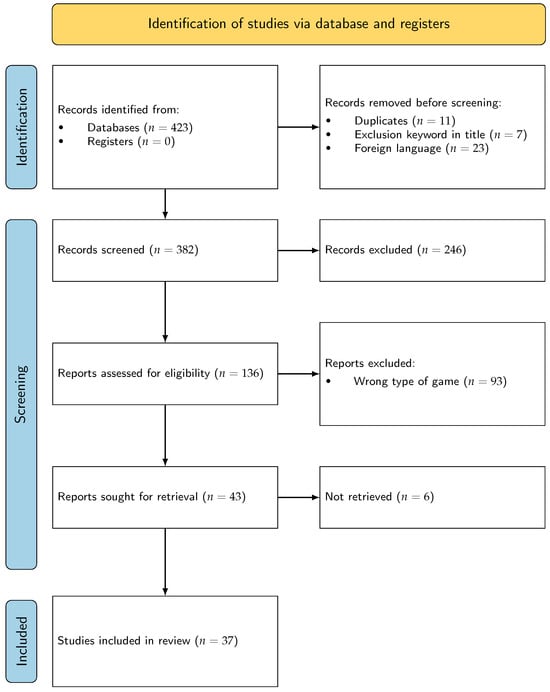
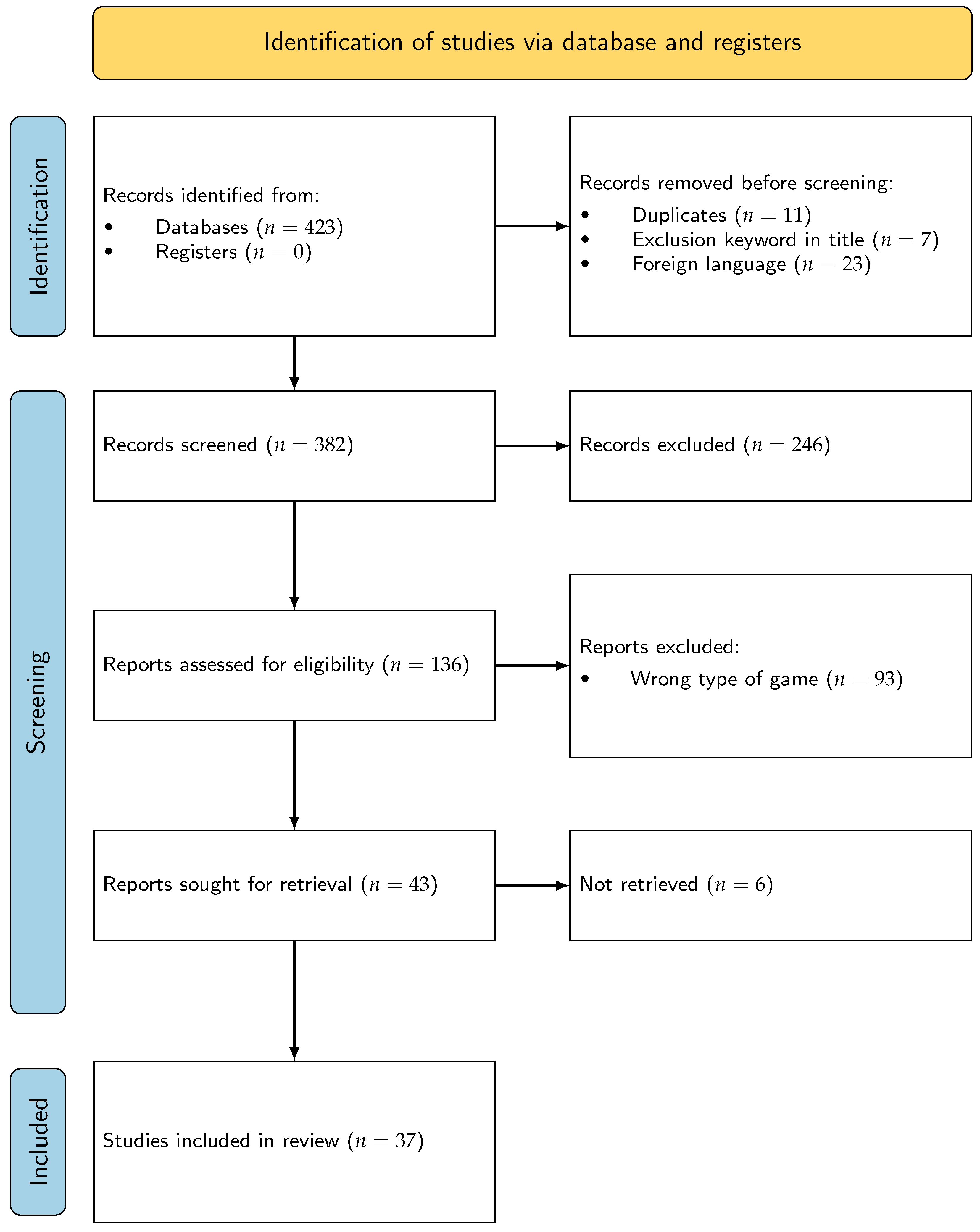
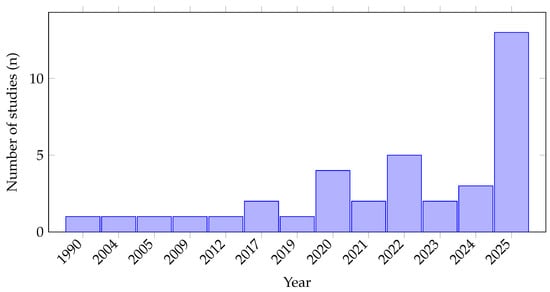
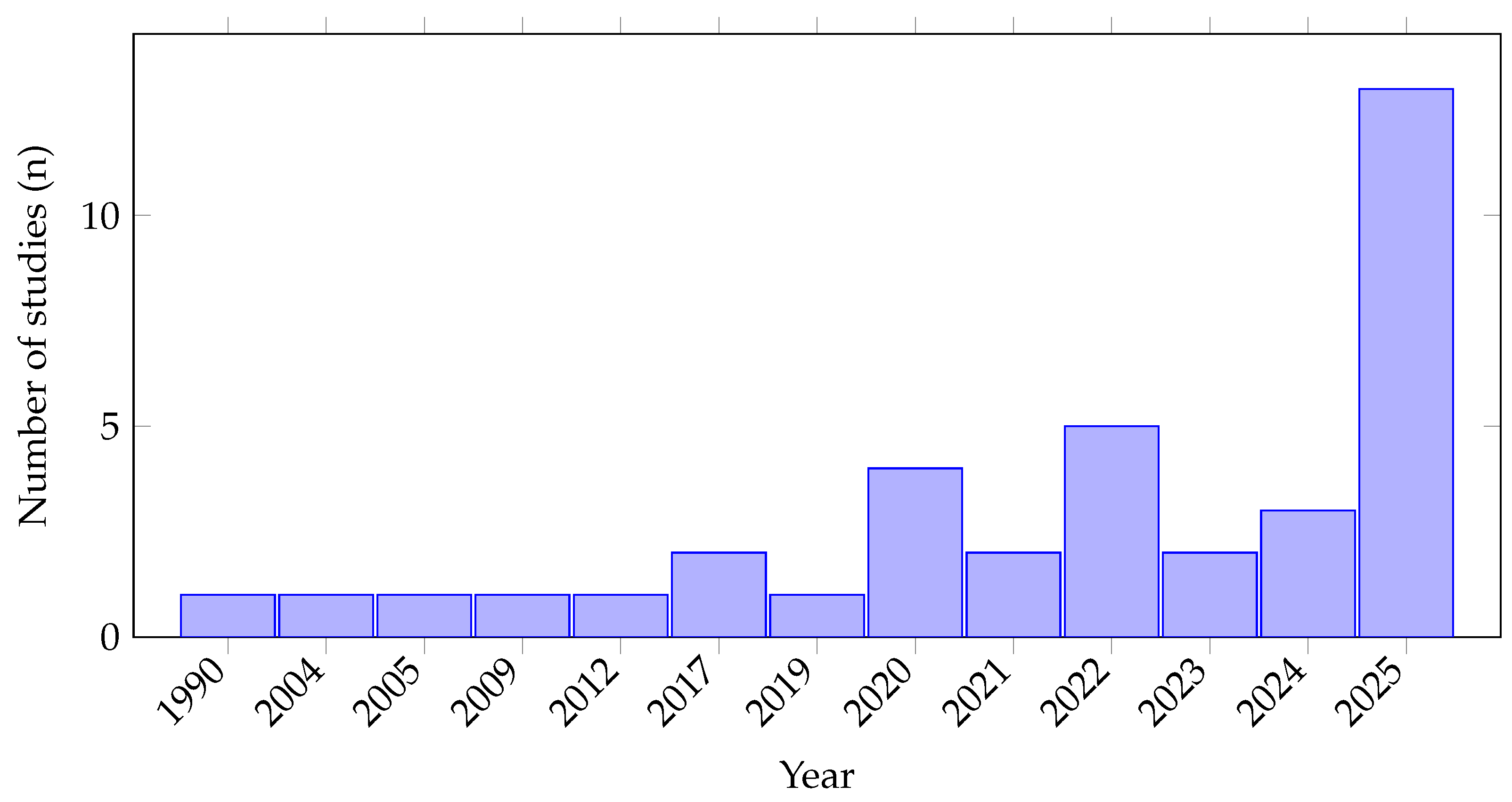

Disclaimer/Publisher’s Note: The statements, opinions and data contained in all publications are solely those of the individual author(s) and contributor(s) and not of MDPI and/or the editor(s). MDPI and/or the editor(s) disclaim responsibility for any injury to people or property resulting from any ideas, methods, instructions or products referred to in the content. |
© 2026 by the authors. Licensee MDPI, Basel, Switzerland. This article is an open access article distributed under the terms and conditions of the Creative Commons Attribution (CC BY) license.