Article

Pre–Post Changes Associated with Virtual Reality-Based Mindfulness in Reducing Work-Related Stress Among Corporate Employees


by
Laria-Maria Trusculescu
1,
Andreea Mihaela Kiș
1,*,
Ramona Amina Popovici
1,*,
Andreea Salcudean
2,
Dana Emanuela Pititc
1,
Adina Feher
1,
Alexandra Enache
3 and
Iustin Olariu
4
1
Department of Management and Communication in Dental Medicine, Department 1, Faculty of Dental Medicine, Victor Babes University of Medicine and Pharmacy of Timisoara, Eftimie Murgu Sq., 300041 Timișoara, Romania
2
Department of Bioethics, Deontology and Medical Communication, George Emil Palade University of Medicine, Pharmacy, Science, and Technology of Targu Mures, 540142 Targu Mures, Romania
3
Discipline of Legal Medicine, Bioethics, Deontology and Medical Law, Faculty of Medicine, Victor Babeș University of Medicine and Pharmacy of Timisoara, Eftimie Murgu Sq., 300041 Timișoara, Romania
4
Department of Dentistry, Faculty of Dental Medicine, “Vasile Goldis” Western University of Arad, 310414 Arad, Romania
*
Authors to whom correspondence should be addressed.
Digital 2026, 6(2), 34; https://doi.org/10.3390/digital6020034
Submission received: 26 February 2026 / Revised: 17 April 2026 / Accepted: 20 April 2026 / Published: 25 April 2026

Abstract

Work-related stress is a significant concern among employees in multinational corporations, where workloads and performance expectations are high. This study examines pre–post changes associated with a Virtual Reality (VR)-based mindfulness intervention designed to support stress management after a workday. A sample of 134 corporate employees from multinational companies reporting moderate to high stress participated in the study. Physiological indicators, including heart rate and skin conductance, were recorded before and after the VR session, alongside self-reported measures of perceived stress and relaxation. The intervention consisted of immersive VR environments integrating guided breathing, calming narration, and natural landscapes. Results indicated significant reductions in physiological stress markers following the intervention compared to baseline levels, accompanied by improvements in self-reported relaxation, reduced tension, and enhanced mental clarity. These findings suggest that VR-based mindfulness is associated with short-term reductions in both physiological and perceived stress. VR-based mindfulness may represent a complementary and non-invasive approach to stress management in individuals exposed to high occupational demands. Future research using controlled designs and longitudinal approaches is needed to evaluate the sustained effects of repeated VR sessions and their integration into corporate wellness programs.

1. Introduction

Work-related stress has become a major public health and organizational concern, particularly among employees working in multinational corporations where performance demands, time pressure, and cognitive workloads are consistently high [1]. Prolonged exposure to occupational stress is associated with a wide range of negative outcomes, including cardiovascular dysregulation, burnout, reduced productivity, impaired mental health, and decreased overall quality of life [1,2]. Meta-analytic evidence further confirms that workplace stressors are significantly associated with reduced well-being, increased risk of mental health disorders, and adverse physical health outcomes among employees [3]. In this study, work-related stress is conceptualized as a multidimensional construct encompassing both subjective perceived stress and physiological activation (e.g., autonomic arousal), reflecting the individual’s psychological and biological responses to occupational demands.
Beyond individual health consequences, work-related stress also generates substantial organizational costs, including increased absenteeism, presenteeism, employee turnover, and reduced work engagement [1,2]. Chronic stress has been linked to impaired decision making, decreased creativity, and diminished interpersonal functioning, all of which are critical competencies in corporate environments [1]. To contextualize the mechanisms underlying occupational stress, established theoretical frameworks such as the Job Demands-Resources Model and the Demand-Control-Support Model provide useful explanatory perspectives. Although these models are not directly tested in the present study, they offer a conceptual basis for understanding how high job demands and limited recovery opportunities contribute to stress, thereby supporting the rationale for interventions aimed at facilitating psychological detachment and recovery. The Job Demands-Resources Model posits that stress arises when job demands (e.g., workload, time pressure, cognitive strain) exceed available resources (e.g., autonomy, recovery opportunities), leading to strain and burnout [4]. Similarly, the Demand-Control-Support Model emphasizes the interaction between high demands, low decision latitude, and insufficient social support as key predictors of occupational stress [5]. In multinational corporate settings, employees are frequently exposed to sustained high demands, highlighting the importance of interventions that support recovery, attentional regulation, and psychological detachment from work-related stressors.
Mindfulness-based interventions have gained substantial attention as evidence-based approaches for stress reduction and emotional regulation [6,7,8]. Rooted in the cultivation of present-moment awareness and non-judgmental attention, mindfulness practices have been shown to reduce perceived stress, improve emotional resilience, and positively influence physiological stress markers such as heart rate variability and skin conductance [6,7,8]. In occupational settings, mindfulness programs have demonstrated beneficial effects on employee well-being, job satisfaction, and cognitive performance [6]. However, traditional mindfulness practices may present challenges related to engagement, adherence, and sustained attentional focus, particularly among individuals experiencing high cognitive load or mental fatigue after demanding workdays [6,8]. Employees reporting elevated stress levels often describe difficulties such as mind wandering, impatience, or frustration during practice, suggesting the need for adaptive delivery formats that can support attentional anchoring while reducing cognitive effort [9,10].
In this context, virtual reality (VR) technology has emerged as a promising tool for enhancing stress management interventions by providing immersive, multisensory environments that capture attention and reduce external distractions [11,12]. VR-based interventions have been explored in areas such as anxiety disorders, pain management, and relaxation training, with growing evidence supporting their effectiveness in modulating both psychological and physiological stress responses [12,13,14]. By simulating calming environments and delivering guided relaxation or breathing exercises, VR may enhance the experiential depth of mindfulness practices and facilitate faster psychological detachment from work-related demands. This immersive quality may be particularly beneficial for corporate employees who find it difficult to disengage from cognitively demanding tasks at the end of the workday [11,15].
Despite these advances, the integration of VR with mindfulness in occupational stress management remains an emerging field. While recent systematic reviews [16] highlight the potential of VR-assisted relaxation, much of the existing research has focused on clinical populations or controlled laboratory settings [17,18]. Emerging studies have begun to explore the feasibility of VR-based interventions in workplace settings, suggesting potential benefits for relaxation, physical activity, and employee well-being during working hours [19]. There remains limited evidence regarding short, post-work interventions that are feasible in real-world corporate environments and capable of producing immediate stress reduction effects. Furthermore, relatively few studies have integrated both physiological and subjective measures of stress within VR-based mindfulness interventions, limiting the understanding of their multimodal impact [10,14,20,21,22].
Against this background, the present study aims to evaluate the effectiveness of VR-based mindfulness in reducing work-related stress among corporate employees from multinational organizations. Specifically, the study examines changes in both physiological stress indicators and subjective perceptions of stress following a VR-based mindfulness session conducted after a workday. It is expected that immersive VR mindfulness experiences will be associated with measurable reductions in physiological arousal and perceived stress levels following the session. By addressing current gaps in the literature, this study provides preliminary evidence on the potential of VR-based mindfulness as a short-term, post-work intervention in corporate settings. These findings may inform future research employing controlled designs and longitudinal approaches to better understand the sustained effects of repeated VR-based mindfulness sessions on stress regulation. Such approaches may ultimately contribute to the development of scalable and accessible workplace interventions aimed at supporting employee well-being over time.

2. Materials and Methods

2.1. Study Design and Procedural Framework

The present study employed a within-subjects pre-post intervention design to evaluate the effectiveness of VR-based mindfulness in reducing physiological markers of work-related stress among corporate employees.
The primary objective was to determine whether a single immersive VR-based mindfulness session delivered after a regular workday produces measurable reductions in autonomic stress responses, as indexed by electrodermal activity EDA and blood volume pulse BVP.
Each participant served as his or her own control: physiological measurements were obtained before and immediately after the VR session under identical environmental conditions. This approach minimized inter-individual variability in autonomic responsivity and enhanced internal validity. The study focused on short-term, immediate physiological effects rather than long-term outcomes in order to isolate the acute impact of immersive mindfulness exposure following occupational stress. The use of a single-session intervention allows for the assessment of immediate effects but limits conclusions regarding long-term effectiveness or sustained benefits in workplace settings.
The VR intervention was delivered using a Limbix VR headset (Limbix company based in Palo Alto, United States), a virtual reality system specifically designed to support mental health treatments, exposure therapy and relaxation techniques for managing anxiety, depression, and PTSD. The content consisted of the Limbix VR Kit provided application, incorporating immersive 360° natural landscapes combined with guided mindfulness audio. The software included pre-recorded sessions focused on breathing regulation and relaxation and was not interactive.
The choice of a within-subjects pre-post design without a control group was guided by the exploratory nature of the study, which aimed to examine immediate physiological changes associated with a single VR-based mindfulness session in a real-world post-work context. This design allowed for the control of inter-individual variability in autonomic responses and provided an initial assessment of short-term effects under ecologically valid conditions. However, it does not permit causal inference, and the findings should be interpreted as pre–post changes associated with the intervention rather than definitive evidence of effectiveness. Future studies employing randomized controlled designs and comparison conditions (e.g., passive rest, conventional mindfulness) are needed to establish causal relationships.

2.2. Study Setting and Session Procedure

All sessions were conducted individually in a quiet indoor room with controlled lighting and temperature and minimal external disturbances. Sessions were scheduled after participants completed their regular workday in order to ensure ecological validity in relation to occupational stress exposure.
The procedure followed a standardized sequence to ensure reproducibility:
  • Step 1: Arrival and preparation
1.
Upon arrival, participants reviewed the study procedures and confirmed eligibility. Informed consent had been obtained prior to data collection. Participants were seated comfortably in an upright but relaxed position.
  • Step 2: Pre-intervention baseline recording
2.
Physiological monitoring equipment, a biometric bracelet (E4 wristband model), was placed on the wrist. Participants then underwent a 5 min baseline resting phase during which they remained seated quietly. They were instructed to avoid speaking, avoid unnecessary movement, and refrain from using digital devices. No guided relaxation instructions were provided during this phase. EDA and BVP were recorded continuously throughout this baseline period.
  • Step 3: VR Familiarization
3.
Participants were fitted with the VR headset and received brief standardized instructions regarding the session. They were instructed to remain seated, minimize head and hand movements, and focus on the guided content. They were also informed that they could request discontinuation of the session at any time if discomfort occurred. No practice session was conducted in order to preserve natural baseline stress levels.
  • Step 4: VR-based mindfulness intervention
4.
The VR-based mindfulness session lasted approximately 25 to 30 min and followed a predefined structure. The immersive content included natural landscapes such as forests, beaches, and mountains, combined with calm auditory guidance. The session incorporated guided breathing exercises and verbal instructions encouraging diaphragmatic breathing, body awareness, and present moment focus. Participants were instructed to follow the breathing rhythm and remain passively engaged with the environment without performing cognitive tasks. Physiological signals were monitored continuously during the entire VR exposure to ensure safety.
  • Step 5: Post-intervention assessment
5.
Immediately after completion of the VR session, the headset was removed, and participants remained seated. A short stabilization period of approximately 2 to 3 min was observed. Post-intervention physiological measurements were then recorded under the same conditions as the baseline assessment. This procedure ensured that pre-post measurements were comparable and attributable to the VR-based mindfulness exposure. Participants were also asked about possible discomfort, including dizziness or nausea. No adverse events were reported. The sessions concluded with a short debriefing.
6.
This structured procedural sequence ensured uniform exposure to the intervention and minimized potential confounding influences.

2.3. Physiological Measures

Physiological responses to work-related stress and relaxation were assessed using objective psychophysiological indicators of autonomic nervous system activity, specifically electrodermal activity (EDA) and blood volume pulse (BVP). Together, EDA and BVP provided complementary indices of stress-related autonomic activity [23].
  • Electrodermal Activity (EDA): reflects changes in skin conductance resulting from sweat gland activity, which is primarily regulated by the sympathetic branch of the autonomic nervous system. Increases in EDA are associated with heightened emotional arousal and stress, whereas decreases indicate reduced sympathetic activation and a shift toward relaxation. In this study, EDA served as a direct physiological marker of acute stress response and was used to quantify changes in sympathetic nervous system activity before and after the VR-based mindfulness session.
  • Blood Volume Pulse (BVP): was used to assess cardiovascular dynamics and autonomic regulation. BVP reflects changes in peripheral blood flow and pulse amplitude and is influenced by both sympathetic and parasympathetic nervous system activity. Variations in BVP are interpreted in relation to cardiovascular arousal and autonomic balance. In the present study, changes in BVP were used to evaluate physiological relaxation and modulation of autonomic activity following exposure to the immersive VR-based mindfulness environment. Physiological data were recorded at baseline and immediately after the intervention. Continuous monitoring during the VR session ensured stable signal acquisition and allowed identification of sustained physiological modulation rather than transient fluctuations.
The E4 wristband (Empatica Inc., Cambridge, MA, USA) has been validated in prior research as a reliable device for measuring EDA and BVP in ambulatory and experimental settings, demonstrating good agreement with laboratory-grade equipment in capturing autonomic signals. EDA and BVP were selected due to their established validity as objective indicators of autonomic nervous system activity in stress research. EDA is widely recognized as a sensitive marker of sympathetic arousal, while BVP-derived measures reflect cardiovascular dynamics associated with both sympathetic and parasympathetic regulation. Together, these measures provide complementary indices of physiological stress and relaxation and have been extensively used in psychophysiological studies assessing acute stress responses and recovery processes.

2.4. Participants and Ethical Considerations

Participants were recruited using convenience sampling through collaboration with multinational companies and professional networks. Invitations were distributed via internal communication channels (e.g., email announcements and workplace communication platforms). A total of 134 participants volunteered, met the inclusion criteria and as such were included in the final analysis, comprising 61 males and 73 females. Participants were adults employed full-time in multinational corporate environments and reported moderate to high levels of work-related stress prior to participation. Age ranged from 23 to 63 years with a mean age of 41.84 years and a standard deviation of 10.57.
All participants completed both pre- and post-intervention physiological assessments. No cases were excluded due to incomplete data or inadequate signal quality.
Participants were eligible if they met the following criteria:
  • Age 18 years or older.
  • Full-time employment in a corporate setting.
  • Self-reported moderate or high work-related stress (assessed through a screening question in which participants rated their current work-related stress on a Likert scale 1–5, with inclusion restricted to those reporting values in the upper range).
  • Completion of both physiological assessments.
Participants were excluded if they reported:
  • Cardiovascular conditions that could interfere with autonomic measurements.
  • Severe psychiatric disorders.
  • Known susceptibility to motion sickness.
  • Inability to remain seated during data collection.
The study was conducted in accordance with the Declaration of Helsinki and adhered to standards for research involving human participants. All participants received detailed information regarding study objectives, procedures, potential risks, and benefits. Informed consent was obtained prior to participation. Participation was voluntary and participants could withdraw at any time without consequences. All data were anonymized and stored securely. No personally identifiable information was included in the analysis or reporting: information regarding specific organizational variables (e.g., industry sector, job role, work modality) was not systematically collected, which may limit the generalizability of the findings across different occupational contexts.

2.5. Limitations

The present study has several limitations that should be considered when interpreting the findings:
  • The use of a within-subjects pre-post design without a control group limits the ability to draw causal inferences. Although the observed reductions in physiological stress markers are associated with the VR-based mindfulness intervention, alternative explanations such as the passage of time, passive rest, or contextual factors cannot be fully excluded. Future research employing randomized controlled designs and comparison conditions (e.g., passive relaxation, conventional mindfulness interventions, or waitlist controls) is necessary to establish causal relationships.
  • The intervention consisted of a single VR-based mindfulness session, which allows for the assessment of immediate, short-term effects but does not provide information regarding the sustainability or long-term impact of repeated exposure. As such, the findings should be interpreted as preliminary evidence of acute physiological modulation rather than long-term effectiveness. Longitudinal studies are required to evaluate the persistence of these effects and their relevance for ongoing workplace stress management programs.
  • The study focused exclusively on physiological indicators of stress (electrodermal activity and blood volume pulse) and did not include standardized self-report measures of perceived stress or psychological well-being. While objective measures provide valuable insights into autonomic responses, the absence of validated subjective instruments (e.g., perceived stress scales) limits the ability to directly relate physiological changes to participants’ subjective experience. Future studies should adopt a multimodal assessment approach combining physiological and psychological measures.
  • Participants were recruited using a convenience sampling approach, which may limit the generalizability of the findings. Additionally, detailed organizational variables such as industry sector, job role, work modality (e.g., remote or on-site), and hierarchical level were not systematically collected. These factors may influence stress levels and responsiveness to interventions and should be considered in future research.
  • Although the VR intervention was standardized, the study did not directly compare VR-based mindfulness with other established stress management approaches. Therefore, it remains unclear whether the observed effects are specific to the immersive VR component, the mindfulness techniques, or their combination. Comparative studies are needed to disentangle these effects and to determine the added value of VR in occupational stress reduction.
  • In addition, several methodological factors may have influenced the observed physiological responses:
6.
The use of convenience sampling may introduce selection bias, as participants who voluntarily agreed to take part in a VR-based mindfulness session may be more receptive to such interventions compared to the general population of corporate employees. Similarly, the potential influence of social desirability cannot be excluded, as participants may have been inclined to respond positively to the intervention context.
7.
The study did not include measures assessing the quality of the VR experience, such as sense of presence, immersion, or user satisfaction, which are known to moderate the effectiveness of VR-based interventions.
8.
A Hawthorne effect may have occurred, as participants’ awareness of being monitored in a research setting, including physiological recording, could itself have contributed to changes in autonomic activity independent of the intervention.
9.
Pre-session factors such as recent physical activity, caffeine or alcohol consumption, and sleep quality were not systematically controlled or assessed. The absence of a standardized washout period may therefore have introduced variability in physiological baseline measures.
  • Future research should address these factors through more controlled protocols and the inclusion of additional assessment measures.

2.6. Data Preprocessing and Quality Control

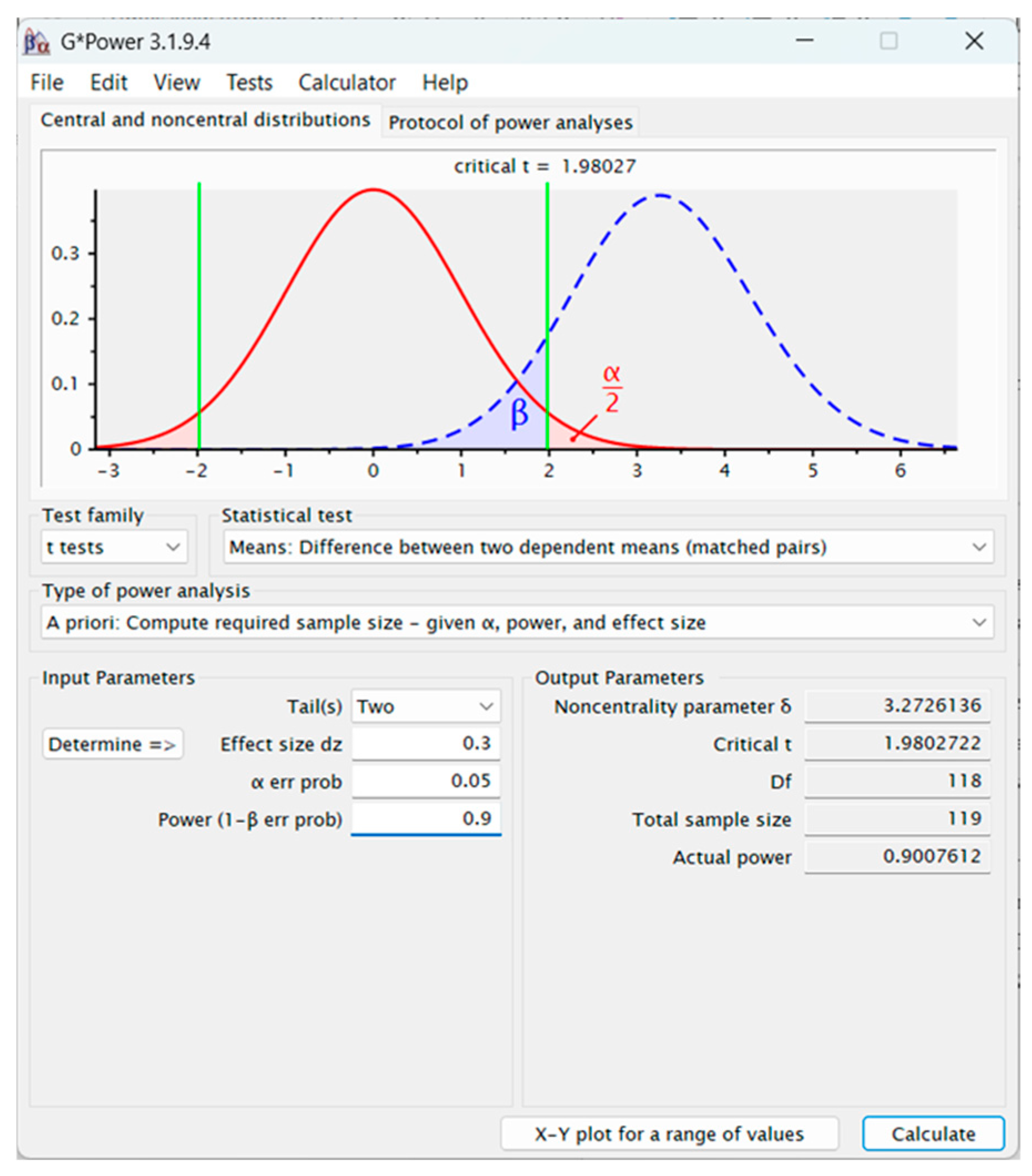
A priori power analysis was conducted using G*Power version 3.1.9.4 [24] to determine the required sample size for detecting pre–post changes in physiological stress markers using a within-subjects design (Figure 1). Assuming a small to medium effect size (Cohen’s dz = 0.30), a two-tailed significance level of α = 0.05, and a desired statistical power of 0.90, the minimum required sample size was estimated at N = 119 participants. The final sample of 134 participants exceeded this requirement, ensuring adequate statistical power to detect meaningful pre-post differences.
Statistical analyses were performed using Jamovi version 2.6.44. Descriptive statistics were calculated for electrodermal activity (EDA) and blood volume pulse (BVP) at pre- and post-intervention. Change scores were computed by subtracting pre-intervention values from post-intervention values for each outcome variable. The normality of change scores was assessed using the Shapiro-Wilk test. When the assumption of normality was satisfied, paired samples t-tests were applied to compare pre- and post-intervention measurements. In cases where normality was violated, the Wilcoxon signed-rank tests were used as non-parametric alternatives. Effect sizes were reported as Cohen’s dz for parametric tests and r for non-parametric tests. Statistical significance was set at p < 0.05.

3. Results

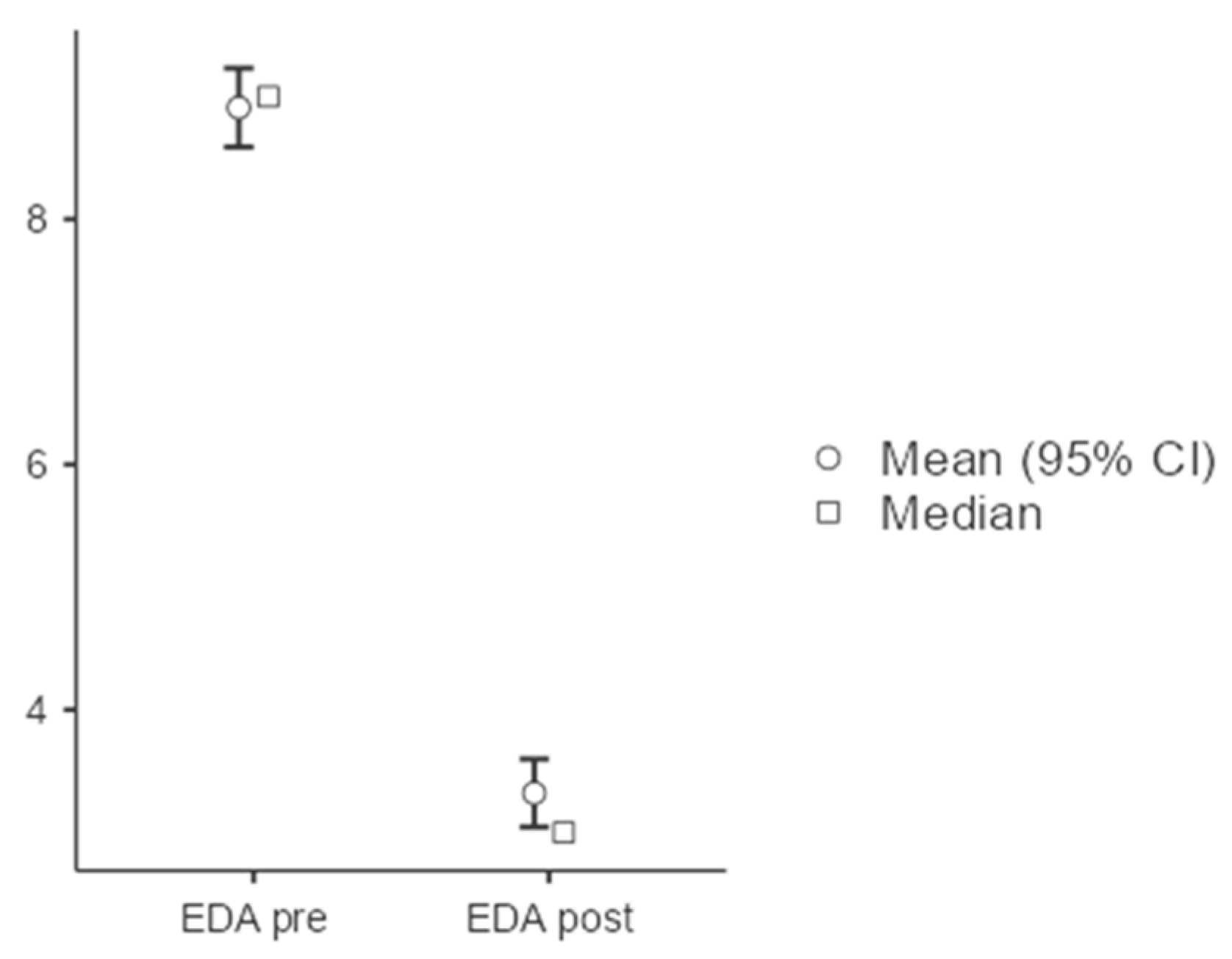
Descriptive statistics were calculated for electrodermal activity (EDA) and blood volume pulse (BVP) at pre- and post-intervention time points for all participants (N = 134). At baseline, mean EDA was 8.91 (SD = 1.90), with values ranging from 6 to 20. Following the VR-based mindfulness intervention, mean EDA decreased to 3.32 (SD = 1.64), with observed values ranging from 1 to 9, indicating a substantial reduction in sympathetic arousal.
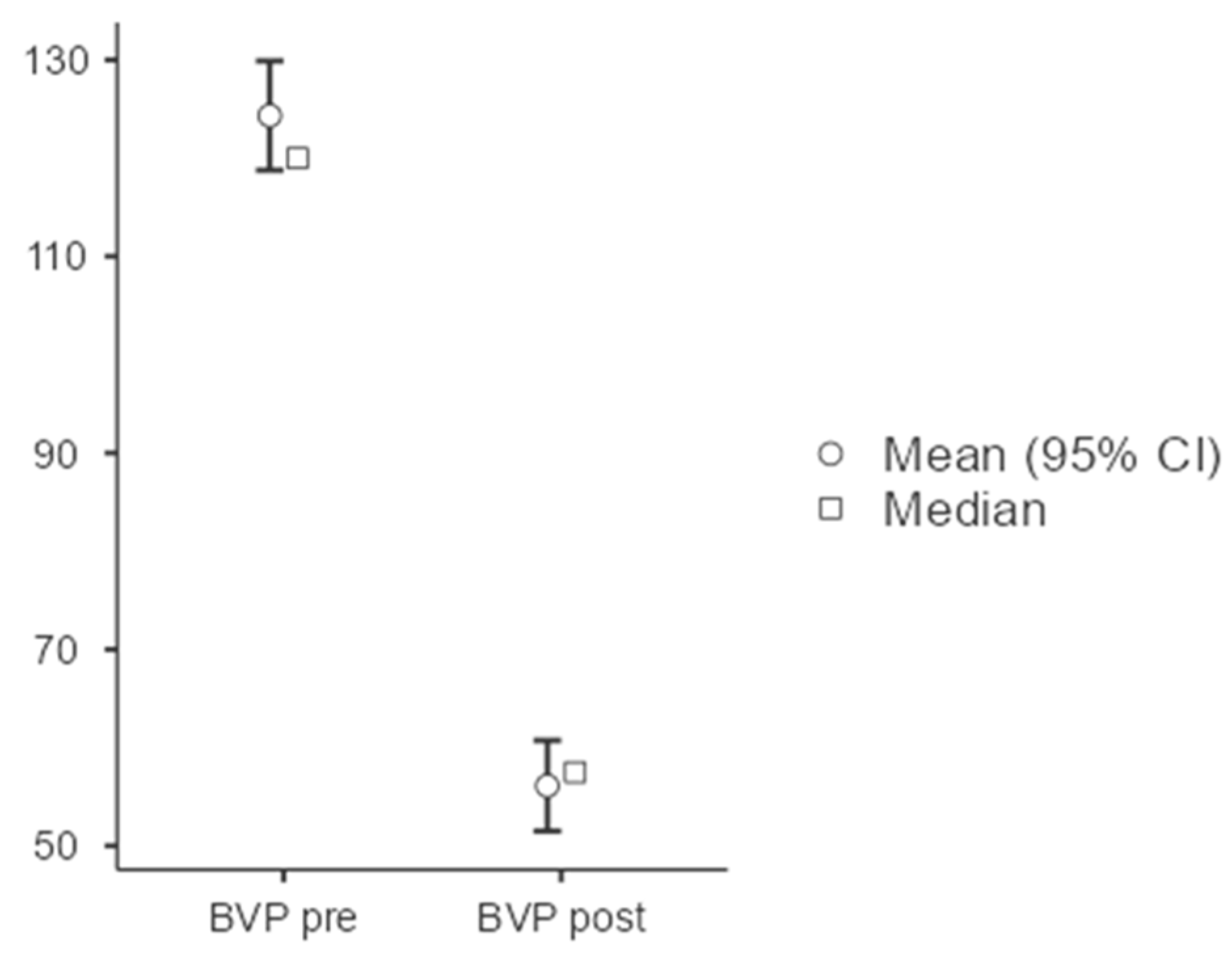
For blood volume pulse, baseline measurements showed a mean value of 124.0 (SD = 32.9), with values ranging from 70 to 210. Post-intervention BVP values decreased to a mean of 56.1 (SD = 27.3), with a range between 10 and 120. These descriptive trends suggest notable physiological changes following the intervention, consistent with reduced stress and enhanced autonomic regulation. A summary of descriptive statistics for all physiological measures is presented in Table 1.
Prior to inferential analysis, the assumption of normality was examined in order to determine the appropriateness of parametric statistical testing. Normality was assessed using the Shapiro-Wilk test for electrodermal activity (EDA) and blood volume pulse (BVP) measurements obtained at pre- and post-intervention time points (Table 2).
Results indicated significant deviations from normality for both physiological variables at each measurement occasion (p < 0.001). Visual inspection of histograms further supported the presence of skewed distributions, which are commonly observed in psychophysiological data. Given the violation of normality assumptions, non-parametric statistical procedures were considered more appropriate for evaluating pre-post differences in EDA and BVP. Consequently, Wilcoxon signed-rank tests were employed for subsequent analyses.
Pre-post differences in electrodermal activity (EDA) were examined using the Wilcoxon signed-rank test, as the assumption of normality was violated (Table 3). The analysis revealed a statistically significant reduction in EDA following the VR-based mindfulness intervention (W = 9045, p < 0.001).
Descriptive results indicated that mean EDA decreased from 8.91 (SD = 1.90) at baseline to 3.32 (SD = 1.64) post-intervention, reflecting a substantial reduction in sympathetic nervous system activation (Figure 2). The magnitude of the observed change was large, indicating a robust physiological response to the intervention. These findings provide objective evidence that immersive mindfulness delivered through virtual reality can effectively reduce physiological markers of work-related stress. The plot shows a clear decrease in electrodermal activity (EDA) from pre- to post-intervention. Both the mean values with 95% confidence intervals and the median values are substantially lower after the intervention compared to baseline. The limited overlap between confidence intervals indicates a consistent reduction in EDA across participants.
Pre-post differences in blood volume pulse (BVP) were also examined using the Wilcoxon signed-rank test. The analysis revealed a statistically significant change in BVP values following the VR-based mindfulness intervention (W = 9045, p < 0.001) (Table 3).
Descriptive statistics indicated that mean BVP values decreased from 124.0 (SD = 32.9) at baseline to 56.1 (SD = 27.3) post-intervention. This marked shift suggests a substantial modification in cardiovascular dynamics following the intervention. The observed change is consistent with improved autonomic regulation and a physiological state associated with relaxation after exposure to the VR mindfulness environment. The magnitude of the effect was large, indicating a robust and consistent response across participants (Figure 3).
The plot illustrates blood volume pulse (BVP) values before and after the intervention, displaying mean values with 95% confidence intervals and median values. A clear reduction in BVP is observed from the pre-intervention to the post-intervention measurement. Both the mean and median values are notably lower after the intervention, with minimal overlap between the confidence intervals, indicating a consistent change across participants.
The magnitude of the pre–post changes observed in electrodermal activity (EDA) and blood volume pulse (BVP) indicates a large and consistent intervention effect. The analyses revealed statistically significant differences for both physiological measures, supported by substantial shifts in central tendency and distribution across participants.
From a clinical and practical perspective, the pronounced reduction in EDA reflects a meaningful decrease in sympathetic nervous system activation, a core physiological component of the stress response. Similarly, the marked change in BVP suggests improved autonomic regulation following the VR-based mindfulness intervention. The consistency of these effects across a relatively large sample reinforces their relevance beyond statistical significance alone. Taken together, the observed effect magnitudes suggest that the VR mindfulness intervention produced physiologically meaningful changes associated with reduced stress and enhanced relaxation. These findings support the potential clinical utility of immersive VR-based mindfulness applications as effective tools for short-term stress reduction in occupational settings.

4. Discussion

The present study examined pre–post changes associated with a virtual reality (VR)-based mindfulness intervention in reducing physiological indicators of work-related stress among corporate employees. The results indicated significant post-intervention reductions in electrodermal activity (EDA) and blood volume pulse (BVP), suggesting decreased sympathetic nervous system activation and improved autonomic regulation. These findings are consistent with the study’s working hypothesis and align with existing evidence indicating that mindfulness-based and immersive interventions are associated with reductions in physiological stress responses in non-clinical adult populations [6,7,8]. Moreover, recent investigations into VR-supported mindfulness practices further reinforce the potential of immersive technologies to enhance emotional regulation and stress-related outcomes across both clinical and non-clinical populations [25].
Work-related stress remains a major occupational health concern, contributing to burnout, presenteeism, and increased turnover intention in corporate environments [1,2]. High cognitive demands, time pressure, and continuous digital engagement place employees at elevated risk for chronic stress, highlighting the need for efficient and accessible stress management strategies. The present findings suggest that VR-based mindfulness may represent a brief, non-invasive approach associated with immediate physiological benefits following a workday. Similar technology-assisted, non-pharmacological interventions have been increasingly explored in recent years, reflecting a broader shift toward preventive and scalable approaches in occupational and mental health domains. For instance, emerging evidence from workplace settings suggests that VR-mediated mindfulness interventions may also contribute to behavioral improvements and enhanced safety-related outcomes among employees [26].
The observed reduction in EDA, a well-established marker of sympathetic arousal, is consistent with prior research indicating that mindfulness-based interventions are associated with attenuated autonomic activation in workplace and non-clinical settings [6,7,8]. Meta-analytic evidence has shown that mindfulness interventions implemented in non-clinical populations are associated with improvements in perceived stress, emotional regulation, and overall well-being [7,8]. The present study extends this body of literature by suggesting that comparable physiological responses may also be observed following a single immersive VR-based session, without requiring prolonged or repeated training. This is in line with recent studies highlighting the capacity of VR-enhanced mindfulness to support skill acquisition and experiential engagement even within brief intervention formats [25,27].
Similarly, the significant changes in BVP observed following the intervention suggest alterations in cardiovascular and autonomic functioning consistent with a relaxation response. These findings are in line with previous research reporting physiological changes associated with VR-based relaxation interventions [13,14,15,28]. Exploratory and experimental studies have suggested that immersive VR environments may facilitate rapid stress recovery by enhancing attentional engagement and reducing external distractions [11,15]. However, the magnitude of the observed change in BVP should be interpreted with caution, as peripheral blood flow measures may be sensitive to contextual and physiological factors such as posture, ambient temperature, and individual variability. Furthermore, the absence of normative reference comparisons limits the ability to determine the clinical significance of these changes.
Beyond the observed physiological outcomes, the findings may be interpreted through theoretical perspectives linking mindfulness, attentional regulation, and autonomic nervous system functioning. Mindfulness-based practices are theorized to reduce maladaptive cognitive processes such as rumination and anticipatory stress, which are known to sustain sympathetic activation. Immersive VR environments may further support these mechanisms by directing attentional resources toward structured sensory input and guided instructions, thereby limiting exposure to competing cognitive demands. These processes are consistent with theoretical models of attentional control and stress regulation, which suggest that enhanced present-moment awareness and reduced cognitive interference contribute to improved autonomic balance. Evidence from comparative studies further suggests that VR-based mindfulness may facilitate deeper experiential engagement and a stronger sense of presence, potentially supporting more rapid physiological downregulation, an effect also observed in recent applications of VR across diverse populations and functional contexts [27,29,30,31].
The use of VR as a delivery medium for mindfulness may offer practical advantages over traditional approaches. Immersive environments combining visual, auditory, and guided breathing elements may enhance user engagement and reduce barriers associated with sustained attention, particularly among individuals with limited prior experience in mindfulness practices. Previous research has indicated that VR-based interventions may improve acceptability and adherence, which are important factors for implementation in occupational settings [9,10,32]. In addition, broader analyses of VR applications across domains, including healthcare and dentistry, highlight the growing versatility and scalability of immersive interventions in promoting behavioral and psychological outcomes [33]. In this context, VR-based mindfulness may represent a feasible and accessible approach to stress management within corporate environments characterized by high workload and time constraints.
From a practical perspective, the present findings have implications for the design of workplace stress management strategies. Unlike traditional mindfulness programs that often require repeated training and long-term commitment, VR-based interventions may offer a time-efficient alternative that can be integrated into daily routines with minimal disruption. The observed physiological changes suggest that even a single session may be associated with short-term stress reduction, which may be relevant for employees experiencing acute post-work fatigue. However, further research is needed to determine the extent to which these short-term effects translate into sustained improvements in well-being and organizational outcomes. In this regard, understanding broader behavioral and informational contexts, such as how different generations engage with digital technologies and information sources, may also inform the design and dissemination of such interventions [34].
From a methodological standpoint, the integration of objective physiological measures strengthens the contribution of the present study. Recent research highlights the importance of combining psychophysiological indicators, such as EDA and cardiovascular measures, with digital interventions to obtain more precise assessments of stress responses [20,21,22,35]. Advances in wearable sensor technologies have enabled real-time monitoring of autonomic activity in applied settings, including immersive VR environments [20,21,22]. The present study contributes to this emerging field by demonstrating the feasibility of integrating physiological monitoring into VR-based mindfulness interventions conducted in ecologically relevant occupational contexts. Furthermore, interdisciplinary research involving medical and community-based programs underscores the value of integrating technology-driven interventions within broader health and educational ecosystems [36,37].
Compared to previous studies employing similar or more controlled designs, the present study contributes by focusing on immediate post-work physiological responses in a real-world corporate population using a standardized immersive VR mindfulness protocol. The use of continuous physiological monitoring (EDA and BVP) in an ecologically valid setting provides additional insight into short-term autonomic changes associated with VR-based interventions in occupational environments.
Despite these promising findings, the results should be interpreted in light of several methodological limitations. First, the absence of a control group limits causal interpretation, as alternative explanations such as passive rest or contextual influences cannot be fully excluded. Second, the study focused on short-term physiological outcomes, and the sustainability of these effects over time remains unclear. Longitudinal and randomized controlled studies are needed to examine long-term effectiveness and comparative efficacy. Additional limitations related to sampling, measurement scope, and experimental control are discussed in detail in the dedicated Limitations subsection.
Future research should prioritize randomized controlled designs with appropriate comparison conditions and include both physiological and validated self-report measures of stress. Additionally, investigations into optimal session frequency, long-term adherence, and broader organizational outcomes (such as burnout, productivity, and absenteeism) would provide a more comprehensive understanding of the role of VR-based mindfulness in occupational health. Exploring individual differences in responsiveness, including baseline stress levels, technology acceptance, and work characteristics, may further inform the development of tailored interventions.

5. Conclusions

The present study provides preliminary evidence of pre–post physiological changes associated with a virtual reality (VR)-based mindfulness intervention in reducing markers of work-related stress among corporate employees. Significant post-intervention reductions in electrodermal activity and blood volume pulse were observed, suggesting decreased sympathetic nervous system activation and improved autonomic regulation following a single immersive mindfulness session.
By combining mindfulness principles with immersive VR environments, the intervention may offer a time-efficient and accessible approach to stress management, particularly suited to high-demand occupational settings. The integration of objective physiological measures strengthens the assessment of stress-related responses and highlights the potential value of incorporating psychophysiological monitoring into the evaluation of digital and technology-assisted well-being interventions.
Although the study focused on short-term outcomes, the findings suggest that VR-based mindfulness may represent a complementary tool within corporate wellness and integrative health strategies. However, given the absence of a control group and the single-session design, the results should be interpreted with caution. Future research employing randomized controlled designs, longitudinal follow-up, and multimodal assessment approaches is needed to examine the durability of effects, optimal intervention parameters, and broader organizational outcomes.
Overall, immersive VR-based mindfulness may represent a promising direction for the development of scalable and accessible stress reduction interventions in contemporary work environments.

Author Contributions

Conceptualization, L.-M.T. and R.A.P.; methodology, L.-M.T.; software, L.-M.T.; validation, L.-M.T., R.A.P. and A.M.K.; formal analysis, L.-M.T.; investigation, L.-M.T.; resources, L.-M.T., A.S., D.E.P., A.F., A.E., I.O.; data curation, L.-M.T.; writing—original draft preparation, L.-M.T.; writing—review and editing, L.-M.T. and R.A.P.; visualization, L.-M.T.; supervision, R.A.P.; project administration, L.-M.T. and R.A.P. All authors have read and agreed to the published version of the manuscript.

Funding

This research received no external funding.

Institutional Review Board Statement

The study was conducted in accordance with the Declaration of Helsinki and approved by the Institutional Ethics Committee of Universitatea de Medicină și Farmacie “Victor Babeș” Timișoara (No. 80/9 February 2025).

Informed Consent Statement

Informed consent was obtained from all subjects involved in the study.

Data Availability Statement

The original contributions presented in this study are included in the article. Further inquiries can be directed to the corresponding authors.

Acknowledgments

The authors would like to acknowledge Victor Babes University of Medicine and Pharmacy Timisoara for their support in covering the cost of publication for this paper and express their gratitude for their invaluable support and collaboration throughout this study, ensuring its successful completion.

Conflicts of Interest

The authors declare no conflicts of interest.

Abbreviations

The following abbreviations are used in this manuscript:
VRVirtual Reality
EDAElectrodermal Activity
BVPBlood Volume Pulse

References

  1. Üngüren, E.; Onur, N.; Demirel, H.; Tekin, Ö.A. The Effects of Job Stress on Burnout and Turnover Intention: The Moderating Effects of Job Security and Financial Dependency. Behav. Sci. 2024, 14, 322. [Google Scholar] [CrossRef]
  2. Chandrakumar, D.; Arumugam, V.; Vasudevan, A. Exploring presenteeism trends: A comprehensive bibliometric and content analysis. Front. Psychol. 2024, 15, 1352602. [Google Scholar] [CrossRef]
  3. Gerhardt, C.; Semmer, N.K.; Sauter, S.; Walker, A.; de Wijn, N.; Kälin, W.; Kottwitz, M.U.; Kersten, B.; Ulrich, B.; Elfering, A. How are social stressors at work related to well-being and health? A systematic review and meta-analysis. BMC Public Health 2021, 21, 890. [Google Scholar] [CrossRef]
  4. Demerouti, E.; Bakker, A.B.; Nachreiner, F.; Schaufeli, W.B. The job demands-resources model of burnout. J. Appl. Psychol. 2001, 86, 499–512. [Google Scholar] [CrossRef] [PubMed]
  5. Portoghese, I.; Galletta, M.; Leiter, M.P.; Finco, G.; d’Aloja, E.; Campagna, M. Job Demand-Control-Support Latent Profiles and Their Relationships with Interpersonal Stressors, Job Burnout, and Intrinsic Work Motivation. Int. J. Environ. Res. Public Health 2020, 17, 9430. [Google Scholar] [CrossRef] [PubMed]
  6. Michaelsen, M.M.; Graser, J.; Onescheit, M.; Tuma, M.P.; Werdecker, L.; Pieper, D.; Esch, T. Mindfulness based and Mindfulness-Informed Interventions at the Workplace: A Systematic Review and Meta-Regression Analysis of RCTs. Mindfulness 2023, 14, 1271–1304. [Google Scholar] [CrossRef]
  7. Galante, J.; Friedrich, C.; Dawson, A.F.; Modrego-Alarcón, M.; Gebbing, P.; Delgado-Suárez, I.; Gupta, R.; Dean, L.; Dalgleish, T.; White, I.R.; et al. Mindfulness based programmes for mental health promotion in adults in nonclinical settings: A systematic review and meta-analysis of randomised controlled trials. PLoS Med. 2021, 18, e1003481. [Google Scholar] [CrossRef] [PubMed]
  8. Galante, J.; Friedrich, C.; Dalgleish, T.; Jones, P.B.; White, I.R.; Collaboration of Mindfulness Trials (CoMinT). Systematic review and individual participant data meta-analysis of randomized controlled trials assessing mindfulness-based programs for mental health promotion. Nat. Ment. Health 2023, 1, 462–476. [Google Scholar] [CrossRef]
  9. Failla, C.; Marino, F.; Bernardelli, L.; Gaggioli, A.; Doria, G.; Chilà, P.; Minutoli, R.; Mangano, R.; Torrisi, R.; Tartarisco, G.; et al. Mediating Mindfulness based Interventions with Virtual Reality in Non-Clinical Populations: The State-of-the-Art. Healthcare 2022, 10, 1220. [Google Scholar] [CrossRef]
  10. Wieczorek, A.; Schrank, F.; Renner, K.H.; Wagner, M. Psychological and physiological health outcomes of virtual reality-based mindfulness interventions: A systematic review and evidence mapping of empirical studies. Digit. Health 2024, 10, 20552076241272604. [Google Scholar] [CrossRef]
  11. Naylor, M.; Ridout, B.; Campbell, A. A Scoping Review Identifying the Need for Quality Research on the Use of Virtual Reality in Workplace Settings for Stress Management. Cyberpsychol. Behav. Soc. Netw. 2020, 23, 506–518. [Google Scholar] [CrossRef]
  12. Xu, J.; Khanotia, A.; Juni, S.; Ku, J.; Sami, H.; Lin, V.; Walterson, R.; Payne, E.; Jo, H.; Rahimpoor-Marnani, P. Effectiveness of Virtual Reality-Based Well-Being Interventions for Stress Reduction in Young Adults: Systematic Review. JMIR Ment. Health 2024, 11, e52186. [Google Scholar] [CrossRef]
  13. McGarry, S.; Brown, A.; Gardner, M.; Plowright, C.; Skou, R.; Thompson, C. Immersive virtual reality: An effective strategy for reducing stress in young adults. Br. J. Occup. Ther. 2023, 86, 560–567. [Google Scholar] [CrossRef]
  14. Lotfinia, S.; Yaseri, A.; Jamshidmofid, P.; Nazari, F.; Shahkaram, H.; Yaztappeh, J.S.; Kianimoghadam, A.S. Effect of Relaxation-Based Virtual Reality on Psychological and Physiological Stress of Substance Abusers Under Detoxification: A Randomized Controlled Trial. Brain Behav. 2024, 14, e70084. [Google Scholar] [CrossRef]
  15. Michinov, E.; Dodeler, V.; Adam, H.; Michinov, N. Relaxing at work: Does virtual reality work? An exploratory study among employees in their workplace. Front. Organ. Psychol. 2024, 2, 1441816. [Google Scholar] [CrossRef]
  16. Meshkat, S.; Edalatkhah, M.; Di Luciano, C.; Martin, J.; Kaur, G.; Hee Lee, G.; Park, H.; Torres, A.; Mazalek, A.; Kapralos, B.; et al. Virtual Reality and Stress Management: A Systematic Review. Cureus 2024, 16, e64573. [Google Scholar] [CrossRef] [PubMed]
  17. Seabrook, E.; Kelly, R.; Foley, F.; Theiler, S.; Thomas, N.; Wadley, G.; Nedeljkovic, M. Understanding How Virtual Reality Can Support Mindfulness Practice: Mixed Methods Study. J. Med. Internet Res. 2020, 22, e16106. [Google Scholar] [CrossRef]
  18. Cieślik, B. Mechanisms of Virtual Reality-Based Relaxation in Older Adults: A Scoping Review. J. Clin. Med. 2025, 14, 6126. [Google Scholar] [CrossRef]
  19. Touloudi, E.; Hassandra, M.; Galanis, E.; Goudas, M.; Theodorakis, Y. Applicability of an Immersive Virtual Reality Exercise Training System for Office Workers during Working Hours. Sports 2022, 10, 104. [Google Scholar] [CrossRef] [PubMed]
  20. Guarducci, S.; Jayousi, S.; Caputo, S.; Mucchi, L. Key Fundamentals and Examples of Sensors for Human Health: Wearable, Non-Continuous, and Non-Contact Monitoring Devices. Sensors 2025, 25, 556. [Google Scholar] [CrossRef]
  21. Francia, C.; Donno, L.; Covarrubias Rodriguez, M.; Cascini, G.; Tarabini, M.; Galli, M. Real-Time Monitoring of Physiological and Postural Parameters to Evaluate Human Reactions in Virtual Reality for Safety Training. Sensors 2025, 25, 4400. [Google Scholar] [CrossRef]
  22. Rah, A.; Chen, Y. Virtual Reality as a Stress Measurement Platform: Real-Time Behavioral Analysis with Minimal Hardware. Sensors 2025, 25, 5323. [Google Scholar] [CrossRef]
  23. Trusculescu, L.-M.; Pitic, D.E.; Sălcudean, A.; Popovici, R.A.; Forna, N.; Badoiu, S.C.; Enache, A.; Enasoni, S.; Kiș, A.; Cosoroabă, R.M.; et al. Virtual Reality as a Non-Pharmacological Aid for Reducing Anxiety in Pediatric Dental Procedures. Children 2025, 12, 930. [Google Scholar] [CrossRef]
  24. Faul, F.; Erdfelder, E.; Buchner, A.; Lang, A.G. Statistical Power Analyses Using G*Power 3.1: Tests for Correlation and Regression Analyses. Behav. Res. Methods 2009, 41, 1149–1160. [Google Scholar] [CrossRef]
  25. Blackmore, R.; Giles, C.; Tremain, H.; Kelly, R.; Foley, F.; Fletcher, K.; Nedeljkovic, M.; Wadley, G.; Seabrook, E.; Thomas, N. Examining the Use of Virtual Reality to Support Mindfulness Skills Practice in Mood and Anxiety Disorders: Mixed Methods Study. J. Med. Internet Res. 2024, 26, e45640. [Google Scholar] [CrossRef]
  26. Guzmán, R.; Chávez-Luque, Y.F.; Guzmán, N.; Medina, G.S.; Valdiviezo, C.D.; Santa-Cruz, A. Effectiveness of a mindfulness-based program with virtual reality to increase safe behaviors in workers of a mining company. Front. Psychol. 2025, 16, 1429334. [Google Scholar] [CrossRef] [PubMed]
  27. Puente-Torre, P.; Delgado-Benito, V.; Rodríguez-Cano, S.; Lozano-Álvarez, M. Does Mindfulness Mediated by Virtual Reality Help People with Functional Diversity? Societies 2025, 15, 45. [Google Scholar] [CrossRef]
  28. Faria, S.; Fonseca, S.M.; Marques, A.; Queirós, C. Impact of a Single Virtual Reality Relaxation Session on Mental-Health Outcomes in Frontline Workers on Duty During the COVID-19 Pandemic: A Preliminary Study. Healthcare 2025, 13, 1434. [Google Scholar] [CrossRef]
  29. Jo, M.; Kim, E.; Lee, J. Virtual reality vs. imagery: Comparing approaches in guided meditation. Front. Psychol. 2024, 15, 1472780. [Google Scholar] [CrossRef]
  30. Modrego-Alarcón, M.; López-Del-Hoyo, Y.; Beltrán-Ruiz, M.; García-Campayo, J.; Montero-Marin, J. The potential of virtual reality for enhancing the efficacy and acceptability of mindfulness training in non-clinical adults: A pilot randomised controlled trial. Virtual Real. 2025, 29, 147. [Google Scholar] [CrossRef]
  31. Ma, J.; Li, H.; Liang, C.; Li, S.; Liu, Z.; Qu, C. A brief virtual reality-based mindfulness intervention can improve olfactory perception while reducing depression and anxiety symptoms in university students. Humanit. Soc. Sci. Commun. 2025, 12, 294. [Google Scholar] [CrossRef]
  32. Puente-Torre, P.; Delgado-Benito, V.; Rodríguez-Cano, S.; García-Delgado, M.Á. Virtual Reality as an Interactive Tool for the Implementation of Mindfulness in University Settings: A Systematic Review. Multimodal Technol. Interact. 2024, 8, 89. [Google Scholar] [CrossRef]
  33. Vlad, T.; Trusculescu, L.-M.; Popovici, R.A.; Salcudean, A.; Bodo, C.R.; Csibi, S.; Folescu, R.N.; Olariu, I. The role of virtual reality therapy in dentistry: A bibliometric analysis of current trends and applications. Rom. J. Oral Rehabil. 2024, 16, 705–715. [Google Scholar] [CrossRef]
  34. Trusculescu, L.-M.; Gherhes, V.; Tiru, L.-G. What Is the Main Source of Information for Generations Z, Y, X? A General Fake News Analysis on Different Media Mediums; ToKnowPress: Bangkok, Thailand, 2023. [Google Scholar] [CrossRef]
  35. Chatzaki, C.; Tsiknakis, M. An Overview of Stress Analysis Based on Physiological Signals: Systematic Review of Open Datasets and Current Trends. Sensors 2025, 25, 7108. [Google Scholar] [CrossRef]
  36. Trusculescu, L.-M.; Popovici, R.A.; Enache, A.; Noditi-Cuc, A.R.; Feher, A.; Pitic, D.E.; Enasoni, S.; Corodan-Comiati, D.-M.; Kis, A.M. University Medical Programs with Community Impact: Students’ Perceptions and Motivations Toward Sustainable Volunteering. Societies 2026, 16, 101. [Google Scholar] [CrossRef]
  37. Seni, A.-G.; Sălcudean, A.; Popovici, R.A.; Olariu, I.; Cincu, M.-G.; Jinga, V.; Trusculescu, L.-M.; Pitic, D.E.; Cosoroabă, R.M.; Kis, A.; et al. The Prevalence of Dental Caries Among Children Aged 6–11: A Cross-Sectional Study from Mureș County, Romania. Medicina 2025, 61, 1648. [Google Scholar] [CrossRef]
Figure 1. Screenshot from G*Power—sample calculation.
Digital 06 00034 g001
Figure 2. Electrodermal activity before and after the intervention.
Digital 06 00034 g002
Figure 3. Blood volume pulse activity before and after the intervention.
Digital 06 00034 g003
Table 1. Descriptive statistics for EDA and BVP at pre- and post-intervention.
EDA PreBVP PreEDA PostBVP Post
N134134134134
Missing0000
Mean8.911243.3256.1
Median9.001203.0057.5
Standard deviation1.9032.91.6427.3
Minimum670110
Maximum202109120
Table 2. Shapiro-Wilk test results for pre-post changes in EDA and BVP.
VariableTime PointShapiro-Wilk Wp Value
EDAPre-intervention0.867<0.001
EDAPost-intervention0.895<0.001
BVPPre-intervention0.935<0.001
BVPPost-intervention0.943<0.001
Table 3. Wilcoxon signed-rank test results for pre–post changes in EDA and BVP.
VariableComparisonTestStatistic (W)p ValueEffect Size
EDAPre vs. Post
intervention
Wilcoxon signed-rank9045<0.001Large
BVPPre vs. Post
intervention
Wilcoxon signed-rank9045<0.001Large
Disclaimer/Publisher’s Note: The statements, opinions and data contained in all publications are solely those of the individual author(s) and contributor(s) and not of MDPI and/or the editor(s). MDPI and/or the editor(s) disclaim responsibility for any injury to people or property resulting from any ideas, methods, instructions or products referred to in the content.