


Abstract
Background: Congenital thrombotic thrombocytopenic purpura (cTTP) is an extremely rare disease caused by an inherited deficiency of ADAMTS13. Residual ADAMTS13 activity <3% is associated with earlier disease onset and the need for prophylactic treatment. cTTP is often misdiagnosed, particularly in childhood and the neonatal period. Prompt diagnosis and treatment reduce mortality. Methods: We report the clinical manifestations, laboratory findings, genetic analysis, and treatment of a child with cTTP. Results: A six-hour-old girl developed jaundice and sudden thrombocytopenia with bleeding. She was treated with steroids, two daily exsanguinotransfusions, platelet transfusions, and phototherapy. Plasma ADAMTS13 activity was severely deficient without inhibitory antibodies. Genetic analysis revealed a compound heterozygous mutation in the ADAMTS13 gene. Daily fresh frozen plasma (FFP) infusions normalized platelet counts and hemolysis indices. Prophylactic plasma infusions were scheduled every 21 days. Despite prophylaxis, the child experienced multiple disease relapses after infectious episodes, requiring hospitalization and daily plasma infusions, sometimes complicated by infection or thrombosis related to venous access. Following ethics committee approval, recombinant ADAMTS13 was administered at 40 IU/kg every two weeks. After one year of treatment, the child experienced no disease recurrence and no infusion-related adverse events. No anti-ADAMTS13 antibodies were detected. Discussion: cTTP is a very rare disease, often misdiagnosed, with high neonatal mortality. Children frequently experience recurrent TTP triggered by infections. Prophylactic ADAMTS13 replacement should be considered to reduce disease recurrence. Recombinant ADAMTS13 appears to be a promising, effective, and safe therapeutic option.
1. Introduction
Congenital thrombotic thrombocytopenic purpura (cTTP), also known as Upshaw–Shulman syndrome, is an extremely rare disease that accounts for less than 5% of TTP cases [1]. It is an autosomal recessive disorder caused by bi-allelic mutations in the ADAMTS13 gene on chromosome 9q34.2, leading to deficiency of the ADAMTS13 protease [2]. ADAMTS13 cleaves ultra-large von Willebrand factor (ULVWF) multimers, especially under high shear stress conditions, such as during infections. Deficiency of ADAMTS13 causes platelet adhesion on ULVWF, resulting in microvascular thrombosis, thrombocytopenia, and microangiopathic hemolytic anemia (MAHA) [1].
Over 350 mutations in the ADAMTS13 have been described in cTTP [2,3]. Some patients initially receive diagnoses of idiopathic thrombocytopenia (ITP) or hemolytic uremic syndrome (HUS) [4,5], highlighting the importance of measuring ADAMTS13 activity for differential diagnosis. cTTP is suspected when ADAMTS13 activity is <10% in the absence of inhibitory antibodies, and diagnosis is confirmed by genetic analysis [2,3,4,5]. Clinical presentation is heterogeneous: first episodes may occur in neonates with severe jaundice and thrombocytopenia, in children often after infections, and in women during pregnancy [5,6,7]. ADAMTS13 activity should therefore be considered in patients presenting with unexplained thrombocytopenia and MAHA, particularly when the clinical picture is suggestive of TMA and alternative diagnoses do not adequately explain the findings. In neonates and infants, testing should be considered in the presence of otherwise unexplained thrombocytopenia, hemolytic anemia, marked jaundice, recurrent episodes, or an inadequate response to conventional supportive treatment. Early ADAMTS13 testing is particularly important because the clinical manifestations of cTTP may overlap with other neonatal disorders and diagnosis may otherwise be delayed.
Current treatment consists of ADAMTS13 replacement via fresh frozen plasma (FFP) infusions and, in some centers, intermediate-purity factor VIII concentrates [8,9,10]. Recombinant ADAMTS13 (rADAMTS13) has been evaluated in phase III trials for both prophylaxis and on-demand treatment, showing that patients receiving rADAMTS13 prophylaxis experienced no acute TTP events and nearly normal ADAMTS13 activity [11].
Herein, we report the diagnosis and long-term management of a child with severe neonatal-onset cTTP, including five years of recurrent disease manifestations during plasma-based prophylaxis and two years of clinical remission following compassionate use of rADAMTS13. This case provides pediatric experience with rADAMTS13 in one of the earliest and most severe clinical presentations of cTTP.
2. Case Report
In April 2019, an Asian female was born at 36 weeks of gestation (Apgar scores 8/9 at 1/5 min). The mother was in her third pregnancy and had no significant medical history. At six hours of life, the newborn developed jaundice with hematuria, hemoglobinuria, and thrombocytopenia (25 × 109/L); hemoglobin was 15.6 g/dL, indirect bilirubin 16.7 mg/dL, and LDH 1518 IU/L. Schistocytes were 1%, and reticulocytes 341 × 109/L. Direct and indirect antiglobulin tests were negative. Renal function was normal except for proteinuria (50 mg/dL).
At 18 h of life, the infant developed pulmonary hypertension, requiring up to 50% oxygen. She was treated with steroids, two daily exsanguinotransfusions using plasma blood-reconstituted (50%), platelet transfusions, and phototherapy for three days. Glucose-6-phosphate dehydrogenase, haptoglobin, C3, C4, homocysteine, factor VIII, and von Willebrand factor were within normal ranges.
From the 36th hour of life, gradual clinical improvement was observed, with resolution of hematuria but onset of anemia (Hb 8.9 g/dL) and increased schistocytes (6%).
Severely reduced ADAMTS13 activity (2%), measured using the FRETS-VWF73 assay, in the absence of anti-ADAMTS13 IgG antibodies as assessed by TECHNOZYM® ELISA kit (Technoclone, Wien, Austria), confirmed cTTP. Virus-inactivate FFP (20 mL/kg/day) was initiated, resulting in normalization of platelet counts after six infusions. Genetic analysis revealed compound heterozygosity: a nonsense mutation c.1345C>T (p.Gln449*) in exon 12 inherited from the mother, and a missense mutation c.1225C>T (p.Arg409Trp) in exon 10 inherited from the father. In our patient’s family, genetic testing was performed on both parents. The mother was identified as a heterozygous carrier for the nonsense mutation c.1345C>T (p.Gln449*) in exon 12, and the father was identified as a heterozygous carrier for the missense mutation c.1225C>T (p.Arg409Trp) in exon 10. These findings confirmed the compound heterozygous genotype in the proband.
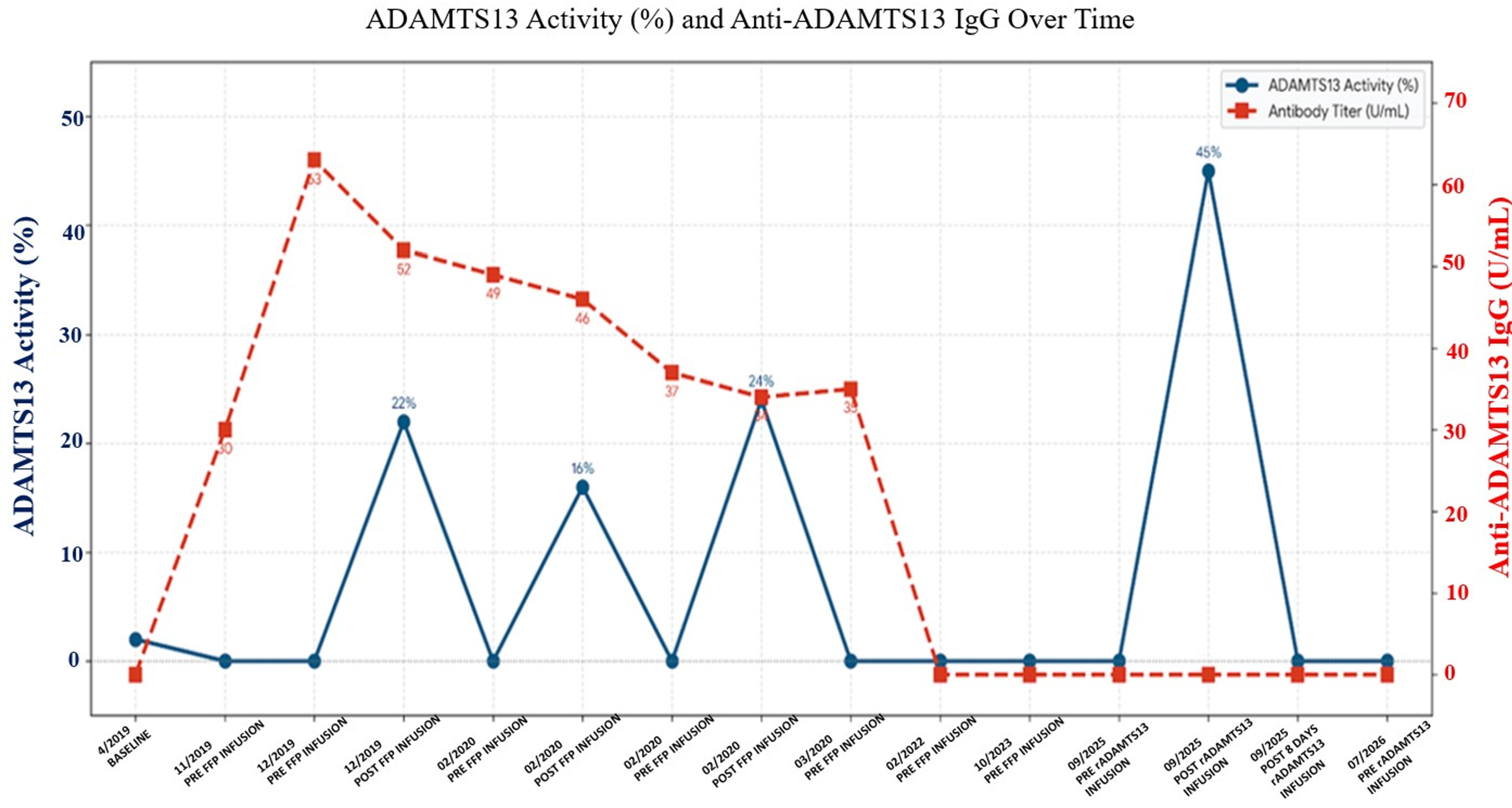
Prophylactic FFP (20 mL/kg/day) was administered every 21 days. ADAMTS13 activity increased transiently one hour after infusion but returned to undetectable levels by days 15–21. ADAMTS13 activity increased transiently one hour after infusion but returned to undetectable levels by days 15–21.
Over the next five years, despite prophylaxis, the child experienced nine further acute relapses and three subacute relapses, often triggered by infections, requiring hospitalization and daily plasma infusions. Complications included catheter-related venous thrombosis and staphylococcal sepsis.
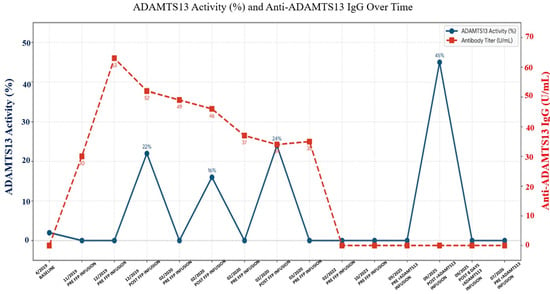
Adamts13 activity, anti-ADAMTS13 IgG titers and functional inhibitory activity were assessed before and after prophylactic FFP infusion using FRETS-VWF73 assay the TECHNOZYM® ELISA kit (Technoclone, Wien, Austria) and FRET-based Bethesda-like method, respectively. Anti-ADAMTS13 IgG antibodies were transiently detected, reaching titers of up to 63 U/mL, but no inhibitory activity was observed (Figure 1).
Figure 1.
Longitudinal monitoring of ADAMTS13 activity and anti-ADAMTS13 antibody titers over time.
The child showed poor physical growth and appeared lethargic.
In August 2024, recombinant ADAMTS13 was initiated compassionately at 40 IU/kg every two weeks. ADAMTS13 activity was undetectable before infusion, rose to 45% one hour after infusion, and remained undetectable at day 8.
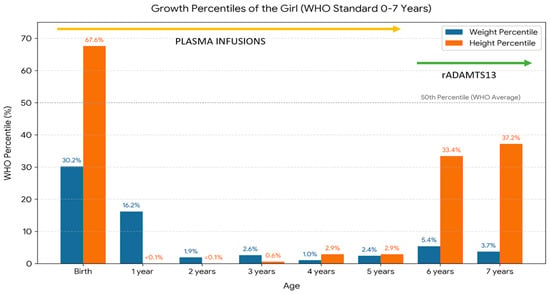
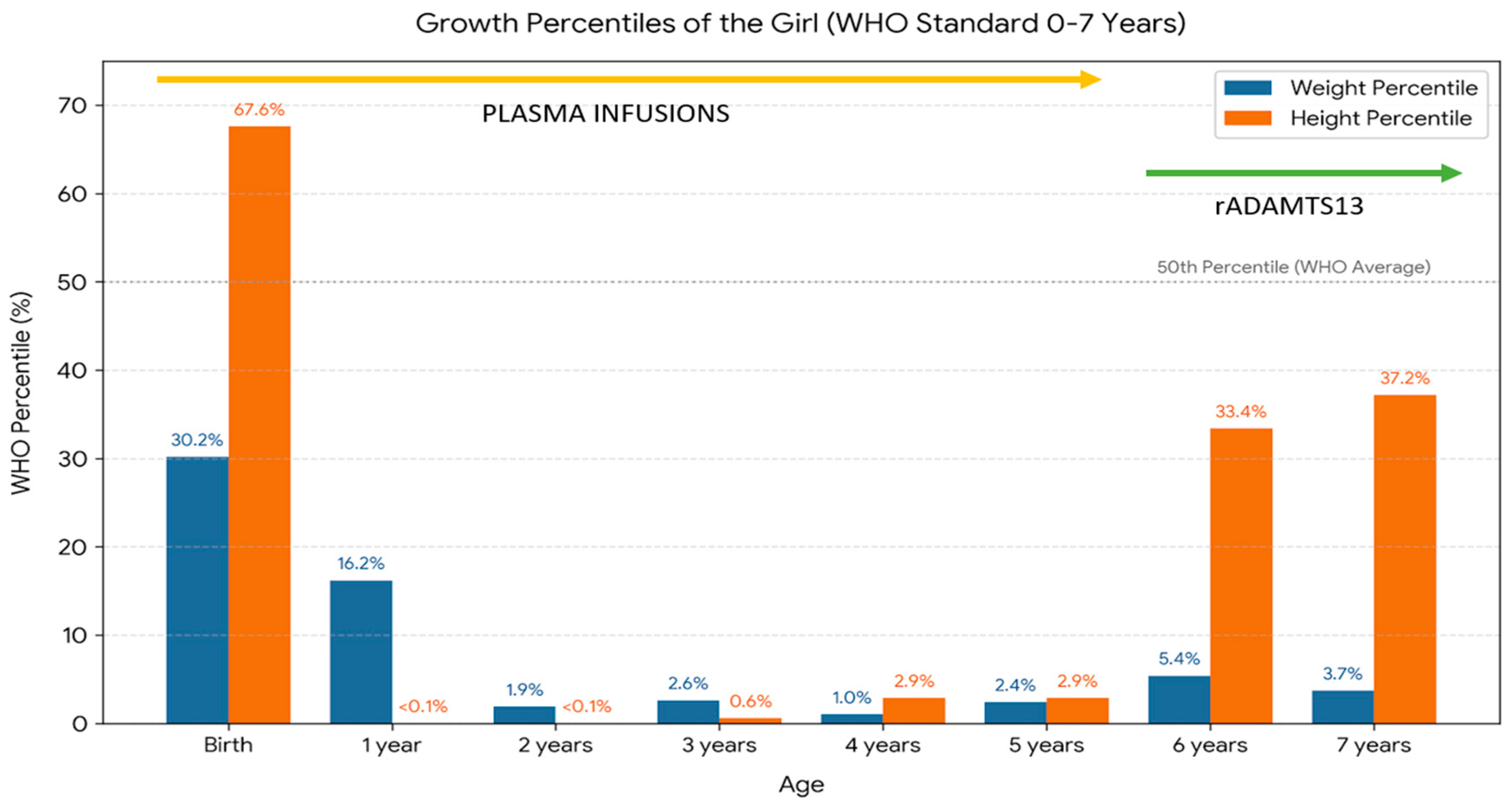
After two years, the child remained relapse-free, with improvement in growth parameters observed after initiation and no infusion-related adverse events. Changes in growth parameters during the five years of plasma-based prophylaxis and the subsequent period of recombinant ADAMTS13 treatment are summarized in Figure 2, showing the evolution of weight, height, and corresponding age-adjusted percentiles over time.
Figure 2.
Evolution of physical growth parameters (weight, height, and corresponding age-adjusted percentiles) in the patient over time. Anthropometric measurements are detailed across the 5-year period of fresh frozen plasma (FFP) prophylaxis and the subsequent period of recombinant ADAMTS13 (rADAMTS13) replacement therapy. Growth percentiles were calculated using WHO/standard pediatric growth charts. Persistent growth failure observed during plasma-based prophylaxis showed marked catch-up growth following the initiation of rADAMTS13.
Neither anti-ADAMTS13 IgG antibodies nor neutralizing anti-ADAMTS13 antibodies have been detected to date.
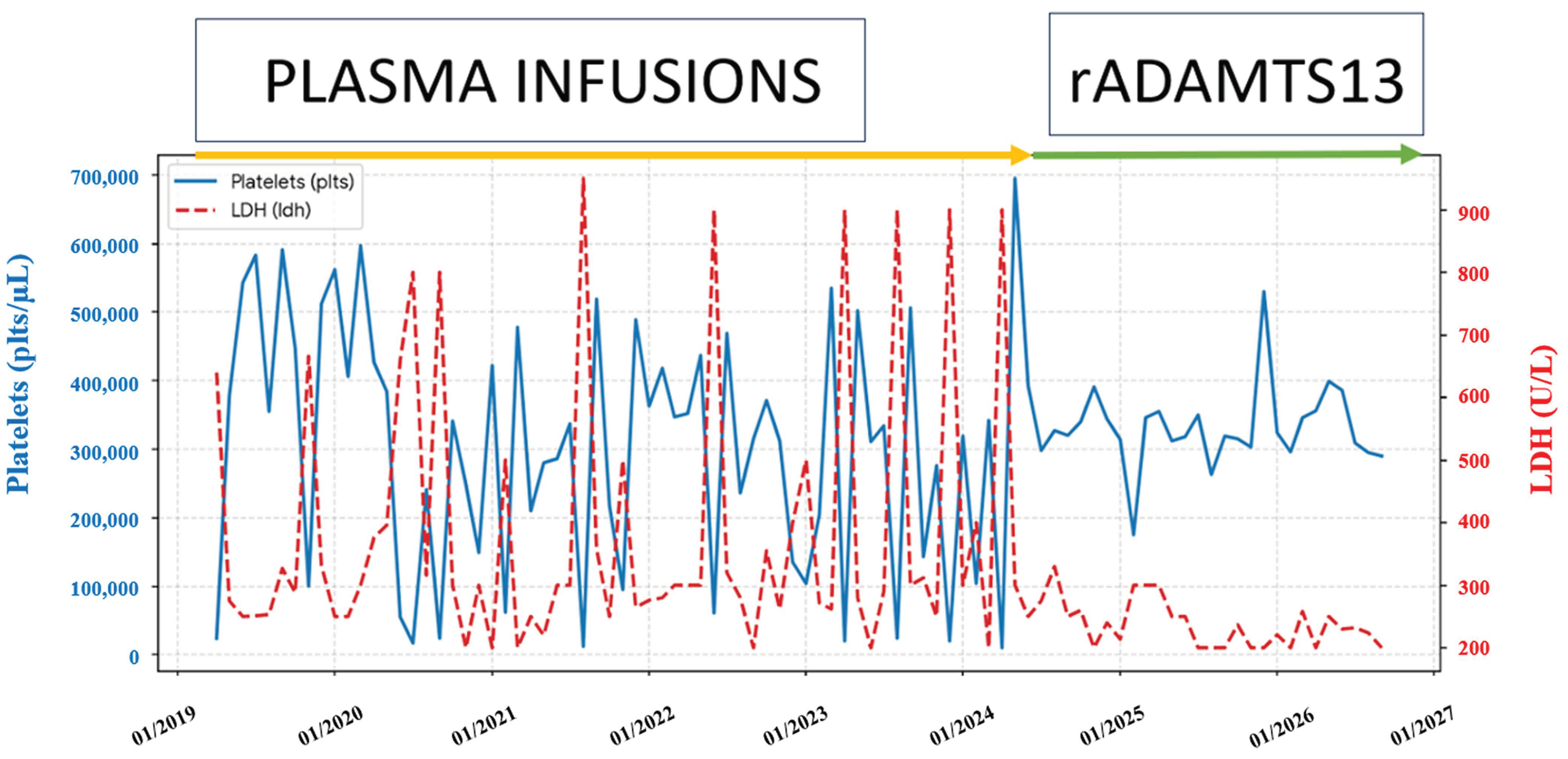
The clinical course of the patient, including the main clinical events, acute and subacute relapses, prophylactic plasma therapy and subsequent initiation of recombinant ADAMTS13 therapy, is summarized in Figure 3.
Figure 3.
Schematic overview of the patient’s clinical course and treatment timeline.
3. Discussion
Congenital thrombotic thrombocytopenic purpura (cTTP) remains a rare and frequently under-recognized cause of neonatal thrombotic microangiopathy. The neonatal onset in our patient represents a particularly distinctive feature of this case, with severe thrombocytopenia, hemolysis, jaundice, hemoglobinuria, and evidence of microangiopathy developing within the first hours of life.
Because these manifestations overlap with several more common neonatal conditions, including immune-mediated hemolysis, infection, disseminated intravascular coagulation, HUS, and other causes of neonatal TMA, diagnosis may be delayed [6,7]. Early recognition is important because recurrent episodes of microvascular thrombosis may result in irreversible organ damage.
Our case illustrates the diagnostic value of early ADAMTS13 assessment in neonates with unexplained thrombocytopenia and hemolysis, allowing cTTP to be distinguished from more common neonatal conditions and enabling timely initiation of replacement therapy.
Although the estimated prevalence of cTTP is only 0.5–2 cases per million, severe disease may manifest during infancy in patients with profound ADAMTS13 deficiency [8]. More than 350 pathogenic ADAMTS13 variants have been described, and accumulating evidence suggests that residual enzyme activity may be more closely related to clinical severity than genotype alone [3,4,5,6]. The compound heterozygous genotype identified in our patient, comprising a nonsense (p.Gln449*) and a missense (p.Arg409Trp) variant, is consistent with the profound enzymatic deficiency (<3%) and very early neonatal presentation. Although a direct genotype–phenotype relationship cannot be established from a single case, this observation supports the concept that variants resulting in virtually absent residual ADAMTS13 activity may be associated with severe early-onset disease.
Plasma-based ADAMTS13 replacement has historically represented the mainstay of prophylactic treatment for cTTP [8,9,10]. However, its effectiveness is limited by the short persistence of ADAMTS13, pharmacokinetic variability, the need for repeated infusions, and exposure to plasma components [11]. In our patient, serial monitoring demonstrated prolonged periods of severe ADAMTS13 deficiency despite regular plasma administration, potentially contributing to infection-triggered exacerbations. These findings highlight that clinical remission does not necessarily reflect adequate biological disease control and support individualized treatment strategies guided by serial ADAMTS13 monitoring [12]. Moreover, repeated plasma infusions required central venous access and were complicated by catheter-related infection and thrombosis, adding substantial treatment-related morbidity in this young child.
The continuous exposure to plasma-based replacement may also carry a risk of immunization, as illustrated by the transient detection of anti-ADAMTS13 binding antibodies in our patient. Importantly, the presence of anti-ADAMTS13 antibodies does not necessarily imply impaired therapeutic efficacy, as binding antibodies may lack neutralizing or inhibitory activity and therefore may not compromise the functional recovery of infused ADAMTS13. In our patient, antibodies were not associated with demonstrable inhibitory activity or clinical evidence of treatment failure.
Nevertheless, their detection highlights the importance of longitudinal immunological monitoring and functional inhibitor testing when antibodies are identified, particularly in patients receiving lifelong plasma replacement.
The development of recombinant ADAMTS13 (rADAMTS13) has substantially changed the therapeutic landscape of cTTP. Phase 3 studies demonstrated effective prophylaxis and favorable pharmacokinetic characteristics compared with plasma-based replacement therapy [13,14]. Subsequent real-world data, including pediatric experience, have further supported its efficacy, predictability, and treatment convenience. In a Japanese real-world cohort, rADAMTS13 resulted in higher peak and one-week ADAMTS13 activity than fresh frozen plasma, while pediatric real-world data have suggested improvements in disease control and quality of life [15,16]. These findings support a shift from plasma-based replacement toward more predictable recombinant enzyme therapy.
Our patient’s response is consistent with these observations but also provides an important pharmacokinetic–pharmacodynamic perspective. Compassionate-use administration of rADAMTS13 every two weeks resulted in sustained clinical remission over 12 months, stable pharmacokinetic behavior, absence of neutralizing antibodies, and normalization of growth parameters, without treatment-related adverse events. Notably, ADAMTS13 activity peaked after each infusion but declined to undetectable levels within approximately one week. Despite undetectable trough activity for most of the dosing interval, no disease recurrences occurred, in contrast to our previous experience during plasma prophylaxis, when similarly low ADAMTS13 activity between infusions was associated with recurrent infection-triggered exacerbations.
This finding should, however, be interpreted cautiously. It is not possible to determine from a single patient whether undetectable trough ADAMTS13 activity is compatible with sustained biological protection or whether other pharmacodynamic factors contributed to the absence of clinical relapses. In particular, the possibility that rADAMTS13 may provide sustained functional processing of ULVWF beyond the period of measurable circulating activity cannot be established from the present observation. Prospective pharmacokinetic–pharmacodynamic studies involving larger paediatric populations will be required to clarify the relationship between measured trough ADAMTS13 activity and clinical protection.
Beyond prevention of acute TTP episodes, rADAMTS13 was associated in our patient with elimination of central venous access complications, fewer hospitalizations, improved growth, and better overall well-being. These observations emphasize that treatment success in pediatric cTTP should encompass not only prevention of acute episodes but also reduction in treatment-related morbidity and preservation of normal development and quality of life.
The question of whether rADAMTS13 represents a new standard of care is increasingly relevant in light of accumulating clinical and real-world evidence. As discussed by Eşkazan, the transition from plasma to rADAMTS13 represents a shift toward a more predictable and targeted approach to long-term disease control [17]. Consistent with this evolving paradigm, the 2025 focused update of the International Society on Thrombosis and Haemostasis (ISTH) guidelines issued a strong recommendation for rADAMTS13 over plasma infusion for prophylaxis in patients with cTTP in remission [18]. Thus, rADAMTS13 can reasonably be considered the preferred prophylactic replacement strategy where available. Nevertheless, questions remain regarding optimal dosing in very young children, the interpretation of trough ADAMTS13 activity, long-term immunogenicity, and the ability of sustained enzyme replacement to prevent cumulative organ damage.
In conclusion, this case highlights the importance of considering cTTP in neonates presenting with unexplained thrombocytopenia and haemolysis and demonstrates the value of early ADAMTS13 testing in establishing the diagnosis. The neonatal onset and severe phenotype make this case particularly informative for paediatric clinicians, while the subsequent clinical course illustrates both the challenges of long-term plasma-based prophylaxis and the potential clinical advantages observed after initiation of rADAMTS13. The discordance between undetectable trough ADAMTS13 activity and continued clinical remission is an intriguing observation, but its biological and pharmacodynamic significance cannot be established from a single case. Larger prospective studies are needed to define the relationship between ADAMTS13 activity, pharmacodynamic effects, and long-term clinical protection in children with cTTP.
Author Contributions
Conceptualization, S.M.T. and A.M.T.; Methodology, G.P. and M.R.; Formal Analysis, I.M.; Data Curation, A.A. and I.M.; Writing—Original Draft Preparation, S.M.T. and A.M.T.; Writing—Review & Editing, F.P. and S.C.; Supervision, F.P. and A.M.T. All authors have read and agreed to the published version of the manuscript.
Funding
The study was partially supported by the Italian Ministry of Health [Bando Ricerca Corrente] and by the Italian Ministry of Education and Research—MUR (‘Dipartimenti di Eccellenza’ Programme 2023–27—Department of Pathophysiology and Transplantation, Università degli Studi di Milano) (To Flora Peyvandi).
Informed Consent Statement
Informed consent was obtained from all subjects involved in the study. Written informed consent has been obtained from the parents of the patient to publish this paper.
Data Availability Statement
The raw data supporting the conclusions of this article will be made available by the authors on request.
Acknowledgments
The Hemostasis & Thrombosis Unit of the Fondazione IRCCS Ca’ Granda Ospedale Maggiore Policlinico is member of the European Reference Network on Rare Haematological Diseases EuroBloodNet-Project ID No 101157011. ERN-EuroBloodNet is funded by the European Union within the framework of the Fourth EU Health Programme.
Conflicts of Interest
I.M. received honoraria for participating as a speaker at educational meetings organized by Instrumentation Laboratory and Sanofi. F.P. has received honoraria for participating as a speaker in education meetings organized by Takeda and Sanofi, and she is member of scientific advisory boards of CSL Behring, Biomarin, Roche, Sanofi, Sobi, Pfizer. D.P. is Section Editor of Blood Transfusion but had no role in the peer-review process or editorial decision. The other authors have no conflicts of interest.
References
- van Dorland, H.A.; Taleghani, M.M.; Sakai, K.; Friedman, K.D.; George, J.N.; Hrachovinova, I.; Knöbl, P.N.; von Krogh, A.S.; Schneppenheim, R.; Aebi-Huber, I.; et al. The International Hereditary Thrombotic Thrombocytopenic Purpura Registry: Key findings at enrollment until 2017. Haematologica 2019, 104, 2107–21152. [Google Scholar] [CrossRef] [Scilit] [PubMed]
- Levy, G.G.; Nichols, W.C.; Lian, E.C.; Foroud, T.; McClintick, J.N.; McGee, B.M.; Yang, A.Y.; Siemieniak, D.R.; Stark, K.R.; Gruppo, R.; et al. Mutations in a member of the ADAMTS gene family cause thrombotic thrombocytopenic purpura. Nature 2001, 413, 488–494. [Google Scholar] [CrossRef] [Scilit] [PubMed]
- Carter, M.A.; Scully, M. Genetics of thrombotic thrombocytopenic purpura: Systematic review in immune and congenital thrombotic thrombocytopenic purpura. J. Thromb. Haemost. 2026, 24, 1575–1586. [Google Scholar] [CrossRef] [Scilit] [PubMed]
- Lotta, L.A.; Wu, H.M. Residual plasmatic activity of ADAMTS13 is correlated with phenotype severity in congenital thrombotic thrombocytopenic purpura. Blood 2012, 120, 440–448. [Google Scholar] [CrossRef] [Scilit] [PubMed]
- Camilleri, R.S.; Scully, M.A. phenotype-genotype correlation of ADAMTS13 mutations in congenital thrombotic thrombocytopenic purpura patients treated in the United Kingdom. J. Thromb. Haemost. 2012, 10, 1792–1801. [Google Scholar] [CrossRef] [Scilit] [PubMed]
- Joly, B.S.; Boisseau, P. ADAMTS13 Gene Mutations Influence ADAMTS13 Conformation and Disease Age-Onset in the French Cohort of Upshaw-Schulman Syndrome. Thromb. Haemost. 2018, 118, 1902–1917. [Google Scholar] [CrossRef] [Scilit] [PubMed]
- Wang, J.; Zhao, L. Clinical Features and Gene Mutation Analysis of Congenital Thrombotic Thrombocytopenic Purpura in Neonates. Front. Pediatr. 2020, 8, 546248. [Google Scholar] [CrossRef] [Scilit] [PubMed]
- Kremer Hovinga, J.A.; George, J.N. Hereditary Thrombotic Thrombocytopenic Purpura. N. Engl. J. Med. 2019, 381, 1653–1662. [Google Scholar] [CrossRef] [Scilit] [PubMed]
- Alwan, F.; Vendramin, C. Characterization and treatment of congenital thrombotic thrombocytopenic purpura. Blood 2019, 133, 1644–1651. [Google Scholar] [CrossRef] [Scilit] [PubMed]
- Scully, M. Hereditary thrombotic thrombocytopenic purpura. Haematologica 2019, 104, 1916–1918. [Google Scholar] [CrossRef] [Scilit] [PubMed]
- Taylor, A.; Vendramin, C. Pharmacokinetics of plasma infusion in congenital thrombotic thrombocytopenic purpura. J. Thromb. Haemost. 2019, 17, 88–98. [Google Scholar] [CrossRef] [Scilit] [PubMed]
- Raval, J.; Padmanabhan, A. Development of a clinically significant ADAMTS13 inhibitor in a patient with hereditary thrombotic thrombocytopenic purpura. Am. J. Hematol. 2015, 90, E22. [Google Scholar] [CrossRef] [Scilit] [PubMed]
- Scully, M.; Antun, A. Recombinant ADAMTS13 in Congenital Thrombotic Thrombocytopenic Purpura. N. Engl. J. Med. 2024, 390, 1584–1596. [Google Scholar] [CrossRef] [Scilit] [PubMed]
- Scully, M.; Knobl, P. Recombinant ADAMTS-13: First-in-human pharmacokinetics and safety in congenital thrombotic thrombocytopenic purpura. Blood 2017, 130, 2055–2063. [Google Scholar] [CrossRef] [Scilit] [PubMed]
- Sakai, K.; Hamamura, A. Therapeutic switch from plasma to recombinant ADAMTS13 for patients with congenital TTP from Japanese real-world data. Blood 2025, 145, 2390–2395. [Google Scholar] [CrossRef] [Scilit] [PubMed]
- Laguna, P.; Szczepanska, M. Real-world safety and efficacy of rADAMTS13 in the treatment of congenital thrombotic thrombocytopenic purpura in pediatric patients in Poland. J. Thromb. Haemost. 2025, 23, 635–640. [Google Scholar] [CrossRef] [Scilit] [PubMed]
- Eskazan, A.E. rADAMTS13 in cTTP: A new standard of care? rADAMTS13 in cTTP: A new standard of care? Blood 2025, 145, 2243–2244. [Google Scholar] [CrossRef] [Scilit] [PubMed]
- Zheng, X.L.; Al-Housni, Z. 2025 focused update of the 2020 ISTH guidelines for management of thrombotic thrombocytopenic purpura Practice Guideline. J. Thromb. Haemost. 2025, 23, 3711–3732. [Google Scholar] [CrossRef] [Scilit] [PubMed]
Disclaimer/Publisher’s Note: The statements, opinions and data contained in all publications are solely those of the individual author(s) and contributor(s) and not of MDPI and/or the editor(s). MDPI and/or the editor(s) disclaim responsibility for any injury to people or property resulting from any ideas, methods, instructions or products referred to in the content. |
© 2026 by the authors. Licensee MDPI, Basel, Switzerland. This article is an open access article distributed under the terms and conditions of the Creative Commons Attribution (CC BY) license.