


Abstract
Nutritional deterioration in adults with acute myeloid leukemia (AML) may be present at diagnosis and may evolve rapidly during intensive chemotherapy, lower-intensity treatment, and allogeneic hematopoietic cell transplantation (allo-HCT). This structured narrative review critically examines nutritional screening and diagnostic instruments, anthropometry and body composition, laboratory-derived composite indices, and objective physical-function measures. PubMed was searched for publications from 1 January 2015 through 13 July 2026; Google Scholar and reference lists were used foradditional citation searching. Of 292 records screened, 52 full-text reports were assessed and 34 empirical studies were included. Methodological limitations were appraised with the 2018 Mixed Methods Appraisal Tool. Evidence was heterogeneous and predominantly observational. PG-SGA and NRS-2002 identified nutritional risk and nutrition-impact symptoms, but their classifications were not interchangeable with GLIM diagnosis, body-composition phenotyping, or prognostic indices. BMI alone did not capture muscle depletion. CT, quantitative CT, BIA-derived phase angle, skeletal muscle indices, and repeated anthropometry detected clinically relevant changes, although thresholds varied and fluid shifts may bias BIA. Albumin-based indices, including CONUT, sCONUT, NRI, GNRI, PNI, and the C-reactive protein/albumin ratio, were associated with outcomes in several retrospective cohorts, but largely reflect inflammation, disease burden, and treatment effects as well as nutrition; no head-to-head evidence establishes superiority. SPPB, gait speed, walking tests, chair stands, and grip strength provided prognostic information in selected older and transplant cohorts, including patients treated with hypomethylating agents plus venetoclax. The evidence supports repeated, multimodal assessment, while remaining insufficient to prove that any single tool or tool-guided intervention improves survival. Future studies require standardized definitions, sex-stratified validation, contemporary treatment cohorts, and trials integrating nutrition, symptom control, and exercise.
Keywords:
acute myeloid leukemia; malnutrition; nutritional assessment; PG-SGA; NRS-2002; GLIM; body composition; sarcopenia; phase angle; CONUT; NRI; GNRI; PNI; physical function 1. Introduction
Acute myeloid leukemia (AML) is an aggressive clonal myeloid neoplasm whose incidence increases with age. Treatment and prognosis depend on disease biology, patient fitness, treatment goals, and access to intensive chemotherapy, lower-intensity regimens, targeted therapy, and allogeneic hematopoietic cell transplantation (allo-HCT) [1,2,3,4,5,6]. Contemporary lower-intensity treatment commonly includes a hypomethylating agent combined with venetoclax [7]. These therapeutic pathways differ substantially in duration, toxicity, hospitalization, infection risk, and demands on functional reserve.
Nutritional status in AML cannot be represented adequately by body weight or body mass index (BMI) alone. Relevant domains include recent weight change, food intake and nutrition-impact symptoms, muscle quantity and quality, fat mass, hydration, inflammation, organ dysfunction, and physical performance. These domains may diverge: a patient with normal or high BMI may have low muscle mass, while low albumin may reflect systemic inflammation or infection rather than inadequate intake. Similarly, a prognostic index may stratify mortality risk without diagnosing malnutrition or identifying an actionable nutritional deficit.
Several mechanisms may contribute simultaneously to nutritional deterioration. Pre-existing age-related vulnerability, comorbidities, diet, medication burden, and social constraints determine baseline reserve. AML itself may be associated at diagnosis with inflammation, anorexia, altered glucose metabolism, gut dysfunction, and muscle weakness [8,9]. Treatment may cause nausea, vomiting, taste disturbance, mucositis, diarrhea, infection, prolonged cytopenias, inactivity, corticosteroid exposure, and repeated hospitalization. In a small prospective AML cohort, intensive chemotherapy was associated with reduced appetite, body-weight loss, muscle wasting, gut-barrier dysfunction, and sustained microbiome disruption [10]. These observations provide biological context but do not establish that microbiome changes cause malnutrition or that pre-existing malnutrition contributes to leukemogenesis.
The terminology used in the literature is also inconsistent. NRS-2002 and PG-SGA are used to identify nutritional risk or the need for assessment and intervention. The Global Leadership Initiative on Malnutrition (GLIM) proposes a two-step pathway in which screening is followed by diagnosis based on at least one phenotypic criterion and one etiologic criterion [11]. CT, BIA, anthropometry, and muscle ultrasound characterize body composition, but they are not interchangeable. CONUT, simplified CONUT (sCONUT), nutritional risk index (NRI), geriatric nutritional risk index (GNRI), prognostic nutritional index (PNI), and the C-reactive protein/albumin ratio (CAR) are laboratory-derived prognostic constructs rather than direct measures of dietary intake. Objective physical-performance tests describe functional reserve and, in the case of sarcopenia, complement the measurement of muscle quantity.
The European Working Group on Sarcopenia in Older People 2 (EWGSOP2) defines low muscle strength as the primary indicator of probable sarcopenia, reduced muscle quantity or quality as confirmation, and poor physical performance as a marker of severity [12]. AML studies, however, have used heterogeneous CT levels, BIA equations, and sex-specific or data-derived cut-offs. A low CT-derived skeletal muscle area should therefore not automatically be equated with clinically confirmed sarcopenia.
The aim of this structured narrative review was to identify and critically compare methods used to assess nutritional status, body composition, and related physical function in adults with AML. The review addresses five questions: (1) what clinical domain each method measures; (2) what associations with treatment course or outcomes have been reported; (3) how directly findings apply to AML rather than mixed AML/MDS, AML/ALL, or peri-transplant populations; (4) what methodological limitations constrain interpretation; and (5) how the available methods can be integrated into a cautious, multimodal clinical pathway.
2. Materials and Methods
2.1. Review Design
This work was conducted as a structured narrative review. It was not prospectively registered and was not designed as a systematic review. Nevertheless, explicit eligibility criteria, a reproducible PubMed strategy, a modified PRISMA-style flow, an auditable full-text exclusion log, standardized data extraction, and design-specific methodological appraisal were used to improve transparency [13].
2.2. Search Strategy
PubMed was searched from 1 January 2015 through 13 July 2026. The strategy combined title/abstract terms for AML or acute leukemia with terms for nutritional screening, malnutrition, body composition, sarcopenia, skeletal muscle, anthropometry, bioimpedance, phase angle, composite nutritional indices, and physical function. The complete PubMed search string is provided in Supplementary Table S2. The final query returned 288 records on 13 July 2026. Google Scholar was used for additional backward and forward citation searching of eligible articles and key reviews; because Google Scholar results are dynamic and not reliably reproducible, an unstable hit count was not used in the selection flow. Four additional eligible records were identified by citation searching.
2.3. Eligibility Criteria
Eligible reports were peer-reviewed empirical studies published in English from 2015 onward that included adults with AML and assessed at least one prespecified domain: (1) a formal nutritional screening or assessment instrument; (2) GLIM or another explicit malnutrition definition; (3) anthropometry or longitudinal weight change interpreted as nutritional status; (4) CT, quantitative CT, BIA, phase angle, muscle ultrasound, or another body-composition measure; (5) a laboratory-derived composite index explicitly presented as nutritional or nutritional-inflammatory; or (6) objective physical performance or muscle strength evaluated as a component of nutritional, sarcopenia, or geriatric assessment.
AML-only cohorts were prioritized. Mixed AML/MDS, AML/ALL, AML-MRC, or allo-HCT cohorts were retained only when AML predominated, AML-specific results were available, or the assessment method provided clinically relevant but explicitly indirect evidence. Their applicability is labeled in the study-level summary. Pediatric studies, case reports, conference abstracts without full data, non-English full reports, reviews, protocols, qualitative studies, preclinical studies, and studies without an eligible assessment domain were excluded from the primary empirical synthesis. Nutrition-support and exercise interventions without a relevant assessment analysis were used only as contextual evidence.
2.4. Study Selection and Data Extraction
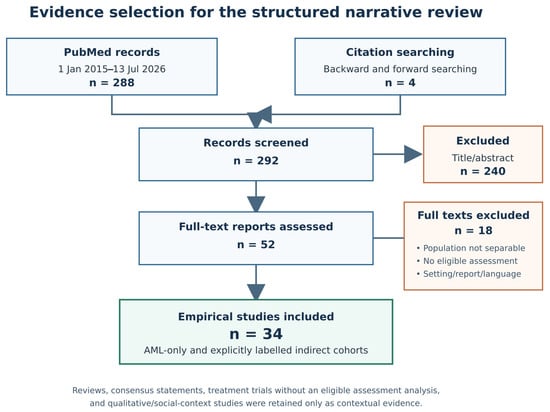
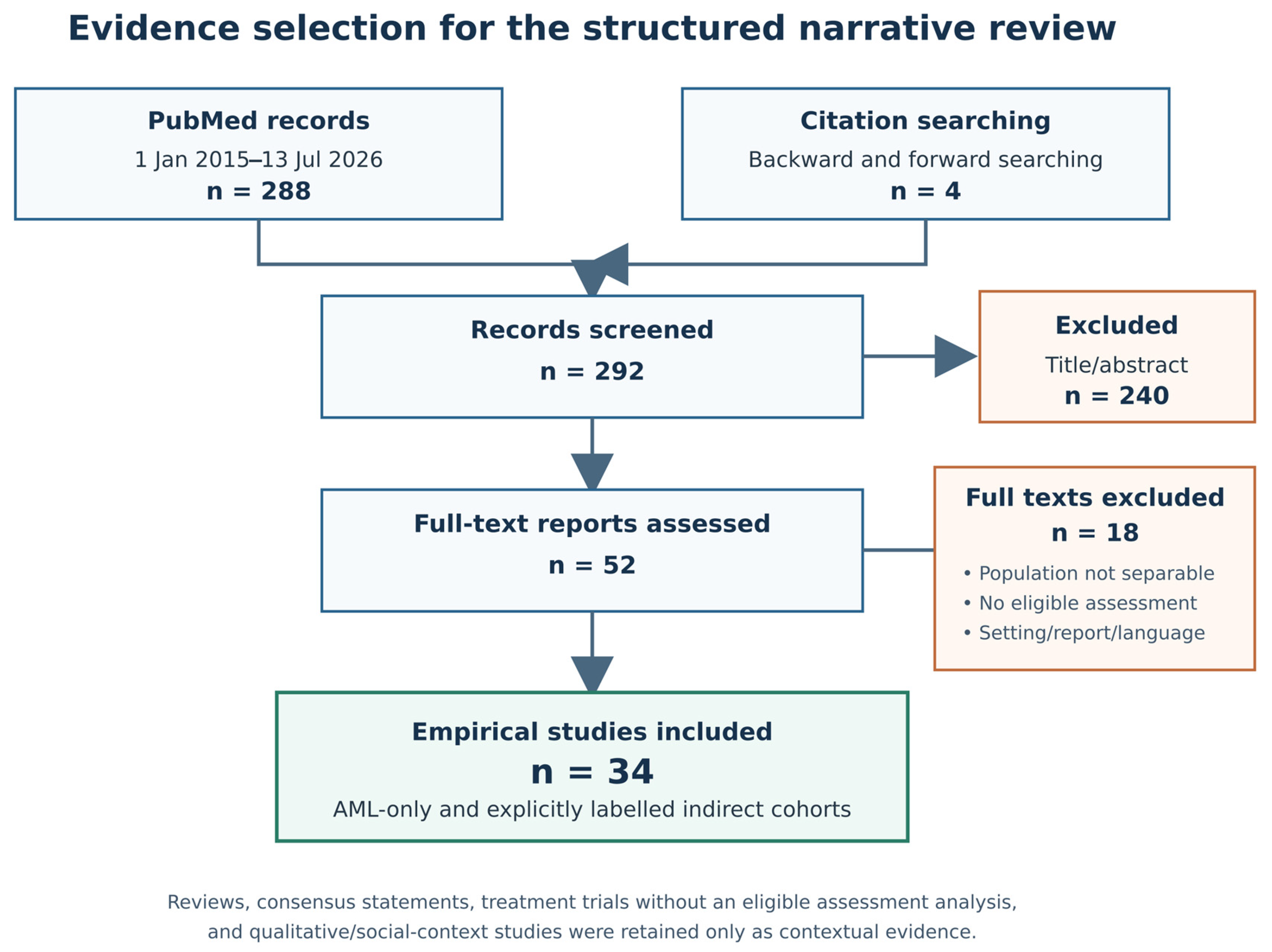
After the removal of ineligible records at title/abstract screening, 52 full-text reports were assessed. Eighteen were excluded with one primary reason documented in Supplementary Table S3, and 34 empirical studies were included in the synthesis (Figure 1).
Figure 1.
Modified PRISMA-style flowchart of evidence selection for the structured narrative review.
DL screened all records and extracted the data. MK independently verified eligibility decisions, extracted variables, and MMAT judgments. Disagreements were resolved through discussion with MB.
For each included study, the following data were extracted: year; design; setting; sample size; population composition; treatment phase; assessment method; main endpoint; principal result; and AML-specific relevance. Reviews, consensus statements, treatment trials, and qualitative or social-context studies were not counted among the 34 empirical studies in the primary synthesis.
2.5. Methodological Appraisal and Synthesis
Methodological limitations were assessed with the 2018 Mixed Methods Appraisal Tool (MMAT), using the criteria appropriate to each study design [14]. Each criterion was recorded as “Yes,” “No,” or “Can’t tell.” No total numeric score was calculated because a single score can obscure distinct sources of bias. Detailed judgments and a concise rationale are reported in Supplementary Table S1.
Because populations, treatment settings, definitions, thresholds, measurement times, and outcomes differed markedly, no meta-analysis or pooled prevalence estimate was attempted. Results were synthesized by clinical purpose: screening and diagnosis; biochemical and composite indices; body composition and sarcopenia; and physical function. The direction and strength of claims were calibrated to study design, precision, directness to AML, and consistency across studies.
3. Results
3.1. Study Selection, Characteristics and Methodological Limitations
The search identified 288 PubMed records and four additional records through citation searching. Of 292 records screened, 240 were excluded at the title/abstract stage. Fifty-two full-text reports were assessed, 18 were excluded, and 34 empirical studies were included (Figure 1). The studies covered diagnosis, intensive remission-induction chemotherapy, lower-intensity HMA-based treatment, and the peri-transplant period. Sample sizes ranged from 10 patients in an exploratory longitudinal microbiome study to 970 adults in an AML allo-HCT cohort. Most studies were observational; several were retrospective, single-center, or model-development cohorts.
Directness varied. Twenty-five studies were restricted to AML, whereas the remaining reports included mixed acute leukemia, AML/MDS, or MDS/AML-MRC populations. Mixed evidence is labeled explicitly in the study-level summary and was not treated as equivalent to AML-only evidence. Three review papers that had previously appeared in the primary-study table were reclassified as the contextual literature.
MMAT appraisal identified recurring limitations rather than one uniform level of quality (Supplementary Table S1). These included convenience or treatment-selected samples, small numbers of outcomes, incomplete reporting of attrition, internally selected thresholds, inconsistent adjustment for disease risk and infection, and absence of independent validation. The largest cohorts improved precision but were commonly retrospective and restricted to patients selected for transplantation. Conversely, prospective functional and body-composition studies provided repeated measurements but were frequently small and single-centered. These limitations precluded quantitative pooling and any evidence hierarchy that would rank one instrument as clinically superior. The clinical purposes and interpretation of the principal assessment methods are summarized in Table 1, whereas the characteristics and principal findings of the included empirical studies are presented in Table 2.
Table 1.
Clinical purposes and interpretations of nutritional and functional assessment methods in adults with AML.
Table 2.
Empirical studies included in the primary synthesis.
3.2. Nutritional Screening and Malnutrition Diagnosis
NRS-2002 and PG-SGA were the most frequently reported formal screening or assessment instruments. Across mixed hematologic and acute-leukemia cohorts, these tools identified a substantial need for nutritional intervention and worsening risk during chemotherapy [15,16,17]. Their outputs should nonetheless be interpreted according to purpose. NRS-2002 identifies hospital nutritional risk, while PG-SGA combines weight history, intake, symptoms, function, disease-related demand, and clinician examination. Neither directly measures muscle quantity.
Li et al. reported that severe PG-SGA malnutrition in a small mixed AML/ALL cohort was associated with gastrointestinal toxicity and poorer OS, although disease subtype and inflammation complicated interpretation [17]. In the study by van Lieshout et al., PG-SGA scores were related to fatigue, whereas anthropometric muscle reserve related to physical and clinical outcomes [45]. Together, these findings suggest that symptom-oriented assessment and body-composition assessment provide complementary information.
GLIM should not be described as another screening questionnaire. It is a consensus diagnostic framework applied after risk screening and requires at least one phenotypic and one etiologic criterion [11]. In 98 younger adults undergoing allo-HCT for acute leukemia, GLIM-defined malnutrition was not significantly associated with 100-day mortality or complications [18]. A later prospective morphofunctional study of 52 adults combined GLIM with BIVA, handgrip strength, and muscle ultrasound, and it reported associations with 12-month mortality, but the estimates were imprecise [19]. These studies demonstrate feasibility, not AML-specific validation or proven clinical utility.
3.3. Biochemical and Composite Indices
Albumin and albumin-based indices were repeatedly associated with prognosis, but their biological interpretation requires caution. Filliatre-Clement et al. [21] found that albumin, but not BMI, was independently associated with survival in 159 adults with AML. Albumin is a negative acute-phase protein affected by inflammation, infection, hepatic synthesis, capillary leak, hydration, and disease severity. A low value should not therefore be attributed automatically to inadequate intake.
Retrospective studies have reported associations between adverse outcomes and high sCONUT or CAR, and between adverse outcomes and low NRI, GNRI, or PNI [34,35,36,37,38]. The largest analysis, involving 970 adults with AML undergoing allo-HCT, found that lower NRI was associated with relapse, non-relapse mortality, relapse-free survival, and OS; however, discrimination did not exceed a C-statistic of 0.59 and was similar to albumin alone [34]. This finding is important because statistical association is not equivalent to strong individual prediction.
The components of these indices are especially labile in AML. Lymphocyte counts are influenced by leukemia and therapy, cholesterol may fall during acute illness, CRP rises with infection and inflammation, and body weight changes with fluid balance. Accordingly, the evidence does not establish the superiority of a composite index, an optimal cut-off, or benefit from index-guided nutritional treatment. These measures are best considered prognostic adjuncts whose context and timing must be recorded.
3.4. Body Composition, Phase Angle and Sarcopenia
Body-composition studies have consistently shown why BMI is insufficient. CT studies at L3 and L1 reported associations between low skeletal muscle area and survival or treatment-related mortality [25,26]. More recent QCT and BIA model-development cohorts similarly incorporated SMI, sarcopenia, or body-water distribution into prognostic models [27,30,31,32]. These findings were not uniform validations of one construct: imaging level, segmentation method, reference population, sex-specific cut-off, and outcome varied across studies.
Repeated BIA and anthropometry demonstrated treatment-associated changes. Qin et al. reported an increase in sarcopenia prevalence and reductions in muscle-related indices after three chemotherapy courses [28]. Van Lieshout et al. observed a loss of fat-free or muscle mass despite adequate intake and frequent medical nutrition therapy [45,46]. These results suggest that preservation of weight does not ensure preservation of muscle, and nutrition alone may not prevent deconditioning.
Phase angle has emerged as a potentially useful, rapid marker derived from BIA. A prospective cohort dominated by AML, an AML cohort of 70 patients, and a 2026 cross-sectional AML study each reported associations between lower phase angle and nutritional risk or outcomes [24,29,33]. The proposed cut-offs differed, and the 3.65° threshold in the latest study had high sensitivity but limited specificity [33]. Phase angle should therefore be treated as a complementary marker rather than a replacement for screening or a universally validated AML threshold.
Under EWGSOP2, low muscle strength is central to probable sarcopenia, while muscle quantity or quality confirms the diagnosis [12]. Several AML papers labeled low muscle mass as “sarcopenia” without consistently incorporating strength or performance. The revised interpretation therefore distinguishes CT- or BIA-defined low muscle mass from clinically confirmed sarcopenia. Hydration is a further concern: transfusion, intravenous fluids, edema, renal dysfunction, and sepsis may distort BIA-derived compartments during AML treatment.
3.5. Physical Function and Contemporary Treatments
Objective functional tests provided clinically relevant information across treatment settings. In a small AML cohort, grip strength, 2 min walk, and chair-stand tests were associated with short-term outcomes [42]. In a prospective study of 105 older adults receiving intensive therapy, SPPB contributed information on toxicity and survival [40]. Among 51 patients assessed at diagnosis and before allo-HCT, persistent SPPB impairment, slow gait, and poor chair-stand performance were associated with worse transplant outcomes [39]. These findings indicate that functional trajectory can be more informative than a single baseline score in selected patients.
Longitudinal data also show recovery among survivors. Alibhai et al. reported improvements in walking and chair-stand performance during the year after intensive chemotherapy, with similar trajectories in younger and older survivors [41]. This observation should not be generalized to all newly diagnosed patients because early deaths, refractory disease, and attrition select the follow-up population.
Contemporary lower-intensity treatment was addressed by Kwag et al. In older adults treated with HMA plus venetoclax, baseline SPPB < 10 was associated with shorter OS and improved early-death prediction when added to existing models [43]. The study was prospective but single-center and requires independent validation. SPPB should not yet be used alone to deny or select treatment.
The VIALE-A trial did not measure malnutrition, body composition, or longitudinal nutritional status, but its safety data provide relevant clinical context. Nausea, thrombocytopenia, neutropenia, febrile neutropenia, and infection were frequent with azacitidine plus venetoclax [7]. These events may plausibly affect intake, activity, hospitalization, and muscle reserve, yet direct nutritional trajectories cannot be inferred from adverse-event reporting alone.
4. Discussion
4.1. Common Domains, Different Clinical Questions
The principal conclusion is not that AML requires one preferred nutritional score. Rather, the available methods address complementary domains and should not be treated as interchangeable. Screening identifies risk and symptoms; GLIM provides a consensus diagnostic structure; anthropometry and imaging describe phenotype; laboratory-derived indices stratify prognosis; and performance tests quantify functional reserve. Commonality exists at the domain level—intake, weight change, muscle, inflammation, and function—not at the level of thresholds or classifications.
This distinction resolves an apparent contradiction in the literature. A questionnaire may identify a need for nutritional intervention even when BMI is normal; a low phase angle or CT-derived SMI may reveal depletion not captured by weight; and a high CAR may predict a poor outcome without proving malnutrition. Discordant results do not necessarily indicate that one method is wrong. They may reflect different constructs, time points, and susceptibility to acute illness.
4.2. Origins and Timing of Nutritional Deterioration
The temporal direction of nutritional abnormalities cannot be determined from the current evidence. Most studies begin at AML diagnosis, hospital admission, or immediately before allo-HCT. They cannot establish whether altered intake, body composition, or laboratory indices predated AML or contributed to leukemogenesis. Abnormalities at diagnosis may reflect pre-existing host vulnerability, early effects of AML biology, or both.
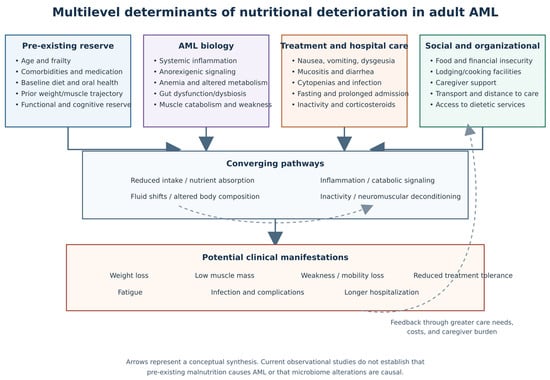
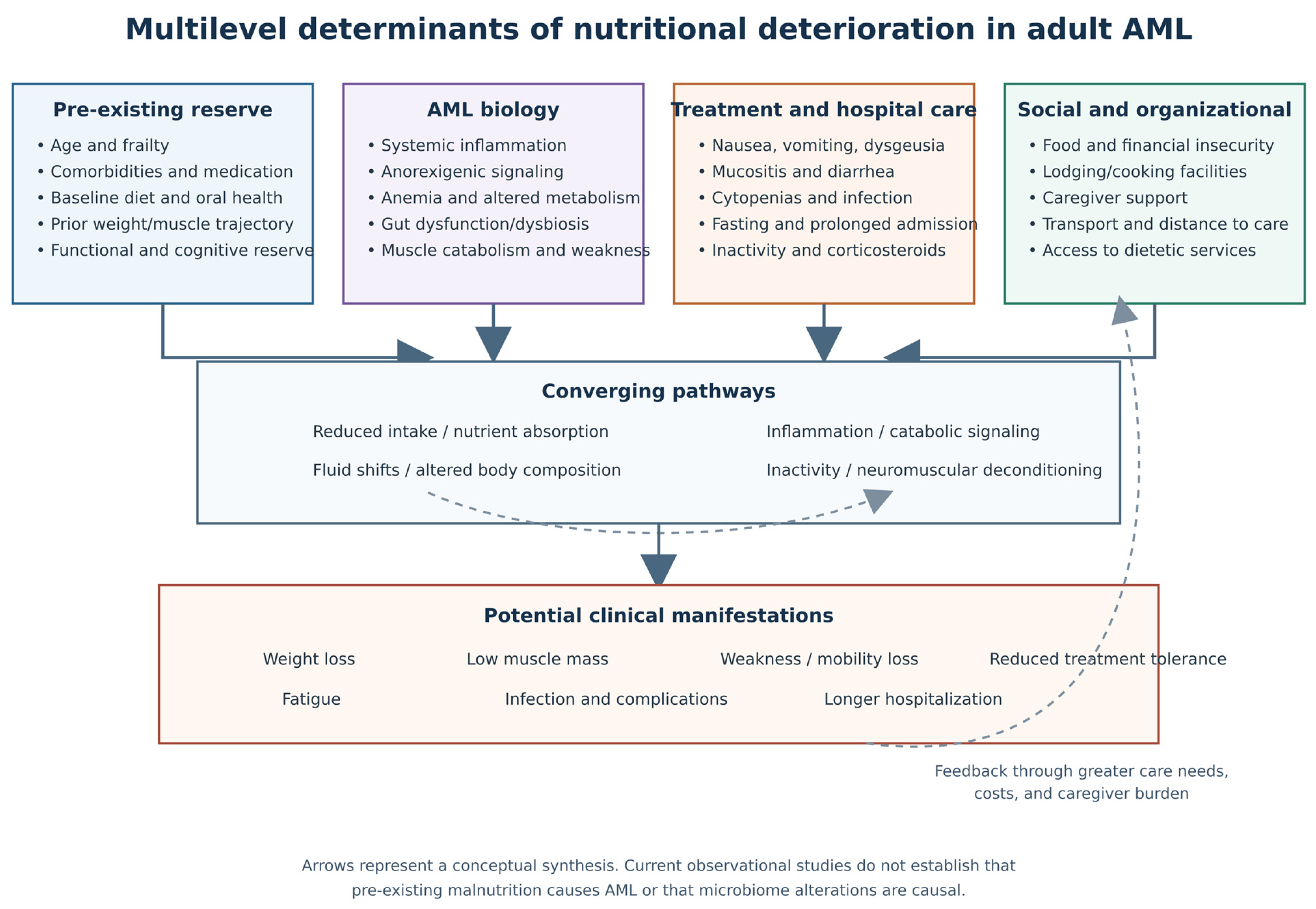
A clinically useful framework includes four interacting levels (Figure 2). First, pre-existing reserve is shaped by age, comorbidities, baseline muscle mass, diet, medication burden, oral health, frailty, and prior weight trajectory. Second, AML-related inflammation, anorexigenic signaling, anemia, altered metabolism, gut dysfunction, and muscle catabolism may reduce intake and function before therapy [8,9]. Third, treatment and hospitalization introduce nausea, vomiting, mucositis, dysgeusia, diarrhea, cytopenias, infection, corticosteroids, inactivity, and repeated fasting for procedures. Fourth, social and organizational conditions determine whether the patient can obtain, prepare, store, and tolerate appropriate food.
Figure 2.
Multilevel determinants and pathways of nutritional deterioration in adults with AML.
4.3. Gut Microbiome: Relevant but Not Yet Actionable
The two prospective studies by Pötgens et al. integrate the microbiome into this framework [8,10]. At diagnosis, AML patients differed from matched controls in microbial composition, inflammatory and metabolic markers, appetite, gut-function markers, and muscle strength [8]. During intensive chemotherapy, a cohort of 10 patients experienced loss of microbial diversity, transient gut-barrier dysfunction, reduced appetite, weight loss, and muscle wasting [10]. These data are biologically coherent with cachexia-related pathways but remain associative. Antibiotics, diet, hospitalization, infection, and chemotherapy are strong co-exposures. Routine microbiome testing or microbiome-directed nutritional treatment cannot be recommended based on these studies.
4.4. Sex and Gender
Evidence on sex and gender is insufficient. Body-composition studies often use sex-specific thresholds because absolute muscle mass differs between women and men, and the CT study by Nakamura et al. identified sex as an important determinant of SMI [25]. However, most studies reported sex only as a baseline characteristic and did not test whether the performance of PG-SGA, NRS-2002, CONUT, NRI, GNRI, PNI, CAR, GLIM, or phase angle differed by sex. Sex-specific cut-offs do not themselves demonstrate sex-specific prognostic discrimination.
Gender identity, caregiving responsibilities, employment, household food roles, and gender-related access barriers were not measured. The absence of a reported difference should therefore not be interpreted as evidence of no sex or gender effect. Future studies should prespecify sex-stratified calibration and interaction analyses and should measure gender-related social variables directly.
4.5. Social and Organizational Determinants
Nutritional assessment should include the patient’s living and treatment context. Potential barriers include food insecurity, unstable or distant lodging, lack of refrigeration or cooking facilities, transportation burden, financial toxicity, insufficient caregiver support, and limited access to culturally acceptable food during prolonged outpatient or inpatient treatment. A prospective multicenter AML study linked area-level social disadvantage with access to allo-HCT and competing mortality, demonstrating that social context can influence the treatment pathway [47]. In a broader pre-HSCT population, food insecurity was associated with malnutrition and need for parenteral nutrition [48].
These data support routine clinical inquiry but require careful interpretation. The AML study addressed transplant access rather than nutritional causality, and the food-insecurity study was not restricted to AML. There is not yet direct evidence that distance from the treatment center or lack of freshly prepared food causes a defined degree of malnutrition in AML. These determinants should be measured prospectively rather than assumed.
4.6. Proposed Multimodal Assessment Pathway
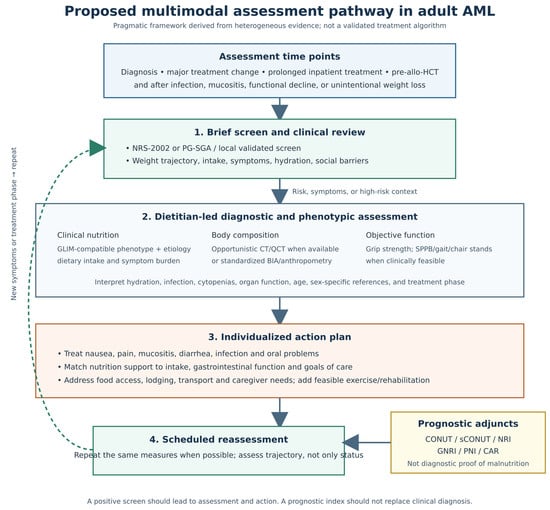
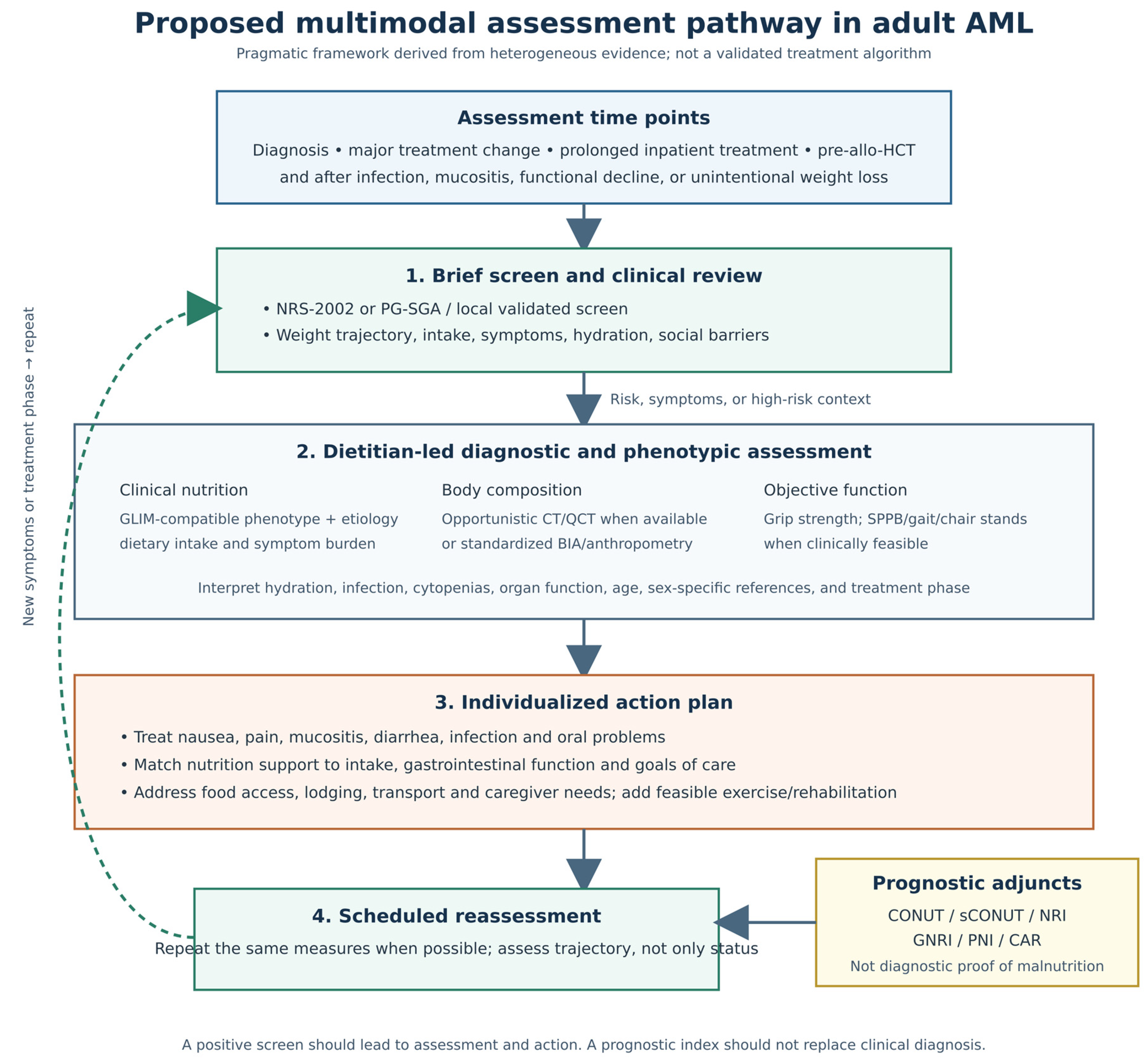
Figure 3 summarizes a pragmatic multimodal assessment pathway comprising initial nutritional screening, GLIM-compatible diagnostic assessment, body-composition evaluation, objective functional assessment, individualized intervention, and scheduled longitudinal reassessment. It is a proposed clinical framework derived from heterogeneous evidence, not a validated algorithm.
Figure 3.
Proposed multimodal nutritional and functional assessment pathway in adults with AML: screening, GLIM-compatible diagnosis, body-composition and functional assessment, individualized intervention, and longitudinal monitoring.
At diagnosis, before a major change in therapy, at least weekly during prolonged inpatient induction when clinically feasible, before allo-HCT, and after clinically important events such as infection, mucositis, or unintentional weight loss, patients should undergo brief screening and symptom review. A positive screen or high-risk clinical context should trigger dietitian-led assessment of intake, weight trajectory, nutrition-impact symptoms, and GLIM-compatible phenotypic and etiologic criteria. Body composition should be assessed when it can alter management: opportunistic CT analysis when suitable imaging exists, or standardized BIA/anthropometry when hydration permits. Objective function can be assessed with grip strength and, in ambulatory older adults, SPPB or its components.
Laboratory-derived indices may contribute prognostic context but should not be used as diagnostic proof of malnutrition. Findings should lead to an individualized plan that addresses intake, symptoms, oral and gastrointestinal complications, social barriers, and feasible exercise or rehabilitation. Reassessment is essential because AML treatment changes rapidly and baseline classification may become obsolete.
4.7. Strengths and Limitations of the Evidence
This review offers an updated and structured synthesis across screening, diagnosis, composite indices, body composition, and function. Its principal strengths are a reproducible PubMed search, explicit separation of the primary and contextual literature, transparent population labels, study-level methodological appraisal, and the inclusion of contemporary HMA/venetoclax and 2025–2026 body-composition studies.
Several limitations remain. First, this is a narrative review without a prospectively registered protocol; the search was restricted to PubMed, with Google Scholar used only for additional citation searching. Relevant studies not indexed in PubMed may have been missed. Second, eligibility required an English full report, creating potential language bias. Third, the evidence base is dominated by observational studies with heterogeneous populations, treatment phases, measurements, thresholds, and endpoints. Fourth, several studies pooled AML with MDS or ALL, limiting directness. Fifth, many indices incorporate variables strongly altered by AML and its treatment, making nutritional and disease-related effects difficult to separate. Sixth, model-development studies rarely had external validation. Finally, association with prognosis does not demonstrate that changing the measured variable improves outcome.
The sample-size range also requires calibrated interpretation. Very small mechanistic cohorts provide biological hypotheses but imprecise estimates. Large transplant cohorts improve precision but apply to highly selected patients who survive and become eligible for allo-HCT. Consequently, the evidence supports multimodal assessment as a clinically plausible framework, but does not establish an optimal instrument, a universal cut-off, or survival benefit from tool-guided intervention.
5. Conclusions
Nutritional assessment in adult AML should not be reduced to BMI, albumin, or one questionnaire. Repeated screening, diagnostic assessment, body-composition phenotyping, laboratory context, and objective physical function answer different but complementary questions. PG-SGA and NRS-2002 can identify risk and symptoms; GLIM provides a diagnostic framework but is not AML-validated; CT, QCT, BIA, phase angle, and anthropometry reveal phenotypic changes; composite indices may stratify prognosis but are confounded by inflammation and treatment; and physical-performance tests can describe vulnerability and trajectory in selected patients.
No current evidence proves that one tool is superior or that the use of a specific instrument improves survival. The most defensible clinical approach is therefore multimodal, longitudinal, and linked to an actionable plan that includes symptom control, nutrition care, social assessment, and feasible rehabilitation. Future research should use standardized definitions, prespecified timing, sex-stratified validation, AML-specific reporting, independent model validation, and randomized or implementation designs that test whether integrated nutrition and exercise strategies improve patient-centered and clinical outcomes.
Supplementary Materials
The following supporting information can be downloaded at: https://www.mdpi.com/article/10.3390/hemato7030024/s1. Table S1: Study-level MMAT 2018 appraisal [8,10,15,16,17,18,19,20,21,22,23,24,25,26,27,28,29,30,31,32,33,34,35,36,37,38,39,40,41,42,43,44,45,46]; Table S2: Complete PubMed search strategy; Table S3: Full-text screening and exclusion log.
Author Contributions
Conceptualization, D.Ł.; methodology, D.Ł. and K.M.; formal analysis, D.Ł. and K.M.; investigation, D.Ł.; resources, D.Ł., K.M. and M.B.; data curation, D.Ł.; writing—original draft preparation, D.Ł.; writing—review and editing, D.Ł., M.B. and K.M.; visualization, D.Ł.; supervision, K.M. All authors have read and agreed to the published version of the manuscript.
Funding
This research received no external funding.
Institutional Review Board Statement
Not applicable.
Informed Consent Statement
Not applicable.
Data Availability Statement
No new primary data were created. The search strategy, methodological appraisal, and full-text screening log are provided in the Supplementary Materials; all study data summarized in this review are available in the cited publications.
Acknowledgments
During the preparation of this revised manuscript, the authors used OpenAI ChatGPT (GPT-5/Codex, accessed 1 July 2026) for reference-metadata checking and figure drafting. The authors reviewed and edited the output and take full responsibility for the content of this publication.
Conflicts of Interest
The authors declare no conflicts of interest.
References
- Döhner, H.; Wei, A.H.; Appelbaum, F.R.; Craddock, C.; DiNardo, C.D.; Dombret, H.; Ebert, B.L.; Fenaux, P.; Godley, L.A.; Hasserjian, R.P.; et al. Diagnosis and management of AML in adults: 2022 recommendations from an international expert panel on behalf of the European LeukemiaNet. Blood 2022, 140, 1345–1377. [Google Scholar] [CrossRef] [Scilit] [PubMed]
- DiNardo, C.D.; Erba, H.P.; Freeman, S.D.; Wei, A.H. Acute myeloid leukaemia. Lancet 2023, 401, 2073–2086. [Google Scholar] [CrossRef] [Scilit] [PubMed]
- Heuser, M.; Ofran, Y.; Boissel, N.; Mauri, S.B.; Craddock, C.; Janssen, J.; Wierzbowska, A.; Buske, C. Acute myeloid leukaemia in adult patients: ESMO Clinical Practice Guidelines for diagnosis, treatment and follow-up. Ann. Oncol. 2020, 31, 697–712. [Google Scholar] [CrossRef] [Scilit] [PubMed]
- Döhner, H.; Wei, A.H.; Löwenberg, B. Towards precision medicine for AML. Nat. Rev. Clin. Oncol. 2021, 18, 577–590. [Google Scholar] [CrossRef] [Scilit] [PubMed]
- Short, N.J.; Kantarjian, H. Choosing between intensive and less intensive front-line treatment approaches for older patients with newly diagnosed acute myeloid leukaemia. Lancet Haematol. 2022, 9, e535–e545. [Google Scholar] [CrossRef] [Scilit] [PubMed]
- Dennis, M.; Copland, M.; Kaur, H.; Kell, J.; Nikolousis, E.; Mehta, P.; Palanicawandar, R.; Potter, V.; Raj, K.; Thomas, I.; et al. Management of older patients with frailty and acute myeloid leukaemia: A British Society for Haematology good practice paper. Br. J. Haematol. 2022, 199, 206–220. [Google Scholar] [CrossRef] [Scilit] [PubMed]
- Dinardo, C.D.; Jonas, B.A.; Pullarkat, V.; Thirman, M.J.; Garcia, J.S.; Wei, A.H.; Konopleva, M.; Döhner, H.; Letai, A.; Fenaux, P.; et al. Azacitidine and venetoclax in previously untreated acute myeloid leukemia. N. Engl. J. Med. 2020, 383, 617–629. [Google Scholar] [CrossRef] [Scilit] [PubMed]
- Pötgens, S.A.; Havelange, V.; Lecop, S.; Li, F.; Neyrinck, A.M.; Bindels, F.; Neveux, N.; Demoulin, J.-B.; Moors, I.; Kerre, T.; et al. Gut microbiome alterations at acute myeloid leukemia diagnosis are associated with muscle weakness and anorexia. Haematologica 2024, 109, 3194–3208. [Google Scholar] [CrossRef] [Scilit] [PubMed]
- Campelj, D.G.; Timpani, C.A.; Rybalka, E. Cachectic muscle wasting in acute myeloid leukaemia: A sleeping giant with dire clinical consequences. J. Cachexia Sarcopenia Muscle 2022, 13, 42–54. [Google Scholar] [CrossRef] [Scilit] [PubMed]
- Pötgens, S.A.; Lecop, S.; Havelange, V.; Li, F.; Neyrinck, A.M.; Neveux, N.; Maertens, J.; Walter, J.; Schoemans, H.; Delzenne, N.M.; et al. Gut microbiota alterations induced by intensive chemotherapy in acute myeloid leukaemia patients are associated with gut barrier dysfunction and body weight loss. Clin. Nutr. 2023, 42, 2214–2228. [Google Scholar] [CrossRef] [Scilit] [PubMed]
- Cederholm, T.; Jensen, G.L.; Correia, M.I.T.D.; Gonzalez, M.C.; Fukushima, R.; Higashiguchi, T.; Baptista, G.; Barazzoni, R.; Blaauw, R.; Coats, A.J.; et al. GLIM criteria for the diagnosis of malnutrition: A consensus report from the global clinical nutrition community. Clin. Nutr. 2019, 38, 1–9. [Google Scholar] [CrossRef] [Scilit] [PubMed]
- Cruz-Jentoft, A.J.; Bahat, G.; Bauer, J.; Boirie, Y.; Bruyère, O.; Cederholm, T.; Cooper, C.; Landi, F.; Rolland, Y.; Sayer, A.A.; et al. Sarcopenia: Revised European consensus on definition and diagnosis. Age Ageing 2019, 48, 16–31. [Google Scholar] [CrossRef] [Scilit] [PubMed]
- Page, M.J.; McKenzie, J.E.; Bossuyt, P.M.; Boutron, I.; Hoffmann, T.C.; Mulrow, C.D.; Shamseer, L.; Tetzlaff, J.M.; Akl, E.A.; Brennan, S.E.; et al. The PRISMA 2020 statement: An updated guideline for reporting systematic reviews. BMJ 2021, 372, 71. [Google Scholar] [CrossRef] [Scilit] [PubMed]
- Hong, Q.N.; Fàbregues, S.; Bartlett, G.; Boardman, F.; Cargo, M.; Dagenais, P.; Gagnon, M.-P.; Griffiths, F.; Nicolau, B.; O’cAthain, A.; et al. The Mixed Methods Appraisal Tool (MMAT) version 2018 for information professionals and researchers. Educ. Inf. 2018, 34, 285–291. [Google Scholar] [CrossRef] [Scilit]
- Lewandowska, A.; Woźniak, A.E.; Budziszewska, K.B.; Góra-Tybor, J.; Jamroziak, K.; Lech-Marańda, E.; Warzocha, K. Assessment of nutritional status in patients with myeloid and lymphoid neoplasms, using the PG-SGA score. Hematol. Clin. Pract. 2017, 8, 105–112. [Google Scholar] [CrossRef] [Scilit]
- Zong, L.-L.; Yang, J.; Xue, S.-L.; Wu, D.-P.; Zhu, X.-M.; Ge, Y.-Q.; Qiu, Q.-C. Observation of Nutritional Status Changes in Patients with Acute Leukemia During Chemotherapy. Zhongguo Shi Yan Xue Ye Xue Za Zhi 2022, 30, 1028–1033. [Google Scholar] [CrossRef] [PubMed]
- Li, J.; Wang, C.; Liu, X.; Liu, Q.; Lin, H.; Liu, C.; Jin, F.; Yang, Y.; Bai, O.; Tan, Y.; et al. Severe malnutrition evaluated by patient-generated subjective global assessment results in poor outcome among adult patients with acute leukemia: A retrospective cohort study. Medicine 2018, 97, e9663. [Google Scholar] [CrossRef] [Scilit] [PubMed]
- Amiri Khosroshahi, R.; Barkhordar, M.; Talebi, S.; Imani, H.; Sadeghi, E.; Mousavi, S.A.; Mohammadi, H. The impact of malnutrition on mortality and complications of hematopoietic stem cell transplantation in patients with acute leukemia. Clin. Nutr. 2023, 42, 2520–2527. [Google Scholar] [CrossRef] [Scilit] [PubMed]
- Dalla Rovere, L.; Tapia Guerrero, M.J.; Doulatram-Gamgaram, V.K.; Garcia-Olivares, M.; del Arco-Romualdo, B.; Gonzalo-Marín, M.; Mora, M.R.V.; Decoud, D.B.; Aizpún, C.D.; Sánchez-Torralvo, F.J.; et al. Bioelectrical impedance and GLIM criteria identify early nutritional deterioration and mortality in acute leukemia patients undergoing chemotherapy. Nutrients 2026, 18, 374. [Google Scholar] [CrossRef] [Scilit] [PubMed]
- Deluche, E.; Girault, S.; Jesus, P.; Monzat, S.; Turlure, P.; Leobon, S.; Abraham, J.; Daly, N.; Dauriac, O.; Bordessoule, D. Assessment of the nutritional status of adult patients with acute myeloid leukemia during induction chemotherapy. Nutrition 2017, 41, 120–125. [Google Scholar] [CrossRef] [Scilit] [PubMed]
- Filliatre-Clement, L.; Broseus, J.; Muller, M.; Hosseini, K.; Rotonda, C.; Schirmer, L.; Roth-Guepin, G.; Bonmati, C.; Feugier, P.; Béné, M.; et al. Serum albumin or body mass index: Which prognostic factor for survival in patients with acute myeloblastic leukaemia? Hematol. Oncol. 2018, 37, 80–84. [Google Scholar] [CrossRef] [Scilit] [PubMed]
- Baumgartner, A.; Zueger, N.; Bargetzi, A.; Medinger, M.; Passweg, J.R.; Stanga, Z.; Mueller, B.; Bargetzi, M.; Schuetz, P. Association of nutritional parameters with clinical outcomes in patients with acute myeloid leukemia undergoing haematopoietic stem cell transplantation. Ann. Nutr. Metab. 2016, 69, 89–98. [Google Scholar] [CrossRef] [Scilit] [PubMed]
- Brauer, D.; Backhaus, D.; Pointner, R.; Vucinic, V.; Niederwieser, D.; Platzbecker, U.; Schwind, S.; Jentzsch, M. Nutritional status at diagnosis and pre-transplant weight loss impact outcomes of acute myeloid leukemia patients following allogeneic stem cell transplantation. HemaSphere 2021, 5, e532. [Google Scholar] [CrossRef] [Scilit] [PubMed]
- Yates, S.J.; Lyerly, S.; Manuel, M.; Tooze, J.A.; Klepin, H.D.; Powell, B.L.; Dralle, S.; Uprety, A.; Pardee, T.S. The prognostic value of standardized phase angle in adults with acute leukemia: A prospective study. Cancer Med. 2020, 9, 2403–2413. [Google Scholar] [CrossRef] [Scilit] [PubMed]
- Nakamura, N.; Ninomiya, S.; Matsumoto, T.; Nakamura, H.; Kitagawa, J.; Shiraki, M.; Hara, T.; Shimizu, M.; Tsurumi, H. Prognostic impact of skeletal muscle assessed by computed tomography in patients with acute myeloid leukemia. Ann. Hematol. 2019, 98, 351–359. [Google Scholar] [CrossRef] [Scilit] [PubMed]
- Jung, J.; Lee, E.; Shim, H.; Park, J.H.; Eom, H.S.; Lee, H. Prediction of clinical outcomes through assessment of sarcopenia and adipopenia using computed tomography in adult patients with acute myeloid leukemia. Int. J. Hematol. 2021, 114, 44–52. [Google Scholar] [CrossRef] [Scilit] [PubMed]
- Sun, Q.; Cui, J.; Liu, W.; Li, J.; Hong, M.; Qian, S. The prognostic value of sarcopenia in acute myeloid leukemia patients and the development and validation of a novel nomogram for predicting survival. Front. Oncol. 2022, 12, 828939. [Google Scholar] [CrossRef] [Scilit] [PubMed]
- Qin, Z.; Lu, K.; Jiang, T.; Wang, M.; Weng, Y.; Tang, X.; Zhao, Y. Evaluating sarcopenia by using bioelectrical impedance analysis in patients with acute myeloid leukemia after chemotherapy. Int. J. Gen. Med. 2022, 15, 1261–1269. [Google Scholar] [CrossRef] [Scilit] [PubMed]
- Jiang, T.; Weng, Y.; Zhang, N.; Tang, X. Nutritional and prognostic value of bioelectrical phase angle as a potentially modifiable marker in acute myeloid leukemia. Exp. Ther. Med. 2023, 25, 142. [Google Scholar] [CrossRef] [Scilit] [PubMed]
- Cui, J.; Zhao, M.; Liu, W.; Hong, M.; Qian, S.; Sun, Q. Effect of low skeletal muscle mass on NK cells in patients with acute myeloid leukemia and its correlation with prognosis. Ann. Hematol. 2024, 103, 771–780. [Google Scholar] [CrossRef] [Scilit] [PubMed]
- Yuan, T.; Zhang, Y.; Liu, Y.; Gao, G.; Quan, G. Impact of body composition metrics extracted from QCT and the corresponding nomogram on the evaluation of survival prognosis in AML patients. Front. Oncol. 2025, 15, 1498024. [Google Scholar] [CrossRef] [Scilit] [PubMed]
- Fang, Y.; Zhao, M.; Luo, T.; Cui, J.; Liu, W.; Hong, M.; Sun, Q.; Qian, S. Prediction of survival in acute myeloid leukemia patients by extracellular to intracellular water ratio and sarcopenia: Development and validation of a novel nomogram. Ann. Hematol. 2025, 104, 985–996. [Google Scholar] [CrossRef] [Scilit] [PubMed]
- Li, W.; Zhang, J.; Liu, J.; Xu, F.; Hua, C.; Qiu, Q.; Xie, H. Phase angle as a nutritional assessment method in patients with acute myeloid leukemia: A cross-sectional study. Hematology 2026, 31, 2631924. [Google Scholar] [CrossRef] [Scilit] [PubMed]
- Orvain, C.; Byelykh, M.; Othus, M.; Sandmaier, B.M.; Schoch, G.; Davis, C.; Appelbaum, F.R.; Walter, R.B. Relationship Between Pre-Transplant Nutritional Status and Outcomes of Adults with Acute Myeloid Leukemia Undergoing Allogeneic Hematopoietic Cell Transplantation. Transplant. Cell. Ther. 2022, 28, 846.e1–846.e9. [Google Scholar] [CrossRef] [Scilit] [PubMed]
- Senjo, H.; Onozawa, M.; Hidaka, D.; Yokoyama, S.; Yamamoto, S.; Tsutsumi, Y.; Haseyama, Y.; Nagashima, T.; Mori, A.; Ota, S.; et al. High CRP-albumin ratio predicts poor prognosis in transplant ineligible elderly patients with newly diagnosed acute myeloid leukemia. Sci. Rep. 2022, 12, 8885. [Google Scholar] [CrossRef] [Scilit] [PubMed]
- Senjo, H.; Onozawa, M.; Hidaka, D.; Yokoyama, S.; Yamamoto, S.; Tsutsumi, Y.; Haseyama, Y.; Nagashima, T.; Mori, A.; Ota, S.; et al. A novel nutritional index «simplified CONUT» and the disease risk index independently stratify prognosis of elderly patients with acute myeloid leukemia. Sci. Rep. 2020, 10, 19400. [Google Scholar] [CrossRef] [Scilit] [PubMed]
- Nishiyama-Fujita, Y.; Nakazato, T.; Kamiya, T.; Mizuno, K.; Ito, C.; Ogura, S.; Sakurai, A.; Tanigawa, T.; Akimoto, M.; Aisa, Y. The geriatric nutritional risk index predicts the early death and survival in patients with myelodysplastic syndrome and acute myeloid leukemia with myelodysplasia-related changes treated with azacitidine. Hematol. Oncol. 2020, 38, 611–613. [Google Scholar] [CrossRef] [Scilit] [PubMed]
- Tang, J.; Ran, F.; Li, G.; Jiang, L.; Wang, L.; Wang, Y.; Feng, Y.; Chen, X.; Zhang, X. Association between the prognostic nutritional index and early mortality of AML patients after allogeneic HSCT: A retrospective cohort analysis. Front. Oncol. 2026, 16, 1754463. [Google Scholar] [CrossRef] [Scilit] [PubMed]
- Min, G.-J.; Cho, B.-S.; Kwag, D.; Park, S.-S.; Park, S.; Yoon, J.-H.; Lee, S.-E.; Eom, K.-S.; Kim, Y.-J.; Lee, S.; et al. Dynamic changes in physical function during intensive chemotherapy affect transplant outcomes in older adults with AML. Front. Oncol. 2023, 13, 1281782. [Google Scholar] [CrossRef] [Scilit] [PubMed]
- Min, G.J.; Cho, B.S.; Park, S.S.; Park, S.; Jeon, Y.-W.; Shin, S.-H.; Yahng, S.-A.; Yoon, J.-H.; Lee, S.-E.; Eom, K.-S.; et al. Geriatric assessment predicts nonfatal toxicities and survival for intensively treated older adults with AML. Blood 2022, 139, 1646–1658. [Google Scholar] [CrossRef] [Scilit] [PubMed]
- Alibhai, S.M.H.; Breunis, H.; Timilshina, N.; Brignardello-Petersen, R.; Tomlinson, G.; Mohamedali, H.; Gupta, V.; Minden, M.D.; Li, M.; Buckstein, R.; et al. Quality of life and physical function in adults treated with intensive chemotherapy for acute myeloid leukemia improve over time independent of age. J. Geriatr. Oncol. 2015, 6, 262–271. [Google Scholar] [CrossRef] [Scilit] [PubMed]
- Fateen, M.A.; El Demerdash, D.M.; Zayed, R.A.; Mattar, M.M. Role of physical function in predicting short-term treatment outcome in Egyptian acute myeloid leukemia patients: A single center experience. Hematol. Transfus. Cell Ther. 2019, 41, 17–24. [Google Scholar] [CrossRef] [Scilit] [PubMed]
- Kwag, D.; Cho, B.S.; Park, S.; Kim, H.J. Objectively measured physical function predicts mortality in older adults with acute myeloid leukemia treated by lower-intensity therapy: A prospective cohort study. J. Geriatr. Oncol. 2025, 16, 102335. [Google Scholar] [CrossRef] [Scilit] [PubMed]
- Jouzier, C.; Hamel, J.; Dumas, P.; Delaunay, J.; Bonmati, C.; Guièze, R.; Hunault, M.; Banos, A.; Lioure, B.; Béné, M.; et al. Conventional chemotherapy for acute myeloid leukemia in older adults: Impact on nutritional, cognitive, and functional status. Eur. J. Haematol. 2021, 106, 859–867. [Google Scholar] [CrossRef] [Scilit] [PubMed]
- van Lieshout, R.; Tick, L.W.; Beckers, E.A.; Biesbroek, W.; Dieleman, J.P.; Dijkstra, M.; Groenesteijn, W.; Koene, H.R.; Kranenburg, S.; van der Lee, D.; et al. Changes in nutritional status and associations with physical and clinical outcomes in acute myeloid leukemia patients during intensive chemotherapy. Eur. J. Clin. Nutr. 2024, 78, 1082–1094. [Google Scholar] [CrossRef] [Scilit] [PubMed]
- van Lieshout, R.; Tick, L.W.; Beckers, E.A.; Biesbroek, W.; Custers, S.; Dieleman, J.P.; Dijkstra, M.; Groenesteijn, W.; Heldens, A.; Hengeveld, M.M.; et al. Associations of various medical nutrition therapy strategies with body composition, and physical and clinical outcomes in acute myeloid leukemia patients undergoing intensive remission-induction treatment: A multicenter prospective correlational study. Clin. Nutr. ESPEN 2025, 67, 276–295. [Google Scholar] [CrossRef] [Scilit] [PubMed]
- Wuliji, N.; Jones, S.M.W.; Gooley, T.A.; Gerds, A.T.; Medeiros, B.C.; Shami, P.J.; Galvin, J.; Adekola, K.; Luger, S.; Baer, M.R.; et al. Social determinants of health and access to allogeneic hematopoietic cell transplantation for acute myeloid leukemia. Blood 2025, 145, 3041–3051. [Google Scholar] [CrossRef] [Scilit] [PubMed]
- Bergens, M.A.; Lowder, Y.P.; Li, Y.; Johnson, E.J.; Winthrop, H.M.; Bush, A.T.; Xiong, A.; Hill, L.; Gorski, I.; Weaver, B.; et al. Food insecurity prior to hematopoietic stem cell transplant is associated with malnutrition and worse outcomes. Bone Marrow Transplant. 2025, 60, 857–863. [Google Scholar] [CrossRef] [Scilit] [PubMed]

Disclaimer/Publisher’s Note: The statements, opinions and data contained in all publications are solely those of the individual author(s) and contributor(s) and not of MDPI and/or the editor(s). MDPI and/or the editor(s) disclaim responsibility for any injury to people or property resulting from any ideas, methods, instructions or products referred to in the content. |
© 2026 by the authors. Licensee MDPI, Basel, Switzerland. This article is an open access article distributed under the terms and conditions of the Creative Commons Attribution (CC BY) license.