


Abstract
Ultrasound-assisted emulsification is an effective approach for producing stable nanoemulsions containing bioactive essential oils. In this study, sodium alginate-stabilized clove essential oil (CEO) nanoemulsions were prepared by varying the ultrasonic power (200–500 W), sonication time (60–300 s), and Tween 80 concentration (1–2%, v/v). The effects of these processing parameters on droplet size, the polydispersity index (PDI), zeta potential, physicochemical stability, and antimicrobial activity were systematically investigated. The nanoemulsions were characterized by dynamic light scattering, ATR-FTIR spectroscopy, Raman microscopy, and emulsion stability analysis. Among the investigated formulations, the nanoemulsion prepared at 400 W for 150 s using 1% (v/v) Tween 80 exhibited the most favorable characteristics, with a mean droplet size of 167.3 ± 5.2 nm, a PDI of 0.30 ± 0.01, and a zeta potential of −60 ± 1.7 mV, indicating excellent colloidal stability. ATR-FTIR and Raman microscopy confirmed the presence of clove essential oil (CEO) in the dispersed oil droplets of the nanoemulsion and suggested intermolecular interactions, mainly hydrogen bonding, between CEO and alginate. The selected formulation exhibited broad-spectrum antimicrobial activity, with inhibition zones of 30.0 ± 0.1 mm against Candida albicans, 15 ± 0.1 mm against Bacillus subtilis, and 16 ± 0.1 mm against Escherichia coli. It also showed low minimum inhibitory concentrations (MICs), ranging from 0.312% to 5% (v/v), with the highest antimicrobial efficacy observed against C. albicans (MIC = 0.312% v/v), followed by B. subtilis and E. coli (MIC = 0.625% v/v). In addition, a cytotoxicity assay showed no significant cytotoxic effect under the tested conditions. Overall, these results demonstrate the potential of ultrasound-assisted sodium alginate-stabilized clove essential oil nanoemulsions as promising antimicrobial systems for further encapsulation and incorporation into bio-based antimicrobial materials for functional coatings and textile-related applications.
1. Introduction
Clove essential oil (Syzygium aromaticum oil), known for its bioactive components, such as eugenol, eugenol acetate, and caryophyllene, has garnered significant attention for its antioxidant, antimicrobial, anti-inflammatory, and analgesic properties. These characteristics make it highly desirable in the food, pharmaceutical, and cosmetic industries [1,2,3,4]. However, its volatile nature and vulnerability to environmental factors, including light, heat, and moisture, necessitate advanced strategies to improve its stability, bioavailability, and functionality [5,6,7]. Nanoemulsions, formed by dispersing clove oil into a nanoscale liquid system, have emerged as a promising solution. They provide protection for bioactive compounds, minimize degradation, and facilitate controlled release, thus enhancing the practical applications of clove oil [7,8,9]. Clove essential oil-in-polymer nanoemulsions have been widely studied for direct encapsulation using various preparation techniques, including ultrasonication, high-pressure homogenization, and phase inversion, to achieve uniform capsule size distribution and improve stability. Among these techniques, ultrasonication is an efficient high-energy emulsification method capable of producing fine oil droplets through acoustic cavitation. It also offers relatively simple operation and allows key processing parameters, such as ultrasonic power, sonication time, and temperature, to be readily controlled. Compared with high-pressure homogenization, ultrasonication does not require specialized high-pressure equipment and provides a practical approach for systematically investigating the effects of processing conditions on nanoemulsion formation [8,9,10]. However, the stability and performance of biopolymer-based nanoemulsions as intermediate systems in encapsulation processes remain insufficiently explored. Understanding the role of biopolymer-stabilized nanoemulsions during these processes could reveal novel pathways to optimize encapsulation efficiency and ensure compound stability. Among biopolymers, sodium alginate is widely known for its ability to stabilize and encapsulate essential oil droplets in nanoemulsions, serving as the polymeric matrix. Derived from brown algae, sodium alginate is considered for its biocompatibility, non-toxicity, and ability to form stable gel networks. Its application in clove essential oil nanoemulsions provides a dual advantage [11,12,13]. Research has demonstrated its potential in applications involving clove essential oil. For example, Mostaghimi et al. investigated alginate hydrogel beads loaded with thyme and clove essential oil nanoemulsions and highlighted their application as antimicrobial agents in various food systems [14], while Pandey et al. evaluated the incorporation of clove essential oil nanoemulsions in edible coatings to extend the shelf-life of fresh-cut apple pieces [15]. Similarly, Salvia-Trujillo et al. demonstrated the antibacterial efficacy of alginate-based nanoemulsions against pathogens such as E. coli and reported promising applications in the food industry [16]. Haro-González et al. optimized emulsification processes to enhance nanoemulsion stability and functionality for developing biological therapies to treat diseases [17].
However, many studies incorporate other biopolymers with sodium alginate and proceed directly to encapsulation, with limited investigation of the intermediate nanoemulsion phase. For instance, Purwanti et al. studied the emulsion stability of clove oil in chitosan and sodium alginate matrices [18], while Rafiq et al. developed sodium alginate/PVA antibacterial nanofibers incorporating essential oils [19]. Additionally, Mahapatra et al. utilized sodium alginate combined with cellulose nanocrystals (CNCs) to create edible coatings enriched with thyme and clove essential oils [20]. These studies highlight the importance of biopolymer combinations but underscore a gap in research on the characterization of the intermediate nanoemulsion phase as an independent system prior to encapsulation.
This limitation presents a strong opportunity to gain a deeper understanding of alginate-stabilized clove essential oil nanoemulsions. Therefore, this study specifically aims to characterize and analyze the properties of sodium alginate-stabilized clove essential oil nanoemulsions, focusing on the intermediate nanoemulsion stage prior to encapsulation.
2. Experimental Section
2.1. Materials
Clove essential oil (CEO) was purchased from Bio Orient, Sousse, Tunisia. Sodium alginate, used as the polymeric component, and polyoxyethylene (20) sorbitan monooleate (Tween 80), with an HLB value of 15 and used as the surfactant, were purchased from BEST (Bio Equipement et Services), Sfax, Tunisia, and supplied by Sigma-Aldrich. Deionized water was utilized for the preparation of all solutions. Microbial strains, including Escherichia coli ATCC8739, Salmonella enterica 52.62, Pseudomonas aeruginosa ATCC9027, Staphylococcus aureus ATCC6538, and Bacillus subtilis ATCC6633, and the fungal strain Candida albicans were also purchased from BEST (Bio Equipement et Services), Sfax, Tunisia, and supplied by Sigma-Aldrich.
2.2. Preparation of Nanoemulsion Solutions
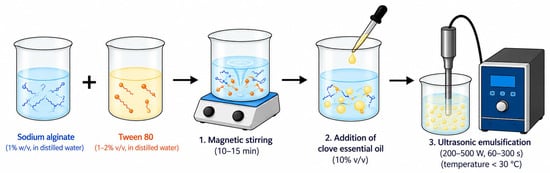
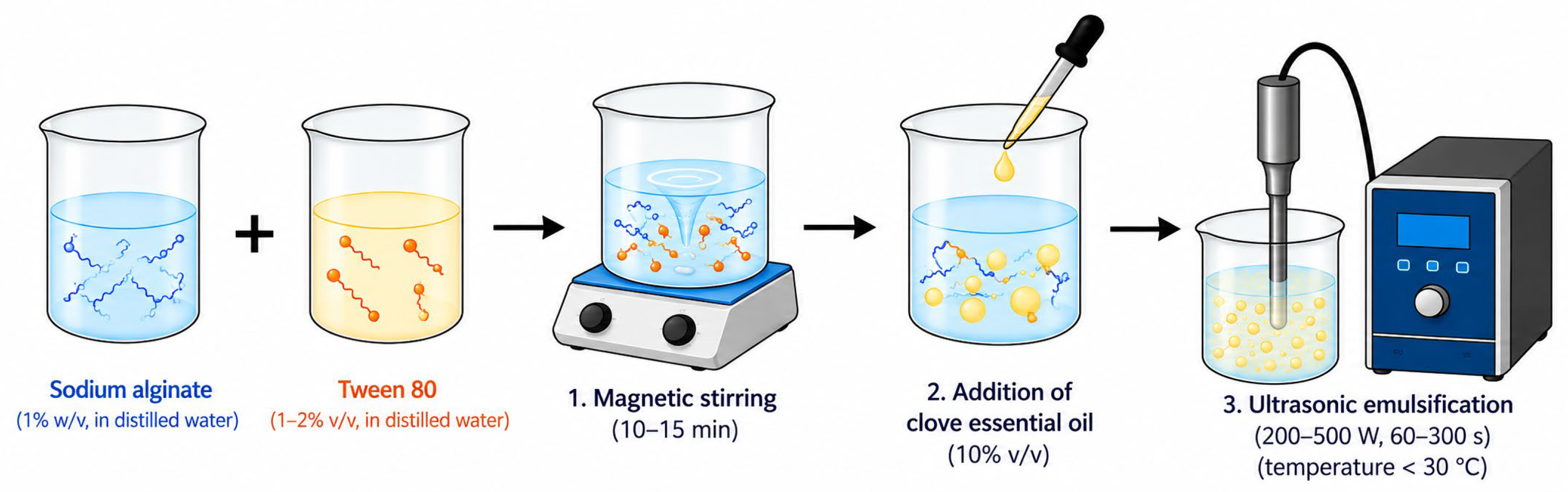
An ultrasonic homogenizer (Sonicator) LUHS-A13 (Labtron Equipment Ltd., Camberley, Surrey, United Kingdom), with an adjustable ultrasonic power range of 10 to 900 W and a frequency of 20–25 kHz, equipped with a 6 mm probe diameter, was used to prepare all nanoemulsion formulations. Sodium alginate (1% w/v) was dissolved in distilled water at room temperature using a high-shear homogenizer at a speed of 1000–2000 rpm until fully dissolved. The prepared solution was then left to stand to allow bubble removal. The concentrations of the sodium alginate and clove essential oil remained constant across all experiments. The overall preparation process is illustrated in Figure 1.
Figure 1.
Schematic illustration of the preparation of sodium alginate-stabilized clove essential oil nanoemulsions by ultrasound-assisted emulsification. Sodium alginate (1% w/v) was dissolved in distilled water, followed by the addition of Tween 80 (1–2% v/v) under magnetic stirring for 10–15 min. Clove essential oil (10% v/v) was subsequently added, and the mixture was subjected to ultrasonic emulsification at 200–500 W for 60–300 s while maintaining the temperature below 30 °C.
Nanoemulsion samples were prepared using a fixed clove essential oil concentration of 10% (v/v) while varying three parameters: surfactant concentration (Tween 80 at 1 and 2% v/v), sonication time (60, 150, and 300 s), and ultrasonic power (200, 300, 400, and 500 W). During ultrasonication, temperature was continuously monitored and maintained below 30 °C using an external ice bath and a built-in temperature control system to prevent excessive heating. Following ultrasonic homogenization, the emulsions were transferred into individual graduated tubes for each treatment, stored at room temperature, and analyzed after 3 and 24 h and 7 days.
2.3. Characterization of Nanoemulsion Solutions
2.3.1. GC–MS Analysis of Clove Essential Oil
The chemical composition of the clove essential oil (CEO) was characterized by gas chromatography–mass spectrometry (GC–MS) (Agilent Technologies, Santa Clara, CA, USA).
2.3.2. Physical Stability of Nanoemulsion
The stability of the nanoemulsion was assessed using a gravitational separation method. Freshly prepared emulsion samples were poured into individual graduated cylinders, and the stability was evaluated by visually monitoring the development of a clarified serum layer at the bottom of the cylinder. This evaluation was carried out after 3 h, 24 h, and 7 days of storage. The nanoemulsion stability index (ESI) was calculated according to Equation (1) described by Petrovic et al. [21]:
where:
- Vs: the volume of the separated bottom layer after the designated storage period.
- Vt: the total volume of the oil-in-water (o/w) emulsion.
An ESI of 100% indicates no phase separation within the emulsion.
Since clove essential oil has a higher density than water and alginate solution, the oil droplets tend to move downward. This phenomenon is referred to as sedimentation. Sedimentation occurs when the density of the dispersed phase exceeds that of the continuous phase, leading to downward movement. However, if the dispersed phase has a lower density, it will rise to the top, a process referred to as creaming. These behaviors are crucial for understanding the stability of emulsions and optimizing formulations to minimize phase separation [22]. The test was repeated three times (n = 3) to guarantee reproducibility and statistical reliability.
2.3.3. Particle Size, Polydispersity Index (PDI), and Zeta Potential Measurements
The mean droplet size, polydispersity index (PDI), and zeta potential of the nanoemulsions were determined using a Zetasizer Nano ZS (Malvern Panalytical Ltd., Malvern, UK). Prior to analysis, each sample was diluted 100-fold with ultrapure water to minimize multiple light scattering during dynamic light scattering (DLS) measurements. The droplet size distribution was evaluated on an intensity basis, with the predominant droplet population identified from the intensity-weighted distribution. All measurements were performed in triplicate, and the results are reported as the mean ± standard deviation.
2.3.4. FTIR Characterization of Clove Oil–Alginate Nanoemulsions
ATR-FTIR spectra of the samples were recorded using a Fourier transform infrared spectrometer equipped with a Universal Diamond ATR accessory (PerkinElmer, Waltham, MA, USA) over a wavenumber range of 4000–400 cm−1. This analysis aimed to assess the chemical stability of the clove essential oil within the alginate-stabilized nanoemulsion by characterizing the individual components and their interactions within the emulsion system. All measurements were conducted in triplicate (n = 3) to ensure consistency and reliability of the data.
2.3.5. Raman Microscopy Characterization of Clove Oil–Alginate Nanoemulsion
Raman microscopy analysis was performed using a WITec alpha300 apyron confocal Raman microscope (WITec GmbH, Ulm, Germany) to identify the chemical components of the nanoemulsion and assess the presence of clove essential oil (CEO) in the alginate-stabilized emulsion system. Raman spectra were acquired by focusing the laser on individual nanoemulsion droplets identified by optical microscopy. Measurements were carried out using a 785 nm excitation laser and a Zeiss EC Epiplan-Neofluar HD DIC objective (100×, NA = 0.90). The acquired spectra enabled localized chemical characterization of the nanoemulsion droplets and the identification of characteristic Raman bands associated with the CEO. Spectral processing and analysis were performed using WITec Project SIX software (version 6.2.10.147).
2.3.6. Antimicrobial Activity of Nanoemulsion Solutions
Antimicrobial activity determination using the agar diffusion method. The antimicrobial activity of the emulsion was evaluated using the Kirby–Bauer disk diffusion method. Six microbial strains were tested, including five bacterial strains, Escherichia coli ATCC8739, Salmonella enterica 52.62, Pseudomonas aeruginosa ATCC9027, Staphylococcus aureus ATCC6538, and Bacillus subtilis ATCC6633, and one fungal strain, Candida albicans. These strains were selected to represent microorganisms with different cell wall structures and susceptibility profiles, allowing the antimicrobial effectiveness of the nanoemulsion to be evaluated against both Gram-negative and Gram-positive bacteria, as well as a fungal microorganism. In addition, C. albicans was included because of its relevance to fungal infections. Overall, this panel provides a broad assessment of the antimicrobial potential of the formulations. Mueller–Hinton agar plates were inoculated with the microbial suspensions using a sterile swab and were allowed to dry before applying the disks. For each strain, an inoculum was spread evenly over the surface of the MH agar plates. Sterile Whatman No. 3 filter paper disks (6 mm in diameter) were placed on the agar surface, and 15 μL of each emulsion sample was applied to each disk. The plates were incubated at the appropriate temperature for 24 h. After incubation, inhibition zones around each disk were measured to assess the antimicrobial efficacy of the samples.
All tests were performed in triplicate to ensure reproducibility. The antimicrobial activity of free clove essential oil was evaluated under the same experimental conditions as that of a reference control. Free clove oil was applied as a direct 15 μL droplet onto the agar surface to allow for a qualitative comparison of its antimicrobial effect and diffusion behavior with those of the nanoemulsion preparations. A negative control consisting of alginate–Tween 80 solution without clove oil was also included to confirm that any observed inhibition was due to the active ingredient. These controls served as reference points for comparison with the nanoemulsion samples.
Micro-well plate dilution assay. The minimum inhibitory concentration (MIC) and minimum bactericidal/fungicidal concentrations (MBCs/MFCs) were determined using a micro-well plate dilution assay with sterile 96-well microplates, following the procedure described by Mikulcová et al. [23] and El Mokni et al. [24], with slight modifications. The nanoemulsion was serially diluted in Mueller–Hinton Broth (MHB) to obtain final concentrations ranging from 5 to 0.019 (%v/v). Each well contained 170 µL of the corresponding diluted emulsion. Then, 20 µL of microbial suspension (106 CFU/mL), including Escherichia coli ATCC8739, Salmonella enterica 52.62, Pseudomonas aeruginosa ATCC9027, Staphylococcus aureus ATCC6538, Bacillus subtilis ATCC6633, and Candida albicans, was added to each well. Resazurin solution (10 µL) was used as an indicator of microbial growth, changing from blue to pink in the presence of microbial growth. The plates were prepared in triplicate and incubated under appropriate conditions for 24 h. The MIC was defined as the lowest concentration of the emulsion that did not induce a color change in resazurin, indicating the absence of microbial growth.
The minimum bactericidal/fungicidal concentrations (MBCs/MFCs) were determined by inoculating 100 µL from the wells corresponding to the MIC and twice the MIC (showing no visible bacterial growth) onto Mueller–Hinton agar plates, followed by incubation for 24 h at 37 °C. The MBC was defined as the lowest concentration at which the inoculated microorganisms were killed [25].
2.3.7. Assay for Cytotoxic Activity
Cell culture. The mouse melanoma cell line B16-F10 (ATCC® CRL-6475™), derived from the C57BL/6J mouse strain, was obtained from the American Type Culture Collection (ATCC, Manassas, VA, USA) [26]. The cells were cultured in Dulbecco’s Modified Eagle Medium (DMEM) supplemented with 10% fetal bovine serum (FBS), 1% L-glutamine (200 mM), and 1% penicillin–streptomycin (100 IU/mL and 100 μg/mL, respectively) at 37 °C in a humidified atmosphere containing 5% CO2. Before the cell viability assay, the cells were seeded in 96-well plates and allowed to adhere overnight.
Cell viability assay (MTT assay). Cell viability was determined using an MTT assay to quantify the cell metabolic activity according to ISO 10993-5:2009 [27]. After adhesion, the B16F10 cells (1 × 10⁴ cells/well) were exposed to the formulated nanoemulsion, which was serially diluted in DMEM to obtain final concentrations ranging from 0.002% to 0.04%, and incubated for 24 h at 37 °C in a humidified atmosphere containing 5% CO2. A negative control consisting of untreated cells was also included. After incubation with the diluted nanoemulsion for 24 h, MTT solution was added to each well at a final concentration of 0.5 mg/mL, and the plates were incubated for 3 h at 37 °C. Following incubation, the MTT solution was removed, and the formazan crystals formed by viable cells were then dissolved in DMSO. The plate was gently shaken to ensure complete dissolution, and the absorbance was subsequently measured at 570 nm using a microplate reader Thermo Scientific Multiskan FC (Thermo Fisher Scientific, Waltham, MA, USA). Cell viability was expressed as a percentage relative to the untreated cells.
All experiments were carried out in triplicate, and the results are presented as the mean ± standard deviation.
3. Results and Discussion
This study investigated the effect of ultrasound-assisted emulsification on the properties of sodium alginate-stabilized clove essential oil nanoemulsions. The emulsion formulation was prepared using different ultrasonic powers, sonication times, and surfactant (Tween 80) concentrations, with the aim of improving emulsion stability, reducing droplet size, increasing surface charge (zeta potential), and enhancing antimicrobial performance. The following sections present and discuss the structural, physicochemical, and biological characteristics of the resulting nanoemulsions.
3.1. Chemical Composition of Clove Essential Oil
The GC–MS analysis revealed a complex chemical profile for the clove essential oil, with 164 compounds identified from the detected chromatographic peaks. Among the identified constituents, eugenol was the most abundant compound, accounting for 22.43% of the total chromatographic area. Caryophyllene oxide represented 20.01%, followed by 1,4,7-cycloundecatriene, 1,5,9,9-tetramethyl-, Z,Z,Z- (15.46%) and caryophyllene (8.22%). The major constituents identified by GC–MS are summarized in Table 1.
Table 1.
Major chemical constituents and their relative abundances in clove essential oil identified by GC–MS.
3.2. Physical Stability Analysis of Nanoemulsions
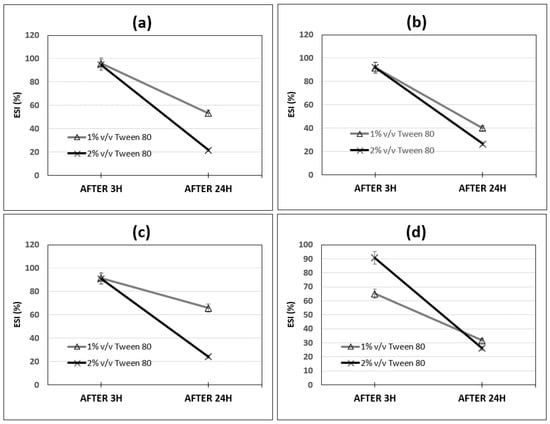
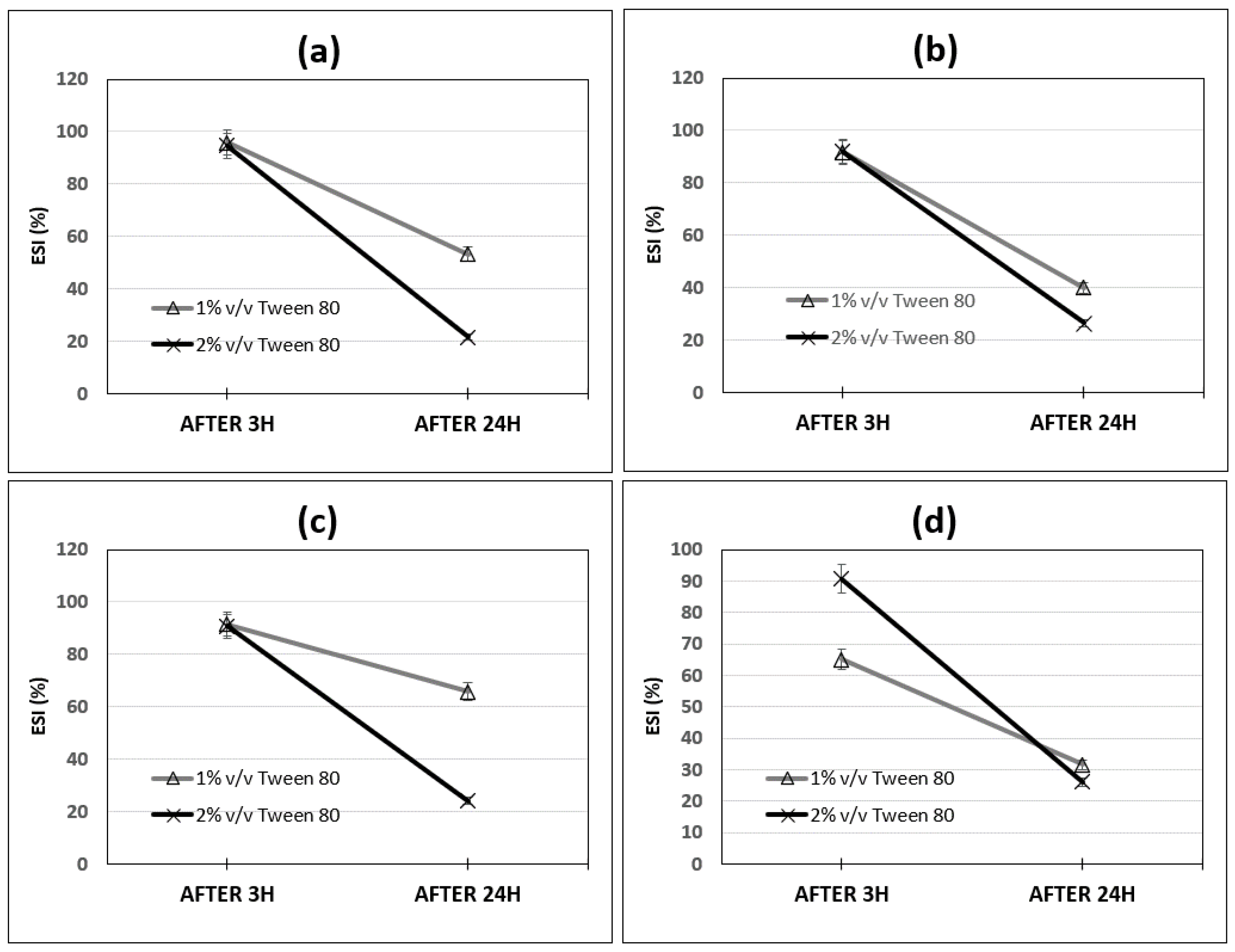
As shown in Figure 2, the prepared nanoemulsions exhibited high initial stability across all formulations after 3 h of storage. The emulsion stability index (ESI%) ranged from 90.66 ± 0.37% to 95.83 ± 0.41%, indicating effective short-term stabilization. The highest ESI value was recorded for the formulation prepared at 200 W with 1% (v/v) Tween 80 (95.83 ± 0.41%), followed closely by the formulation containing 2% (v/v) Tween 80 prepared at the same ultrasonic power (94.66 ± 0.38%). These results are consistent with the measured droplet size and zeta potential values, confirming efficient dispersion and stabilization through steric and electrostatic mechanisms.
Figure 2.
Emulsification stability index (ESI%) of nanoemulsions formulated with 1 and 2% v/v Tween 80 at different ultrasonic powers ((a) 200 W, (b) 300 W, (c) 400 W, and (d) 500 W): comparative analysis of 3 h and 24 h time points.
After 24 h of storage, a decrease in ESI% was observed for all formulations, although the extent of the reduction varied depending on the ultrasonic power and surfactant concentration. The formulation prepared at 400 W with 1% (v/v) Tween 80 maintained relatively high stability, with an ESI value of 65.8 ± 1.07%. In contrast, the formulation containing 2% (v/v) Tween 80 and prepared at 200 W showed a clear reduction in stability (21.5 ± 0.95%). Furthermore, excessive ultrasonic power (500 W) negatively affected emulsion stability, particularly when 1% (v/v) Tween 80 was used (31.6 ± 0.68%), probably due to polymer degradation or droplet flocculation induced by intense cavitation effects.
These findings indicate that both insufficient and excessive ultrasonic power can adversely affect nanoemulsion stability. A similar trend was reported by Jingnan Zhang et al. [28], who showed that excessive ultrasonic power negatively affected the stability of a pea protein-based emulsion, and by Bingbing Cui et al. [29], who proved that, while moderate ultrasonication enhances interfacial adsorption and droplet stabilization in Pickering emulsions, excessive ultrasonic power can lead to structural disruption and reduced emulsion stability. The highest stability after 24 h was observed at 400 W with 1% (v/v) Tween 80, indicating that this condition provides an optimal balance between droplet disruption and interfacial stabilization. This nanoemulsion maintained its physical stability not only after 24 h but also over a period of 7 days; the results obtained after 7 days showed only slight changes in droplet size and the PDI and no visual phase separation compared to the results obtained after 24 h.
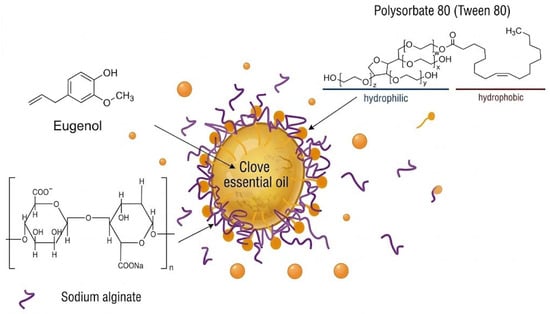
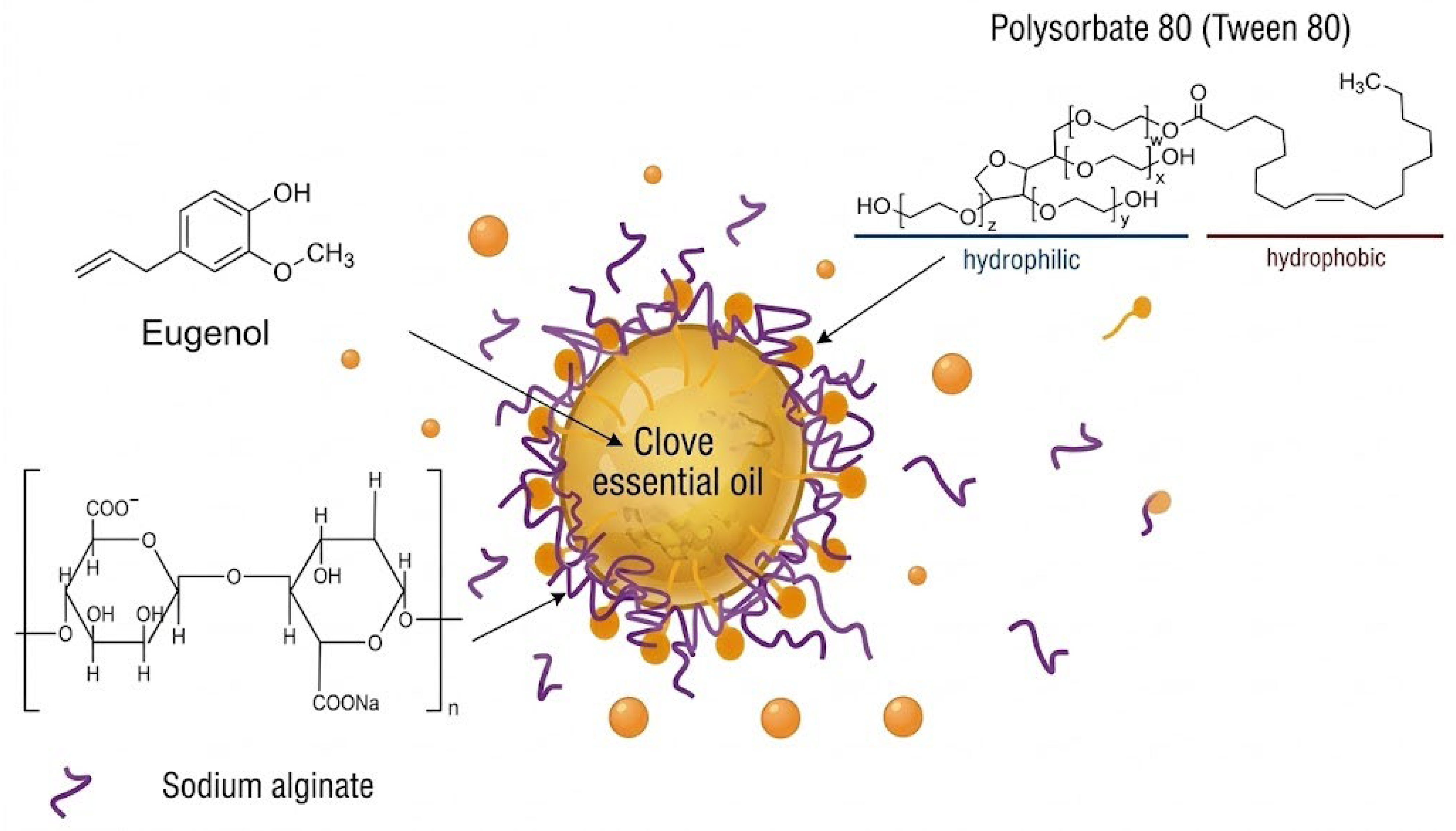
Figure 3 illustrates the proposed structural organization of the clove essential oil (CEO) nanoemulsions stabilized by sodium alginate and Tween 80. Tween 80 (Polysorbate 80), a non-ionic surfactant with a high hydrophilic–lipophilic balance (HLB ≈ 15), primarily contributes to nanoemulsion formation by reducing the interfacial tension between the oil and aqueous phases, thereby facilitating the disruption of the oil phase into small droplets during ultrasonic emulsification. Its amphiphilic structure allows its hydrophobic tail to associate with the oil phase, while the hydrophilic head remains oriented toward the aqueous phase, providing steric stabilization of the droplets.
Figure 3.
Schematic illustration of the stabilization mechanism of clove essential oil nanoemulsions using sodium alginate and Tween 80, showing electrostatic and steric stabilization at the oil–water interface.
Sodium alginate, present as a polyanionic component of the continuous aqueous phase, may contribute to the stabilization of the nanoemulsion. Its dissociated carboxylate (–COO−) groups can contribute to the negative charge of the system and may promote electrostatic repulsion between droplets. In combination with Tween 80, which facilitates droplet formation by reducing the interfacial tension between the oil and aqueous phases, sodium alginate may provide complementary stabilization through its contribution to the properties of the continuous phase and the overall surface charge of the system. In addition, possible intermolecular interactions involving alginate, Tween 80, and clove essential oil components such as eugenol may further contribute to the stability of the nanoemulsion.
3.3. Particle Size Analysis
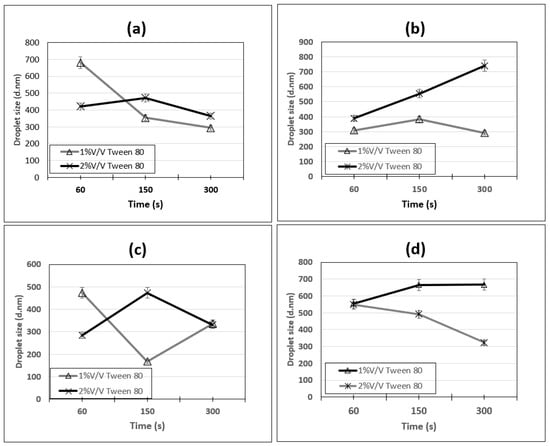
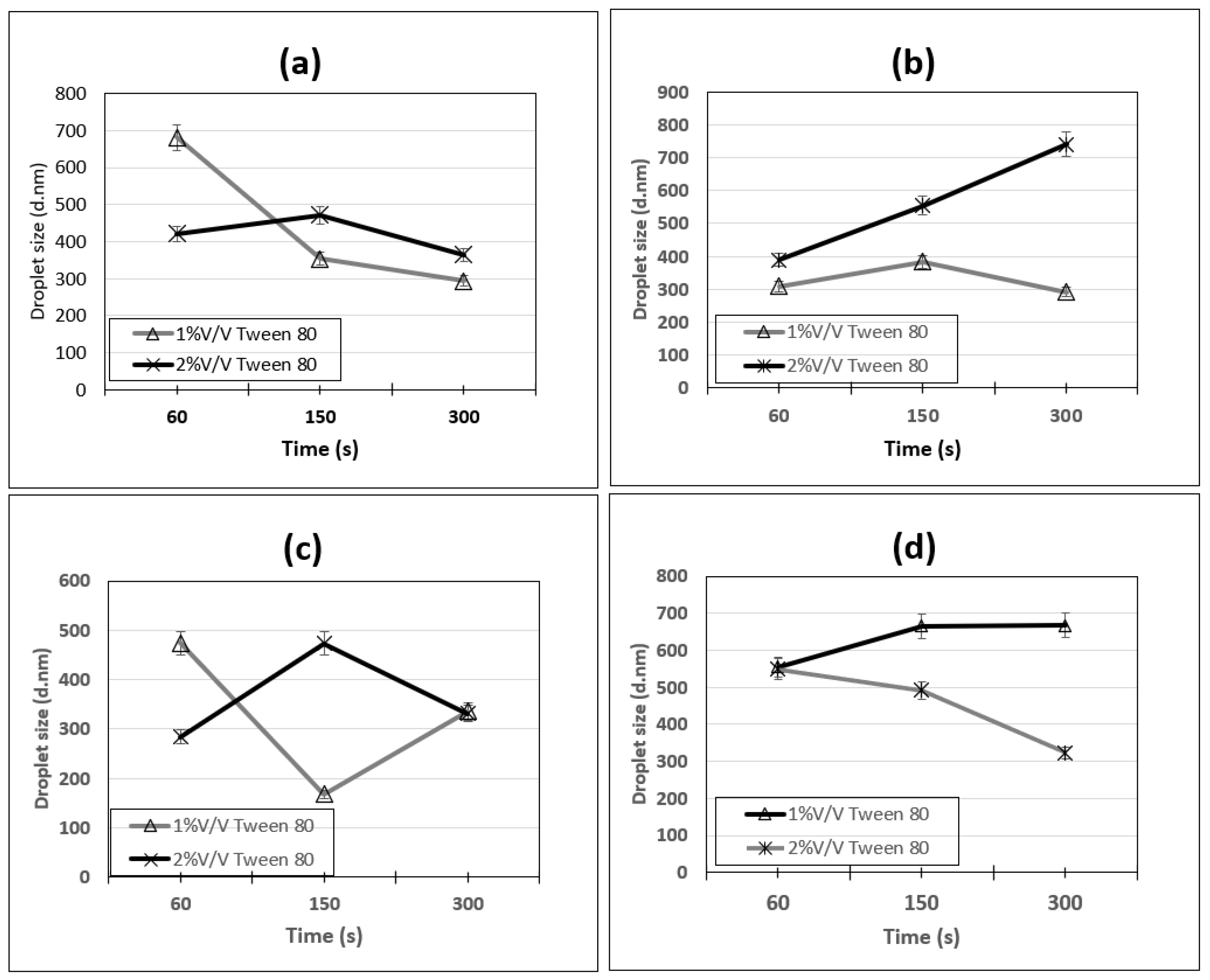
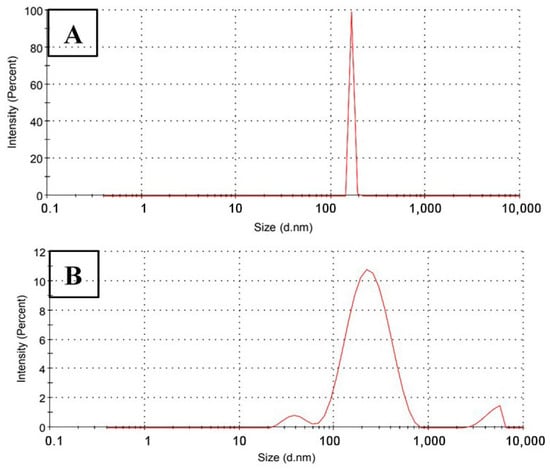
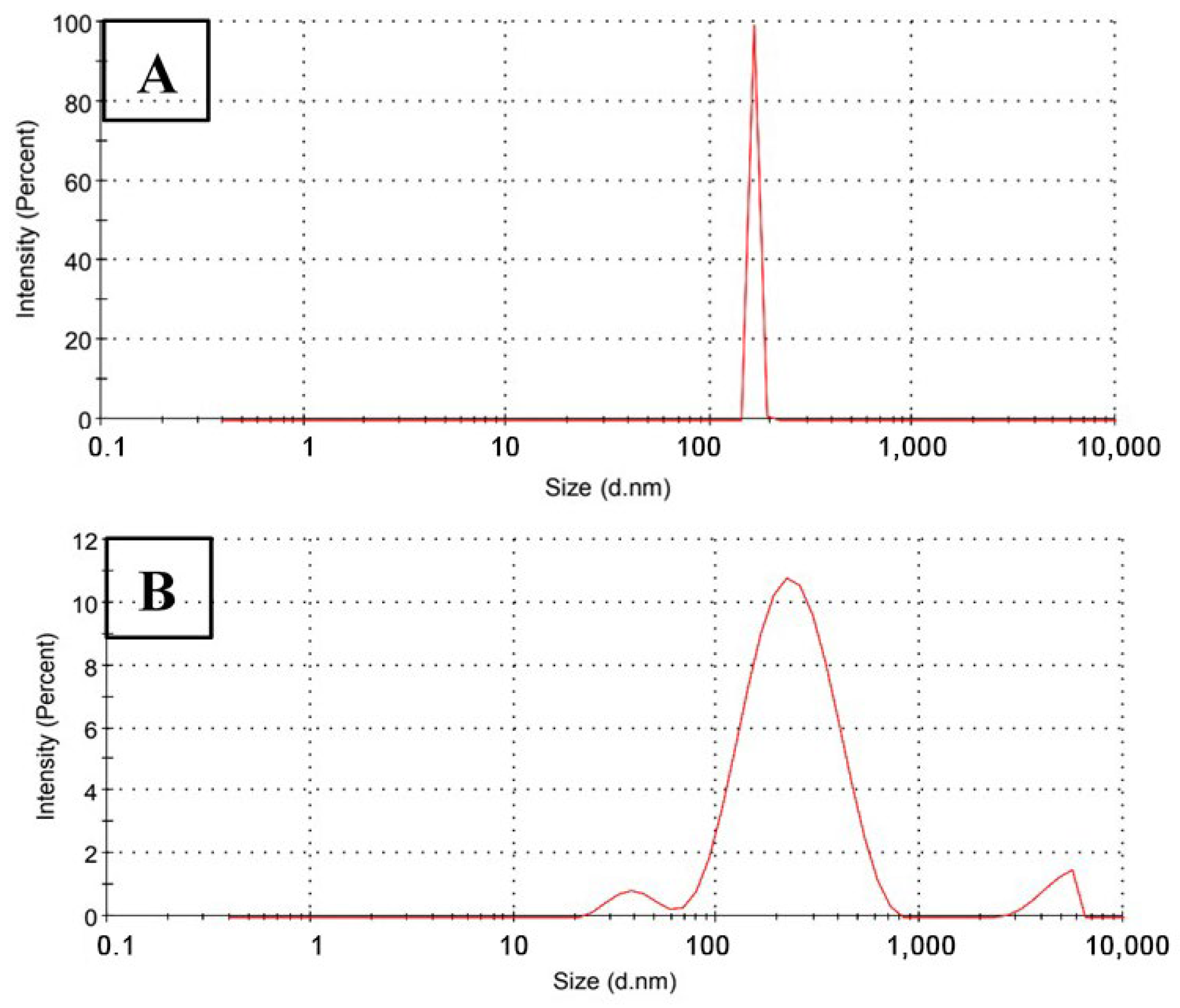
The droplet size of the nanoemulsions was influenced by both ultrasonic power and sonication time, as shown in Figure 4. For the formulation with 1% v/v Tween 80, a significant reduction in the mean droplet diameter was observed as ultrasonic power increased up to 400 W. Beyond this level, the droplet size increased again, suggesting over-processing effects. The smallest diameter of the main intensity peak was obtained at 400 W with a sonication time of 150 s, reaching 167.3 ± 5.2 nm (n = 3). Representative size distributions by intensity obtained by DLS for the formulations exhibiting the smallest mean droplet size at each Tween 80 concentration are presented in Figure 5. In contrast, the application of excessive ultrasonic power (500 W) resulted in larger droplets, with the diameter of the main intensity peak reaching 685.4 ± 12.8 nm at 300 s. This increase may be attributed to droplet coalescence induced by excessive cavitational energy and localized heating during prolonged sonication [30].
Figure 4.
Effects of nanoemulsion preparation conditions on droplet size (mean ± SD, n = 3), considering different ultrasonic powers ((a) 200 W, (b) 300 W, (c) 400 W, and (d) 500 W) and sonication times (60–300 s) with 1% and 2% v/v Tween 80.
Figure 5.
Representative size distributions by intensity obtained by dynamic light scattering (DLS) for two nanoemulsion formulations: (A) 400 W, 1% (v/v) Tween 80, 150 s, and (B) 400 W, 2% (v/v) Tween 80, 60 s.
At a lower ultrasonic power level (200 W), increasing the sonication time did not significantly reduce the droplet size, indicating that the applied energy was insufficient to promote efficient droplet disruption and emulsification. These results indicate that the ultrasonic energy input plays a crucial role in controlling the droplet size. Overall, the results demonstrate that the best emulsification conditions were 400 W with a sonication time of 150 s, which provided the most effective droplet disruption while maintaining system stability.
Emulsions containing 2% (v/v) Tween 80 generally exhibited larger droplet sizes under the same processing conditions. For instance, at 400 W, the smallest diameter of the main intensity peak was recorded after 60 s (283.5 ± 7.1 nm); however, further sonication did not improve the results and often resulted in increased droplet sizes. This behavior suggests a possible surfactant saturation or micellar crowding effect, which may hinder further droplet size reduction.
These findings support those of previous research by Ruiz et al. (2022) [31] and Gharibzahedi et al. (2018) [9], who reported that droplet size reduction during ultrasonication is effective only up to an optimal threshold. Beyond this point, excessive energy leads to re-coalescence, thermal degradation, and loss of interfacial stability, especially in systems involving heat-sensitive oils and biopolymers.
Overall, the formulation containing 1% (v/v) Tween 80 exhibited superior droplet size reduction and stability across the tested conditions compared with the formulation containing 2% (v/v), indicating that surfactant concentration must be carefully optimized alongside ultrasonic power and sonication time to avoid destabilizing effects.
3.4. Polydispersity Index (PDI)
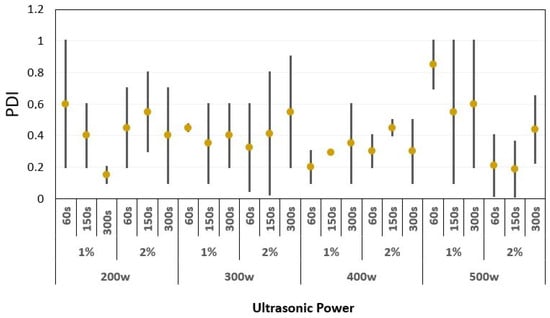
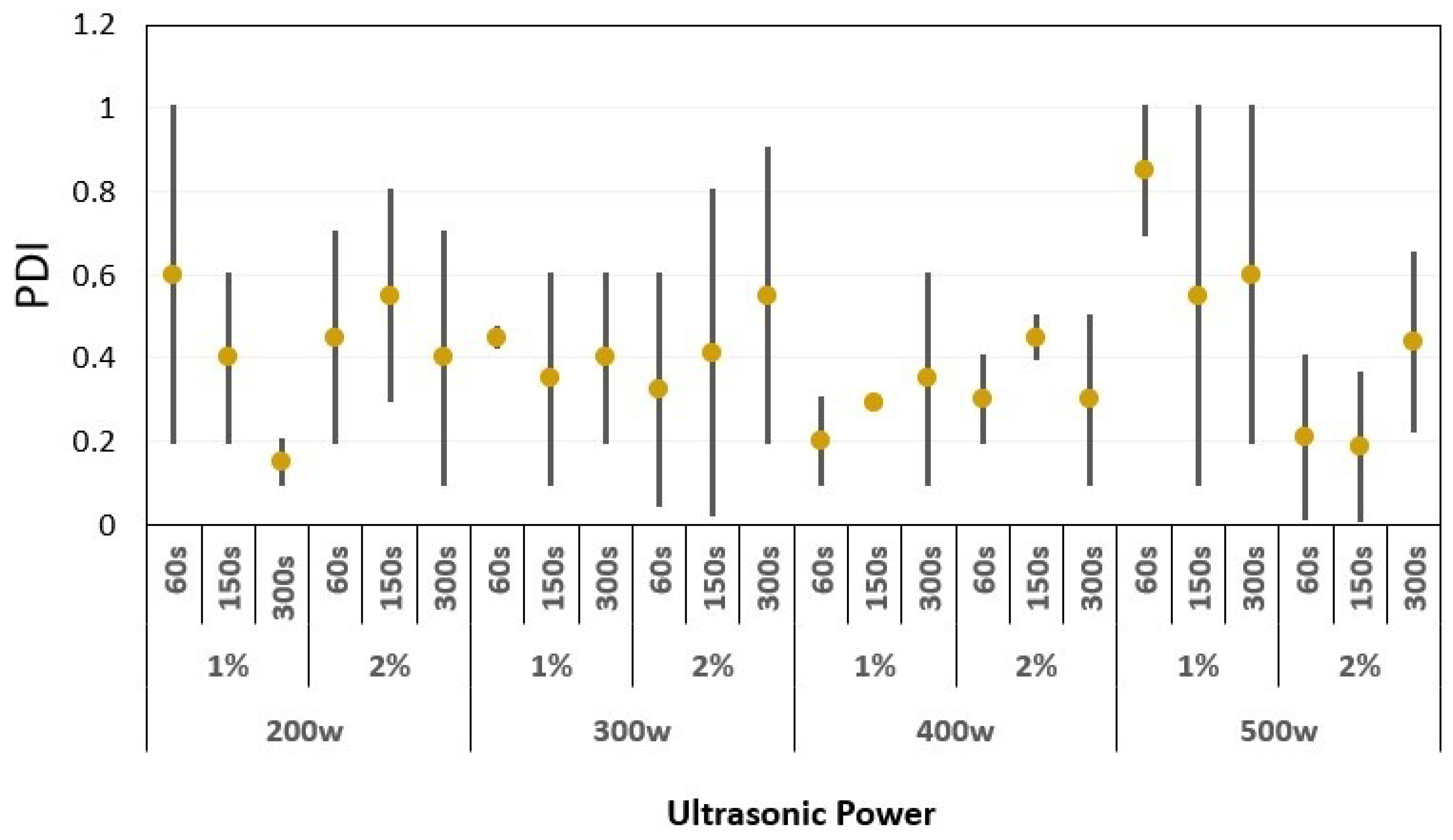
Figure 6 presents the PDI values of the nanoemulsions formulated with 1% and 2% (v/v) Tween 80 under different ultrasonic powers (200–500 W) and sonication times (60, 150, and 300 s). Each point represents the mean of three replicates (n = 3), while the error bars indicate the minimum and maximum values, providing an indication of inter-replicate variability.
Figure 6.
Polydispersity index (PDI) values (mean ± range, n = 3) of nanoemulsions prepared with 1% and 2% (v/v) Tween 80 under different ultrasonic power levels (200 W, 300 W, 400 W, and 500 W) and sonication times (60 s, 150 s, and 300 s).
The polydispersity index (PDI) is a key parameter used to evaluate the uniformity and stability of droplet size distributions in nanoemulsions. It ranges from 0 to 1, with values below 0.3 typically indicating a narrow size distribution and good physical stability. In contrast, higher PDI values (>0.5) indicate broader distributions, suggesting potential instability and a tendency toward phase separation. A PDI value close to zero corresponds to a monodisperse system, where droplets are highly uniform in size [32,33].
The nanoemulsion prepared at 400 W for 150 s using 1% (v/v) Tween 80 exhibited the lowest PDI value (~0.30) with the narrowest error range, indicating a relatively narrow droplet size distribution and good repeatability among the replicate measurements. In contrast, samples processed at 500 W, particularly for longer sonication durations, showed higher PDI values, indicating broader droplet size distributions. This behavior highlights the destabilizing effect of excessive ultrasonic energy, which may induce droplet coalescence or reduce surfactant efficiency. These results emphasize the importance of optimizing both ultrasonic power and sonication time to obtain nanoemulsions with a relatively narrow droplet size distribution and good stability.
3.5. Zeta Potential Analysis
Zeta potential is a key physicochemical parameter for evaluating the colloidal stability of nanoemulsions, as it reflects the magnitude of electrostatic repulsion between dispersed droplets. In general, absolute zeta potential values greater than ±30 mV indicate sufficient electrostatic repulsion to prevent droplet aggregation and promote long-term colloidal stability. In the present study, the pH of the sodium alginate solution remained constant throughout nanoemulsion preparation (6.04 ± 0.07), since the alginate concentration was kept unchanged for all formulations. At this pH, the carboxyl groups of sodium alginate are predominantly deprotonated, producing negatively charged carboxylate (–COO−) groups that contribute directly to the negative surface charge of the oil droplets.
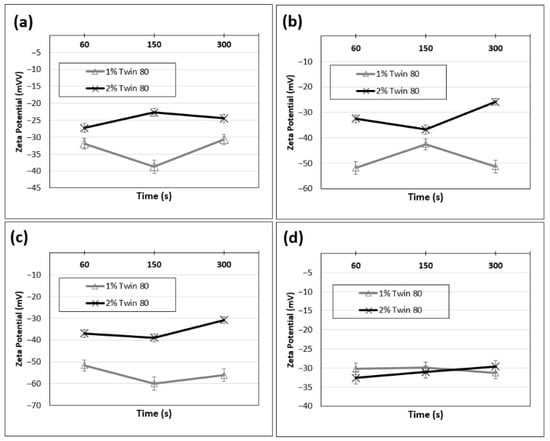
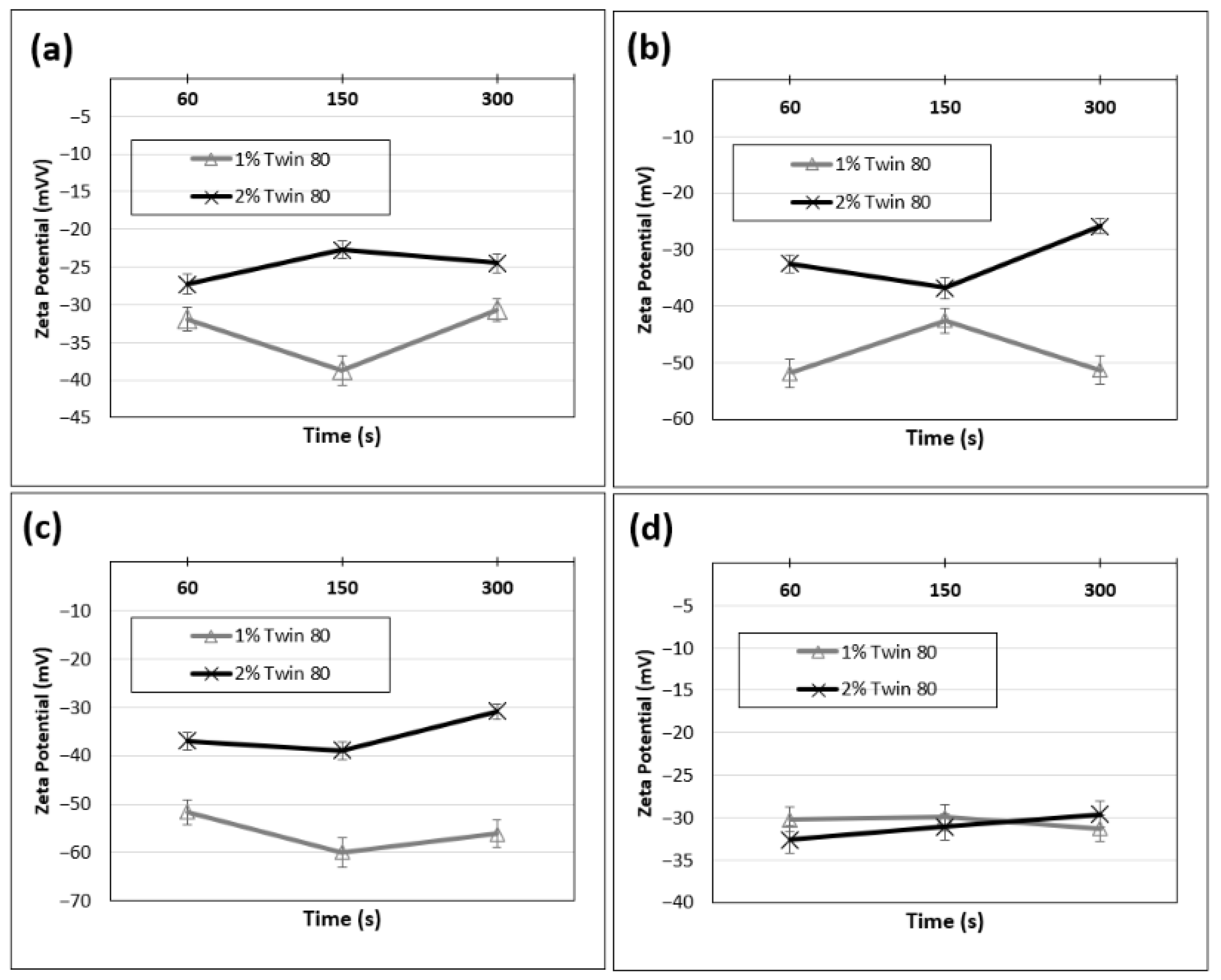
Figure 7 presents the evolution of the zeta potential of the sodium alginate-stabilized clove oil nanoemulsions prepared with two Tween 80 concentrations (1 and 2% v/v) as a function of sonication time under four ultrasonic power levels (200, 300, 400, and 500 W). Regardless of the processing conditions, all formulations exhibited negative zeta potential values, indicating the presence of negatively charged species at or near the oil–water interface and suggesting a contribution of sodium alginate to the interfacial charge of the droplets.
Figure 7.
Evolution of the zeta potential (mean ± SD, n = 3) of sodium alginate-stabilized clove oil nanoemulsions prepared with 1 and 2% (v/v) Tween 80 as a function of sonication time under different ultrasonic powers: (a) 200 W, (b) 300 W, (c) 400 W, and (d) 500 W. Error bars represent the standard deviation of three independent measurements.
At an ultrasonic power of 200 W (Figure 7a), the formulation prepared with 1% Tween 80 exhibited zeta potential values ranging from approximately −32 to −39 mV, whereas the formulation containing 2% Tween 80 showed less negative values, varying between −23 and −28 mV. Although slight fluctuations were observed with increasing sonication time, all formulations remained within the stability range generally accepted for colloidal systems. The lower absolute zeta potential obtained with 2% Tween 80 suggests a partial reduction in the electrostatic stabilization of the droplets.
Increasing the ultrasonic power to 300 W (Figure 7b) enhanced the negative surface charge, particularly for the formulation containing 1% Tween 80, which reached values close to −52 mV. This increase may be associated with greater exposure or contribution of negatively charged sodium alginate at the droplet interface, resulting in stronger electrostatic repulsion between droplets. In contrast, the nanoemulsions prepared with 2% Tween 80 remained consistently less negative than those prepared with 1% Tween 80 throughout the entire sonication period.
The most negative zeta potential values were obtained at 400 W (Figure 7c). Under these conditions, the formulation containing 1% Tween 80 reached approximately −60 ± 1.7 mV, corresponding to the strong electrostatic repulsion observed in this study. This result is consistent with that of the particle size and polydispersity index analyses, where the same processing conditions produced the smallest droplet size and the narrowest size distribution. The combination of moderate ultrasonic power and appropriate surfactant concentration therefore provided favorable conditions for droplet disruption and interfacial stabilization.
However, when the ultrasonic power was further increased to 500 W (Figure 7d), the zeta potential became markedly less negative for both formulations, approaching −30 mV. This decrease indicates a reduction in the magnitude of electrostatic repulsion despite the higher energy input. Similar observations have been reported in previous studies and are generally attributed to excessive cavitation intensity. Ruiz et al. (2022) [31] reported that intense ultrasonication may mechanically degrade polysaccharide chains such as sodium alginate, thereby reducing their ability to stabilize and electrically charge the droplet surface. Likewise, Peng et al. (2024) [34] demonstrated that excessive ultrasonic energy may induce droplet re-coalescence due to disruption of the stabilizing interfacial layer and localized heating effects. Furthermore, Song et al. (2022) [35] suggested that excessive ultrasonic energy can overcome the electrostatic repulsion barrier between droplets, particularly when surfactant desorption or interfacial disruption occurs, resulting in a decrease in the measured zeta potential and a higher tendency toward droplet aggregation.
At each ultrasonic power level, sonication time produced only moderate fluctuations in zeta potential. No systematic increase or decrease was observed when the treatment time was extended from 60 to 300 s, indicating that, once sufficient ultrasonic energy had been applied to generate the nanoemulsion, extending the sonication time had only a limited influence on the surface charge of the droplets. This suggests that ultrasonic power plays a much more significant role than sonication time in determining the electrostatic stability of the nanoemulsion system.
A consistent trend was also observed regarding the effect of surfactant concentration. Across all ultrasonic power levels, the nanoemulsions prepared with 1% Tween 80 generally exhibited more negative zeta potential values than those prepared with 2% Tween 80, indicating a greater magnitude of electrostatic repulsion. Although Tween 80 efficiently reduces interfacial tension during emulsification, an excessive surfactant concentration may promote micelle formation within the continuous phase instead of additional adsorption at the oil–water interface. This could partially reduce the apparent contribution of negatively charged sodium alginate to the interfacial potential, resulting in less negative zeta potential values. Similar behavior was reported by Song et al. (2022) and Peng et al. (2024) [34,35].
Overall, these results demonstrate that ultrasonic power strongly influenced the zeta potential of the sodium alginate-stabilized clove oil nanoemulsions under the investigated conditions. Among the investigated conditions, 400 W combined with 1% Tween 80 provided the highest absolute zeta potential (approximately −60 mV), together with the smallest reported droplet size and a relatively low PDI. These results indicate that this combination provided favorable conditions for droplet disruption and interfacial stabilization of the nanoemulsion.
Table 2 compares the physicochemical characteristics of sodium alginate-based clove essential oil nanoemulsions reported in previous studies with those obtained in the present work. The nanoemulsion developed in this study exhibited a diameter of the main intensity peak of 167.3 ± 5.2 nm, a mean zeta potential of −60 ± 1.7 mV, and a PDI of 0.30 ± 0.01. The relatively low PDI indicates a comparatively narrow droplet size distribution, while the highly negative zeta potential suggests strong electrostatic repulsion between droplets, contributing to colloidal stability. Although smaller droplet sizes have occasionally been reported in the literature, some of these formulations exhibited less negative zeta potential values or involved additional stabilizing components, such as calcium ions or cellulose nanocrystals. In contrast, the present formulation achieved a favorable combination of droplet size, PDI, and zeta potential using sodium alginate as the biopolymer stabilizer, with Tween 80 as the surfactant. Furthermore, the zeta potential value of −60 ± 1.7 mV obtained for the emulsion prepared using 400 W power for 150 s with 1% (v/v) Tween 80 is more negative than the values reported in the compared studies, suggesting stronger electrostatic repulsion between droplets and enhanced colloidal stability. Within the range of formulations and characterization approaches reported in the literature, the present formulation exhibited a favorable combination of droplet size, PDI, and zeta potential.
Table 2.
Comparison of physicochemical characteristics of sodium alginate-based clove essential oil nanoemulsions reported in the literature and in the present study.
3.6. ATR-FTIR Spectroscopy Analysis
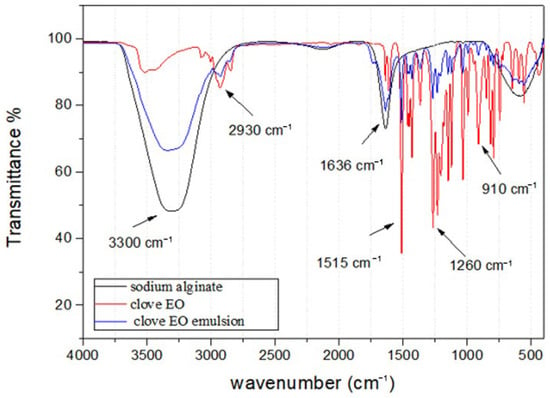
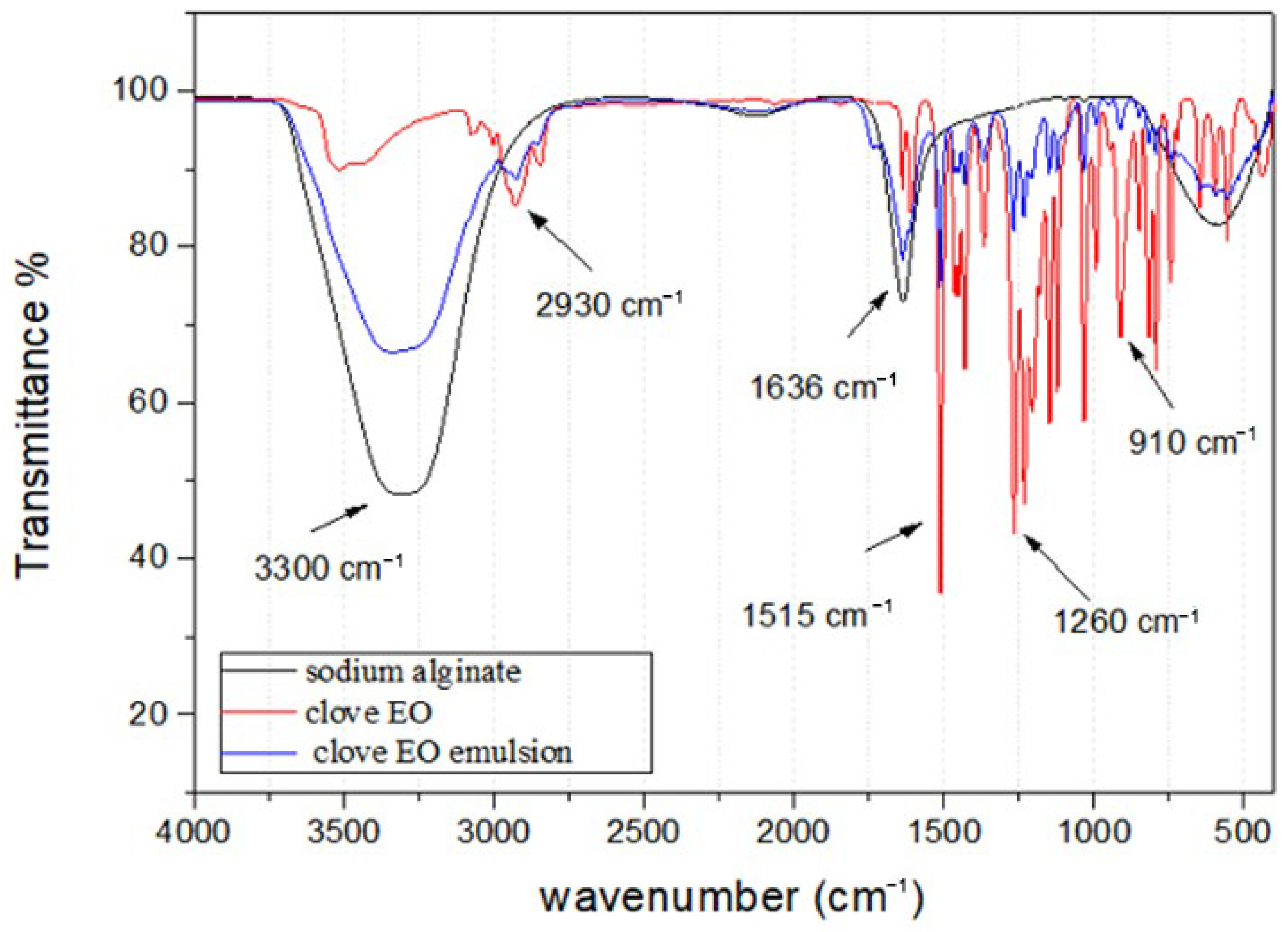
ATR-FTIR spectroscopy was employed to investigate the molecular interactions between the clove essential oil and the sodium alginate in the alginate-stabilized oil-in-water nanoemulsion prepared at 400 W for 150 s. Figure 8 presents the FTIR spectra of pure clove essential oil, sodium alginate, and the selected nanoemulsion, allowing for the identification of characteristic functional groups and potential spectral changes associated with the interaction of the CEO with alginate within the emulsion system.
Figure 8.
ATR-FTIR spectra of pure clove essential oil, sodium alginate, and the optimized sodium alginate-stabilized clove oil nanoemulsion prepared at 400 W for 150 s. The labeled bands highlight the main spectral changes associated with intermolecular interactions and oil incorporation into the alginate-stabilized emulsion system.
The FTIR spectrum of pure clove essential oil exhibited the characteristic absorption bands reported in previous studies. The broad band centered at 3480 cm−1 corresponds to O–H stretching vibrations, while the bands at 2929–2844 cm−1 are assigned to aliphatic C–H stretching vibrations. The characteristic peaks located at 1610, 1515, and 1433 cm−1 are attributed to the C=C stretching vibrations of the aromatic ring. Additional absorption bands observed at 1260 and 1033 cm−1 correspond to C–O stretching vibrations, whereas the band at 910 cm−1 is assigned to O–H bending. The bands at 848 and 796 cm−1 are associated with aromatic C–H out-of-plane bending vibrations, consistent with the characteristic vibrational features of eugenol, the major constituent of clove essential oil identified by GC–MS analysis [36,37].
The FTIR spectrum of sodium alginate displayed the characteristic absorption bands of this polysaccharide. The broad absorption band at 3330 cm−1 corresponds to O–H stretching vibrations, whereas the weak band at 2935 cm−1 is attributed to aliphatic C–H stretching. The characteristic peaks located at 1643 and 1426 cm−1 are assigned to the asymmetric and symmetric stretching vibrations of carboxylate (–COO−) groups, respectively. Additional bands at 1290, 1130, 1081, and 950 cm−1 are attributed mainly to C–O and C–C stretching vibrations within the polysaccharide backbone [38,39,40].
Compared with the spectra of the individual components, the selected nanoemulsion exhibited several significant spectral modifications, indicating the establishment of intermolecular interactions between the sodium alginate and clove essential oil. The broad O–H stretching band around 3300 cm−1 became more intense and partially overlapped with the C–H stretching band of clove oil located at approximately 2930 cm−1, suggesting the formation of hydrogen bonds between alginate chains, Tween 80 molecules, and eugenol molecules at the oil–water interface. These interactions are expected to contribute to the stabilization of the dispersed oil droplets.
To quantitatively evaluate the spectral modifications induced by nanoemulsion formation, the relative peak heights of the characteristic absorption bands were measured using OriginPro 9.0 software (OriginLab Corporation, Northampton, MA, USA) and compared with those of pure clove essential oil. Several characteristic bands of clove essential oil exhibited a marked reduction in intensity after emulsification. The aromatic C=C stretching band at 1515 cm−1 decreased by approximately 75%, while the band at 1433 cm−1 decreased by 33.34%. Likewise, the C–O stretching bands at 1260 and 1033 cm−1 showed intensity reductions of 62.90% and 54.80%, respectively. The O–H bending band at 910 cm−1 decreased by 37.69%, whereas the aromatic C–H bending bands at 848 and 796 cm−1 decreased by 16.75% and 37.51%, respectively. These reductions may indicate interactions between the functional groups of the clove essential oil and the alginate-stabilized emulsion system, potentially resulting in changes in molecular mobility and reduced exposure of oil molecules at the oil–water interface after emulsification.
Another significant spectral modification was observed for the aromatic band initially located at 1610 cm−1 in pure clove essential oil, which shifted toward 1643 cm−1 in the nanoemulsion spectrum. Since sodium alginate also exhibits a characteristic carboxylate absorption band in the same spectral region, this shift is attributed to the overlap of both contributions together with enhanced intermolecular interactions between the polymer matrix and the encapsulated oil. The slight reduction in the intensity of the alginate band further supports the formation of intermolecular associations within the nanoemulsion system.
Consequently, the observed spectral modifications, including peak broadening, partial band overlap, band shifting, and the quantitative reduction in the intensity of the characteristic bands, provide evidence for the association of the clove essential oil with the alginate-stabilized nanoemulsion system. These results suggest that hydrogen bonding and interfacial interactions between sodium alginate, Tween 80, and clove oil may contribute to the stabilization of the dispersed oil droplets and the chemical stability of the nanoemulsion, supporting its potential application as a stable bio-based carrier for bioactive compounds.
3.7. Raman Microscopy Analysis
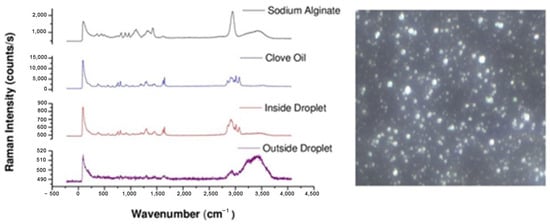
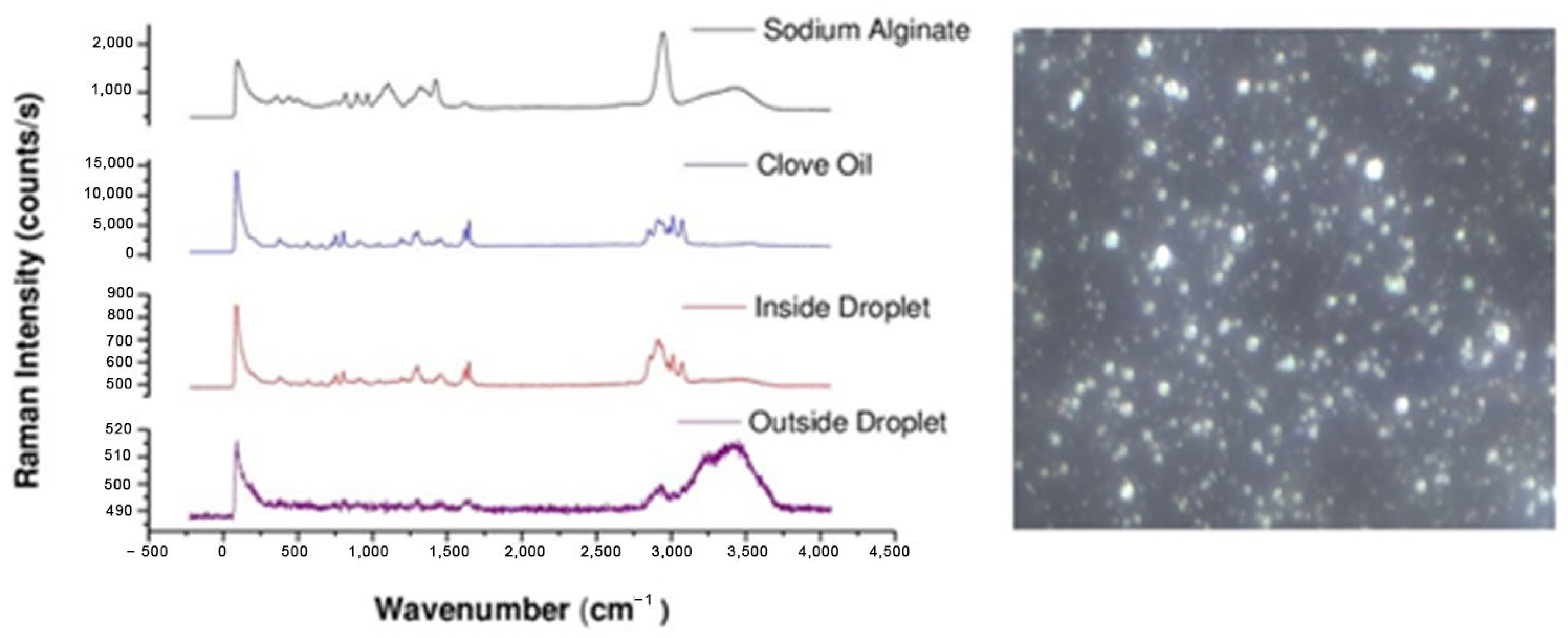
Figure 9 shows an optical image of a nanoemulsion droplet, with the laser beam focused on a selected droplet. The corresponding Raman spectrum is presented in Figure 8. The laser was precisely focused either inside or outside an individual droplet to enable localized chemical analysis. The spectrum acquired from the interior of the droplet exhibits characteristic vibrational bands attributed to clove essential oil. In contrast, the Raman spectrum recorded outside the droplet exhibits only broad bands characteristic of sodium alginate, with no detectable peaks corresponding to clove essential oil. These results demonstrate the spatial localization of the oil within the dispersed droplets, confirming the presence of clove essential oil in the alginate-stabilized nanoemulsion system.
Figure 9.
Confocal Raman characterization of clove oil nanoemulsions (prepared using 400 W power for 150 s with 1% (v/v) Tween 80): spectral analysis and optical imaging of droplet distribution.
3.8. Antimicrobial Activity
3.8.1. Agar Diffusion Assay
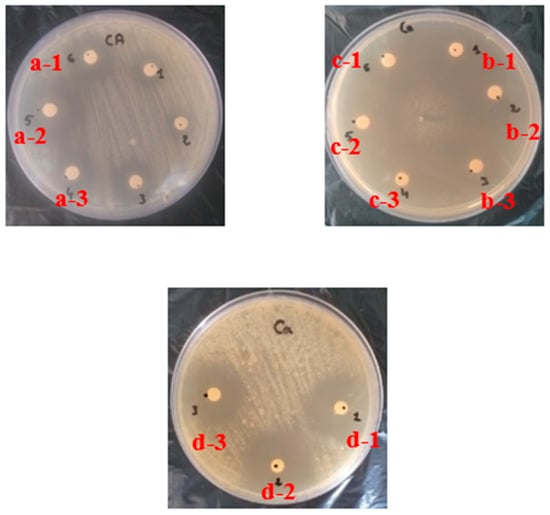
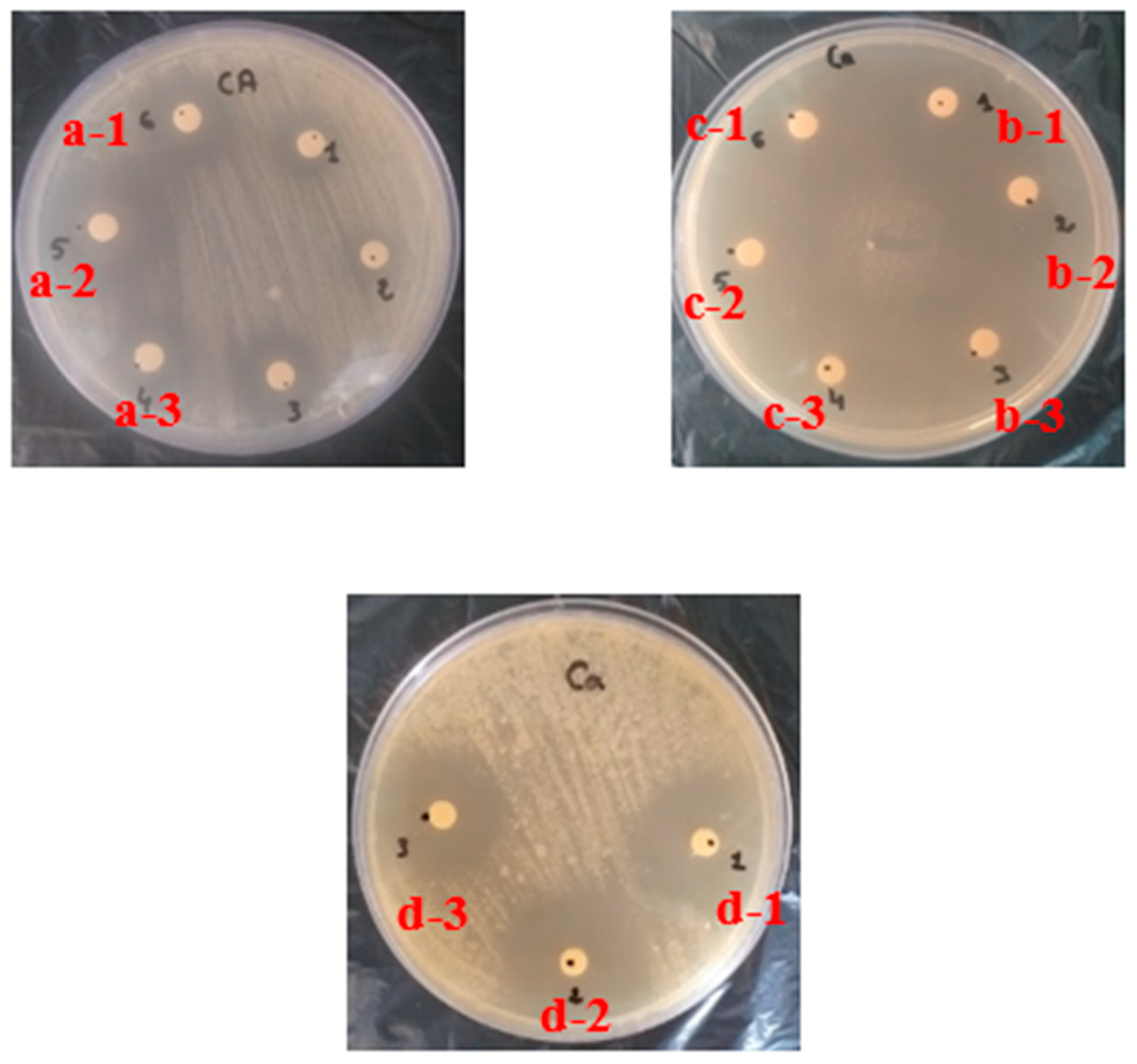
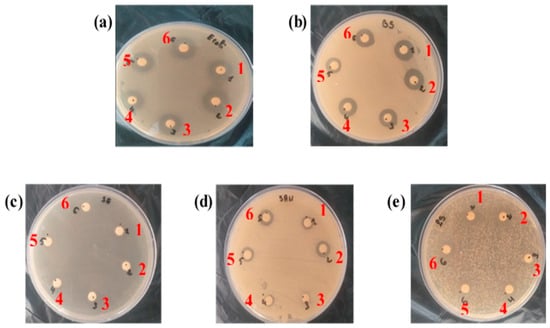
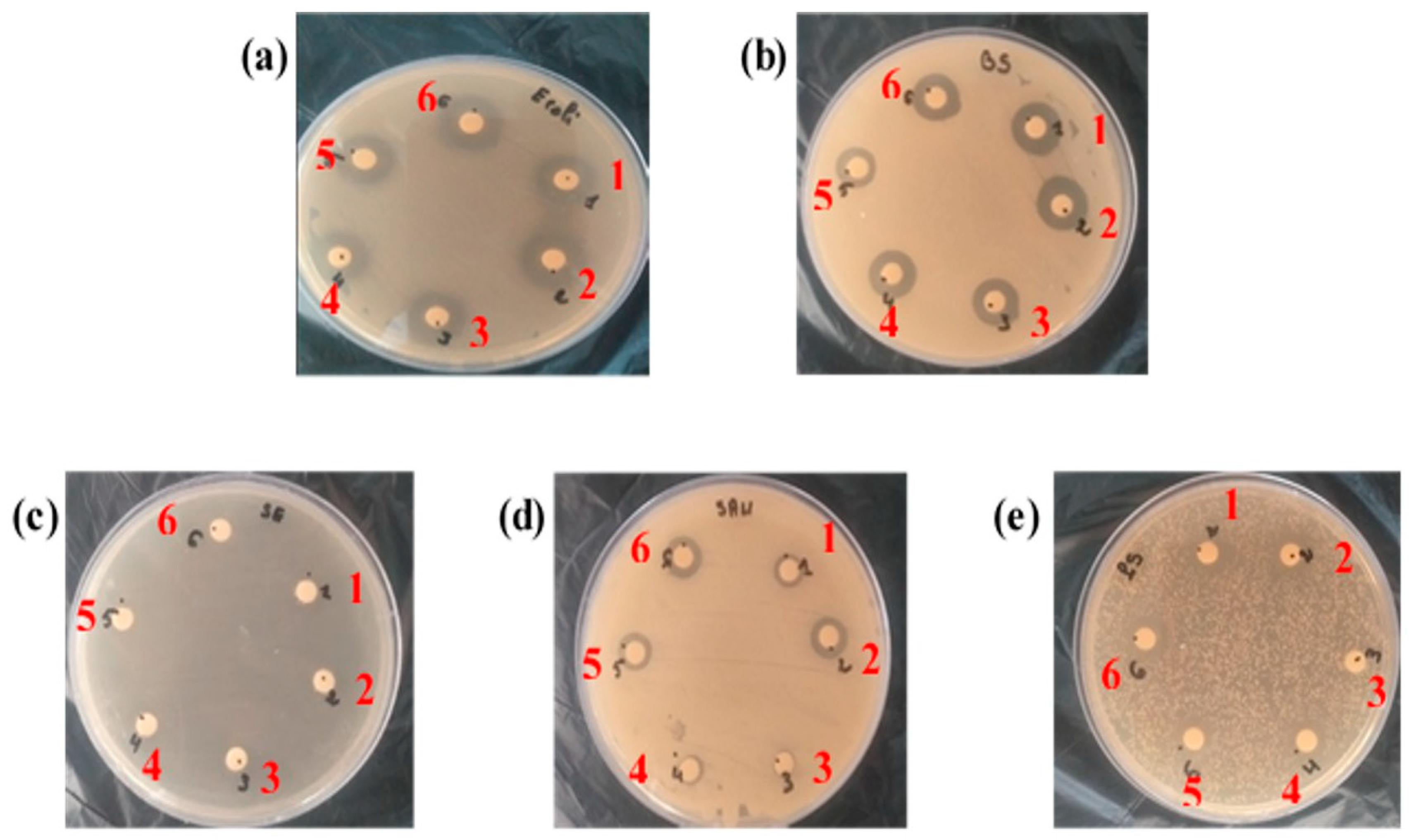
The antimicrobial activities of the sodium alginate-stabilized clove essential oil (CEO) nanoemulsions prepared under different ultrasonic powers and sonication times were evaluated against those of one fungal strain (Candida albicans) and five bacterial strains, namely, Escherichia coli ATCC8739, Bacillus subtilis ATCC6633, Salmonella enterica 52.62, Pseudomonas aeruginosa ATCC9027, and Staphylococcus aureus ATCC6538. Representative examples of the antifungal and antibacterial activities are presented in Figure 10 and Figure 11, respectively, while the inhibition zone diameters obtained for all formulations are summarized in Table 3. The results demonstrate that the ultrasonic processing conditions markedly influenced the antimicrobial performance of the nanoemulsions.
Figure 10.
Representative antifungal activity of sodium alginate-stabilized clove essential oil nanoemulsions against Candida albicans. The letters indicate the ultrasonic power [(a) 200 W, (b) 300 W, (c) 400 W, and (d) 500 W], while the numbers indicate the sonication time [(1) 60 s, (2) 150 s, and (3) 300 s].
Figure 11.
Representative antibacterial activity of sodium alginate-stabilized clove essential oil nanoemulsions against selected bacterial strains. Numbers (1–6) correspond to the tested formulations: S1 (400 W, 60 s), S2 (400 W, 150 s), S3 (400 W, 300 s), S4 (500 W, 60 s), S5 (500 W, 150 s), and S6 (500 W, 300 s). Panels correspond to (a) Escherichia coli, (b) Bacillus subtilis, (c) Salmonella enterica 52.62, (d) Staphylococcus aureus, and (e) Pseudomonas aeruginosa ATCC9027.
Table 3.
Antimicrobial activity (inhibition zone diameters, mm) of ultrasound-assisted alginate-stabilized clove oil nanoemulsions under various ultrasonic power and sonication times, compared with that of free clove essential oil, against selected microbial strains (mean ± SD, n = 3).
Among all tested microorganisms, the nanoemulsions exhibited the strongest activity against Candida albicans. As shown in Figure 10 and Table 3, clear inhibition zones were observed around all nanoemulsion-treated disks, confirming the preservation of the antifungal activity of the clove essential oil after nanoemulsification. The nanoemulsions prepared at 300 and 400 W exhibited the highest antifungal activity, producing inhibition zones of approximately 30 mm over the investigated sonication times (60–300 s). In contrast, the formulations prepared at lower ultrasonic powers (200 W) showed smaller inhibition zones ranging from 10 to 24 mm, indicating that insufficient ultrasonic energy resulted in less efficient emulsification and a less homogeneous dispersion of the clove essential oil. When the ultrasonic power was increased to 500 W, the inhibition zones remained relatively large (27–30 mm) but exhibited a slight reduction compared with those obtained at 300–400 W, suggesting that excessive ultrasonic treatment may partially disturb the interfacial structure of the nanoemulsion and slightly reduce its antimicrobial effectiveness.
Free clove essential oil and a negative control were included to validate the assay. The free essential oil produced the largest inhibition zone against Candida albicans (34 ± 0.1 mm), whereas the negative control, consisting of sodium alginate and Tween 80 without clove essential oil, produced no inhibition zone. These results indicate that the observed antifungal activity was primarily attributable to the clove essential oil. The slightly larger inhibition zone obtained with the free oil is expected in agar diffusion assays because the non-encapsulated oil is immediately available for diffusion through the agar medium. In contrast, encapsulation within the alginate matrix slows the initial diffusion of the active compounds while providing improved physicochemical stability and the potential for controlled release.
The remarkable antifungal activity of clove essential oil is mainly attributed to its high eugenol content. Owing to its lipophilic nature, eugenol readily penetrates fungal cell membranes, disrupts membrane permeability, alters mitochondrial function, and ultimately induces cell death [41]. Pinto et al. [42] demonstrated that clove oil compounds interfere with ergosterol biosynthesis, an essential component responsible for maintaining fungal membrane integrity. Similarly, eugenol has been shown to significantly reduce ergosterol content in Candida albicans, thereby increasing membrane permeability and contributing to its potent antifungal activity [43].
The antibacterial activity of the nanoemulsions is presented in Figure 11 and summarized in Table 3. All formulations exhibited antibacterial activity against both Gram-positive and Gram-negative bacteria, although the susceptibility varied among the tested microorganisms. Among the tested microorganisms, C. albicans exhibited the highest susceptibility. Among the bacterial strains, Escherichia coli and Bacillus subtilis were the most susceptible, whereas Pseudomonas aeruginosa ATCC9027 exhibited the lowest sensitivity. The relatively lower susceptibility of Pseudomonas aeruginosa ATCC9027 and Salmonella enterica 52.62 can be attributed to the presence of an outer membrane in Gram-negative bacteria, which acts as an effective permeability barrier against hydrophobic antimicrobial compounds such as eugenol. In contrast, Gram-positive bacteria generally exhibited greater susceptibility because of their less complex cell envelope, allowing easier interaction of the essential oil components with the cytoplasmic membrane.
As summarized in Table 3, increasing the ultrasonic power from 200 to 400 W generally enhanced the antibacterial activity of the nanoemulsions. The strongest antibacterial effects were obtained for the formulations prepared between 300 and 500 W, with inhibition zones reaching 14–15 mm for Bacillus subtilis and 15–16 mm for Escherichia coli. In contrast, the inhibition zones for Pseudomonas aeruginosa did not exceed 11 mm, confirming its higher intrinsic resistance to essential oil-based antimicrobial agents.
The negative control produced no inhibition zones for any of the tested bacterial strains, confirming that sodium alginate and Tween 80 did not contribute to the antimicrobial activity. The free clove essential oil generally produced slightly larger inhibition zones than the nanoemulsions because the active compounds were immediately available for diffusion through the agar medium. Nevertheless, despite the slightly smaller diameters, the nanoemulsions retained substantial antibacterial activity while providing important advantages, including improved colloidal stability, protection of the volatile bioactive compounds against oxidation and evaporation, and the potential for sustained release.
The antibacterial activity of clove essential oil is primarily attributed to the phenolic hydroxyl groups of eugenol, which interact with bacterial membranes, increase membrane permeability, disrupt intracellular homeostasis, and induce leakage of essential cellular constituents [44]. Similar observations have been reported in previous studies. Yasser et al. [45] demonstrated significant antibacterial activity of clove oil nanoemulsions against several bacterial species, including Staphylococcus aureus, Bacillus subtilis, Bacillus cereus, Listeria monocytogenes, and Escherichia coli. Likewise, Cui et al. [46] reported enhanced antibacterial activity of encapsulated clove essential oil against Staphylococcus aureus and Escherichia coli, supporting the antimicrobial performance observed in the present study.
Overall, the antimicrobial activity closely followed the physicochemical characteristics of the nanoemulsions. Formulations exhibiting smaller droplet sizes, narrower size distributions, and higher absolute zeta potential values generally produced larger inhibition zones, suggesting that improved colloidal stability promoted a more homogeneous dispersion of the clove essential oil and facilitated its interaction with microbial cells. Conversely, although the nanoemulsions prepared at 500 W maintained good antimicrobial activity, the slight reduction in inhibition zones was consistent with the decrease in the absolute zeta potential observed at this ultrasonic power, indicating that excessive ultrasonic treatment may compromise both colloidal stability and biological performance.
Among the investigated formulations, the nanoemulsion prepared at 400 W for 150 s using 1% (v/v) Tween 80 exhibited the best overall antimicrobial performance together with the most favorable physicochemical characteristics, including a diameter of the main intensity peak of 167.3 ± 5.2 nm, a PDI of 0.30 ± 0.01, and a zeta potential of −60 ± 1.7 mV. The enhanced antimicrobial activity observed for this formulation is likely related to its small droplet size, narrow size distribution, and excellent colloidal stability, which promoted homogeneous dispersion of the clove essential oil and facilitated its interaction with microbial cells. Similar relationships between nanoemulsion physicochemical properties and antimicrobial performance have been reported for ultrasound-assisted essential oil nanoemulsions stabilized with different biopolymers and emulsifiers [35,47,48]. Collectively, these findings demonstrate that ultrasound-assisted sodium alginate-based clove essential oil nanoemulsions are promising bio-based antimicrobial systems and represent a suitable intermediate formulation for further encapsulation and incorporation into functional textile materials and other biomedical applications.
3.8.2. Micro-Well Plate Dilution Assay
The antimicrobial efficacy of the nanoemulsion formulation (400 W, 150 s, and 1% Tween 80) that exhibited the best physicochemical stability and antimicrobial performance among the investigated samples was further evaluated using the micro-well plate dilution method to determine the minimum inhibitory concentration (MIC) and the minimum bactericidal/fungicidal concentration (MBC/MFC). The obtained MIC and MBC/MFC values are presented in Table 4.
Table 4.
Minimum inhibitory concentration (MIC) and minimum bactericidal/fungicidal concentration (MBC/MFC) of the selected sodium alginate-stabilized clove essential oil nanoemulsion against the tested microbial strains.
The tested nanoemulsion exhibited broad-spectrum antimicrobial activity against all microorganisms investigated, although their vulnerability varied considerably. Candida albicans was the most sensitive microorganism, exhibiting the lowest MIC and MFC values (0.3125% v/v), indicating that only a low nanoemulsion concentration was sufficient to completely inhibit fungal growth and exert a fungicidal effect. This result is fully consistent with that of the agar diffusion assay, in which C. albicans exhibited the largest inhibition zones, confirming the remarkable antifungal efficacy of the nanoemulsion.
Among the bacterial strains, Escherichia coli, Salmonella enterica 52.62, and Bacillus subtilis exhibited identical MIC and MBC values of 0.625% (v/v), demonstrating high susceptibility to the nanoemulsion. Staphylococcus aureus showed intermediate sensitivity, with MIC and MBC values of 1.25% (v/v), whereas P. aeruginosa was the least susceptible microorganism, requiring 5% (v/v) of the nanoemulsion to completely inhibit bacterial growth. This higher resistance is consistent with the intrinsic defense mechanisms of P. aeruginosa, particularly its highly impermeable outer membrane and efficient efflux systems, which limit the penetration and intracellular accumulation of hydrophobic antimicrobial compounds such as eugenol.
Interestingly, for all tested microorganisms, the MIC values were identical to the corresponding MBC or MFC values, indicating that the nanoemulsion exerted a microbicidal/fungicidal rather than merely microbiostatic effect at the inhibitory concentration. This finding demonstrates that the formulation was capable not only of inhibiting microbial growth but also of eliminating viable microbial cells under the experimental conditions.
Overall, the micro-well plate dilution assay results corroborated the agar diffusion results and confirmed the broad-spectrum antimicrobial efficacy of the investigated nanoemulsion. The particularly low MIC/MBC values obtained against Candida albicans, Escherichia coli, Salmonella enterica 52.62, and Bacillus subtilis further demonstrate the high antimicrobial potential of this sodium alginate-based clove essential oil nanoemulsion. Combined with its excellent physicochemical stability and favorable biocompatibility, these results support its potential application as a sustainable bio-based antimicrobial delivery system for functional textiles, antimicrobial coatings, wound-dressing materials, and other biomedical applications.
3.9. Cytotoxicity Assay
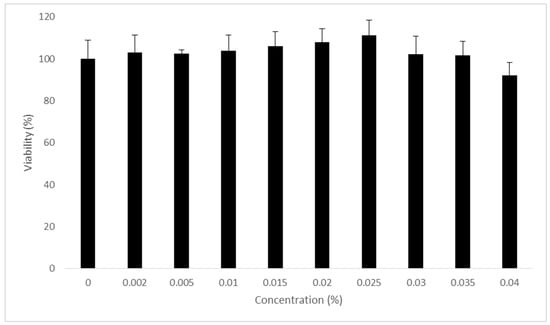
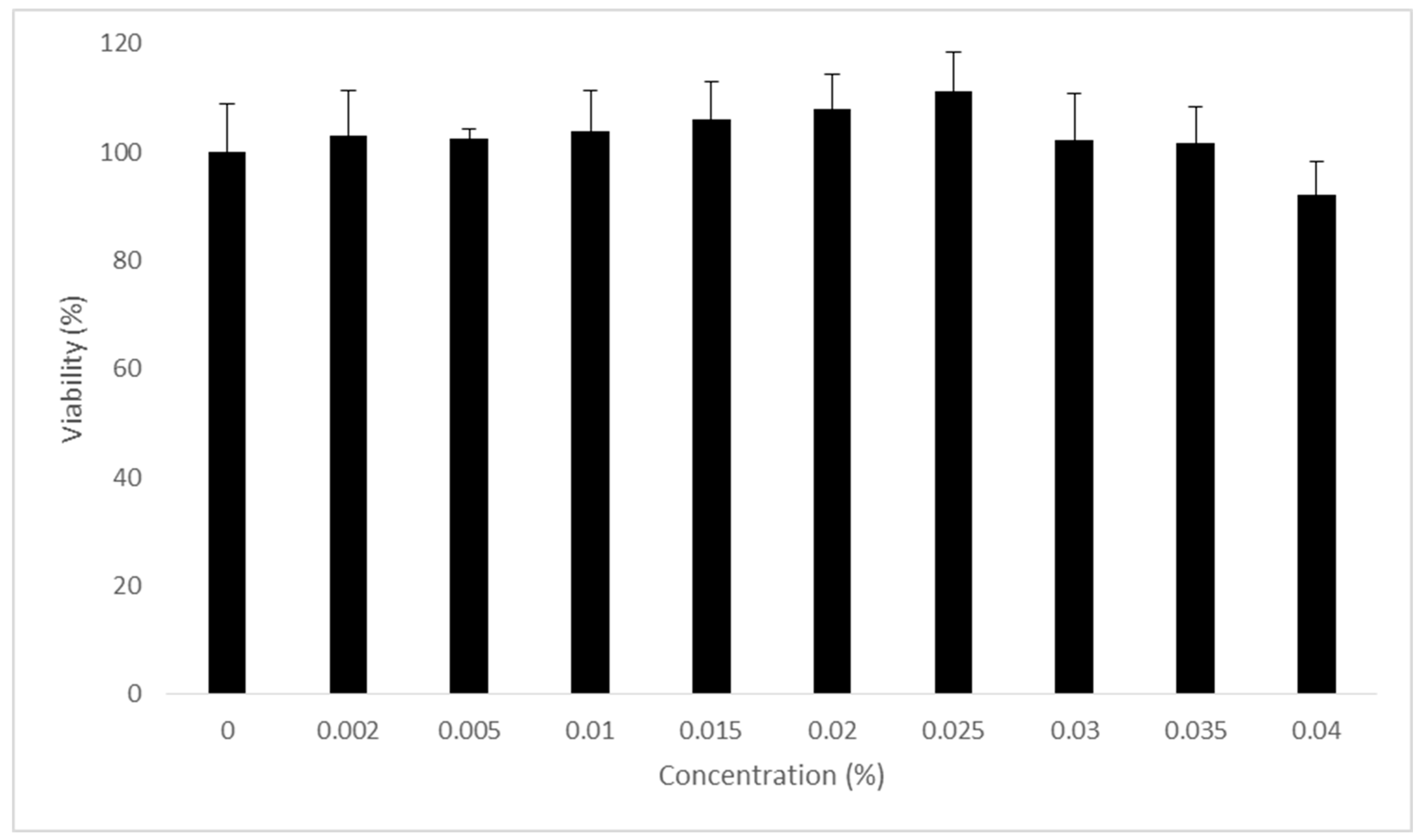
The cytotoxicity of the nanoemulsion formulation selected on the basis of its superior physicochemical stability and antimicrobial performance was evaluated on mouse melanoma cells (B16F10) using an MTT assay. The tested sample was initially formulated with 10% (v/v) clove essential oil and subsequently serially diluted to obtain the concentrations presented in Figure 12.
Figure 12.
Cytotoxic effect of the selected nanoemulsion on B16F10 cells.
According to the ISO 10993-5:2009 standard [27], a material is considered to exhibit a cytotoxic effect when cell viability decreases below 70%. As shown in Figure 11, B16F10 cell viability remained consistently high across the entire concentration range investigated. The nanoemulsion evaluated in this assay was that prepared under the conditions of 400 W ultrasonic power for 150 s with 1% (v/v) Tween 80. The lowest viability was observed at the highest concentration tested (0.04%), with a value of 92.21 ± 6.12%. All viability values remained well above the 70% cytotoxicity threshold, indicating that the formulated nanoemulsion did not exhibit a cytotoxic effect on B16F10 under the experimental conditions.
Overall, these results demonstrate that the selected nanoemulsion exhibits favorable in vitro cytocompatibility with B16F10 cells under the tested conditions while retaining strong antimicrobial activity. The combination of high cell viability, broad-spectrum antimicrobial activity, and favorable physicochemical characteristics highlights the potential of this sodium alginate-based nanoemulsion as a promising bio-based carrier for subsequent encapsulation and incorporation into functional materials, particularly for the development of antimicrobial and biomedical textiles.
4. Conclusions
This study investigated the influence of ultrasound-assisted emulsification parameters, including ultrasonic power, sonication time, and surfactant concentration, on the preparation of sodium alginate-stabilized clove essential oil (CEO) nanoemulsions and their physicochemical and biological properties. The results demonstrated that the emulsification conditions strongly affected droplet size, size distribution, electrostatic stability, and antimicrobial performance. Among the investigated formulations, the nanoemulsion prepared at 400 W for 150 s using 1% (v/v) Tween 80 exhibited the most favorable overall characteristics, with a diameter of the main intensity peak of 167.3 ± 5.2 nm, a PDI of 0.30 ± 0.01, and a zeta potential of −60 ± 1.7 mV, indicating favorable colloidal stability.
ATR-FTIR analysis confirmed the presence of clove essential oil in the sodium alginate-stabilized nanoemulsion through intermolecular interactions, particularly hydrogen bonding, between the CEO and alginate. The selected formulation exhibited broad-spectrum antimicrobial activity, with remarkable antifungal efficacy against Candida albicans and effective antibacterial activity against both Gram-positive and Gram-negative bacteria. Inhibition zones of 30.0 ± 0.1 mm, 15.0 ± 0.1 mm, and 16.0 ± 0.1 mm were obtained against C. albicans, Bacillus subtilis, and Escherichia coli, respectively. The nanoemulsion also showed MIC values ranging from 0.312% to 5% (v/v), with the lowest MIC observed against C. albicans (0.312% v/v), followed by B. subtilis and E. coli (0.625% v/v). Furthermore, the nanoemulsion showed no significant cytotoxic effects on B16F10 cells, with cell viability remaining well above the threshold defined by ISO 10993-5, indicating the absence of significant cytotoxicity to B16F10 cells under the tested conditions.
Overall, this work demonstrates that ultrasound-assisted emulsification is an effective approach for producing stable sodium alginate-based clove essential oil nanoemulsions with favorable physicochemical properties, broad-spectrum antimicrobial activity, and good biocompatibility. The strong antifungal and antibacterial activities observed for the selected formulation, together with its favorable physicochemical characteristics and absence of significant cytotoxicity, support its potential as an intermediate formulation for further encapsulation and incorporation into bio-based antimicrobial materials, particularly for functional textiles, antimicrobial coatings, wound-dressing materials, and other biomedical applications.
Author Contributions
M.T.: writing—original draft, conceptualization, data curation, formal analysis, investigation, methodology, software, visualization. F.D.: supervision, project administration, conceptualization, resources, validation, writing—review & editing. N.L.: supervision, validation, and writing—review and editing. M.A.L. conceptualization, formal analysis, resources, writing—review & editing, I.J.:, methodology, investigation, formal analysis, resources, writing—review & editing. and M.M.: validation, resources, writing—review & editing. All authors have read and agreed to the published version of the manuscript.
Funding
This research was funded by the Ministry of Higher Education and Scientific Research, Tunisia, under the PJEC 2021 project (Grant No. 21PEJC D6P5).
Data Availability Statement
The data presented in this study are available on request from the corresponding author, because they form part of ongoing doctoral research and the associated doctoral thesis has not yet been submitted.
Conflicts of Interest
The authors declare no conflicts of interest.
References
- Liñán-Atero, R.; Aghababaei, F.; García, S.R.; Hasiri, Z.; Ziogkas, D.; Moreno, A.; Hadidi, M. Clove Essential Oil: Chemical Profile, Biological Activities, Encapsulation Strategies, and Food Applications. Antioxidants 2024, 13, 488. [Google Scholar] [CrossRef] [Scilit] [PubMed]
- Refaey, M.S.; Fayed, M.A.; Kutkat, O.; Moatasim, Y.; Tolba, N.S.; Anis, A.; Elshorbagy, A.M.; Nassar, K.; Abouzid, K.A.; Elshaier, Y.A.; et al. Bio-guided chemical characterization and nano-formulation studies of selected edible volatile oils with potentials antibacterial and anti-SARS-CoV-2 activities. Arab. J. Chem. 2023, 16, 104813. [Google Scholar] [CrossRef] [Scilit] [PubMed]
- Roy, S.; Priyadarshi, R.; Rhim, J.W. Gelatin/agar-based multifunctional film integrated with copper-doped zinc oxide nanoparticles and clove essential oil Pickering emulsion for enhancing the shelf life of pork meat. Food Res. Int. 2022, 160, 111690. [Google Scholar] [CrossRef] [Scilit] [PubMed]
- Kaur, K.; Kaushal, S.; Rani, R. Chemical Composition, Antioxidant and Antifungal Potential of Clove (Syzygium aromaticum) Essential Oil, its Major Compound and its Derivatives. J. Essent. Oil Bear. Plants 2019, 22, 1195–1217. [Google Scholar] [CrossRef] [Scilit]
- El Asbahani, A.; Miladi, K.; Badri, W.; Sala, M.; Aït Addi, E.H.; Casabianca, H.; El Mousadik, A.; Hartmann, D.; Jilale, A.; Renaud, F.N.; et al. Essential oils: From extraction to encapsulation. Int. J. Pharm. 2015, 483, 220–243. [Google Scholar] [CrossRef] [Scilit] [PubMed]
- Sharma, S.; Barkauskaite, S.; Jaiswal, A.K.; Jaiswal, S. Essential oils as additives in active food packaging. Food Chem. 2021, 343, 128403. [Google Scholar] [CrossRef] [Scilit] [PubMed]
- Barradas, T.N.; de Holanda e Silva, K.G. Nanoemulsions of Essential Oils to Improve Solubility, Stability and Permeability: A Review. Environ. Chem. Lett. 2020, 19, 1153–1171. [Google Scholar] [CrossRef] [Scilit]
- Helgeson, M.E. Colloidal behavior of nanoemulsions: Interactions, structure, and rheology. Curr. Opin. Colloid Interface Sci. 2016, 25, 39–50. [Google Scholar] [CrossRef] [Scilit]
- Gharibzahedi, S.M.T.; Jafari, S.M. Chapter 9—Fabrication of Nanoemulsions by Ultrasonication. In Nanoemulsions; Jafari, S.M., McClements, D.J., Eds.; Academic Press: Cambridge, MA, USA, 2018; pp. 233–285. [Google Scholar]
- Sneha, K.; Kumar, A. Nanoemulsions: Techniques for the preparation and the recent advances in their food applications. Innov. Food Sci. Emerg. Technol. 2022, 76, 102914. [Google Scholar] [CrossRef] [Scilit]
- Karim, A.; Rehman, A.; Feng, J.; Noreen, A.; Assadpour, E.; Kharazmi, M.S.; Lianfu, Z.; Jafari, S.M. Alginate-based nanocarriers for the delivery and controlled-release of bioactive compounds. Adv. Colloid Interface Sci. 2022, 307, 102744. [Google Scholar] [CrossRef] [Scilit] [PubMed]
- Li, D.; Wei, Z.; Xue, C. Alginate-based delivery systems for food bioactive ingredients: An overview of recent advances and future trends. Compr. Rev. Food Sci. Food Saf. 2021, 20, 5345–5369. [Google Scholar] [CrossRef] [Scilit] [PubMed]
- Severino, P.; da Silva, C.F.; Andrade, L.N.; de Lima Oliveira, D.; Campos, J.; Souto, E.B. Alginate Nanoparticles for Drug Delivery and Targeting. Curr. Pharm. Des. 2019, 25, 1312–1334. [Google Scholar] [CrossRef] [Scilit] [PubMed]
- Mostaghimi, M.; Majdinasab, M.; Hosseini, S.M.H. Characterization of Alginate Hydrogel Beads Loaded with Thyme and Clove Essential Oils Nanoemulsions. J. Polym. Environ. 2022, 30, 1647–1661. [Google Scholar] [CrossRef] [Scilit]
- Pandey, V.; Srivastava, S.; Singh, R.; Dar, A.; Dash, K. Effects of clove essential oil (Caryophyllus aromaticus L.) nanoemulsion incorporated edible coating on shelf-life of fresh cut apple pieces. J. Agric. Food Res. 2023, 14, 100791. [Google Scholar] [CrossRef] [Scilit]
- Salvia-Trujillo, L.; Rojas-Graü, M.; Soliva-Fortuny, R.; Martin-Belloso, O. Physicochemical characterization and antimicrobial activity of food-grade emulsions and nanoemulsions incorporating essential oils. Food Hydrocoll. 2015, 43, 547–556. [Google Scholar] [CrossRef] [Scilit]
- Haro-González, J.N.; Schlienger de Alba, B.N.; Martínez-Velázquez, M.; Castillo-Herrera, G.A.; Espinosa-Andrews, H. Optimization of Clove Oil Nanoemulsions: Evaluation of Antioxidant, Antimicrobial, and Anticancer Properties. Colloids Interfaces 2023, 7, 64. [Google Scholar] [CrossRef] [Scilit]
- Purwanti, N.; Zehn, A.; Pusfitasari, E.; Khalid, N.; Febrianto, E.; Suro Mardjan, S.; Andreas; Kobayashi, I. Emulsion stability of clove oil in chitosan and sodium alginate matrix. Int. J. Food Prop. 2018, 21, 566–581. [Google Scholar] [CrossRef] [Scilit]
- Rafiq, M.; Hussain, T.; Abid, S.; Nazir, A.; Masood, R. Development of sodium alginate/PVA antibacterial nanofibers by the incorporation of essential oils. Mater. Res. Express 2018, 5, 035007. [Google Scholar] [CrossRef] [Scilit]
- Mahapatra, A.; Dhakane-Lad, J.; Patil, S.; D’Souza, C.; Kumar, M.; Bharimalla, A.; Saxena, S. Amelioration of sodium alginate-CNC edible coating with thyme and/ or clove essential oil for post-harvest quality of guava. J. Food Meas. Charact. 2024, 18, 5281–5296. [Google Scholar] [CrossRef] [Scilit]
- Petrovic, L.B.; Sovilj, V.J.; Katona, J.M.; Milanovic, J.L. Influence of polymer-surfactant interactions on o/w emulsion properties and microcapsule formation. J. Colloid Interface Sci. 2010, 342, 333–339. [Google Scholar] [CrossRef] [Scilit] [PubMed]
- Krishnan, R.; Mohan, K.; Ragavan, K.V.; Nisha, P. Insights into headway in essential oil-based Pickering emulsions for food applications. Sustain. Food Technol. 2023, 1, 363–376. [Google Scholar] [CrossRef] [Scilit]
- Mikulcová, V.; Bordes, R.; Kašpárková, V. On the preparation and antibacterial activity of emulsions stabilized with nanocellulose particles. Food Hydrocoll. 2016, 61, 780–792. [Google Scholar] [CrossRef] [Scilit]
- El Mokni, R.; Majdoub, S.; Chaieb, I.; Jlassi, I.; Joshi, R.K.; Hammami, S. Chromatographic analysis, antimicrobial and insecticidal activities of the essential oil of Phlomis floccosa D. Don. Biomed. Chromatogr. 2019, 33, e4603. [Google Scholar] [CrossRef] [Scilit] [PubMed]
- Debbabi, H.; El Mokni, R.; Jlassi, I.; Falconieri, D.; Piras, A.; Mastouri, M.; Porcedda, S.; Hammami, S. Gas chromatography combined with mass spectrometry and flame ionization detection for identifying the organic volatiles from Stachys arvensis, S. marrubiifolia and S. ocymastrum. Int. J. Mass Spectrom. 2018, 432, 59–64. [Google Scholar] [CrossRef] [Scilit]
- Americain Type Culture Collection (ATCC). Available online: https://www.atcc.org/products/crl-6475 (accessed on 18 September 2026).
- ISO 10993-5:2009; Biological Evaluation of Medical Devices—Part 5: Tests for In Vitro Cytotoxicity. International Organization for Standardization: Geneva, Switzerland, 2009.
- Zhang, J.; Liu, Q.; Chen, Q.; Sun, F.; Liu, H.; Kong, B. Synergistic modification of pea protein structure using high-intensity ultrasound and pH-shifting technology to improve solubility and emulsification. Ultrason. Sonochem. 2022, 88, 106099. [Google Scholar] [CrossRef] [Scilit] [PubMed]
- Cui, B.; Zhang, Y.; Zhu, C.; Li, K.; Wang, Y.; Wang, Y.; Ma, W.; Bai, Y. Ultrasound-mediated fabrication of chickpea protein nanoparticles for stabilizing Pickering emulsions. Ultrason. Sonochem. 2025, 121, 107574. [Google Scholar] [CrossRef] [Scilit] [PubMed]
- Janer, M.; Plantà, X.; Riera, D. Ultrasonic moulding: Current state of the technology. Ultrasonics 2019, 102, 106038. [Google Scholar] [CrossRef] [Scilit] [PubMed]
- Ruiz, E.; Orozco, V.; Hoyos, L.; Giraldo, L. Study of sonication parameters on PLA nanoparticles preparation by simple emulsion-evaporation solvent technique. Eur. Polym. J. 2022, 173, 111307. [Google Scholar] [CrossRef] [Scilit]
- Pongsumpun, P.; Iwamoto, S.; Siripatrawan, U. Response surface methodology for optimization of cinnamon essential oil nanoemulsion with improved stability and antifungal activity. Ultrason. Sonochem. 2020, 60, 104604. [Google Scholar] [CrossRef] [Scilit] [PubMed]
- Tang, S.Y.; Manickam, S.; Wei, T.K.; Nashiru, B. Formulation development and optimization of a novel Cremophore EL-based nanoemulsion using ultrasound cavitation. Ultrason. Sonochem. 2012, 19, 330–345. [Google Scholar] [CrossRef] [Scilit] [PubMed]
- Peng, Q.; Huang, Z.; Liang, G.; Bi, Y.; Kong, F.; Wang, Z.; Tan, S.; Zhang, J. Preparation of protein-stabilized Litsea cubeba essential oil nano-emulsion by ultrasonication: Bioactivity, stability, in vitro digestion, and safety evaluation. Ultrason. Sonochem. 2024, 107, 106892. [Google Scholar] [CrossRef] [Scilit] [PubMed]
- Song, R.; Lin, Y.; Li, Z. Ultrasonic-assisted preparation of eucalyptus oil nanoemulsion: Process optimization, in vitro digestive stability, and anti-Escherichia coli activity. Ultrason. Sonochem. 2022, 82, 105904. [Google Scholar] [CrossRef] [Scilit] [PubMed]
- Hasheminejad, N.; Khodaiyan, F.; Safari, M. Improving the antifungal activity of clove essential oil encapsulated by chitosan nanoparticles. Food Chem. 2019, 275, 113–122. [Google Scholar] [CrossRef] [Scilit] [PubMed]
- Woranuch, S.; Yoksan, R. Eugenol-loaded chitosan nanoparticles: I. Thermal stability improvement of eugenol through encapsulation. Carbohydr. Polym. 2013, 96, 578–585. [Google Scholar] [CrossRef] [Scilit] [PubMed]
- Kulig, D.; Zimoch-Korzycka, A.; Jarmoluk, A.; Marycz, K. Study on Alginate–Chitosan Complex Formed with Different Polymers Ratio. Polymers 2016, 8, 167. [Google Scholar] [CrossRef] [Scilit] [PubMed]
- Smitha, B.; Sridhar, S.; Khan, A.A. Chitosan–sodium alginate polyion complexes as fuel cell membranes. Eur. Polym. J. 2005, 41, 1859–1866. [Google Scholar] [CrossRef] [Scilit]
- Meng, X.; Tian, F.; Yang, J.; He, C.N.; Xing, N.; Li, F. Chitosan and alginate polyelectrolyte complex membranes and their properties for wound dressing application. J. Mater. Sci. Mater. Med. 2010, 21, 1751–1759. [Google Scholar] [CrossRef] [Scilit] [PubMed]
- Campelo, M.; Melo, E.; Arrais, S.; Nascimento, F.; Gramosa, N.; Soares, S.; Ribeiro, M.; Silva, C.; Júnior, H.; Ricardo, N. Clove essential oil encapsulated on nanocarrier based on polysaccharide: A strategy for the treatment of vaginal candidiasis. Colloids Surf. A Physicochem. Eng. Asp. 2020, 610, 125732. [Google Scholar] [CrossRef] [Scilit]
- Pinto, E.; Vale-Silva, L.; Cavaleiro, C.; Salgueiro, L. Antifungal activity of the clove essential oil from Syzygium aromaticum on Candida, Aspergillus and dermatophyte species. J. Med. Microbiol. 2009, 58, 1454–1462. [Google Scholar] [CrossRef] [Scilit] [PubMed]
- Lam, S.J.; Wong, E.; Boyer, C.; Qiao, G. Antimicrobial Polymeric Nanoparticles. Prog. Polym. Sci. 2018, 76, 40–64. [Google Scholar] [CrossRef] [Scilit]
- Gyawali, R.; Ibrahim, S. Natural products as antimicrobial agents. Food Control 2014, 46, 412–429. [Google Scholar] [CrossRef] [Scilit]
- Shahbazi, Y. Antioxidant, antibacterial, and antifungal properties of nanoemulsion of clove essential oil. Nanomed. Res. J. 2019, 4, 204–208. [Google Scholar] [CrossRef] [Scilit]
- Cui, H.; Zhao, C.; Lin, L. The specific antibacterial activity of liposome-encapsulated Clove oil and its application in tofu. Food Control 2015, 56, 128–134. [Google Scholar] [CrossRef] [Scilit]
- Sharma, M.; Mann, B.; Pothuraju, R.; Sharma, R.; Kumar, R. Physico-chemical characterization of ultrasound assisted clove oil-loaded nanoemulsion: As enhanced antimicrobial potential. Biotechnol. Rep. 2022, 34, e00720. [Google Scholar] [CrossRef] [Scilit] [PubMed]
- Liu, M.; Pan, Y.; Feng, M.; Guo, W.; Fan, X.; Feng, L.; Huang, J.; Cao, Y. Garlic essential oil in water nanoemulsion prepared by high-power ultrasound: Properties, stability and its antibacterial mechanism against MRSA isolated from pork. Ultrason. Sonochem. 2022, 90, 106201. [Google Scholar] [CrossRef] [Scilit] [PubMed]

Disclaimer/Publisher’s Note: The statements, opinions and data contained in all publications are solely those of the individual author(s) and contributor(s) and not of MDPI and/or the editor(s). MDPI and/or the editor(s) disclaim responsibility for any injury to people or property resulting from any ideas, methods, instructions or products referred to in the content. |
© 2026 by the authors. Licensee MDPI, Basel, Switzerland. This article is an open access article distributed under the terms and conditions of the Creative Commons Attribution (CC BY) license.