


Abstract
Aquaculture wastewater supplies nutrients for seaweed cultivation, but its suitability for producing functional polysaccharides remains uncertain. This critical review examines the evidence connecting wastewater composition, nutrient assimilation, polysaccharide production, macromolecular architecture, and agricultural performance. Studies of wastewater-grown seaweeds were compared with controlled cultivation, extraction, and agricultural application studies, with attention to nitrogen and phosphorus availability, C:N balance, salinity, and dissolved inorganic carbon. Evidence indicates that nutrient enrichment can improve biomass production without corresponding increases in polysaccharide yield. Measurements linking wastewater chemistry to molecular weight distribution, monosaccharide composition, sulfation, and polymer conformation remain scarce. Differences among species, growth conditions, and nutrient exposure regimes complicate comparisons across studies. Extraction and purification can alter polymer characteristics, limiting the attribution of observed differences to cultivation conditions. Reported agricultural responses may depend on polymer structure and formulation. However, the independent effects of molecular weight and other structural descriptors remain poorly established experimentally. Contaminant transfer from wastewater to purified products and subsequent exposure of soil and crops are inadequately characterized. Future research should combine matched wastewater and conventional cultivation controls, standardized extraction, polymer characterization, contaminant mass balances, and dose–response bioassays. Integrated economic and environmental assessment is also required before product safety, functional equivalence, and practical feasibility can be established.
1. Introduction
Aquaculture effluents contain recoverable carbon, nitrogen (N), and phosphorus (P), but are generally managed as waste streams. Their composition reflects feed losses, fecal solids, animal excretion, microbial transformations, and inorganic carbon exchange, producing mixtures of dissolved and particulate organic carbon, NH4+/NH3, NO2−, NO3−, and phosphate. Macroalgal cultivation can recover these nutrients in biomass. Agardhiella subulata cultivated in diluted aquaculture wastewater removed 93% of NH4+ and 68% of PO43− daily while fixing carbon into seaweed biomass [1]. In an outdoor photobioreactor receiving shrimp wastewater, Sarcodia suiae increased biomass production by 18.72% and achieved nearly complete removal of chemical oxygen demand and inorganic N and P, together with 41–89% removal of organic N and P fractions [2]. These studies establish nutrient recovery and biomass production, but not polymer functionality [3,4,5].
Seaweeds contain alginate, fucoidan, laminarin, ulvan, and sulfated galactans with distinct chemical structures. Molecular weight (MW), degree of polymerization (DP), uronic-acid sequence, sulfate substitution, branching, charge density, and conformation influence solubility, ion binding, gelation, water retention, and biological activity. These characteristics are relevant to applications as plant elicitors, hydrogels, nutrient-delivery matrices, and soil-conditioning materials [6]. Wastewater cultivation alone does not establish agricultural product equivalence [7,8,9].
Wastewater studies mainly report nutrient removal, biomass yield, and proximate composition. In one S. suiae study, aqueous seaweed extracts promoted mung bean and rice seedlings but did not identify the active macromolecular fraction or determine whether wastewater cultivation modified polysaccharide architecture [2]. In Saccharina japonica, cultivar, cultivation region, and harvest time changed alginate MW and mannuronate/guluronate ratio and altered fucoidan monosaccharide composition, sulfate content, and sulfation position; transplantation from southern to northern cultivation conditions reduced the alginate mannuronate/guluronate (M/G) ratio from 2.28–2.40 to 1.68–1.93 [10]. Aquaculture wastewater studies rarely report comparable structural measurements [11,12,13].
Bioactivity studies rarely specify the cultivation origin of the active polymer. Alginate oligosaccharides (AOSs) with a DP of 2–10 and an M/G composition of 7:3 alleviated salinity stress in rice and altered 305 and 1030 transcripts in salt-tolerant FL478 and salt-sensitive IR29, respectively, affecting antioxidant metabolism, photosynthesis, cell wall processes, and signal transduction [14]. This response does not establish equivalence with products from wastewater-grown biomass [15,16,17].
Existing reviews separately cover nutrient recovery, polysaccharide chemistry, and agricultural uses, including materials and antimicrobial applications [6]. They do not establish the complete wastewater composition–purified polymer–crop response sequence. This review critically compares direct wastewater studies, conventional cultivation analogs, processing effects, and application experiments without assuming that the complete sequence has been demonstrated.
The distinction from earlier reviews is therefore at the level of the evidence being linked, not the discovery of a new polysaccharide use. Reviews of agricultural biostimulants describe crop responses and potential mechanisms [6], whereas reviews of fucoidan and ulvan address polymer chemistry, extraction, and structure–function relationships [7,8]. Reviews of antibacterial materials, packaging, and antimicrobial ingredients address different product endpoints [18,19,20]. These reviews do not provide a matched comparison connecting measured aquaculture wastewater composition, a structurally characterized purified seaweed polymer, and an agricultural response. The present synthesis examines where that chain is supported, where only conventional cultivation or processing analogs are available, and which measurements would distinguish feedstock effects from extraction and formulation effects. Its contribution is this cross-stage critical appraisal, not a claim that an integrated wastewater-derived agricultural polysaccharide has already been demonstrated.
This review addresses the following five questions:
- Does aquaculture wastewater chemistry alter the quantity and molecular quality of seaweed polysaccharides?
- Which macromolecular descriptors are most responsive to the cultivation conditions?
- Are polysaccharides recovered from wastewater-grown seaweed functionally equivalent to those obtained from conventional cultivation?
- Which structural descriptors control the agricultural performance?
- Which analytical, safety, and standardization gaps limit wastewater-derived polysaccharides from becoming reproducible agricultural products?
Figure 1 distinguishes demonstrated nutrient uptake and biomass production from the proposed downstream links; transitions to polymer architecture and agricultural function remain conceptual.
Figure 1.
Conceptual framework linking aquaculture wastewater, seaweed nutrient assimilation, polysaccharide biosynthesis, macromolecular architecture, and agricultural functions. Solid arrows indicate the conceptual process sequence, whereas dashed arrows indicate proposed links that remain to be established. Question marks (?) identify unverified relationships, including the effects of wastewater chemistry on polysaccharide biosynthesis, polysaccharide architecture on agricultural function, and nutrient recovery on product standardization and safety. Check marks (✓) in the safety and checklist symbols represent intended product quality and safety criteria rather than confirmed certification or experimental validation. Nutrient uptake and seaweed biomass production are supported by direct evidence, whereas polymer-specific responses and agricultural outcomes require further validation. Abbreviations: DP, degree of polymerization; M/G, mannuronic acid-to-guluronic acid ratio; MW, molecular weight; MWD, molecular weight distribution. The figure was revised using ChatGPT (GPT-6; OpenAI; accessed 28 October 2026), verified by the authors, and documented in Supplementary File S1.
Scope, Search Update, and Evidence Appraisal
The relevant literature was identified through a narrative search of PubMed, Scopus, and Google Scholar. The review focused on studies published between 2020 and 2026, with earlier foundational studies included where relevant. The search covered aquaculture wastewater, seaweed cultivation, nutrient recovery, polysaccharide extraction and characterization, and agricultural applications. Studies were selected based on scientific relevance and reported experimental findings, without a formal systematic screening protocol. Evidence was categorized into wastewater-based cultivation, conventional cultivation, polymer processing, and agricultural applications, while findings from related systems were considered indirect evidence. Evidence strength was assessed qualitatively for individual outcomes based on cultivation conditions, polymer isolation and characterization, experimental controls, and quantitative measurements. In Section 2.3 and Section 5.5, high confidence indicates direct measurement with appropriate controls, moderate confidence indicates quantitative findings with incomplete structural characterization or potential confounding factors, and low confidence indicates observed responses without clear mechanistic evidence. Reported numerical values and scientific interpretations were checked against the original publications. These classifications reflect the strength of experimental evidence rather than formal risk-of-bias scores.
2. Aquaculture Wastewater as a Variable Feedstock
2.1. Wastewater Variables Affecting Polysaccharide Biosynthesis
The composition of aquaculture wastewater varies among production systems. Feed formulation, cultured species, stocking density, water exchange rate, solid management, nitrification, and hydraulic retention affect the concentrations of NH4+, NO2−, NO3−, phosphorus, dissolved inorganic carbon (DIC), organic matter, and suspended solids reaching the seaweed cultivation unit. Most studies measure nutrient uptake and biomass rather than carbon allocation or polymer synthesis. Ulva lactuca cultivated in effluents from shrimp, catfish, rainbow trout, and pikeperch farms showed different growth under comparable conditions. Maximum growth reached 4.17% d−1 (per day) in catfish wastewater and 3.76% d−1 in shrimp wastewater, whereas trout and pikeperch effluents supported lower growth [21]. Individual chemical effects cannot be separated because effluents differ in nutrient speciation, salinity, and organic load [22,23,24,25].
Inorganic N concentration and speciation affect uptake and growth, but their effects on polymer architecture remain poorly understood. At a fixed total inorganic N concentration of 40 μM, changes in the NH4+:NO3− ratio produced species-specific effects on nutrient uptake and growth in Kappaphycus alvarezii, K. striatus, and Eucheuma denticulatum. K. alvarezii performs better under NH4+-rich conditions, whereas K. striatus responds more strongly to NO3−-rich media [26]. In Ulva, ammonium exposure produced greater tissue-N accumulation than nitrate at comparable elevated N concentrations, without a proportional increase in biomass production [27]. Total wastewater N, N speciation, tissue N, and growth are distinct response measures [28,29].
P supply and N:P ratio affect growth in controlled cultures, but their separate effects on polymer architecture have not been tested in aquaculture effluents. Ulva growth can remain high across broad N:P ratios when both nutrients exceed physiological requirements, whereas excessive phosphate levels may impair tissue conditions [27]. Ulva ohnoi tolerated N:P ratios from two to 410 under nutrient-replete conditions, suggesting that absolute nutrient supply may be more informative than the ratio alone [30]. In the same study, growth limitation was associated with DIC depletion rather than elevated pH alone. In high-density seaweed cultivation, photosynthetic carbon uptake can increase pH while reducing the available inorganic carbon pool [31,32].
Salinity affects agar yield and gel strength in conventional cultures; however, its independent effect on the polymers produced in wastewater remains uncertain. In Gracilariopsis longissima and Gracilaria gigas, cultivation between 5 and 30 ppt changed growth, agar yield, and gel strength in a species-dependent manner, whereas the relationship between growth and agar content was weak to moderate (R2 = 0.27–0.34) [33]. Maximum biomass growth does not necessarily coincide with maximum hydrocolloid yield or quality. Suspended solids reduce light penetration and affect the supply of particulate nutrients. In shrimp-pond effluent, sedimentation reduced turbidity by approximately 86% before the cultivation of Gracilaria birdiae, indicating that pretreatment affects the culture conditions [34]. Suspended solids, organic carbon, alkalinity, and trace element availability are rarely assessed together with N and P, despite their potential effects on photosynthesis, nutrient uptake, and polymer biosynthesis [35,36,37]. The evidence is strongest for N speciation and growth, more limited for salinity and polymer yield, and scarce for the effects of DIC, solids, and trace elements on the purified polymer structure.
2.2. Why Nutrient Removal Efficiency Is Insufficient
Wastewater studies report nutrient removal, growth, and tissue enrichment more often than polymer structural properties. In a land-based integrated system receiving white seabass effluent containing 0.11–0.18 mg L−1 total ammonia nitrogen, U. lactuca achieved almost complete ammonia removal, growth of 21.36 ± 2.25% d−1, and productivity of 33.83 ± 7.29 g DW m−2 d−1 [38]. Biomass had a higher protein content and a lower C/N ratio under fish effluent. Ulvan yield, molecular weight distribution, sulfation, and rheological behavior were not determined [3,39].
Outdoor Ulva studies reported >90% ammonium and phosphate removal and specific growth rates of up to 24.1% d−1 under favorable hydraulic retention conditions, but did not characterize the polysaccharides in the recovered biomass [40]. These measurements do not characterize polymer architecture [5].
Intermittent N–P supplementation increased K. alvarezii growth to 2.19–4.34% d−1 and enhanced branching and tissue proteins, but the carrageenan yield declined from 41 ± 7% DW in the control to 36.90 ± 2.10% DW under fertilization [41]. The gel strength and viscosity changed slightly. This fertilization study supports a biomass–polymer yield trade-off, not a wastewater-specific molecular mechanism.
2.3. Linking Wastewater Chemistry with the Polymer Phenotype
Relatively few studies have linked wastewater chemistry, nutrient uptake, carbon allocation, and polysaccharide biosynthesis within the same system. An integrated multi-trophic recirculating system quantified U. lactuca’s N uptake at 0.58–0.75 g m−2 d−1 and showed that harvested Ulva accounted for 14.91% of system N [42], but no corresponding macromolecular phenotype was determined [43,44].
Paired measurements should cover influent/effluent N and P species, pH, salinity, biomass productivity, tissue C:N:P, polymer yield, molecular weight distribution, and polymer-appropriate composition. DIC, organic carbon, suspended solids, trace elements, positional sulfation, NMR linkage assignments, and conformation analyses should be added when testing the corresponding mechanisms. Table 1 compares nutrient recovery studies lacking full polymer characterization. Growth rate (% d−1), polymer content (% dry biomass), polymer extraction recovery (% of input), and areal polymer productivity (mass area−1 time−1) represent different denominators and should be reported separately. Without a common denominator, percentages of nutrient removal or polymer yield should not be used as estimates of polymer productivity.
Table 1.
Representative aquaculture–seaweed studies showing gaps between wastewater characterization, nutrient recovery, and polysaccharide characterization.
3. From Nutrient Assimilation to Polysaccharide Architecture
Nutrient disappearance from water, uptake flux, intracellular N/P accumulation, carbon allocation, and polysaccharide synthesis are all distinct endpoints. Controlled studies have shown changes in biomass composition, whereas linked measurements of uptake, polymer biosynthesis, MW, substitution, and conformation remain scarce. Consequently, wastewater composition and biomass productivity cannot yet predict polymer quality [13,45,46,47].
3.1. Nutrient Status and Carbon Allocation
Controlled Ulva studies indicate that nutrient supply affects biochemical composition without necessarily changing the biomass. Ulva rigida germling clusters supplied with either 50 or 500 μmol L−1 nitrate every two days at a fixed N:P ratio of 10:1 showed little net biomass increase over 14 d. Higher nutrient supply increased protein, chlorophyll a, chlorophyll b, and lutein, whereas ulvan and phenolic compounds were higher under the lower nutrient regime [48]. In contrast, in vegetative U. rigida, increasing the nutrient-to-biomass ratio increased growth, photosynthetic performance, and ulvan content [49]. Life stage (germling versus vegetative), nutrient-to-biomass ratio, pulsed supply, and exposure duration differ, preventing a general nitrogen–ulvan rule [12,50].
The same nitrate concentration can provide different nutrient availability per unit of biomass at different stocking densities, whereas pulse fertilization and continuously renewed aquaculture effluent produce different internal nutrient histories. Internal nutrient quota and biomass-normalized flux provide a more suitable comparison than water column concentration alone. Future studies should pair nutrient uptake rates with tissue C, N, and P and with the duration and frequency of nutrient exposure.
Intermittent ammonium phosphate supplementation of K. alvarezii increased growth to 2.19–4.34% d−1, branching density, and tissue proteins, but carrageenan yield decreased from 41 ± 7% DW in the unfertilized control to 36.90 ± 2.10% DW under repeated fertilization. A single nutrient pulse maintained carrageenan yield at 39.70 ± 1.60% DW, while gel strength and viscosity remained unchanged [41]. Because the study used conventional cultivation, this decline cannot be generalized to aquaculture wastewater.
3.2. Effects of N Availability on Polymer Composition
Reported carrageenan yield responses to N–P enrichment differ, and nitrogen-specific structural effects remain unresolved. Ammonium phosphate enrichment increased K. alvarezii growth, carrageenan yield, and gel strength during a 45 d field experiment [51], whereas repeated N–P fertilization reduced carrageenan yield in the controlled study described above. The experiments differed in dose, exposure frequency, initial nutrient status, and culture conditions; N and P effects were not independently separated. The studies quantified polymer yield and bulk rheological properties but did not determine MW distribution, sulfate substitution, galactose/3,6-anhydrogalactose distribution, or chain-level architecture. Yield and rheology cannot substitute for molecular weight distribution or chain-level structural analysis [11,52,53].
Cultivation experiments have shown that N availability can change ulvan abundance; however, rarely does it determine whether the same treatment changes rhamnose-to-uronic-acid ratios, sulfate density, linkage distribution, branching, or MW. The polymer yield cannot establish these structural changes in the polymer. Structurally distinct ulvans occur even within the same genus, and standardized structural analyses have shown large differences in glycosidic linkage and sulfate substitution patterns among Ulva morphotypes [54]. However, such changes remain unverified in Ulva grown in wastewater [8,55].
3.3. Effects of P Availability on Polymer Biosynthesis
The effects of phosphorus are less well characterized than those of nitrogen. A controlled study with Chondrus crispus showed that carrageenan content reached 53.1 ± 0.3% DW without P enrichment and stabilized near 46.1 ± 1.8% DW at P additions of ≥3 μM week−1. The inverse relationship was restricted to tissue-P concentrations below approximately 2 mg g−1 DW, indicating a response restricted to the tested Chondrus crispus culture and tissue-P range, not a general seaweed threshold [56]. This study measured carrageenan content, but not polymer architecture. In Kappaphycus studies, co-supplied N and P prevent the independent attribution of the response. P availability can alter energy metabolism and carbon assimilation; however, aquaculture-relevant experiments rarely extend these measurements to MW, sulfation, uronic-acid composition, or polymer conformation.
3.4. Salinity and Environmental Stress as Drivers of Polymer Architecture
Laboratory-cultured K. alvarezii produced the highest semi-refined carrageenan yield (75.79%) at 25 ppt salinity and 30 °C, whereas the highest gel compression strength (5.84 N) occurred at 24 °C. The maximum viscosity (289.50 cP) was recorded at high temperature, low salinity, and high nutrient availability [57]. The maximum yield, gel strength, and viscosity were obtained under different conditions.
Cultivar, cultivation region, and harvest timing altered alginate MW and M/G ratios and changed fucoidan monosaccharide composition, sulfate content, and sulfation position. Transplanting the southern cultivar to northern waters reduced the alginate M/G ratio from 2.28–2.40 to 1.68–1.93, consistent with a cultivation-associated change in composition, without isolating epimerization or a single environmental cause [10]. Because cultivar, temperature, irradiance, nutrients, and harvest timing co-varied, no single factor could explain the observed structural differences [45,50].
3.5. Species-Specific Responses and Baseline Polymer Architecture
Using standardized extraction and structural analysis, Kidgell et al. [54] found that three dominant linkage classes represented 67–81 mol% of the total linkages in foliose Ulva ulvans but only 29–36 mol% in tubular species. Tubular ulvans show greater branching and more diverse sulfate substitution patterns. Environmental responses should be assessed against genotype- and morphotype-specific structures rather than a uniform Ulva baseline [11,12].
Standardized K. alvarezii cultivation across Indonesian locations produced carrageenan contents of 8.6–26.4%, gel strengths of 291.5–735.2 g cm−2, and viscosities of 30.0–138.8 cP. The site with the highest biomass production did not produce the highest-quality carrageenan [58]. Biomass production did not predict carrageenan properties, although environmental and genetic effects were not separated.
Across studies, the apparent direction of nutrient effects depends on which endpoint is compared. In U. rigida, low nutrient supply favored ulvan content in germling clusters [48], whereas nutrient availability per unit of biomass favored ulvan accumulation in vegetative cultures [49]; these are different developmental and exposure designs, not direct replications. In K. alvarezii, repeated N–P supplementation produced 36.90 ± 2.10% carrageenan compared with 41 ± 7% in the control [41], while a separate 45-day field experiment reported higher carrageenan yield after N–P enrichment [51]. The overlapping uncertainty of the first comparison and the lack of matched dose, starting nutrient status, and culture regime across the studies prevent a pooled causal estimate. Site-associated carrageenan content also ranged from 8.6 to 26.4% [58], but cultivar and environment were not separated. Together, these observations support context-dependent polymer yield responses, not a general nutrient effect on molecular architecture or a wastewater-derived product. The reported 75.79% semi-refined carrageenan yield under a specific factorial culture treatment [57] and the lower carrageenan contents in other cultivation studies [41,58] are not directly comparable estimates of a nutrient effect because species history, product refinement, extraction procedures, and culture regimes differ. They are therefore retained as study-specific endpoints rather than combined into a pooled value.
Experiments with aquaculture-derived feedstocks should quantify nutrient fluxes and tissue C:N:P, along with polymer yield, MW distribution, monosaccharide composition, sulfate content and substitution position, uronic-acid composition, branching, conformation, and rheological behavior in the same harvested biomass. Paired datasets must separate biomass growth, polymer yield, and the functional properties. Figure 2 shows the metabolic allocation node between wastewater chemistry and polymer architecture, including the co-varying environmental factors; Table 2 compares measured cultivation–polymer outcomes and their limitations.
Figure 2.
Conceptual framework showing the effects of wastewater chemistry, nutrient status, and environmental factors on seaweed polysaccharide architecture and agricultural functions. Solid arrows show conceptual process progression, while dashed arrows identify potential environmental influences on the poorly resolved metabolic allocation step. Cultivation-dependent structural changes are supported by selected conventional studies, whereas wastewater-specific structure–function relationships remain unverified. Abbreviations: C:N:P, Carbon:nitrogen:phosphorus ratio; DIC, dissolved inorganic carbon; M/G, mannuronic acid-to-guluronic acid ratio; MW, molecular weight; MWD, molecular weight distribution. The figure was generated using ChatGPT (OpenAI), verified by the authors, and documented in Supplementary File S1.
Table 2.
Evidence linking cultivation conditions with seaweed polysaccharide yield, structure, and functional properties.
4. Separating Cultivation and Extraction Effects
Extraction exposes polysaccharides to pH, temperature, pressure, shear, cavitation, enzymes, and prolonged hydration, which can change chain length, substitution, composition, and supramolecular association. MW distribution, sulfation, composition, and rheology are processing-sensitive; their effects remain polymer-specific [55,59,60].
4.1. Biological Versus Processing-Induced Polymer Differences
Wahlström et al. [61] compared acid extraction of ulvan with hot-water extraction followed by enzymatic purification of Ulva biomass. Although the recovered ulvans remained as high-MW polymers of approximately 660–760 kDa, acidic extraction caused almost complete loss of sulfate substitution, whereas the hot-water/enzymatic route preserved substantial sulfate groups. Low sulfate content cannot be attributed to cultivation stress without excluding extraction-induced desulfation [62].
Yin et al. [63] compared hot-water, ultrasound-assisted, enzyme-assisted, and acid-assisted extraction of Laminaria japonica polysaccharides. Ultrasound-assisted extraction produced the highest yield (9.73 ± 0.29%) and sulfate content (12.47 ± 0.79%), whereas enzyme-assisted extraction generated the highest total carbohydrate content (53.50 ± 1.38%). Acid-assisted extraction produced the lowest MW fraction, whereas hot-water and enzyme-assisted treatments retained higher-MW polymers. Monosaccharide ratios and antioxidant properties also differed among the treatments. Because the biomass source was constant, the observed differences are attributable to the extraction treatments rather than cultivation [63,64,65].
Kazemi et al. [66] screened hot-water, acidic, alkaline, microwave, autoclave, and ultrasound-assisted approaches before optimizing ultrasound-assisted hot-acid extraction of Ulva intestinalis. The maximum yield was approximately 26.77% at 86 °C, pH 4.5, and 200 W, with an average MW near 1200 kDa. The reported yield, composition, and bioactivity therefore reflect extraction conditions as well as biomass properties.
André et al. [67] showed that microwave-hydrothermal treatment of Ulva altered sulfate recovery, MW distribution, and rheological behavior. Treatment at 160 °C produced ulvan with the highest yield, MW, and gel response, whereas antioxidant properties were highest after processing at 200 °C. Different processing conditions optimized the measured material and antioxidant properties [68].
The initial extraction and subsequent depolymerization must be distinguished. Baltrusch et al. [69] recovered ulvan through combined ultrasound–enzyme treatment and showed that microwave/H2O2 depolymerization shifted the material toward lower-MW fractions. In contrast, initial enzyme-assisted extraction preserved sulfation, and the isolated ulvans retained MW values above 786 kDa. Thus, downstream processing determines whether the recovered material retains a high MW or undergoes depolymerization. The >786 kDa observation was based on size-exclusion analysis relative to the reported standard; nominal ultrafiltration cut-offs of 1, 3 and 10 kDa describe membrane separation conditions and should not be treated as independently measured molecular weights of the collected chains [69].
In Dictyota mertensii, extraction time, temperature, and Na2CO3 concentration altered alginate yield, intrinsic viscosity, viscosimetric molar mass, sulfate content, and M/G ratio. Across the tested conditions, M/G ratios ranged from 0.58 to 0.91, while the maximum viscosimetric molar mass reached 278.0 ± 2.66 kDa [70]. Extraction-induced changes in the M/G ratio and chain length may be mistaken for cultivation effects on alginate gel properties [71,72,73].
4.2. Extraction Yield as an Incomplete Measure of Polymer Quality
Perumal et al. [74] compared hydrothermal, microwave-assisted, and ultrasound-assisted extraction of fucoidan from Sargassum. Hydrothermal treatment at 140 °C for 40 min produced the highest fucoidan yield (105.64 ± 2.14 mg g−1), but the harsher temperature–pressure regime was associated with the loss of sulfate ions and phenolic constituents. Ultrasound produced lower recovery but better preserved sulfate-rich structural features, while bioactivities differed among extraction routes. The highest yield did not coincide with maximum sulfate retention [75,76].
A comparison of six extraction procedures for Ulva clathrata showed that hot-water, acid, alkali, enzyme, ultrasound, and microwave extraction generated polysaccharides with different MW, sulfate content, and monosaccharide composition. Molecular weight, glucuronic acid content, and sulfate content were associated with hydrogel properties; the alkali-extracted fraction produced the strongest and most homogeneous gel [77]. The results are specific to the compared Ulva clathrata fractions and formulations.
Optimization across pH 3–7, 70–90 °C, and 60–180 min identified pH 3.44, 82.26 °C, and 60 min as conditions that jointly favored yield and sulfate recovery from Turbinaria turbinata. When this protocol was applied to other brown seaweeds, Padina pavonica produced the highest yield (40.76 ± 4.04% DW), whereas Dictyota dichotoma produced a more highly sulfated and biologically active fucoidan [78].
Across polymer classes, cultivation effects require matched extraction and polymer-specific structural measurement. Extraction recoveries reported as mg g−1, percentages of dry biomass, or percentages of extracted solids have different denominators. Cross-study numerical comparisons require conversion to the same defined mass basis and consideration of purity, polymer class, and extraction severity; no pooled extraction yield ranking is inferred here.
4.3. Extraction-Normalized Comparisons
Comparisons of cultivation and processing effects require identical postharvest handling and extraction for wastewater-grown and reference-grown biomass. The minimum reporting parameters are biomass preparation, moisture, particle size, solvent-to-solid ratio, pH, reagent concentration, temperature, duration, specific ultrasound or microwave input where applicable, and purification steps. These conditions must be matched or modeled; method labels alone do not quantify extraction severity [59].
A second extraction condition can assess cultivation–processing interactions, but no universal severity correction applies across polymers. MW/MWD, sulfate content and substitution pattern, monosaccharide and uronic-acid profiles, polymer-specific descriptors such as alginate M/G ratio, and rheological properties should be measured in the same fractions; both number- and weight-average molecular weights should be reported when available, along with dispersity, analytical calibration, and distribution profiles; interlaboratory comparison requires reference materials. Figure 3 contrasts possible cultivation-associated and extraction-induced contributions to the measured polymer phenotype; Table 3 reports processing changes that can confound cultivation–structure comparisons.
Figure 3.
Conceptual comparison of cultivation-driven and extraction-induced changes in seaweed polysaccharides. Solid arrows show the two process pathways, while dashed arrows mark uncertain contributions of cultivation, extraction, and their interaction to observed polymer differences. Standardized extraction protocols are essential for reliable comparisons but do not establish causality. Abbreviations: C:N:P, Carbon:nitrogen:phosphorus ratio; DIC, dissolved inorganic carbon; M/G, mannuronic acid-to-guluronic acid ratio; MW, molecular weight; MWD, molecular weight distribution. The figure was generated using ChatGPT (OpenAI), verified by the authors, and documented in Supplementary File S1.
Table 3.
Effects of extraction and processing conditions on seaweed polysaccharide structure, function, and interpretation.
5. Linking Molecular Architecture to Agricultural Function
Seaweed polysaccharides have been evaluated as biostimulants, stress elicitors, soil amendments, and agricultural carriers. Biological performance is often related to polymer identity or application dose rather than measurable structural descriptors. Interpretation is difficult because preparations identified as alginate, carrageenan, or ulvan may differ in molecular weight distribution, DP, uronic-acid sequence, sulfation, branching, and supramolecular organization. Crude extracts and multicomponent composites cannot establish polysaccharide-specific efficacy without purified and formulation-matched controls. Polymer size and chemical substitution may affect performance; however, controlled structure–activity comparisons remain limited [15,79,80].
5.1. Molecular Weight and Overlapping Material and Biological Functions
High-MW polymers can form water-retentive or diffusion-controlling networks, while certain characterized oligosaccharides exhibit biological activity. These functions overlap and depend on monomer composition, sulfation, conformation, formulation, and dose; however, no universal MW threshold has been established [16,17].
Among the reviewed systems, alginate oligosaccharides (AOSs) exhibit low-DP biological activity. Du et al. [14] used an enzymatically produced AOS preparation with DP 2–10, >90% uronic acids, and an M/G composition of 7:3. Foliar application of 900 mg L−1 alleviated salt injury in two rice genotypes and altered 305 and 1030 transcripts in the salt-tolerant FL478 and salt-sensitive IR29 backgrounds, respectively. AOS treatment affected antioxidant metabolism, photosynthesis, cell wall-related genes, and receptor-like cytoplasmic kinase signaling. In IR29, AOS combined with salt increased shoot and root dry weight by 8.3% and 14.0% relative to salt treatment alone. The mixture was active, but the study did not isolate the effects of individual DP fractions or M/G sequences [81,82].
In a two-year maize experiment, AOS application under drought increased the relative leaf water content by 13.0%, reduced superoxide accumulation by 42%, increased the photosynthetic rate by 33% during reproductive growth, and increased the grain yield by 16.2% in 2020 and 15.7% in 2021 [83]. This response cannot be attributed to a specific DP/M/G fraction or signaling mechanism.
Van der Merwe et al. [84] compared crude alginate recovered from industrial Ecklonia maxima residue with laboratory-grade alginate. The materials differed in the G/M ratio (0.36 versus 0.53), while 1 wt% industrial-waste alginate hydrogels reached an equilibrium swelling ratio of 1.80, compared with 0.61 for laboratory-grade alginate. Alginate beads also reduced K+ and NO3− diffusion compared to freely dissolved salts. Network formation may explain this response; however, the purity and polymer structure were not independently controlled [85]. Tests using defined MW fractions of the same parent polymer are needed to separate the effects of signaling, water retention, nutrient release, and soil properties.
5.2. Sulfation and Charge Density as Structural Determinants
Sulfation affects charge density, enzyme susceptibility, and molecular recognition processes. Controlled evidence comes from β-1,3-glucan/laminarin, not from wastewater-derived polysaccharides. Ménard et al. [86] compared laminarin with chemically sulfated β-1,3-glucans and showed that sulfate substitution changed plant perception and activated salicylic acid-associated defense responses in both tobacco and Arabidopsis. Chain length and sulfate substitution are both required for activity, and sulfate groups cannot be replaced by other anionic substituents, indicating that activity depends on substitution chemistry and not the negative charge alone [87,88,89].
Grapevine responses also differed between the native and sulfated laminarin. Native laminarin, with DP ≈ 33, triggered early responses, including Ca2+ changes, oxidative burst, and MAPK activation, whereas its sulfated derivative PS3 (a sulfated β-1,3-glucan) produced sustained plasma membrane depolarization and primed salicylic acid- and reactive oxygen species (ROS)-associated defenses against Plasmopara viticola. PS3 reduced the pathogen sporulating area by approximately 84% compared to 60% for laminarin [90]. This comparison supports sulfation-associated effects in laminarin but cannot be generalized to other wastewater-derived polymers.
There is limited comparable controlled evidence for carrageenans. λ-Carrageenan applied at 750 ppm improved banana plant height, root length, pseudostem diameter, and fresh biomass and upregulated genes associated with carbon fixation, phenylpropanoid metabolism, and antioxidant defense [91]. The applied λ-carrageenan was not separated by MW or degree of sulfation. Its biological response cannot be attributed specifically to high sulfation, although λ-carrageenan is generally more highly sulfated than κ- or ι-carrageenan. Sulfation was not independently tested in this preparation [92,93,94].
5.3. Uronic-Acid Sequence, Branching, and Monosaccharide Composition
For alginate, the relative abundance and sequence distribution of mannuronic and guluronic residues determine ion binding and network formation, while oligomeric M- and G-rich sequences may also differ biologically. Few agricultural studies have varied M/G composition independently of MW, dose, and formulation. The AOS used by Du et al. [14] had an M/G ratio of 7:3. No G-rich or M-rich comparator was included. Therefore, the transcriptomic response does not establish a causal effect of uronic-acid composition.
In material applications, the contrasting swelling behavior of crude and laboratory alginates reported by Van der Merwe et al. [84] coincided with differences in the G/M ratio; however, polymer purity, solid composition, and other molecular features also differed. The composition and purity were confounded.
For the red seaweed Schizymenia dubyi, Mekhzoum et al. [95] obtained a polysaccharide-enriched coating containing mainly galactose, glucuronic acid, and glucose, with an MW of approximately 2805 kDa and features consistent with sulfated glucuronogalactan. At a coating solution concentration of 2.5% (w/v) with four application cycles, 75% of phosphorus was released after 5–7 d, compared to approximately 2 d for uncoated triple superphosphate. The coated fertilizer also increased soil water retention by >4% within 28 d. The coating delayed nutrient release, but MW, composition, layer thickness, and number of applications were not varied independently.
5.4. Conformation and Supramolecular Organization
Agricultural studies often report polymer composition without characterizing the network formed after application, although alginate commonly forms a Ca2+-crosslinked gel. The polymer concentration, uronic-acid block distribution, crosslinking density, pore structure, and swelling determine water transport and solute diffusion. Formulation properties cannot be attributed to chain architecture alone [85].
Nooeaid et al. [96] incorporated NPK into hydroxyapatite/alginate beads and achieved nutrient release over 35 d; the formulation also increased plant height, leaf number, and fresh and dry biomass of flowering Chinese cabbage under greenhouse conditions. These effects concern the alginate–hydroxyapatite composite rather than purified alginate. MW, M/G ratio, and network parameters were not systematically varied, preventing attribution of release kinetics to a defined macromolecular descriptor.
Sequential application of sodium alginate and a Ca2+-containing fertilizer generated an in situ crosslinked gel with adhesion, flush resistance, nutrient supplementation, and temperature-responsive pesticide release; orchard protection persisted for more than six months [97]. The study did not vary the primary alginate structure.
5.5. Evidence for Causality Between Polymer Structure and Agricultural Function
Plant assays generally use heterogeneous preparations, whereas material studies rarely systematically vary the starting polymer structure [79,98,99].
The strength of causal evidence differs among the agricultural examples. Native-versus-sulfated laminarin comparisons provide comparatively direct evidence that chemical modification changes defense responses in related glucan systems [86,90], although they do not establish the same mechanism for wastewater-derived seaweed polymers. The industrial-versus-laboratory alginate comparison changed purity together with G/M ratio [84], and the fertilizer-coating and alginate-composite trials did not independently vary polymer architecture, coating thickness, or other formulation variables [95,96]. Commercial seaweed-extract dose–response experiments likewise identify formulation-specific responses, not effects of a purified polysaccharide [100,101]. Therefore, only the related glucan modification comparisons offer relatively direct descriptor-level evidence; the remaining examples support whole-formulation or application-level efficacy. A causal test of a specified seaweed polymer descriptor would require matched fractions, verified composition, dose equivalence, and the relevant vehicle and negative controls.
An additional distinction concerns control design. The β-1,3-glucan experiments compared native laminarin with sulfated preparations [86,90]; the grapevine experiment also included an adjuvant control and replicated signaling and defense endpoints [90]. These comparisons support effects of chemical modification in the tested glucan systems, but they do not isolate each sulfate position, conformation, or putative receptor. The maize drought trial independently tested AOS and coronatine and measured responses over two field seasons [83], but it did not fractionate AOS by chain length. In the rice study, the DP 2–10 preparation was characterized as a mixture rather than tested as individual size fractions [14]. Material experiments with alginate beads and seaweed-extract fertilizer coatings evaluated composite performance without separating polymer architecture from purity, coating thickness, or crosslinking [84,95,96,97]. Therefore, controls support specific treatment contrasts, not a general causal MW–function rule.
For material functions, alginate studies show that network formation controls water and nutrient transport. Comparisons of defined MW and M/G fractions remain uncommon. Seed coatings, microbial carriers, and nutrient-delivery matrices add complexity because the polymer may function simultaneously as a physical matrix, a degradable carbon source, and a precursor of bioactive oligomers [102,103].
Five commercial seaweed extracts applied under identical greenhouse conditions produced different germination, root growth, and biomass profiles in Capsicum annuum. A subsequent dose–response experiment identified formulation-specific optimum application rates [100,101]. These results indicate dose- and formulation-dependent responses without establishing polysaccharide-specific effects of these compounds.
Structure–activity tests should vary one descriptor at a time, use matched vehicle and polymer-equivalent dose controls, report dose–response curves and negative results, and couple crop outcomes with material measurements. Current agricultural responses cannot be assigned to individual structural descriptors. Figure 4 compares overlapping material and biological functions without implying a universal MW-dependent switch, and Table 4 separates demonstrated crop/material outcomes from untested mechanisms.
Figure 4.
Possible overlapping material and biological functions associated with the molecular weight (MW) of seaweed polysaccharides. The arrows summarize possible associations, not validated MW thresholds or experimentally established performance of wastewater-derived polymers. Abbreviations: MAPK, Mitogen-activated protein kinase; MW, molecular weight; PRR, pattern recognition receptor; ROS, reactive oxygen species. This figure was generated using ChatGPT image generation (OpenAI), and its scientific content was verified by the authors. The prompt and reference-image mapping are provided in Supplementary File S1.
Table 4.
Evidence linking seaweed polysaccharide molecular architecture with agricultural function and biological activity.
6. Standardization and Safety of Wastewater-Derived Polysaccharides
Nutrient recovery does not establish agricultural suitability; the isolated polymer must meet compositional, structural, and safety specifications rarely reported in aquaculture studies. Uptake or surface binding by whole seaweed does not establish contamination of the purified polymer: washing, extraction, and purification may partition compounds into the product, liquid waste, or residual solids. Therefore, safety assessment requires analysis of each processing fraction.
6.1. Contaminant Transfer During Nutrient Recovery
The accumulation of macroalgal elements varies according to species and site. An analysis of 161 macroalgal samples covering 19 species from the Red Sea showed marked spatial and taxonomic variations in trace element accumulation; several samples contained Cr and Ni at concentrations approaching 10.9 and 27.2 mg kg−1, respectively, above the toxicity thresholds considered in that study [104]. Metals from feed, supplements, infrastructure, or source water may partition into biomass together with N and P. Carboxylate, hydroxyl, and sulfate groups in seaweed cell walls can bind metals. These Red Sea and sorption studies established possible biomass accumulation, not concentrations, in aquaculture wastewater-derived purified polymers [105].
Florfenicol can occur in aquaculture effluents, and a study using microalgae-based granular sludge reported only 5.5–11.4% removal during florfenicol loading, despite removal of conventional water-quality constituents [106]. Algal exposure studies have shown that antibiotics can partition through surface adsorption, intracellular accumulation, and biodegradation, with the relative contribution depending on the algal physiological state and compound properties [107]. These microalgal findings do not establish contaminant partitioning into macroalgal polymers; measurements across water, biomass, and isolated polymers are required [108,109,110].
Marine macroalgae collected from contrasting coastal environments retained approximately 7.5–110 anthropogenic microparticles g−1 of dry weight, with fibers and fragments attached to smooth surfaces, folds, and appendages [111]. Chemical characterization of macroalgae from Argentina similarly identified microplastics, paint particles, and metallic microdebris, with U. rigida showing comparatively high particle retention [112]. These field observations cannot establish the contamination of isolated wastewater-derived polymers; removal during washing and purification must be measured.
Biological safety measurements of isolated polymers are scarce. Aquaculture-associated biofilms can enrich antibiotic-resistant bacteria and resistance genes; in aquaculture wastewater, Ge et al. [113] measured the absolute abundances of sul1, sul2, and intI1 in mature biofilms one to two orders of magnitude above those in the surrounding water. Persistence during extraction and transfer to soil or crops was not measured. Pathogens, antimicrobial resistance markers, surface-associated microbiota, residual Na, and soluble salts should be included in safety assessments before agricultural use, particularly for crude extracts or minimally purified fractions [114].
6.2. Macromolecular Standardization
Contaminant compliance does not establish polymer equivalence. Two wastewater-derived polysaccharide batches may comply with contaminant limits while differing in MW distribution, monosaccharide composition, sulfation, uronic-acid content, viscosity, and biological activity. Wastewater cultivation can also alter seaweed chemistry. In an aquaponic system, fish wastewater increased the growth of S. suiae and produced a distinct metabolomic profile with ten significantly upregulated metabolites compared to the conventional system [115]. Metabolomic differences do not indicate polymer-architectural changes [116].
Four complementary datasets are needed, with priorities determined by the research question and exposure risk. The feedstock dataset should include aquaculture species, wastewater source, NH4+, NO2−, NO3−, total N, PO43−, total P, organic carbon, salinity, pH, suspended solids, and relevant trace contaminants. Cultivation data should report nutrient loading, hydraulic regime, biomass density, productivity, tissue C:N:P, and nutrient recovery. Polymer characterization should include extraction yield, MW/MWD, monosaccharide profile, sulfate content and substitution where relevant, uronic-acid composition, polymer-specific descriptors such as alginate M/G ratio, FTIR/NMR evidence, and rheological properties. Contaminants should be measured in influent, washed biomass, isolated polymers, residual solids, and spent liquors; elements, inorganic arsenic when relevant, antibiotic residues, microbial indicators, microplastics, and salt carryover should be prioritized according to actual feedstock risks. The agricultural dose should be expressed on both product and active polymer bases.
6.3. Controls for Causal Interpretation
A factorial design can separate the effects of the cultivation source, polymer, and formulation. A minimum comparison should include wastewater-grown seaweed, clean-medium-grown seaweed, a commercial reference polymer, a purified wastewater-derived polymer, and the corresponding crude extract, matching species, harvest stage, dose, extraction method, salinity, vehicle, including replicates, and dose–response controls. Purified-versus-crude comparisons test potential confounding by non-polymer components.
Wastewater-grown microalgae provide indirect comparisons. Álvarez-González et al. [117] simultaneously analyzed wastewater, biomass, and lettuce for pathogens, metals, and emerging contaminants. Of the 29 target contaminants, 25 were detected in wastewater, but only hydrocinnamic acid, caffeine, and bisphenol A were quantified in biomass; Cd was the only metal that failed the fertilizer criterion applied by the authors. These microalgal results do not replace the matched water → seaweed → polymer → soil → crop safety assessment.
6.4. From Nutrient Removal to a Macromolecular Biorefinery
The proposed process has not undergone integrated aquaculture wastewater polysaccharide TEA or LCA.
Aquaculture wastewater → seaweed nutrient recovery → biomass fractionation → functional polysaccharides → agricultural formulation → residual biomass valorization [118,119].
Conventional Sargassum modeling shows how coproduct recovery affects financial results but does not represent the wastewater cultivation. An alginate-only Sargassum process produced a negative net present value of USD 2.736 million, whereas adding fucoidan recovery shifted the simulated NPV to USD 3.844 million and increased the gross margin 3.27-fold [120]. In an LCA of a Furcellaria lumbricalis biorefinery, carrageenan extraction contributed 63.28 Pt of the total 140.08 Pt impact, whereas the use of process residues as fertilizer reduced the overall impact by 8.82 Pt [121]. Nutrient recovery does not ensure circularity when purification is resource-intensive or when residual streams are discarded [75,76,122,123].
An aquaculture treatment LCA offers only a system-level comparison. In a shrimp-recirculating system, microalgae-based wastewater treatment contributed <10% of total freshwater eutrophication, marine eutrophication, and global-warming impacts, but electricity supply dominated system-level burdens; environmental outcomes also changed with biomass end use [124]. Product-level assessment requires data on pretreatment, washing, dewatering, extraction, purification yields, contaminant removal, reagent demand, and residual streams for TEA and LCA. The monetary NPV estimates and environmental impact scores cited above arise from different conventional or microalgal systems and cannot be compared as if they were alternative designs of one wastewater polysaccharide process. Feedstock and product boundaries, functional units, recovery yields, energy inputs, and coproduct allocation must be harmonized before drawing an integrated feasibility conclusion.
6.5. Research Roadmap from Wastewater Chemistry to an Agricultural-Grade Polymer
Future studies should first characterize wastewater nutrients and contaminants and cultivate seaweed alongside a clean-medium control. Nutrient and contaminant fluxes should then be closed across the water and biomass. Harvesting and washing should be quantified for the removal of salt and contaminants. Identical extraction protocols should be applied to both biomasses before polymer characterization and structure–property analysis.
Agronomic testing should follow this analytical stage and include purified wastewater-derived polymers, commercial reference polymers, and crude extracts at polymer-equivalent doses. Safety assessment should include metals/metalloids, antibiotics, and other relevant emerging contaminants; pathogens/indicator organisms; antimicrobial resistance determinants; microplastics; and residual salinity. LCA and techno-economic analyses should include cultivation, wastewater pumping, harvesting, dewatering, drying, extraction, purification, and residual-stream utilization. Medium-term studies should include replicated crop dose–response tests, polymer fraction controls, and residue fate analyses, followed by pilot TEA/LCA and regulatory evaluations. Figure 5 groups the principal tasks into five prospective stages, and Table 5 links the evidence gaps to the minimum experimental requirements needed to address them.
Figure 5.
Proposed verification stages for aquaculture wastewater-derived polysaccharides. The five condensed priorities are feedstock characterization and matched cultivation, biomass production and nutrient dynamics, standardized extraction and polymer characterization, functional validation and mechanism exploration, and agricultural application with sustainability assessment. The workflow is prospective and does not represent a demonstrated commercial pathway. Abbreviations: ARGs, Antibiotic resistance genes; C:N:P, carbon:nitrogen:phosphorus ratio; LCA, life-cycle assessment; M/G, mannuronic acid-to-guluronic acid ratio; MW/MWD, molecular weight/molecular weight distribution; TEA, techno-economic assessment. This figure was generated using ChatGPT image generation (OpenAI), and its scientific content was verified by the authors. Prompt and reference-image mappings are provided in Supplementary File S1.
Table 5.
Research gaps and minimum requirements for wastewater-derived polysaccharide production.
Figure 5 groups the research priorities into five stages: (1) wastewater characterization and matched cultivation → (2) biomass production, nutrient recovery, and contaminant partitioning → (3) standardized extraction, purification, and macromolecular characterization → (4) comparative material and biological functional testing, including dose–response experiments → (5) agricultural evaluation and product-safety/sustainability assessment. Quantitative pilot TEA and LCA remain subsequent feasibility requirements; Supplementary File S1 gives the detailed prospective eleven-stage sequence.
7. Conclusions
Aquaculture wastewater supports nutrient recovery and seaweed growth. Polymer structural reproducibility, agricultural equivalence, and product safety remain unverified. Conventional cultures demonstrate conditional effects of nutrient supply and environment on polymer yield or composition; however, co-supplied N and P, species differences, and limited structural measurements preclude wastewater-specific causal conclusions. Extraction can change MW distributions and sulfate or uronic-acid composition; valid comparisons require matched processing, polymer-specific characterization, and reported extraction severity. Water retention and controlled release tests establish formulation-level material performance, and selected oligosaccharides show crop responses. These results do not establish a universal MW–function relationship or equivalence of wastewater-derived polymers. Descriptor-controlled bioassays remain necessary. No integrated contaminant partitioning, crop exposure, economic, or environmental assessment has yet validated this product pathway. Further studies should measure contaminant transfer across water, biomass, polymers, and residues and compare purified products with suitable controls. Pilot-scale safety, TEA, and LCA should precede claims of agricultural readiness. Table 6 summarizes the evidence addressing the five research questions and identifies the remaining gaps in establishing the structural quality, agricultural performance, and safety of wastewater-derived seaweed polysaccharides.
Table 6.
Evidence-based answers to the five research questions are provided. Direct indicates cultivation in aquaculture wastewater, and indirect indicates evidence extrapolated from related experiments.
Supplementary Materials
The following supporting information can be downloaded at https://www.mdpi.com/article/10.3390/macromol6040105/s1. Supplementary File S1: Generative AI prompts, reference-image mapping and final revision notes for Figure 1, Figure 2, Figure 3, Figure 4 and Figure 5. Figure 5 provides the detailed prospective eleven-stage workflow.
Author Contributions
Conceptualization, M.N.H.-M., P.R. and E.O.R.-P.; methodology, M.N.H.-M., P.R. and L.D.G.-R.; validation, M.N.H.-M., E.O.R.-P., M.M.-M. and J.C.S.-H.; formal analysis, P.R. and E.O.R.-P.; investigation, M.N.H.-M., P.R. and L.D.G.-R.; resources, M.M.-M. and J.C.S.-H.; data curation, P.R. and L.D.G.-R.; writing—original draft preparation, P.R.; writing—review and editing, M.N.H.-M., E.O.R.-P., L.D.G.-R., M.M.-M. and J.C.S.-H.; visualization, P.R. and L.D.G.-R.; supervision, M.M.-M. and J.C.S.-H.; project administration, M.M.-M. and J.C.S.-H.; funding acquisition, M.M.-M. and J.C.S.-H. All authors have read and agreed to the published version of the manuscript.
Funding
This research was funded by Secretaría de Investigación y Posgrado, Instituto Politécnico Nacional, México, grant numbers SIP20250047 and SIP20250923.
Institutional Review Board Statement
Not applicable.
Data Availability Statement
No new experimental datasets were generated during this study. Data sharing is not applicable to this study.
Acknowledgments
The authors used Paperpal (Version 2025.3; Cactus Communications, Mumbai, India), an AI-assisted language editing tool, to improve the grammar, language, and clarity of this manuscript. The authors also used ChatGPT image generation (OpenAI) to regenerate Figure 1, Figure 2, Figure 3, Figure 4 and Figure 5; full disclosure and the figure captions state the scientific limitations, while the preparation record is provided in Supplementary File S1. The authors reviewed and verified all AI-assisted outputs and take full responsibility for the final manuscript and figures. All scientific analyses, interpretations, conclusions, and intellectual contributions were performed by the authors. Figure 1, Figure 2, Figure 3, Figure 4 and Figure 5 were generated using ChatGPT image generation (OpenAI; accessed on 26 October 2026) from the author-defined prompts. For each figure, the corresponding prior draft figure was supplied as the primary visual reference, and the remaining manuscript figures were supplied only as style references to maintain visual consistency. The authors defined the scientific concepts and content, verified all labels, relationships, and scientific representations, and take full responsibility for the final figures. The initial recreation prompts, subsequent figure-revision descriptions, and reference-image mappings are documented in Supplementary File S1. Generative AI was not used to generate the research data, analyses, evidence, or conclusions.
Conflicts of Interest
The authors declare no conflicts of interest.
References
- Weerakkody, W.S.; Hsieh, H.-H.; Abedneko, V.G.; Ling, K.H.; Chung, T.-C.; Wang, Z.-Y.; Shih, Y.-Y.; Lee, T.-M.; Xu, C.; Santschi, P.H.; et al. Diluted swine and aquaculture wastewater enhance carbon sequestration and nutrient removal by the red seaweed Agardhiella subulata. Bioresour. Technol. 2025, 427, 132327. [Google Scholar] [CrossRef] [Scilit] [PubMed]
- Chen, T.-Y.; Zheng, Y.-Y.; Wang, Y.-H.; Yeh, C.-C.; Liao, C.-H.; Lee, T.-M. A zero-waste approach to Sarcodia suiae valorization: Recycling aquaculture wastes and carbon dioxide for biostimulant, biofertilizer, and bioenergy production. Bioresour. Technol. 2025, 418, 131929. [Google Scholar] [CrossRef] [Scilit] [PubMed]
- Nederlof, M.A.J.; Verdegem, M.C.J.; Smaal, A.C.; Jansen, H.M. Nutrient retention efficiencies in integrated multi-trophic aquaculture. Rev. Aquac. 2022, 14, 1194–1212. [Google Scholar] [CrossRef] [Scilit]
- Shahar, B.; Guttman, L. Integrated biofilters with Ulva and periphyton to improve nitrogen removal from mariculture effluent. Aquaculture 2021, 532, 736011. [Google Scholar] [CrossRef] [Scilit]
- Chambers, M.; Coogan, M.; Doherty, M.; Howell, H. Integrated multi-trophic aquaculture of steelhead trout, blue mussel and sugar kelp from a floating ocean platform. Aquaculture 2024, 582, 740540. [Google Scholar] [CrossRef] [Scilit]
- Tariq, T.B.; Karishma; Umer, M.; Mubeen-ur-Rehman. The potential of seaweed-derived polysaccharides as sustainable biostimulants in agriculture. Int. J. Biol. Macromol. 2025, 298, 140009. [Google Scholar] [CrossRef] [Scilit] [PubMed]
- Ale, M.T.; Mikkelsen, J.D.; Meyer, A.S. Important Determinants for Fucoidan Bioactivity: A Critical Review of Structure–Function Relations and Extraction Methods for Fucose-Containing Sulfated Polysaccharides from Brown Seaweeds. Mar. Drugs 2011, 9, 2106–2130. [Google Scholar] [CrossRef] [Scilit] [PubMed]
- Lahaye, M.; Robic, A. Structure and Functional Properties of Ulvan, a Polysaccharide from Green Seaweeds. Biomacromolecules 2007, 8, 1765–1774. [Google Scholar] [CrossRef] [Scilit] [PubMed]
- Holdt, S.L.; Kraan, S. Bioactive compounds in seaweed: Functional food applications and legislation. J. Appl. Phycol. 2011, 23, 543–597. [Google Scholar] [CrossRef] [Scilit]
- Tian, M.; Kong, Y.; Duan, D.; Shim, S.-M.; Fu, X. Effects of cultivar selection, cultivation region and harvest timing on the structure and properties of carbohydrates from Saccharina japonica. Algal Res. 2025, 89, 104106. [Google Scholar] [CrossRef] [Scilit]
- Bruhn, A.; Janicek, T.; Manns, D.; Nielsen, M.M.; Balsby, T.J.S.; Meyer, A.S.; Rasmussen, M.B.; Hou, X.; Saake, B.; Göke, C.; et al. Crude fucoidan content in two North Atlantic kelp species, Saccharina latissima and Laminaria digitata—Seasonal variation and impact of environmental factors. J. Appl. Phycol. 2017, 29, 3121–3137. [Google Scholar] [CrossRef] [Scilit] [PubMed]
- Arlov, Ø.; Nøkling-Eide, K.; Aarstad, O.A.; Jacobsen, S.S.; Langeng, A.-M.; Borrero-Santiago, A.R.; Sæther, M.; Rustad, T.; Aachmann, F.L.; Sletta, H. Variations in chemical composition of Norwegian cultivated brown algae Saccharina latissima and Alaria esculenta based on deployment and harvest times. Algal Res. 2024, 78, 103421. [Google Scholar] [CrossRef] [Scilit]
- Schiener, P.; Black, K.D.; Stanley, M.S.; Green, D.H. The seasonal variation in the chemical composition of the kelp species Laminaria digitata, Laminaria hyperborea, Saccharina latissima and Alaria esculenta. J. Appl. Phycol. 2015, 27, 363–373. [Google Scholar] [CrossRef] [Scilit]
- Du, Y.-W.; Liu, L.; Feng, N.-J.; Zheng, D.-F.; Liu, M.-L.; Zhou, H.; Deng, P.; Wang, Y.-X.; Zhao, H.-M. Combined transcriptomic and metabolomic analysis of alginate oligosaccharides alleviating salt stress in rice seedlings. BMC Plant Biol. 2023, 23, 455. [Google Scholar] [CrossRef] [Scilit] [PubMed]
- Vera, J.; Castro, J.; Gonzalez, A.; Moenne, A. Seaweed Polysaccharides and Derived Oligosaccharides Stimulate Defense Responses and Protection Against Pathogens in Plants. Mar. Drugs 2011, 9, 2514–2525. [Google Scholar] [CrossRef] [Scilit] [PubMed]
- Zhang, C.; Wang, W.; Zhao, X.; Wang, H.; Yin, H. Preparation of alginate oligosaccharides and their biological activities in plants: A review. Carbohydr. Res. 2020, 494, 108056. [Google Scholar] [CrossRef] [Scilit] [PubMed]
- Roy, A.; Girish, T.R.; Nori, S.S.; Surya Narayan, S.; Bhattacharjee, S.; Hallan, V. Marine algae oligosaccharides: Eco-friendly elicitors for sustainable agriculture. Algal Res. 2025, 89, 104093. [Google Scholar] [CrossRef] [Scilit]
- He, M.; Huang, Y.; Wang, J.; Chen, Z.; Xie, J.; Cui, Z.; Xu, D.; Zhang, X.; Yao, W. Advances in polysaccharide-based antibacterial materials. Int. J. Biol. Macromol. 2025, 308, 142598. [Google Scholar] [CrossRef] [Scilit] [PubMed]
- Jia, S.; Sanjeewa, K.K.A.; Wang, S.; Osman, N.A.H.K.; Wang, L. Seaweed polysaccharide-based functional materials for intelligent food packaging: A review. Int. J. Biol. Macromol. 2026, 381, 154322. [Google Scholar] [CrossRef] [Scilit] [PubMed]
- Cooney, O.C.; Morrin, S.T.; Buck, R.H.; Owens, R.A.; Hickey, R.M. Seaweed-derived polysaccharides as antibacterial and antiviral ingredients. Int. J. Biol. Macromol. 2025, 321, 145823. [Google Scholar] [CrossRef] [Scilit] [PubMed]
- Sebök, S.; Hanelt, D. Cultivation of the brackish-water macroalga Ulva lactuca in wastewater from land-based fish and shrimp aquacultures in Germany. Aquaculture 2023, 571, 739463. [Google Scholar] [CrossRef] [Scilit]
- Massocato, T.F.; Robles-Carnero, V.; Moreira, B.R.; Castro-Varela, P.; Pinheiro-Silva, L.; Oliveira, W.S.; Vega, J.; Avilés, A.; Bonomi-Barufi, J.; Rörig, L.R.; et al. Growth, biofiltration and photosynthetic performance of Ulva spp. cultivated in fishpond effluents: An outdoor study. Front. Mar. Sci. 2022, 9, 981468. [Google Scholar] [CrossRef] [Scilit]
- Choi, S.K.; Kim, T.H.; Kang, Y.H.; Kim, S.; Kim, T.-H.; Kim, J.K.; Lee, T.; Son, Y.B.; Lee, H.J.; Park, S.R. Changes in the Dynamics and Nutrient Budget of a Macroalgal Community Exposed to Land-Based Fish Farm Discharge Off Jeju Island, Korea. Sustainability 2021, 13, 11793. [Google Scholar] [CrossRef] [Scilit]
- Glauco, F.; He, P.; Chen, Z. Combine effects of multiple environmental factors on growth and nutrient uptake of euryhaline seaweed growth in integrated multitrophic aquaculture systems. Algal Res. 2024, 77, 103347. [Google Scholar] [CrossRef] [Scilit]
- Batır, E.; Metin, Ö.; Yıldız, M.; Özel, O.T.; Fidan, D. Sustainable land-based IMTA: Holistic management of finfish, mussel, and macroalgae interactions, emphasizing water quality and nutrient dynamics. J. Environ. Manag. 2024, 372, 123411. [Google Scholar] [CrossRef] [Scilit] [PubMed]
- Narvarte, B.C.V.; Roleda, M.Y. Nitrogenous substrate preference in eucheumatoids: Varying ammonium and nitrate ratios affect the nutrient uptake and growth of selected commercially cultivated crops. Plant Physiol. Biochem. 2025, 223, 109846. [Google Scholar] [CrossRef] [Scilit] [PubMed]
- Nederlof, M.A.J.; Neori, A.; Verdegem, M.C.J.; Smaal, A.C.; Jansen, H.M. Ulva spp. performance and biomitigation potential under high nutrient concentrations: Implications for recirculating IMTA systems. J. Appl. Phycol. 2022, 34, 2157–2171. [Google Scholar] [CrossRef] [Scilit]
- Shahar, B.; Guttman, L. An integrated, two-step biofiltration system with Ulva fasciata for sequenced removal of ammonia and nitrate in mariculture effluents. Algal Res. 2020, 52, 102120. [Google Scholar] [CrossRef] [Scilit]
- Li, X.; Deng, Y.; Li, X.; Ma, X.; Wang, J.; Li, J. Integration of Marine Macroalgae (Chaetomorpha maxima) with a Moving Bed Bioreactor for Nutrient Removal from Maricultural Wastewater. Archaea 2020, 2020, 8848120. [Google Scholar] [CrossRef] [Scilit] [PubMed]
- Alamrousi, A.; Casais, E.; García-Cardesín, É.; Masaló, I.; Pintado, J.; Cremades, J. Influence of pH, N, P, N:P ratio, and dissolved inorganic carbon on Ulva ohnoi growth and biomass quality: Potential implications in IMTA-RAS. Aquac. J. 2022, 2, 285–301. [Google Scholar] [CrossRef] [Scilit]
- Chatzoglou, E.; Kechagia, P.; Tsopelakos, A.; Miliou, H. Co-culture of Ulva sp. and Dicentrarchus labrax in Recirculating Aquaculture System: Effects on growth, retention of nutrients and fatty acid profile. Aquat. Living Resour. 2020, 33, 19. [Google Scholar] [CrossRef] [Scilit]
- Bambaranda, B.V.A.S.M.; Tsusaka, T.W.; Chirapart, A.; Salin, K.R.; Sasaki, N. Capacity of Caulerpa lentillifera in the Removal of Fish Culture Effluent in a Recirculating Aquaculture System. Processes 2019, 7, 440. [Google Scholar] [CrossRef] [Scilit]
- Nauta, R.W.; Ariyati, R.W.; Widowati, L.L.; Debrot, A.O.; Rejeki, S. Effect of salinity on growth, agar content and gel strength for two agaroid seaweed species: Gracilariopsis longissima and Gracilaria gigas. Egypt. J. Aquat. Res. 2025, 51, 524–528. [Google Scholar] [CrossRef] [Scilit]
- Marinho-Soriano, E.; Nunes, S.O.; Carneiro, M.A.A.; Pereira, D.C. Nutrients’ removal from aquaculture wastewater using the macroalgae Gracilaria birdiae. Biomass Bioenergy 2009, 33, 327–331. [Google Scholar] [CrossRef] [Scilit]
- Martins, M.A.; da Silva, V.F.; Tarapuez, P.R.; Hayashi, L.; Vieira, F.N. Cultivation of the seaweed Ulva spp. with effluent from a shrimp biofloc rearing system: Different species and stocking density. Bol. Inst. Pesca 2020, 46, e602. [Google Scholar] [CrossRef] [Scilit]
- Mawi, S.; Krishnan, S.; Md Din, M.F.; Arumugam, N.; Chelliapan, S. Bioremediation potential of macroalgae Gracilaria edulis and Gracilaria changii co-cultured with shrimp wastewater in an outdoor water recirculation system. Environ. Technol. Innov. 2020, 17, 100571. [Google Scholar] [CrossRef] [Scilit]
- Kang, Y.H.; Kim, S.; Lee, H.J.; Chung, I.K.; Park, S.R. A comparison of the bioremediation potential of five seaweed species in an integrated fish-seaweed aquaculture system: Implication for a multi-species seaweed culture. Rev. Aquac. 2021, 13, 353–364. [Google Scholar] [CrossRef] [Scilit]
- Drawbridge, M.; Huo, Y.; Fanning, E.; Polizzi, T.; Booher, L. Growth, productivity and nutrient removal rates of sea lettuce (Ulva lactuca) in a land-based IMTA system with white seabass (Atractoscion nobilis) in Southern California. Aquaculture 2024, 587, 740836. [Google Scholar] [CrossRef] [Scilit]
- Qiu, X.; Carter, C.G.; Hilder, P.E.; Hadley, S. A dynamic nutrient mass balance model for optimizing waste treatment in RAS and associated IMTA system. Aquaculture 2022, 555, 738216. [Google Scholar] [CrossRef] [Scilit]
- Rodríguez, C.; Arroyo, N.L.; Castro, M.C.; Hernández de Rojas, A.; Moreno-Ventas, X. Seasonal variations in biofiltration efficiency of fish farm effluents using Ulva spp. J. Appl. Phycol. 2026, 38, 701–714. [Google Scholar] [CrossRef] [Scilit]
- Narvarte, B.C.V.; Genovia, T.G.T.; Roleda, M.Y. Nutrient management strategy with optimum application regime in the globally farmed red seaweed Kappaphycus alvarezii enhances biomass production without compromising hydrocolloid yield and quality. Algal Res. 2026, 97, 104812. [Google Scholar] [CrossRef] [Scilit]
- Huo, Y.; Stuart, K.; Rotman, F.; Ernst, D.; Drawbridge, M. The culture of fish, mussels, sea cucumbers and macroalgae in a modular integrated multi-trophic recirculating aquaculture system (IMTRAS): Performance and waste removal efficiencies. Aquaculture 2024, 585, 740720. [Google Scholar] [CrossRef] [Scilit]
- Ansari, F.A.; Singh, P.; Guldhe, A.; Bux, F. Microalgal cultivation using aquaculture wastewater: Integrated biomass generation and nutrient remediation. Algal Res. 2017, 21, 169–177. [Google Scholar] [CrossRef] [Scilit]
- Milhazes-Cunha, H.; Otero, A. Valorisation of aquaculture effluents with microalgae: The Integrated Multi-Trophic Aquaculture concept. Algal Res. 2017, 24, 416–424. [Google Scholar] [CrossRef] [Scilit]
- Vilg, J.V.; Nylund, G.M.; Werner, T.; Qvirist, L.; Mayers, J.J.; Pavia, H.; Undeland, I.; Albers, E. Seasonal and spatial variation in biochemical composition of Saccharina latissima during a potential harvesting season for Western Sweden. Bot. Mar. 2015, 58, 435–447. [Google Scholar] [CrossRef] [Scilit]
- Adams, J.M.; Toop, T.A.; Donnison, I.S.; Gallagher, J.A. Seasonal variation in Laminaria digitata and its impact on biochemical conversion routes to biofuels. Bioresour. Technol. 2011, 102, 9976–9984. [Google Scholar] [CrossRef] [Scilit] [PubMed]
- Adams, J.M.; Ross, A.B.; Anastasakis, K.; Hodgson, E.M.; Gallagher, J.A.; Jones, J.M.; Donnison, I.S. Seasonal variation in the chemical composition of the bioenergy feedstock Laminaria digitata for thermochemical conversion. Bioresour. Technol. 2011, 102, 226–234. [Google Scholar] [CrossRef] [Scilit] [PubMed]
- de Farias Neves, F.; Gagztetter Dal Grande, I.; López Palica, F.; López Paniagua, D.; de Azevedo Aimi, L.; Bonomi-Barufi, J.; Celis-Plá, P.S.M.; López Figueroa, F. Cultivation of Ulva rigida germling clusters in flat bag photobioreactors under different nitrogen and phosphorus supply. J. Appl. Phycol. 2026. [Google Scholar] [CrossRef] [Scilit]
- de Farias Neves, F.; Robles-Carnero, V.; Gagztetter Dal Grande, I.; Avilés Benitez, A.; Bonomi-Barufi, J.; Celis-Plá, P.S.M.; Figueroa, F.L. Biomass productivity, photosynthesis and bioactive compounds in land-based cultivated Ulva rigida: Stocking density and nutrient availability. Aquaculture 2026, 614, 743544. [Google Scholar] [CrossRef] [Scilit]
- Forbord, S.; Matsson, S.; Brodahl, G.E.; Bluhm, B.A.; Broch, O.J.; Handå, A.; Metaxas, A.; Skjermo, J.; Steinhovden, K.B.; Olsen, Y. Latitudinal, seasonal and depth-dependent variation in growth, chemical composition and biofouling of cultivated Saccharina latissima along the Norwegian coast. J. Appl. Phycol. 2020, 32, 2215–2232. [Google Scholar] [CrossRef] [Scilit]
- Muyong, J.S.; Tahiluddin, A.B. Interaction of nutrient enrichment and farming method on performance of the red seaweed Kappaphycus alvarezii. Aquat. Bot. 2024, 191, 103743. [Google Scholar] [CrossRef] [Scilit]
- Apoya, M.; Ogawa, H.; Nanba, N. Alginate Content of Farmed Undaria pinnatifida from Three Bays of Iwate, Japan during Harvest Period. Bot. Mar. 2002, 45, 445–452. [Google Scholar] [CrossRef] [Scilit]
- Skriptsova, A.; Khomenko, V.; Isakov, V. Seasonal changes in growth rate, morphology and alginate content in Undaria pinnatifida at northern limit in the Sea of Japan. J. Appl. Phycol. 2004, 16, 17–21. [Google Scholar] [CrossRef] [Scilit]
- Kidgell, J.T.; Glasson, C.R.K.; Magnusson, M.; Sims, I.M.; Hinkley, S.F.R.; de Nys, R.; Carnachan, S.M. Ulvans are not equal—Linkage and substitution patterns in ulvan polysaccharides differ with Ulva morphology. Carbohydr. Polym. 2024, 333, 121962. [Google Scholar] [CrossRef] [Scilit] [PubMed]
- Kidgell, J.T.; Magnusson, M.; de Nys, R.; Glasson, C.R.K. Ulvan: A systematic review of extraction, composition and function. Algal Res. 2019, 39, 101422. [Google Scholar] [CrossRef] [Scilit]
- Chopin, T.; Gallant, T.; Davison, I. Phosphorus and nitrogen nutrition in Chondrus crispus (Rhodophyta): Effects on total phosphorus and nitrogen content, carrageenan production, and photosynthetic pigments and metabolism. J. Phycol. 1995, 31, 283–293. [Google Scholar] [CrossRef] [Scilit]
- Shalvina, A.; De Ramon N’Yeurt, A.; Lako, J.; Piovano, S. Effects of selected environmental conditions on growth and carrageenan quality of laboratory-cultured Kappaphycus alvarezii (Rhodophyta) in Fiji, South Pacific. J. Appl. Phycol. 2022, 34, 1033–1043. [Google Scholar] [CrossRef] [Scilit]
- Simatupang, N.F.; Pong-Masak, P.R.; Ratnawati, P.; Agusman; Paul, N.A.; Rimmer, M.A. Growth and product quality of the seaweed Kappaphycus alvarezii from different farming locations in Indonesia. Aquac. Rep. 2021, 20, 100685. [Google Scholar] [CrossRef] [Scilit]
- Jönsson, M.; Allahgholi, L.; Sardari, R.R.R.; Hreggviðsson, G.O.; Nordberg Karlsson, E. Extraction and Modification of Macroalgal Polysaccharides for Current and Next-Generation Applications. Molecules 2020, 25, 930. [Google Scholar] [CrossRef] [Scilit] [PubMed]
- Bojorges, H.; López-Rubio, A.; Martínez-Abad, A.; Fabra, M.J. Overview of alginate extraction processes: Impact on alginate molecular structure and techno-functional properties. Trends Food Sci. Technol. 2023, 140, 104142. [Google Scholar] [CrossRef] [Scilit]
- Wahlström, N.; Nylander, F.; Malmhäll-Bah, E.; Sjövold, K.; Edlund, U.; Westman, G.; Albers, E. Composition and structure of cell wall ulvans recovered from Ulva spp. along the Swedish west coast. Carbohydr. Polym. 2020, 233, 115852. [Google Scholar] [CrossRef] [Scilit] [PubMed]
- Guidara, M.; Yaich, H.; Ben Amor, I.; Fakhfakh, J.; Gargouri, J.; Lassoued, S.; Blecker, C.; Richel, A.; Attia, H.; Garna, H. Effect of extraction procedures on the chemical structure, antitumor and anticoagulant properties of ulvan from Ulva lactuca of Tunisia coast. Carbohydr. Polym. 2021, 253, 117283. [Google Scholar] [CrossRef] [Scilit] [PubMed]
- Yin, D.; Sun, X.; Li, N.; Guo, Y.; Tian, Y.; Wang, L. Structural properties and antioxidant activity of polysaccharides extracted from Laminaria japonica using various methods. Process Biochem. 2021, 111, 201–209. [Google Scholar] [CrossRef] [Scilit]
- Tsubaki, S.; Oono, K.; Hiraoka, M.; Onda, A.; Mitani, T. Microwave-assisted hydrothermal extraction of sulfated polysaccharides from Ulva spp. and Monostroma latissimum. Food Chem. 2016, 210, 311–316. [Google Scholar] [CrossRef] [Scilit] [PubMed]
- Nøkling-Eide, K.; Langeng, A.-M.; Åslund, A.; Aachmann, F.L.; Sletta, H.; Arlov, Ø. An assessment of physical and chemical conditions in alginate extraction from two cultivated brown algal species in Norway: Alaria esculenta and Saccharina latissima. Algal Res. 2023, 69, 102951. [Google Scholar] [CrossRef] [Scilit]
- Kazemi, M.; Fathi, M.; Jahanbin, K.; Taghdir, M.; Abbaszadeh, S. Optimization of ultrasonic-assisted hot acidic solvent extraction of ulvan from Ulva intestinalis of the Persian Gulf: Evaluation of structural, techno-functional, and bioactivity properties. Food Hydrocoll. 2023, 142, 108837. [Google Scholar] [CrossRef] [Scilit]
- André, J.; Flórez-Fernández, N.; Domínguez, H.; Torres, M.D. Microwave-assisted extraction of Ulva spp. including a stage of selective coagulation of ulvan stimulated by a bio-ionic liquid. Int. J. Biol. Macromol. 2023, 225, 952–963. [Google Scholar] [CrossRef] [Scilit] [PubMed]
- Yuan, Y.; Macquarrie, D. Microwave assisted extraction of sulfated polysaccharides (fucoidan) from Ascophyllum nodosum and its antioxidant activity. Carbohydr. Polym. 2015, 129, 101–107. [Google Scholar] [CrossRef] [Scilit] [PubMed]
- Baltrusch, K.L.; Torres, M.D.; Domínguez, H. Characterization, ultrafiltration, depolymerization and gel formulation of ulvans extracted via a novel ultrasound-enzyme assisted method. Ultrason. Sonochem. 2024, 111, 107072. [Google Scholar] [CrossRef] [Scilit] [PubMed]
- Queiroz, L.P.O.; Aroucha, E.M.M.; Santos, F.K.G.; Leite, R.H.L. Optimization of alginate extraction conditions from the brown seaweed Dictyota mertensii using a central composite design. Algal Res. 2024, 79, 103482. [Google Scholar] [CrossRef] [Scilit]
- Mohammed, A.; Rivers, A.; Stuckey, D.C.; Ward, K. Alginate extraction from Sargassum seaweed in the Caribbean region: Optimization using response surface methodology. Carbohydr. Polym. 2020, 245, 116419. [Google Scholar] [CrossRef] [Scilit] [PubMed]
- Fertah, M.; Belfkira, A.; Dahmane, E.M.; Taourirte, M.; Brouillette, F. Extraction and characterization of sodium alginate from Moroccan Laminaria digitata brown seaweed. Arab. J. Chem. 2017, 10, S3707–S3714. [Google Scholar] [CrossRef] [Scilit]
- Ferdiansyah, R.; Abdassah, M.; Zainuddin, A.; Rachmaniar, R.; Chaerunisaa, A.Y. Effects of Alkaline Solvent Type and pH on Solid Physical Properties of Carrageenan from Eucheuma cottonii. Gels 2023, 9, 397. [Google Scholar] [CrossRef] [Scilit] [PubMed]
- Perumal, P.K.; Singhania, R.R.; Raj, T.; Chen, C.-W.; Dong, C.-D.; Patel, A.K. From seaweed to superfood: Next-generation fucoidan extraction, structural and bioactivity evaluation for sustainable health solutions. Int. J. Biol. Macromol. 2025, 308, 142710. [Google Scholar] [CrossRef] [Scilit] [PubMed]
- Yuan, Y.; Macquarrie, D.J. Microwave assisted step-by-step process for production of fucoidan, alginate sodium, sugars and biochar from Ascophyllum nodosum through a biorefinery concept. Bioresour. Technol. 2015, 198, 819–827. [Google Scholar] [CrossRef] [Scilit] [PubMed]
- Herrera Barragán, J.A.; Olivieri, G.; Boboescu, I.; Eppink, M.; Wijffels, R.; Kazbar, A. Enzyme assisted extraction for seaweed multiproduct biorefinery: A techno-economic analysis. Front. Mar. Sci. 2022, 9, 948086. [Google Scholar] [CrossRef] [Scilit]
- Bu, K.; Wang, Y.; Du, C.; Chu, W.; Xing, L.; Wang, X.; Lin, H.; Wang, P. Effects of different extraction procedures on textural, rheological, and swelling properties of Ulva clathrata polysaccharide hydrogels. Int. J. Biol. Macromol. 2025, 311, 144086. [Google Scholar] [CrossRef] [Scilit] [PubMed]
- El-Sheekh, M.; Alwaleed, E.A.; Kassem, W.M.A.; Saber, H. Optimizing the fucoidan extraction using Box-Behnken Design and its potential bioactivity. Int. J. Biol. Macromol. 2024, 277, 134490. [Google Scholar] [CrossRef] [Scilit] [PubMed]
- Pacheco, D.; Cotas, J.; Rocha, C.; Araújo, G.; Figueirinha, A.; Gonçalves, A.; Bahcevandziev, K.; Pereira, L. Seaweeds’ carbohydrate polymers as plant growth promoters. Carbohydr. Polym. Technol. Appl. 2021, 2, 100097. [Google Scholar] [CrossRef] [Scilit]
- Khan, W.; Rayirath, U.P.; Subramanian, S.; Jithesh, M.N.; Rayorath, P.; Hodges, D.M.; Critchley, A.T.; Craigie, J.S.; Norrie, J.; Prithiviraj, B. Seaweed Extracts as Biostimulants of Plant Growth and Development. J. Plant Growth Regul. 2009, 28, 386–399. [Google Scholar] [CrossRef] [Scilit]
- Yang, X.-J.; Chen, Y.; Hu, Z.; Ma, S.; Zhang, J.; Shen, H. Alginate Oligosaccharides Alleviate the Damage of Rice Leaves Caused by Acid Rain and High Temperature. Agronomy 2021, 11, 500. [Google Scholar] [CrossRef] [Scilit]
- Du, Y.; Zhao, H.; Feng, N.; Zheng, D.; Khan, A.; Zhou, H.; Deng, P.; Wang, Y.; Lu, X.; Jiang, W. Alginate Oligosaccharides Alleviate Salt Stress in Rice Seedlings by Regulating Cell Wall Metabolism to Maintain Cell Wall Structure and Improve Lodging Resistance. Plants 2024, 13, 1215. [Google Scholar] [CrossRef] [Scilit] [PubMed]
- Guo, Y.; Huang, G.; Wei, Z.; Feng, T.; Zhang, K.; Zhang, M.; Li, Z.; Zhou, Y.; Duan, L. Exogenous application of coronatine and alginate oligosaccharide to maize seedlings enhanced drought tolerance at seedling and reproductive stages. Agric. Water Manag. 2023, 279, 108185. [Google Scholar] [CrossRef] [Scilit]
- Van der Merwe, R.D.T.; Goosen, N.J.; Pott, R.W.M. Macroalgal-derived alginate soil amendments for water retention, nutrient release rate reduction, and soil pH control. Gels 2022, 8, 548. [Google Scholar] [CrossRef] [Scilit] [PubMed]
- Yetilmezsoy, K.; Kıyan, E.; Ilhan, F. Synthesis of agro-industrial wastes/sodium alginate/bovine gelatin-based polysaccharide hydrogel beads: Characterization and application as controlled-release microencapsulated fertilizers. Int. J. Biol. Macromol. 2024, 279, 135382. [Google Scholar] [CrossRef] [Scilit] [PubMed]
- Ménard, R.; Alban, S.; de Ruffray, P.; Jamois, F.; Franz, G.; Fritig, B.; Yvin, J.-C.; Kauffmann, S. β-1,3 Glucan sulfate, but not β-1,3 glucan, induces the salicylic acid signaling pathway in tobacco and Arabidopsis. Plant Cell 2004, 16, 3020–3032. [Google Scholar] [CrossRef] [Scilit] [PubMed]
- Mercier, L.; Lafitte, C.; Borderies, G.; Briand, X.; Esquerré-Tugayé, M.-T.; Fournier, J. The algal polysaccharide carrageenans can act as an elicitor of plant defence. New Phytol. 2001, 149, 43–51. [Google Scholar] [CrossRef] [Scilit] [PubMed]
- Aziz, A.; Poinssot, B.; Daire, X.; Adrian, M.; Bézier, A.; Lambert, B.; Joubert, J.-M.; Pugin, A. Laminarin elicits defense responses in grapevine and induces protection against Botrytis cinerea and Plasmopara viticola. Mol. Plant-Microbe Interact. 2003, 16, 1118–1128. [Google Scholar] [CrossRef] [Scilit] [PubMed]
- Freitas, M.B.; Stadnik, M.J. Ulvan-induced resistance in Arabidopsis thaliana against Alternaria brassicicola requires reactive oxygen species derived from NADPH oxidase. Physiol. Mol. Plant Pathol. 2015, 90, 49–56. [Google Scholar] [CrossRef] [Scilit]
- Gauthier, A.; Trouvelot, S.; Kelloniemi, J.; Frettinger, P.; Wendehenne, D.; Daire, X.; Joubert, J.-M.; Ferrarini, A.; Delledonne, M.; Flors, V.; et al. The sulfated laminarin triggers a stress transcriptome before priming the SA- and ROS-dependent defenses during grapevine’s induced resistance against Plasmopara viticola. PLoS ONE 2014, 9, e88145. [Google Scholar] [CrossRef] [Scilit] [PubMed]
- Thye, K.-L.; Wan Abdullah, W.M.A.N.; Balia Yusof, Z.N.; Wee, C.-Y.; Ong-Abdullah, J.; Loh, J.-Y.; Cheng, W.-H.; Lamasudin, D.U.; Lai, K.-S. λ-Carrageenan promotes plant growth in banana via enhancement of cellular metabolism, nutrient uptake, and cellular homeostasis. Sci. Rep. 2022, 12, 19639. [Google Scholar] [CrossRef] [Scilit] [PubMed]
- Ben Salah, I.; Aghrouss, S.; Douira, A.; Aissam, S.; El Alaoui-Talibi, Z.; Filali-Maltouf, A.; El Modafar, C. Seaweed polysaccharides as bio-elicitors of natural defenses in olive trees against verticillium wilt of olive. J. Plant Interact. 2018, 13, 248–255. [Google Scholar] [CrossRef] [Scilit]
- Castro, J.; Vera, J.; González, A.; Moenne, A. Oligo-Carrageenans Stimulate Growth by Enhancing Photosynthesis, Basal Metabolism, and Cell Cycle in Tobacco Plants (var. Burley). J. Plant Growth Regul. 2012, 31, 173–185. [Google Scholar] [CrossRef] [Scilit]
- Vera, J.; Castro, J.; Contreras, R.A.; González, A.; Moenne, A. Oligo-carrageenans induce a long-term and broad-range protection against pathogens in tobacco plants (var. Xanthi). Physiol. Mol. Plant Pathol. 2012, 79, 31–39. [Google Scholar] [CrossRef] [Scilit]
- Mekhzoum, M.E.M.; Aasfar, A.; Mzibra, A.; El Mernissi, N.; Farrie, Y.; Khouloud, M.; Boulif, R.; Qaiss, A.E.K.; Kadmiri, I.M.; Bouhfid, R. Phosphorus fertilizer coated with polysaccharide-enriched extracts from the red seaweed Schizymenia dubyi for slow release and water retention. J. Appl. Phycol. 2023, 35, 935–948. [Google Scholar] [CrossRef] [Scilit]
- Nooeaid, P.; Cha-aim, K.; Chuysinuan, P.; Pengsuk, C.; Thanyacharoern, T.; Sophonputtanaphoca, S.; Techasakul, S. Nutrient controlled release behaviors and plant growth of NPK encapsulated hydroxyapatite/alginate biocomposite toward agricultural and environmental sustainability. Mater. Res. Express 2024, 11, 035310. [Google Scholar] [CrossRef] [Scilit]
- Zhang, X.; Wu, T.; Wang, L.; Liu, S.; Gao, Y.; Zhang, P.; He, C.; Gao, Y.; Zhang, C.; Zhang, L.; et al. Pesticide-fertilizer synergistic alginate-based hydrogel for enhanced pesticide retention and nutrient optimization against apple Valsa canker. Int. J. Biol. Macromol. 2025, 307, 141877. [Google Scholar] [CrossRef] [Scilit] [PubMed]
- Přerovská, T.; Jindřichová, B.; Henke, S.; Yvin, J.-C.; Ferrieres, V.; Burketová, L.; Lipovová, P.; Nguema-Ona, E. Arabinogalactan Protein-Like Proteins From Ulva lactuca Activate Immune Responses and Plant Resistance in an Oilseed Crop. Front. Plant Sci. 2022, 13, 893858. [Google Scholar] [CrossRef] [Scilit] [PubMed]
- Abad, L.V.; Dean, G.F.O.; Magsino, G.L.; Dela Cruz, R.M.M.; Tecson, M.G.; Abella, M.E.S.; Hizon, M.G.S. Semi-commercial scale production of carrageenan plant growth promoter by E-beam technology. Radiat. Phys. Chem. 2018, 143, 53–58. [Google Scholar] [CrossRef] [Scilit]
- Renganathan, P.; Ukhatkina, K.B.; Van Erp, I.I.; Mufazalova, A.; Sukhanova, N.V.; Gaysina, L.A. Comparative Evaluations of Commercial Seaweed Extract Formulations on Germination, Biomass Accumulation and Early Seedling Growth in Capsicum annuum. Horticulturae 2026, 12, 799. [Google Scholar] [CrossRef] [Scilit]
- Renganathan, P.; Ukhatkina, K.B.; Almaz, M.; Van Erp, I.I.; Gaysina, L.A. Dosage-Specific Effects of Commercial Seaweed Extracts on Seedling Growth, Biomass Accumulation and Root Growth Traits of Capsicum annuum. Int. J. Plant Biol. 2026, 17, 70. [Google Scholar] [CrossRef] [Scilit]
- Shukla, P.S.; Borza, T.; Critchley, A.T.; Hiltz, D.; Norrie, J.; Prithiviraj, B. Ascophyllum nodosum extract mitigates salinity stress in Arabidopsis thaliana by modulating the expression of miRNA involved in stress tolerance and nutrient acquisition. PLoS ONE 2018, 13, e0206221. [Google Scholar] [CrossRef] [Scilit] [PubMed]
- Renganathan, P.; Gaysina, L.A.; Sainz-Hernández, J.C.; Rueda Puente, E.O. Molecular Basis and Mechanistic Insights into Ascophyllum nodosum Extract-Mediated Regulation of Plant Growth, Nutrient Acquisition, and Stress Responses. Plants 2026, 15, 1913. [Google Scholar] [CrossRef] [Scilit] [PubMed]
- Cai, C.; Antón, A.; Duarte, C.M.; Agustí, S. Spatial variations of nutrient and trace metal concentrations in macroalgae across blue carbon habitats of the Saudi Arabian Red Sea. Sci. Total Environ. 2024, 956, 177197. [Google Scholar] [CrossRef] [Scilit] [PubMed]
- Banach, J.L.; Hoek-van den Hil, E.F.; van der Fels-Klerx, H.J. Food safety hazards in the European seaweed chain. Compr. Rev. Food Sci. Food Saf. 2020, 19, 332–364. [Google Scholar] [CrossRef] [Scilit] [PubMed]
- Oliveira, A.S.; Alves, M.; Leitão, F.; Tacão, M.; Henriques, I.; Castro, P.M.L.; Amorim, C.L. Bioremediation of coastal aquaculture effluents spiked with florfenicol using microalgae-based granular sludge—A promising solution for recirculating aquaculture systems. Water Res. 2023, 233, 119733. [Google Scholar] [CrossRef] [Scilit] [PubMed]
- Long, S.; Hamilton, P.B.; Wang, C.; Li, C.; Xue, X.; Zhao, Z.; Wu, P.; Gu, E.; Uddin, M.M.; Li, B.; et al. Bioadsorption, bioaccumulation and biodegradation of antibiotics by algae and their association with algal physiological state and antibiotic physicochemical properties. J. Hazard. Mater. 2024, 468, 133787. [Google Scholar] [CrossRef] [Scilit] [PubMed]
- Lulijwa, R.; Rupia, E.J.; Alfaro, A.C. Antibiotic use in aquaculture, policies and regulation, health and environmental risks: A review of the top 15 major producers. Rev. Aquac. 2020, 12, 640–663. [Google Scholar] [CrossRef] [Scilit]
- Schar, D.; Klein, E.Y.; Laxminarayan, R.; Gilbert, M.; Van Boeckel, T.P. Global trends in antimicrobial use in aquaculture. Sci. Rep. 2020, 10, 21878. [Google Scholar] [CrossRef] [Scilit] [PubMed]
- Watts, J.E.M.; Schreier, H.J.; Lanska, L.; Hale, M.S. The Rising Tide of Antimicrobial Resistance in Aquaculture: Sources, Sinks and Solutions. Mar. Drugs 2017, 15, 158. [Google Scholar] [CrossRef] [Scilit] [PubMed]
- Rimmer, C.; Fisher, J.; Turner, A. Biomonitoring of microplastics, anthropogenic microfibres and glass retroreflective beads by marine macroalgae. Environ. Pollut. 2024, 348, 123801. [Google Scholar] [CrossRef] [Scilit] [PubMed]
- Forero-López, A.D.; Poza, A.M.; Colombo, C.V.; Morales-Pontet, N.G.; Rimondino, G.N.; Toniolo, M.A.; Malanca, F.E.; Botté, S.E. Chemical analysis of marine microdebris pollution in macroalgae from the coastal areas of Argentina. Sci. Total Environ. 2024, 923, 171390. [Google Scholar] [CrossRef] [Scilit] [PubMed]
- Ge, Z.; Ma, Z.; Zou, J.; Zhang, Y.; Li, Y.; Zhang, L.; Zhang, J. Purification of aquaculture wastewater by macrophytes and biofilm systems: Efficient removal of trace antibiotics and enrichment of antibiotic resistance genes. Sci. Total Environ. 2023, 901, 165943. [Google Scholar] [CrossRef] [Scilit] [PubMed]
- Renganathan, P.; Gaysina, L.A.; García Gutiérrez, C.; Rueda Puente, E.O.; Sainz-Hernández, J.C. Harnessing Engineered Microbial Consortia for Xenobiotic Bioremediation: Integrating Multi-Omics and AI for Next-Generation Wastewater Treatment. J. Xenobiot. 2025, 15, 133. [Google Scholar] [CrossRef] [Scilit] [PubMed]
- Kuo, C.-H.; Xu, Z.-Y.; Hsiao, P.-Z.; Liao, P.-C.; Liu, C.-H.; Hong, M.-C.; Chiu, K. Utilizing fish wastewater in aquaponic systems to enhance anti-inflammatory and antioxidant bioactive compounds in Sarcodia suae. Sci. Total Environ. 2024, 914, 169958. [Google Scholar] [CrossRef] [Scilit] [PubMed]
- Renganathan, P.; Andrade-Bustamante, G.; Martínez-Ruiz, F.E.; Rueda Puente, E.O. Microbial Diversity and Functional Profiles of Three Commercial Biofertilizers and Impacts on the Bacterial Communities of Avocado’s Soil Rhizosphere. Cienc. Tecnol. Agropecu. 2024, 25, e3251. [Google Scholar] [CrossRef] [Scilit]
- Álvarez-González, A.; Uggetti, E.; Serrano, L.; Gorchs, G.; Escolà Casas, M.; Matamoros, V.; Gonzalez-Flo, E.; Díez-Montero, R. The potential of wastewater grown microalgae for agricultural purposes: Contaminants of emerging concern, heavy metals and pathogens assessment. Environ. Pollut. 2023, 324, 121399. [Google Scholar] [CrossRef] [Scilit] [PubMed]
- Renganathan, P.; Rueda Puente, E.O.; Sukhanova, N.V.; Gaysina, L.A. Hydroponics with Microalgae and Cyanobacteria: Emerging Trends and Opportunities in Modern Agriculture. BioTech 2024, 13, 27. [Google Scholar] [CrossRef] [Scilit] [PubMed]
- Renganathan, P.; Gaysina, L.A.; Holguín-Peña, R.J.; Sainz-Hernández, J.C.; Ortega-García, J.; Rueda-Puente, E.O. Phycoremediated Microalgae and Cyanobacteria Biomass as Biofertilizer for Sustainable Agriculture: A Holistic Biorefinery Approach to Promote Circular Bioeconomy. Biomass 2024, 4, 1047–1077. [Google Scholar] [CrossRef] [Scilit]
- Ramírez-Partida, A.E.; García-Cayuela, T.; Amador-Castro, L.F.; Alper, H.S.; Carrillo-Nieves, D. Towards a biorefinery processing Sargassum seaweed: Techno-economic assessment of alginate and fucoidan production through SuperPro Designer® process simulation. Environ. Technol. Innov. 2024, 34, 103587. [Google Scholar] [CrossRef] [Scilit]
- Romagnoli, F.; Paoli, R.; Arias, A.; Entrena-Barbero, E.; Ilmjärv, T.; Elvevold, K.; Moreira, M.T. Furcellaria lumbricalis macroalgae cascade biorefinery: A life cycle assessment study in the Baltic Sea Region. J. Clean. Prod. 2024, 478, 143861. [Google Scholar] [CrossRef] [Scilit]
- Nilsson, A.E.; Bergman, K.; Gomez Barrio, L.P.; Cabral, E.M.; Tiwari, B.K. Life cycle assessment of a seaweed-based biorefinery concept for production of food, materials, and energy. Algal Res. 2022, 65, 102725. [Google Scholar] [CrossRef] [Scilit]
- Amponsah, L.; Chuck, C.; Parsons, S. Life cycle assessment of a marine biorefinery producing protein, bioactives and polymeric packaging material. Int. J. Life Cycle Assess. 2024, 29, 174–191. [Google Scholar] [CrossRef] [Scilit]
- Arbour, A.J.; Bhatt, P.; Simsek, H.; Brown, P.B.; Huang, J.-Y. Life cycle assessment on environmental feasibility of microalgae-based wastewater treatment for shrimp recirculating aquaculture systems. Bioresour. Technol. 2024, 399, 130578. [Google Scholar] [CrossRef] [Scilit] [PubMed]
- Liu, C.; Hua, L.; Liu, H.; Wang, L.; Zhu, X.; Rebours, C.; Harding, K.G.; Tan, L.; Hu, Q.; Xie, S. Biotransformation of aquaculture wastewater into aquatic feed protein source: Chlorella sorokiniana nutritional value and safety risk assessment. J. Environ. Manag. 2024, 370, 122510. [Google Scholar] [CrossRef] [Scilit] [PubMed]
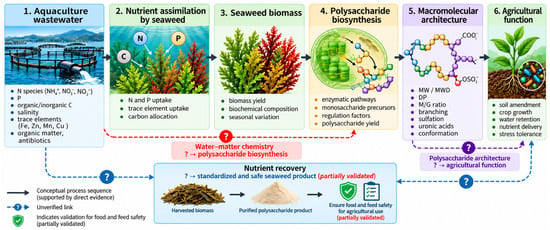
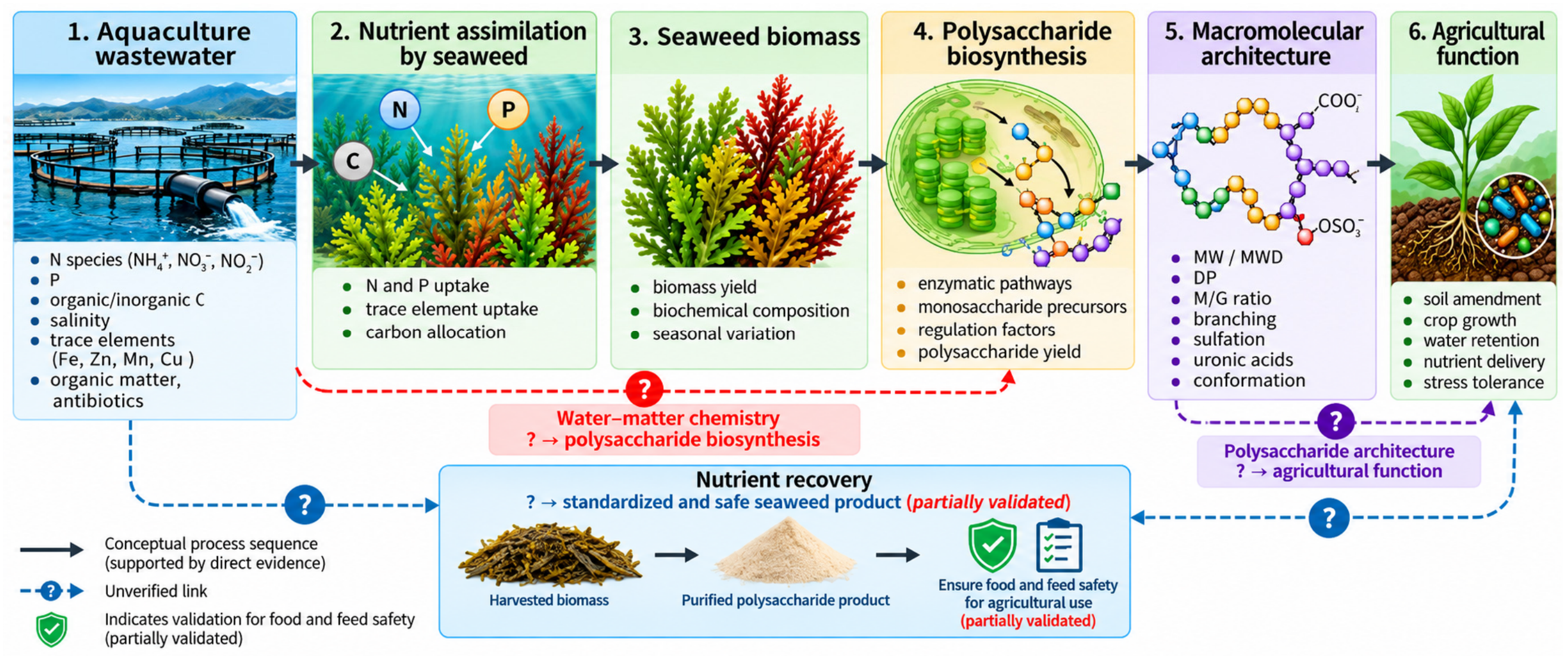
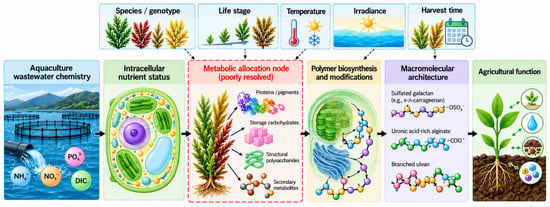
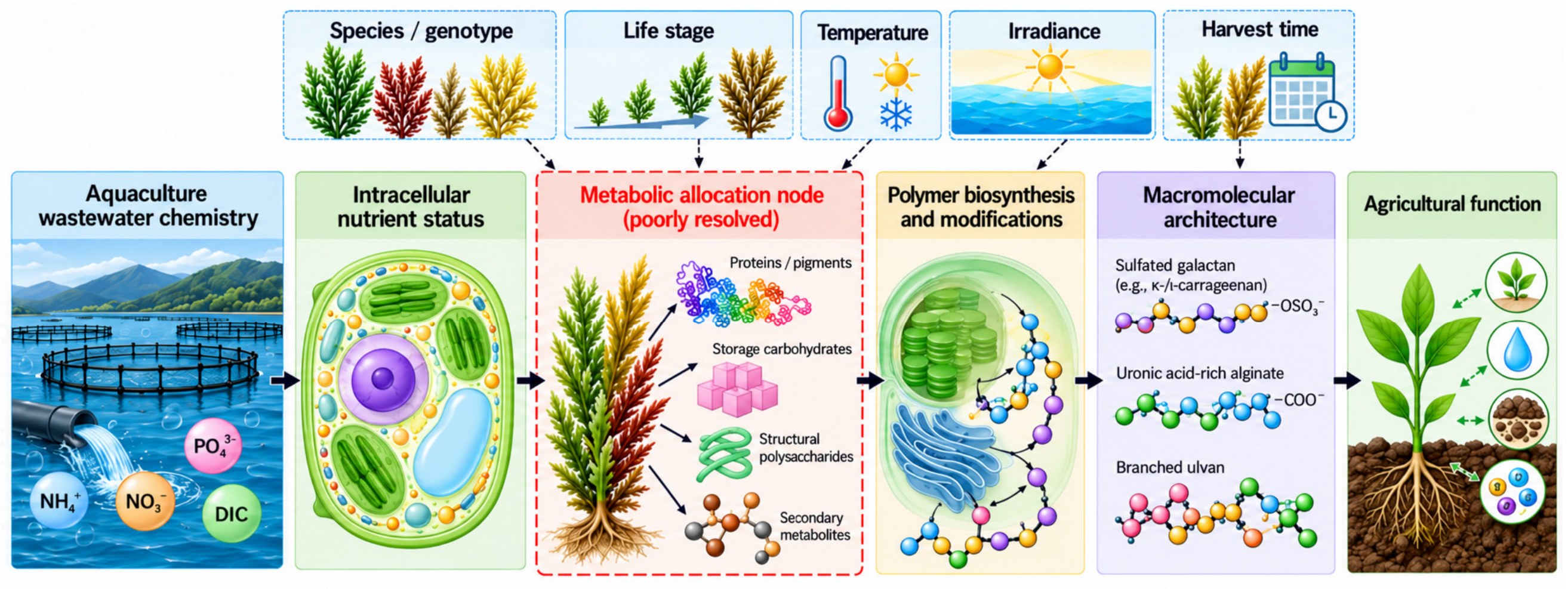
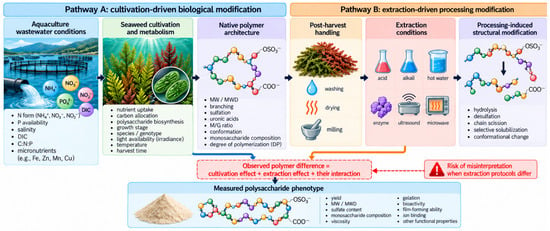
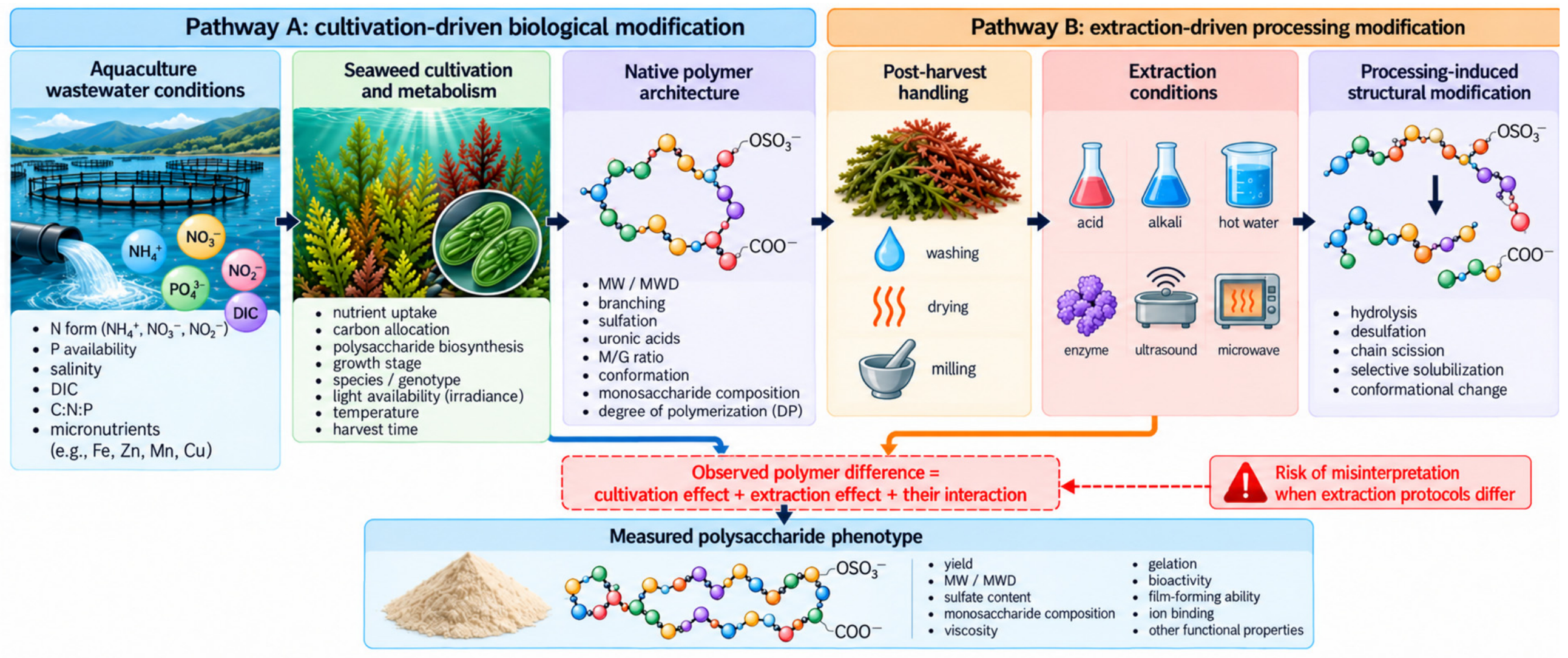
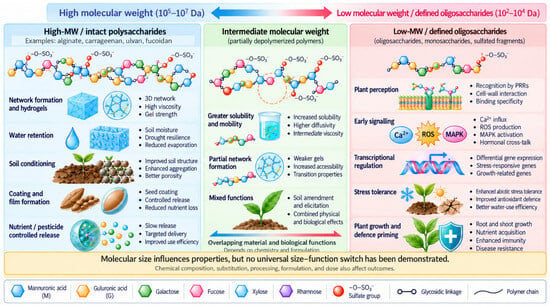
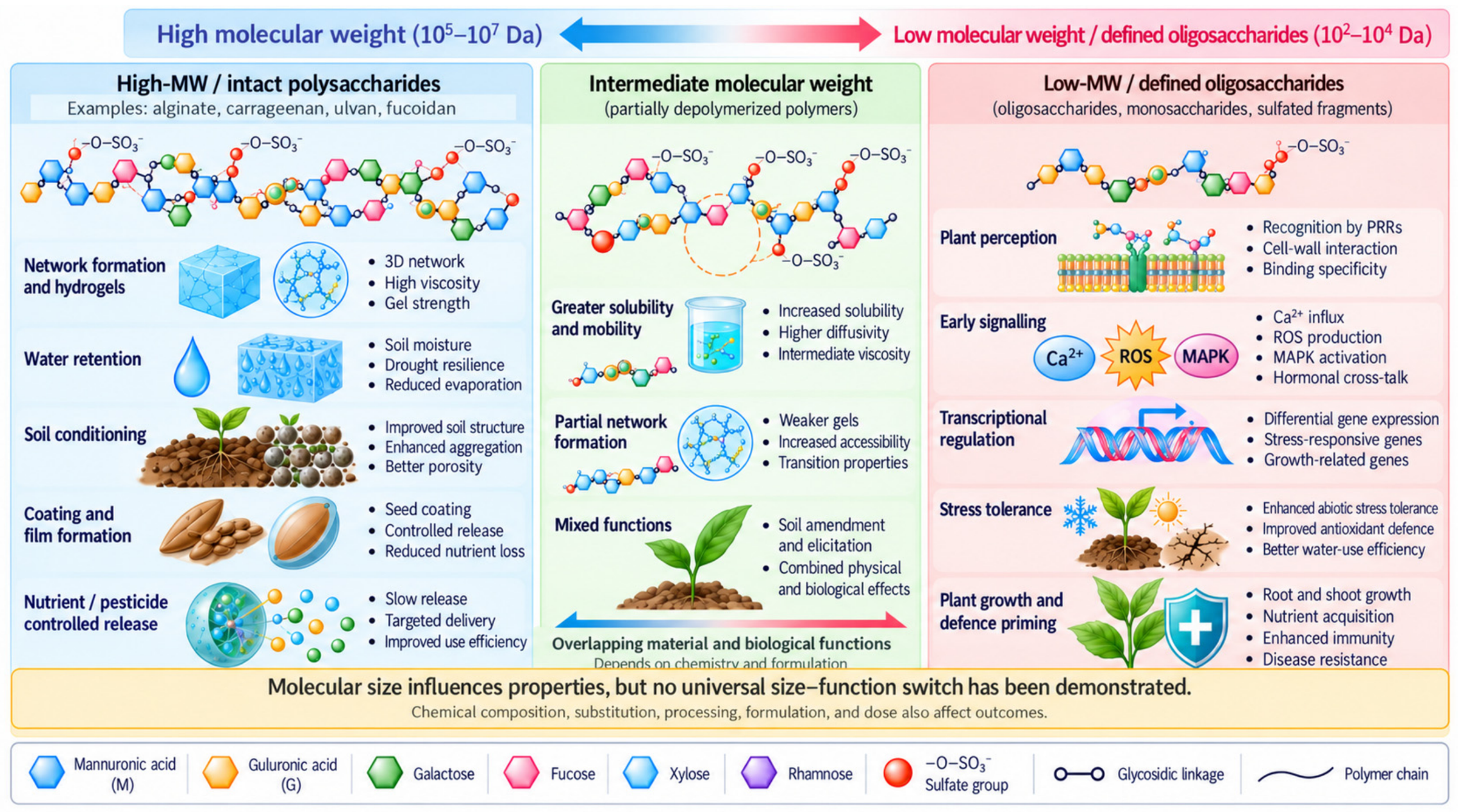
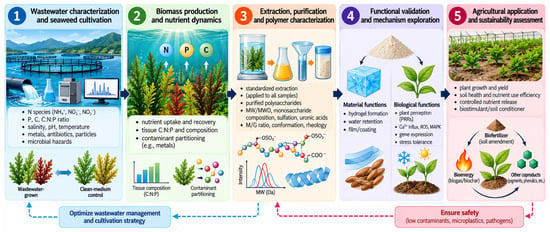
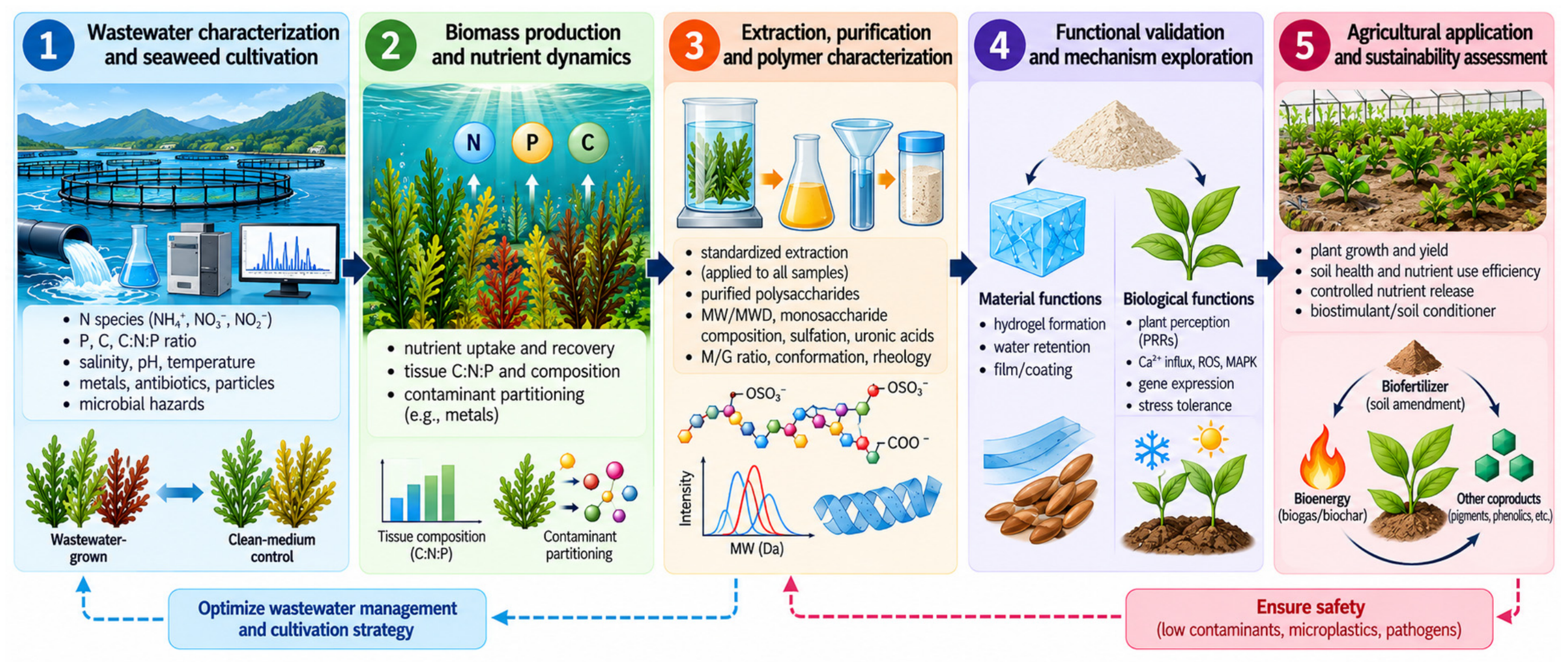

Disclaimer/Publisher’s Note: The statements, opinions and data contained in all publications are solely those of the individual author(s) and contributor(s) and not of MDPI and/or the editor(s). MDPI and/or the editor(s) disclaim responsibility for any injury to people or property resulting from any ideas, methods, instructions or products referred to in the content. |
© 2026 by the authors. Licensee MDPI, Basel, Switzerland. This article is an open access article distributed under the terms and conditions of the Creative Commons Attribution (CC BY) license.