


Simple Summary
Radiotherapy is an important treatment for people with advanced lung cancer, as it can quickly manage symptoms such as breathlessness, pain, and coughing up blood. As more patients need this treatment, healthcare services are developing faster and more patient-focused ways to provide care. Advanced Practitioner Radiographers play a key role by assessing patients, coordinating treatment, monitoring side effects, and providing ongoing support and advice throughout the treatment journey. They also run rapid-access clinics, which allow patients to be assessed and treated more quickly when appropriate. By combining specialist clinical skills with personalised care, Advanced Practitioner Radiographers help improve access to treatment, maintain high-quality care, and enhance quality of life for patients with advanced lung cancer.
Abstract
Palliative radiotherapy (RT) is frequently delivered in time-sensitive clinical settings and requires rapid, patient-centred decision-making while balancing symptom burden, prognosis, comorbidities, treatment burden, and individual goals of care. Increasing demand for palliative RT and workforce pressures have stimulated the development of advanced practice models involving radiation therapy professionals. This review examines the evolving role of Advanced Practice Radiographers (APRs) in palliative RT, with particular attention to clinical practice, leadership, education, and research. APR-led models described internationally include patient assessment, treatment decision-making, treatment planning, treatment delivery, symptom and toxicity management, prescribing, follow-up, and coordination of supportive and palliative care. The available evidence indicates that appropriately trained APRs can undertake selected activities traditionally performed by medical staff within defined competency and governance frameworks, with reported benefits including increased service capacity, reduced waiting times, streamlined treatment pathways, continuity of care, and positive patient experience. However, the evidence base remains heterogeneous and is predominantly focused on feasibility, acceptability, workforce capacity, and service-level outcomes. Evidence regarding patient-centred outcomes, including symptom control, quality of life, treatment burden, safety, and concordance with patients’ goals of care, remains limited. Considerable international variation also exists in education, regulation, scope of practice, professional autonomy, and organisational support. Advanced practice radiography therefore represents a developing model for delivering palliative RT, but further prospective evaluation is needed to establish its impact on patient, clinical, service, workforce, and health-system outcomes, and to identify the organisational and governance conditions required for sustainable implementation.
1. Introduction
Palliative radiotherapy (RT) is an essential component of multidisciplinary cancer care and is frequently used to alleviate symptoms, prevent or manage complications, and improve quality of life in patients with advanced malignancy [1]. Its role is particularly important in patients with advanced lung cancer, in whom radiotherapy may provide relief from symptoms such as pain, dyspnoea, haemoptysis, and obstruction, often with a relatively short treatment course [2]. However, palliative RT is often delivered in time-sensitive clinical circumstances, when patients may have substantial symptom burden, multiple comorbidities, limited prognosis and competing supportive care needs. In this setting, the challenge is not simply to increase access to radiotherapy, but to ensure that treatment is timely, appropriate and proportionate to the expected benefit and consistent with the patient’s goals of care.
The delivery of palliative RT is consequently becoming increasingly complex [3]. Decisions regarding whether to treat, the optimal treatment approach, treatment intent, fractionation, and the balance between potential benefit and treatment burden may need to be made rapidly and in the context of evolving symptoms, functional status, prognosis, comorbidities, concurrent systemic therapies, and patient preferences. At the same time, increasing cancer incidence, advances in systemic anticancer therapies and radiotherapy technology, an ageing and increasingly complex cancer population, and workforce pressures are placing additional demands on radiation oncology services [4,5].
These pressures have stimulated interest internationally in new and alternative models of multidisciplinary care and workforce redesign that can expand service capacity while maintaining safety, quality, continuity, and patient-centred care. One of these models is the concept of advanced practice (AP) [6]. The scientific and professional landscape surrounding AP in radiotherapy has developed substantially over the past two decades. Internationally, advanced practice models have emerged in countries including the UK, Canada, and Australia [7]. Although terminology and scope vary internationally, AP generally involves experienced healthcare professionals undertaking responsibilities beyond traditional professional roles, supported by additional education, defined competencies, clinical governance, and appropriate supervision [6].
In radiotherapy, AP may encompass clinical assessment, treatment decision-making, treatment planning, prescribing, treatment delivery, toxicity management and follow-up, alongside leadership, education and research [8]. Importantly, the purpose of AP should not be viewed solely as transferring tasks from radiation oncologists to other professional groups, but rather as developing multidisciplinary models of care that use the full range of professional expertise to improve access, continuity and patient-centred decision-making. Palliative RT represents a particularly relevant setting for AP. The need for rapid assessment and treatment, combined with the importance of symptom control and minimisation of treatment burden, creates opportunities for advanced practitioners (APs) to contribute across the entire patient pathway.
Against this background, the aim of this review was to examine the evolving role of AP and Advanced Practice Radiographers (APRs) in the delivery of palliative RT, with particular attention to advanced clinical practice, leadership, education, and research. Using advanced practice in lung cancer as a clinical context, we examined the opportunities, evidence, and challenges associated with APR-led models of care and considered how these roles may contribute to timely, safe, sustainable, and patient-centred palliative radiotherapy. Specifically, we sought to describe the scope of APR roles in palliative RT, summarise the available evidence regarding their implementation and reported outcomes, identify current challenges and gaps in the evidence base, and consider priorities for future evaluation and sustainable implementation.
Advanced Practice in the UK
The UK has developed a relatively established framework for AP, with APRs increasingly being recognised as key contributors to high-quality, patient-centred and holistic care across specialist services, including radiotherapy [9]. Growing demand for cancer services, alongside workforce pressures within radiation oncology, has increased interest in AP as a model of multidisciplinary workforce and service redesign. With an expected shortage of consultant clinical oncologists of up to 21% by 2028, the NHS is accelerating its plans to expand AP roles [10,11]. However, the expansion of AP roles raises questions regarding whether these positions are genuine role transformation or simply task substitution in response to workforce shortages. Critics have argued that workforce-driven role expansion risks framing APRs as cost-saving measures rather than recognising their distinct contribution to patient-centred care and service innovation [12].
In the UK, APRs are experienced registered healthcare professionals working with a high level of autonomy in their specialised role within the scope of a professional framework [6]. Healthcare professionals such as radiation therapy technologists (RTTs), nurses, physiotherapists, and paramedics must complete a postgraduate Master’s Degree in Advanced Practice and subsequently maintain a professional portfolio in order to maintain an APR registration [6]. The NHS England Multi-professional Framework for Advanced Practice defines AP as a level of practice characterised by autonomy, complex decision-making, leadership and accountability, underpinned by four pillars of practice: clinical practice, leadership and management, education, and research [13].
AP has evolved significantly over the past two decades in response to changing healthcare needs, increasing service demand, workforce pressures and advances in treatment complexity. The publication of the Health Education England (HEE) Multi-professional Framework for Advanced Clinical Practice in 2017 represented a significant milestone, providing a national standard for AP roles [8]. The framework defines advanced practice as a level of practice rather than a specific professional role, with APs expected to manage complex clinical situations autonomously while contributing to service development, education and research [8].
Although the multi-professional framework provides greater standardisation in AP, variation remains between organisations in role interpretation and implementation [12]. This may limit workforce portability and contribute to ambiguity around professional identity and expectations. Importantly, APs remain accountable to their professional regulatory bodies while working across traditional professional boundaries. This distinction is important in radiotherapy, where AP represents an expansion of scope and responsibility within defined competencies rather than a replacement of established professional roles.
Within radiotherapy, AP has become increasingly established across a range of clinical pathways. The Society and College of Radiographers (SCoR) describes APs as experienced clinicians who demonstrate expert knowledge, independent decision-making and leadership within a specialist area of practice [13]. APs may work within disease-specific pathways, image-guided radiotherapy, and treatment planning, and on treatment review and palliative radiotherapy [7]. Their roles contribute to improved service efficiency, reduced waiting times and enhanced continuity of care [7]. In palliative RT, their capabilities may be particularly relevant because clinical decisions frequently need to be made within a short timeframe and require integration of symptom burden, performance status, prognosis, treatment intent and patient preferences.
The UK Government’s Fit for the Future 10 Year Health Plan includes strengthening the workforce by “developing AP models,” creating further scope and provision for APs [14]. Despite the success of AP roles, challenges remain with variations in role implementation, inconsistent organisational support and limited protected time for non-clinical activities that can affect the ability of APs to fully engage with all four pillars. Nevertheless, evidence consistently suggests that APs improve workforce sustainability, patient access and service quality [13]. However, whether these models improve patient-centred clinical outcomes remains less well established. This distinction is particularly important for palliative RT, where the ultimate value of a service should be assessed not only by efficiency, but also by symptom control, quality of life, treatment burden, safety and concordance with patients’ goals of care.
2. The Four Pillars of Advance Practice
The four pillars of AP are clinical practice, leadership, education and research, providing a framework for understanding the breadth of AP, and should be considered complementary rather than independent components of the role. However, the four pillars describe the scope and capabilities of AP, rather than providing a framework for determining whether an AP-led model has been successfully implemented or improves patient and service outcomes. In palliative RT, the contribution of AP should therefore be evaluated not only by the activities undertaken within each pillar, but also by their impact on access, quality, safety, patient-centred outcomes and health-system efficiency [6,12].
The clinical practice pillar is often regarded as the cornerstone of AP. APs demonstrate expert clinical knowledge, advanced assessment skills and autonomous decision-making within their scope of practice. They are expected to manage complex patient presentations, coordinate care and provide holistic, person-centred interventions. Within radiotherapy, AP may involve independent new patient consultations including consent, management decisions, and treatment planning on treatment review, toxicity management, non-medical prescribing, image interpretation, and post-treatment follow-up. In palliative RT, AP extends beyond determining whether a patient is technically suitable for treatment. It requires assessment of the expected benefits and burdens of treatment within the context of prognosis, symptom severity, functional status, comorbidities, concurrent systemic treatment and individual goals of care. This is particularly relevant when treatment is delivered close to the end of life, where unnecessary treatment-related burden may outweigh potential benefit.
Evidence suggests that APs can safely undertake activities traditionally performed by medical staff while improving service efficiency and patient satisfaction [9]. However, autonomous practice must be supported by clearly defined competencies, appropriate clinical governance, supervision and escalation pathways to maintain patient safety and professional accountability [7]. The expansion of AP autonomy could introduce potential risks that require explicit consideration, particularly in palliative RT where patients may present with complex, rapidly changing or atypical clinical circumstances. Variation in competency assessment, scope of practice and governance between institutions may result in differences in the level of autonomy that can be safely exercised. Clear criteria are therefore required to define which patients and clinical decisions are appropriate for independent AP management and which require physician review or multidisciplinary discussion.
Physician review may remain particularly important for diagnostically uncertain or atypical presentations, complex re-irradiation, cases involving substantial treatment-related risk, significant divergence between the anticipated benefits and burdens of treatment, complex treatment-plan decisions, or situations in which the patient’s clinical condition or goals of care change substantially. Similarly, prescribing responsibilities require clearly defined scope, appropriate competency assessment and mechanisms for escalation when medication-related risks exceed the practitioner’s scope of practice. Treatment-plan approval, prescribing, escalation and medico-legal accountability should therefore be explicitly defined within local governance arrangements rather than assumed to follow from the AP title alone.
Maintenance of competency is equally important. Competence should not be regarded as a one-time achievement following initial training, but should be reviewed periodically in relation to clinical activity, case complexity, continuing professional development and changes in treatment techniques or professional responsibilities. These safeguards should enable appropriate autonomy while maintaining clear accountability and access to specialist medical review when required.
AP non-medical prescriber (NMP) practice is a clear example of robust governance with a strict scope of practice, where APs must complete a specific NMP qualification demonstrating evidence of working within the Royal Pharmaceutical Society’s “Competency Framework for all Prescribers” [15]. This framework consists of two domains, the patient consultation and prescribing governance, that are separated into ten competency sections, which are further broken down into specific skills the NMP must demonstrate [15]. The consultation domain covers patient assessment, use of evidence-based treatment, shared decision-making, prescribing, providing information, and plan for monitoring and review [15]. The prescribing governance domain covers prescribing safely, prescribing professionally, improving prescribing practice and prescribing as part of a team [15].
A recent survey of the views of NMP RTTs and radiotherapy service managers in Scotland, Wales and Northern Ireland highlighted that the contribution this specialised workforce makes does not stop at providing a basic service but extends to complex assessments and decision-making, such as medicine optimisation and managing polypharmacy [16]. The addition of NMPs within the radiotherapy department provides consistency of care and improved responsiveness to patient needs, particularly in situations where there is limited medical cover, such as at radiotherapy satellite centres. This 2026 survey also noted that NMPs had an enhanced sense of professional legitimacy and job satisfaction, which contributed to workforce retention [16]. At a time when RTT workforce retention continues to decline, the positive impact of professional fulfilment and sense of autonomy cannot be underestimated. However, variation in how these roles are embedded within multidisciplinary teams remains an important implementation challenge and may influence both professional understanding and the extent to which APs can work autonomously [16]. Differences in local scope of practice, competency assessment, supervision and escalation arrangements may create variation in the level of autonomy between institutions.
Leadership is a core expectation of AP and extends beyond formal managerial responsibility. APs are expected to influence clinical practice, drive organisational change and facilitate service development [7]. Within radiotherapy, leadership activities may include developing clinical protocols, implementing new treatment technologies, leading quality improvement initiatives and contributing to workforce planning. APs frequently act as a link between frontline clinical teams and organisational leadership, helping to translate strategic objectives into clinical practice [13]. This bridge between management, clinical, supportive and community teams places APs in a unique position to demonstrate leadership in promoting integrated care. NHS England advises that a full range of clinical and care professionals be involved in decision-making at every level of their integrated care systems in order to improve outcomes in population health and healthcare, tackle inequalities, enhance productivity and cost-effectiveness, and support broader development [17].
In palliative RT, this leadership function may be particularly important because improvements in patient care often depend on pathway redesign rather than on treatment technology alone. Examples include developing rapid-access pathways, establishing referral and escalation criteria, integrating supportive and palliative care, implementing electronic patient-reported outcome monitoring and reducing unnecessary hospital attendances. Such activities position APRs not simply as providers of clinical care, but as contributors to the design and evaluation of the systems in which that care occurs.
However, demonstrating leadership can be challenging because outcomes are often less tangible than clinical activities. Measuring the impact of leadership initiatives therefore often requires evaluation through service metrics, audits and quality improvement outcomes. For palliative RT services, such evaluation could include measures of referral-to-assessment and referral-to-treatment times, treatment capacity, pathway adherence, unplanned healthcare utilisation and patient experience.
Protected time is essential to enable APs to undertake these activities alongside their clinical responsibilities; without such time, the leadership pillar risks becoming an additional expectation rather than a sustainable component of APs.
The educational pillar encompasses education of patients, students and healthcare professionals, as well as maintenance of the practitioner’s own professional competence. Continuous professional development is particularly important in oncology, where treatment approaches, systemic therapies and radiotherapy technologies evolve rapidly [9].
APs contribute to education through teaching sessions, mentorship, clinical supervision and competency assessment. As specialists in their field, APs deliver university lectures, teach Junior Speciality Registrars, and represent their Trust in presenting to the wider health care community. They often play a key role in supporting newly qualified staff and facilitating specialist learning within multidisciplinary teams. Such activities contribute to workforce development and the maintenance of high standards of care [13].
Patient education is equally important. Individuals undergoing palliative radiotherapy often experience anxiety regarding prognosis, treatment goals, symptoms and side effects. APs are well positioned to provide evidence-based knowledge, supporting informed consent and promoting shared decision-making [7].
Understanding current clinical trials and emerging evidence is increasingly important within palliative lung cancer practice. For example, the Thoracic Umbrella Radiotherapy Study on the Stage IV NSCLC (TOURIST) platform has two Phase 3 randomised controlled trials currently recruiting patients to research the role of radiotherapy in the first-line treatment of metastatic non-small cell lung cancer (NSCLC) [18]. Recent advances in immunotherapy, targeted therapies and precision radiotherapy have transformed treatment options for many patients [19]. Consequently, APs must remain informed on current research to facilitate meaningful discussions regarding treatment choices and expectations. APs who understand current evidence are better equipped to support informed decision-making and address patient concerns. This demonstrates integration of both the clinical and research pillars of AP.
Research is a fundamental pillar of AP and provides the mechanism through which clinical innovation can be evaluated and translated into routine care. APs may participate in or lead clinical research, service evaluation, clinical audit and quality improvement, as well as contribute to implementation of evidence into clinical practice.
In palliative RT especially, important research questions include whether AP improves symptom outcomes, quality of life (QoL), patient experience, treatment burden, access to care and health-system efficiency. Patient-reported outcome measures (PROMs) and patient-reported experience measures (PREMs) may be particularly valuable in this context because conventional service metrics such as waiting time and treatment concordance do not fully capture the outcomes that are most relevant to patients receiving palliative treatment [20]. By supporting collection, interpretation and clinical response to patient-reported symptoms, APRTs can contribute to the development of more responsive and patient-centred models of care.
However, meaningful research engagement requires protected time, methodological support and integration within institutional research structures. Despite being recognised as a fundamental pillar of AP, research activity remains one of the least developed aspects of many advanced practitioner roles [12]. Service pressures frequently prioritise clinical delivery over research, limiting opportunities for APs to generate evidence. Similarly, leadership and education activities require protected time if they are to represent substantive components of the role rather than additional responsibilities undertaken alongside clinical practice. Sustainable AP therefore requires job plans and organisational structures that recognise all four pillars as integral components of the role.
Importantly, the four pillars should not be considered independent measures of service success. Their value ultimately lies in how they contribute to the delivery of safe, effective and patient-centred care. This requires evaluation using outcomes that extend beyond workforce activity or professional role development.
3. AP-Led Palliative Radiotherapy
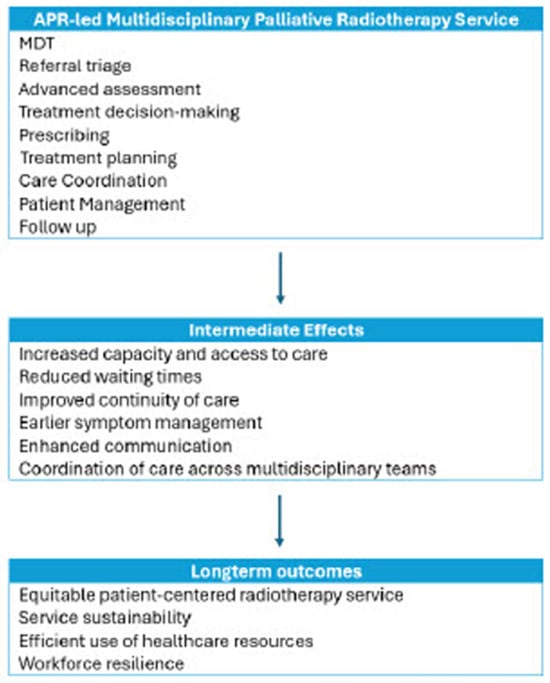
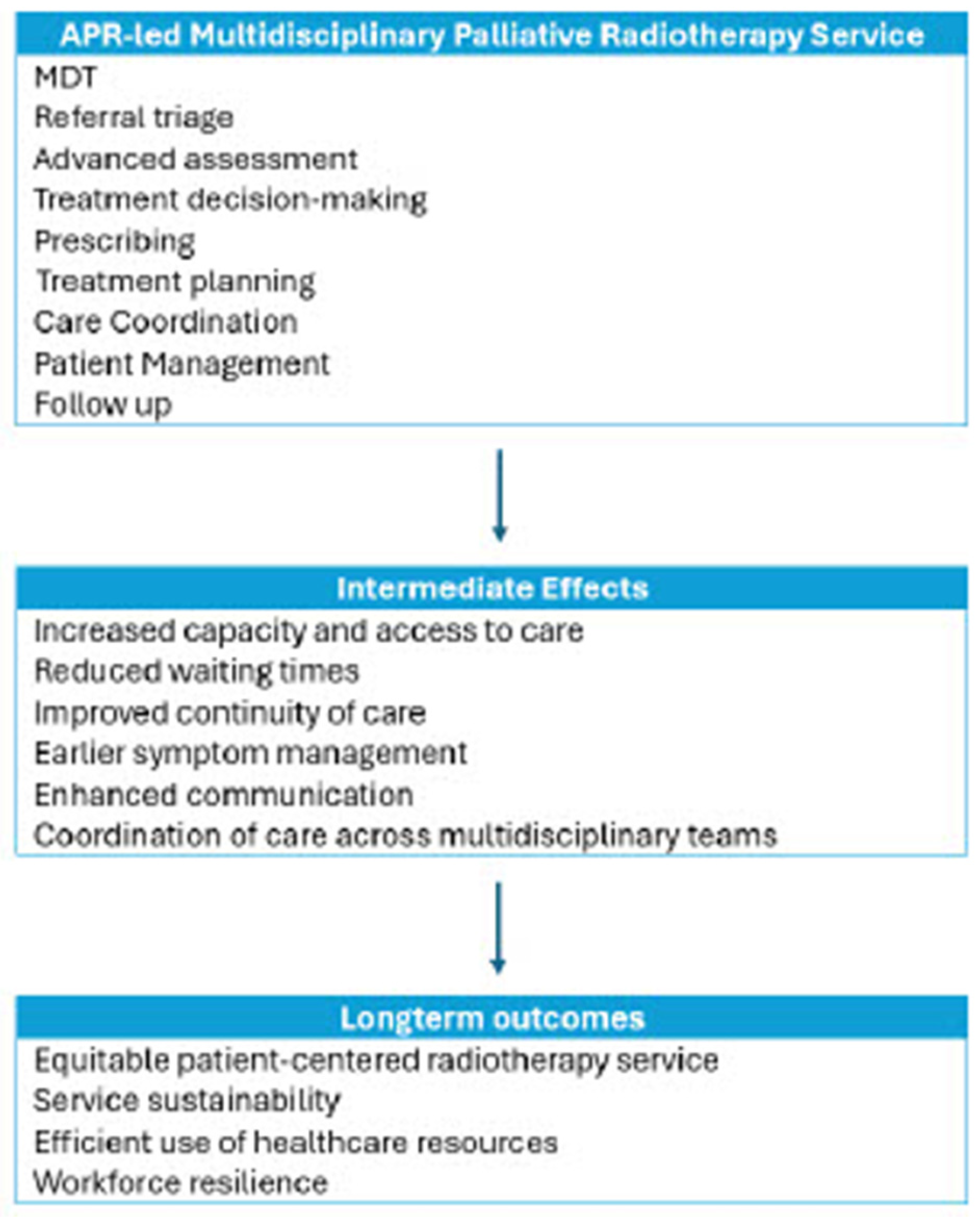
While the four pillars provide a framework for defining the breadth of AP, they do not in themselves establish how they are to be implemented or whether an AP-led palliative RT model is effective. Implementation is likely to be closely aligned with individual department and service needs, as well as the support and CCO supervision available. Figure 1 proposes the scope of an APR-led service for implementation and the potential short- and long-term outcomes.
Figure 1.
Proposed conceptional framework for implementation of APR-led palliative radiotherapy services.
The evaluation of a service should extend beyond describing role responsibilities to examining implementation, clinical quality, patient outcomes and health-system effects. This is particularly important in palliative RT, where increasing capacity or reducing waiting times should not be considered sufficient evidence of benefit if treatment remains burdensome, inappropriate or poorly aligned with patients’ goals of care.
A practical evaluation framework should incorporate measures of access and reach, quality and safety of clinical care, patient-centred outcomes, and service and system outcomes, complemented by measures of implementation, equity and sustainability. Table 1 provides examples of core domains and candidate indicators for evaluating AP-led palliative radiotherapy services.
Table 1.
Core domains and candidate indicators for evaluating AP-led palliative radiotherapy services.
Implementation should also be assessed explicitly. In palliative RT, this could include assessment of which patients access the pathway, clinical and patient-reported outcomes, organisational adoption, fidelity to agreed competencies and governance arrangements, and maintenance of the service over time.
4. The Christie NHS Foundation Trust: An Example of AP-Led Palliative Radiotherapy
The Christie NHS Foundation Trust provides an illustrative example of how advanced practice can be embedded within a palliative radiotherapy patient pathway. The following describes the local model and is intended as a practical case example rather than evidence of comparative effectiveness. The staffing structure, patient volumes, scope of practice and governance arrangements described are specific to The Christie and may not be directly transferable to other institutions. Nevertheless, the model illustrates several components that may be relevant when developing AP-led palliative RT services in other settings.
The Christie NHS Foundation Trust currently employs 111 qualified APs, with an additional 22 in training posts across health professions, covering most solid malignancy disease groups and haematology, as well as specialist services such as senior adult oncology. In the radiotherapy department, there are sixteen APRs working in specific disease sites and in radiotherapy review services. There are three APRs within the lung radiotherapy service, whose scope of practice includes specialisation in lung primary Stereotactic Ablative Radiotherapy (SABR), SABR for oligometastases within the thorax, and palliative radiotherapy.
The Trust provides cancer services to approximately three million people across Greater Manchester and beyond, where cancer incidence continues to increase and general life expectancy has decreased in recent years [21].
There are substantial health inequalities across Greater Manchester due to socio-economic factors, resulting in a wide variation in life expectancy and health outcomes. The English Indices of Deprivation 2025 (IoD2025) rank each small area in England from most to least deprived, considering income, employment, education, health, crime, barriers to housing/services, and living environment [21]. Manchester is one of the five local authority districts with the greatest proportion of neighbourhoods with the highest levels of deprivation [22]. This contributes to complex service needs, with patients from more deprived regions experiencing higher rates of smoking, drug and alcohol dependencies, and earlier onset of comorbidities such as COPD and cardiovascular disease. These patients may require more complex prescribing due to polypharmacy or addictions, support with treatment compliance, and referral to services such as smoking or alcohol cessation, all of which APs can provide within their role. Cancer Research UK reported that shorter cancer prognosis in deprived populations is linked to later-stage diagnosis, including through unrecognised symptoms, barriers to seeking medical help and lower screening attendance [23]. Across all cancers, only 52% of people with cancer living in more deprived areas had a 5-year survival rate, compared with 70% of people living in the least deprived areas [23].
Specifically for lung cancer, the deprivation gap in Greater Manchester is larger and has been increasing over time, with incidence ranging from 128 per 100,000 people in the most deprived areas to 48 per 100,000 in the least deprived [23]. The principal risk factor driving this disparity is the widening gap between smoking rates, from 22% of the population in the most deprived areas to 6% in the least deprived [24].
This contributes to increasing demands on palliative radiotherapy services and highlights the need to increase capacity while maintaining time and resources for supportive, holistic care. In the last year (July 2025 to July 2026), over 2000 palliative radiotherapy booking forms were submitted to The Christie, almost 500 for patients with a primary lung malignancy.
The AP in lung palliative radiotherapy occupies a central role within the patient pathway. Responsibilities commonly include reviewing referrals, conducting advanced patient assessments, evaluating symptoms, participating in multidisciplinary team meetings and coordinating urgent treatment pathways. This facilitates rapid access to radiotherapy and improves continuity of care. A significant component of the role involves holistic patient assessment. Patients with advanced lung cancer frequently experience a combination of physical, psychological and social challenges. The AP is therefore required to assess symptoms comprehensively, identify supportive care needs and coordinate referrals to palliative care, community services and specialist teams when appropriate.
Rapid access to palliative radiotherapy for lung cancer patients is facilitated by APs, who increase service capacity by having their own allocated streams for new patient consultation and follow up appointments in dedicated clinics. Within the Christie, patients with primary lung cancer or mesothelioma may be referred to the AP stream for palliative radiotherapy to areas including the lung, neck lymph nodes, bone metastases including spine, whole brain and superior vena cava obstruction. The AP attends MDTs and will review the patient’s past medical history, drug history, imaging and investigations, and agree management options. They complete patient consultation, assessment of fitness to treat and consent for radiotherapy.
As part of their training, APs have completed advanced communication and psychological care qualifications related specifically to oncology. Combined with extensive clinical experience and communication skills, the AP is well positioned to have difficult conversations with patients around prognosis and the palliative intent of treatment, particularly for those patients that have first presented with metastatic disease. Previous studies have identified cancer patient-related shortcomings in the communication of information around their disease, prognosis and management, and this can be addressed by consultations with a specialised AP [25].
The AP can plan palliative radiotherapy once they have completed a Trust-specific competency framework with the approval of their Consultant Clinical Oncology supervisor. Until full competency is reached, the AP may plan the radiotherapy with the final plan approval completed by a Consultant Clinical Oncologist or competent Specialist Registrar. Evidence supporting AP within palliative radiotherapy continues to grow. Job et al. (2019) demonstrated that APR could safely undertake palliative radiotherapy responsibilities, with strong agreement between practitioner and oncologist treatment field definitions [26]. This provides evidence supporting the feasibility of defined AP competencies within palliative RT, but does not establish that the specific Christie model is superior to, or equivalent to, other models of service delivery.
Patients undergoing fractionations longer than a single fraction are seen by APs for a review during radiotherapy treatment. They assess treatment side-effects, request and interpret blood tests and imaging where required, and prescribe supportive medication. Patients may be followed up six weeks post-radiotherapy or discharged to community palliative services.
Each AP has support and supervision from a named Consultant Clinical Oncologist (CCO) throughout their training, which continues following qualification. AP palliative clinics are supported by the named AP CCO supervisor or overarching CCO, with wider support from the Lung CCO team through weekly meetings and continuing education.
Beyond direct clinical care, the Lung APs contribute to service development, education and research. Activities include protocol development, staff education, clinical audit and quality improvement. For example, the APs are supporting the implementation of an electronic Patient-Reported Outcome Measures (ePROM) pilot pathway for patients during radical radiotherapy to report treatment side effects and identify the category of on-treatment review required, including patient and radiographer education, triage of responses, and collection of patient feedback and efficiency data. Consequently, the role exemplifies the integration of all four pillars of AP and demonstrates how APs contribute to both individual patient outcomes and wider service transformation.
The Christie model should be interpreted within the context of a large specialist cancer centre with a substantial AP workforce, high patient volumes, established disease-site teams and dedicated consultant supervision. These characteristics may differ considerably from those of district general hospitals, smaller radiotherapy centres or services with limited access to specialist AP training and consultant support. Consequently, the specific staffing model, patient eligibility criteria, referral pathways and governance arrangements cannot necessarily be replicated elsewhere.
Nevertheless, several components may have broader applicability, including clearly defined scope of practice, competency-based progression, named consultant supervision, explicit escalation pathways, dedicated AP referral streams, multidisciplinary working and integration of clinical practice with education, leadership and research. Future implementation studies should determine which components are essential for safe and effective AP-led palliative RT and which can be adapted according to local patient volumes, workforce structures, resources and regulatory requirements.
5. International Perspectives on Advanced Practice
Alongside the UK’s early development of an advanced practice framework for radiotherapy, international models evolved across a range of diverse healthcare systems and roles [8]. Canada’s Clinical Specialist Radiation Therapist (CSRT) model and Australia’s APRT framework have demonstrated improvements in service efficiency, patient satisfaction and workforce capacity [26]. Australian APs have successfully undertaken responsibilities including palliative assessment, treatment field definition and pathway coordination, illustrating how AP can support timely access to palliative radiotherapy services [27]. At the Radiation Oncology Princess Alexandra Raymond Terrace in Australia, an AP-led rapid response palliative clinic successfully improved efficiency from the referral to treatment pathway and reduced the number of hospital visits required [28]. The 2021 Canadian Association of Medical Radiation Technologists (CAMRT) White Paper reported that a variety of innovative models led by specialist palliative AP radiographers resulted in increased service efficiency and capacity whilst maintaining safety and quality, and improved patient experience and symptom management [29].
Within Europe, there is increasing recognition of AP through the work of the European Society for Radiotherapy and Oncology (ESTRO). The 2019 ESTRO position paper advocates Master’s-level education and expanded professional autonomy for RTTs, acknowledging the growing complexity of radiotherapy and projected increases in demand for cancer treatment [8]. In a 2023 survey of 21 European countries, 66% of AP RTTs surveyed were still working in an informal AP role that was mainly focused on patient care [27]. Significant variation between European countries regarding education, support, regulation and scope of practice were key challenges identified within the survey [27].
Despite these differences, international experience consistently supports the development of APR-led radiotherapy as a means of enhancing service capacity while maintaining high standards of patient care.
6. Consultant Therapeutic Radiographer Practice
The next stage in AP professional development is the consultant practitioner scope of practice. Consultant practitioners are independent in complex decision-making, develop and lead teams, and have a wider responsibility for research and education across national and international networks [13]. At this level, AP extends beyond the autonomous delivery of defined clinical activities to include leadership of services, development of clinical practice, education, research, and responsibility for quality improvement and service transformation. Consultant-level practice therefore represents a further expansion of both clinical autonomy and organisational responsibility, rather than simply an extension of the number or complexity of tasks undertaken by APs.
An example of an established consultant therapeutic radiographer (CTR)-led palliative radiotherapy service is in Liverpool, UK, which was implemented in 2019 [30]. This service was previously run by a CCO once a week and now has the capacity to run three times a week under the CTR leadership. The service accepts referrals from all tumour sites for patients requiring mainly bone, soft tissue or whole brain RT, and there is scope for organ-specific RT with CCO support as appropriate [30]. The service has dedicated radiotherapy planning CT appointments reserved, and in acute cases is able to treat patients on the same day [30]. It is a fully autonomous role, from the vetting of patient referrals to the prescribing and approval of RT plans [30]. A named CCO mentor is available to discuss complex referrals and treatment plans, as well as for peer review and feedback, to ensure continued professional development [30]. Clear competency requirements, scope of practice, escalation criteria and ongoing peer review are essential, particularly for complex or atypical cases, complex re-irradiation or situations with substantial treatment-related risks. The availability of a named CCO mentor provides an example of how clinical autonomy can be combined with access to specialist medical input when required.
Although the development and implementation of CTR roles has been reported to support service creation and patient-centred care, there is still a deficit in the development of these roles across organisations within the UK [31]. Factors for this delayed uptake may include lack of financial, managerial or CCO support, and the need for organisational structures and governance to facilitate such roles and services [31]. Differences in local scope of practice, workforce availability, case mix and governance arrangements may also limit direct transferability between centres. This highlights the need for CTRs to quantify and publish their impact on services and patient outcomes in order to support and justify investment in developing these roles.
7. Future Directives
The development of APR roles represents an important opportunity to redesign the delivery of palliative RT, particularly in the context of increasing demand, workforce pressures and the need to minimise treatment burden for patients with advanced cancer. International experience demonstrates that such roles can be implemented within different healthcare systems and professional frameworks. However, much of the published literature focuses on feasibility, acceptability and service-level improvements, while evidence of benefits to outcomes that matter most to patients remains limited. Future research should therefore move beyond demonstrating the feasibility of AP-led care or task substitution and determine whether these models improve patient-centred outcomes while maintaining safety, appropriateness, equity and health-system efficiency.
A key priority is the development of a core outcome set and minimum dataset for evaluating AP-led palliative RT. Candidate domains should include access and waiting times, treatment appropriateness, clinical decision-making and escalation, adverse events, symptom response, QoL, patient experience, unplanned healthcare utilisation, workforce outcomes, cost-effectiveness and equity of access. These outcomes should be evaluated alongside implementation measures, including adoption, fidelity to agreed pathways and governance, and sustainability. A standardised outcome framework would facilitate comparison between AP models and enable multicentre evaluation across different healthcare systems.
The considerable international variation in AP roles also creates a need for international consensus on the essential components of AP-led palliative RT. An international Delphi consensus involving radiation oncologists, (advanced practice) radiographers/radiation therapists, palliative care clinicians, nurses, radiation physicists, health-services researchers and, importantly, patients and caregivers could define minimum competencies, governance requirements and a core outcome set. Such a consensus should not aim to establish a single international model of practice. Rather, it should provide a minimum evidence-based framework within which locally appropriate models can develop. AP will inevitably remain influenced by national regulation, professional roles, healthcare financing and workforce structures. Common terminology, minimum competency standards and comparable outcome measures could nevertheless facilitate multicentre research, benchmarking and evaluation across healthcare systems.
Future studies should also move beyond single-centre descriptive and before-and-after evaluations. Multicentre prospective studies, controlled before-and-after studies, stepped-wedge designs and hybrid implementation–effectiveness studies could provide stronger evidence of both clinical effectiveness and implementation across different settings. Studies should prospectively incorporate PROMs and PREMs to assess symptom response, QoL, treatment burden and patient experience, and should include economic evaluation where feasible. Importantly, evaluations should assess equity of access and outcomes across relevant patient populations, rather than reporting overall service performance alone.
Research should also seek to identify which components of AP-led care contribute to observed benefits. AP-led palliative RT is not a single intervention but may incorporate independent assessment, treatment decision-making, prescribing, treatment planning, rapid-access pathways, toxicity management, follow-up and integration with palliative or supportive care. Understanding which components are necessary for which patients and in which settings will be important for developing models that are transferable while remaining responsive to local regulatory and workforce contexts.
8. Conclusions
AP presents a unique opportunity to increase radiotherapy service capacity while supporting safe, timely and patient-centred care. It should, however, be viewed as more than a mechanism for task substitution. Its potential lies in integrating specialist radiotherapy expertise with assessment, communication, coordination and holistic care within a governed multidisciplinary model.
As AP roles develop and become more prevalent, reducing unwarranted variation in scope of practice, competency requirements, governance and levels of support will be essential to ensure safety, equity and alignment with national regulatory frameworks. Structured job plans can facilitate protected time for all four pillars of practice, so that education, research and leadership are not neglected in favour of clinical practice. Ultimately, the success of AP should not be measured by the number of tasks transferred between professional groups, but by whether multidisciplinary redesign enables patients to receive timely, safe and proportionate radiotherapy that delivers outcomes that matter to them. This requires evaluation across multiple domains, including access, treatment appropriateness and safety, symptom and quality-of-life outcomes, patient experience, healthcare utilisation, workforce sustainability, cost and equity.
The next phase of AP development should therefore focus on generating prospective, multicentre evidence and establishing internationally comparable competencies and outcome measures, while allowing sufficient flexibility for different healthcare systems and professional frameworks. International consensus on minimum competencies, governance and core outcomes could provide the foundation for such research and facilitate benchmarking between services.
Author Contributions
Conceptualisation: all authors; methodology: all authors; investigation: M.K.V., M.B. and R.W.; resources: all authors; data curation: all authors; writing—original draft preparation: M.K.V. and E.O.; writing—review and editing: all authors; visualisation: M.K.V.; supervision: E.O.; project administration: M.K.V. All authors have read and agreed to the published version of the manuscript.
Funding
This research received no external funding.
Data Availability Statement
No new data were created or collected in this study. The data analysed in this systematic review were derived from previously published studies, which are cited in the manuscript. The extracted data supporting the findings of this study are available from the corresponding author upon reasonable request.
Conflicts of Interest
The authors declare no conflicts of interest.
Abbreviations
The following abbreviations are used in this manuscript:
| AP | Advanced Practice |
| APR | Advanced Practice Radiographer |
| APs | Advanced Practitioners |
| CCO | Consultant Clinical Oncologist |
| CTR | Consultant Therapeutic Radiographer |
| ePROM | Electronic Patient Reported Outcome Measure |
| RT | Radiotherapy |
| RTT | Radiation Therapy Technologists |
References
- Spencer, K.; Parrish, R.; Barton, R.; Henry, A. Palliative radiotherapy. BMJ 2018, 360, k821. [Google Scholar] [CrossRef] [Scilit] [PubMed]
- Moeller, B.; Balagamwala, E.; Chen, A.; Creach, K.; Giaccone, G.; Koshy, M.; Zaky, S.; Rodrigues, G. Palliative thoracic radiation therapy for non-small cell lung cancer: 2018 Update of an American Society for Radiation Oncology (ASTRO) Evidence-Based Guideline. Pract. Radiat. Oncol. 2018, 8, 245–250. [Google Scholar] [CrossRef] [Scilit] [PubMed]
- Lutz, S.; Chow, E. Palliative radiotherapy: Past, present and future-where do we go from here? Ann. Palliat. Med. 2014, 3, 286–290. [Google Scholar] [CrossRef] [Scilit] [PubMed]
- Borràs, J.M.; Lievens, Y.; Barton, M.; Corral, J.; Ferlay, J.; Grau, C. How many new cancer patients in Europe will require radiotherapy by 2025? An ESTRO-HERO analysis. Radiother. Oncol. 2016, 119, 5–11. [Google Scholar] [CrossRef] [Scilit] [PubMed]
- Petit, S.; Franco, P.; Heukelom, J.; Callens, D. Increasing cancer incidence and workforce shortages: It is time to act now. Radiother. Oncol. 2025, 211, 111057. [Google Scholar] [CrossRef] [Scilit] [PubMed]
- NHS England. Multi-Professional Framework for Advanced Practice; NHS England: London, UK, 2025. [Google Scholar]
- Lawlor, S.; Leech, M. Established advanced practice roles in radiation therapy: A scoping review. J. Med. Imaging Radiat. Oncol. 2024, 68, 342–352. [Google Scholar] [CrossRef] [Scilit] [PubMed]
- Duffton, A.; Devlin, L.; Tsang, Y.; Mast, M.; Leech, M. Advanced practice: An ESTRO RTTC position paper. Tech. Innov. Patient Support Radiat. Oncol. 2019, 10, 16–19. [Google Scholar] [CrossRef] [Scilit] [PubMed]
- Advanced Clinical Practitioner Integrated Degree (Level 7). Available online: https://www.instituteforapprenticeships.org/apprenticeship-standards/advanced-clinical-practitioner-integrated-degree-v1-0 (accessed on 20 July 2026).
- The Royal College of Radiologists 2023 Clinical Oncology Workforce Census. Available online: https://www.rcr.ac.uk/news-policy/latest-updates/2023-clinical-radiology-and-clinical-oncology-workforce-census-reports/ (accessed on 20 July 2026).
- 2023 NHS Long Term Workforce Plan. Available online: https://www.england.nhs.uk/long-read/nhs-long-term-workforce-plan-2/ (accessed on 20 July 2026).
- Evans, C.; Poku, B.; Pearce, R.; Eldridge, J.; Knaggs, R.; Blake, H.; Yogeswaren, G.; McLuskey, J.; Tomczak, P.; Thow, R.; et al. Characterising the outcomes, impacts and implementation challenges of advanced clinical practice roles in the UK: A scoping review. BMJ Open 2021, 11, e048171. [Google Scholar] [CrossRef] [Scilit] [PubMed]
- Society and College of Radiographers. Education and Career Framework for the Radiography Workforce; ScoR: London, UK, 2022. [Google Scholar]
- Fit for the Future: The 10 Year Health Plan for England. Available online: https://assets.publishing.service.gov.uk/media/6888a0b1a11f859994409147/fit-for-the-future-10-year-health-plan-for-england.pdf (accessed on 20 July 2026).
- Royal Pharmaceutical Society Competency Framework for all Prescribers. Available online: https://www.rpharms.com/cfap (accessed on 8 August 2026).
- Crowther, K.; McFadden, S.; Carey, N.; Edwards, J.; Hughes, C. Implementation of non-medical prescribing by therapeutic radiographers: Views of prescribers and service managers in devolved UK health systems. Radiography 2026, 32, 103454. [Google Scholar] [CrossRef] [Scilit] [PubMed]
- Building Strong Integrated Care Systems Everywhere ICS Implementation Guidance on Effective Clinical and Care Professional Leadership. Available online: https://www.england.nhs.uk/wp-content/uploads/2021/06/B0664-ics-clinical-and-care-professional-leadership.pdf (accessed on 8 August 2026).
- Southampton Clinical Trials Unit TOURIST Platform Study. Available online: https://www.southampton.ac.uk/ctu/trialportfolio/listoftrials/tourist.page (accessed on 24 August 2026).
- Su, P.; Furuya, N.; Asrar, A.; Rolfo, C.; Li, Z.; Carbone, D.P.; He, K. Recent advances in therapeutic strategies for non-small cell lung cancer. J. Hematol. Oncol. 2025, 18, 35. [Google Scholar] [CrossRef] [Scilit] [PubMed]
- Oldenburger, E.; Oldenburger, F.; Coolbrandt, A.; Isebaert, S.; Neyens, I.; Sevenants, A.; Van Audenhove, C.; Haustermans, K. The use of patient reported outcome measures (PROMs) in palliative radiotherapy: A topical review. Radiother. Oncol. 2020, 149, 94–103. [Google Scholar] [CrossRef] [Scilit] [PubMed]
- Local Indicators for Greater Manchester. Available online: https://www.ons.gov.uk/explore-local-statistics/areas/E47000001-greater-manchester/indicators (accessed on 8 August 2026).
- English Indices of Deprivation 2025: Statistical Release. Available online: https://www.gov.uk/government/statistics/english-indices-of-deprivation-2025/english-indices-of-deprivation-2025-statistical-release#neighbourhood-deprivation-analysis (accessed on 8 August 2026).
- Cancer in the UK 2025: Socioeconomic Deprivation. Available online: https://nen.press/wp-content/uploads/2025/02/cancer_in_the_uk_2025_socioeconomic_deprivation.pdf (accessed on 8 August 2026).
- CRUK Analysis Brief: Smoking Prevalence Projections for England Using Data to 2023. Available online: https://assets.ctfassets.net/u7vsjnoopqo5/5UVdB1AyT3hT4FmVck2hyK/0e7ab1ef9eb1f5e9949ec6426bfac191/final_smoking_projections_uk_2023.pdf (accessed on 8 August 2026).
- Svarovsky, T. Having difficult conversations: The advanced practitioner’s role. J. Adv. Pract. Oncol. 2013, 4, 47. [Google Scholar] [CrossRef] [Scilit]
- Job, M.; Holt, T.; Bernard, A. An evaluation of an advanced practice role in palliative radiation therapy. J. Med. Radiat. Sci. 2019, 66, 96–102. [Google Scholar] [CrossRef] [Scilit] [PubMed]
- Oliveira, C.; Barbosa, B.; Couto, J.G.; Bravo, I.; Hughes, C.; MacFadden, S.; Kline, R.; McNair, H. Snapshot of European advanced Therapeutic Radiographers/Radiation Therapists: A mix-method study. In Proceedings of the European Cancer Summit, Brussels, Belgium, 15–16 November 2023. [Google Scholar]
- Job, M.; Holt, T.; Bernard, A. Reducing radiotherapy waiting times for palliative patients: The role of the Advanced Practice Radiation Therapist. J. Med. Radiat. Sci. 2017, 64, 274–280. [Google Scholar] [CrossRef] [Scilit] [PubMed]
- Lavergne, C.; Rozanec, N.; Harnett, N. The palliative clinical specialist radiation therapist: A CAMRT White Paper. J. Med. Imaging Radiat. Sci. 2021, 52, 636–649. [Google Scholar] [CrossRef] [Scilit] [PubMed]
- Fitzpatrick, C.; Javor, J.; Zywine, C.; Job, M.; Gram, V.L. Advancing Roles of Healthcare Professionals in Palliative Radiotherapy. Clin. Oncol. 2020, 32, 753–757. [Google Scholar] [CrossRef] [Scilit] [PubMed]
- Henwood, S.; Booth, L.; Mille, P. Reflections on the role of consultant radiographers in the UK: The perceived impact on practice and factors that support and hinder the role. Radiography 2016, 22, 44–49. [Google Scholar] [CrossRef] [Scilit]

Disclaimer/Publisher’s Note: The statements, opinions and data contained in all publications are solely those of the individual author(s) and contributor(s) and not of MDPI and/or the editor(s). MDPI and/or the editor(s) disclaim responsibility for any injury to people or property resulting from any ideas, methods, instructions or products referred to in the content. |
© 2026 by the authors. Licensee MDPI, Basel, Switzerland. This article is an open access article distributed under the terms and conditions of the Creative Commons Attribution (CC BY) license.