


Highlights
What are the main findings?
- Negotiation skills are the strongest driver of solo travel intention and perceived behavioural control, highlighting their central role in translating women’s desire to travel alone into behavioural intention.
- Perceived behavioural control mediated the effects of both solo travel motivation and negotiation skills on solo travel intention, highlighting the role of confidence in managing travel-related constraints.
What are the implications of the main findings?
- Tourism organisations, universities, and policymakers should prioritise programmes that develop women’s negotiation skills, particularly in travel planning, budgeting, communication, problem-solving, and risk management, to strengthen perceived behavioural control and solo travel intention.
- Destination management organisations should provide gender-sensitive information, safety guidance, local support networks, and reliable digital tools to strengthen women’s perceived behavioural control and encourage solo travel.
Abstract
Despite the growing popularity of solo female travel, few studies have examined how empowerment-related factors combine to influence solo travel intention or the mediating role of perceived behavioural control in these relationships. Accordingly, this study investigates the effects of solo travel motivation, negotiation skills, and perceived behavioural control on solo travel intentions among Gen Y and Gen Z female travellers. It also examines whether perceived behavioural control mediates the relationships between solo travel motivation and solo travel intention and between negotiation skills and solo travel intentions. Data were collected from 200 solo female travellers in Türkiye using purposive sampling. The proposed relationships were tested using structural equation modelling and mediation analyses. The results revealed that solo travel motivation and negotiation skills both positively influenced perceived behavioural control and solo travel intention, with negotiation skills being the strongest predictor of both outcome variables. In addition, perceived behavioural control significantly mediated the effects of solo travel motivation and negotiation skills on solo travel intentions. These findings indicate that negotiation skills provide a critical empowerment mechanism that increases women’s perceived behavioural control and, consequently, their solo travel intention, offering a novel contribution to the literature on solo female travel. The findings have important practical implications for tourism practitioners and policymakers seeking to promote solo female travel by empowering women’s negotiation capabilities and perceived behavioural control.
1. Introduction
Solo female travel has become an increasingly important topic in tourism research as more women choose to travel alone despite persistent social, cultural, and safety-related constraints (Alonso-Vazquez et al., 2024; Karagöz et al., 2020). Solo female travellers frequently encounter gender stereotypes, safety concerns, financial limitations, and sociopsychological barriers that influence their travel decisions (Kolkesen & Özdemir, 2025). Although these constraints have been widely documented, considerably less attention has been paid to the empowerment mechanisms that enable females to overcome them (J. Gao & Kerstetter, 2016; Ngwira et al., 2020).
Previous research has primarily examined the barriers discouraging solo female travel (Karagöz et al., 2020; Wilson & Little, 2005, 2008), whereas the interplay between travel motivation, negotiation skills, and perceived behavioural control remains underexplored. Furthermore, few studies have integrated these empowerment-related constructs within a single theoretical framework to explain how women’s travel aspirations are translated into behavioral intentions (Chung et al., 2017). Addressing this gap is important because empowerment is increasingly recognised as a dynamic process through which females negotiate travel-related constraints, strengthen their perceived control, and develop greater autonomy (Doran, 2016; Gök et al., 2021).
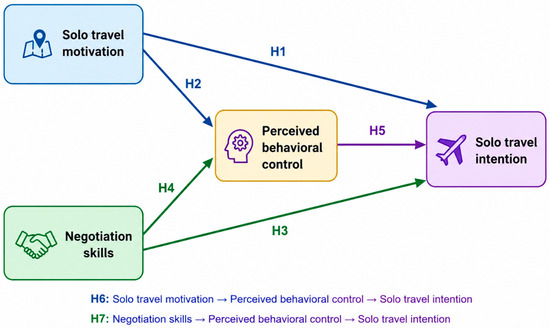
Drawing on the theory of planned behaviour (TPB) (Ajzen, 1991) and the constraint negotiation literature (D. Crawford et al., 1991), the present study proposes that solo travel intention is shaped by the interplay between travel motivation, negotiation skills, and perceived behavioural control. Specifically, travel motivation provides the psychological drive for solo travel, negotiation skills enable women to overcome travel-related constraints, and perceived behavioural control reflects their confidence in managing these challenges. Accordingly, our proposed model posits that negotiation skills not only facilitate the management of travel constraints but also strengthen perceived behavioural control, thereby increasing women’s intention to travel solo. By integrating these constructs within a unified framework, we extend the application of the TPB to solo female travel so as to provide a more comprehensive explanation of how women translate their desire for solo travel into behavioural intentions.
Türkiye provides a particularly valuable context for examining these relationships. While solo female travel in both European and Asian contexts has attracted growing scholarly attention (Breda et al., 2020; Y. Chen et al., 2024; Neluhena et al., 2024; Somasiri et al., 2022; Wantono & McKercher, 2020; Wilson & Little, 2005, 2008; E. C. Yang et al., 2018b), few studies have examined young Turkish women travellers. In Türkiye, women continue to face gender-specific barriers, including safety concerns, social expectations, and mobility restrictions (Aslantürk & Unur, 2019; Kaba & Emekli, 2018; Tükenmez, 2022). However, younger generations are increasingly challenging these constraints by developing strategies that enable them to travel alone (Gök et al., 2021). Examining the Turkish context therefore offers an opportunity to understand how empowerment processes operate within one culturally distinctive setting where traditional gender norms coexist with changing travel aspirations.
Accordingly, our study explores how travel motivation, negotiation skills, and perceived behavioural control influence solo travel intentions among Turkish Gen Y and Gen Z women. It further examines the mediating role of perceived behavioural control in the relationships between travel motivation and solo travel intention, and between negotiation skills and solo travel intention. By integrating these empowerment-related constructs within a unified framework, this study advances the growing body of knowledge on solo female travel and extends the application of the TPB to an underexplored tourism context. Specifically, it contributes to a better understanding of the psychological and behavioural mechanisms through which empowerment-related factors shape women’s solo travel intentions. Beyond its theoretical contributions to solo female literature, the study has important practical implications for tourism practitioners and policymakers by offering insights into how the development of more inclusive, supportive, and female-friendly tourism environments, services, and policies can enhance women’s solo travel experiences.
2. Theoretical Framework
2.1. Solo Travel
Solo travel has become one of the fastest-growing segments of contemporary tourism, driven by changing lifestyles, increasing individualism, and a growing desire for independence and self-development (Kolkesen & Özdemir, 2025; Otegui-Carles et al., 2022). Although solo travel offers opportunities for autonomy, personal growth, and self-discovery, it also exposes travellers to various risks and constraints. These challenges are particularly pronounced for women, whose travel experiences are shaped not only by personal preferences but also by gender norms, safety concerns, and socio-cultural expectations (E. C. Yang et al., 2018a, 2018b).
Unlike male travellers, solo female travellers frequently encounter gender-specific barriers, including concerns about personal safety, harassment, cultural restrictions, financial limitations, and social judgement (Kolkesen & Özdemir, 2025). Consequently, conventional travel decision-making models, which primarily emphasise motivation, cannot fully explain solo female travel. Doing so instead requires an empowerment perspective that explains how females actively negotiate these constraints and develop the confidence to travel alone. That is, rather than passively experiencing travel risks, solo female travellers continuously adapt their behaviours, evaluate risks, and employ the coping strategies that enable them to pursue solo travel despite the barriers mentioned above (Wilson & Little, 2008; E. C. Yang et al., 2018b). Accordingly, the present study conceptualises solo female travel as an empowerment process in which behavioural intentions emerge from the interaction of motivational, behavioural, and cognitive resources.
2.2. Solo Travel Motivation
Travel motivation is a psychological force that initiates, directs, and sustains travel behaviour (Dann, 1981; Murray, 1964). Within tourism research, motivation has consistently been identified as a key antecedent of travel intention and has therefore been widely incorporated into the TPB to help explain tourists’ decision-making processes (Ajzen, 1991, 1996; Hsu et al., 2010; Hsu & Huang, 2012). Regarding solo travellers specifically, previous studies have shown that they are primarily motivated by freedom, independence, novelty seeking, self-development, and opportunities for personal growth (Terziyska, 2021).
For solo female travellers, however, these motivations extend beyond leisure consumption in that solo travel is often a means of challenging traditional gender roles, achieving self-realisation, and exercising personal autonomy (Kolkesen & Özdemir, 2025; Gök et al., 2021). Nevertheless, motivation alone cannot fully explain solo female travel behaviour. Women may have strong intrinsic motivations to travel alone yet still decide not to do so if they perceive that travel-related constraints exceed their ability to manage them. This suggests that the influence of motivation depends on both women’s ability to negotiate travel-related barriers and their self-confidence in that ability. In short, travel motivation provides the initial psychological drive for solo travel, whereas negotiation skills and perceived behavioural control determine whether this motivation is translated into a concrete intention to travel alone.
2.3. Constraints and Negotiation Skills
The leisure constraints framework suggests that intrapersonal, interpersonal, and structural constraints (D. W. Crawford & Godbey, 1987) all influence leisure participation. Regarding solo female travel, these constraints include safety concerns, lack of self-confidence, family expectations, financial limitations, accessibility issues, and culturally embedded gender norms, all of which may discourage women from travelling alone (Kolkesen & Özdemir, 2025).
Constraint negotiation theory extends this perspective by proposing that participation is determined not only by the existence of constraints but also by individuals’ ability to negotiate and overcome them (D. Crawford et al., 1991). Accordingly, negotiation skills are behavioural capabilities that enable individuals to reduce or manage the effects of travel-related barriers in order to participate in solo travel despite these constraints. This perspective shifts attention from why people do not participate to how they actively overcome obstacles to achieve their travel goals.
This perspective is particularly relevant to solo female travel because women frequently encounter gender-specific barriers both before and while travelling. Previous studies have shown that solo female travellers employ a range of negotiation strategies to minimise perceived risks, including careful trip planning, adapting to local cultural norms, seeking social support, avoiding high-risk environments, and using safety-related technologies (L. Brown & Osman, 2017; Cesur, 2014; Wilson & Little, 2008; E. C. Yang et al., 2018b). Furthermore, beyond facilitating travel participation, these strategies may strengthen women’s confidence in their ability to manage future travel challenges. Therefore, in this study, we conceptualise negotiation skills not merely as coping strategies but as behavioural resources that help increase perceived behavioural control and strengthen women’s intention to travel alone.
2.4. Perceived Behavioural Control
Perceived behavioural control refers to individuals’ beliefs regarding their capability to perform a particular behaviour despite potential obstacles (Ajzen, 1991, 1996). Within the TPB, perceived behavioural control influences behavioural intention by reflecting both individuals’ internal capabilities and the external resources available for performing a behaviour.
Although the TPB conceptualises perceived behavioural control primarily as a determinant of behavioural intention, tourism research suggests that it also reflects travellers’ confidence, developed through previous experiences and adaptive behaviours (Bianchi, 2022; M. F. Chen & Tung, 2014). Applied to solo female travel, perceived behavioural control therefore includes females’ confidence in managing uncertainty, coping with gender-specific risks, and navigating travel-related constraints. Accordingly, the more that women believe they have control over travel-related challenges, the more likely they are to develop the intention to travel alone.
From a constraint negotiation perspective, women who successfully overcome solo travel-related barriers may become more confident in their ability to manage future travel situations. This suggests that perceived behavioural control is not only an important antecedent of solo travel intention but may also be strengthened by the successful negotiation of travel constraints. This perspective provides the theoretical basis for examining the relationship between negotiation skills and perceived behavioural control in the proposed model.
2.5. Travel Intention
Travel intention, which refers to an individual’s willingness and readiness to undertake travel, is the immediate antecedent of travel behaviour (Ajzen, 1991; Fishbein & Ajzen, 2010). It reflects an individual’s cognitive evaluation of whether travelling is both desirable and feasible under existing circumstances (S. Jang et al., 2009). Regarding solo female travellers, their behavioural intentions are shaped not only by their attitudes to the activity but also by their confidence in their ability to manage travel-related challenges. Thus, in our proposed integrated framework, solo female travel intention is the behavioural outcome determined by the combined influence of travel motivation, negotiation skills, and perceived behavioural control.
2.6. Theoretical Integration
The proposed model integrates the TPB (Ajzen, 1991) with the constraint negotiation literature (D. Crawford et al., 1991) to provide a more comprehensive explanation of solo female travel intention. Within this framework, travel motivation provides the initial psychological drive for solo travel while negotiation skills enable women to manage travel-related constraints. Successfully negotiating these constraints reinforces perceived behavioural control by strengthening women’s confidence in their ability to travel alone, which in turn increases their intention to do so. Rather than treating these constructs as independent predictors, the proposed model conceptualises them as interrelated parts of a process whereby women progressively develop the confidence, autonomy, and behavioural readiness required for solo travel.
This integrated perspective contributes to the literature in two ways. First, it extends the TPB by incorporating constraint negotiation as an important behavioural mechanism through which travel motivation is translated into a solo travel intention. Second, it synthesises travel motivation, negotiation skills, and perceived behavioural control within a unified explanatory framework, demonstrating how these constructs interact to explain women’s intentions to travel alone. That is, the model conceptualises empowerment as a dynamic process that evolves as women successfully negotiate travel-related constraints and strengthen their perceived behavioural control.
3. Literature Review and Hypotheses Development
3.1. Solo Travel Motivation and Solo Travel Intention
Travel motivation, a core component of tourism behaviour models, also directly influences travel intention (Yoon & Uysal, 2005; Hsu & Huang, 2012). More specifically, according to the TPB (Ajzen, 1996), key predictors of travel behaviour include internal drives for autonomy, novelty, and self-actualisation. Individuals who are strongly motivated in these ways are more likely to exhibit strong behavioural intentions, even when faced with challenges (Khan et al., 2019). S. S. Jang and Feng (2007) reported that novelty-seeking motivation significantly influences revisit intention, while Soliman (2021) showed that motivation shapes both attitudes and future travel behaviours. Regarding solo female travel, intrinsic motivation takes precedence over external rewards in that women’s pursuit of freedom, empowerment, and self-discovery frequently overrides perceived social or structural constraints (McNamara & Prideaux, 2010). Given these research findings, we hypothesise the following:
H1.
Women’s solo travel motivation increases their solo travel intention.
3.2. Travel Motivation and Perceived Behavioural Control
Previous research suggests that travel motivation, by strengthening their sense of competence and self-efficacy, increases individuals’ confidence in their ability to undertake travel (Doran, 2016). Regarding solo female travel, motivations like independence, personal growth, and adventure are likely to reinforce women’s confidence in managing travel-related challenges (E. C. L. Yang, 2021). Consistent with this, Hsu and Huang (2012) found that travel motivation increases perceived behavioural control. These findings suggest that highly motivated women are more likely to perceive themselves as capable of overcoming travel-related constraints. Given these research findings, we hypothesise the following:
H2.
Women’s solo travel motivation increases their perceived behavioural control.
3.3. Negotiation Skills and Solo Travel Intention
Previous research has consistently shown that negotiation skills enable travellers to manage travel-related constraints and maintain their intention to travel despite facing barriers (Evans & Gagnon, 2019; Xie & Ritchie, 2019). Solo female travellers employ a range of negotiation strategies to cope with cultural norms, safety concerns, and social pressures (L. Brown & Osman, 2017; Cesur, 2014; Evans & Gagnon, 2019; Ngwira et al., 2020; Wilson & Little, 2008; E. C. Yang et al., 2018b). These strategies not only reduce the perceived impact of travel constraints but also strengthen women’s confidence in their ability to travel alone. Previous studies have primarily examined negotiation skills as means for overcoming constraints whereas their direct influence on solo travel intention has received limited attention. Given these research findings, and building on the constraint negotiation literature, we hypothesise the following:
H3.
Women’s negotiation skills increase their solo travel intention.
3.4. Negotiation Skills and Perceived Behavioural Control
Previous studies suggest that successfully negotiating travel-related constraints strengthens travellers’ confidence in their ability to manage future travel situations (L. Brown & Osman, 2017; Chung et al., 2017; Ngwira et al., 2020; Wilson & Little, 2008; E. C. Yang et al., 2018b). For solo female travellers, negotiation strategies like adapting travel plans, selecting safer destinations, and responding to local cultural norms not only facilitate solo travel but also reinforce feelings of competence and self-efficacy (Doran, 2016). However, whereas previous studies have primarily viewed perceived behavioural control as an antecedent of negotiation (Chung et al., 2017), we argue that the relationship may also operate in the opposite direction. That is, successfully negotiating travel-related constraints may strengthen women’s perceived behavioural control by increasing their confidence in managing future travel challenges. Accordingly, we propose the following hypothesis:
H4.
Women’s negotiation skills increase their perceived behavioural control.
3.5. Perceived Behavioural Control and Solo Travel Intention
Previous tourism research has consistently demonstrated that perceived behavioural control is a strong predictor of travel intention, particularly in contexts characterised by uncertainty, risk, and travel-related constraints (Bianchi, 2022; Chung et al., 2017; Hsu & Huang, 2012). Regarding solo female travel, women who feel confident in their ability to plan trips, manage safety concerns, and cope with social and cultural challenges are more likely to develop stronger intentions to travel alone (E. C. L. Yang, 2021). Although D. T. A. Nguyen and Hsu (2024) showed that the strength of this relationship may vary across cultural and religious contexts, we argue that perceived behavioural control is still a key psychological determinant of solo travel intentions. Accordingly, we propose the following hypothesis:
H5.
Women’s perceived behavioural control increases their intention to travel solo.
3.6. The Mediating Role of Perceived Behavioural Control
Although travel motivation is an important predictor of solo travel intention (Xie & Ritchie, 2019), its influence may depend on women’s confidence in their ability to manage travel-related challenges. That is, even highly motivated women may still hesitate to travel alone if they perceive social, cultural, or safety-related constraints as exceeding their capabilities. In such cases, perceived behavioural control provides a psychological mechanism through which travel motivation is translated into behavioural intention (Arnautovska et al., 2019; Chung et al., 2017; Soares et al., 2025). While this mediating role has been seen in other tourism contexts (Han & Kim, 2010), few studies have examined its role in solo female travel specifically. Accordingly, we propose the following hypothesis:
H6.
Women’s perceived behavioural control mediates the relationship between their solo travel motivation and their solo travel intention.
Similarly, the influence of negotiation skills on solo travel intention is expected to depend on whether they strengthen women’s perceived behavioural control. For solo female travellers, successfully negotiating travel-related constraints may reinforce their confidence in managing future travel situations, thereby increasing their intention to travel alone (Chung et al., 2017; Wilson & Little, 2008). Thus, negotiation skills may contribute to solo travel intention both directly and indirectly by increasing perceived behavioural control. Although the relationship between constraint negotiation and perceived behavioural control has been acknowledged in the leisure and tourism literature, its mediating mechanism has received limited empirical attention regarding solo female travel. Accordingly, we propose the following hypothesis:
H7.
Women’s perceived behavioural control mediates the relationship between their negotiation skills and solo travel intentions.
Figure 1 presents the present study’s conceptual model developed based on the hypotheses explained above.
Figure 1.
Proposed conceptual model.
4. Methodology
4.1. Research Instrument
To collect data, a two-part survey questionnaire was developed. The first section comprised 19 items measuring participants’ responses to each variable in the proposed model using a five-point Likert scale (ranging from ‘strongly disagree’ to ‘strongly agree’): six items for solo travel motivation (Khan et al., 2019), three items for perceived behavioural control, five items for negotiation skills, and five items for solo travel intention (D. T. A. Nguyen & Hsu, 2024). Prior to measuring the participants’ responses regarding negotiation skills, a scenario adapted from E. C. L. Yang et al. (2023) was presented to ensure that they actively considered potential barriers in solo travel contexts. The participants were instructed as follows:
Solo female travellers may face constraints such as anxiety and fear related to safety, physical limitations, a lack of self-confidence, cultural pressures, stigmatisation, financial limitations, time constraints, and accessibility issues during their travels. When you encounter these constraints in your solo travels, which negotiation skills would you use to manage or overcome these situations?
Given that the present study was conducted in Türkiye, the scale items were translated from English into Turkish to ensure linguistic appropriateness. A rigorous back-translation procedure was followed based on Brislin’s (1980) approach. Specifically, three bilingual experts independently reviewed the translated items by comparing the original and translated versions to ensure conceptual equivalence and accuracy of meaning. The experts’ assessments were subsequently reviewed, the suggested revisions were evaluated, and the wording of the translated items was finalised accordingly. To establish content validity, the questionnaire items were then evaluated by academic experts in tourism and travel behaviour for clarity, relevance, and suitability regarding solo female travel. Based on their feedback, minor wording adjustments were made to improve comprehensibility and ensure that the items accurately reflected the intended constructs. The final questionnaire also included a second section with items asking about participants’ demographic characteristics (four items) and solo travel experience (three items).
The preliminary draft questionnaire was first administered to targeted Gen Y and Z solo female travellers to verify that the design, font size, and language were understandable and error-free. A pilot study was then conducted with 50 purposively sampled solo female travellers to validate the scales’ reliability. All Cronbach’s alpha values exceeded 0.70 (Hair et al., 2014), thereby confirming their reliability and enabling formal data collection to proceed.
4.2. Sampling and Data Collection
This study targeted Gen Y and Gen Z solo female travellers residing in Türkiye. Whereas Gen Y comprises persons born between 1977 and 1994 (Broadbridge et al., 2007), Gen Z is generally defined as those born from 1995 to 2012 (Bilińska et al., 2023). The minimum age for participation was 18 years. Due to the lack of specific statistics on solo female travellers, a non-probability purposive sampling technique was preferred, specifically choosing participants based on their generational cohort and their intention to travel alone. Previous studies have reported that Gen Y and Z individuals exhibit greater economic independence and enthusiasm for solo travel than previous generations, with women in these age groups being more inclined to travel alone (Wachyuni et al., 2023). Accordingly, the sample was selected based on four inclusion criteria: identifying as female; residing in Türkiye; belonging to Gen Y or Z (i.e., born between 1977 and 2006 and aged 18 or older); and having experience of solo travel.
A sample size of approximately 200 is generally considered adequate for structural equation modelling (SEM) (Kline, 2016), and comparable studies have successfully employed similar sample sizes (Chiang & Jogaratnam, 2006; D. T. Nguyen & Hsu, 2022; D. T. A. Nguyen & Hsu, 2024). An a priori power analysis using Soper’s (2018) SEM sample size calculator indicated that a minimum of 184 participants were required to estimate the proposed model with adequate statistical power (Wolf et al., 2013). Although 230 valid questionnaires were initially obtained, multivariate outliers were identified using Mahalanobis distance. Cases exceeding the critical chi-square value at p < 0.001 were excluded, resulting in the removal of 30 observations, leaving a final sample of 200 respondents. Decisions regarding outlier removal require balancing statistical power against potential bias because eliminating too many cases may reduce statistical power whereas retaining influential outliers may distort SEM estimates (S. Gao et al., 2008; Gürbüz, 2021). Given that the final sample exceeded both the minimum sample size indicated by the power analysis and the generally accepted threshold for SEM (Kline, 2016), it was considered adequate for estimating and testing the proposed structural equation model.
The study’s self-administered survey was conducted both face-to-face and online between February and August 2024. To specifically target solo female travellers, the online questionnaire was distributed via social media platforms and digital communication. According to Zeng and Gerritsen (2014), online surveys are an appropriate instrument to collect data, especially for research relying on social media channels. For face-to-face data collection, participants accessed the online questionnaire via a QR code.
Before conducting data, we obtained ethical approval from the Ethics Committee of Muğla Sıtkı Koçman University on 13 October 2023 (Decision No. 2300095/93). Before completing the survey, all participants were informed that their responses were anonymous and that the collected data would be used exclusively for academic research purposes. Responses completed in less than the predetermined minimum completion time of 4 min were excluded from the analysis as invalid.
4.3. Data Analysis
Covariance-based structural equation modelling (CB-SEM) was used to test the data and the proposed research model. CB-SEM was considered appropriate because it allows for the testing of hypotheses and confirmation of proposed models (Hair et al., 2014). CB-SEM also permits the estimation of intricate models comprising many latent variables and observable indicators to yield dependable measurement and structural estimations (Kline, 2016). However, CB-SEM is only appropriate if the data satisfies normality assumptions and the sample achieves the minimum size criteria (Byrne, 2010). Accordingly, we evaluated the data’s conformity to the following required assumptions: normality, sample size adequacy, and non-multicollinearity (Tabachnick & Fidell, 2001). In social sciences, skewness values ranging from −3 to +3 and kurtosis up to ±10 are typically deemed to indicate normality (T. A. Brown, 2006), although Hair et al. (2014) define normality as skewness between −2 and +2 and kurtosis between −7 and +7. In the present study, skewness varied from −1.01 to −1.61 and kurtosis from −0.07 to 1.61, thus confirming data normality (see Appendix A).
Prior to testing the structural model, multicollinearity among the predictor variables was assessed using variance inflation factor (VIF) and tolerance values derived from SPSS regression analyses. The results indicated that all tolerance values exceeded the recommended threshold of 0.20, while all VIF values were below the recommended maximum of 5 (Hair et al., 2014). Therefore, multicollinearity was not considered a concern in the proposed model.
The CB-SEM analysis adhered to Anderson and Gerbing’s (1988) two-step methodology: confirmatory factor analysis (CFA) to assess measurement reliability and validity; SEM to investigate the hypothesised relationships. The significance of the paths was evaluated by bootstrapping with 5000 resamples. The analysis and hypothesis testing were conducted using IBM SPSS v22 and AMOS v20.
4.4. Common Method Bias
According to Podsakoff et al. (2003), common method bias (CMB) should be assessed when predictor and criterion variables are collected from a single source using the same measurement approach, which was the case in our study. To minimise this potential bias, we applied several procedural and statistical remedies. First, participants were assured of anonymity and confidentiality to reduce evaluation apprehension and encourage more accurate responses. Second, Harman’s single-factor test was conducted as an initial diagnostic procedure (Podsakoff et al., 2003). Although this approach has limitations, it remains a commonly used preliminary assessment of CMB. According to Fuller et al. (2016), CMB a concern when a single factor accounts for more than 50% of the total variance in an unrotated factor solution. The exploratory factor analysis (EFA) of all 19 measurement items revealed that the first factor explained 38.4% of the total variance, which is below the recommended threshold. Thus, no substantial evidence of CMB was identified. Finally, the VIF values obtained from the multicollinearity assessment were also examined. As reported above, the VIF values ranged from 1.033 to 1.259, which is well below the recommended maximum of 5 (Hair et al., 2014), thereby providing further evidence that CMB was unlikely to have influenced the study’s findings.
5. Results
5.1. Participants’ Demographic Characteristics
Regarding the participants’ demographic characteristics, 75.5% were Gen Z (born 1995–2006) and 24.5% were Gen Y (born 1977–1994). Most participants (90%) were single, and about half (52.0%) held or were pursuing a bachelor’s degree. Most (91.9%) reported a monthly income of ₺40,000 or less. Regarding solo travel frequency, 29.0% stated that they travelled solo one to four times per year, while 54.5% reported a high or very high likelihood of undertaking solo travel again within the next three years. Regarding solo travel location, 63.0% indicated that they primarily preferred domestic destinations in Türkiye.
5.2. Assessment of the Measurement Model
Following Hair et al. (2014), we first evaluated the measurement model in terms of convergent validity, discriminant validity, and reliability. Convergent validity was assessed using factor loadings and average variance extracted (AVE) values, with all items demonstrating loadings above 0.60. The results are summarised in Table 1.
Table 1.
Measurement model results.
Although factor loadings of 0.70 or above are generally preferred, items with loadings between 0.60 and 0.70 can be retained when the construct demonstrates acceptable composite reliability and AVE values (respectively, ≥0.70 and ≥0.50) (Hair et al., 2014). In our study, all composite reliability values exceeded 0.70, while all AVE values surpassed the 0.50 threshold, thereby confirming the model’s convergent validity (Fornell & Larcker, 1981; Hair et al., 2014). All the retained items had factor loadings above 0.60 and were statistically significant at p < 0.001. Reliability was assessed using Cronbach’s alpha (α). As shown in Table 2, α coefficients ranged from 0.624 to 0.943, indicating acceptable to high levels of internal consistency across constructs. Furthermore, all values were above 0.60, which is considered satisfactory (Hair et al., 2019).
Table 2.
Fit indices of measurement.
Table 2 indicates a strong model fit for both the CFA and SEM models, in line with Byrne’s (2010) criteria. The key fit indices—comparative fit index (CFI), Tucker–Lewis’s index (TLI), and incremental fit index (IFI)—all exceeded the recommended threshold of 0.95, indicating high congruence between the models and the observed data. Furthermore, the root mean square error of approximation (RMSEA) scores for both models were below 0.10, confirming their robust fit (Hair et al., 2014), while the standardised root mean square residual (SRMR) scores in the path models were less than 0.08, as recommended by Kline (2016). More specifically, all fit indices (χ2 = 244.816, df = 140, χ2/df = 1.479, CFI = 0.963, TLI = 0.954, IFI = 0.963, RMSEA = 0.05) met the required standards (Hair et al., 2014).
Discriminant validity was assessed using two complementary approaches. First, convergent validity was evaluated through AVE, with all four constructs exceeding the recommended threshold of 0.50 (Byrne, 2010). In line with Hair et al.’s (2014) criterion, CR scores for each construct were higher than their respective AVE values, thereby confirming internal consistency. All CR scores surpassed 0.75, while AVE scores ranged between 0.530 and 0.736, thereby satisfying Fornell and Larcker’s (1981) criterion. Second, in line with the Fornell-Larcker criterion, the square root of the AVE for each construct was greater than its correlations with other constructs, indicating adequate discriminant validity (Hair et al., 2014). As shown in Table 3, all constructs fulfilled this requirement. Thus, these results provide robust evidence of both convergent and discriminant validity.
Table 3.
Discriminant validity analysis.
5.3. Assessment of the Structural Model
In the second stage, the structural model was evaluated to examine the seven hypothesised relationships between the constructs (Figure 1). The estimated model demonstrated satisfactory fit indices (χ2 = 248.347, df = 140, χ2/df = 1.774, CFI = 0.963, TLI = 0.953, IFI = 0.962, RMSEA = 0.05), indicating a good fit between the proposed model and the observed data (Hair et al., 2014). The model explained 25.8% of the variance in perceived behavioural control and 52.8% of the variance in solo travel intention, suggesting that the proposed predictors account for a substantial proportion of the participants’ solo travel intentions.
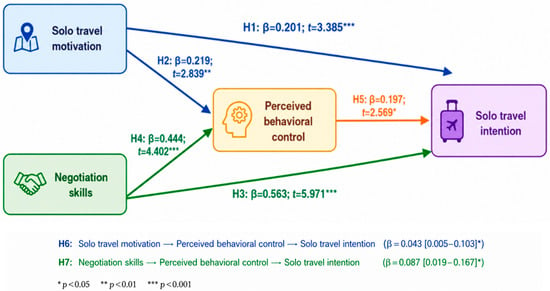
Figure 2 and Table 4 show that all five direct hypotheses were supported. Solo travel motivation significantly determined both solo female travellers’ solo travel intention (β = 0.201, t = 3.385, p < 0.001) and perceived behavioural control (β = 0.219, t = 2.839, p < 0.01), thereby supporting H1 and H2, respectively. Solo female travellers’ negotiation skills also had significant positive effects on solo travel intention (β = 0.563, t = 5.971, p < 0.001) and perceived behavioural control (β = 0.444, t = 4.402, p < 0.001), thereby supporting H3 and H4, respectively. Among the direct relationships, negotiation skills exerted the strongest effect on both perceived behavioural control and solo travel intention, indicating that the participants’ negotiation skills were a stronger predictor of their solo travel intentions than solo travel motivation. Finally, the participants’ perceived behavioural control positively influenced solo travel intention (β = 0.197, t = 2.569, p < 0.05), thereby supporting H5, and confirming its role as an important psychological determinant of solo travel intention.
Figure 2.
Structural model with estimates.
Table 4.
Path estimates of direct effects.
The proposed mediating relationships were examined using bootstrapping with 5000 resamples and bias-corrected 95% confidence intervals (Preacher et al., 2007; Tibbe & Montoya, 2022). As shown in Table 5, the indirect effect of solo travel motivation on solo travel intention through perceived behavioural control was significant (β = 0.043, 95% CI [0.005–0.103]). Similarly, the indirect effect of negotiation skills on solo travel intention through perceived behavioural control was also significant (β = 0.087, 95% CI [0.019–0.167]), thereby supporting H6 and H7, respectively. These findings indicate that travel motivation and negotiation skills influence solo travel intention not only directly but also indirectly by strengthening women’s perceived behavioural control. Negotiation skills had a stronger indirect effect than travel motivation, highlighting the important role of negotiation skills in increasing women’s confidence and intention to engage in solo travel.
Table 5.
Path estimates for the mediation role of perceived behavioural control.
6. Discussion and Conclusions
The above findings indicate that the proposed model satisfactorily explains the intentions of Gen Y and Gen Z solo female travellers in Türkiye. Both solo travel motivation and negotiation skills increased women’s intention to travel alone, both directly and indirectly through perceived behavioural control. Negotiation skills were the strongest predictor of solo travel intention, suggesting that women’s ability to negotiate travel-related constraints is more influential than motivation alone in transforming the wish to travel into a behavioural intention. These findings also support earlier studies that found that Turkish women have strong intentions to travel alone (Aslantürk & Unur, 2019; Kaba & Emekli, 2018). This suggests that Turkish women from Gen Y and Gen Z are likely to become an increasingly important group of solo travellers.
First, our findings of a positive effect of solo travel motivation on solo travel intention is consistent with previous TPB-based tourism studies identifying motivation as a key driver of behavioural intention (Chung et al., 2017; Hsu et al., 2010; Hsu & Huang, 2012; Mohaidin et al., 2017; Soliman, 2021). Similar to these studies, our findings confirm that women who are more strongly motivated are more likely to intend to travel alone. However, our results also demonstrate that motivation alone is not sufficient to explain women’s solo travel intention. Rather, its influence is strengthened through perceived behavioural control, indicating that women’s confidence in their ability to manage travel-related challenges plays a crucial role in translating motivation into behavioural intention. This finding extends previous TPB research by showing that perceived behavioural control provides a psychological mechanism linking empowerment-related factors to solo travel intentions.
Second, negotiation skills were the strongest predictor of both perceived behavioural control and solo travel intentions. While previous leisure and tourism studies have recognised that negotiation skills provide an important means for overcoming leisure and travel constraints (Hubbard & Mannell, 2001; Jackson et al., 1993; White, 2008; Xie & Ritchie, 2019), only a few studies have investigated this in relation to solo female travel (Chung et al., 2017; Ngwira et al., 2020; Ratthinan & Selamat, 2019). Our findings therefore extend this literature by demonstrating that negotiation skills play a broader self-empowerment role than previously recognised. That is, rather than merely helping women overcome constraints, negotiation skills directly strengthen their confidence and willingness to travel alone. This stronger effect may reflect the unique challenges associated with solo female travel, where the ability to negotiate safety concerns, social expectations, and gendered travel norms is essential if women are to transform their travel aspirations into actual travel intentions. Our findings are also consistent with Cesur (2014), who showed that women become more willing to travel alone as they develop effective strategies for managing travel-related challenges.
Third, perceived behavioural control increased solo travel intention, thereby supporting the central proposition of the TPB (Ajzen, 1991, 1996) and previous tourism studies (M. F. Chen & Tung, 2014; Chung et al., 2017; Han & Kim, 2010; Hsu & Huang, 2012). However, our findings also demonstrate that perceived behavioural control provides a key psychological mechanism through which both motivation and negotiation skills influence behavioural intention. This reinforces the view that solo female travellers’ self-empowerment depends on not only their internal motivation but also their confidence in their ability to successfully manage travel-related constraints.
Fourth, one of the study’s most important theoretical contributions concerns the relationship between negotiation skills and perceived behavioural control. Chung et al. (2017) conceptualised perceived behavioural control as an antecedent of negotiation skills, suggesting that individuals who feel capable are more likely to successfully negotiate travel constraints. In contrast, our findings indicate that successfully developing and applying negotiation skills also increases women’s perceived behavioural control. However, rather than being competing explanations, these findings suggest that the relationship may be reciprocal. As women successfully negotiate travel-related risks, safety concerns, and social barriers, they reinforce their confidence in handling future travel situations, thereby creating a positive feedback loop between negotiation skills and perceived behavioural control. This reciprocal perspective extends both the TPB and the constraint negotiation literature by demonstrating that perceived behavioural control may be both an antecedent and an outcome of negotiation, thereby offering a more dynamic understanding of psychological self-empowerment in solo female travel.
Finally, our findings that perceived behavioural control plays a significant mediating role further strengthens the empowerment perspective adopted in this study. Consistent with previous tourism research (Bianchi, 2022; Chung et al., 2017; Hsu & Huang, 2012; Hubbard & Mannell, 2001), perceived behavioural control helped explain how empowerment-related resources like negotiation skills are translated into behavioural intentions. However, our findings also demonstrate that negotiation skills exert a stronger total effect on solo travel intention than motivation alone, suggesting that practical competencies are particularly important in contexts characterised by uncertainty and perceived risk. This finding indicates that empowering women to travel alone requires not only fostering travel motivation but also developing the skills and confidence needed to overcome travel-related constraints. Collectively, these findings advance the theoretical understanding of solo female travel by conceptualising empowerment as a dynamic process through which motivation, negotiation skills, and perceived behavioural control interact to shape women’s solo travel intentions.
6.1. Theoretical Contributions
By applying an integrated theoretical framework to solo female travel (Figure 1 and Figure 2), this study addressed an important gap in the literature and made four main theoretical contributions.
First, it extended the solo female travel literature by examining Gen Y and Gen Z women in Türkiye, a culturally hybrid context where Eastern and Western values intersect. This context offers fresh perspectives on how cultural norms and generational characteristics jointly shape women’s empowerment and solo travel intentions, thereby broadening the geographical and cultural scope of feminist tourism research.
Second, the study empirically validated the mediating role of perceived behavioural control in the relationships between women’s solo travel motivation, negotiation skills, and solo travel intentions. Consistent with the TPB (Ajzen, 1991, 1996), our findings demonstrate that empowerment-related factors influence behavioural intention through individuals’ perceived ability to manage travel challenges. By testing these relationships in the context of solo female travel, the study extends the application of the TPB and constraint negotiation theory to an underexplored tourism context.
Third, the findings suggested that (self-)empowerment is a dynamic psychological process. Women with stronger negotiation skills and higher perceived behavioural control are more likely to interpret travel-related risks as manageable challenges, thereby reinforcing their confidence and willingness to travel alone. This perspective conceptualises empowerment as an evolving process through which women develop autonomy and resilience both before and during solo travel.
Finally, our findings indicated that the relationship between perceived behavioural control and negotiation skills may be reciprocal. Contrary to Chung et al. (2017), who conceptualised perceived behavioural control as an antecedent of negotiation skills, we found that successfully negotiating travel constraints can also strengthen women’s perceived behavioural control. This reciprocal relationship extends both the TPB and constraint negotiation literature by demonstrating that perceived behavioural control may function as both a precursor to negotiation and one of its outcomes, thereby offering a more dynamic explanation of empowerment in solo female travel.
6.2. Practical Implications
The findings suggest that bridging the gap between solo travel intention and actual behaviour requires more than increasing women’s solo travel motivation; it also depends on strengthening their negotiation skills and perceived behavioural control. Accordingly, practical interventions should focus on developing the necessary competencies and self-confidence.
First, negotiation skills were the strongest predictor of both perceived behavioural control and solo travel intentions. This suggests that tourism organisations, universities, and community groups should offer training programmes to develop practical competencies, such as travel planning, budgeting, communication, problem-solving, and risk management. Such programmes may help women feel more capable of handling travel-related challenges, thereby increasing both their perceived behavioural control and their intention to travel alone.
Second, because perceived behavioural control significantly mediated the effects of both solo travel motivation and negotiation skills on solo travel intention, destination management organisations should prioritise initiatives that increase solo female travellers’ sense of control over their travel experience. Providing gender-sensitive travel information, safety guidelines, local support networks, and digital tools that offer real-time assistance and verified travel information can help reduce perceived barriers and strengthen women’s confidence in travelling alone.
Third, although solo travel motivation increased travel intention, our findings indicate that motivation alone is not sufficient unless it is accompanied by strong negotiation skills and perceived behavioural control. Therefore, promotional campaigns should move beyond highlighting the attractiveness of solo travel and instead provide practical guidance and role models that demonstrate how women can successfully manage travel-related challenges. Collaborations with experienced solo female travellers, travel bloggers, and social media influencers may be particularly effective in fostering both women’s self-confidence and self-efficacy.
Finally, policymakers should prioritise interventions that reinforce women’s perceived behavioural control rather than focusing solely on increasing travel demand. Policies that support accessible travel information, women-friendly tourism services, and initiatives that improve female travellers’ confidence and preparedness are likely to be more effective in encouraging solo female travel.
6.3. Limitations and Recommendations for Future Research
Despite its contributions, this study has several limitations that suggest directions for future research. First, the study was conducted exclusively with Turkish Gen Y and Gen Z women. Although the Turkish context provides valuable insights into solo female travel, cultural norms regarding gender roles, personal safety, and women’s independent mobility may have influenced the participants’ perceptions of empowerment, negotiation skills, perceived behavioural control, and solo travel intention. Consequently, the findings should be interpreted within this cultural context and may not be directly generalisable to societies with different cultural values and gender norms. Future research should therefore validate the proposed model across different countries and cultural settings to examine its cross-cultural generalisability, and to identify potential cultural differences in the relationships among the study variables. Second, data collection was constrained by the cultural sensitivity of solo female travel and the relatively small number of women in Türkiye with either solo travel intentions or previous solo travel experience. Future research could benefit from more diverse samples, including women from different regions, socioeconomic backgrounds, and life stages. Third, the study’s quantitative design prevented a more profound understanding of the emotional and identity-based dimensions of empowerment. Qualitative or mixed-method approaches could enable researchers to better understand how empowerment is experienced throughout the solo travel process. Finally, future studies could develop a more comprehensive framework for explaining solo female travel behaviour by integrating empowerment with related constructs, such as resilience, identity, and emotional regulation, while also considering intersectional factors, such as social class, religion, and ethnicity.
Author Contributions
Conceptualization, C.K. and M.A.O.; methodology, C.K. and M.A.O.; software, C.K. and M.A.O.; validation, C.K., M.A.O., and J.A.C.S.; formal analysis, C.K. and M.A.O.; investigation, C.K. and M.A.O.; resources, C.K. and M.A.O.; data curation, C.K.; writing—original draft preparation, C.K. and M.A.O.; writing—review and editing, M.A.O. and J.A.C.S.; visualization, C.K. and M.A.O.; supervision, M.A.O. and J.A.C.S. All authors have read and agreed to the published version of the manuscript.
Funding
This research received no external funding.
Institutional Review Board Statement
The study received ethical approval from the Ethics Committee of Muğla Sıtkı Koçman University on 13 October 2023 (decision number: 2300095/93).
Informed Consent Statement
Informed consent was obtained from all participants involved in the study. Participants were informed about the purpose and voluntary nature of the study, and their responses were collected anonymously.
Data Availability Statement
The data presented in this study are only available on request from the corresponding author due to privacy and ethical restrictions.
Acknowledgments
This study was developed from the first author’s master’s thesis, conducted in the Department of Tourism Management at Muğla Sıtkı Koçman University, Türkiye.
Conflicts of Interest
The authors declare no conflict of interest.
Appendix A
Table A1.
Descriptive statistics and normality.
References
- Ajzen, I. (1991). The theory of planned behaviour. Organizational Behavior and Human Decision Processes, 50, 179–211. [Google Scholar] [CrossRef] [Scilit]
- Ajzen, I. (1996). Attitudes, personality, and behavior (7th ed.). Open University. [Google Scholar]
- Alonso-Vazquez, M., Yang, E. C. L., Pages Vidal, M. D. M., & Khoo, C. (2024). Going solo during the pandemic: A generational segmentation of solo female travellers. Current Issues in Tourism, 27(3), 381–395. [Google Scholar] [CrossRef] [Scilit]
- Anderson, J. C., & Gerbing, D. W. (1988). Structural equation modeling in practice: A review and recommended two step approach. Psychological Bulletin, 103, 411–423. [Google Scholar] [CrossRef]
- Arnautovska, U., Fleig, L., O’callaghan, F., & Hamilton, K. (2019). Older adults’ physical activity: The integration of autonomous motivation and theory of planned behaviour constructs. Australian Psychologist, 54(1), 46–54. [Google Scholar] [CrossRef] [Scilit]
- Aslantürk, E., & Unur, K. (2019). Travel experiences of solo female travellers. Journal of Travel and Hospitality Management, 16(3), 493–514. [Google Scholar] [CrossRef] [Scilit]
- Bianchi, C. (2022). Antecedents of tourists’ solo travel intentions. Tourism Review, 77(3), 780–795. [Google Scholar] [CrossRef] [Scilit]
- Bilińska, K., Pabian, B., Pabian, A., & Reformat, B. (2023). Development trends and potential in the field of virtual tourism after the COVID-19 pandemic: Generation Z example. Sustainability, 15(3), 1889. [Google Scholar] [CrossRef] [Scilit]
- Breda, Z., Santos, A., Kliček, T., & Dinis, G. (2020). Profile, motivations, and experiences from Portuguese solo female travellers. In A. Pius, H. H. Alharahsheh, & A. A. Adesanmi (Eds.), Contemporary management approaches to the global hospitality and tourism industry. IGI Global. [Google Scholar]
- Brislin, R. W. (1980). Translation and content analysis of oral and written materials. Methodology, 1, 389–444. [Google Scholar]
- Broadbridge, A. M., Maxwell, G. A., & Ogden, S. M. (2007). 13_2_30: Experiences, perceptions and expectations of retail employment for generation Y. Career Development International, 12(6), 523–544. [Google Scholar] [CrossRef] [Scilit]
- Brown, L., & Osman, H. (2017). The female tourist experience in Egypt as an Islamic destination. Annals of Tourism Research, 63, 12–22. [Google Scholar] [CrossRef] [Scilit]
- Brown, T. A. (2006). Confirmatory factor analysis for applied research. The Guilford Press. [Google Scholar]
- Byrne, B. M. (2010). Structural equation modeling with AMOS: Basic concepts, applications, and programming (2nd ed.). Routledge. [Google Scholar]
- Cesur, M. (2014). Constraints of women tourists travelling solo [Unpublished master’s thesis, Çanakkale Onsekiz Mart University Graduate School of Social Sciences]. [Google Scholar]
- Chen, M. F., & Tung, P. J. (2014). Developing an extended theory of planned behavior model to predict consumers’ intention to visit green hotels. International Journal of Hospitality Management, 36, 221–230. [Google Scholar] [CrossRef] [Scilit]
- Chen, Y., Yang, E. C. L., Moyle, B., & Le, T. H. (2024). Exploring the travel experience of Chinese solo female travellers through a gender and cultural lens. Journal of China Tourism Research, 20(3), 657–675. [Google Scholar] [CrossRef] [Scilit]
- Chiang, C. Y., & Jogaratnam, G. (2006). Why do women travel solo for purposes of leisure? Journal of Vacation Marketing, 12(1), 59–70. [Google Scholar] [CrossRef] [Scilit]
- Chung, J. Y., Baik, H. J., & Lee, C. K. (2017). The role of perceived behavioural control in the constraint-negotiation process: The case of solo travel. Leisure Studies, 36(4), 481–492. [Google Scholar] [CrossRef] [Scilit]
- Crawford, D., Jackson, E. L., & Godbey, G. (1991). A hierarchical model of leisure constraints. Leisure Sciences, 13(4), 309–320. [Google Scholar] [CrossRef] [Scilit]
- Crawford, D. W., & Godbey, G. (1987). Reconceptualizing barriers to family leisure. Leisure Sciences, 9(2), 119–127. [Google Scholar] [CrossRef] [Scilit]
- Dann, G. M. (1981). Tourist motivation an appraisal. Annals of Tourism Research, 8(2), 187–219. [Google Scholar] [CrossRef] [Scilit]
- Doran, A. (2016). Empowerment and women in adventure tourism: A negotiated journey. Journal of Sport & Tourism, 20(1), 57–80. [Google Scholar] [CrossRef] [Scilit]
- Evans, K., & Gagnon, R. J. (2019). A structural model exploring gender differences in perceived constraints to competition climbing. Annals of Leisure Research, 22(4), 444–462. [Google Scholar] [CrossRef] [Scilit]
- Fishbein, M., & Ajzen, I. (2010). Predicting and changing behaviour: The reasoned action approach (1st ed.). Psychology Press. [Google Scholar] [CrossRef] [Scilit]
- Fornell, C., & Larcker, D. F. (1981). Evaluating structural equation models with unobservable variables and measurement errors. Journal of Marketing Research, 18(1), 39–50. [Google Scholar] [CrossRef] [Scilit]
- Fuller, C. M., Simmering, M. J., Atinc, G., Atinc, Y., & Babin, B. J. (2016). Common methods variance detection in business research. Journal of Business Research, 69(8), 3192–3198. [Google Scholar] [CrossRef] [Scilit]
- Gao, J., & Kerstetter, D. L. (2016). Using an intersectionality perspective to uncover older Chinese female’s perceived travel constraints and negotiation strategies. Tourism Management, 57, 128–138. [Google Scholar] [CrossRef] [Scilit]
- Gao, S., Mokhtarian, P. L., & Johnston, R. A. (2008). Exploring the connections among job accessibility, employment, income, and auto ownership using structural equation modeling. The Annals of Regional Science, 42, 341–356. [Google Scholar] [CrossRef] [Scilit]
- Gök, H. S., Aylan, F. K., & Şalvarcı, S. (2021). Travel motivation and experience of solo tourists: Z generation example. Journal of Yasar University, 16(62), 698–717. [Google Scholar] [CrossRef] [Scilit]
- Gürbüz, S. (2021). Mediation and moderation effect analyses in social sciences (2nd ed.). Seçkin Publishing. [Google Scholar]
- Hair, J. F., Black, W. C., Babin, B. J., & Anderson, R. E. (2014). Multivariate data analysis (7th ed.). Pearson Education. [Google Scholar]
- Hair, J. F., Page, M., & Brunsveld, N. (2019). Essentials of business research methods (4th ed.). Routledge. [Google Scholar]
- Han, H., & Kim, Y. (2010). An investigation of green hotel customers’ decision formation: Developing an extended model of the theory of planned behavior. International Journal of Hospitality Management, 29(4), 659–668. [Google Scholar] [CrossRef] [Scilit]
- Hsu, C. H., Cai, L. A., & Li, M. (2010). Expectation, motivation, and attitude: A tourist behavioural model. Journal of Travel Research, 49(3), 282–296. [Google Scholar] [CrossRef] [Scilit]
- Hsu, C. H., & Huang, S. (2012). An extension of the theory of planned behavior model for tourists. Journal of Hospitality & Tourism Research, 36(3), 390–417. [Google Scholar] [CrossRef] [Scilit]
- Hubbard, J., & Mannell, R. C. (2001). Testing competing models of the leisure constraint negotiation process in a corporate employee recreation setting. Leisure Sciences, 23(3), 145–163. [Google Scholar] [CrossRef] [Scilit]
- Jackson, E. L., Crawford, D. W., & Godbey, G. (1993). Negotiation of leisure constraints. Leisure Sciences, 15(1), 1–11. [Google Scholar] [CrossRef] [Scilit]
- Jang, S., Bai, B., Hu, C., & Wu, C. M. (2009). Affect, travel motivation, and travel intention: A senior market. Journal of Hospitality & Tourism Research, 33(1), 51–73. [Google Scholar] [CrossRef] [Scilit]
- Jang, S. S., & Feng, R. (2007). Temporal destination revisit intention: The effects of novelty seeking and satisfaction. Tourism Management, 28(2), 580–590. [Google Scholar] [CrossRef] [Scilit]
- Kaba, B., & Emekli, G. (2018). A rising trend in tourism: Solo women travellers (the case of Turkey). Aegean Geographical Journal, 27(2), 111–126. [Google Scholar]
- Karagöz, D., Işık, C., Dogru, T., & Zhang, L. (2020). Solo female travel risks, anxiety and travel intentions: Examining the moderating role of online psychological-social support. Current Issues in Tourism, 24(11), 1595–1612. [Google Scholar] [CrossRef] [Scilit]
- Khan, M. J., Chelliah, S., Khan, F., & Amin, S. (2019). Perceived risks, travel constraints and visit intention of young women travellers: The moderating role of travel motivation. Tourism Review, 74(3), 721–738. [Google Scholar] [CrossRef] [Scilit]
- Kline, R. B. (2016). Principles and practice of structural equation modeling (4th ed.). The Guilford Press. [Google Scholar]
- Kolkesen, C., & Özdemir, M. (2025). Risks and constraints faced by solo female travellers: A conceptual overview. Romaya Journal, 5(1), 199–216. [Google Scholar] [CrossRef]
- McNamara, K. E., & Prideaux, B. (2010). A typology of solo independent women travellers. International Journal of Tourism Research, 12(3), 253–264. [Google Scholar] [CrossRef] [Scilit]
- Mohaidin, Z., Wei, K. T., & Murshid, M. A. (2017). Factors influencing the tourists’ intention to select sustainable tourism destination: A case study of Penang, Malaysia. International Journal of Tourism Cities, 3(4), 442–465. [Google Scholar] [CrossRef] [Scilit]
- Murray, D. J. (1964). Motivation and emotion. Quarterly Journal of Experimental Psychology, 16(2), 191–192. [Google Scholar] [CrossRef] [Scilit]
- Neluhena, M., Chandralal, L., & Dahanayake, T. (2024). Female solo travels to south Asian destinations and sustaining loneliness. Tourism and Hospitality Research, 24(4), 577–587. [Google Scholar] [CrossRef] [Scilit]
- Nguyen, D. T., & Hsu, L. (2022). Exploring visit intention to India among southeast Asian solo female travellers. Journal of Destination Marketing & Management, 25, 100725. [Google Scholar] [CrossRef] [Scilit]
- Nguyen, D. T. A., & Hsu, L. (2024). Solo travel intention: A study of Indonesian Muslim and non-Muslim women. Journal of Leisure Research, 55(2), 159–184. [Google Scholar] [CrossRef] [Scilit]
- Ngwira, C., Tse, S., & Vongvisitsin, T. (2020). Negotiation strategies and constraints for solo female travellers in Africa. Tourism Culture & Communication, 20(1), 35–47. [Google Scholar] [CrossRef] [Scilit]
- Otegui-Carles, A., Araújo-Vila, N., & Fraiz-Brea, J. A. (2022). Solo travel research and its gender perspective: A critical bibliometric review. Tourism and Hospitality, 3(3), 733–751. [Google Scholar] [CrossRef] [Scilit]
- Podsakoff, P. M., MacKenzie, S. B., Lee, J.-Y., & Podsakoff, N. P. (2003). Common method biases in behavioural research: A critical review of the literature and recommended remedies. Journal of Applied Psychology, 88(5), 879–903. [Google Scholar] [CrossRef] [Scilit] [PubMed]
- Preacher, K. J., Rucker, D. D., & Hayes, A. F. (2007). Addressing moderated mediation hypotheses: Theory, methods, and prescriptions. Multivariate Behavioural Research, 42(1), 185–227. [Google Scholar] [CrossRef] [Scilit] [PubMed]
- Ratthinan, S. P., & Selamat, N. H. (2019). Negotiating travel constraints via technology: A study of Malay Muslim women through a hierarchical constraint model perspective. Asian Journal of Business Research, 9(2), 55–75. [Google Scholar]
- Soares, A. M., Casais, B., Calvo-Porral, C., & Oliveira, A. (2025). The ’insta’ effect on the intention to visit a destination: A case for conspicuous consumption? Tourism & Management Studies, 21(2), 1–11. [Google Scholar] [CrossRef] [Scilit]
- Soliman, M. (2021). Extending the theory of planned behavior to predict tourism destination revisit intention. International Journal of Hospitality & Tourism Administration, 22(5), 524–549. [Google Scholar] [CrossRef] [Scilit]
- Somasiri, S., Murray, N., & Dresler, E. (2022). Solo female travellers: Solitude as a solo travel need and intrusive experiences in Asia. Asia Pacific Journal of Tourism Research, 27(11), 1127–1143. [Google Scholar] [CrossRef] [Scilit]
- Soper, D. (2018). A-priori sample size calculator for structural equation models. Available online: https://www.danielsoper.com/statcalc/calculator.aspx?id=89 (accessed on 25 March 2023).
- Tabachnick, B. G., & Fidell, L. S. (2001). Using multivariate statistics (4th ed.). Allyn & Bacon. [Google Scholar]
- Terziyska, I. (2021). Solo female travellers: The underlying motivation. In Gender and tourism (pp. 113–127). Emerald Publishing Limited. [Google Scholar] [CrossRef] [Scilit]
- Tibbe, T. D., & Montoya, A. K. (2022). Correcting the bias correction for the bootstrap confidence interval in mediation analysis. Frontiers in Psychology, 13, 810258. [Google Scholar] [CrossRef] [Scilit] [PubMed]
- Tükenmez, E. G. (2022). Travel motivations and constraints of solo women travellers in Turkey. Journal of Mediterranean Tourism Research, 2(1), 25–44. [Google Scholar]
- Wachyuni, S. S., Wahyuni, N., & Wiweka, K. (2023). What motivates generation Z to travel independently? Preliminary research of solo travellers. Journal of Tourism and Economic, 6(1), 41–52. [Google Scholar] [CrossRef] [Scilit]
- Wantono, A., & McKercher, B. (2020). Backpacking and risk perception: The case of solo asian women. Tourism Recreation Research, 45(1), 19–29. [Google Scholar] [CrossRef] [Scilit]
- White, D. D. (2008). A structural model of leisure constraints negotiation in outdoor recreation. Leisure Sciences, 30(4), 342–359. [Google Scholar] [CrossRef] [Scilit]
- Wilson, E., & Little, D. E. (2005). A ‘relative escape’? The impact of constraints on women who travel solo. Tourism Review International, 9, 155–175. [Google Scholar] [CrossRef] [Scilit]
- Wilson, E., & Little, D. E. (2008). The solo female travel experience: Exploring the ‘geography of women’s fear. Current Issues in Tourism, 11(2), 167–186. [Google Scholar] [CrossRef] [Scilit]
- Wolf, E. J., Harrington, K. M., Clark, S. L., & W., M. M. (2013). Sample size requirements for structural equation models: An evaluation of power, bias, and solution propriety. Educational and Psychological Measurement, 73(6), 913–934. [Google Scholar] [CrossRef] [Scilit] [PubMed]
- Xie, L., & Ritchie, B. W. (2019). The motivation, constraint, behavior relationship: A holistic approach for understanding international student leisure travellers. Journal of Vacation Marketing, 25(1), 111–129. [Google Scholar] [CrossRef] [Scilit]
- Yang, E. C., Khoo-Lattimore, C., & Arcodia, C. (2018a). Constructing space and self through risk taking: A case of Asian solo female travellers. Journal of Travel Research, 57(2), 260–272. [Google Scholar] [CrossRef] [Scilit]
- Yang, E. C., Khoo-Lattimore, C., & Arcodia, C. (2018b). Power and empowerment: How Asian solo female travellers perceive and negotiate risks. Tourism Management, 68, 32–45. [Google Scholar] [CrossRef] [Scilit]
- Yang, E. C. L. (2021). What motivates and hinders people from travelling alone? A study of solo and non-solo travellers. Current Issues in Tourism, 24(17), 2458–2471. [Google Scholar] [CrossRef] [Scilit]
- Yang, E. C. L., Liang, A. R. D., & Lin, J. H. (2023). A market segmentation study of solo travel intentions and constraints. Journal of Hospitality & Tourism Research, 49(1), 132–145. [Google Scholar] [CrossRef] [Scilit]
- Yoon, Y., & Uysal, M. (2005). An examination of the effects of motivation and satisfaction on destination loyalty: A structural model. Tourism Management, 26(1), 45–56. [Google Scholar] [CrossRef] [Scilit]
- Zeng, B., & Gerritsen, R. (2014). What do we know about social media in tourism? A review. Tourism Management Perspectives 10, 27–36. [Google Scholar] [CrossRef] [Scilit]

Disclaimer/Publisher’s Note: The statements, opinions and data contained in all publications are solely those of the individual author(s) and contributor(s) and not of MDPI and/or the editor(s). MDPI and/or the editor(s) disclaim responsibility for any injury to people or property resulting from any ideas, methods, instructions or products referred to in the content. |
© 2026 by the authors. Licensee MDPI, Basel, Switzerland. This article is an open access article distributed under the terms and conditions of the Creative Commons Attribution (CC BY) license.