


Abstract
Despite the growing adoption of AI-enabled green hospitality services, limited research has examined how these services influence customer loyalty through the sequential mediating roles of service quality and green trust. This research investigates the influence of AI-enabled green hospitality services on customer loyalty in Egyptian four- and five-star hotels, mediated sequentially by service quality and green trust. A cross-sectional survey was conducted using convenience sampling, and data were collected from 432 guests staying in four- and five-star hotels in Egypt. The proposed model was analyzed using PLS-SEM. Results indicated that AI-enabled green hospitality services enhance service quality (β = 0.796, p < 0.001), which positively impacts green trust (β = 0.244, p < 0.001). Green trust also showed a positive influence on customer loyalty (β = 0.208, p < 0.001). Both service quality and green trust mediated the relationship between AI-enabled green hospitality services and customer loyalty, both individually and sequentially. The findings also confirmed a significant sequential mediation effect of service quality and green trust in the relationship between AI-enabled green hospitality services and customer loyalty. The study concludes that technological innovation coupled with enhanced service experiences and credible environmental practices increases customer loyalty. Hotels should integrate AI with sustainability initiatives, improve service quality, and communicate environmental commitments transparently to encourage trust and long-term loyalty.
1. Introduction
In the contemporary hospitality sector, changes are occurring quickly, driven primarily by the rising application of AI in daily hotel operations and by the increasing importance of sustainability. More hotels are using AI-enabled tools to smooth operations, personalize guest interactions, and encourage greener practices. Simultaneously, tourists are becoming more conscious of environmental issues, pushing hotels to provide genuinely sustainable services, not just sustainable communication (Alharbi et al., 2025). The resulting strategic concept is AI-enabled green hospitality services, bringing together “smart” technology with sustainable practices to enhance customer experiences and achieve a competitive advantage.
AI-enabled green hospitality services usually involve implementing AI technologies to manage various hotel activities that have environmental implications and influence guest behavior (Baquero et al., 2026). This includes developments such as smart energy management, AI-powered customer support, automated resource optimization, digital check-ins, and predictive maintenance and even tailored eco-friendly recommendations (Juan et al., 2025). By using systems like these, hotels aim to diminish environmental impact while simultaneously boosting service efficiency and responsiveness (Alharbi et al., 2025; Filimonau, 2025).
In the vibrant realm of hospitality, service quality consistently remains a linchpin of satisfaction and the subsequent behavioral intentions (Tavanxhiu et al., 2026). In competitive hotel environments, customers often assess service quality based on reliability, responsiveness, personalization, and overall service delivery effectiveness (Mukherjee et al., 2026). AI-enabled green hospitality services have the potential to enhance service quality by providing faster, more accurate, and environmentally conscious alternatives, attuned to evolving customer expectations. The ability to guarantee service consistency, reduce waiting times, and offer personalized “green” experiences lies with intelligent systems, shaping the perception of the hotel’s performance (Tavanxhiu et al., 2026).
Green Trust is increasingly gaining prominence, aligning with the rising demand from environmentally conscious consumers for authentic, believable, and non-tokenistic green gestures (Alves et al., 2025). Green Trust encapsulates the confidence customers place in a hotel’s environmental pledges, sustainable operations, and ethical responsibilities towards the environment. When hotels successfully integrate artificial intelligence into their sustainability protocols, guests may experience increased perceived transparency and environmental responsibility, accompanied by a touch of novelty, thereby driving up Green Trust (Rehman et al., 2026). Past research has examined Green Trust in association with green marketing and sustainable branding (Rehman et al., 2026; Liu et al., 2025).
Customer loyalty is a major strategic target for hotels, since loyal guests are more likely to return, recommend the hotel to others, and maintain a longer-term relationship with the brand (Zubair & Khan, 2025). In the time of smart plus sustainable hospitality, loyalty may depend more heavily on how guests judge technologically sophisticated yet environmentally responsible service experiences (Rehman et al., 2026). AI-enabled green hospitality services may improve loyalty not just because service performance is better, but also because customers might feel a stronger emotional belief or trust in the hotel’s sustainability stance (Liu et al., 2025; Ali et al., 2025).
Although previous studies have examined AI technology, sustainable hospitality practices, service quality, green trust, and customer loyalty separately, important gaps remain. First, AI-enabled green hospitality services have rarely been conceptualized as an integrated construct within hospitality research. Second, limited attention has been given to the sequential mechanism through which these services influence customer loyalty through service quality and green trust. Finally, this study extends the existing literature by examining these relationships in an emerging hospitality context, thereby enhancing the generalizability of existing findings.
This study adds value to hospitality and sustainability research in several meaningful ways. Theoretically, it expands the current picture of AI-driven sustainable hospitality by integrating technological, environmental, and relationship-based perspectives into a coherent framework. It also strengthens the literature by examining the sequential mediating roles of service quality and green trust, which help explain the psychological stages through which loyalty forms. Practically, the results could help hotel leaders craft AI-enabled green strategies that improve service excellence, build stronger client trust, and lift long-run loyalty. Consequently, this study provides useful guidance for hotels seeking to secure a sustainable competitive advantage in the increasingly intelligent, environmentally responsible era of hospitality services.
1.1. Theoretical Foundation
1.1.1. Stimulus–Organism–Response (S-O-R) Theory
The S-O-R (Stimulus-Organism-Response) theory developed Russell and Mehrabian (1974) provides a useful framework for understanding customers’ behavior in technology-enhanced hospitality spaces (Asyraff et al., 2023), because the external environment tends to influence People’s cognitive and emotional states, which then guide people to react accordingly (Duong, 2023). According to the original S-O-R framework proposed by Mehrabian and Russell, environmental stimuli influence individuals through internal organismic states represented by the dimensions of Pleasure, Arousal, and Dominance (PAD), which subsequently shape behavioral responses. In the present study, these internal affective and cognitive evaluations are reflected in customers’ perceptions of service quality and green trust, which ultimately influence customer loyalty. Here, AI-enabled green hospitality services serve as the stimulus because they provide perceived value in the eyes of customers. Thus, the value that guests may obtain from experiencing these services can serve as input in customers’ minds. The inputs can be called ‘cues’ as part of the Stimulus element of the theory (Lin et al., 2024), to affect internal judgments, typically taking the form of things such as perceptions of service quality and green trust, which can be the Organism (Erul et al., 2026). When customers hold positive perceptions of service quality and sustainability, they tend to exhibit favorable behavioral outcomes, such as customer loyalty. The S-O-R theory thus helps clarify the proposed association by showing how AI-enabled green hospitality services indirectly elicit customer loyalty through people’s psychology and evaluation processes (Sohaib et al., 2022).
1.1.2. Signaling Theory
Another angle for examining customer reactions to AI-powered sustainability in hospitality is Signaling Theory (Bafera & Kleinert, 2023). It concerns organizations’ communication signals to various audiences, resulting in reduced data deficits and uncertainties about an organization’s offerings (Celani & Singh, 2011). In hotels, consumers frequently have poor information on hotel sustainability or environmental concerns as a marketing technique. Thus, hotels often require observable signals, quantifiable cues, or readily available signals of confidence and green activities for communication with guests (Celani & Singh, 2011). Such signals, indicating investments in AI technology along with sustainable operations, can function as strong signals of the firm (Connelly et al., 2025). From a signaling perspective, AI-enabled green hospitality services represent credible signals because they require substantial technological investment, organizational capabilities, and continuous operational commitment, making them difficult for competitors to imitate superficially. Consequently, customers are more likely to interpret these visible investments as credible evidence of both service excellence and genuine environmental commitment, thereby reducing uncertainty and concerns about greenwashing. People tend to see these facilities as indicators of competence, ingenuity, and dedication to ecological care, which may enhance their views of the service’s quality and, in turn, improve green trust. Once there is increased green trust, there is a higher probability of greater customer loyalty, thereby clarifying why a combination of tech and green activities at hotels improves trust as well as long-term behavioral inclinations (Green & Roberts, 2012).
1.1.3. Integration of the Two Theories
The addition of S-O-R Theory to Signaling Theory provides the research model under construction with a more reliable foundation. The Signaling Theory is mainly centered on how AI-enabled green hospitality signals credibility and commitment to sustainability to customers. S-O-R Theory explains the psychological process by which these green signals are deciphered, giving rise to customer evaluation of service quality and green trust, which later translates to customer loyalty. Together, the two theories give a reliable explanation for the way that AI-enabled green hospitality can serve to encourage beneficial relationship outcomes with customers in contemporary hotel settings in an indirect manner.
2. Theoretical Background and Hypotheses Development
2.1. AI-Enabled Green Hospitality Services
In the hospitality industry, artificial intelligence (AI) has emerged as a groundbreaking technology allowing hotels to improve operational efficiency and environmental sustainability simultaneously. AI-enabled green hospitality services integrate smart technologies with environmental stewardship (e.g., smart energy management (Baquero et al., 2026; Mukherjee et al., 2026), predictive maintenance, automated check-in, eco-friendly recommendations) (Adholiya & Adholiya, 2026), providing a premium service experience with reduced environmental impacts. Technologies enable resource management optimization, service responsiveness, and consistency.
Building on the theoretical foundation presented above, AI-enabled green hospitality services are expected to serve as environmental stimuli that enhance customers’ perceptions of service quality by improving efficiency, personalization, and environmental responsibility (Zubair & Khan, 2025; Zahidi et al., 2024).
Past literature demonstrates that AI technologies can enhance service efficiency, personalization, and customer experience in the hospitality industry (Alharbi et al., 2025; Chivkula & Pokhriyal, 2026; Shafiq et al., 2023). Relatively less literature examines whether AI-enabled green hospitality services integrating two factors effectively enhance customers’ perceptions of service experiences—technological innovation and environmental sustainability—especially in emerging hotspot markets where green and AI-supporting technologies are increasing. This led to the following hypothesis after comparing current and suggested services. So, based on that, the following hypothesis is proposed.
H1.
AI-enabled green hospitality services positively influence service quality in hotels.
2.2. Service Quality
Service quality is especially important for building customer confidence in hotels offering environmentally sustainable services. High-quality services suggest that a hotel has sufficient operational competence to reliably deliver on its promises related to environmental matters and that it cares about customers. When customers consistently receive reliable, responsive, and personalized services, they are more likely to perceive the hotels’ environmental sustainability practices as credible rather than symbolic (Assaker, 2020; Huang et al., 2024). In accordance with Signaling Theory, service quality is a credible signal that reduces customers’ uncertainty about hotels’ environmental claims. Since customers are not able to verify many aspects of sustainable practices in person, they rely on the observable part- service performance (Celani & Singh, 2011; Connelly et al., 2025); s overall competence, which includes environmental performance. Consistently high service quality enhances customers’ confidence that the hotel fulfills its environmental service promises. Studies have found that higher-quality services may increase customer trust and strengthen relationships in hospitality services. Only a handful of empirical studies have been conducted on whether service quality promotes green trust in the AI-enabled sustainable hospitality services context (Hashish et al., 2022; Mohammed et al., 2026; Wu et al., 2016). Addressing this important gap allows them to explore how customers develop their trust in hotels’ environmental commitments through technology-enabled services. This research looks into this problem. Accordingly, the next hypothesis is proposed:
H2.
Service quality positively influences green trust in hotels.
2.3. Green Trust
Green trust plays an increasingly decisive role in determining customer loyalty to hotels as environmental sustainability becomes more important. Green trust represents the customer’s belief that a hotel is true to its environmental commitments and behaves in an environmentally and socially acceptable manner (Shi & Fuchs, 2025; Waris et al., 2024). Customers usually develop stronger emotions toward, and longer relationships with, a hotel that implements genuine sustainability initiatives than with one that uses green propaganda without substance. From a Signaling Theory perspective, faithful, environmentally sound practices are effective evidence for reducing customer uncertainties about the hotel’s sustainability claims, strengthening customers’ confidence in the hotel’s environmental integrity, and stimulating favorable behavioral responses such as loyalty and word-of-mouth recommendations (Connelly et al., 2025). In this vein, trust is a crucial factor in building customer loyalty in studies involving hospitality and sustainable tourism, it remains unclear due to the absence of the exploration evidence concerning the direct effect of green trust in the relationship with loyalty within AI-enabled green hospitality since technological innovation and sustainable business operations were concurrently delivered by luxury hotels (Waris et al., 2024; Chang et al., 2024; Sultana et al., 2022). Investigating it, therefore, helps us gain insights into how environmentally conscious AI-enabled hotel services encourage loyalty. So, in light of that, the next hypothesis is suggested:
H3.
Green trust positively influences customer loyalty in hotels.
2.4. The Mediating Role of Service Quality in the Relationship Between AI-Enabled Green Hospitality Services and Green Trust
AI technologies may not be sufficient to directly build customers’ green trust by providing AI-enabled green hospitality services, even if they improve technological capabilities and develop sustainable solutions for hotels. Instead, customers would first evaluate whether they serve to improve their experience of service quality. By adopting these AI-enabled services, the hotel could enhance the responsiveness, reliability, personalization, and operational efficiency of its services and engage in sustainable activities effectively (Li et al., 2025; Ma et al., 2026). The quality improvement in service provides tangible evidence for customers to trust that the hotel’s sustainability initiatives are actually implemented rather than merely communicated. Hence, AI technologies do not directly influence green trust by implementing sustainable solutions, but customers assess the effectiveness of AI-enabled green hospitality services through cognitive evaluations of service quality. When customers perceive that AI technologies improve service performance without compromising environmental sustainability practices, they feel more confident that hotels’ environmental commitment is genuine and credible in their operations. In other words, green trust is developed by achieving improvements in service quality using artificial intelligence technology in services, rather than mere use (Yusuf, 2025). Previous scholars have highlighted the positive influence of AI-enabled service on service quality and the role of the latter in affecting customers (Mukherjee et al., 2026; Hui et al., 2024), but failed to explain why service quality functions as the underlying mechanism through which AI-enabled green hospitality services translate into green trust. Researching these mediating processes allows for a clearer understanding of how customers develop trust in hotels’ environmental commitment within sustainable hospitality environments empowered by AI. Based on the direct relationships proposed above, the following hypotheses assess the indirect mediating effects within the proposed model. Thus, the next hypothesis is put forward:
H4.
Service quality mediates the relationship between AI-enabled green hospitality services and green trust in hotels.
2.5. The Mediating Role of Green Trust in the Relationship Between Service Quality and Customer Loyalty
It is commonly anticipated that high-quality services should naturally enhance customer loyalty. In an environmentally sustainable hospitality context, however, there could be no direct path from service quality to customer loyalty. What customers do, for the sake of it, is to weigh whether high-quality services that are being provided genuinely reflect the hotel’s green responsibility. That is, green trust could serve as a trigger through which customers could translate high quality into their long-term loyalty to the hotel (Aly, 2025; Dewi, 2020). In particular, customers were to believe that good hotel operation (which is defined through reliable, responsive, personalized high-quality services being continuously rendered to the customers) could guarantee green claims that the hotel makes would translate into trust, as the hotel will continue to provide the promises (Shah & Jan, 2021; Aldulaimi et al., 2024; Muflih et al., 2023). The hotel’s service quality enables tangible information about green practices at the customer’s fingertips (Assaker, 2020). By virtue of this, hotels have to deliver on service as well as on green quality to build a better relationship with customers. Green customers could reduce uncertainty about the extent to which the hotel addresses green issues. Green trust can be enhanced by better service (Fatawu et al., 2025). Loyal customers emerge as a result of better green customer service and could continue to patronize the hotel and further recommend it to others. Customer trust leads to loyalty, too; therefore, the service-loyalty relationship is already well proven in many existing studies. Studies have not been in shortage to prove the impact or association between service quality and customer trust and their loyalty, but not with why green trust serves as the mechanism which allow service of good quality to convert into customer’s trust with hotel that in the process, converts the trust in sustainable hotel into green trust itself toward hotel loyalty via sustainable service (Shafiq et al., 2023; Hasan et al., 2025; Karim & Rabiul, 2024). So, the indirect path is to explain why green services are meant to build customer loyalty and maintain relationships with the hotel from a service perspective, via a trusted experience. Thus, the next hypothesis is put forward.
H5.
Green trust mediates the connection between service quality and customer loyalty in hotels
2.6. The Sequential Mediating Roles of Service Quality and Green Trust in the Relationship Between AI-Enabled Green Hospitality Services and Customer Loyalty
When AI-enabled green hospitality services induce customer loyalty, they rarely do so through a single psychological process. Instead, customer loyalty grows from sequential cognitive evaluations that begin with their service experience and are followed by their trust in the lodging’s ecological commitment. Under the concept of the Stimulus-Organism-Response (S-O-R) framework, AI-enabled green hospitality services could serve as the external stimulus, whilst two intermediate stages complementary to each other are service quality and green trust that would eventually lead to customer loyalty (Shabankareh et al., 2025). To begin with, customers assess whether AI-enabled green hospitality services can make services more effective, responsive, human-like, and of higher overall quality (Juan et al., 2025). A successful service experience will, in turn, increase customers’ confidence that lodging’s ecological initiatives have been sincere and executed effectively, then generating green trust (Wenting et al., 2026). Customers show greater willingness to build long-term relationships with lodging after they have developed green trust in lodging through consistent patronage and positive word-of-mouth recommendations (Meena et al., 2026; Jamil et al., 2026).
Meanwhile, previous works on separate topics of technology adoption, service quality, trust, and customer loyalty can be found; however, few studies in the lodging sector explain the sequential psychological mechanism by which customers, as a whole, convert their perceptions of AI-enabled green hospitality services into full loyalty at a later stage. In particular, limited attention has been given to such complementary roles of service quality at the initial cognitive evaluation, as well as the role of green trust at later-stage relational evaluation, in converting AI-enabled services experience to green loyalty; therefore, examination of sequential mediation thus provides a more complete explanation in terms of customer decision-making (Khairy & Salama, 2026). The following hypothesis is put forward.
H6.
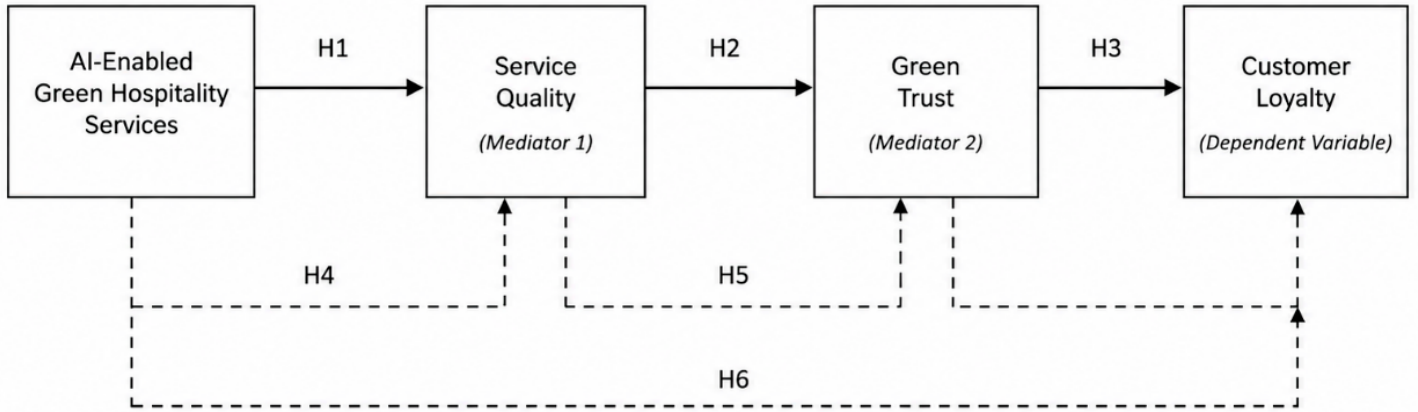
As illustrated in Figure 1, AI-enabled green hospitality services are hypothesized to influence customer loyalty through service quality and green trust.Service quality and green trust sequentially mediate the relationship between AI-enabled green hospitality services and customer loyalty in hotels.
Figure 1.
The theoretical framework of the study. Arrow notation: Solid arrows indicate direct hypothesized relationships, whereas dashed arrows indicate indirect (mediating) relationships.
3. Materials and Methods
3.1. Research Design and Sample
This study adopted a quantitative cross-sectional research design to investigate the relationships between AI-enabled green hospitality services, service quality, green trust, and customer loyalty in the Egyptian hotel sector. The target population included customers staying in four-star and five-star hotels across Egypt. These hotels were chosen because they are generally seen as the more technologically upgraded and sustainability-focused part of the Egyptian hospitality sector, so they felt like a proper fit to explore AI-based green service practices. Data were collected through a structured questionnaire given to hotel guests who had already experienced the services during their stay.
To ensure content validity and consistency with prior research, the measurement scales were adapted from previously validated instruments. AI-Enabled Green Hospitality Services was measured using items adapted from Belanche et al. (2020); Customer Loyalty was assessed using the behavioral intention scale adapted from Zeithaml et al. (1996); Service Quality was measured using items adapted from the SERVQUAL scale developed by Parasuraman et al. (1988); and Green Trust was evaluated using items adapted from Chen (2010). All five-point scales for the items ranged from 1 (strongly disagree) to 5 (strongly agree), and minor wording adaptations were made to suit the hospitality context while maintaining conceptual integrity.
Because there was no complete sampling list, a convenience sampling approach was used; in total, 500 questionnaires were handed out, and 451 came back. After checking for incomplete answers and other inconsistencies, 432 usable questionnaires remained for the statistical work, resulting in a valid response rate of 86.4%.
Participants were told that involvement was voluntary and that it would be anonymous, meaning no names. Also, all information gathered was for academic research only and had no other uses.
3.2. Measurement Instrument
The survey instrument consisted of two sections. The first section collected respondents’ demographic information, including gender, age, education level, hotel category, visit frequency, and purpose of stay. The second section measured the study constructs using previously validated scales adapted from the existing literature. AI-Enabled Green Hospitality Services were measured using the scale developed by Belanche et al. (2020). Service Quality was assessed using the SERVQUAL scale developed by Parasuraman et al. (1988). Service quality was operationalized as a unidimensional construct adapted from the original SERVQUAL instrument rather than using its five-dimensional structure. This approach was considered appropriate because the present study focuses on customers’ overall evaluation of service quality in the context of AI-enabled green hospitality services. Accordingly, the selected items were adapted to fit the study context while preserving the conceptual meaning of the original SERVQUAL scale. Green Trust was measured using items adapted from Chen (2010). In contrast, Customer Loyalty was assessed using the behavioral intention scale developed by Zeithaml et al. (1996). The questionnaire used in this study is provided in Appendix A. All items were measured using a five-point Likert scale ranging from 1 (strongly disagree) to 5 (strongly agree). Minor wording modifications were made to ensure consistency with the hospitality context while preserving the original meaning of the measurement items.
3.3. Data Analysis
The data analysis was conducted using SmartPLS Version 4.1.1.8. At first, JASP was used for the early statistical checks, like descriptive statistics, reliability checking, and the inspection of the measurement properties of the constructs. In that step, internal consistency reliability was looked at by using Cronbach’s alpha, and composite reliability, also known as CR, while convergent validity was reviewed through average variance extracted, shortened as AVE.
After that, Partial Least Squares Structural Equation Modeling, or PLS-SEM, was run in SmartPLS to test the research model that was suggested, along with the hypotheses. PLS-SEM was chosen because it performs well in prediction-oriented studies and in complex mediation structures involving several latent variables. Following common recommendations, the analysis was conducted in two stages.
In the first stage, the measurement model was evaluated. This part involved indicator loadings, Cronbach’s alpha, composite reliability (CR), average variance extracted (AVE), the Fornell–Larcker criterion, plus the heterotrait–monotrait ratio (HTMT). The goal here was to confirm reliability and validity correctly. Then, in the second stage, the structural model was assessed by estimating path coefficients, coefficients of determination, R2, effect sizes f2, and predictive relevance, which is Q2. The significance of both the direct and the indirect effects was tested with bootstrapping, using 5000 resamples.
3.4. Ethical Considerations
The study followed recognized ethical research practices. Participation was voluntary, respondents were informed about the purpose of the study, and confidentiality was assured. No personally identifiable information was obtained, and all responses were processed in aggregate form, strictly for academic purposes.
4. Results
Table 1 summarizes the demographic characteristics of the respondents. The sample included 432 hotel guests from four- and five-star hotels in Egypt. The gender was split more towards males (55.1%) than women (44.9%), which may suggest a balanced distribution. The larger proportions of age groups were under 30 (27.1%) and from 30 to over 40 (36.1%), so most respondents were from the active age band, which is a more economically and technically conscious group. Most respondents had a bachelor’s degree (57.6%) and a postgraduate education (25.7%). Thus, the overall customer base is educated. Furthermore, the majority of respondents were regular customers of the hotel (58.8% for 5-star and 41.2% for 4-star; this may not be too surprising). Furthermore, most respondents were repeat visitors (70.8%), whereas 29.2% were first-time visitors; most customers visit on a leisure trip (47.9%), but a good number went on a business trip (32.2%). Thus, there was also a mixture of reasons that could better highlight customers’ experiences.
Table 1.
Respondents’ demographic profile (N = 432).
Table 2 summarizes the results of the measurement model assessment. Most indicator loadings exceeded the recommended threshold of 0.70, indicating satisfactory indicator reliability. Although a few indicators (SQ1, CL2, and CL3) exhibited loadings below 0.70, they were retained because composite reliability (CR), Cronbach’s alpha (CA), and average variance extracted (AVE) remained above the recommended thresholds. According to Hair et al. (2022), indicators with loadings between 0.40 and 0.70 may be retained when their removal does not improve construct reliability or convergent validity and when theoretical justification supports their inclusion. Internal consistency was confirmed by Cronbach’s alpha values ranging from 0.825 to 0.954 and composite reliability values ranging from 0.825 to 0.924, while AVE values ranged from 0.504 to 0.791, indicating satisfactory convergent validity. Multicollinearity was further assessed using regression-based diagnostics in JASP, where all VIF values ranged from 1.315 to 2.830, remaining below the recommended threshold of 5 (Hair et al., 2022). Overall, these findings confirm that the measurement model demonstrates satisfactory reliability and validity and is appropriate for structural model evaluation.
Table 2.
Results of psychometric properties. Source: own research.
Table 3 presents the discriminant validity assessment using the heterotrait–monotrait (HTMT) ratio. All HTMT values among the constructs are well below the conservative threshold of 0.85 and remain comfortably under the maximum acceptable limit of 0.90, indicating strong discriminant validity. Overall, the results provide further evidence that the measurement model demonstrates satisfactory discriminant validity.
Table 3.
Discriminant Validity (HTMT).
Table 4 presents the correlations across the study constructs; overall, they appear quite aligned. Overall, the correlations among the constructs were positive meaning any time one factor appears to change other factors do so too. In particular, green AI hospitality services correlates largely with Service quality (r = 0.815). So the higher green AI hospitality services is, the higher service quality customers mention, essentially. Both Green AI hospitality services and Service quality correlate moderately with Green trust (r = 0.493 for both, respectively). However, only Green AI hospitality services moderately correlate with loyalty (r = 0.566). Service quality correlates with the latter instead (r = 0.812). All the measures are smaller thus they are good ones however are all positive too and fall below the 0.90 cut-off mark, indicating the factors can well be joined together without redundancy, since the correlation, although solid, is not that elevated to be considered a redundant factor that expresses what Service quality is about. Hence, all measures between variables are good, which proves their legitimacy. This thus far shows that my propositions across variables hold, so The structural model was then assessed.
Table 4.
Correlations among Latent Variables.
The diagonal values (√AVE) exceed the corresponding inter-construct correlations, thereby satisfying the Fornell–Larcker criterion and confirming adequate discriminant validity. These findings are also consistent with the HTMT results presented in Table 3.
Results in Table 5 provide strong empirical support for the proposed research model. The results indicate that AI-enabled green hospitality services have a significant positive effect on service quality (β = 0.796, p < 0.001), supporting H1. These findings indicate a statistically significant positive association between the two constructs. It implies that artificial intelligence and eco-friendly habits combine; the results indicate that service quality is better. These findings suggest that services offered by hotels using AI-fueled solutions are quicker, more dependable, and more customized. They feel better about their overall service experience. Importantly, service quality had a positive influence on green trust (β = 0.244, p = 0.001), thereby supporting H2. These findings indicate that customers who perceive higher service quality are more willing to trust a hotel’s green efforts and sustainability initiatives. However, green trust showed a positive effect on loyalty among those customers towards a certain hotel (β = 0.208, p < 0.001); hence, H3 was also supported. These findings indicate that environmental credibility matters a great deal, if you wish to see a long-term relationship, more repeat stays, and more willingness to spread good word about your hotel among others.
Table 5.
Hypothesis test.
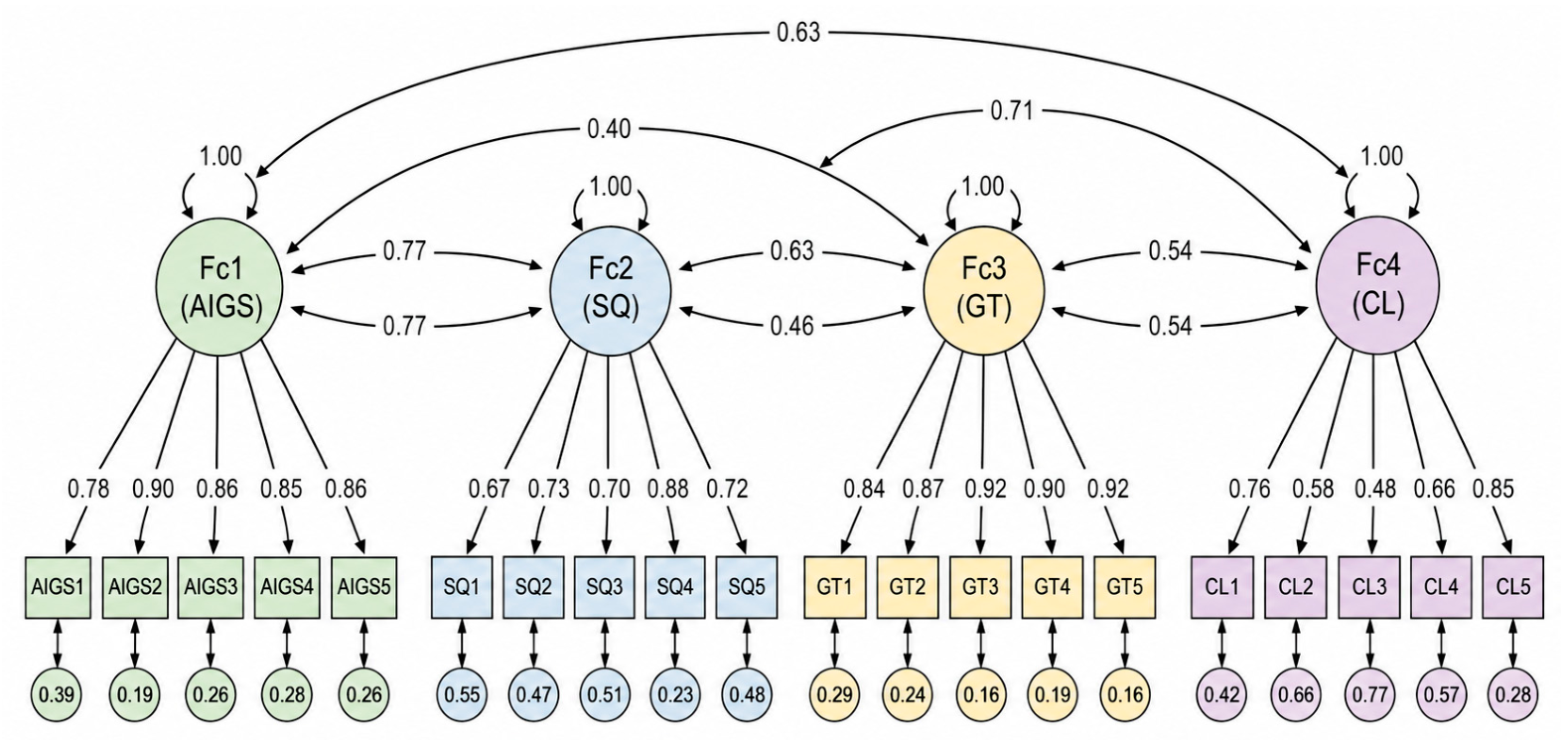
Furthermore, the mediation analysis confirmed the proposed indirect effects. Service quality significantly mediated the relationship between AI-enabled green hospitality services and green trust, supporting H4 (β = 0.194, p = 0.001). Likewise, green trust significantly mediated the relationship between service quality and customer loyalty, supporting H5 (β = 0.051, p = 0.011). In addition, the sequential mediation analysis confirmed that AI-enabled green hospitality services influence customer loyalty through the sequential pathway of service quality and green trust, supporting H6 (β = 0.041, p = 0.002). Overall, these findings support the proposed Stimulus–Organism–Response (S-O-R) framework, indicating that AI-enabled green hospitality services serve as an external stimulus that enhances customers’ perceptions of service quality, thereby strengthening green trust and ultimately promoting customer loyalty. The findings further suggest that customer loyalty in sustainable hospitality settings is shaped not only by technological innovation but also by the combined effects of superior service quality and credible environmental commitments. The final structural model and the results of the hypothesis testing are presented in Figure 2.
Figure 2.
Final results of the study.
5. Discussion
The findings indicate that AI-enabled green hospitality services have a significant positive effect on service quality (β = 0.796, p < 0.001), supporting H1. These findings suggest that hotels integrating AI with environmentally sustainable practices are more likely to be perceived as providing reliable, responsive, and personalized services. This result indicates that the integration of AI technologies with sustainability initiatives can enhance customers’ evaluations of service quality by improving service efficiency and responsiveness. The findings are also consistent with the growing transformation of the hospitality industry toward technology-enabled and sustainable service delivery, where customers increasingly value seamless and environmentally responsible service experiences. These findings are consistent with previous studies reporting that intelligent technologies enhance service performance and improve customer experiences in hospitality settings (Sultana et al., 2022; Ravelby et al., 2025). Although the estimated effect was relatively strong, additional robustness analyses and collinearity diagnostics confirmed that the relationship was stable and was not attributable to problematic multicollinearity or construct overlap.
The relatively large effect size suggests that AI-enabled green hospitality services represent a strategic capability rather than merely an operational technology. Nevertheless, some degree of conceptual proximity between AI-enabled green hospitality services and service quality may naturally exist, as customers often evaluate technology-enabled service innovations through their perceived service experience. However, the acceptable discriminant validity and low VIF values indicate that the two constructs remain empirically distinct. This finding implies that customers evaluate AI-supported environmental initiatives as an integral component of the overall service experience. Therefore, hotel managers should focus not only on adopting AI technologies, but also on integrating them seamlessly with sustainability practices to create visible improvements in service responsiveness, personalization, and operational efficiency, thereby maximizing customers’ perceived service quality.
The findings indicate that service quality has a significant positive effect on green trust (β = 0.244, p < 0.001), supporting H2. Although the magnitude of this relationship is moderate, the results suggest that customers are more likely to trust a hotel’s environmental initiatives when they experience reliable, responsive, and high-quality services. Rather than relying solely on environmental claims or promotional messages, customers appear to evaluate the credibility of a hotel’s sustainability commitments based on their actual service experiences. Consequently, high service quality serves as a credible signal of a hotel’s environmental responsibility, strengthening customers’ confidence in its sustainability practices. These findings are consistent with previous studies highlighting the role of service quality in fostering customer trust within hospitality settings (Nguyen Thi Huyen et al., 2025; Ru-Zhue et al., 2026; Jalilvand et al., 2017).
Furthermore, the findings indicate that green trust has a significant positive effect on customer loyalty (β = 0.208, p < 0.001), supporting H3. This finding suggests that customers who perceive a hotel’s environmental commitments as credible are more likely to revisit the hotel, recommend it to others, and maintain long-term relationships with the brand. As environmental sustainability becomes an increasingly important factor in consumers’ purchasing decisions, green trust represents a valuable relational resource that can strengthen customer loyalty and enhance a hotel’s competitive advantage. These findings are consistent with previous studies highlighting the importance of environmental credibility and green trust in fostering customer loyalty within hospitality settings (Waris et al., 2024; Sultana et al., 2022; Ravelby et al., 2025).
The mediation analysis further confirmed that service quality serves as the underlying mechanism linking AI-enabled green hospitality services to green trust (β = 0.194, p < 0.001), supporting H4. These findings indicate that the positive effect of AI-enabled green hospitality services on green trust is realized through improvements in service quality. In other words, customers are more likely to develop trust in a hotel’s environmental initiatives when AI-enabled technologies translate into tangible improvements in their service experiences. Therefore, service quality functions as the mechanism through which AI-enabled sustainable practices strengthen customers’ confidence in a hotel’s environmental commitments. These findings are consistent with previous research highlighting the role of service quality in enhancing trust within technology-enabled hospitality environments (Yusuf, 2025; Hui et al., 2024).
Additionally, the mediation analysis showed that green trust mediates the relationship between service quality and customer loyalty (β = 0.051, p < 0.001), supporting H5. These findings indicate that service quality indirectly contributes to customer loyalty by strengthening customers’ green trust, thereby supporting H5. By providing consistent, high-quality service, hotels strengthen customers’ trust in their environmental initiatives, which ultimately enhances customer loyalty in the hotel’s green initiatives. By providing consistent, excellent service, the hotel ensures that customers view its sustainability efforts as trustworthy and, in turn, become more loyal to the hotel. These results align with previous research showing that trust plays a vital role in connecting service quality to customer loyalty. Most importantly, the findings confirm the sequential mediation of service quality and green trust between AI-enabled green hospitality services and customer loyalty (β = 0.041, p = 0.002), providing support for H6 (Shafiq et al., 2023; Hasan et al., 2025; Karim & Rabiul, 2024). This result presents a more thorough understanding of how AI-enabled sustainable practices drive customer loyalty.
It shows that AI-enabled green hospitality services elevate customers’ perceptions of service quality, thereby boosting green trust and promoting customer loyalty. The sequential process emphasizes that securing customer loyalty involves more than just implementing AI; it also relies on the high-quality interactions and the ecological trust that these services establish. Moreover, these findings support the S-O-R framework, with AI-enabled green services as the stimulus, service quality and green trust as the internal evaluations, and customer loyalty as the response (Shabankareh et al., 2025; Wenting et al., 2026; Meena et al., 2026). In summary, the findings show that AI-enabled green hospitality services are a beneficial tool for improving service quality, boosting green trust, and increasing customer loyalty. They also highlight the need to integrate AI technology with sustainable hospitality to enhance experiences and gain lasting competitive advantages (Meena et al., 2026).
The findings also have practical implications for hotel managers and policymakers interested in leveraging technology-enabled sustainability initiatives to encourage customer loyalty naturally. These practical implications are directly derived from the study’s empirical findings and are consistent with prior hospitality and sustainability research, thereby providing evidence-based guidance for managerial decision-making.
Firstly, the effect is significant, as AI-enabled green hospitality services have a strong positive effect on service quality, suggesting that managers invest in artificial intelligence technology that not only improves efficiency and personalization but also truly contributes to environmental friendliness and sustainability (Mou, 2019; Limna, 2023). Instances range from smart energy management systems to AI-driven concierge services to predictive maintenance to personalized eco-sensitive suggestions. By seamlessly integrating AI components for sustainability, hotels can enhance the guest experience and reinforce their competitive differentiation in evolving markets where technology plays a more prominent role (Zahidi et al., 2024).
Furthermore, the mediation results indicate that the effectiveness of AI-enabled sustainability initiatives depends not only on technology adoption itself but also on how these initiatives improve service quality and strengthen customers’ environmental trust. Therefore, the following recommendations are grounded in the indirect effects identified in the proposed research model.
Second, the mediating role observed for both service quality and green trust suggests that investment in technology alone will no longer suffice; in fact, hotels must ensure that AI sustainability efforts translate into identifiable enhancements in customer service, alongside credible green outcomes (Sousa et al., 2024). Managers could strive for transparent communication by consistently sharing accomplishments in green endeavors, without sacrificing stellar quality standards. Once customers come to trust your environmental commitment, more return visits will occur, and positive remarks will spread and build into relationships in the longer term. For that, the hotel community and organization must consider AI, service quality, and even green trust as interlinked strategic resources collectively responsible for bolstering sustained customer loyalty to their organization and a broader vision of longer-term organizational (Zahidi et al., 2024).
Managers should prioritize AI applications that directly enhance service quality, particularly generative AI for personalized guest recommendations and AI-powered concierge services, as these technologies have the greatest potential to improve responsiveness and personalization. Predictive analytics for maintenance and smart energy management systems should complement these initiatives by improving operational efficiency and environmental sustainability. These technologies are more likely to improve service quality while simultaneously supporting sustainability objectives.
6. Conclusions
This study investigates how AI-enabled green hospitality services affect customer loyalty among guests of four- and five-star Egyptian hotels, with sequential mediation by service quality and green trust. The findings indicate that AI-enabled green hospitality services are positively associated with service quality, enhance green trust, and increase customer loyalty. The mediations confirm that service quality and green trust together explain the associations between AI-enabled sustainable initiatives and customer loyalty. Theoretically, the study advances the hospitality literature by integrating AI-enabled green hospitality services, service quality, green trust, and customer loyalty under the framework of the Stimulus-Organism-Response (S-O-R) Theory and Signaling Theory. It suggests that AI-powered sustainable practices could encourage customer loyalty by enhancing service quality and strengthening trust in hotels’ environmental commitments. In practice, the results underscore that the synergy between AI technology and excellent service quality and trustworthy sustainability practices is vital. Not merely the integration of AI; hotels must ensure that AI-enabled ventures deliver concrete improvements in service quality and deepen customers’ confidence in their environmental sustainability commitment to ensure long-term customer loyalty.
7. Limitations and Future Research Directions
However, despite its contributions, this study has several limitations. First, the research was conducted only among customers of four- and five-star hotels in Egypt. These limitations should be considered when interpreting the findings, as the focus on upscale hotels within a single country may limit the generalizability of the results to other hotel categories, countries, or hospitality contexts with different levels of AI adoption and sustainability practices. Second, the cross-sectional research design limits the ability to infer causal relationships among the study constructs, as the observed associations reflect respondents’ perceptions at a single point in time. Third, the study relied on self-reported customer perceptions. Although the data were collected using self-reported questionnaires, they may still be susceptible to response bias and social desirability bias. In addition, although the Customer Loyalty construct demonstrated acceptable reliability and convergent validity, the relatively low loading of indicator CL3 should be interpreted with caution, as it may have slightly reduced the precision of the construct measurement. Future studies are encouraged to further validate or refine this indicator.
Future research could extend the current model by examining whether customer environmental awareness, technology readiness, hotel category, or cultural context moderate the proposed relationships. Future studies may also investigate additional mediating mechanisms, such as customer satisfaction or perceived value, and employ longitudinal or cross-country designs to validate the proposed model across different hospitality contexts (Ghazi et al., 2025; Gajić et al., 2024).
Funding
This work was supported by the Deanship of Scientific Research, Vice Presidency for Graduate Studies and Scientific Research, King Faisal University, Saudi Arabia [KFU263365].
Institutional Review Board Statement
The study was conducted in accordance with the Declaration of Helsinki and approved by the Research Ethics Committee at King Faisal University (protocol code KFU263365 and date of approval: 1 March 2026).
Informed Consent Statement
Informed consent was obtained from all subjects involved in this study.
Data Availability Statement
The raw data supporting the conclusions of this article will be made available by the authors on request.
Conflicts of Interest
The author declares no conflicts of interest.
Appendix A. Measurement Scales
| AI-Enabled Green Hospitality Services (AIGS) | AIGS1: This hotel uses AI technologies to provide environmentally friendly services. |
| AIGS2: AI applications in this hotel help reduce waste and resource consumption. | |
| AIGS3: AI-enabled services improve the hotel’s environmental sustainability efforts. | |
| AIGS4: The hotel uses AI systems to enhance green operational practices. | |
| AIGS5: AI technologies contribute to more sustainable guest experiences. | |
| Service Quality (SQ) | SQ1: The services provided by the hotel are of high quality. |
| SQ2: The hotel delivers services reliably and consistently. | |
| SQ3: Employees provide prompt and efficient service. | |
| SQ4: The hotel responds effectively to customer needs. | |
| SQ5: Overall, I am satisfied with the quality of services provided. | |
| Green Trust (GT) | GT1: I trust this hotel’s environmental commitments. |
| GT2: The hotel genuinely cares about environmental protection. | |
| GT3: The hotel’s green claims are credible. | |
| GT4: I believe the hotel fulfills its environmental promises. | |
| GT5: The hotel can be relied upon to operate sustainably. | |
| Customer Loyalty (CL) | CL1: I intend to revisit this hotel in the future. |
| CL2: I would recommend this hotel to others. | |
| CL3: This hotel would be my first choice among competing hotels. | |
| CL4: I would say positive things about this hotel to others. | |
| CL5: I am willing to maintain a long-term relationship with this hotel. |
References
- Adholiya, A., & Adholiya, S. (2026). AI-enhanced tourism experiences: Mediating effects of trust, satisfaction, and loyalty in personalised service delivery. In Transforming tourism and hospitality. CRC Press. [Google Scholar]
- Aldulaimi, S., Soni, S., Kampoowale, I., Krishnan, G., Ab Yajid, M. S., Khatibi, A., Minhas, D., & Khurana, M. (2024). Customer perceived ethicality and electronic word of mouth approach to customer loyalty: The mediating role of customer trust. International Journal of Ethics and Systems, 41(1), 258–278. [Google Scholar] [CrossRef] [Scilit]
- Alharbi, A., Elshamly, A., Shawky, N., & Mahgoub, I. (2025). Unlocking sustainable performance in SMEs: The interplay of green AI management, pro-environmental behaviour in the tourism and hospitality sector: UK. Journal of Posthumanism, 5(4), 271–290. [Google Scholar] [CrossRef] [Scilit]
- Ali, M., Khan, T. I., & Şener, İ. (2025). Transforming hospitality: The dynamics of AI integration, customer satisfaction, and organizational readiness in enhancing firm performance. Journal of Hospitality and Tourism Technology, 16(5), 911–936. [Google Scholar] [CrossRef] [Scilit]
- Alves, J., Arantes, L., & Moreira, A. C. (2025). AI-powered sustainable tourism: Aligning innovations with the sustainable development goals. Tourism and Hospitality Research, 0(0), 14673584251409416. [Google Scholar] [CrossRef] [Scilit]
- Aly, Y. Z. (2025). The impact of sustainable cultural practices in hotels on guests’ pro-environmental behavior: The mediating role of green trust and experience. The International Journal of Tourism and Hospitality Studies, 9, 262–286. [Google Scholar] [CrossRef] [Scilit]
- Assaker, G. (2020). The effects of hotel green business practices on consumers’ loyalty intentions: An expanded multidimensional service model in the upscale segment. International Journal of Contemporary Hospitality Management, 32(12), 3787–3807. [Google Scholar] [CrossRef] [Scilit]
- Asyraff, M. A., Hanafiah, M. H., & Aminuddin, N. (2023). Adoption of the stimulus–organism–response (S-O-R) model in hospitality and tourism research: Systematic literature review and future research directions. Asia-Pacific Journal of Innovation in Hospitality and Tourism, 12(1), 19–48. [Google Scholar]
- Bafera, J., & Kleinert, S. (2023). Signaling theory in entrepreneurship research: A systematic review and research agenda. Entrepreneurship Theory and Practice, 47(6), 2419–2464. [Google Scholar]
- Baquero, A., Más-Ferrando, A., & Navarro-Navarro, J. (2026). AI-driven sustainability: The interplay of generative capabilities, resource optimization, and institutional support. Journal of Hospitality and Tourism Insights, 9(7), 1–23. [Google Scholar] [CrossRef] [Scilit]
- Belanche, D., Casaló, L. V., Flavián, C., & Schepers, J. (2020). Service robot implementation: A theoretical framework and research agenda. The Service Industries Journal, 40(3–4), 203–225. [Google Scholar] [CrossRef] [Scilit]
- Celani, A., & Singh, P. (2011). Signaling theory and applicant attraction outcomes. Personnel Review, 40(2), 222–238. [Google Scholar] [CrossRef] [Scilit]
- Chang, R., Chanda, R. C., Vafaei-Zadeh, A., Hanifah, H., & Gui, A. (2024). Assessing green practices on eco-friendly hotel customer loyalty: A partial least squares structural equation modeling and fuzzy-set qualitative comparative analysis hybrid approach. Sustainability, 16(9), 3834. [Google Scholar] [CrossRef] [Scilit]
- Chen, Y. S. (2010). The drivers of green brand equity: Green brand image, green satisfaction, and green trust. Journal of Business Ethics, 93(2), 307–319. [Google Scholar]
- Chivkula, A., & Pokhriyal, D. (2026). The role of AI-driven chatbots in enhancing sustainable customer service: A survey-based study on consumer perceptions. Journal of Innovation and Entrepreneurship, 15(1), 40. [Google Scholar] [CrossRef] [Scilit]
- Connelly, B. L., Certo, S. T., Reutzel, C. R., DesJardine, M. R., & Zhou, Y. S. (2025). Signaling theory: State of the theory and its future. Journal of Management, 51(1), 24–61. [Google Scholar] [CrossRef] [Scilit]
- Dewi, H. P. (2020, August 14–15). The influence of planned behavior on the level of customer trust and satisfaction in determining loyalty in green hotels in Indonesia. 2nd the International Conference of Business and Banking Inovations (ICOBBI 2020), Virtual. Available online: https://repository.ubaya.ac.id/38048/ (accessed on 1 May 2025).
- Duong, C. D. (2023). Applying the stimulus-organism-response theory to investigate determinants of students’ social entrepreneurship: Moderation role of perceived university support. Social Enterprise Journal, 19(2), 167–192. [Google Scholar] [CrossRef] [Scilit]
- Erul, E., Karacabey, F. A., Woosnam, K. M., & Koc, E. (2026). Rethinking stimulus-organism-response theory for residents’ behaviour in tourism. Current Issues in Tourism, 29(8), 1547–1563. [Google Scholar] [CrossRef] [Scilit]
- Fatawu, A., Manda, V. K., Tarnanidis, T., & Sousa, B. (2025). The impact of CSR dimensions on customer loyalty, brand image, and satisfaction in the hospitality and tourism sector: The role of customer trust and perceived value. Journal of Global Marketing, 1–25. [Google Scholar] [CrossRef] [Scilit]
- Filimonau, V. (2025). Exploring how Artificial Intelligence (AI) can enable sustainability in the hospitality industry. Sustainable Development, 33(6), 9123–9143. [Google Scholar] [CrossRef] [Scilit]
- Gajić, T., Ranjbaran, A., Vukolić, D., Bugarčić, J., Spasojević, A., Đorđević Boljanović, J., Vujačić, D., Mandarić, M., Kostić, M., Sekulić, D., Bugarčić, M., Drašković, B. D., & Rakić, S. R. (2024). Tourists’ willingness to adopt AI in hospitality—Assumption of sustainability in developing countries. Sustainability, 16(9), 3663. [Google Scholar] [CrossRef] [Scilit]
- Ghazi, K., Kattara, H., Salem, I. E., & Shaaban, M. N. (2025). Benefit-triggered or trust-guided? Investigation of customers’ perceptions towards AI-adopting hotels amid and post COVID-19 pandemic. Tourism and Hospitality Research, 25(1), 38–56. [Google Scholar]
- Green, D., & Roberts, G. (2012). Transformational leadership in a postmodern world: The presidential election of Barack Obama. Academy of Strategic Management Journal, 11, 9–26. [Google Scholar]
- Hair, J. F., Hult, G. T. M., Ringle, C. M., & Sarstedt, M. (2022). A primer on partial least squares structural equation modeling (PLS-SEM) (3rd ed.). Sage. [Google Scholar]
- Hasan, N., Agarwal, C., Joshi, A., Rahal, D., Traisa, R., & Sharma, S. (2025). The two-way influence of green banking practices and green electronic word of mouth in driving green trust and green loyalty: A trust transfer perspective. International Journal of Ethics and Systems. ahead-of-print. [CrossRef] [Scilit]
- Hashish, M. E.-S., Abdou, A. H., Mohamed, S. A. K., Elenain, A. S. A., & Salama, W. (2022). The nexus between green perceived quality, green satisfaction, green trust, and customers’ green behavioral intentions in eco-friendly hotels: A structural equation modeling approach. International Journal of Environmental Research and Public Health, 19(23), 16195. [Google Scholar] [CrossRef] [Scilit] [PubMed]
- Huang, S., Qu, H., & Wang, X. (2024). Impact of green marketing on peer-to-peer accommodation platform users’ repurchase intention and positive word-of-mouth: Mediation of trust and consumer identification. International Journal of Contemporary Hospitality Management, 36(3), 691–712. [Google Scholar] [CrossRef] [Scilit]
- Hui, Z., Khan, A. N., Chenglong, Z., & Khan, N. A. (2024). When Service quality is enhanced by human–artificial intelligence interaction: An examination of anthropomorphism, responsiveness from the perspectives of employees and customers. International Journal of Human–Computer Interaction, 40(22), 7546–7561. [Google Scholar] [CrossRef] [Scilit]
- Jalilvand, M. R., Nasrolahi Vosta, L., Kazemi Mahyari, H., & Khazaei Pool, J. (2017). Social responsibility influence on customer trust in hotels: Mediating effects of reputation and word-of-mouth. Tourism Review, 72(1), 1–14. [Google Scholar] [CrossRef] [Scilit]
- Jamil, K., Anwar, A., & Mustafa, S. (2026). How humanoid chatbot interaction quality builds trust and loyalty in hospitality? A mixed-method approach. Journal of Hospitality Marketing & Management, 35(4), 518–557. [Google Scholar] [CrossRef] [Scilit]
- Juan, Z., Chong, C. W., Leong, Y. C., & Yihuan, L. (2025). AI-enabled service in hotels: A bibliometric review of research trends and service quality outcomes. Malaysian Journal of Social Sciences and Humanities (MJSSH), 10(12), e003699. [Google Scholar] [CrossRef] [Scilit]
- Karim, R. A., & Rabiul, M. K. (2024). The relationships of corporate sustainability, customer loyalty, and word of mouth: The mediating role of corporate image and customer satisfaction. Journal of Quality Assurance in Hospitality & Tourism, 25(3), 421–441. [Google Scholar] [CrossRef] [Scilit]
- Khairy, H. A., & Salama, W. M. E. (2026). Humanizing brands as social change in the digital age: How anthropomorphism, empathy, and technological empowerment drive hotel brand evangelism. Societies, 16(3), 94. [Google Scholar] [CrossRef] [Scilit]
- Li, L., Bibi, M., Hussain, Y., & Xiao, D. (2025). Examining sustainable hospitality practices and employee turnover in Pakistan: The interplay of robotics awareness, mutual trust, and technical skills development in the age of artificial intelligence. Journal of Environmental Management, 373, 123922. [Google Scholar] [CrossRef] [Scilit] [PubMed]
- Limna, P. (2023). Artificial Intelligence (AI) in the hospitality industry: A review article. International Journal of Computing Sciences Research, 7, 1306–1317. [Google Scholar] [CrossRef] [Scilit]
- Lin, C.-C., Nugraha, K. S., & Hsu, Y.-J. (2024). The effect of sustainable development goals on customer satisfaction, customer loyalty and the role of brand image in green hotels. Advances in Management and Applied Economics, 15(1), 131–160. [Google Scholar] [CrossRef] [Scilit]
- Liu, S. Q., Bilgihan, A., & Kandampully, J. (2025). The intersection of technology, sustainability and consumer experiences in hospitality and tourism for new horizons. Journal of Hospitality and Tourism Horizons, 1(2), 87–109. [Google Scholar] [CrossRef] [Scilit]
- Ma, T. B., Nguyen, V. K., & Natoli, R. (2026). Exploring the role of trust and satisfaction in shaping AI-driven tourist behaviour. Journal of Hospitality and Tourism Insights. ahead-of-print. [CrossRef] [Scilit]
- Meena, R., Sahoo, S., & Mishra, A. (2026). Dual-process trust formation in travel chatbots: A heuristic-systematic model of cognitive and affective pathways. Journal of Hospitality and Tourism Technology. ahead-of-print. [CrossRef] [Scilit]
- Mohammed, M., Zhou, S., Abduljabbar Hael, M., Abdulwase, R., & Almuwaffaq, F. (2026). The impact of green service quality on consumers’ intentions to revisit green hotels based on theory of planned behavior. Journal of Quality Assurance in Hospitality & Tourism, 27(2), 396–432. [Google Scholar] [CrossRef] [Scilit]
- Mou, X. (2019). Artificial intelligence: Investment trends and selected industry uses. International Finance Corporation, 8(2), 311–320. [Google Scholar]
- Muflih, M., Iswanto, B., & Purbayati, R. (2023). Green loyalty of Islamic banking customers: Combined effect of green practices, green trust, green perceived value, and green satisfaction. International Journal of Ethics and Systems, 40(3), 477–494. [Google Scholar] [CrossRef] [Scilit]
- Mukherjee, S., Panigrahi, R. R., Khan, S. A., & Cotha, K. (2026). Artificial intelligence and service performance: Empirical findings from the hospitality sector. International Journal of Quality & Reliability Management, 43(7), 1954–1979. [Google Scholar] [CrossRef] [Scilit]
- Nguyen Thi Huyen, N., Duong Hong, H., & Hoang Thi, L. (2025). Green practices: Building green image and green trust for green revisit intentions in the hospitality industry. Journal of Open Innovation: Technology, Market, and Complexity, 11(1), 100481. [Google Scholar] [CrossRef] [Scilit]
- Parasuraman, A. B. L. L., Zeithaml, V. A., & Berry, L. (1988). SERVQUAL: A multiple-item scale for measuring consumer perceptions of service quality. Journal of Retailing, 64(1), 12–40. [Google Scholar]
- Ravelby, T. A., Yasri, Y., Dwita, V., Suwandhani, D., Sari, A. Y., Linda, M. R., Yonita, R., Suhery, S., Sutiyem, S., & Trismiyanti, D. (2025). Green satisfaction and loyalty in the west Sumatera hospitality industry through the role of green trust, WOM and green image. Jurnal Apresiasi Ekonomi, 13(1), 144–159. [Google Scholar] [CrossRef] [Scilit]
- Rehman, A., Behera, R. K., Islam, J., Islam, M. S., & Akhtar, T. (2026). How AI-driven sustainable empowerment strategies enhance sustainable tourism development. Journal of Hospitality and Tourism Technology. ahead-of-print. [CrossRef] [Scilit]
- Russell, J. A., & Mehrabian, A. (1974). Distinguishing anger and anxiety in terms of emotional response factors. Journal of consulting and clinical psychology, 42(1), 79. [Google Scholar] [CrossRef] [Scilit] [PubMed]
- Ru-Zhue, J., Rakangthong, N. K., Kim, L., & Issayeva, G. (2026). Green service quality and tourist engagement: Moderating impacts of social influence in green hotels. Cleaner and Responsible Consumption, 21, 100385. [Google Scholar] [CrossRef] [Scilit]
- Shabankareh, M., Ranjbaran, A., Marc Lim, W., Kalantari Daronkola, H., & Nazarian, A. (2025). Artificial intelligence on social media and revisit behavior: Evidence from the hotel industry. International Journal of Advertising, 44(8), 1523–1562. [Google Scholar] [CrossRef] [Scilit]
- Shafiq, M., Ziaullah, M., Siddique, M., Bilal, A., & Ramzan, M. (2023). Unveiling the sustainable path: Exploring the nexus of green marketing, service quality, brand reputation, and their impact on brand trust and purchase decisions. International Journal of Social Science & Entrepreneurship, 3, 654–676. [Google Scholar]
- Shah, M. U., & Jan, M. F. (2021). Connecting corporate social responsibility (CSR) to customer loyalty: A mediation analysis in hoteling industry of Pakistan. Sage Open, 11(4), 21582440211067233. [Google Scholar] [CrossRef] [Scilit]
- Shi, D., & Fuchs, K. (2025). Examining the determinants of green hotel loyalty: A hybrid SEM-fsQCA approach. Journal of Hospitality and Tourism Insights, 9(3), 1213–1235. [Google Scholar] [CrossRef] [Scilit]
- Sohaib, M., Safeer, A. A., & Majeed, A. (2022). Role of social media marketing activities in China’s e-commerce industry: A stimulus organism response theory context. Frontiers in Psychology, 13, 941058. [Google Scholar] [CrossRef] [Scilit] [PubMed]
- Sousa, M. J., Pani, S., Dal Mas, F., & Sousa, S. (Eds.). (2024). Incorporating AI technology in the service sector: Innovations in creating knowledge, improving efficiency, and elevating quality of life. CRC Press. [Google Scholar]
- Sultana, N., Amin, S., & Islam, A. (2022). Influence of perceived environmental knowledge and environmental concern on customers’ green hotel visit intention: Mediating role of green trust. Asia-Pacific Journal of Business Administration, 14(2), 223–243. [Google Scholar] [CrossRef] [Scilit]
- Tavanxhiu, T., Godolja, M., Sevrani, K., & Naco, M. (2026). A Technological blueprint for smart and AI-driven hospitality in emerging tourism markets: Evidence from Albania. Systems, 14(2), 188. [Google Scholar] [CrossRef] [Scilit]
- Waris, I., Suki, N. M., Ahmed, A., & Barkat, W. (2024). Environmental corporate social responsibility initiatives and green customer citizenship behavior in tourism industry: The mediating roles of green trust, customer-company identification and green corporate image. Social Responsibility Journal, 20(6), 1138–1156. [Google Scholar] [CrossRef] [Scilit]
- Wenting, L., Wan Hussain, W. M. H., Xinlin, J., Na, M., & Shah Alam, S. (2026). AI adoption in decision-making and firm competitiveness in tourism: Integrating CTUAT with resource-based and dynamic capability perspectives. Journal of Quality Assurance in Hospitality & Tourism, 1–24. [Google Scholar] [CrossRef] [Scilit]
- Wu, H.-C., Ai, C.-H., & Cheng, C.-C. (2016). Synthesizing the effects of green experiential quality, green equity, green image and green experiential satisfaction on green switching intention. International Journal of Contemporary Hospitality Management, 28(9), 2080–2107. [Google Scholar] [CrossRef] [Scilit]
- Yusuf, N. P. (2025). Influence of ease of use and trust of artificial intelligence on customer retention: A study of Dublin’s hospitality industry [Master’s thesis, National College of Ireland]. Available online: https://norma.ncirl.ie/7784/ (accessed on 1 January 2026).
- Zahidi, F., Kaluvilla, B. B., & Mulla, T. (2024). Embracing the new era: Artificial intelligence and its multifaceted impact on the hospitality industry. Journal of Open Innovation: Technology, Market, and Complexity, 10(4), 100390. [Google Scholar] [CrossRef] [Scilit]
- Zeithaml, V. A., Berry, L. L., & Parasuraman, A. (1996). The behavioral consequences of service quality. Journal of Marketing, 60(2), 31–46. [Google Scholar] [CrossRef] [Scilit]
- Zubair, T., & Khan, S. (2025). Enhancing economic insights into smart hospitality: AI, service-dominant logic, and sustainability insights vis PLS-SEM. International Journal of Social Science Research (IJSSR), 2, 417–445. [Google Scholar] [CrossRef] [Scilit]

Disclaimer/Publisher’s Note: The statements, opinions and data contained in all publications are solely those of the individual author(s) and contributor(s) and not of MDPI and/or the editor(s). MDPI and/or the editor(s) disclaim responsibility for any injury to people or property resulting from any ideas, methods, instructions or products referred to in the content. |
© 2026 by the author. Licensee MDPI, Basel, Switzerland. This article is an open access article distributed under the terms and conditions of the Creative Commons Attribution (CC BY) license.