


Abstract
This research explores how a multifunctional and multi-experience music institution can thrive in the 21st century. It takes the case of the House of Music Hungary that has evolved into a cultural hub over the recent years, equally appealing to locals, professionals, employees, and tourists. To lay the foundation of tying architecture and music together, this highly exploratory study used a holistic approach by discussing issues related to tangible and intangible heritage, heritage tourism, and music tradition. Data collection included official state statistics, on-site experiences, and interviews. Interviews with the architect of the project, a music historian, a musician, a cultural manager, and a tourism professional were analysed, applying interpretive phenomenological analysis. The result are presented in a kaleidoscopic framework comprising the core elements identified in the analysis. This paper contributes to the knowledge of developing heritage tourism through the interplay of architecture and music. It shows how they reinforce one another to generate complex experiences, while highlighting the importance of respecting local cultural, social and environmental circumstances. Its exploratory nature did not necessitate the inclusion of visitor interviews at this stage; however, investigating visitor satisfaction may be one of the new directions that scholars can embark on.
1. Introduction
Architecture is part of human heritage, representing human interference with nature. Travellers have always been motivated to visit famous buildings, for example: the Great Pyramid of Giza, the Great Wall of China, or the Colosseum have been coveted destinations for centuries. Thus, the concept of architourism dates back to ancient times, as it distinguishes a region from others and reflects the culture it embodies (Chang, 2010; Kaczmarek, 2017). Unsurprisingly, many of these preserved edifices continue to serve as landmarks with universal values, and they are highly visited by tourists (Cheirchanteri, 2021). Today, architourism can encompass a wide range of structures, from iconic cultural venues through historic neighbourhoods to vernacular homes (Chang, 2010).
In some cases, a building itself becomes the main reason for travel, often characterised by short length of stay and overcrowding, shifting the focus from other attractions. The Guggenheim Museum in Bilbao built in 1997 put the city on the tourism map, and it has been the most often cited positive example (Franklin, 2016; Scerri et al., 2019). However, there has been little research on the activity and movement patterns of the roughly one million visitors before and after their museum visit (Franklin, 2016). Furthermore, the lack of added value to poorer districts in Bilbao has also been criticised (Michael, 2015; Miles, 2013). Looking at the longitudinal tourism data related to Basque County, the picture has not been rosy either. The average length of stay was below two nights, and summer was still the peak period in the analysed period (Eustat, 2026).
To avoid overtourism and congestion in urban areas, the key element of strategic planning should be the reconciliation of tourism demand with the preservation of cultural integrity. One recent initiative has been the introduction of entry fees, for example, in Venice, suffering from carrying capacity problems (Bertocchi et al., 2020, 2021), and depopulation (Bertocchi et al., 2021). However, the recently introduced levy has not alleviated overtourism. Approximately 34.5 million tourists visited Venice in 2024, and the short-term rental market continued to grow, impacting the real-estate market and changing the hospitality model (City of Venice, 2024). Budapest also faces the challenge of balancing tourism with liveability, and the House of Music Hungary tends to alleviate congestion by being a year-round cultural hub outside the city core.
Tourism is increasingly driven by the search for experiences, yet experience is inherently subjective and depends on expectations, emotions and context. This is why analysing well-functioning cultural institutions is valuable, because success cannot be explained by only one factor such as design or programme structure. Pine and Gilmore’s experience economy model offers a useful baseline with the four types of experience identified—entertainment, education, escapism and aesthetics—which can be related to creating memorable experiences in tourism as well (Pine & Gilmore, 1998; Kim et al., 2012).
In this paper, the intangible heritage discussed in relation to architecture is music. Goethe once remarked that “music is liquid architecture, and architecture is frozen music,” highlighting the intrinsic connection between the tangible and intangible, which together convey a more profound meaning and experience. Exemplifying the seamless blend of architecture and acoustics are the Hungarian State Opera House, the Palais Garnier in Paris, the Teatro Alla Scala in Milan, and the Margravial Opera House in Bayreuth. Modern examples include the Sydney Opera House, the Harbin Opera House in China and the Tokyo Opera Concert Hall in Japan (Fiorentino, 2023).
This paper examines how an architectural flagship can function as a locally embedded, year-round cultural attraction and community space. Many architecture-led attractions generate tourism congestion, and their longer-term contribution to heritage tourism and everyday urban life remains underanalysed. This study explores how a contemporary cultural institution can produce sustained value for both visitors and residents, including staycation-like and wellbeing-related experiences (Pécsek, 2021).
The analysis is anchored in a single case, the House of Music Hungary in Budapest, where the interaction between tangible architecture and intangible musical heritage is realised through exhibitions, events and educational/research opportunities. The focus is on the complex experiences generated for different stakeholders by treating architecture and music as mutually reinforcing resources. The research revolves around the following main questions:
(RQ1) What kind of conflicting issues can be identified in heritage tourism?
(RQ2) How can the natural environment be integrated with architecture and music to create and enhance experiences for different user groups?
(RQ3) Based on the findings of the on-site visits and the interviews, what are the core elements and their interrelationships, contributing to the success of the House of Music Hungary?
This paper proposes a framework grounded in expert accounts and observations, highlighting an added “everyday/therapeutic” experience dimension that complements the Pine–Gilmore model.
2. Theoretical Background
2.1. The Interdependence of the Tangible and Intangible Cultural Heritage
Both architecture and music are integral to heritage tourism and play a crucial role in creating experiences for tourists, therefore, a brief discussion of the UNESCO World Heritage programme is necessary. At the time of writing (2025), the UNESCO World Heritage List includes 1248 properties (UNESCO, n.d.-b), while UNESCO’s intangible heritage lists and registers include 849 elements corresponding to 5 regions and 157 countries were inscribed in the List of Intangible Cultural Heritage and the Register of good safeguarding practices. The five categories of the intangible list comprise Oral Traditions and Expressions, Social Practices, Rituals and Festive Events, Knowledge and Practices Concerning Nature, Traditional Craftsmanship and Performing Arts, and this research focuses on the last category. UNESCO recognises that living heritage is often the amalgamation of intangible and tangible elements, together supporting interpretation and understanding. In the context of music these elements may include physical locations such as buildings and landscapes (UNESCO, 2026), acknowledging that music and architecture are interrelated in the process of creating experiences.
The House of Music Hungary is embedded in the heritage context of Budapest, where music traditions are palpable everywhere because of composers like Liszt, Bartók, and Kodály. Buzás and Sagrillo (2019) wrote about the importance of Hungarian music heritage and education, highlighting that the value that music tradition offers would always be relevant, even in the 21st century. Hungary could strengthen its country brand with its innovative music education and cultural diplomacy (Jentetics, 2014). The World Heritage site covers key musical institutions such as the Opera House, the Liszt Academy of Music, and the Pesti Vigadó Concert Hall. The House of Music Hungary is located within the buffer zone, nevertheless, the building is discussed here as a contemporary cultural flagship rather than as a contributing element to the property’s Outstanding Universal Value (OUV).
2.2. Heritage Tourism
Heritage tourism involves offering a meaningful connection to the given heritage (Poria et al., 2003) and it can be typologised along several dimensions. Categories may include tangible/built heritage, natural heritage and intangible or “living” heritage such as performing arts, rituals and festive events. Types can also be distinguished by visitor–heritage relationships: for some travellers heritage is primarily a matter of personal identity and attachment (“personal/roots heritage”), while for others it is an interest-driven cultural experience with weaker personal links. Finally, heritage tourism also varies by product forms, ranging from site-based visitation (museums, monuments) to experiential formats where participation and interpretation are in focus (Poria et al., 2003; Timothy, 2018; UNWTO & UNESCO, 2018; UNESCO, n.d.-a). An entire city or district can be shaped by a single emblematic building that becomes a key reference point in the destination image. In such cases, architecture does not merely provide a setting but also contributes to cultural experiences and can concentrate demand spatially. This perspective is relevant to the House of Music Hungary, which is considered an architecture-led cultural development.
In 2000, a campaign was launched to find “The New 7 Wonders of the World” (New 7 wonders, n.d.). This initiative generated over 100 million votes worldwide with the following architectural wonders (Table 1).
Table 1.
The New 7 Wonders with tourism data (2024).
Table 1 highlights two layers of concentration. At the country level, inbound tourism intensity varies sharply, with some destinations receiving nearly one international arrival per resident, while more populous countries show much lower per capita ratios despite high absolute volumes. At the site level, visitor numbers are highly uneven, suggesting that iconic wonders can act as powerful magnets and concentrate demand in specific places. These patterns support the argument that landmark-driven architourism may cause overtourism; therefore, sustainable visitor management is essential. Based on the studies it can be concluded that the Bilbao effect is less generalizable than was previously thought because the long-term benefits depend on the touristic reputation of the destination. If the reason for development is to boost tourism, the challenge is to find ways to spread the touristic benefits across the board. In Bilbao those challenges have not been met. In the case of highly visited destinations, the key is the choice of location that can help mitigate overtourism. In the case of Budapest, the City Park with the House of Music Hungary is a good example of adaptive reuse where the park has regained its original cultural/entertainment function as well as meeting economic, cultural and environmental sustainability requirements. Renovating the old buildings and adding new cultural venues have brought the park into the 21st century.
Historic districts can also become tourism hotspots, for instance, colonial buildings alongside shophouses in Singapore, the French quarters in Hanoi, Vietnam, or the Dutch quarter (Kota Tua) in Jakarta, Indonesia are popular destinations among tourists. Local architecture is called vernacular architecture, where the term “vernacular” is derived from the Latin word “verna,” meaning “domestic, native, indigenous,” and originally referred to a “native slave” or “home-born slave” (Merriam-Webster online). Beyond its aesthetic appeal, vernacular architecture with its deep-rooted cultural, religious, and environmental values, offers a sustainable and contextually responsive approach to building design (Abd Manaf et al., 2025), and it is closely linked to integrity and authenticity (Murillo Camacho et al., 2023).
2.3. Adaptive Reuse as Sustainable Solution
Preserving heritage architecture is not without its challenges; it involves issues such as liveability and sustainable reuse (Cao et al., 2022). The aim of adaptive reuse is repurposing heritage buildings for alternative use, while retaining their original historic or architectural elements. Adaptive reuse is regarded as a sustainable option as opposed to demolition or new construction (Savoie et al., 2025). It also generates significant social and cultural benefits by connecting present generations with the past. Besides extending the life cycle of historic structures, adaptive reuse may create new cultural and social opportunities (Ghida, 2024; Bullen & Love, 2011), as these buildings can be repurposed as venues for cultural events. In this way heritage preservation can reconcile with contemporary needs and stay relevant in modern urban environments (Bullen & Love, 2011).
Conversions of old buildings often draw criticism because the cultural and historical meanings of the building may be lost; therefore, visitors cannot make any connections with the re-built spaces (Chang, 2010). It is even worse when locals feel emotional disconnection, leading to authenticity issues and false representation of local culture. Gotham (2007) discussed the French Quarter in New Orleans, comparing the conversion approach before and after the hurricane Katrina, highlighting the problem of “unbuilding culture.” This rebuilding and rebranding are common in urban hotel and fast-food restaurant conversions, such as the McDonald’s inside the Nyugati railway station, Budapest.
2.4. Music as Intangible Heritage
Music is a form of living heritage, continuously reinterpreted across generations. In urban contexts it shapes identity through events, education, and community life, therefore, it often makes meaningful contributions to destination branding and cultural tourism. Music can make urban experiences more “musical,” accessible, enjoyable and interactive (Adhitya, 2017).
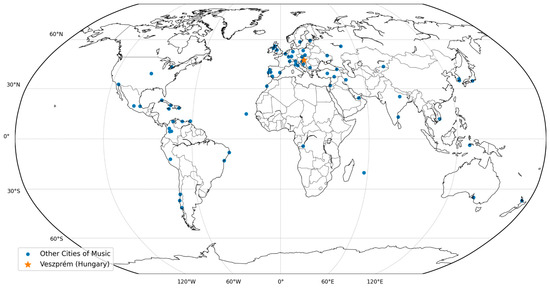
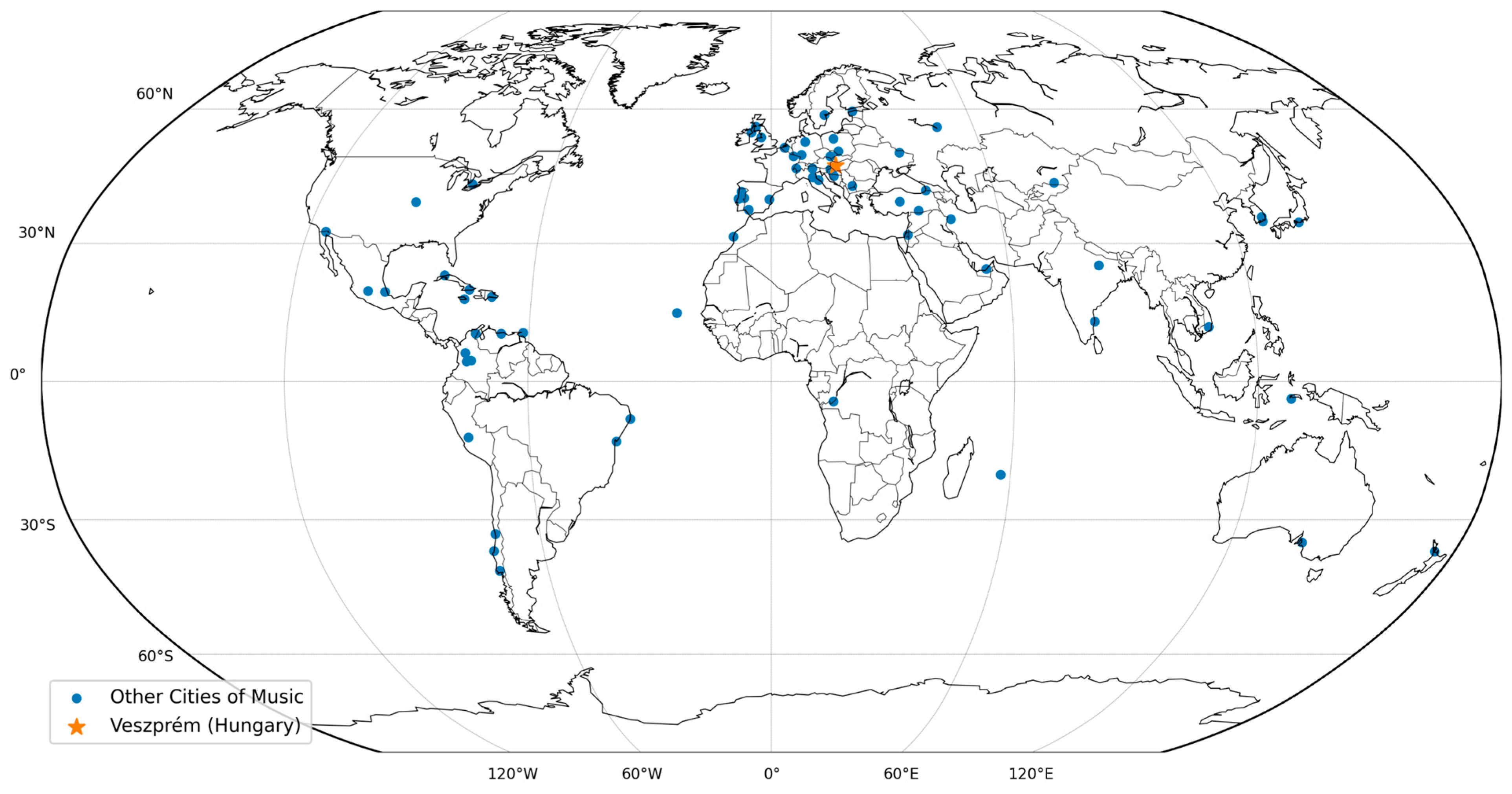
Acknowledging the importance of music, a global network of the Cities of Music was initiated by UNESCO (Figure 1). It comprises 69 members in total, with the highest concentration in Europe (27 cities), followed by Asia (14), South America (11), North America (10), Africa (5), and Oceania (2). It is important to note that the network covers very different cultural contexts, the pattern is not genre-based and it does not imply a single “UNESCO sound”.
Figure 1.
Spatial distribution of UNESCO Cities of Music listed by the UNESCO Cities of Music Network. Source: City list from the UNESCO Cities of Music Network; map compiled by the authors.
Hungarian musicians, Liszt, Bartók and Kodály made invaluable contributions to 20th-century music (Li, 2023). The Kodály concept is widely regarded as a cornerstone of music pedagogy and an important element of living musical heritage, built on the principle that “music belongs to everyone” (Kodály, 1952/2008b). Kodály also emphasised the importance of musical foundations, culturally embedded song traditions (Kodály, 1947/2008c), and framed music education as a holistic developmental process beyond technical skills (Kodály, 1953/2008a). In practice, the approach highlights singing-based learning and relative solmization as key tools for developing musical literacy and aural skills (Asztalos, 2023). This educational philosophy is relevant to the House of Music Hungary, which is also an experience-based learning environment, where concerts, exhibitions and educational programmes can translate music heritage into participatory encounters. Recent research also suggests that Kodály inspired teaching can foster students’ engagement and rhythmic perception in higher education contexts (Wei, 2022).
2.5. The Interplay Between Architecture and Music
Architects often draw inspiration from music for their design process. The mood, rhythm, and dynamics of music can convey feelings that can be translated into design language. For example, a building inspired by a slow and calm musical composition can result in a meditative building. The musical mood of a building often inspires artists and boosts their creativity (Muvesz, 2022).
The interaction between music and architecture has been prevalent from ancient Greek civilization onward. According to the Greeks, the harmony of music constitutes the perfect proportions (Yoo & Choi, 2021). The Roman architect, Marcus Vitruvius Polio (80 B.C.~70 B.C.) believed that both music and architecture relied on order and proportion, so architects could understand music through the principles of proportion (Moon, 2010). Music, similarly to architecture, is an immersive experience; while people can turn away from a painting or sculpture, it is impossible to ignore music and architecture (Holl, 2015). The difference is that architecture is perceived physically, while music creates the aural space (Morimoto, 2016). Holl has designed several buildings drawing inspiration from music, for instance, the Stretto House in Dallas was based on the piece titled Music for Strings, Percussion and Celesta (1936) by Béla Bartók (Morimoto, 2016). Yoo and Choi (2021) investigated the possible connection between architecture and music by conducting research with three groups: architecture majors, music majors, and other majors, whose task was to match music to the correlated architectural designs. The findings confirmed that specific design could relate to specific music. It is true that the development of opera as a genre alongside the construction of dedicated opera houses has been key in establishing the relationship between architecture and music (Szymańska-Stułka, 2025). Undoubtedly, when examining 19th-century opera buildings, most people can easily see the connection. However, this argument no longer holds true for several 21st-century structures, such as the House of Music Hungary, as developers could create successful multipurpose venues. The interviews and the on-site visits proved that the space could house a wide range of musical events within the same architectural context.
Even though the trend is to develop venues suitable for different types of music, some musical genres may still be geographically determined, making a great contribution to the intangible heritage of the specific country. Table 2 provides examples of how musical heritage can be place-based.
Table 2.
Place-based musical heritage: examples of how intangible music traditions are anchored in tangible settings.
Table 2 illustrates that musical heritage is place-based: intangible traditions become visible through recurring events anchored in tangible settings. This tangible–intangible linkage is remarkable in the case of the House of Music Hungary, where architecture and servicescape directly contribute to experiencing music.
3. Methodology
This research opted for a range of data collection and analysis, including triangulation, enhancing the credibility and validity of the research findings (Cohen et al., 2002). Triangulation is useful to investigate complex human behaviour from different angles, offering a more balanced discussion and conclusion. Four types of triangulation were proposed by Denzin (2017): data triangulation, investigator triangulation, theory triangulation and methodological triangulation. In this case, investigator triangulation was used by involving two researchers in the study, each with distinct backgrounds, focuses, and research mindsets. One researcher, residing near the research area, was more engaged with the qualitative aspects, and collected primary data. Meanwhile, the other researcher concentrated on the quantitative side of research, due to his expertise in spatial analysis and mapping, he visualised geographic data and explored spatial relationships. The spatial component of investigator triangulation is reflected in Figure 1 and Table 1, which provide geographic context and cross-country comparisons, complemented by place-based interpretation of the Liget area and related spatial wellbeing literature. Investigator triangulation also included cross-checking the qualitative interpretation. Both authors reviewed the emerging themes and the draft framework, discussed discrepancies, and agreed on the final set of themes and their links.
To make the triangulation explicit across research questions, secondary data and document-based sources were used to contextualise the case and frame heritage-tourism issues (RQ1). Repeated on-site visits and expert interviews provided the primary material for interpreting how nature, architecture and music are combined to generate complex experiences for different stakeholder groups (RQ2–RQ3). The kaleidoscopic framework synthesises these strands by translating recurring interview themes and observation-based insights into linked conceptual layers.
Data triangulation was employed during 13 visits between January 2023 and December 2025. Table 3 includes only the official programmes, excluding the author’s private engagement, like meeting with friends. The researcher attended a diverse array of events to gain firsthand experience of the building-performance dynamics. The outcomes of these visits, including observations and self-reflections, were integrated into the analysis of the interviews, providing an additional perspective.
Table 3.
Characteristics of programmes attended by researcher.
Secondary data was obtained from government statistics provided by the cultural institutions. In the case of the architect’s interviews, secondary data was sourced from available online interviews (Abdel & Brodka, 2023; Anthology Festival, 2021; AW Architektur & Wohnen, 2024; Business Immo, 2024; Liget Budapest—A megújuló Városliget, 2025; Hill, 2025; YKK AP Inc., 2022). The authors utilised content analysis to pinpoint emerging themes related to the connections between nature and architecture, as well as music and architecture. Six online interviews were studied, however, due to the topic’s specificity, data saturation was achieved after analysing two interviews with the architect.
In the case of the interviews conducted with the musician, the musicologist, the cultural manager and the tourism professional, purposive sampling was used to select participants who could provide relevant information and insights of personal significance (Pietkiewicz & Smith, 2012). Data saturation was reached after conducting four interviews, therefore, recruiting further participants was not necessary. In this case, a single visitor interview would not have provided interpretable data, only anecdotal evidence, because visitors’ experiences are very heterogeneous, programme- and time-dependent.
Given the small sample size, interpretive phenomenological analysis (IPA) seemed suitable (Reid et al., 2005). The IPA method focuses on lived experiences and how people make sense of these experiences within the context of their own professional and social worlds but from a shared perspective. Therefore, IPA goes beyond the summary of the main points and tries to understand the meaning of experiences from personal accounts (Smith & Nizza, 2022). IPA has been applied in tourism and event research to gain nuanced insights and to develop themes from small, information-rich samples (Malone et al., 2014; Bustard et al., 2019). Similarly, museum and heritage scholars have used IPA to understand how interviewees interpret cultural encounters and how these interpretations shape their views on value, authenticity, and engagement (Latham, 2015; Calvi et al., 2024). Nonverbal communication always accompanies spoken words, allowing researchers to find the key thoughts in the narrative. Over 80% of human communication is nonverbal; therefore, interviews with creative professionals and artists should include the analysis of nonverbal cues to get the full picture. Nonverbal cues provide researchers with key data to distinguish between emotionally laden speech and routine answers. Nonverbal behaviours often unconsciously reveal authentic reactions and emotional depth that verbal accounts may omit or filter. Using content analysis in those cases would be a disservice to creative individuals and lead to flawed results and conclusions.
The original plan was to use semi-structured interviews; however, all interviews turned into an unstructured discussion, as the participants were talking in great length, exploring different issues and integrating various subtopics. Any interruption would have broken the flow of ideas and associations. The drawbacks of this method, such as subjectivity, time consumption, small sample size, and complexity (Ismail & Kinchin, 2023), were mitigated by incorporating the analysis of two online interviews with the architect explaining his original intention and his experience related to the development. The following table provides the professional background of the experts and the key issues that emerged during the interviews.
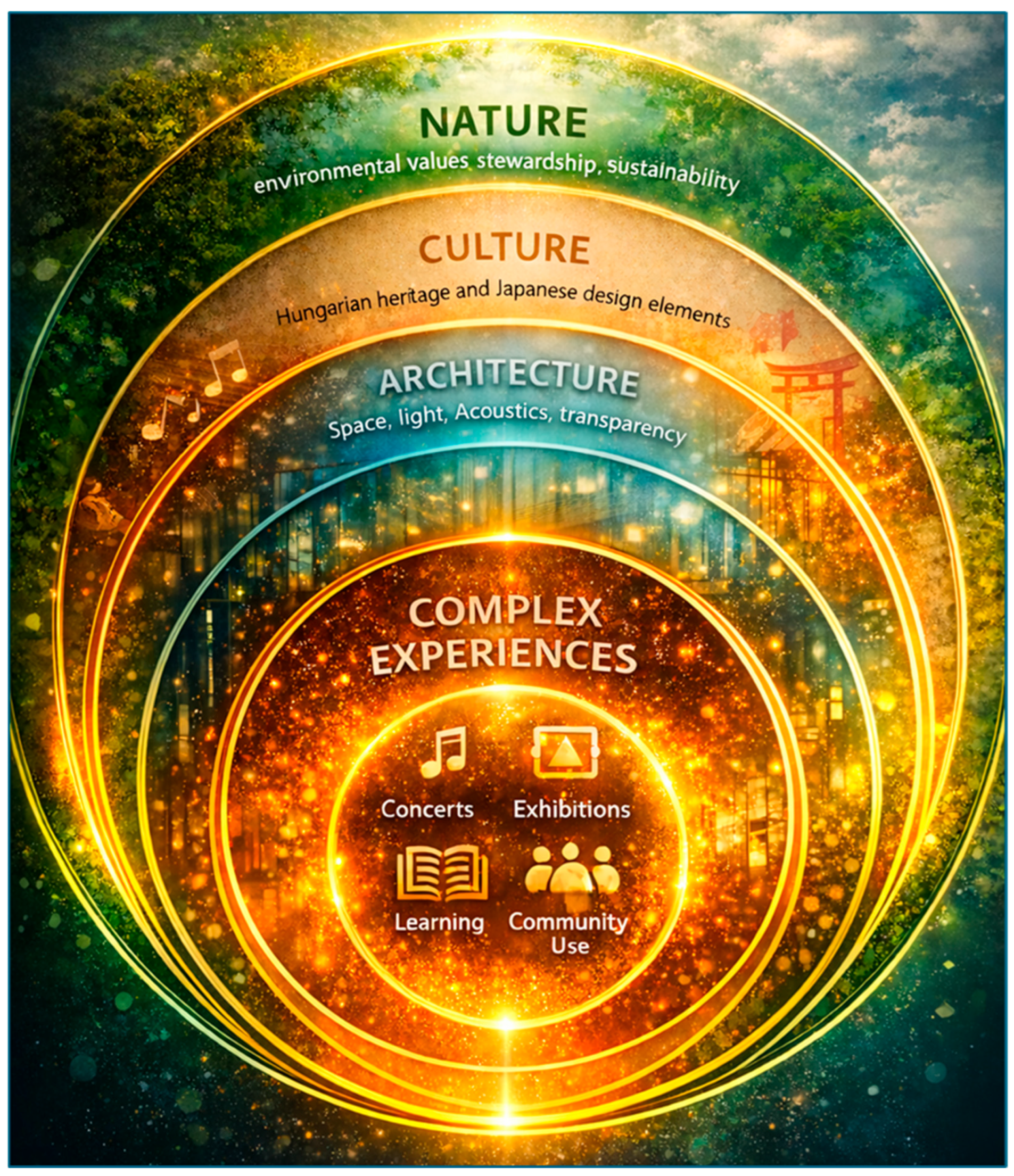
When addressing the introductory question about the relationship between nature and architecture related to cultural institutions, each of the four interviewees approached the broader topic from distinct perspectives (Table 4). This diversity of viewpoints validated the IPA research, as the purpose of choosing this analytical method was to add additional layers to the theme. Although only a small number of experts were selected, the goal was to expand the horizon and cover the widest range of issues possible without reiterating the same opinions. It was crucial to avoid revisiting the same narratives repeatedly, and due to the unstructured interviews, new subthemes emerged contributing to the framework. The kaleidoscopic framework was developed by the authors based on the analysed literature and their own empirical research. The conceptual model underlying the kaleidoscopic framework (Figure 5) was developed by the authors based on the literature and the empirical material. The visual rendering was generated with ChatGPT (version 5.2 Thinking) based on detailed author instructions, while the model structure and wording were defined by the authors.
Table 4.
Particulars of the interviews.
Research Site: The House of Music Hungary
The House of Music Hungary is part of Liget Budapest, the largest cultural revitalization in Europe, including the construction and modernization of several cultural institutions. Designed by Japanese architect Sou Fujimoto, this 9000 m2 cultural hub spreads on five levels: the two underground floors provide a space for exhibitions, the entrance level is home to performances, and the top two floors are dedicated to education. With its extensive glass walls, the building blurs the line between the indoor space and the surrounding City Park. The façade consists of 94 thermally insulated glass panels, each up to 12 metres high. The building’s most iconic architectural feature is its floating, organically corrugated roof, inspired by the vibration of sounds. On the basement level, the house features a unique, hemispherical “Sound Dome” designed to provide a fully immersive, three-dimensional auditory experience, emitted from over 30 loudspeakers, creating “hologram-like” walls of sound. The permanent exhibition titled Sound Dimensions, focusing on the history of European music is also situated there, as well as the contemporary exhibitions. The palette of programmes in the Dome is diverse, featuring everything from natural soundscapes and electronic music to light shows and sound artworks. The house hosts a range of live music events from classical to folk, pop and jazz concerts as well as exhibitions and education/learning programmes designed to create opportunities for anyone to play and experience music.
The House of Music Hungary is a multi-award-winning institution, and Table 5 lists the most prestigious prizes won between 2019 and 2025. The building was inaugurated in 2022; however, even before its opening, it drew global attention. Initially, the institution received mostly architectural prizes, but from 2024 onwards, it began to garner several music-related awards, recognising its endeavour in transmitting music through a wide range of programmes. The sheer quantity and quality of the awards prove that the House of Music Hungary is an exceptional cultural phenomenon, gaining recognition for both its design and its endeavour as a music institution.
Table 5.
Awards of the House of Music Hungary.
4. Results
4.1. Key Performance Indicators
Table 6 illustrates that the House of Music Hungary is more than just a visually impressive cultural venue. In terms of operations, the institution delivered a wide repertoire in 2024, hosting seventy-five concerts, most of which took place on-site, with a smaller yet notable online presence. This effort resulted in over fourteen thousand audience engagements, with a distinct presence of the youth segment in both dedicated events and overall attendance. The figures for subscriptions and annual passes further support the notion that demand extends beyond mere occasional interest or “one-off curiosity,” indicating a loyal audience signifying institutional maturity rather than just architectural appeal. Table 6 summarises key operational and financial indicators to show that the House of Music Hungary performs as a functioning cultural organisation beyond its architectural appeal, and it contributes to contextualising the qualitative findings.
Table 6.
Key operational and financial indicators of the House of Music Hungary (2024).
Financially, the annual report reinforces the narrative of consolidation. Net sales revenue rose from HUF 0.911 billion in 2023 to HUF 1.063 billion in 2024, reflecting an enhanced capacity for generating own-source income while fulfilling the organisation’s public-service mission. The income structure also reveals significant other income, a common feature for major public cultural institutions, which provides a stable foundation for offering high-value programming that is not always fully market-financed. Notably, the company concluded the year with a positive net result after tax of HUF 25.13 million, illustrating that the operational model can be effectively managed within available resources.
From a stability perspective, the balance sheet shows a sizeable asset base of HUF 7.151 billion and a strong cash position of HUF 2.195 billion at year-end, which together point to an institution that is not only active but also financially equipped to operate reliably. At the same time, the financing profile is characterised by high short-term liabilities, most of which are recorded as related-party short-term liabilities. In practice, this kind of structure is common in publicly embedded projects and multi-actor developments, where timing differences, project financing flows, and internal settlement mechanisms are reflected on the liability side. Taken together, the operational KPIs and the audited financial statements support a clear conclusion: the investment matured into a professionally functioning cultural institution with growing own revenues, sizeable audience demand, and a liquidity position that underpins continuity, rather than remaining a one-dimensional architectural showpiece.
4.2. Analysis of the Interviews
The two online interviews (www.archdaily.com and www.world-architects.com) and the four face-to-face unstructured interviews generated some common ground as well as some specific insights. Below are the key points related to the emerging themes complemented by the researcher’s own observations and experiences (Table 7).
Table 7.
Concept: interplay of nature, architecture, culture.
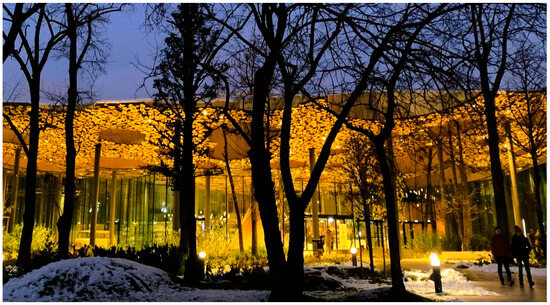
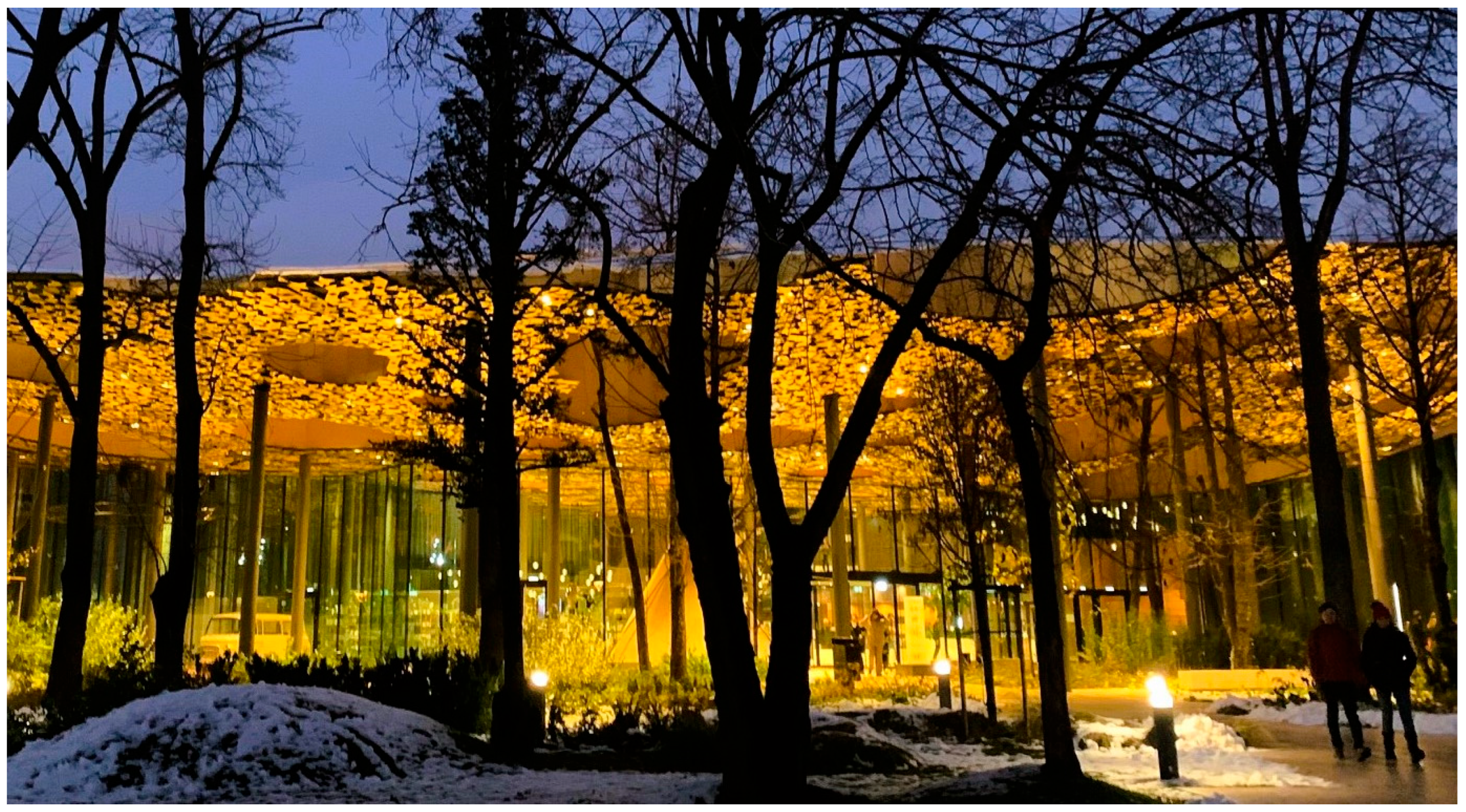
JA highlighted his philosophy in terms of blending nature and architecture, detailed some of the technical aspects in relation to lighting, and made some descriptive comments on Hungarian and Japanese cultural connections. MC approached the topic from a conceptual perspective, explaining how modern musical institutions could function as new cultural community spaces. CA and CM highlighted the organic rhythm of architectural solutions, drawing parallels to music. Meanwhile, TP considered the space an all-day attraction for a diverse range of visitors. Researchers’ photo documentations collected over the years could attest to the above observations. During the analysed period, the building and its surroundings were always full of visitors, enjoying the aesthetics of the place. Figure 2 was taken on a winter evening, showing the play of lights and the blur between inside and outside. This illustrates how transparency and the park-facing façade blur indoor–outdoor boundaries, encouraging longer dwell time and creating an aesthetic experience.
Figure 2.
The rhythm of the roof, the columns and the glass wall. Source: authors’ own.
All five interviewees highlighted two main points: the inviting space on a relatively small square footage, yet plenty of room to wander, and the wide range of programmes that the house organised (Table 8). MC contrasted it with classical venues, stating that the house has been a good fit for all music genres. It is aligned with TP’s observations, who praised the rich programme palette, yet in harmony with the space and the environment. Researchers’ numerous on-site visits to the diverse range of programmes reinforced the above arguments. CA and CM emphasised the joy of working in the establishment and the impact the building had on visitors taking part in programmes. The former highlighted the transformative experience on children; the latter underlined the inclusivity of the space, noting that people from all walks of life could enjoy it and that, through architecture, their interest in music might grow.
Table 8.
Use of space and programmes.
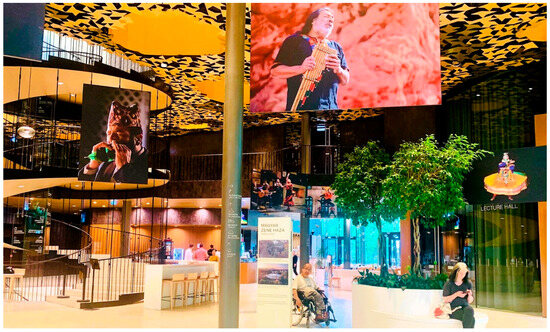
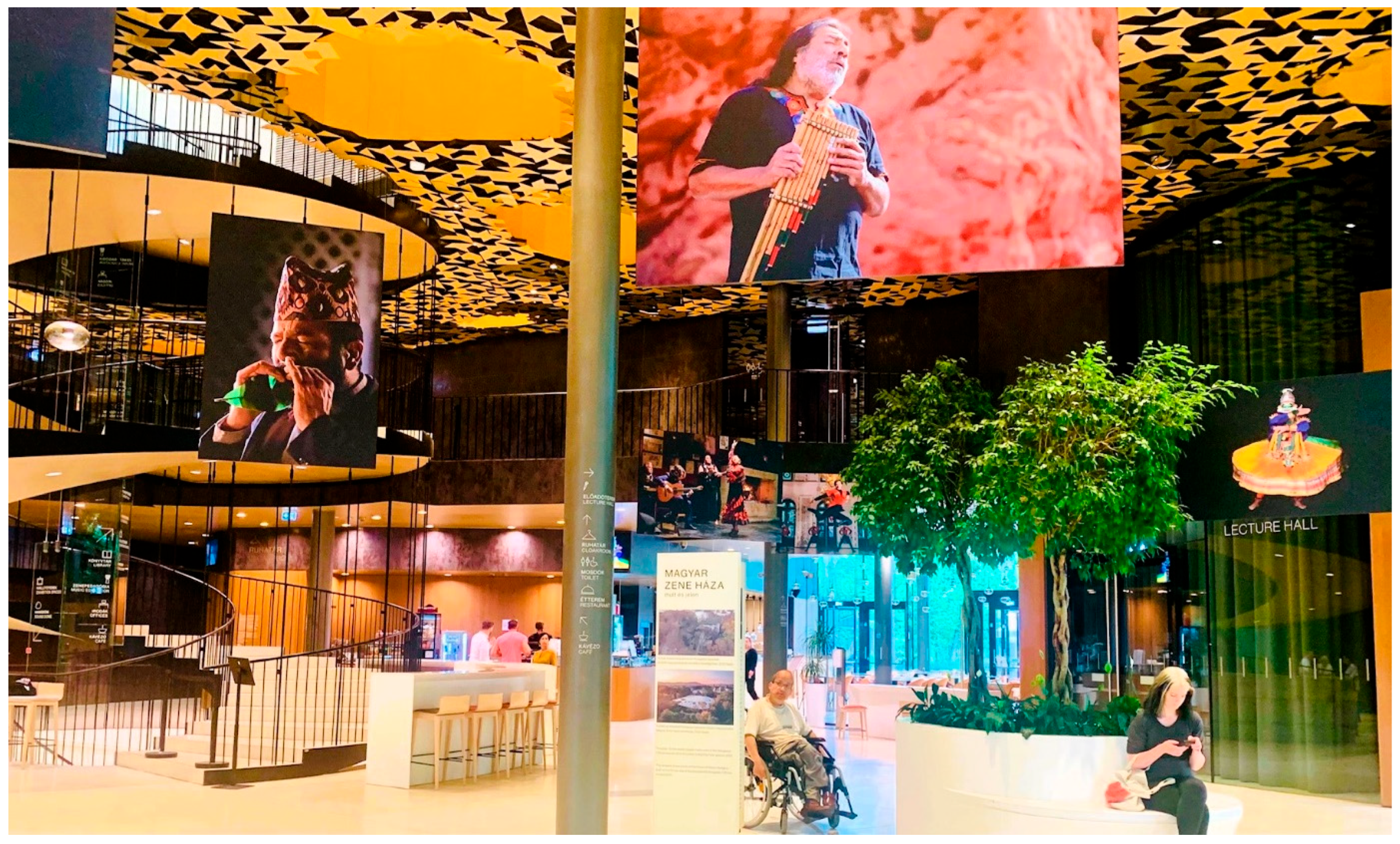
All interviewees reflected on the social aspect of the place, each with a slightly different focus (Table 9). The architect, as an outsider, was pleased to see people wandering around and being satisfied with the space. Meanwhile, MC highlighted its accessibility, noting the free entry and the long opening hours. As previously mentioned, it was open five days a week for an average of 66 h in 2024. TP, who lives nearby and frequently uses the place as a meeting point, reiterated the ambience of the café. CM emphasised the child-friendly aspect of the design, an important feature to stay relevant for future generations. The on-site visits of the author also confirmed the substantial size of regular patrons of the café and the restaurant. It is quite unusual for a cultural venue to excel in something beyond its core service. Figure 3 shows the spaciousness of the place with colourful posters hanging from above, illustrating the richness of world music.
Table 9.
Social gathering space.
Figure 3.
Spacious, inclusive social space. Source: authors’ own.
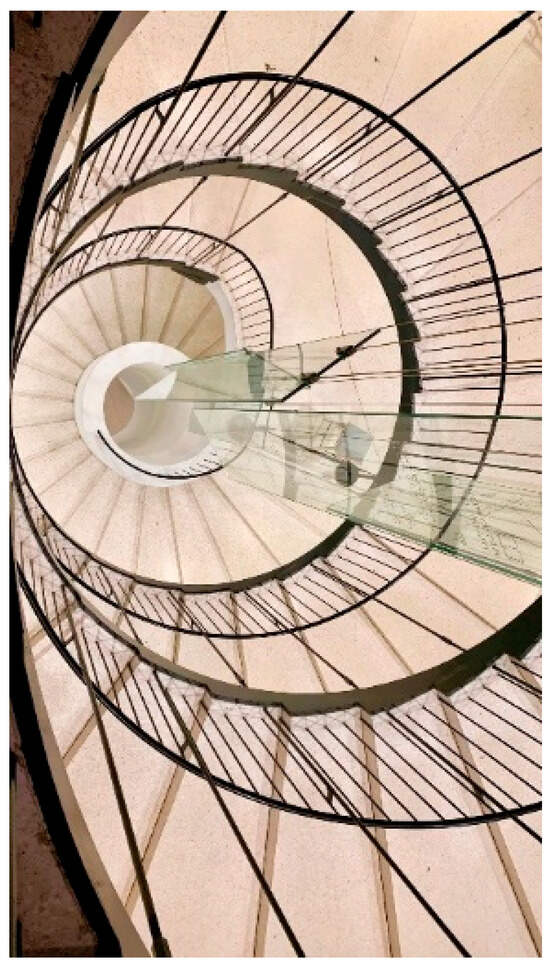
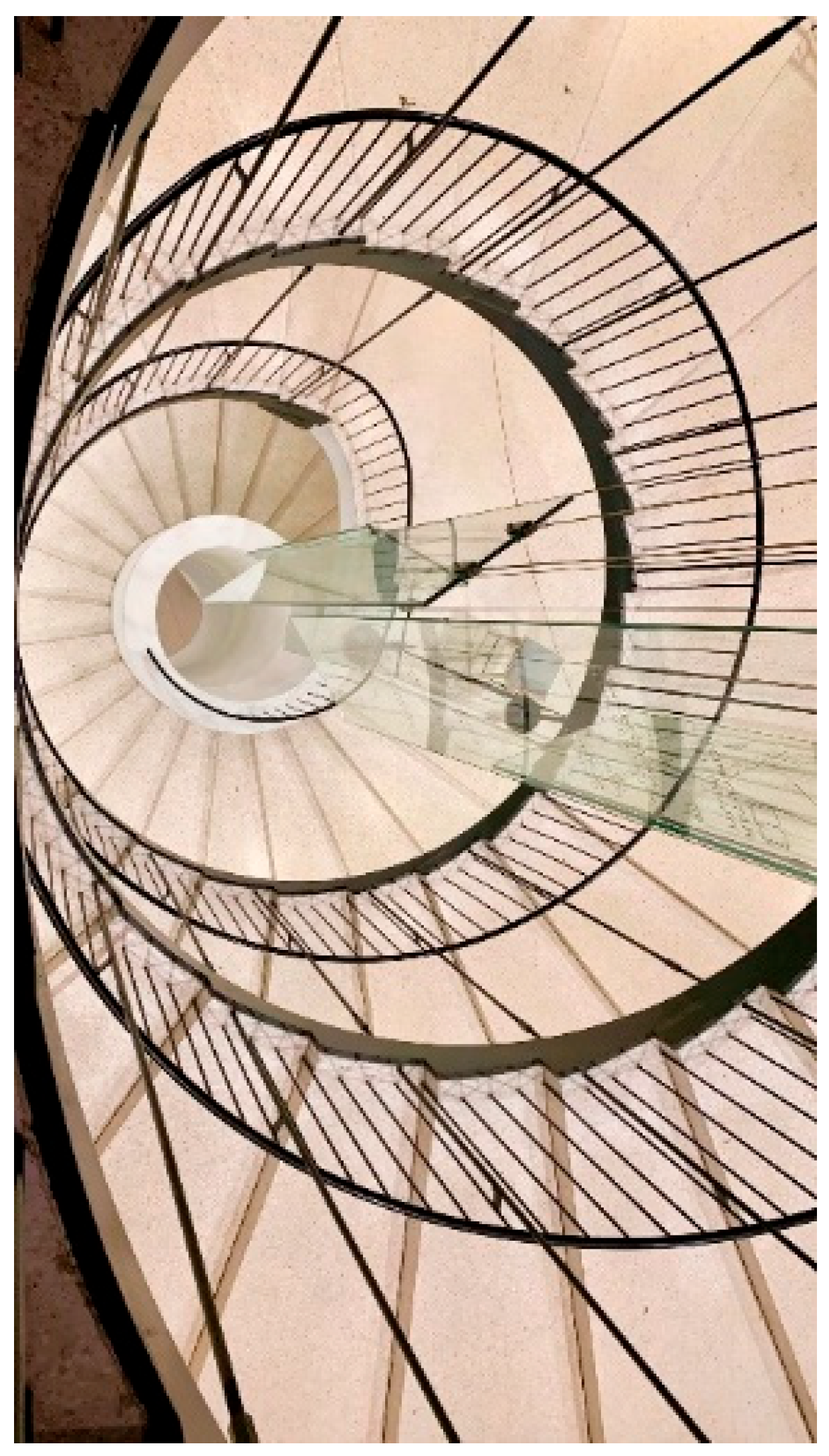
In terms of subthemes (Table 10) JA mentioned the architectural solutions as the most impressive moments and expressed joy by witnessing how people used the space. Regarding the numerous prizes the house was awarded, JA found them as a great accomplishment of all the collaborators working on the project. MC delved into the “open house” concept of cultural institutions as more people have been looking for authentic experiences. CA evoked the rhythm of life and linked it to culture and architecture, while criticising the rectangular shapes and sharp edges of many modern buildings, making it difficult for people to connect emotionally. TP put the House of Music in a wider context appreciating the whole Liget project. She emphasised the function of the Liget as a staycation destination for locals, where the buildings and structures could provide more meaningful experiences. CM referred to the healing potential of the house that may contribute to the well-being of employees and regular locals. She underlined the uniqueness of the house, unmatched in Europe. Figure 4 is an example of the organic elements installed in the House of Music, referencing the sound waves.
Table 10.
Different associatory subthemes emerging from the interview.
Figure 4.
The spiral staircase. Source: authors’ own.
5. Discussion and Conclusions
This study contributes to the understanding of how multifunctional, experience-based cultural institutions can create complex experiences for different user groups and operate across cultures. Based on repeated on-site visits and the analysis of both primary and secondary interviews, we developed a framework that links environmental setting, music, and architectural design to enhance experiences. This framing also connects the case to the experience economy by showing how architecture and music jointly foster engagement and revisit intention.
Figure 5 presents the framework for developing a contemporary cultural institution, using colours that mirror the visual experience visitors can enjoy inside and outside the building. The outer layer represents the natural setting in which the project is rooted and emphasises that environmental qualities function as both resource and constraint. In this sense, the building’s openness and transparency meet the aesthetic and escapist dimensions of the experience economy model. There is free entry to the hall, the restaurant, the café and the library, while tickets are checked only at the entrance to specific event spaces, which supports longer dwell time in the public areas.
Figure 5.
Kaleidoscopic framework. Source: authors’ conceptual model; visual rendering generated with ChatGPT (v5.2 Thinking) based on detailed author instructions.
The cultural layer merges local Hungarian heritage with global influences, in this case through a Japanese design ethos (Figure 5). Architectural solutions merge nature and culture into an experiential servicescape through space, light, acoustics, and transparency. Japanese concepts such as komorebi help us to understand how seasonal changes and filtered daylight can become part of the sense of the space (Yazawa, 2018). The natural setting, the cultural layer and the architectural interface together explain why the House of Music can sustain engagement through concerts, exhibitions, educational programmes and social activities, and encourage repeat visits rather than attracting only one-time visitors. These design choices shape visitor behaviour by encouraging people to hang around, relax and reduce fatigue. In this way, the framework integrates nature–culture–architecture to satisfy stakeholder groups (RQ2–RQ3).
Across all interviews, experience emerged as a central thread, not only for visitors but also for people who have used the House regularly. While Pine and Gilmore’s experience economy model helps interpret the venue through entertainment, education, escapism and aesthetics (Pine & Gilmore, 1998), our findings point to an additional dimension: the place functions as an everyday restorative setting for staff and locals, described by one interviewee as a “therapeutic experience.” This suggests that the House of Music Hungary creates value not only through episodic tourist consumption, but also serves as a therapeutic milieu embedded in daily urban life (Pécsek & Gyurkó, 2025).
The main challenge in this case is that the venue is both a tourist attraction and an everyday public space, so it must remain appealing while avoiding overcrowding. It should also avoid putting excessive pressure on the park, which is why experience design and long-term visitor management are central to the House of Music Hungary (RQ1–RQ3).
The kaleidoscopic framework was derived from cross-case thematic patterns identified in the expert interviews and the architect interviews, corroborated by repeated on-site observations. Despite its solid mixed methodology, this research still encounters some limitations. Building a framework from a single case may draw criticism; however, the House of Music Hungary combines exhibition, concert and education/research functions in one venue, which makes direct one-to-one comparisons difficult; therefore, we provide contextual benchmarking using secondary indicators, while keeping the primary aim interpretive and case-based. If we acknowledge that sustainable heritage tourism should move away from one-size-fits-all supply, then single-case studies remain valuable for bridging research and practice (Råbu & Binder, 2025).
The cultural relationship between East Asia and Hungary has long intrigued researchers from both regions: Japanese architects already realised several projects in Budapest while some Hungarian architects such as László Hudec and Károly Gonda designed close to 100 buildings in Shanghai in the first part of the 20th century. Future research could take this direction and explore the cultural exchange in the context of tangible heritage preservation. When it comes to music heritage, Japan, China and Hungary share a common ground in terms of music education that is also worth exploring, with the promise of finding ways to foster future cooperation in developing music tourism. Since economic, cultural and environmental sustainability are crucial for cultural developments, this framework will serve as a useful lesson for those developers who plan to create a cultural and community place with the aim of transmitting music.
Author Contributions
Conceptualization, B.P. and Á.G.; Methodology, B.P. and Á.G.; Software, B.P. and Á.G.; Validation, B.P. and Á.G.; Formal analysis, B.P. and Á.G.; Investigation, B.P. and Á.G.; Resources, B.P. and Á.G.; Data curation, B.P. and Á.G.; Writing—original draft, B.P. and Á.G.; Writing—review & editing, B.P.; Visualization, Á.G.; Supervision, B.P. All authors have read and agreed to the published version of the manuscript.
Funding
This research received no external funding.
Institutional Review Board Statement
Not applicable.
Informed Consent Statement
Not applicable.
Data Availability Statement
The data presented in this study are available on request from the corresponding author due to privacy.
Conflicts of Interest
The authors declare no conflict of interest.
References
- Abdel, H., & Brodka, C. (2023). Architecture of the future should be in harmony with nature: In conversation with Sou Fujimoto at the House of Music Hungary. ArchDaily. Available online: https://www.archdaily.com/990463/architecture-of-the-future-should-be-in-harmony-with-nature-in-conversation-with-sou-fujimoto-at-the-house-of-music-hungary (accessed on 6 April 2026).
- Abd Manaf, A., Latip, N. S. A., Ismail, N. H., Ismail, W. N. W., Ab Rashid, N. S., & Nizar, W. I. W. A. (2025). Challenges in adapting vernacular architecture to the contemporary: A systematic literature review. Semarak International Journal of Design, Built Environment and Sustainability, 3(1), 17–29. [Google Scholar] [CrossRef]
- Adhitya, S. (2017). Musical cities: Listening to urban design and planning (DGO-digital original). UCL Press. [Google Scholar] [CrossRef]
- Anthology Festival. (2021). Anthology talks: Sou Fujimoto—Between nature and architecture. YouTube. Available online: https://www.youtube.com/watch?v=iPXPm1WdaZQ (accessed on 6 April 2026).
- Asztalos, A. (2023). The spread of Zoltán Kodály’s music education principles in the world. Studia Universitatis Babes-Bolyai-Musica, 68(1), 11–27. [Google Scholar] [CrossRef]
- AW Architektur & Wohnen. (2024). Sou Fujimoto interview—Architekt des jahres 2023. YouTube. Available online: https://www.youtube.com/watch?v=9h0iOfZeh3A (accessed on 7 April 2026).
- Bertocchi, D., Camatti, N., Giove, S., & van der Borg, J. (2020). Venice and overtourism: Simulating sustainable development scenarios through a tourism carrying capacity model. Sustainability, 12(2), 512. [Google Scholar] [CrossRef]
- Bertocchi, D., Camatti, N., & van der Borg, J. (2021). Tourism peaks on the three peaks. Using big data to monitor where, when and how many visitors impact the dolomites UNESCO world heritage site. Rivista Geografica Italiana, 3, 59–81. [Google Scholar] [CrossRef]
- Bullen, P. A., & Love, P. E. D. (2011). Adaptive reuse of heritage buildings. Structural Survey, 29(5), 411–421. [Google Scholar] [CrossRef]
- Business Immo. (2024). Conversation(s): Sou Fujimoto, founder and director—Sou Fujimoto architects. YouTube. Available online: https://www.youtube.com/watch?v=fJq_nPQLa7I (accessed on 6 April 2026).
- Bustard, J. R. T., Bolan, P., Devine, A., & Hutchinson, K. (2019). The emerging smart event experience: An interpretative phenomenological analysis. Tourism Review, 74, 116–128. [Google Scholar] [CrossRef]
- Buzás, Z., & Sagrillo, D. (2019). The role of cultural heritage in 21st-century music education. Polgári Szemle: Gazdasági és Társadalmi Folyóirat, 15, 317–328. [Google Scholar] [CrossRef]
- Calvi, L., Bargeman, B., Hover, M., van Waalwijk, J., Strijbosch, W., & Mitas, O. (2024). Storytelling as a tool to design museum experiences: The case of the secret Marquise. In F. Zanella, G. Bosoni, E. Di Stefano, G. L. Iannilli, G. Matteucci, R. Messori, & R. Trocchianesi (Eds.), Multidisciplinary aspects of design (pp. 423–433). Springer. [Google Scholar] [CrossRef]
- Cao, H., Tamás, A. M., Sztranyák, G., & Zhang, E. (2022). Regeneration and sustainable development of vernacular architecture. Pollack Periodica, 17(2), 151–156. [Google Scholar] [CrossRef]
- Chang, T. C. (2010). Bungalows, mansions and shophouses: Encounters in architourism. Geoforum, 41(6), 963–971. [Google Scholar] [CrossRef]
- Cheirchanteri, G. (2021). Architecture as a product of tourism consumption. IOP Conference Series: Materials Science and Engineering, 1203, 032004. [Google Scholar] [CrossRef]
- City of Venice. (2024). Yearbook of tourism data 2024. Available online: https://www.comune.venezia.it/sites/comune.venezia.it/files/documenti/Turismo/Annuario_2024_ENG.pdf (accessed on 7 April 2026).
- Cohen, L., Manion, L., & Morrison, K. (2002). Research methods in education. Routledge. [Google Scholar]
- Denzin, N. K. (2017). The research act: A theoretical introduction to sociological methods. Routledge. [Google Scholar]
- Eustat. (2026). Euskal estatistika erakundea instituto vasco de estadística. Available online: https://en.eustat.eus/estadisticas/opt_0/id_All/temas.html#All (accessed on 6 April 2026).
- Fiorentino, F. (2023). 10 most remarkable opera houses in the world. Available online: https://www.touropia.com/opera-houses/ (accessed on 9 April 2026).
- Franklin, A. (2016). Journeys to the Guggenheim museum Bilbao: Towards a revised Bilbao effect. Annals of Tourism Research, 59, 79–92. [Google Scholar] [CrossRef]
- Ghida, B. D. (2024). Revitalizing urban spaces: Ten key lessons from the ‘Viaduc des arts’ adaptive reuse and placemaking. Frontiers of Architectural Research, 13(5), 1095–1112. [Google Scholar] [CrossRef]
- Gotham, K. F. (2007). (Re) branding the big easy: Tourism rebuilding in post-Katrina New Orleans. Urban Affairs Review, 42(6), 823–850. [Google Scholar] [CrossRef]
- Hill, J. (2025). Sou Fujimoto visits house of music Hungary. World-Architects. Available online: https://world-architects.com/en/architecture-news/film/sou-fujimoto-visits-house-of-music-hungary (accessed on 7 April 2026).
- Holl, S. (2015). Architectonics of music. Steven Holl Architects. Available online: https://www.stevenholl.com/words-page/architectonics-of-music/ (accessed on 7 April 2026).
- Ismail, N., & Kinchin, G. (2023). Construct of phenomenological analysis: Case study of interpretive phenomenological analysis (IPA). Egypt Scholars Journal, 2(1), 7–17. [Google Scholar] [CrossRef]
- Jentetics, K. (2014). The connection between music and country image—In case of Hungary. E-CONOM, 4(1), 52–65. [Google Scholar] [CrossRef]
- Kaczmarek, S. (2017). Architecture and tourism. In The sage international encyclopedia of travel and tourism (Volume 4, pp. 84–88). SAGE Publications, Inc. [Google Scholar] [CrossRef]
- Kim, J.-H., Ritchie, J. R. B., & McCormick, B. (2012). Development of a scale to measure memorable tourism experiences. Journal of Travel Research, 51(1), 12–25. [Google Scholar] [CrossRef]
- Kodály, Z. (2008a). Ki a jó zenész?—Beszéd a zeneművészeti főiskola 1953. Évi tanévzáróünnepélyén (Who is a good musician?—Speech at the 1953 closing ceremony of the college of music). In F. Bónis (Ed.), Visszatekintés I. (Retrospection I). Argumentum Kiadó. (Original work published 1953). [Google Scholar]
- Kodály, Z. (2008b). Legyen a zene mindenkié! (Music belongs to everyone!). In F. Bónis (Ed.), Visszatekintés I. (Retrospection I). Argumentum Kiadó. (Original work published 1952). [Google Scholar]
- Kodály, Z. (2008c). Százéves terv (Hundred-year plan). In F. Bónis (Ed.), Visszatekintés I. (Retrospection I). Argumentum Kiadó. (Original work published 1947). [Google Scholar]
- Latham, K. F. (2015). What is ‘the real thing’ in the museum? An interpretative phenomenological study. Museum Management and Curatorship, 30(1), 2–20. [Google Scholar] [CrossRef]
- Li, S. Y. (2023). Hungarian composers of piano music: From Liszt to Ligeti. University of Maryland, College Park. [Google Scholar]
- Liget Budapest—A megújuló Városliget. (2025). A tervezőt is lenyűgözte—Sou Fujimoto először találkozik a magyar zene házával. YouTube. Available online: https://www.youtube.com/watch?v=_SXmqd7oa-c (accessed on 7 April 2026).
- Malone, S., McCabe, S., & Smith, A. P. (2014). The role of hedonism in ethical tourism. Annals of Tourism Research, 44, 241–254. [Google Scholar] [CrossRef]
- Michael, C. (2015, April 30). The Bilbao effect: Is ‘starchitecture’ all it’s cracked up to be? A history of cities in 50 buildings, day 27. The Guardian. Available online: https://www.theguardian.com/cities/2015/apr/30/bilbao-effect-gehry-guggenheim-history-cities-50-buildings (accessed on 9 April 2026).
- Miles, M. (2013). Art and culture: The global turn. In E. Grierson, & K. Sharp (Eds.), Re-imagining the city: Art, globalization and urban spaces (pp. 3–24). Intellect. [Google Scholar]
- Moon, S. (2010). Architecture and music. Journal of Architectural Institute of Korea, 54(8), 55–57. [Google Scholar]
- Morimoto, M. (2016). Music and architecture: Notes on experiencing the convergence of music and the built environment [Doctoral dissertation, University of Hawaiʿi at Mānoa]. Available online: https://scholarspace.manoa.hawaii.edu/items/8d8f29b7-b8f5-4569-84a0-f8b8e80b6aa4 (accessed on 11 April 2026).
- Murillo Camacho, K. S., Fouseki, K., & Altamirano, H. (2023). Sustainability and energy efficiency in the world heritage site of the historic centre of Mexico City. Heritage, 6(9), 6343–6357. [Google Scholar] [CrossRef]
- Muvesz. (2022). Milyen szerepe van a zenének az építészetben és a tér tervezésében? Available online: https://muvesz.ma/milyen-szerepe-van-a-zenenek-az-epiteszetben-es-a-ter-tervezeseben (accessed on 4 April 2026).
- New 7 wonders. (n.d.). Available online: https://about.new7wonders.com/our-mission/how-did-the-new7wonders-movement-begin/ (accessed on 8 April 2026).
- Pécsek, B. (2021). The transformation of the Budapest Fiumei Road Cemetery into staycation. In A. T. Albert, É. Happ, & E. Printz-Markó (Eds.), Változó világ, változó turizmus: XI. Nemzetközi Turizmus Konferencia tanulmánykötet (pp. 323–336). Széchenyi István Egyetem. [Google Scholar]
- Pécsek, B., & Gyurkó, Á. (2025). Building resilient destinations: Spatial mapping and analysis of potential therapeutic milieus in Hungary. Tourism and Hospitality, 6(5), 226. [Google Scholar] [CrossRef]
- Pietkiewicz, I., & Smith, J. A. (2012). Praktyczny przewodnik interpretacyjnej analizy fenomenologicznej w badaniach jakościowych w psychologii. Czasopismo Psychologiczne, 18(2), 361–369. [Google Scholar]
- Pine, B. J., II, & Gilmore, J. H. (1998). Welcome to the experience economy. Harvard Business Review, 76(4), 97–105. [Google Scholar]
- Poria, Y., Butler, R., & Airey, D. (2003). The core of heritage tourism. Annals of Tourism Research, 30(1), 238–254. [Google Scholar] [CrossRef]
- Råbu, M., & Binder, P. E. (2025). The single case study is a crucial bridge between research and practice. Journal of Contemporary Psychotherapy, 55(2), 119–126. [Google Scholar] [CrossRef]
- Reid, K., Flowers, P., & Larkin, M. (2005). Exploring lived experience: An introduction to interpretative phenomenological analysis. The Psychologist, 18(1), 20–23. [Google Scholar]
- Savoie, É., Sapinski, J. P., & Laroche, A. M. (2025). Key factors for revitalising heritage buildings through adaptive reuse. Buildings & Cities, 6(1). [Google Scholar] [CrossRef]
- Scerri, M., Edwards, D., & Foley, C. (2019). Design, architecture and the value to tourism. Tourism Economics, 25(5), 695–710. [Google Scholar] [CrossRef]
- Smith, J. A., & Nizza, I. E. (2022). Essentials of interpretative phenomenological analysis. American Psychological Association. [Google Scholar] [CrossRef]
- Szymańska-Stułka, K. (2025). Topophilia—Space for human creation and interpretation. Arts, 14(5), 105. [Google Scholar] [CrossRef]
- Timothy, D. J. (2018). Making sense of heritage tourism: Research trends in a maturing field. Tourism Management Perspectives, 25, 177–180. [Google Scholar] [CrossRef]
- UNESCO. (n.d.-a). What is intangible cultural heritage? Available online: https://ich.unesco.org/en/what-is-intangible-heritage-00003 (accessed on 3 April 2026).
- UNESCO. (n.d.-b). World heritage list. Available online: https://whc.unesco.org/en/list/ (accessed on 7 April 2026).
- UNESCO. (2026). Browse the lists of intangible cultural heritage and the register of good safeguarding practices. UNESCO. Available online: https://ich.unesco.org/en/lists (accessed on 3 April 2026).
- UNWTO & UNESCO. (2018). Tourism and culture synergies. UNWTO. [Google Scholar] [CrossRef]
- Wei, W. (2022). Kodaly music teaching method develops in music education in local colleges and universities. International Journal of Education and Humanities, 5(2), 146–148. [Google Scholar] [CrossRef]
- Yazawa, Y. (2018). How to live Japanese. White Lion Publishing. [Google Scholar]
- YKK AP Inc. (2022). Window on the future. YouTube. Available online: https://www.youtube.com/watch?v=nPAxk3RwGj8 (accessed on 9 April 2026).
- Yoo, S., & Choi, J. (2021). Empirical study on perception of musically inspired architectural façades-music and architecture. Architectural Research, 23(3), 39–48. [Google Scholar]

Disclaimer/Publisher’s Note: The statements, opinions and data contained in all publications are solely those of the individual author(s) and contributor(s) and not of MDPI and/or the editor(s). MDPI and/or the editor(s) disclaim responsibility for any injury to people or property resulting from any ideas, methods, instructions or products referred to in the content. |
© 2026 by the authors. Licensee MDPI, Basel, Switzerland. This article is an open access article distributed under the terms and conditions of the Creative Commons Attribution (CC BY) license.