


Abstract
Food waste remains a persistent sustainability challenge within independent restaurants, where operational pressures, cultural norms, and resource constraints limit systematic waste management. This study examines how an industry–academia partnership enabled the co-creation of food-waste reduction practices between hospitality students and sixteen independent restaurant operators in Wellington, New Zealand. Adopting the Participatory Action Research (PAR) approach, data were gathered through semi-structured interviews with operators and focus group discussions with hospitality students. Findings reveal that food wastage in the study units is shaped by time pressure, customer service expectations, tacit kitchen routines, and uncertainty in forecasting the demand. The study identifies three mechanisms—emotional disruption, shared reflection and experimentation—through which sustainability competencies become a part in professional identity. It offers theoretical grounded and practically actionable insights for industry–academia collaboration in resource-constrained hospitality environments.
1. Introduction
Food waste remains one of the most critical global issues that carries considerable environmental, social, and economic consequences (Giacomella et al., 2025). In 2019, approximately 931 million tonnes of food were discarded across households, retail, and the food service sector, significantly contributing to greenhouse gas emissions and resource depletion (UNEP, 2024). This waste occurs in a context of ongoing food insecurity, creating a contradiction in which both abundance and scarcity coexist. In this scenario, Sustainable Development Goal (SDG) 12.3 calls for halving per capita global food waste by 2030, placing urgent pressure on food-service providers to implement more responsible practices (United Nations, 2015).
Independent restaurants play a vital role in this initiative because they often generate more unnecessary waste than larger chains, due to uneven purchasing practices, varying customer demand, insufficient storage capacity, staffing limitations, and long-standing service traditions that privilege abundance (Cárdenas et al., 2024; Singh et al., 2024). Managing food waste in small and independent restaurants has become essential for three reasons: food waste directly impacts profits; rising consumer awareness and expectations for environmental sustainability; and food waste management has become normalised in hospitality operations, as creating an efficient waste management system is essential for survival (Koiwanit & Filimonau, 2025). Previous studies also reveal that while independent restaurant owners are concerned about sustainability, they often lack the necessary resources and systematic approaches (Betz et al., 2015; Filimonau & Uddin, 2021; Mehrotra et al., 2024). As a result, they tend to rely heavily on intuition, implicit knowledge, and traditional kitchen practices that are rarely documented and translated into strategic action for sustainability (Robinson et al., 2020).
Meanwhile, there is an increasing push for hospitality educators to incorporate sustainability skills into their curricula (Aljaffal et al., 2025), equipping graduates to recognise its importance and manage practices that minimise food waste (Robinson et al., 2020; Smith & Traynor, 2025). The growing consensus is that universities and culinary institutions are not just focused on theoretical education but can also serve as partners in co-creating sustainability through genuine collaborations with the industry (Binkhorst & den Dekker, 2009; Guerra & Gonçalves, 2023). Initial findings indicate that involving students can foster new creative approaches, enhance awareness of sustainable practices, and improve operational efficiency, allowing chefs to “see again” the daily practices that lead to waste (Robinson et al., 2020; Smith & Traynor, 2025).
Despite the growing body of literature, four gaps remain. First, there is limited exploration into how independent restaurants with limited resources can adopt sustainable practices that are viable in their operations. Studies available tend to focus either on technological solutions or behavioural changes, failing to consider the contextual, relational, and embodied aspects of waste management (Dolnicar et al., 2020; Rani et al., 2024). Second, while collaborations between academia and industry are often promoted, there is a lack of empirical evidence on the dynamics of these partnerships in resource-limited contexts, the impact of students on kitchen practices, and how co-creation can lead to low-cost, culturally relevant sustainability initiatives for independent food service operators. Third, there is insufficient understanding of how experiential, practice-oriented learning frameworks—especially those involving students—can enhance engagement with sustainability issues. Fourth, the potential of low-tech, collaboratively developed solutions to reduce waste has not been thoroughly examined, even as there is growing recognition that complex technological systems may be impractical or unattainable for smaller operators. Together, these gaps point to an absence of empirical understanding of how co-created, low-tech, and context-specific initiatives and solutions can be developed using industry–academia collaborations.
To fill these gaps, this research investigates how a partnership between industry and academia, in which hospitality students collaborate with independent restaurant owners, supports efforts to reduce food waste in these establishments. Specifically, the study seeks to: (1) Analyse the motivations of operators, their current practices regarding food waste, perceived sources of waste, and operational challenges faced in independent restaurant environments; (2) Examine how the collaboration between hospitality students and independent restaurant operators influences practices aimed at reducing waste, including the implementation of practical monitoring tools and co-developed operational strategies; and (3) Explore how students’ hands-on experiences in actual kitchen settings foster sustainability learning, co-creation, and the development of professional identity. Theoretically, this study extends Kolb’s (1984) experimental learning framework by demonstrating how its four interconnected states of learning operate at the group and organisational levels when integrated into industry–academia partnerships to manage food waste in independent restaurants that lack the resources and efficient systems.
2. Review of Literature
2.1. Food Waste in the Hospitality Sector
Food waste has become a pressing concern in hospitality research due to its environmental, economic, and ethical consequences. Research indicates that restaurants are significant contributors to waste generation, influenced by their operational decisions, menu composition, portion sizing, and inadequate sustainability frameworks (Betz et al., 2015; Filimonau et al., 2021; Garcia-Revilla et al., 2022). Studies in behavioural science reveal that non-technological influences—such as culinary traditions, aesthetic standards, emotional investment, and identity in the kitchen—affect daily choices that lead to unnecessary waste (Filimonau & De Coteau, 2019; Stancu et al., 2016). These insights imply that tackling food waste in the hospitality sector demands not just technological innovations but also shifts in culture and behaviour within kitchen settings. For example, the quasi-experimental buffet study by Dolnicar et al. (2020) demonstrated a 34% decrease in plate waste through gamified nudges, resonating with key behavioural theories such as the Theory of Planned Behaviour (Ajzen, 1991), the Norm Activation Model (Schwartz, 1977), and work on nudging (Thaler & Sunstein, 2008). These theoretical frameworks highlight the importance of attitudes, perceived control, social expectations, and moral responsibility in fostering sustainable actions. Such findings are crucial for the hospitality field, where food waste is inherently linked to societal norms surrounding abundance, aesthetic presentation, emotional investment, and service identity.
Related studies acknowledge that food-waste behaviours in kitchens are influenced by implicit knowledge and established routines, making transformation challenging without community involvement (Filimonau & De Coteau, 2019). Researchers underscore the necessity for affordable, context-specific, and community-oriented approaches (Ezeanaka & Tran, 2024; Singh et al., 2024), especially for independent eateries lacking access to costly technologies. This sets the stage for investigating partnerships between education and industry as a viable method for effective waste reduction. Significantly, the evidence on the outcome of this behavioural approach is contradictory. While gamified nudges (Dolnicar et al., 2020) and visual prompts show promising results in controlled settings, their external validity and applicability to small independent restaurants are contested (Ezeanaka & Tran, 2024). This suggests that context sensitivity is more critical than the type of intervention in determining effectiveness.
2.2. Sustainable Development Goals and Hospitality Education
The United Nations Sustainable Development Goals (SDGs) emphasise the significance of incorporating sustainability competencies into educational programmes (United Nations, 2015). SDGs that are particularly relevant to the hospitality industry—like Zero Hunger (SDG 2), Good Health and Well-being (SDG 3), Responsible Consumption and Production (SDG 12), and Climate Action (SDG 13)—underscore the sector’s responsibility to support sustainable consumption practices. Therefore, embedding SDGs within experiential hospitality education serves a dual purpose: it enhances students’ capabilities while also providing industry partners with new insights, practical solutions, and support for sustainability.
Hospitality education has progressively adapted by encouraging systems thinking, reflective practice, and the development of sustainability-oriented skills (Douglas et al., 2024; Hattie & Donoghue, 2021). However, empirical evidence on the actual impact of experiential learning on sustainability-related behaviours in hospitality remains limited. For example, Douglas et al. (2024) found improvements in self-reported environmental attitudes but noted that the behavioural change beyond self-report was difficult to establish. Similarly, Rani et al. (2024) identified knowledge as necessary but insufficient for behaviour change and understood the need for a practice-oriented approach rather than a classroom-only approach. Moreover, conventional curricula often remain focused on operational aspects (Robinson et al., 2020), with insufficient attention on the real-world sustainability challenges encountered by small and independent operators. Experiential learning models help fill this gap by enabling students to engage directly with industry on genuine issues. Experience-oriented pedagogies, particularly Kolb’s (1984) Experiential Learning Theory, offer an alternative that positions students as active co-creators of knowledge. Kolb’s cycle—concrete experience, reflective observation, abstract conceptualisation, and active experimentation—closely aligns with kitchen-based sustainability projects, in which students apply their learning through hands-on activities. These immersive methods generate fresh insights and practical solutions while also offering restaurants assistance in sustainability efforts.
2.3. Academia–Industry Collaboration for Sustainability
Collaboration between institutions of higher education and the industry takes multiple forms. At the least intensive end, consultancy-based collaboration involves an academic team advising industry clients. Placement-based collaboration integrates students into a real operational environment; a more reciprocal form involves joint problem identification, design, and development of solutions, and shared ownership of outcomes (Binkhorst & den Dekker, 2009). Such collaborations facilitate knowledge exchange, collaborative problem-solving, and the testing of interventions tailored to specific contexts. In hospitality, partnerships between academia and industry have been demonstrated to improve sustainability outcomes by merging research expertise with practical experience (Perkmann et al., 2013). Students can act as catalysts for experimentation and reflective practice, bringing fresh insights, additional labour, and a willingness to embrace innovation. However, existing hospitality sustainability research predominantly addresses the first two forms, while co-creation-based collaboration in the resource-constrained hospitality context remains substantially under-examined (Aljaffal et al., 2025).
Recent instances illustrate the benefits of structured partnerships in reducing waste, using resources more efficiently, and promoting the adoption of sustainable practices. At Arizona State University (2024), students worked together with the Fairmont Scottsdale Princess Hotel to evaluate operations, enhance inventory management, implement portion-control strategies, and suggest composting methods. Similarly, Oxford Brookes University’s (2023) “Love Student Leftovers” initiative showcased how behavioural models and collaboration between students and the industry can minimise waste and transform organisational culture. To theorise the mechanism by which collective experience generates sustainability competence, this study draws on two complementary frameworks along with Kolb’s (1984) experiential learning cycle. While Wenger’s (1998) communities of practice explain how shared participation in kitchen routines creates collective meaning around waste management, Mezirow’s (1991) translative learning provides the theoretical account of how identity changes enable sustainability, as an external compliance with internalised self-responsibility. It should be noted, however, that both examples are drawn from institutional reports rather than peer-reviewed empirical research, limiting their applicability in other hospitality business contexts. Neither of these reports provides empirical evidence of sustained behavioural change, waste management outcomes, or the mechanisms driving student and operator learning. These gaps inspire the current study.
3. Materials and Methods
3.1. Research Design
This research employed Participatory Action Research (PAR) design grounded in pragmatist philosophy. PAR was selected because it enables collaborative knowledge creation between researchers and practitioners, with the objective of producing positive change or actionable solutions to real-world problems (Walker, 1993). This approach aligns with our objective of co-creating sustainable waste management practices with independent restaurant operators through student engagement.
The integration of Participatory Action Research (PAR), Kolb’s experiential learning cycle, and co-creation theory provides a coherent conceptual foundation for this study. PAR serves as the overarching methodological approach, involving researchers and participants collaborating to understand and solve food waste management issues through an iterative cycle of diagnosing, planning, action, observation, and reflection (Kemmis & McTaggart, 2005). Kolb’s experiential learning cycle provides a theoretical lens for understanding and explaining how learners engage in concrete experiences, reflective observation, abstract conceptualisation, and active experimentation (Kolb, 1984), stages mirrored in the experiential process of restaurant collaborations. Co-creation theory complements these frameworks by explaining how value emerges through collaboration (Binkhorst & den Dekker, 2009). In this context, students and industry practitioners jointly contribute to food waste management. Together, these frameworks create a robust conceptual foundation. The cyclical PAR process is presented in Figure 1.
Figure 1.
The flow of the participatory action research process adopted in the study (Source: Authors’ own).
3.2. Research Setting
The research was conducted across 16 independent restaurants located in Wellington, New Zealand, over one academic semester. Consistent with the PAR, purposive sampling was used to identify independently owned restaurants and hospitality operators who demonstrated interest in reducing food waste and were willing to engage in a multi-week experiential collaboration with student researchers. Snowball sampling further supported participant recruitment (Patton, 2002) by allowing initial participants to refer peers facing similar sustainability challenges within their professional networks. The study focused on venues that satisfied four criteria: (1) they functioned as standalone restaurants not linked to any hotel or restaurant group, (2) the establishments had staff responsible for tasks related to food procurement, kitchen operations, and waste management, (3) there was a willingness to engage in collaboration with students, and (4) the venues had to complete one full cycle of PAR activities. A total of 17 restaurants met these conditions and participated in the research, providing valuable perspectives from owners, head chefs, sous chefs, managers, and other personnel deeply involved in food service processes. One potential service provider initially showed interest but withdrew before data collection, resulting in their exclusion from the study. The demographic profile of the participants is presented in Table 1.
Table 1.
Demographic Profile of the restaurant operators.
Final-year students from the institution where the first author was employed were invited to participate based on their existing internship placements or part-time employment in independent restaurants. The roles of students in restaurants during the project have been specified as kitchen assistants and service staff, based on their operational areas. Out of the 35 students in the group, 21 showed interest, as they were either working in or had strong ties to independent restaurant operations. Before the project began, a half-day orientation session was held to offer a summary of the study’s goals, explain the students’ roles, outline fundamental observational and recording techniques, and discuss ethical considerations pertinent to research involvement in the industry. Moreover, a lecture session on compliance with the New Zealand Food Act 2014 was conducted, despite their prior theoretical exposure to food safety standards. A structured briefing document was distributed to all participating students, covering key observations of behavioural actions, data recording templates, and a summary of ethical responsibilities. A faculty supervisor remained available throughout the semester, in both online and offline modes, to check weekly progress, provide guidance, and clarify any challenges associated with the process, thereby ensuring the completeness and consistency of the data available to student participants. During the collaboration, when students and staff engaged in food handling and repurposing, they were instructed to mandatorily adhere to the Food Safety Standards administered by the New Zealand Food Safety Authority (MPI).
3.3. Data Collection
All participants were provided with an information sheet detailing the study’s aims, procedures, and their rights, including the option to participate voluntarily and to withdraw without repercussions. The Wellington context was deliberately selected as the study location, given a wide range of restaurants serving different cuisines and a strong relationship between Le Cordon Bleu and local food service operators. This choice facilitated access and trust-building among collaborators, which is essential to conducting PAR. Written and verbal informed consent was obtained before data collection. Confidentiality was upheld through the use of pseudonyms and the elimination of identifiable information. Results are shared using composite descriptions to maintain anonymity while reflecting common themes among participants (Tracy, 2010).
A qualitative, multi-source methodology was utilised. The primary data was collected through semi-structured interviews with restaurant owners and managers. Additionally, two focus group discussions were held with participating students after they completed their placements. In total, about 21 students participated, with approximately 7 individuals in each group. Each session lasted from 20 to 45 min. The discussions examined students’ experiential learning processes (Krueger & Casey, 2015), their reflections on food waste practices in operations, their emotional reactions to real-world involvement, and their experiences collaborating with restaurant operators to devise practical solutions. The questions for the focus group discussion with students are presented in Table 2. Moreover, student project reports, workshop outcomes, and menu redesign documents, were collected with participants’ consent to gain contextual understanding and facilitate data triangulation (Denzin, 1978). Data collection for the study continued until data saturation was reached, specifically after 12 operators, as evidenced by the recurrence of responses in a consistent pattern across interviews. This approach to saturation is consistent with recommendations for purposive sampling (Guest et al., 2006).
Table 2.
Questions for focus group interviews with students.
The semi-structured interviews with restaurant operators, primarily conducted in English, lasted 30–60 min, were audio-recorded with consent, and transcribed verbatim. The interview guide consisted of open-ended questions focusing on participants’ food-waste management practices, motivations and operational obstacles, experiences with academic–industry collaboration, and receptiveness to student-developed interventions. The entire interview guide is shown in Table 3.
Table 3.
Questions for semi-structured interview with restaurant operators.
3.4. Data Analysis
The data were examined using Braun and Clarke’s (2006) six-phase reflexive thematic analysis, which included familiarisation, coding, theme development, review, definition, and final reporting. The open coding of all interviews produced 87 codes, which were subsequently clustered into subthemes and later into six overarching themes. NVivo (V.8) was used to organise, code, store, and retrieve the coded segments of transcripts. Consistent with a reflective and interpretive orientation, all coding-related decisions are researcher-driven rather than relying on any other tools. Inductive line-by-line coding was employed to capture depth and context, aligning with the study’s exploratory and participatory approach. Guided by PAR, the analysis highlighted co-production, reflection, and iterative learning between academic and industry partners. Data from interviews with sixteen independent restaurants were analysed to uncover key trends in food waste management, sustainability practices, and partnership experiences. Two researchers initially coded the data independently, after which they compared and refined the codes and themes through discussion. A third researcher reviewed the consolidated framework to ensure its coherence.
3.5. Researcher Position and Reflexivity
The research team comprised academic specialists and industry professionals focused on hospitality management, sustainability, and partnership development. The primary researcher, with over a decade of experience in hospitality education and sustainability initiatives, maintained reflexive memos to track assumptions and the potential influence of their dual role as educator and researcher. For example, recognising that students might feel social pressure to report positive experiences when interacting with their own faculty, all research interactions with students were explicitly separated from formal assessments. Similarly, the focus group discussion was facilitated by a researcher not involved in students’ academic assessment. The researcher from the cross-sectional collaboration across contexts also provided external validation, allowing colleagues unfamiliar with the New Zealand hospitality context. All participants provided written informed consent, and pseudonyms (R1–R16) were assigned to protect their confidentiality. All transcripts were anonymised and securely stored on encrypted institutional servers. Ethical clearance for the research was granted by the Institutional Research Ethics Committee of Le Cordon Bleu, Wellington, New Zealand (#LCB 001).
3.6. Trustworthiness in Qualitative Research
The research adhered to the trustworthiness criteria set by Lincoln and Guba (1985), focusing on credibility, dependability, confirmability, and transferability. To enhance credibility, the researchers engaged with hospitality operators over several cycles of participatory action research (PAR), enabling them to build rapport, grasp the context, and validate their interpretations. The validity of the study was improved by triangulating interviews with workshop content, operational documents, and other relevant materials. Extensive participant quotations helped to bolster authenticity (Adler, 2022). Transferability was facilitated by maintaining a comprehensive audit trail that detailed sampling choices, interview processes, coding methods, and analytic rationale, as well as providing rich descriptions of the participating venues and their sustainability issues. Confirmability was upheld through reflective journaling and discussions with peers. Reporting adhered to Consolidated Criteria for Reporting Qualitative Research (COREQ) guidelines (Tong et al., 2007) to ensure rigour and transparency. The description of detailed study design, sampling strategy, role of researcher, reflexivity, coding and trustworthiness narrated in the method section supported to achieve the guidelines.
4. Results and Discussion
The analysis was inductive and reflexive, drawing on in-depth interviews with sixteen independent restaurant operators. Themes emerged directly from participants’ accounts of everyday practice rather than from predefined theoretical categories. Interviews focused on three interrelated areas: (1) motivations, operational challenges, current food-waste practices and operators’ perspective of use of technology; (2) service provider’s experiences of collaboration with hospitality students and academic institutions; and (3) students’ experiences through the lens Kolb’s learning cycles. This structure enabled participants to articulate how food-waste practices evolved over time and in response to collaboration.
4.1. Motivations, Current Practices, Causes of Waste, and Operational Challenges
4.1.1. Motivation Driving Waste-Reduction Efforts
For several participants, economic rationality provided the initial impetus. R1 stated plainly, “Our main focus for controlling food waste starts with procurement—if you buy smarter, you waste less and save more”. This instrumental logic aligns with Betz et al. (2015), who argue that sustainability-related outcomes mostly align with economic rationality, reconciling profitability with responsible practice. Waste reduction was viewed not as environmental activism but as a matter of business survival, a pragmatic response to the tight profit margins faced by independent restaurants. Yet, as discussions progressed, participants described how these economic motives deepened into more meaningful reflections. R15 captured this shift with notable philosophical insight, stating that “I tell my team every day to handle food as if it were gold. You have no idea what went into growing a single tomato: farmers’ efforts, water, and manure. When you throw it away, you throw away someone’s story, and if we keep that in mind, we automatically waste less”. The statement demonstrates that sustainability extends beyond environmental needs, creating a moral responsibility that recognises human effort and the use of natural resources. The tomato transcends its commodity status to become a testament to the action of a fellow human being deserving respect. Recent literature confirms that emotional involvement is essential for changing attitudes and behaviour towards sustainability (Douglas et al., 2024; Camilleri-Fenech et al., 2020).
Moreover, participants explicitly connected waste reduction to professional identity and occupational pride. R15 further reflected, “Nothing leaves the kitchen untouched twice; we look at everything as potential mise-en-place—ingredients prepared and repurposed for later service”. This approach frames waste reduction not as a constraint but as a challenge, turning limitations into innovation. For a few chefs, minimising waste became a unique competence, an indicator of skill, imagination, and professional integrity. Pearson (2024) suggests that the creative use of surplus aligns with best-practice guidelines that emphasise storytelling and awareness of resource scarcity. Customer expectations emerged as a more ambiguous motivational factor. While some participants felt customer values aligned with their sustainability efforts, others experienced anxiety. R1 noted, “If the plate isn’t full, they feel cheated. When we reduced portions last year, complaints tripled”. This external pressure complicates waste-reduction efforts, leaving operators torn between ethical commitments and commercial demands.
Stancu et al. (2016) likewise note that consumer norms around generosity and value remain strong drivers of food waste. Still, several participants described managing these expectations through communication. A chef at R7 explained, “We started telling guests that our smaller plates are part of our zero-waste philosophy. Surprisingly, people respect that. They see it as craft, not cutting corners”. This shift turned a potential complaint into a point of pride, showing how storytelling can reshape customer perceptions and align values with practice. The analysis suggested that participants had multiple reasons for waste reduction, including cost savings, ethical considerations, and customer demands, but these reasons could not be classified into simple categories. These reflections on motivation towards food waste represented an amalgam of economic, moral, and professional pride (Garcia-Revilla et al., 2022). It is important to note that these motivations were not common across all participants. For several restaurants, sustainability remained primarily an economic concern rather than an ethical commitment. Moreover, customers complaints about portion size and high turnover of employees and subsequent training cost continued as challenge for their efforts to waste reduction. This indicates that while motivations for sustainability can developed over time, they remain on context, commercial pressure and ongoing support.
4.1.2. Perceived Causes of Food Waste
Participants described food waste as emerging from the interaction between operational pressures, kitchen culture, service models, and workforce dynamics, rather than from a lack of awareness or intent. Time pressure and service intensity were repeatedly identified as primary contributors. As R14 explained, “Waste arises from haste and careless handling; the faster the service, the less you see what’s in front of you”. During peak service, speed and accuracy were prioritised, often at the expense of careful ingredient use—an issue particularly affecting junior staff who struggled to balance pace with precision. Kitchen culture and hierarchy further shaped waste outcomes. Fear of criticism discouraged disclosure of mistakes, leading to avoidable disposal. As R8 noted, “Old-school chefs still fear being told off when mistakes happen, so they’d rather bin something than admit they overcooked it”.
This culture of silence not only generated waste but also limited learning opportunities, reinforcing findings that a lack of empowerment constrains waste-reduction efforts (Dolnicar et al., 2020). Service format and customer expectations intensified waste generation. Buffet-style operations faced structural uncertainty, where abundance signalled value. R9 observed, “If a tray looks half-empty, guests think we’re stingy… hospitality means never saying we’ve run out”. To avoid perceived scarcity, food was routinely overproduced, resulting in end-of-service waste, consistent with prior research on abundance norms in hospitality (Papargyropoulou et al., 2014). Moreover, it aligns with the findings of Camilleri-Fenech et al. (2020) that there is a positive relationship between portion size and food waste. Demand forecasting challenges compounded these pressures. Several participants described difficulty predicting covers due to weather, events, and irregular demand, leading to precautionary over-preparation. Supplier constraints further limit flexibility, as minimum order quantities often exceed immediate needs, particularly disadvantaging small operators with limited storage and bargaining power.
4.1.3. Current Food Waste Management Practices
In response to these challenges, participants described food waste management as embedded in everyday operational discipline rather than framed as a formal sustainability initiative. Preventive practices were prioritised upstream. R1 explained, “We keep our menu small and seasonal, which helps with waste control,” while R8 added, “Each chef is responsible for their own mise-en-place.” This decentralised accountability fostered individual ownership over waste outcomes. Daily routine practices played a critical role in sustaining awareness. As R13 explained, “we use colour-coded containers to separate what can go to staff meals, what can be used for specials, and what goes to compost. It helps everyone see the difference instead of just throwing things away.” By making surplus visible and categorised, these simple visual practices embedded waste awareness into routine workflows. Across participants, waste reduction was framed not merely as a cost-saving exercise, but as an indicator of professional competence and culinary creativity, emphasised within everyday kitchen routines. Mentorship practices further embedded waste consciousness into kitchen culture. At R12, mistakes were reframed as learning moments: “When the apprentice over-trimmed herbs, the sous chef showed how to pickle the stems instead of throwing them away.” Such informal pedagogies reflect tacit operational knowledge developed through practice and shared experimentation rather than formal training (Robinson et al., 2020).
Overall, participants demonstrated that food waste reduction in independent restaurants is driven by the balance between operational constraints and daily routines. Waste was not treated as an isolated sustainability problem, but as an everyday operational efficiency managed through experience, visual cues, shared responsibility, and incremental adjustment rather than formalised systems.
4.2. Collaboration Experiences, Expectations, and Learnings
4.2.1. Prior Collaboration Experiences with Hospitality Students
In discussing collaboration with hospitality schools, participants fell into two categories: those who had worked with students before and those who were open to the idea but lacked prior experience. This divide illustrated both the value already experienced and the opportunities still unrealised. Those with prior engagement emphasised that students contributed new perspectives rather than just extra hands. As R4 reflected, “Students helped us rethink our prep process”. This testimony captures Kolb’s (1984) experiential learning cycle—experience, reflection, and conceptualisation as a collective process rather than an individual effort. Learning becomes an interaction, not just a transaction; knowledge is shared in multiple directions simultaneously.
Emerging research shows that students working in commercial kitchens can enhance sustainability and reduce waste (Smith & Traynor, 2025), which aligns with participants’ firsthand experiences. Many chefs described students as intellectual and emotional catalysts who turned the kitchen into a learning space. As R7 recalled, “They were motivated, respectful, but not afraid to ask questions. One of them asked why we always plate with a garnish that half of our guests push aside. It started a big conversation about purpose, presentation, and waste. Within a week, we redesigned three dishes. It was a discomfort, but for a good reason.” The pattern follows Binkhorst and den Dekker (2009), who describe co-creation as a process in which innovation develops through collaborative work among actors who bring diverse types of experience to the table.
Research indicates that team-based learning methods help organisations achieve better operational performance while integrating sustainability into their hospitality operations (Guerra & Gonçalves, 2023). The organisation now accepts new approaches because it has achieved both waste reduction and organisational flexibility. Collaboration between students and operators also made sustainability an individual’s effort, translating an abstract idea into something tangible. R12 noted, “It’s easy to talk about waste when it’s someone else’s problem, but when students are there weighing peelings and counting portions, it becomes personal. They bring accountability without pressure.” Reflection became a shared activity within what Robinson et al. (2020) call real learning worlds—spaces where theory meets practice. The practice of weighing waste developed into a symbolic practice that transformed sustainability from empty words into a matter of personal ethical responsibility. Research on experiential learning indicates that people develop stronger environmental attitudes when they experience things directly and emotionally (Douglas et al., 2024).
Some of the most touching stories demonstrated how collaboration helped operators reconnect with their sense of purpose. R15 shared a powerful example: “On her last day (a student), she said she finally understood the journey from delivery to the plate. That moment stayed with us—it reminded me why I became a chef in the first place”. The process of co-creation enables people to develop empathy, which leads them to become more morally responsible. The partnership between these organisations upholds SDG 17 (Partnerships) and SDG 12 (Responsible Consumption) by demonstrating their collective responsibility to protect resources. The research by Binkhorst and den Dekker (2009) shows that collective participation between users and organisations leads to increased ethical and behavioural orientation towards sustainability.
Collaboration often yielded simple innovations that benefited both students and the service providers. R2 recounted, “Students worked with us on surplus bread we’d been throwing out kilos every week. They turned it into breadcrumbs and even a dessert crumble. The result was so popular that now we bake extra just for that dish. What started as a waste fix became a new product.” This example reflects Mehrotra et al.’s (2024) concept of agile sustainability, where small experiments evolve into larger solutions. The teaching–learning process became a space where creativity and responsibility merged: surplus bread, once viewed as waste, was reimagined as a signature item, turning a problem into an opportunity. Such collaboration offered reciprocal benefits—operators reconsidered routine practices and found sustainability more practical and meaningful, while students learned alongside chefs in a shared environment of innovation. Theoretically, this transformation reflects what Star and Griesemer (1989) described as boundary objects or artefacts (in this case, the surplus bread products) that functioned as a boundary object connecting the students’ knowledge on sustainability, ability to low cost tool and service providers’ commercial interests, enabling a change that neither students nor restaurants could have achieved independently. Their small joint experiments illustrate how collective effort can transform everyday challenges into valuable, sustainable solutions.
Challenges and Tensions in Collaboration
Not all aspects of student-operator collaboration are without any challenges and tensions. R5 noted that students’ academic schedule did not consistently align with the busy service period, limiting the depth of operational experience. R1 expressed concern over the additional supervisory burden placed on kitchen staff, noting that “having to explain the process to students during regular work, which hinders our service”. A few students during the second focus group discussion reported the kitchen staff’s initial hesitation. These challenges were resolved through explicit communication on the role of students and the purpose of the collaboration. However, these structural barriers need to be addressed in future collaborations.
4.2.2. Operator’s Expectations and Desired Support from Hospitality Schools
Participants described clear expectations for how hospitality schools could better support small businesses in becoming more sustainable. For many, the central issue was the lack of practical, easy-to-use tools tailored to small operations. As R1 explained, “We hear a lot about government targets and sustainability goals, but no one gives us tools that actually work for small places like ours… It’s not the will that’s missing, it’s the bridge.” This sentiment reflects broader findings that small, independent restaurants need operationally feasible, low-tech interventions rather than abstract policy guidance (Ezeanaka & Tran, 2024; Filimonau et al., 2024). Operators’ desire for simple tracking templates and training resources aligns with research showing that actionable tools increase the likelihood of sustained behavioural change in resource-constrained settings (Dolnicar et al., 2020). Others emphasised the need for continuous rather than occasional support. R13 proposed a mentorship-style partnership in which faculty or graduate students periodically visit kitchens to “help solve problems, give feedback, and celebrate small wins.” Such preferences echo existing evidence that sustained engagement is critical for embedding sustainable habits and building organisational capacity (Mehrotra et al., 2024). Short-term student placements were viewed as insufficient for establishing trust or demonstrating measurable change—an issue well documented in hospitality education literature (Perkmann et al., 2013).
Training for existing staff also emerged as a significant need. As R8 noted, “operators often lacked the time and expertise to train their teams”, highlighting the value of short, practical workshops delivered by schools. This reinforces calls in the literature for hospitality education to extend beyond student training and support lifelong learning for industry professionals (Douglas et al., 2024). Participants envisioned hospitality schools as knowledge intermediaries capable of translating sustainability principles into context-specific practice (Binkhorst & den Dekker, 2009). Underlying all expectations was a desire for equitable partnerships. As R14 expressed, “We don’t need lectures or new rules. We just need a bit of help to keep doing what we already believe in.” The research draws on the co-creation literature, which demonstrates that academic-industry partnerships succeed through equal respect between partners, their ability to make decisions together, and their mutual understanding of common challenges (Guerra & Gonçalves, 2023).
4.2.3. Technology Use and Willingness to Adopt Student-Designed Digital Tools
Most restaurants relied on simple tools to monitor food waste rather than advanced digital systems; only one participant used proprietary software. R3 illustrated the most structured digital approach: “We log waste in our system every night… Every Friday, we sit down with the staff and review the numbers… It has become a kind of kitchen diary.” This routine created a feedback loop that fostered gradual behavioural change. Such practices reflect the principle of smart sustainability in which digital tools enhance awareness rather than dominate operations (Poullas & Kakoulli, 2023). The weekly reflection meeting mirrors findings that visible data prompts self-regulation and team learning, similar to the effects of AI-enabled behavioural nudges (Clark et al., 2025).
In contrast, most participants employed low-tech tools that fit naturally into their workflow. As R1 noted, “We use a spreadsheet; it works,” and R2 added, “Our technology is a whiteboard and a pen.” These accounts support Mehrotra et al.’s (2024) concept of agile sustainability, where flexible, context-specific tools outperform complex systems in resource-constrained environments. This aligns with Singh et al. (2024) who suggested that low tech methods often generate stronger adoption because they require minimal training and align better with daily routines. Simplicity also encouraged collective responsibility. R7 described this transition: “We first introduced the spreadsheet, no one cared. Then we printed it and pinned it to the prep table… Now everyone writes on it… It made the invisible visible.” This shift exemplifies how making information public activates experiential learning, where action and reflection reinforce each other (Kolb, 1984). Studies similarly show that basic visual cues can drive behavioural change comparable to digital IoT systems when integrated into routine tasks (Mehta, 2024).
Technology also served important social functions. As R13 explained, “We created a WhatsApp group where the team shares ideas for using surplus ingredients. Sometimes someone posts a photo of a dish made from leftovers, and it sparks new ideas for the menu.” This digital interaction extended waste management beyond monitoring and into collective creativity. It reflects Binkhorst and den Dekker’s (2009) notion of co-creation, where shared participation generates new ideas and strengthens cultural engagement around sustainability.
Many operators relied on combinations of different tools—handwritten notes, photos, and simple apps reflecting pragmatic adaptation rather than technological limitation. Those who abandoned advanced tools explained that the problem was not their capability but poor alignment with daily workflows, echoing research showing that technology fails when it does not integrate into routine practices (Filimonau et al., 2024). Ultimately, participants stressed that data mattered only when it drove action. As R8 noted, weighing trimmings and writing the number on the fridge created “motivation and a sense of pride,” making sustainability tangible in everyday work. These accounts show that behavioural change, rather than going for complex digital tools, is often the most effective driver of sustainable practice and supports micro-level progress toward SDG 12. Table 4 Summarises four illustrative tools co-developed by the students across participating study units, along with the self-reported outcomes.
Table 4.
Illustrative student codeveloped tools and operator-reported impact.
4.3. Students’ Experiences Through the Lens of Kolb’s Experiential Learning Cycle
Focus group discussions indicated that collaboration with independent restaurant operators provided students with a sustained, practice-based learning experience. Students’ accounts revealed learning as a dynamic process shaped by repeated engagement with real-world operations, structured reflection, conceptual sense-making, and experimentation. Rather than unfolding in discrete stages, learning progressed iteratively as students responded to operational constraints, practitioner feedback, and the realities of kitchen work. This experiential trajectory aligns with Kolb’s (1984) experiential learning cycle, while extending it through co-creation with industry partners and exposure to real practice environments. Importantly, students’ learning processes mirrored the practice-based waste-reduction dynamics identified among restaurant operators in earlier findings, reinforcing sustainability as a socially embedded and operationally situated practice rather than a purely technical intervention (Filimonau et al., 2024). It is important to note that, as these experiences and perceptions of students are context-specific, the extent to which these sustainability-oriented processes have been adopted and whether they have been translated into concrete behavioural changes in their subsequent employment cannot be established from the current data. This limitation emphasises the call for longitudinal follow-up studies, as specified in Section 5. Figure 2 synthesises this extended experiential learning framework, illustrating how student–industry co-creation supports transformative sustainability learning and practice-embedded professional identity development.
Figure 2.
An extended experiential learning framework for student–industry co-creation in food-waste reduction (Source: Authors’ own).
4.3.1. Concrete Experience: Encountering Food Waste in Real-Time Operations
During the concrete experience stage, students were immersed in everyday restaurant operations where food waste became immediately visible through preparation, service, and post-service activities. Waste was encountered during vegetable trimming, overproduction, buffet returns, and unused garnishes, often in quantities students had not anticipated prior to the placement. One student reflected on the initial shock of exposure, “I never realised how much food gets thrown out daily. Seeing it happen service after service was honestly confronting.” (FG1-S1). Others emphasised how this experience differed fundamentally from classroom-based learning, “We talk about waste in lectures, but being in the kitchen and physically throwing things away made it real.” (FG1-S3). Another student highlighted the cumulative nature of waste, “It wasn’t one big incident—it was small things constantly. Trimmings, extra portions, buffet leftovers. That’s when I understood how waste adds up.” (FG1-S5). These accounts show how concrete experience functioned as the primary trigger within the extended framework, transforming food waste from an abstract sustainability concept into real-time practices. This mirrors operators’ descriptions of waste as emerging through routine micro-decisions rather than isolated failures, reinforcing practice-theory perspectives that locate sustainability learning in embodied, sensory engagement with work processes (Filimonau & De Coteau, 2019; Shove et al., 2012). Repeated exposure during service created both emotional disruption and cognitive dissonance, establishing the conditions necessary for subsequent reflection and sense-making, consistent with Douglas et al.’s (2024) emphasis on affective engagement in sustainability learning.
4.3.2. Reflective Observation: Interpreting Waste Through Structured Reflection
Building on concrete exposure, students engaged in reflective observation through waste logs, reflective journals, and photographic documentation. These structured reflection practices enabled students to move beyond initial judgement and investigate the underlying causes of waste. One student described this shift clearly: “At first, I thought waste happened because people didn’t care. After writing things down, I realised it was more about pressure, timing, and miscommunication.” (FG1-S2). Others reported developing empathy for restaurant staff, “When you actually record the waste, you see how busy they are. It’s not laziness—it’s just how intense the service is.” (FG1-S4). Reflection also helped students critically compare theory and practice: “Keeping a reflective journal helped me compare what we learn at uni with what actually happens in kitchens. That gap became very clear.” (FG1-S6). Within the extended framework, reflective observation functioned as a sense-making bridge between experience and abstraction. Students’ reflections closely paralleled operators’ own accounts of waste arising from time pressure, service intensity, and organisational constraints rather than negligence. In this way, students acted as reflective mirrors within kitchens, reinforcing Robinson et al.’s (2020) finding that structured reflection legitimises sustainability conversations in fast-paced hospitality environments. Reflection reframed waste from a moralised issue into a systemic one, aligning with the study’s broader finding that effective waste reduction depends on understanding operational realities rather than prescribing idealised solutions.
4.3.3. Abstract Conceptualisation: Making Sense of Waste as a System
As reflective insights accumulated, students synthesised their experiences into abstract conceptual understanding. Students described mapping waste flows across sourcing, receiving, storage, preparation, cooking, and service, enabling them to identify patterns and leverage points. One student explained, “Once we mapped everything, it stopped feeling random. You could actually see patterns—where waste starts and where it could be stopped.” (FG1-S1). Another highlighted how theory became meaningful at this stage: “This is where the theory clicked. Things like operations management and sustainability suddenly made sense because we had real examples.” (FG1-S3). A third student described a fundamental reframing, “I stopped thinking about waste as ‘bad behaviour’ and started seeing it as a design problem—menus, systems, communication.” (FG1-S7). This stage represents the conceptual consolidation phase of the extended framework, in which experiential and reflective insights were transformed into a system-level understanding. Students’ reframing of waste aligns closely with operators’ rejection of individual-blame narratives in favour of design-oriented adjustments (e.g., menu simplification, batching, forecasting). By conceptualising waste as embedded within interconnected operational systems, students developed the analytical capacity to propose feasible interventions, supporting Kolb’s (1984) assertion that abstraction enables experience to become transferable knowledge.
4.3.4. Active Experimentation: Co-Creating and Piloting Practical Solutions
In the active experimentation stage, students translated conceptual insights into practice by piloting low-tech, context-specific tools in collaboration with restaurant staff. These included waste-tracking templates, visual prompts, portioning guides, and surplus utilisation strategies. One student described the challenge of operational fit, “Designing something that staff would actually use was hard. We had to simplify everything.” (FG1-S2). Another emphasised the importance of iterative feedback, “We changed our tool three times because the chefs told us it wouldn’t work during service. That taught us a lot.” (FG1-S5). Seeing tools adopted by staff was particularly impactful, “When the head chef started using our tracking sheet, it felt like we were actually contributing, not just learning.” (FG1-S4). Consistent with the extended framework, experimentation was non-linear and co-adaptive, shaped by time pressure, workflow constraints, and kitchen culture. These experiences reinforce the study’s broader finding that low-tech, workflow-aligned interventions are more effective than complex digital systems in resource-constrained settings. Active experimentation thus became a shared learning process rather than a student-led intervention, validating Binkhorst and den Dekker’s (2009) co-creation framework and demonstrating how value is jointly produced through trial, feedback, and adaptation.
4.3.5. Transformative Learning Outcomes
Across all stages of the experiential learning cycle, students described a marked transformation in their understanding of sustainability, food waste, and their emerging professional identities. Sustainability shifted from an external requirement to an internalised professional logic embedded in everyday decision-making. One student articulated this change succinctly, “This experience changed how I see my role as a future hospitality professional. Sustainability isn’t an extra task—I and operational practicality’s part of every decision.” (FG1-S6). Another emphasised the alignment between ethical meaning, “I want to keep doing this kind of work. It feels meaningful and practical at the same time.” (FG1-S1). These outcomes reflect the transformative core of the extended framework, in which repeated movement through experience, reflection, conceptualisation, and experimentation reshapes students’ professional self-concepts. This mirrors operators’ framing of waste reduction as part of professional identity rather than a compliance exercise. Designing tools that were adopted by staff further reinforced students’ sense of agency and responsibility, embedding learning within real-world practice and strengthening the study’s central argument that sustainability competencies develop most effectively through co-created, practice-based learning environments (Douglas et al., 2024; Filimonau et al., 2024).
5. Conclusions, Implications, Limitations, and Directions for Future Research
By utilising an extended experiential learning framework that combines Participatory Action Research (PAR), Kolb’s experiential learning cycle, and co-creation, the results redefine food waste reduction as a social, learning-driven process shaped by operational constraints, emotional investment, and shared accountability.
The study empirically demonstrates that while operators typically begin waste-reduction initiatives for practical economic benefits, ongoing collaboration with hospitality students and educators cultivates deeper moral, professional, and identity-driven commitments to sustainability. Students acted as reflective intermediaries in kitchens—highlighting waste, enabling essential discussions, and transforming implicit operational knowledge into practical, low-tech solutions. Through repeated cycles of exposure, reflection, conceptualisation, and experimentation, sustainability evolved from being a compliance-driven goal to an internalised professional rationale, woven into routine practices such as menu creation, preparation planning, surplus use, and team communication.
In contrast to previous studies that primarily view food waste through the lens of supply-chain optimisation, managerial oversight, or technological efficiency (e.g., Papargyropoulou et al., 2014; Filimonau & De Coteau, 2019), this research offers advancements in conceptual, methodological and empirical terms. Conceptually, it presents sustainability as a collaborative learning achievement, co-created through interactions among students and operators rather than mandated via external benchmarks or digital tools. Methodologically, the combination of PAR with an extended experiential learning perspective portrays sustainability as an ongoing and relational endeavour, demonstrating how minor, cumulative changes—rather than drastic transformations—result in significant environmental and organisational outcomes. Empirically, the results underscore the pivotal role of students in fostering reflection, empathy, and experimentation within fast-paced kitchens, aspects often overlooked in supplier- or technology-focused food-waste research (Filimonau & De Coteau, 2019; Robinson et al., 2020).
Theoretically, this study provides empirical evidence and a conceptual refinement of Kolb’s (1984) experiential learning framework by demonstrating that its four linear stages operate at the individual level when students engage in cocreation in practice-oriented sustainability projects. Drawing on Wenger’s (1998) communities of practice and Mezirow’s (1991) transformative learning, this study identifies three mechanisms—emotional disruption through hands-on exposure to food waste, shared sense of understanding, and adaptive co-experimentation through which sustainability-related competencies become integrated into professional identity rather than external compliance. At the same time, the study enhances the field of co-creation by demonstrating that value co-creation in hospitality goes beyond service innovation to encompass shared storytelling, moral involvement, and adaptive experimentation, which alter routines and professional identities (Binkhorst & den Dekker, 2009; Hattie & Donoghue, 2021). Together, these findings position learning through practice as a key driver of sustainability transformation in the hospitality sector, challenging the notion that technological advancement or formal systems are necessary to make an impact.
From a practical perspective, the results suggest that independent hospitality businesses can achieve significant waste reduction through cost-effective, workflow-aligned practices such as maintaining waste logs, implementing FIFO (first in, first out) labelling, simplifying menus, valorising surplus, and engaging in regular team reflections. These practices improve accountability, staff involvement, and professional pride while being practical within environments with limited resources. In the resource- constrained independent restaurant environments studies, low-tech co-created initiatives demonstrate a higher adoption rate than complex digital systems—a finding consistent with Mehrotra et al.’s (2024) concept of agile sustainability. However, this contextual finding should not be interpreted as a universal claim. The result emphasises the boundary conditions under which low-tech approaches outperform the complex digital system, which remains a significant direction for future studies. For policymakers and industry organisations, the findings indicate a need to refocus efforts away from creating new technological solutions and towards enhancing access, localisation, and adoption of pre-existing open-source tools (e.g., WRAP resources). Micro-training programmes, mentorship-style partnerships, and community-based circular economy networks—backed by hospitality schools—could greatly improve adoption among small operators who struggle with limited time and resources for independent execution (Filimonau et al., 2024; Mehrotra et al., 2024).
The results have significant implications for hospitality, academic institutions and commercial hospitality organisations. Incorporating industry-focused, hands-on sustainability projects into the curriculum helps students build practical skills that combine ethical judgement, systems thinking, and operational viability. By gaining experience in real kitchens, students can transform sustainability from abstract concepts into practical expertise, reinforcing the demand for graduates capable of tackling real-world challenges (Millar & Park, 2013). Hospitality education institutions may include sustainability-related projects as part of experiential learning where students need to solve real operational challenges (Aljaffal et al., 2025). This research illustrates how experiential and transformative learning models can overcome curriculum stagnation and address the perceived disconnect between sustainability and operational concerns (Anumudu et al., 2025), positioning hospitality schools as proactive knowledge facilitators rather than mere training entities. Commercial hospitality organisations need to explore collaboration partnerships beyond internships and work-integrated learning, extending collaboration with reliable academic partners to address challenges that cannot be addressed with existing organisational resources. Restaurants can collaborate with academic institutions to address operational challenges, including staff training, demand forecasting, and the creative use of surplus ingredients.
This investigation is specifically focused on independent restaurants in New Zealand, which allows for in-depth contextual understanding but limits the ability to generalise statistically. In line with Participatory Action Research’s interpretive approach, the results should be seen as theoretically applicable rather than universally representative. The relatively brief duration of student placements limited the assessment of long-term changes in behaviour, and the dependence on interviews, student reflections, and observational data may introduce a bias toward positive outcomes. The researchers’ involvement in joint activities may also have affected participant responses, underscoring the importance of ongoing reflexive honesty. Moreover, the adoption of purposive and snowball sampling may introduce self-selection bias, limiting the generalisability of the findings. Additionally, the absence of pre- and post-intervention objective waste management data limits the ability to make causal claims about the impact of student-service providers’ collaboration on food waste reduction. Further studies should incorporate direct waste management measures alongside qualitative data to establish the evidence on the outcomes of the collaborations.
Future studies could broaden this framework to include various hospitality settings such as chain restaurants, hotels, institutional catering, and international contexts to explore how organisational size and management influence experiential learning in sustainability. Longitudinal and mixed-method studies that combine qualitative insights with waste measurements, financial modelling, and customer analytics would enhance the understanding of sustained behavioural change. Comparative research assessing low-tech methods against advanced digital strategies could help clarify which conditions foster the most effective approaches (Poullas & Kakoulli, 2023; Singh et al., 2024). Lastly, co-created, open-source sustainability tools developed in collaboration among students, educators, and operators represent a promising approach to achieving scalable, context-specific sustainability actions.
In summary, this research shows that significant sustainability transformation in hospitality does not stem from major technological advancements but instead arises from simple, relational, and reflective practices integrated into daily work. By prioritising learning, co-creation, and mutual accountability, the study indicates that progress from individual actions to broader environmental impact is achieved when people collaborate and learn from one another in the quest for meaningful change.
Footnote
All food repurposing activities described in this study were conducted within the suggested guidelines and parameters of the New Zealand Food Act 2014 and the standards administered by the New Zealand Food Safety Authority (Ministry for Primary Industries). Practices such as transforming surplus breads into breadcrumbs or dessert crumble are explicitly permitted within licenced food service establishments, provided food sis handle under appropriate temperature control within the safe use by timeframes. Compliance with food safety requirements was emphasised during the students’ orientation session, and no food safety violations were observed or reported during the study.
Author Contributions
Conceptualization, A.M., N.P.N., S.P., E.M. and G.J.; Methodology, A.M., N.P.N. and G.J.; Formal analysis, N.P.N. and S.P.; Investigation, A.M., N.P.N., E.M. and G.J.; Data curation, A.M.; Writing – original draft, A.M., N.P.N., S.P., E.M. and G.J.; Writing – review & editing, A.M., N.P.N., S.P., E.M. and G.J. All authors have read and agreed to the published version of the manuscript.
Funding
The APC for this research was funded by Le Cordon Blue International, New Zealand.
Institutional Review Board Statement
This was approved by the Academic Committee of Le Cordon Blue (protocol code LCB 001 and date of approval: 18 August 2025).
Informed Consent Statement
Informed consent was obtained from all subjects involved in the study.
Data Availability Statement
The raw data supporting the conclusions of this article will be made available on a reasonable request from the first author.
Acknowledgments
During the preparation of this work, the authors used Grammarly, a language editing tool, in order to improve the readability and clarity of the written content. After using this tool/service, the authors reviewed and edited the content as needed and take full responsibility for the content of the published article.
Conflicts of Interest
All authors in this study declare no conflicts of interest.
Abbreviations
| PAR | Participatory Action Research |
| SDGs | Sustainable Development Goals |
| UNEP | United Nations Environment Programme |
| LCB | Le Cordon Bleu |
| COREQ | Consolidate Criteria for Reporting Qualitative Research |
| FG | Focus Group |
References
- Adler, R. H. (2022). Trustworthiness in qualitative research. Journal of Human Lactation, 38(4), 570–571. [Google Scholar] [CrossRef] [Scilit]
- Ajzen, I. (1991). The theory of planned behavior. Organizational Behavior and Human Decision Processes, 50(2), 179–211. [Google Scholar] [CrossRef] [Scilit]
- Aljaffal, T., Daruwalla, P., Wardle, K., Abdelrazaq, H., & Sloan, T. (2025). Barriers to integrating sustainability in hospitality education: Insights from Australian academia. Sustainability, 17(21), 9863. [Google Scholar] [CrossRef] [Scilit]
- Anumudu, C. K., Augustine, J. A., Uhegwu, C. C., Uche, J. N., Ugwoegbu, M. O., Shodeko, O. R., & Onyeaka, H. (2025). Smart kitchens of the future: Technology’s role in food safety, hygiene, and culinary innovation. Standards, 5(3), 21. [Google Scholar] [CrossRef] [Scilit]
- Arizona State University. (2024, May 14). ASU sustainability students tackle hotel food waste. Arizona State University. Available online: https://news.asu.edu/20240514-environment-and-sustainability-asu-sustainability-students-tackle-hotel-food-waste (accessed on 5 June 2025).
- Betz, A., Buchli, J., Göbel, C., & Müller, C. (2015). Food waste in the Swiss food service industry: Magnitude and potential for reduction. Waste Management, 35, 218–226. [Google Scholar] [CrossRef] [Scilit] [PubMed]
- Binkhorst, E., & den Dekker, T. (2009). Agenda for co-creation tourism experience research. Journal of Hospitality Marketing & Management, 18(2), 311–327. [Google Scholar] [CrossRef] [Scilit]
- Braun, V., & Clarke, V. (2006). Using thematic analysis in psychology. Qualitative Research in Psychology, 3(2), 77–101. [Google Scholar] [CrossRef] [Scilit]
- Camilleri-Fenech, M., i Sola, J. O., Farreny, R., & Durany, X. G. (2020). A snapshot of solid waste generation in the hospitality industry. The case of a five-star hotel on the island of Malta. Sustainable Production and Consumption, 21, 104–119. [Google Scholar] [CrossRef] [Scilit]
- Cárdenas, M., Schivinski, B., & Brennan, L. (2024). Circular practices in the hospitality sector regarding food waste. Journal of Cleaner Production, 472, 143452. [Google Scholar] [CrossRef] [Scilit]
- Clark, Q. M., Basavaraja Kanavikar, D., Clark, J., & Donnelly, P. J. (2025). Exploring the potential of AI-driven food waste management strategies used in the hospitality industry. Frontiers in Artificial Intelligence. Advance online publication. [Google Scholar] [CrossRef] [Scilit]
- Denzin, N. K. (1978). The research act: A theoretical introduction to sociological methods (2nd ed.). McGraw-Hill. [Google Scholar]
- Dolnicar, S., Juvan, E., & Grün, B. (2020). Reducing the plate waste of families at hotel buffets: A quasi-experimental field study. Tourism Management, 80, 104103. [Google Scholar] [CrossRef] [Scilit]
- Douglas, F., Beasy, K., Sollis, K., & Flies, E. J. (2024). Online, experiential sustainability education can improve students’ self-reported environmental attitudes, behaviours and wellbeing. Sustainability, 16(6), 2258. [Google Scholar] [CrossRef] [Scilit]
- Ezeanaka, C., & Tran, T. H. (2024). Reducing food loss and waste in the hospitality and food service sector: A design thinking approach. Highlights of Sustainability, 3(4), 374–393. [Google Scholar] [CrossRef] [Scilit]
- Filimonau, V., & De Coteau, D. A. (2019). Food waste management in hospitality operations: A critical review. Tourism Management, 71, 234–245. [Google Scholar] [CrossRef] [Scilit]
- Filimonau, V., Matyakubov, U., Allonazarov, O., & Ermolaev, V. A. (2021). Food waste and its management in restaurants of a transition economy: An exploratory study of Uzbekistan. Sustainable Production and Consumption, 29, 25–35. [Google Scholar] [CrossRef] [Scilit]
- Filimonau, V., Sezerel, H., Ashton, M., Kubal-Czerwińska, M., Bhaskara, G. I., & Ermolaev, V. A. (2024). How chefs develop the practice to manage food waste in professional kitchens. International Journal of Hospitality Management, 119, 103712. [Google Scholar] [CrossRef] [Scilit]
- Filimonau, V., & Uddin, R. (2021). Food waste management in chain-affiliated and independent consumers’ places: A preliminary and exploratory study. Journal of Cleaner Production, 319, 128721. [Google Scholar] [CrossRef] [Scilit]
- Garcia-Revilla, R., Perogil Burgos, J., Einsle, C. S., & Martínez Moure, O. (2022). Proposal of new strategies for smart tourism destinations in the challenging new reality: A commitment to the technology–sustainability binomial. Sustainability, 14(10), 5867. [Google Scholar] [CrossRef] [Scilit]
- Giacomella, L., De Keyser, E., Mathijs, E., & Vranken, L. (2025). Avoidable food waste and household size: A life cycle comparison of packaged and unpackaged fruits and vegetables. Sustainable Production and Consumption, 61, 1–14. [Google Scholar] [CrossRef] [Scilit]
- Guerra, R. J. d. C., & Gonçalves, E. C. C. (2023). Co-creation of sustainable tourism and hospitality experiences. Sustainability, 16(1), 321. [Google Scholar] [CrossRef] [Scilit]
- Guest, G., Bunce, A., & Johnson, L. (2006). How many interviews are enough? An experiment with data saturation and variability. Field Methods, 18(1), 59–82. [Google Scholar] [CrossRef] [Scilit]
- Hattie, J. A. C., & Donoghue, G. M. (2021). A model of learning: Optimizing the effectiveness of learning strategies. In K. Illeris (Ed.), Contemporary theories of learning (2nd ed., pp. 99–114). Routledge. [Google Scholar]
- Kemmis, S., & McTaggart, R. (2005). Participatory action research. In N. K. Denzin, & Y. S. Lincoln (Eds.), The Sage handbook of qualitative research (3rd ed., pp. 559–603). Sage Publications. [Google Scholar]
- Koiwanit, J., & Filimonau, V. (2025). ‘Wasting food is normal!’: How food waste can become the (new) norm in casual dining restaurants. Journal of Hospitality and Tourism Management, 62, 1–13. [Google Scholar] [CrossRef] [Scilit]
- Kolb, D. A. (1984). Experiential learning: Experience as the source of learning and development. Prentice-Hall. [Google Scholar]
- Krueger, R. A., & Casey, M. A. (2015). Focus groups: A practical guide for applied research (5th ed.). Sage Publications. [Google Scholar]
- Lincoln, Y. S., & Guba, E. G. (1985). Naturalistic inquiry. Sage Publications. [Google Scholar]
- Mehrotra, A., Agarwal, R., Awan, U., Walsh, S. T., & Yaqub, M. Z. (2024). Zero-waste solutions in hospitality: Technology alignment and agile management practices. Journal of Sustainable Tourism. Advance online publication. [Google Scholar] [CrossRef] [Scilit]
- Mehta, M. (2024). Intelligent waste management: Maximize profits and minimize waste using IoT and AI. World Journal of Advanced Research and Reviews, 24(1), 693–701. [Google Scholar] [CrossRef] [Scilit]
- Mezirow, J. (1991). Transformative dimensions of adult learning. Jossey-Bass. [Google Scholar]
- Millar, M., & Park, S. Y. (2013). Sustainability in hospitality education: The industry’s perspective and implications for curriculum. Journal of Hospitality & Tourism Education, 25(2), 80–88. [Google Scholar] [CrossRef] [Scilit]
- Oxford Brookes University. (2023). Love student leftovers 2024–2023 hospitality food waste research. Oxford Brookes University. Available online: https://replenishoxfordshire.com/2024/02/29/love-student-leftovers (accessed on 5 June 2025).
- Papargyropoulou, E., Lozano, R., Steinberger, J. K., Wright, N., & bin Ujang, Z. (2014). The food waste hierarchy as a framework for the management of food surplus and food waste. Journal of Cleaner Production, 76, 106–115. [Google Scholar] [CrossRef] [Scilit]
- Patton, M. Q. (2002). Qualitative research and evaluation methods (3rd ed.). Sage Publications. [Google Scholar]
- Pearson, N. (2024). Rethinking food waste: Lessons from best practice. Journal of Sustainable Tourism. Advance online publication. [Google Scholar] [CrossRef] [Scilit]
- Perkmann, M., Tartari, V., McKelvey, M., Autio, E., Broström, A., D’Este, P., Fini, R., Geuna, A., Grimaldi, R., Hughes, A., Krabel, S., Kitson, M., Llerena, P., Salter, A., & Sobrero, M. (2013). Academic engagement and commercialisation: A review of the literature on university–industry relations. Research Policy, 42(2), 423–442. [Google Scholar] [CrossRef] [Scilit]
- Poullas, M. S., & Kakoulli, E. (2023, June 19–21). IoT for Sustainable Hospitality: A Systematic Review of Opportunities and Challenges for the Hospitality Industry Revolution. 2023 19th International Conference on Distributed Computing in Smart Systems and the Internet of Things (DCOSS-IoT) (pp. 740–747), Pafos, Cyprus. [Google Scholar] [CrossRef] [Scilit]
- Rani, Z. M., Ismail, A., Rahim, N., Mohamed Apandi, S. R., & Farook, F. (2024). The impact of environmental knowledge on food waste reduction and sustainability practices among hospitality students. Information Management and Business Review, 16(3), 51–58. [Google Scholar] [CrossRef] [Scilit]
- Robinson, R. N. S., Ruhanen, L., & Breakey, N. (2020). Tourism and hospitality internships: Influences on student career aspirations. Current Issues in Tourism, 19(6), 513–527. [Google Scholar] [CrossRef] [Scilit]
- Schwartz, S. H. (1977). Normative influences on altruism. In L. Berkowitz (Ed.), Advances in experimental social psychology (Vol. 10, pp. 221–279). Academic Press. [Google Scholar]
- Shove, E., Pantzar, M., & Watson, M. (2012). The dynamics of social practice: Everyday life and how it changes. SAGE. [Google Scholar]
- Singh, M., Gill, S. S., Xu, M., Patros, P., Wu, H., Kaur, R., Kaur, K., Fuller, S., Arora, P., Parlikad, A. K., Stankovski, V., Abraham, A., Ghosh, S. K., Lutfiyya, H., Kanhere, S. S., Bahsoon, R., Rana, O., Dustdar, S., Sakellariou, R., … Buyya, R. (2024). Transformative effects of ChatGPT on modern education. Internet of Things and Cyber-Physical Systems, 4, 19–23. [Google Scholar] [CrossRef] [Scilit]
- Smith, A., & Traynor, M. (2025). The more you know, the less you waste. A case of food sustainability practices at a culinary education program. Journal of Hospitality & Tourism Cases. Advance online publication. [Google Scholar] [CrossRef]
- Stancu, V., Haugaard, P., & Lähteenmäki, L. (2016). Determinants of consumer food waste behaviour. Appetite, 96, 7–17. [Google Scholar] [CrossRef] [Scilit]
- Star, S. L., & Griesemer, J. R. (1989). Institutional ecology, ‘translations’ and boundary objects: Amateurs and professionals on Berkeley’s museum of vertebrate zoology. Social Studies of Science, 19(3), 387–420. [Google Scholar] [CrossRef] [Scilit]
- Thaler, R. H., & Sunstein, C. R. (2008). Nudge: Improving decisions about health, wealth, and happiness. Yale University Press. [Google Scholar]
- Tong, A., Sainsbury, P., & Craig, J. (2007). COREQ checklist. International Journal for Quality in Health Care, 19(6), 349–357. [Google Scholar] [CrossRef] [Scilit]
- Tracy, S. J. (2010). Qualitative Quality: Eight “Big-Tent” Criteria for Excellent Qualitative Research. Qualitative Inquiry, 16(10), 837–851. [Google Scholar] [CrossRef] [Scilit]
- United Nations. (2015). Transforming our world: The 2030 agenda for sustainable development. United Nations. Available online: https://sdgs.un.org/2030agenda (accessed on 30 November 2025).
- United Nations Environment Programme. (2024). Food waste index report 2024. United Nations Environment Programme. Available online: https://www.unep.org/resources/publication/food-waste-index-report-2024 (accessed on 1 December 2025).
- Walker, M. L. (1993). Participatory action research. Rehabilitation Counseling Bulletin, 37, 2–5. [Google Scholar]
- Wenger, E. (1998). Communities of practice: Learning, meaning, and identity. Cambridge University Press. [Google Scholar]
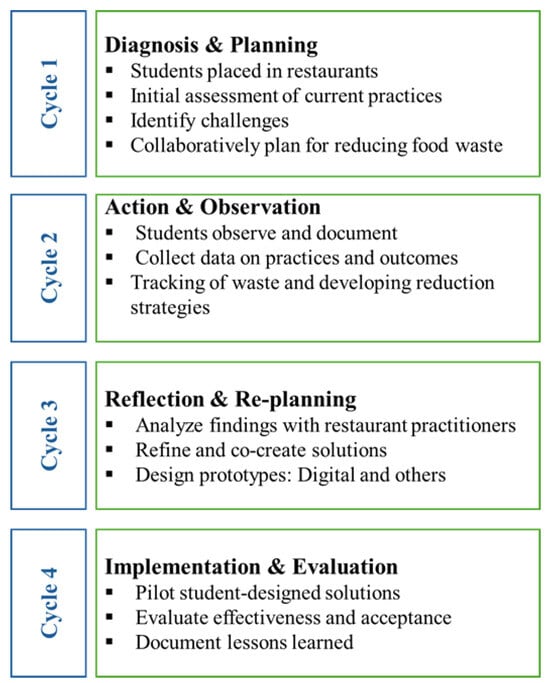
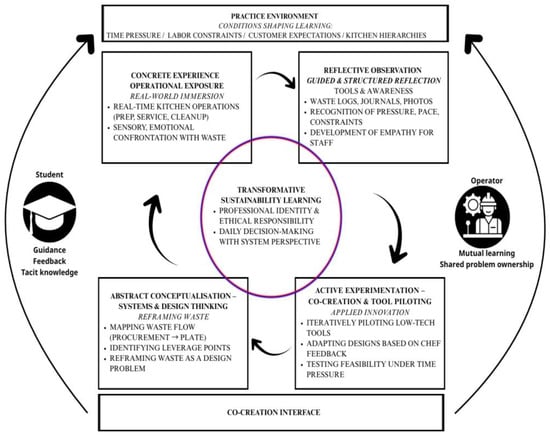
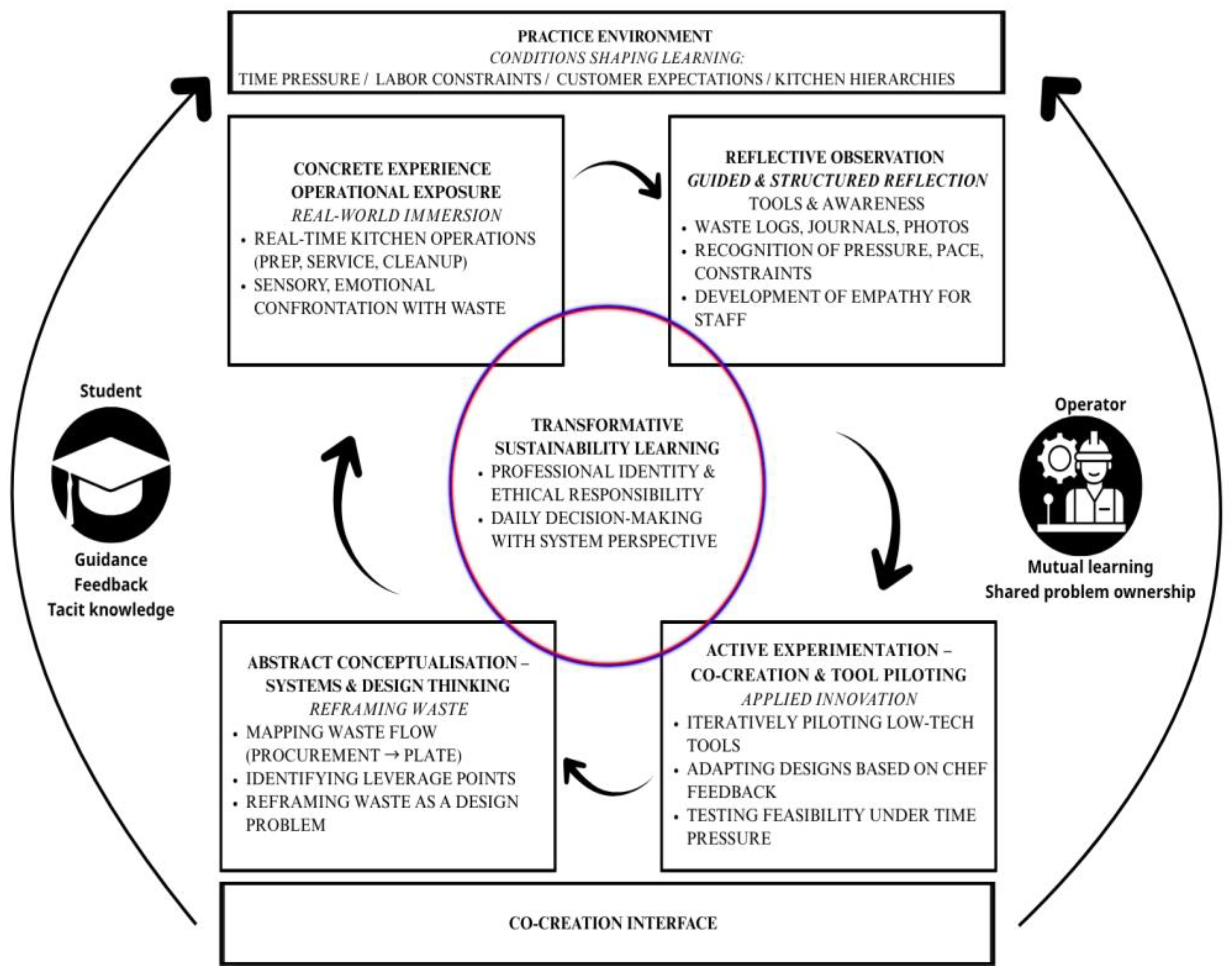

Disclaimer/Publisher’s Note: The statements, opinions and data contained in all publications are solely those of the individual author(s) and contributor(s) and not of MDPI and/or the editor(s). MDPI and/or the editor(s) disclaim responsibility for any injury to people or property resulting from any ideas, methods, instructions or products referred to in the content. |
© 2026 by the authors. Licensee MDPI, Basel, Switzerland. This article is an open access article distributed under the terms and conditions of the Creative Commons Attribution (CC BY) license.