


Abstract
Urban tourism is frequently promoted as a driver of regeneration, competitiveness, and local economic growth. However, its expansion increasingly generates overtourism, environmental degradation, social inequality, gentrification pressures, and cultural commodification in densely populated cities. Although existing tourism research has examined these challenges from managerial, planning, and sustainability perspectives, less attention has been paid to their ethical foundations. This conceptual paper addresses that gap by developing an integrated ethical framework for sustainable urban tourism through a structured, theory-driven synthesis of literature in environmental ethics, social justice theory, virtue ethics, and urban tourism studies. The paper makes three main contributions: it reframes urban tourism growth as a moral and normative issue rather than merely an economic one; it organizes the key ethical dilemmas of urban tourism as interconnected outcomes of growth-oriented development; and it links ethical principles to stakeholder responsibilities and desired governance outcomes. The proposed framework positions tourists, businesses, and policymakers as moral agents and identifies ecological integrity, social equity, and cultural protection as core criteria for evaluating tourism development. As a conceptual study, however, the framework remains theoretical and requires future empirical application and testing across different urban contexts.
1. Introduction
Urban tourism has become one of the most dynamic yet contested fields of tourism research, as recent scholarship increasingly frames cities not only as spaces of consumption and regeneration but also as sites of tension, inequality, and governance conflict (Page & Duignan, 2023). Although cities continue to promote tourism as a source of regeneration, competitiveness, and place branding, recent studies highlight its links with overtourism, touristification, housing pressures associated with short-term rentals, conflicts over the use of public space, and mounting environmental challenges (Bei & Celata, 2023; Huang et al., 2024). At the same time, urban tourism is now being examined in relation to social justice, political contestation, anti-tourism activism, and climate-transition agendas, suggesting that its impacts can no longer be assessed only through visitor growth and economic performance (Milano et al., 2024a, 2024b; Zoltan, 2024). Against this background, the present study approaches urban tourism growth not simply as a development strategy, but as a moral problem that requires explicit ethical evaluation.
Despite the growing visibility of overtourism, gentrification, environmental degradation, and cultural commodification in urban destinations, these issues are still often addressed primarily through managerial, economic, or planning-oriented frameworks. The research problem, therefore, is that urban tourism growth continues to be evaluated mainly in terms of competitiveness, visitor numbers, and revenue generation, while its ethical implications for ecosystems, local communities, and cultural integrity remain under-theorized. Although existing studies have examined sustainability, governance, and resident-tourist tensions, a clear gap remains in the literature regarding the development of an integrated ethical framework capable of evaluating urban tourism growth as a moral issue. In particular, limited attention has been paid to how environmental ethics, social justice theory, and virtue ethics can be combined in a single conceptual framework to assess responsibilities, conflicts, and desirable outcomes in urban tourism. This paper addresses that gap by proposing an ethical framework for sustainable urban tourism that links normative principles with actor responsibilities and governance outcomes.
The central research question of this paper is: how can urban tourism growth be evaluated as an ethical issue rather than only as an economic or managerial one? To answer this question, the study develops a conceptual framework that integrates environmental ethics, social justice theory, and virtue ethics in order to assess the legitimacy of tourism growth in relation to ecological sustainability, social equity, and cultural integrity.
This study is grounded in environmental philosophy, social justice theory, and virtue ethics, drawing on these complementary traditions to examine the ethical challenges associated with urban tourism development. Environmental philosophy provides a critical lens through which growth-oriented tourism models are questioned, emphasizing the intrinsic value of ecosystems and advocating an ecocentric ethic that extends moral consideration beyond human utility (Leopold, 1949; Naess, 1973). From this perspective, tourism development should respect ecological limits and align economic activity with long-term environmental preservation rather than short-term growth imperatives (Holden, 2003).
Social justice theory further illuminates the uneven distribution of tourism’s benefits and burdens within urban contexts, particularly for marginalized communities exposed to gentrification, environmental degradation, and displacement (Schlosberg, 2007; Bullard, 1990). Scholars in this tradition argue that ethical tourism governance must address issues of fairness, participation, and recognition, ensuring that tourism benefits are shared equitably and that vulnerable populations are not disproportionately affected by development pressures (Jamal & Getz, 1999).
Complementing these structural perspectives, virtue ethics, rooted in Aristotelian philosophy, shifts attention to the moral character and responsibilities of tourism stakeholders, including tourists, businesses, and policymakers (Aristotle, 2009; Fennell, 2006). By emphasizing virtues such as responsibility, respect, and care, virtue ethics encourages tourism actors to prioritize the common good and act as moral agents within complex urban systems (Fennell & Malloy, 2007). Taken together, this interdisciplinary foundation supports the development of a comprehensive ethical framework for urban tourism that integrates environmental integrity, social justice, and moral agency in the pursuit of sustainable and responsible tourism practices.
Influential frameworks such as Butler’s Tourism Area Life Cycle and Ajzen’s Theory of Planned Behavior have made important contributions to tourism research by explaining destination development and individual behavioral intention, respectively. However, these approaches are less equipped to address the ethical legitimacy of tourism growth when urban tourism generates ecological strain, social inequality, housing pressures, and conflicts over whose interests urban development should serve. The present study therefore complements these established frameworks by introducing an explicitly normative perspective centered on justice, responsibility, and environmental limits.
The novelty of this paper lies in developing an integrated ethical framework for urban tourism that combines environmental ethics, social justice theory, and virtue ethics in order to evaluate when tourism growth becomes morally problematic.
The remainder of the paper is structured as follows: Section 2 outlines the conceptual methodology and philosophical approach underpinning the analysis, explaining how environmental ethics, social justice theory, and virtue ethics are synthesized. Section 3 critically examines the dominance of growth-oriented tourism models in urban contexts and highlights their ethical shortcomings. Section 4 discusses the philosophical foundations of environmental ethics and justice that inform the proposed framework. Section 5 identifies and organizes the key ethical dilemmas arising from urban tourism development. Section 6 presents the ethical framework for sustainable urban tourism and elaborates its core principles, actors, and desired outcomes. Section 7 explores the role of tourists and other stakeholders as moral agents within this framework. Finally, Section 8 concludes the paper.
2. Methodology
This study adopts a conceptual and theory-building methodology grounded in normative analysis and structured literature synthesis. The purpose of the paper is not to test hypotheses empirically or to provide a fully systematic review of all studies on urban tourism, but to develop an integrated ethical framework capable of evaluating urban tourism growth in relation to environmental responsibility, social justice, and moral agency. For this reason, the methodological approach is interpretive and theory-driven, combining elements of a structured narrative review with conceptual synthesis.
2.1. The Philosophical Approach
The paper employs a philosophical inquiry approach, using ethical frameworks to critically assess the growth paradigm in urban tourism. Environmental philosophy, social justice theory, and virtue ethics were selected because they provide complementary lenses for examining the normative dimensions of tourism development. Environmental philosophy challenges anthropocentric models that prioritize tourism expansion over ecological integrity (Leopold, 1949; Holden, 2003). Social justice theory emphasizes fairness in the distribution of tourism’s benefits and burdens and highlights the effects of tourism development on marginalized communities (Schlosberg, 2007; Dredge & Jamal, 2013). Virtue ethics, by contrast, focuses on moral agency and responsibility and is therefore useful for examining the roles of tourists, businesses, and policymakers in shaping more sustainable urban tourism practices (Fennell, 2008).
2.2. Literature Identification and Selection Strategy
The literature was identified through a structured but non-systematic search process appropriate for conceptual research. The aim was not to provide an exhaustive review of all publications on urban tourism, but to identify the most relevant works needed to build the paper’s ethical framework. Searches were conducted in major academic databases commonly used in tourism and social science research, including Scopus and Google Scholar. The search focused on combinations of terms related to the paper’s core themes, including “urban tourism,” “overtourism,” “touristification,” “urban sustainability,” “tourism ethics,” “environmental ethics,” “social justice,” “virtue ethics,” “degrowth tourism,” “post-growth tourism,” and “urban tourism governance.”
The literature selection combined two broad types of sources. The first included foundational texts in environmental ethics, social justice theory, and virtue ethics, which provide the normative basis of the analysis. The second included more recent studies on urban tourism, overtourism, sustainability, governance, and social inequality, which position the paper within current debates. Foundational theoretical sources were included irrespective of publication date when they represented the original or seminal articulation of key concepts, while recent literature was prioritized in order to capture current developments in urban tourism research. In general, recent tourism literature was drawn primarily from the period 2010–2025, with stronger emphasis on post-2020 work in the introduction and in the discussion of current urban tourism challenges. Literature was selected on the basis of its conceptual relevance to the themes of ecological integrity, justice, moral responsibility, and the ethical implications of urban tourism growth.
2.3. Analytical Process and Framework Construction
The analytical process proceeded in four stages. First, the study identified the main normative traditions relevant to the ethical evaluation of urban tourism, namely environmental ethics, social justice theory, and virtue ethics. Second, it reviewed tourism and urban studies literature in order to identify the most recurrent ethical tensions associated with growth-oriented urban tourism, including overtourism, environmental degradation, gentrification, social inequality, and cultural commodification. Third, these bodies of literature were examined comparatively in order to extract recurring normative concerns, especially ecological limits, fairness, recognition, participation, responsibility, and care. Fourth, these concerns were integrated into a conceptual framework linking ethical foundations, key actors, and desired outcomes.
This process does not constitute a statistical or fully replicable synthesis in the strict systematic-review sense. Rather, it is a transparent and theory-guided process of conceptual integration designed to generate an analytical framework capable of evaluating the ethical legitimacy of urban tourism growth. By combining normative theory with current urban tourism scholarship, the study seeks to bridge philosophical reflection and tourism governance in a structured and interpretable manner.
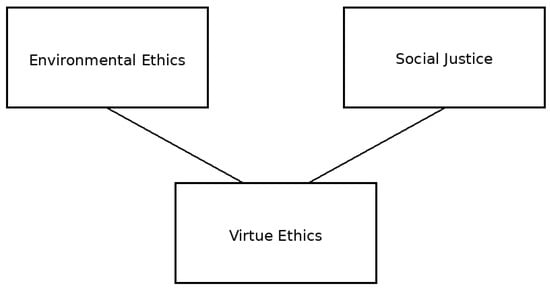
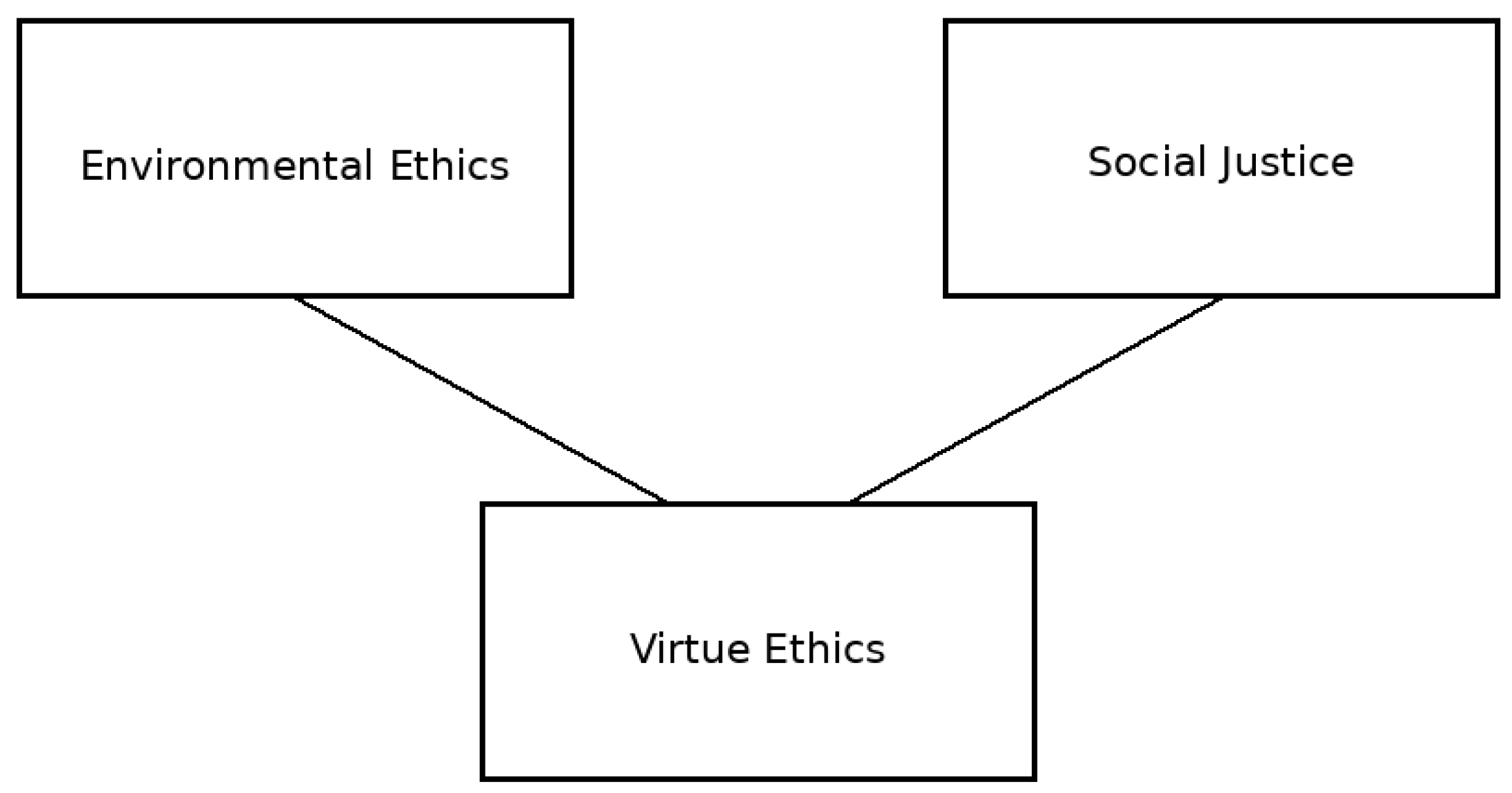
Figure 1 presents the core ethical traditions that inform the conceptual framework developed in this paper. Rather than treating environmental ethics, social justice, and virtue ethics as separate and unrelated perspectives, the figure highlights their conceptual relationship within the study’s normative foundation. In particular, it shows how virtue ethics is connected to both environmental ethics and social justice, reflecting the paper’s emphasis on moral agency as a practical link between ecological responsibility and justice-oriented tourism governance. In this way, the figure provides a simplified visual representation of the ethical foundations underpinning the proposed framework for sustainable urban tourism.
Figure 1.
From the growth paradigm to the ethical framework for sustainable urban tourism (Source: the author).
2.4. Methodological Limitations
This methodological approach has limitations. Because the review is structured and theory-driven rather than systematic, it does not claim exhaustive coverage of all relevant literature and may not capture every empirical strand of urban tourism research. In addition, the framework developed here is conceptual rather than empirically validated, which means that its usefulness must be further assessed through case-based and comparative research in different urban contexts. Nevertheless, this approach is appropriate for the purpose of the paper, which is to develop a normative framework rather than to aggregate empirical findings comprehensively.
3. The Growth Paradigm in Tourism
Tourism has long been framed as a tool of economic development, especially in urban contexts where cities mobilize culture, heritage, and place identity to attract visitors and stimulate investment. However, the continued dominance of growth-oriented tourism models has come under increasing scrutiny. While such models have helped explain destination development and policy priorities, they have also been criticized for treating growth as an unquestioned good and for paying insufficient attention to ecological limits, social inequality, and the ethical legitimacy of tourism expansion. This section examines that critique and argues that urban tourism must be evaluated not only through economic outcomes, but also through its moral, social, and environmental consequences.
Models such as Butler’s Tourism Area Life Cycle and Ajzen’s Theory of Planned Behavior have made important contributions to tourism research by explaining destination development and individual behavioral intention, respectively. However, while these frameworks remain influential, they are less equipped to address the ethical legitimacy of tourism growth when urban tourism generates ecological strain, social inequality, housing pressures, and conflicts over whose interests urban development should serve. In particular, the Theory of Planned Behavior, originally developed by Ajzen (1991) as a general theory of human behavior, has been widely applied in tourism and hospitality research to explain environmentally responsible intentions and sustainable consumption choices, including green hotel selection and pro-environmental behavior in lodging contexts (Ajzen, 1991; Han et al., 2010; Chen & Tung, 2014; Han, 2015). At the same time, recent reviews note that its strength lies mainly in explaining individual intention formation, while its limitations become more visible when tourism problems are shaped by broader structural, political, and contextual factors rather than by individual cognition alone (Wut et al., 2023; Esfandiar & Hadinejad, 2025). For this reason, while the Theory of Planned Behavior remains useful for understanding sustainable tourism choices at the individual level, it is less adequate on its own for evaluating the ethical legitimacy of growth-oriented urban tourism as a systemic urban phenomenon.
3.1. Ethical Shortcomings of Growth-Oriented Models
Growth-oriented tourism models have long shaped both tourism policy and tourism scholarship by treating expansion in visitor numbers, revenue, and infrastructure as indicators of success. However, this orientation has increasingly been criticized for overlooking ecological limits, social tensions, and broader questions of justice and legitimacy, particularly in urban destinations where space, housing, and environmental capacity are already under pressure (Butler, 1980; Page & Duignan, 2023). Recent tourism scholarship has also argued that growth-centered development often reproduces inequalities and intensifies overtourism-related conflicts, thereby exposing the limits of conventional tourism success metrics (Fletcher et al., 2019; Milano et al., 2019; Page & Duignan, 2023).
From an ethical perspective, one of the main shortcomings of such models is their anthropocentric orientation. By privileging economic gain and human consumption over ecological balance, growth-led tourism tends to treat urban nature, public space, and heritage as instruments for market expansion rather than as entities with value beyond utility. This is precisely the kind of reasoning challenged by environmental ethics. Leopold’s land ethic calls for humans to act as members rather than masters of the biotic community, while Naess’s deep ecology similarly rejects the assumption that non-human nature matters only insofar as it serves human interests (Leopold, 1949; Naess, 1973). In tourism studies, these ecocentric concerns have informed longstanding critiques of utilitarian tourism development and have recently re-emerged in broader ethical debates on tourism futures, justice, and more-than-human responsibility (Holden, 2003; Guia, 2025).
Recent tourism scholarship has reinforced these critiques by showing that growth-led tourism development is increasingly associated with overtourism, tourism dependence, socio-spatial conflict, and unsustainable resource use. In this context, calls for degrowth, post-growth, and regenerative approaches have gained prominence as alternatives to destination strategies based primarily on expansion, competitiveness, and visitor volume. These debates suggest that the problem is no longer simply whether tourism grows, but whether such growth remains socially legitimate, ecologically defensible, and politically sustainable in urban settings.
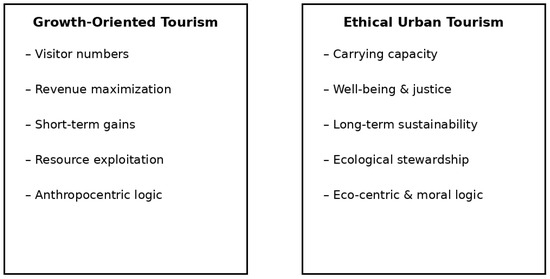
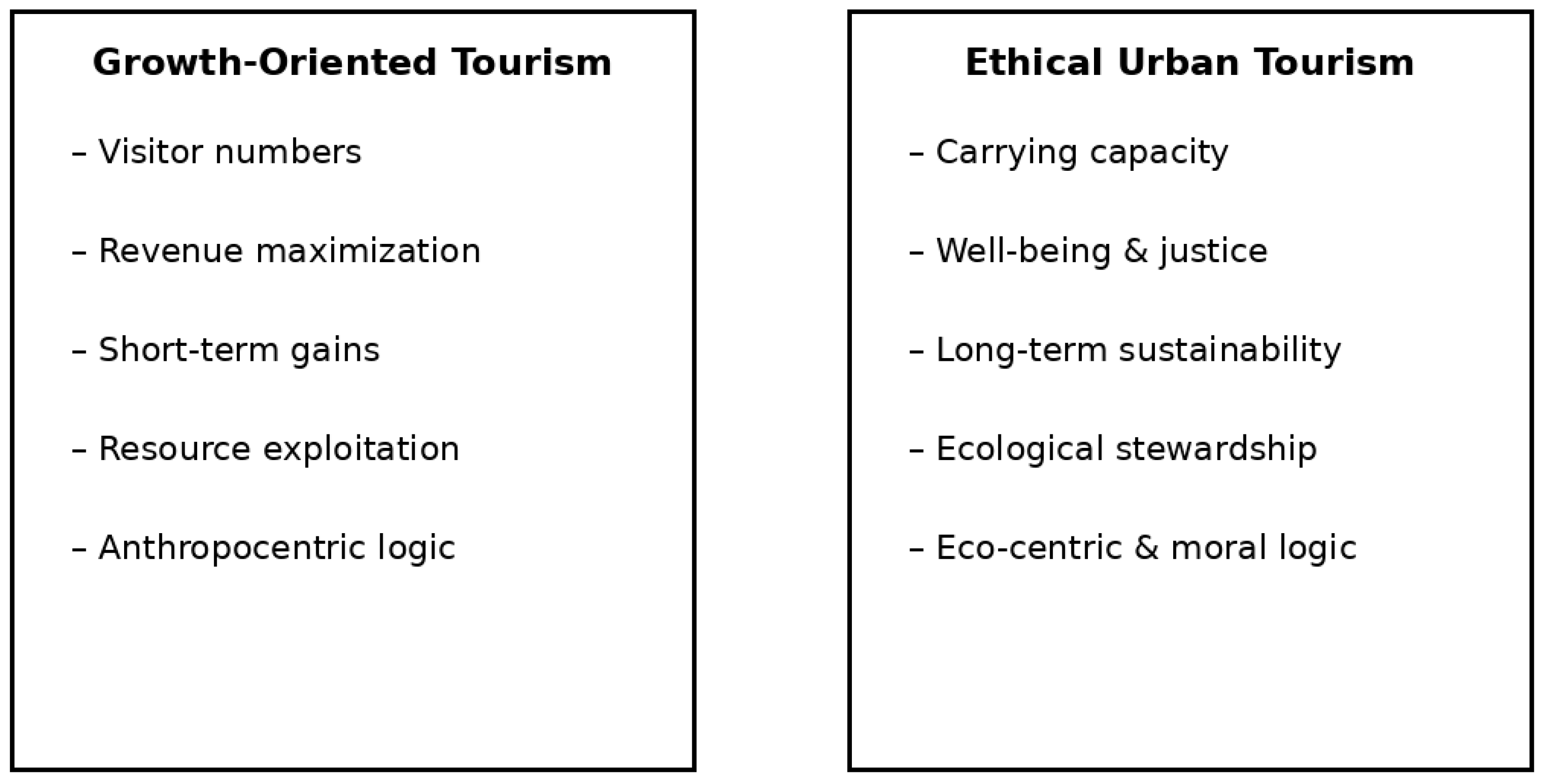
To synthesize the normative contrast developed in this section, Figure 2 presents the difference between a growth-oriented tourism paradigm and an ethical urban tourism paradigm.
Figure 2.
Growth-oriented vs ethical urban tourism paradigm (Source: The author).
Figure 2 summarizes the analytical argument of this section by contrasting two competing logics of urban tourism development. On the one hand, growth-oriented approaches prioritize expansion, competitiveness, infrastructure development, and visitor volume as markers of success. On the other hand, the ethical paradigm proposed in this paper emphasizes ecological responsibility, social justice, and moral accountability as alternative criteria for evaluating tourism development. The figure is therefore not intended merely as an illustration, but as a conceptual synthesis of the shift from growth-based reasoning to an ethically grounded understanding of sustainable urban tourism.
3.2. Towards a Sustainable and Equitable Urban Tourism
Rethinking the growth paradigm in urban tourism has become increasingly necessary as scholars question the assumption that more tourism necessarily produces better urban outcomes. Degrowth perspectives challenge the centrality of expansion and instead argue for reduced material throughput, lower ecological pressure, and the reorientation of economic activity toward well-being rather than accumulation (Latouche, 2009; Fletcher et al., 2019). In tourism, this line of thinking has developed into a significant research agenda that critiques aviation-intensive mobility, destination overdependence on visitor growth, and the structural incompatibility between endless expansion and sustainability goals (Fletcher et al., 2019; Higgins-Desbiolles et al., 2019; Murray et al., 2025).
Relatedly, post-growth perspectives shift attention from quantitative growth indicators toward ecological resilience, social well-being, and sufficiency-oriented governance. In tourism, Hall’s work was important in opening this discussion, and more recent transition-oriented scholarship has advanced it by examining how destinations can move beyond growth dependence and redesign tourism around regenerative and justice-based principles (Hall, 2011; Magnusson et al., 2024; Nieuwland, 2024). In the urban context especially, recent work on doughnut economics and tourism transitions shows that destination strategies can be reoriented away from expansion and toward ecological ceilings and social foundations, thereby offering a more suitable basis for ethical urban tourism governance (Nieuwland, 2024).
Sustainable and regenerative tourism models offer practical alternatives by moving beyond narrow growth metrics and emphasizing restoration, resilience, and fairer benefit distribution. Within this perspective, urban tourism can be reimagined not as a continuous expansion of visitor economies, but as a field of governance that must balance economic activity with ecological responsibility, social justice, and long-term urban well-being. Through degrowth, post-growth, and regenerative principles, urban tourism can therefore move toward more sustainable and ethically defensible outcomes.
4. The Philosophical Foundations of Environmental Ethics
The aim of this section is not to present philosophical theory for its own sake, but to identify the ethical concepts most relevant to understanding contemporary urban tourism challenges and to show how they can inform tourism governance and practice.
4.1. Anthropocentrism vs. Ecocentrism
Environmental ethics provides an essential basis for rethinking urban tourism because it challenges the assumption that nature, public space, and heritage should be valued only according to their usefulness for human consumption or economic growth. In this sense, the distinction between anthropocentrism and ecocentrism is especially important. Anthropocentric approaches prioritize human needs and interests, whereas ecocentric approaches recognize that ecosystems, species, and landscapes possess intrinsic value beyond their instrumental use.
In urban tourism, this distinction matters because growth-oriented tourism models often treat urban environments as resources to be consumed, marketed, and intensified. An ecocentric perspective, by contrast, supports the protection of urban ecosystems, green spaces, waterfronts, biodiversity, and environmental quality not merely because they attract visitors, but because they have value in themselves and are essential to the long-term livability of the city.
In this paper, environmental integrity refers to the preservation of essential ecological processes, biodiversity, environmental quality, and the functional resilience of urban ecosystems under conditions of tourism development. The concept goes beyond simple pollution control or resource efficiency. It implies that tourism should not undermine the capacity of ecological systems and urban environments to remain viable, balanced, and livable over time. This understanding is consistent with sustainability perspectives that emphasize maintaining ecological processes and conserving natural heritage and biodiversity as core elements of responsible development.
Environmental Ethics and Sustainable Urban Tourism
Environmental ethics offers a useful foundation for sustainable urban tourism because it challenges the assumption that urban nature, public space, and heritage should be valued only in terms of their contribution to economic growth or visitor satisfaction. Classical perspectives such as Leopold’s Land Ethic and Naess’s Deep Ecology remain important because they introduce the idea that ecosystems possess intrinsic value and that human activity should respect ecological limits (Leopold, 1949; Naess, 1973). In tourism scholarship, Holden’s work was especially important in arguing that tourism needed a stronger environmental ethic capable of moving beyond narrow anthropocentrism (Holden, 2003).
These classical critiques remain highly relevant, but recent debates on overtourism, degrowth, and just transitions show that their ethical concerns are now being rearticulated in response to contemporary urban tourism pressures. More recent research has connected tourism sustainability to transitions, justice, regeneration, and more-than-human ethics, arguing that sustainable tourism cannot be reduced to technical mitigation or managerial efficiency alone (Budeanu et al., 2016; Magnusson et al., 2024; Rastegar, 2025; Guia, 2025).
In practical tourism terms, this implies that parks, waterfronts, historic districts, air quality, and urban biodiversity should not be treated merely as tourism assets, but as ecological and social commons that require protection. This perspective supports measures such as carrying-capacity limits, restrictions in environmentally sensitive areas, investment in low-impact mobility, pollution reduction, and the restoration of urban green spaces. In this sense, environmental ethics contributes to urban tourism not only as an abstract philosophical position, but as a normative basis for concrete decisions about how tourism should be managed in cities.
4.2. Intergenerational Justice
Intergenerational justice is a well-established principle within sustainability ethics. At its core, it refers to the obligation of present generations to avoid degrading the ecological and social conditions upon which future generations will depend. This principle is reflected in the Brundtland formulation of sustainable development and has also been discussed in tourism scholarship in relation to commons governance, resource use, and long-term destination sustainability (WCED, 1987; Briassoulis, 2002).
In tourism, intergenerational justice is especially relevant because tourism development often consumes environmental assets, intensifies carbon emissions, and transforms cultural and urban spaces in ways that may generate short-term economic gains while reducing the quality, accessibility, and resilience of those same places in the future. Recent tourism and sustainability scholarship increasingly connects this concern to climate justice, future-oriented responsibility, and the need to align tourism development with broader sustainability transitions rather than immediate visitor growth (Kronenberg & Fuchs, 2021; Rastegar, 2025; Syropoulos & Markowitz, 2024). For urban tourism, the principle therefore implies that decisions about land use, mobility, housing, public space, and ecological pressure must be judged not only by present-day benefits, but also by their consequences for future residents, future visitors, and the long-term livability of the city itself.
4.3. Environmental Justice
Environmental justice offers an ethical framework for addressing distributional and procedural inequalities in urban tourism. Rooted in social movements from the 1980s, environmental justice highlights the unequal environmental burdens placed on marginalized communities and advocates equitable access to environmental benefits (Bullard, 1990; Jamal & Lee, 2008). In urban tourism, this framework raises the question of who benefits from development and who bears its costs, especially where tourism contributes to pollution, overcrowding, rising housing pressure, and resource strain.
Bullard emphasizes fair treatment and meaningful involvement in environmental decision-making, suggesting that marginalized residents should have a voice in tourism planning in order to avoid disproportionate burdens (Bullard, 1990). Schlosberg expands this perspective through the principles of recognition, capability, and equity, emphasizing the need to recognize marginalized communities’ identities, protect their agency, and distribute tourism benefits more fairly (Schlosberg, 2007).
Applied to urban tourism, environmental justice helps explain why tourism cannot be evaluated only through aggregate economic gains. Tourism may concentrate profits among investors and businesses while leaving vulnerable communities exposed to environmental degradation, reduced access to public space, social displacement, and weakened local control. For this reason, a justice-oriented tourism model requires both distributional equity and procedural fairness in urban tourism governance.
4.4. Virtue Ethics and Moral Agency
Virtue ethics, rooted in Aristotelian thought, emphasizes moral character and the ethical responsibilities of individuals as moral agents. In urban tourism, virtue ethics provides a useful framework for examining the responsibilities of stakeholders, especially tourists, businesses, and policymakers, in relation to the communities and environments they affect. Unlike utilitarian or rule-based approaches, virtue ethics focuses on the cultivation of virtues such as responsibility, respect, and care, and therefore highlights the moral quality of conduct rather than only outcomes or compliance (Jamal & Camargo, 2013).
From this perspective, tourists may be understood not simply as consumers but as actors whose choices can either reinforce or mitigate environmental and social pressures. Tourism businesses can similarly be seen as moral agents whose conduct affects labor conditions, resource use, cultural representation, and local economic life. Policymakers, in turn, shape the ethical context of tourism through regulation, incentives, planning, and public communication.
Virtue ethics is especially useful in this paper because it connects ethical reflection to practice. It draws attention to how responsibility, care, prudence, and respect may inform the actions of tourism stakeholders in concrete urban settings. In that sense, virtue ethics complements environmental ethics and social justice by showing how ethical principles may be embodied in the everyday conduct of those who shape urban tourism.
Taken together, these philosophical perspectives provide the normative foundation for evaluating concrete urban tourism issues, including overtourism, gentrification pressures, public-space conflict, environmental degradation, and the responsibilities of tourism stakeholders.
5. Ethical Dilemmas in Urban Tourism
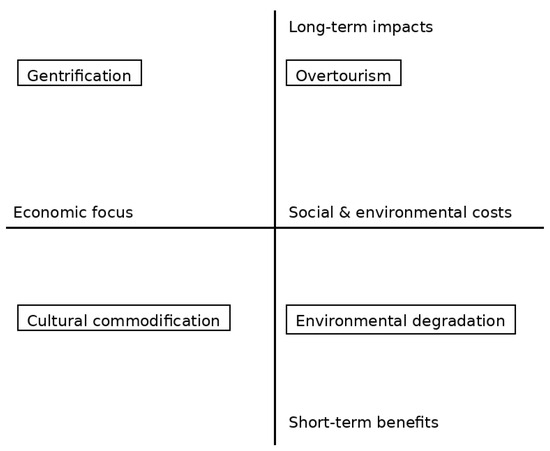
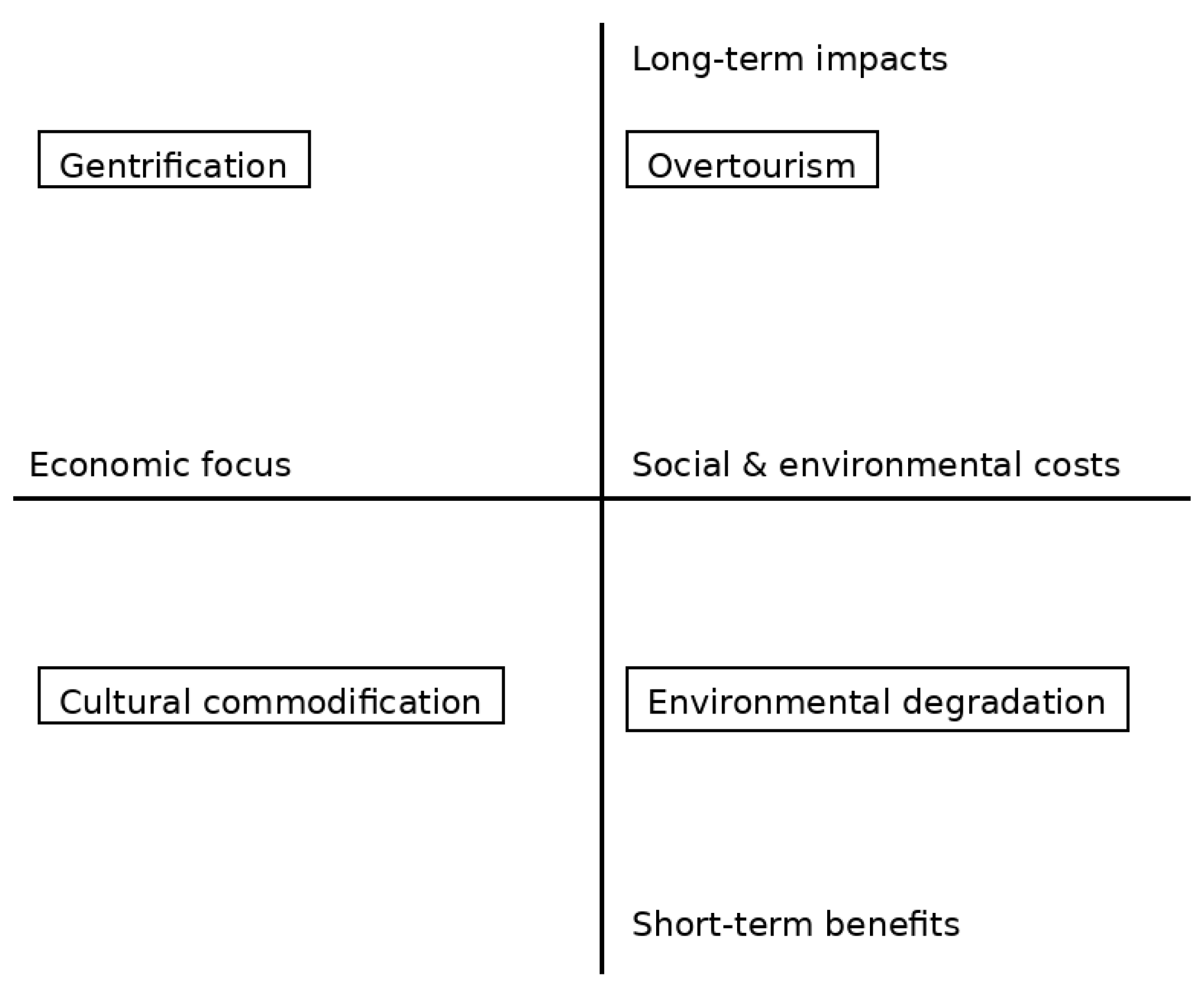
The dilemmas discussed in this section are not presented as separate or purely descriptive problems. Rather, they are interpreted as interconnected ethical consequences of growth-oriented urban tourism, each of which raises questions of justice, responsibility, legitimacy, and ecological limits. While tourism is often framed as an economic asset that generates revenue and revitalizes urban areas, growth-focused models may also produce environmental degradation, social displacement, and cultural erosion. The analytical purpose of this section is therefore to show how apparently distinct urban tourism problems can be understood within a common normative framework.
Figure 3 clarifies the causal and analytical structure of the ethical challenges associated with urban tourism. Rather than treating all negative outcomes as equivalent dilemmas, the figure distinguishes between the growth-oriented urban tourism model, the tourism intensification dynamics it generates, and the ethical consequences that follow. In this logic, overtourism and related pressures are understood as proximate dynamics of tourism intensification, while environmental degradation, gentrification pressures, social inequality, and cultural commodification are presented as downstream consequences that emerge or intensify under such conditions. The figure therefore does not suggest that these outcomes are caused by tourism alone, but rather that tourism growth interacts with wider urban processes in ways that raise distinct ethical concerns. By making these cause-and-effect relations clearer, the figure supports the argument that urban tourism growth should be evaluated not only in economic terms, but also in terms of justice, responsibility, and long-term urban sustainability.
Figure 3.
From tourism intensification to ethical consequences in urban tourism (Source: The author).
5.1. Economic Development vs. Environmental Integrity
A central ethical dilemma in urban tourism is the conflict between economic development and environmental integrity. Tourism is frequently promoted as a growth strategy for cities, yet its environmental costs, including resource strain, pollution, and ecosystem disruption, are substantial, especially in densely populated urban areas. From the standpoint of environmental ethics, this prioritization of economic gain over ecological well-being reflects an anthropocentric orientation that treats urban environments primarily as instruments of development rather than as entities with intrinsic value.
The Land Ethic, as proposed by Leopold, calls for humans to act as responsible members of the “land community,” valuing ecological well-being above short-term economic interests (Leopold, 1949). Similarly, Naess’s Deep Ecology urges recognition of the intrinsic worth of ecosystems and challenges the assumption that economic growth should automatically take precedence over ecological balance (Naess, 1973). Applied to urban tourism, these perspectives suggest that parks, waterfronts, public spaces, and biodiversity should not be treated merely as assets for visitor consumption, but as environments that require protection in their own right.
Social justice theory adds a further dimension by emphasizing the unequal distribution of environmental burdens. While tourism may generate economic gains for some actors, its environmental costs often fall disproportionately on vulnerable communities through pollution, overcrowding, and resource depletion (Milano et al., 2019). Scholars such as Schlosberg therefore highlight the need for environmental justice, arguing that the ecological burdens of tourism should not be borne most heavily by those least able to resist or absorb them (Sheller, 2020).
Virtue ethics further highlights the moral responsibilities of tourists, businesses, and policymakers in relation to environmental harm. From this perspective, environmental degradation is not only a structural problem, but also a matter of conduct, judgment, and responsibility. Taken together, these perspectives show that the tension between economic growth and environmental integrity is not merely a planning issue, but an ethical conflict concerning what urban tourism should prioritize and whom it should serve.
5.2. Gentrification and Social Inequality
Urban tourism often contributes to neighborhood gentrification by transforming residential areas into spaces increasingly oriented toward visitors, including hotels, restaurants, short-term rentals, and tourism-related consumption (Dredge & Jamal, 2013). While such transformation may stimulate economic revitalization, it frequently displaces long-standing residents, especially those from low-income or marginalized backgrounds, thereby raising ethical concerns about the unequal distribution of tourism’s benefits and costs.
Gentrification typically drives up property values and housing costs, making urban living less affordable for local residents. At the same time, tourism-oriented businesses may replace local shops and everyday services, reducing residents’ access to affordable goods and altering the social fabric of neighborhoods (Milano et al., 2019). The commodification of local lifestyles may further intensify this process, as neighborhoods are rebranded and repackaged to satisfy visitor expectations rather than resident needs (Cohen & Cohen, 2017).
Viewed through the lens of social justice, gentrification is not simply a market side effect of tourism development, but an ethical issue because it redistributes access to housing, space, and urban belonging in ways that often privilege visitors and investors over residents. It therefore raises fundamental questions about fairness, recognition, and the right to remain in place. From this perspective, urban tourism becomes ethically problematic when it contributes to forms of development that erode residents’ ability to inhabit, shape, and identify with their own neighborhoods.
5.3. The Commodification of Culture
The commodification of culture is another significant ethical dilemma in urban tourism. As cities increasingly market themselves through heritage, tradition, and local identity, cultural practices are often repackaged for visitor consumption in ways that may strip them of meaning, context, and authenticity (Greenwood, 1989). Although such processes may create economic opportunities for artists, businesses, and destinations, they also raise concerns about exploitation, representation, and control.
When cultural expressions are adapted primarily to meet tourism demand, they may be simplified, staged, or transformed into commercial products. This can weaken their social significance within local communities and erode the integrity of cultural identity. In addition, the economic benefits of cultural tourism often flow disproportionately to external investors, intermediaries, or commercial actors rather than to those most closely connected to the culture being represented.
Viewed ethically, cultural commodification is problematic not only because it alters representation, but because it raises questions about ownership, authenticity, and the right to define the meaning of local culture. Who has the authority to represent local heritage? Who benefits from its commercialization? And under what conditions does cultural adaptation become exploitation? These questions show that cultural tourism cannot be evaluated only in economic terms, but must also be judged according to whether it respects the dignity, autonomy, and integrity of the communities whose culture is being mobilized.
5.4. Overtourism as a Driver of Urban Degradation
Overtourism can be understood as a key intensification dynamic in urban tourism, arising when visitor concentrations overwhelm the carrying capacity of public spaces, infrastructure, and local services (Mihalic, 2020). In popular cities, this pressure often contributes to overcrowding, physical degradation, noise pollution, and resource overuse, thereby diminishing quality of life for residents and tourists alike (Hall, 2010; Koens et al., 2018).
The ethical problem of overtourism lies in the tension between access and preservation. Although unrestricted tourism may produce short-term economic gains, it can also accelerate the deterioration of urban environments and reduce the livability of the city. Historic sites may degrade under excessive use, public spaces may become congested and less accessible, and everyday urban infrastructures may become increasingly shaped around visitors rather than residents.
For this reason, overtourism should not be viewed merely as a question of numbers, but as an ethical issue concerning limits, priorities, and the allocation of urban space. It raises difficult normative questions: should cities restrict access in order to protect sensitive areas? How should the interests of visitors be balanced against the rights of residents? And when does tourism intensity exceed what can be ethically justified? In this sense, overtourism is analytically important because it illustrates how the pursuit of growth may undermine the ecological and social conditions that make urban life sustainable in the first place.
Taken together, these dilemmas reveal that the ethical problems of urban tourism do not arise only from excessive visitor numbers, but from the underlying logic through which tourism growth is pursued and justified. Environmental degradation, gentrification, cultural commodification, and overtourism are analytically linked because they reflect recurring tensions between short-term economic gain and longer-term ecological and social responsibilities. In this sense, the section prepares the ground for the framework developed in the next chapter by showing why urban tourism requires not only better management, but also explicit ethical evaluation.
6. Ethical Framework for Sustainable Urban Tourism
Building on the preceding analysis, this section develops the proposed ethical framework for sustainable urban tourism. The ethical dilemmas discussed in earlier sections, from environmental degradation to social inequality and cultural commodification, demonstrate the need for a more responsible and equitable approach to tourism development. In response, this section outlines the main normative pillars of such a framework, grounded in environmental ethics, social justice, cultural integrity, and virtue ethics, and explains how these principles translate into responsibilities and desired outcomes in urban tourism governance.
Although the framework proposed here is normative and conceptual, it is not intended to remain purely abstract. It can serve as an analytical tool for future empirical research by providing a structured basis for evaluating urban tourism policies, comparing destinations, and assessing the responsibilities of different stakeholder groups. For example, the framework may be applied in case-study research to examine whether particular tourism strategies promote ecological integrity, social equity, cultural protection, and moral accountability, or whether they reproduce growth-oriented forms of development that generate ethical tensions. The originality of the framework lies not in proposing entirely new sustainability recommendations, but in reorganizing them within an explicitly ethical model that connects environmental responsibility, social justice, cultural integrity, and moral agency in a single evaluative structure.
6.1. Environmental Responsibility and Ecological Integrity
Environmental responsibility is a central component of sustainable urban tourism because it emphasizes the intrinsic value of ecosystems and the need to preserve them for future generations (Bramwell, 2015). Traditional sustainability efforts in tourism often focus on harm reduction, such as mitigating pollution and conserving resources, but more recent approaches advocate a more proactive stance aimed at restoring and enhancing urban environments. Regenerative tourism, in particular, prioritizes ecological and social revitalization and encourages practices that leave a lasting positive legacy (Cave & Dredge, 2020; Gössling & Higham, 2021).
Regenerative tourism moves beyond conventional sustainability by promoting resource restoration, biodiversity improvement, and local engagement (Ateljevic, 2020; Mkono et al., 2022). In urban settings, this may include the rehabilitation of green spaces, low-impact mobility systems, waste-reduction strategies, and investment in environmentally responsible infrastructure. Such practices align closely with the ethical principle of ecological integrity, according to which tourism should not erode the capacity of urban ecosystems to remain viable, resilient, and livable over time. Table 1 summarizes the environmental principles proposed in this paper.
Table 1.
The principles of environmental responsibility.
Embedding environmental responsibility into urban tourism planning helps cities align tourism development with the ethical imperative of environmental protection. In this sense, environmental sustainability is not treated merely as technical efficiency, but as a normative commitment to ecological limits and long-term urban well-being.
6.2. Social Equity and the Fair Distribution of Tourism Benefits
A second pillar of the framework is social equity. As discussed earlier, tourism growth often intensifies urban inequalities, with local communities bearing the social and spatial costs of tourism while receiving only limited economic benefits. The proposed framework therefore emphasizes the need for a fairer distribution of tourism’s benefits and burdens, ensuring that marginalized communities are neither excluded from decision-making nor displaced by tourism-led development. Table 2 summarizes the main principles of social equity.
Table 2.
The principles of social equity.
Within this framework, social equity is not simply a matter of compensation or redistribution after tourism expansion has occurred. Rather, it is a prior ethical condition for determining whether urban tourism development can be considered legitimate in the first place.
6.3. Protecting Local Heritage and Cultural Identity
The commodification of culture in tourism often erodes local traditions, weakens cultural authenticity, and reduces heritage to a marketable asset. To address this, the proposed framework emphasizes the protection of cultural integrity as a distinct ethical objective. Tourism development should therefore respect and sustain local heritage, rather than exploit it for short-term commercial gain. Table 3 outlines the main principles for cultural integrity.
Table 3.
The principles for cultural integrity.
This dimension of the framework recognizes that cultural heritage is not merely an economic resource, but also a source of meaning, identity, and community continuity. Accordingly, the ethical evaluation of tourism must consider not only whether culture is profitable but also whether it is being represented, governed, and shared in ways that remain respectful and just.
6.4. Moral Agency and Responsible Conduct
Alongside structural and institutional changes, the ethical framework also highlights the importance of moral agency. Rooted in virtue ethics, this dimension emphasizes how tourists, businesses, and governments may act with care, prudence, and responsibility toward urban environments and communities. The purpose is not to reduce ethical tourism to individual goodwill, but to show how ethical principles are embodied in conduct as well as in policy. Table 4 summarizes the main actor-oriented principles of this dimension.
Table 4.
The principles of virtue ethics.
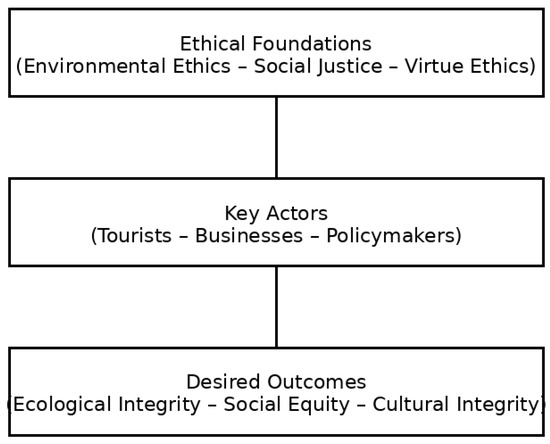
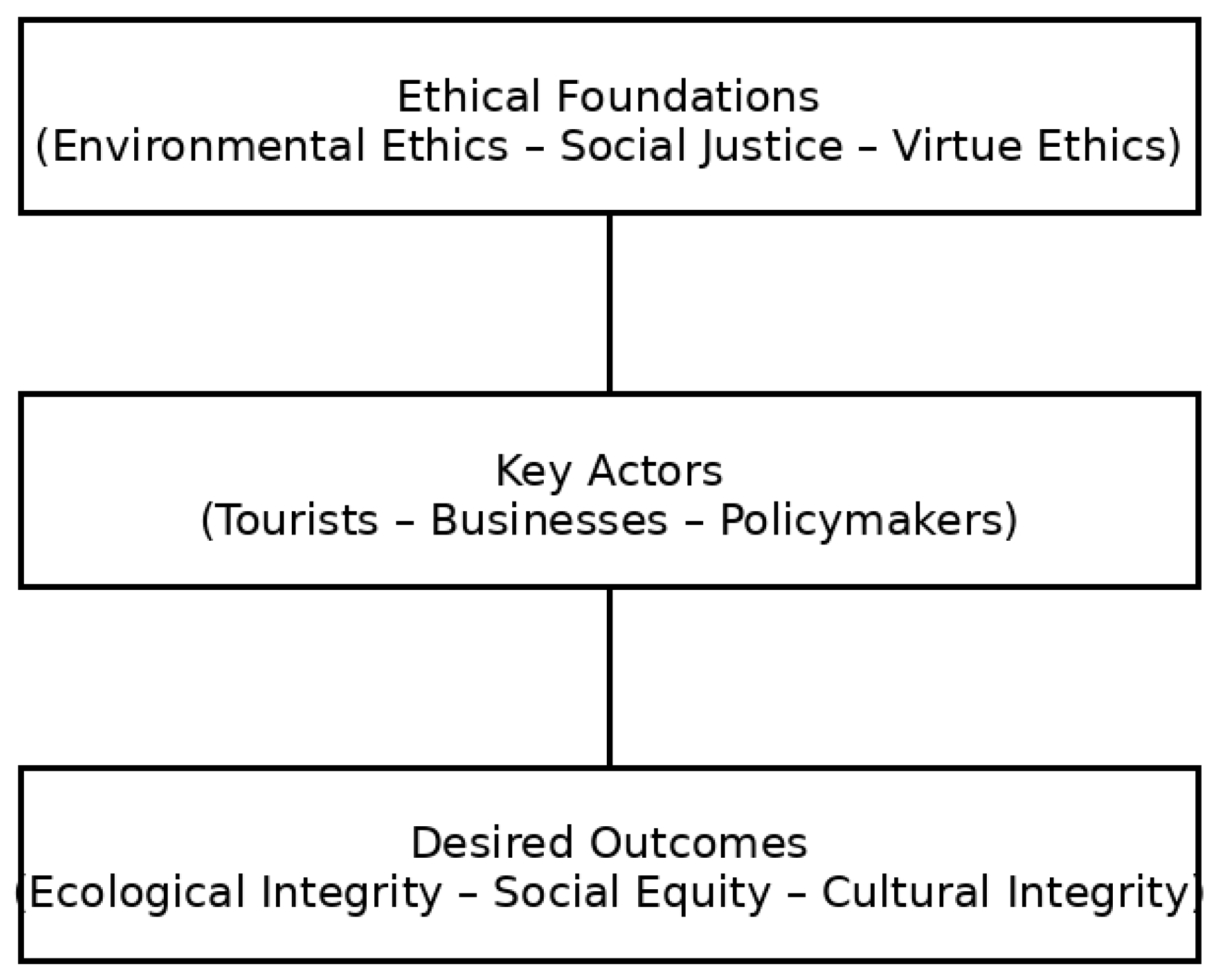
Taken together, the four dimensions discussed above form an integrated ethical framework for sustainable urban tourism. The framework brings together ecological responsibility, social equity, cultural integrity, and moral agency in a single conceptual structure that links ethical principles to stakeholder responsibilities and desired governance outcomes. Figure 4 summarizes this framework and presents it as the outcome of the theoretical discussion developed in this chapter.
Figure 4.
Ethical framework for sustainable urban tourism (Source: The author).
Figure 4 synthesizes the theoretical discussion developed in Section 6 by integrating environmental ethics, social justice, and virtue ethics into a coherent framework for sustainable urban tourism. The framework is organized around three interrelated components: ethical foundations, key actors, and desired outcomes. At the foundational level, principles of ecological responsibility, social equity, cultural integrity, and moral accountability establish the normative basis for evaluating tourism development. These principles inform the responsibilities of key actors, namely tourists, tourism businesses, and policymakers, and culminate in desired outcomes such as ecological integrity, social justice, and the protection of local identity. In this way, the figure functions as a summary of the chapter and clarifies how the proposed framework translates ethical theory into a structured model for urban tourism governance.
In practical terms, the framework may be operationalized through qualitative or mixed-method applications. Future studies could use it to develop evaluation criteria, interview protocols, document-analysis categories, or comparative indicators for examining how urban tourism governance aligns with ethical principles. In this sense, the framework is offered not as a finalized measurement model, but as a conceptual structure that can guide empirical testing, policy assessment, and destination-level analysis.
7. The Role of Tourists in Ethical Urban Tourism
While systemic changes in governance, business practices, and public policy are essential for sustainable urban tourism, individual tourists also remain relevant actors within the ethical landscape of tourism. As consumers and participants in urban space, tourists may influence demand for certain practices, services, and forms of destination development. This section examines tourists through the lens of virtue ethics, which emphasizes moral character, responsibility, and practical judgment. Rather than assuming that tourists naturally behave ethically, the section considers how tourism choices may become sites of moral responsibility, competing values, and practical constraints in urban contexts.
7.1. Tourists as Moral Agents
Virtue ethics, with its emphasis on moral character and responsible conduct, provides a useful framework for understanding tourists as moral agents rather than as purely rational consumers. From this perspective, tourist behavior is ethically relevant because it can affect environmental conditions, local communities, and cultural practices in the destinations visited.
Recent tourism and hospitality research suggests that younger travelers, especially Generation Z, are an important group for understanding sustainability-related attitudes and intentions in tourism, but the evidence does not support simple generalizations. Some studies indicate that Gen Z tourists display concern for sustainability and may respond positively to destination social responsibility and pro-environmental messaging, while other research shows important barriers, inconsistencies, and clear attitude–behavior gaps in actual tourism and hospitality contexts. For this reason, younger tourists should not be treated as uniformly ethical consumers, but rather as a diverse cohort whose sustainability-related choices are shaped by values, motivations, constraints, and context. Within the present framework, the significance of tourists as moral agents lies not in assuming that one generation is inherently more ethical than another, but in examining how tourism choices can become sites of moral responsibility and ethical reflection.
This perspective does not imply that tourists consistently act in environmentally or socially responsible ways. Rather, it suggests that tourist practices may be evaluated ethically insofar as they either reinforce or mitigate the environmental and social pressures associated with urban tourism. In this sense, moral agency is treated here as an analytical lens for examining how tourism decisions relate to responsibility, care, and the common good.
7.2. Responsible Decision-Making in Tourism
From the perspective of the proposed framework, tourists’ choices may influence the ethical quality of urban tourism in several ways. Decisions concerning accommodation, transport, consumption, and participation in local activities can either support more sustainable and inclusive forms of tourism or contribute to environmentally and socially harmful patterns of development. For example, the selection of eco-certified accommodation, support for locally rooted businesses, and preference for lower-impact activities may be interpreted as practices more consistent with environmental responsibility and social equity.
Similarly, choices related to mobility and everyday consumption matter in urban tourism contexts. The use of public transport, walking, cycling, and other lower-carbon forms of movement may reduce pressure on urban infrastructure and emissions, while engagement with community-based initiatives may increase the local retention of tourism benefits. From an ethical standpoint, these decisions are significant not because they guarantee positive outcomes in every case, but because they illustrate how tourist conduct can become entangled with broader questions of justice, sustainability, and urban responsibility.
7.3. Advocacy and Education
Tourists may also influence urban tourism indirectly through feedback, communication, and participation in public discourse. As awareness of tourism’s environmental and social consequences increases, visitors may place pressure on tourism businesses and destinations to adopt more sustainable and socially responsible practices. Reviews, digital platforms, and other feedback mechanisms can therefore shape business behavior and public perceptions, even if their influence varies across contexts.
In addition, social media and public communication can play an important role in circulating norms about what counts as responsible or irresponsible tourism behavior. This does not mean that tourists automatically function as ethical advocates, but rather that they may participate in processes through which tourism values are normalized, challenged, or contested. Education is also relevant in this regard, since knowledge of local cultural sensitivities, environmental pressures, and destination-specific conditions may affect how tourists understand their own responsibilities. From the standpoint of virtue ethics, advocacy and education are therefore important not as moral slogans, but as mechanisms through which ethical awareness and practical judgment may be strengthened in tourism settings.
8. Conclusions
The rapid growth of urban tourism brings economic benefits but also significant ethical challenges that require a rethinking of tourism management. Traditional growth-focused models often overlook environmental degradation, social inequality, and cultural commodification. This paper has proposed an ethical framework for urban tourism grounded in environmental ethics, social justice, cultural integrity, and virtue ethics. The framework shifts attention from tourism performance alone to questions of ethical legitimacy, responsibility, and long-term urban well-being.
At its core, the framework emphasizes four interrelated dimensions: environmental responsibility, social equity, cultural integrity, and moral agency. Together, these dimensions suggest that urban tourism should not be evaluated solely by visitor numbers, competitiveness, or revenue generation, but also by whether it protects ecological systems, distributes benefits and burdens fairly, respects local identity, and encourages responsible conduct among key actors.
The analysis also shows that the central problems of urban tourism, including environmental degradation, gentrification, overtourism, and cultural commodification, are not isolated issues but interconnected consequences of growth-oriented development. For this reason, urban tourism requires not only better management tools but also explicit ethical evaluation. Viewed in this way, tourism is not simply an economic activity embedded in the city but also a moral and political practice that affects how urban environments are inhabited, shared, and governed.
8.1. Contribution of the Paper
This paper makes three main contributions to the literature on urban tourism and sustainability. First, it reframes urban tourism growth as a moral and normative issue rather than merely an economic or managerial one. By doing so, it shifts the analytical focus from performance-based indicators, such as tourist arrivals and revenue, to questions of ethical legitimacy, justice, and responsibility. Second, the paper develops an integrated ethical framework that brings together environmental ethics, social justice, and virtue ethics in order to examine the interconnected dilemmas of urban tourism, including overtourism, gentrification, environmental degradation, and cultural commodification. Third, it links ethical principles to stakeholder responsibilities and desired governance outcomes, thereby offering a structured conceptual tool that can support both future empirical research and ethical tourism policy design. In this way, the paper contributes to ongoing debates on sustainable urban tourism by repositioning ethics at the center of tourism analysis and governance.
8.2. Limitations of the Study
This study has several limitations that should be acknowledged. First, it is a conceptual and theory-building paper and does not empirically test the proposed ethical framework in specific urban destinations. As a result, the framework should be understood as an analytical and normative tool rather than as an empirically validated model. Second, although the paper draws on both foundational and recent literature, the review is selective and theory-driven rather than systematic, which means that some relevant strands of empirical research may not have been fully captured. Third, the framework is developed at a general level and may therefore require contextual adaptation before being applied to different urban tourism settings, since cities vary considerably in governance structures, socio-spatial dynamics, environmental pressures, and cultural conditions. A further limitation is that, while analytically structured, the framework has not yet been translated into a formal set of empirical indicators. These limitations do not diminish the value of the study, but they do indicate that the framework should be further refined and tested through future empirical, comparative, and case-based research.
8.3. Future Research Directions
Future research should focus on translating the proposed framework into empirical applications. This may include the development of case-study designs, comparative urban analyses, stakeholder-based assessments, and qualitative or mixed-method tools capable of evaluating how urban tourism governance aligns with ethical principles. In addition, further work is needed to explore how the framework can be adapted to different urban contexts and how it may be operationalized through measurable criteria related to ecological integrity, social equity, cultural protection, and moral accountability. Interdisciplinary collaboration among tourism scholars, urban planners, environmental researchers, and social scientists will be especially important in advancing this agenda.
Funding
This research received no external funding.
Institutional Review Board Statement
Not applicable.
Informed Consent Statement
Not applicable.
Data Availability Statement
No new data were created or analyzed in this study. Data sharing is not applicable to this article.
Conflicts of Interest
The author declares no conflict of interest.
References
- Ajzen, I. (1991). The theory of planned behavior. Organizational Behavior and Human Decision Processes, 50(2), 179–211. [Google Scholar] [CrossRef] [Scilit]
- Aristotle. (2009). Nicomachean ethics (W. D. Ross, Trans.). Oxford University Press. [Google Scholar]
- Ateljevic, I. (2020). Transforming the (tourism) world for good and (re)generating the potential ‘new normal’. Tourism Geographies, 22(3), 467–475. [Google Scholar] [CrossRef] [Scilit]
- Bei, G., & Celata, F. (2023). Challenges and effects of short-term rentals regulation. Annals of Tourism Research, 101, 103605. [Google Scholar] [CrossRef] [Scilit]
- Bramwell, B. (2015). Theoretical activity in sustainable tourism research. Annals of Tourism Research, 54, 204–218. [Google Scholar] [CrossRef] [Scilit]
- Briassoulis, H. (2002). Sustainable tourism and the question of the commons. Annals of Tourism Research, 29(4), 1065–1085. [Google Scholar] [CrossRef] [Scilit]
- Budeanu, A., Miller, G., Moscardo, G., & Ooi, C.-S. (2016). Sustainable tourism, progress, challenges and opportunities. Journal of Cleaner Production, 111, 285–294. [Google Scholar] [CrossRef] [Scilit]
- Bullard, R. D. (1990). Dumping in Dixie: Race, class, and environmental quality. Westview Press. [Google Scholar] [CrossRef] [Scilit]
- Butler, R. W. (1980). The concept of a tourist area cycle of evolution: Implications for management of resources. Canadian Geographer, 24(1), 5–12. [Google Scholar] [CrossRef] [Scilit]
- Cave, J., & Dredge, D. (2020). Regenerative tourism needs diverse economic practices. Tourism Geographies, 22(3), 503–513. [Google Scholar] [CrossRef] [Scilit]
- Chen, M.-F., & Tung, P.-J. (2014). Developing an extended theory of planned behavior model to predict consumers’ intention to visit green hotels. International Journal of Hospitality Management, 36, 221–230. [Google Scholar] [CrossRef] [Scilit]
- Cohen, S. A., & Cohen, E. (2017). New directions in the sociology of tourism. Current Issues in Tourism, 22(2), 153–172. [Google Scholar] [CrossRef] [Scilit]
- Dredge, D., & Jamal, T. (2013). Mobilities on the gold coast, Australia: Implications for destination governance and sustainable tourism. Journal of Sustainable Tourism, 21(4), 557–579. [Google Scholar] [CrossRef] [Scilit]
- Esfandiar, K., & Hadinejad, A. (2025). A critical review of the theory of planned behaviour in tourism research. Current Issues in Tourism, 29, 1629–1643. [Google Scholar] [CrossRef] [Scilit]
- Fennell, D. A. (2006). Tourism ethics. Channel View Publications. [Google Scholar]
- Fennell, D. A. (2008). Responsible tourism: A Kierkegaardian interpretation. Tourism Recreation Research, 33(1), 3–12. [Google Scholar] [CrossRef] [Scilit]
- Fennell, D. A., & Malloy, D. C. (2007). Codes of ethics in tourism: Practice, theory, synthesis. Channel View Publications. [Google Scholar] [CrossRef] [Scilit]
- Fletcher, R., Murray Mas, I., Blanco-Romero, A., & Blázquez-Salom, M. (2019). Tourism and degrowth: An emerging agenda for research and praxis. Journal of Sustainable Tourism, 27(12), 1745–1763. [Google Scholar] [CrossRef] [Scilit]
- Gössling, S., & Higham, J. (2021). The low-carbon imperative: Destination management under urgent climate change. Journal of Travel Research, 60(6), 1167–1179. [Google Scholar] [CrossRef] [Scilit]
- Greenwood, D. (1989). Culture by the pound: An anthropological perspective on tourism as cultural commoditization. In S. Gmelch (Ed.), Tourists and tourism. Waveland Press. [Google Scholar]
- Guia, J. (2025). A posthumanist and affirmative ethics for tourism geographies. Tourism Geographies, 27(2), 608–619. [Google Scholar] [CrossRef] [Scilit]
- Hall, C. M. (2010). Crisis events in tourism: Subjects of crisis in global tourism. Current Issues in Tourism, 13(5), 401–417. [Google Scholar] [CrossRef] [Scilit]
- Hall, C. M. (2011). Policy learning and policy failure in sustainable tourism governance: From first- and second-order to third-order change? Journal of Sustainable Tourism, 19(4–5), 649–671. [Google Scholar] [CrossRef] [Scilit]
- Han, H. (2015). Travelers’ pro-environmental behavior in a green lodging context: Converging value-belief-norm theory and the theory of planned behavior. Tourism Management, 47, 164–177. [Google Scholar] [CrossRef] [Scilit]
- Han, H., Hsu, L.-T. J., & Sheu, C. (2010). Application of the theory of planned behavior to green hotel choice: Testing the effect of environmental friendly activities. Tourism Management, 31(3), 325–334. [Google Scholar] [CrossRef] [Scilit]
- Higgins-Desbiolles, F., Carnicelli, S., Krolikowski, C., Wijesinghe, G., & Boluk, K. (2019). Degrowing tourism: Rethinking tourism. Journal of Sustainable Tourism, 27(12), 1926–1944. [Google Scholar] [CrossRef] [Scilit]
- Holden, A. (2003). In need of new environmental ethics for tourism? Annals of Tourism Research, 30(1), 94–108. [Google Scholar] [CrossRef] [Scilit]
- Huang, W.-J., Li, M., He, J., & Chan, W. K. (2024). Conflicts and interactions in urban tourism: Use of urban public space by residents, tourists, and migrant domestic workers in Hong Kong. Tourism Management, 105, 104960. [Google Scholar] [CrossRef] [Scilit]
- Jamal, T., & Camargo, B. A. (2013). Sustainable tourism, justice and an ethic of care: Toward the just destination. Journal of Sustainable Tourism, 22(1), 11–30. [Google Scholar] [CrossRef] [Scilit]
- Jamal, T., & Getz, D. (1999). Community roundtables for tourism-related conflicts: The dialectics of consensus and process structures. Journal of Sustainable Tourism, 7(3–4), 290–313. [Google Scholar] [CrossRef] [Scilit]
- Jamal, T., & Lee, J. (2008). Environmental justice and environmental equity in tourism: Missing links to sustainability. Journal of Ecotourism, 7(1), 44–67. [Google Scholar] [CrossRef] [Scilit]
- Koens, K., Postma, A., & Papp, B. (2018). Is overtourism overused? Understanding the impact of tourism in a city context. Sustainability, 10(12), 4384. [Google Scholar] [CrossRef] [Scilit]
- Kronenberg, K., & Fuchs, M. (2021). Aligning tourism’s socio-economic impact with the United Nations’ sustainable development goals. Tourism Management Perspectives, 39, 100831. [Google Scholar] [CrossRef] [Scilit]
- Latouche, S. (2009). Farewell to growth. Polity. [Google Scholar]
- Leopold, A. (1949). A sand county almanac. Oxford University Press. [Google Scholar]
- Magnusson, T., Karabag, S. F., Wigger, K., & Andersson, G. (2024). Sustainability transitions in tourism: On the transformation of a fragmented sector. Tourism Geographies, 26(2), 157–172. [Google Scholar] [CrossRef] [Scilit]
- Mihalic, T. (2020). Conceptualizing overtourism: A sustainability approach. Annals of Tourism Research, 84, 103025. [Google Scholar] [CrossRef] [Scilit]
- Milano, C., Koens, K., & Russo, A. P. (2024a). The politics of urban tourism (im)mobilities: Critical perspectives on inequalities and social justice. Cities, 152, 105148. [Google Scholar] [CrossRef] [Scilit]
- Milano, C., Novelli, M., & Cheer, J. M. (2019). Overtourism and degrowth: A social movements perspective. Journal of Sustainable Tourism, 27(12), 1857–1875. [Google Scholar] [CrossRef] [Scilit]
- Milano, C., Novelli, M., & Russo, A. P. (2024b). Anti-tourism activism and the inconvenient truths about mass tourism, touristification and overtourism. Tourism Geographies, 26(8), 1313–1337. [Google Scholar] [CrossRef] [Scilit]
- Mkono, M., Hughes, K., & McKercher, B. (2022). Does the environment matter in the ‘new normal’? Annals of Tourism Research Empirical Insights, 3(2), 100060. [Google Scholar] [CrossRef] [Scilit]
- Murray, I., Fletcher, R., Blázquez-Salom, M., Blanco-Romero, A., Cañada, E., & Sekulova, F. (2025). Tourism and degrowth. Tourism Geographies, 27(3–4), 547–557. [Google Scholar] [CrossRef] [Scilit]
- Naess, A. (1973). The shallow and the deep, long-range ecology movement: A summary. Inquiry, 16(1–4), 95–100. [Google Scholar] [CrossRef] [Scilit]
- Nieuwland, S. (2024). Urban tourism transitions: Doughnut economics applied to sustainable tourism development. Tourism Geographies, 26(2), 255–273. [Google Scholar] [CrossRef] [Scilit]
- Page, S. J., & Duignan, M. (2023). Progress in tourism management: Is urban tourism a paradoxical research domain? Progress since 2011 and prospects for the future. Tourism Management, 98, 104737. [Google Scholar] [CrossRef] [Scilit]
- Rastegar, R. (2025). Regenerative justice and tourism: How can tourism go beyond restoration? Annals of Tourism Research, 111, 103896. [Google Scholar] [CrossRef] [Scilit]
- Schlosberg, D. (2007). Defining environmental justice: Theories, movements, and nature. Oxford University Press. [Google Scholar] [CrossRef] [Scilit]
- Sheller, M. (2020). Reconstructing tourism in the Caribbean: Connecting pandemic recovery, climate resilience and sustainable tourism through mobility justice. Journal of Sustainable Tourism, 29(9), 1436–1449. [Google Scholar] [CrossRef] [Scilit]
- Syropoulos, S., & Markowitz, E. M. (2024). Responsibility towards future generations is a strong motivator for environmental action. Journal of Environmental Psychology, 93, 102218. [Google Scholar] [CrossRef] [Scilit]
- WCED. (1987). Our common future. Oxford University Press. Available online: http://www.un-documents.net/our-common-future.pdf (accessed on 1 April 2026).
- Wut, T. M., Lee, D., & Lee, S. W. (2023). Does attitude or intention affect behavior in sustainable tourism? A review and research agenda. Sustainability, 15(19), 14076. [Google Scholar] [CrossRef] [Scilit]
- Zoltan, J. (2024). Tourism in net-zero cities. Cities, 152, 105178. [Google Scholar] [CrossRef] [Scilit]

Disclaimer/Publisher’s Note: The statements, opinions and data contained in all publications are solely those of the individual author(s) and contributor(s) and not of MDPI and/or the editor(s). MDPI and/or the editor(s) disclaim responsibility for any injury to people or property resulting from any ideas, methods, instructions or products referred to in the content. |
© 2026 by the author. Licensee MDPI, Basel, Switzerland. This article is an open access article distributed under the terms and conditions of the Creative Commons Attribution (CC BY) license.