


Abstract
This study aims to examine the influence of the marketing mix and service quality on hotel selection decisions in a growing urban tourism destination in Thailand in a separate model. A mixed-methods approach was employed. Quantitative data were gathered from 385 tourists residing in four- and five-star hotels, while qualitative data were derived from comprehensive interviews with five hotel operators. The first multiple linear regression analysis model of the service marketing mix revealed that product, promotion, personnel, service process, and distribution channels had a statistically significant influence on hotel selection at the 0.05 level, explaining 50.3% of the variance. The second multiple linear regression analysis model of service quality reveals that responsiveness, empathy, and reliability significantly affect tourists’ decisions, explaining 43.9% of the variance. The integration of quantitative and qualitative findings led to the development of four strategic directions: (1) digital competitive advantage, (2) niche market development, (3) service quality enhancement, and (4) sustainability and risk management strategies. The findings contribute to hospitality management by examining how the 7Ps and SERVQUAL influence customer selection behaviors, integrating the entrepreneur’s perspective, and providing appropriate strategic directions for a secondary urban destination.
1. Introduction
The global tourism and hospitality industry operates within an increasingly competitive and dynamic environment. Thailand’s economy is significantly dependent on tourism and hospitality. The hospitality and tourism industry is a significant contributor to economic development due to the expenses incurred by both local and international tourists, which include spending on accommodation, food, transportation, and entertainment, thereby stimulating local economies and creating job opportunities. One of the most popular tourist destinations in southern Thailand is Songkhla Province. Hat Yai Municipality is the urban destination for the commercial and business center of the lower southern region. Individual tourists from Malaysia and Singapore like to visit Hatyai as a weekend destination and are the major contributors to international inbound tourism. Hat Yai, Songkhla Province, is well-equipped with facilities such as an international airport, railway system, and convenient transportation network to Malaysia. This feature helps to establish Hat Yai as a major transit city and an important tourism destination in southern Thailand. In 2023, the hotels in Songkhla Province recorded an occupancy rate of 83.10%, leading to a total revenue of 4231.58 million baht. The total travelers recorded in the province were 605,986, including 313,437 from Malaysia and 292,549 from other countries. The highest number of tourists came from Malaysia, as recorded by the Songkhla Provincial Statistical Office (2024). It indicated that tourism markets expand beyond primary metropolitan hubs into secondary and emerging urban destinations, competitive pressures escalate, and customer expectations evolve.
The study of marketing mix strategy (product, price, place, promotion, people, process, and physical evidence) has been widely applied in hospitality research to explain customer behavior (Booms & Bitner, 1981). These dimensions represent managerial tools that influence customer perceptions and purchasing decisions. The 7Ps model has been widely applied in a hospitality context to explain customer perception and decision-making processes (Kotler et al., 2017). Empirical evidence from Thailand indicates that factors in the service marketing mix significantly influence accommodation selection decisions (Rangtasi & Pichayakul, 2023). The service quality dimensions, including reliability, responsiveness, assurance, empathy, and tangibility, shape customer satisfaction and behavioral intentions (Parasuraman et al., 1990). The study has demonstrated that service quality significantly affects customer satisfaction and behavioral intentions in hotel settings (Ladhari, 2009; Ali et al., 2021). Online review analysis confirmed that perceived service quality dimensions strongly shape hotel decisions (Kannaovakul & Promsivapallop, 2022). Although previous studies have examined the influence of marketing mix and service quality on hotel selection and customer satisfaction. Limited empirical research has examined the influence of the 7Ps and SERVQUAL on customer selection behaviors, where market characteristics, customer profiles, and competitive structures are different from primary tourism hubs integrated with the entrepreneur’s perspective in developing appropriate strategic directions. This study addresses the gap with the mixed-method research design combining quantitative and qualitative approaches. The finding of this study contributed empirical evidence on the relative importance of the marketing mix and service quality in shaping hotel selection decisions within an emerging tourism context. Moreover, the result could be offering practical insights for hotel managers to enhance competitiveness through strategic marketing and service improvements. The research hypotheses to address the identified research gap are as follows:
H1.
The service marketing mix (7Ps) has a significant positive influence on hotel selection decisions.
H2.
The service quality (SERVQUAL) has a significant positive influence on hotel selection decisions.
2. Literature Review
2.1. Marketing Mix in the Hotel Industry
The marketing mix serves as a fundamental structure that empowers companies. It creates marketing strategies that accomplish business goals and provide value to customers. McCarthy (1964) created the first marketing mix which consisted of four fundamental elements which were product, price, place and promotion. Booms and Bitner (1981) expanded the framework to match service industry characteristics by introducing three new components, which became known as the 7Ps service marketing mix through the addition of people, process, and physical evidence. The model functions as a standard framework in hospitality research because it successfully manages the service attributes of hotels which include non-tangible guest experiences that result from human contact. Recent studies suggest that real-time service delivery, social media engagement, and tailored consumer contact increasingly impact decision-making in tourism and hospitality (Buhalis & Sinarta, 2019). These advances indicate that marketing mix components, including promotion, process, and personnel, are being redefined within a digitally interconnected service landscape. In emerging economies, especially in the post-pandemic context, the use of technology and new marketing tactics markedly improve corporate competitiveness and transform consumer involvement in the service industry (Jibril et al., 2024). These changes indicate that marketing mix components, including promotion, process, and distribution channels, are progressively shaped by digital platforms and technology-driven service delivery. In particular, post-pandemic marketing practices have been applied due to digital transformation to shape customer behavior, such as behavioral targeting, geotargeting, AI-enabled customer interaction, social listening, and interactive online promotions. While traditional direct marketing has been replaced by more interactive marketing strategies, businesses have started to utilize chatbots, AI, and the metaverse (Ozturk & Ozturk, 2024).
Previous studies have shown that hotel selection decisions, customer satisfaction, and post-purchase behavior are influenced by the different factors of the marketing mix. Kotler et al. (2017) have developed a comprehensive framework for analyzing hospitality marketing, which showed how the different factors of the marketing mix interact to impact customer decisions and perceptions of service quality. Successful marketing programs must align with customer requirements, the level of market competition, and service quality standards to create value, which leads to customer satisfaction. Research evidence supports the findings that demonstrate this perspective. Ryu and Han (2010) established that physical environment elements together with service delivery processes create the customer experience of positive interactions during their hospitality stays. Puangsorn et al. (2025) showed that service quality from providers, along with their promotional work, shaped customer perceptions about Coffeetel products, which then influenced customers to buy. The research established that customers reach value when marketing strategies unite with local identity. The digital age made online booking platforms and hotel websites essential distribution channels that help customers select an accommodation (Law et al., 2014). In a recent study, Hoque et al. (2026) discovered that the most influential factors in enhancing tourist satisfaction and loyalty were pricing strategies and location, followed by promotion and service process. The results of these studies indicate that the 7Ps marketing mix framework continues to be applicable in the context of modern tourism decision-making. Belias et al. (2023) underscores the increasing significance of digital marketing strategies in shaping hotel selection decisions, revealing that the amalgamation of online platforms, social media interaction, and real-time customer engagement improves customer experience and strengthens brand visibility. The findings suggest that traditional marketing mix components, especially promotional and service processes, are increasingly influenced by digital environments, consequently affecting consumer decision-making in the hotel industry.
2.2. Service Quality in Hospitality Services
Service quality is widely recognized as a critical success factor in the hospitality industry, where service delivery depends heavily on interactions between employees and customers. Parasuraman et al. (1990) developed the SERVQUAL model, which conceptualized service quality in terms of five constructs: tangibles, reliability, responsiveness, assurance, and empathy. This model has been validated and applied in hospitality and tourism research globally. Kandampully et al. (2018) advocate for an expanded assessment of service quality in the hospitality industry, beyond the traditional SERVQUAL model. Customers experience management (CEM) prioritizes various service touchpoints, emotional reactions, and technology-facilitated interactions. It extends beyond traditional SERVQUAL dimensions, which may include aspects such as personalization, convenience, and customer engagement strategies. This transition underscores the necessity for the development of more comprehensive methodologies for assessing service quality in hospitality contexts. Although the SERVQUAL model has been extensively implemented in numerous service industries, Shi and Shang (2020) suggested that the dimensions of SERVQUAL may fluctuate in accordance with service settings, customer expectations, and alternative models like SERVPERF. In terms of reliability and validity, the SERVPERF model was preferable to the SERVQUAL model. Fuzzy theory, the Kano model, and hybrid approaches have been incorporated in recent adaptations to more effectively capture subjective perceptions and complex service environments. These changes indicate that the assessment of service quality need to be context-dependent rather than generally adhering to the original five-dimensional SERVQUAL framework.
It has been consistently found in international empirical research that service quality has a strong impact on customer satisfaction, hotel choice, and behavioral intentions. For instance, Ladhari (2009) found that service quality has a direct and indirect impact on hotel customers’ behavioral intentions via emotional satisfaction, and that responsiveness, reliability, and empathy are critical aspects of service quality. Moreover, service quality relates to both immediate customer satisfaction and long-run competitiveness. Grönroos (2007) indicated that high service quality is associated with perceived value and customer relationship, which are vital to maintaining competitiveness in service-dominated industries. Shafiq et al. (2019) examined Generation Y’s satisfaction with the hotel industry in Malaysia utilizing the SERVQUAL model. The results revealed that dimensions of service quality significantly impact overall satisfaction, with tangibles, responsiveness, and empathy identified as the most significant variables influencing customer satisfaction. The study underscored that younger travelers prioritize service experience, employee interaction, and modern physical facilities when selecting a hotel. Rather (2020) investigated the impact of service quality and consumer-brand value alignment on loyalty to hospitality brands. The results demonstrated that service quality substantially affects consumer–brand identification, engagement, and ultimately brand loyalty. The research indicated that consumer–brand value alignment and superior service quality significantly strengthen customer loyalty to hotel brands. Ali et al. (2021) found that core service quality dimensions like empathy, assurance, responsiveness, and tangibles have a significant positive impact on customer satisfaction, which is critical in influencing future behavioral intentions. Thudam (2025) studied service quality models based on Shariah principles to boost hotel competitiveness in Hatyai District, Songkhla Province. The research emphasized the importance of meeting religious and cultural demands of Muslim tourists, including halal food, hotel rooms, and facilities. The research findings revealed that the application of Shariah principles in service quality models enables hotels to serve different customer groups. The research emphasized that service quality is beyond general business operations; it requires adaptation to meet market demands, which is consistent with the concept of customized service quality as part of the hotel marketing mix.
2.3. Marketing Mix, Service Quality, and Hotel Selection Decisions
The tourists chose their hotel accommodations depending on various variables, which included both rational and emotional factors and circumstances. International studies showed that both marketing mix factors and dimensions of service quality affected the decision-making process of tourists. Rangtasi and Pichayakul (2023) examined the service aspects of the marketing mix influencing Thai tourists’ accommodation selections in Chiang Mai Province after COVID-19 restrictions. The research showed that pricing was the key factor that affected travelers’ accommodation decisions, followed by location, marketing promotion, staff, physical evidence, and service processes. The tourists valued economic and experiential aspects when selecting their accommodations. Kannaovakul and Promsivapallop (2022) analyzed 25,267 online hotel reviews from TripAdvisor to investigate service quality dimensions in the hotel business across 56 hotels in a major beach resort area. The study employed machine learning techniques to identify six essential factors that characterize guest service quality, encompassing leisure activities, tangibles, environment, reliability, responsiveness, service processes, and cuisine. The findings showed that different consumer groups gave priority to different dimensions of service quality, as each group had unique needs and expectations. Limapan and Phucharoen (2023) found that the selection of luxury hotels by domestic tourists in Phuket during the COVID-19 pandemic was significantly influenced by hotel services and facilities, image and reputation, and physical attributes such as location and design. The research determined that service quality is a crucial factor, as customers require businesses to offer timely responses, uphold cleanliness, and ensure dependable support amid crises. These findings also suggest that hotel selection decisions are shaped by the combined influence of marketing mix and service quality factors, with their relative importance varying according to context.
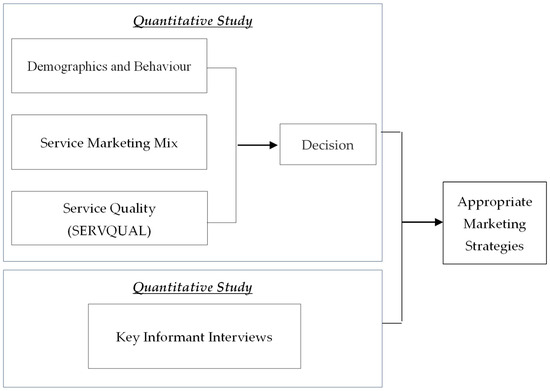
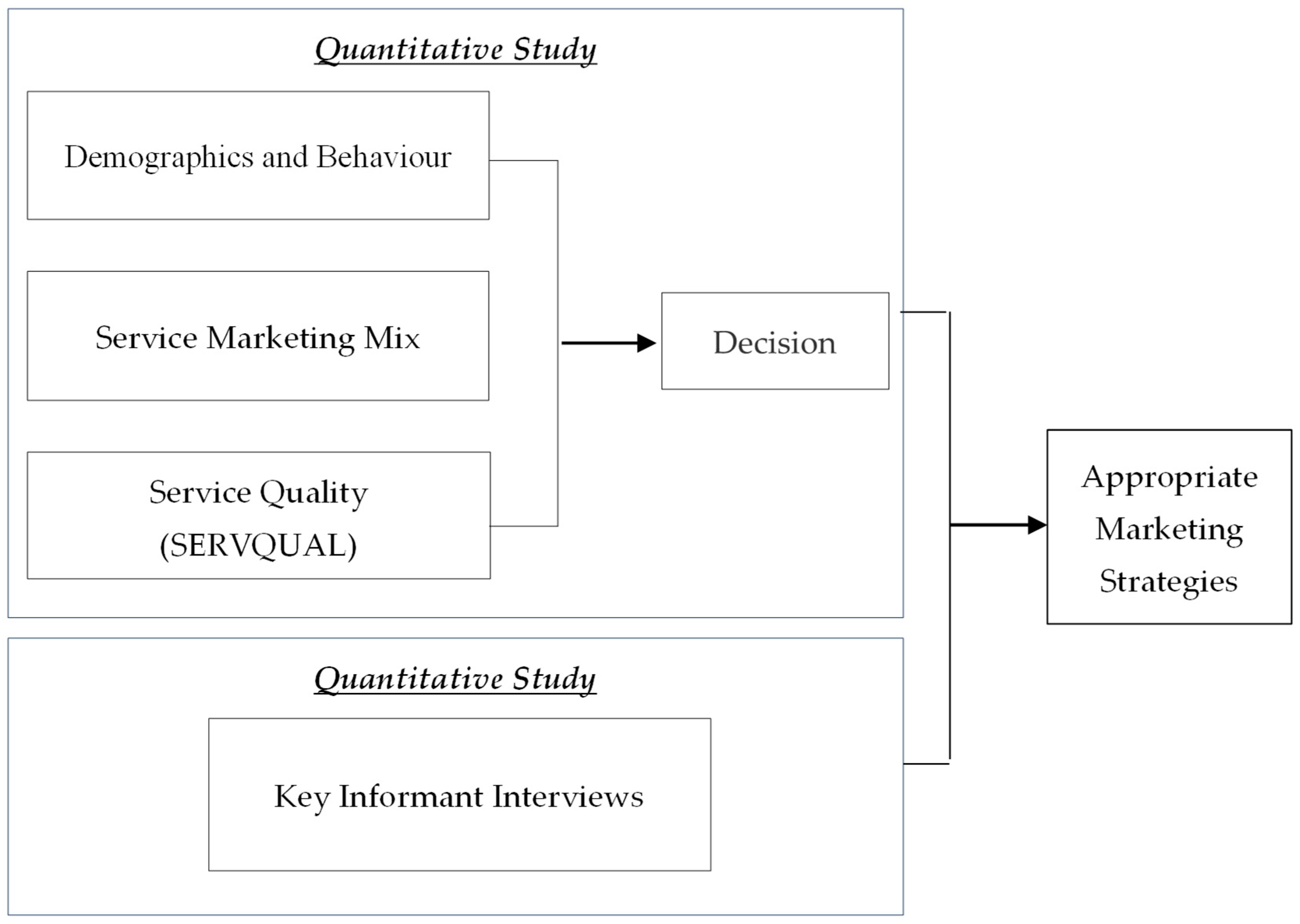
Previous research indicates that digital platforms are crucial resources for hotel customers in selecting their hotel accommodations. Buhalis and Law (2008) demonstrated that information and communication technologies generate key changes that influence the operations of tourism management organizations. The research suggests that digital distribution channels dominate hotel selection for guests’ demand modification, pushing hotels to adapt their marketing strategies. The study carried out by Filieri et al. (2015) showed that trust in consumer-generated media, such as reviews on TripAdvisor, directly influences the responses of travelers to recommendations and the dissemination of hotel information to other people. Hotels need to combine their current marketing approach with digital marketing solutions and service quality management systems to meet the evolving needs of traveling customers. Although there has been considerable attention to research on the marketing mix and service quality, there is a lack of empirical research that explores secondary urban tourism destinations. The majority of the research has been focused on large cities and famous tourist sites, but there has been limited exploration of how marketing strategies need to be adapted to suit regional tourism centers that rely on international tourists and tourists who travel short distances. Research needs to carry out quantitative analysis of tourist behavior, and the hotel industry needs to disclose their methods of operation. This study investigates the role of marketing mix elements and service quality in determining the hotel selection preference of Hat Yai Municipality visitors who belong to the growing urban tourism sector in southern Thailand. The research combines quantitative regression analysis with qualitative SWOT–TOWS strategic analysis to create new knowledge that builds upon current hospitality marketing research and provides useful findings for Southeast Asian regional tourism areas and developing tourism markets worldwide. The conceptual framework of this study is illustrated in Figure 1, and the following hypotheses are proposed based on the aforementioned discussion:
Figure 1.
Conceptual Framework.
H1.
The service marketing mix (7Ps) has a significant positive influence on hotel selection decisions.
H2.
The service quality (SERVQUAL) has a significant positive influence on hotel selection decisions.
3. Materials and Methods
3.1. Population and Samples
The population of the quantitative study consisted of tourists who stayed at hotels located within Hat Yai Municipality, Songkhla Province, Thailand. The sample size was determined using Yamane’s (1973) formula at a 95% confidence level, which required a sample of 385 respondents. A purposive sampling method was employed to collect data from tourists who are staying at four- to five-star hotels in Hatyai. This approach is considered appropriate for ensuring the relevant experience and knowledge for evaluating the service marketing mix and service quality factors. The qualitative study applies purposive sampling to select the key informant. The key informant selected from four to five hotel operators based on their experience and involvement in hotel management and marketing. However, the application of purposive sampling may limit the representativeness of the sample, and the result may not reflect the broader population of hotel customers. Consequently, the researcher interprets the result with caution, particularly in application beyond the study context.
3.2. Instrument
3.2.1. Questionnaire
The quantitative data were collected using a structured questionnaire consisting of four sections: 1. Demographic characteristics of respondents 2. Marketing mix factors (7Ps), including product, price, place, promotion, people, process, and physical evidence 3. Service quality dimensions, based on the SERVQUAL model: tangibles, reliability, responsiveness, assurance, and empathy 4. Hotel selection decision. All measurement items were assessed using a five-point Likert scale (Likert, 1932), ranging from 1 (strongly disagree) to 5 (strongly agree). The recent study by Jebb et al. (2021) has emphasized that Likert scales have been implemented in social science studies over the past decades. The Likert scales are properly applied when supported by reliability testing, scale validation, and measurement precision. The questionnaire items were adapted from established studies in hospitality and service marketing literature and modified to fit the local context. The questionnaire’s content validity was evaluated by three professionals in hospitality management and marketing. The content validity result indicates an Index of Item-Objective Congruence (IOC) value above the acceptable threshold of 0.50 for all items. A pilot test was executed with 30 participants who were excluded from the final sample. The reliability analysis produced Cronbach’s alpha coefficients over 0.70 for all constructs, signifying adequate internal consistency.
3.2.2. Semi-Structured Interview
A semi-structured interview was used to collect qualitative data from hotel operators.
3.3. Collection of Data
On-site surveys of tourists staying in hotels comprise the quantitative data between 1 November 2024 to 1 January 2025. Respondents were made aware of the objectives and assured of confidentiality and anonymity before participation. Qualitative data came from a semi-structured interview with hotel operators about 45–60 min.
3.4. Data Analysis
The quantitative data were evaluated utilizing SPSS Statistics version 20 (IBM Corp., Armonk, NY, USA). Descriptive statistics, including frequency, percentage, mean, and standard deviation, were used to describe the characteristics of the respondents and behaviors. Furthermore, inferential statistics and multiple linear regression were used to determine the influence of marketing mix and service quality dimensions on hotel selection decisions at a 0.05 level of significance. Before conducting the multiple linear regression analysis, normality, multicollinearity, and homoscedasticity were tested to ensure the validity of the regression results. Skewness and kurtosis values were used to assess normality with visual inspection of normal probability (P–P) plots. The acceptable ranges between −2 and +2 for skewness and −7 and +7 for kurtosis. The Variance Inflation Factor (VIF) was analyzed to assess multicollinearity, with acceptable values above 5 rather than exceeding 10. Homoscedasticity was assessed by scatterplots of standardized residuals (Hair et al., 2014). Qualitative data were subjected to thematic analysis with SWOT analysis and the TOWS Matrix. The analysis procedure encompassed the following: data familiarization, initial categorization, theme identification, and interpretation. The transcripts of all interviews were thoroughly reviewed and categorized into key themes that were relevant to marketing strategies. The identified themes were synthesized to develop the SWOT analysis. Subsequently, these findings informed the development of practical marketing strategy guidelines aligned with empirically driven results from quantitative analysis.
4. Results
4.1. Demographic Characteristics and Behavior
Most of the respondents were female (246 respondents, 63.9%), followed by male (97 respondents, 25.2%) and those who preferred not to say their gender (42 respondents, 10.9%). Most respondents were aged between 31 and 40 years old (178 respondents, 46.2%), followed by those who were between 18 and 30 years old (152 respondents, 39.5%), then the ages between 41 and 50 years old (53 respondents, 13.8%), and finally the group aged between 51 and 60 years old (2 respondents, 0.5%). Most of them are single, with 225 respondents (58.4%), followed by married with 141 respondents (36.6%), and widowed/divorced/separated with 19 respondents (4.9%). In respect of occupation, most of the respondents were private sector employees (187 respondents, 48.6%), followed by self-employed individuals/business owners at 152 respondents (39.5%), government or state enterprise employees (10.6%), and students (1.3%). Regarding monthly income, the majority earned between 25,001 and 35,000 baht (192 respondents, 49.9%), followed by those earning 35,001–45,000 baht (98 respondents, 25.5%), 15,001–25,000 baht (58 respondents, 15.1%), less than 15,000 baht (27 respondents, 7.0%), and more than 45,000 baht (10 respondents, 2.6%).
In terms of travel behavior, most tourists stayed for two nights (258 respondents, 67.0%), followed by one night (27.3%) and three nights (5.7%). More than half of the respondents were first-time guests (207 respondents, 53.8%), followed by those staying for the second time (44.2%) and third time (2.1%). Regarding room type, most respondents selected deluxe rooms (273 respondents, 70.9%), followed by suite rooms (15.1%) and standard rooms (14.0%). In terms of room rates, the majority stayed at hotels charging 1501–2000 baht per night (165 respondents, 42.9%), followed by 2001–2500 baht per night (143 respondents, 37.1%). With respect to the purpose of stay, leisure travel accounted for the largest proportion (51.9%), followed by business or work-related travel (38.4%) and personal reasons (9.6%). Most respondents made reservations through online travel agencies (OTAs) such as Agoda and Booking.com (93.2%), while 4.4% booked via telephone or email and only 2.3% booked directly through hotel websites.
4.2. Descriptive Analysis of Service Marketing Mix and Service Quality
The descriptive analysis of the service marketing mix (7Ps) indicated that respondents perceived the overall marketing mix at the highest level ( = 4.57). Among individual dimensions, product received the highest mean score ( = 4.73), with cleanliness of the hotel rated as the most important item. Price was also rated at the highest level ( = 4.54), particularly in terms of value for money. Distribution channels showed a high mean score ( = 4.62), with ease of accessing hotel information online receiving the highest rating. Promotion was rated at a high level ( = 4.35), especially reasonable room rate promotions. Personnel ( = 4.59) and service process ( = 4.57) were also rated highly, with friendliness and efficient check-in/check-out procedures receiving the highest scores. Physical evidence achieved a high mean score ( = 4.59), particularly hotel location and exterior design. The descriptive analysis of service quality (SERVQUAL) revealed an overall perception at the highest level ( = 4.68). Among the five dimensions, tangibles received the highest mean score ( = 4.73), especially staff appearance. Assurance ( = 4.69), empathy ( = 4.67), responsiveness ( = 4.66), and reliability ( = 4.65) were all rated at the highest level.
4.3. Multiple Linear Regression Analysis
4.3.1. Analysis of Service Marketing Mix
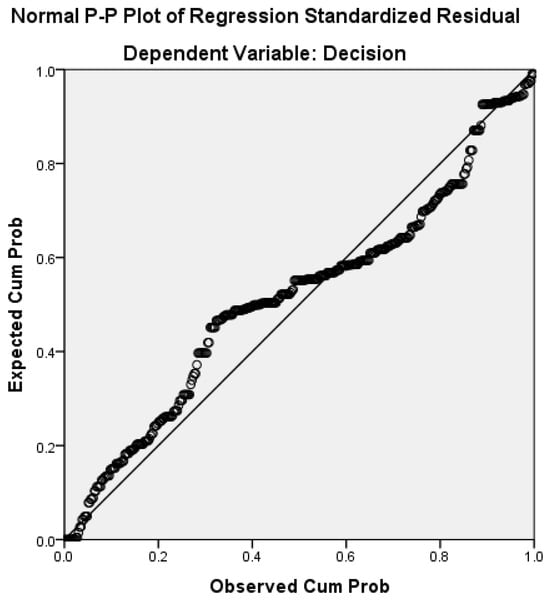
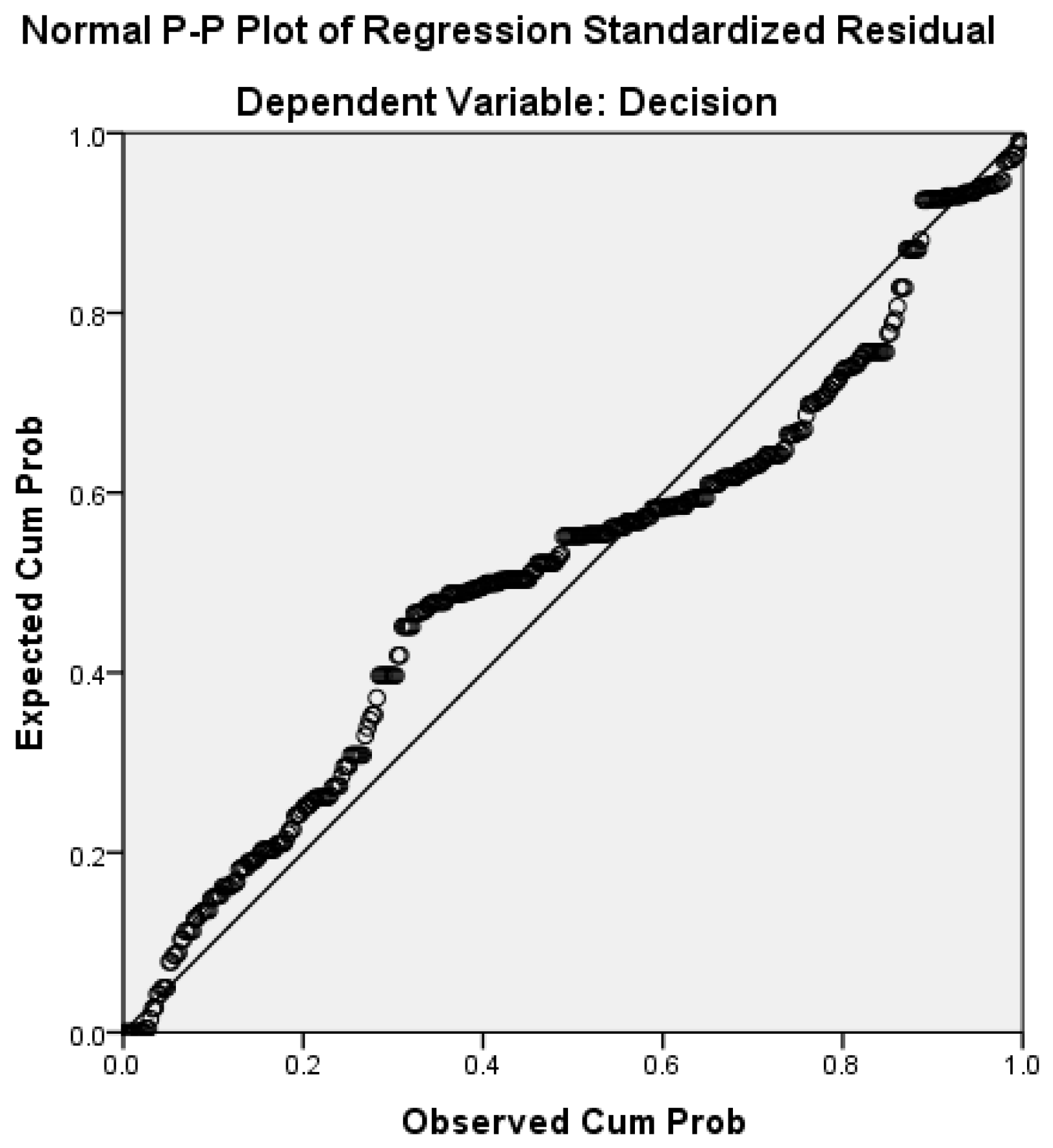
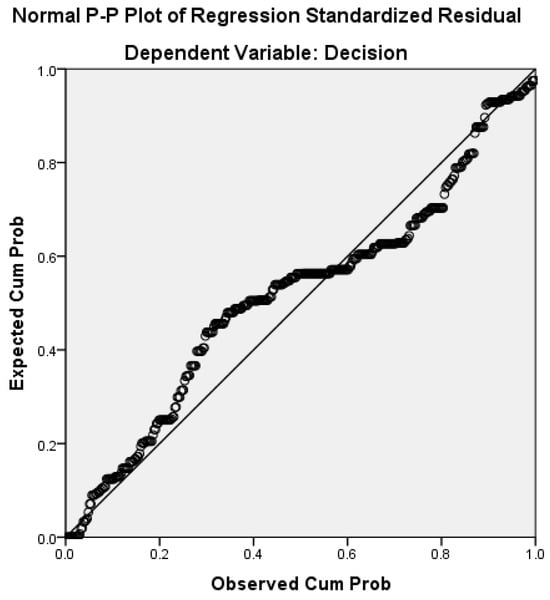
The results of the multiple linear regression analysis examining the influence of the service marketing mix (7Ps) on hotel selection indicated that the model was statistically appropriate and met all underlying assumptions. Tolerance values exceeded 0.10 and VIF values were below 10, indicating no multicollinearity issues. The Durbin–Watson value of 1.947 suggested no autocorrelation. The normality assumption is upheld, as the normalized residuals nearly conform to the diagonal line, exhibiting only minor deviations as illustrated in Figure 2, the normal P–P plot.
Figure 2.
Normal P–P Plot of Regression Standardized Residual for Service Marketing.
The analysis in Table 1 revealed a correlation coefficient (R) of 0.709, indicating a high level of positive correlation between service marketing mix and customer selection. An R2 value of 0.503 means the model explained 50.3% of the variance in accommodation choices (Adjusted R2 = 0.470), which is considered satisfactory. Individual regression analyses showed that the variables with a positive and statistically significant influence (p < 0.05) on accommodation choices. All variables in the service marketing mix have a significant positive effect on hotel selection decisions (p < 0.05). Among these variables, physical evidence (β = 0.211, p < 0.001) and promotion (β = 0.211, p < 0.001) were indicated as the strongest predictors of hotel selection. It indicated that the tangible service environment and marketing communication of the hotel were influencing the customer selection. While personnel (β = 0.180, p = 0.004) and service process (β = 0.161, p = 0.009) indicate a relatively strong effect of hotel selection. It demonstrated that human interaction and hotel service processes influence customer selection as well. Moreover, contract personnel (β = 0.180, p = 0.004) and service process (β = 0.161, p = 0.009) indicated a weak effect. It indicated that these two factors remain influencing customer decisions but least shape customer decisions. Furthermore, the hotel management perspective should prioritize enhancing the physical evidence, promotion, staff performance, and hotel service, as all these factors have the strongest influence on the customer decision, rather than focusing solely on the core product and distribution channel.
Table 1.
Multiple Linear Regression Analysis of Service Marketing Mix.
4.3.2. Analysis of Service Quality
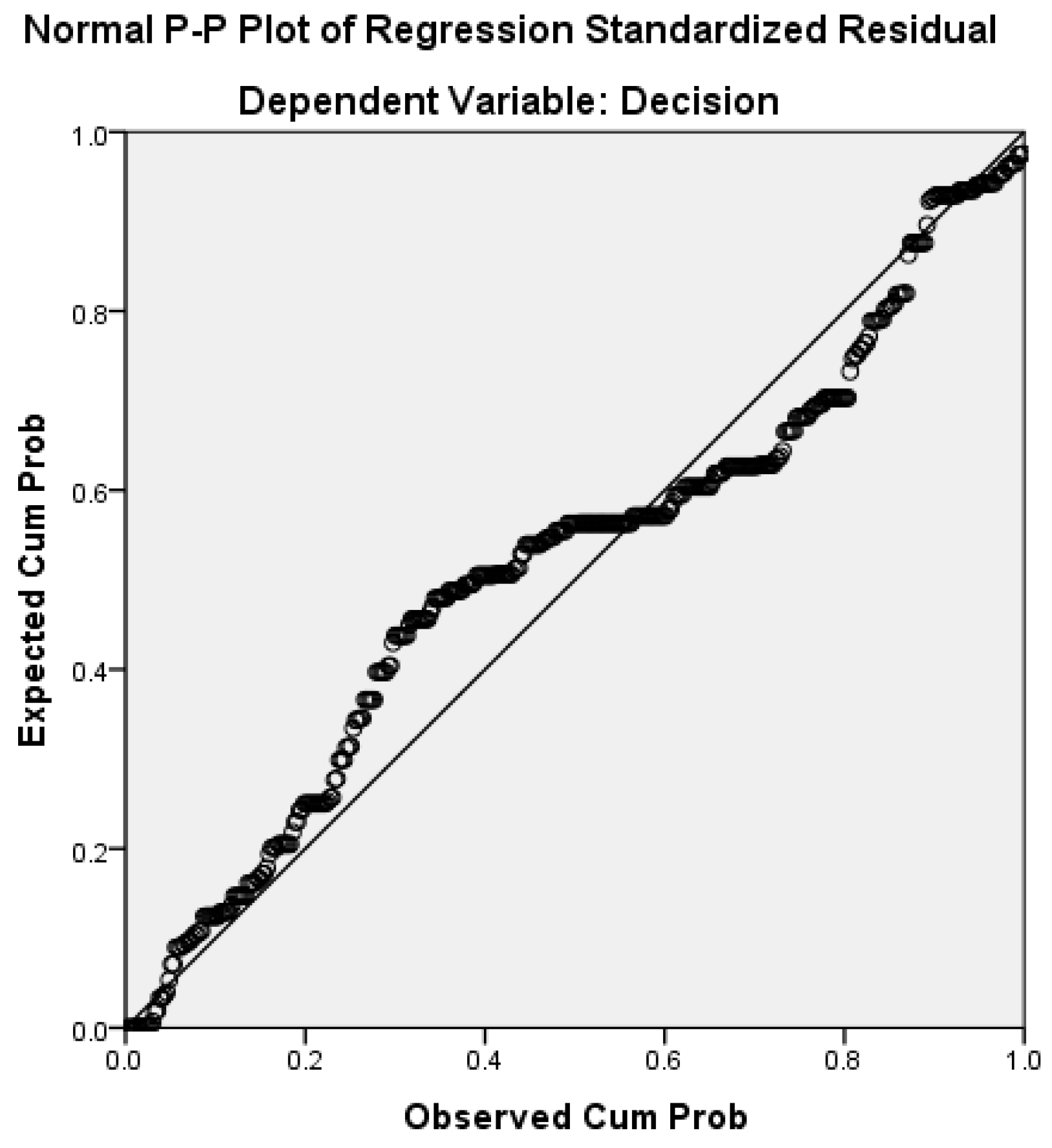
The results of the multiple linear regression analysis of service quality (SERVQUAL Model) influencing hotel selection indicated that the model was appropriate and satisfied all statistical assumptions. The tolerance values were greater than 0.10 and the VIF values were less than 10, indicating that there was no multicollinearity problem. In addition, the Durbin–Watson value was 1.862, which fell within the acceptable range indicating the independence of variables. The normality assumption is upheld, as the normalized residuals nearly conform to the diagonal line, exhibiting only minor deviations as illustrated in Figure 3, the normal P–P plot.
Figure 3.
Normal P–P Plot of Regression Standardized Residual of Service Quality.
The analysis results showed in Table 2 that the correlation coefficient (R) was 0.663 and the R2 value was 0.439, indicating that the model could explain 43.9% of the variance in hotel selection decisions (Adjusted R2 = 0.386), which is considered to have predictive explanatory power. When considering the individual regression coefficients, the variables that had a positive and statistically significant influence (p < 0.05) on hotel selection decisions. All three service quality dimensions have a significant positive effect on hotel selection decisions (p < 0.05). Among these variables, responsiveness (β = 0.286, p < 0.001) was indicated as the strongest predictor of hotel selection. It indicated that staff prompt service and timely responses to guest requests influenced the hotel selection. While empathy (β = 0.160, p = 0.002) indicates a relatively strong effect of hotel selection. It indicated that staff ability to understand customer needs played a meaningful role in hotel selection decisions. Moreover, reliability (β = 0.110, p = 0.034) indicated a weak effect among the variables. It indicated that service consistency and dependability remain important even with less influence in hotel selection decisions. Furthermore, hotel management should prioritize enhancing responsiveness and empathy to improve customer satisfaction and overall experience.
Table 2.
Multiple Linear Regression Analysis of Service Quality.
4.4. SWOT Analysis
Based on in-depth interviews with hotel operators in Hat Yai Municipality, Songkhla Province, it was found that most operators shared common perspectives regarding the strengths, weaknesses, opportunities, and threats related to hotel business operations in the area. The key findings are summarized as follows.
- Strengths: Most hotels are in the center of the city, close to shopping centers, markets, and major tourist attractions, which makes it convenient for customers to travel to their locations (S1). Additionally, hotels maintain excellent service standards, particularly when it involves cleanliness, safety, and modern facilities (S2). Hotel executives and staff have plenty of expertise operating hotels (S3), which is supported by a loyal customer base and high levels of returning guests (S4). Some hotel properties also proposed unique features, such as Lanna-style boutique concepts, MICE-certified hotels, and hotels that focus on environmental sustainability, which contribute to their differentiation and build an excellent reputation (S5).
- Weaknesses: A significant problem with hotels in the area is dependent on tourists from Malaysia and Singapore (W1). This indicates the businesses attract a limited variety of customers and consequently exposed to challenges related to cross-border travel. Numerous hotels encounter difficulties in utilizing digital technologies such as direct website platforms, online marketing platforms, and customer relationship management (CRM) systems (W2). This causes businesses to depend on online travel agents (OTAs) who charge substantial commission costs. Several workforce members lack sufficient language proficiency and contemporary technological skills, while cost management protocols are not sufficiently adaptable to accommodate changing economic circumstances (W3).
- Opportunities: Hat Yai remains a favored destination for tourists from neighboring countries, particularly Muslim families from Malaysia and Singapore, whose presence continues to increase (O1). This scenario presents the opportunity to construct hotels that are accommodating to Muslims, featuring halal cuisine, prayer facilities, and service areas designed to honor their beliefs. Opportunities exist to expand the Meetings, Incentives, Conferences, and Exhibitions (MICE) sector, aligning with Hat Yai’s development as a regional conference hub (O2).
- Threats: Hotel operators agreed that competition in the Hat Yai hotel market is increasingly intense due to the growth of small-scale accommodations and informal lodging, such as Airbnb and pool villas (T1). It requires medium to large hotels to adjust their strategies to retain customer loyalty. Moreover, there is the issue of economic uncertainty, rising operational expenses, and rapidly changing tourist behavior, with greater emphasis placed on value for money, convenience, and sustainability (T2). Furthermore, hotel occupancy rates in Hatyai remain highly dependent on government-organized events and festivals, as Hatyai lacks natural tourist attractions comparable to destinations such as Samui and Phuket (T3).
4.5. TOWS Matrix Analysis
Based on the analysis of the internal and external environments of hotels in Hat Yai Municipality, a strategic analysis was conducted using the TOWS Matrix framework in Table 3. This approach integrates organizational strengths, weaknesses, opportunities, and threats to formulate appropriate strategic directions for development and to enhance the competitive capabilities of hotels in the area, as presented below.
Table 3.
Strategic Analysis of Hotels in Hat Yai Municipality (TOWS Matrix).
5. Discussion and Conclusions
The results of the multiple linear regression analysis revealed that six marketing mix factors namely physical evidence, product, promotion, people, service process, and distribution channels exert a positive and statistically significant influence on tourists’ hotel selection decisions at the 0.05 significance level. Among these factors, physical evidence and product demonstrated the highest regression coefficients. This finding indicates that tourists place the greatest importance on a hotel’s image, convenience, cleanliness, and the quality of facilities and amenities. This result is consistent with service marketing theory, which emphasizes the importance of tangible elements in reducing perceived risk and shaping customer expectations in service-intensive industries (Booms & Bitner, 1981; Kotler et al., 2017). The physical evidence aligns with previous hospitality studies highlighting the role of the service environment in influencing customer perceptions and decision-making. Ryu and Han (2010) found that physical environments and service atmospherics significantly contribute to positive customer experiences in hospitality settings. Similarly, studies focusing during the pandemic contexts suggest that cleanliness, facility quality, and overall hotel appearance have become increasingly important as indicators of safety, comfort, and service reliability (Limapan & Phucharoen, 2023). The current study was confirmed by Hoque et al. (2026) that pricing strategies and location were the most influential factors in enhancing tourist satisfaction and loyalty, followed by promotion and service process. The strong influence of product attributes further suggests that tourists evaluate hotels based on the perceived value of core offerings, including room quality, facilities, and service features, which supports prior research emphasizing product quality as a key determinant of hotel choice (Kotler et al., 2017). In addition, the significance of promotion and distribution channels reflects the growing role of digital information sources and online booking platforms in tourists’ decision-making processes. This finding is consistent with earlier studies indicating that effective promotional communication and accessible online distribution channels reduce search costs and facilitate hotel comparison, thereby influencing hotel selection behavior (Law et al., 2014; Filieri et al., 2015). Belias et al. (2023) demonstrate that the integration of online platforms, social media interaction, and real-time consumer contact enhances customer experience and bolsters brand exposure. In the post-pandemic era, the utilization of technology and innovative marketing strategies significantly enhances business competitiveness and alters customer engagement in the service sector (Jibril et al., 2024; Ozturk & Ozturk, 2024). The positive effects of people and service process further underscore the importance of employee performance and efficient service delivery in shaping tourists’ perceptions and confidence prior to hotel selection. Together, these findings suggest that tourists’ hotel selection decisions are driven by a combination of tangible service attributes, digital accessibility, and service delivery efficiency, reinforcing the need for hotels to adopt an integrated marketing mix strategy to remain competitive. This finding is confirmed by Buhalis and Sinarta (2019), who found that real-time service delivery, social media engagement, and tailored consumer contact increasingly impact decision-making in tourism and hospitality.
Moreover, the results of the multiple linear regression analysis revealed that three service quality factors namely responsiveness, empathy, and reliability exert a positive and statistically significant influence on tourists’ hotel selection decisions at the 0.05 significance level. This finding aligns with the SERVQUAL theory developed by Parasuraman et al. (1990), which emphasizes that service quality is assessed through customers’ perceptions of assurance, reliability, empathy, tangibles, and responsiveness. Ladhari (2009) found that service quality dimensions—particularly responsiveness, reliability, and empathy—significantly influence hotel customers’ behavioral intentions through emotional satisfaction. This is related to the finding of Shafiq et al. (2019), who found that dimensions of service quality significantly impact overall satisfaction, with tangibles, responsiveness, and empathy identified as the most significant variables influencing customer satisfaction. Rather (2020) indicated that service quality has a substantial effect on consumer–brand identification, engagement, and ultimately brand loyalty. Ali et al. (2021) confirmed that core service quality dimensions like empathy, assurance, responsiveness, and tangibles have a significant positive impact on customer satisfaction, which is critical in influencing future behavioral intentions. Similarly, Ali et al. (2021) reported that responsiveness, empathy, and reliability are key determinants of customer satisfaction in hotel services. The result also related with Kannaovakul and Promsivapallop (2022) found that six core dimensions of guest service quality: leisure activities, tangibles and surroundings, reliability, responsiveness, service process, and food are keys service quality dimensions in the hotel industry.
Furthermore, the qualitative analysis was derived from in-depth interviews with hotel operators and the application of the SWOT–TOWS matrix. The results of qualitative analysis give varied TOWS strategic recommendations. By synthesizing both outcomes of the evidence, the study proposes four appropriate marketing strategies: Firstly, digital competitive advantage: Hat Yai hotels could reduce their reliance on online travel agents, cut commission costs, and enhance customer loyalty. By enhancing service quality (responsiveness, empathy, and reliability) and enhancing online visibility and accessibility (promotion and distribution channel), Hat Yai hotels can gain a digital competitive advantage. The strengths identified can be leveraged to develop a digital advantage and enhance customer relationship management (CRM) through improvements in online platforms, CRM systems, and direct booking channels. This approach has the potential to boost sales and decrease dependence on online travel agencies (OTAs). Information and communication technology has significantly altered the distribution of tourism, according to Buhalis and Law (2008). Similarly, digital transformation can shape customer behavior, such as behavioral targeting, geotargeting, AI-enabled customer interaction, social listening, and interactive online promotions (Ozturk & Ozturk, 2024). The result has enabled hotels to engage with a greater number of consumers, operate their businesses more efficiently, and establish a stronger connection with their clients. Additionally, Law et al. (2014) asserted that effective digital distribution strategies can reduce dependence on online travel agencies (OTAs) and foster more direct relationships with consumers. The new technology also improves corporate competitiveness and transforms consumer involvement in the service industry (Jibril et al., 2024). Secondly, the growth of a niche market: Hotels should capitalize on the expanding Muslim tourism market by implementing a Muslim-friendly and niche strategy. This approach involves improving the physical evidence and product attributes of the hotel, which exert the most significant influence on hotel selection in Hatyai. The hotels could utilize their competitive advantages by providing halal meals, prayer rooms, or family-friendly vacation packages, as tangible attributes could shape brand perception, while reliability strengthens trust. This market segment demonstrates its strong client loyalty and its capacity for continued growth. This discovery is consistent with Thudam (2025) research, which suggested that hotels can improve their competitiveness and customer satisfaction by aligning their service quality with religious and cultural expectations. This instance includes the provision of halal cuisine, prayer facilities, and family-oriented services. According to prior research, niche tourism techniques allow hotels to differentiate their offerings, foster more profound emotional connections with guests, and foster greater loyalty in comparison to mass-market strategies (Kotler et al., 2017). Thirdly, enhancement of service quality: Hotels in Hat Yai could distinguish their brands to compete with alternative accommodations and a price-sensitive market. The hotel should enhance staffing and service processes to improve responsiveness, empathy, and reliability in influencing travelers’ perceptions and confidence before hotel selection. Previous studies in the hospitality industry have thoroughly validated the importance of the Service Quality Enhancement Strategy. Kotler et al. (2017) emphasized that exceptional hotel brands are established on the foundation of consistent service quality, a well-defined market position, and positive customer experiences, all of which result in customer loyalty and repeat visits. Ladhari (2009) demonstrated that individuals are more willing to return to the business or disseminate the word about it when they receive high-quality service, which in turn improves their overall attitude. Shafiq et al. (2019) identified that tangibles, responsiveness, and empathy are the primary factors affecting Generation Y’s satisfaction. Younger travelers emphasize the importance of service quality, personnel engagement, and contemporary physical amenities. Rather (2020) examined the influence of service quality and consumer-brand value congruence on loyalty to hospitality businesses. Similarly, Ali et al. (2021) demonstrated that empathy, assurance, responsiveness, and tangibles positively influence customer satisfaction, which is crucial in shaping future behavioral intentions. In uncertain conditions, Limapan and Phucharoen (2023) identified hotel image and reputation as crucial determinants affecting hotel selection decisions. The results suggest that establishing permanent customer loyalty and attaining a competitive edge rely on the improvement of service standards and the strengthening of brand image. Finally, sustainability and risk management strategies: Hat Yai hotels should enhance workers’ digital skills and language skills to cope with economic instability. The emphasis on sustainability and risk management strategy is consistent with prior research. According to Kotler et al. (2017), hotels that demonstrate socially responsible behavior, manage their resources effectively, and exhibit environmental responsibility can enhance their value propositions and establish consumer trust. Grönroos (2007) also stated that sustainable service management is beneficial for maintaining competitiveness in service-based businesses by enhancing perceived value and relationship quality. We derived the four strategy directions by combining statistically significant customer decisions with context-specific qualitative observations. It ensures that the recommended tactics are both empirically substantiated and strategically relevant.
6. Theoretical Contributions
- The study has extended the existing theory and research on the service marketing mix and service quality combination to study within emerging urban tourism destinations, while other studies have been investigated independently. This integrated perception helps to increase theoretical understanding of service managerial tools, and customer service perception shapes customer decisions.
- This study advances methodology through the mixed-method design. The research synthesizes the gap between theory testing and strategic application. This integrated approach demonstrates the ability to translate statistically validated customer decision drivers into empirically grounded marketing strategies.
7. Future Research and Implication
7.1. Future Research
- Future studies may explore differences in the relative importance of marketing mix and service quality factors across customer segments, such as age, income levels, and travel experience (e.g., first-time versus repeat customers), to provide more nuanced insights into hotel selection behavior.
- Future studies can be conducted to examine consumer behavior, especially among international consumers and the younger generation, such as tourists from Malaysia, Singapore, and working-age groups.
- Future studies can be conducted to examine the impact of emerging technologies on the hotel industry, such as the application of artificial intelligence (AI) technology in managing customer relationships and the application of service automation systems.
7.2. Managerial Implications
- The hotel should stimulate the application of technology and digitalization in hotel management. It can assist in analyzing data about customers’ behavior and defining more accurate, proactive marketing strategies.
- The hotel should develop niche markets to create differentiation, such as younger travelers who want to experiment with experience-based travel.
- The hotel should enhance service quality by focusing on the training of staff in guest service mind, cross-culture communications, and knowing foreign languages especially English and Malay which to better serve international guests as well as reinforce brand recognition.
- The hotel can develop a collaborative network with local stakeholders in the community, which can assist in the distribution of income to the local community and the promotion of the hotel’s sustainable image.
Author Contributions
Conceptualization, P.L. and T.R.; methodology, P.L.; software, P.L.; validation, P.L., T.R. and N.K.; formal analysis, P.L.; investigation, P.L. and N.K.; resources, P.L.; data curation, P.L. and C.C.; writing—original draft preparation, P.L.; writing—review and editing, T.R., N.K. and C.C.; visualization, P.L.; supervision, P.L.; project administration, P.L.; funding acquisition, P.L. All authors have read and agreed to the published version of the manuscript.
Funding
This research was funded by Rajamangala University of Technology Srivijaya (RMUTSV) through the Annual Revenue Budget Research Grant (Fiscal Year 2025; B.E. 2568) RISS ID: 4807410.
Institutional Review Board Statement
The study was conducted in accordance with the Declaration of Helsinki and approved by the Human Research Ethics Committee of Rajamangala University of Technology Srivijaya (protocol code IRB.2567.016/09; date of approval: 15 March 2024).
Informed Consent Statement
Informed consent was obtained from all subjects involved in the study.
Data Availability Statement
The original contributions presented in the study are included in the article, further inquiries can be directed to the corresponding author.
Acknowledgments
The authors would like to express their sincere gratitude to the hotel managers and respondents in Hat Yai Municipality, Songkhla Province, for their valuable participation and cooperation in this study. The authors also acknowledge the Faculty of Liberal Arts, Rajamangala University of Technology Srivijaya, for providing administrative and academic support throughout the research process. During the preparation of this manuscript, the authors used ChatGPT (OpenAI, GPT-5 version) and Quillbot (https://www.quillbot.com) for language refinement and editing purposes. The authors have carefully reviewed and revised the generated content and take full responsibility for the accuracy and integrity of the final manuscript.
Conflicts of Interest
The authors declare no conflicts of interest. The funders had no role in the design of the study; in the collection, analyses, or interpretation of data; in the writing of the manuscript; or in the decision to publish the results.
References
- Ali, B. J., Gardi, B., Othman, B. J., Ahmed, S. A., Ismael, N. B., Hamza, P. A., Aziz, H. M., Sabir, B. Y., Sorguli, S., & Anwar, G. (2021). Hotel service quality: The impact of service quality on customer satisfaction in hospitality. International Journal of Engineering, Business and Management, 5(3), 14–28. [Google Scholar] [CrossRef] [Scilit]
- Belias, D., Velissariou, E., Kyriakou, D., Vasiliadis, L., Roditis, A., Koustelios, A., & Sdrolias, L. (2023). The case of digital marketing strategies on luxurious hotels. Procedia Computer Science, 219, 1053–1060. [Google Scholar] [CrossRef] [Scilit]
- Booms, B. H., & Bitner, M. J. (1981). Marketing strategies and organization structures for service firms. In J. H. Donnelly, & W. R. George (Eds.), Marketing of services (pp. 47–51). American Marketing Association. [Google Scholar]
- Buhalis, D., & Law, R. (2008). Progress in information technology and tourism management: Twenty years on and 10 years after the Internet: The state of eTourism research. Tourism Management, 29(4), 609–623. [Google Scholar] [CrossRef] [Scilit]
- Buhalis, D., & Sinarta, Y. (2019). Real-time co-creation and nowness service: Lessons from tourism and hospitality. Journal of Travel & Tourism Marketing, 36(5), 563–582. [Google Scholar] [CrossRef] [Scilit]
- Filieri, R., Alguezaui, S., & McLeay, F. (2015). Why do travelers trust TripAdvisor? Antecedents of trust towards consumer-generated media and its influence on recommendation adoption and word of mouth. Tourism Management, 51, 174–185. [Google Scholar] [CrossRef] [Scilit]
- Grönroos, C. (2007). Service management and marketing: Customer management in service competition. John Wiley & Sons. [Google Scholar]
- Hair, J. F., Black, W. C., Babin, B. J., & Anderson, R. E. (2014). Multivariate data analysis (7th ed.). Pearson Education Limited. [Google Scholar]
- Hoque, M. N., Jannat, S. N., Arafat, Y., & Miah, M. M. (2026). Predictive modeling of tourist satisfaction based on service marketing mix elements using machine learning techniques. Scientific World Journal, 2026, 6666970. [Google Scholar] [CrossRef] [Scilit] [PubMed]
- Jebb, A. T., Ng, V., & Tay, L. (2021). A review of key Likert scale development advances: 1995–2019. Frontiers in Psychology, 12, 637547. [Google Scholar] [CrossRef] [Scilit] [PubMed]
- Jibril, A. B., Amoah, J., Panigrahi, R. R., & Gochhait, S. (2024). Digital transformation in emerging markets: The role of technology adoption and innovative marketing strategies among SMEs in the post-pandemic era. International Journal of Organizational Analysis. Advance online publication. [Google Scholar] [CrossRef] [Scilit]
- Kandampully, J., Zhang, T., & Jaakkola, E. (2018). Customer experience management in hospitality: A literature synthesis, new understanding and research agenda. International Journal of Contemporary Hospitality Management, 30(1), 21–56. [Google Scholar] [CrossRef] [Scilit]
- Kannaovakul, K., & Promsivapallop, P. (2022). Hotel service quality dimensions and attributes: An analysis of online hotel customer reviews. Tourism and Hospitality Research, 23(3), 420–440. [Google Scholar] [CrossRef] [Scilit]
- Kotler, P., Bowen, J. T., Makens, J. C., & Baloglu, S. (2017). Marketing for hospitality and tourism (7th ed.). Pearson Education. [Google Scholar]
- Ladhari, R. (2009). Service quality, emotional satisfaction, and behavioural intentions: A study in the hotel industry. Managing Service Quality: An International Journal, 19(3), 308–331. [Google Scholar] [CrossRef] [Scilit]
- Law, R., Buhalis, D., & Cobanoglu, C. (2014). Progress on information and communication technologies in hospitality and tourism. International Journal of Contemporary Hospitality Management, 26(5), 727–750. [Google Scholar] [CrossRef] [Scilit]
- Likert, R. (1932). A technique for the measurement of attitudes. Archives of Psychology, 22(140), 1–55. [Google Scholar]
- Limapan, P., & Phucharoen, C. (2023). An investigation of major aspects influencing domestic tourists’ choosing of upscale hotels in Phuket during COVID-19. Kasetsart Journal of Social Sciences, 44(2), 593–604. [Google Scholar] [CrossRef] [Scilit]
- McCarthy, E. J. (1964). Basic marketing: A managerial approach. Richard D. Irwin. [Google Scholar]
- Ozturk, E., & Ozturk, L. (2024). Impact of COVID-19 on marketing communications: New directions in the promotional mix. In L. Ozturk, R. Bayrak, & L. Erhan (Eds.), SMEs in agriculture and food industry during the health crises (Vol. 576). Studies in Systems, Decision and Control. Springer. [Google Scholar] [CrossRef] [Scilit]
- Parasuraman, A., Zeithaml, V. A., & Berry, L. L. (1990). Delivering quality service: Balancing customer perceptions and expectations. The Free Press. [Google Scholar]
- Puangsorn, R., Limapan, P., Mengchauy, V., & Klubtablung, K. (2025). Analyzing customer preferences for Coffeetel product development: A statistical approach. Suranaree Journal of Social Science, 19(2), e278180. [Google Scholar] [CrossRef] [Scilit]
- Rangtasi, P., & Pichayakul, P. (2023). Service marketing mix factors affecting the decision to select accommodations of Thai tourists in Chiang Mai Province after the relaxation of preventive measures for COVID-19. Journal of Thai Hospitality and Tourism, 18(2), 90–102. [Google Scholar]
- Rather, R. A. (2020). Customer experience and engagement in tourism destinations: The experiential marketing perspective. Journal of Travel & Tourism Marketing, 37(1), 15–32. [Google Scholar] [CrossRef] [Scilit]
- Ryu, K., & Han, H. (2010). Influence of the quality of food, service, and physical environment on customer satisfaction and behavioral intention in quick-casual restaurants: Moderating role of perceived price. Journal of Hospitality & Tourism Research, 34(3), 310–329. [Google Scholar] [CrossRef] [Scilit]
- Shafiq, A., Mostafiz, M. I., & Taniguchi, M. (2019). Using SERVQUAL to determine Generation Y’s satisfaction towards hoteling industry in Malaysia. Journal of Tourism Futures, 5(1), 62–74. [Google Scholar] [CrossRef] [Scilit]
- Shi, Z., & Shang, H. (2020). A review on quality of service and SERVQUAL model. In F. H. Nah, & K. Siau (Eds.), HCI in business, government and organizations (HCII 2020) (Vol. 12204). Lecture Notes in Computer Science. Springer. [Google Scholar] [CrossRef] [Scilit]
- Songkhla Provincial Statistical Office. (2024). Tourism situation in Songkhla province. Songkhla Provincial Statistical Office. Available online: https://songkhla.nso.go.th/index.php?option=com_content&view=article&id=743 (accessed on 15 September 2024).
- Thudam, P. (2025). The model for development of service quality according to Shariah principles to increase the competitiveness of hotels in Hatyai District, Songkhla Province, Thailand. Thailand and The World Economy, 43(1), 136–153. Available online: https://so05.tci-thaijo.org/index.php/TER/article/view/266764 (accessed on 28 March 2025).
- Yamane, T. (1973). Statistics: An introductory analysis (3rd ed.). Harper & Row. [Google Scholar]

Disclaimer/Publisher’s Note: The statements, opinions and data contained in all publications are solely those of the individual author(s) and contributor(s) and not of MDPI and/or the editor(s). MDPI and/or the editor(s) disclaim responsibility for any injury to people or property resulting from any ideas, methods, instructions or products referred to in the content. |
© 2026 by the authors. Licensee MDPI, Basel, Switzerland. This article is an open access article distributed under the terms and conditions of the Creative Commons Attribution (CC BY) license.