


Abstract
In many hospitality workplaces, customer deviant behaviour is no longer an occasional frustration but a routine part of frontline employees’ day, steadily draining their energy, dignity and desire to deliver great service. Yet in sub-Saharan Africa, especially in Ghana, there is still limited evidence showing how this behaviour undermines employees’ motivation and what can realistically be done inside organisations to buffer its impact. This study explored how mistreatment from customers affects the service motivation of frontline employees in Ghanaian hotels and examines whether supportive supervisors can act as a protective buffer. Using a quantitative cross-sectional survey of 508 frontline staff in licensed hotels in the Kumasi Metropolis, the study applies Partial Least Squares Structural Equation Modelling (PLS-SEM) to test these relationships. The findings reveal that when customers display deviant behaviour, employees feel less motivated to offer high-level service. On the other hand, strong supervisor emotional support uplifts service motivation and partially mediates the harm caused by deviant customers. These results show that everyday supervisory support (listening, empathizing, and standing up for staff) can make a tangible difference to how motivated employees feel after difficult customer encounters. The study therefore offers practical guidance for hotel managers who want to safeguard employees and sustain high service standards in demanding customer environments.
1. Introduction
Over the past decade, Ghana’s hospitality industry has undergone substantial expansion. It is driven by several factors, including the growth of domestic tourism, increasing international arrivals, and rising investment in the sector’s value chain (Preko & Anyigba, 2024; Quansah et al., 2023). While this growth brings opportunities for socio-economic development, it has intensified the demands placed on frontline employees (Ampofo et al., 2022). This demand stems from confronting diverse customer expectations and deviant behaviour without sufficient and consistent supervisory support (Akosa et al., 2025; Ma et al., 2023). Although customer deviant behaviour and supervisory support have each received scholarly attention in hospitality and service management research, existing studies have largely examined these constructs in isolation rather than integrating them into a comprehensive explanatory framework that captures their combined influence on frontline employee motivation (Harris & Reynolds, 2003; Karatepe, 2015).
Customer deviant behaviour is a critical challenge because it disrupts service encounters and threatens employees’ emotional well-being and motivation (Abas et al., 2024). Because service quality in hospitality fundamentally depends on employees’ emotional regulation, display of positive affect, and sustained interpersonal engagement, increased exposure to customer misbehaviour has direct implications for both service excellence and employee retention (Mitsakis et al., 2025; Booyens et al., 2022; Özekici & Ünlüönen, 2022). Extant literature has documented that repeated encounters with hostile customers induce emotional exhaustion (Zhao et al., 2024; Gaspani, 2022; Pradhan, 2022), weaken employees’ intrinsic motivation for performance, ultimately eroding their motivation to maintain service-oriented behaviours (Namin et al., 2022). Nevertheless, empirical studies that simultaneously examine customer deviant behaviour, supervisory emotional support, and frontline employee service motivation remain limited, particularly within hospitality settings in developing economies where service encounters are often characterised by high emotional labour demands and resource constraints (Groth et al., 2009; M. Wang et al., 2011).
In the face of customer deviant behaviour, supervisor emotional support represents a vital organisational resource that can buffer the negative impact of customer misbehaviour. This is possible because supervisors play an essential role in helping employees interpret adverse customer interactions and regulate emotional responses (Andersen et al., 2025; Lamothe et al., 2021). Studies have shown that supportive supervision enhances employee resilience, mitigates work stressors, and sustains engagement even under adverse conditions (Nabawanuka & Ekmekcioglu, 2024; Meacham et al., 2023). When supervisors are perceived as empathetic, responsive, and approachable, employees are better equipped to manage challenging service interactions and maintain motivation (Kamran-Disfani et al., 2023). Notwithstanding, empirical studies that simultaneously examine customer deviant behaviour, supervisory emotional support, and frontline employee motivational outcomes remain relatively scarce in hospitality research, particularly within developing economies where service interactions often involve heightened emotional demands and resource constraints (Al-Hawari et al., 2020; Shahzad et al., 2023).
Despite growing recognition of the importance of supervisory support, there remains limited empirical evidence examining its mediating role in the relationship between customer deviant behaviour and service motivation, particularly within the hospitality context. Existing research has tended to focus on these constructs independently, exploring customer misbehaviour (Tekmen & Kaptangil, 2022; Sarwar et al., 2021; Gong et al., 2020) or supervisor support (Cheng et al., 2022; Hwang et al., 2021; Eissa et al., 2020) without integrating them into a comprehensive explanatory framework. This conceptual and empirical gap restricts understanding of the mechanisms through which organisational support systems can buffer the detrimental consequences of customer deviance on employee motivation and performance outcomes. Consequently, the limited studies on the integrative empirical frameworks examining these constructs together create gaps in theoretical development and restricts managerial understanding of how supportive supervisory practices can sustain employee motivation and service performance in challenging service encounters (Bani-Melhem et al., 2018; H. Kim et al., 2023).
Against the above background, the present study investigates how customer deviant behaviour influences frontline employees’ service motivation and whether supervisor emotional support mediates this relationship within Ghana’s hospitality industry. The study makes at least four key contributions. First, it extends hospitality and organisational behaviour literature to a sub-Saharan African context that remains underrepresented in empirical research, thereby generating insights grounded in Ghana’s service environment. Second, it advances theory by conceptualising supervisor emotional support as a central mechanism that mitigates the negative outcomes of customer deviance. Third, it offers practical implications for hospitality management. It does so by underscoring the value of emotionally supportive supervisory practices in nurturing employee motivation. Fourth, the present study illuminates pathways through which hospitality organisations can strengthen employee resilience and motivation and sustain high-quality service delivery in the face of increasing customer-related challenges.
2. Theory and Hypotheses Development
2.1. Theoretical Framing
The Conservation of Resources (COR) theory was first introduced by Hobfoll (1989). The theory can be used to explain motivation in emotionally demanding environments (G. Chen et al., 2024). The theory posits that individuals strive to acquire, protect, and retain resources necessary for effective functioning and well-being (Sonnentag & Meier, 2024). These resources include emotional energy, psychological resilience, and social support that help employees cope with stressful service work (Sonnentag & Meier, 2024).
According to Bardoel and Drago (2021), COR theory asserts that when individuals perceive a threat to or encounter resource loss, they experience diminished motivation. COR theory has been widely applied in organisational behaviour and hospitality research to explain employee reactions to emotionally demanding work conditions and customer-related stressors (Bardoel & Drago, 2021; Nguyen et al., 2022). A central principle of COR theory is that resource loss has a disproportionately greater psychological impact than resource gain (H. Liu, 2024). Therefore, negative experiences exert a stronger influence on emotional well-being and behavioural outcomes than positive or neutral events (Ye et al., 2022).
Employees with limited resource reserves are more vulnerable to cumulative loss cycles. In contrast, employees with access to supportive mechanisms such as social or supervisory support are better placed to prevent resource depletion (Fajri & Agbo, 2024). In hospitality settings, customer interactions, emotional labour, and supervisor-employee relationships constitute key components of an employee’s resource system (Sun et al., 2025).
From the COR theory perspective, customer deviance, expressed through verbal aggression, disrespect, or unreasonable demands, poses a direct threat to employees’ emotional and psychological resources. We argue that frequent exposure to such behaviour drains emotional energy and weakens employee motivation to deliver high quality service. Moreover, COR theory emphasises the importance of resource replenishment and protective mechanisms that help individuals restore emotional balance after adverse experiences. Within this context, we also argue that supervisor emotional support functions as a critical resource-conserving mechanism for frontline hospitality staff. In this respect, supportive supervisors provide empathy, validation, and guidance that help employees recover emotional resources and sustain service motivation. COR theory, therefore, provides an appropriate conceptual framework for analysing the effects of customer deviant behaviour on frontline employees’ service motivation within Ghana’s hospitality sector.
2.2. Conceptual Review
Customer deviant behaviour refers to customer actions that intentionally or unintentionally violate social norms, organisational rules, or expected standards of conduct within service settings (Ahmadi Alvar et al., 2023). It encompasses behaviours such as verbal aggression, rudeness, excessive complaints, unreasonable demands, intimidation, and other disruptive actions that undermine orderly service delivery (Dootson et al., 2023). Mayr and Teller (2024) describe customer deviant behaviour as a form of interpersonal mistreatment that generates psychological strain for service employees by threatening dignity, fairness, and mutual respect in service encounters. Such behaviour is often unpredictable and can interfere with employees’ emotional regulation, concentration, and task performance (J. Hu et al., 2022). In the hospitality industry, where frontline employees engage in frequent and emotionally intensive customer interactions, these deviant behaviours are particularly damaging (Mayr et al., 2022). Hotel establishments depend heavily on positive customer and employee exchanges. Therefore, deviant customer actions can disrupt service flow, increase emotional exhaustion, and erode employees’ motivation to provide high-quality service (Ji et al., 2022).
Liewendahl and Heinonen (2020) characterise service motivation as the psychological energy and willingness employees bring to service interactions, shaping how they display empathy, patience, and emotional labour. Frontline employee service motivation denotes the internal drive or desire that compels frontline staff to deliver high quality service, demonstrate care toward customers, and engage positively in service encounters (J. Wang et al., 2021). It reflects an employee’s intrinsic commitment to meeting customer needs and upholding service standards, even when facing demanding or stressful situations (H. Kim et al., 2023). In the hospitality industry, this form of motivation is especially critical because service provision depends largely on direct, real-time interactions between employees and customers (S. W. Chen & Peng, 2021). High levels of service motivation enable employees to remain courteous, responsive, and proactive, thereby enhancing guest satisfaction and strengthening organisational competitiveness (Waseem et al., 2021). Conversely, low service motivation diminishes service quality and can compromise the overall customer experience in this service-driven sector (Waseem et al., 2021).
Supervisor emotional support refers to a supervisor’s capacity to provide empathy, understanding, and emotional reassurance when employees encounter stressful or challenging situations (Mohr et al., 2021). It involves acknowledging employees’ feelings, offering comfort, and fostering a psychologically safe environment that helps employees manage emotional strain and feel valued (Uddin et al., 2023). Nielsen et al. (2023) further define supervisor emotional support as the provision of emotional resources such as encouragement, validation, and attentive listening that strengthen employees’ resilience and well-being, particularly during difficult interpersonal encounters at work. In the hospitality settings, where frontline employees routinely interact with demanding or unpredictable customers, such support plays a stabilising role (Pohl et al., 2022). For instance, supportive supervisors help employees cope with the pressures of customer deviance, recover from negative encounters, and sustain the motivation required for consistent, high-quality service delivery (Shin et al., 2022).
2.3. Hypotheses Development
Empirical research consistently shows that customer deviant behaviour undermines frontline employees’ emotional well-being and service motivation (Tekmen & Kaptangil, 2022). Behaviours such as verbal hostility, disrespect, and unreasonable demands generate substantial emotional strain, increase stress, and deplete the psychological resources necessary for sustained service performance (Hwang et al., 2021). Muhammad and Sarwar (2021) report that repeated exposure to such negative customer interactions diminishes employees’ cognitive focus and emotional engagement, reducing their capacity to deliver high-quality service. H. H. H. S. Hu et al. (2020) further demonstrate that persistent mistreatment triggers withdrawal tendencies, emotional distancing, and reduced discretionary effort, indicating a decline in intrinsic service motivation. Additional evidence suggests that customer deviance erodes employees’ positive affect, contributes to burnout, and heightens turnover intentions and counterproductive behaviours (Gong et al., 2020). Sarwar et al. (2021) confirm that customer deviant behaviour weakens frontline employee motivation, emotional stability, and service-oriented behaviour in hospitality contexts. Based on this evidence, we hypothesise that as follows.
H1.
There is a significant negative relationship between customer deviant behaviour and frontline employee service motivation in Ghana’s hospitality industry.
Customer deviant behaviour has also been identified as a stressor shaping how frontline employees perceive their work environment, including their evaluation of supervisory emotional support (Zang et al., 2021). Encounters with rude, aggressive, or otherwise dysfunctional customer actions elicit strong negative emotional reactions such as frustration, anxiety, and emotional exhaustion (Xiao et al., 2022). As these emotional demands accumulate, employees may experience reduced cognitive and emotional capacity to recognise or fully appreciate supportive behaviours from supervisors (Xiao et al., 2022). Y. C. Chen and Wu (2022) indicate that employees who frequently confront deviant customers are more likely to feel overwhelmed, which can distort or dampen their perceptions of supervisory support. Eissa et al. (2020) argue that heightened stress stemming from customer deviance can lead employees to view even genuine supervisory efforts as inadequate or misaligned with their needs. Similarly, Cheng et al. (2022) find that the emotional labour required to manage dysfunctional customer interactions can weaken employees’ trust in supervisors’ ability to offer appropriate emotional support. This strain has been linked to increased frustration and a greater tendency to interpret supervisory actions negatively, especially when support is perceived as delayed, inconsistent, or insufficient (Hwang et al., 2021; Zang et al., 2021; Fan et al., 2022). Based on these findings, the following hypothesis emerges.
H2.
There is a significant negative relationship between customer deviant behaviour and supervisor emotional support.
Supervisor emotional support provides a crucial psychological resource that enhances employees’ resilience, stabilizes their emotional states, and strengthens their motivation to remain engaged in service activities (X. Liu et al., 2024; Öksüz et al., 2023). Santos et al. (2023) show that supportive supervisors increase service motivation by demonstrating empathy, acknowledging employee challenges, and creating an environment in which employees feel respected and understood. Such behaviours facilitate emotional regulation and enable employees to manage stressful customer encounters without experiencing a decline in motivation (Santos et al., 2023). Song et al. (2021) further find that supervisor emotional support promotes psychological detachment from work-related stressors, reducing the emotional burden associated with customer mistreatment and sustaining employees’ service motivation. Supportive supervisory relationships also foster alignment with organisational goals by cultivating a climate of trust and mutual respect, which further enhances motivation and commitment to service performance (Alzgool et al., 2023). This evidence leads us to propose the following hypothesis.
H3.
There is a significant positive relationship between supervisor emotional support and frontline employees’ service motivation in Ghana’s hospitality industry.
Research also suggests that supervisor emotional support can act as a mediating mechanism in the relationship between customer deviant behaviour and employees’ motivational outcomes. Dar and Rahman (2022) show that higher levels of perceived supervisory support alleviate the negative emotions elicited by dysfunctional customer interactions, thereby helping employees sustain their motivation to deliver quality service. Similarly, Han et al. (2021) identify a positive association between perceived supervisor support and intrinsic motivation, indicating that supportive supervisory practices bolster employees’ resilience in the face of customer mistreatment. Bani-Melhem et al. (2021) and M. Kim et al. (2021) find that supervisory emotional support buffers employee stress despite customer misbehaviour. Y. C. Chen and Wu (2022) demonstrate that supervisor emotional support mediates the relationship between customer mistreatment and employee service behaviour, highlighting its role in shaping employees’ emotional and behavioural responses. Irshad et al. (2021) further underscore how emotional strain resulting from negative supervisory behaviours can foster deviant workplace outcomes, also reinforcing the importance of supportive supervision as a protective factor. Dar and Rahman (2022) similarly confirm the buffering role of supervisor emotional support in reducing the impact of interactional injustice on frontline staff. As a result of this evidence, we hypothesise that:
H4.
Supervisor emotional support mediates the relationship between customer deviant behaviour and frontline employees’ service motivation.
2.4. Conceptual Framework
Figure 1 presents the research model reflecting the potential associations. It posits that customer deviant behaviour significantly weakens the service motivation of frontline employees. As such, we predict that supervisor emotional support will strengthen employees’ service motivation and partially mediate the influence of customer deviant behaviour, suggesting that supportive leadership can mitigate the motivational impoverishment from rude or uncivil customers in hotel settings.
Figure 1.
Supervisor emotional support in customer deviant behaviour and frontline hotel employees’ service motivation.
3. Methodology
The present study is based on the positivist research philosophy. This philosophical approach posits that, as in natural sciences, social phenomena can be objectively observed and measured by empirical techniques (Avci, 2024; Shar, 2024). Positivism was considered appropriate for this study because the key constructs namely customer deviant behaviour, supervisory emotional support, and frontline employee service motivation represent observable workplace experiences that can be systematically measured through standardized survey instruments and analysed quantitatively. Within service management and organizational behaviour research, these constructs are frequently operationalized using validated scales and examined through statistical modelling to identify relationships among variables (Hair et al., 2022). The positivist paradigm therefore provides a suitable framework for examining the hypothesised relationships among these variables using structured questionnaires and structural equation modelling, enabling objective testing of theoretical relationships based on empirical data (Saunders et al., 2019).
Based on this view, we used the quantitative approach (Hunziker & Blankenagel, 2024b) to statistically test the proposed relationships among customer deviant behaviour, frontline employee motivation and supervisory emotional support. A cross-sectional survey design was considered appropriate because the study aimed to examine the relationships between customer deviant behaviour, supervisory emotional support, and frontline employee service motivation within a specific organisational context in the hospitality industry. Cross-sectional designs are widely used in organisational behaviour and service management research where the objective is to analyse associations among perceptual and behavioural constructs measured from respondents at a particular time (Yan et al., 2023; Hair et al., 2022). Although longitudinal or time-lagged designs can provide stronger evidence for causal inference, they often require repeated access to the same respondents over extended periods, which may be difficult in-service environments characterised by high employee turnover and shift-based work schedules (Rindfleisch et al., 2008; Sedgwick, 2014; Setia, 2016). In this regard, the adoption of cross-sectional design provides a practical and methodologically accepted approach for examining theoretically grounded relationships among variables when data are collected directly from employees within a specified time frame (Hair et al., 2022; Hunziker & Blankenagel, 2024a).
The study site was the Kumasi Metropolis, in the Ashanti region. The region is one of the fastest-growing tourism centres in Ghana, with Kumasi having the largest concentration of hotels (Ghana Tourism Authority, 2024). The target population was front office staff in the registered hotels in Kumasi Metropolis. The sample frame was developed from the Directory of Licensed Enterprises provided by the Ghana Tourism Authority, and only those that fell within the official sub-metro boundaries of Kumasi Metropolitan Assembly were included.
The total number of licensed accommodation establishments operating within the Ashanti tourism zone as of December 2024, was approximately three thousand one hundred and twelve (3112) (Ghana Tourism Authority, 2024). Based on the Ghana Tourism Authority directory of licensed hospitality establishments, the Kumasi Metropolis hosts a substantial number of accommodation facilities, which includes hotels, guest houses, and lodges. The directory indicates that about 3112 registered accommodation-related enterprises operate within the broader Ashanti tourism zone. Notwithstanding, only hospitality establishments located within the Kumasi Metropolitan boundaries and employing frontline service staff were deemed eligible for this study. In this regard, the sampling frame was restricted to hospitality establishments listed in the Ghana Tourism Authority directory that were physically located within Kumasi Metropolis. Access to these establishments was facilitated through publicly available licensing records as well as direct contact with hotel management to obtain permission to approach frontline employees during the data collection process. Because not all establishments granted access or had available frontline staff during the data collection period, the final participating establishments represent a subset of the licensed facilities within the metropolis. Out of a total of 120 hospitality establishments that were contacted, 83 agreed to participate, while 37 declined or did not respond, resulting in an estimated nonresponse rate of approximately 30.8%.
A multistage sampling strategy was employed to identify hospitality establishments and their personnel for this investigation. Initially, licensed accommodation providers within the Kumasi Metropolitan area were selected using the Ghana Tourism Authority’s directory of registered hospitality establishments, which functioned as the sampling frame. Subsequently, a purposive sampling method was implemented to select hospitality establishments that consented to managerial approval for employee involvement. This phase ensured the inclusion of establishments with pertinent customer-facing roles in the study. Frontline employees were selected on site during working shifts using systematic selection procedures, whereby every fourth eligible employee present during the data collection period was invited to participate. Only employees directly involved in customer-facing roles, such as front desk services, guest relations, and customer service operations, were considered eligible.
Because the study employed a multistage sampling technique, a design effect of 1.60 was applied, increasing the required sample to approximately 457 participants (Bujang, 2021). To accommodate a projected non-response rate of 10 per cent, this figure was further adjusted by dividing by 0.90, resulting in a final target sample size of about 509 participants (457.6 ÷ 0.90 = 508.4), which was rounded to 508 for this study. However, to deal effectively with issues of non-response bias, a total of 550 questionnaires were self-administered out of which 508 were retrieved. This provided a response rate of 92.4%
For this study, data were collected from frontline hotel employees. We used a structured, self-administered questionnaire specifically developed for this study. The measurement items used in the questionnaire were adapted from previously validated scales in the hospitality and organisational behaviour literature. Customer deviant behaviour was measured using four items adapted from established scales examining dysfunctional or deviant customer behaviour toward frontline employees (Harris & Reynolds, 2003; H. H. H. S. Hu et al., 2020). Supervisor emotional support was assessed using four items adapted from perceived supervisor support and emotional support measures commonly used in organisational research (Eisenberger et al., 2002; Nielsen et al., 2009). Frontline employee service motivation was measured using four items adapted from validated service motivation and service-oriented employee behaviour scales (Liewendahl & Heinonen, 2020; Yan et al., 2023). The instrument consisted of four sections. Section A captured demographic information, Section B measured customer deviant behaviour, Section C assessed frontline employee service motivation, and Section D examined supervisors’ emotional support. Participants rated each item on a six-point Likert scale ranging from 1 (strongly disagree) to 6 (strongly agree). A six-point Likert scale was used to eliminate a neutral midpoint and encourage respondents to express a clear level of agreement or disagreement.
Data collection was conducted after obtaining formal permission from the management of participating hotels. Letters explaining the purpose and academic nature of the study were presented to hotel managers, and approval was granted before approaching employees. Following managerial consent, questionnaires were administered on-site to frontline employees during appropriate work periods to minimise disruption to hotel operations. Participation in the study was entirely voluntary, and respondents were informed that their involvement was optional and that they could withdraw at any time without any consequences. To ensure confidentiality and reduce response bias, participants were assured that their responses would remain anonymous and would be used strictly for academic research purposes.
Prior to the main data collection, the questionnaire pilot was tested with a small group of 30 frontline hotel employees to assess clarity, relevance, and reliability of the measurement items. Feedback from the pilot study resulted in minor wording adjustments to improve item clarity. Additionally, the questionnaire was reviewed by two hospitality management academics and two industry practitioners to ensure content validity and contextual appropriateness within the Ghanaian hospitality environment.
The data were then analysed using Partial Least Squares Structural Equation Modelling (PLS SEM) with SmartPLS version 4.1. To assess potential common method bias (CMB), statistical remedies were implemented. Statistically, Harman’s single-factor test was conducted to determine whether a single factor accounted for most covariance among the variables (Podsakoff et al., 2003) As shown in Table 1, the first factor explained 40.2% of the variance, which is below the recommended threshold of 50%, indicating that common method bias is unlikely to threaten the validity of the findings (Kock, 2015).
Table 1.
Haman’s single factor test for checking common method bias.
4. Results
4.1. Demographics
The demographic figures in Table 2 suggest a relatively youthful workforce. In terms of education, most respondents were well qualified. The figures point to a generally highly educated employee base. Some respondents working in hotel supervisory or administrative positions possess postgraduate qualifications while still engaging in frontline service functions, which explains why some respondents are PhD holders (12%).
Table 2.
Demographic data of respondents.
Employment histories showed a strong mix of both experienced and relatively new staff. Employment status seems evenly distributed. About 35% are engaged on full-time renewable contracts, 32.9% in full-time permanent positions, and 32.5% working part-time, highlighting varied forms of job engagement in the sector. Regarding hotel characteristics, illustrate a strong presence of medium and large operations in the metropolis.
4.2. Construct Validity
The factor loadings (see Table 3) suggest construct validity for all three latent variables. Each item loads clearly on its intended construct, with all values above the commonly recommended minimum of 0.70, which points to adequate indicator reliability (Bujang, 2021). Customer deviant behaviour items loaded between 0.713 and 0.857, supervisor emotional support shows loadings, ranging from 0.760 to 0.877, service motivation has loadings between 0.764 and 0.907, suggesting that the items work together well to capture the core features of the motivation construct. These figures indicate that the items consistently tap into the same underlying concept and support good convergent validity. However, items with factor loadings less than 0.7 such as DB1, ES5 and MOT5 were excluded from the model.
Table 3.
Construct validity statistics.
4.3. Reliability and Convergent Validity
The reliability and convergent validity results are displayed in Table 4. The results indicate that all constructs are measured with satisfactory quality. Cronbach’s Alpha values for customer deviant behaviour (0.824), frontline employees’ service motivation (0.852), and supervisor emotional support (0.840) are all above the commonly accepted threshold of 0.70, which points to strong internal consistency among the items (Cronbach, 1951; Nunnally & Bernstein, 1994; IBM Corporation, 2021). The composite reliability estimates (rho_a and rho_c), which range from 0.839 to 0.901, further support the reliability of the scales by showing that the indicators for each construct hang together well. The AVE values of 0.656, 0.695, and 0.677 all exceed the recommended minimum of 0.50, suggesting adequate convergent validity and indicating that each construct explains a substantial share of the variance in its indicators (Fornell & Larcker, 1981)
Table 4.
Reliability and convergent validity.
4.4. Discriminant Validity Using Heterotrait-Monotrait Ratio (HTMT)
The HTMT results in Table 5 indicate that discriminant validity is well established among the three constructs. All HTMT values fall below the conservative threshold of 0.85, demonstrating that each construct is empirically distinct from the others. The HTMT ratios between frontline employees’ service motivation and customer deviant behaviour (0.514), supervisor emotional support and customer deviant behaviour (0.441), and supervisor emotional support and service motivation (0.794) confirm that no construct exhibits excessive overlap. These values demonstrate that the indicators measure conceptually different phenomena, thereby supporting the adequacy of the measurement model’s discriminant validity (Henseler et al., 2015).
Table 5.
Discriminant validity using Heterotrait-Monotrait ratio (HTMT).
4.5. R-Square Statistics
The R-square results in Table 6 indicate the proportion of variance in the endogenous construct (dependent variable) explained by exogenous constructs (independent variables) in PLS-SEM application with values around 0.50 often described as substantial in many social science contexts (Frost, 2025; Fernando, 2025). According to the result, R2 value of 0.503 indicates that 50.3% of the variation in frontline service motivation was accounted for by customer deviant behaviour and supervisor’s emotional support. This means customer deviant behaviour and supervisor’s emotional support have substantial explanatory power for motivation within the model (Frost, 2025; Fernando, 2025). By contrast, the R2 of 0.139 for supervisor emotional support shows that customer deviant behaviour explains about 13.9% of the Variance in supervisory support, which is modest but still meaningful in practical terms (Frost, 2025; Fernando, 2025). Taken together, these results suggest that customer deviant behaviour and supervisor’s emotional support are important predictors, especially for frontline employees’ service motivation.
Table 6.
R-Square statistics.
4.6. Check for Robustness Using Predictive Relevance and Inner VIFs
To assess the model’s predictive capability, PLS predict and Q2 predict statistics were examined in Table 7. In PLS-SEM, Q2 predict values greater than zero indicate that the model has predictive relevance for the endogenous constructs (Hair et al., 2021; Shmueli et al., 2019). The results show that supervisor emotional support has a Q2 predict value of 0.131, while frontline employee service motivation has a Q2 predict value of 0.183. Because both values are greater than zero, the model demonstrates adequate predictive relevance for these endogenous constructs. This indicates that the exogenous constructs in the model meaningfully contribute to predicting supervisor emotional support and frontline employees’ service motivation.
Table 7.
Q2 predict statistics.
The inner VIF values as shown in Table 8 range from 1.000 to 1.161, which are well below the recommended threshold of 3.3 or 5.0, indicating no multicollinearity concerns among the predictor constructs. This suggests that the structural model estimates are stable and the relationships between constructs can be interpreted reliably (Hair et al., 2021; Kock, 2015).
Table 8.
Inner VIF statistics.
4.7. Effect Size (F2)
The findings in Table 9 illustrate the effect size (F2), which reflects how meaningful relationships are. Using standard guidelines provided by Cohen, where 0.01 = small, 0.09 = medium, 0.25 = large, the effect size of customer deviant behaviour on frontline employees’ service motivation (F2 = 0.079) can be regarded as small (see Table 9). This means that difficult customer encounters do influence motivation, but only to a limited degree on their own. Although the magnitude is modest, this finding still has practical relevance in hospitality environments where frontline employees frequently encounter customers. Even relatively small negative interactions may accumulate over time and gradually reduce employees’ willingness to invest discretionary effort in service delivery.
Table 9.
F-Square (Effect size).
The effect on supervisors’ emotional support (F2 = 0.161) is moderate (see Table 9), indicating that frequent deviant behaviour from customers may noticeably shape how supervisors respond and support their staff. This suggests that repeated exposure to challenging customer interactions may prompt supervisors to become more attentive to the emotional needs of employees, thereby increasing the level of emotional support provided in the workplace.
By far the strongest relationship is from supervisors’ emotional support to frontline employees’ service motivation (F2 = 0.626) (see Table 9). This means that supervisors’ support makes a substantial difference to how motivated employees feel to keep delivering good service despite challenging customers. The large effect size highlights the practical importance of supportive supervisory relationships in hospitality organisations, suggesting that emotionally supportive leadership can play a crucial role in sustaining employees’ motivation and service commitment even in demanding service contexts.
4.8. Collinearity Statistics
The outer VIF values reported in Table 10 indicate that multicollinearity is not a concern within the measurement model. All items demonstrate VIF values well below the commonly accepted threshold of 5.0, with the highest value being 2.784 for MOT2. These results show that the indicators do not exhibit problematic overlap and each contributes uniquely to its respective construct. Overall, the VIF statistics confirm that the model meets collinearity requirements, supporting the stability and reliability of the structural estimates.
Table 10.
Collinearity statistics using VIF.
4.9. Inferential Statistics
The bootstrapping results provided 95% confidence intervals (CI) to assess the robustness of structural relationships. In PLS-SEM, a path is considered significant when the confidence interval does not include zero (Hair et al., 2021; Becker et al., 2023). The results (see Figure 2 and Table 11) indicate strong and statistically significant relationships among all variables in the proposed model. First, a significant negative effect was found between customer deviant behaviour and frontline employees’ service motivation (B = −0.213, t = 4.961, p = 0.000; CI = −0.298 to −0.132), meaning that higher levels of customer deviant behaviour are associated with lower service motivation. Thus, H1 was supported. Second, customer deviant behaviour significantly and negatively predicted supervisor emotional support (B = −0.373, t = 8.261, p = 0.000; CI = −0.465 to −0.287), indicating that frontline employees experiencing deviant customer actions also perceive lower levels of supervisory emotional support. Therefore, H2 was supported. However, given the cross-sectional nature of the data, this relationship should be interpreted with caution because the design does not permit definitive causal inference. Instead, the finding reflects employees’ perceptual evaluation of supervisory emotional support within situations where deviant customer behaviour is frequently encountered. Employees who regularly encounter deviant customer behaviour may experience emotional strain that shapes their perception of the adequacy of supervisory emotional support. Thus, the relationship identified in this study represents a perceived association between customer deviant behaviour and supervisory emotional support rather than a strictly causal effect.
Figure 2.
PLS SEM for direct and mediating relationships.
Table 11.
Direct and mediating effects.
Third, supervisor emotional support showed a positive and significant effect on frontline employees’ service motivation (B = 0.601, t = 16.246, p = 0.000; CI = 0.527 to 0.673), demonstrating that supportive supervisors substantially enhance employees’ motivation. Hence, H3 was supported. Finally, the mediation test revealed a significant indirect effect of customer deviant behaviour on service motivation through supervisor emotional support (B = −0.224, t = 7.324, p = 0.000; CI = −0.290 to −0.168). This confirms that customer deviant behaviour reduces service motivation partly because it diminishes emotional support from supervisors. Thus, H4 was supported. Since none of the confidence intervals included zero, all hypothesised relationships are statistically supported (Hair et al., 2021).
5. Discussion
Our results show that customer deviant behaviour has a clear damaging impact on frontline employees’ service motivation (B = −0.213, p < 0.001). This finding is consistent with studies showing that hostility, disrespect, and unreasonable customer demands create emotional strain that weakens employees’ psychological resources, leaving them feeling worn down and less driven to serve (Tekmen & Kaptangil, 2022; Hwang et al., 2021). For Muhammad and Sarwar (2021), persistent mistreatment disrupts cognitive focus and emotional engagement, and repeated negative encounters often lead to emotional withdrawal and burnout. On the other hand, lower discretionary effort at work (H. H. H. S. Hu et al., 2020; Gong et al., 2020). Taken together, these patterns suggest that customer deviant behaviour gradually erodes frontline employees’ intrinsic service motivation in hospitality settings (Sarwar et al., 2021). Viewed through the lens of COR theory, this finding reflects the cumulative impact of ongoing resource loss: employees must expend emotional energy to manage deviant customers, which depletes key psychological resources over time. COR theory stresses that resource loss is more harmful than resource gain and that prolonged depletion undermines people’s ability to invest in work goals. In this context, customer deviance operates as a resource-draining stressor that directly undermines employees’ capacity to sustain high levels of service motivation. Therefore, our negative empirical relationship fits well with COR’s core proposition that depleted resources eventually translate into reduced motivation and performance.
The findings also show that customer deviant behaviour significantly lowers employees’ perceptions of supervisor emotional support (B = −0.373, p < 0.001). This finding resonates with evidence that aggressive or dysfunctional customers trigger strong negative reactions such as frustration, anger, and anxiety, which can distort how employees see their broader work environment (Xiao et al., 2022; Zang et al., 2021). The problem is that when emotional strain intensifies, employees may struggle to notice or appreciate supportive gestures from their supervisors (Y. C. Chen & Wu, 2022). Research further suggests that overwhelmed employees often judge supervisory efforts as insufficient (Eissa et al., 2020) and can lose confidence in management’s ability to provide adequate emotional backing (Cheng et al., 2022). This strain feeds into more negative evaluations of supervisory behaviour, especially when support seems delayed or uneven (Fan et al., 2022; Hwang et al., 2021). From a COR perspective, this pattern illustrates how resource depletion can cloud the perception of resource availability. As customer deviant behaviour drains emotional resources, employees enter a state of heightened vulnerability. COR theory indicates that individuals experiencing high levels of resource loss become more sensitive to further losses and less able to recognise potential gains. In such circumstances, even genuine emotional support from supervisors may be perceived as inadequate because employees’ resource reservoirs are already severely depleted. Customer deviant behaviour, therefore, not only exhausts resources directly, but also undermines the perceived effectiveness and availability of secondary resources such as supervisor emotional support, which is consistent with the observed empirical pattern.
At the same time, the data show that supervisor emotional support has a strong and positive effect on frontline employees’ service motivation (B = 0.601, p < 0.001). This supports a growing body of work demonstrating that supportive supervisors provide crucial psychological resources, including empathy, encouragement, and emotional reassurance, which help employees remain resilient and engaged in their service roles (X. Liu et al., 2024; Öksüz et al., 2023). Santos et al. (2023) report that employees who feel understood and valued by their supervisors tend to show higher levels of service motivation, because such support helps them regulate emotions during stressful customer encounters. Similarly, Song et al. (2021) argue that supervisor support enables employees to psychologically detach from customer-related stressors, which prevents emotional overload and sustains their motivation. Alzgool et al. (2023) add that supportive supervisory relationships strengthen trust and deepen employees’ commitment to delivering high-quality service. These observations align closely with COR Theory, which emphasises the importance of resource-replenishing mechanisms to offset emotional depletion. In this framework, supervisor emotional support acts as a vital replenishing resource that restores emotional energy, reduces vulnerability to further loss, and maintains employees’ willingness to invest effort in service delivery. The strong positive effect observed in the study, therefore, fits well with COR’s expectation that access to supportive relationships can preserve and even enhance frontline service motivation in demanding hospitality environments.
Finally, the mediation analysis shows that supervisor emotional support significantly transmits the effect of customer deviant behaviour onto frontline employees’ service motivation (B = −0.224, p < 0.001). This suggests that part of the decline in motivation occurs because customer mistreatment undermines how much emotional support employees feel they receive from their supervisors. This result is in line with studies highlighting the buffering role of supportive supervision. For example, Dar and Rahman (2022) find that supervisor support can dampen negative emotions that arise from dysfunctional customer interactions, helping employees hold on to their motivation. Han et al. (2021) similarly show that supportive supervisors strengthen employees’ resilience in the face of customer mistreatment, which, in turn, boosts intrinsic motivation. Work by Bani-Melhem et al. (2021) indicates that emotional support from supervisors can soften the stress associated with customer sabotage, making it easier for employees to stay engaged. Y. C. Chen and Wu (2022) also document that supervisor support mediates the link between customer mistreatment and deviant responses, underscoring its pivotal role in shaping outcomes. Interpreted through COR theory, the mediation effect illustrates how supervisor emotional support functions as a resource-restoring mechanism: while customer deviant behaviour drains emotional resources, supportive supervision helps replenish them, thereby limiting the loss of motivation. The significant mediation thus aligns with COR’s central idea that access to replenishing resources reduces the impact of resource-depleting stressors and helps employees maintain their motivation in challenging work environments.
The viewpoints of frontline employees require analysis within the particular cultural and organizational context of Ghana’s hospitality industry. Many workplaces in Ghana are characterized by a hierarchical structure, where employees often demonstrate significant respect for authority and rely on supervisors for guidance in addressing workplace challenges (Alhassan, 2023; Lomotey, 2025). As a result, in hotel settings, supervisors are essential sources of support; employees may view their supervisors’ behavior as a direct reflection of the organization’s dedication to their well-being (Kyei-Frimpong et al., 2024). At the same time, Ghana’s hospitality sector strongly emphasises courtesy, respect, and positive guest relations. While these values are crucial for providing services, they can also increase the emotional pressure on employees when customers behave inappropriately (Boadi & Fagbemi, 2025). In these situations, supervisors who offer emotional support can be very important in helping employees manage stressful customer interactions and maintain their motivation to provide good service.
6. Conclusions
We explored how customer deviant behaviour affects frontline employees’ service motivation and the crucial mediating role of supervisor emotional support, with a specific focus on Ghana’s hospitality industry. The evidence showed that deviant customer behaviour significantly undermines employees’ motivation. This is consistent with the idea that hostile or disrespectful encounters drain emotional and psychological resources that are needed to stay engaged in service work. The findings further indicated that customer deviant behaviour reduces employees’ perceptions of supervisor emotional support. This suggests that emotional strain from mistreatment can distort how staff interpret their supervisors’ intentions and efforts. At the same time, supervisor emotional support emerged as a strong positive predictor of service motivation and a significant mediator, showing that supportive supervisors can meaningfully cushion the motivational damage caused by difficult customers. Interpreted through conservation of resources theory, the results provide empirical support for the view that resource loss triggered by customer deviance can be offset by replenishing resources, such as emotional backing from supervisors, underscoring the value of relational and emotional resources in sustaining motivation in high-contact service settings. Taken together, the study adds to both theory and practice by clarifying how customer deviant behaviour erodes service motivation and by demonstrating the protective role of supportive supervision; for hospitality organisations in Ghana, investing in emotionally supportive supervisory practices and systems that protect employees from customer mistreatment is therefore vital for employee well-being, service quality, and long-term organisational sustainability.
Based on these findings, several practical recommendations were proposed. First, because customer deviant behaviour significantly reduces frontline employees’ service motivation, hotel management should reinforce mechanisms to minimise customer misconduct. This can be achieved, for example, by establishing clear behavioural guidelines for guests, strengthening complaint-handling procedures, and empowering staff to report or manage abusive incidents in a safe and structured way. These measures can help shield employees from hostile encounters that sap their energy and drive. Second, since customer deviant behaviour also undermines employees’ perceptions of supervisor emotional support, supervisors need targeted training to build emotional intelligence, empathy, and responsive communication skills so that they can offer reassurance, understanding, and practical assistance even during high-stress customer situations. Third, given the strong positive effect of supervisor emotional support on service motivation, hotels should institutionalise supportive leadership by embedding emotional support in performance appraisals, leadership development programmes, and everyday managerial routines, ensuring that encouragement and guidance are not left to individual discretion alone. Finally, because the mediation analysis showed that customer deviant behaviour lowers motivation partly by eroding perceived supervisory support, human resource departments should introduce formal support structures such as regular debriefing sessions after difficult customer incidents, access to counselling, and stress-management initiatives; such systems can help frontline employees process negative experiences and maintain their motivation over time.
As with any research, the study has some limitations that readers should keep in mind. First, the focus on registered hotels within the Kumasi Metropolis means that the findings may not fully capture conditions in other parts of Ghana or in different types of hospitality operations, where customer profiles, organisational cultures, and management practices may differ. This geographic and sectoral concentration, therefore, limits the extent to which the results can be generalised beyond the study context. Second, the exclusive use of a quantitative approach is another limitation. While it enabled robust statistical testing of relationships among customer deviant behaviour, supervisor emotional support, and service motivation, it could not fully uncover the nuanced emotions, personal narratives, and coping strategies that employees draw on when facing deviant customers. In addition, the reliance on self-reported questionnaires introduces potential biases, such as social desirability, recall errors, and subjective interpretation of items, which may be especially relevant for sensitive topics like abusive customer behaviour or perceived lack of support. Finally, the cross-sectional design restricts the ability to infer causality or track changes over time, as it does not show how patterns of customer deviance, supervisory support, and motivation evolve as workplace dynamics shift if a longitudinal study were undertaken.
These limitations open up several useful directions for future research. First, broadening the geographical and industry scope by including multiple regions in Ghana or different types of service settings could improve the generalisability of findings and reveal important contextual differences in customer deviant behaviour and employee responses. Comparative studies across regions, hotel categories, or even other service sectors might show how cultural norms, organisational policies, or labour market conditions shape the impact of deviant customers and the effectiveness of supervisory support. Second, incorporating qualitative or mixed-method designs would allow researchers to capture richer accounts of employees’ emotional experiences, sense-making, and coping mechanisms; interviews or focus groups could surface aspects of strain, resilience, and meaning that survey items cannot fully convey. Third, future work could reduce the limitations of self-report data by triangulating with alternative sources, such as supervisor ratings, customer feedback, or observational data on customer–employee interactions, thereby strengthening the validity of behavioural measures. Lastly, adopting longitudinal designs would enable scholars to follow employees over time, providing stronger grounds for causal inference and offering insight into how customer behaviour, supervisory support, and service motivation shift across different seasons, organisational changes, or economic conditions in the hospitality industry.
Author Contributions
Conceptualization, M.B., D.Y.D. and C.D.; methodology, M.B., D.Y.D. and C.D.; software, M.B., D.Y.D. and C.D.; validation, M.B., D.Y.D. and C.D.; formal analysis, M.B., D.Y.D. and C.D.; resources, M.B., D.Y.D. and C.D.; data curation, M.B.; writing—original draft preparation, M.B.; writing—review and editing, D.Y.D.; visualization, M.B.; supervision, D.Y.D. and C.D.; project administration, D.Y.D.; funding acquisition, D.Y.D. All authors have read and agreed to the published version of the manuscript.
Funding
This research received no external funding.
Institutional Review Board Statement
The study was conducted in accordance with the Declaration of Helsinki and approved by the Ethics Committee of Faculty of Management Sciences, Central University of Technology, Free State, South (approval code: FMSEC201222, approval date: 4 March 2025).
Informed Consent Statement
Informed consent was obtained from all subjects involved in the study.
Data Availability Statement
The datasets for the current study are not publicly available due to confidentiality agreements with research participants but are available from the corresponding author upon reasonable request.
Acknowledgments
This paper is based on the primary data collected during first author’s unpublished PhD thesis titled “The impact of abusive customer behaviour on the customer-oriented behaviours of frontline hotel employees in Ghana: the mediated moderation effects of employee alienation and perceived supervisor support”.
Conflicts of Interest
The authors declare no conflicts of interest. We have no known competing financial interests or personal relationships that could influence the work reported in this paper.
References
- Abas, B., Iqbal, S., Bukhari, S., Villivalam, S., & Khan, M. (2024). A retrospective of workplace deviance in hospitality: A two-tier literature review. Vision, 09722629231220990. [Google Scholar] [CrossRef] [Scilit]
- Ahmadi Alvar, Z., Feiz, D., & Modarresi, M. (2023). The meta-analysis of organisational deviant behaviours research: Past, present, and future. International Journal of Organizational Analysis, 31(7), 3436–3478. [Google Scholar] [CrossRef] [Scilit]
- Akosa, F., Huang, S., Ali Abadi, H., & Wen, J. (2025). Unveiling hotel career beliefs among frontline employees in Ghana: A social constructivist approach. Current Issues in Tourism, 1–30. [Google Scholar] [CrossRef] [Scilit]
- Alhassan, N. (2023). An exploration of situational leadership support and impact on Ghanaian SME hotels [Doctoral dissertation, University of Worcester]. [Google Scholar]
- Al-Hawari, M. A., Bani-Melhem, S., & Quratulain, S. (2020). Abusive supervision and frontline employees’ attitudes and behaviors: The role of customer incivility and emotional exhaustion. Tourism Management, 78, 104012. [Google Scholar] [CrossRef] [Scilit]
- Alzgool, M., AlMaamari, Q., Mozammel, S., Ali, H., & Imroz, S. M. (2023). Abusive supervision and individual, organisational citizenship behaviour: Exploring the mediating effect of employee well-being in the hospitality sector. Sustainability, 15(4), 2903. [Google Scholar] [CrossRef] [Scilit]
- Ampofo, E. T., Owusu, J., Coffie, R. B., & Asiedu-Appiah, F. (2022). Work engagement, organisational embeddedness, and life satisfaction among frontline employees of star-rated hotels in Ghana. Tourism and Hospitality Research, 22(2), 226–240. [Google Scholar] [CrossRef] [Scilit]
- Andersen, L. P., Pihl-Thingvad, J., & Andersen, D. R. (2025). How superiors support employees to manage emotional demands: A qualitative study. International Journal of Environmental Research and Public Health, 22(5), 670. [Google Scholar] [CrossRef] [Scilit] [PubMed]
- Avci, A. B. (2024). Exploring quantitative analysis of thermal comfort in architecture as a positivist research paradigm. In M. Dal (Ed.), Architecture applications (pp. 5–32). Bidge Publications. [Google Scholar] [CrossRef]
- Bani-Melhem, S., Quratulain, S., & Al-Hawari, M. A. (2021). Does employee resilience exacerbate the effects of abusive supervision? A study of frontline employees’ self-esteem, turnover intention, and innovative behaviors. Journal of Hospitality Marketing & Management, 30(5), 611–629. [Google Scholar] [CrossRef] [Scilit]
- Bani-Melhem, S., Zeffane, R., & Albaity, M. (2018). Determinants of employees’ innovative behavior. International Journal of Contemporary Hospitality Management, 30(3), 1601–1620. [Google Scholar] [CrossRef] [Scilit]
- Bardoel, E. A., & Drago, R. (2021). Acceptance and strategic resilience: An application of conservation of resources theory. Group & Organization Management, 46(4), 657–691. [Google Scholar] [CrossRef] [Scilit]
- Becker, J. M., Cheah, J. H., Gholamzade, R., & Ringle, C. M. (2023). PLS-SEM’s most wanted guidance. International Journal of Contemporary Hospitality Management, 35(1), 321–346. [Google Scholar] [CrossRef] [Scilit]
- Boadi, M., & Fagbemi, E. O. (2025). Abusive customer behavior and frontline employee turnover intentions in the restaurant industry: The mediating role of employee satisfaction. Journal of Hospitality Management and Tourism, 16(1), 1–16. [Google Scholar] [CrossRef] [Scilit]
- Booyens, I., Hadjisolomou, A., Nickson, D., Cunningham, T., & Baum, T. (2022). ‘It’s not a big deal’: Customer misbehaviour and social washing in hospitality. International Journal of Contemporary Hospitality Management, 34(11), 4123–4141. [Google Scholar] [CrossRef] [Scilit]
- Bujang, M. A. (2021). A step-by-step process on sample size determination for medical research. The Malaysian Journal of Medical Sciences: MJMS, 28(2), 15–27. [Google Scholar] [CrossRef] [Scilit] [PubMed]
- Chen, G., Wang, J., Huang, Q., Sang, L., Yan, J., Chen, R., Cheng, J., Wang, L., Zhang, D., & Ding, H. (2024). Social support, psychological capital, multidimensional job burnout, and turnover intention of primary medical staff: A path analysis drawing on conservation of resources theory. Human Resources for Health, 22(1), 42. [Google Scholar] [CrossRef] [Scilit]
- Chen, S. W., & Peng, J. C. (2021). Determinants of frontline employee engagement and their influence on service performance. The International Journal of Human Resource Management, 32(5), 1062–1085. [Google Scholar] [CrossRef] [Scilit]
- Chen, Y. C., & Wu, C. (2022). The relationship between customer mistreatment and workplace deviance: Mediating and moderating effects. European Journal of Work and Organizational Psychology, 31(6), 830–841. [Google Scholar] [CrossRef] [Scilit]
- Cheng, P., Jiang, J., Xie, S., & Liu, Z. (2022). Dysfunctional customer behavior influences on employees’ emotional labor: The moderating roles of customer orientation and perceived organisational support. Frontiers in Psychology, 13, 966845. [Google Scholar] [CrossRef] [Scilit]
- Cronbach, L. J. (1951). Coefficient alpha and the internal structure of tests. Psychometrika, 16(3), 297–334. [Google Scholar] [CrossRef] [Scilit]
- Dar, N., & Rahman, W. (2022). Interactional justice and deviant workplace behavior: The mediating role of perceived supervisor support in hotel industry of KP-Pakistan. Journal of Entrepreneurship, Management, and Innovation, 4(1), 149–166. [Google Scholar] [CrossRef] [Scilit]
- Dootson, P., Greer, D. A., Letheren, K., & Daunt, K. L. (2023). Reducing deviant consumer behaviour with service robot guardians. Journal of Services Marketing, 37(3), 276–286. [Google Scholar] [CrossRef] [Scilit]
- Eisenberger, R., Stinglhamber, F., Vandenberghe, C., Sucharski, I., & Rhoades, L. (2002). Perceived supervisor support: Contributions to perceived organizational support and employee retention. Journal of Applied Psychology, 87(3), 565–573. [Google Scholar] [CrossRef] [PubMed]
- Eissa, G., Lester, S. W., & Gupta, R. (2020). Interpersonal deviance and abusive supervision: The mediating role of supervisor negative emotions and the moderating role of subordinate organisational citizenship behavior. Journal of Business Ethics, 166(3), 577–594. [Google Scholar] [CrossRef] [Scilit]
- Fajri, A., & Agbo, A. A. (2024). A systematic literature review of innovative work behavior in conservation of resources theory. In Economics and business international conference proceeding (Vol. 1, No. 2, pp. 605–615). Universitas Muhammadiyah Semarang (UNIMUS). Available online: http://103.97.100.158/index.php/EBiC/article/view/472 (accessed on 15 December 2025).
- Fan, L., Zhou, X., Ren, J., Ma, J., Yang, Y., & Shao, W. (2022). A self-regulatory perspective on the link between customer mistreatment and employees’ displaced workplace deviance: The buffering role of mindfulness. International Journal of Contemporary Hospitality Management, 34(7), 2704–2725. [Google Scholar] [CrossRef] [Scilit]
- Fernando, J. (2025). R-Square definition, calculation and interpretation. Available online: https://www.investopedia.com/terms/r/r-squared.asp (accessed on 15 December 2025).
- Fornell, C., & Larcker, D. F. (1981). Evaluating structural equation models with unobservable variables and measurement error. Journal of Marketing Research, 18(1), 39–50. [Google Scholar] [CrossRef] [Scilit]
- Frost, J. (2025). How to interpret R-Square statistic. Available online: https://statisticsbyjim.com/regression/interpret-r-squared-regression/ (accessed on 20 November 2025).
- Gaspani, F. (2022). Dealing with client misbehaviour in high-end hotels: Guest-centred service and frontline workers’ tactics. International Journal of Work Organisation and Emotion, 13(2), 120–136. [Google Scholar] [CrossRef] [Scilit]
- Ghana Tourism Authority. (2024). 2023 tourism report: Strong recovery. Ghana Tourism Authority. Available online: https://ghana.travel/wp-content/uploads/2024/04/2023-TOURISM-REPORT_1_compressed.pdf (accessed on 15 November 2025).
- Gong, T., Wang, C. Y., & Lee, K. (2020). The consequences of customer-oriented constructive deviance in luxury-hotel restaurants. Journal of Retailing and Consumer Services, 57, 102254. [Google Scholar] [CrossRef] [Scilit]
- Groth, M., Hennig-Thurau, T., & Walsh, G. (2009). Customer reactions to emotional labor: The roles of employee acting strategies and customer detection accuracy. Academy of Management Journal, 52(5), 958–974. [Google Scholar] [CrossRef] [Scilit]
- Hair, J. F., Hult, G. T. M., Ringle, C. M., & Sarstedt, M. (2021). A primer on partial least squares structural equation modeling (PLS-SEM) (3rd ed.). Sage. [Google Scholar]
- Hair, J. F., Hult, G. T. M., Ringle, C. M., Sarstedt, M., Danks, N., & Ray, S. (2022). Partial least squares structural equation modeling (PLS-SEM) using R: A workbook. Springer. [Google Scholar] [CrossRef] [Scilit]
- Han, Y., Kim, Y., & Hur, W. M. (2021). The effects of perceived supervisor incivility on child-care workers’ job performance: The mediating role of emotional exhaustion and intrinsic motivation. Current Psychology, 40(4), 1979–1994. [Google Scholar] [CrossRef] [Scilit]
- Harris, L. C., & Reynolds, K. L. (2003). The consequences of dysfunctional customer behavior. Journal of Service Research, 6(2), 144–161. [Google Scholar] [CrossRef] [Scilit]
- Henseler, J., Ringle, C. M., & Sarstedt, M. (2015). A new criterion for assessing discriminant validity in variance-based structural equation modeling. Journal of the Academy of Marketing Science, 43, 115–135. [Google Scholar] [CrossRef] [Scilit]
- Hobfoll, S. E. (1989). Conservation of resources: A new attempt at conceptualising stress. American Psychologist, 44(3), 513. [Google Scholar] [CrossRef]
- Hu, H. H. H. S., Lai, H. S. H., & King, B. (2020). Restaurant employee service sabotage and customer deviant behaviors: The moderating role of corporate reputation. Journal of Hospitality & Tourism Research, 44(7), 1126–1152. [Google Scholar] [CrossRef] [Scilit]
- Hu, J., Ma, X., Xu, X., & Liu, Y. (2022). Treat for affection? Customers’ differentiated responses to pro-customer deviance. Tourism Management, 93, 104619. [Google Scholar] [CrossRef] [Scilit]
- Hunziker, S., & Blankenagel, M. (2024a). Cross-sectional research design. In Research design in business and management: A practical guide for students and researchers (pp. 187–199). Springer. [Google Scholar] [CrossRef] [Scilit]
- Hunziker, S., & Blankenagel, M. (2024b). Research design in business and management: A practical guide for students and researchers. Springer. [Google Scholar] [CrossRef] [Scilit]
- Hwang, J., Yoo, Y., & Kim, I. (2021). Dysfunctional customer behavior, employee service sabotage, and sustainability: Can social support make a difference? International Journal of Environmental Research and Public Health, 18(7), 3628. [Google Scholar] [CrossRef] [Scilit]
- IBM Corporation. (2021). SPSS statistics (Version 28). IBM Corporation. [Google Scholar]
- Irshad, M., Hussain, M., & Qureshi, M. A. (2021). Abusive supervision: A cataylist for the employee deviance work behavior. Reviews of Management Sciences, 3(2), 114–130. [Google Scholar] [CrossRef] [Scilit]
- Ji, Y., Xu, X., & Ji, J. (2022). Feeling good and doing more: How does the customer respond to pro-customer deviance in the context of hospitality. Frontiers in Psychology, 13, 1025210. [Google Scholar] [CrossRef] [Scilit] [PubMed]
- Kamran-Disfani, O., Bagherzadeh, R., Bhattarai, A., Farhang, M., & Scheer, L. K. (2023). Constructive resistance in the frontlines: How frontline employees’ resistance to customer incivility affects customer observers. Journal of Service Research, 26(4), 560–577. [Google Scholar] [CrossRef] [Scilit]
- Karatepe, O. M. (2015). The effects of family support and work engagement on organizationally valued outcomes. Tourism: An International Interdisciplinary Journal, 63(4), 447–464. [Google Scholar]
- Kim, H., Im, J., & Shin, Y. H. (2023). Relational resources for promoting restaurant employees’ thriving at work. International Journal of Contemporary Hospitality Management, 35(10), 3434–3452. [Google Scholar] [CrossRef] [Scilit]
- Kim, M., Koo, D. W., & Han, H. S. (2021). Innovative behavior motivations among frontline employees: The mediating role of knowledge management. International Journal of Hospitality Management, 99, 103062. [Google Scholar] [CrossRef] [Scilit]
- Kock, N. (2015). Common method bias in PLS-SEM: A full collinearity assessment approach. International Journal of e-Collaboration, 11(4), 1–10. [Google Scholar] [CrossRef] [Scilit]
- Kyei-Frimpong, M., Kodwo Amoako, E., Akwetey-Siaw, B., Owusu Boakye, K., Nyarko Adu, I., Suleman, A. R., & Abdul Bawa, A. (2024). Employee empowerment and organizational commitment among employees of star-rated hotels in Ghana: Does perceived supervisor support matter? Journal of Work-Applied Management, 16(1), 65–83. [Google Scholar] [CrossRef] [Scilit]
- Lamothe, J., Geoffrion, S., Couvrette, A., & Guay, S. (2021). Supervisor support and emotional labor in the context of client aggression. Children and Youth Services Review, 127, 106105. [Google Scholar] [CrossRef] [Scilit]
- Liewendahl, H. E., & Heinonen, K. (2020). Frontline employees’ motivation to align with value propositions. Journal of Business & Industrial Marketing, 35(3), 420–436. [Google Scholar] [CrossRef] [Scilit]
- Liu, H. (2024). Uncovering the mediating role of resilience between EFL teacher turnover intention and well-being: A conservation-of-resources theory perspective. System, 124, 103394. [Google Scholar] [CrossRef] [Scilit]
- Liu, X., Mao, J. Y., Ni, D., Quan, J., & Zheng, X. (2024). The impacts of supervisor support on employee service performance: A change perspective. Journal of Service Research, 10946705241297298. [Google Scholar] [CrossRef] [Scilit]
- Lomotey, J. N. (2025). The influence of traditional ghanaian values on work ethic: A study of the role of community, family, and respect for authority. International Journal of Current Business and Social Sciences, 11(4), 29–42. [Google Scholar]
- Ma, X., Xu, X., & Hu, J. (2023). Does pro-customer behavior always do the trick? An investigation of pro-customer deviance. International Journal of Hospitality Management, 114, 103552. [Google Scholar] [CrossRef] [Scilit]
- Mayr, K., Schwendtner, T., Teller, C., & Gittenberger, E. (2022). Unethical customer behaviour: Causes and consequences. International Journal of Retail & Distribution Management, 50(13), 200–224. [Google Scholar] [CrossRef] [Scilit]
- Mayr, K., & Teller, C. (2024). Channel-switching behaviour and customer deviance. International Journal of Retail & Distribution Management, 52(10/11), 1073–1091. [Google Scholar] [CrossRef] [Scilit]
- Meacham, H., Tham, T. L., Holland, P., Bartram, T., & Halvorsen, B. (2023). The role of high-involvement work practices, supervisor support and employee resilience in supporting the emotional labour of frontline nurses. The International Journal of Human Resource Management, 34(4), 745–767. [Google Scholar] [CrossRef] [Scilit]
- Mitsakis, F., Hadjisolomou, A., & Kouki, A. (2025). Customer abuse and harassment in the hospitality industry: The immersion of an everyday workplace crime. Current Issues in Tourism, 28(2), 182–202. [Google Scholar] [CrossRef] [Scilit]
- Mohr, C. D., Hammer, L. B., Brady, J. M., Perry, M. L., & Bodner, T. (2021). Can supervisor support improve daily employee well-being? Evidence of supervisor training effectiveness in a study of veteran employee emotions. Journal of Occupational and Organizational Psychology, 94(2), 400–426. [Google Scholar] [CrossRef] [Scilit] [PubMed]
- Muhammad, L., & Sarwar, A. (2021). When and why organisational dehumanisation leads to deviant work behaviors in hospitality industry. International Journal of Hospitality Management, 99, 103044. [Google Scholar] [CrossRef] [Scilit]
- Nabawanuka, H., & Ekmekcioglu, E. B. (2024). Understanding the link between supervisor and co-worker support, job characteristics, work engagement and employee resilience: Evidence from Uganda. African Journal of Economic and Management Studies, 15(4), 670–686. [Google Scholar] [CrossRef] [Scilit]
- Namin, B. H., Marnburg, E., & Bakkevig Dagsland, Å. H. (2022). Frontline service employees’ profiles: Exploring individual differences in perceptions of and reactions to workplace incivility. Behavioral Sciences, 12(3), 76. [Google Scholar] [CrossRef] [Scilit]
- Nguyen, P. T., Sanders, K., Schwarz, G. M., & Rafferty, A. E. (2022). The linkage between cognitive diversity and team innovation: Exploring the roles of team humor styles and team emotional intelligence via the conservation of resources theory. Organisational Psychology Review, 12(4), 428–452. [Google Scholar] [CrossRef] [Scilit]
- Nielsen, M. B., Johannessen, H. A., Christensen, J. O., & Finne, L. B. (2023). Emotional dissonance and burnout among child welfare workers: The moderating role of social support from colleagues, supervisors, and organisation. Journal of Social Work, 23(4), 615–635. [Google Scholar] [CrossRef] [Scilit]
- Nielsen, M. B., Skogstad, A., Matthiesen, S. B., Glasø, L., Aasland, M. S., Notelaers, G., & Einarsen, S. (2009). Prevalence of workplace bullying in Norway: Comparisons across time and estimation methods. European Journal of Work and Organizational Psychology, 18(1), 81–101. [Google Scholar] [CrossRef] [Scilit]
- Nunnally, J. C., & Bernstein, I. H. (1994). Psychometric theory (3rd ed.). McGraw-Hill. [Google Scholar]
- Öksüz, M., Tosyalı, H., & Tosyali, F. (2023). The link between supervisor support, servicing efficacy and job satisfaction among frontline hotel employees: An investigation in Turkey. Personnel Review, 52(7), 1773–1790. [Google Scholar] [CrossRef] [Scilit]
- Özekici, Y. K., & Ünlüönen, K. (2022). Problematic customer behaviours and their triggers: The perspective of restaurant employees. Journal of Hospitality and Tourism Insights, 5(3), 663–686. [Google Scholar] [CrossRef] [Scilit]
- Podsakoff, P. M., MacKenzie, S. B., Lee, J. Y., & Podsakoff, N. P. (2003). Common method biases in behavioral research: A critical review of the literature and recommended remedies. Journal of Applied Psychology, 88(5), 879–903. [Google Scholar] [CrossRef] [Scilit]
- Pohl, S., Battistelli, A., Djediat, A., & Andela, M. (2022). Emotional support at work: A key component for nurses’ work engagement, their quality of care and their organisational citizenship behaviour. International Journal of Africa Nursing Sciences, 16, 100424. [Google Scholar] [CrossRef] [Scilit]
- Pradhan, S. (2022). Work stressors and job outcomes: An empirical investigation of frontline service employees in the Indian hospitality industry. In Evidence-based HRM: A global forum for empirical scholarship (Vol. 10, No. 1, pp. 35–52). Emerald Publishing Limited. [Google Scholar] [CrossRef] [Scilit]
- Preko, A., & Anyigba, H. (2024). The tourism and hospitality career progression pathway. International Hospitality Review, 38(1), 54–80. [Google Scholar] [CrossRef] [Scilit]
- Quansah, P. E., Moore, M., & Mensah, I. (2023). Impacts of COVID-19 on emerging tourist destinations and recovery strategies in Ghana. In COVID-19, Tourist destinations and prospects for recovery: Volume two: An African perspective (pp. 179–204). Springer. [Google Scholar] [CrossRef] [Scilit]
- Rindfleisch, A., Malter, A., Ganesan, S., & Moorman, C. (2008). Cross-sectional versus longitudinal survey research: Concepts, findings, and guidelines. Journal of Marketing Research, 45(3), 261–279. [Google Scholar] [CrossRef] [Scilit]
- Santos, C., Coelho, A., Filipe, A., & Marques, A. M. A. (2023). The dark side of leadership: Abusive supervision and its effects on Employee’s behavior and well-being. Journal of Strategy and Management, 16(4), 672–688. [Google Scholar] [CrossRef] [Scilit]
- Sarwar, A., Muhammad, L., & Sigala, M. (2021). Unraveling the complex nexus of punitive supervision and deviant work behaviors: Findings and implications from hospitality employees in Pakistan. International Journal of Contemporary Hospitality Management, 33(5), 1437–1460. [Google Scholar] [CrossRef] [Scilit]
- Saunders, M., Lewis, P., & Thornhill, A. (2019). Research methods for business students (8th ed.). Pearson. [Google Scholar]
- Sedgwick, P. (2014). Cross sectional studies: Advantages and disadvantages. BMJ, 348, g2276. [Google Scholar] [CrossRef] [Scilit]
- Setia, M. S. (2016). Methodology series module 3: Cross-sectional studies. Indian Journal of Dermatology, 61(3), 261–264. [Google Scholar] [CrossRef] [Scilit]
- Shahzad, F., Ali, S., Hussain, I., Sun, L., Wang, C., & Ahmad, F. (2023). The impact of customer incivility and its consequences on hotel employees: Mediating role of employees’ emotional exhaustion. Sustainability, 15(21), 15211. [Google Scholar] [CrossRef] [Scilit]
- Shar, A. (2024). An overview: Epistemological foundations of the qualitative and quantitative research approaches. International Journal of Recent Innovations in Medicine and Clinical Research, 3(4), 35–40. [Google Scholar] [CrossRef] [Scilit]
- Shin, Y., Lee, E. J., & Hur, W. M. (2022). Supervisor incivility, job insecurity, and service performance among flight attendants: The buffering role of co-worker support. Current Issues in Tourism, 25(6), 901–918. [Google Scholar] [CrossRef] [Scilit]
- Shmueli, G., Sarstedt, M., Hair, J. F., Cheah, J. H., Ting, H., Vaithilingam, S., & Ringle, C. M. (2019). Predictive model assessment in PLS-SEM: Guidelines for using PLSpredict. European Journal of Marketing, 53(11), 2322–2347. [Google Scholar] [CrossRef] [Scilit]
- Song, Y. H., Skarlicki, D. P., Shao, R., & Park, J. (2021). Reducing customer-directed deviant behavior: The roles of psychological detachment and supervisory unfairness. Journal of Management, 47(8), 2008–2036. [Google Scholar] [CrossRef] [Scilit]
- Sonnentag, S., & Meier, L. L. (2024). Gain and loss cycles revisited: What to consider when testing key assumptions of conservation of resources theory. Journal of Management Scientific Reports, 2(2), 154–167. [Google Scholar] [CrossRef] [Scilit]
- Sun, C., Zhao, X., Guo, B., & Chen, N. (2025). Will employee–AI collaboration enhance employees’ proactive behavior? A study based on the conservation of resources theory. Behavioral Sciences, 15(5), 648. [Google Scholar] [CrossRef] [Scilit]
- Tekmen, E. E., & Kaptangil, K. (2022). The determinants of constructive deviant behaviour of frontline tourism employees: An exploration with perceived supervisory support and intrinsic motivation. Journal of Tourism, Sustainability and Well-Being, 10(1), 58–74. [Google Scholar] [CrossRef]
- Uddin, M., Ali, K. B., Khan, M. A., & Ahmad, A. (2023). Supervisory and co-worker support on the work-life balance of working women in the banking sector: A developing country perspective. Journal of Family Studies, 29(1), 306–326. [Google Scholar] [CrossRef] [Scilit]
- Wang, J., Fu, X., & Wang, Y. (2021). Can “bad” stressors spark “good” behaviors in frontline employees? Incorporating motivation and emotion. International Journal of Contemporary Hospitality Management, 33(1), 101–124. [Google Scholar] [CrossRef] [Scilit]
- Wang, M., Liao, H., Zhan, Y., & Shi, J. (2011). Daily customer mistreatment and employee sabotage: The moderating role of emotional stability. Journal of Applied Psychology, 103(4), 418–430. [Google Scholar]
- Waseem, D., Biggemann, S., & Garry, T. (2021). An exploration of the drivers of employee motivation to facilitate value co-creation. Journal of Services Marketing, 35(4), 442–452. [Google Scholar] [CrossRef] [Scilit]
- Xiao, B., Liang, C., Liu, Y., & Zheng, X. (2022). Service staff encounters with dysfunctional customer behavior: Does supervisor support mitigate negative emotions? Frontiers in Psychology, 13, 987428. [Google Scholar] [CrossRef] [Scilit] [PubMed]
- Yan, Z., Dato Mansor, Z., & Choo, W. C. (2023). Antecedents of proactive customer service performance in hospitality: A meta-analysis. Journal of Hospitality Marketing & Management, 32(4), 505–529. [Google Scholar] [CrossRef] [Scilit]
- Ye, C., He, B., & Sun, X. (2022). Subordinates’ negative workplace gossip leads to supervisor abuse: Based on the conservation of resources theory. Chinese Management Studies, 16(2), 315–333. [Google Scholar] [CrossRef] [Scilit]
- Zang, D., Liu, C., & Jiao, Y. (2021). Abusive supervision, affective commitment, customer orientation, and proactive customer service performance: Evidence from hotel employees in China. Frontiers in Psychology, 12, 648090. [Google Scholar] [CrossRef] [Scilit]
- Zhao, X., Wang, F., Mattila, A. S., Leong, A. M. W., Cui, Z., & Yang, H. (2024). The impact of customer misbehavior on frontline employees’ work–family conflict and withdrawal behaviors. International Journal of Contemporary Hospitality Management, 36(12), 4011–4030. [Google Scholar] [CrossRef] [Scilit]
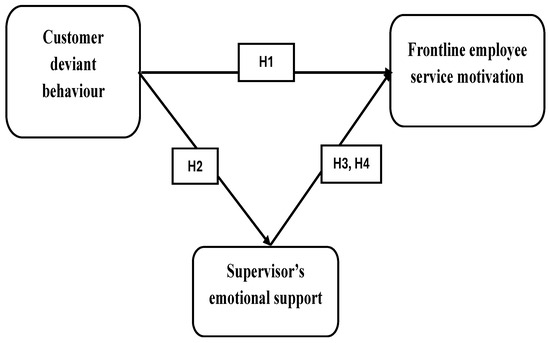
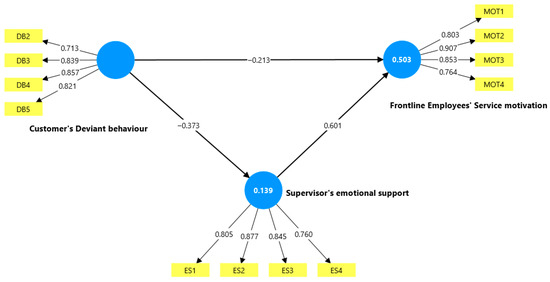

Disclaimer/Publisher’s Note: The statements, opinions and data contained in all publications are solely those of the individual author(s) and contributor(s) and not of MDPI and/or the editor(s). MDPI and/or the editor(s) disclaim responsibility for any injury to people or property resulting from any ideas, methods, instructions or products referred to in the content. |
© 2026 by the authors. Licensee MDPI, Basel, Switzerland. This article is an open access article distributed under the terms and conditions of the Creative Commons Attribution (CC BY) license.