


Abstract
This study examines the determinants of city brand equity in the context of Riyadh Season, a large-scale cultural and entertainment festival in Saudi Arabia. Drawing on Aaker’s customer-based brand equity framework adapted to the city-brand context and informed by Source Credibility Theory (SCT), the study tests the direct effects of brand association, brand awareness, brand loyalty, and customer satisfaction on city brand equity, as well as the moderating role of online influencers. Survey data were collected from 991 attendees and analyzed using structural equation modeling (SEM). The results indicate that brand awareness and brand loyalty significantly enhance city brand equity, whereas brand association and customer satisfaction have no significant effects. Contrary to prevailing assumptions in tourism and digital branding research, online influencers do not moderate the relationships between brand equity dimensions and overall city brand equity. These findings identify boundary conditions for influencer effectiveness and suggest that, in experience-intensive and time-bound mega-events, city brand equity is driven more by recognition and repeat attachment than by influencer-mediated communication or post-event satisfaction. The study refines city brand equity theory and offers practical guidance for policymakers and event organizers seeking to build sustainable city brands beyond influencer-centric strategies.
1. Introduction
Riyadh, the capital city of the Kingdom of Saudi Arabia, is endeavoring to capture global attention by establishing itself as a center of entertainment in the region, from World Wrestling Entertainment (WWE) to inviting major athletes (e.g., Christiano Ronaldo, Tyson Fury) to play football matches such as Supercoppa Italiana, to the Ultimate Fighting Championship (UFC) (Mohammed, 2024). The ultimate goal of city leaders is to make the city a destination where tourists stop when traveling from east to west or vice versa. Riyadh launched a major annual festival of entertainment, culture, and sports as part of Saudi Vision 2030. The Riyadh Season began in 2019, attracting over 11 million visitors and growing each year (Saudi Press Agency, 2024). While Riyadh Season is a large-scale entertainment event, it is important to distinguish between the event itself and Riyadh’s city brand. Mega-events such as festivals, cultural exhibitions, and international sporting events often function as strategic instruments within broader city branding initiatives. Rather than representing the city brand directly, these events act as experiential platforms through which visitors interact with the city, shaping their perceptions, associations, and emotional connections with the destination. In this sense, Riyadh Season can be understood as a city branding mechanism that contributes to the development of Riyadh’s city brand equity by enhancing brand awareness, generating positive associations, and fostering visitor loyalty. This perspective aligns with the destination branding literature, which highlights the role of events as catalysts for strengthening cities’ long-term reputation and image.
According to the UN World Tourism Organization (UNWTO), international tourist arrivals reached 1.3 billion in 2023 (approximately 88% of the pre-pandemic levels in 2019) (UNWTO, 2024). Global tourism is projected to return to pre-pandemic levels by the end of 2024. In the first quarter of 2025, there was a strong performance, with over 300 million international tourists traveling (a 5% increase compared to Q1 2024) (UNWTO, 2025). The Middle East performed better than other regions, and tourist arrivals exceeded 2019 levels by 22% (UNWTO, 2024).
Each city is competing to attract more visitors from the far east, such as Shanghai, to the far west, such as Los Angeles. Each city strives to increase its brand equity, which has emerged as a cornerstone of destination and event marketing. Grounded in Aaker (1992) and Keller’s (1993), brand equity traditionally includes awareness, associations, perceived quality, satisfaction, and loyalty, each contributing significantly to tourists’ behavioral intentions and destination competitiveness (San Martín & Herrero, 2019; Ghafari et al., 2017) This study aimed to understand brand equity in Riyadh and the role of online influencers. Recent research highlights that city brand equity emerges from complex interactions among stakeholders, perceptions, and experiential factors shaping city brand value (Lucarelli, 2012; Florek, 2015; Sokołowska et al., 2022).
Recent empirical studies underscore the relevance of these dimensions in the tourism context. Ghafari et al. (2017) identified a multidimensional structure for destination brand equity encompassing awareness, perceived uniqueness, quality, value, image, reputation, satisfaction, and loyalty, with strong relationships among these dimensions (Ghafari et al., 2017). An integrative model further confirmed that brand awareness, image, quality, and satisfaction jointly influence loyalty, underlining the importance of a holistic perspective (Dewi & Hidayat, 2024)
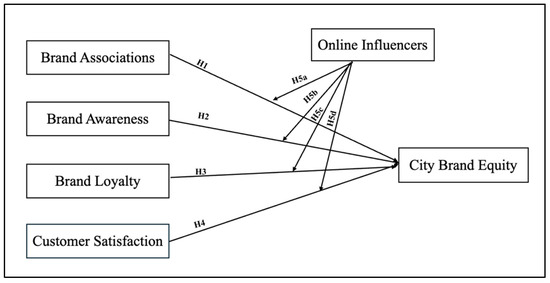
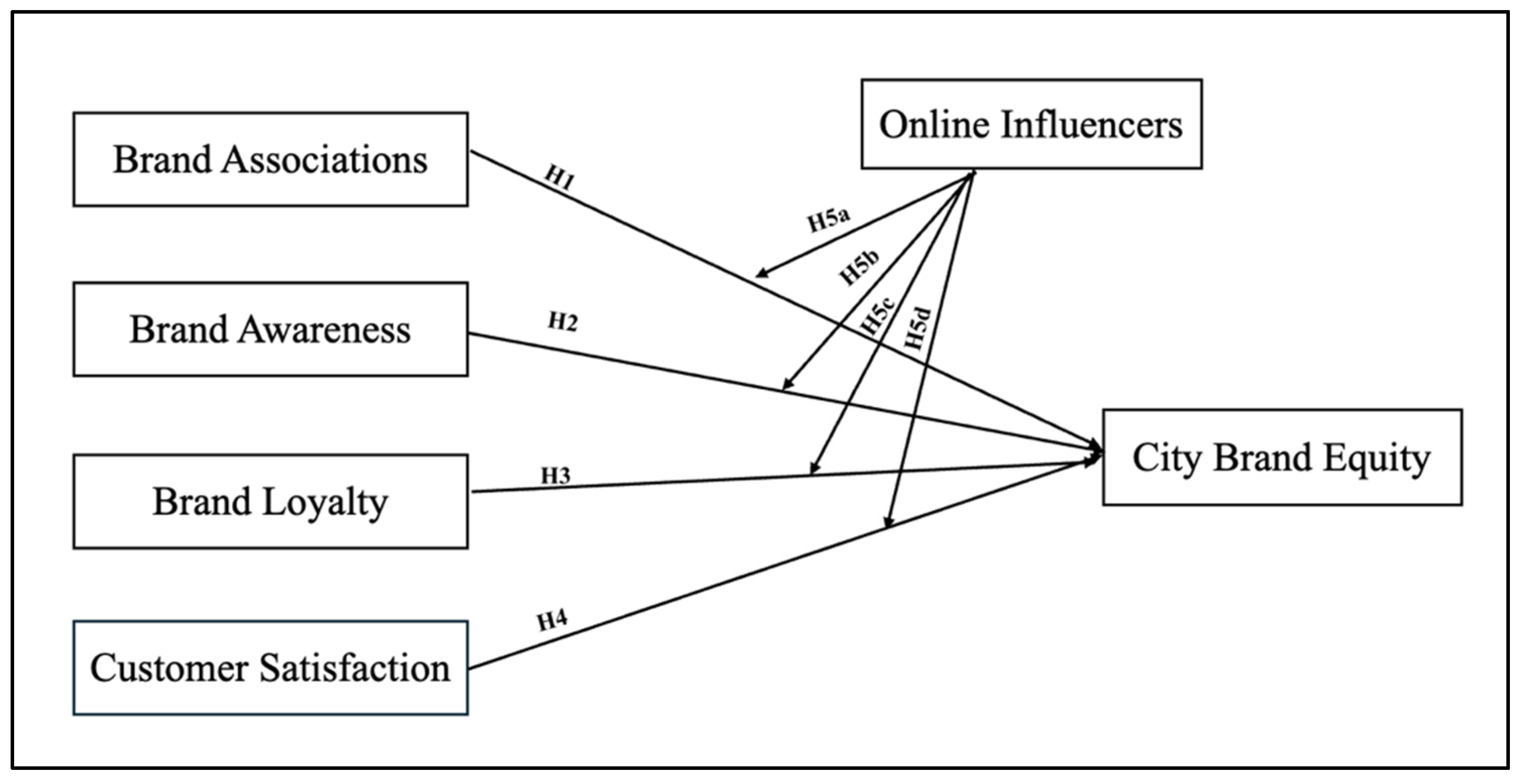
Simultaneously, online influencers have become fundamental actors in tourism branding. Cities utilize online influencers to attract tourists, highlighting their role in boosting awareness and brand image through credibility and user engagement (Dewi & Hidayat, 2024). Despite these developments, there is a lack of integrated theoretical models that posit online influencers as moderators between traditional brand equity dimensions and overall brand equity outcomes in tourism and events. To address this gap, the present study proposes a model (please see Figure 1) that incorporates conventional brand equity dimensions as direct antecedents of brand equity. Online influencers are moderators that link these antecedents to the brand equity outcomes.
Figure 1.
The research theoretical framework.
This study contributes to the theoretical understanding of brand equity by extending the frameworks through the integration of the impact of online influencers in tourism branding. Empirical examination of online influencer moderation pathways in event and destination contexts. This study offers practical insights for destination marketers and event organizers seeking to leverage online influencer engagement to increase brand equity.
Furthermore, the findings of this study help businesses understand the influence of online influencers, especially in the Middle East, where reliance on social media is heavy. By acknowledging the significance of online influencers, city officials can tailor their approach to establish connections with customers on social media. This, in turn, has the potential to positively influence city branding efforts and the overall success of attracting tourists. The remainder of this paper is organized as follows: It begins with a comprehensive literature review and a theoretical framework for the conceptual model. Next, the research methodology and data analysis procedures are described. Finally, this study presents the research findings, discusses the theoretical contributions, addresses the limitations, and provides recommendations for future research.
2. Theoretical Background
2.1. Brand Equity Framework
Brand Equity dimensions refer to the value of a brand in consumers’ minds, shaped by their perceptions and experiences (Aaker, 1992, 1996). According to Aaker (1992, 1996), brand equity includes dimensions such as brand awareness, brand associations, perceived quality, and brand loyalty, which collectively influence consumer behavior and brand preferences. Pappu and Quester (2006) extended the traditional brand equity framework by incorporating customer satisfaction as an outcome-based dimension that reinforces loyalty and equity. In this sense, satisfaction operates not only as a function of brand equity but also as a reinforcing attitudinal driver that mediates other dimensions such as loyalty and perceived quality. Other destination brand studies (e.g., Dewi & Hidayat, 2024; Coelho et al., 2022) have adopted this broader interpretation of customer satisfaction to city brand equity through enhanced revisit intentions and emotional attachment.
Blain et al. (2005) and Pike (2008) conceptualize city branding destinations as experiential brands that promise distinctive value propositions in culture, infrastructure, atmosphere, and identity. Also, place branding studies emphasize that cities are not merely geographic locations but socially constructed entities whose meaning is formed through cognitive, emotional, and behavioral associations (Kavaratzis & Ashworth, 2005; Zenker & Braun, 2010).
Therefore, city brand equity represents the value in people’s perceptions, expressed through awareness, associations, loyalty, image, and satisfaction. Empirical studies in city branding consistently demonstrate that cognitive dimensions (awareness, image), affective dimensions (emotional attachment), and behavioral outcomes (loyalty, revisit intention) shape city brand equity (Zenker & Beckmann, 2013a, 2013b; Coelho et al., 2022; Dewi & Hidayat, 2024). Recent studies have expanded the conceptualization of city brand equity by emphasizing the roles of stakeholders, perceptions of quality, and collaborative brand-creation processes. For example, Sokołowska et al. (2022) propose a marketing-oriented framework in which city brand equity emerges from multiple dimensions, including brand perception, perceived brand quality, brand loyalty, and stakeholder engagement in co-creating the city’s brand. Their findings highlight that positive perceptions of a city’s brand quality can foster brand loyalty and encourage stakeholder participation in brand-building activities. This perspective aligns with earlier work that emphasizes the complexity of cities as multidimensional brand entities shaped by tangible and intangible attributes and by interactions among residents, visitors, institutions, and local administrations (Lucarelli, 2012; Florek, 2015). In this sense, city brand equity is not solely the result of communication strategies but rather the outcome of long-term experiential and relational processes that shape stakeholders’ perceptions and emotional connections with the place.
However, the literature shows that these dimensions operate differently across contexts. For instance, mega-events, festivals, and large-scale entertainment initiatives introduce experiential intensity that may modify the relative importance of brand dimensions. For example, loyalty and repeated engagement may become stronger drivers of equity than cognitive familiarity alone.
To integrate the theoretical evolution of city branding into the present study, Table 1 summarizes the major conceptual streams in city branding and their implications for city brand equity.
Table 1.
City Brand Equity dimensions.
In the context of city branding, brand equity provides a structured framework for understanding how destinations evolve into competitive brands in visitors’ minds. Cities such as Riyadh can strengthen their brand equity by fostering cognitive visibility, emotional attachment, and relational continuity through memorable experiences, cultural expression, and service quality (San Martín & Herrero, 2019; Ghafari et al., 2017). Empirical evidence further indicates that awareness, image, and satisfaction contribute to loyalty and revisit intentions, reinforcing long-term city positioning (Coelho et al., 2022; Dewi & Hidayat, 2024).
Building on this foundation, the present study conceptualizes Riyadh Season as a strategic experiential mechanism within Riyadh’s broader city branding architecture. By applying a customer-based brand equity framework, the study examines how awareness, associations, loyalty, and satisfaction operate within a mega-event context to shape city brand equity. This approach allows for evaluating not only event-level perceptions but also their contribution to the strengthening of Riyadh’s overall urban brand.
2.2. Source Credibility Theory (SCT)
Source credibility theory (SCT) posits that the persuasiveness of a message is influenced by the perceived credibility of its source, even when the content remains constant (Ohanian, 1990; Hovland et al., 1953). Perceived credibility is defined based on three core dimensions: trustworthiness, expertise, and attractiveness (Ohanian, 1990). Attractiveness is the first dimension encompassing both physical attractiveness (visual appeal) and social attractiveness (likability, relatability, and perceived similarity) (Hong et al., 2012; Patzer, 1983). SCT was applied to online influencers in this study. Some influencers rely primarily on their physical appearance, while others cultivate social capital through engagement, personality, and perceived authenticity (Leite et al., 2022; Marwick, 2016; Duffy & Hund, 2015).
In this study, influencers are conceptualized as communication agents whose credibility shapes consumer perceptions of Riyadh. It is theorized that the influence of online influencers moderates key brand equity dimensions, particularly brand association, loyalty, and brand awareness. Authors such as Perera et al. (2023) and Spry et al. (2011) confirm that source credibility positively impacts brand outcomes by influencing brand image, trust, and loyalty. Therefore, online influencers can be viewed as extensions of source credibility in the city brand equity, where their attractiveness, expertise, and trustworthiness shape consumer perceptions of cities as brands.
Integrating Aaker’s (1992) brand equity framework with Source Credibility Theory (Hovland et al., 1953; Ohanian, 1990) provides a deeper understanding of how brands are communicated and interpreted by audiences. While Aaker’s framework emphasizes cognitive dimensions such as brand awareness, brand associations, perceived quality, and brand loyalty, Source Credibility Theory introduces a communicative lens through which these perceptions are shaped. According to SCT, the effectiveness of a communication source depends on its perceived trustworthiness, expertise, and attractiveness, which collectively determine the credibility of the message source (Ohanian, 1990). In digital environments, online influencers represent a particularly powerful source of credibility because they combine perceived authenticity, domain knowledge, and relatable communication styles.
In the context of city branding, influencers can serve as digital ambassadors, shaping how audiences interpret and emotionally engage with a city’s identity. Through credible storytelling and personalized communication, influencers may strengthen the cognitive and emotional connections individuals develop with a destination. Prior research suggests that influencer credibility can enhance brand authenticity, emotional engagement, and trust in brand-related information (Spry et al., 2011; Perera et al., 2023). Therefore, influencer credibility can amplify the influence of key brand equity dimensions—such as brand awareness, brand associations, loyalty, and satisfaction—on overall city brand equity. In this sense, influencer credibility serves as a moderating mechanism, strengthening the cognitive–affective pathways through which perceptions of the city translate into overall city brand equity.
Recent tourism research has increasingly applied Source Credibility Theory to understand the influence of social media personalities and digital influencers on destination branding and tourism decision-making. Studies show that influencers’ perceived credibility—particularly their expertise, trustworthiness, and attractiveness—can shape tourists’ perceptions of destinations and influence travel intentions. For instance, Sun et al. (2026) demonstrate that influencer credibility significantly enhances destination trust and engagement in digital tourism marketing contexts. Similarly, Meng et al. (2025) find that credible influencers can strengthen destination image formation and stimulate positive behavioral intentions among potential tourists. These findings suggest that the credibility of online influencers may moderate the translation of brand-related perceptions into broader destination brand equity.
3. Literature Review and Hypotheses Development
Brand equity, first introduced by Keller (1993) and Aaker (1992), explains how consumers perceive and value brands. Keller’s framework emphasizes that brand equity consists of brand awareness and brand image. Simultaneously, Aaker added brand loyalty, perceived quality, and brand associations as key contributors to brand equity. These dimensions have been widely used to explain how consumers evaluate brands and develop long-term relationships with them. In recent years, scholars have increasingly adapted these frameworks to understand how places and cities are perceived and valued as brands. In the context of city branding, these dimensions help explain how residents, tourists, and other stakeholders perceive, experience, and emotionally connect with a city’s identity.
Górska-Warsewicz (2020) addressed the transition from product branding to place branding. Górska-Warsewicz determined that there are core constructs—such as awareness, associations, loyalty, satisfaction, and image—that are consistent with brand equity but shaped by the unique context of cities’ branding.
Coelho et al. (2022) examined City Brand Equity (CBE) from both citizens’ and tourists’ perspectives in Coimbra, Portugal, confirming that city awareness, emotional associations, and satisfaction are key drivers of city brand. Their study aligns closely with Aaker’s and Keller’s constructs, highlighting the adaptability of traditional brand equity frameworks to an urban context.
Sokołowska et al. (2022) emphasized the marketing perspective on CBE, advocating strategic city branding campaigns that strengthen emotional ties (brand associations) and civic engagement (loyalty), thereby enhancing brand equity among local stakeholders. Building on these insights, the following section develops the relationships between the constructs.
3.1. Brand Associations and City Brand Equity
Brand associations refer to the mental and emotional connections that individuals form with a brand, including symbols, experiences, and values stored in memory (Aaker, 2009). In the context of cities, these associations may include cultural heritage, events, architecture, atmosphere, and emotionally resonant experiences that shape how the destination is perceived (Keller, 1993). In city branding, associations matter because they help individuals translate scattered experiences and impressions into a more coherent image of the place. This process is especially important in experiential settings, where visitors interact with the city through activities, entertainment, and symbolic cues that become attached to the city’s brand.
Górska-Warsewicz (2020) highlights that city image and symbolic associations play a central role in shaping people’s perceptions of the city and, consequently, its brand equity. Jeon and Yoo (2021) likewise emphasize the importance of brand image in shaping consumer attitudes toward a place. In the context of city branding, Coelho et al. (2022) found that emotional and symbolic associations are among the most influential components of a city’s perceived attractiveness to both citizens and tourists. Building on these insights, it can be argued that when visitors develop favorable associations with a city through memorable and meaningful experiences, these associations strengthen the overall value of the city brand in their minds. Therefore, brand associations are expected to positively influence city brand equity.
H1.
Brand association has a positive impact on city brand equity.
3.2. Brand Awareness and City Brand Equity
Aaker (1992) defined brand awareness as the extent to which a brand is recognized and recalled by individuals. In the context of city branding, brand awareness refers to how both domestic and international audiences perceive a city.
According to Saleem et al. (2015), brand awareness serves as the foundation for the development of other brand equity dimensions, including perceived quality and brand loyalty. When individuals are more familiar with a brand, they are more likely to form favorable evaluations and emotional connections with it. In the context of city branding, Sokołowska et al. (2022) found that awareness of a city—often driven by media exposure, tourism promotion, and marketing campaigns—can stimulate emotional engagement and strengthen loyalty toward the destination. Similarly, Górska-Warsewicz (2020) positions brand awareness as a fundamental driver of city brand equity, as it increases recognition of the city and enhances its attractiveness to potential visitors.
Therefore, increasing brand awareness through marketing activities, tourism campaigns, and large-scale events is expected to strengthen the overall perception and value of the city brand. Accordingly, the following hypothesis is proposed:
H2.
Brand awareness has a significant positive impact on city brand equity.
3.3. Brand Loyalty and City Brand Equity
According to Aaker (1992), brand loyalty refers to a consumer’s commitment to repurchase or recommend a brand over its competitors. In cities, loyalty is often expressed as an individual’s commitment to revisit and recommend the city to others, rather than competing destinations. Such loyalty reflects a deeper psychological attachment to the place and indicates that the city has successfully created a favorable and memorable experience for visitors and residents.
Brand loyalty has long been recognized as a key determinant of brand equity, particularly in service contexts where repeat engagement and word-of-mouth play an important role in strengthening the brand’s value (Marvelous et al., 2019). In city branding research, Sokołowska et al. (2022) found that resident loyalty contributes positively to city brand value by reinforcing the emotional and behavioral connection between individuals and the city. This loyalty may be reflected through attachment to the community, participation in local activities, and overall satisfaction with the city environment. Similarly, Coelho et al. (2022) confirm that although loyalty may manifest differently for tourists and residents, it remains a key predictor of city brand equity.
Therefore, individuals who develop loyalty toward a city—whether through emotional attachment, positive experiences, or repeat visitation—are more likely to perceive greater value in the city brand. Accordingly, the following hypothesis is proposed:
H3.
Brand loyalty has a significant positive impact on city brand equity.
3.4. Customer Satisfaction and City Brand Equity
Faircloth et al. (2001) define customer satisfaction as the emotional response resulting from evaluating experiences with a brand. For cities, customer satisfaction refers to residents’ and tourists’ emotional responses to public services, infrastructure, safety, and the overall experience of living or visiting.
Prior research has highlighted the important role of satisfaction in the formation of brand equity. Khanh and ThiHoai (2020) found that satisfaction mediates the relationship between perceived quality and brand equity, suggesting that positive experiences strengthen individuals’ overall brand evaluations. In the urban context, Coelho et al. (2022) demonstrate that satisfaction with urban offerings—such as transportation systems, cleanliness, cultural activities, and city amenities—positively influences both loyalty and brand equity among tourists and residents. These findings suggest that when individuals are satisfied with their experiences in a city, they are more likely to develop favorable perceptions of the city brand.
Therefore, higher levels of satisfaction with the city’s services, experiences, and overall environment are expected to enhance city brand equity. Accordingly, the following hypothesis is proposed:
H4.
Customer satisfaction has a significant positive impact on city brand equity.
3.5. Online Influencers as Moderators
Online influencers have redefined branding by merging personal connection and peer-to-peer credibility with high social media reach. In the context of city branding, they serve as urban ambassadors, personalizing city narratives, improving brand recall, and creating community through social engagement.
Pan et al. (2024) provide strong support for the effectiveness of influencer marketing through a meta-analytic review showing that influencer communication significantly strengthens brand trust, loyalty, and purchase intentions. Their findings highlight source credibility, audience–content fit, and perceived authenticity as key factors driving influencer effectiveness. In this sense, influencers can reinforce core brand equity dimensions such as brand associations, awareness, satisfaction, and loyalty by amplifying how audiences interpret and experience brand-related information.
Complementing this perspective, Mabkhot et al. (2022) provide empirical evidence that social media interactions enhance consumer brand engagement, trust, and brand equity, particularly through personalized communication. Their findings suggest that influencers can strengthen traditional brand equity pathways by creating more personalized and emotionally resonant brand experiences for digitally connected audiences.
From a theoretical perspective, Source Credibility Theory provides an important foundation for understanding the influence of digital opinion leaders. Erdem and Swait (2001) conceptualize brand credibility as a signaling mechanism that reduces uncertainty and strengthens consumers’ confidence in brand-related information. In the context of city branding, credible influencers can shape how audiences interpret and evaluate a city’s identity through persuasive, relatable narratives. In the case of Riyadh, influencer-generated content may amplify tourism experiences, reinforce cultural identity, and stimulate civic pride. Through these mechanisms, influencers can strengthen the psychological and emotional processes through which visitors and residents translate brand-related perceptions into city brand equity.
Accordingly, the credibility and reach of online influencers are expected to strengthen the relationship between city brand perceptions and city brand equity. Therefore, the following hypotheses are proposed:
H5a.
Online influencers positively moderate the relationship between brand associations and city brand equity.
H5b.
Online influencers positively moderate the relationship between brand awareness and city brand equity.
H5c.
Online influencers positively moderate the relationship between brand loyalty and city brand equity.
H5d.
Online influencers positively moderate the relationship between customer satisfaction and city brand equity.
4. Methodology
4.1. Measures
To assess the study variables, this research utilized items previously developed by other scholars. Established scales were used to measure the key constructs. Specifically, brand association (three items), brand awareness (four items), and brand loyalty (four items) were evaluated using 5-point Likert scales developed by Aaker (1996). Brand equity (four items) was measured using a 5-point Likert scale adapted from Washburn and Plank (2002). The constructs of online Influencer (six-item) (Mabkhot et al., 2022) and customer satisfaction (three-item) (Fornell et al., 1996), originally assessed with 7-point Likert scales, were converted to 5-point scales to ensure consistency across all measures (Jenkins & Taber, 1977; Lissitz & Green, 1975). Prior methodological research indicates that reducing the number of response categories does not substantially affect the reliability or validity of measurement when the scale remains balanced and clearly defined (Jenkins & Taber, 1977; Lissitz & Green, 1975). In addition, the harmonization of the scale format simplifies the response process and improves response consistency when multiple constructs are measured within the same questionnaire. The online influencer construct reflects the core dimensions of Source Credibility Theory—trustworthiness, expertise, and attractiveness (Ohanian, 1990), capturing respondents’ perceptions of the credibility of digital opinion leaders in shaping destination perceptions and city brand evaluations. All constructs were measured using a five-point Likert scale ranging from 1 = strongly disagree to 5 = strongly agree. The selected scales are recognized for their reliability and validity in prior research, thereby enhancing the credibility and comparability of the study findings. Modifications may have been made to align the scales with the study’s specific context and objectives. All items are typically measured on a 5-point Likert scale, ranging from 1 = “strongly disagree” to 5 = “strongly agree.”
Before responding to the influencer measurement items, participants were asked a set of screening and contextual questions related to their exposure to influencer promotions associated with Riyadh Season. Specifically, respondents were asked whether they had seen social media influencers promoting Riyadh Season events, the extent to which influencers affected their decision to attend the event, and which social media platforms influenced their perception of Riyadh Season. Participants were also asked to recall and identify one Influencer they had recently seen promoting Riyadh Season activities. These questions were included to encourage respondents to recall relevant influencer exposure before answering the influencer credibility scale.
This approach helps ensure that respondents evaluate influencer credibility within the context of Riyadh Season communication rather than in an abstract or unrelated context.
4.2. Data Collection and Analysis
An online survey was developed in Microsoft Forms and disseminated via WhatsApp, X, and LinkedIn over 2 months. The target sample comprised both Saudis and non-Saudis who had the opportunity to engage with the entertainment services offered in Riyadh. The sample was collected through a snowball sampling technique, in which each participant recruited subsequent participants, yielding 991 respondents. Although snowball sampling limits representativeness, it was deemed appropriate for this study’s exploratory nature and target population. Given the absence of a centralized sampling frame for Riyadh Season attendees, a referral-based approach enabled access to diverse participants who had firsthand experience with the events. This method has been widely used in social media and event-driven studies where population boundaries are fluid (Baltar & Brunet, 2012). Future studies could complement this approach with probabilistic sampling to enhance external validity. SmartPLS 4 (SmartPLS GmbH, Oststeinbek, Germany) was employed to analyze the relationships among variables, assess the moderating effect, and evaluate the model’s fitness, while IBM SPSS Statistics (version 27, Armonk, NY, USA) was used to extract descriptive statistics.
Participation was voluntary, and respondents were informed about the study’s purpose, confidentiality, and anonymity. No identifying information was collected, ensuring compliance with ethical research standards.
To improve methodological transparency and clarify the analytical procedure, Table 2 summarizes the main stages of the statistical analysis, including the techniques employed, the indicators assessed, and the threshold values adopted based on established methodological guidelines.
Table 2.
Summary of Analytical Procedure and Validation Criteria.
These criteria were used to evaluate both the measurement and structural models in the SEM analysis.
5. Results
5.1. Participants’ Characteristics
Table 3 displays the participants’ characteristics; 40% were aged 20 to 29, followed by 33.6% aged 30 to 39. Approximately 50% of the participants were male, and the other half were female. The majority of participants (65.9%) held a bachelor’s degree and were Saudi nationals (98.1%).
Table 3.
Participants’ demographics.
5.2. Normality and Common Method Bias Test
To assess Common Method Bias (CMB), multiple procedures were employed. First, Harman’s single-factor test was conducted, and the first factor accounted for less than 40% of the total variance, indicating that common method bias was unlikely to pose a major concern. Second, the full collinearity assessment using Variance Inflation Factors (VIFs) was performed. Recent PLS-SEM literature recommends a more conservative threshold of VIF < 3.3 to detect both multicollinearity and potential common method bias (Kock, 2015; Hair et al., 2017b). Following these recommendations, full collinearity VIF values were calculated for all constructs, and all values were below the recommended threshold of 3.3, suggesting that common method bias and multicollinearity are unlikely to affect the results.
Table 4 presents the skewness and excess kurtosis values, with skewness for all items ranging from −2 to +2 and excess kurtosis ranging from −7 to +7, which fall within the acceptable limits for normality (Byrne, 2016; Hair et al., 2006). Table 5 reports the inner model Variance Inflation Factor (VIF) values used to assess multicollinearity among predictor constructs. According to recent PLS-SEM guidelines, VIF values below 5 indicate that multicollinearity is not a critical issue (Hair et al., 2017b). As shown in Table 5, most VIF values fall within the recommended threshold. Although some interaction terms exhibit moderately higher VIF values, this is expected in models that include moderating effects because interaction constructs are mathematically derived from their underlying variables. Therefore, the observed VIF levels are considered acceptable and do not indicate problematic multicollinearity in the structural model.
Table 4.
Factor loadings, Cronbach Alpha, CR, AVE.
Table 5.
Collinearity statistics (VIF)—Inner model.
5.3. Validity and Reliability Analysis
The Cronbach’s alpha values for all variables exceeded 0.80 (as shown in Table 4) (Hair et al., 2017b). In addition to internal consistency and convergent validity, discriminant validity was examined using both Fornell–Larcker and Heterotrait–Monotrait (HTMT) ratio (Fornell & Larcker, 1981; Henseler et al., 2015). The square roots of the AVEs for each construct exceeded their correlations with other constructs, confirming discriminant validity, and all HTMT ratios were below the threshold of 0.85. Furthermore, the composite reliability for the study’s constructs ranges from 0.7 to 1.0 (Hair et al., 2017b). Thus, the constructs’ reliability was confirmed. The average variance extracted (AVE) values for the variables were above 0.50, indicating discriminant validity of the framework (Hair et al., 2010). Finally, all factor loadings for all items were above 0.5 (Hair et al., 2010). The discriminant validity is assured as shown in Table 6 (Hair et al., 2017a, 2017b).
Table 6.
Discriminant Validity.
The overall fit was evaluated using the Standardized Root Mean Square residual (SRMR) and the Normed Fit Index (NFI) (Hair et al., 2017b). The SRMR value of 0.061 and the NFI of 0.912 (both within the recommended thresholds of <0.08 and >0.9) indicate a good model fit.
Discriminant validity was further assessed using the Heterotrait–Monotrait ratio (HTMT), which has been recommended as a more reliable criterion than traditional approaches for assessing discriminant validity in PLS-SEM (Henseler et al., 2015). As shown in Table 7, all HTMT values are below the recommended threshold of 0.90, confirming that discriminant validity is established among the constructs. Given the conceptual relatedness of brand awareness and brand associations within the brand equity framework, HTMT values slightly above the conservative 0.85 threshold remain acceptable under the 0.90 criterion.
Table 7.
HTMT Discriminant Validity.
5.4. Hypotheses Analysis
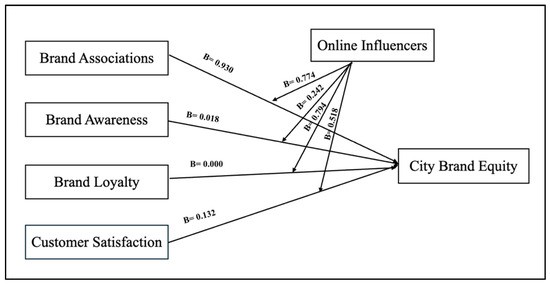
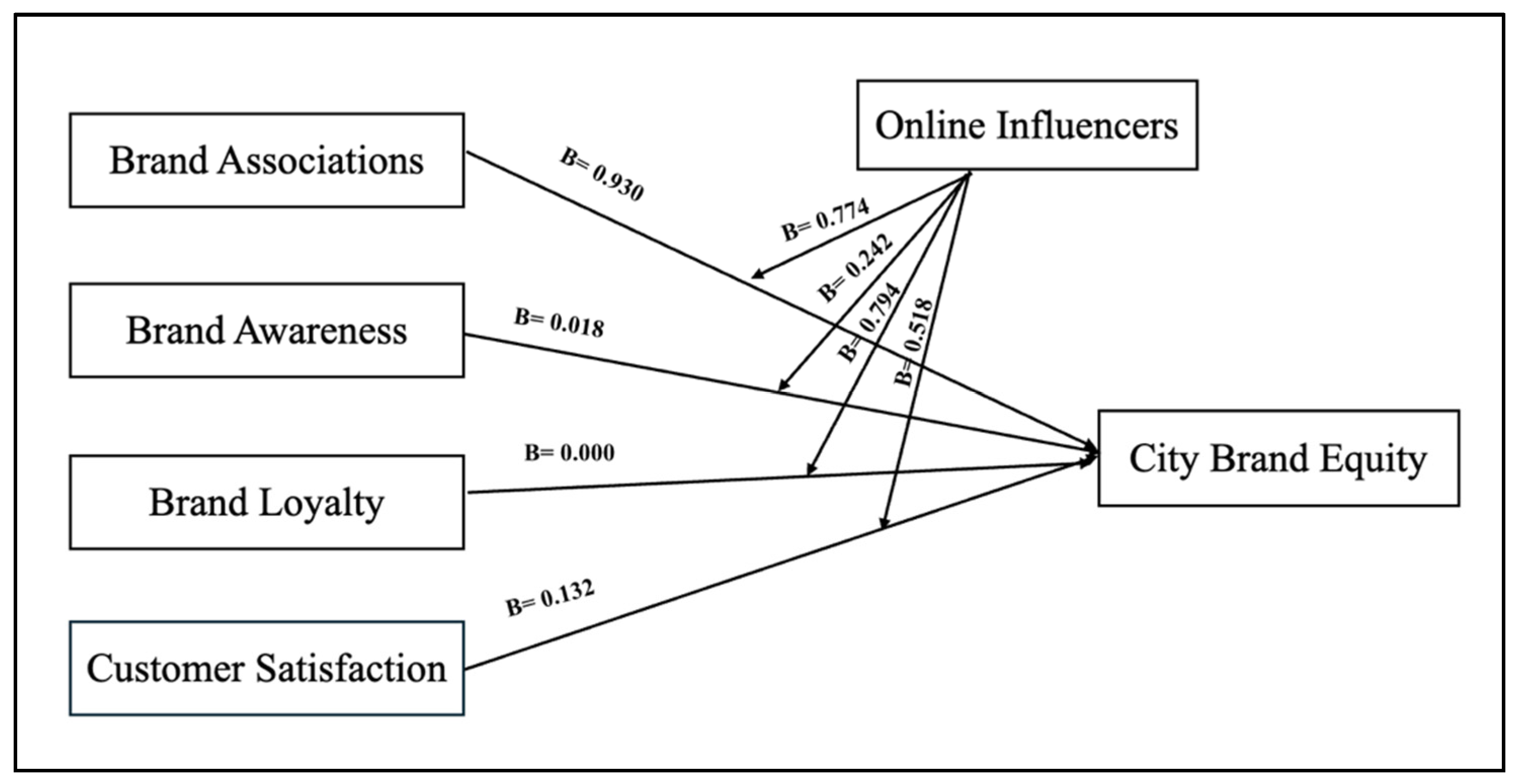
Based on the analysis in Table 8 and Figure 2, H1, H4, and H5a–H5d are rejected, while H2 and H3 are accepted. Specifically, brand association and customer satisfaction do not significantly influence city brand equity in Riyadh (β = −0.012, p > 0.05; β = −0.087, p > 0.05). Furthermore, online influencers do not significantly moderate the relationships between brand association, brand awareness, brand loyalty, or customer satisfaction and city brand equity. In contrast, brand awareness (β = 0.229, p < 0.05) and brand loyalty (β = 0.717, p < 0.05) significantly and positively influence city brand equity. These findings indicate that cognitive visibility and relational attachment are more influential drivers of city brand equity in the Riyadh Season context than symbolic associations, satisfaction judgments, or influencer-based amplification.
Table 8.
Structural model statistics and hypotheses.
Figure 2.
Results of PLS-SEM analysis.
5.5. Model Predictive Capability
The R2 value of 0.743 for the dependent variable, brand equity, indicates that 74.3% of the variance in brand equity is explained by the independent variables in the model (brand association, brand awareness, brand loyalty, and customer satisfaction). This suggests strong explanatory power for the model, as it accounts for nearly three-quarters of the variability in brand equity. The remaining 25.7% of the variance may be attributed to other factors not included in the current model or to random variations (Hair et al., 2010). See Table 9.
Table 9.
Predictive capability.
The effect size (f2) was assessed to evaluate the relative contribution of each predictor construct to city brand equity (please see Table 10). According to Cohen (1988), f2 values of 0.02, 0.15, and 0.35 represent small, medium, and large effects, respectively. The results show that brand loyalty exhibits a substantial effect size (f2 = 0.312), indicating that it plays a major role in explaining city brand equity. Brand awareness demonstrates a small effect (f2 = 0.047), while brand association (f2 = 0.000) and customer satisfaction (f2 = 0.008) show negligible effects. These results further support the structural model findings that loyalty and awareness are the most influential drivers of city brand equity in the Riyadh Season context.
Table 10.
Effect Size (f2).
Predictive relevance of the model was further assessed using the PLSpredict procedure (please see Table 11). The results indicate that all Q2_predict values are greater than zero, confirming that the model demonstrates predictive relevance for the endogenous construct of city brand equity (Hair et al., 2017b). The Q2_predict values for the indicators of city brand equity range from 0.378 to 0.532, suggesting that the model possesses adequate predictive capability.
Table 11.
Predictive Relevance (PLSpredict).
6. Discussion and Conclusions
6.1. Discussion
This study contributes to the evolving literature on city branding by examining the formation of city brand equity within the context of a large-scale, experience-intensive mega-event. By applying a customer-based brand equity framework to Riyadh Season, the findings demonstrate that traditional brand equity models can be meaningfully extended to city branding contexts. However, the results also reveal that the influence of brand equity dimensions is context-sensitive rather than universally stable.
Specifically, the findings show that brand awareness and brand loyalty serve as primary drivers of city brand equity in experiential mega-event environments, whereas brand associations and customer satisfaction were not statistically significant predictors of city brand equity, contrary to expectations in traditional brand equity research. This suggests that in time-bound, immersive event settings, cognitive visibility and relational attachment may outweigh symbolic associations or isolated satisfaction judgments. Loyalty, in particular, emerges as the dominant predictor of city brand equity, indicating that repeat engagement, advocacy, and emotional continuity are central to strengthening a city’s competitive position. This finding suggests that the explanatory power of traditional brand equity dimensions may vary depending on the experiential intensity and temporal nature of the branding context.
In mega-event-driven city branding, experiential immersion appears to recalibrate the hierarchy of brand drivers, elevating behavioral and relational constructs above purely cognitive or evaluative ones. Thus, the study advances a context-sensitive understanding of the formation of city brand equity.
Moreover, the absence of a moderating effect from online influencers establishes an important boundary condition for Source Credibility Theory in city branding. While influencer credibility has been shown to affect consumer brands, the present findings indicate that persuasive endorsement does not automatically translate into enhanced city brand equity when experiential engagement is high. In mega-event contexts such as Riyadh Season, direct participation, social interaction, and organic word-of-mouth appear to outweigh mediated influence. This underscores the primacy of lived experience over digital amplification in shaping urban brand value.
Although prior studies suggest that influencer credibility can strengthen destination perceptions (Sun et al., 2026; Meng et al., 2025), the present findings indicate that the moderating effect of influencers may depend on contextual factors such as event-based tourism experiences and cultural context.
Importantly, this study conceptualizes Riyadh Season not merely as an entertainment initiative, but as a strategic instrument within Riyadh’s broader city branding architecture. Recurring large-scale experiential platforms serve as accelerators of urban brand equity by strengthening awareness, cultivating loyalty, and elevating the city’s symbolic prominence in global competition. In this sense, mega-events serve as dynamic branding mechanisms that contribute to long-term city positioning rather than short-term promotional impact.
Overall, the study highlights the need to adapt brand equity and credibility frameworks to the unique characteristics of city branding, particularly in experiential and temporally concentrated environments. By integrating customer-based brand equity theory with contextual insights from mega-event branding, this research advances a more nuanced understanding of how cities build, sustain, and differentiate their brand equity in competitive global landscapes.
6.2. Implications
6.2.1. Theoretical Implications
The theoretical implications of this study for city brand equity are significant and multifaceted. First, this study challenges existing city brand equity models by demonstrating that not all traditional components (brand awareness, brand association, brand loyalty, and customer satisfaction) contribute equally to Riyadh’s brand equity in the context of seasonal entertainment events. This finding suggests the need to refine and adapt city brand equity models for specific regions or event types. Second, the strong positive relationships between brand awareness and brand loyalty underscore the critical role of these factors in building city brand equity for large-scale entertainment events. This reinforces the theoretical importance of creating meaningful associations and fostering brand loyalty in city brand development strategies. Third, the proposition that brand association is a fundamental component of city brand equity is challenged by its limited impact. This finding suggests that, in high-profile, time-limited events like Riyadh Season, associations may be less critical than other factors in driving city brand equity. Fourth, the non-significant relationship between customer satisfaction and city brand equity contradicts some existing theories on city brand equity formation. This indicates that satisfaction alone may not directly translate into city brand equity for seasonal events, indicating a more complex relationship between these constructs. Fifth, these findings that online influencers do not significantly moderate the relationships between city brand equity components (association, awareness, loyalty, and customer satisfaction) and overall city brand equity challenge emerging theories regarding the role of social media influencers in city brand building. This suggests the need for more nuanced theories on the impact of digital influencers in different contexts.
Furthermore, this study advances the theoretical understanding of how city brand equity is built for time-limited, experiential events such as Riyadh Season. This contributes to the development of event-specific city brand equity theories that differ from brand equity for companies. Finally, the high R2 value (0.743) for city brand equity suggests that the selected variables have a strong explanatory power. This validates the theoretical framework used and provides a robust foundation for future research in this field. These theoretical implications highlight the need for more context-specific models of city brand equity, particularly for unique, time-bound events such as the Riyadh Season. They also underscore the complexity of city brand equity formation and the importance of considering cultural and contextual factors in branding theory.
6.2.2. Managerial Implications
The findings of this study have several practical implications for destination marketing organizations and policymakers involved in mega-event development, particularly for institutions such as the General Entertainment Authority (GEA), which is responsible for organizing Riyadh Season.
First, the results indicate that brand awareness is one of the strongest drivers of city brand equity. This suggests that large-scale promotional campaigns to increase Riyadh’s global visibility should remain a strategic priority. Investments in international media exposure, global partnerships, and high-profile entertainment programming can significantly strengthen the cognitive visibility of the city brand and position Riyadh more prominently in the global tourism and entertainment landscape.
Second, the strong impact of brand loyalty on city brand equity highlights the importance of cultivating repeat engagement and long-term visitor relationships rather than focusing solely on attracting first-time visitors. Event organizers should therefore design strategies that encourage return visits across multiple seasons of Riyadh Season, such as loyalty programs, recurring event formats, and community-building initiatives that foster emotional attachment to the city.
Third, the non-significant effect of brand associations suggests that symbolic perceptions alone may not be sufficient to strengthen city brand equity in highly immersive mega-event environments. Instead, managers should prioritize designing highly interactive, memorable event experiences that generate emotional engagement and social sharing among visitors. In this context, experiential design, entertainment diversity, and immersive attractions may play a more important role in shaping brand equity than traditional branding messages.
Fourth, the lack of a significant effect on customer satisfaction suggests that satisfaction may serve as a baseline expectation at large-scale entertainment events rather than a key differentiator. Therefore, while maintaining high service quality remains essential, city branding strategies should focus on delivering unique, distinctive experiences that exceed expectations and create memorable moments for visitors.
Fifth, the absence of a moderating effect from online influencers indicates that influencer marketing may not be the most effective mechanism for strengthening city brand equity in experience-intensive contexts such as Riyadh Season. Instead, marketing resources may be more effectively allocated toward enhancing on-site experiences, event storytelling, and organic word-of-mouth promotion, which are more likely to shape visitors’ perceptions through direct engagement.
Finally, the findings highlight the strategic role of recurring mega-events as long-term instruments of city branding. Rather than treating events like Riyadh Season as temporary entertainment initiatives, policymakers should view them as platforms for sustained urban brand development. Continuous innovation, collaboration with cultural and creative industries, and the integration of entertainment, tourism, and cultural programming can help reinforce Riyadh’s position as a leading global entertainment destination.
6.3. Limitations and Future Research
This study has several limitations that offer opportunities for future research. First, the sample consisted primarily of Saudi nationals (98.1%), reflecting the dominant presence of domestic visitors during the Riyadh Season data collection period. While domestic audiences represent a primary target segment for many large-scale entertainment events and play an important role in shaping city brand perceptions, this sample composition may limit the generalizability of the findings to non-Saudi or international audiences. Future studies should aim to include more diverse international samples to reflect Riyadh’s global appeal better and to examine whether the relationships identified in this study hold across different cultural and visitor segments. Second, the current study used a cross-sectional approach, which limits the ability to draw causal inferences. Longitudinal studies could provide insights into how city brand equity develops over time and across multiple seasons of a city. Third, the study focused solely on Riyadh. Future research could compare brand equity across different cities or cultural festivals to identify the unique and common factors influencing city brand equity in the region. Fourth, this study found no significant moderating effects of online influencers. Future research should explore other potential moderators, such as cultural factors, event experiences, and media exposure. Finally, future research could examine how emerging technologies (e.g., virtual reality experiences) influence city brand equity during large-scale entertainment events. Addressing these limitations in future research will contribute to a more comprehensive understanding of city brand equity in the context of seasonal entertainment events and provide valuable insights for event organizers.
In conclusion, this study provides valuable insights into the factors influencing city brand equity. The findings reveal that brand awareness and brand loyalty significantly affect city brand equity, whereas brand association and customer satisfaction do not. Surprisingly, online influencers did not moderate the relationships between these factors and city brand equity. The model’s strong explanatory power, accounting for 74.3% of the variance in city brand equity, underscores the importance of building strong brand awareness and fostering individual loyalty to enhance Riyadh’s overall brand value. These results offer crucial theoretical and managerial implications for understanding and managing city brand equity at large-scale entertainment events. Future research should address the study’s limitations by exploring a more diverse sample, employing longitudinal designs, and investigating additional factors that may influence city brand equity.
Author Contributions
Conceptualization, N.A.; data curation, N.A.; investigation, N.A.; methodology, A.A.; formal analysis, A.A.; writing—original draft preparation, A.A. and N.A.; writing—review and editing, A.A. and N.A. All authors have read and agreed to the published version of the manuscript.
Funding
This research received no external funding.
Institutional Review Board Statement
Not applicable.
Informed Consent Statement
Not applicable.
Data Availability Statement
The data presented in this study are available on request from the corresponding author. The data are not publicly available due to privacy and confidentiality considerations.
Conflicts of Interest
The authors declare no conflicts of interest.
References
- Aaker, D. (1992). The value of brand equity. Journal of Business Strategy, 13(4), 27–32. [Google Scholar] [CrossRef] [Scilit]
- Aaker, D. (1996). Measuring brand equity across products and markets. California Management Review, 38(3), 102–120. [Google Scholar] [CrossRef] [Scilit]
- Aaker, D. (2009). Managing brand equity: Capitalizing on the value of a brand name. Simon and Schuster. [Google Scholar]
- Anholt, S. (2010). Definitions of place branding—Working towards a resolution. Place Branding and Public Diplomacy, 6(1), 1–10. [Google Scholar] [CrossRef] [Scilit]
- Baltar, F., & Brunet, I. (2012). Social research 2.0: Virtual snowball sampling method using Facebook. Internet Research, 22(1), 57–74. [Google Scholar] [CrossRef] [Scilit]
- Blain, C., Levy, S. E., & Ritchie, J. R. B. (2005). Destination branding: Insights and practices from destination management organizations. Journal of Travel Research, 43(4), 328–338. [Google Scholar] [CrossRef] [Scilit]
- Byrne, B. (2016). Structural equation modeling with amos: Basic concepts, applications, and programming. In Structural equation modeling (3rd ed.). Routledge. [Google Scholar]
- Coelho, A., Bairrada, C., Simão, L., & Barbosa, C. (2022). The drivers of the city brand equity comparing citizens’ and tourists’ perceptions and its influence on the city attractiveness: The case of the city of Coimbra. International Journal of Hospitality & Tourism Administration, 23(2), 242–268. [Google Scholar]
- Cohen, J. (1988). Statistical power analysis for the behavioral sciences (2nd ed.). Lawrence Erlbaum Associates. [Google Scholar]
- Dewi, S., & Hidayat, A. (2024). Exploring the impact of influencer marketing on brand equity: A mediation analysis involving brand awareness and customer brand engagement. Asian Journal of Economics, Business and Accounting, 24(1), 46–62. [Google Scholar] [CrossRef] [Scilit]
- Duffy, B., & Hund, E. (2015). “Having it all” on social media: Entrepreneurial femininity and self branding among fashion bloggers. Social Media + Society, 1(2), 2056305115604337. [Google Scholar] [CrossRef] [Scilit]
- Erdem, T., & Swait, J. (2001). Brand equity as a signaling. Journal of Consumer Psychology, 7(2), 131–157. [Google Scholar] [CrossRef] [Scilit]
- Faircloth, J., Capella, L., & Alford, B. (2001). The effect of brand attitude and brand image on brand equity. Journal of Marketing Theory and Practice, 9(3), 61–75. [Google Scholar] [CrossRef] [Scilit]
- Florek, M. (2015). City brand equity—A conceptual model. Journal of Brand Management, 22(2), 94–113. [Google Scholar]
- Fornell, C., Bryant, B., Anderson, E., Cha, J., & Johnson, M. (1996). The American customer satisfaction index: Nature, purpose, and findings. Journal of Marketing, 60(4), 7–18. [Google Scholar] [CrossRef] [Scilit]
- Fornell, C., & Larcker, D. F. (1981). Evaluating structural equation models with unobservable variables and measurement error. Journal of Marketing Research, 18(1), 39–50. [Google Scholar] [CrossRef] [Scilit]
- Ghafari, M., Ranjbarian, B., & Fathi, S. (2017). Developing a brand equity model for tourism destination. International Journal of Business Innovation and Research, 12(4), 484–507. [Google Scholar] [CrossRef] [Scilit]
- Górska-Warsewicz, H. (2020). Factors determining city brand equity—A systematic literature review. Sustainability, 12(19), 7858. [Google Scholar] [CrossRef] [Scilit]
- Hair, J., Jr., Black, W., Babin, B., & Anderson, R. (2006). Multivariate data analysis (6th ed.). Pearson Prentice Hall. [Google Scholar]
- Hair, J., Jr., Black, W., Babin, B., & Anderson, R. (2010). Multivariate data analysis, a global perspective. Pearson Education Limited. [Google Scholar]
- Hair, J., Jr., Hult, G., Ringle, C., & Sarstedt, M. (2017a). A primer on partial least squares structural equation modeling (PLS-SEM). Sage Publications. [Google Scholar]
- Hair, J., Jr., Matthews, L., Matthews, R., & Sarstedt, M. (2017b). PLS-SEM or CB-SEM: Updated guidelines on which method to use. International Journal of Multivariate Data Analysis, 1(2), 107–123. [Google Scholar] [CrossRef] [Scilit]
- Hankinson, G. (2004). Relational network brands: Towards a conceptual model of place brands. Journal of Vacation Marketing, 10(2), 109–121. [Google Scholar] [CrossRef] [Scilit]
- Hankinson, G. (2009). Managing destination brands: Establishing a theoretical framework. Journal of Marketing Management, 25(1–2), 97–115. [Google Scholar] [CrossRef] [Scilit]
- Hanna, S., & Rowley, J. (2012). Practitioners views on the essence of place brand management. Place Branding and Public Diplomacy, 8, 102–109. [Google Scholar] [CrossRef] [Scilit]
- Henseler, J., Ringle, C. M., & Sarstedt, M. (2015). A new criterion for assessing discriminant validity in variance-based structural equation modeling. Journal of the Academy of Marketing Science, 43(1), 115–135. [Google Scholar] [CrossRef] [Scilit]
- Hong, S., Tandoc, E., Jr., Kim, E., Kim, B., & Wise, K. (2012). The real you? The role of visual cues and comment congruence in perceptions of social attractiveness from Facebook profiles. Cyberpsychology, Behavior, and Social Networking, 15(7), 339–344. [Google Scholar] [CrossRef] [Scilit]
- Hovland, C., Janis, I., & Kelley, H. (1953). Communication and persuasion: Psychological studies of opinion change. Yale University Press. [Google Scholar]
- Jacobsen, B. (2009). Investor-based place brand equity: A theoretical framework. Journal of Place Brand Management and Development, 2(1), 70–84. [Google Scholar] [CrossRef] [Scilit]
- Jenkins, G., & Taber, T. (1977). A Monte Carlo study of factors affecting three indices of composite scale reliability. Journal of Applied Psychology, 62(4), 392. [Google Scholar] [CrossRef]
- Jeon, H., & Yoo, S. (2021). The relationship between brand experience and consumer-based brand equity in grocerants. Journal of Revenue and Pricing Management, 20(3), 256–271. [Google Scholar] [CrossRef] [Scilit]
- Kavaratzis, M. (2004). From city marketing to city branding: Towards a theoretical framework for developing city brands. Place Branding, 1(1), 58–73. [Google Scholar] [CrossRef] [Scilit]
- Kavaratzis, M., & Ashworth, G. J. (2005). City branding: An effective assertion of identity or a transitory marketing trick? Place Branding, 1(2), 183–194. [Google Scholar] [CrossRef] [Scilit]
- Keller, K. (1993). Conceptualizing, measuring, and managing customer-based brand equity. Journal of Marketing, 57(1), 1–22. [Google Scholar] [CrossRef] [Scilit]
- Khanh, C., & ThiHoai, N. (2020). Building brand equity in the hotel industry: The mediating role of customer-based brand satisfaction. International Journal of Customer Relationship Marketing and Management, 11(2), 47. [Google Scholar]
- Kock, N. (2015). Common method bias in PLS-SEM: A full collinearity assessment approach. International Journal of e-Collaboration, 11(4), 1–10. [Google Scholar] [CrossRef] [Scilit]
- Konecnik, M., & Gartner, W. C. (2007). Customer-based brand equity for a destination. Annals of Tourism Research, 34(2), 400–421. [Google Scholar] [CrossRef] [Scilit]
- Leite, F., Pontes, N., & de Paula Baptista, P. (2022). “Oops, I’ve overshared!”: When social media influencers’ self disclosure damages credibility. Computers in Human Behavior, 133, 107274. [Google Scholar] [CrossRef] [Scilit]
- Lissitz, R., & Green, S. (1975). Effect of the number of scale points on reliability: A Monte Carlo approach. Journal of Applied Psychology, 60(1), 10. [Google Scholar] [CrossRef] [Scilit]
- Lucarelli, A. (2012). Unraveling the complexity of city brand equity: A three-dimensional framework. Cities, 29(4), 231–238. [Google Scholar] [CrossRef] [Scilit]
- Mabkhot, H., Isa, N., & Mabkhot, A. (2022). The influence of the credibility of social media influencers SMIs on the consumers’ purchase intentions: Evidence from Saudi Arabia. Sustainability, 14(9), 12323. [Google Scholar] [CrossRef] [Scilit]
- Marvelous, M., Asphat, M., & Malon, S. (2019). The influence of customer-based brand equity on customer satisfaction and brand loyalty: Evidence from South African mobile telecommunications industry. International Journal of Business and Management Studies, 11(1), 37–50. [Google Scholar]
- Marwick, A. (2016). You may know me from YouTube: (Micro)celebrity in social media. In P. D. Marshall, & S. Redmond (Eds.), A companion to celebrity (pp. 333–350). Wiley Blackwell. [Google Scholar]
- Meng, L. M., Bie, Y., Yang, M., & Wang, Y. (2025). The effect of human versus virtual influencers: The roles of destination types and self-referencing processes. Tourism Management, 106, 104978. [Google Scholar] [CrossRef] [Scilit]
- Mohammed, R. (2024, October 25). Discover new horizons with Riyadh Season and Saudi Arabia’s entertainment revolution. The Saudi Gate. Available online: https://thesaudigate.com/discover-new-horizons-with-riyadh-season-and-saudi-arabias-entertainment-revolution/ (accessed on 1 February 2026).
- Ohanian, R. (1990). Construction and validation of a scale to measure celebrity endorsers’ perceived expertise, trustworthiness, and attractiveness. Journal of Advertising, 19(3), 39–52. [Google Scholar] [CrossRef] [Scilit]
- Pan, M., Blut, M., Ghiassaleh, A., & Lee, Z. (2024). Influencer marketing effectiveness: A meta-analytic review. Journal of the Academy of Marketing Science, 53(1), 52–78. [Google Scholar] [CrossRef] [Scilit]
- Pappu, R., & Quester, P. G. (2006). Does customer satisfaction lead to improved brand equity? An empirical examination of two categories of retail brands. Journal of Product & Brand Management, 15(1), 4–14. [Google Scholar] [CrossRef] [Scilit]
- Patzer, G. (1983). Source credibility as a function of communicator physical attractiveness. Journal of Business Research, 11(2), 229–241. [Google Scholar] [CrossRef] [Scilit]
- Perera, C., Nayak, R., & Nguyen, L. (2023). The impact of social media marketing and brand credibility on higher education institutes’ brand equity in emerging countries. Journal of Marketing Communications, 29(1), 770–795. [Google Scholar] [CrossRef] [Scilit]
- Pike, S. (2008). Destination marketing: An integrated marketing communication approach. Butterworth-Heinemann. [Google Scholar]
- Ritchie, J. R. B., & Ritchie, R. J. B. (1998). The branding of tourism destinations: Past achievements and future challenges. In Proceedings of the 1998 annual congress of the international association of scientific experts in tourism (AIEST) (pp. 89–116). AIEST. [Google Scholar]
- Saleem, S., Rahman, S., & Umar, R. (2015). Measuring customer based beverage brand equity: Investigating the relationship between perceived quality, brand awareness, brand image, and brand loyalty. International Journal of Marketing Studies, 7(1), 66–77. [Google Scholar] [CrossRef] [Scilit]
- San Martín, H., & Herrero, A. (2019). An integrative model of destination brand equity and tourist satisfaction. Current Issues in Tourism, 22, 1992–2013. [Google Scholar] [CrossRef] [Scilit]
- Saudi Press Agency. (2024, October 28). Saudi press agency. Retrieved July 2025, from Riyadh season 2024 kicks off with spectacular “Boulevard Hall” opening ceremony. Available online: https://www.spa.gov.sa/2329348 (accessed on 13 June 2025).
- Sokołowska, E., Pawlak, K., Hajduk, G., & Dziadkiewicz, A. (2022). City brand equity: A marketing perspective. Cities, 130, 103936. [Google Scholar] [CrossRef] [Scilit]
- Spry, A., Pappu, R., & Cornwell, T. (2011). Celebrity endorsement, brand credibility and brand equity. European Journal of Marketing, 45(6), 882–909. [Google Scholar] [CrossRef] [Scilit]
- Sun, B., Mohtar, M., & Moghavvemi, S. (2026). Virtual destination endorsers and brand trust: A source credibility perspective on branding small heritage cities. Journal of Hospitality and Tourism Insights, 1–20. [Google Scholar] [CrossRef] [Scilit]
- UNWTO. (2024). World tourism barometer and statistical annex. United Nations World Tourism Organization. Available online: https://www.unwto.org (accessed on 13 June 2025).
- UNWTO. (2025). World tourism barometer. United Nations World Tourism Organization. Available online: https://pre-webunwto.s3.eu-west-1.amazonaws.com/s3fs-public/2025-05/World_Tourism%20Barometer_May25_en_excerpt.pdf (accessed on 13 June 2025).
- Washburn, J., & Plank, R. (2002). Measuring brand equity: An evaluation of a consumer-based brand equity scale. Journal of Marketing Theory and Practice, 10(1), 46–62. [Google Scholar] [CrossRef] [Scilit]
- Zenker, S. (2009). Who’s your target? The creative class as a target group for place branding. Journal of Place Management and Development, 2(1), 23–32. [Google Scholar] [CrossRef] [Scilit]
- Zenker, S., & Beckmann, S. C. (2013a). Measuring brand image effects of flagship projects for place brands: The case of Hamburg. Journal of Brand Management, 20(8), 642–655. [Google Scholar] [CrossRef] [Scilit]
- Zenker, S., & Beckmann, S. C. (2013b). My place is not your place–Different place brand knowledge by different target groups. Journal of Place Management and Development, 6(1), 6–17. [Google Scholar] [CrossRef] [Scilit]
- Zenker, S., & Braun, E. (2010, June 1–4). Branding a city—A conceptual approach for place branding and place brand management. 39th European Marketing Academy Conference, Copenhagen, Denmark. [Google Scholar]

Disclaimer/Publisher’s Note: The statements, opinions and data contained in all publications are solely those of the individual author(s) and contributor(s) and not of MDPI and/or the editor(s). MDPI and/or the editor(s) disclaim responsibility for any injury to people or property resulting from any ideas, methods, instructions or products referred to in the content. |
© 2026 by the authors. Licensee MDPI, Basel, Switzerland. This article is an open access article distributed under the terms and conditions of the Creative Commons Attribution (CC BY) license.