


Abstract
This research explores the cultural representations of Mexican cuisine as perceived by tourists visiting Puebla, Mexico. Using open-ended questions and the free listing technique, a total of 549 tourists were asked about their opinion on Puebla’s cuisine, and they also listed the ingredients or dishes they associated with Puebla’s cuisine. Sixteen categories were identified and grouped into seven dimensions, the most important being flavor profile, attractiveness, distinctiveness, and familiarity. These dimensions show tourists’ perceptions of the destination’s cuisine. The results highlight the relevance of emblematic dishes such as Mole poblano and Chiles en nogada that are sold in Puebla. The findings suggest that Puebla’s cuisine is not only strongly anchored in iconic dishes but also reflects a broader edible heritage that reinforces Puebla’s position as a gastronomic destination in Mexico. This research contributes to understanding how tourists conceptualize local cuisines and offers insights for the development of gastronomic tourism and gastronomic promotion strategies.
1. Introduction
Gastronomic heritage includes food production systems, local products, regional cuisines, agricultural techniques, knowledge, and methods of food preparation, all of which are distinctive elements of a region or territory (Contreras & González, 2010). In this sense, gastronomy helps us understand the ways of eating, preparing, and producing food, as well as its consumption and enjoyment (Hegarty & O’Mahony, 2001; Santich, 2004). Recent scientific evidence has established that gastronomy is not only the way food is prepared and consumed, but also a glimpse into the culture of a population, related to the ways of eating, processes, and methods of preparation, where the sensory and pleasurable aspects of food are fundamental to its conception (Rojas-Rivas et al., 2020). In addition, the cultural, sensory, and hedonic value provided by gastronomy is noteworthy, as these are elements of great relevance and interest for gastronomic tourism (Mora et al., 2021).
The relationship between tourism and gastronomy has been well documented in recent studies, and today, gastronomy is seen as a powerful tool for the image and competitiveness of tourist destinations (J. Kivela & Crotts, 2006; Seyitoğlu & Stanislav, 2020; Yong et al., 2022). It is recognized that food is a key factor in tourists’ travel, as they spend a large share of their budget on what they eat. Moreover, gastronomy has become a primary or secondary motivating factor for choosing a destination (Chang & Mak, 2018; Sio et al., 2024; Ullah et al., 2022). For example, tourists planning to visit Italy want to try good pasta or pizza, those planning to travel to France want to try authentic wine, and those thinking about Mexico plan to eat tacos, mezcal, or tequila (Björk & Kauppinen-Räisänen, 2016). In this sense, gastronomic tourism is considered one of the strategic pillars for the sustainable development of destinations (Carvache-Franco et al., 2021). Through gastronomy, tourists can have unique and memorable experiences by tasting new dishes or local products, learning more about the food culture of the destination, and contributing to local development (Stone et al., 2018; Akhoondnejad, 2024).
One of the relevant aspects in the context of gastronomic tourism is that tourists’ perceptions, motivations, experiences, and culinary satisfaction are not homogeneous, which has led to the recognition that there are different types of gastronomic tourists (Ullah et al., 2022; Björk & Kauppinen-Räisänen, 2016; Hjalager, 2004; Cordova-Buiza et al., 2021; Valverde-Roda et al., 2023; Barzallo-Neira & Pulido-Fernández, 2025). For example, Hjalager (2004) described four types of food tourists at the beginning of the 21st century: experimental, existential, diversionary, and recreational, each with different interests, motivations, and experiences regarding the cuisine of destinations, mainly based on socioeconomic and psychological aspects. Recent studies have identified three groups of tourists who differ in terms of their motivations, experience, and satisfaction with the gastronomy at destinations. These groups have been named enjoyers, experiencers, and survivors (Hjalager, 2004; Cordova-Buiza et al., 2021; Valverde-Roda et al., 2023; Barzallo-Neira & Pulido-Fernández, 2025). “Survivors” are those with the lowest levels of motivation, experience, and satisfaction compared to the other two groups, while “Enjoyers” are at an intermediate level, and “Experiencers” have higher levels of satisfaction and gastronomic experience. In addition to these three groups, a group called “Opportunists” has also been identified, who have moderate levels of gastronomic experience and satisfaction but whose motivations and perceptions of the gastronomy of the destinations are not as favorable as those of the other groups (Rojas-Rivas et al., 2025). However, in Mexico, there is very little knowledge about the segments of gastronomic tourists in culinary destinations, as studies have focused on the context of wine tourism (Sánchez-Vega et al., 2023; García Rodea et al., 2024).
Despite the vast number of recent studies and literature reviews on the relationship between tourism and gastronomy, there is still a lack of studies that address the attitudes of gastronomic tourists towards the local cuisine of destinations, using a qualitative approach and innovative theoretical frameworks (e.g., Sio et al., 2024). One of the theoretical approaches that has been used recently to capture the perceptions of tourists and visitors about the image of gastronomic destinations is the social representations approach (Rojas-Rivas et al., 2025), which establishes that representations are all the non-institutionalized ideas or expressions that shape people’s attitudes and behaviors (Moscovici, 1988). These representations serve to understand how people perceive food and the changes that may exist around its representation (Cuffia et al., 2023).
Social representations are based on the common language that people use and that reflects their way of thinking about a product or service (Moscovici, 1988). According to other authors (Lo Monaco & Bonetto, 2019; Gugliucci et al., 2022) social representations are a system of beliefs, ideas, or practices that help guide people in the material and social world. They also enable communication among members of a social group to classify various aspects of their daily lives, including those associated with food, products, or services in the context of tourism. Recently, this theoretical approach has been used in some studies to understand how populations from different cultures represent traditional cuisine (Cuffia et al., 2023; Ueda & Poulain, 2021; Rojas-Le-Fort et al., 2023). However, its application in tourism studies is limited (Moscardo, 2011; Crapolicchio et al., 2022; Williams et al., 2023) and even more so in the context of gastronomic tourism.
Among the methodological approaches for identifying social representations are structured techniques using quantitative instruments (Bäckström et al., 2004; Bartels & Onwezen, 2014) or unstructured approaches such as projective techniques (Rojas-Rivas & Cuffia, 2022), open-ended questions (Behrens et al., 2015), focus groups (Bäckström et al., 2003), free listing (Cuffia et al., 2023), among others. In particular, the application of open-ended questions and the free-listing technique has had little application in tourism and hospitality studies (J. J. Kivela & Crotts, 2009; Ribeiro, 2012; Ribeiro & Chick, 2018; Vu et al., 2025) for understanding the representation and image of local cuisine in destinations. Therefore, these qualitative techniques are considered relevant for understanding tourists’ perceptions of the gastronomic image and diversity of culinary destinations.
Destination image is a very powerful marketing and competitive tool, as it influences tourists’ decisions about intention, choice, or revisit intention. Conceptually, destination image is defined as the sum of beliefs, ideas, or impressions that people have about tourist destinations (Afshardoost & Eshaghi, 2020). The literature on destination image has established two important components of this concept. The first is the cognitive component, which refers to beliefs or knowledge about the attributes of the destination, which can range from natural resources, infrastructure, social or political aspects, among other characteristics. The affective component refers to feelings or emotions towards the destination (Baloglu & McCleary, 1999; Beerli & Martin, 2004; Afshardoost & Eshaghi, 2020).
In the case of the gastronomic image, some authors (Chang & Mak, 2018) define it as the impressions that tourists have of the gastronomic products and food culture of destinations, where the cognitive characteristics include ingredients, dishes, etiquette, table manners, and eating habits. The affective aspects refer to the symbolic meanings of gastronomy. These authors establish seven dimensions of Taiwan’s gastronomic image: (1) attractiveness, which refers to the style and presentation of the destination’s dishes; (2) flavor profile considers the sensory aspects associated with food, including the pleasure associated with its consumption; (3) familiarity, which refers to the perception with which tourists perceive the gastronomic products of the destination as familiar; (4) cooking methods and ingredients addresses the ways in which dishes are prepared in the destination; (5) distinctiveness refers to the authenticity and representation of gastronomic products in the destination; (6) convenience and price refers to the economic perception of gastronomy; and finally (7) health and safety is about the perception of safety associated with food. Recent studies analyzing the gastronomic image of culinary destinations agree that sensory, cultural, pleasure, and enjoyment aspects, as well as the variety of foods and dishes available at destinations, including iconic or secondary products of interest to tourists, are key factors (Rojas-Rivas et al., 2025). However, there is a prevailing trend toward quantitative studies to measure the gastronomic image of destinations, so it is essential to use qualitative instruments and techniques to gain a deeper understanding of the characteristics of the image of destinations (Sio et al., 2024).
Furthermore, it is also essential to differentiate between gastronomic image and gastronomic identity. The former refers to impressions and perceptions of the gastronomy of destinations, while the latter refers to the attributes projected by destination marketing and management organizations (DMOs) to promote the ideal characteristics of a destination’s gastronomy, which means that local products are commodified and commercialized to meet the needs of tourists (Chang & Mak, 2018). Therefore, there is little evidence on how the gastronomic image is perceived from a demand-side approach from a qualitative perspective (Chang & Mak, 2018).
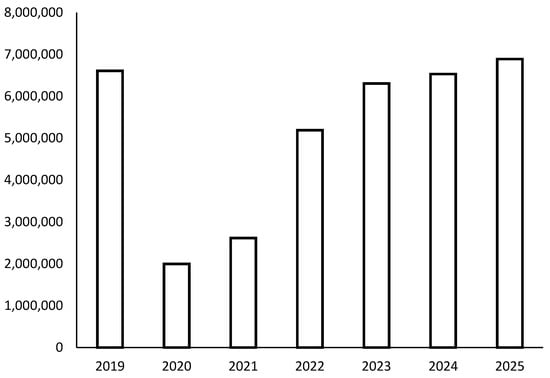
On the other hand, Mexico is one of the countries with the greatest biocultural wealth in the world, which leads to an immense variety of traditional foods and dishes that can be found in different regions of the country (CONABIO, 2024). One of the states with the greatest cultural and gastronomic wealth is the state of Puebla, where it is possible to taste different traditional seasonal foods and dishes such as the famous Chiles en nogada, Mole Poblano, or, during the months of October and November, Mole de Caderas, to name a few examples (Acle-Mena et al., 2020). Tourist arrivals to the state have shown a significant recovery, surpassing pre-COVID-19 pandemic levels and reaching almost seven million tourists in 2025 (Figure 1). About 86% of tourism in the state is represented by domestic tourists, making it a very important market for gastronomic tourism in this state (DATATUR, 2024). The places that attract the most tourists are the city of Puebla, San Pedro Cholula, Atlixco, and Zacatlán de las Manzanas.
Figure 1.
Tourist arrivals in the state of Puebla, Mexico, from 2019 to 2025. Source: DATATUR (2024).
The cities of Puebla and San Pedro Cholula, in particular, account for 52% of tourist arrivals in the state, making these destinations highly relevant for studying the behavior of gastronomic tourists. Recent scientific evidence has established that 3 out of 10 tourists who visit the city of Puebla are motivated by the destination’s gastronomy (Acle-Mena et al., 2020). Furthermore, in 2023, this city was named the Ibero-American Capital of Gastronomy at the International Tourism Fair held in Madrid (Hernández, 2023). It is important to note that gastronomy is promoted by the state government, highlighting ingredients, traditional dishes, and traditional sweets, among other gastronomic products; in other words, the gastronomic identity of the destination. However, it is necessary to investigate whether the gastronomic identity constructed and promoted to tourists is consistent with their perceptions and motivations at the destination, commonly conceptualized as the gastronomic image. Therefore, Puebla is an emblematic gastronomic destination in Mexico that provides tourists with sensory experiences and high hedonic value, where gastronomy is a gateway to understanding the culture of the destination (Rojas-Rivas et al., 2025). Therefore, the objective of this study was to examine perceptions of local gastronomy through the lens of social representations, using the emblematic gastronomy of Puebla, Mexico, as a case study.
2. Materials and Methods
2.1. Place and Participants
This research was done through a survey in two cities in the state of Puebla (San Pedro Cholula and Puebla City) from November 2022 to July 2023. These two cities were selected because they account for more than half of the state’s tourist arrivals (DATATUR, 2024). These destinations are approximately 130 kilometers from Mexico City, which is a short distance for domestic and international tourists to travel from the country’s capital.
A convenience sampling method was used to quickly approach the object of study, which helped to gain rapid access to the target population. Sampling was carried out in public places in both cities, and the selection criteria were that participants had to be tourists over the age of 18 who were interested and available to take part in the study. Several studies in the field of gastronomic tourism have adopted this type of sampling; therefore, its application in this research was considered appropriate (Carvache-Franco et al., 2021; Lebrun & Bouchet, 2024; Mohamed et al., 2024). Moreover, domestic tourists represented 93% of the sample, as they are the main market for these sites (DATATUR, 2024). In addition, previous studies have used samples with a higher proportion of domestic tourists (Ullah et al., 2022; Berbel-Pineda et al., 2019; Rodríguez-Gutiérrez et al., 2020).
2.2. Questionnaire
A questionnaire was designed for this research, which contained several attitudinal statements associated with the destination’s gastronomy, as well as an open-ended question and a free listing exercise. The questionnaire was presented through a QR code that was scanned by the participants. The first statement refers to gastronomy as a primary motivational factor for visiting the destination: “My main motivation for visiting Puebla was its gastronomy,” which was adapted from previous research (J. Kivela & Crotts, 2006). The second statement is about the search for gastronomic experiences during travel (Mora et al., 2021; Ullah et al., 2022; Berbel-Pineda et al., 2019). Finally, a third statement assessed overall satisfaction with the destination’s cuisine (J. Kivela & Crotts, 2006; Moral-Cuadra et al., 2023). These variables have been used to segment tourists based on their motivation, experience, and satisfaction with gastronomy at destinations (Björk & Kauppinen-Räisänen, 2016; López-Guzmán et al., 2017; Mora et al., 2021; Ullah et al., 2022; Moral-Cuadra et al., 2023). Most studies adopt a segmentation approach based on cluster analysis, while this research focuses on gastronomic motivation, as it is a key variable in the behavior of gastronomic tourists (Ullah et al., 2022), and this variable has also been used in previous studies (Sánchez-Cañizares & López-Guzmán, 2012). The statements were evaluated on a 5-point Likert scale from 1 = Strongly disagree to 5 = Strongly agree.
The second part consisted of an open-ended question in which participants gave their opinion on Puebla’s cuisine (What do you think about Puebla’s cuisine?). Open-ended questions are used to gain an in-depth understanding of perceptions about the characteristics of a product or service (ten Kleij & Musters, 2003; Symoneaux et al., 2012), in this case, the gastronomic image of the destination (ten). The second question in this section consisted of a free listing task in which participants were asked to list all the foods or dishes they considered part of Puebla’s traditional cuisine, based on their experience at the destination. Free listing is a qualitative technique widely used in anthropology and psychology studies to examine cultural domains. It is based on a simple procedure of asking participants to list all the words, terms, or ideas related to a concept or cultural domain (Hough & Ferraris, 2010; Libertino et al., 2012; Rojas-Rivas & Zaragoza-Alonso, 2025). Cultural or semantic domains are a series of words, ideas, or terms that refer to a concept (Thompson & Juan, 2006). These elements or characteristics are shared among social groups and contribute to understanding human behavior. Free listing has been applied to study representations of gastronomy among consumers in some Latin American countries (Cuffia et al., 2023; Rojas-Le-Fort et al., 2023). However, its application in tourism studies is very limited (Ribeiro, 2012; Ribeiro & Chick, 2018). Therefore, this qualitative technique was adopted to understand tourists’ mental representations of the local cuisine of this iconic destination in Mexico.
2.3. Data Analysis
2.3.1. Attitudinal Questionnaire
In the context of gastronomic tourism, motivation has been identified as one of the most important variables influencing people’s decision to visit a destination for its cuisine (Ullah et al., 2022). Therefore, in this research, this variable is of great importance in understanding perceptions of Puebla’s gastronomy, according to the different levels of motivation of the participants for the destination’s cuisine.
Based on the above, participants were divided according to their level of motivation to travel associated with the destination’s gastronomy. Those whose responses were Strongly Disagree or Disagree were grouped as the Low Motivation Group. Those whose responses were Neither Agree nor Disagree or Agree were labeled as the Moderate Motivation Group, while participants who responded Strongly Agree were labeled as the High Motivation Group. Subsequently, measures of central tendency and dispersion were calculated for the experience, satisfaction, and motivation variables to identify statistical differences according to the previously established groups. The Kruskal–Wallis test was performed to determine whether there were statistically significant differences among the groups on these variables. The Mann–Whitney U test (p < 0.05) was used to identify differences between these variables. This analysis was performed using SPSS 23 software.
2.3.2. Open-Ended Question
All comments from participants were analyzed qualitatively based on their content and meaning. Responses were entered into an Excel database for further processing. The words, terms, or ideas mentioned were grouped into categories based on their meanings and synonyms. All terms were reviewed to correct errors in wording and standardize the database. Once the categories were formed, they were also grouped into seven higher-level dimensions. The categories and dimensions reported by Chang and Mak (2018) for gastronomic image were used for reference. These dimensions were: Attractiveness, Flavor profile, Familiarity, Cooking methods and ingredients, Distinctiveness, Convenience and price, and Health and safety. Descriptive qualitative analysis was used, in which the name of the dimension/category, the main words or terms that made up the category, and the absolute frequency of mention were presented. The frequency of the categories was based on whether the responses came from the same or different participants (de Andrade et al., 2016).
2.3.3. Free Listing
All the information from the free listing was also entered into an Excel database, considering the number of terms mentioned by each participant and their sociodemographic characteristics such as gender, age, place of residence, and educational level. All the terms mentioned by each participant were placed in different columns (Cuffia et al., 2023). For example, if a participant mentioned four words in their list, five columns were used, the first four for the terms mentioned and the fifth column to establish the total number of terms mentioned. All terms were reviewed to correct errors in wording and standardize the database. Descriptive statistics were then calculated for the free listing exercise, such as the minimum number of terms mentioned, the maximum, the average number of terms, and the standard deviation (Libertino et al., 2012)
Once the database had been cleaned and the descriptive statistics for the exercise had been calculated, the salient elements of the cultural domain under study were identified. Similar words or terms referring to the same object were grouped together. For example, the terms mole, mole poblano, and moles were standardized as Mole poblano. In addition, multiple responses from participants on a particular term were only considered the first time it was mentioned (Libertino et al., 2012; Rojas-Rivas & Zaragoza-Alonso, 2025). For example, if a participant mentioned the terms tacos, tacos de carne, mole, or tacos de cerdo, only the first mention of the term tacos was considered, as well as its position within the list.
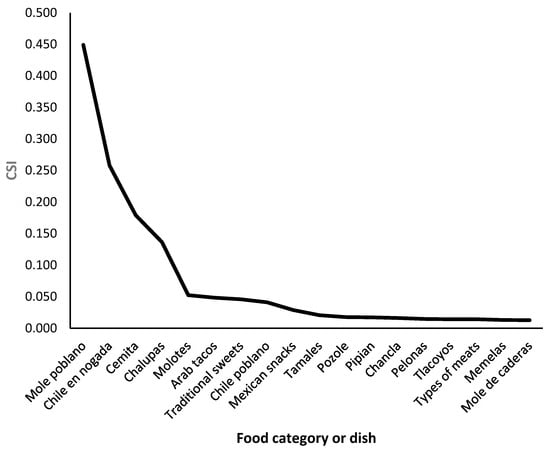
Once the salient food terms or categories were identified in the free listing task, the Cognitive Salience Index (CSI) was calculated, which is a measure that determines the elements of greatest cognitive relevance in a free listing task. The CSI was calculated using the following formula: CSI = F/(AP * N), where F represents the frequency of each object in the study sample, AP is the average position of each object or term, and N is the sample size (Sutrop, 2001). The CSI is an index that ranges from 0 to 1. When an object or category has a value close to 1, it indicates great importance in the cultural domain or object of representation. For example, the most cognitively significant object was Mole poblano, which was mentioned 465 times (F), with an average position (AP) of 1.886, suggesting that it was one of the dishes mentioned at the beginning of the participants’ lists. Substituting the formula CSI = 465/(1.886 * 549), the value is 0.449, which shows that it is the most important dish among the study sample. In order to identify the objects of greatest cognitive relevance, a sedimentation graph was used, descending through the CSI values. When a breakpoint was observed in the graph, the elements of greatest cognitive importance in the domain or concept could be established (Aguirre et al., 2019).
The frequency of items listed in the free listing among the three previously identified groups was calculated. For this purpose, a 3 × 18 contingency table was constructed, with food products in the rows and groups in the columns. The contingency table was then inspected using the global chi-square test. If the test was significant (p < 0.05), the source of variation was inspected using the Chi-Square Per Cell test. The aim was to identify whether the observed frequencies were higher than the theoretical frequencies (Symoneaux et al., 2012).
Finally, CSI values were calculated for each group identified according to their motivation and presented in a sedimentation graph (Aguirre et al., 2019). The analysis relating to the calculation of the CSI and the graphs was performed in Excel.
3. Results
3.1. Sociodemographic Characteristics of the Sample
The sample was composed of 549 visitors or tourists who completed the survey. In terms of gender, the sample was balanced, with women representing 50.3% of participants. Regarding age, 35% of participants reported being between 18 and 25 years old, 21.9% between 26 and 35, 16.9% between 36 and 45, and 25.3% over 46. Only five participants did not disclose their age. Forty-eight percent of the sample reported having a bachelor’s degree, 13.8% a postgraduate degree, 35.2% a high school or technical education, and 2.9% a lower level of education. Regarding travel behavior at the destination, 40.1% of the sample reported traveling for 1 to 3 days at the destination, 38.4% for 4 to 7 days, 19.3% for more than 8 days, and 12 people did not respond to this question. The sample was composed mainly of domestic tourists (93.3%), who are the primary market for these destinations.
3.2. Gastronomic Image Perceived by Tourists
Through a grouping analysis of the terms or ideas mentioned in the open-ended question, 16 categories were identified and grouped into seven dimensions proposed by other authors for the gastronomic image of gastronomic destinations (Chang & Mak, 2018) (Table 1). The most mentioned dimension was Flavor profile, which refers to the aspects of pleasure associated with the consumption of the destination’s gastronomic products (Tasty category). Two categories were also identified in this dimension, referring to the sensory attributes of gastronomic products (flavor and texture). There were also some comments referring to the fact that the food is very spicy and seasoned (Negative aspects).
Table 1.
Dimensions of the gastronomic image of the destination.
The second most frequently mentioned dimension was Attractiveness, which included the category “Variety of food,” considered an attractive aspect of the destination’s gastronomy, as it offers a variety of dishes to tourists. Some tourists also mentioned that the destination’s gastronomy is very colorful, using terms such as “colorful, attractive, or with many colors.” The third most frequently mentioned dimension was Distinctiveness, which establishes the cultural and historical value of the destination’s gastronomy, highlighting that it is unique and authentic and is perceived as among the best in Mexico and the world. The category “Traditional food” refers to the fact that the dishes are part of the traditions of Mexican culture.
The fourth dimension was Familiarity, which reflects tourists’ personal tastes and preferences, as evidenced by comments such as “I like it, I love it, or it’s excellent.” In addition, some respondents mentioned iconic gastronomic products of the destination, such as mole poblano, chiles en nogada, or cemitas. Finally, the three least frequent dimensions were Cooking Methods and Ingredients, Convenience and Price, and Health and Safety. The results suggest that the aspects of pleasure associated with consuming the destination’s gastronomic products, their sensory attributes, the variety of dishes that can be found, as well as the authenticity of the cuisine, which makes it unique, are the main attributes in the gastronomic image of the destination.
3.3. Representations of Traditional Gastronomy of the Destination
On the other hand, a total of 2636 terms or words were mentioned in the sample; the minimum number of terms mentioned was 1, and the maximum was 21. Most respondents mentioned between three and six terms in their lists, with an average of 4.80 ± 2.60. Only a few participants were able to list more than 10 objects or terms in their lists.
Regarding the salient objects identified, 18 food items or categories were obtained that reflect tourists’ or visitors’ perceptions of the destination’s gastronomic heritage. Table 2 shows the results regarding the frequency of mention of each item or category, AP, and CSI. Appendix A provides a description of each of the dishes or food categories obtained through the free listing exercise. The dish with the highest frequency and cognitive significance (CSI = 0.449) was Mole poblano, which was mentioned almost at the beginning of the lists of most of the participants in the sample (AP = 1.886). Nearly 85% of the sample mentioned this dish, making it an emblematic dish that forms part of the gastronomic image of the destination and is present in the representation of tourists.
Table 2.
Main dishes or food categories identified in the free listing.
The second most mentioned dish was Chile en nogada, which was mentioned between the first and second words of the sample in general (AP = 2.846), with a CSI of 0.258 and a frequency of 352 times, indicating that at least 64% of the sample mentioned this dish. Cemita was mentioned near the third word on the lists, and its CSI value was 0.179. Chalupas was the fourth most mentioned item in the sample, also near the third word mentioned, but with a lower frequency than the Cemita, with a CSI value of 0.136. Molotes is the fifth most mentioned gastronomic product; however, it was positioned near the fourth word mentioned, and the CSI = 0.052 was significantly lower than the previous dishes.
Our results show that the dishes above (Mole poblano, Chile en nogada, Cemita, Chalupas, and Molotes) are the most relevant to the gastronomic image of the destination. However, at least four other gastronomic products are also relevant in the minds of visitors and tourists. These are Arab tacos, Traditional sweets, and Mexican snacks. It is worth noting that Chile poblano, which is a fundamental ingredient in the preparation of Chile en nogada, was cited as a representative ingredient of Puebla’s cuisine.
The other gastronomic products were of less cognitive importance, as they obtained a CSI of less than 0.025. It is worth noting that Mole de caderas was the gastronomic dish with the lowest cognitive relevance, suggesting that it is not very present in the social representation of visitors and tourists who come to the destination. Therefore, it requires greater promotion in the gastronomic image of the destination, as the season for this dish in Puebla is in October and November.
In order to identify the elements of greatest cognitive relevance, a sedimentation graph was used. Figure 2 confirms the previous results, suggesting that Mole poblano, Chile en nogada, Cemita, Chalupas, and Molotes are the most relevant elements in the gastronomic image of the destination and are present in tourists’ perceptions. After Molotes, there is a breaking point in the CSI values and the graph stabilizes.
Figure 2.
Sedimentation graph of the dishes identified in the free listing.
3.4. Relationship Between Motivation and the Representation of Traditional Gastronomy
The three groups showed differences in their levels of experience and satisfaction with the destination’s gastronomy. Table 3 shows the results of the Kruskal–Wallis test between the three groups. Different letters indicate statistically significant differences according to the Mann–Whitney U test (p < 0.05). Regarding the Experience variable (p = 0.001), the low- and moderate-motivation groups were similar, whereas the high-motivation group sought more gastronomic experiences at the destinations they visited. Regarding the Satisfaction variable, the three groups were different (p < 0.000), suggesting that there is a relationship between motivation and gastronomic satisfaction; those tourists and visitors who are more motivated by the destination’s gastronomy have higher levels of satisfaction. It is noteworthy that the groups with moderate or high motivation listed a greater number of terms than the group with low motivation for the destination’s gastronomy (p = 0.013).
Table 3.
Groups identified according to their motivation for visiting the destination for its gastronomy.
Regarding the representation of the gastronomic products identified in the free listing. The global chi-square test was statistically significant (p < 0.05) with Mole Poblano (p = 0.039), Mexican Snacks (p = 0.001), and Pozole (p = 0.048). Therefore, the contingency table was inspected using the chi-square per-cell test. Table 4 shows the results of the frequency of gastronomic products among the identified groups.
Table 4.
Differences in the representation of the destination’s gastronomy.
The High Motivation group mentioned the following gastronomic products significantly more than the other two groups: Mole poblano, Mexican snacks, and Pozole. This suggests that they have a greater representation of the destination’s cuisine through traditional products such as Mole poblano. Although Pozole is not a traditional product of Puebla’s cuisine, as it is traditional in the state of Guerrero, Mexico, it is possible that the large number of gastronomic offerings of this product at the destination has permeated the mental representation of visitors and tourists about the destination’s cuisine.
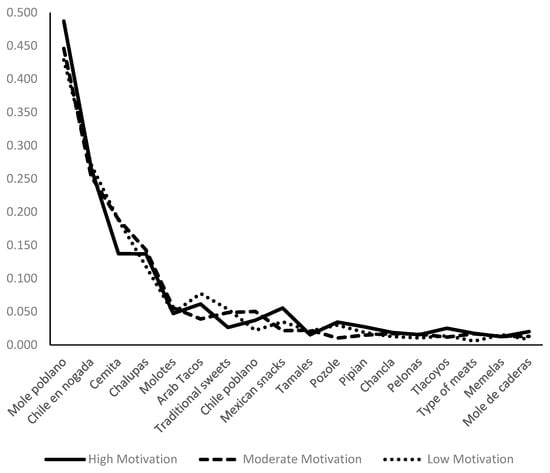
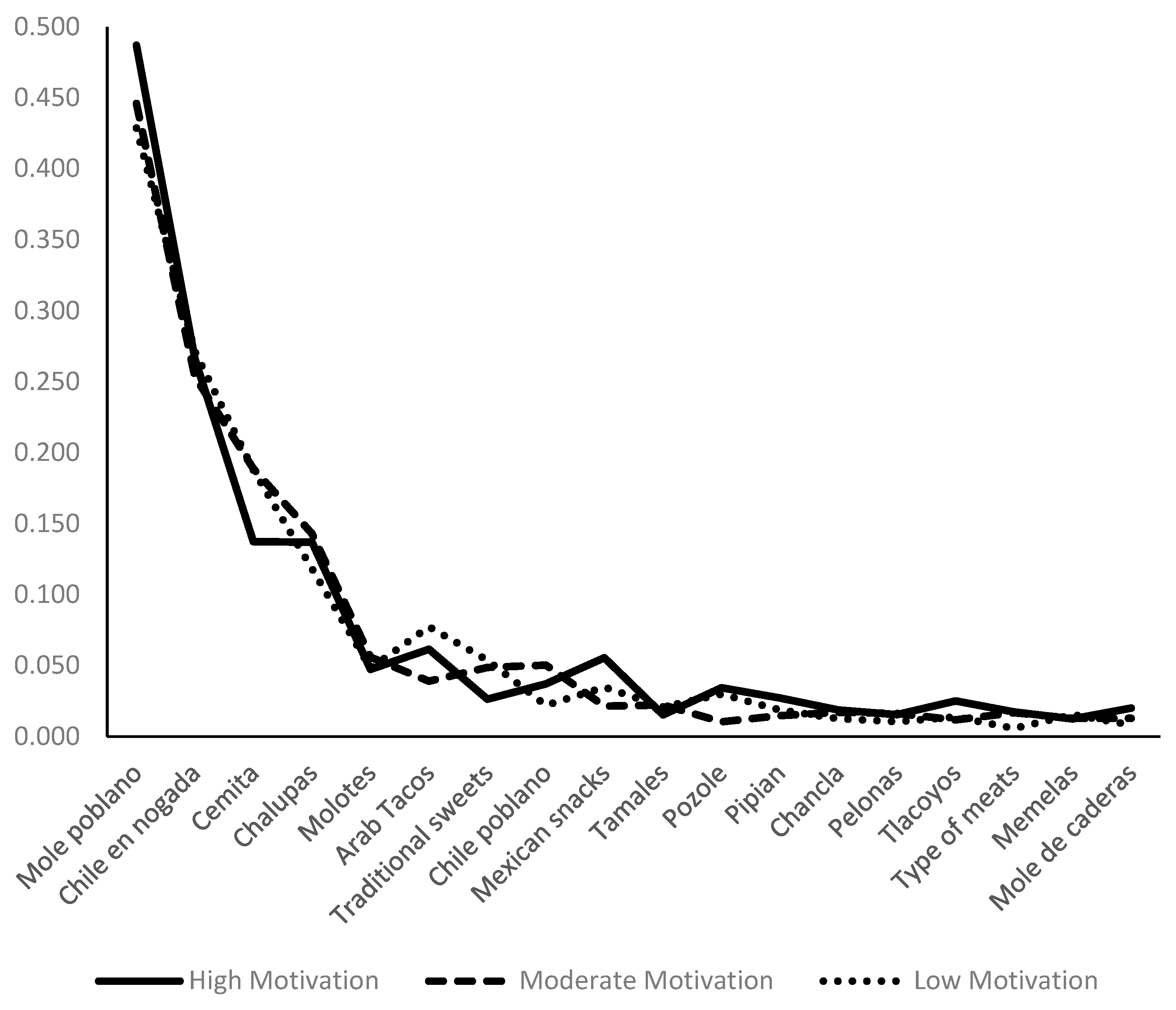
Finally, Figure 3 shows the differences in CSI values between the identified groups. Mole poblano was more important among the most motivated group, while Chile en nogada was similarly represented among the three groups. Of note is the Cemita, which was of lower cognitive relevance among the most motivated group, suggesting that their search for the destination’s cuisine is related to emblematic dishes and possibly specialized restaurants. Meanwhile, the low motivation group is more interested in Arab tacos and Traditional sweets, which are products that can be found both in restaurants and from vendors in different parts of the city.
Figure 3.
Sedimentation graph between the three groups identified.
3.5. Sociodemographic Profile of Groups Identified
The relationship between sociodemographic characteristics and groups identified according to their motivation for the destination’s cuisine was explored. Table 5 shows the results of applying the chi-square test between categorical variables, highlighting that gender (p = 0.044), age (p = 0.029), educational level (p = 0.031), and place of residence (p = 0.012) have a significant relationship with the identified groups. The High Motivation group was composed of significantly more women than the Low Motivation group, which was composed of significantly more men. Regarding age, it can be observed that the Low Motivation group was composed of significantly more young participants aged 18 to 25, unlike the other two groups, which had fewer participants in this age range. Meanwhile, the High Motivation group was composed of a higher proportion of tourists or visitors aged 46 or older, with 29% of the group in this age range.
Table 5.
Sociodemographic characteristics of identified groups.
In terms of educational level, this variable was also statistically significant, showing that the groups with the highest motivation (Moderate and High) for the destination’s cuisine had a higher educational level, specifically a bachelor’s degree, while the group with the lowest motivation was significantly more composed of people with technical or high school education. Finally, the High Motivation group was composed to a greater extent of people from Central Mexico, unlike the Low Motivation group. The Low Motivation group was composed of significantly fewer visitors or tourists from abroad or from the southern regions of Mexico. Regarding the variable of travel behavior at the destination, it was not significant (p > 0.05).
4. Discussion
4.1. Gastronomic Implications
The objective of this research was to study representations of Puebla’s gastronomic heritage among visitors and tourists. Its cuisine is representative of Mexico, making it an emblematic place for the study of gastronomic tourism. For this purpose, an attitudinal questionnaire and two qualitative techniques were applied to 549 participants. On the one hand, the results of the open-ended question revealed seven dimensions associated with the destination’s gastronomic image, the most relevant being Flavor Profile, Attractiveness, Distinctiveness, and Familiarity, which coincides with Chang and Mak’s (2018) findings on the most frequent dimensions in Taiwan’s gastronomic image. However, these authors identify Attractiveness as the most frequent dimension, followed by Flavor profile. These differences may be due to the fact that their research used the repository grid technique with images of distinctive gastronomic products from Taiwanese cuisine, whereas in this study, the stimulus used was based on an open-ended question. Moreover, the dimensions Convenience and Price and Health and Safety were the least cited. Mohamed et al. (2021) identified nine dimensions of Egypt’s gastronomic image among non-visitors, highlighting that the perceived image is related to the food culture and environmental factors of the destination. However, these results were obtained from international tourists using projective techniques.
Likewise, our results are consistent with the categories reported in previous studies that conceptualize gastronomic destinations based on their image, where hedonic, sensory, and cultural value are central elements in the representation of gastronomic destinations (Rojas-Rivas et al., 2025), as these aspects are associated with the dimensions of Flavor Profile, Attractiveness, and Distinctiveness.
Regarding the free listing, eighteen dishes or food categories were identified as being relevant to the gastronomic diversity perceived by tourists. The results are consistent with previous research, which establishes that Mole (Serrano-Cruz et al., 2018) and Chile en nogada are some of the most representative foods in Mexican gastronomy, even among experts who are dedicated to food preparation. Recent studies have established that these two dishes are the emblematic gastronomic products of this gastronomic destination (Acle-Mena et al., 2020).
According to Navarrete et al. (2022), Puebla’s cuisine is one of the richest and most representative in Mexico. Chile en nogada is a gastronomic iconic dish dating back to the early 19th century when Mexico’s independence was achieved. It is made using a mixture of pre-Hispanic and other ingredients from around the world (Europe, Asia, and Africa). Currently, many restaurants prepare this dish with locally sourced ingredients during the months of August and September, mainly from the municipality of San Nicolas de los Ranchos, which is considered the source of the ingredients used to make it, such as apples, pears, peaches, walnuts, and pomegranates (Navarrete et al., 2022). This site is home to the International Chile en Nogada Fair, which has been held since the early 20th century and attracts thousands of tourists annually (Gobierno de Puebla, 2024).
Regarding Mole Poblano, Pilcher (2018) mentions that this dish represents a symbol of the mestizaje between Spaniards and indigenous peoples, which became a great symbol of Mexican nationalism during the second half of the 20th century. Its creation dates back to the convents of the colonial era. However, when talking about Mole, this dish takes us back to pre-Hispanic times, when indigenous groups already made a chili-based sauce called Mulli. It is such an emblematic dish that there are regional varieties that are nationally and internationally recognized, such as the seven moles of Oaxaca. This dish was a strategic element in the promotion of gastronomy through international campaigns carried out by the Mexican Ministry of Tourism, which contributed to the designation of traditional cuisine as part of the Intangible Heritage of Humanity by UNESCO in 2010 (Pilcher, 2018).
On the other hand, Mena (2024) describes several of the gastronomic products identified in this research, which form part of Puebla’s gastronomic offering, highlighting Chanclas, Pelonas, Chalupas, Molote, Memelas, Cemitas, and Tlacoyos, which he describes as Puebla snacks. Furthermore, his results establish that the Cemita and Chalupas are the most representative snacks of gastronomy. This is consistent with our results, as these two products obtained the highest CSI, only below Mole and Chile en nogada. Furthermore, their study (Mena, 2024) shows that these two gastronomic products have the potential to attract food tourists, as they are widely recommended by visitors and tourists. According to Rojas-Rivas et al. (2025), these snacks, together with traditional sweets, are part of the gastronomic diversity that tourists can taste in this gastronomic destination.
Therefore, the gastronomic products identified in the free listing exercise not only represent a food offering for tourists, but also represent a taste of Puebla’s history, which is a gateway to understanding more about the gastronomic heritage of destinations, such as ingredients, flavors, preparation techniques, and ways of consumption.
4.2. Tourism Implications
Gastronomic image is a competitive tool for tourist destinations, hence it is essential to understand the cognitive and affective attributes that comprise it, as well as the gastronomic offer and diversity that form part of that image (Chang & Mak, 2018). The results could be very useful to the authorities responsible for destination management and marketing, as they are in charge of promoting the gastronomic identity through different media such as websites, social networks, and other channels. However, the dimensions identified as part of the destination’s gastronomic image could be used to better promote gastronomy in line with tourists’ needs, considering the hedonic and sensory value that tourists seek in gastronomy, the variety of dishes they hope to try, and the unique and distinctive aspects of gastronomic products. There is consistency between the dishes identified in the free listing exercise and the gastronomic identity of the destination, although greater efforts could be made to promote gastronomic products that are little known in the minds of tourists. For example, local governments consider October and November to be the season for selling Mole de caderas, but in the gastronomic image perceived by tourists, it is a product of little cognitive relevance.
Our study establishes that through the free listing technique, it is possible to obtain an image of the gastronomic diversity of tourist destinations based on the language of visitors, which contributes to identifying and promoting distinctive products in the cuisines of destinations, such as Asado in Argentina (Cuffia et al., 2023) or Encebollado in Ecuador (Rojas-Le-Fort et al., 2023). Furthermore, as this technique is qualitative in nature, it provides insight into the gastronomic diversity of a place, which can be used in marketing strategies to promote destinations (Gupta & Sharma, 2024).
Furthermore, our results are consistent with previous studies, which indicate a positive perception of local cuisine as part of authentic experiences in destinations (Gupta & Sharma, 2024; Peštek & Činjarević, 2014; Sthapit et al., 2023). For example, in Bosnia and Herzegovina, European tourists cited the traditional Cevapi as a representative dish of that country (Peštek & Činjarević, 2014), while in Fiji it was the traditional Kokoda or Fijian ceviche (Gupta & Sharma, 2024), and in the city of Córdoba, Spain, it was Salmorejo (Jiménez Beltrán et al., 2016).
On the other hand, three profiles of food tourists were identified according to their motivation for the destination’s gastronomy. These profiles are consistent with previous studies (Björk & Kauppinen-Räisänen, 2016; Cordova-Buiza et al., 2021; Valverde-Roda et al., 2023; Gálvez et al., 2017; López-Guzmán et al., 2017; Pérez et al., 2020), which identify at least three groups of gastronomic tourists (Survivors, Enjoyers, and Experiencers). However, unlike previous studies that use cluster analysis techniques to identify tourist segments, our study uses only the motivation variable to differentiate between segments of gastronomic tourists. Moreover, other studies have based the segmentation of food tourists on the gastronomic experience (Hjalager, 2004). Therefore, it is highly relevant to identify how there are different segments of food tourists according to their primary motivation for food at destinations.
The High Motivation group showed the highest levels of satisfaction and gastronomic experience at the destination, which may be associated with the Experiencers group identified in the literature, who travel to a place to have an authentic experience with local food (Pérez et al., 2020), as this group significantly associated the destination’s signature dish (Mole poblano) more, as well as some Mexican and Puebla snacks. While the Moderate Motivation group’s satisfaction with the cuisine was higher than that of the low motivation group, the gastronomic experience variable was no different between these two groups. Therefore, this group may be associated with Enjoyers tourists, who have a positive attitude towards the destination’s cuisine (Björk & Kauppinen-Räisänen, 2016). The Low Motivation group obtained the lowest scores in terms of gastronomic experience and satisfaction, which could also be associated with the Survivors group, who have very little interest in the gastronomy of destinations (Nicoletti et al., 2019).
It is very important to note that the sociodemographic variables of the groups significantly influenced their profile. Regarding gender, the most motivated group was composed mainly of female tourists, which coincides with previous studies on the segmentation of gastronomic tourists, since the group seeking greater gastronomic experiences was composed mainly of women, while the groups with less interest in gastronomy were composed mainly of males (Nicoletti et al., 2019; Robinson & Getz, 2014; Yong et al., 2022). Moreover, our findings also contribute to understanding the profile of gastronomic tourists in Mexico, aligning with previous studies that establish that the groups with the greatest interest in the gastronomy of destinations are older people with a high level of education (Nicoletti et al., 2019; Robinson & Getz, 2014).
Although there was little participation by international tourists in the survey, statistical differences were observed in the groups according to the variable of region of origin, highlighting that the group with the lowest motivation was composed significantly more of international tourists than the other two. Meanwhile, the High Motivation group was composed of tourists and visitors from Central Mexico. As previously described, Puebla is a destination very close to the country’s capital that attracts visitors and tourists from nearby states (Acle-Mena et al., 2020), making it an important destination for domestic tourism (DATATUR, 2024). Pérez et al. (2020) observed that the group most interested (Experiencers) in the gastronomy of Manabí, Ecuador, was composed mainly of domestic tourists. In the study by Nicoletti et al. (2019) in Trapani, Italy, it is noteworthy that this group was also composed mainly of domestic tourists. García Rodea et al. (2024) detail that wine tourists in a wine-producing region of Mexico come mainly from central Mexico. Therefore, domestic tourists are an important market for gastronomic tourism in Mexico, possibly due to a greater appreciation and valuation of local gastronomy than international tourists (Lebrun & Bouchet, 2024).
4.3. Theoretical and Methodological Implications
The theory of social representations is useful for understanding how a population’s knowledge, beliefs, perceptions, and attitudes toward different aspects of their daily lives are formed. These representations are based on the common language that people use to refer to an object; they are socially constructed and shared, and they help to construct reality among social groups. Social representations are the everyday language that people use to communicate and define different aspects of the material world (Rojas-Rivas & Cuffia, 2022). Therefore, social representation theory is extremely useful for understanding the common language that visitors and tourists use to describe the image or gastronomic diversity of tourist destinations.
This research has used a combination of two qualitative techniques together with an attitudinal questionnaire to analyze social representations of Puebla’s local cuisine, as well as the perceived image of the destination among tourists. The open-ended question technique has made it possible to identify seven previous dimensions of the gastronomic image of destinations (Chang & Mak, 2018; Mohamed et al., 2021, 2024), making it an easy-to-apply technique that is extremely valuable for understanding the gastronomic image of destinations. This technique could be easily applied to study the image perceived by tourists regarding the gastronomic identity projected by marketing organizations in destinations, and based on this, to understand tourists’ expectations or impressions of the gastronomic image and adjust or strengthen the gastronomic identity.
On the other hand, free listing is a qualitative technique that contributes to understanding representations of gastronomy diversity (Hough & Ferraris, 2010; Libertino et al., 2012). Previous studies have obtained the gastronomic image and diversity from experts, chefs, or restaurant owners in the destinations (Gupta & Sharma, 2024), as well as with quantitative instruments (Vuković & Terzić, 2020) and other methods (Mohamed et al., 2021, 2024; Sthapit et al., 2023). Free listing is a low-cost tool that can be used to obtain the gastronomic image and diversity of tourist destinations based on the language of visitors and tourists. This technique is founded on a simple procedure in which people must list all the terms, words, or ideas they consider to be part of a cultural domain, in this case, the gastronomy of a destination. The study of cultural domains is fundamental to understanding human behavior, since the way in which they are conceptualized or defined influences people’s attitudes and behaviors.
According to the literature review by Yong et al. (2022), which systematically selected 397 articles on gastronomic tourism, most studies are quantitative and descriptive; therefore, they recommend using qualitative approaches to obtain information on the perspectives of gastronomic tourists. Sio et al. (2024) also observed this pattern in studies on gastronomic tourism and therefore recommend adopting qualitative approaches to gain a better understanding of the relationship between gastronomic tourism and the image of destinations. Therefore, we consider this research to be of high value and very useful for academics and Destination Management Organizations, since through free listing, it is possible to obtain a gastronomic image from the tourist perspective and based on this, establish marketing strategies in culinary destinations.
4.4. Limitations and Future Research
Like other studies, our work has several limitations that should be considered. Most of the sample was represented by domestic tourists; future studies could verify the attitudes of motivation, experience, and gastronomic satisfaction among international tourists. Second, the sample used in this study was drawn through convenience sampling, so our results should be verified with a larger and more representative sample of domestic and international tourists. Future studies could examine tourists’ gastronomic experiences and satisfaction with the dishes identified in the free listing, since in this study, we have only identified those that form part of the destination’s gastronomic image. Finally, it is important to corroborate the importance of gastronomic products with quantitative instruments such as attitudinal scales or “check all that apply” questions.
5. Conclusions
This research aimed to analyze representations of Mexico’s gastronomic heritage from the perspective of tourists. To achieve this, the emblematic gastronomic destination of Puebla was taken as a case study. Seven dimensions associated with the gastronomic image of the destination were obtained, with flavor profile, attractiveness, distinctiveness, and familiarity being the most important. Eighteen gastronomic products were identified that reflect the culinary diversity of this destination, highlighting Mole poblano and Chile en nogada, which are dishes steeped in history that allow for a greater understanding of the destination’s culture. Tourists were segmented into three profiles based on their motivation for visiting the destination for its gastronomy, with the most motivated group showing higher levels of satisfaction and gastronomic experience. The groups identified are associated with those reported in the previous literature: Survivors, Experiencers, and Enjoyers. Sociodemographic variables such as gender, age, educational level, and place of residence also influenced the profile of the groups, highlighting that the group most motivated by the destination’s gastronomy consisted of a higher proportion of women, older people, those with a higher level of education, and mainly domestic tourists.
Author Contributions
Conceptualization, E.R.-R.; methodology, E.R.-R.; formal analysis, E.R.-R.; data curation, E.R.-R.; writing—original draft preparation, E.R.-R.; writing—review and editing, T.S. and H.T.-O.; project administration, E.R.-R. All authors have read and agreed to the published version of the manuscript.
Funding
This research received no external funding.
Institutional Review Board Statement
The study was conducted in accordance with the Declaration of Helsinki and was approved by the Research Department of the Universidad de las Américas Puebla under registration number 2023/179—9 January 2023.
Informed Consent Statement
Informed consent was obtained from all subjects involved in the study.
Data Availability Statement
The information in this article may be shared upon reasonable request.
Conflicts of Interest
The authors declare no conflicts of interest.
Appendix A
Table A1.
Description of the gastronomic products identified in the free listing.
References
- Acle-Mena, R. S., Santos-Díaz, J. Y., & Herrera-López, B. (2020). La gastronomía tradicional como atractivo turístico de la ciudad de Puebla, México. Revista de Investigación, Desarrollo e Innovación, 10(2), 237–248. [Google Scholar] [CrossRef] [Scilit]
- Afshardoost, M., & Eshaghi, M. S. (2020). Destination image and tourist behavioural intentions: A meta-analysis. Tourism Management, 81, 104154. [Google Scholar] [CrossRef] [Scilit]
- Aguirre, A., Borneo, M. T., El Khori, S., & Borneo, R. (2019). Exploring the understanding of the term “ultra-processed foods” by young consumers. Food Research International, 115, 535–540. [Google Scholar] [CrossRef] [Scilit]
- Akhoondnejad, A. (2024). A comprehensive understanding of memorable experiences in food tourism. Consumer Behavior in Tourism and Hospitality, 19(3), 447–461. [Google Scholar] [CrossRef] [Scilit]
- Baloglu, S., & McCleary, K. W. (1999). A model of destination image formation. Annals of Tourism Research, 26(4), 868–897. [Google Scholar] [CrossRef] [Scilit]
- Bartels, J., & Onwezen, M. C. (2014). Consumers’ willingness to buy products with environmental and ethical claims: The roles of social representations and social identity. International Journal of Consumer Studies, 38(1), 82–89. [Google Scholar] [CrossRef] [Scilit]
- Barzallo-Neira, C., & Pulido-Fernández, J. I. (2025). The demand for gastronomic tourism—Characterization and tourists’ profiles. Sustainability, 17(16), 7206. [Google Scholar] [CrossRef] [Scilit]
- Bäckström, A., Pirttilä-Backman, A. M., & Tuorila, H. (2003). Dimensions of novelty: A social representation approach to new foods. Appetite, 40(3), 299–307. [Google Scholar] [CrossRef] [Scilit]
- Bäckström, A., Pirttilä-Backman, A. M., & Tuorila, H. (2004). Willingness to try new foods as predicted by social representations and attitude and trait scales. Appetite, 43(1), 75–83. [Google Scholar] [CrossRef] [Scilit]
- Beerli, A., & Martin, J. D. (2004). Factors influencing destination image. Annals of Tourism Research, 31(3), 657–681. [Google Scholar] [CrossRef] [Scilit]
- Behrens, J. H., Vedovato, G. M., Cervato-Mancuso, A. M., & Bastos, D. H. (2015). Social representations of safety in food services. Food Research International, 74, 324–328. [Google Scholar] [CrossRef] [Scilit] [PubMed]
- Berbel-Pineda, J. M., Palacios-Florencio, B., Ramírez-Hurtado, J. M., & Santos-Roldán, L. (2019). Gastronomic experience as a factor of motivation in the tourist movements. International Journal of Gastronomy and Food Science, 18, 100171. [Google Scholar] [CrossRef] [Scilit]
- Björk, P., & Kauppinen-Räisänen, H. (2016). Local food: A source for destination attraction. International Journal of Contemporary Hospitality Management, 28(1), 177–194. [Google Scholar] [CrossRef] [Scilit]
- Carvache-Franco, M., Orden-Mejía, M., Carvache-Franco, W., Zambrano-Conforme, D., & Carvache-Franco, O. (2021). Attributes of the service that influence and predict satisfaction in typical gastronomy. International Journal of Gastronomy and Food Science, 24, 100356. [Google Scholar] [CrossRef] [Scilit]
- Chang, R. C., & Mak, A. H. (2018). Understanding gastronomic image from tourists’ perspective: A repertory grid approach. Tourism Management, 68, 89–100. [Google Scholar] [CrossRef] [Scilit]
- CONABIO. (2024). Alimentos y bebidas. Available online: https://www.biodiversidad.gob.mx/diversidad/alimentos (accessed on 21 November 2025).
- Contreras, A. T. R., & González, F. C. V. (2010). Formación del patrimonio gastronómico del Valle de Toluca, México. CIENCIA Ergo-Sum, 17(3), 239–252. [Google Scholar]
- Cordova-Buiza, F., Gabriel-Campos, E., Castaño-Prieto, L., & García-García, L. (2021). The gastronomic experience: Motivation and satisfaction of the gastronomic tourist—The case of Puno city (Peru). Sustainability, 13(16), 9170. [Google Scholar] [CrossRef] [Scilit]
- Crapolicchio, E., Sarrica, M., Rega, I., Norton, L. S., & Vezzali, L. (2022). Social representations and images of slum tourism: Effects on stereotyping. International Journal of Intercultural Relations, 90, 97–107. [Google Scholar] [CrossRef] [Scilit]
- Cuffia, F., Rojas-Rivas, E., Urbine, A., & Zaragoza-Alonso, J. (2023). Using the free listing technique to study consumers’ representations of traditional gastronomy in Argentina. Journal of Ethnic Foods, 10(1), 2. [Google Scholar] [CrossRef] [Scilit]
- DATATUR. (2024). Monitoreo hotelero. Available online: https://monitoreohotelero.sectur.gob.mx/Reportes/Menu.aspx (accessed on 21 November 2025).
- de Andrade, J. C., de Aguiar Sobral, L., Ares, G., & Deliza, R. (2016). Understanding consumers’ perception of lamb meat using free word association. Meat Science, 117, 68–74. [Google Scholar] [CrossRef] [Scilit]
- García Rodea, L. F., Thomé-Ortiz, H., Espinoza-Ortega, A., Bittencourt César, P. D. A., & Sánchez-Vega, L. P. (2024). Wine consumption and consumers in Querétaro, Mexico: An analysis from the perspective of enotourism. International Journal of Wine Business Research, 36(4), 489–504. [Google Scholar] [CrossRef] [Scilit]
- Gálvez, J. C. P., López-Guzmán, T., Buiza, F. C., & Medina-Viruel, M. J. (2017). Gastronomy as an element of attraction in a tourist destination: The case of Lima, Peru. Journal of Ethnic Foods, 4(4), 254–261. [Google Scholar] [CrossRef] [Scilit]
- Gobierno de Puebla. (2024). Anuncian la 24a edición de la feria internacional del Chile en nogada. Available online: https://www.puebla.gob.mx/index.php/noticias/item/19282-anuncian-la-24a-edicion-de-la-feria-internacional-del-chile-en-nogada (accessed on 30 November 2025).
- Gugliucci, V., Vitola, A., Girona, A., Santin, V., Vidal, L., Giménez, A., Curutchet, R. M., & Ares, G. (2022). Social representations of cooking and homemade meals. International Journal of Gastronomy and Food Science, 28, 100534. [Google Scholar] [CrossRef] [Scilit]
- Gupta, V., & Sharma, K. (2024). Food authenticity, culture, and tourism: Analysing the dimensions of local gastronomic image among foreign tourists in Fiji. British Food Journal, 126(12), 4124–4146. [Google Scholar] [CrossRef] [Scilit]
- Hegarty, J. A., & O’Mahony, G. B. (2001). Gastronomy: A phenomenon of cultural expressionism and an aesthetic for living. International Journal of Hospitality Management, 20(1), 3–13. [Google Scholar] [CrossRef] [Scilit]
- Hernández, M. (2023). Puebla es nombrada capital iberoamericana de la cultura gastronómica en fitur. Available online: https://oem.com.mx/elsoldepuebla/local/puebla-es-nombrada-capital-iberoamericana-de-la-cultura-gastronomica-en-fitur-2023-19522203 (accessed on 22 November 2025).
- Hjalager, A. M. (2004). What do tourists eat and why? Towards a sociology of gastronomy and tourism. Tourism, 52(2), 195–201. [Google Scholar]
- Hough, G., & Ferraris, D. (2010). Free listing: A method to gain initial insight of a food category. Food Quality and Preference, 21(3), 295–301. [Google Scholar] [CrossRef] [Scilit]
- Jiménez Beltrán, J., López-Guzmán, T., & Santa-Cruz, F. G. (2016). Gastronomy and tourism: Profile and motivation of international tourism in the city of Córdoba, Spain. Journal of Culinary Science & Technology, 14(4), 347–362. [Google Scholar] [CrossRef] [Scilit]
- Kivela, J., & Crotts, J. C. (2006). Tourism and gastronomy: Gastronomy’s influence on how tourists experience a destination. Journal of Hospitality & Tourism Research, 30(3), 354–377. [Google Scholar]
- Kivela, J. J., & Crotts, J. C. (2009). Understanding travelers’ experiences of gastronomy through etymology and narration. Journal of Hospitality & Tourism Research, 33(2), 161–192. [Google Scholar] [CrossRef] [Scilit]
- Lebrun, A. M., & Bouchet, P. (2024). Dining-out preferences of domestic tourists at a gastronomic destination: The major influence of localness in France. Tourism Management Perspectives, 50, 101217. [Google Scholar] [CrossRef] [Scilit]
- Libertino, L., Ferraris, D., Osornio, M. L., & Hough, G. (2012). Analysis of data from a free-listing study of menus by different income-level populations. Food Quality and Preference, 24(2), 269–275. [Google Scholar] [CrossRef] [Scilit]
- Lo Monaco, G., & Bonetto, E. (2019). Social representations and culture in food studies. Food Research International, 115, 474–479. [Google Scholar] [CrossRef] [Scilit] [PubMed]
- López-Guzmán, T., Uribe Lotero, C. P., Pérez Gálvez, J. C., & Ríos Rivera, I. (2017). Gastronomic festivals: Attitude, motivation and satisfaction of the tourist. British Food Journal, 119(2), 267–283. [Google Scholar] [CrossRef] [Scilit]
- Mena, R. S. A. (2024). Cultura, recreación y sabores de los antojitos poblanos: Culture, recreation, and flavors of antojitos poblanos. Kalpana, 26, 7–25. [Google Scholar]
- Mohamed, M. E., Lehto, X., Hewedi, M., & Behnke, C. A. (2021). Naïve destination food images: Exploring the food images of non-visitors. Journal of Hospitality and Tourism Management, 47, 93–103. [Google Scholar] [CrossRef] [Scilit]
- Mohamed, M. E., Lehto, X. Y., & Behnke, C. (2024). Visitors’ and non-visitors’ destination food images: How do they vary in Egypt? Tourism Management Perspectives, 51, 101241. [Google Scholar] [CrossRef] [Scilit]
- Mora, D., Solano-Sanchez, M. A., López-Guzmán, T., & Moral-Cuadra, S. (2021). Gastronomic experiences as a key element in the development of a tourist destination. International Journal of Gastronomy and Food Science, 25, 100405. [Google Scholar] [CrossRef] [Scilit]
- Moral-Cuadra, S., Martín, J. C., Román, C., & López-Guzmán, T. (2023). Influence of gastronomic motivations, satisfaction and experiences on loyalty towards a destination. British Food Journal, 125(10), 3766–3783. [Google Scholar] [CrossRef] [Scilit]
- Moscardo, G. (2011). Exploring social representations of tourism planning: Issues for governance. Journal of Sustainable Tourism, 19(4–5), 423–436. [Google Scholar] [CrossRef] [Scilit]
- Moscovici, S. (1988). Notes towards a description of social representations. European Journal of Social Psychology, 18(3), 211–250. [Google Scholar] [CrossRef] [Scilit]
- Navarrete, M. C., Muñoz, C. G., & Ancona, M. C. (2022). Gastronomía tradicional, identidad y emprendimiento. Los 200 años de la creación del Chile en nogada. Journal of Tourism and Heritage Research: JTHR, 5(2), 1–15. [Google Scholar]
- Nicoletti, S., Medina-Viruel, M. J., Di-Clemente, E., & Fruet-Cardozo, J. V. (2019). Motivations of the culinary tourist in the city of Trapani, Italy. Sustainability, 11(9), 2686. [Google Scholar] [CrossRef] [Scilit]
- Peštek, A., & Činjarević, M. (2014). Tourist perceived image of local cuisine: The case of Bosnian food culture. British Food Journal, 116(11), 1821–1838. [Google Scholar] [CrossRef] [Scilit]
- Pérez, J. C., Torres-Matovelle, P., Molina-Molina, G., & González Santa Cruz, F. (2020). Gastronomic clusters in an Ecuadorian tourist destination: The case of the province of Manabí. British Food Journal, 122(12), 3917–3934. [Google Scholar] [CrossRef] [Scilit]
- Pilcher, J. M. (2018). The land of seven moles: Mexican culinary nationalism in an age of multiculturalism. Food, Culture & Society, 21(5), 637–653. [Google Scholar] [CrossRef] [Scilit]
- Ribeiro, N. F. (2012). Using concomitant free listing to analyze perceptions of tourism experiences. Journal of Travel Research, 51(5), 555–567. [Google Scholar] [CrossRef] [Scilit]
- Ribeiro, N. F., & Chick, G. E. (2018). Analyzing cultural saliency in hedonistic tourism experiences using free listing, multidimensional scaling, and graphic layout algorithm. Tourism Analysis, 23(1), 151. [Google Scholar] [CrossRef] [Scilit]
- Robinson, R., & Getz, D. (2014). Profiling potential food tourists: An Australian study. British Food Journal, 116(4), 690–706. [Google Scholar] [CrossRef] [Scilit]
- Rodríguez-Gutiérrez, P., González Santa Cruz, F., Pemberthy Gallo, L. S., & López-Guzmán, T. (2020). Gastronomic satisfaction of the tourist: Empirical study in the Creative City of Popayán Colombia. Journal of Ethnic Foods, 7(1), 8. [Google Scholar] [CrossRef] [Scilit]
- Rojas-Le-Fort, M., Valdivieso-López, I. P., & Duarte-Casar, R. (2023). Representations of Ecuadorian cuisine in the coast and the highlands regions through the free listing technique. Discover Food, 3(1), 20. [Google Scholar] [CrossRef] [Scilit]
- Rojas-Rivas, E., & Cuffia, F. (2022). Gastronomy: A novel social representation of foods through consumers’ language. In Future foods (pp. 411–424). Academic Press. [Google Scholar]
- Rojas-Rivas, E., Rendón-Domínguez, A., Felipe-Salinas, J. A., & Cuffia, F. (2020). What is gastronomy? An exploratory study of social representation of gastronomy and Mexican cuisine among experts and consumers using a qualitative approach. Food Quality and Preference, 83, 103930. [Google Scholar] [CrossRef] [Scilit]
- Rojas-Rivas, E., & Zaragoza-Alonso, J. (2025). Free listing: Methodological procedures and applications. In Handbook of concepts in health, health behavior and environmental health (pp. 1–22). Springer Nature. [Google Scholar]
- Rojas-Rivas, E., Zaragoza-Alonso, J., Tovar-Bustamante, L. E., & Sufi, T. (2025). What is a gastronomic destination? Studying the image of an emblematic destination in Mexico using the theory of social representations. British Food Journal, 127(10), 3744–3767. [Google Scholar] [CrossRef] [Scilit]
- Santich, B. (2004). The study of gastronomy and its relevance to hospitality education and training. International Journal of Hospitality Management, 23(1), 15–24. [Google Scholar] [CrossRef] [Scilit]
- Sánchez-Cañizares, S. M., & López-Guzmán, T. (2012). Gastronomy as a tourism resource: Profile of the culinary tourist. Current Issues in Tourism, 15(3), 229–245. [Google Scholar] [CrossRef] [Scilit]
- Sánchez-Vega, L., Espinoza-Ortega, A., Thomé-Ortiz, H., Rojas-Rivas, E., & Escobar-López, S. Y. (2023). Motivos de consumo de vino de enoturistas del centro de México. RIVAR, 10(28), 41–57. [Google Scholar] [CrossRef] [Scilit]
- Serrano-Cruz, M. R., Espinoza-Ortega, A., Sepúlveda, W. S., Vizcarra-Bordi, I., & Thomé-Ortiz, H. (2018). Factors associated with the consumption of traditional foods in central Mexico. British Food Journal, 120(11), 2695–2709. [Google Scholar] [CrossRef] [Scilit]
- Seyitoğlu, F., & Stanislav, I. (2020). A conceptual study of the strategic role of gastronomy in tourism destinations. International Journal of Gastronomy and Food Science, 20, 100230. [Google Scholar] [CrossRef] [Scilit]
- Sio, K. P., Fraser, B., & Fredline, L. (2024). A contemporary systematic literature review of gastronomy tourism and destination image. Tourism Recreation Research, 49(2), 312–328. [Google Scholar] [CrossRef] [Scilit]
- Sthapit, E., Björk, P., & Piramanayagam, S. (2023). Domestic tourists and local food consumption: Motivations, positive emotions and savouring processes. Annals of Leisure Research, 26(2), 316–337. [Google Scholar] [CrossRef] [Scilit]
- Stone, M. J., Soulard, J., Migacz, S., & Wolf, E. (2018). Elements of memorable food, drink, and culinary tourism experiences. Journal of Travel Research, 57(8), 1121–1132. [Google Scholar] [CrossRef] [Scilit]
- Sutrop, U. (2001). List task and a cognitive salience index. Field Methods, 13(3), 263–276. [Google Scholar] [CrossRef] [Scilit]
- Symoneaux, R., Galmarini, M. V., & Mehinagic, E. (2012). Comment analysis of consumer’s likes and dislikes as an alternative tool to preference mapping. A case study on apples. Food Quality and Preference, 24(1), 59–66. [Google Scholar] [CrossRef] [Scilit]
- ten Kleij, F., & Musters, P. A. (2003). Text analysis of open-ended survey responses: A complementary method to preference mapping. Food Quality and Preference, 14(1), 43–52. [Google Scholar] [CrossRef] [Scilit]
- Thompson, E. C., & Juan, Z. (2006). Comparative cultural salience: Measures using free-list data. Field Methods, 18(4), 398–412. [Google Scholar] [CrossRef] [Scilit]
- Ueda, H., & Poulain, J. P. (2021). What is gastronomy for the French? An empirical study on the representation and eating model in contemporary France. International Journal of Gastronomy and Food Science, 25, 100377. [Google Scholar] [CrossRef] [Scilit]
- Ullah, N., Khan, J., Saeed, I., Zada, S., Xin, S., Kang, Z., & Hu, Y. (2022). Gastronomic tourism and tourist motivation: Exploring northern areas of Pakistan. International Journal of Environmental Research and Public Health, 19(13), 7734. [Google Scholar] [CrossRef] [Scilit]
- Valverde-Roda, J., Medina Viruel, M. J., Castano Prieto, L., & Solano Sanchez, M. A. (2023). Interests, motivations and gastronomic experiences in the world heritage site destination of Granada (Spain): Satisfaction analysis. British Food Journal, 125(13), 61–80. [Google Scholar] [CrossRef] [Scilit]
- Vu, O. T. K., Alonso, A. D., Nguyen, T. T., & Ngo, A. T. T. (2025). Gastronomy and beverages as key resources of a nation’s destination image potential. Current Issues in Tourism, 1–21. [Google Scholar] [CrossRef] [Scilit]
- Vuković, A. J., & Terzić, A. (2020). Gastronomy and regional identity: Balkan versus national cuisine. In Gastronomy for tourism development (pp. 1–25). Emerald Publishing Limited. [Google Scholar]
- Williams, N. L., Wassler, P., & Fedeli, G. (2023). Social representations of war tourism: A case of Ukraine. Journal of Travel Research, 62(4), 926–932. [Google Scholar] [CrossRef] [Scilit]
- Yong, R. Y. M., Chua, B. L., Han, H., & Kim, B. (2022). Taste your way across the globe: A systematic review of gastronomy tourism literature (2000–2021). Journal of Travel & Tourism Marketing, 39(7–9), 623–650. [Google Scholar]

Disclaimer/Publisher’s Note: The statements, opinions and data contained in all publications are solely those of the individual author(s) and contributor(s) and not of MDPI and/or the editor(s). MDPI and/or the editor(s) disclaim responsibility for any injury to people or property resulting from any ideas, methods, instructions or products referred to in the content. |
© 2026 by the authors. Licensee MDPI, Basel, Switzerland. This article is an open access article distributed under the terms and conditions of the Creative Commons Attribution (CC BY) license.