Skip to Content
Tourism and HospitalityTourism and Hospitality
  • Article
  • Open Access

3 March 2026

Constructing the Taste of Place Through Cultural Immersion: A Grounded Theory Study of Culinary Tourism Experiences

,
and
Rattanakosin International College of Creative Entrepreneurship, Rajamangala University of Technology Rattanakosin, Nakhon Pathom 73170, Thailand
*
Author to whom correspondence should be addressed.

Abstract

This study aimed to immerse itself in the most important cultural aspects that tourists see as the main part of their food experience in Chongqing, a city with an active culinary life. We used semi-structured and in-depth interviews with 50 tourists who had recent culinary travel experience in Chongqing. The interview data were systematized with the grounded theory coding process. It was found that six essential themes characterizing the cultural climate of the culinary experience in Chongqing can be taken as Sensory Immersion, Atmospheric Energy (Yanhuoqi), Communal Dining, Procedural Knowledge, Historical Symbolism, and Authenticity Seeking. The research adds a multi-dimensional and granular paradigm for perceiving cultural aspects of a food destination. Through the deconstruction of the taste of place, it gives detailed, contextual information about the manner in which the tourists both interpret and experience food culture. The results have profound practical implications for both destination marketers in relation to the manner in which they can develop powerful cultural narratives and to policymakers on the role of maintaining intangible culinary heritage.

1. Introduction

The modern global society has turned tourism into a mass leisure activity and transformed it into a cultural experience whereby tourists are looking to get a more authentic and participatory experience that makes them feel part of a package (Yu et al., 2025). Culinary tourism or food tourism is one of the most potent and quickly developing types of niche tourism (Yıkmış et al., 2024). It can be described as the intention to seek distinctive and memorable eating and drinking experiences, which not only involve the consumption of food but also the study of the production of said food, its history, and its cultural context (Vuksanović et al., 2024). Food has gone beyond the essential physiological role and serves as a primary tourist attraction, travel driving force, one of the main elements of destination image, and an essential means of cultural exchange (Mohamed et al., 2025).
Chongqing is a city that has an exceptionally rich and unique food culture within the context of the world. Chongqing is a major municipality in southwestern China and a well-established culinary hub within the broader Sichuan (Chuan) gastronomic region. In Chinese cultural contexts, food culture constitutes a key dimension of everyday life and place identity, where shared dining practices, embodied routines, and local narratives connect taste with social belonging and historical meaning. This context makes Chongqing an appropriate site for examining how tourists construct a “taste of place” through cultural immersion, beyond purely sensory or economic accounts. Since it is one of the main Sichuan (Chuan) cuisine (Chuancai) representatives, its culinary products serve as one of its pillars and an enormous tourist attraction (Gan, 2024). The city’s food tourism market is very large; the market size of the Chongqing hotpot industry was over 72 billion RMB in 2024, which is a component of the hundred billion-level food tourism market that promotes major economic growth and development (People’s Daily Online, 2024). The city has more than 80 million tourist journeys in peak tourist seasons such as the summer vacation, and many of them have been drawn to the food sector (Fan & Apritado, 2025). The significance of this is accepted and enhanced by robust policy backing. The municipal government of Chongqing has also been keen on marketing the city as a world gastronomy enclave, launching campaigns like the “Implementation Opinions on Promotion of the Construction of Food City” (Chen et al., 2023). The policies have led to the creation of food-focused festivals such as the Chongqing Hotpot festival and the establishment of food streets, which are all aimed at improving the culinary beauty and infrastructure of the city.
Chongqing cuisine is not of taste, but an indication of the geographical features, the history, and the strong sense of spirit and passion of its people, which is fiery and numbing in flavor profile (X. Li & Srijinda, 2025). Even the legendary common food, the communal hotpot, is closely connected to the life and social traditions in Chongqing, and so the numerous bowls of spicy noodles (xiaomian) make this region a worthwhile place to visit among food-adventure travelers. Because culinary experiences are enacted through on-site hospitality encounters and jointly shaped by tourists and destination actors, understanding how tourists interpret cultural cues in food settings is directly relevant to Tourism and Hospitality research on experience co-creation and destination value formation (Carvalho & Alves, 2023).
Although a large amount of literature exists on culinary tourism, there has been a large gap in our knowledge of the cultural aspects of the tourism experience. The available literature has been mostly concentrated on the quantitative explanations of the motivation of tourists (Lin et al., 2025), their satisfaction levels (Y. Zhong & Moon, 2020), intention to behave (Jiang et al., 2024), and the qualities of food themselves (e.g., taste, quality, price) (He et al., 2022). Although these sources provide useful information, they tend to observe culture as a homogeneous or peripheral factor and do not disaggregate what is actually involved in cultural aspects by the tourist. The connective linking of the senses, social, historical and symbolic factors that come into play to produce a rich and distinctive food experience is often brushed off or oversimplified. To address this gap, the study is guided by one overarching research question, specified through three sub-questions:
RQ1: What cultural elements do tourists identify as central to their culinary travel experiences in a food destination?
RQ2: How do these elements cluster into higher-order themes, and what relationships or structure among themes emerge through grounded-theory coding?
RQ3: How do the resulting themes shape tourists’ construction of the “taste of place” and perceived authenticity, and what implications follow for destination storytelling and culinary-heritage safeguarding?
With the answer to this question coming through the deep qualitative investigation, this paper will eliminate all superficial analyses and offer a densely textured analysis of the taste of place as lived/cultural experience.

2. Literature Review

2.1. Culinary Tourism and the Tourist Experience

Culinary tourism is a complex phenomenon, which over the last twenty years has received a lot of scholarly coverage. Previously considered as an auxiliary attribute of travel, it is currently becoming one of the main travel incentives and one of the main elements in the end destination experience (Anton Martin et al., 2021; Sojasi Qeidari & Hosseini Kahnooj, 2024). The culinary tourism sector is gravitational, and it includes such activities as visiting nice restaurants and local food markets; taking cooking courses; participating in food festivals; and visiting food production farms (Vuksanović et al., 2024). Primarily, it is a pursuit of both sensual enjoyment through sensations and culturally educational experiences.
The tourist experience is one of the themes that has been of key concern in the study of tourism. The experience economy conceived by Tang et al. (2025) is an influential work, which postulates that memorable experiences emerge when a business engages a customer in an emotional, physical, intellectual, or even spiritual aspect. They suggested four worlds of experience, including entertainment, education, escapism and estheticism, which are easily implicated to culinary tourism. Visiting a busy Chongqing food market can be entertaining, a cooking lesson can prove to be informative, one can escape by plunging in local peresohan culture, and the art of dish presentation can be aesthetic (Cheshmehzangi, 2025). That framework emphasizes that the attitude toward the culinary experience is not only about the food you are eating but the holistic multi-sensory experience. This was later developed in other studies, in which it is clear that the tourist experience is co-created with various objects of the destination setting, in which value is derived based on the interaction between the tourist and these objects (Carvalho & Alves, 2023). As a culinary tourist, this implies that the food company is not the only factor in the profile, as the physical environment, the social environment, as well as the history, anticipations, and perceptions of the tourist also contribute to the profile (Park & Widyanta, 2022). It is such an interactive and subjective quality of the experience that highlights the necessity of the qualitative methods, in which the fineness and multiplicity of the experience can be revealed.

2.2. The Cultural Dimensions of the Culinary Experience

In comparison to the sensory and economic dimensions of culinary tourism, which are well-researched, the cultural side of the subject is a more abstract and multifaceted phenomenon to study (Y. Li & Jiang, 2025). Culture, in this regard, is not a fixed background but a dynamic part of the very experience of it. It serves in various functions: both as the object of desire in its own right (e.g., the distinctive flavor profile of mala of Chongqing), as the setting of the experience (e.g., the social rules of the community hotpot meal), and as the means of interaction and meaning-making (X. Li & Srijinda, 2025).
Most notably, although much argued, authenticity has been at the fore. The ways in which tourists seek and experience authenticity in food, be it on a traditional recipe basis (objective authenticity), a sense of belonging to another culture (existential authenticity), or on an experience and feeling that reflects on the self-identity (Chua et al., 2025; Prayag et al., 2022). But authenticity is a dynamic phenomenon, which is socially constructed, and what one tourist would consider authentic, another would consider artificial (Rickly & Canavan, 2024). One more important aspect is localness or the affiliation of the food to a particular place. It involves the utilization of regional foods, the indigenous recipes and the integration of food into the local social culture. Every quest for localness can be considered as an opposition to globalization of the food culture, and it is the desire to have something unique and place-specific (S. Zhong, 2025). The other cultural factors that have been observed are tradition, history and socialization. Food may be playing a role of Historical Symbolism, a carrier of cultural identity. Another important cultural element that has an effect on the whole experience is the social context of a meal, like who one dines with and in what way. Nevertheless, these aspects are usually examined separately (Jayasinghe et al., 2025). There has also been no systematic and comprehensive examination done of how all these various cultural threads are combined in the mind of the tourist to create a culinary experience that is coherent and meaningful. This paper seeks to fill this gap by examining how these factors combine with each other in a bottom-up manner by looking at the experiences of the tourists themselves.

2.3. A Preliminary Analytical Framework

Drawing on the literature synthesized in Section 2.1 and Section 2.2, we proposed a preliminary, sensitizing analytical framework to guide initial analytic attention to the cultural dimensions of culinary tourism experiences (Carvalho & Alves, 2023; Park & Widyanta, 2022). According to this framework, the cultural experience of culinary tourism may be multi-dimensional and may include:
  • Sensory Dimension: The care, hearing, scent, and general atmosphere in the dining area.
  • Social Dimension: The eating practices, customs, and rituals.
  • Authenticity Dimension: The opportunity to view the food and experience as something authentic, traditional, and place-based.
It is not a prescriptive framework, but a sensitizing one to be used when undertaking the data analysis process, and it enables the development of themes, per se, based on the stories told by the participants, while still being guided by the research question.

3. Methodology

Since the research questions are exploratory and theory-building in nature, this study adopted an interpretivist paradigm and employed a grounded theory design following the systematic procedures summarized by White and Cooper (2022). Grounded theory was selected because the primary aim is not to test pre-specified hypotheses, but to generate a substantive explanation from participants’ accounts regarding how tourists identify, interpret, and integrate cultural features within culinary experiences (Devajit & Haradhan Kumar, 2022). This approach is well-suited to capturing the complexity and situated meanings embedded in lived phenomena such as the “taste of place.”

3.1. Sampling and Interview Delivery

Purposive and snowball sampling were used to recruit tourists who had visited Chongqing and regarded food as a major component of their trip. Snowball sampling was initiated from a small set of purposively recruited seed participants. After each interview, participants were asked to refer two or three additional tourists who met the same inclusion criteria. All referrals were screened using the same criteria before scheduling interviews. Recruitment was monitored to avoid reliance on a single social circle and to maintain diversity in visit frequency and home cities. Sampling was closed when additional interviews no longer produced substantively new concepts at the category level, and this stopping rule resulted in 50 completed interviews. Data collection was conducted over a four-week period (e.g., 1–28 May 2025). In total, 50 semi-structured, in-depth interviews were completed, and participants were assigned anonymous identifiers (P1–P50). To maximize feasibility and participant comfort, interviews were delivered in a hybrid format: 30 interviews were conducted face-to-face in quiet public settings (e.g., cafés or hotel lounges) in Chongqing, and 20 interviews were conducted online via Tencent Meeting/WeChat video calls. Interviews were conducted in Mandarin Chinese, typically lasting 35–70 min (mean ≈ 52 min).
A semi-structured interview guide was used to ensure comparability while allowing participants to elaborate on personally salient experiences. The guide focused on tourists’ concrete episodes of dining and meaning-making, covering: (1) sensory and atmospheric impressions of food spaces (e.g., heat, steam, soundscape, crowding, and “yanhuoqi”); (2) social and communal dining practices (e.g., hotpot sharing and interaction with companions or locals); (3) procedural dining knowledge and embodied participation (e.g., ordering, sauce-mixing, ingredient sequencing, etiquette); (4) stories, symbols, and historical associations attached to dishes or venues; and (5) authenticity evaluations and decision strategies (e.g., how participants judged “real Chongqing” and avoided overly commercialized tourist spaces). With informed consent, all interviews were audio-recorded and transcribed verbatim by a professional transcription service. The final dataset comprised approximately 170,000 words of interview transcripts, which formed the basis for grounded-theory analysis.

3.2. Data Analysis and Coding Procedure

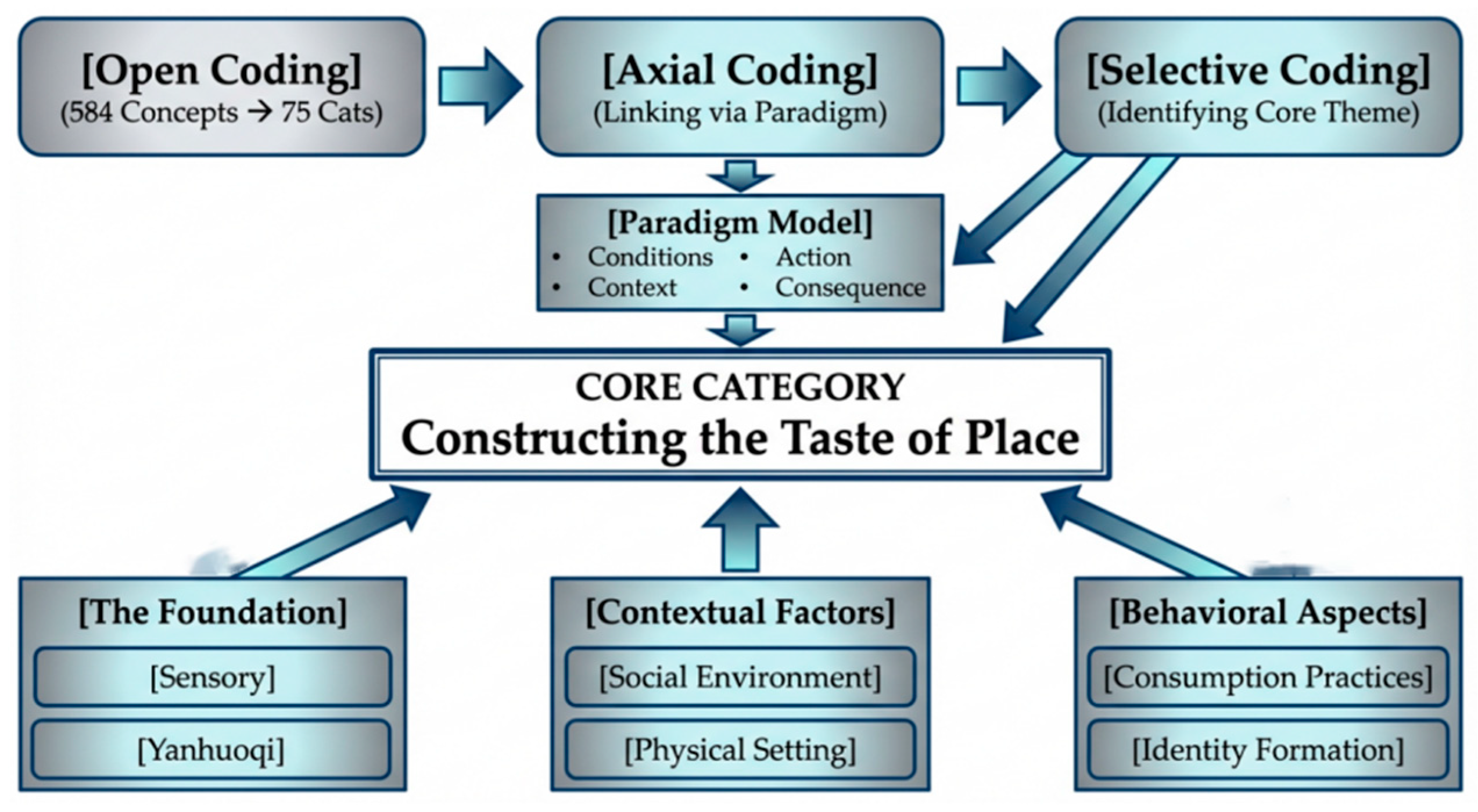
Data analysis followed the core grounded-theory sequence of open coding, axial coding, and selective coding (Devajit & Haradhan Kumar, 2022; White & Cooper, 2022). First, transcripts were coded line-by-line during open coding to generate initial concepts, combining in vivo codes with researcher-generated labels. Second, constant comparison was applied to examine similarities and differences across incidents, refine properties and dimensions, and cluster concepts into higher-order conceptual categories. Third, axial coding was used to relate categories to each other around a central phenomenon by applying a coding paradigm (conditions, context, actions/interactions, and consequences), thereby strengthening category integration and explanatory coherence. Finally, selective coding was conducted to identify a core category that integrated the main categories into a coherent analytic story explaining how tourists construct a “taste of place” through cultural immersion.
As illustrated in Figure 1, the analytic workflow proceeded from transcripts to concepts and then to progressively higher levels of abstraction. In this study, open coding generated 1584 initial concepts, which were consolidated into 75 conceptual categories through constant comparison and memo writing. These categories were further integrated through axial and selective coding into six main categories and one core category, forming the substantive grounded theory reported in the Section 4.
Figure 1. Grounded Theory Coding Process.

3.3. Rigor and Trustworthiness

Several strategies were employed to enhance trustworthiness. Credibility was strengthened through member checking, in which a subset of participants (e.g., 10 participants) were invited to review whether the identified categories and interpretations reflected their experiences. To enhance dependability and coding consistency, a second researcher independently reviewed a sample of transcripts and category definitions, and discrepancies were discussed until agreement was reached (Ahmed, 2024). Transferability was supported via thick description of the study context, participants, and illustrative quotations. Confirmability was addressed by maintaining an audit trail of coding decisions and analytic memos, and by keeping a reflexive journal to document and bracket the researchers’ assumptions throughout the analysis (Lim, 2024).
Figure 1 illustrates the process of data analysis by grounded theory.

4. Results

4.1. Participant Demographics

The were 50 subjects (26 males and 24 females) who participated in the study, and they had a varied background. Table 1 reveals that the mean age was 33.5 years, and the highest number (42 percent) was aged between 26 and 35 years. The study participants were highly educated, and 82% had completed a bachelor’s degree or above. There were also 20 cities in China, with 30 percent of them being first-time visitors in Chongqing, and 70 percent of them were repeat visitors. Mean visitations of repeat visitors were 3.8. On inquiring about their activities, 100% engaged in tasting local delicacies, whilst the other most common activities were visiting the night markets (88%) and touring the old streets (76%). The most memorable food items included Hotpot (94%), Xiao Mian (82) and Chuan Chuan (70).
Table 1. Participant Demographics (N = 50).
The interpretation of the interviews, using Grounded Theory, showed that there was a consistent way in which the tourists dismantle and construct the cultural content of their food experiences. This is done in three stages that would include the coding process, resulting in a substantive theory that would focus on the core category: the construction of a taste of place through cultural immersion.

4.2. Open Coding: From Raw Data to Conceptual Categories

The initial phase entailed a linear line-by-line review of the 50 interview transcripts. Fifteen hundred eighty-four initial concepts (in vivo codes and researcher-generated labels) were produced through this process. These concepts were discussed by constant comparison in order to group them, and 75 formed conceptual categories were created. This step involved fracturing the data in order to reveal all possible meanings and perspectives. Such expressions as “the smell of chili hits you,” “it was so loud and exciting,” and “seeing the steam everywhere” were once coded as different concepts and then tabulated under the conceptual category Intense Sensory Environment. Table 2 presents exemplifying instances of the said process.
Table 2. Examples of Open Coding Process.
To facilitate the transition from open coding to axial coding, key conceptual categories were further specified by their properties and dimensions and mapped to their corresponding emerging main categories. This mapping is presented in Table 3.
Table 3. Mapping Conceptual Categories to Main Categories.

4.3. Axial Coding: Developing Connections and Relationships

During the axial coding phase, the 75 conceptual categories were reassembled in an organized way and were put together, creating more abstract and stronger categories, which are considered the main categories. It was done with the help of the Straussian paradigm of coding, which consists of associating the categories depending on their relations as causal conditions, context, intermediating conditions, action/interaction schemes and outcomes. The dynamics between the categories were developed in the course of this process. An example of this would be that the dominant category of Atmospheric Energy was found to be the main category. Axial coding was used to develop its properties as follows:
To bring the Straussian coding paradigm into the framework of the main category of Experiencing the Atmospheric Energy, the relations of the sub-categories were grouped into causal conditions, context, intervening conditions, action/interaction strategies, and consequences, as presented in Table 4.
Table 4. Axial coding paradigm for “Experiencing the Atmospheric Energy.”
The axial coding outcomes for all main categories, including their grouped conceptual categories and paradigm elements (conditions, context, strategies, and consequences), are summarized in Table 5.
Table 5. Axial Coding Process—Development of Main Categories.
A detailed illustration of how the Straussian paradigm was applied to the category “Atmospheric Energy” (Yanhuoqi) is provided in Table 6, including representative participant quotations for each coding element.
Table 6. Axial Coding Paradigm—Detailed Example: “Atmospheric Energy.”

4.4. Selective Coding: Identifying the Core Category and Building the Theory

The axial-coding integration matrix in Table 7 is used to provide information about how the six main categories were patternically related to the core category; instead of being discrete themes, the categories constitute a stratified process that reflects the temporal flow of the culinary experience of tourists. Sensory Immersion serves as the opening door through which radical flavors, smells and embodied stimulations occur to form an indication of transition into a special cultural environment. Expanding on this, Building, Atmospheric Energy (often referred to as yanhuoqi) is a layer of interpretation that puts the raw input of sensory stimulations into a socially defined ambience. The process then progresses to the participatory phase of communal eating, where people can engage in shared eating habits that enable interaction, co-presence and social caging. With increased engagement, Procedural Knowledge arises as a form of performance in terms of which visitors can learn and practice locally instantiated rules and rituals (e.g., ordering, mixing sauces, sequences) to assert cultural competence. Historical Symbolism provides a cognitive dimension as a way to connect food practices to narratives of collective memory and place that gives the experience deeper meaning with identity-related meanings. Lastly, Authenticity Seeking is an evaluative and directing orientation that constantly legitimizes the process of immersion and constructs the evaluations by tourists about what is regarded as real Chongqing and synthesizes the entire assembly of the place-based culinary meaning.
Table 7. Axial Coding Integration Matrix—How Categories Relate to Core Category.
Table 8 summarizes cross-category linkages and higher-order conceptual outcomes. These items are not treated as additional main categories; rather, they describe how the six main categories (Table 7) interact and culminate in a place-based cultural meaning.
Table 8. Integration Patterns and Higher-Order Outcomes in Constructing the “Taste of Place.”
The Foundational Stage: On arriving in Chongqing, the tourists want to taste the famous cuisine, and they do not just want to breathe in the satisfaction. Instead, it is a search for a true cultural experience. As soon as they enter, they are faced with the Sensory Immersion third-wave multi-sensory environment with visual intensity (steam, color, movement), auditory overload (noise, conversation, sizzling sounds), aromatic strength (chili, spices, cooking aromas), and the feeling of heat and the crowdedness. This layer of the foundation is the first cue that they have reached a culturally different space, which is completely different from their daily surroundings.
The Interpretive Stage: This does not imply that passive recipients of the sensory input, tourists, process this sensory data through the prism of the Atmospheric Energy. They express the pristine sensory input into relevance of the social ambiance, seeing the busy, multicolored bustle, social buzz and real flow listed as indicators of a place where people are living their day-to-day lives. This process of interpretation is important, as it transforms the intensity of a potentially painful sensory stimulus into an assessed sign of what is perceived as real. The noise and the crowding are what make it real, as one of the participants remarked. It is not a fancy restaurant; it is where people are, in fact, eating. This is the emotional base of this atmospheric interpretation that is more deeply involved.
The Participatory Phase: Having settled on the sensory and atmosphere, the next step of the process for the tourists is to become active participants, which occurs with the Communal Dining experience. This transition is enabled by the style of hotpot, which is known to be collaborative. Tourists gather around a common pot and make a decision together on what to cook, each taking turns to add to the pot and discussing with their peers. It is this communal activity that develops a communal focus and mutual involvement that goes beyond the usual tourist–vendor relationship. As one interviewee explained it: “In case of hotpot, it is all about one central thing. You visit, you talk, you even make meals together. It is not only about eating but it is a communal activity.” This participatory interaction makes tourists eventually get a feeling of belonging to the community, though only on a temporary basis.
The Performative Stage: When tourists are dining in the ways of the group, the Procedural Knowledge they face is unwritten rules, etiquette, and local traditions regarding eating. They come to know how to make the right dipping sauce, the sequence in which they should add ingredients to the pot, the duration of cooking various foods and the social rules of the hotpot table. Local companions or watchful peers tend to be facilitators of this learning process. More to the point, this kind of procedural knowledge plays a performative role: the tourists can utilize it to become socially able to demonstrate cultural competence as a means of showing that they are not outsiders but insiders. One of them commented: One of my friends in Chongqing showed me how to prepare the best dipping sauce… I felt it as a secret I was being drawn in. I was no longer a simple tourist, but I was involved in the local system of doing things.
The Cognitive Stage: Coexisting with the procedural learning, the tourists explore the Historical Symbolism—the tales and symbolic meanings inherent in the food. They get to know that hotpot is the creation of dock hands who made the stale pieces of meat into communal pots, that small noodles (xiaomian) are the breakfast of lean-class Chongqing people and that maoxuewang (blood and tripe hotpot) was the culture of resourcefulness and inclusiveness. These stories provide intellectual quality to the experience of the senses and social life. Because, as one of the participants noted: “When you hear that hotpot was created by workers… you are sampling the history of the city, its struggle and its spirit. It is not only food but it is a tale of the people.” This intellectual activity comprises the meal as not just a sensual experience but also as an attempt to encounter the identity and values of the city in a significant manner.
The Evaluative Stage: During the whole process, the Authenticity Seeking guides the tourists. This aspect acts as an assessment prism that defines all other aspects of involvement. In search of non-commercialized and local recommended experiences, they tend to avoid tourism spots, and they perceive environmental grit the way they understand authenticity. This exploration is not inactive; it is active information-seeking (interviewing the locals, reading reviews, requesting recommendations), tactical venue choice (side alley, instead of the primary streets), and active ongoing judgment as to whether the experience itself is authentic. One of them said: The first thing is do not go to the shiny-looking new places… The treasures actually lie in the side streets. That is where you can have the true experience. The Authenticity Seeking is therefore an indicator and a corroborator of the entire immersion process.
These six major categories are not independent phenomena but are ordered into the central category in a hierarchical and sequential organization. The following are major relationships under which this integration can be seen:
Sequential Integration: The categories are being followed in an interlinked sequence that reflects how the tourist experience proceeds.
The immersion of the senses offers the base layer—the very first layer of sensory input, which indicates cultural difference.
The interpretive layer, being the transformation of the sensory data to a meaningful atmosphere, is the Atmospheric Energy.
The participatory layer—the active approach towards others and food is represented in the Communal Dining.
The performative layer, which is the acquisition and demonstration of cultural competence, is the Procedural Knowledge.
The historic symbolism is the depiction of the cognitive layer—the intellectual response of meaning and identity.
The evaluative layer, which is the principle according to which all other dimensions are drawn, is Authenticity Seeking.
Synergistic Integration: In addition to the sequence of relationships, there is a synergistic relationship between the categories that produce emergent properties, which cannot be viewed as the sum of their respective effects. As an illustration, the intensity of sensory experience and the interpretation of the atmosphere will result in an augmented change in authenticity. The collective meals and the knowledge of the procedure give the feeling of cultural initiation. The feeling of the past and sensory experience resonate emotionally and produce meaning-making. Such synergistic effects show that the taste of place is not the total of the individual components but the resultant effect that they interact in a dynamic way.
Hierarchical Integration: The categories are also hierarchically arranged in that some of them have some foundational roles, and some have integrative roles.
The Atmospheric Energy and the Sensory Immersion have background roles; they give the sensual and emotional base of further involvement.
The public meal and the ritual knowledge perform participatory roles; they facilitate the active participation and performance of the cultures.
The Historical Symbolism has a meaning-making role; it gives depth and sense to the experience.
The Authenticity Seeking has a general evaluative role; it directs and authenticates all other dimensions.
Outcome Integration: As a result of integrating all of these categories via the core category, a final outcome is made, and this is a successful construction of a rich, memorable, and meaningful experience in place, the taste of place. This is not just a sensual memory or some fine dining but a strong cultural knowledge and attachment to the city of Chongqing. Tourists who complete this process declare high satisfaction rates, desire to revisit, and the feeling that they experienced something which is deeply rooted and contributes to the all-inclusive rich essence. It was not only about eating good food, as one of the participants recapped. It was also about knowing a place, knowing the people, knowing their history and knowing their soul. That’s what made it memorable.
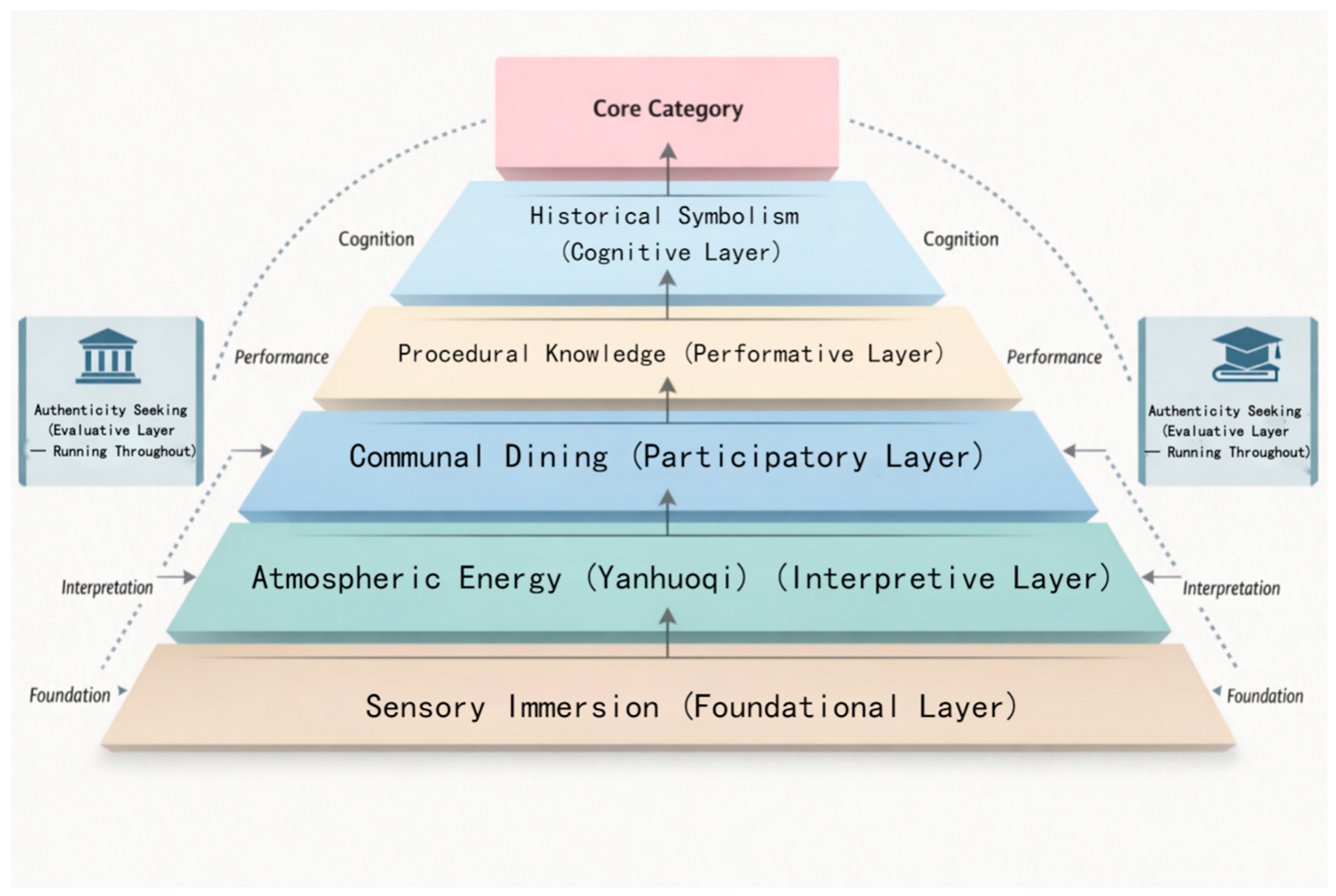
This combination of the core category and the six key categories results in the development of an overall theoretical framework that will be used to explain the way in which tourists create the taste of place in Chongqing. The following model can be presented as the structure of a pyramid, with the Sensory Immersion on the bottom, then, the Atmospheric Energy, next, the Communal Dining, next, the Procedural Knowledge, next, the Historical Symbolism, and the most fundamental category, which is the construction of the feeling of place, by cultural immersion, is on the very top.
The pyramid shape is indicative of the linear character of the experience as well as the progressive development of meaning. The successive layers are deeper and more complicated. The sensual base offers the first level of engagement, emotional resonance demands the presence of the atmospheric interpretation, and this sense of belonging allows the social participation. The cultural competence is based on the Procedural Knowledge and finally, the meaning and identity are offered by the presence of the Historical Symbolism, which in turn verifies the sense of authenticity and directs the whole process. What is created is a whole experience of cultural immersion, which is deeply integrated and more than merely eating; it becomes an experience of place, culture and identity.
The core category, according to Figure 2, is formed out of a cumulative and stratified immersion process. The tourists’ first experience of the destination takes place during the Sensory Immersion (foundation), which is later interpreted as a culturally legible Yanhuoqi ambience (interpretation). It is based on this that the experience expands with Communal Dining (participation), which is then supplemented by the proximity of Procedural Knowledge, which distinguishes between the performance of the tourists performing locally appreciable dining practices (performance) (Duarte Alonso et al., 2022). This is also enhanced with the effects of Historical Symbolisms that relate dishes to memory and place identity (cognition), leading to an integrated taste of place at the core category level. Notably, the Authenticity Seeking is a cross-cutting judgment layer that cuts across the entire sequence and influences the interpretation that tourists bestow on each layer, as well as authenticating its experience as locally endorsed and not staged.
Figure 2. Cumulative Building of Meaning and Experience.
Moreover, the model shows that the taste of place cannot be an object attribute of the food or the destination, since it is a dynamic process of co-creation between the tourist and the place. Tourists are not passive consumers of a ready-made existence of providing a pre-existing taste of place, but active constructors of interplay with various cultural dimensions in order to construct their own meaningful experience. The implications of this discovery on the concept of culinary tourism, destination marketing and authentic cultural experience are major.
The result of the process is effective building of a rich and memorable taste of place that eventually affects general satisfaction, cultural appreciation, and the desire to come back. This grounded theory offers a model in comprehension of how the cultural aspects of a culinary destination cannot be passively devoured, but are actively created by the tourist.


4.5. Theoretical Saturation Assessment

A systematic saturation evaluation was done to guarantee the adequacy of data by monitoring the emergence of new codes and categories in and across sets of interviews. The 50 interviews were separated into 10 batches of 5 interviews respectively. Findings demonstrated a radical decrease in the new code generation: 112 codes in Batch 1 and 8 codes in Batch 10 (92.9% decrease). Interestingly, all 7 of the primary categories appeared during the first batch (interviews 1–5), and no additional main categories were added after that. Essentially, the new conceptual categories began to dry up by Batch 8 (interviews 36–40). The saturation curve illustrated the typical aspect of theoretical saturation where an inflection point was shown at interviews 35–40 that denoted the attainment of basic saturation. This means that the basic theoretical basis had been established by the 40th interview, and subsequent interviews only served the purpose of further elaborating the developing theory and confirming it.
Theoretical saturation was also reached by several validation criteria. First, there was conceptual redundancy in the sense that, according to interview 40, the new data were clearly falling into the old categories, and new categories were not needed, nor could significant modifications be made. Second, there was a consistency in theory; the core category and its links with main categories did not change after 40 interviews. Third, inter-rater agreement was also achieved when two independent researchers obtained the same saturation point within the 35–40 interval of the interview. Lastly, member checking with 10 participants (20% sample) was done to determine whether the identified themes reflected their experiences with a 100% validation rate. All these validation criteria offer solid proof that the 50 interviews, with some 170,000 words of transcribed text, actually constitute adequate data for formulating a solid and comprehensive grounded theory that will answer the research question. The theoretical saturation examination in the interview batches is summarized in Table 9.
Table 9. Theoretical Saturation Assessment Across Interview Batches.

5. Discussion

This paper aimed at researching the major cultural attributes, which tourists have singled out as the most important to their culinary experience at Chongqing. It can be stated that throughout the findings, this experience is a multi-dimensional construct, made of the fibers of sensory immersion, social ambiance, the inter-personal connection, the Procedural Knowledge, the Historical Symbolism, as well as the Authenticity Seeking. The theoretical and practical implications to these findings discussed in this chapter are placed within the framework of the overall academic literature on culinary tourism and cultural experience. Consistent with value co-creation perspectives, these themes are interpreted as an interactional architecture through which tourists co-produce experiential value in food settings rather than merely consuming pre-given attributes (Carvalho & Alves, 2023).

5.1. The Multi-Dimensional Framework of the Culinary Cultural Experience

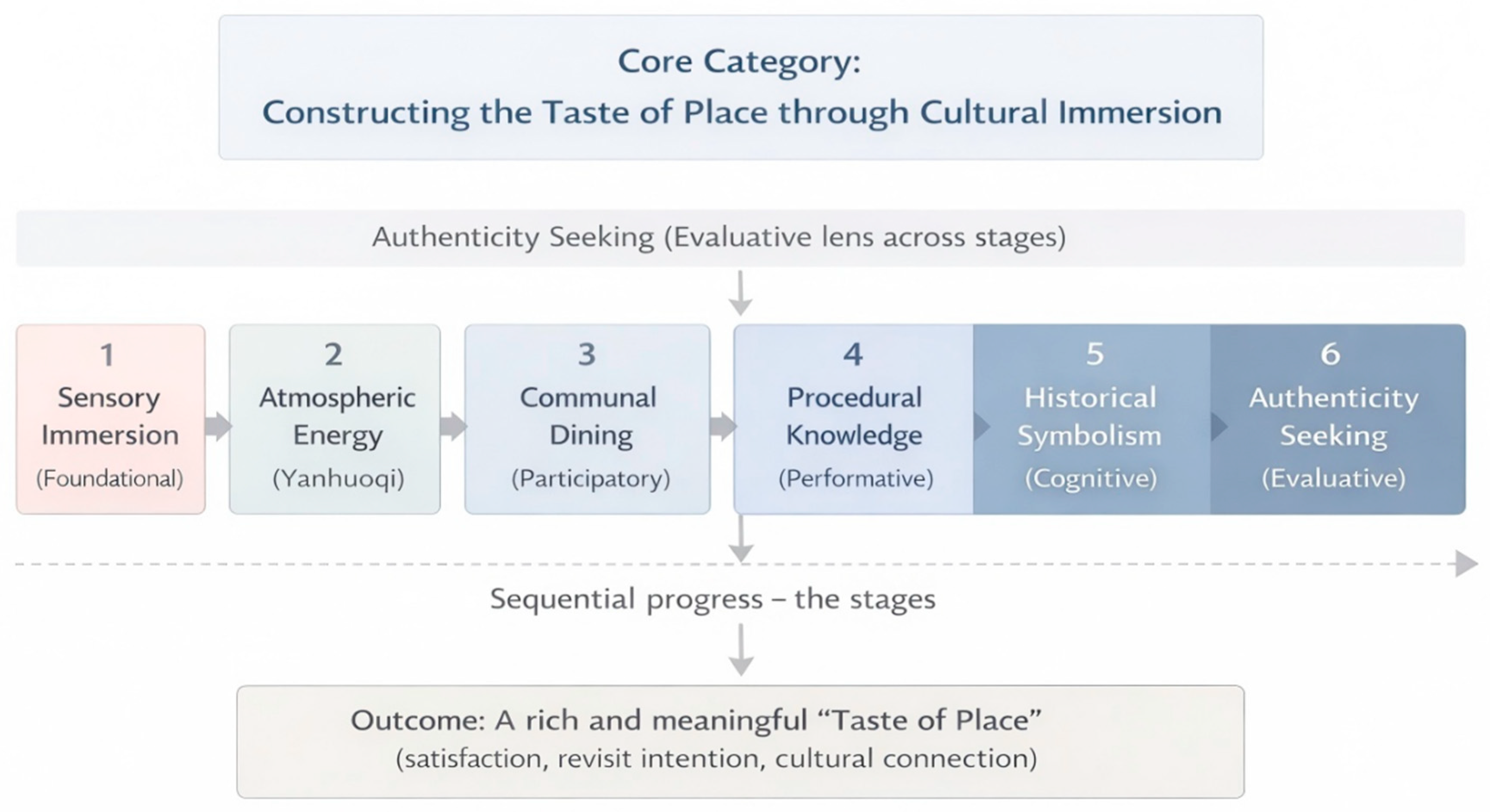
Figure 3 depicts the six themes as being incorporated in a staged, cumulative practice whereby the tourists create a significant taste of place through cultural immersion. The model makes “Building the Taste of Place by Immersing in Culture” the central category that organizes the themes in specific functional layers. The Sensory Immersion is a bottom level. This foundational role aligns with experience-economy arguments that memorable tourism experiences are initiated through embodied, multi-sensory engagement that precedes higher-order meaning making (Tang et al., 2025). It indicates the presence of cultural difference by providing exaggerated sights, sounds and scents, and is then read into culturally decipherable meaning in the Yanhuoqi atmosphere as an interpretative level. This interpretive move echoes findings that tourists’ food experiences are shaped by how they perceive and make sense of the destination foodscape, not only by the food itself (Park & Widyanta, 2022). Further to this, Communal Dining is viewed as participatory layers, which facilitate co-experience participation, and Procedural Knowledge is also viewed as a performative layer, whereby tourists learn and undertake locally treasured dining skills. Interpreting procedural know-how as performative is consistent with gastronomy-tourism research that positions knowledge practices as a key mechanism through which culinary experiences become meaningful and transferable (Duarte Alonso et al., 2022). Such participation reflects the broader claim that experiential value in hospitality contexts is jointly produced through social interaction within the service setting (Carvalho & Alves, 2023). Simultaneously, the Historical Symbolism is introduced as the cognitive layer that enhances the interpretation by connecting dishes to the urban memory and the locality. This cognitive deepening is compatible with work showing that authenticity and meaning can emerge through the narrative phases of tourist experience, as visitors connect present encounters to layered place histories (Rickly & Canavan, 2024). Notably, the Authenticity Seeking occurs in the whole chain of sequential events as an appraisal filter that influences the choice of where to go and keeps confirming experience as locally approved and not performed. This framing aligns with evidence that perceived food authenticity is strongly shaped by tourists’ ongoing cognitive appraisal of cues and contexts during the experience (Prayag et al., 2022). These layers, when blended together, eventually lead to the final result of rich, memorable, and meaningful culinary taste of place that is credited with the increased satisfaction, increased periods of revisit intentions, and an overall, lasting cultural attachment.
Figure 3. Core Category integration.

5.2. Theoretical Contributions

This study contributes to theories in a number of ways. To situate these contributions within the reviewed scholarship, the model is read through a co-creation lens in which culinary value is produced through tourists’ interaction with settings, others, and meanings across the encounter (Carvalho & Alves, 2023). First, it offers an empirical profound ground on the notion of having a taste of place. Although the work by Moroz (2024) was a study on the relationship between food and the physical environment (terroir), the paper at hand extends the concept to other forms of terroir (social, cultural, and historical) of a destination. It is depicted that Chongqing has the flavor of a compound profile that is made up of intensity of sensations, interpersonal warmth, historical richness, and a rawness and non-refined edge of genuineness.
The six themes discovered were the Sensory Immersion, the Atmospheric Energy, the Communal Dining, the Procedural Knowledge, the Historical Symbolism, and the Authenticity Seeking; altogether, they are parts of the cultural architecture in the taste of place. Every theme is a separate meaning-making aspect: the starting point is made by the sensory inputs, followed by the emotive layer of meaning made by the atmosphere, the belonging made by the social engagement, the cultural performance facilitated by the ritualistic participation, the depth and identity of the ones making the historical symbols, and the Authenticity Seeking, which drives it all. This unified model indicates that taste of place is not simply the addition of its singular components but is a result of the interaction of those elements.
Moreover, this study has made contributions to the study of tourism by showing that authenticity in culinary tourism is not an objective feature to be unearthed, but a negotiation process by tourists. The observation that tourists actively pursue experiences characterized as non-commercialized and that untidy places are perceived as a source of authenticity makes traditional tourism marketing seem conventional, and therefore calls into question the tourist’s advanced agency in shaping the valuable experiences. Relying on the first-hand experience of 50 tourists and conducting a systematic analysis of 170,000 words of qualitative respondent data, this research will help to bring some real content to the initially abstract ideas, and offer a repeatable model in the future for other food destinations and cultural tourism settings all over the world.
Second, the research study contributes to the knowledge of the concept of authenticity in tourism. The results support a constructivist perception of authenticity, in which tourists are not active beginners seeking an objective reality; rather, they are active interpreters who create authenticity through a system of signs defined by the current culture. These indications in Chongqing entail the absence of refined taste, the existence of locals, and affiliation with Historical Symbolisms. The increasing popularity of fly restaurants is a great illustration of how tourists can use perceived negative features (e.g., poor environment) to refer to the positive features of authenticity.
Third, the results show the immense significance of social experience and ritual in the tourist experience in terms of the tenets of the experience economy (Tang et al., 2025) and co-creation (Carvalho & Alves, 2023). The communal hotpot can be regarded as an ideal example of a co-created experience, in which the value is in a shared cooking, eating and socializing process. This suggests the importance of social context of the meal to most tourists, since it can be equally important as, or even more so than, the food itself.

5.3. Practical Implications

The research results of this paper have a number of practical and definite implications for stakeholders of the tourism sector in Chongqing.
As was the case with Destination Marketers (DMOs), the marketing discourse ought to be changed to no longer center on flavor (it is spicy and delicious) but to be a wider and more suggestive narrative of the cultural experience. The campaign should focus on promoting the feeling of warmth, the culture of communal meals, and the stories behind the food one has. Rather than merely displaying images of food, the marketing collateral might include some short videos of crowded restaurants, families having hotpot, or chefs narrating the history of their practice. The strategy would provide a stronger and more emotional brand image.
To Tourism Product Developers: More detailed, immersive culinary experiences that are not limited to mere dining can be developed. This may involve led historical eating tours linking particular foods to historical locations, lessons about the cultural manners of hotpot, or storytelling dinners in which local chefs or historians tell the stories behind the food. The trick lies in creating products that appeal to the tourists not only at the sensory level but also at the intellectual and emotional levels.
To Local Food Entrepreneurs: The results show a paradox: on the one hand, tourists want to experience authenticity; on the other hand, providing such services, they are subjected to commercialization to an unpleasant degree, and the authenticity itself is perceived to be lost. The difficulty facing local business is that they must professionalize and enhance the quality of their services but not to lose the feel of Yanhuoqi desired by the tourists. This may entail a shift towards the conservation of old recipes and cooking techniques, their attachment with the local community, and their transparency about their history and values. It is probably more effective than a polished interior, as proven by the success of numerous popular so-called fly restaurants, the quality of which is, in the first place, and the sense of local culture is the second.

5.4. Limitations and Future Research

There are, just as in any other research, limitations on this research. Since the study is a qualitative one, and the sample consists of 50 subjects, the findings cannot be statistically generalized to the entire group of tourists visiting Chongqing. The sample used was not homogeneous enough; most of the sample consisted of domestic Chinese tourists; international tourists’ opinions would be slightly different, and this ought to be viewed in a different study. More so, the authors focused on the perceptions of the tourists, and it would be an added value in future research to integrate the perceptions of the food suppliers, cooks, and local residents to have a holistic picture. There are several ways in which the developed framework from the present research could be applied in future studies. A quantitative study can be designed in such a format that will enable assessing the comparative size of the six suggested cultural variables and the impact they had on the overall degree of satisfaction and desire to revisit the place. The framework might be developed by comparing it with how the tastes of place were developed in other food destinations in China and in foreign countries, to better understand how the framework will be practiced in other cultural locations. Finally, the longitudinal research would be in a position to track the progression of tourists’ perceptions of authenticity and culture on subsequent visits to a given destination.
A further consideration is that participants may enter Chongqing with different culinary baselines shaped by their hometown food cultures and prior exposure to Chongqing-style restaurants. In our analysis, such differences are conceptually accommodated as part of the intervening conditions (e.g., pre-existing expectations and prior culinary experience; see Table 4, Table 5 and Table 6) that can shape how sensory intensity and authenticity cues are interpreted. However, because the study was designed to develop a grounded explanatory model rather than to test subgroup differences, we did not operationalize hometown dietary habits or hometown availability of Chongqing specialty chains as explicit stratification criteria. Future work could extend the present model by incorporating brief screening items (e.g., spicy-food tolerance and prior exposure frequency) to explore whether and how baseline profiles condition the pathways through which “taste of place” is constructed.
Another subgroup-related consideration concerns travel mode, particularly the difference between group tours and free independent travel. In the present study, travel mode was not operationalized as an explicit stratification variable because the research was designed to develop a grounded explanatory model rather than to compare predefined subgroups. However, this difference can be conceptually accommodated within the model as part of the intervening conditions identified in axial coding (e.g., group composition, time of visit, prior expectations, and the presence of locals/local interaction opportunities; see Table 4, Table 5 and Table 6). In practice, travel mode may shape the intensity and sequencing of several themes. For example, free independent travelers may have greater flexibility for Authenticity Seeking through side-street exploration and local recommendations, whereas group-tour participants may experience stronger itinerary and timing constraints that affect exposure to local “yanhuoqi” atmospheres and opportunities for procedural learning. Likewise, Communal Dining may take different forms depending on whether dining is organized within a tour group or self-arranged with companions. These differences do not necessarily alter the core six-category structure of the model, but they may condition how the pathways of cultural immersion are enacted and interpreted. This interpretation is also consistent with the recurrence of the six main categories across participants with varied home cities, visit histories, and dining episodes in the current sample, which supports the conceptual robustness of the model while still leaving room for future subgroup comparison. Future research can therefore incorporate travel mode as a screening item or comparative sampling dimension to further assess subgroup variation and strengthen the transferability of the framework.

6. Conclusions

This paper has set off on a qualitative venture to unravel the cultural nature of the dining experience in Chongqing. The results show that to the tourist, the use of taste of place involves much more than the taste of the food. It is an abundant and multi-skilled cultural fabric woven by the over-immersion of Sensual Immersion, the resonant energy of the Atmosphere enacted over a meal, the purposeful Procedural Knowledge, the strong symbolisms of the history placed in the cuisine and the intricate self-plan of seeking authenticity. These six components do not just describe the experience, but they are the experience itself. Helping people to have an insightful, layered and theoretically based concept of these aspects of cultures, the research contributes greatly to the science of culinary tourism. It questions researchers and practitioners to look beyond the plate and to incorporate the intricate interplay of the sensory, social, and symbolical forces that define our association with food and place. In the case of Chongqing and other places of its kind, the message is unmistakable: the strongest culinary ingredient on which their culinary offering is based is not located in the kitchen but in the culture around it. The way to preserve, celebrate, and communicate it is to make it the keystone of creating really memorable and meaningful experiences that will ensure tourists are willing to come back to experience the same again.

Author Contributions

Conceptualization, X.C. and J.D.; software, J.D.; validation, S.J. and J.D.; formal analysis, X.C.; resources, S.J. and J.D.; data curation, S.J.; writing—original draft preparation, X.C.; writing—review and editing, S.J.; supervision, S.J.; project administration, J.D.; funding acquisition, S.J. All authors have read and agreed to the published version of the manuscript.

Funding

This research received no external funding.

Institutional Review Board Statement

The study was conducted in accordance with the Declaration of Helsinki, and approved by the Institutional Review Board for Human Subjects Re (protocol code IRB No. SCPHYLIRB-2568/903 and date of approval: 30 December 2025).

Data Availability Statement

The data presented in this study are available on request from the corresponding author due to privacy.

Conflicts of Interest

The authors declare no conflict of interest.

References

  1. Ahmed, S. K. (2024). The pillars of trustworthiness in qualitative research. Journal of Medicine, Surgery, and Public Health, 2, 100051. [Google Scholar] [CrossRef]
  2. Anton Martin, C., Camarero Izquierdo, C., & Laguna-Garcia, M. (2021). Culinary tourism experiences: The effect of iconic food on tourist intentions. Tourism Management Perspectives, 40, 100911. [Google Scholar] [CrossRef]
  3. Carvalho, P., & Alves, H. (2023). Customer value co-creation in the hospitality and tourism industry: A systematic literature review. International Journal of Contemporary Hospitality Management, 35(1), 250–273. [Google Scholar] [CrossRef]
  4. Chen, X., Huang, Y., & Chen, Y. (2023). Spatial pattern evolution and influencing factors of tourism flow in the Chengdu–Chongqing economic circle in China. ISPRS International Journal of Geo-Information, 12(3), 121. [Google Scholar] [CrossRef]
  5. Cheshmehzangi, A. (2025). Chongqing: A vibrant and timeless dragon that never sleeps. In City walks in Chongqing: Mapping a multi-layered, multi-identity, and multi-locality city that never sleeps (pp. 229–243). Springer Nature Singapore. [Google Scholar] [CrossRef]
  6. Chua, B.-L., Kim, S., Badu-Baiden, F., Yong, R. Y. M., Kim, B., Gedecho, E. K., & Han, H. (2025). The effects of hawker influence and local gastronomy involvement on authenticity, personal nostalgia, and hawker cultural identity. Journal of Hospitality and Tourism Insights, 8(1), 198–222. [Google Scholar] [CrossRef]
  7. Devajit, M., & Haradhan Kumar, M. (2022). Constructivist grounded theory: A new research approach in social science. Research and Advances in Education, 1(4), 8–16. [Google Scholar] [CrossRef]
  8. Duarte Alonso, A., O’Shea, M., & Kok, S. K. (2022). Managing knowledge in the context of gastronomy and culinary tourism: A knowledge-based view. Tourism Recreation Research, 47(2), 145–159. [Google Scholar] [CrossRef]
  9. Fan, X., & Apritado, J. M. (2025). Local culture, summer vacation tourism sites and place attachment in Chongqing, China: Basis of a development plan. International Journal of Research Studies in Management, 13, 233–246. [Google Scholar] [CrossRef]
  10. Gan, J. (2024). The dissemination of Sichuan regional culture from the perspective of cultural field. In Proceedings of the 2024 10th international conference on humanities and social science research (ICHSSR 2024) (pp. 1841–1848). Atlantis Press. [Google Scholar] [CrossRef]
  11. He, Y., Pu, H., Liu, N., Zhang, Y., & Sheng, Y. (2022). An analysis of food accessibility of mountain cities in China: A case study of Chongqing. Applied Sciences, 12(7), 3236. [Google Scholar] [CrossRef]
  12. Jayasinghe, S., Byrne, N. M., & Hills, A. P. (2025). Cultural influences on dietary choices. Progress in Cardiovascular Diseases, 90, 22–26. [Google Scholar] [CrossRef]
  13. Jiang, K., Zhang, L., Xie, C., Li, Z., Shi, Z., Sharma, M., & Zhao, Y. (2024). Understanding the knowledge, attitudes, and practices of healthy eating among adolescents in Chongqing, China: An empirical study utilizing structural equation modeling. Nutrients, 16(1), 167. [Google Scholar] [CrossRef]
  14. Li, X., & Srijinda, P. (2025). The impacts of Chongqing food through Chinese influencers via Tiktok. Journal of Cultural Analysis and Social Change, 10(4), 2161–2170. [Google Scholar] [CrossRef]
  15. Li, Y., & Jiang, S. (2025). A study on the influencing factors of tourists’ travel intentions: A configurational analysis based on fsQCA. Journal of Hospitality and Tourism Insights, 8(11), 124–141. [Google Scholar] [CrossRef]
  16. Lim, W. M. (2024). What is qualitative research? An overview and guidelines. Australasian Marketing Journal, 33(2), 199–229. [Google Scholar] [CrossRef]
  17. Lin, F., Binti Mohamad, D., Zhu, C. Z. G., Wu, D. C. W., & Yang, J. (2025). Short video on food tourism marketing: Empirical evidence from Chongqing, China. International Journal of Hospitality & Tourism Administration, 1–16. [Google Scholar] [CrossRef]
  18. Mohamed, M. E., Lehto, X. Y., & Hewedi, M. (2025). Exploring the multifaceted role of food experiences in shaping tourist destination perceptions. Tourism Recreation Research, 1–15. [Google Scholar] [CrossRef]
  19. Moroz, D. (2024). What does terroir mean? A science mapping of a multidimensional concept. Journal of Agricultural Economics, 75(3), 889–913. [Google Scholar] [CrossRef]
  20. Park, E., & Widyanta, A. (2022). Food tourism experience and changing destination foodscape: An exploratory study of an emerging food destination. Tourism Management Perspectives, 42, 100964. [Google Scholar] [CrossRef]
  21. People’s Daily Online. (2024). From street-side fare to global cuisine: Chongqing hot pot fuels a trillion-yuan industry. Available online: http://cq.people.com.cn/n2/2024/1108/c367653-41035901.html (accessed on 18 November 2024).
  22. Prayag, G., Le, T., Pourfakhimi, S., & Nadim, Z. (2022). Antecedents and consequences of perceived food authenticity: A cognitive appraisal perspective. Journal of Hospitality Marketing & Management, 31, 937–961. [Google Scholar] [CrossRef]
  23. Rickly, J., & Canavan, B. (2024). The emergence of authenticity: Phases of tourist experience. Annals of Tourism Research, 109, 103844. [Google Scholar] [CrossRef]
  24. Sojasi Qeidari, H., & Hosseini Kahnooj, S. R. (2024). Analysis of factors influencing the motivation for traveling to culinary destinations and their effect on tourists’ loyalty and return. Journal of Quality Assurance in Hospitality & Tourism, 25(6), 1895–1917. [Google Scholar] [CrossRef]
  25. Tang, Z., Deeprasert, J., & Jiang, S. (2025). Tourism experience value shaping older adults tourists’ well-being: Qualitative insights from Guizhou province, China. Journal of Cultural Analysis and Social Change, 10(2), 176–194. [Google Scholar] [CrossRef]
  26. Vuksanović, N., Demirović Bajrami, D., Petrović, M. D., Radovanović, M. M., Malinović-Milićević, S., Radosavac, A., Obradović, V., & Ergović Ravančić, M. (2024). The role of culinary tourism in local marketplace business—New outlook in the selected developing area. Agriculture, 14(1), 130. [Google Scholar] [CrossRef]
  27. White, R. E., & Cooper, K. (2022). Grounded theory. In Qualitative research in the post-modern era: Critical approaches and selected methodologies (pp. 339–385). Springer International Publishing. [Google Scholar] [CrossRef]
  28. Yıkmış, S., Türkol, M., Abdi, G., İmre, M., Alkan, G., Türk Aslan, S., Rabail, R., & Aadil, R. M. (2024). Culinary trends in future gastronomy: A review. Journal of Agriculture and Food Research, 18, 101363. [Google Scholar] [CrossRef]
  29. Yu, K., He, Z., & Xie, J. (2025). Performative motivations in immersive cultural tourism: Reframing tourist experience as co-created leisure. World Leisure Journal, 1–22. [Google Scholar] [CrossRef]
  30. Zhong, S. (2025). Relational proximity: The search for local food in China. Food, Culture & Society, 28(4), 879–897. [Google Scholar] [CrossRef]
  31. Zhong, Y., & Moon, H. C. (2020). What drives customer satisfaction, loyalty, and happiness in fast-food restaurants in China? Perceived price, service quality, food quality, physical environment quality, and the moderating role of gender. Foods, 9(4), 460. [Google Scholar] [CrossRef]
Disclaimer/Publisher’s Note: The statements, opinions and data contained in all publications are solely those of the individual author(s) and contributor(s) and not of MDPI and/or the editor(s). MDPI and/or the editor(s) disclaim responsibility for any injury to people or property resulting from any ideas, methods, instructions or products referred to in the content.

Article Metrics

Citations

Article Access Statistics

Multiple requests from the same IP address are counted as one view.