


Abstract
This study investigates the antecedents of consumers’ willingness to pay more for sustainable (green) events, applying the Theory of Planned Behavior (TPB) in the context of Serbia, a developing non-Western economy. Using survey data from event attendees, exploratory factor analysis (EFA) was employed to identify empirically supported dimensions underlying the original TPB-related constructs. Four factors emerged: Integrated Behavioral Orientation toward Green Events, Preferences for Green Events, Subjective Norms and Perceived Behavioral Control, and Attitudes toward Green Events. Regression analyses show that Subjective Norms and Perceived Behavioral Control and Preferences for Green Events are the strongest predictors of willingness to pay more, while Integrated Behavioral Orientation has a weaker but significant effect. In contrast, Attitudes toward Green Events did not significantly influence willingness to pay, suggesting that positive attitudes alone are insufficient without supportive social norms, perceived control, or strong personal preferences. These findings also highlight the importance of social influence, perceived control, and individual preferences in shaping consumers’ financial support for green events. The study provides an empirically grounded framework for understanding willingness to pay in green event contexts beyond Western settings and offers practical guidance for organizers seeking to enhance participation and investment in sustainable practices.
1. Introduction
The growing awareness of climate change, environmental degradation, and resource depletion has increasingly influenced consumer behavior and organizational practices across various industries, including tourism and event management (C. Y. Chen et al., 2024; Hischier & Hilty, 2002). Events, ranging from conferences and exhibitions to festivals and mega-events, inherently consume substantial resources, generate waste, and contribute to greenhouse gas emissions, particularly through participant transportation (Mair & Laing, 2012).
Green events are distinguished by the systematic integration of sustainability guidelines into their planning, organization, and management processes. Key characteristics include incorporation of sustainability principles, efforts to minimize negative impacts, balancing environmental goals with financial objectives, and raising awareness among participants (Mair & Laing, 2012; Mair & Smith, 2021; Mair et al., 2024).
While previous studies have primarily examined organizational practices and event implementation strategies for sustainability, comparatively little attention has been given to participants’ behavioral responses, attitudes, and willingness to pay for environmentally responsible practices (Ahmad et al., 2013; Wong et al., 2014). From a behavioral perspective, the Theory of Planned Behavior (TPB) offers a well-established framework for explaining how attitudes, subjective norms, and perceived behavioral control shape individual intentions (Ajzen, 1991). Yet empirical research integrating TPB constructs and willingness to pay across diverse event contexts remains limited (Modica et al., 2020; Pavluković et al., 2022; Shehawy et al., 2024; Mair et al., 2024).
In this study, green events are defined as organized activities such as festivals, conferences, exhibitions, business events and community events that intentionally incorporate sustainability practices. Rather than focusing on a single format, the research examines behavioral intentions toward green events as a unified category, allowing a broader assessment of willingness to pay across different event types. The study aims to provide empirical evidence to support event organizers and destination managers in designing and promoting sustainable events that align with participant expectations and enhance environmental and experiential value.
In light of these considerations, the present study applies the TPB to investigate participants’ perceptions, behavioral intentions, and WTP in the context of green events, capturing the cognitive and normative drivers of pro-environmental engagement. By focusing on both psychological and economic dimensions, this research seeks to fill critical gaps in the literature and provide practical implications for event organizers and destination managers aiming to develop environmentally sustainable events that are both attractive to participants and economically viable.
2. Theoretical Framework
2.1. Theory of Planned Behavior (TPB)
Environmental sustainability in the event industry has developed into a growing interdisciplinary research field (Mair & Smith, 2021; Mair et al., 2024). Prior research has predominantly examined sustainability from organizational and implementation perspectives, with limited attention to participants’ behavioral responses, particularly outside Western contexts (Harris & Schlenker, 2018; Hutte et al., 2022; Liu & Lei, 2021). This highlights the need for behavioral frameworks that explain how individuals evaluate and decide to support green events.
TPB offers a suitable framework for this purpose, as it explains deliberate and planned behaviors rather than impulse decisions (Ajzen, 1991). Participation in green events typically requires a conscious evaluation process, involving not only financial expenditure, often at a higher price, but also a commitment of time, effort, and personal resources. Consequently, willingness to pay for green events reflects a high-involvement decision shaped by attitudes toward sustainability, perceived social expectations, and perceived behavioral control.
Given the planned and effort-intensive nature of green event participation, TPB is particularly relevant for explaining willingness to pay in this context. Attitudes, subjective norms, and perceived behavioral control jointly influence intention formation and subsequent payment behavior, making the framework well suited for examining support for green events.
Within the TPB framework, willingness to pay for green events is shaped through the joint effects of Attitudes, Subjective Norms, and Perceived Behavioral Control, which together influence Intention to Behave and subsequent behavior (Ajzen, 1985; Conner, 2020). Attitudes reflect individuals’ positive or negative evaluations of green events and have been shown to predict environmentally responsible behavior even when such behavior involves higher costs, delayed outcomes, or additional effort (Yarimoglu & Gunay, 2020; Mei et al., 2015). Subjective Norms capture perceived social pressure from significant others and society, and favorable social expectations toward green events can strengthen individuals’ behavioral intention to attend and financially support such events (Conner, 2020). Perceived Behavioral Control, referring to individuals’ perceived ability, resources, and opportunities to engage in a behavior, increases the likelihood that behavioral intention will be translated into actual behavior, including willingness to pay a price premium (Amoako et al., 2020; Conner, 2020). These three constructs jointly determine Intention to Behave, which represents the most immediate predictor of actual behavior, such as participation in green events and willingness to pay for environmentally responsible event practices (Ajzen, 1985, 2002; De Araújo et al., 2022; López-Mosquera, 2016).
TPB has been successfully applied to explain sustainable travel choices, green consumption, and participation in environmentally responsible activities (Han et al., 2010; Makoondlall-Chadee & Bokhoree, 2024; Naik et al., 2025), making it an appropriate framework for explaining event participants’ behavioral intentions and actual behaviors, including willingness to pay more for green events. For instance, TPB has effectively predicted tourists’ intentions to choose eco-friendly accommodations and green hotels, with core constructs such as attitudes, subjective norms, and perceived behavioral control significantly influencing intention (Han et al., 2010; M. F. Chen & Tung, 2014). Moreover, the framework has been applied in green consumption contexts, highlighting its utility in explaining eco-friendly purchase intentions and consumer behavior (M. F. Chen & Tung, 2014). Attitudes toward sustainability initiatives, perceived social pressure to support environmentally responsible events (subjective norms), and perceived behavioral control (e.g., affordability or access) jointly shape participants’ intentions, which in turn influence their actual payment behavior. Several studies (e.g., Adialita et al., 2025) have expanded the classical TPB framework to explore willingness to pay for green products and behaviors by incorporating additional constructs such as perceived value and willingness to pay premiums. For instance, extensions of TPB have demonstrated that including willingness to pay premium and perceived value enhances the model’s explanatory power in predicting consumer intentions toward green product purchases, suggesting that willingness to pay is not only shaped by core TPB constructs (attitude, subjective norm, perceived behavioral control) but also by contextual and economic evaluations of green choices.
This research will use the TPB in order to better understand consumer behavior when it comes to green events. In addition, the study will examine willingness to pay more for green events as an outcome of participants’ behavioral factors and event preferences
2.2. Attitudes Toward Green Events
Attitudes toward green events are shaped by broader environmental awareness and personal values related to sustainability. Prior studies indicate that individuals who value environmental protection tend to perceive green events more positively and consider attendance a smart and responsible decision (Wong et al., 2014). Positive attitudes are further reinforced when green practices are visible and aligned with event quality, such as waste reduction, energy efficiency, and sustainable food options.
Empirical evidence suggests that participants generally evaluate green events favorably, perceiving them as beneficial and important. Rittichainuwat and Mair (2012) found that attendees appreciate practical sustainability measures that do not compromise comfort or enjoyment. These findings support the assumption that positive attitudes toward green events play a critical role in shaping intentions to attend and support such events.
2.3. Subjective Norms and Social Influence in Green Event Participation
Subjective norms represent the perceived expectations and support of significant others, such as family, friends, colleagues, or professional networks. In the context of green events, social influence can encourage individuals to attend environmentally responsible events and adopt sustainable behaviors during participation.
Research indicates that social norms significantly affect environmentally responsible behavior in tourism and events, particularly when sustainability is perceived as socially desirable or morally appropriate. Ahmad et al. (2017), applying the Values–Beliefs–Norms (VBN) theory, emphasize that environmental values influence perceptions of sustainable practices, which in turn shape behavioral responses. Although their study focuses on perception rather than intention, it supports the relevance of social and normative factors in green event contexts.
Furthermore, differences in perceptions among stakeholder groups, such as delegates, exhibitors, and sponsors, highlight the complexity of social influence in events. While attendees may strongly support green initiatives, some stakeholders express concerns about esthetics or commercial effectiveness, indicating that subjective norms may vary depending on role and social environment (Rittichainuwat & Mair, 2012).
Research suggests that green marketing and sustainability-oriented communication can enhance destination brand equity and increase consumer trust, thereby strengthening destination image (Mair, 2014; Park et al., 2022). Importantly, message framing has been shown to influence participant behavior, with action-oriented messages explaining how to perform sustainable behaviors being more effective than messages focusing on why such behaviors matter (Park et al., 2022). These findings align closely with the TPB construct of subjective norms, as they demonstrate how perceived social expectations and normative messaging can encourage pro-environmental intentions and behaviors among event participants.
2.4. Perceived Behavioral Control and Accessibility of Green Events
Perceived behavioral control reflects individuals’ assessment of how easy or difficult it is to attend green events. This includes access to information, financial affordability, time availability, and event location. Studies suggest that even when attitudes and social norms are positive, limited perceived control can weaken behavioral intentions.
In the event context, financial constraints are frequently identified as a barrier to green participation. Although participants express positive attitudes toward sustainability, willingness to pay higher prices for green events is not universal (Rittichainuwat & Mair, 2012). However, Wong et al. (2014) demonstrate that environmentally involved participants are more willing to spend additional money when green value is clearly communicated, suggesting that perceived control interacts with perceived value.
Accessibility is also influenced by event design and technological solutions. Hybrid and decentralized event formats, enabled by digital technologies, can enhance perceived behavioral control by reducing travel costs and time, while simultaneously lowering environmental impacts (Cavallin Toscani et al., 2024).
2.5. Behavioral Intentions, Actual Behavior, and Preferences for Green Practices
Behavioral intention is considered the most immediate predictor of actual behavior within TPB. In green event contexts, intentions include planning to attend green events, prioritizing them over conventional events, and investing effort to participate. Research shows that strong intentions are often associated with specific preferences for green practices, such as plastic-free events, paperless communication, local food sourcing, and engagement with local communities (Wong et al., 2014; Pavluković et al., 2022). These preferences reflect not only environmental concern but also a desire for authentic and meaningful event experiences.
Actual pro-environmental behavior during events, such as recycling, energy conservation, and responsible consumption, is facilitated when green practices are embedded into event design. In their study on China’s Generation Z conference design preferences, Pavluković et al. (2022) emphasized that the integration of sustainability practices into event design is increasingly perceived as a standard and expected element rather than an added value. Mair and Laing (2012) emphasize that events can act as platforms for promoting sustainable behavior, potentially influencing participants beyond the event itself.
Evidence from the Munich Streetlife Festival shows that sustainability-focused communication can promote pro-environmental behavior, particularly among visitors with strong environmental awareness. Using the TPB and the transtheoretical model, the study found that learning about environmental protection positively influenced sustainable behaviors, while enjoyment alone was negatively related. Sustainability messages were most effective for visitors already prepared to act, highlighting the importance of attitudes, subjective norms, and perceived behavioral control in shaping behavioral intentions (Tölkes & Butzmann, 2018). These findings emphasize the need for targeted sustainability communication and support the role of green events as environments that can foster environmentally responsible behavior among participants.
2.6. Willingness to Pay More for Green Events
Willingness to pay (WTP) represents a crucial outcome variable linking sustainability and economic viability. While early studies suggested limited WTP more for green events (Rittichainuwat & Mair, 2012), more recent research indicates that WTP depends on individual environmental involvement and perceived green value. Wong et al. (2014) provide strong empirical evidence that participants who perceive high green value are WTP significantly more for green services, particularly food offerings. These findings highlight the importance of communicating the benefits and credibility of green practices to justify price differentials. Modica et al. (2020) found that the implementation of sustainability practices positively affects participants’ willingness to pay more for events.
Based on the TPB and prior research, the following hypotheses were initially proposed:
H1.
Attitudes toward sustainable events are positively associated with participants’ willingness to pay a premium for green events.
H2.
Subjective norms regarding sustainable practices are positively associated with participants’ willingness to pay for green events.
H3.
Perceived behavioral control over attending sustainable events is positively associated with participants’ willingness to pay.
H4.
Behavioral intention to support sustainable practices is positively associated with participants’ willingness to pay.
H5.
Actual behavior at events is positively associated with participants’ willingness to pay for green events.
H6.
Preferences for specific green event features are positively associated with participants’ willingness to pay.
Despite growing academic interest, limited research has simultaneously examined attitudes, subjective norms, perceived behavioural control, preferences, and WTP more within a unified theoretical framework in the context of green events. Moreover, most studies focus on specific event types or practices, leaving a gap in understanding participant decision-making across diverse green event settings.
Addressing these gaps, the present study applies the TPB to investigate event participants’ perceptions, preferences, behavioral intentions, and WTP for green events. By doing so, it contributes to the environmental psychology of event stakeholders and provides practical insights for event organizers and destination managers seeking to design and promote environmentally sustainable events that align with participant expectations and enhance long-term sustainability outcomes.
3. Methodology
For this study, a four-section questionnaire was developed, and based on previous research and relevant literature (Han et al., 2010; Wang et al., 2018; Quan et al., 2023; Pavluković et al., 2022). The first section focused on respondents’ socio-demographic characteristics and whether they had previously attended events that implement sustainable (“green”) practices.
The second section of the questionnaire was based on the Theory of Planned Behavior, and included five key dimensions measured with 22 items. The third section referred to respondents’ preferences related to sustainable events and consisted of seven items, while the fourth section assessed consumers’ WTP more and included three statements. A five-point Likert scale was used, and the respondents were asked to evaluate the importance of these items on the scale from 1 (strongly disagree) to 5 (strongly agree).
Data were collected through an online survey between September and October 2025. Questionnaires were distributed to event participants in Serbia through targeted social media channels. These groups include members who actively follow, attend, or express interest in environmentally responsible events, making them an appropriate sampling frame for the research objectives. Prior to completing the questionnaire, respondents were provided with a standardized description of green events to ensure a shared understanding of sustainability practices within the event context. The main objective of the sampling approach was to reach a heterogeneous group of respondents in terms of gender, age, education level and income, rather than to achieve geographical representativeness across specific cities or regions in Serbia.
A total of 164 valid questionnaires were collected. According to Pallant (2011), a sample size of 150–300 respondents is considered acceptable for exploratory factor analysis and regression-based analyses.
The data were processed using SPSS 23 for Windows. The analyses included descriptive statistics, reliability analyses (Cronbach’s alpha), correlation, exploratory factor analysis, and regression analyses to examine relationships among variables and the influence of individual predictors on consumers’ WTP more.
4. Results
4.1. Respondents’ Profile
According to Table 1, the sample shows a slight predominance of female respondents (57.9%) compared to male respondents (42.1%). Regarding age, the majority of participants are in the 31–40 age group, and the largest share (35.4%) have completed a master’s degree, followed by those with a bachelor’s degree (21.3%). Most of the respondents are employed (78%), suggesting that the sample primarily comprises economically active individuals, which is relevant to examining WTP more. Regarding monthly income, most participants reported net earnings between €1000 and €1500 (36.6%), while 27.4% reported incomes between €1500 and €2000, both of which are above the average net monthly salary in Serbia.
Table 1.
The respondents profile.
Finally, the results indicate that 71.3% of respondents had previously attended an event that implemented sustainable (“green”) practices, while 28.7% had no such experience or were unaware of the green practices implemented at the events they attended. This finding indicates a relatively high proportion of respondents who are familiar with sustainable practices.
4.2. Correlations Among Dimensions
To analyze the connections among the dimensions of the TPB, as well as preferences and WTP more, Pearson correlation analysis was conducted in this study. The results of the correlation analysis, presented in Table 2, indicate positive and statistically significant correlations among all examined variables
Table 2.
Pearson correlations among TPB dimensions, preferences and WTP.
The weakest, yet still statistically significant, correlation was observed between attitudes and WTP more (r = 0.163). The strongest correlation was observed between behavioral intention and behavior (r = 0.907), indicating a very strong connection. This aligns with Ajzen’s (1991) original findings, where behavioral intention is identified as the most immediate and reliable predictor of actual behavior.
Significant correlations were also identified between perceived behavioral control and behavioral intention (r = 0.696), as well as between perceived behavioral control and behavior (r = 0.718). In addition, subjective norm is strongly associated with perceived behavioral control (r = 0.719).
Preferences show statistically significant correlations with all TPB dimensions, particularly with behavior (r = 0.633) and behavioral intention (r = 0.596), suggesting that personal preferences toward green events are closely linked to both intentions and actual engagement in sustainable practices.
Regarding WTP more, the strongest correlation was observed with perceived behavioral control (r = 0.491) and preferences (r = 0.468), while the weakest correlation was found with attitudes (r = 0.163). These findings indicate that consumers’ willingness to financially support green events is more strongly influenced by social pressure, perceived control, and personal preferences than by general attitudes alone.
4.3. Exploratory Factor Analysis (EFA)
As shown in Table 3, an EFA was conducted using the Principal Component extraction method with Promax rotation to examine the empirical structure of the measurement items. The Kaiser-Meyer-Olkin value (KMO = 0.817) and Bartlett’s test of sphericity (p = 0.000) indicate that the data were suitable for factor analysis. All items have factor loadings greater than 0.3 (Hair et al., 1998), and all factors have eigenvalues greater than 1.00.
Table 3.
Exploratory Factor Analysis (EFA).
Four factors emerged explaining 51.22% of the variance. Most items loaded strongly on a single factor, with minimal cross-loadings, suggesting an interpretable and conceptually meaningful factor structure. The extracted factors were labeled as follows: (1) Integrated Behavioral Orientation toward Green Events, (2) Preferences for Green Events, (3) Subjective Norms and Perceived Behavioral Control, and (4) Attitudes toward Green Events. Subjective norms and perceived behavioral control loaded on a single factor because, in green event contexts, perceived social expectations and perceived ability to act are closely intertwined, forming a shared behavioral dimension.
The internal consistency of the extracted factors was assessed using Cronbach’s alpha coefficients, which exceeded 0.90, confirming excellent reliability of the constructs. The EFA further revealed that one attitude-related item did not load sufficiently on any factor and was therefore excluded from further analyses.
The EFA results indicated that the original TPB dimensions clustered differently, yielding four empirically supported factors: Integrated Behavioral Orientation toward Green Events, Preferences for Green Events, Subjective Norms and Perceived Behavioral Control, and Attitudes toward Green Events.
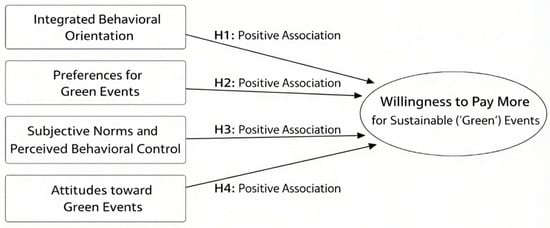
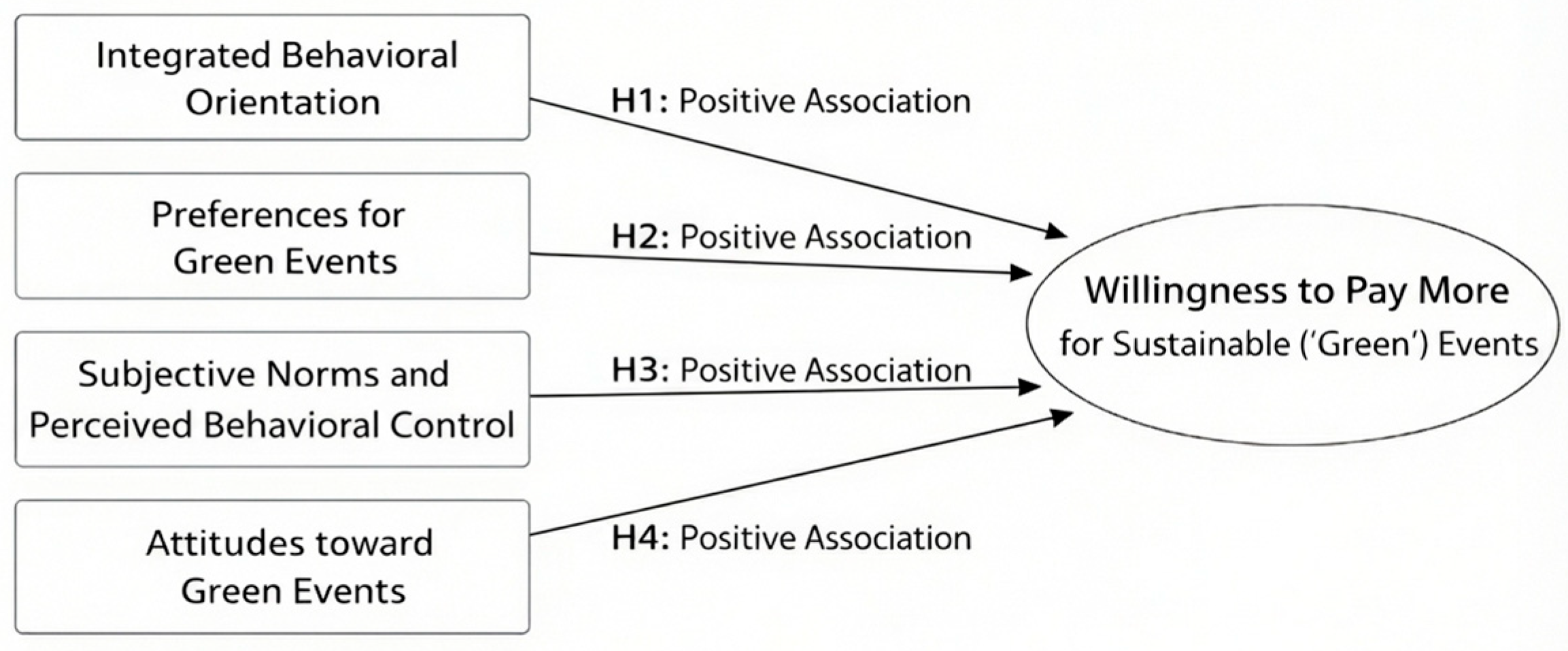
Based on these empirically derived factors, the hypotheses were tested as follows (Figure 1):
Figure 1.
Hypothesized relationships among factors of WTP more for green events.
H1.
Integrated Behavioral Orientation toward Green Events is positively associated with participants’ willingness to pay premium for green events.
H2.
Preferences for Green Events are positively associated with participants’ willingness to pay for green events.
H3.
Subjective Norms and Perceived Behavioral Control are positively associated with participants’ willingness to pay for green events.
H4.
Attitudes toward Green Events are positively associated with participants’ willingness to pay for green events.
4.4. Effects of Factors on WTP
In order to examine the influence of extracted factors on consumers’ WTP more for events that implement sustainable (“green”) practices, a series of simple linear regression analyses was conducted, with each factor entered separately into the model (Table 4).
Table 4.
Results of simple linear regression analyses predicting WTP more.
The results show that Factor 1—Integrated Behavioral Orientation toward Green Events has a statistically significant but relatively weak effect on WTP more, explaining 5.6% of the variance in the dependent variable (R2 = 0.056, p = 0.002). This indicates that a general behavioral orientation combining elements of attitudes, intentions, and perceived control contributes to WTP, although its explanatory power remains limited.
Factor 2—Preferences for Green Events emerged as a strong predictor of WTP more, explaining 21.9% of the variance (R2 = 0.219, p < 0.001). This result confirms the important role of respondents’ personal preferences related to sustainable and socially responsible event practices in shaping their decisions regarding additional financial expenditure.
The strongest effect was observed for Factor 3—Subjective Norms and Perceived Behavioral Control, which explains 29.4% of the variance in WTP more (R2 = 0.294, p < 0.001). This finding highlights the combined influence of social expectations and individuals’ perceived ability to engage in and support green events, suggesting that both social pressure and a sense of personal control are key determinants of consumers’ financial support for sustainable events.
In contrast, Factor 4—Attitudes toward Green Events did not show a statistically significant effect on WTP more (R2 = 0.010, p = 0.201), indicating that positive attitudes alone are not sufficient to directly translate into higher WTP without the presence of supportive social norms, perceived control, or strong personal preferences.
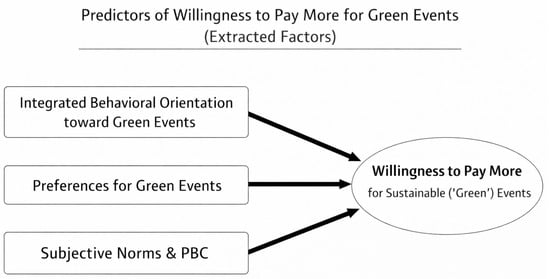
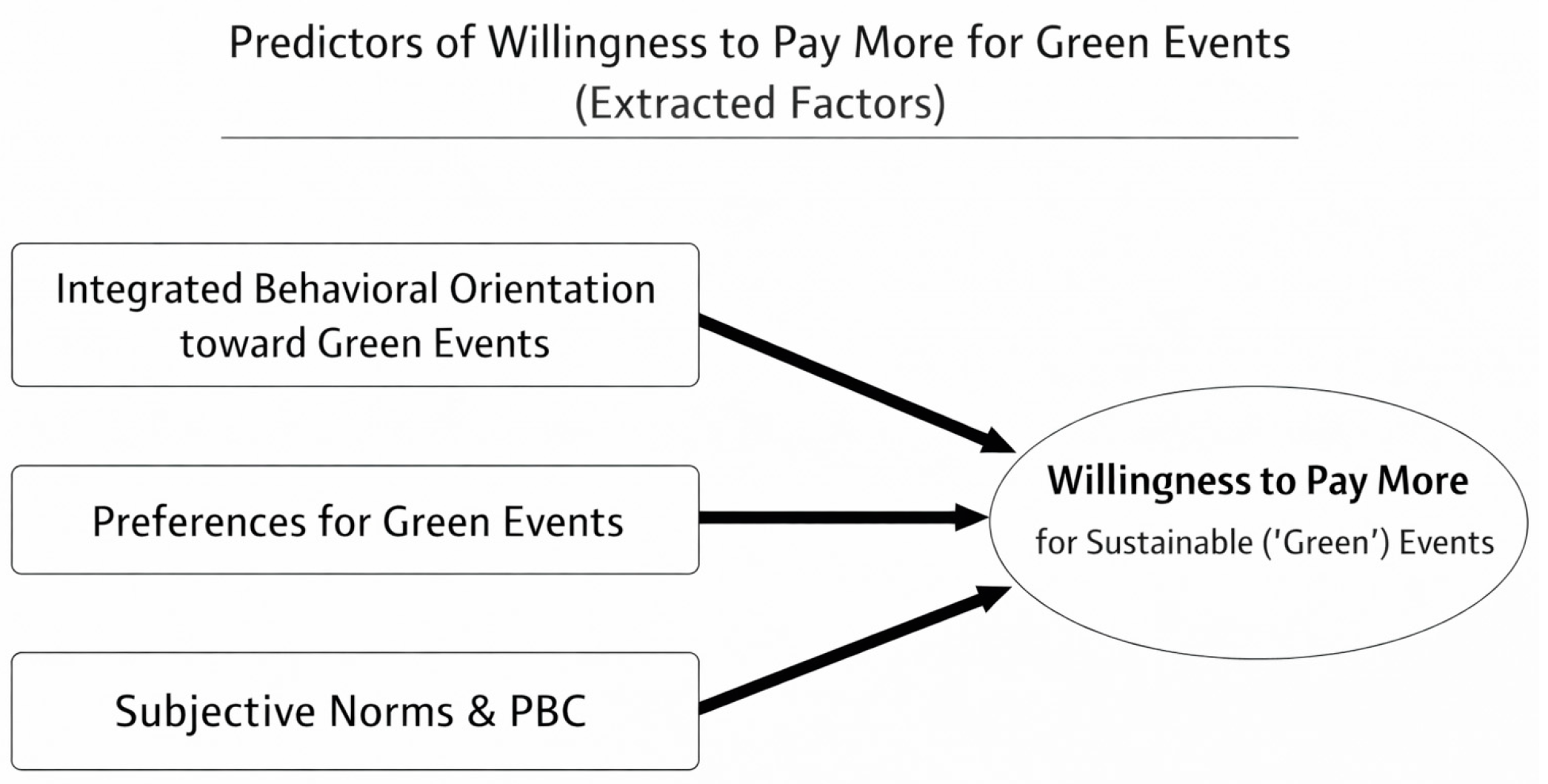
The regression analysis based on the extracted factors indicates that Integrated Behavioral Orientation toward Green Events, Preferences for Green Events, and Subjective Norms and Perceived Behavioral Control represent the most influential predictors of participants’ WTP more for green events (Figure 2). In contrast, the factor Attitudes toward Green Events did not show a statistically significant effect on WTP when analyzed at the factor level.
Figure 2.
Schematic representation of the direct relationships between factors and WTP.
5. Discussion and Conclusions
This study makes several important contributions. Theoretically, it extends the application of the TPB to the context of sustainable events. By integrating personal values and preferences alongside TPB dimensions, the study offers a more comprehensive framework for understanding pro-environmental consumer behavior in event contexts. Contextually, by conducting the research in Serbia, a non-Western, emerging economy, the study addresses a gap in the literature, which has predominantly focused on Western settings (Mair et al., 2024). This demonstrates that behavioral mechanisms driving willingness to pay for green events are relevant across diverse socio-economic and cultural contexts. Empirically, it identifies Integrated Behavioral Orientation toward Green events, Subjective Norms and Perceived Behavioral Control, and Preferences for Green Events as the strongest predictors of WTP, offering guidance for both future research and practice. Practically, the findings provide actionable insights for event organizers and destination managers, emphasizing the importance of transparent communication, alignment of green initiatives with participant values, and strategies that enhance perceived control and social approval to promote engagement and financial support for sustainable events.
The results show that the respondents are predominantly Millennials (aged 31–40) with monthly incomes above the average salary in Serbia. This is especially relevant when considering their WTP more for sustainable event practices. These findings suggest that Millennials have a strong environmental awareness and support green initiatives. This aligns with earlier research suggesting that Millennials are environmentally and socially conscious, and WTP more for sustainable events (Bochert et al., 2017; Davidson, 2011).
The correlation results indicate that all examined TPB dimensions and preferences are positively associated with WTP more for green events, although the strength of these relationships varies. In particular, perceived behavioral control, subjective norms, and preferences exhibit the strongest correlations with WTP, whereas attitudes toward green events show the weakest association. These patterns are largely confirmed by the regression analysis based on the empirically extracted factors. Specifically, Integrated Behavioral Orientation toward Green Events, Preferences for Green Events, and Subjective Norms and Perceived Behavioral Control emerge as significant predictors of WTP, providing support for hypotheses H1, H2, and H3. In contrast, Attitudes toward Green Events do not demonstrate a statistically significant effect on WTP at the factor level, leading to the rejection of hypothesis H4. Taken together, these findings suggest that while positive attitudes toward sustainability are present, they are insufficient on their own to translate into a willingness to pay a price premium. Instead, social influence, perceived behavioral control, and concrete preferences play a more decisive role in shaping consumers’ financial support for sustainable events.
Considering that Subjective Norms and Perceived Behavioral Control had the strongest influence on WTP more for green events, it can be suggested that perceptions of affordability, resources, and personal capability play a decisive role in cost-related sustainability behaviors. In the Serbian context, where price sensitivity remains relatively high, positive environmental attitudes may still be widespread but insufficient to drive financial commitment on their own. Consequently, attitudes appear as a necessary but weaker predictor, while perceived behavioral control and subjective norms captures the practical feasibility of translating pro-environmental intentions into action.
Based on the findings, event organizers are encouraged to implement strategies that directly address perceived behavioral control. These include tiered ticket pricing to accommodate different budgets, clear communication of the environmental benefits of green features, and ensuring that sustainable options are accessible and convenient. Such targeted measures can enhance participants’ perceived control and increase their WTP for green events, consistent with prior studies linking affordability and feasibility to pro-environmental consumer behavior.
Wong et al. (2014) emphasize that participants who actively engage in green initiatives at events often develop a heightened sense of social and environmental responsibility. Event and destination managers should keep in mind that sustainability efforts need to be aligned with participants’ personal values. In this context, they should conduct audience segmentation and tailor green initiatives (e.g., waste reduction, local sourcing, carbon offsetting) to match the values of different target groups rather than adopting a one-size-fits-all approach. Strategies that strengthen participants’ sense of control, leverage social influence, and align sustainability initiatives with personal values are likely to increase willingness to invest in green events. Although the findings indicate that the majority of participants had previously attended events implementing sustainable practices, a considerable proportion of respondents were either unaware of such initiatives or had no such experience. This suggests that sustainability measures are not always sufficiently visible or effectively communicated. Therefore, event organizers should place greater emphasis on clear, visible, and targeted communication of green initiatives before, during, and after events. This includes on-site signage, digital communication, and post-event sustainability reports that translate abstract practices into tangible benefits for participants.
Although participants generally hold positive attitudes toward green events, this factor did not significantly influence WTP, suggesting that attitudes alone are insufficient without supportive social norms, perceived control, or strong personal preferences. Practical strategies that reduce effort, enhance convenience, and make sustainable choices easier and more socially endorsed are likely to be more effective than information-based campaigns alone. Event organizers can simplify green options by offering bundled sustainable tickets or default eco-friendly choices, enhance convenience through accessible recycling stations and digital tools or apps to guide participants toward sustainable choices, and promote social approval via peer recognition, testimonials, or influencer endorsements. Additional measures such as automating sustainable actions, providing on-site guidance, offering small incentives or loyalty points for choosing sustainable options, and delivering clear, targeted communication can further increase participants’ perceived behavioral control, engagement, and WTP more for sustainable events. Effective sustainable event practices must address both environmental and social dimensions, as participants value not only eco-friendly initiatives but also social responsibility and contributions to the local community. This indicates that event organizers should adopt a holistic approach to sustainability to enhance engagement and WTP.
Several studies have applied TPB to green consumption, often incorporating economic factors such as willingness to pay (WTP) for eco-friendly products (Adialita et al., 2025). These studies show that, in addition to traditional TPB constructs, economic evaluations can significantly influence intentions to purchase green products. In contrast, our findings indicate that, in the context of green events, Subjective Norms and Perceived Behavioral Control, together with Preferences for Green Events, are the strongest predictors of willingness to pay, whereas Attitudes have a weaker or non-significant effect. This suggests that the behavioral context shapes which TPB related factors are most influential, and positions our study as contributing new insight into sustainable event participation.
This study has several limitations. First, the sample size was relatively small (N = 164), which may limit the generalizability of the findings. Data were collected via a self-reported online survey solely in Serbia, so the results may not fully apply to other cultural or economic contexts. Future studies with larger, more diverse samples, longitudinal designs, and cross-country comparisons are recommended to address these limitations. The cross-sectional design prevents establishing causal relationships between TPB constructs and behavioral intentions toward green event participation. Finally, although the TPB framework captures key predictors, other potentially relevant factors, such as past behavior, situational constraints, or financial considerations, were not included, which may limit the generalizability of the findings. By applying the TPB beyond Western contexts, this research extends the theoretical understanding of consumer behavior in sustainability settings and addresses recent calls for more diverse empirical studies (Mair et al., 2024), highlighting the need for further empirical research in diverse national contexts.
Future studies should examine whether variations in economic development and cultural characteristics influence behavioral intentions and willingness to support sustainable events. Expanding this research to other non-Western and emerging economies will help validate the generalizability of these findings and support more effective promotion of sustainable event practices globally.
Author Contributions
Conceptualization, V.P.; methodology, A.B.; software, A.B.; validation, V.P., A.B. and M.B.; formal analysis, A.B. and M.B.; investigation, A.B.; data curation, A.B.; writing—original draft preparation, V.P., A.B. and M.B.; writing—review and editing, V.P.; visualization, A.B.; supervision, V.P.; project administration, V.P.; funding acquisition, V.P. All authors have read and agreed to the published version of the manuscript.
Funding
This research was supported by The Provincial Secretariat for Higher Education and Scientific Research of the Vojvodina Province, Serbia (project number 003873835 2025 09418 003 000 000 001). The authors also gratefully acknowledge the financial support of the Ministry of Science, Technological Development and Innovation of the Republic of Serbia (Grants No. 451-03-33/2026-03/200125 & 451-03-34/2026-03/200125).
Institutional Review Board Statement
Ethical approval was not required for this study. The research was conducted among adult participants, involved no sensitive or personal data, posed no risk of psychological or physical harm, and ensured full anonymity of respondents. In accordance with Article 7, paragraph 2 of the Code of Academic Integrity of the University of Novi Sad, Faculty of Sciences (No. 0601-351/5, dated 12 December 2019), prior approval of an ethics committee is required only for research involving sensitive groups, sensitive topics, invasive or potentially harmful procedures, third-party data collection, or situations where anonymity cannot be ensured. None of these conditions applied to the present study. Accordingly, the study complied fully with applicable institutional and national ethical standards, and formal ethical approval was not required.
Informed Consent Statement
Informed consent was obtained from all subjects involved in the study.
Data Availability Statement
The original contributions presented in this study are included in the article. Further inquiries can be directed to the corresponding author.
Conflicts of Interest
The authors declare no conflict of interest.
References
- Adialita, T., Sigarlaki, F. F., Vasudevan, A., Saufi Che Rusuli, M., Chen, W., Cheng, Q., Krishnasamy, H. N., & Miskam, Z. (2025). Assessing consumer willingness to pay for sustainable products: An application of the extended theory of planned behavior. Journal of Infrastructure, Policy and Development, 9(2), 6582. [Google Scholar] [CrossRef] [Scilit]
- Ahmad, N. L., Mahmood, N. H. N., Rashid, W. E. W., Yunus, N. A. M., Ong, M. H. A., & Asri, A. S. M. (2017). Examining the perception of attendees on sustainable efforts towards event greening using the values, beliefs and norms theory. Advanced Science Letters, 23(11), 10748–10752. [Google Scholar] [CrossRef] [Scilit]
- Ahmad, N. L., Wan Rashid, W. E., Abd Razak, N., Mohd Yusof, A. N., & Mat Shah, N. S. (2013). Green event management and initiatives for sustainable business growth. International Journal of Trade, Economics and Finance, 4(5), 331–335. [Google Scholar] [CrossRef] [Scilit]
- Ajzen, I. (1985). From intentions to actions: A theory of planned behavior. In J. Kuhl, & J. Beckmann (Eds.), Action control: From cognition to behavior (pp. 11–39). Springer. [Google Scholar] [CrossRef] [Scilit]
- Ajzen, I. (1991). The theory of planned behavior. Organizational Behavior and Human Decision Processes, 50(2), 179–211. [Google Scholar] [CrossRef] [Scilit]
- Ajzen, I. (2002). Perceived behavioral control, self-efficacy, locus of control, and the theory of planned behavior. Journal of Applied Social Psychology, 32(4), 665–683. [Google Scholar] [CrossRef] [Scilit]
- Amoako, G. K., Dzogbenuku, R. K., & Abubakari, A. (2020). Do green knowledge and attitude influence the youth’s green purchasing? Theory of planned behavior. International Journal of Productivity and Performance Management, 69(8), 1609–1626. [Google Scholar] [CrossRef] [Scilit]
- Bochert, R., Cismaru, L., & Foris, D. (2017). Connecting the members of Generation Y to destination brands: A case study of the CUBIS project. Sustainability, 9(7), 1197. [Google Scholar] [CrossRef] [Scilit]
- Cavallin Toscani, A., Vendraminelli, L., & Vinelli, A. (2024). Environmental sustainability in the event industry: A systematic review and a research agenda. Journal of Sustainable Tourism, 32(8), 2663–2697. [Google Scholar] [CrossRef] [Scilit]
- Chen, C. Y., Lin, Y. H., Shih, M. T., & Yeh, T. Y. (2024). Effect of green value cocreation on consumer behavior: A professional baseball franchise’s “sustainable party” event. Behavioral Sciences, 14, 1050. [Google Scholar] [CrossRef] [Scilit]
- Chen, M. F., & Tung, P. J. (2014). Developing an extended theory of planned behavior model to predict consumers’ intention to visit green hotels. International Journal of Hospitality Management, 36, 221–230. [Google Scholar] [CrossRef] [Scilit]
- Conner, M. (2020). Theory of planned behavior. In Handbook of sport psychology (pp. 1–18). Wiley. [Google Scholar] [CrossRef] [Scilit]
- Davidson, R. (2011). What does Generation Y want from conferences and incentive programmes? Implications for the business tourism industry. In I. Yeoman, C. H. C. Hsu, K. Smith, & S. Watson (Eds.), Tourism and demography (pp. 115–129). Goodfellow Publishers. [Google Scholar]
- De Araújo, A. F., Andrés Marques, M. I., Candeias, M. T. R., & Vieira, A. L. (2022). Willingness to pay for sustainable destinations: A structural approach. Sustainability, 14(5), 2548. [Google Scholar] [CrossRef] [Scilit]
- Hair, J. F., Anderson, R. E., Tatham, R. L., & Black, W. C. (1998). Multivariate data analysis (5th ed.). Prentice Hall. [Google Scholar]
- Han, H., Hsu, L.-T. G., & Sheu, C. (2010). Application of the theory of planned behavior to green hotel choice. Tourism Management, 31(3), 325–334. [Google Scholar] [CrossRef] [Scilit]
- Harris, R., & Schlenker, K. (2018). An exploratory study of best practice in environmentally sustainable event management in Australian public events. Event Management, 22(6), 1057–1071. [Google Scholar] [CrossRef] [Scilit]
- Hischier, R., & Hilty, L. M. (2002). Environmental impacts of an international conference. Environmental Impact Assessment Review, 22(5), 543–557. [Google Scholar] [CrossRef] [Scilit]
- Hutte, G. J., Markwell, K., & Wilson, E. (2022). Celebratory and sustainable? A website examination of the sustainability practices of Australian festivals. Event Management, 26(6), 1315–1333. [Google Scholar] [CrossRef] [Scilit]
- Liu, Y. Q., & Lei, W. S. (2021). Towards sustainable practice in the event industry: Insights from practitioners. Event Management, 25(3), 213–226. [Google Scholar] [CrossRef] [Scilit]
- López-Mosquera, N. (2016). Gender differences, theory of planned behavior and willingness to pay. Journal of Environmental Psychology, 45, 165–175. [Google Scholar] [CrossRef] [Scilit]
- Mair, J. (2014). Events as pro-environmental learning spaces. Event Management, 18(4), 421–429. [Google Scholar] [CrossRef] [Scilit]
- Mair, J., & Laing, J. (2012). The greening of music festivals. Journal of Sustainable Tourism, 20(5), 683–700. [Google Scholar] [CrossRef] [Scilit]
- Mair, J., & Smith, A. (2021). Events and sustainability: Why making events more sustainable is not enough. Journal of Sustainable Tourism, 29(11–12), 1739–1755. [Google Scholar] [CrossRef] [Scilit]
- Mair, J., Trendafilova, S., & Werner, K. (2024). Environmental sustainability in event management. Event Management, 28(3), 477–484. [Google Scholar] [CrossRef] [Scilit]
- Makoondlall-Chadee, T., & Bokhoree, C. (2024). Understanding the influencing factors of pro-environmental behavior in the hotel sector of mauritius island. Tourism and Hospitality, 5(4), 942–976. [Google Scholar] [CrossRef] [Scilit]
- Mei, H., Zhan, Z., Fong, P. S. W., Liang, T., & Ma, Z. (2015). Planned behaviour of tourism students’ entrepreneurial intentions in China. Applied Economics, 48(13), 1240–1254. [Google Scholar] [CrossRef] [Scilit]
- Modica, P. D., Altinay, L., Farmaki, A., Gursoy, D., & Zenga, M. (2020). Consumer perceptions towards sustainable supply chain practices. Current Issues in Tourism, 23(3), 358–375. [Google Scholar] [CrossRef] [Scilit]
- Naik, S., Chanda, R. S., & Paliwal, M. (2025). Encouraging sustainable travel choices. Discover Sustainability, 6(1), 1320. [Google Scholar] [CrossRef] [Scilit]
- Pallant, J. (2011). SPSS survival manual (4th ed.). Open University Press. [Google Scholar]
- Park, H., Lee, S., Jeong, E., & Olson, E. D. (2022). Message framing for recycling commitment in a festival setting: A three-way interaction between self-efficacy, goal specificity, and construal level. Event Management, 26(8), 1765–1783. [Google Scholar] [CrossRef] [Scilit]
- Pavluković, V., Davidson, R., Chaperon, S., & Vujičić, M. (2022). China’s generation Z and conference attendance. Event Management, 26(4), 847–865. [Google Scholar] [CrossRef] [Scilit]
- Quan, L., Koo, B., & Han, H. (2023). Willingness to switch from traditional to green hotels. Journal of Travel & Tourism Marketing, 40(3), 185–202. [Google Scholar] [CrossRef] [Scilit]
- Rittichainuwat, B., & Mair, J. (2012). Attendee perceptions of green meetings. Journal of Convention & Event Tourism, 13(2), 147–158. [Google Scholar] [CrossRef] [Scilit]
- Shehawy, Y. M., Agag, G., Alamoudi, H. O., Alharthi, M. D., Brown, A., Labben, T. G., & Abdelmoety, Z. H. (2024). Willingness to pay more for green hotels. Journal of Retailing and Consumer Services, 77, 103665. [Google Scholar] [CrossRef] [Scilit]
- Tölkes, C., & Butzmann, E. (2018). Motivating pro-sustainable behavior through green events. Sustainability, 10(10), 3731. [Google Scholar] [CrossRef] [Scilit]
- Wang, J., Wang, S., Wang, Y., Li, J., & Zhao, D. (2018). TPB and green hotel intentions in China. International Journal of Contemporary Hospitality Management, 30(8), 2810–2825. [Google Scholar] [CrossRef] [Scilit]
- Wong, I. A., Wan, Y. K. P., & Qi, S. (2014). Green events and value perceptions. Journal of Sustainable Tourism, 23(2), 294–315. [Google Scholar] [CrossRef] [Scilit]
- Yarimoglu, E., & Gunay, T. (2020). Extended TPB and green hotel intentions. Business Strategy and the Environment, 29(3), 1097–1108. [Google Scholar] [CrossRef] [Scilit]

Disclaimer/Publisher’s Note: The statements, opinions and data contained in all publications are solely those of the individual author(s) and contributor(s) and not of MDPI and/or the editor(s). MDPI and/or the editor(s) disclaim responsibility for any injury to people or property resulting from any ideas, methods, instructions or products referred to in the content. |
© 2026 by the authors. Licensee MDPI, Basel, Switzerland. This article is an open access article distributed under the terms and conditions of the Creative Commons Attribution (CC BY) license.