


Abstract
The paper elaborates on and illustrates a combined concept of the digitally mediated dark-tourism experience in India. This is a conceptual and methodological study; all numerical results presented are synthetic demonstrations and do not represent empirical observations. It focuses on how postings, videos, and reviews on social media influence a desire to visit tragedy-related heritage places, how authenticity and empathy feelings are molded by perceived authenticity, and how perceived meaningful satisfaction leads to respectful destination promotion. A mixed-method exploratory design following the sequence is suggested. Phase 1 is a qualitative and thematic analysis of sentiment analysis and AI-assisted mood or emotion classification of some 1500–2000 visit posts by people in Jallianwala Bagh, Cellular Jail, the Bhopal Gas Tragedy Memorial, Kargil War Memorial, the Partition Museum, and similar Indian locations. The proposed sample population of 600–800 adults who have visited any of their eligible sites in the last 12 months is employed in Phase 2, wherein a privacy-minimizing visitor questionnaire and partial least squares structural equation modeling are used. The article provides an ethics-ready tool, which does not ask people to identify themselves, share their contact information, account numbers, specific addresses, and locations, or provide photos and close relationships with victims. Two distinct sets of content records and visitor records (of anonymous visitors, 1800 coded and 720 anonymous records, respectively) are provided, marked with labels, to demonstrate the desired format of analysis and reporting. The synthetic findings illustrate how the proposed relationships could be examined using empirical data. The research will add a Dark Tourism Emotional Response Model to India and provide pragmatic advice on how to communicate respectfully online, interpret, prepare visitors, and provide advocacy for the memorial sites. Artificial findings are demonstrations, methodologically, and should not be perceived as fieldwork.
Keywords:
dark tourism; social media; authentic; empathy; emotion; destination advocacy; India; PLS-SEM 1. Introduction
A visit to any of the mentioned locations, which are identified with death, catastrophe, war, political violence, prison, or the misery of a group of people, is usually referred to as dark tourism, rather than tourism or difficult heritage. The field has not been characterized purely by the physical obscurity of the site and darkness, or even by morbid curiosity. It encompasses memorials, museums, battlefields, old-time prisons, disaster hubs, and landscapes, based on which visitors experience contentious histories and reflect on the human significance of past violence. Research in the field of dark tourism has thus ceased to focus on the straightforward classification of sites and turned into questions about memory, identity, interpretation and ethics, emotional reactions, and relations between visitors and the communities hosting the site (Ashworth & Isaac, 2015; Farmaki, 2013; Light, 2017; P. Stone & Sharpley, 2008). India is one such context that is of great interest to this question. Its sites of tragedy include signs of colonial oppression, struggle for freedom, partitioning, war, industrial tragedy, terrorism, natural tragedy, and government service.
Memories of colonial brutalities and resistance imbue Jallianwala Bagh and Cellular Jail, displacement and fragmented family histories through the Partition Museum, industrial disasters and demands for justice through the Bhopal memorial site and a memorial landscape in Kargil, and national identity and a fractured family background through the 26/11 memorial in Mumbai and tsunami memory through memorials. These sites vary in their institutional structure, time period, political connotation, availability, and how they are introduced as museums or holy grounds, historical monuments, or as functioning urban sites. This diversity would place India in a good position to develop theory but would necessitate an awareness of local pasts as opposed to the wholesale importation of models constructed around European concentration camps or North American disaster sites. It has already transformed tourism by making the digitalization of tourism activities change the way visitors learn about these attractions prior to their visit.
The personnel seen by an audience who would have no external way of visiting the site would include search engines, reviews of places, posts on Instagram, vlogs on YouTube, travel blogs, Facebook discussions, and content on X. Improved guidance, pictures, emotive factors, personal word-of-mouth, and social confirmation are useful and supplied by user-created content. It can make uncertainties less unpredictable and encourage potential visitors to fantasize about an experience, but it can also make history less complex, favor interactively theatrical spaces, and favor performance over content. These affordances open conflict between education and attention in the situations of dark tourism.
One may develop a strong impulse to learn some serious historical matters, but the conventions of visuals can promote a holy or a painful site to become the setting of self-presentation (Krisjanous, 2016; Leung et al., 2013; Lv et al., 2022; Wight, 2020). Current studies in the area of social media indicate that online-based information has impacts on destination awareness/image, planning, trust, and adoption when it comes to making recommendations (Ayeh et al., 2013; Filieri et al., 2015; Xiang & Gretzel, 2010). But there are no purely ordinary tourism models to explain visits to places where sadness, moral concern, empathy, national identity, and remember remembrance are a key aspect. The contentment in a memorial cannot be considered mere pleasure.
A visitor can be overcome with grief and anger, assuming the experience to be far too meaningful and well interpreted as well. Similarly, destination advocacy is not to be diminished to promotional zeal. Being accountable in advocacy can imply suggesting a location to be educated, promoting good behavior and conservation, or providing background about the place other than just publishing pretty pictures. Indian literature is still diverse in its heritage studies, tourism commentary, site-by-site discussions, and emergent empirical studies.
Massive studies on the association of digital exposure to the psychology of visitors with various kinds of tragedy-related sites are scarce. Specifically, little focus has been given to the order in which exposure to social media translates to visit motivation, the stimulating impact of motivation on the perceived and anticipated authenticity at the site, the way authenticity facilitates empathetic responses, and how empathy may eventually lead to mixed emotional reactions, as well as post-visit advocacy. The current research fills this gap by incorporating social-media influence, authenticity theory, empathy, destination emotion, meaningful satisfaction, post-visit sharing, and all of these aspects of one single sequential model that takes a mixed-method perspective. There are four objectives of the paper. First, it determines how motivations to pay a visit to dark-tourism locations are affected by social-media content. Second, it analyzes the emotional reactions during and after visits, such as sadness, empathy and patriotism, anger, reflection, gratitude, and mixed emotions. Third, it examines the connections between social-media exposure, perceived authenticity, empathy, emotional responses, and meaningful satisfaction. In the fourth, it formulates and illustrates a model of respectful post-visit sharing and destination advocacy.
Thus, the principal gap is methodological: an integrated framework linking digital exposure, motivation, authenticity, empathy, emotional responses, and meaningful satisfaction has not yet been empirically validated in the Indian dark-tourism context.
2. Indian Context and the Need for a Multi-Site Model
The need for a multi-site Indian design is due to the fact that heritage associated with tragedy is not a homogeneous type of product. Sites of colonial atrocities, past prisons, war memorials, disaster memorials, displacement museums, and terror sites establish varying relationships of evidence, memory, community, and tourism. The moral meaning of the massacre cannot be talked of outside the Jallianwala Bagh and its remaining traces, the physical location. In Cellular Jail, forms of architecture, stories of incarceration, and the geography of exile as a whole interact. The Partition Museum is supported by curated subjects and stories to portray an incident that is scattered across boundaries and lives of millions. Bhopal is related to the ongoing discussions regarding the industrial responsibility, health, and environmental justice. Such variations influence the meaning of authenticity and the socially correct emotional reactions. Different sites can thus contain distinct substantive content that has the same construct. The feeling of patriotism can be anticipated at a war memorial and promoted in an institutional level, but the feelings of anger and accountability need to be more relevant at a memorial of an industrial disaster. In a partition museum, empathy could be structured around the theme of family separation and immigration, whereas in a prison site, empathy could be based on themes of some kind of confinement, coercion, and resistance. The fulfillment of satisfaction can be based on the depth of archives in a museum, landscape amenities at an outdoor memorial or accessibility in a far-off place, or the quality of explanation at a scattered urban site. It is important to have a common model that can allow such contextual variation to be apparent. India makes the domestic–international visitor distinction complicated, as well.
Local tourists might come with background information of a school or region or family history or national pride, but they might have differing degrees of familiarity, by language, state, generation, and schooling. Visitors abroad can be familiar with the world map of colonialism, dismemberment, conflict, or industrial tragedy and not have local details. These knowledge gaps can be bridged or increased by the content created on social media. A high-quality video made in a regional language can offer a richness that is not possible due to a brief English travel post, but algorithmic popularity can give preference to a video that lacks substance and is instead emotionally dramatic in nature. The research should then note the predominant previsit platform and broad residence without considering details on nationality because this would minimize anonymity in a small-sites sample.
The politics of visibility can also be referred in the model. Others are viewed as major tourist destinations on tourism routes across the nation, and others are given little concern despite having a lot of historical significance. Social media has the potential to repackage visibility by empowering local creators, educators, descendants, activists, and visitors to tell stories about places beyond campaigns. This has the potential to generalize the communication of heritage, yet visibility is not an unbiased fact. The recognition of familiar national narratives, shocking photos, or nights of controversy can be prioritized by platform algorithms, and slow violence and the perpetuation of harm to communities are underreported. The content-analysis step thus looks not only at what is being expressed but rather what histories and actors are focused on, how we are characterizing responsibility, and so on whether or not the past is linked to the present ethical issues in their posts.
India provides a particularly relevant context because its tragedy-associated heritage encompasses colonial violence, partition, war, industrial disaster, and terrorism, allowing the proposed framework to be examined across diverse forms of difficult heritage.
3. Research Questions
RQ1: What is the relationship between social-media exposure and visitors’ intentions and motivations to visit tragedy-associated sites in India?
RQ2: How do visitors experience feelings during visits to these sites or after them?
RQ3: What is the role of perceived authenticity and empathy in visitor experience and meaningful satisfaction?
RQ4: How do emotional response and satisfaction relate to respectful sharing and destination advocacy?
4. Literature Review and Hypothesis Development
4.1. Dark Tourism, Difficult Heritage, and Moral Encounter
The initial dark-tourism research tried to determine the scope of attractions related to death and suffering. Subsequent studies raised a question mark about whether the one spectrum of darkness might be sufficient to capture visitors’ senses or commemoration politics. Sites gain significance through the interaction of history, interpretive institutions, communities, the motives of visitors, and public discourses on a global scale. A former prison could serve as an image of state violence, nationalist symbolism, an educational museum, and a tourism venue at the same time. The battlefield has the power to stir grief, a sense of patriotism and pilgrimage, and a sense of strategic curiosity.
This plurality helps in the relational perspective where darkness is not a place where it is always found but is constructed with the help of social senses (Ashworth & Isaac, 2015; Buda, 2015; Farmaki, 2013; Light, 2017). The methodologies of thanatology are those that are focused on the mediation of the death: the experience of death-related heritage paves the way for the societal and spatial mediation of mortality (P. R. Stone, 2012; P. Stone & Sharpley, 2008). The heritage approaches are much more focused on authenticity, memory, identity, and challenged representation. These views are mutually supporting. The viewer of a memorial might think about mortality and an act of colonialism, create an assessment of national histories, and pass judgment on responsibility. This and numerous other studies at Holocaust museums, peace parks, slave castles, transit camps, and battlefields reveal that visitors go to learn, be reminded, feel empathy, identify with the affected populations, validate, and connect (Biran et al., 2011; Cohen, 2011; Dunkley et al., 2011; Isaac & Çakmak, 2014; E.-J. Kang et al., 2012; Mowatt & Chancellor, 2011). Dark-tourism attractions also present ethical concerns, since the tourism activities can commodify pain, favor certain victims of unique incidents, and transform them into commodities. Post-conflict tourism can help in reconstruction and negotiating with the people, but it can also spotlight revisionist histories (Causevic & Lynch, 2011). Ethical analysis ought to pose the following questions: who is the one with the story, whose voice is apparent, is there an admission of uncertainty, how is photography handled, and are visiting attitudes towards prompting reflection and not consumption? Their importance is particularly pertinent in India, where nationalism, living remnants of the colonial past, regionality, and local or legal claims could potentially be in conflict. Tzanelli (2016) highlights how cinematic and mediated representations of risk can influence the ways in which death and tourism are imagined and consumed, suggesting that mediated exposure may shape visitors’ expectations before encountering a site directly. Similarly, Sather-Wagstaff (2016) demonstrates that traumatic heritage sites function as complex memory scapes in which visitors negotiate historical narratives, material traces, personal meanings, and emotional responses.
A critical perspective further suggests that dark tourism should not be understood only as a meaningful encounter with difficult heritage. Korstanje (2016) argues that contemporary tourism can commodify death and suffering within a broader “thana-capitalist” culture, raising questions about how tragedy becomes mediated and consumed. Similarly, James et al. (2024) critically examine how than tourism may transform dark histories into consumable cultural experiences, challenging straightforward assumptions about authenticity and visitor meaning. These perspectives suggest that social-media visibility may simultaneously facilitate historical engagement and reproduce the commodification or aestheticization of suffering. The proposed model therefore treats authenticity, the emotional response, and advocacy as potentially ambivalent processes rather than inherently positive outcomes.
4.2. Social-Media Exposure and Visit Motivation
Social media have become central to travel information search and destination imagination. Potential visitors encounter locations through algorithmically selected videos, peer photographs, reviews, blogs, and discussions. Compared with official promotional communication, user-generated content often appears more experiential and less controlled, although perceived trust depends on the detail, consistency, expertise, transparency, and platform norms (Ayeh et al., 2013; Filieri et al., 2015; Hudson & Thal, 2013; Ukpabi & Karjaluoto, 2018). Online video can provide a form of mediated access that enables viewers to rehearse the future experience and evaluate whether the site fits their interests (Tussyadiah & Fesenmaier, 2009).
This critical perspective is also relevant to digitally mediated tourism, where cultural experiences may become embedded within broader forms of consumer symbolism and affective marketplace practices (Cronin & James, 2025). Accordingly, social-media engagement with dark heritage should be examined not only as information exchange but also as a potential form of cultural consumption.
The influence is not purely informational. Social media supply affective frames, music, camera movement, facial expression, caption language, editing pace, and comments, tell viewers how a place should feel. Visual darkness, constrained spaces, preserved damage, memorial names, and archival images can produce psychological anticipation before travel (Lv et al., 2022). At the same time, platform metrics reward novelty and emotional intensity. Content may therefore amplify tragedy or present it through familiar travel aesthetics. A study of social-media influence must distinguish exposure frequency from content quality and must examine whether posts provide historical context, encourage respectful conduct, or foreground photography and self-presentation.
Motivation to visit dark-tourism sites is multidimensional. Historical learning and remembrance are common, but curiosity, patriotism, identity, pilgrimage, empathy, event validation, and the desire for an emotionally meaningful experience also appear in prior research (Biran et al., 2011; Dunkley et al., 2011; Podoshen, 2013). Social media can activate these motives by increasing awareness, making history vivid, or showing peers engaging with the site. Electronic word of mouth can also influence the destination image and travel intention (Jalilvand et al., 2012; Litvin et al., 2008). The first hypothesis therefore proposes that greater exposure to relevant social-media content will be associated with stronger visit motivation.
H1.
Social-media exposure is positively associated with visit motivation.
4.3. Visit Motivation and Perceived Authenticity
One of the main themes in heritage tourism is authenticity, which is a contentious notion. Objective approaches deal with the originality of objects and sites, constructive approaches are based on the negotiated meaning of such objects and places socially, and existential approaches are based on whether the experience lets the visitors feel identified with a valued sense of self or history (N. Wang, 1999). The models founded on the consumer reveal that authenticity judgments may take into consideration the credibility and other symbolic components, cultural meaning, and other qualities of engagement as opposed to material originality alone (Kolar & Zabkar, 2010). At locations that are related to tragedy, authenticity carries with it an explicit ethical aspect. Visitors judge that the basis of the story seems to be true, enduring traces and historical facts touch on the truth, whether the issue of commercialization is reined in or not, and whether the victims are treated with due respect. Sensationalism, staging oriented on entertainment, unrecognized reconstruction, and erasing accounts, can harm authenticity.
Credibility and involvement, in turn, could be facilitated by original sites, documents or eyewitness testimonies, personal items, well-considered display, or clear explanation (Bryce et al., 2015; Krisjanous, 2016; J. Wang et al., 2023).
It is the motivation that will determine what the visitors will be looking at. A historically oriented learner can look at dates, archival reports, and panels; a remembrance-oriented visitor can look at names, stories, and the ritual space; and the visitor who is photography-oriented may look at images as a priority. Therefore, motivation helps to shape criteria by which authenticity is seen. A better learning and commemoration-intention process should help keep the visitors more aware of congruence among the site, its narratives, and the historical event. The suggested relationship does not mean that motivation results in factual authenticity, but instead builds interaction with the cues, which results in an authenticity evaluation.
H2.
The motivation of a visit is positively associated with the perceived authenticity.
- Authenticity, Empathy, and Emotional Response
Empathy involves perspective-taking and compassion for others (Davis, 1983). At memorial sites, there can be empathy when there is an interpretation that links together the large-scale history with the individual experience. The names, diaries, testimonies, photographs, personal objects, and spatial stories can assist visitors to envision the limitations imposed on the people who have been affected. Authenticity comes in here as visitors will find it easier to give any story serious consideration when they think that the site and story interpretation done there are legit. Disaster memorial studies show that perceived authenticity can enhance empathy and satisfaction by enhancing the perceived meaning of the experience (J. Wang et al., 2023).
The romanticism of empathy should not be applied. Tourists have a chance to project modern presumptions onto the historical characters and pain, as well as consuming them in a voyeuristic way or aligning them in a selective manner to a group that matches their current identity. Interpretation should then contribute towards an educated judgment of view as opposed to being emotionally driven.
Dark tourism can develop moral feelings that foster a sense of judgment in terms of justice, responsibility, and social duty (Dresler, 2023). Storytelling plays a particularly crucial role since emotionality, descriptiveness, uniqueness, and educability could attract visitors to the story, whereas the national identity determines the manner of interpretation in the story (Lin et al., 2024). The dark tourism emotional response is multifaceted and multidimensional, to be thankful and to be sad, to be angry and to be hopeful, to be a patriot and to be sad, to be grave and to be contented. The research on tourism emotion shows that affect has an impact on memory, judgment, and behavioral intention (Bagozzi et al., 1999; Bigné et al., 2008; Hosany & Gilbert, 2010). The Destination Emotion Scale was designed to focus on more hedonic situations, but its focus on discrete emotional experience is in line with the broader idea that tourism cannot be assessed solely by valence (Hosany et al., 2015).
The studies in the concentration camp museums of the visit, as well as overall literature on Holocaust visiting, indicate that troubling experiences may yield both ambivalent emotions and valuable results by the end of the visit (Magano et al., 2023; Nawijn & Fricke, 2015).
Perceived authenticity upholds empathy in the model proposed, and empathy enhances the extent of the emotion response. Still another authenticity-to-emotion route is, of course, retained to do mediation testing since material and narrative cues can be construed as directly arousing emotion and also through empathic perspective taking.
H3.
As far as perceived authenticity is concerned, it is positively associated with empathy.
H4.
Empathy is positively associated with the emotional response.
4.4. Emotional Response, Meaningful Satisfaction, and Advocacy
In dark tourism, care needs to be taken in identifying satisfaction. A high degree of satisfaction should not be discussed as deriving pleasure out of suffering, which would be considered unethical. Visitor satisfaction, as used in this paper, refers to the fact that the experience had meaning, was worthwhile, and was interpreted in a respectful manner, as well as communicated the historical meaning. The visitor can complain of sadness and high satisfaction at the same time since the Website provided an opportunity to learn and reflect. The literature of heritage tourism indicates that such concepts as experience quality, perceived value, and satisfaction can impact recommendation and loyalty (Chen & Chen, 2010; Chi & Qu, 2008; Yoon & Uysal, 2005). Emotional experience is also a predictor of behavioral intentions, with the aspect of satisfaction as either a mediating or complementary evaluation (Prayag et al., 2013). This is also the case with destination advocacy. Traditional tourism studies look into revisit intention, word of mouth, and loyalty (Chen & Tsai, 2007; Prayag & Ryan, 2012; Zeithaml et al., 1996). Revisit might not be suitable for remote memorials or those that could be considered a pilgrimage once. Organizing advice can be provided in other forms, such as recommending the site to learn, respectful visits, providing the best context, preservation, and refuting trivializing materials.
Post-trip sharing is an extension of the experience where a visitor chooses images and words, recreates memory, and predicts the audience response (Kim & Fesenmaier, 2017). Some reasons to share motivations are information sharing, identity, social, and memory (M. Kang & Schuett, 2013; Munar & Jacobsen, 2014). When public value is generated by raising awareness of hidden histories, enhancing educational resources, or advocating for the creation of memorials, social-media advocacy can ultimately lead to the attainment of public value. It may also incur ethical damage through intrusive photography, misinformation, nationalist enmity, or attention in the form of content that is optimized to drive attention. Therefore, advocacy in the questionnaire will be in terms of educational recommendation, a respectful nature, preservation support, and contextual sharing, as opposed to the frequency of posting by itself. Institutional imagery and user-generated photography should also be analyzed based on visual content due to their ability to form two different meanings of the destination (Stepchenkova & Zhan, 2013).
H5.
Having an emotional response is positively associated with meaningful visitor satisfaction.
H6.
The satisfaction of the visitors is positively associated with destination advocacy.
H7.
Emotional response is proposed to mediate the relationship between perceived authenticity and meaningful visitor satisfaction.
The proposed sequence represents a theoretically informed pattern of relationships rather than an established causal process. Because the planned quantitative phase is cross-sectional, temporal precedence and causal effects cannot be established. Direct, mediated, and alternative structural relationships should therefore be compared using theory-driven model specifications and, where appropriate, future longitudinal research.
- Theoretical Integration and Rival Explanations
The conceptual framework mentioned in Figure 1 is a combination of the stimulus, appraisal, and behavior–outcome logics. Social-media exposure serves as a pre-visit stimulus that predisposes the site to thought and emotion, visit motivation, the orientation of approach, and desired experience of the visitor. Perceived authenticity is considered an evaluation of credibility and moral suitability of the encounter. The emotional response and empathy are distinct psychological processes that are related to each other: empathy is toward the victims of the event, and the emotional response encompasses self-centered and virtuous emotions, namely sadness, anger, pride, solemnity, gratitude, or hope. Satisfaction is an appraisal of meaningfulness and interpretive quality, and advocacy is the responsive reaction that is supposed to be taken by the population or the interpersonal interactions.
Figure 1.
Conceptual framework: Dark Tourism Emotional Response Model.
This arrangement is not to be considered the only potential causation. Individuals who have a sizable historical interest a priori might want more social-media data, which results in a mutual impact in terms of exposure and motivation. Interpretations might be considered authentic by empathetic people since they are able to be open to individual narrations. The remembered emotion could be influenced by the satisfaction when the survey is carried out some months after visitation. These are the competing explanations that cannot be eradicated, even by the cross-sectional quantitative phase. Their presence qualifies the sequential design: the qualitative descriptions can show the temporal order, and longitudinal research in the future can determine the motivation prior to the arrival, appraisal on the spot, and advocacy after the visit.
Other structural models are supposed to be compared when they are analyzed. One model can consider empathy as an intervening variable between authenticity and emotion; another can represent the link between authenticity and empathy as it involves parallel predictors of emotion. The third one can have social-media exposure as a direct predictor of advocacy, since highly connected users might more willingly share no matter how satisfied they are. The use of models in the comparison must be guided by theory, and they must not be chosen due to the high explanation gained through the model. The proposed model will still be favored since it is still a coherent visitor journey and offers opportunities to clearly understand spots of intervention in management, although a clear robustness test will lead to a greater level of credibility of judgments.
5. Research Design
The researcher adopts an exploratory sequential mixed-methods design, as this approach enables the subsequent quantitative phase to be guided by the qualitative phase. It is seen that this design is appropriate for the study because visitors’ motivations and emotional responses can first be examined in their social media posts and then assessed through a questionnaire. Therefore, Phase 1 examines 1500–2000 social media and review texts to find out the motives, emotions, authenticity indicators, and ethical considerations, as well as the sharing behavior by which visitors create accounts of Indian dark-tourism sites. The results of Phase 1 will be used to inform item phrasing, interpretation of the quantitative model, and site-specific recommendations on how to manage. Phase 2 includes the use of a structured survey of 600–800 visitors using (PLS-SEM) using SmartPLS 4 and a structured survey of the visitors to provide a protocol for empirically testing the seven hypotheses in future field research. It is integrated in three locations: development of the instruments, qualitative theme comparison of the scores on the constructs, and emotional reaction comparison of AI-aided emotion labels with the self-reported emotional reaction.
Finally, the qualitative data will be integrated with the quantitative data during the interpretation. It is a good design since social-media communication is context-specific and can have meanings that are not expected by pre-existing scales. The presence of local language in reference to patriotism, sacrifice, colonial wrongdoing, and responsibility of industry, resilience, and remembrance can be realized via qualitative analysis. This is followed by the quantitative phase, which estimates the strength and predictive relevance of relationships between latent constructs. No phase is presupposed to be superior, and both convergence and divergence are of analytic use. As an illustration, captions can convey pride even as participants in the survey respond to somber contemplation, or posts on social media tend to radically under grief due to self-censorship to emotional distress by users. The construct indicators, coding scheme, and corresponding Smart PLS variable assignments are provided in Appendix B to support the implementation and replication of the proposed analytical model.
5.1. Study Sites and Scope
The full list is appropriate for the conceptual scope (Table 1), but field implementation should use a manageable multi-site sample. The primary quantitative locations proposed are Amritsar, Mumbai, Ladakh, the Andaman Islands, and Bhopal because they represent different event types and forms of interpretation. Site permission, safety, seasonality, visitor flow, and local stakeholder advice should determine the final selection. The eligibility criterion is a physical visit to at least one selected site during the previous 12 months. This recall period balances access to an adequate sample with the need to retain reasonably vivid emotional memory. Purposive sampling has been used for the quantitative visitor survey, with site-level quotas considered to improve coverage across study locations. The complete ethics-ready visitor questionnaire, including participant information, informed consent, survey items, and response options, is provided in Appendix A.
Table 1.
Potential Indian study sites and analytical relevance.
5.1.1. Phase 1: Qualitative and Computational Content Analysis
Information from Instagram posts, YouTube travel vlogs, travel blogs, Google reviews, and TripAdvisor reviews relating to the chosen places will be used in Phase 1. The target corpus will be at 1500–2000 posts that were made in the last 24 months. The collection of data should adhere to platform terms, institutional ethics approval, the law, and the principle of contextual integrity. Avoiding ethical responsibility does not necessarily involve public accessibility. The study must not contain closed groups, personal accounts, deleted posts, material that contains minors and where age is visible, and where there is evidence of sensitive personal relationships or health.
Sampling will be based on site names, frequent spelling variations, and purposeful chosen hashtags or search words. The stratified approach is to apportion sites and platforms in such a way that the highly reviewed attractions are not prevalent in the corpus. Metadata must be reduced to the type of source, a wide posting time frame, the content format, and coded variables. The analysis file should not store usernames, profile links, precise dates and times, photos of recognizable faces, and word-to-word quotes that may be looked for to an account. In cases where it may be important to publish a short quotation, it should be paraphrased unless certain permission has been granted explicitly.
The primary motivation, historical-learning content, authenticity cues, empathy-language, dominant-emotion, national-identity framing, photo-focus, ethical-or-disrespectful behavior, recommendation, and preservation advocacy will constitute the codebook. A minimum of 15–20% of the corpus should be independently coded by two trained coders. Cohen’s kappa can be used to evaluate the agreement of coders when using nominal codes and alpha (as calculated by Krippendorff) when the researcher needs more flexibility due to missingness or multiple coders. The conflicts that are realized must be solved by means of discussion and refining the codebook instead of the automatic choice of one coder.
Familiarization will be followed by preliminary coding, the development of themes, reviewing them, naming, and reporting on it, all through reflexive thematic analysis (Braun & Clarke, 2006). The conceptual model can be used as a starting point in directed content analysis, with the preservation of space to allow emergent themes (Hsieh & Shannon, 2005).
The broad valence will be categorized into sentiment analysis, and discrete categories, including sadness, compassion, pride, anger, solemnity, hope, and mixed emotion, will be kept in emotion mining. The mining of opinions can be applied to large sets of text but is also not meant to substitute for a qualitative interpretation (Pang & Lee, 2008). The Lexicon-based methods like the NRC emotion lexicon offer a clear beginning to work with, but culturally-specific language, code-switching, sarcasm, and terms of history necessitate the human review (Mohammad & Turney, 2013).
5.1.2. Phase 2: Visitor Survey
The target population compromises adults that were physically present at an eligible site in the past 12 months and at least 18 years old. Purposive sampling could be based on invitations at exit areas with the permission of the site, QR codes located in authorized research areas, tourism and heritage sites, and online announcements that are geographically focused and will not be invasive. The hiring of new staff should not take place where the visitors are seen to be strained. Researchers should not walk up to people during ceremonies, active memorial rituals, and when people read sensitive testimony.
The proposed sample size is 600–800 respondents, subject to a priori statistical power analysis before field data collection. The statistical power estimation should be made before data collection with the highest maximum number of structural predictors, the minimum effect size to expect, the level of significance, and the power desired. Adequate site coverage should also be offered in the sample. Purposive sampling avoids generalization of the population, although an explicit quota strategy can alleviate sampling bias because the most convenient sites are sampled, young social media users are overrepresented, or metropolitan Ites are overrepresented.
The questionnaire is structured with a five-point scale of agreement, of 1 (strongly disagree) to 5 (strongly agree). Each construct is measured with four reflective indicators. Social-media exposure measures the frequency, value of information, awareness, and personal relevance. Visit motivation has a focus on historical learning, remembrance, embodied learning, and digital encouragement. Perceived authenticity includes credibility, identification with the event, lack of entertainment framing, and respectful facts. Empathy evaluates perspective-taking, compassion, engagement in the personal story, and concern for the human consequences. Measures of emotional response include intensity, solemn reflection, persistence, and moral reflection. The definition of satisfaction is based on meaningfulness, interpretations with respect, the general quality, and insight. The actions of advocacy, respectful behavior, educational sharing, and preservation-enhancing include informed recommendations.
Items are conceptually adapted based on the pre-existing knowledge on consumer-generated media, authenticity, empathy, destination emotion, satisfaction, and sharing behavior, rather than being copied as a raw composite (Davis, 1983; Hosany & Gilbert, 2010; M. Kang & Schuett, 2013; Kolar & Zabkar, 2010). A panel consisting of tourism researchers, heritage practitioners, an ethics expert, and (where possible) a representative with an interest in issues of survivors or affected community ought to assess content validity. Clarity, emotional burden, and interpretation should be tested via cognitive interviews involving 10–15 eligible respondents who visit. The piloting study will be assessed to cover the completion time, data (missing data) and distribution of items, initial reliability, and technical practicability of the study on 50–80 respondents.
5.2. Ethical Safeguards and Privacy
The questionnaire intentionally avoids privacy-linked questions (Table 2). Broad age, gender, education, and residence categories are optional and include a prefer-not-to-say response. No exact date or time of visit is requested. The site variable may still be analytically sensitive when combined with small demographic groups; therefore, small-cell suppression and category aggregation should be used in reporting. Consent documentation should identify the institutional investigator, ethics approval number once obtained, data controller, complaint route, and locally appropriate support contacts. Because the study concerns potentially distressing material but is not a clinical study, the survey should not attempt to diagnose trauma or mental-health conditions.
Table 2.
Privacy and emotional-safety safeguards.
6. Data Analysis
The characteristics of respondents, site distribution, platform exposure, item distributions, missingness, and dominant feelings will be summarized during a descriptive analysis. Cronbach’s alpha, rho A, and composite reliability should be involved in the assessment of reliability. When there is acceptable loading of indicators and above-average variance extracted, then the convergent validity is supported. The heterotrait–monotrait ratio should be used to evaluate discriminant validity, and bootstrap confidence intervals should be taken into account, in addition to the traditional thresholds (Fornell & Larcker, 1981; Henseler et al., 2015).
PLS-SEM is appropriate in that the paper is a prediction type, involves seven latent constructs and mediation, and predicts subgroup comparisons in the non-normative Likert. Bootstrapping with 5000 or more resamples should be used to analyze and estimate the path and indirect effects. Standard assessments of structure must document collinearity, standard path coefficients, confidence intervals, p-values, the coefficient of determination, effect sizes, predictive relevance, and, in cases where possible, out-of-sample prediction. Statistical significance cannot be considered a satisfactory criterion; theoretical consistency and the magnitude of the effect are equally significant (Hair et al., 2019).
H7 will be experimentalized as the perceived authenticity of satisfaction with the affective response whilst maintaining the relationship. The influence of space and confidence levels of the indirect effect should be used to interpret mediation, rather than a series of individual significance tests (Nitzl et al., 2016). The multigroup analysis can compare the younger and older visitors, domestic residents versus international residents, site type, or high social-media users versus low social-media users. The evaluation of measurement invariance has to be made before interpreting path differences. The common-method bias will be dealt with in a more procedural manner using neutral language, enforcing the division of the predictor and the outcome block, anonymity, and the inconsistency in constructs should the study results achieve collinearity, followed by alternative-model checks (Podsakoff et al., 2003). The level of emotion analysis with the aid of AI will be compared in light of a human-coded subset. Each emotion is supposed to be reported as having agreement, macro-averaged precision, recall, and an F1 score. The model is not expected to presume the clinical conditions or individual characteristics. When the expertise is available, the content must be analyzed in the original language since the interpretation of emotional intensity and cultural meaning might be distorted by the translation. The AI system is viewed not as a sensitive internal emotion detector, but as a coding assistant, whose differences can help to identify ambiguous language.
- Integration and Quality Assurance of the Mixed-Method
Integration joint display should capture the integration of Phase 1 themes and Phase 2 constructs and results. As an illustration, the qualitative theme historical learning can be matched up with Visit Motivation scores, and references to credible artifacts can be matched up with Perceived Authenticity; compassion narratives may be matched up with Empathy. Divergence is not regarded as a loss, should there be a difference between platform self-presentation, audience expectations, or between short-term and retrospective presentation, in the case where public posts reflect much patriotism and questionnaires reflect much grief. These tendencies are to be clarified in terms of representative paraphrases and the context of the location as opposed to installing them in concerted harmony. A qualitative audit trail must mention the search date, platform limits, inclusion/exclusion decision, codebook update, coder training notes, logs of disagreements and paraphrasing decisions. Commercial search engines provide personalized and volatile search results, and to replicate these results, it is necessary to capture the search environment and sampling process using a non-identifying representation of the user. The reporting of content that was not accessible, platform restrictions, and search visibility changes should be reported by researchers as well. The environment of evidence includes these limitations, and they cannot be obscured by the allegations of excessive coverage of the social media. The control of survey quality must not be in an intrusive manner. Duplicate prevention may be based on a voluntary single-response setup or non-identifying session provisions acceptable to the institution, but no IP address should be stored in the research information. Low-quality records can be detected with completion-time checks, long-string analysis, the consideration of contradictory responses based on the screening, and a multivariate review of the response patterns. The case of automatic exclusion should not be experienced unless preregistered rules are met. Invitations, consent, screen exclusions, missing responses, quality exclusions, and the final analytic sample should be depicted by a clear flow diagram. Missing data is to be rated by respondent and item. Since not all questions are answered because respondents avoid emotionally challenging questions, the phenomenon of missingness can be substantially meaningful and not random. Technical missingness, voluntary nonresponse, and termination of a survey should be differentiated in the report. (PLS-SEM) using SmartPLS 4generally needs full information or a clear replacement process; thus, the preparation protocol must establish a conservative limit of the respondent-level incompleteness and employ an appropriate approach for restricted item incompleteness. Finally, there must be sensitivity analyses of outcomes with alternative defensible treatments. Without interfering with privacy, open science can be used to enhance trust. Primary model, hypotheses, and exclusion rules, as well as the analysis plan, should be preregistered. They can be viewed as the questionnaire, codebook, synthetic example data, and analysis syntax that are publicly shared. The posting of real social-media text and raw visitor responses should not be posted publicly when they can be re-identified. Alternatively, shared aggregate tables, post-disclosure review de-identified construct scores, or a shared control-access dataset can be shared with researchers through an institutional agreement. Boosting reproducibility and preserving the dignity of visitors and communities served by tragedy-related sites are the roles of this balanced approach.
- Synthetic Demonstration of the Proposed Analysis
Critical research-integrity message: The outcomes in this part are computed using both synthetic datasets provided with it. They show the proposed line of analysis and report form. They do not belong to real-world observations of real visitors and real social-media accounts and should not be relied on to say that the hypotheses have been empirically tested in India.
6.1. Illustrative Phase 1 Findings
The Table 3 represents that historical learning is the most frequent primary theme in the synthetic corpus, followed by patriotism or national identity, empathy, and grief or remembrance. Curiosity and photography were present but did not dominate the coded narratives. This pattern illustrates why a dark-tourism model should not assume that digital exposure is necessarily frivolous. Social-media content can operate as informal heritage interpretation, especially when captions explain events, identify victims, or connect archival information to the physical site.
Table 3.
Synthetic distribution of primary social-media themes (N = 1800). Synthetic/demonstrative data—not empirical results.
The synthetic coding also showed tension between respectful framing and visual performance. Most records were coded as respectful, but approximately one third contained a notable photography focus. The photography focus was not automatically coded as disrespectful; documentary images, memorial inscriptions, and educational captions can contribute to remembrance. The ethical concern arose when visual self-presentation displaced context or when the post treated suffering as a generic dramatic backdrop. This distinction should guide both human coding and site policy.
Human–AI agreement on the dominant emotion label was approximately 78% in the synthetic corpus. Disagreement was concentrated in mixed posts containing simultaneous pride and sadness or anger and compassion. This illustrates a foreseeable limitation of automated emotion detection: a single-label classifier can flatten ambivalence that is theoretically central to dark tourism. Multi-label coding and human review are therefore preferable for the final study.
6.2. Illustrative Survey Profile
The Table 4 highlights the characteristic and synthetic result. The synthetic sample was intentionally diverse across broad demographic categories and sites but should not be interpreted as a probability sample. The platform distribution reflected the proposed recruitment context, with Instagram, YouTube, and Google Reviews contributing the largest shares of pre-visit exposure. The data include only broad categories and random synthetic response identifiers. No direct or indirect personal identifiers were generated.
Table 4.
Synthetic visitor-survey profile. Synthetic/demonstrative data—not empirical results.
6.3. Illustrative Measurement Model
All synthetic constructs exceeded conventional internal-consistency and convergent-validity benchmarks. Indicator correlations with their composite scores were strong, and AVE values exceeded 0.50. The maximum pairwise HTMT estimate was 0.638, below the conservative 0.85 guideline. These figures were deliberately generated to resemble a usable measurement model; real field data may produce weaker indicators, cross-loadings, non-invariance, or item-removal decisions. Any item deletion should be theoretically justified rather than performed solely to improve statistics. Table 5 highlights the synthetic reliability and convergent-validity statistics.
Table 5.
Synthetic reliability and convergent-validity statistics. Synthetic/demonstrative data—not empirical results.
6.4. Illustrative Structural Model and Mediation
The synthetic estimates supported the proposed directional sequence. Social-media exposure predicted visit motivation, which predicted perceived authenticity. Authenticity was positively associated with empathy, and empathy was associated with a stronger emotional response. The emotional response predicted meaningful satisfaction, while satisfaction was the strongest predictor of advocacy. The supplementary paths showed that authenticity retained a direct relationship with emotional response and satisfaction, and emotional response retained a smaller direct relationship with advocacy. Table 6 highlights synthetic standardized structural estimates.
Table 6.
Synthetic standardized structural estimates. Synthetic/demonstrative data—not empirical results.
The bootstrapped synthetic indirect effect of perceived authenticity on satisfaction through the emotional response was β = 0.121, 95% CI [0.089, 0.156]. Because the interval did not include zero, the demonstration supported H7. The direct authenticity-satisfaction path remained positive, indicating complementary partial mediation in the synthetic data. In substantive terms, credible and respectful interpretation may contribute to satisfaction both directly and by intensifying reflective emotional engagement.
6.5. Illustrative Multigroup and Emotion Comparison
In the synthetic data, the social-media exposure-to-motivation coefficient was higher among the respondents aged 18–34 (0.419) as compared to those aged 35 or older (0.522). This difference is motivated illustratively and was not tested for permutations. To conclude that there are age variations in the relationship, measurement invariance and PLS multigroup procedures would have to be used in the actual analysis. Other comparisons can be made between Instagram/ You Tube users and review-platform users, home versus overseas residents, or museum-based versus landscape-based sites.
The AI-based emotion labels were consistent with the syntheographic dominating emotion and agreed with AI-assisted emotion labels on about three quarters of the survey. The highest levels of agreement were in the clear sadness and pride categories and low with mixed emotion. A sound final design would not make the aggregate distribution comparison, but would not assume that a public caption is a direct display by a person of his own emotion. Visitors can either write educatively, to suppress grief, to use traditional patriotic wording, or not to post. There are thus related but not identical levels of emotional expression that are captured in survey and computational measures.
7. Discussion
The integrated model contributes to the development of the field of dark tourism by addressing social media as a constituent of the visitor experience and not as one where a marketing channel is put in place. Online exposure leads to pre-physical knowledge and emotional expectation. It is able to provide a close-up view of an unfamiliar memorial, useful pieces of information, and moral context of a place. The synthetic demonstration reveals the way in which the exposure may turn into motivation, though the theoretical interpretation should take into consideration the quality of the content. Multiple practices linked to historically contextualized tales might reinforce educational and commemorative purposes, but decontextualized aesthetic fragments and snatches of the visual realm might produce superficial interest or false anticipations.
Motivation and authenticity are connected in a relationship that emphasizes active visitor involvement. Authenticity is not merely a property that is provided by the site; it is also an assessment that is performed by spurred attention.
Tourists interested in the historical background will probably analyze facts and the regularity of the story and the manner in which victims are addressed. However, there is a break in this relationship when pre-visit content forms a too-cinematic image, which can and probably cannot be replicated by the site. This means that managers must track the expectations, which people form during popular vlogs, reviews, image conventions, etc., in addition to official communication.
The moral essence of the model is based on authenticity and empathy. Credible interpretation can assist visitors to make the transition from abstract knowledge to perspective-taking, yet empathy would hinge on the choice and contextualization of the stories used. Personal witnessing can make things more human, but, at the same time, emotional displays may easily downplay and make visitors less accountable for history. The aim is not utmost emotion. It is conscious emotion, which is the relation of feeling with evidence, context, and respect. This aspect is especially notable throughout Indian locations where the patriotic stories might be salient. Remembrance can be facilitated by pride and national identity, but it should avoid creating a one-story complex, with reducing suffering a triumph.
The accompanying datasets are entirely synthetic and are provided solely to demonstrate the proposed analytical procedures; further details regarding their intended use and limitations are provided in Appendix C. The results framework further explains the reasons why the emotional response is not a negative service outcome that needs to be treated. Sadness in the normal touring may be taken to mean being dissatisfied. In the case of tragedy-related sites, mournfulness, anger, and seriousness might be signs of involvement in the case where the site is believable and interpreted in a respectful manner. The managerial question here applies to a visitor ensuring that he or she is emotionally motivated, enabled, and willing to comprehend the significance of the meaning of what they read. This process can be enhanced through silent areas, content warnings, an interpretation of history in an age-friendly way, multiple languages, and trained personnel without the need to sanitize the past.
Significant pleasure comes as an intermediary of tough sensation and activism. When visitors perceive a site as having a positive value and worth, chances of recommending such a site to others are more likely. Prompts necessary to foster learning and maintenance should be developed to foster advocacy. An invitation to post a verified historical resource, to reflect on a single story, or conserve instead of merely posting a location-tagged photo might be presented as a post-visit message.
The guidance in photography is essential, but blanket prohibition might not be possible or as educational as guidance. The difference ought to be between documentation that maintains the environment and presentation that does not consider the sanctity of the place.
The mixed-method design is particularly useful in the context of India since the sense of similar emotions could be different at various locations. The Kargil War Memorial feelings of pride, Partition Museum feelings of grief, anger at Bhopal, and Cellular Jail feelings of solemnity all stem from varied histories and political relationships. These differences cannot be expressed in just one quantitative score. The qualitative themes are able to justify how the same scores on constructs should be derived from varied narratives and are able to bring in site-specific meanings that are not presently available in Western scales. The survey, on the other hand, gives a rigorous test of the generality of the proposed psychological sequence to be cross-space.
Emotion analysis with AI should be introduced moderately since it is innovative. There is no transparent window into internal emotion, in public text. Language is influenced by platform conventions, multilingual expression, irony, code-switching, and strategic self-presentation. A classifier that has been trained mostly using Western English might fail to read an Indian cultural expression or a fitting patriotic loyalism. The analysis of human–AI disagreement should thus be treated as data. There is mixed emotion and culturally specific wording, as well as limits to single-label taxonomies, which may be seen in cases of disagreement.
The suggested model can be of use to the dark-tourism theory in four aspects. First, it combines pre-visit online exposure, on-site genuineness, and post-visit marketing. Second, it puts the empathy between authenticity and emotion, and it shows how credible heritage interpretation may turn out to be a human response. Third, it redefines satisfaction, as well as promoting non-hedonic experiences. Fourth, it does not regard a computational analysis as a substitute for visitor self-report and an interpretation of qualitative data but as a complement.
7.1. Interpretation on Interpretation Sites: Classical Forms
The paths of the model are considered to differ by site type. Curatorial transparency, testimony, artifact provenance, and the narrative balance may be critical to perceived authenticity at museum-based sites. Spatial presence, preserved features, and the harmony between the features and the terrain may be more of a factor at landscape and battlefield locations.
In scattered urban memorials, authenticity may be influenced by an ability of wayfinding, contextual signage, and the capability of the visitor to make multiple locations in a unified, coherent narrative. The differences imply that processes like measurement invariance should be determined prior to comparing the structural coefficients across the sites.
The roles of social-media exposure might be various as well. For remote sites, like Ladakh or Andaman Islands, online content provides logistical data and minimizes uncertainty and the communication of history. In cases of centrally hosted urban museums, online presence can rival numerous other sites and provide an indication of why the site should be given a loyal following. In Bhopal and other places related to ongoing claims, posts can have an advocacy role to play prior to their usage as a tourist destination. The process of coding is thus supposed to be able to identify the travel facilitation, historical interpretation, remembrance, justice advocacy, and display of aesthetics as opposed to the merger of all the exposure within a unitary classification.
Advocacy has a different meaning as well. A visit to museums, arguments in favor of maintaining a prison building, relaying valid facts on an industrial catastrophe, and the promotion of courtesy at a battle monument are not synonymous actions. The common advocacy construct indicates a latent desire to advocate for the site and its public sense, determining what support involves requires site-specific open-ended questions and qualitative themes. This is a noteworthy rationale to keep a non-identifying optional text item in the survey, which is mainly quantitative in nature.
7.2. Practical Implications
Digital interpretation strategies need to go beyond the promotional visibility that heritage managers should devise. Official content may include a brief history of the place, reasons why it is significant, and standard behavior to follow and equip visitors with challenging material. Easy-to-find educational resources and brief videos will help to fight misinformation without mimicking sensational content. Collaborations with conscientious creators can be helpful when expectation, factchecking, image utilization, and societal mindfulness have been affirmed previously.
Interpretive design must enhance authenticity with transparent sourcing, various voices and recognition of uncertainty. Reconstructed and original elements in art should be identified. Religious tales ought not to be transported out of context in an attempt to fetch an emotional response. Where there is still some political/legal dispute over events, the site must clarify the arguments behind such claims and not provide one untested story as gospel.
The practices in visitor support can involve pre-visit warnings, silent spots, alternative paths with (or without) graphic content, multilingual education, and the training of the staff in responding to distress. Photography instructions need to be displayed at the site prior to entering sensitive sites. Ethical justification of the restrictions can be elaborated upon, and some responsible alternatives proposed, like photos of the buildings or official education boards rather than of mourning people.
The model can also be used by tourism policymakers to assess dark-tourism development without degrading places into touristic market products. The indicator of success should encompass past education, community involvement, conservation, respectful behavior, accessibility, and visitor comprehension and attendance. Memorials to afflicted communities should not be alienated by digital campaigns, nor should tragedy be leveraged as a working-anywhere aesthetic, the generic brand.
7.3. Restrictions and Future Investigations
The design proposed has a number of limitations. Accurate estimates of the population will not be provided by purposive sampling, and visitors who are digitally engaged are prone to being overrepresented. Retrospective reports contain memory effects and post-visit effects of meaning-making. The 12-month eligibility window enhances access and decreases emotional recall. Procedural remedies do not rule out the presence of common-method variance. Causal inference is also constrained by cross-sectional data; the direction hypothesized in theory cannot be established by the importance of the path.
The type of site is mixed. A managed museum, a battlefield memorial, a disaster landscape and an operational urban memorial would not necessarily be comparable. Multigroup analysis is capable of detecting differences; however, smaller samples of sites might not be sufficiently powerful.
In future studies, longitudinal designs need to be considered with the measurement of expectations made prior to the visit, emotions right after the visit, and sharing behavior afterward. The methods of experience sampling or cards might be used to decrease the bias of recall but maintain privacy.
The limitations of content analysis include access to the platforms, fluctuating algorithms, deleted content, and the invisibility of individuals that do not post. Due to public posts, there might be an overrepresentation of visual-oriented and highly engaged visitors. AI models that can speak multiple languages have to be validated in Indian English and in the regional languages as well. Community and curator interviews, an analysis of the impact of an official interpretation, and a comparison of visitor narratives and perspectives of affected communities are aspects to consider in future work.
The synthetic datasets can only be used in teaching, code testing, questionnaires refinement, and demonstrations. They are not able to confirm the model. Before empirical claims are made, a clearer preregistration, conscionable permission of a location, informed consent, ethics approval, and authentic data collection are necessary.
7.4. Contribution to Knowledge
The proposal brings forth the contextual contribution of shifting the Indian tragedy-related heritage out of the peripheral aspects of discussion of the dark tourism into a comparative-theory-building structure. Instead of presuming that the experience at the Holocaust museums, European battlefields, or other disaster memorials of the West is generally applicable, it puts a methodological test on a psychological process common to histories of colonialism, partition, war, terrorism, industrial damage, and natural disasters. The framework is broad enough to be able to compare it, but qualitative approaches are kept in mind to make sure that the regional memory, language, national identity, and continuation of claims are not washed away by the uniform scales.
It also contributes methodologically by linking the narrative at a platform level with the same at a visitor level. Social-media analysis will not tell the privy feeling of the visitors, and surveys would not tell what the visitors communicated in the open environment that formed expectations. These layers are sequentially designed, and disagreement is taken as proof. Lastly, the paper provides an ethics-based approach measure. Privacy is ensured not only by subsequent anonymization, but by the omission of redundant identifying questions, the thoughtful handling of material that is publicly accessible, and by defining advocacy as a phenomenon that rewards learning, knowledge, and behaving with respect instead of seeking attention.
Another addition is measurability in practice. All constructs have a brief four-item scale fit to an ethics application and administration in the field, and the model is still fine to assess mediation and multigroup variations. The design spins off the general demographic description and delicate identity, does not insist on exact location and account details, and offers an open response, which is optional, with a warning that revealing any identifying information will be disregarded. It is possible to modify this structure to other challenging heritage settings and offer comparability. It also provides site managers with points of intervention that they can interpret, such as enhancing the quality of pre-visit digital information, enhancing transparent interpretation, facilitating perspective taking, pre-equipping visitors to face challenging emotions, and engaging post-visit advocacy in situations that utilize context.
Due to the explicitly predictive nature of the framework, it may be applied to a responsible evaluation post-implementation as well. Some of the questions that could be tested by different sites were whether an enhanced digital interpretation enhances informed motivation, whether new exhibits enhance a sense of authenticity and empathy, and whether post-visit instructions alter the quality of advocacy. This assessment ought not to be overly commercial and must under no circumstances maximize emotion to measure engagement. This is to enhance historical knowledge, dignity, and social esteem.
8. Conclusions
Dark tourism in India is being experienced more and more via an online channel. The proposed framework considers how social-media posts, reviews, vlogs, and blogs may be associated with the histories, expectations, and emotions that visitors bring to memorial spaces, reviews, vlogs, and blogs, to shape the histories that appear and disappear, the images of memorial spaces that visitors bring to the site, and their emotions and expectations.
The Dark Tourism Emotional Response Model proposed describes this route as follows: social-media exposure to visit motivation, perceived authenticity, empathy, emotional response, meaningful satisfaction, and responsible destination advocacy.
This model cannot think dark tourism as either something morbidly entertained or something virtuous as a matter of course remembrance. Digital visibility can be educative or banal, can be authentic or facilitate selective worked-out production, can be emotive or turn into spectacle, and can be sharing and propose preservation or objectify suffering. All these possibilities have to be empirically and ethically studied.
The paper includes a detailed sequential mixed-method protocol, privacy-minimizing questionnaire, coding scheme, analysis plan, and synthetic datasets. The key contribution that it makes is a research design that would be able to bridge large-scale digital traces and the lived psychology of visitors without compromising individual privacy. Institutional ethical approval, stakeholder consultation, pilot work, and field-work in more than one site are the next steps. The proposed relationships remain to be validated using real field data; therefore, no empirical conclusions about Indian visitors can be drawn from the synthetic demonstrations.
Author Contributions
V.S.R.: Data curation, formal analysis, funding acquisition, investigation, methodology, projection, administration, resources, software, supervision, validation, visualization, writing original draft, writing review & editing. R.G.: Methodology, writing review & editing. All authors have read and agreed to the published version of the manuscript.
Funding
This research received no external funding.
Institutional Review Board Statement
The study was conducted in accordance with the Declaration of Helsinki, and approved Research and Ethics Committee of Ludhiana Group of Colleges, India under Reference number 193/LGC/26, Project 202602 on 8 May 2026.
Informed Consent Statement
Informed consent was obtained from all subjects involved in the study.
Data Availability Statement
The data presented in this study are available on request from the corresponding author.
Conflicts of Interest
The author declares no conflict of interest.
Appendix A. Ethics-Ready Visitor Questionnaire
Participant information and consent. You are invited to participate in an academic study about visitor experiences at tragedy-associated heritage and memorial sites in India. Participation is voluntary and takes approximately 8–10 min. Some questions concern difficult historical events and may cause mild emotional discomfort. You may skip any question or stop at any time without penalty. The survey does not request your name, email address, phone number, social-media handle, exact address, precise location, photograph, IP address, government identifier, or relationship to any victim or survivor. Data will be analyzed in aggregate for academic research. By selecting “I agree,” you confirm that you are at least 18 years old, visited an eligible site during the previous 12 months, and voluntarily consent to participate.
Table A1.
Screening and consent.
Table A2.
Broad, privacy-safe visit profile.
- Social Media Exposure
| Code | Statement | Scale | ||||
| SME1 | Before my visit, I frequently encountered social-media content about the site. | 1 | 2 | 3 | 4 | 5 |
| SME2 | Social-media posts or videos helped me understand what I might experience at the site. | 1 | 2 | 3 | 4 | 5 |
| SME3 | Online reviews and visitor-generated content increased my awareness of the site. | 1 | 2 | 3 | 4 | 5 |
| SME4 | Social-media content made the site personally relevant to me. | 1 | 2 | 3 | 4 | 5 |
- Visit Motivation
| Code | Statement | Scale | ||||
| VM1 | I visited to learn more about the historical event associated with the site. | 1 | 2 | 3 | 4 | 5 |
| VM2 | I visited to remember or honour people affected by the event. | 1 | 2 | 3 | 4 | 5 |
| VM3 | I wanted to understand the event by being physically present at the location. | 1 | 2 | 3 | 4 | 5 |
| VM4 | Content encountered online strengthened my intention to make the visit. | 1 | 2 | 3 | 4 | 5 |
- Perceived Authenticity
| Code | Statement | Scale | ||||
| PA1 | The site communicated its history in a credible manner. | 1 | 2 | 3 | 4 | 5 |
| PA2 | The displays, narratives, or preserved features felt connected to the actual event. | 1 | 2 | 3 | 4 | 5 |
| PA3 | The interpretation avoided presenting the tragedy as entertainment. | 1 | 2 | 3 | 4 | 5 |
| PA4 | The site offered a truthful and respectful representation of the past. | 1 | 2 | 3 | 4 | 5 |
- Empathy
| Code | Statement | Scale | ||||
| EMP1 | The visit helped me imagine what affected people may have experienced. | 1 | 2 | 3 | 4 | 5 |
| EMP2 | I felt compassion for people connected with the tragedy or conflict. | 1 | 2 | 3 | 4 | 5 |
| EMP3 | Personal stories at the site helped me see the event from others’ perspectives. | 1 | 2 | 3 | 4 | 5 |
| EMP4 | The visit increased my concern for the human consequences of the event. | 1 | 2 | 3 | 4 | 5 |
- Emotional Response
| Code | Statement | Scale | ||||
| ER1 | The visit produced a strong emotional response in me. | 1 | 2 | 3 | 4 | 5 |
| ER2 | I experienced solemn reflection during or after the visit. | 1 | 2 | 3 | 4 | 5 |
| ER3 | The emotional impact of the visit remained with me afterward. | 1 | 2 | 3 | 4 | 5 |
| ER4 | The visit prompted moral reflection about suffering, responsibility, or justice. | 1 | 2 | 3 | 4 | 5 |
- Visitor Satisfaction
| Code | Statement | Scale | ||||
| VS1 | The visit was meaningful and worthwhile. | 1 | 2 | 3 | 4 | 5 |
| VS2 | The interpretation met my expectations for respectful historical learning. | 1 | 2 | 3 | 4 | 5 |
| VS3 | Overall, I was satisfied with the quality of the visitor experience. | 1 | 2 | 3 | 4 | 5 |
| VS4 | The visit helped me understand the site’s significance more deeply. | 1 | 2 | 3 | 4 | 5 |
- Destination Advocacy
| Code | Statement | Scale | ||||
| DA1 | I would recommend the site to people interested in history and remembrance. | 1 | 2 | 3 | 4 | 5 |
| DA2 | I would encourage others to visit in a respectful and informed manner. | 1 | 2 | 3 | 4 | 5 |
| DA3 | I would share educational information about the site with others. | 1 | 2 | 3 | 4 | 5 |
| DA4 | I would support preservation and responsible interpretation of the site. | 1 | 2 | 3 | 4 | 5 |
- Optional Emotion and Sharing Items
| Code | Question | Response Options |
| E1 | Which emotion best describes your overall response? | Grief/sadness; Empathy/compassion; Patriotism/pride; Anger/moral concern; Reflection/solemnity; Hope/gratitude; Mixed emotion; Prefer not to answer |
| E2 | Did you share anything publicly about the visit? | Yes; No; Prefer not to answer |
| E3 | If you shared, what was your main purpose? | Education; Remembrance; Recommendation; Personal memory; Photography; Other; Prefer not to answer |
| E4 | In one optional sentence, what made the visit meaningful or difficult? | Open response. Do not include names, account handles, contact details, or identifying information. |
End statement. Thank you. The survey does not provide counselling or emergency assistance. If recalling the visit has caused distress, stop the survey and consider speaking with a trusted person or an appropriate local support service identified in the institution-approved participant sheet.
Appendix B. Dataset Codebook and SmartPLS Variable Map
| Variable | Construct | Meaning | Coding |
| SME1 | Social Media Exposure | Before my visit, I frequently encountered social-media content about the site. | 1–5 Likert |
| SME2 | Social Media Exposure | Social-media posts or videos helped me understand what I might experience at the site. | 1–5 Likert |
| SME3 | Social Media Exposure | Online reviews and visitor-generated content increased my awareness of the site. | 1–5 Likert |
| SME4 | Social Media Exposure | Social-media content made the site personally relevant to me. | 1–5 Likert |
| VM1 | Visit Motivation | I visited to learn more about the historical event associated with the site. | 1–5 Likert |
| VM2 | Visit Motivation | I visited to remember or honour people affected by the event. | 1–5 Likert |
| VM3 | Visit Motivation | I wanted to understand the event by being physically present at the location. | 1–5 Likert |
| VM4 | Visit Motivation | Content encountered online strengthened my intention to make the visit. | 1–5 Likert |
| PA1 | Perceived Authenticity | The site communicated its history in a credible manner. | 1–5 Likert |
| PA2 | Perceived Authenticity | The displays, narratives, or preserved features felt connected to the actual event. | 1–5 Likert |
| PA3 | Perceived Authenticity | The interpretation avoided presenting the tragedy as entertainment. | 1–5 Likert |
| PA4 | Perceived Authenticity | The site offered a truthful and respectful representation of the past. | 1–5 Likert |
| EMP1 | Empathy | The visit helped me imagine what affected people may have experienced. | 1–5 Likert |
| EMP2 | Empathy | I felt compassion for people connected with the tragedy or conflict. | 1–5 Likert |
| EMP3 | Empathy | Personal stories at the site helped me see the event from others’ perspectives. | 1–5 Likert |
| EMP4 | Empathy | The visit increased my concern for the human consequences of the event. | 1–5 Likert |
| ER1 | Emotional Response | The visit produced a strong emotional response in me. | 1–5 Likert |
| ER2 | Emotional Response | I experienced solemn reflection during or after the visit. | 1–5 Likert |
| ER3 | Emotional Response | The emotional impact of the visit remained with me afterward. | 1–5 Likert |
| ER4 | Emotional Response | The visit prompted moral reflection about suffering, responsibility, or justice. | 1–5 Likert |
| VS1 | Visitor Satisfaction | The visit was meaningful and worthwhile. | 1–5 Likert |
| VS2 | Visitor Satisfaction | The interpretation met my expectations for respectful historical learning. | 1–5 Likert |
| VS3 | Visitor Satisfaction | Overall, I was satisfied with the quality of the visitor experience. | 1–5 Likert |
| VS4 | Visitor Satisfaction | The visit helped me understand the site’s significance more deeply. | 1–5 Likert |
| DA1 | Destination Advocacy | I would recommend the site to people interested in history and remembrance. | 1–5 Likert |
| DA2 | Destination Advocacy | I would encourage others to visit in a respectful and informed manner. | 1–5 Likert |
| DA3 | Destination Advocacy | I would share educational information about the site with others. | 1–5 Likert |
| DA4 | Destination Advocacy | I would support preservation and responsible interpretation of the site. | 1–5 Likert |
In SmartPLS 4, assign SME1-SME4 to Social Media Exposure, VM1–VM4 to Visit Motivation, PA1–PA4 to Perceived Authenticity, EMP1–EMP4 to Empathy, ER1–ER4 to Emotional Response, VS1–VS4 to Visitor Satisfaction, and DA1–DA4 to Destination Advocacy. Model each as a reflective construct. Draw structural paths SME -> VM -> PA -> EMP -> ER -> VS -> DA, plus PA -> ER and PA -> VS for the mediation test and ER -> DA as a supplementary theoretically justified path. Use bootstrapping and report direct, specific indirect, and total effects.
Appendix C. Synthetic Data Statement
The accompanying CSV files were generated algorithmically and contain no data from real people, accounts, or sites. Every record is marked as synthetic. The files are supplied to demonstrate variable coding, reliability calculations, the structural-model setup, thematic summaries, and human–AI agreement analysis. They may be used for teaching and software testing. They must not be described as primary data, used to claim empirical findings, or submitted as evidence of completed fieldwork.
References
- Ashworth, G. J., & Isaac, R. K. (2015). Have we illuminated the dark? Shifting perspectives on ‘dark’ tourism. Tourism Recreation Research, 40(3), 316–325. [Google Scholar] [CrossRef] [Scilit]
- Ayeh, J. K., Au, N., & Law, R. (2013). Predicting the intention to use consumer-generated media for travel planning. Tourism Management, 35, 132–143. [Google Scholar] [CrossRef] [Scilit]
- Bagozzi, R. P., Gopinath, M., & Nyer, P. U. (1999). The role of emotions in marketing. Journal of the Academy of Marketing Science, 27(2), 184–206. [Google Scholar] [CrossRef] [Scilit]
- Bigné, J. E., Mattila, A. S., & Andreu, L. (2008). The impact of experiential consumption cognitions and emotions on behavioral intentions. Journal of Services Marketing, 22(4), 303–315. [Google Scholar] [CrossRef] [Scilit]
- Biran, A., Poria, Y., & Oren, G. (2011). Sought experiences at dark heritage sites. Annals of Tourism Research, 38(3), 820–841. [Google Scholar] [CrossRef] [Scilit]
- Braun, V., & Clarke, V. (2006). Using thematic analysis in psychology. Qualitative Research in Psychology, 3(2), 77–101. [Google Scholar] [CrossRef] [Scilit]
- Bryce, D., Curran, R., O’Gorman, K., & Taheri, B. (2015). Visitors’ engagement and authenticity: Japanese heritage consumption. Tourism Management, 46, 571–581. [Google Scholar] [CrossRef] [Scilit]
- Buda, D. M. (2015). The death drive in tourism studies. Annals of Tourism Research, 50, 39–51. [Google Scholar] [CrossRef] [Scilit]
- Causevic, S., & Lynch, P. (2011). Phoenix tourism: Post-conflict tourism role. Annals of Tourism Research, 38(3), 780–800. [Google Scholar] [CrossRef] [Scilit]
- Chen, C.-F., & Chen, F.-S. (2010). Experience quality, perceived value, satisfaction and behavioral intentions for heritage tourists. Tourism Management, 31(1), 29–35. [Google Scholar] [CrossRef] [Scilit]
- Chen, C.-F., & Tsai, D.-C. (2007). How destination image and evaluative factors affect behavioral intentions? Tourism Management, 28(4), 1115–1122. [Google Scholar] [CrossRef] [Scilit]
- Chi, C. G.-Q., & Qu, H. (2008). Examining the structural relationships of destination image, tourist satisfaction and destination loyalty: An integrated approach. Tourism Management, 29(4), 624–636. [Google Scholar] [CrossRef] [Scilit]
- Cohen, E. H. (2011). Educational dark tourism at an in populo site: The Holocaust museum in Jerusalem. Annals of Tourism Research, 38(1), 193–209. [Google Scholar] [CrossRef] [Scilit]
- Cronin, J., & James, S. (2025). Consumer culture gothica: Marx’s phantasmaterialist influence on critical consumer research. Consumption Markets & Culture, 28(6), 472–489. [Google Scholar] [CrossRef] [Scilit]
- Davis, M. H. (1983). Measuring individual differences in empathy: Evidence for a multidimensional approach. Journal of Personality and Social Psychology, 44(1), 113–126. [Google Scholar] [CrossRef]
- Dresler, E. (2023). Multiplicity of moral emotions in educational dark tourism. Tourism Management Perspectives, 47, 101094. [Google Scholar] [CrossRef] [Scilit]
- Dunkley, R., Morgan, N., & Westwood, S. (2011). Visiting the trenches: Exploring meanings and motivations in battlefield tourism. Tourism Management, 32(4), 860–868. [Google Scholar] [CrossRef] [Scilit]
- Farmaki, A. (2013). Dark tourism revisited: A supply/demand conceptualisation. International Journal of Culture, Tourism and Hospitality Research, 7(3), 281–292. [Google Scholar] [CrossRef] [Scilit]
- Filieri, R., Alguezaui, S., & McLeay, F. (2015). Why do travelers trust TripAdvisor? Antecedents of trust towards consumer-generated media and its influence on recommendation adoption and word of mouth. Tourism Management, 51, 174–185. [Google Scholar] [CrossRef] [Scilit]
- Fornell, C., & Larcker, D. F. (1981). Evaluating structural equation models with unobservable variables and measurement error. Journal of Marketing Research, 18(1), 39–50. [Google Scholar] [CrossRef] [Scilit]
- Hair, J. F., Risher, J. J., Sarstedt, M., & Ringle, C. M. (2019). When to use and how to report the results of PLS-SEM. European Business Review, 31(1), 2–24. [Google Scholar] [CrossRef] [Scilit]
- Henseler, J., Ringle, C. M., & Sarstedt, M. (2015). A new criterion for assessing discriminant validity in variance-based structural equation modeling. Journal of the Academy of Marketing Science, 43(1), 115–135. [Google Scholar] [CrossRef] [Scilit]
- Hosany, S., & Gilbert, D. (2010). Measuring tourists’ emotional experiences toward hedonic holiday destinations. Journal of Travel Research, 49(4), 513–526. [Google Scholar] [CrossRef] [Scilit]
- Hosany, S., Prayag, G., Deesilatham, S., Cauševic, S., & Odeh, K. (2015). Measuring tourists’ emotional experiences: Further validation of the destination emotion scale. Journal of Travel Research, 54(4), 482–495. [Google Scholar] [CrossRef] [Scilit]
- Hsieh, H.-F., & Shannon, S. E. (2005). Three approaches to qualitative content analysis. Qualitative Health Research, 15(9), 1277–1288. [Google Scholar] [CrossRef] [Scilit]
- Hudson, S., & Thal, K. (2013). The impact of social media on the consumer decision process: Implications for tourism marketing. Journal of Travel & Tourism Marketing, 30(1–2), 156–160. [Google Scholar] [CrossRef] [Scilit]
- Isaac, R. K., & Çakmak, E. (2014). Understanding visitor’s motivation at sites of death and disaster: The case of former transit camp Westerbork, The Netherlands. Current Issues in Tourism, 17(2), 164–179. [Google Scholar] [CrossRef] [Scilit]
- Jalilvand, M. R., Samiei, N., Dini, B., & Manzari, P. Y. (2012). Examining the structural relationships of electronic word of mouth, destination image, tourist attitude toward destination and travel intention: An integrated approach. Journal of Destination Marketing & Management, 1(1–2), 134–143. [Google Scholar] [CrossRef] [Scilit]
- James, S., Cronin, J., & Patterson, A. (2024). “If you like your history horrible”: The obscene supplementarity of thanatourism. Annals of Tourism Research, 106, 103749. [Google Scholar] [CrossRef] [Scilit]
- Kang, E.-J., Scott, N., Lee, T. J., & Ballantyne, R. (2012). Benefits of visiting a dark tourism site: The case of the Jeju April 3rd peace park, Korea. Tourism Management, 33(2), 257–265. [Google Scholar] [CrossRef] [Scilit]
- Kang, M., & Schuett, M. A. (2013). Determinants of sharing travel experiences in social media. Journal of Travel & Tourism Marketing, 30(1–2), 93–107. [Google Scholar] [CrossRef] [Scilit]
- Kim, J., & Fesenmaier, D. R. (2017). Sharing tourism experiences: The posttrip experience. Journal of Travel Research, 56(1), 28–40. [Google Scholar] [CrossRef] [Scilit]
- Kolar, T., & Zabkar, V. (2010). A consumer-based model of authenticity: An oxymoron or the foundation of cultural heritage marketing? Tourism Management, 31(5), 652–664. [Google Scholar] [CrossRef] [Scilit]
- Korstanje, M. E. (2016). The rise of thana-capitalism and tourism. Routledge. [Google Scholar] [CrossRef]
- Krisjanous, J. (2016). An exploratory multimodal discourse analysis of dark tourism websites: Communicating issues around contested sites. Journal of Destination Marketing & Management, 5(4), 341–350. [Google Scholar] [CrossRef] [Scilit]
- Leung, D., Law, R., van Hoof, H., & Buhalis, D. (2013). Social media in tourism and hospitality: A literature review. Journal of Travel & Tourism Marketing, 30(1–2), 3–22. [Google Scholar] [CrossRef] [Scilit]
- Light, D. (2017). Progress in dark tourism and thanatourism research: An uneasy relationship with heritage tourism. Tourism Management, 61, 275–301. [Google Scholar] [CrossRef] [Scilit]
- Lin, Z., Zhang, S., & Yhang, W.-J. (2024). Storytelling in dark tourism: The role of flow experience and national identity. SAGE Open, 14(2), 1–18. [Google Scholar] [CrossRef] [Scilit]
- Litvin, S. W., Goldsmith, R. E., & Pan, B. (2008). Electronic word-of-mouth in hospitality and tourism management. Tourism Management, 29(3), 458–468. [Google Scholar] [CrossRef] [Scilit]
- Lv, X., Lu, R., Xu, S., Sun, J., & Yang, Y. (2022). Exploring visual embodiment effect in dark tourism: The influence of visual darkness on dark experience. Tourism Management, 89, 104438. [Google Scholar] [CrossRef] [Scilit]
- Magano, J., Fraiz-Brea, J. A., & Leite, Â. (2023). Dark tourism, the Holocaust, and well-being: A systematic review. Heliyon, 9(1), e13064. [Google Scholar] [CrossRef] [Scilit]
- Mohammad, S. M., & Turney, P. D. (2013). Crowdsourcing a word–emotion association lexicon. Computational Intelligence, 29(3), 436–465. [Google Scholar] [CrossRef] [Scilit]
- Mowatt, R. A., & Chancellor, C. H. (2011). Visiting death and life: Dark tourism and slave castles. Annals of Tourism Research, 38(4), 1410–1434. [Google Scholar] [CrossRef] [Scilit]
- Munar, A. M., & Jacobsen, J. K. S. (2014). Motivations for sharing tourism experiences through social media. Tourism Management, 43, 46–54. [Google Scholar] [CrossRef] [Scilit]
- Nawijn, J., & Fricke, M.-C. (2015). Visitor emotions and behavioral intentions: The case of concentration camp memorial neuengamme. International Journal of Tourism Research, 17(3), 221–228. [Google Scholar] [CrossRef] [Scilit]
- Nitzl, C., Roldán, J. L., & Cepeda, G. (2016). Mediation analysis in partial least squares path modeling: Helping researchers discuss more sophisticated models. Industrial Management & Data Systems, 116(9), 1849–1864. [Google Scholar] [CrossRef] [Scilit]
- Pang, B., & Lee, L. (2008). Opinion mining and sentiment analysis. Foundations and Trends in Information Retrieval, 2(1–2), 1–135. [Google Scholar] [CrossRef] [Scilit]
- Podoshen, J. S. (2013). Dark tourism motivations: Simulation, emotional contagion and topographic comparison. Tourism Management, 35, 263–271. [Google Scholar] [CrossRef] [Scilit]
- Podsakoff, P. M., MacKenzie, S. B., Lee, J.-Y., & Podsakoff, N. P. (2003). Common method biases in behavioral research: A critical review of the literature and recommended remedies. Journal of Applied Psychology, 88(5), 879–903. [Google Scholar] [CrossRef] [Scilit]
- Prayag, G., Hosany, S., & Odeh, K. (2013). The role of tourists’ emotional experiences and satisfaction in understanding behavioral intentions. Journal of Destination Marketing & Management, 2(2), 118–127. [Google Scholar] [CrossRef] [Scilit]
- Prayag, G., & Ryan, C. (2012). Antecedents of tourists’ loyalty to Mauritius: The role and influence of destination image, place attachment, personal involvement, and satisfaction. Journal of Travel Research, 51(3), 342–356. [Google Scholar] [CrossRef] [Scilit]
- Sather-Wagstaff, J. (2016). Heritage that hurts: Tourists in the memoryscapes of September 11. Routledge. [Google Scholar]
- Stepchenkova, S., & Zhan, F. (2013). Visual destination images of Peru: Comparative content analysis of destination marketing organization and user-generated photography. Tourism Management, 36, 590–601. [Google Scholar] [CrossRef] [Scilit]
- Stone, P., & Sharpley, R. (2008). Consuming dark tourism: A thanatological perspective. Annals of Tourism Research, 35(2), 574–595. [Google Scholar] [CrossRef] [Scilit]
- Stone, P. R. (2012). Dark tourism and significant other death: Towards a model of mortality mediation. Annals of Tourism Research, 39(3), 1565–1587. [Google Scholar] [CrossRef] [Scilit]
- Tussyadiah, I. P., & Fesenmaier, D. R. (2009). Mediating tourist experiences: Access to places via shared videos. Annals of Tourism Research, 36(1), 24–40. [Google Scholar] [CrossRef] [Scilit]
- Tzanelli, R. (2016). Thanatourism and cinematic representations of risk: Screening the end of tourism. Routledge. [Google Scholar]
- Ukpabi, D. C., & Karjaluoto, H. (2018). What drives travelers’ adoption of user-generated content? A literature review. Tourism Management Perspectives, 28, 251–273. [Google Scholar] [CrossRef] [Scilit]
- Wang, J., Chang, M., Luo, X., Qiu, R., & Zou, T. (2023). How perceived authenticity affects tourist satisfaction and behavioral intention towards natural disaster memorials: A mediation analysis. Tourism Management Perspectives, 47, 101085. [Google Scholar] [CrossRef] [Scilit]
- Wang, N. (1999). Rethinking authenticity in tourism experience. Annals of Tourism Research, 26(2), 349–370. [Google Scholar] [CrossRef] [Scilit]
- Wight, A. C. (2020). Visitor perceptions of European Holocaust heritage: A social media analysis. Tourism Management, 81, 104142. [Google Scholar] [CrossRef] [Scilit]
- Xiang, Z., & Gretzel, U. (2010). Role of social media in online travel information search. Tourism Management, 31(2), 179–188. [Google Scholar] [CrossRef] [Scilit]
- Yoon, Y., & Uysal, M. (2005). An examination of the effects of motivation and satisfaction on destination loyalty: A structural model. Tourism Management, 26(1), 45–56. [Google Scholar] [CrossRef] [Scilit]
- Zeithaml, V. A., Berry, L. L., & Parasuraman, A. (1996). The behavioral consequences of service quality. Journal of Marketing, 60(2), 31–46. [Google Scholar] [CrossRef] [Scilit]
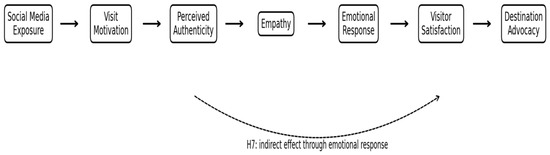
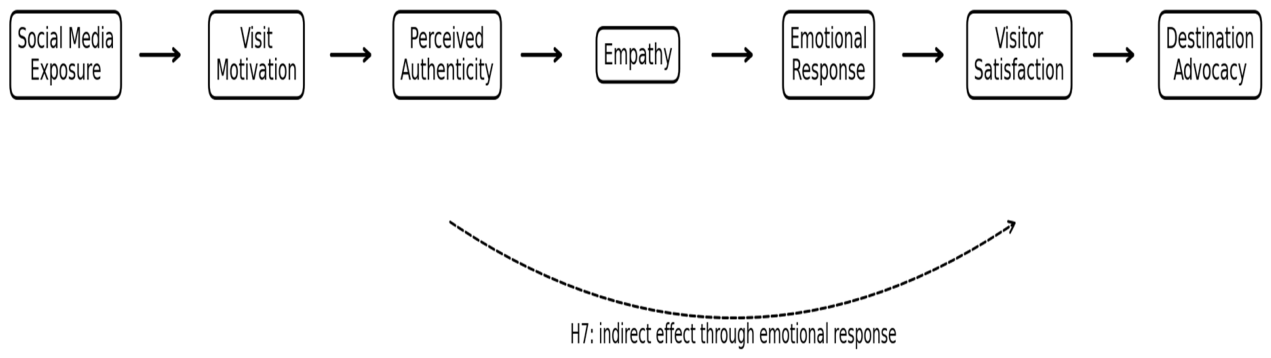

Disclaimer/Publisher’s Note: The statements, opinions and data contained in all publications are solely those of the individual author(s) and contributor(s) and not of MDPI and/or the editor(s). MDPI and/or the editor(s) disclaim responsibility for any injury to people or property resulting from any ideas, methods, instructions or products referred to in the content. |
© 2026 by the authors. Licensee MDPI, Basel, Switzerland. This article is an open access article distributed under the terms and conditions of the Creative Commons Attribution (CC BY) license.