


Abstract
The importance of fostering positive mental health (PMH) among young people is well established, yet the perspectives of youth on what PMH means to them remain largely underexplored. This qualitative study aimed to address this gap by examining how adolescents and young adults in a multi-ethnic Asian population understand and make sense of PMH. Data were collected from a multi-ethnic sample of youths aged 15 to 24 residing in Singapore, intentionally including youths with backgrounds such as delinquency and incomplete education to ensure diversity of experience. Data were gathered through 11 focus group discussions and 25 individual semi-structured interviews comprising 95 youths and analysed using hybrid inductive/deductive thematic analysis approach based on Braun and Clarke. From the participants’ accounts, five overarching themes of youth PMH emerged: (1) positive outlook and affectivity, capturing youths’ ability to embrace, experience, and generate pleasant emotions; (2) self-efficacy and personal goals, reflecting a sense of control over one’s choices and motivation to grow; (3) self-concept, encompassing self-awareness, positive self-identity, self-esteem, and self-love; (4) resilience and coping, relating to managing adversity effectively; and (5) social connection and interpersonal skills, highlighting the importance of forming and maintaining meaningful relationships. These themes suggest that young people view PMH as an active, dynamic state of being rather than a passive one. The inclusion of participants with diverse lived experiences enriches these findings and underscores the importance of capturing voices that are often excluded in mental health research.
1. Introduction
Between 1990 and 2021, the number of DALYs attributable to mental disorders increased from 26.1 million to 36.3 million, representing a 14% increase in DALY rates, with the greatest burden observed among females and individuals aged 15–19 years, who experienced a 16% increase over this period [1]. Mental health promotion and prevention efforts targeting young people seek to strengthen emotional regulation, build resilience in the face of adversity, and foster supportive social environments. Growing evidence indicates that mental health is more than the absence of mental illness, encompassing emotional, psychological, and social wellbeing, and that reducing psychopathology alone is insufficient to achieve optimal health outcomes [2]. The dual-continua model proposes that mental illness and positive mental health (PMH) are related but distinct constructs, such that individuals may be free of psychiatric symptoms yet experience poor wellbeing, while others with mental illness can attain meaningful and fulfilling lives through resilience and recovery [3]. This perspective has important implications for psychiatrists and mental health professionals, whose roles increasingly extend beyond symptom reduction to promoting recovery, resilience, strengths, and quality of life through holistic, recovery-oriented care [4]. A salutogenic approach, which emphasizes the factors that enable individuals to maintain and enhance wellbeing rather than focusing solely on disease, provides a valuable framework for understanding and promoting PMH [5]. Such an approach is particularly important during youth, a critical developmental period when psychological, social, and emotional capacities are established and when most lifetime mental disorders first emerge, making it an ideal window for both prevention and the cultivation of protective factors [6]. Despite growing international recognition of PMH, research continues to focus predominantly on psychopathology and risk factors, with comparatively little attention devoted to understanding the determinants of wellbeing, particularly in developed Asian countries where the burden of mental disorders and suicide has been increasing. Consequently, culturally grounded research on PMH is needed to inform strengths-based assessment, preventive interventions, and mental health promotion strategies that complement conventional psychiatric care.
In 2005, the World Health Organisation put forward a theoretical framework for PMH with the aim of promoting mental health at the population level [7]. Although no universally accepted definition of PMH exists, the concept broadly encompasses dimensions such as happiness, life satisfaction, positive relationships, a positive outlook, and personal growth [8]. PMH is generally understood as the foundation of individual well-being and functioning, and is characterised as a state of emotional, social, and psychological wellness [7,9]. From a psychological standpoint, PMH reflects the attitudes individuals hold towards themselves, the extent to which they realise their potential through purposeful action, their personality, their degree of autonomy from social pressures, their perception of the world, and their capacity to accept and navigate life’s challenges [9]. Previous research among Singaporean adults proposed a six-factor structure for PMH comprising general coping, emotional support, spirituality, interpersonal skills, personal growth and autonomy, and global affect [10,11]. Studies in European populations have similarly proposed multifactor models of PMH derived from the literature and existing measures, including personal satisfaction, prosocial attitude, self-control, autonomy, problem-solving, self-actualization, and interpersonal relationship skills [12,13], while a study in Spain defined PMH simply as a combination of inner (emotional and psychological wellbeing) and outer (social support) factors [14].
While some of these models and measures have been tested in youth populations, none were developed from a youth-centric standpoint or grounded in an in-depth understanding of the concept among younger people. ‘Youth’ is generally defined as the phase from around 15 to 24 years of age, encompassing the rapid developmental and transitional period from childhood through adolescence into early adulthood, and services that support youths during this period of emerging adulthood are considered key to bringing about population-level improvements in youth mental health [15]. Widely regarded as a vital resource for well-being, PMH is particularly significant in youth, as early investment in mental health during this critical period can yield lasting mental, social, and economic benefits across the lifespan [2]. Despite this, the bulk of PMH research to date has centred on adult populations.
A recent systematic review examining mental health and well-being among adolescents and young adults identified 22 concepts pertinent to PMH in this population, including autonomy, self-efficacy, self-esteem, and positivity, among others [16]. The review highlights that existing approaches to understanding and promoting PMH in youth are largely grounded in theoretical frameworks developed in Western, academic contexts or originally conceived with adult populations in mind. To develop a more meaningful and relevant understanding of PMH among young people, it is essential to gather their perspectives directly, as their lived experiences and the value they ascribe to various mental health components may differ considerably from those of adults [17,18]. Moreover, the recent cohort of youth, or Generation Z (those born between 1995 and 2015), is unique: this generation is characterised by heightened exposure to cultural change, information overload, social networking, virtual communication, stressors, and technology, each of which has the potential to influence youth perspectives on mental health through shifts in beliefs, norms, and modes of communication [19].
Qualitative approaches offer the depth needed to explore individuals’ experiences meaningfully [20] and can enrich quantitative understanding of youth PMH. However, qualitative research in this area remains scarce [16], and the few available studies differ widely in population, focus, and findings. Studies range from an Australian exploration of well-being among rural youth aged 16 to 24, which identified 13 themes including goal attainment, coping, and supportive relationships [21], to a United States study of homeless youths aged 10 to 17 that found just four markers of ‘doing well’: family support, happiness, personal characteristics, and self-perception [22]. Other work has incorporated parental perspectives on youth emotional well-being [23], examined flourishing and languishing in university students [24], or investigated class-based differences in youths’ views on happiness [25].
To our knowledge, qualitative exploration of PMH-related concepts among Asian youth remains extremely limited, with only a few studies identified in the literature. A notable pattern across these studies is the relevance of faith, religion, and spirituality in how Asian young people narrate and understand mental health. Indonesian students participating in focus group discussions (FGDs), for example, described mental health as a composite of happiness, self-efficacy, control, social and interpersonal skills, and spirituality [26], while Thai youths similarly highlighted positive mood, positive thinking, social relationships, and spirituality as key to positive mental well-being [27]. Among young adults in India transitioning into their careers, spiritual themes such as hope, inner peace, and a sense of greater purpose were prominent features of subjective well-being [28]. Singapore’s highly urbanised, multi-ethnic, and increasingly secular social environment may also shape how local youth conceptualise PMH. With nearly a quarter of youths aged 15 to 24 reporting no religious affiliation in the 2020 census [29], Singapore differs considerably from its regional neighbours, where spiritual and religious frameworks remain central to understandings of wellbeing. Singaporean youth and particularly those without religious affiliation, may draw on more secular or individualised conceptions of PMH instead, suggesting that understanding of PMH could vary. These findings collectively point to a stronger emphasis on the relationship between spirituality and mental well-being among Asian youth relative to Western populations, suggesting that cultural context plays a significant role in shaping how PMH is conceptualised. More broadly, the literature on youth PMH remains sparse and highly heterogeneous, with conceptualisations likely influenced by contextual factors including cultural setting, socioeconomic status, and circumstances such as homelessness [21,22,25,26,27,28].
Understanding how young people themselves conceptualise PMH has meaningful implications for clinical practice. It can enrich psychosocial assessments such as the Home, Education, Activities, Drugs, Sexuality, Suicide and Depression, and Safety (HEADSSS) framework that enables clinicians to move beyond risk identification towards conversations that also include strengths and protective factors [30]. Beyond this, integrating youth perspectives into early intervention and health promotion can help orient services away from a purely deficit-based approach, towards services that address the lived experiences of adolescents and, in turn, foster meaningful engagement. Given the limited qualitative evidence on how young people conceptualise PMH, and the need to move beyond frameworks derived from adult or Western academic contexts, this study aimed to explore the perspectives of youths in Singapore on what constitutes PMH, drawing directly on their lived experiences and understanding. To capture a diversity of perspectives, semi-structured interviews (SIs) and FGDs were conducted with youth aged 15 to 24 years from Singapore’s three major ethnic communities—Indian, Malay, and Chinese—within an urban Asian context.
Specifically, this qualitative study sought to understand the concepts and themes related to PMH from youths’ perspectives, exploring how Generation Z defined PMH and what it meant to them. The present study builds on the systematic review by Vaingankar et al. [16], which synthesised conceptual definitions of PMH from the existing literature, by generating themes grounded directly in the lived experiences and narratives of young people themselves, reported in accordance with the Consolidated Criteria for Reporting Qualitative Research (COREQ) checklist [31] (Supplementary Table S1).
2. Materials and Methods
Ethical approval was obtained from the National Healthcare Group’s Domain Specific Review Board (DSRB No. 2020/0228), and written informed consent was provided by all participants, including parental consent for those aged below 21 years. The study adopted an interpretative descriptive design [32], chosen for its ability to capture participants’ subjective perceptions of PMH and support the development of a practically oriented framework to guide interventions and future research [33].
2.1. Setting
The study was conducted in a community-based sample of youths in Singapore, a high-income multi-ethnic country in Southeast Asia comprising Chinese (75.5%), Malay (15.1%), Indian (7.6%), and other (1.8%) ethnic groups.
2.2. Study Participants and Recruitment
Eligible participants were Singapore citizens or Permanent Residents aged 15 to 24 years who were willing to be audio-recorded and able to share their experiences in individual or group settings. Multiple sampling strategies were adopted to understand the phenomenon of PMH in greater depth and to enhance the richness and replicability of the findings [34]. Snowball sampling was used to recruit a general youth sample, while purposive sampling targeted youths with unique or extreme life experiences—including lived experience of mental health conditions, school dropout, incarceration, or risky behaviours such as gang participation or substance use—to obtain maximum variation by gender, ethnicity, and age. Recruitment began through colleagues’ networks and expanded via snowball sampling, supplemented by a study flyer and referrals from mental health professionals and youth-focused organisations, including psychiatrists, case managers, social workers from a tertiary care institution, and community-based non-governmental organisations. All young people approached for the study agreed to take part. Participants chose between FGDs and individual interviews, with all purposively sampled participants preferring one-to-one interviews. Three ethnicity-specific FGDs (one each with only Chinese, Malay, or Indian participants) and four age-stratified FGDs—two each for late adolescents (15–19 years) and young adults (20–24 years)—were conducted to ensure adequate representation across a diverse group of youths. The remaining four groups were mixed-ethnicity, mixed-age FGDs recruited through purposive sampling from the general youth community and were not stratified by any specific characteristic. All participants (and parents of those below 21 years) provided written informed consent to participate. Participant characteristics are presented in Table 1.
Table 1.
Characteristics of the study participants.
2.3. Data Collection
The study was conducted between June and October 2020, during the COVID-19 pandemic, with social distancing measures shaping the data collection process. Interviews and FGDs were conducted by four female and one male full-time researchers aged 30–46 years, with backgrounds in public health, health services research, and psychology, and experience in qualitative research methods. Two methods of data collection were used—one-to-one SIs and FGDs. All FGDs and SIs were conducted in English, given the near-universal English literacy among youths in Singapore. Occasional phrases used were in Singlish (Singapore Colloquial English) and, in a small number of instances, Mandarin or Malay. Except for five face-to-face individual interviews, all other sessions were conducted via Zoom video conferencing. A semi-structured interview guide with open-ended questions and probes was developed and pretested with two individuals aged 16 and 23 years, after which the term PMH was supplemented with “good” mental health based on participant feedback. Sessions began with participants describing someone they considered to have good or PMH, followed by key questions such as “What does good or PMH mean to you?” and “How would you define PMH?” (Table 2). An anonymous online poll completing the statement “According to me, PMH means…” was incorporated into FGDs to promote engagement and open sharing [18]. The lead researcher (JAV) facilitated 31 of the 36 sessions, with the remaining five led by other trained team members, all supported by a note-taker. Facilitators had no prior relationship with the participants. Data collection continued until no new codes emerged across both the general snowball-sampled cohort and the purposively sampled youths, with the lead researcher and two team members independently reviewing the final transcripts and confirming that no substantively new concepts were introduced. Interviews lasted approximately 1.5 h, and FGDs took around 2 h on average.
Table 2.
Interview guide for focus group discussions and semi-structured interviews.
2.4. Data Analysis
All sessions were audio-recorded and transcribed verbatim, with NVivo v11 software used to organise and code the data. Individual participant data were coded separately before codes were compared, categorised, and developed into subordinate themes [35]. The hybrid inductive/deductive thematic analysis approach was informed by Braun and Clarke [35] whereby the analytical process began inductively, with a broad coding framework generated from five SIs and two FGD transcripts to ensure the thematic structure remained grounded in and reflective of participants’ own perspectives [36]. This inductive, ground-up approach prioritised youths’ views in shaping the framework, which was subsequently applied deductively to the remaining transcripts. As all sessions included bilingual team members and were transcribed verbatim, no formal translation or back-translation procedure was required. Coding was carried out by five members of the research team, with ongoing discussions and deliberations held to maintain consistency and reach consensus. Any coding discrepancies were addressed through structured consensus meetings held after each round of coding, during which team members discussed divergent codes until agreement was reached. To enhance inter-rater reliability and ensure that concepts were interpreted and coded uniformly across the team, short operational code descriptions were developed drawing on findings from a prior extensive literature review that used qualitative narrative synthesis to establish conceptual definitions of PMH constructs [16]. Closely related subordinate themes were then merged into overarching superordinate themes, which were reviewed by the coding team alongside their qualitative content to verify alignment with participants’ perspectives, yielding the final thematic structure of PMH among youths.
3. Results
A total of 11 FGDs with 70 participants and 25 one-to-one SIs were conducted. In all, there were 44 boys and 51 girls belonging to Chinese (n = 32, 33.7%), Malay (n = 28, 29.5%), Indian (n = 27, 28.4%), and other (n = 8, 8.4%) ethnic groups. Participants included 9 youths with a history of serious psychological distress, school dropout, or risky behaviour such as gang participation, substance use, or incarceration.
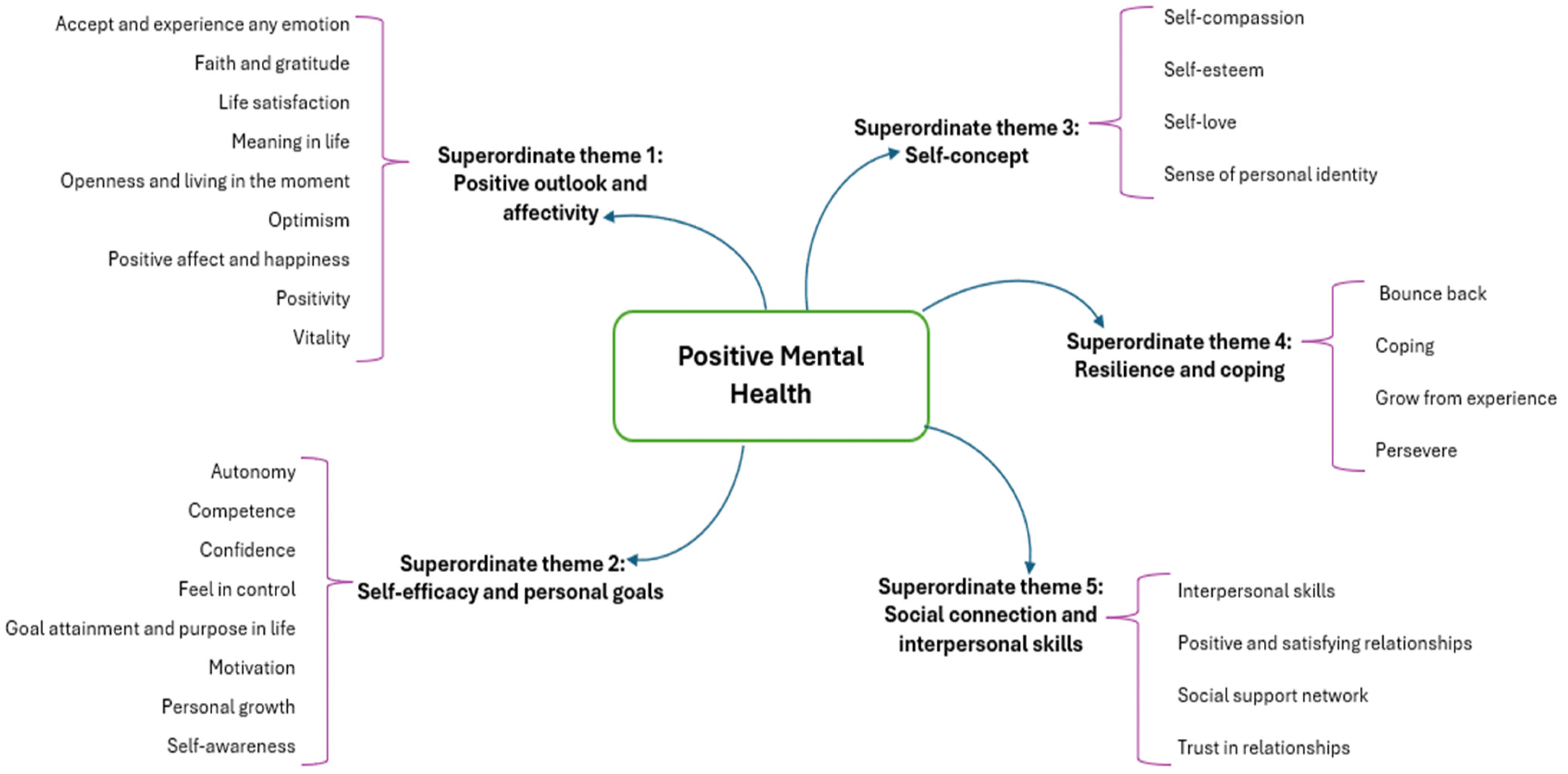
The findings suggest that Asian youth in our sample viewed PMH as comprising five interlinked and overlapping themes: (i) positive outlook and affectivity; (ii) self-efficacy and personal goals; (iii) self-concept; (iv) resilience and coping; and (v) social connection and interpersonal skills, each encompassing multiple subordinate themes (Figure 1). Theme 5 was the most frequently discussed across both FGDs and individual SIs, which reflects the centrality of social relationships to youth PMH. Examples of the open codes and phrases used by participants that informed each subordinate theme are listed in Supplementary Table S2. Perspectives were consistent across ethnic groups, and no notable differences in thematic content emerged from the deviant and critical case sampling. While the themes derived from FGDs and individual SIs were broadly similar, participants in the one-to-one interviews drew on unique personal experiences to describe PMH, introducing subtle variations in how shared concepts were portrayed. These nuances are illustrated in the sections below.
Figure 1.
Conceptual structure of youth positive mental health derived qualitatively.
3.1. Theme 1: Positive Outlook and Affectivity
A positive mindset, attitude, and outlook were widely regarded by participants as central to PMH. To most participants, PMH meant having a positive mindset and focusing on the bright side of things; such an appraisal of their environment and life’s circumstances was associated with being more optimistic, actively engaging in positive thinking, and approaching difficulties in a hopeful and constructive way. One teenage participant captured this succinctly:
“What my definition of positive outlook is (to) just ignore your negative experiences and just focus on what good things that have happened during the day. But just make every day somewhat positive as much as you can.”—FGD#05, M, 24y
For many youths, positivity was synonymous with “having positive thoughts,” while others described it as “feeling good about life, minutely or majorly,” “being at peace with most things in life even while facing challenges,” or simply focusing on “good things and forgetting the bad.” Openness to new experiences, being carefree, and living in the moment were also seen as integral to happiness and PMH. Participants linked the awareness and positive appraisal of one’s thoughts and emotions to a deeper sense of meaning, joy, and life satisfaction, as one participant articulated:
“I see it is more of being content with- like being happy and being satisfied with the life that you are living and with the things they are doing. So if I were to relate it to positive mental health, I think it comes with it. Really, it’s because it allows you to feel that, ‘Yes, I’m enjoying my life.’ And then, beyond that is that I’m not overthinking about different things or I am not pushing myself down. Because I’m happy with where I am now and the things I’m doing in my life.”—FGD#11, M, 24y
Participants further noted that such appraisals were often grounded in personal belief systems or religious and spiritual values, shaping responses to life’s experiences with compassion, kindness, gratitude, and openness. One participant described faith as shaping “the way that I choose to see my life and the world,” fostering fulfilment and optimism, while another, without a religious affiliation, spoke of “being thankful for what we have” and nurturing “a spiritual connection with something.” This is reflected in the account of one participant who described happiness over wealth or success as their lifelong guiding principle, and who spoke of consciously releasing whatever did not contribute to that happiness. This illustrates how a belief system need not be formal or institutionalised to serve as a meaningful anchor for PMH. This was most powerfully expressed by one teenage participant:
“I think their positive mental health is like to focus on the real stuff, like the authentic stuff like family members, like hanging out with your friends, hang out nature, like knowing the meaning of life or just maybe have some beliefs lor. Maybe it’s not for everyone, like having a religion and all that, but knowing like what you want and knowing why you believe…”—SI#02, M, 21y
Participants’ understanding of positive outlook was deeply personal and self-defined, shaped by their own day-to-day experiences rather than textbook definitions. Positive affectivity was not perceived as an abstract concept but was anchored in concrete relationships, routines, and belief systems. Whether through family, friendships, nature, or personal faith, youths articulated how these tangible elements of their lives gave meaning and sustained their sense of wellbeing.
3.2. Theme 2: Self-Efficacy and Personal Goals
Self-efficacy and personal goals were identified by participants as fundamental to PMH, encompassing the skills, abilities, and plans that allowed young people to work toward their aspirations and manage the challenges they faced. For participants, self-efficacy was closely tied to confidence, competence, and a sense of autonomy—the ability to make one’s own decisions and pursue personally meaningful activities free from external pressure. One participant spoke candidly about the cultural pressures that could undermine this sense of autonomy, particularly within the Singapore context:
“I think in Singapore, we just grow up with this culture where we are taught—yeah, basically just to please others, like with grades, or the way that we speak or the way we act. You’re pressured to act a certain way, and then we start to oppress the things that we actually want to do. And I guess having the freedom and just going for doing things that we actually want to do, it just allows us to be ourselves and then that tends to build up our confidence, and we become more self-aware of the things we want to do.”—FGD#02, F, 20y
Beyond autonomy, participants stressed the value of being motivated and capable in everyday activities, with self-efficacy in personal, social, academic, and occupational spheres understood as resting on one’s “ability to recognize what you can do, and what’s within your control.” Many participants connected this to the pursuit of short- and long-term goals, hobbies, and a broader sense of life purpose, all of which contributed to a feeling of direction and meaning. As one 18-year-old participant reflected:
“If you’re lost in life, it (goal) would give you something to work towards. And once you have something to work towards, you will then feel less stress and less pressure because then you have an end-goal in life. You have an end-goal la. So when you have a goal, you can work towards it instead of letting your work guide you.”—FGD#10, M, 18y
Some participants similarly defined PMH as having the motivation, commitment, and determination to succeed, and possessing an intrinsic desire to “upgrade” to the best possible version of themselves and achieve personal growth. As one participant reflected on a personal source of achievement:
“Positive mental health is… when I’m able to achieve something or create something… since I like to bake, a very challenging recipe that I really want to try, and I put a lot of effort into planning and making the whole thing. I feel a huge sense of achievement when I finish the entire thing and decorate it to what I feel is best. I think that sort of ability to create and then that sense of achievement really helps.”—FGD#10, F, 15y
Another described their personal experience from their school and stated:
“We as Singaporean youth, we can’t just not go (…) to school just because we don’t feel like it; We have no choice but to pick ourselves out. But the positive side of picking yourself up is that I feel like-- because, the way to pick yourself up is setting your goals, what you want to achieve. … If they can do it, you have self-motivation, and some drive to do it also.”—FGD#9, M, 18y
3.3. Theme 3: Self-Concept
Participants described PMH as being shaped by how they understood, accepted, valued, and cared for their sense of self—what they referred to as “their sanity”—encompassing self-identity, self-esteem and self-worth, self-compassion, and self-love. Acceptance and overall knowledge about themselves and what they were capable of, along with positive personal identity and self-evaluation, were seen as critical parts of PMH.
A secure personal identity was seen as rooted in self-acceptance and authenticity, with participants viewing the ability to be comfortable with and true to oneself as essential to PMH:
“We all have our flaws and our strengths. So if you are comfortable with who you are, then you will know that it’s okay to just be you with whatever characteristics you have or whatever identity you have.”—FGD#03, F, 21y
Youths with more complex life experiences framed self-identity in terms of knowing one’s limits and resisting harmful external pressures. One young adult with lived experience of mental health difficulties, psychotherapy, and school discontinuation described how a weak sense of identity could leave a person susceptible to outside influence:
“if this person has their self-identity, they would know what is right. They would know what is wrong. They know what is best for themselves, and they would do it.”—SI#03, M, 24y
Participants also linked a strong self-identity to resilience against others’ judgements, which in turn supported self-esteem, associating high self-esteem with positivity and life satisfaction, and regarding it as central to PMH. As one participant summarised:
“You feel good about (your) self, having good self-esteem, and you feel optimistic. You see the good in situations where, even in bad situations, you see the good in them. So that’s what I feel positive mental health is all about. And you don’t always blame yourself and then you lower your self-esteem from when things go wrong.”—SI#19, M, 17y
3.4. Theme 4: Resilience and Coping
When articulating what PMH meant to them, participants consistently highlighted the value of resilience and coping skills in navigating both everyday and significant stressors. Managing stress stemming from family conflict, academic demands, and workplace pressures was seen as integral to PMH.
Participants understood PMH as involving the resilience to endure adversity, recover from setbacks, and transform difficult experiences into opportunities for growth and learning:
“Rather than looking at why we fail, we (should) look at how we can improve ourselves such that we are able to tackle new challenges, and we’ll also be more willing to accept failures as well rather than feeling that failure is like, ‘Once you fail, then that’s it.’ So you’ll be able to take your failure, take your learning opportunities and move on from there as well.”—FGD#10, F, 20y
Participants also narrated instances where academic failures or employment worries were addressed through accepting their failures.
“One phrase I will use to summarize all this is basically me accepting my failures for the past one year, at least, because, you see, … in school, everyone is always focusing on their grades and getting a good GPA, you don’t do this you won’t get a good job, … and all that. But then again, I felt that when I accepted my failures, and even though I had certain downfalls, I actually tended to do much better.”—FGD#02, M, 19y
Drawing on the stressful realities of school and other environments, participants described PMH as also being about coping constructively rather than being overwhelmed by a sense of helplessness:
“Even if you’re not coping that well, as long as you’re putting in the effort to try and live with it in a way, I guess, or try and make healthy, positive changes in your life.”—SI#15, M, 17y
Approaching challenges with a problem-solving orientation—focusing on possibilities and solutions rather than becoming paralysed by difficulties—was equally regarded as relevant to youth PMH. One participant spoke to the particular weight of academic stress in Singapore:
“…stress is very common in Singapore in the education system. Because nowadays, every week you have a test or you have an exam to prepare for, so the stress keeps building up. And especially in JC [junior college], where some of my friends now are actually very stressed out about the A levels, about the test, about the mid-years and their promotions. So I feel that being able to cope with the stress nowadays in the youth is very important and that really builds the foundation for having a positive mental health.”—SI#19, M, 17y
The capacity to recover from setbacks, draw on inner strength, and reach out for support when necessary were also identified as key aspects of coping. A young adult with lived experience of incarceration and school dropout offered a particularly poignant reflection on the role of perseverance in PMH:
“It’s just really important to not give up. Focus on the things that you are doing right and not be saddened by things that you did wrong, but learn from them. Learn on them on how to make your future a lot better, so you don’t repeat the same (mistake) and slowly but surely, you will start to have mental health.”—SI#18, M, 22y
Participants’ coping strategies seldom operated in isolation, instead they were often connected to the social relationships and support networks explored in the following theme.
3.5. Theme 5: Social Connection and Interpersonal Skills
This was the most frequently discussed theme in relation to the meaning of youth PMH. Almost all participants regarded social connection and interpersonal skills as closely tied to youth PMH. Their perspectives centred on four aspects of relationships: social support networks, the quality and satisfaction of their relationships, trust, and the skills needed to build and maintain connections. Participants generally viewed young people as “social animals” who needed to feel part of a community where ideas were shared openly and others were accepting and non-judgemental. Feeling connected, respected, and valued—both as someone who could offer support and as someone who could receive it—was seen as essential to PMH. The sources of social connection were not limited to participants’ friends, family, peers, or colleagues, but extended to their virtual and global communities, accessible “24/7” via various social media platforms. As one participant described:
“Having people that are there for you, like colleagues who are supportive. I think that was important because during then you can kind of share what you’re feeling, what you’re going through and you can try to relate because perhaps someone has done it before. Someone has been in that hot seat before, and they can try to help you be able to better understand the situation, and understand yourself better because he can completely relate with you.”—FGD#01, F, 24y
Several participants described how a sense of belonging, safety, and comfort within their social circles shaped both their outlook and their coping:
“Humans are social creatures and we need people around us to sort of survive in a way. And I think in a sense, having a good group of people that you feel safe and comfortable with directly impacts your mental health.”—SI#15, M, 17y
Participants from more complex backgrounds were equally emphatic about the role of social connection in their mental health. One participant with a history of incarceration spoke candidly about the profound need for belonging that had driven him to seek out peers who shared his worldview:
“There should be a reason why you are in that rebellious stage. And at that point in school particularly when you are in school, you don’t get a lot of friends to teach it or you don’t get scenarios to let it all out… So the human ability as well, and so when you find a bunch of people that early share the same idea as you on how the world should work, how similar we are in personalities, you tend to feel more at home. You are looking for that belonging where that you cannot find anywhere else.”—SI#18, M, 22y
For the participants, PMH was also related to their ability to seek, form, and maintain close and satisfying relationships—warm, loving, trusted, supportive, and positive relationships with peers, family, and school/workmates—and to play an active role in building these relationships by talking to others freely, stepping out of their comfort zones to make friends, and being supportive, forgiving, empathetic, open, genuine, and accepting of others’ opinions.
3.6. Reflexive Appraisal of the Results
The age difference between the facilitator and participants may have affected rapport-building and power dynamics within sessions, potentially making some participants reluctant to engage with sensitive topics. While this age-associated tension could not be fully eliminated through our research design, several steps were taken to mitigate its potential influence, including training facilitators to adopt a non-judgmental stance and emphasising at the outset of each session that there were no right or wrong answers. The online interview format may have influenced facilitation dynamics in ways that differ from face-to-face qualitative research; for example, the virtual setting could have limited a facilitator’s ability to read non-verbal cues, potentially affecting the depth of conversations. Additionally, four team members who each facilitated SIs had psychology degrees, and their familiarity with the psychological constructs that arose during sessions may have shaped their probing approach, which could have led to some interview topics being explored in more depth than others and, consequently, the data generated from those interviews, potentially influencing the richness of information gathered across sessions. To mitigate these influences, facilitators prioritised drawing out participants’ own perspectives through open-ended, inductive probing, and maintained memos and session notes that were subsequently reviewed and discussed by the study team after each session. Activity-based exercises were also incorporated to make sessions more engaging and interactive, and to reduce the perceived sensitivity of the topics being discussed [37]. Participants were given ample flexibility and freedom to articulate their views in their own terms, affording them greater ownership over the direction of the conversation.
4. Discussion
Obtaining a perspective on mental health directly from youths can be an effective strategy for developing conceptual knowledge of what constitutes PMH and for designing health promotion measures for positive youth development. In this qualitative study, the concept of PMH was examined from an interpretative perspective of Singaporean youths aged 15 to 24 years. The study included a diverse, multi-ethnic group of adolescents and young adults, which increased data richness. To the best of our knowledge, this is the first study to define youth PMH in an Asian multi-ethnic setting. Youths perceived five key components of PMH, namely, positive outlook and affectivity, self-efficacy and personal goals, a good self-concept, resilience and coping, and social connections and interpersonal skills. The study findings offered deeper insight into the important aspects of PMH and the meaning youths attribute to these.
Perceptions around positive outlook (Theme 1) suggest that mental health goes beyond symptom reduction and involves cultivating positive appraisal skills, savouring good experiences rather than simply managing negative ones, and drawing on belief systems and spirituality in doing so, particularly in a multi-religious context like Singapore. Self-efficacy was understood broadly across personal, social, academic, and occupational domains, and was closely tied to having clear goals and a sense of life purpose under Theme 2, which in turn provided direction, reduced stress, and gave young people a feeling of agency over their own lives. Theme 3 on self-concept points to the importance of self-acceptance as a foundation, without constantly endorsing wellbeing narratives tied to high functioning and achievement. Within the resilience findings in Theme 4, participants framed coping not as the absence of struggle but as the effort to engage constructively with difficulty, with academic stress being a particularly salient context in Singapore. Theme 5 illustrated how mainstream youth and those with unique histories such as incarceration articulated the relevance of genuinely inclusive, non-judgemental social connections to their PMH. While the study was not designed to conduct systematic subgroup comparisons, some variation in how themes were expressed was observed across participant backgrounds, particularly in Theme 5. For example, participants with lived experience of incarceration or school dropout tended to frame social connection and resilience in more instinctive, survival-oriented terms. While more systematic intersectional analysis would be a valuable direction for future research, these findings are particularly relevant to Singaporean youth as they reveal that PMH is shaped not only by individual psychological factors but by the specific cultural, academic, and social pressures of growing up in Singapore. For Gen Z navigating this environment, the pressure to perform academically and socially is compounded by heightened awareness of socioeconomic competition and future career uncertainty, contributing to anxiety, burnout, and a diminished sense of self-worth [38]. Furthermore, the combined pressures of meritocratic academic culture and high digital connectivity may be a defining feature of how this generation conceptualizes and experiences PMH, a pattern likely shared across other high-income Asian societies such as South Korea or Hong Kong, with similar educational and technological contexts [39]. Importantly, these insights can inform clinical practice by guiding psychiatrists and mental health professionals to incorporate youth-defined wellbeing domains into assessment, treatment planning, and preventive interventions, thereby fostering recovery-oriented and strengths-based care.
A previous review of the literature on PMH in youths identified 22 concepts from studies conducted over the last two decades [16]. Most of these concepts, except for mindfulness and engagement, were well described by our participants. Mindfulness refers to self-regulated awareness, attention, and a positive approach to present experiences [40,41]. While a few of our study participants mentioned the benefits of being open to unexpected life experiences for their mental health, more participants focused mainly on ‘awareness of self’ or ‘enjoying the moment.’ The key element of mindfulness—the ability to be engaged and present in the moment—was not evident in our participants’ narratives. Likewise, our participants viewed goal achievement and doing things they like as important for their PMH but did not mention the relevance of greater engagement in these activities. In Singapore’s competitive academic environment where success is often defined by academic outcomes and competitive rankings [42], youths may be conditioned to think ahead by focusing on goals, progress, and outcomes over attention to the present moment. This cultural and institutional emphasis on achievement may render mindfulness-based coping less intuitive or culturally resonant for young people navigating such environments, which could partly explain the limited salience of mindfulness and engagement in our participants’ accounts. ‘Engagement’ is one of the building blocks of the positive emotion, engagement, positive relationships, meaning and accomplishments (PERMA) model proposed to enable flourishing and mental wellbeing [43]. Given that the PERMA framework was developed primarily among adults, our findings underscore the relevance of generating more empirical data in youth populations to understand the elements of PMH most relevant to their perspective; PERMA interventions that address engagement in youth through strength-based approaches, where young people identify and apply their character strengths in meaningful activities to foster states of flow, may be particularly effective in Singapore’s context.
Our results show several similarities and overlaps with previous qualitative studies conducted among youths. For example, in a UK study, FGDs among students aged 18–24 years and parents generated themes relevant to emotional well-being such as being grounded, having coping ability, being comfortable with self, empathy, happiness, confidence, controlling emotions, and persevering with challenges, all of which were reflected in the views of our participants [23]. Similarly, in a study among American undergraduate students examining their perceptions and attitudes toward mental health, nine themes were identified, including being aware and in control of moods and emotions, self-esteem, confidence, coping well and functioning under stress, taking me-time, and interpersonal dimensions of social support, similar to the views of our study participants [44]. There was also high congruence between the views of youths from India, Indonesia, and Thailand and our participants, who placed equal relevance on domains of happiness, positive emotions and mood, positive thinking, purpose in life, achievements, self-worth, self-efficacy, and social relationships and interpersonal skills [26,27], indicating that, in general, youths perceived PMH similarly to their global counterparts.
However, in contrast to previous research on Asian youths in India, Indonesia, and Thailand, our study participants did not emphasise the relevance of spirituality to their PMH. Very few participants talked about their religion or spirituality as playing an indirect role in improving their mental health, through imparting resilience and hope, or forming supportive relationships and connections through their religious groups. Several studies have linked faith to mental health and positive youth development [45,46], where religious self-understanding provided personal meaning, prosocial personality, and thriving. Our results indicate that faith can influence how youths in Singapore perceive their surroundings and their fundamental orientation towards society and the world, which could indirectly be linked to their PMH; however, our participants did not place direct emphasis on the religious or spiritual dimensions of PMH. This could be partly explained by the reduced religious identity among recent youth cohorts: studies conducted in the USA indicate that younger people are less likely to identify as religious compared to adults [47], and the 2020 Singapore population census found that almost one-fourth (24.2%) of youths aged 15–24 had no religious affiliation [29]. Research indicates that religiously unaffiliated individuals place greater emphasis on physical health [48] or have higher levels of personal growth and autonomy than spirituality [49]. It is possible that our participants focused more on other aspects of mental health. In interpreting these findings, it is also important to clarify how spirituality is operationalised in the present study. Rather than referring exclusively to formal religious practice, spirituality is understood here more broadly, encompassing personal belief systems, gratitude, and a sense of meaning or connection beyond the self which is consistent with contemporary frameworks that recognise spirituality as a multidimensional construct [50]. The limited presence of explicit spiritual references in participants’ accounts, is consistent with the increasingly secular orientation of Singapore’s younger demographic. This should not, however, be interpreted as evidence that spirituality is irrelevant to youth mental health in this context. Rather, it may suggest that meaning-making processes operate more implicitly among this cohort, manifesting through internalised values or a felt sense of purpose that participants did not readily frame in spiritual terms [51]. Future research should examine the roles of faith, spirituality, and religion in youth mental health in greater depth.
Consistent with the results of this study, the link between interpersonal relationships, social interaction and youth PMH is well evidenced in the literature. Youth is a highly formative period in individuals’ lives, during which young people desire close bonds with their peers and the people they aspire to be. Positive social connections and experiences are believed to create conducive conditions for healthy functioning, well-being, and thriving throughout adolescence, thereby imparting PMH [52]. In social settings, perceiving care and support in relationships is also related to a person’s self-confidence and capacity to overcome problems, improving well-being and resilience [53]. In the original definition of PMH, Marie Jahoda highlighted the relevance of social influences primarily through the lens of autonomy [9]; however, subsequent reports consistently underscore the contribution of positive relationships [54] and the ability to form close relationships [7] as akin to mental health. In our study, participants narrated several experiences whereby the presence of supportive and trusting relationships, positive influences, and good interpersonal skills was perceived as an indication of youth PMH. In the context of technological advancements and exposure to social media, our participants also narrated experiences of PMH related to support and connection within their virtual and global communities, which is a novel contribution of this study to the literature on PMH. Our study results thus support earlier findings and add to the limited literature on PMH.
Some limitations of this research should be considered when interpreting the results. Firstly, self-selection bias cannot be ruled out, since participants were self-referred or referred by their acquaintances; this was addressed by limiting the number of participants referred through snowball sampling. Secondly, since most sessions were conducted via video conferencing, participants could have been more easily distracted and, as a result, provided less elaborate input than they might have in person. Thirdly, given that online sessions are more prone to a lack of privacy and confidentiality [36], participants might have avoided sharing sensitive life experiences or topics they perceived as difficult or taxing. Additionally, the group format of FGDs may have encouraged normative responses, and the online mode may have further constrained participants’ spontaneity. Next, the age gap between the facilitators and participants may have influenced rapport-building and power dynamics during the interviews. This in turn may have led to more guarded or less detailed responses on some topics during data collection. Facilitators’ familiarity with psychological constructs may also have shaped which responses were probed and interpreted as salient, so some themes may have been more richly represented than others, and our interpretations may reflect a psychological lens. It is, however, also possible that the age difference was not entirely disadvantageous. For example, older facilitators may have been perceived as less socially threatening than same-age peers, potentially reducing concerns about judgment or social comparison within the group. Additionally, the facilitators may have helped structure the discussion calmly and encouraged quieter participants to contribute, rather than allowing more dominant voices to shape the narrative. The fact that participants shared candid accounts of experiences and personal beliefs across themes suggests that some degree of psychological safety was achieved, though the extent to which age-related dynamics shaped responses cannot be fully determined from the data alone. These biases were addressed by approaching participants with an open, casual, and curious attitude, repeatedly reinforcing that there were no right or wrong inputs during the sessions, and assuring participants about the measures taken to safeguard their privacy. The individual-level and achievement-oriented dimensions of PMH, which are prominent in our findings, particularly within Themes 2 and 4, may reflect both the participants’ own perspectives and the influence of Singapore’s broader socio-cultural context, which emphasises personal responsibility, academic achievement, and self-improvement. The prevailing COVID-19 pandemic situation and enforcement of measures such as social distancing could have influenced youths’ perspectives on PMH; given the range of government measures implemented to limit social activity and physical contact, some participants might have over-emphasised the relevance of peer relationships, positive thinking, or coping to their mental health, or shifted their perceptions of prosocial behaviours and mental health [55]. To limit these influences, participants were prompted to think of their “life in general and not just during the last few months.” Lastly, there is a six-year time lapse between data collection and reporting. While the thematic structure centered around positive outlook, self-efficacy, self-concept, resilience, and social connection reflects lasting developmental priorities of youth that are unlikely to have fundamentally shifted, certain contextual factors may have evolved, including post-pandemic normalisation of social interaction and the continued growth of social media use. Hence, replicating the study in a more recent setting would be valuable. A further limitation of qualitative studies more broadly is that results are not always replicated in other samples of interest and locations; however, the inclusion of a multi-ethnic sample and the unique experiences of youth from diverse backgrounds and life stories improves the transferability of our findings to other populations, specifically within Asian populations.
These limitations notwithstanding, the strengths of the study include the inclusion of perspectives from a relatively large and diverse youth population. The richness of our thematic analysis and the depth of the narratives lend confidence in data saturation. Our thematic analysis also involved a balance of deductive and inductive coding processes, through which we were able to identify clearly how themes and their overlaps were perceived by the youths themselves [56]. Pooling data collected through two sources—individual interviews and FGDs—made it possible to address the limitations of each method, namely, the lack of group dynamic knowledge generation and the possibility of social desirability bias, respectively, and to achieve a more comprehensive understanding of the PMH construct [57]. The present study extends and complements the prior systematic review by Vaingankar et al. [16]. Whereas that review synthesised conceptual definitions derived from the existing literature, the present study generates themes from youth narratives directly, providing a perspective grounded in young people’s own voices that adds depth and real-world relevance to the earlier literature-derived synthesis. Together, these two bodies of work offer a more complete picture of how PMH is both defined in the literature and understood in lived experience among youth in Singapore.
Study Implications
The findings across all five themes carry several implications for child and adolescent psychiatric services. Recent global events, including the COVID-19 pandemic, geopolitical instability, and environmental change, have placed considerable strain on youth mental health, and the psychological impact of these compounding stressors is likely to persist [58]. Clinicians and mental health service providers should therefore move beyond a narrow focus on symptom reduction toward a more holistic assessment of PMH. This aligns with the dual-continua model, which recognises that mental illness and wellbeing are distinct yet related constructs [3], and with strengths-based, recovery-oriented approaches that emphasise not only symptom management but also the promotion of wellbeing and functioning [4].
One practical step would be to integrate the five PMH dimensions identified in this study—positive outlook, self-efficacy, self-concept, resilience, and social connection—into routine psychosocial assessments. Existing frameworks such as HEADSSS offer a natural entry point for this, as clinicians could expand their inquiry to include questions about a young person’s sense of identity, coping strategies under academic pressure, and the quality of their social relationships. In a multi-religious context like Singapore, assessments should also be attentive to the role of spirituality and belief systems, which many young people draw on for resilience.
Therapeutically, the self-concept findings suggest that interventions should help young people develop a stable and secure sense of identity, while the resilience findings support a growth-oriented rather than deficit-focused approach. This has particular relevance for school-based mental health support, which should be embedded within broader conversations around academic stress. Interventions that foster resilience, strengthen coping and interpersonal skills, and enhance self-efficacy, can complement conventional treatment with preventive and salutogenic strategies [6]. Finally, given the central role of social relationships in shaping both positive and adverse outcomes, services should actively assess and strengthen young people’s support networks as part of routine care.
Taken together, these recommendations reflect the view that effective mental health support for youth must be socio-culturally sensitive. Adolescence and young adulthood represent a critical developmental period that shapes lifelong mental health trajectories [6], and integrating youth perspectives into clinical care and mental health promotion can enable service providers to deliver interventions that better reflect young people’s lived experiences and developmental needs.
5. Conclusions
Findings from our study showed that PMH among Asian youths comprises five interlinked and overlapping themes: positive outlook and affectivity; self-efficacy and personal goals; self-concept; resilience and coping; and social connection and interpersonal skills. The themes and sub-themes generated from this qualitative study in a multi-ethnic Asian population are largely similar to those identified in Western and other Asian youth populations, while also surfacing nuances—such as the role of virtual and global communities, and the emphasis on spirituality—specific to this setting. The comprehensive insights into youth PMH generated in this study can provide traction for future research, appropriate service planning and evaluation, and can assist in the effective promotion of mental health among youth.
Supplementary Materials
The following supporting information can be downloaded at: https://www.mdpi.com/article/10.3390/psychiatryint7060243/s1, Table S1: COREQ checklist; Table S2: Thematic structure of youth positive mental health with open codes and phrases used by participants.
Author Contributions
Conceptualization, J.A.V., R.M.v.D., N.L. and M.S.; Methodology, J.A.V., S.C., E.S. (Ellaisha Samari), E.S. (Esmond Seow), Y.C.C., N.L. and M.S.; Formal analysis, J.A.V., S.C., E.S. (Ellaisha Samari), E.S. (Esmond Seow) and Y.C.C.; Investigation, J.A.V., R.M.v.D., S.C., E.S. (Ellaisha Samari), N.L., S.V. and M.S.; Resources, J.A.V. and S.V.; Data curation, J.A.V., S.C., E.S. (Ellaisha Samari) and Y.C.C.; Writing—original draft, J.A.V.; Writing—review & editing, R.M.v.D., S.C., E.S. (Ellaisha Samari), E.S. (Esmond Seow), Y.C.C., N.L., S.V. and M.S.; Visualization, E.S. (Ellaisha Samari), E.S. (Esmond Seow), Y.C.C. and N.L.; Supervision, J.A.V., R.M.v.D., N.L., S.V. and M.S.; Project administration, J.A.V. and S.C.; Funding acquisition, J.A.V. and M.S. All authors have read and agreed to the published version of the manuscript.
Funding
This research was funded by the Singapore Ministry of Health’s National Medical Research Council, grant number NMRC/CG/004/2013.
Institutional Review Board Statement
The study was conducted in accordance with the Declaration of Helsinki and approved by the National Healthcare Group’s Domain Specific Review Board (protocol code DSRB No. 2020/0228; approval date: 20 April 2020).
Informed Consent Statement
Informed consent was obtained from all subjects involved in the study, including parental consent for participants below 21 years of age.
Data Availability Statement
The data presented in this study are available on request from the corresponding author due to restrictions related to participant privacy and the terms of the ethics approval under which the data were collected.
Acknowledgments
The authors thank all the youth participants who generously shared their time and perspectives for this study.
Conflicts of Interest
The authors declare no conflicts of interest. The funders had no role in the design of the study; in the collection, analyses, or interpretation of data; in the writing of the manuscript; or in the decision to publish the results.
References
- Tian, J.; Yan, N.; Hu, X.; Tian, S.; Wang, Y.; Mackay, L.E.; Luo, Y.; Wang, Y.; Wang, Y.; Liu, Y.; et al. Global burden of mental disorders among adolescents and young adults, 1990–2021: A systematic analysis of the Global Burden of Diseases Study 2021. Gen. Psychiatry 2025, 38, e102278. [Google Scholar] [CrossRef] [Scilit] [PubMed]
- WHO. Prevention and Promotion in Mental Health; World Health Organization: Geneva, Switzerland, 2002. [Google Scholar]
- Keyes, C.L.M. Mental illness and/or mental health? Investigating axioms of the complete state model of health. J. Consult. Clin. Psychol. 2005, 73, 539–548. [Google Scholar] [CrossRef] [Scilit] [PubMed]
- Slade, M. Mental illness and well-being: The central importance of positive psychology and recovery approaches. BMC Health Serv. Res. 2010, 10, 26. [Google Scholar] [CrossRef] [Scilit] [PubMed]
- Lindström, B.; Eriksson, M. Contextualizing salutogenesis and Antonovsky in public health development. Health Promot. Int. 2006, 21, 238–244. [Google Scholar] [CrossRef] [Scilit] [PubMed]
- Patton, G.C.; Sawyer, S.M.; Santelli, J.S.; Ross, D.A.; Afifi, R.; Allen, N.B.; Arora, M.; Azzopardi, P.; Baldwin, W.; Bonell, C.; et al. Our future: A Lancet commission on adolescent health and wellbeing. Lancet 2016, 387, 2423–2478. [Google Scholar] [CrossRef] [Scilit] [PubMed]
- WHO. Promoting Mental Health: Concepts, Emerging Evidence, Practice: A Report of the World Health Organization, Department of Mental Health and Substance Abuse in Collaboration with the Victorian Health Promotion Foundation and the University of Melbourne; World Health Organization: Geneva, Switzerland, 2005. [Google Scholar]
- Ryan, R.M.; Deci, E.L. On Happiness and Human Potentials: A Review of Research on Hedonic and Eudaimonic Well-Being. Annu. Rev. Psychol. 2001, 52, 141–166. [Google Scholar] [CrossRef] [Scilit] [PubMed]
- Jahoda, M. Current Concepts of Positive Mental Health; Basic Books: New York, NY, USA, 1958. [Google Scholar]
- Vaingankar, J.; Subramaniam, M.; Chong, S.A.; Abdin, E.; Edelen, M.O.; Picco, L.; Lim, Y.W.; Phua, M.Y.; Chua, B.Y.; Tee, J.Y.; et al. The positive mental health instrument: Development and validation of a culturally relevant scale in a multi-ethnic asian population. Health Qual. Life Outcomes 2011, 9, 92. [Google Scholar] [CrossRef] [Scilit] [PubMed]
- Vaingankar, J.A.; Subramaniam, M.; Lim, Y.W.; Sherbourne, C.; Luo, N.; Ryan, G.; Phua, A.; Shahwan, S.; Kwok, K.W.; Brown, J.; et al. From well-being to positive mental health: Conceptualization and qualitative development of an instrument in Singapore. Qual. Life Res. 2012, 21, 1785–1794, Erratum in Qual. Life Res. 2012, 21, 1795. https://doi.org/10.1007/s11136-012-0160-4. [Google Scholar] [CrossRef] [Scilit] [PubMed]
- Lluch-Canut, T.; Puig-Llobet, M.; Sánchez-Ortega, A.; Roldán-Merino, J.; Ferré-Grau, C. Positive Mental Health Research Group. Assessing positive mental health in people with chronic physical health problems: Correlations with socio-demographic variables and physical health status. BMC Public Health 2013, 13, 928. [Google Scholar] [CrossRef] [Scilit] [PubMed]
- Roldán-Merino, J.; Lluch-Canut, M.T.; Casas, I.; Sanromà-Ortíz, M.; Ferré-Grau, C.; Sequeira, C.; Falcó-Pegueroles, A.; Soares, D.; Puig-Llobet, M. Reliability and validity of the Positive Mental Health Questionnaire in a sample of Spanish university students. J. Psychiatr. Ment. Health Nurs. 2017, 24, 123–133. [Google Scholar] [CrossRef] [Scilit] [PubMed]
- Lukat, J.; Margraf, J.; Lutz, R.; van der Veld, W.M.; Becker, E.S. Psychometric properties of the Positive Mental Health Scale (PMH-scale). BMC Psychol. 2016, 4, 8. [Google Scholar] [CrossRef] [Scilit] [PubMed]
- McGorry, P.; Bates, T.; Birchwood, M. Designing youth mental health services for the 21st century: Examples from Australia, Ireland and the UK. Br. J. Psychiatry 2013, 202, s30–s35. [Google Scholar] [CrossRef] [Scilit] [PubMed]
- Vaingankar, J.A.; Subramaniam, M.; Seow, E.; Chang, S.; Sambasivam, R.; Luo, N.; Verma, S.; Chong, S.A.; van Dam, R.M. Youth Positive Mental Health Concepts and Definitions: A Systematic Review and Qualitative Synthesis. Int. J. Environ. Res. Public Health 2022, 19, 11506. [Google Scholar] [CrossRef] [Scilit] [PubMed]
- Robinson, K.H.; Smith, E.; Davies, C. Responsibilities, tensions and ways forward: Parents’ perspectives on children’s sexuality education. Sex Educ. 2017, 17, 333–347. [Google Scholar] [CrossRef] [Scilit]
- Fleming, J.; Boeck, T. Involving Children and Young People in Health and Social Care Research; Routledge: London, UK, 2012. [Google Scholar]
- Udayanga, S. Generational differences in mental health and drivers of youth mental health decline in Australia and the United Kingdom. Front. Public Health 2026, 14, 1844747. [Google Scholar] [CrossRef] [Scilit] [PubMed]
- Peters, S. Qualitative research methods in mental health. Evid. Based Ment. Health 2010, 13, 35–40. [Google Scholar] [CrossRef] [Scilit] [PubMed]
- Bourke, L.; Geldens, P.M. Subjective Wellbeing and its Meaning for Young People in a Rural Australian Center. Soc. Indic. Res. 2006, 82, 165–187. [Google Scholar] [CrossRef] [Scilit]
- Nott, B.D.; Vuchinich, S. Homeless adolescents’ perceptions of positive development: A comparative study. Child Youth Care Forum 2016, 45, 865–886. [Google Scholar] [CrossRef] [Scilit]
- Coverdale, G.E.; Long, A.F. Emotional wellbeing and mental health: An exploration into health promotion in young people and families. Perspect. Public Health 2015, 135, 27–36. [Google Scholar] [CrossRef] [Scilit] [PubMed]
- Knoesen, R.; Naudé, L. Experiences of flourishing and languishing during the first year at university. J. Ment. Health 2017, 27, 269–278. [Google Scholar] [CrossRef] [Scilit] [PubMed]
- Shoshana, A. Youth, class, and happiness. Child. Youth Serv. Rev. 2019, 99, 64–73. [Google Scholar] [CrossRef] [Scilit]
- Willenberg, L.; Wulan, N.; Medise, B.E.; Devaera, Y.; Riyanti, A.; Ansariadi, A.; Wiguna, T.; Kaligis, F.; Fisher, J.; Luchters, S.; et al. Understanding mental health and its determinants from the perspective of adolescents: A qualitative study across diverse social settings in Indonesia. Asian J. Psychiatry 2020, 52, 102148. [Google Scholar] [CrossRef] [Scilit] [PubMed]
- Suttharangsee, W. Concepts and Protective Factors Related to Positive Mental Health from Thai Adolescents’ Perspectives: An Ethnonursing Study. Ph.D. Thesis, University of Maryland, College Park, MD, USA, 1997. [Google Scholar]
- Bhattacharya, A. Meaning in Life: A Qualitative Inquiry into the Life of Young Adults. Psychol. Stud. 2011, 56, 280–288. [Google Scholar] [CrossRef] [Scilit]
- Singapore Department of Statistics. Census of Population 2020 Statistical Release 1: Demographic Characteristics, Education, Language and Religion; Department of Statistics: Singapore, 2021. Available online: https://www.singstat.gov.sg (accessed on 2 September 2026).
- Goldenring, J.M.; Rosen, D.S. Getting into adolescent heads: An essential update. Contemp. Pediatr. 2004, 21, 64–90. [Google Scholar]
- Tong, A.; Sainsbury, P.; Craig, J. Consolidated criteria for reporting qualitative research (COREQ): A 32-item checklist for interviews and focus groups. Int. J. Qual. Health Care 2007, 19, 349–357. [Google Scholar] [CrossRef] [Scilit] [PubMed]
- Thorne, S.; Kirkham, S.R.; MacDonald-Emes, J. Interpretive description: A noncategorical qualitative alternative for developing nursing knowledge. Res. Nurs. Health 1997, 20, 169–177. [Google Scholar] [CrossRef] [Scilit]
- Thorne, S.; Kirkham, S.R.; O’Flynn-Magee, K. The Analytic Challenge in Interpretive Description. Int. J. Qual. Methods 2004, 3, 1–11. [Google Scholar] [CrossRef] [Scilit]
- Patton, M.Q. Qualitative Research. In Encyclopedia of Statistics in Behavioral Science; Wiley Online Library: Hoboken, NJ, USA, 2005. [Google Scholar]
- Braun, V.; Clarke, V. What can “thematic analysis” offer health and wellbeing researchers? Int. J. Qual. Stud. Health Well-Being 2014, 9, 26152. [Google Scholar] [CrossRef] [Scilit] [PubMed]
- Thorne, S. Data analysis in qualitative research. Evid. Based Nurs. 2000, 3, 68–70. [Google Scholar] [CrossRef] [Scilit]
- Colucci, E. “Focus groups can be fun”: The use of activity-oriented questions in focus group discussions. Qual. Health Res. 2007, 17, 1422–1433. [Google Scholar] [CrossRef] [Scilit] [PubMed]
- Sun, Y. Youth anxiety in an age of uncertainty: Future insecurity, career stress, and the mechanisms of identity exploration during major life transitions. Front. Psychiatry 2026, 17, 1741101. [Google Scholar] [CrossRef] [Scilit] [PubMed]
- Green, A.; Phan, H. Culture, context and East Asian high-performing education systems. Res. Pap. Educ. 2025, 41, 183–205. [Google Scholar] [CrossRef] [Scilit]
- Renshaw, T.L.; Olinger Steeves, R.M. What good is gratitude in youth and schools? A systematic review and meta-analysis of correlates and intervention outcomes. Psychol. Sch. 2016, 53, 286–305. [Google Scholar] [CrossRef] [Scilit]
- Smith, O.R.; Melkevik, O.; Samdal, O.; Larsen, T.M.; Haug, E. Psychometric properties of the five-item version of the Mindful Awareness Attention Scale (MAAS) in Norwegian adolescents. Scand. J. Public Health 2017, 45, 373–380. [Google Scholar] [CrossRef] [Scilit] [PubMed]
- Lim, L. Meritocracy, elitism, and egalitarianism: A preliminary and provisional assessment of Singapore’s primary education review. Asia Pac. J. Educ. 2013, 33, 1–14. [Google Scholar] [CrossRef] [Scilit]
- Seligman, M. PERMA and the building blocks of well-being. J. Posit. Psychol. 2017, 13, 333–335. [Google Scholar] [CrossRef] [Scilit]
- Vidourek, R.A.; Burbage, M. Positive mental health and mental health stigma: A qualitative study assessing student attitudes. Ment. Health Prev. 2019, 13, 1–6. [Google Scholar] [CrossRef] [Scilit]
- King, P.E.; Carr, D.; Boitor, C. Religion, spirituality, positive youth development, and thriving. Adv. Child. Dev. Behav. 2011, 41, 161–195. [Google Scholar] [CrossRef] [Scilit] [PubMed]
- Hay, S.W.; Lerner, J.V.; Lerner, R.M.; Tirrell, J.M.; Dowling, E.M. Spirituality as a key asset in promoting positive youth development: Advances in research and practice. Arch. Psychol. Relig. 2024, 46, 121–137. [Google Scholar] [CrossRef] [Scilit]
- Pew Research Centre Report. The Age Gap in Religion Around the World. 2018. Available online: https://www.pewresearch.org/religion/2018/06/13/young-adults-around-the-world-are-less-religious-by-several-measures/ (accessed on 28 March 2022).
- Baker, J.O.; Stroope, S.; Walker, M.H. Secularity, religiosity, and health: Physical and mental health differences between atheists, agnostics, and nonaffiliated theists compared to religiously affiliated individuals. Soc. Sci. Res. 2018, 75, 44–57. [Google Scholar] [CrossRef] [Scilit] [PubMed]
- Vaingankar, J.A.; Choudhary, N.; Chong, S.A.; Kumar, F.D.S.; Abdin, E.; Shafie, S.; Chua, B.Y.; van Dam, R.M.; Subramaniam, M. Religious Affiliation in Relation to Positive Mental Health and Mental Disorders in a Multi-Ethnic Asian Population. Int. J. Environ. Res. Public Health 2021, 18, 3368. [Google Scholar] [CrossRef] [Scilit] [PubMed]
- Sena, M.A.d.B.; Damiano, R.F.; Lucchetti, G.; Peres, M.F.P. Defining spirituality in healthcare: A systematic review and conceptual framework. Front. Psychol. 2021, 12, 756080. [Google Scholar] [CrossRef] [Scilit] [PubMed]
- Hardy, S.A.; Nelson, J.M.; Moore, J.P.; King, P.E. Processes of religious and spiritual influence in adolescence: A systematic review of 30 years of research. J. Res. Adolesc. 2019, 29, 254–275. [Google Scholar] [CrossRef] [Scilit] [PubMed]
- Larsen, T.M. Shifting towards positive youth development in schools in Norway—Challenges and opportunities. Int. J. Ment. Health Promot. 2016, 18, 8–20. [Google Scholar] [CrossRef] [Scilit]
- Silitonga, L.L.; Maruli, S.; Simanjuntak, H. The impact of well-being on self-confidence: The mediating role of soft skills among adolescents. Cogn. Dev. 2025, 74, 101567. [Google Scholar] [CrossRef] [Scilit]
- Ryff, C.D. Psychological well-being revisited: Advances in the science and practice of eudaimonia. Psychother. Psychosom. 2013, 83, 10–28. [Google Scholar] [CrossRef] [Scilit] [PubMed]
- Power, E.; Hughes, S.; Cotter, D.; Cannon, M. Youth mental health in the time of COVID-19. Ir. J. Psychol. Med. 2020, 37, 301–305. [Google Scholar] [CrossRef] [Scilit] [PubMed]
- Fereday, J.; Muir-Cochrane, E. Demonstrating rigor using thematic analysis: A hybrid approach of inductive and deductive coding and theme development. Int. J. Qual. Methods 2006, 5, 80–92. [Google Scholar] [CrossRef] [Scilit]
- Lambert, S.D.; Loiselle, C.G. Combining individual interviews and focus groups to enhance data richness. J. Adv. Nurs. 2008, 62, 228–237. [Google Scholar] [CrossRef] [Scilit] [PubMed]
- Moitra, M.; Owens, S.; Hailemariam, M.; Wilson, K.S.; Mensa-Kwao, A.; Gonese, G.; Kamamia, C.K.; White, B.; Young, D.M.; Collins, P.Y. Global Mental Health: Where We Are and Where We Are Going. Curr. Psychiatry Rep. 2023, 25, 301–311, Correction in Curr. Psychiatry Rep. 2023, 25, 313. https://doi.org/10.1007/s11920-023-01434-8. [Google Scholar] [CrossRef] [Scilit] [PubMed]

Disclaimer/Publisher’s Note: The statements, opinions and data contained in all publications are solely those of the individual author(s) and contributor(s) and not of MDPI and/or the editor(s). MDPI and/or the editor(s) disclaim responsibility for any injury to people or property resulting from any ideas, methods, instructions or products referred to in the content. |
© 2026 by the authors. Licensee MDPI, Basel, Switzerland. This article is an open access article distributed under the terms and conditions of the Creative Commons Attribution (CC BY) license.