


Abstract
In the digital era, social media has become a potent tool, shaping perceptions, opinions, and behaviors among young people. It has transformed young people’s experiences with fashion, trends, and consumer culture. This examining how attitudes toward social media influencers affect youth fashion interest through social comparison, addressing a gap in the cultural context of Pakistan. It was hypothesized that positive attitudes toward social media influencers would predict youth fashion interest trends through the mediator of social comparison. This research paper adopts a quantitative approach, using a survey to gather data from university students in Rawalpindi and Islamabad, Pakistan. The results indicated a significant relationship among the variables. Mediation analysis supported the mediating role of social comparison in the relationship between attitudes towards social media influencers and youth fashion interest. For the mean comparison by gender, no significant differences were found between men and women regarding the study variables. The study extended Bandura’s social cognitive theory past mere observation of a model by explaining the mediating role of social comparison. Moreover, the study updated Festinger’s social comparison theory for the era of social media.
1. Introduction
In today’s rapidly evolving digital landscape, influencers have a powerful effect on young people’s behaviors, opinions, and aspirations (Gammarano et al., 2025; Safdar, 2023; Ntapıapıs, 2021). Social media is changing the way information about anything is consumed by an audience: youth increasingly turn away from traditional celebrities and towards influencers, who are simply individuals who have garnered a huge following on social media. In this context, engagement practices (e.g., liking, sharing, commenting, and following) have evolved these influencers into trend-setters that drive lifestyle and fashion choices among the younger generation (Hankach, 2025). Accordingly, it is important to understand the widespread influence of these digital influencers in relation to the widespread use of digital media across the globe. To comprehend the extent of an influencer’s impact, one must identify the absolute reach of social media. There were over 5.22 billion active social media users around the world at the start of October 2024, equating to 63.8 percent of the total global population, and this number is expected to rise further in the future (Nandini & Jha, 2025). This group spends a significant amount of time engaging with influencer-determined content, implementing new trends in beauty, fashion, lifestyle, and even personal values (Garwol, 2020; Murhundezi, 2025).
The fashion industry is one of the most prominent domains in which influencers are observed and perceived as impactful by youth. Nowadays, fashion trends spread more rapidly than conventional seasonal patterns (Gupta et al., 2024; Hund, 2023). For example, a traditional dress presented with a twist by a TikToker can influence a similar style of dress among young adults (Kloer et al., 2023). Similarly, collaborations between Instagram influencers and universal brands make high-end fashion trendy yet accessible to young people (Colucci & Pedroni, 2022; Jin & Ryu, 2020). This rapid circulation of trends has blurred geographical and traditional boundaries, bringing global styles into local contexts. Social media influencers are influencing fashion interests beyond clothing. SMIs promote a sensibly curated image of their lives, repeatedly showcasing luxury, travel, fitness, and wellness. Younger followers, striving to emulate an idealized lifestyle, often embrace behaviors, buy products, or follow routines endorsed by influencers (Anderson, 2023; Brestovanský & Sekerešová, 2022; Safdar, 2022; Safdar & Khan, 2020).
Brands increasingly rely on influencers for advertising, identifying their unparalleled ability to connect with younger audiences. The worldwide influencer marketing industry is valued at $21.1 billion, emphasizing its significant impact (Khurana et al., 2024; Marini et al., 2025). In Pakistan, influencers are frequently seen recommending everything from international fashion and beauty brands to local clothing brands (Haque et al., 2023; Khan et al., 2023). Yet, this commercialization sometimes raises ethical concerns, such as influencers promoting unattainable lifestyles or appearing in misleading advertisements (Georgescu & Bodislav, 2024).
In Pakistan’s cultural context, global changes are unique and important. In Pakistan’s social and cultural dynamics, the influence of influencers is particularly multifaceted. Typically, fashion interests, which can be defined as a personal level of involvement and interest in fashion trends, influencing preferences, apparel, information seeking, as well as consumption decisions (Andrian, 2025; Hu et al., 2025), were deeply influenced by cultural norms, religious thought, and family beliefs (Aziz, 2024; Mumtaz et al., 2003). However, the rapid rise of social media has generated new dynamics in which universal trends intersect with local traditions (Mahmood, 2019). These changes contribute to young people perceiving themselves in more idealized ways, leading them to compare themselves with others and feel pressure to keep up (Dumas & Stough, 2022; Powell & Pring, 2024; Suri et al., 2023).
These findings suggest that influencers affect people not only through exposure but also through deeper psychological mechanisms. The growth of social media has reshaped how trends emerge and spread, positing influencers as traditional designers who actively shape the identities, behaviors, and ambitions of young audiences. In Pakistan, where 63% of residents are young adults (Afzal et al., 2024), young people are susceptible to online influences. Social media platforms are not just tools for entertainment; they are spaces where personalities are constructed, lifestyles are organized, and goals are expanded (Boy & Uitermark, 2020; Hund & McGuigan, 2019; Shabir et al., 2015; Papacharissi, 2009). The hierarchical relationship between influencers and followers reflects a shift from passive media consumption to collaborative engagement, creating a productive space for trendsetting. Social comparison is consistently observed among youth towards social media influencers (Dávila & Casabayó, 2025; Al Ibrahim, 2025). The social comparison among students is also overwhelming. Research indicates that Generation Z consumers are similar to influencers in terms of their fashion interests and tend to compare themselves to them, as they are inclined to mimic clothing and cosmetic brand choices (Tian et al., 2023).
1.1. Problem Statement
The influence of social media influencers on youth behavior is well documented in the literature; however, the psychological mechanisms underlying this relationship remain insufficiently studied. In particular, while influencers significantly shape youth fashion interest, the mechanism by which this operates has not been explored. This lack of clarity limits our understanding of how influencer-driven content translates into fashion interest among youth. The present study addresses this problem by assessing how attitudes toward social media influencers influence youth fashion interest among university students in Pakistan, as mediated by social comparison.
1.2. Significance of the Study
This study is significant in both practical and theoretical terms. Theoretically, it contributes to the literature, particularly in the Pakistani cultural context, by integrating social cognitive theory and social comparison theory to illuminate influencer-driven behavior. Practically, the findings may help businesses, entrepreneurs, and brands understand how influencer content shapes youth fashion preferences. Societally, the study emphasizes how exposure to digital media influences identity formation among youth, particularly university students, and shapes their fashion decisions. In a nutshell, the study provides a comprehensive examination of how exposure to digital influencers shapes behavior among youth in Pakistan’s developing cultural context, where digital literacy is limited.
1.3. Study Gap
Although the literature on social media influencers has grown in the last decade, most studies have focused on marketing effectiveness, purchase intention, or general behavioral outcomes. There is limited attention given to youth fashion interest as an important psychological component and to the internal psychological mechanisms that enhance this influence. Moreover, social comparison has a mediating role in explaining how attitudes toward social media influencers translate into fashion-related outcomes, which remains widely unaddressed. Addressing this gap is essential because the effects of influencers are not only behavioral but also cognitive. Furthermore, this gap is more evident among university students in Pakistan, who are highly active social media users and are at a critical stage of lifestyle development. Despite extensive exposure to influencer content, few studies explain how attitudes toward social media influencers affect fashion interest through the psychological mechanism of social comparison in this population. Thus, the psychological pathway remains underexplored in this cultural context. Therefore, the current study addresses this gap by assessing the mediating role of social comparison in the relationship between attitudes toward social media influencers and youth fashion interest among university students in Pakistan, thereby contributing to a more contextually grounded understanding of influencer effects in the modern digital era.
2. Literature Review
2.1. Social Media Influencers and Youth Behavior
In the contemporary era, as the world becomes more modernized and technology advances, an overwhelming number of young people use social media and are influenced by social media influencers, which shapes their behavior. Studies have shown that youth are strongly influenced by social media influencers; however, the degree of influence differs across age stages. Existing studies consistently indicate that social media influencers significantly affect youth behavior; however, this influence varies across demographic factors. For instance, Kondort et al. (2023) conducted a study on the influence of fashion influencers on consumer purchase decisions and trends. The study aimed to determine how fashion influencers influenced audience behaviors across demographic groups using a quantitative survey design. The findings indicated that individuals under 40 were more engaged with influencers; however, older individuals (25–40 years old) were less engaged due to competing life demands, and consumers over 40 were even less affected by influencers. This clearly demonstrates that the impact of influencers is not uniform, emphasizing the importance of psychosocial and demographic factors when studying youth behavior. Al-Ansi et al. (2023) conducted a study on the manipulation of adolescent behavior by social media influencers (SMIs). The outcome showed that the intellectual development of adolescents was significantly enhanced by the SIMs, but the effect on social, ethical, and health outcomes was rather adverse. The study emphasized the importance of the cultural context of Middle Eastern societies. Together, these findings suggest that influencer effects are multidimensional and extend beyond simple exposure-based influence.
Social media, particularly Instagram, has emerged as a prominent platform, shaping how fashion trends are created, spread, and idealized among youth. For instance, Elena (2020) conducted a study on the use of Instagram influencers as a source of fashion information. The study revealed that Instagram influencers significantly influenced youth fashion interest, particularly among young females, with local influencers exerting a stronger influence than global celebrities. Similarly, Radwan et al. (2021) examined the effects of social media influencer marketing on young people’s intentions to purchase products in the UAE. It was also found that purchase intentions, evaluations of influencer attributes, and the level of interaction showed a strong positive correlation. In a nutshell, these studies demonstrate that although global influencers help younger cohorts notice trends, direct interaction with local influencers has a stronger effect on buying behaviors and adoption of fashion trends among young people.
Similar to global studies, social media influencers in Pakistan also have a comparable impact on young adults’ attitudes toward lifestyles, fashion interests, and overall behavior. Junejo et al. (2024) conducted a study on influencers and bloggers, focusing on electronic word-of-mouth (e-WOM) and credibility in relation to young people’s intentions in Pakistan regarding the textile industry. The results indicated that these influencers significantly shaped youth behavior and buying intentions in the textile industry. Similarly, the study by Siddiq (2023) examines the influence of TikTok influencers on the lives of Pakistanis. This study aimed to examine how young Pakistani people feel about TikTok influencers. Findings revealed that TikTok’s influence on Pakistani youth is complex, i.e., both negative and positive, indicating the complex nature of TikTok influencers in Pakistan. Thus, influencers’ influence in Pakistan is multifaceted and shaped by both motivational and ethical dimensions.
The widespread use of social media platforms has significantly shaped the developmental experiences of youth, extending beyond behavioral outcomes. The authors of the study conducted by Patidar (2024) were interested in research regarding the influence of social media and influencer trends on the comprehensive growth of adolescents’ physical, mental, social, emotional, and spiritual aspects. The respondents claimed that social media helped them connect socially and learn more and positively impacted their physical activities and emotional awareness. To sum up, the study demonstrated that social media and influencers are important in people’s lives and can contribute positively to their development when used properly. Similarly, Vilkaite-Vaitone (2024) reported that influencer credibility plays a vital role in shaping sustainable consumption behaviors among young people. Furthermore, Kaivonen et al. (2024) reported that sustainable fashion influencers motivate behavior change through storytelling and community engagement.
Numerous studies have shown that both social and psychological drivers play a vital role in determining youth engagement with the fashion brands they encounter on social media platforms. The study by Naeem and Ozuem (2021) aimed to understand the social drivers that promote fashion brand engagement on social media platforms (SMPs) and to determine the importance of fashion brand meanings among social media users in the UK. The analysis of the research showed that influencers may contribute to engagement but do not necessarily lead users to buy the product due to the perception of paid promotion, whereas fashion professionals’ recommendations may greatly impact engagement with the brand. The study has also found that recommendations from trusted friends are more effective than general social media content. The study concludes that purchasing behavior and brand engagement were strongly influenced by social factors, i.e., expert advice, passion, and trust in friends. Recent scholarship has highlighted the importance of parasocial relationships (PSRs) in influencing youth fashion interest trends. PSRs are one-sided connections that followers develop with media figures, such as social media influencers, built on trust and a sense of closeness. Studies have shown that PSRs enhance brand liking and buying intentions among youth (Lou & Kim, 2019). Overall, current studies report a change in understanding influencer influence. Earlier studies focused mainly on simple exposure and endorsement, but now it is perceived as a more complex process that includes credibility, relatability, and psychological identification. However, research on these combined factors remains limited in non-Western youth contexts.
Expectations and perceptions of youth toward social media influencers play an essential role in shaping their attitudes and behaviors in the modern digital era, as these perceptions influence how young people comprehend and respond to influencers’ content. Hamid et al. (2022) reported that Malaysian youth prefer influencers who are genuine, creative, motivating, knowledgeable, and relatable, showing that personal and credibility qualities highly influence their preferences. Similarly, Karimkhan (2024) indicated that beauty and fashion influencers affect consumer behavior and brand perception through a sense of familiarity with their audience, thereby enhancing engagement and ultimately trust. Overall, these findings suggest that young people do not just follow influencers blindly; rather, their engagement depends on perceived relatedness and credibility. Overall, the existing literature indicates that the field has transformed from simply describing influencers’ impact on people to understanding the psychological and social mechanisms behind these influences. There is still room, however, for a clear framework that explains how these mechanisms operate and lead to certain behaviors, particularly among youth fashion trends, especially in the collective cultural contexts of Asian countries such as Pakistan.
2.2. Social Comparison as a Psychological Mechanism
A cross-sectional qualitative study conducted in Pakistan on young adults aged 18 to 30 found that social media influencers had a significant effect on youth fashion interest and identified social comparison as a mediating factor. This shows that social comparison is a key way through which influencer content affects young people’s fashion-related behaviors. Furthermore, the study reported no significant differences between men and women with respect to the study variables (Darshan et al., 2024). Another study conducted in Spain on 310 university students between the ages of 17 and 26 reported that higher Instagram use was associated with higher materialism, mediated by social comparison with Instagram influencers (Dávila & Casabayó, 2025).
2.3. Pakistani Cultural Context and Research Gap
There is a growing body of literature on social media influencers’ impact on youth fashion interests, particularly in Western cultural contexts. However, the literature highlights the need for research in non-Western contexts, where norms and values differ and may shape the effects of social media influencers. In Pakistan, particularly among university students, despite their heavy use of social media, few studies have examined the role of social comparison as a mediator between attitudes toward social media influencers and youth fashion interest. Secondly, past studies have focused more on the effect of influencers on buying behavior than on the fashion interests of youth. Thirdly, although parasocial relationships and influencer credibility have been assessed, the mediating role of social comparison has not been widely studied, particularly in the cultural context of Pakistan, regarding the effect of attitudes towards social media influencers on youth fashion interest. Thus, this study aims to fill this gap by assessing how social comparison mediates the relationship between attitudes towards social media influencers and youth fashion interest among university students in Pakistan.
2.4. Theoretical Framework
The present study is grounded in two theoretical models, i.e., social cognitive theory (Bandura, 1986) and social comparison theory (Festinger, 1954), to demonstrate the effect of the attitudes of young people towards social media influencers on their fashion interests through the mediating role of social comparison. These two theories are integrated in this study to create a unified explanation. Social cognitive theory states how people learn through the observation of others, whereas social comparison theory depicts how people evaluate themselves by comparing themselves to others. Together, these two theories explain not only how exposure to influencers on social media shapes attitudes but also why these attitudes contribute to fashion-related behaviors.
According to social cognitive theory (Bandura, 1986), individuals learn attitudes, behaviors, and inclinations towards preferences by observing others. In today’s modernized world, social media influencers are perceived as models whose fashion styles, behaviors, and lifestyles are frequently watched and thereby learned and adopted by young people. This attitude pattern is commonly observed among youth worldwide, and in the cultural context of Pakistan, where family norms are highly valued, such a pattern is emerging. Yet, the empirical statistical evidence remains to be explored.
However, it is not just about the observation being influential. According to social comparison theory (Festinger, 1954), individuals tend to assess themselves by comparing themselves with others, particularly when they have no objective goals in life. In this world of technology, particularly among youth, people tend to compare their appearance, clothes, shoes, behavior, etc., with those of social media influencers. Observing influencers on social media further intensifies the process of comparison, as it shapes young adults’ attitudes towards fashion, which may not always be rational.
Through social comparison, influencers’ fashion choices serve as reference standards, motivating youth to increase their interest in fashion to reduce perceived gaps or achieve similarity. Therefore, social comparison plays a vital psychological component that turns learned attitudes (from social cognitive theory) into interest in fashion (through social comparison processes). Social comparison thus acts as a psychological mechanism linking attitudes toward influencers with fashion interests, thus extending Bandura’s modeling by showing that imitation occurs through comparison-based self-evaluation and updating Festinger’s theory to consider the social media context. Thus, the present study demonstrates social comparison not as a distinct concept but as the main construct between observational learning and fashion-related behaviors.
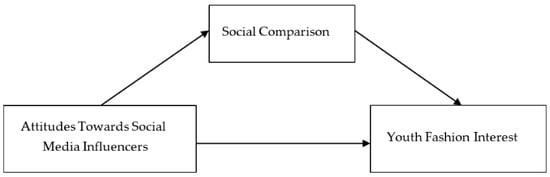
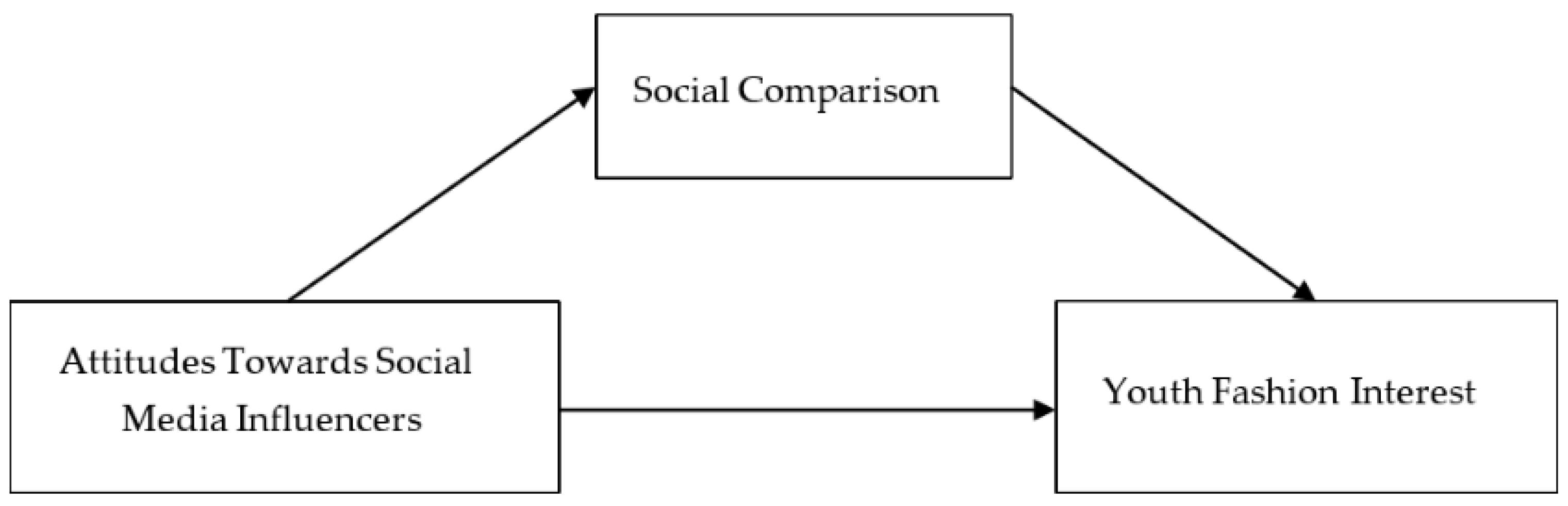
Figure 1 presents the study model, illustrating the hypothesized relationships among the key variables. It depicts how attitudes toward social media influencers are expected to influence youth fashion interests both directly and indirectly through the mediating role of social comparison. The study employed Hayes’ PROCESS macro (Model 4; Hayes, 2012) to test the mediating effect of social comparison. The model addresses the gap by examining how attitudes toward social media influencers influence young people’s fashion interests, particularly university students in Pakistan, with social comparison serving as a key mediator. Overall, the model offers a unified theoretical explanation by integrating learning and self-evaluation mechanisms within a single mediation framework.
Figure 1.
Study model.
2.5. Hypotheses
H1.
There is a significant relationship among attitudes toward social media influencers, social comparison, and youth fashion interest.
H2.
Social comparison significantly mediates the relationship between attitudes toward social media influencers and youth fashion interest.
H3.
There are significant gender differences between men and women in attitudes toward social media influencers, social comparison, and youth fashion interest.
3. Materials and Methods
This section outlines the methodology used to explore the influence of attitudes towards social media influencers on youth fashion interest, as mediated by social comparison.
3.1. Research Design
The study utilizes a quantitative survey-based design (Taherdoost, 2022) to explore the impact of social media on youth fashion interest through social comparison. The reason for selecting a quantitative survey design is that it enables the systematic measurement of social media influencers, social comparison, and fashion interest simultaneously in a large sample. Thus, it enables convenient hypothesis testing and the statistical assessment of variables, particularly in mediation analysis. Furthermore, another reason for selecting the quantitative survey design is its support of the study’s theoretical framework. The study’s theoretical framework lies in social cognitive theory (Bandura, 1986), which emphasizes learning through the observation of others, and social comparison theory (Festinger, 1954), which posits that people compare themselves to others. Both theories comprise constructs such as attitudes, interests, and comparisons, which are measured through surveys. This makes the quantitative survey design suitable, as the mediating role of social comparison between attitudes towards social media influencers and youth fashion interest can be measured using Hayes’ PROCESS Macro (4.2), Model 4, with data collected through surveys. This design is suitable for assessing relationships among variables rather than estimating results from the whole population.
3.2. Population
The research population consists of university students in Rawalpindi and Islamabad, Pakistan, and the consumers of social media influencers. Islamabad and Rawalpindi are dynamic urban areas with diverse youth populations, making them appropriate settings with which to investigate attitudes towards social media influencers, social comparison, and the desire to wear fashion among youth.
3.3. Sample Frame
This study used a sample comprising students at the University of Rawalpindi and Islamabad who were at least 18 years old, active on social media, and highly influenced by influencer culture. The researcher selected four universities, with two from Rawalpindi and two from Islamabad: Rawalpindi Women University, Fatima Jinnah University, National University of Modern Languages (NUML), and Foundation University Islamabad. These universities comprised youth from diverse demographics of Islamabad and Rawalpindi, thus providing representation of diverse urban university students. The sampling strategy was non-probability purposive; therefore, the sample does not represent all Pakistani youth statistically or even all students in Pakistani universities, but it is suitable for examining theoretical relationships among the study variables within an accessible university population.
3.4. Instruments
General Attitude Scale for Social Media Influencers: The scale was developed by Onem and Selvi (2024). It is a 6-item Likert scale that ranges from strongly disagree (1) to strongly agree (5). The Cronbach alpha of the scale is 0.88, which is high.
Social Comparison Scale (Shorter version): The scale was developed by Schneider and Schupp (2011). The scale consists of 6 items with Likert responses ranging from disagree (1) to strongly agree (5).
Fashion Interest Scale: The scale validated in the Weber and Weber (2022) study is the Fashion Interest Scale, originally developed to measure a person’s interest in fashion and its relationship to attitudes and shopping behavior. The scale consists of five Likert-type items, ranging from 1 (strongly disagree) to 5 (strongly agree). The Cronbach’s alpha for the scale was 0.97, indicating high internal consistency.
These scales can be administered to university students in Pakistan, as they are psychometrically validated, and English is the medium of instruction in higher education. Therefore, no translation is required for administration.
3.5. Procedure
The researchers physically distributed a questionnaire to 330 respondents, from whom 312 completed field responses were received from the youth population of Rawalpindi and Islamabad, particularly university students who are active social media users. The response rate for this research was 94.5%, based on the number of completed surveys returned out of the total distributed. In this study, non-probability sampling was employed, specifically purposive sampling. Purposive sampling is a technique in which researchers intentionally select participants who meet criteria relevant to the study, enabling in-depth investigation of specific phenomena. Although non-probability sampling limits generalizability to the broader population, it is effective for this study and is suitable for understanding the mechanisms among social media influencers.
3.6. Ethical Consideration
The study strictly adhered to the ethical code of conduct, i.e., written informed consent that mentioned voluntary participation, that their privacy and confidentiality would be maintained, and that they may withdraw at any juncture of the study was obtained by the investigators from university students before participation in the study in written form before administering the demographic questionnaire and study instruments. Data collection was conducted between 9 December 2025 and 17 December 2025. Academic honesty was maintained throughout the research process, and plagiarism was totally avoided by not taking any content from other sources. The data, once collected, were entered into SPSS version 26 for analysis purposes. The study was conducted in accordance with the current ethical guidelines of Sultan Idris Education University. This type of non-interventional qualitative research is exempt from formal Institutional Review Board approval, vide Dean’s office letter No. UPSI/FBK/D/242, dated 9 March 2026. Authors confirm that the study was conducted in line with the ethical standards of the Declaration of Helsinki, and all participants took part voluntarily after being informed of the purpose of the research, their right to withdraw, and the confidentiality measures in place. No identifying details have been included in the manuscript. In line with local practice, research of this nature falls under the exemption.
4. Results
4.1. Demographic Characteristics
In Table 1, the demographic data of the 312 respondents are provided. The sample included 142 men (45.5%) and 170 women (54.5%). The average age of the participants was 26.13 years (SD = 3.64). The majority of the respondents were aged between 18 and 24 years (48.4) and 25 and 30 years (36.5). Education-wise, 48.4% had a BS degree, 36.5% had an MS/MPhil degree, and 15.1% had a PhD. The subjects were recruited at the Rawalpindi Women University (33.7), NUML University (25.3), Foundation University (21.8), and Fatima Jinnah University (19.2). When it comes to family income, the biggest segment had a monthly income of PKR 50,000–100,000 (31.1%), followed by PKR 50,000 (24.0%), PKR 100,000–150,000 (23.4%), PKR 150,000–200,000 (13.5%), and above PKR 200,000 (8.0%). The most common type of social media was Instagram (47.8%), followed by YouTube (21.5%), TikTok (20.2%), and Facebook (10.6%). Regarding exposure to influencers, 23.4% said they have been exposed to influencers for four years or more, and 21.5% for over four years. Lastly, one out of every four (36.2) respondents reported spending over four hours a day on social media, which shows that the sample size is highly engaged with social media.
Table 1.
Socio-demographic characteristics of respondents.
4.2. Psychometric Properties
Table 2 presents the psychometric characteristics of the scales used to measure the study variables. General attitude towards social media influencers (GATSMI) showed good internal consistency (Cronbach’s alpha = 0.80) and a mean score of 20.43 (SD = 4.37). The Social Comparison Scale (Shorter Version) was also reliable (α = 0.84), with a mean of 20.08 (SD = 4.92). The Fashion Interest Scale had excellent internal consistency (α = 0.95), with a mean score of 49.53 (SD = 15.32).
Table 2.
Psychometric properties for scales.
4.3. Pearson Product-Moment Correlation
The results in Table 3 above indicate a strong and positive relationship between attitude towards social media influencers and social comparison (r = 0.77, p < 0.01). Attitude towards social media influencers was also significantly and positively related to youth fashion interest (r = 0.63, p < 0.01). Additionally, social comparison showed a strong positive correlation with youth fashion interest (r = 0.77, p < 0.01).
Table 3.
Relationship between study variables.
4.4. Mediation Analysis
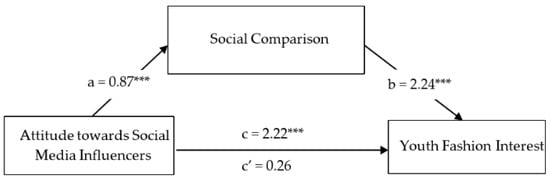
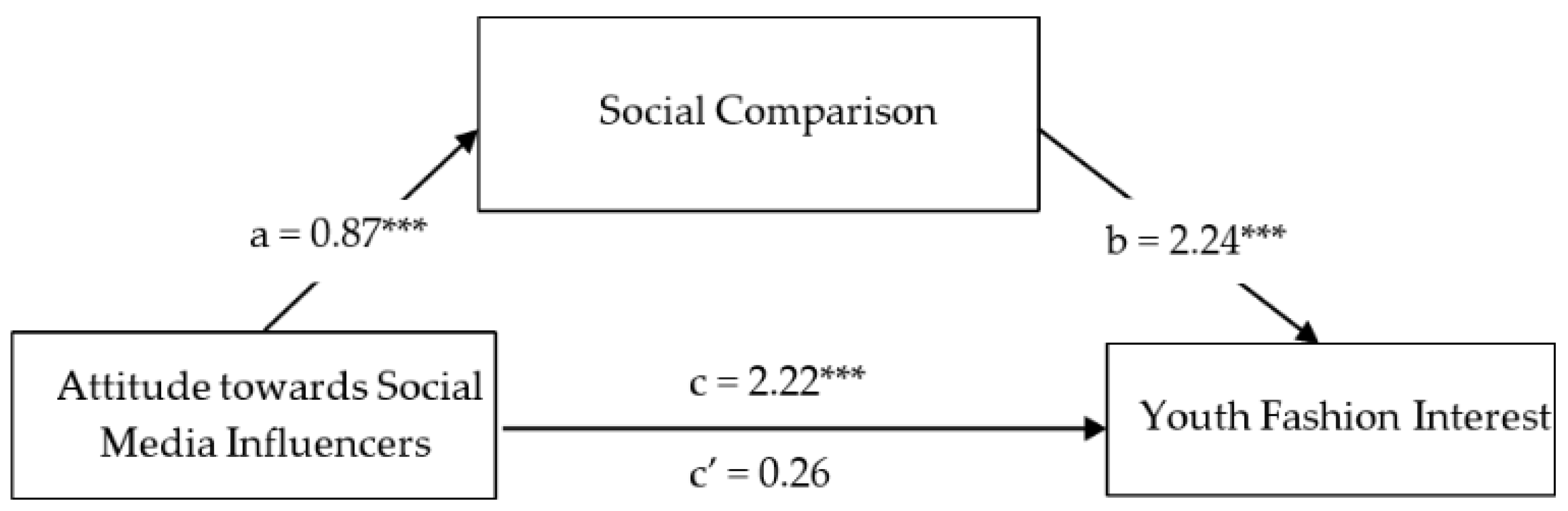
The results in Table 4 show that attitude towards social media influencers had a significant positive effect on social comparison (β = 0.87, SE = 0.04, p < 0.001). Social comparison, in turn, significantly predicted youth fashion interest (β = 2.24, SE = 0.17, p < 0.001). However, the direct effect of attitude towards social media influencers on youth fashion interest became nonsignificant when social comparison was included in the model (β = 0.26, SE = 0.19, p = 0.17). The model explained 60% of the variance in both social comparison and youth fashion interest (R2 = 0.60, p < 0.001).
Table 4.
Mediation analysis using Hayes Macro Process 4.2 (model 4).
Table 5 presents the indirect effect of attitude towards social media influencers on youth fashion interest through social comparison. The results show a significant indirect effect (effect = 1.95, β = 0.55), with the 95% bootstrap confidence interval not including zero (LLCI = 0.45, ULCI = 0.66).
Table 5.
Indirect effect.
The statistical model in Figure 2 illustrates the mediation effect of social comparison on the relationship between attitude towards social media influencers and youth fashion interest. Attitude towards social media influencers had a significant positive effect on social comparison (a = 0.87, p < 0.001), and social comparison, in turn, significantly predicted youth fashion interest (b = 2.24, p < 0.001). The total effect of attitude towards social media influencers on youth fashion interest was significant (c = 2.22, p < 0.001), whereas the direct effect controlling for social comparison was nonsignificant (c′ = 0.26), indicating that social comparison fully mediates this relationship.
Figure 2.
Statistical model. Note. N = 312, *** p < 0.001.
4.5. Independent Samples t-Test
In Table 6, the independent samples t-test showed no significant gender differences regarding the study variables. For attitude towards social media influencers, men (M = 20.33, SD = 4.65) and women (M = 20.52, SD = 4.12) did not differ, t(310) = −0.37, p = 0.71, Cohen’s d = 0.04, with women scoring slightly higher. Social comparison scores were similar for men (M = 20.03, SD = 4.90) and women (M = 20.12, SD = 4.94), t(310) = −0.15, p = 0.87, Cohen’s d = 0.01, with women again scoring slightly higher. Youth fashion interest showed men (M = 50.19, SD = 15.86) and women (M = 48.98, SD = 14.88), t(310) = 0.69, p = 0.48, Cohen’s d = 0.07, with men scoring slightly higher.
Table 6.
Mean comparing men and women in terms of the study variables.
5. Discussion
Drawing on the social cognitive theory (Bandura, 1986) and social comparison theory (Festinger, 1954), this study, concerning the current digital era in the cultural context of Pakistan, aimed to examine the impact of attitudes towards social media influencers on youth fashion interest via the mediator social comparison among the university students of Islamabad and Rawalpindi, Pakistan. The study aims to fill a gap in the cultural context of Pakistan and to provide theoretical and practical implications for Pakistan’s youth, particularly university students.
The first hypothesis of the study is supported, as the Pearson product–moment correlation analysis shows a significant relationship among the study variables, i.e., attitude towards social media influencers, social comparison, and youth fashion interest, among university students in Islamabad and Rawalpindi. The study aligns with a recent study in Egypt involving 527 respondents, which found a strong relationship between social media influencers and social comparison. The study emphasized the positive role of social media influencers, noting that people compare themselves and tend to imitate influencers’ lives (Wahba et al., 2025). Another similar study reported that youth in India tend to follow social media influencers because they consider them to be trustworthy, promote the right things, and know about updated trends, which consequently increases purchase intention among youth (Tiwari et al., 2024). Studies have identified several reasons as to why youth tend to be influenced by social media influencers, e.g., social media influencers consistently post new images, encouraging youth to compare themselves and perceive themselves as up-to-date by adopting new fashions. Furthermore, social media influencers are perceived as credible, reliable, and relatable sources of fashion trends by youth, particularly in modern Pakistani cities such as Islamabad and Rawalpindi. Moreover, studies have reported that higher exposure to social media or overuse also enhances social comparison among youth and heightens their fashion interests, such as influencers, by being influenced (Iqbal, 2024; Kanwal et al., 2023; Riaz et al., 2025; Yunus et al., 2023).
The second hypothesis of the study is also supported by the mediation analysis using Hayes Macro Process 4.2, model 4, which indicated full mediation: the direct effect of attitude towards social media influencers is not statistically significant for youth fashion interest, whereas the indirect effect via social comparison is statistically significant. The study’s results are consistent with a study conducted in Germany on young adults, which reported that social media significantly influences social comparison (Rüther et al., 2023). Another similar study conducted in Malaysia reported that social comparison played a significant role as a mediator among young adults, linking study variables such as social media networking and online compulsive buying. The study shed light on the role of an important psychological mechanism, social comparison, as a mediator (Pahlevan Sharif et al., 2022). Full mediation of social comparison between predicted attitudes towards social media influencers and youth fashion interest could be due to the insufficient effect of social media influencers on youth fashion, unless they are being compared by the youth. The reason for comparison could be that youth compare appearance and lifestyle with them and consider them as credible, reliable and relatable sources of fashion trends, meaning that the social comparison thus shapes the attitude of youth towards such fashion patterns (Riaz et al., 2025; Yunus et al., 2023; Pahlevan Sharif et al., 2022).
The full mediating role of social comparison between attitude towards social media influencers and youth fashion interest may stem from the youth’s positive attitudes towards social media influencers’ appearance, lifestyle, and credibility. Thus, these findings extended Albert Bandura’s social cognitive theory by showing that observation alone does not lead to imitation. The mediating role of social comparison is necessary because, unless someone likes the model’s preference, they tend not to imitate it. The comparison thus plays a crucial mediating psychological mechanism. The study’s results also update Festinger’s social comparison theory within the online context, where imitation is frequent through comparisons with social media influencers. Unlike offline models, the online influencers’ content is highly visible, curated, and personalized. This makes it frequently watched by the youth in this digital era. Youth tend to imitate influencers because they see the social acceptance that these influencers enjoy. They want to be socially validated like them and thus tend to compare and start imitation.
The third hypothesis of the study is not supported, as the independent samples t-test reported no significant differences between men and women on the study variables, i.e., attitude towards social media influencers, social comparison, and youth fashion interest. A previous study conducted in the Saudi Arabia reported that females, as compared to males, are more influenced by social media influencers (Leung et al., 2022). Another study conducted in the United States found that women scored higher on social comparison with social influencers than men did, particularly for appearance-related content (Reid-Partin & Chattaraman, 2023). However, another study conducted on university students in Malaysia reported that males scored higher on fashion consciousness than females (Naim & Khan, 2012). The lack of differences observed in this study may be due to ubiquitous access to technology in urban Pakistan. The data was collected only from university students in Islamabad and Rawalpindi. The modern region of Pakistan also mitigates the mean differences in terms of significance. There are fewer restrictions on using social media in such urban regions, as opposed to in rural areas of Pakistan, where women are particularly restricted from using social media due to cultural norms and masculine supremacy. Furthermore, social comparison with social media influencers and fashion interest influence is likely to be similar across genders. When both genders are similarly exposed to social media influencers, the threshold may not largely deviate.
6. Conclusions
In today’s era, social media plays a vital role in shaping the attitudes of youth toward fashion, particularly when they are influenced by social media influencers, who engage in social comparison and tend to adopt certain fashion trends. This pattern is widely observed but rarely studied, particularly among university students in Pakistan. Therefore, the study aimed to assess the influence of attitudes toward social media influencers on youth fashion interest, as mediated by social comparison, among university students in Rawalpindi and Islamabad, Pakistan. The findings depict that attitudes toward social media influencers are significantly positively related to social comparison and youth fashion interest. Furthermore, Hayes’ PROCESS macro (Model 4; 4.2) reported a significant mediating role of social comparison between social media influencers and youth fashion interest. However, no significant mean differences among variables were found between genders (men and women). The study extends Bandura’s social cognitive theory by demonstrating the crucial role of social comparison beyond mere model observation and updates Festinger’s social comparison theory within the context of social media.
7. Limitations and Recommendations
The study’s most important limitation is its cross-sectional design; future studies need to adopt a longitudinal design to assess causality. The next limitation is that the study included only college and university students from Rawalpindi and Islamabad, which may not be a representative sample of different regions of Pakistan. Therefore, future studies may adapt an online data collection procedure to collect data from different regions of Pakistan. The study’s purposive sampling technique is also not appealing; the stratified sampling technique needs to be adapted for future studies to ensure relatively balanced data so that maximum analysis can be carried out.
8. Implications
The study demonstrated clear practical and theoretical implications, as social comparison significantly mediated the relationship between attitude towards social media influencers and youth fashion interest, thereby extending Festinger’s (1954) social comparison theory to an online setting in the contemporary digital era. The results also extended the social cognitive theory (Bandura, 1986), as it is not just that youth are influenced by watching influencers; social comparison serves as a cognitive mediating mechanism, as the study reported a nonsignificant direct effect of attitude towards social influencers on youth fashion interest, whereas the indirect effect via social comparison remained significant. The absence of gender differences among study variables further updated the social role theory (Eagly, 1987), which demonstrated that women are more inclined to compare themselves in terms of fashion and social comparison; however, the study results depicted that attitude towards social media influencers is similarly shared by men and women, leading to similar social comparison and fashion interest levels regardless of their gender in the contemporary digital era.
In practice, social media influencers need to create positive content because young people compare themselves to them. There is also a need for digital awareness among youth, particularly within educational institutions. This can help to overcome their cognitive inclination toward needless and negative content on social media, enhancing their engagement with positive content. Marketers should collaborate with social media influencers to create positive, inspiring content regarding youth fashion interest in a culturally acceptable way that reflects Pakistani traditions.
Author Contributions
Conceptualization, G.S. and T.I.M.; methodology, G.S.; software, G.S.; validation, G.S., N.A.Q.O. and T.I.M.; formal analysis, G.S.; investigation, K.M.A.; resources, G.S.; data curation, G.S.; writing—original draft preparation, G.S.; writing—review and editing, T.I.M. and N.A.Q.O.; visualization, K.M.A.; supervision, G.S.; project administration, G.S.; funding acquisition, T.I.M. All authors have read and agreed to the published version of the manuscript.
Funding
This research received no external funding.
Institutional Review Board Statement
Under the current ethical guidelines followed at Sutlan Idris Education University, this type of non-interventional quantitative research is exempt from formal Institutional Review Board approval vide Dean’s office letter No. UPSI/FBK/D/242, dated: 9 March 2026. We confirm that the study was conducted in line with the ethical standards of the Declaration of Helsinki, and all participants took part voluntarily after being informed about the purpose of the research, their right to withdraw, and the confidentiality measures in place. No identifying details have been included in the manuscript. In line with local practice, research of this nature falls under the exemption.
Informed Consent Statement
The research was conducted independently and involved a voluntary, anonymous questionnaire survey of adult participants. No personally identifiable information was collected. Participants were informed about the purpose of the study and provided informed consent prior to participation.
Data Availability Statement
Data collection scales (General Attitude Scale for Social Media Influencers, Social Comparison Scale (Shorter version), and Fashion Interest Scale) and the data output file are attached. However, due to ethical reasons, the data file is not shared but can be provided by the corresponding author upon reasonable request.
Acknowledgments
We acknowledge the respondents who contributed to this study.
Conflicts of Interest
The authors declare no conflicts of interest.
References
- Afzal, A., Javed, M., & Safdar, S. (2024). Factors affecting the well-being of young adults: A study of Gujrat city, Punjab, Pakistan. Journal of Human Behavior in the Social Environment, 34(4), 552–569. [Google Scholar] [CrossRef] [Scilit]
- Al-Ansi, A. M., Hazaimeh, M., Hendi, A., Al-Hrinat, J., & Adwan, G. (2023). How do social media influencers change adolescents’ behavior? Evidence from Middle East Countries. Heliyon, 9(5), e15983. [Google Scholar] [CrossRef] [Scilit]
- Al Ibrahim, D. (2025). The relationship between exposure to social media influencers’ content and social comparison level. Journal of Arab & Muslim Media Research. [Google Scholar] [CrossRef] [Scilit]
- Anderson, L. M. (2023). Seeking transformative lifestyles: A role for social media influencers in creating sustainable futures [Ph.D. thesis, University of British Columbia]. [Google Scholar] [CrossRef]
- Andrian, F. (2025). The influence of fashion trends, product quality, and price perception on purchase intention. Jurnal Manajemen Pemasaran dan Perilaku Konsumen, 4(4), 1–15. [Google Scholar]
- Aziz, M. S. (2024). The cultural diversity of Pakistan: Heritage, traditions, and modern influences. SIWAYANG Journal: Publikasi Ilmiah Bidang Pariwisata, Kebudayaan, dan Antropologi, 3(3), 105–114. [Google Scholar] [CrossRef] [Scilit]
- Bandura, A. (1986). Social foundations of thought and action. Prentice-Hall, Inc. [Google Scholar]
- Boy, J. D., & Uitermark, J. (2020). Lifestyle enclaves in the Instagram city? Social Media+ Society, 6(3), 2056305120940698. [Google Scholar] [CrossRef] [Scilit]
- Brestovanský, M., & Sekerešová, D. (2022). Parasocial interaction does not function as a relationship mediator between the influencer’s online content and the adolescent’s prosocial moral reasoning and behavior. Communication Today, 13(1), 130–144. [Google Scholar]
- Colucci, M., & Pedroni, M. (2022). Got to be real: An investigation into the co-fabrication of authenticity by fashion companies and digital influencers. Journal of Consumer Culture, 22(4), 929–948. [Google Scholar] [CrossRef] [Scilit]
- Darshan, D., Soni, A., Godara, A., Rangani, Y., Dhupper, M., Chauhan, R., & Maseleno, A. (2024). The impact of social media on youth fashion consumption: Trends, influencers, and ethical shifts. Greenation International Journal of Law and Social Sciences, 2(4), 298–307. [Google Scholar] [CrossRef] [Scilit]
- Dávila, J. F., & Casabayó, M. (2025). Instagram paths to materialism in young people: Social comparison and identification with influencers. Behavior & Information Technology, 44(10), 2351–2363. [Google Scholar] [CrossRef] [Scilit]
- Dumas, J. E., & Stough, R. A. (2022). When influencers are not very influential: The negative effects of social media verification. Journal of Consumer Behavior, 21(3), 614–624. [Google Scholar] [CrossRef] [Scilit]
- Eagly, A. H. (1987). Sex differences in social behavior: A social-role interpretation. Lawrence Erlbaum. [Google Scholar] [CrossRef] [Scilit]
- Elena, T. (2020). The role of Instagram influencers as a source of fashion information. Tekstilna Industrija, 68(4), 58–64. [Google Scholar] [CrossRef] [Scilit]
- Festinger, L. (1954). A theory of social comparison processes. Human Relations, 7(2), 117–140. [Google Scholar] [CrossRef] [Scilit]
- Gammarano, I. D. J. L. P., Dholakia, N., Arruda Filho, E. J. M., & Dholakia, R. R. (2025). Beyond influence: Unraveling the complex tapestry of digital influencer dynamics in hyperconnected cultures. European Journal of Marketing, 59(1), 21–58. [Google Scholar] [CrossRef] [Scilit]
- Garwol, K. (2020). Influencers, contemporary authorities of the young generation? European Journal of Sustainable Development, 9(4), 273–273. [Google Scholar] [CrossRef] [Scilit]
- Georgescu, R. I., & Bodislav, D. A. (2024). Marketing ethics—Another business-oriented scheme? Theoretical & Applied Economics, 31(1), 105–114. [Google Scholar]
- Gupta, V. P., Sharief, S., & Rani, S. (2024). Digital fashion and social media influencer in Industry 5.0. In Illustrating digital innovations towards intelligent fashion: Leveraging information system engineering and digital twins for efficient design of next-generation fashion (pp. 125–147). Springer Nature. [Google Scholar] [CrossRef] [Scilit]
- Hamid, M. N. A., Pooi, C. K., & Reng, O. S. (2022). Malaysian youth expectations of social media influencers (SMI). Journal of Creative Industry and Sustainable Culture, 1, 1–25. [Google Scholar] [CrossRef] [Scilit]
- Hankach, J. (2025). Cross-cultural trust in the Instagram era: A comparative study of Lebanese and Austrian social media followers’ trust-building with lifestyle influencers [Ph.D. thesis, FH Vorarlberg (Fach hoch schule Vor arlberg)]. [Google Scholar]
- Haque, I. U., Khan, S., & Mubarik, M. S. (2023). Effect of social media influencer on consumer purchase intention: A PLS-SEM study on branded luxury fashion clothing. Journal of Mass Communication, 28(1), 65–92. [Google Scholar] [CrossRef] [Scilit]
- Hayes, A. F. (2012, February). PROCESS: A versatile computational tool for observed variable mediation, moderation, and conditional process modeling. Available online: http://www.afhayes.com/public/process2012.pdf (accessed on 13 December 2025).
- Hu, L., Wang, Y., Zhang, M., & Chen, J. (2025). The influence of information literacy and social media engagement on consumers’ fashion preferences. Asia Pacific Journal of Marketing and Logistics, 37(12), 3947–3964. [Google Scholar] [CrossRef] [Scilit]
- Hund, E. (2023). The influencer industry: The quest for authenticity on social media. Princeton University Press. [Google Scholar]
- Hund, E., & McGuigan, L. (2019). A shoppable life: Performance, selfhood, and influence in the social media storefront. Communication Culture & Critique, 12(1), 18–35. [Google Scholar] [CrossRef] [Scilit]
- Iqbal, N. (2024). Exploring the impact of social media marketing and engagement on apparel purchase decisions: A study on Pakistani students in Finland. Available online: https://urn.fi/URN:NBN:fi:amk-2024052314718 (accessed on 21 December 2025).
- Jin, S. V., & Ryu, E. (2020). “I’ll buy what she’s# wearing”: The roles of envy toward and parasocial interaction with influencers in Instagram celebrity-based brand endorsement and social commerce. Journal of Retailing and Consumer Services, 55, 102121. [Google Scholar] [CrossRef] [Scilit]
- Junejo, I., Memon, A., Saraih, U. N., Akhund, Z., Shah, M., & Zahari, M. K. (2024). Examining the impact of influencers and bloggers on behavioral intentions among youth in Sindh, Pakistan. Journal of Communication in Scientific Inquiry (JCSI), 6(1), 19–30. [Google Scholar] [CrossRef] [Scilit]
- Kaivonen, I., Mesiranta, N., & Närvänen, E. (2024). “I do what I do to drive change”: The social-symbolic work of sustainable fashion influencers. Fashion Theory, 28(1), 85–115. [Google Scholar] [CrossRef] [Scilit]
- Kanwal, L., Naeem, R., & Saeed, M. (2023). Exploring the impact of Pakistani vloggers’ content on youth. Global Digital & Print Media Review, VI, 28–40. [Google Scholar] [CrossRef] [Scilit]
- Karimkhan, F. (2024). Shaping style: The rise of fashion and beauty social media influencers. In Global perspectives on social media influencers and strategic business communication (pp. 1–25). IGI Global Scientific Publishing. [Google Scholar] [CrossRef] [Scilit]
- Khan, S., Rashid, A., Rasheed, R., & Amirah, N. A. (2023). Designing a knowledge-based system (KBS) to study consumer purchase intention: The impact of digital influencers in Pakistan. Kybernetes, 52(5), 1720–1744. [Google Scholar] [CrossRef] [Scilit]
- Khurana, T., Pannu, S., & Dalal, G. (2024). Social media influencer marketing: Building a deeper understanding through bibliometric analysis. Vision: The Journal of Business Perspective, 09722629231225567. [Google Scholar] [CrossRef] [Scilit]
- Kloer, L. E., Ulfa, N. S., & Yusriana, A. (2023). Young woman’s learning of taste in fashion style through their engagements with TikTok influencers. Interaksi Online, 12(1), 544553. [Google Scholar]
- Kondort, G., Pelau, C., Gati, M., & Ciofu, I. (2023). The role of fashion influencers in shaping consumers’ buying decisions and trends. In Proceedings of the 17th international conference on business excellence 2023 (Vol. 17, pp. 1009–1018). De Gruyter, Inc. [Google Scholar] [CrossRef] [Scilit]
- Leung, X. Y., Sun, J., & Asswailem, A. (2022). Attractive females versus trustworthy males: Exploring gender effects in social media influencer marketing in Saudi restaurants. International Journal of Hospitality Management, 103, 103207. [Google Scholar] [CrossRef] [Scilit]
- Lou, C., & Kim, H. K. (2019). Fancying the new rich and famous? Explicating the roles of influencer content, credibility, and parental mediation in adolescents’ para-social relationships, materialism, and purchase intentions. Frontiers in Psychology, 10, 2567. [Google Scholar] [CrossRef] [Scilit]
- Mahmood, T. (2019). The reproduction of pakistan through globalization, mediatization, and social networks. North Carolina State University. [Google Scholar]
- Marini, B., Khan, O., & Hinterhuber, A. (2025). Impact of online influencer marketing on consumers’ willingness to pay more. Journal of Marketing Communications, 1–24. [Google Scholar] [CrossRef] [Scilit]
- Mumtaz, K., Mitha, Y., & Tahira, B. (2003). Pakistan: Tradition and change. Oxfam. [Google Scholar]
- Murhundezi, T. J. (2025). Irrational vs. rational spending within the fashion industry: Are Generation Z spending irrationally on fashion products? [Ph.D. thesis, National College of Ireland]. [Google Scholar]
- Naeem, M., & Ozuem, W. (2021). Developing UGC social brand engagement model: Insights from diverse consumers. Journal of Consumer Behavior, 20(2), 426–439. [Google Scholar] [CrossRef] [Scilit]
- Naim, N., & Khan, G. (2012, July 19–22). Gender differences in fashion consciousness among Malaysian youth. 2012 Global Marketing Conference Proceedings (pp. 1220–1235), Seoul, Republic of Korea. [Google Scholar]
- Nandini, C. P., & Jha, A. (2025). Shaping perceptions, shaping realities: Social media influencers and human rights narratives in crisis. In The Asian yearbook of human rights and humanitarian law (pp. 61–106). Brill Nijhoff. [Google Scholar] [CrossRef] [Scilit]
- Ntapıapıs, N. T. (2021). The marketing concepts in the developing media and the effects of influencers on youth. OPUS International Journal of Society Research, 17(35), 15801606. [Google Scholar] [CrossRef] [Scilit]
- Onem, S., & Selvi, M. S. (2024). General attitude scale for social media influencers. Marketing i Menedžment Innovacij, 15(2), 122–139. [Google Scholar] [CrossRef] [Scilit]
- Pahlevan Sharif, S., She, L., Yeoh, K. K., & Naghavi, N. (2022). Heavy social networking and online compulsive buying: The mediating role of financial social comparison and materialism. Journal of Marketing Theory and Practice, 30(2), 213–225. [Google Scholar] [CrossRef] [Scilit]
- Papacharissi, Z. (2009). The virtual geographies of social networks: A comparative analysis of Facebook, LinkedIn, and a small world. New Media & Society, 11(1–2), 199–220. [Google Scholar] [CrossRef] [Scilit]
- Patidar, R. (2024). Social media and influencers: Trends & effects on holistic development of adolescents. Preprints. [Google Scholar] [CrossRef] [Scilit]
- Powell, J., & Pring, T. (2024). The impact of social media influencers on health outcomes: Systematic review. Social Science & Medicine, 340, 116472. [Google Scholar] [CrossRef] [Scilit]
- Radwan, A. F., Mousa, S. A., Mohamed, M., & Youssef, E. Y. M. (2021). Impact of social media influencer marketing on youth purchase intentions in the UAE. Media Watch, 12(3), 422–439. [Google Scholar] [CrossRef] [Scilit]
- Reid-Partin, K., & Chattaraman, V. (2023). Social comparisons and compensatory consumption: The art of buying a superior self. Sustainability, 15(22), 15950. [Google Scholar] [CrossRef] [Scilit]
- Riaz, A., Aslam, A., & Rahil, A. B. (2025). Exploring the impact of social media influencer marketing on consumer choices: Evidence from Pakistan’s fashion industry. The Critical Review of Social Sciences Studies, 3(2), 1089–1108. [Google Scholar] [CrossRef] [Scilit]
- Rüther, L., Jahn, J., & Marksteiner, T. (2023). # influenced! The impact of social media influence on self-esteem and the role of social comparison and resilience. Frontiers in Psychology, 14, 1216195. [Google Scholar] [CrossRef] [Scilit]
- Safdar, G. (2022). Effects of digital media on pakistani culture: A study of university students of Punjab, Pakistan. Online Media and Society, 3, 256–272. [Google Scholar] [CrossRef] [Scilit]
- Safdar, G. (2023). Digital media use for cultural grooming and learning new cultural trends among young Pakistani women. Online Media and Society, 4(1), 70–85. [Google Scholar] [CrossRef] [Scilit]
- Safdar, G., & Khan, A. W. (2020). Digital media use and cultural aspiration among female students of Pakistan: A study of three public sector universities. Journal of Research & Reviews in Social Sciences Pakistan, 3(2), 941–956. [Google Scholar]
- Schneider, S., & Schupp, J. (2011). The social comparison scale: Testing the validity, reliability, and applicability of the Iowa-Netherlands comparison orientation measure (INCOM) on the German population [(No. 55). DIW data documentation]. Available online: https://hdl.handle.net/10419/129264 (accessed on 12 December 2025).
- Shabir, G., Safdar, G., Jamil, T., & Bano, S. (2015). Mass media, communication and globalization with the perspective of 21st century. New Media and Mass Communication, 34, 11–15. [Google Scholar]
- Siddiq, S. (2023). Exploring Tiktok influencers impact on Pakistani youth: A sentiment analysis. Journal of Social Sciences and Humanities, 62(2), 47–60. [Google Scholar] [CrossRef] [Scilit]
- Suri, A., Huang, B., & Sénécal, S. (2023). This product seems better now: How social media influencers’ opinions impact consumers’ post-failure responses. International Journal of Electronic Commerce, 27(3), 297–323. [Google Scholar] [CrossRef] [Scilit]
- Taherdoost, H. (2022). What are different research approaches? Comprehensive review of qualitative, quantitative, and mixed method research, their applications, types, and limitations. Journal of Management Science & Engineering Research, 5(1), 53–63. [Google Scholar] [CrossRef] [Scilit]
- Tian, S., Cho, S. Y., Jia, X., Sun, R., & Tsai, W. S. (2023). Antecedents and outcomes of Generation Z consumers’ contrastive and assimilative upward comparisons with social media influencers. Journal of Product & Brand Management, 32(7), 1046–1062. [Google Scholar] [CrossRef] [Scilit]
- Tiwari, A., Kumar, A., Kant, R., & Jaiswal, D. (2024). Impact of fashion influencers on consumers’ purchase intentions: Theory of planned behavior and mediation of attitude. Journal of Fashion Marketing and Management: An International Journal, 28(2), 209–225. [Google Scholar] [CrossRef] [Scilit]
- Vilkaite-Vaitone, N. (2024). From likes to sustainability: How social media influencers are changing the way we consume. Sustainability, 16(4), 1393. [Google Scholar] [CrossRef] [Scilit]
- Wahba, S., El-Deeb, S., & Metry, S. (2025). The role of influencers and social comparison in shaping travel intentions. Journal of Hospitality and Tourism Insights, 8(3), 849–869. [Google Scholar] [CrossRef] [Scilit]
- Weber, S., & Weber, O. (2022). How fashionable are we? Validating the fashion interest scale through multivariate statistics. Sustainability, 14(4), 1946. [Google Scholar] [CrossRef] [Scilit]
- Yunus, A., Bajwa, R. S., Mushtaq, S. K., & Hussain, M. M. (2023). Exploring social media usage and self-image congruity as predictors of online conspicuous consumption. Pakistan Journal of Humanities and Social Sciences, 11(4), 4317–4324. [Google Scholar] [CrossRef] [Scilit]

Disclaimer/Publisher’s Note: The statements, opinions and data contained in all publications are solely those of the individual author(s) and contributor(s) and not of MDPI and/or the editor(s). MDPI and/or the editor(s) disclaim responsibility for any injury to people or property resulting from any ideas, methods, instructions or products referred to in the content. |
© 2026 by the authors. Licensee MDPI, Basel, Switzerland. This article is an open access article distributed under the terms and conditions of the Creative Commons Attribution (CC BY) license.