


Abstract
The presence of plastic marine litter (ML) and its associated negative environmental impacts have been documented in all existing parts of the marine and coastal environment, including protected areas (PAs). The aim of this study is to identify gaps in existing research related to the lack of standardization of methods and scarcity of detailed information on the characteristics of ML found. This systematic review provides current information on the methods and results of studies focused on the problem of ML and microplastic (MP) pollution on the coastlines of PAs. This study was conducted in accordance with the PRISMA 2020 statement. It is based on 28 peer-reviewed publications from four online databases and search platforms: ScienceDirect, PubMed, MDPI and Google Scholar, published between 2021 and 2025. The presence of ML was detected in all 28 studies (100%), confirming the relevance of the problem along the coastlines of PAs, even those far from industrial centers. The reported densities, however, ranged from a few fragments of litter to several thousand items. Plastic was the most common material of ML among all the peer-reviewed publications analyzed. Most of the studies showed that polyethylene (PE) fragments were the dominant type of microplastic (MP) found in coastal environments of PAs. However, despite the growing research on this topic, the problems of lack of detailed information and standardization of methods remain unresolved. This review emphasizes the importance of applying unified methods and conducting long-term monitoring experiments in future research.
1. Introduction
In recent decades, there has been a significant increase in production and mass consumption of plastic products. Although polymer materials offer many advantages to producers and consumers, and have improved the quality of life for humanity, their increasing global use is leading to a large number of environmental risks. Current trends suggest that the global use of plastic is expected to reach 884 Mt in 2050 [1]. It is also expected that the amount of plastic waste will increase more than twofold within 30 years [2].
Despite the active research in the field of plastic waste management and recycling, existing plastic waste management technologies, such as incineration at waste-to-energy plants and landfill disposal, lead to the loss of valuable economic resources and create new environmental risks of secondary pollution [3]. Ineffectiveness of waste management systems means that 22% of all plastic waste produced ends up in freshwater and marine ecosystems, where it breaks down and persists [4]. If the current rapid increase in pollution rates continues, it is projected that, by 2050, there will be more plastic than fish (by weight) in the ocean, which will lead to the destruction of marine ecosystems and the extinction of numerous species [4].
According to the United Nations Environment Programme (UNEP), marine litter (ML) is defined as any persistent, manufactured or processed solid material discarded, disposed of or abandoned in the marine and coastal environment [5]. Microplastics (MPs), which are typically defined as plastic debris smaller than 5 mm, constitute 85% of floating marine litter and have become one of the most pervasive threats [6]. The presence of these pollutants and associated negative environmental impacts have been documented in all components of marine and coastal ecosystems, including beaches, sand dunes, abyssal plants and submarine canyons [7].
Protected areas (PAs) are clearly defined geographical spaces that are recognized, dedicated and managed, through legal or other effective means, to achieve the long-term conservation of nature with associated ecosystem services and cultural values [8]. In the context of the large-scale presence of ML pollution in the ocean, protected natural areas located in the marine and coastal environments attract special attention. Marine protected areas (MPAs) meet the International Union for Conservation of Nature’s (IUCN) overall definition of protected area and represent one of the key mechanisms for the conservation and sustainable management of marine and coastal ecosystems [8]. Furthermore, they are effective tools for coastal protection, landscape protection, marine biodiversity conservation, carbon sequestration and preservation of cultural heritage [9]. The significant growth in the number of MPAs has led them to play a critical role in the management of marine ecosystems [10].
Despite this progress, many authors have highlighted that existing and developing MPAs are not free from ML [11,12,13,14,15]. They are subject to severe anthropogenic pollution, just like other coastal areas. Nevertheless, the existing data on this topic is limited to single sites or individual components of ecosystems, as well as short research periods, meaning it cannot be fully applied to the existing management and protection systems of these territories. Moreover, the results of current research are typically focused on general assessments of pollution levels, including sites outside protected zones. This complicates the comparisons among studies and limits the ability to identify common patterns, pathways and sources of ML and MPs.
Another important problem is the lack of standardized methods for sampling and laboratory analysis of ML and MPs. At the present time, there is still no unified methodology for collecting and analyzing samples of marine debris and plastic particles. There are many methods for the monitoring of beach litter, e.g., the OSPAR method [16], the HELCOM method [17] and the NOAA protocol [18]. Consequently, the methodologies for sampling and analyzing MPs are often disparate and depend on the laboratory resources availability and local guidelines. The current use of different methods is leading to confusion and inaction about the problem of ML and MP pollution, as it complicates cross-checking between results, which is vital for a comprehensive understanding of the problem [19]. A further important issue is identifying the sources of ML and MPs. Anthropogenic waste enters the ocean from a variety of points, including both diffuse and point sources. The identification of the original purpose and source of some particles formed as a result of the disintegration of larger items can be impossible, especially when the litter has been in the marine or coastal environment for a long period of time [20].
Over the past 5 years, there has been an increase in scientific and public attention to the problem of ML and MP pollution of marine and coastal environments. An updated review covering the period between 2021 and 2025 is needed to capture recent progress in the field and identify existing gaps that hinder further research. Furthermore, existing reviews do not focus on the protected areas, leaving a critical gap in synthesized knowledge for these vulnerable zones. The present systematic review was designed to address three key questions:
- What is the current state of knowledge on ML and MP pollution in PAs?
- What methodological approaches have been applied and how do they affect comparability of the results?
- What are the main research gaps that limit the understanding of this issue?
Research objectives:
- To define the search criteria and conduct a search for relevant sources over the past 5 years;
- To analyze and systematize scientific publications relevant to the research topic;
- To compare reported levels and characteristics of marine debris and microplastic pollution in PAs;
- To identify existing gaps in the study of the problem and prospects for further research.
2. Materials and Methods
This review was conducted in accordance with the PRISMA 2020 statement [21]. All of the sections and elements presented in this work comply with the PRISMA 2020 expanded checklist [22] and the PRISMA 2020 extension for Abstracts [21], with details available in the Supplementary Table S1. The aim of this study is to identify gaps in existing research related to the lack of standardization of methods and scarcity of detailed information on the characteristics of ML found.
The search and selection of relevant sources for this work were conducted by one reviewer from 1 December to 31 December 2025. Peer-reviewed scientific articles published over the last 5 years (between 1 January 2021 and 31 December 2025) were used for data sources. The selection of the time interval is associated with qualitative development in the study of pollution by marine debris and MPs that occurred due to the introduction and wider use of advanced methods for microplastic analysis (laser diffraction particle, dynamic light scattering, Fourier-transform infrared spectroscopy, Raman spectroscopy). Furthermore, limiting the time range of publications when selecting the literature made it possible to focus on the current methodological approaches and recent findings with the aim of identifying current trends and gaps.
The literature search was conducted using the following four online databases and search platforms of scientific publications: ScienceDirect, PubMed, MDPI and Google Scholar. These sources provide access to a wide range of high-quality, peer-reviewed publications and were selected for their interdisciplinary and wide coverage of environmental, ecological and marine science journals. Furthermore, they offer effective and transparent search instruments that ensure the reproducibility of the search strategy. The authors acknowledge that the search was limited to only four online databases and search platforms, which may have led to the omission of some relevant publications. Nevertheless, the search strategy combined selected sources with complementary coverage and manual screening of references and appendices to ensure broad coverage of relevant data on ML and MP pollution in PAs. Moreover, the inclusion of the Google Scholar search engine made it possible to cover a wide range of studies published in journals not indexed in Web of Science and Scopus, which helped to reduce selection bias.
The following search words and terms as well as their plural forms were used to find relevant sources: “microplastic”, “marine litter”, “plastic litter”, “nature reserve”, “protected area”, “national park”, “oasis”, “coast”, “beach”, “shoreline”. The terms were combined using the Boolean operators “AND” and “OR”. Below is the example of one compound search query in the ScienceDirect database: (“microplastic” OR “plastic litter” OR “marine litter”) AND (“protected area” OR “nature reserve” OR “national park” OR “oasis”) AND (“coast” OR “beach” OR “shoreline”). The search was performed in the titles, abstracts and author-provided keywords.
This literature review focused only on scientific articles in English that were classified as “research articles”. Review articles were excluded from the search with the aim to focus on the specific methodological approaches to ML and MPs sampling and analysis used in various coastal zone studies. Moreover, this limitation of publication types helped to focus on current pollution levels and existing gaps in the research.
The articles were included if they met the following eligibility criteria:
- The title of the article is connected with the problem being studied.
- Selected keywords and terms are present in the abstract and content of the work.
- The study was conducted along the strandline (high tide line), coastline dunes, vegetation line or the entire beach area.
- The research included direct sampling of ML, collection of sand samples or visual surveys of the coastline.
- The research results provide qualitative and quantitative data on marine litter and microplastic pollution in PAs.
No geographical restrictions were imposed. Studies conducted in various protected areas in any country or region were included. For the purpose of this review, protected areas were defined as any defined geographical spaces with a formal conservation designation, including national parks, nature reserves, marine protected areas and oases. This approach was selected to capture the global distribution of evidence on ML and MP pollution along the coastlines of PAs.
Although the screening was performed by a single reviewer, all found studies were evaluated for inclusion in a two-stage screening process: title and abstract screening, followed by full-text assessment. Standardized quality assessment tools were not applied, primarily due to the significant methodological heterogeneity of the selected articles, which complicates the use of a unified assessment system. However, a detailed qualitative assessment of the research methodologies was conducted to identify these specific sources of heterogeneity that limit data comparability (Section 3.1 and Section 3.2). Moreover, a second reviewer independently checked selected articles to minimize the selection bias. Any discrepancies were resolved through discussion. The authors acknowledge that the lack of formal risk of bias assessment is a limitation, which should be addressed in future reviews.
Data were extracted from each selected article using a standardized data extraction form developed for this review. The following data were recorded: author(s), location and status of the protected area, sampling methods, analytical methods used for microplastic identification (if available), total number of ML detected, the weight and numerical density of ML and MPs, dominant materials/items. All extracted results were structured and presented in tabular form. Where possible, quantitative data (e.g., items/m2, g/m2) were compared across studies to identify patterns and evaluate pollution levels. No meta-analysis was performed due to the methodological heterogeneity across the selected articles.
The authors recognize that established criteria for searching and restrictions for selecting scientific publications could have resulted in the exclusion of some relevant publications. Nevertheless, this approach was aimed at independently identifying existing gaps in the most relevant research on this topic.
3. Results and Discussion
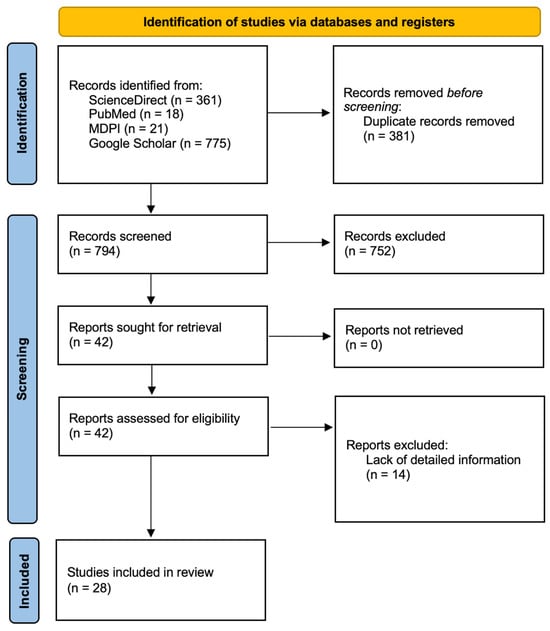
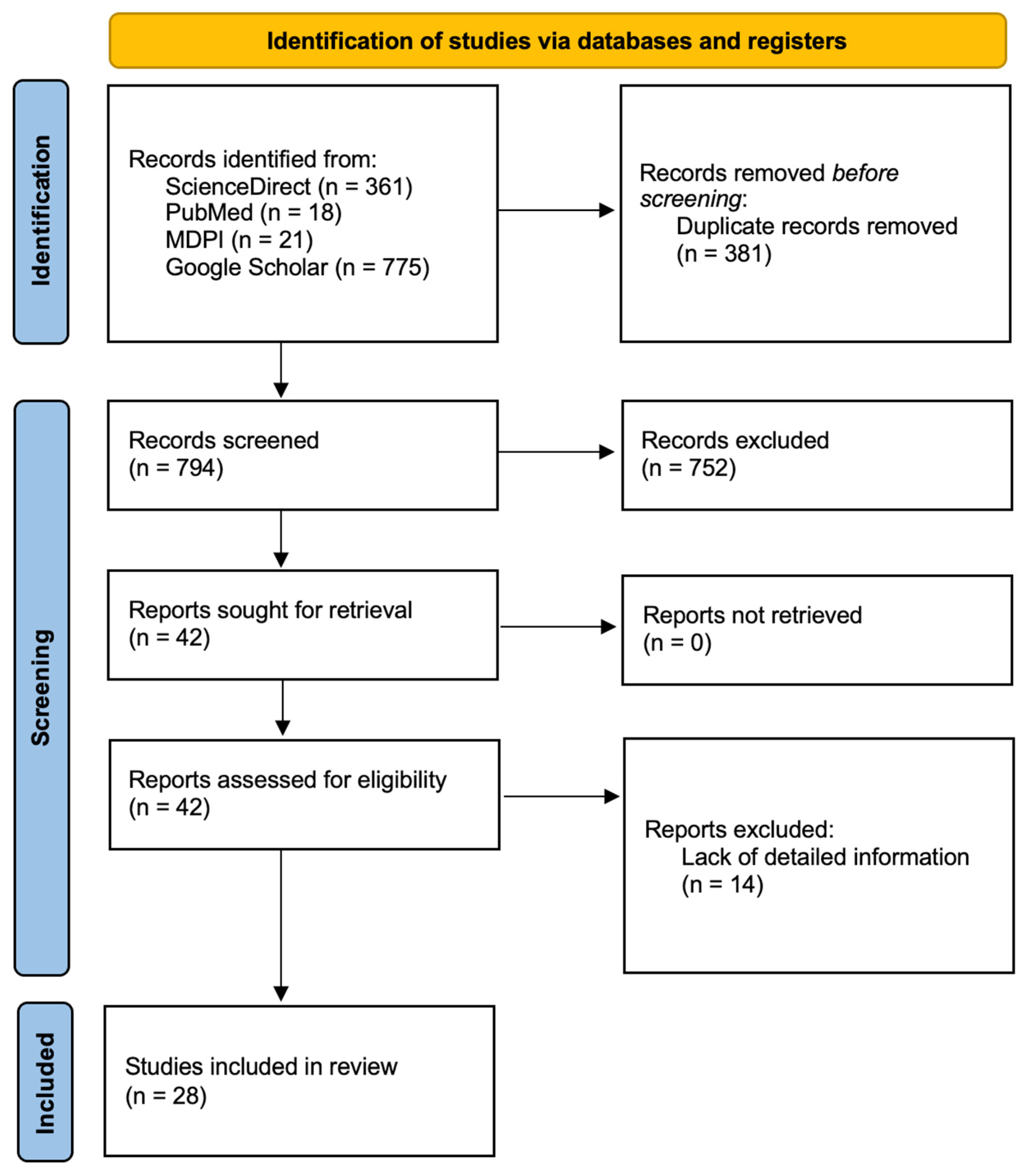
A search for relevant scientific publications identified 1175 articles published over the past 5 years (between 1 January 2021 and 31 December 2025). After analyzing the obtained sources and excluding duplicates, 28 articles were selected (Figure 1). All of these articles met the above-described criteria, were read in full and analyzed, including the list of references and appendices. The results of the analysis included information (if available) about the research object, sampling points, ML density and MP polymer identification.
Figure 1.
Flow diagram of information through the different phases of a review.
In total, 24 protected areas across different regions of the globe were included in this review. The majority of the studies were conducted in Europe (35.7%; n = 10), followed by Asia (28.6%; n = 8) and South America (17.8%; n = 5). The remaining studies were conducted in North America (n = 2) and one each in Africa, Antarctica and Australia. This uneven geographical distribution reflects differences in research capacity and the availability of monitoring programs across regions. Furthermore, this imbalance highlights the need for future research in understudied regions of the Global South where protected areas may be more vulnerable to marine litter pollution.
Most of the research articles were focused on the beach strandline (high tide line), an area greatly influenced by water and sediment dynamics. The strandline is one of the first deposition habitats of ML and MPs before they are integrated into the beach [23]. Other studies were focused on exploring different parts of the beach, including the coastline dunes, vegetation line or the entire beach area. Such methodological variations have a significant impact on the results obtained. Sampling ML across the entire beach area provides a more integrated picture of standing stock, while the exclusion of the backshore and vegetation lines may underestimate the total amount of debris that has been transported beyond the strandline. These differences in sampling location complicate direct comparisons across beaches and may introduce significant bias. The collected data on the total number of ML, its density and common materials is presented in Table 1.
Table 1.
Summary of ML characteristics detected in PAs. “+” means used in the study. “-” means not recorded in the study.
3.1. Marine Litter Detected in PAs
Most of the studies used similar approaches to sampling ML. The most common method was to survey transects along the strandline of the beach. A 100 m transect was the most frequently employed sampling unit (39.3%; n = 11), following internationally recognized protocols, such as the OSPAR guideline [16], the HELCOM guideline [17] and the NOAA protocol [18]. This methodological approach facilitates the comparison of the results from different studies and allows for the identification of temporal trends in various regions. However, notable deviations were observed in several studies: some authors used transects of varying lengths (e.g., 10 m, 30 m, 120 m) due to logistical constraints or site-specific conditions [29,34,43], while others employed different sampling units, such as quadrats [36,39,41]. Although such methodological variations are often justified by local conditions, such as beach length, they generate heterogeneity across the results and complicate direct comparison. To analyze the contamination of smaller pieces of marine litter (including MPs), authors usually used standard quadrats (1 × 1 m or 50 × 50 cm). However, Cruz-Salas A.A. et al. (2023) used a special cylindrical stainless-steel sampler to collect beach sand from the strandline [42]. Only one author included an unmanned aerial vehicle (UAV) to collect aerial imagery, which helped them to cover the study area more rapidly and provide a broader snapshot of ML accumulation [32]. The majority of studies on ML involved the direct sampling of marine debris and beach sediments, which were then analyzed in a laboratory. However, four studies also involved the dry [32,42] or wet sieving method with the help of seawater directly on the sampling points [34,38]. This approach allows for rapid assessment of contamination, makes a volume reduction and reduces logistics costs. Nevertheless, this approach does not provide a complete accounting of the number of marine microlitter.
Laboratory analysis of collected ML data typically included classification and quantification. The selected items were usually counted, measured by size and weighed. The detected items were then classified into categories and subcategories based on material type (e.g., plastic, metal or glass) and item type (e.g., fishing nets, bottles or wrappers). In three studies, the authors also identified several categories of marine litter in terms of size: macrolitter (>25 mm), mesolitter (5–25 mm), and microlitter (<5 mm), providing separate results for each category [32,34,46]. This approach allows a more accurate assessment of marine litter pollution and ensures better data comparability.
A total of 23 peer-reviewed publications (82.1%; n = 23) provided the information on both the total number of ML and its numerical density in the study area. Among them, 10 studies additionally provided data on weight density of ML. Several publications indicated the weight density of different categories of litter [28,47]. Others reported only mass density of plastic litter separately from other materials [24,25,27,40,43,44,45,46]. Comparisons among studies are difficult due to the differences in the presentation of results. For instance, numerical density (e.g., items/m2, items/100 m) and weight density (e.g., g/m2) reflect completely different aspects of marine debris pollution. Converting between these units is not possible without detailed information on particle size, polymer type and mean weight of the litter items, which is often unavailable. Furthermore, the majority of the studies also involved research outside PAs, which can sometimes complicate the analysis of the results due to the lack of detailed information. This is also the main reason for excluding publications that are not presented in this work.
Most of the studies have confirmed the relevance of the problem of marine debris pollution in the coastlines of PAs. The results demonstrated a wide variety of amounts and density of ML, which was detected in all examined coastal areas. The amounts of marine debris ranged from a few items of litter to several thousand. The lowest amount of ML was recorded in Koh Rong Archipelago Marine Fisheries Management Area in Cambodia, where 33 items were detected across 22 quadrants 1 × 1 m [26]. In contrast, the highest abundance of marine debris was found on the beaches of eight islands within the Galapagos Marine Reserve, where a total of 125,046 plastic bottles were discovered between 2018 and 2022 [33]. The highest ML densities were reported in three remote archipelagos: Pitcairn Islands Marine Reserve (53.38 ± 58.22 items/m2) [28], Chagos Marine Protected Area (3328 fragments/100 m2) [37] and Galapagos Marine Reserve (712 ± 1659 items/100 m) [33]. Despite their geographical isolation, these sites are areas of active accumulation of marine debris transported by major oceanic currents. While PAs located adjacent to urban areas of the Mediterranean Sea were not always characterized by a high density of ML [24,46]. The main factors driving the variability in pollution levels appear to be associated with recreational activities near protected areas and the efficiency of waste management practices in the surrounding regions. Nevertheless, the comparison between studies is complicated by the diversity of survey methods, the number of sampling sites, and the research periods.
The marked variability in reported ML densities across PAs, from a few items of debris to several thousand, cannot be explained solely by differences in pollution levels. A significant portion of these differences are a consequence of methodological choices. For instance, using a 100 m transect versus quadrats (e.g., 1 m2, 0.25 m2) fundamentally changes the density of ML. Transects allow the integration of litter distribution over a large area, smoothing out heterogeneity, while quadrats capture local hotspots, often yielding higher items/m2 estimates. The choice of reporting unit further exacerbates this problem by invalidating direct numerical comparisons. Moreover, the studies that reported only macrolitter (>25 mm) tend to demonstrate fewer items but higher mass, whereas those including mesolitter (5–25 mm) and microlitter (<5 mm) show significantly higher concentrations of ML [34,46]. The use of UAV by some authors [32] increases speed and spatial coverage, but introduces another layer of heterogeneity as detection limits for small particles may lead to underestimation of mesolitter and microlitter items. This underscores the need for standardization of density units to ensure reliable comparison of results in the future.
Across the reviewed studies, the authors most frequently identified land-based sources of ML entering the coastlines of PAs (64.3%; n = 18). The most common sources were associated with local recreational activities and tourism (42.9%; n = 12), reflecting the high anthropogenic pressure on MPAs during peak visitor seasons. One study identified agriculture as the primary source of ML entering the coastlines within the Punta Entinas-Sabinar Nature Reserve [27]. Despite their protected status and limited human interference, even the most remote protected areas, far from the industrial centers, such as the Antarctic Specially Protected Area [30], the Chagos Marine Protected Area [37] and Pitcairn Islands Marine Reserve [28] are not free from marine debris. ML enters the coastal ecosystems of these conserved areas from sea-based sources. Debris originates from commercial fishing activities that generate ML through unrecovered fishing gear, such as nets, ropes, and trawl floats [12]. Another important source is commercial shipping near these areas, which was identified as the dominant origin of ML in 7 articles [25,28,30,32,33,44,48]. Nevertheless, some authors note the difficulty of determining the source of marine debris, especially for fragmented items, which may be older than the time typically needed for litter to arrive from the mainland [33]. The amount of litter and its types are greatly affected by ocean currents, tide charts and the proximity to open-access recreational and industrial areas [51]. Furthermore, the presence of sensitive marine ecosystems and species may mean that some protected areas are at greater potential risk from the impacts of marine debris pollution than non-protected areas [52]. The occurrence of high ML concentrations within some PAs indicates that legal protection alone does not prevent pollution, underscoring the need for targeted mitigation measures even within conservation zones.
Plastic was the most common material of ML among all the peer-reviewed publications analyzed (100%; n = 28), followed by glass, metal and wood. The most common items of plastic litter were bottles and bottle caps, packaging wraps and bags, and fragments of various consumer products. These categories were widely reported across the majority of included studies, regardless of geographical location. Several studies highlighted the widespread presence of fishing nets and ropes, which indicates a close relationship with fishing activities near PAs [33]. This confirms that plastic is currently one of the most abundant and persistent types of pollutant in marine and coastal environments [53]. The presence of significant quantities of plastic litter is the result of an inefficient economy and a lack of recycling capacities [54]. The presence of other materials depended on local factors and was not noted in all studies.
Although most studies attribute ML to land-based sources connected with local recreational activities and tourism, this distribution depends largely on the methodological focus of each study and the geographical characteristics of PAs. The observed variability of the research objects and the results obtained significantly complicate the identification of coherent overall patterns. However, the consistent predominance of plastic across 28 studies, regardless of region, is a noteworthy result highlighting the global nature of plastic pollution. The prevalence of plastic bottles and packaging within the ML samples indicates the critical influence of regional waste management programs, the effectiveness of which directly affects the concentration of debris on the coasts. The presence of ML within PAs, including those most removed from industrial centers, highlights the urgent need for enhanced international cooperation in marine pollution control.
3.2. Microplastics Detected in PAs
More than half of the studies included identification of plastic particles smaller than 5 mm (53.6%; n = 15). The sand samples were commonly dried and sieved through a column of sieves. The first step in the extraction of MPs was density separation. The majority of the studies used a hypersaline solution, with 358.9 g of NaCl per liter of water [24,34,39,40,41,43]. Other authors used a saturated solution of CaCl2 of 1.5 g/mL or ZnCl2 of 1.6 g/mL for flotation, which are also effective extraction methods [42,44]. After that, the supernatant was filtered through filter paper using a vacuum pump. The selection of sample preparation and density separation methods has significant implications for MPs recovery, with the potential to either enhance or reduce extraction efficiency. Furthermore, the removal of organic matter is a very important step in microplastics research. Cecchi, T., 2025 highlights the importance of using H2O2 to remove organic matter, which is more environmentally friendly compared to other methods [45]. Nevertheless, this step was applied only in a few studies and many authors proceeded directly to the particle characterization and quantification phase, which involved examining the filters in order to quantify and classify MPs by shape, color and other characteristics.
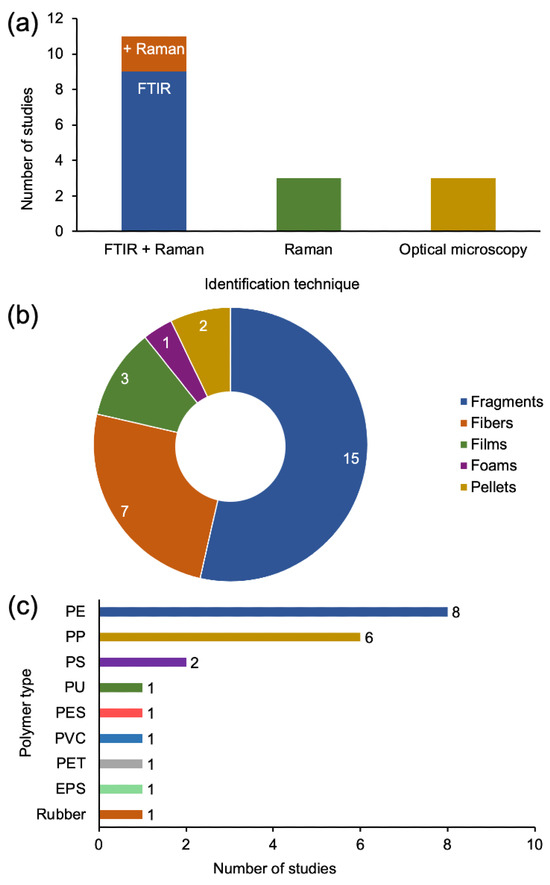
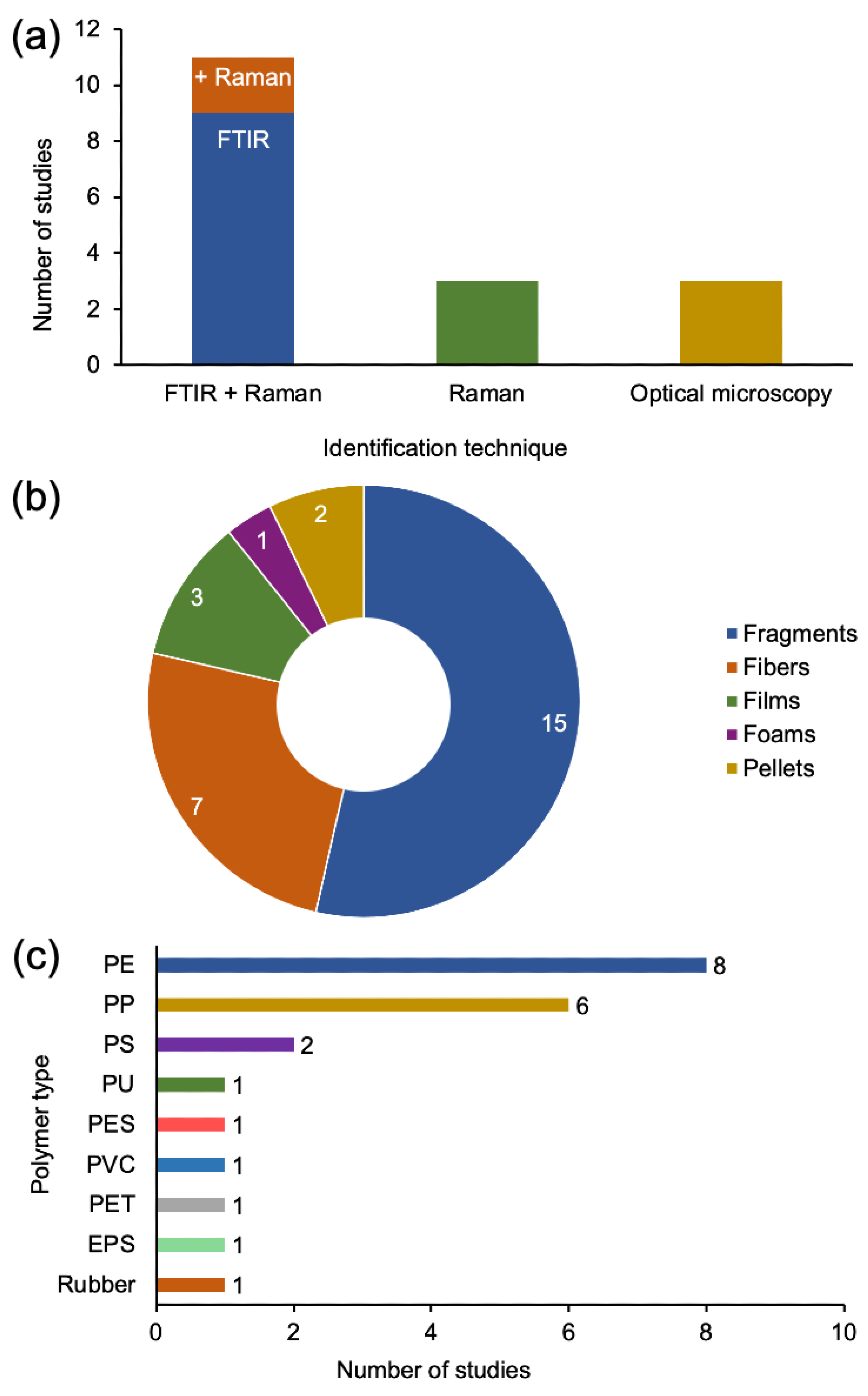
The reviewed studies employed different analytical approaches for microplastic identification (Figure 2a). Some studies (20%; n = 3) included only identification by optical microscopy [32,41,45]. Although this approach is the simplest and most economical method of analysis, it is not very accurate at identifying MPs [55]. Most of the authors (60%; n = 9) combined optical microscopy with Fourier-transform infrared spectroscopy (FTIR), which were supplemented by Raman spectroscopy in two studies [24,40]. The other studies used exclusively Raman spectroscopy [34,43,44]. The main limits of detection of microplastics are associated with the diversity of forms and types of polymers as well as applied extraction methods and laboratory equipment limitations.
Figure 2.
Overview of MPs characteristics detected in PAs: (a) distribution of identification methods used for polymer identification; (b) distribution of MP morphology, where numbers refer to the number of studies in which this morphology was predominant (>10%); (c) distribution of the polymer type, where numbers refer to the number of studies in which this type was predominant (>10%).
Many studies applied methods for preventing airborne accidental external contamination during laboratory analysis [24,27,34,36,38,39,40,41,42,44,45]. These approaches included wearing non-synthetic cotton coats, using microbiological hoods and covering beakers with aluminum foil between analysis steps. Another important point was the use of metal or glass sampling tools and laboratory equipment. Most of the studies also employed additional contamination control measures, such as procedural blanks, to eliminate secondary pollution [24,27,34,36,38,39,40,41,43,44,45]. Of the studies reviewed, only one did not use or describe methods for preventing contamination during the sampling and analysis stages [32]. The application of methods to protect MP samples from secondary contamination within laboratory conditions is a mandatory requirement when conducting such studies. This has already become the standard practice in current research in this field.
The results demonstrated a wide variety of amounts and densities of MP, which ranged from a few pieces per m2 to several thousand per m2. The lowest concentrations of microplastic (3 items/m2) were found on Gandoca beach, located within the Gandoca–Manzanillo National Wildlife Refuge in Costa Rica, and may be related to the great number of conservation areas across this stretch of coast [41]. In contrast, the highest concentrations of microplastic (13,418.86 ± 28,787.99 items/m2) were found on five beaches at two sampling locations within the Cabrera Archipelago Maritime-Terrestrial National Park in Spain, which were two orders of magnitude higher than those found in seafloor sediments [36]. This highlights that despite their protected status, MPAs are vulnerable to microplastic pollution similar to other coastal areas. Most of the studies reported that fragments were the predominant morphology of MPs, followed by fibers and films (Figure 2b). The prevalence of plastic fragments may indicate that the main source of ML was the breakdown of larger plastic items deposited in the coastal area, which confirms the long-term presence of these particles [56]. However, some studies reported the predominance of other MPs morphologies, such as fibers [24,39,44,45] and filaments [42]. Laundering processes are one of the main sources of these particles, which are released in massive numbers into the marine ecosystems via waste water effluents [57]. Sánchez-García et al. (2023) highlighted, that films were the most abundant shape of MPs collected in the Galapagos Marine Reserve. The authors suggested that this could be explained by the breakdown of fishing nets and ropes, which typically had the same color and polymer type [34]. The wide range of reported MP concentrations is significantly impacted by methodological choices in sample processing and analysis. The density separation step is a critical source of variability, as a saturated solution of NaCl (1.2 g/mL) is insufficient for extracting high-density polymers such as polyethylene terephthalate (PET) or polyvinyl chloride (PVC). As a result, this limitation can lead to the systematic underestimation of high-density polymers. Studies using denser solutions of CaCl2 or ZnCL2 for density separation report higher MP concentrations in sand samples [42,44].
The majority of the studies (80%; n = 12) also identified the colors of the microplastic particles detected [24,27,32,38,39,40,41,42,43,44,45,48]. The most common colors of MPs among all studies were black, blue, white and transparent (including colorless and muddy particles). One study additionally confirmed that the color of MPs correlates with the agricultural plastics, which were identified as their source [27]. Other authors have reported only the dominant color. The color of microplastic particles depends not only on the original color of the object but also on the processes of degradation in marine ecosystems and external contaminants [58]. A key analytical challenge is that color identification is subjective and lacks standardized quantification across studies. The reporting of color distribution provides only indirect information about particle degradation and requires a closer connection with polymer identification. Color and its intensity are often used as indicators of particle degradation stage; however, without integration with chemical characteristics, such interpretations remain inconclusive. Furthermore, the identification of MPs colors plays a very important role, as the presence of colorants can impact degradation and consumption of particles by species [59]. Therefore, future studies should focus more closely on the relationships between the color, polymer type and morphology of detected MP particles.
All of the studies focused on microplastic pollution identified common polymer types, except those which used only optical microscopy (Figure 2c). The majority of the studies (46.6%; n = 7) showed that polyethylene (PE) was the dominant type of polymer found in coastal environments of protected areas [27,36,38,39,40,42,43]. It is the most highly produced plastic globally and is widely used as packaging for food, industrial and medical products [60]. Two studies additionally reported other types of polyethylene, such as high-density polyethylene (HDPE) and low-density polyethylene (LDPE) [36,39]. The second most common polymer type was polypropylene (PP), a material that is widely used for packaging, consumer products and medical devices [61,62]. Other identified polymer types were polystyrene (PS), rubber, polyurethane (PU) and polyester (PES). These polymers are also widely used in the production of cutlery, insulation, electronic equipment, construction and the textile industry [63,64,65].
The choice of analytical approach for MP identification significantly influences the results. Studies based solely on optical microscopy may yield a high false positive rate, as organic or mineral fragments can be misidentified as plastic. The use of the needle test in some studies [32] improves identification accuracy, but does not fully replace spectroscopy analysis of the detected particles. Furthermore, visual identification remains a highly subjective approach and therefore requires independent cross-checking. Conversely, FTIR and Raman spectroscopy provide chemical characterization, reducing false positives. The combination of these methods enhances the reliability and accuracy of MP identification [24,40]. The use of spectral analysis methods in future studies should be considered mandatory for accurate MP identification. A promising direction could involve the integration of machine learning algorithms to accelerate the identification and analysis of MP particles.
The results indicate the wide variety of morphological characteristics, color range and polymer types of the MPs detected. This indicates both the presence of multiple sources from which MPs enter the coastal environments of PAs, and the complexity of the accumulation processes. However, the reported abundance and composition of MPs are highly sensitive to selected methodological approaches. Key factors include: sampling depth of sand sediments, mesh size used during sample processing, methods used for density separation and polymer identification. Sampling depth and sieve mesh size exert a significant influence on the quantification of small microplastic particles, which typically accumulate in deeper layers of the beach sediment [66]. The selected extraction solution exerts a significant influence on the separation and recovery of MPs [67]. Sodium chloride (NaCl), which is widely used in the studies reviewed, only reaches a density of 1.2 g/cm3 and does not allow the extraction of high-density polymers [68]. Finally, the choice of polymer identification method introduces variability into both the detection limits and the reliability of the data obtained, as it is highly dependent on sample preparation.
3.3. Knowledge Gaps and Recommendations for Future Research
Over the past five years, there has been a noticeable increase in the number of publications aimed at studying the problem of ML and MP pollution in marine and coastal environments. However, despite this progress, some knowledge gaps still remain:
- The majority of the studies reviewed were conducted in the territory of developed countries in Europe, while the PAs in Africa and Oceania remain less studied. However, the present review also demonstrated a very low level of research coverage of PAs in North America, where only two studies on the topic were found. This highlights a critical knowledge gap and underscores the need for expanded monitoring efforts in this region. The developing countries contribute over 60% of world’s plastic production and consumption [69]. Additionally, mismanaged plastic waste and rapid urbanization worsen the situation, leading to environmental degradation and economic decline in these nations [70]. Future research on ML and MP pollution should focus on the vulnerable protected natural areas in developing countries in order to accelerate the development of protection and management of these territories.
- The existing data on this problem is limited to single sites or short research periods. Short-term studies are highly vulnerable to seasonal and interannual variability, potentially capturing only temporary spikes in ML and MP pollution. In their systematic review, Marthe Larsen Haarr et al. (2022) indicated the importance of focusing on the rate of litter accumulation in addition to the standing stock [71]. This should help to understand not only the current level of pollution, but also the dynamics of change. However, this approach requires long-term monitoring, which can be difficult to perform due to the protected status of PAs. The implementation of persistent monitoring programs faces significant difficulties associated with logistics and administrative issues, as well as high operational costs. Overcoming these barriers is currently challenging and highlights the need for international collaboration and integration of citizen science.
- Another important issue is the lack of detailed information which is provided in the studies. Many authors provided limited data on the number of ML, its numerical and weight density, which is insufficient for a comprehensive understanding of the problem. To compute the ML budget in the sea it is recommended providing data on not only the number of items per area but also the weight per unit area. This approach is also necessary for coastal research. It could help to identify dynamics of change and facilitate comparison between different studies. Furthermore, if the research involves sites outside the PAs, it is strictly necessary to provide separate results of the analysis. One additional direction for future research may involve the study of atmospheric deposition as a pathway of MP pollution in PAs. Recent studies have provided evidence of airborne MPs and their connection with long-range atmospheric transport and wet deposition processes [72], which may contribute to MP inputs into remote protected environments. Future monitoring programs should therefore consider integrating atmospheric deposition, precipitation, and cloud water sampling with conventional beach and sediment surveys.
- Finally, the lack of standardization of methods remains one of the biggest issues. The considerable variability observed among the 28 selected studies appears to be primarily attributable to methodological heterogeneity rather than to environmental variability. At the present time, there is no unified method for sampling and laboratory analysis of ML and MPs. The use of different methods for the extraction and identification of microplastics complicates the identification of accumulation patterns, as well as comparisons within and across the different PAs in time and space. In addition, it is strictly necessary to observe the requirements for preventing airborne accidental external contamination during laboratory analysis. Although greater methodological harmonization is clearly desirable, the development of universally accepted protocols remains challenging because analytical techniques for microplastic detection continue to evolve rapidly. The emergence of advanced thermal methods, such as pyrolysis-gas chromatography-mass spectrometry (Py-GC–MS), provides a sensitive analytical framework for the identification and quantification of MPs in various environmental matrices [73]. Further standardization of methodologies is vital for ensuring the reliability of the results and their comparability. It is also crucial to develop effective monitoring approaches that directly assess the effectiveness of the measures taken.
4. Conclusions
In this review, 28 peer-reviewed scientific articles on the problem of marine litter and microplastic pollution of protected areas have been analyzed. Despite the growing research on this problem, key gaps still remain unsolved. At the present time, there is still no unified methodology for collecting and analyzing samples of marine debris and plastics. The lack of detailed and standardized reporting and existing differences in polymer identification methods also complicate the comparative analysis of the results. To address these challenges and improve the reliability of the study, the following indicators should be prioritized in future monitoring programs:
- Standardized density units (e.g., items/m2 for beach survey and items/kg for sand sediments).
- Accumulation rate in addition to the standing stock.
- Polymer composition identified through validated spectroscopic techniques.
- Identification of ML sources (where possible).
Future research should focus on the investigation of previously unexplored PAs in developing countries of the Global South. At the same time, this review emphasizes the limited research coverage of protected natural areas in North America, which are also of great interest due to the high level of urbanization and associated anthropogenic pressures.
Future research would benefit from international collaborative initiatives focused on harmonizing sampling protocols, analytical methodologies, and reporting frameworks. Collaborative efforts among international and regional expert groups and programs, such as GESAMP, GPML, NOAA, OSPAR, are essential for enhancing methodological comparability and the reliability of environmental monitoring in PAs. The Global Plastic Pollution Treaty would address the plastics life cycle and should encourage international cooperation to solve the problem of marine litter pollution. However, this international agreement is still under negotiation and has made no progress. Therefore, scientific research and the collection of objective data remain crucial. Marine protected areas play a vital role in protecting unique marine and coastal ecosystems. The study and monitoring of these areas can help to raise public awareness of the problem of anthropogenic litter pollution and draw attention to other coastal areas.
In summary, monitoring marine debris pollution in the coastal zones of PAs is one of the most essential ways of maintaining their effective operation. This review emphasizes the importance of applying unified methods and conducting long-term monitoring experiments in future research. In addition, it is very important to maintain objectivity and provide comprehensive and standardized reporting of research findings.
Supplementary Materials
The following supporting information can be downloaded at: https://www.mdpi.com/article/10.3390/pollutants6030043/s1, Supplementary Table S1. PRISMA 2020 Checklist.
Author Contributions
G.M., conceptualization, methodology, investigation, writing—original draft preparation, visualization; E.A., writing—review and editing, supervision, project administration, funding acquisition. All authors have read and agreed to the published version of the manuscript.
Funding
This study was supported by the Ministry of Science and Higher Education of the Russian Federation (state contract no. №075-15-2025-016 from 28 February 2025 MegaGrant).
Data Availability Statement
No new data were created or analyzed in this study. Data sharing is not applicable to this article.
Conflicts of Interest
The authors declare no conflict of interest.
Abbreviations
The following abbreviations are used in this manuscript:
| UNEP | United Nations Environment Program |
| ML | Marine litter |
| MPs | Microplastics |
| IUCN | International Union for Conservation of Nature |
| PAs | Protected areas |
| MPAs | Marine protected areas |
| UAV | Unmanned aerial vehicle |
| FTIR | Fourier transform infrared spectroscopy |
| PET | Polyethylene terephthalate |
| PVC | Polyvinyl chloride |
| PE | Polyethylene |
| HDPE | High-density polyethylene |
| LDPE | Low-density polyethylene |
| PP | Polypropylene |
| PS | Polystyrene |
| PU | Polyurethane |
| PES | Polyethersulfone |
| Py-GC–MS | Pyrolysis-gas chromatography-mass spectrometry |
References
- Dokl, M.; Copot, A.; Krajnc, D.; Van Fan, Y.; Vujanović, A.; Aviso, K.B.; Tan, R.R.; Kravanja, Z.; Čuček, L. Global projections of plastic use, end-of-life fate and potential changes in consumption, reduction, Recycling and Replacement with Bioplastics to 2050. Sustain. Prod. Consum. 2024, 51, 498–518. [Google Scholar] [CrossRef] [Scilit]
- Lebreton, L.; Andrady, A. Future scenarios of global plastic waste generation and disposal. Palgrave Commun. 2019, 5, 6. [Google Scholar] [CrossRef] [Scilit]
- Pan, D.; Su, F.; Liu, C.; Guo, Z. Research progress for plastic waste management and manufacture of value-added products. Adv. Compos. Hybrid Mater. 2020, 3, 443–461. [Google Scholar] [CrossRef] [Scilit]
- Kushwaha, M.; Shankar, S.; Goel, D.; Singh, S.; Rahul, J.; Rachna, K.; Singh, J. Microplastics pollution in the marine environment: A review of sources, impacts and mitigation. Mar. Pollut. Bull. 2024, 209, 117109. [Google Scholar] [CrossRef] [Scilit] [PubMed]
- UNEP. Marine Litter: A Global Challenge; UNEP: Nairobi, Kenya, 2009; p. 232. ISBN 978-92-807-3029-6. [Google Scholar]
- Thanigaivel, S.; Kamalesh, R.; Ragini, Y.; Saravanan, A.; Vickram, A.; Abirami, M.; Thiruvengadam, S. Microplastic pollution in marine environments: An in-depth analysis of advanced monitoring techniques, removal technologies, and future challenges. Mar. Environ. Res. 2025, 205, 106993. [Google Scholar] [CrossRef] [Scilit] [PubMed]
- Rangel-Buitrago, N.; Williams, A.T.; Neal, W.J.; Gracia, C.A.; Micallef, A. Litter in coastal and marine environments. Mar. Pollut. Bull. 2022, 177, 113546. [Google Scholar] [CrossRef] [Scilit] [PubMed]
- Dudley, N. Guidelines for Applying Protected Area Management Categories; IUCN: Gland, Switzerland, 2008; ISBN 978-2-8317-1086-0. [Google Scholar]
- Marty-Gastaldi, J.; Lazaric, N.; Dérijard, B. Urban Marine Protected Areas (MPAs): A systematic review of governance, management and human impact. Ocean Coast. Manag. 2025, 269, 107811. [Google Scholar] [CrossRef] [Scilit]
- Hoppit, G.; Nurkse, K.; Beleem, I.; Cadoni, N.; Crowe, T.; Bekaert, M.; Bongiorni, L.; Dvorski, K.; Everaert, G.; Frau, F.; et al. Enhancing marine protected areas with effective ecological and environmental data integration. Ecol. Indic. 2025, 178, 114119. [Google Scholar] [CrossRef] [Scilit]
- Compa, M.; Alomar, C.; Morató, M.; Álvarez, E.; Deudero, S. Are the seafloors of marine protected areas sinks for marine litter? Composition and spatial distribution in Cabrera National Park. Sci. Total Environ. 2022, 819, 152915. [Google Scholar] [CrossRef] [Scilit] [PubMed]
- Baroth, A.; Mamgain, S.; Sivakumar, K.; Hatkar, P.S.; Pathan, S. Role of protected area in reducing marine and plastic litter: A case study from India’s first Marine Protected Area and comparison with Non-Protected Areas. J. Ind. Ecol. 2022, 26, 2080–2091. [Google Scholar] [CrossRef] [Scilit]
- Costanzo, L.G.; Marletta, G.; Alongi, G. Assessment of Marine Litter in the Coralligenous Habitat of a Marine Protected Area along the Ionian Coast of Sicily (Central Mediterranean). J. Mar. Sci. Eng. 2020, 8, 656. [Google Scholar] [CrossRef] [Scilit]
- Rosas, E.; Martins, F.; Janeiro, J. Marine Litter on the Coast of the Algarve: Main Sources and Distribution Using a Modeling Approach. J. Mar. Sci. Eng. 2021, 9, 412. [Google Scholar] [CrossRef] [Scilit]
- Ibrahim, E.A.A.; Osman, N.A.R.; Eisa, O.A.M. Status of the Beach Litter in the UNESCO World Heritage Site of Dungonab and Mukkawar Island Marine National Park in Sudan, Red Sea. Int. J. Ecol. 2020, 2020, 1–8. [Google Scholar] [CrossRef] [Scilit]
- OSPAR. Guideline for Monitoring Marine Litter on the Beaches in the OSPAR Maritime Area; OSPAR Commission: London, UK, 2010; ISBN 90-3631-973. [Google Scholar]
- HELCOM EG Marine Litter. Updated HELCOM Guidelines for Monitoring of Beach Litter; HELCOM: Helsinki, Finland, 2025. [Google Scholar]
- Opfer, S.; Arthur, C.; Lippiatt, S. NOAA Marine Debris Shoreline Survey Field Guide; National Oceanic and Atmospheric Administration: Silver Spring, MD, USA, 2012.
- Williams, A.; Rangel-Buitrago, N. Marine Litter: Solutions for a Major Environmental Problem. J. Coast. Res. 2019, 35, 648–663. [Google Scholar] [CrossRef] [Scilit]
- Veiga, J.M.; Fleet, D.; Kinsey, S.; Nilsson, P.; Vlachogianni, T.; Werner, S.; Galgani, F.; Thompson, R.C.; Dagevos, J.; Gago, J.; et al. Identifying Sources of Marine Litter—MSFD GES TG Marine Litter Thematic Report; JRC Technical Report; EUR 28309; Publications Office of the European Union: Luxembourg, 2016. [Google Scholar] [CrossRef]
- Page, M.J.; McKenzie, J.E.; Bossuyt, P.M.; Boutron, I.; Hoffmann, T.C.; Mulrow, C.D.; Shamseer, L.; Tetzlaff, J.M.; Akl, E.A.; Brennan, S.E.; et al. The PRISMA 2020 statement: An updated guideline for reporting systematic reviews. BMJ 2021, 372, n71. [Google Scholar] [CrossRef] [Scilit] [PubMed]
- Page, M.J.; Moher, D.; Bossuyt, P.M.; Boutron, I.; Hoffmann, T.C.; Mulrow, C.D.; Shamseer, L.; Tetzlaff, J.M.; Akl, E.A.; Brennan, S.E.; et al. PRISMA 2020 explanation and elaboration: Updated guidance and exemplars for reporting systematic reviews. BMJ 2021, 372, n160. [Google Scholar] [CrossRef] [PubMed]
- Pinheiro, L.M.; Monteiro, R.C.P.; Ivar do Sul, J.A.; Costa, M.F. Do beachrocks affect microplastic deposition on the strandline of sandy beaches? Mar. Pollut. Bull. 2019, 141, 569–572. [Google Scholar] [CrossRef] [Scilit] [PubMed]
- Branca, C.; Fabrizi, F.; Mghili, B.; Conti-Nibali, V.; Gunasekaran, K.; Bottari, T.; Mancuso, M.; D’angelo, G. Plastic pollution in a special protected area for migratory birds. Sci. Total Environ. 2025, 958, 177918. [Google Scholar] [CrossRef] [Scilit] [PubMed]
- Wang, K.; Wang, S.; Sun, J.; Zou, Q.; Ou, J.; Li, L.; Zhang, S.; Lin, X.; Wang, K. The distribution characteristics of marine litter in the intertidal zone of Lvhua Island and its impact on the macrobenthic community structure. Mar. Environ. Res. 2025, 212, 107517. [Google Scholar] [CrossRef] [Scilit] [PubMed]
- Smith, G.; Garaba, S.P. Insights from monitoring abundances and characteristics of plastic leakage in city waterways and tourist beaches of Cambodia. Environ. Chall. 2025, 19, 101121. [Google Scholar] [CrossRef] [Scilit]
- Nuñez-Rubio, M.; Edo, C.; Gálvez-Blanca, V.; Valenzuela-Lázaro, J.M.; Pulido-Reyes, G.; González-Pleiter, M.; Fernández-García-Del-Rincón, L.; Leganés, F.; Fernández-Piñas, F.; Rosal, R. Beyond the greenhouse: The spread of plastic pollution from an intensively cultivated agricultural area. Emerg. Contam. 2025, 11, 100560. [Google Scholar] [CrossRef] [Scilit]
- Dijkstra, H. The Henderson Island microcosm: Plastic pollution accumulation in the South Pacific. Mar. Pollut. Bull. 2025, 219, 118095. [Google Scholar] [CrossRef] [Scilit] [PubMed]
- Portz, L.; Murgas-Vargas, A.; Campos, P.T.; Villate-Daza, D.A.; Manzolli, R.P. How natural disasters affect the distribution of marine litter in protected island ecosystems (Seaflower Biosphere Reserve—Colombia). Mar. Pollut. Bull. 2025, 211, 117458. [Google Scholar] [CrossRef] [Scilit] [PubMed]
- Wilkie Johnston, L.; Manno, C.; Salinas, C.X. Assessment of plastic debris and biofouling in a specially protected area of the Antarctic Peninsula region. Mar. Pollut. Bull. 2024, 207, 116844. [Google Scholar] [CrossRef] [Scilit] [PubMed]
- Calderisi, G.; Cogoni, D.; Fenu, G. Assessing beach litter trapping efficiency in Mediterranean sandy coasts: A comparative study between typical and invaded embryonic dunes. Reg. Stud. Mar. Sci. 2024, 74, 103532. [Google Scholar] [CrossRef] [Scilit]
- Sousa-Guedes, D.; Bessa, F.; Queiruga, A.; Teixeira, L.; Reis, V.; Gonçalves, J.A.; Marco, A.; Sillero, N. Lost and found: Patterns of marine litter accumulation on the remote Island of Santa Luzia, Cabo Verde. Environ. Pollut. 2024, 344, 123338. [Google Scholar] [CrossRef] [Scilit] [PubMed]
- Benito-Kaesbach, A.; Suárez-Moncada, J.; Velastegui, A.; Moreno-Mendoza, J.; Vera-Zambrano, M.; Avendaño, U.; Ryan, P.G.; Sanz-Lázaro, C. Understanding the sources of marine litter in remote islands: The Galapagos islands as a case study. Environ. Pollut. 2024, 347, 123772. [Google Scholar] [CrossRef] [Scilit] [PubMed]
- Sánchez-García, N.; Sanz-Lázaro, C. Darwin’s paradise contaminated by marine debris. Understanding their sources and accumulation dynamics. Environ. Pollut. 2023, 324, 121310. [Google Scholar] [CrossRef] [Scilit] [PubMed]
- Mancuso, M.; Genovese, G.; Porcino, N.; Natale, S.; Crisafulli, A.; Spagnuolo, D.; Catalfamo, M.; Morabito, M.; Bottari, T. Psammophytes as traps for beach litter in the Strait of Messina (Mediterranean Sea). Reg. Stud. Mar. Sci. 2023, 65, 103057. [Google Scholar] [CrossRef] [Scilit]
- Fagiano, V.; Compa, M.; Alomar, C.; Rios-Fuster, B.; Morató, M.; Capó, X.; Deudero, S. Breaking the paradigm: Marine sediments hold two-fold microplastics than sea surface waters and are dominated by fibers. Sci. Total Environ. 2023, 858, 159722. [Google Scholar] [CrossRef] [Scilit] [PubMed]
- Hoare, V.; Balmond, N.A.; Hays, G.; Jones, R.; Koldewey, H.; Laloë, J.-O.; Levy, E.; Llewellyn, F.; Morrall, H.; Esteban, N. Spatial variation of plastic debris on important turtle nesting beaches of the remote Chagos Archipelago, Indian Ocean. Mar. Pollut. Bull. 2022, 181, 113868. [Google Scholar] [CrossRef] [Scilit] [PubMed]
- Jones, J.S.; Guézou, A.; Medor, S.; Nickson, C.; Savage, G.; Alarcón-Ruales, D.; Galloway, T.S.; Muñoz-Pérez, J.P.; Nelms, S.E.; Porter, A.; et al. Microplastic distribution and composition on two Galápagos island beaches, Ecuador: Verifying the use of citizen science derived data in long-term monitoring. Environ. Pollut. 2022, 311, 120011. [Google Scholar] [CrossRef] [Scilit] [PubMed]
- Novillo-Sanjuan, O.; Raga, J.A.; Tomás, J. Microdebris in three Spanish Mediterranean beaches located at a sporadic loggerhead turtles’ (Caretta caretta) nesting area. Reg. Stud. Mar. Sci. 2022, 49, 102116. [Google Scholar] [CrossRef] [Scilit]
- Sevwandi Dharmadasa, W.L.S.; Andrady, A.L.; Kumara, P.B.T.P.; Maes, T.; Gangabadage, C.S. Microplastic pollution in Marine Protected Areas of Southern Sri Lanka. Mar. Pollut. Bull. 2021, 168, 112462. [Google Scholar] [CrossRef] [Scilit] [PubMed]
- Madureira, E.A.L.; da Silva, A.L.C.; Barrantes-Castillo, G.; de Araújo, F.V. Occurrence and Distribution of Microplastics on the Beaches of Limón on the Southern Caribbean Coast of Costa Rica. Micro 2025, 5, 1. [Google Scholar] [CrossRef] [Scilit]
- Cruz-Salas, A.A.; Alvarez-Zeferino, J.C.; Tapia-Fuentes, J.; Lobato-Rocha, S.L.D.; Vázquez-Morillas, A.; Ojeda-Benítez, S.; Cruz-Sotelo, S.E. Presence of Microplastics in the Vaquita Marina Protection Zone in Baja California, Mexico. Microplastics 2023, 2, 422–436. [Google Scholar] [CrossRef] [Scilit]
- Khuyen, V.T.K.; Le, D.V.; Fischer, A.R.; Dornack, C. Comparison of microplastic pollution in beach sediment and seawater at UNESCO Can Gio Mangrove Biosphere Reserve. Glob. Chall. 2021, 5, 2100044. [Google Scholar] [CrossRef] [Scilit] [PubMed]
- Esiukova, E.; Lobchuk, O.; Haseler, M.; Chubarenko, I. Microplastic contamination of sandy beaches of national parks, protected and recreational areas in southern parts of the Baltic Sea. Mar. Pollut. Bull. 2021, 173, 113002. [Google Scholar] [CrossRef] [Scilit] [PubMed]
- Cecchi, T. Microplastics in Sand: Green Protocol for Expert Citizen Science over Large Geographical Areas. Appl. Sci. 2025, 15, 13007. [Google Scholar] [CrossRef] [Scilit]
- Corbari, L.; Berlino, M.; Milivojevic, A.; Botero Angel, A.M.; Bosch-Belmar, M.; Capodici, F.; Ciraolo, G.; Sarà, G.; Mangano, M.C. Spatial Patterns and Characterization of Marine Litter from Sandy Beaches Facing an Urban Area and a Marine Protected Area. Front. Mar. Sci. 2025, 12, 1611650. [Google Scholar] [CrossRef] [Scilit]
- Grillo, A.C.; Mello, T.J. Marine Debris in the Fernando de Noronha Archipelago, a Remote Oceanic Marine Protected Area in Tropical SW Atlantic. Mar. Pollut. Bull. 2021, 164, 112021. [Google Scholar] [CrossRef] [Scilit] [PubMed]
- Galli, M.; Baini, M.; Panti, C.; Tepsich, P.; Rosso, M.; Giannini, F.; Galgani, F.; Fossi, M.C. Paraffin waxes in the North-Western Mediterranean Sea: A comprehensive assessment in the Pelagos Sanctuary, a Specially Protected Area of Mediterranean Importance. J. Hazard. Mater. 2024, 467, 133677. [Google Scholar] [CrossRef] [Scilit] [PubMed]
- Acot, F.T., Jr.; Sajorne, R.E.; Omar, N.-A.K.; Suson, P.D.; Rallos, L.E.E.; Bacosa, H.P. Unraveling Macroplastic Pollution in Rural and Urban Beaches in Sarangani Bay Protected Seascape, Mindanao, Philippines. J. Mar. Sci. Eng. 2022, 10, 1532. [Google Scholar] [CrossRef] [Scilit]
- Lim, E.V.; Nilamani, N.; Razalli, N.M.; Zhang, S.; Li, H.; Haron, M.L.; Abdullah, A.L.; Yasin, Z.; Zanuri, N.M.; Tan Shau Hwai, A. Abundance and Distribution of Macro- and Mesoplastic Debris on Selected Beaches in the Northern Strait of Malacca. J. Mar. Sci. Eng. 2023, 11, 1057. [Google Scholar] [CrossRef] [Scilit]
- Galgani, F.; Hanke, G.; Maes, T. Global distribution, composition and abundance of marine litter. In Marine Anthropogenic Litter; Springer: Cham, Switzerland, 2015; ISBN 9783319165103. [Google Scholar] [CrossRef] [Scilit]
- Nelms, S.E.; Eyles, L.; Godley, B.J.; Richardson, P.B.; Selley, H.; Solandt, J.-L.; Witt, M.J. Investigating the distribution and regional occurrence of anthropogenic litter in English marine protected areas using 25 years of citizen-science beach clean data. Environ. Pollut. 2020, 263, 114365. [Google Scholar] [CrossRef] [Scilit] [PubMed]
- Muñiz, R.; Rahman, S. Microplastics in coastal and marine environments: A critical issue of plastic pollution on marine organisms, seafood contaminations, and human health implications. J. Hazard. Mater. Adv. 2025, 18, 100663. [Google Scholar] [CrossRef] [Scilit]
- Abalansa, S.; El Mahrad, B.; Vondolia, G.K.; Icely, J.; Newton, A. The Marine Plastic Litter Issue: A Social-Economic Analysis. Sustainability 2020, 12, 8677. [Google Scholar] [CrossRef] [Scilit]
- Huang, Z.; Hu, B.; Wang, H. Analytical methods for microplastics in the environment: A review. Environ. Chem. Lett. 2023, 21, 383–401. [Google Scholar] [CrossRef] [Scilit] [PubMed]
- Costa, M.F.; Sul, J.A.I.D.; Silva-Cavalcanti, J.S.; Araújo, M.C.B.; Spengler, Â.; Tourinho, P.S. On the importance of size of plastic fragments and pellets on the strandline: A snapshot of a Brazilian beach. Environ. Monit. Assess. 2010, 168, 299–304. [Google Scholar] [CrossRef] [Scilit] [PubMed]
- Acharya, S.; Rumi, S.S.; Hu, Y.; Abidi, N. Microfibers from synthetic textiles as a major source of microplastics in the environment: A review. Text. Res. J. 2021, 91, 2136–2156. [Google Scholar] [CrossRef] [Scilit]
- Borriello, L.; Scivicco, M.; Cacciola, N.A.; Esposito, F.; Severino, L.; Cirillo, T. Microplastics, a Global Issue: Human Exposure through Environmental and Dietary Sources. Foods 2023, 12, 3396. [Google Scholar] [CrossRef] [Scilit] [PubMed]
- Asim, N.; Zulkifli, A.A.B.; Nazri, N.S.; Torkashvand, M.; Badiei, M.; Rajabi, A.; Mohammad, M. Colours and microplastics: Bridging the gap between art, science and sustainability. Sustain. Mater. Technol. 2024, 42, e01152. [Google Scholar] [CrossRef] [Scilit]
- Kowalczyk, P.; Kadac-Czapska, K.; Grembecka, M. Polyethylene Packaging as a Source of Microplastics: Current Knowledge and Future Directions on Food Contamination. Foods 2025, 14, 2408. [Google Scholar] [CrossRef] [Scilit] [PubMed]
- Hossain, T.; Shahid, A.; Mahmud, N.; Habib, A.; Rana, M.; Khan, S.A.; Hossain, D. Research and application of polypropylene: A review. Discov. Nano 2024, 19, 2. [Google Scholar] [CrossRef] [Scilit] [PubMed]
- Maurya, A.K.; Manik, G. Advances towards development of industrially relevant short natural fiber reinforced and hybridized polypropylene composites for various industrial applications: A review. J. Polym. Res. 2023, 30, 47. [Google Scholar] [CrossRef] [Scilit]
- Chen, H.; Thomas, K.V.; Rauert, C. Evaluating the influence of polystyrene standards on quantification in environmental samples. Microplastics Nanoplastics 2025, 5, 29. [Google Scholar] [CrossRef] [Scilit]
- Akindoyo, J.O.; Beg, M.D.H.; Ghazali, S.; Islam, M.R.; Jeyaratnam, N.; Yuvaraj, A.R. Polyurethane types, synthesis and applications—A review. RSC Adv. 2016, 6, 114453–114482. [Google Scholar] [CrossRef] [Scilit]
- Klinkhammer, K.; Kolbe, S.; Brandt, S.; Meyer, J.; Ratovo, K.; Bendt, E.; Rabe, M. Release of fibrous microplastics from functional polyester garments through household washing. Front. Environ. Sci. 2024, 12, 1330922. [Google Scholar] [CrossRef] [Scilit]
- Pham, C.K.; Estevez, S.G.; Pereira, J.M.; Herrera, L.; Rodríguez, Y.; Domínguez-Hernández, C.; Villanova-Solano, C.; Hernández-Sánchez, C.; Díaz-Peña, F.J.; Hernández-Borges, J. Three-dimensional evaluation of beaches of oceanic islands as reservoirs of plastic particles in the open ocean. Sci. Total Environ. 2023, 900, 165798. [Google Scholar] [CrossRef] [Scilit] [PubMed]
- Crutchett, T.W.; Bornt, K.R. A simple overflow density separation method that recovers >95% of dense microplastics from sediment. MethodsX 2024, 12, 102638. [Google Scholar] [CrossRef] [Scilit] [PubMed]
- Gran, A.; Vidal-Barrachina, D.; Casado-Coy, N.; Encizo-Cuartas, D.; Masó-Herrero, S.; Sanz-Lazaro, C. Comparing methods for optimising microplastic extraction in sediment through density separation. Environ. Pollut. 2025, 383, 126894. [Google Scholar] [CrossRef] [Scilit] [PubMed]
- Ta, A.T.; Promchan, N. Microplastics in wastewater from developing countries: A comprehensive review and methodology suggestions. TrAC Trends Anal. Chem. 2024, 171, 117537. [Google Scholar] [CrossRef] [Scilit]
- Sowmya, S.N.; Haldar, S.; Chanda, V.; Muralidaran, Y.; Mishra, P. Impact of microplastics on economic condition in underdeveloped nations. Microplastics 2025, 21, 481–508. [Google Scholar] [CrossRef] [Scilit]
- Haarr, M.L.; Falk-Andersson, J.; Fabres, J. Global marine litter research 2015–2020: Geographical and methodological trends. Sci. Total Environ. 2022, 820, 153162. [Google Scholar] [CrossRef] [Scilit] [PubMed]
- Wang, Y.; Okochi, H.; Tani, Y.; Hayami, H.; Minami, Y.; Katsumi, N.; Takeuchi, M.; Sorimachi, A.; Fujii, Y.; Kajino, M.; et al. Airborne hydrophilic microplastics in cloud water at high altitudes and their role in cloud formation. Environ. Chem. Lett. 2023, 21, 3055–3062. [Google Scholar] [CrossRef] [Scilit]
- Lemée, L.; Puydupin, A.; Aubertheau, E.; Froger, E.; Mondamert, L.; Labanowski, J. Advancing microplastic analysis: Pyrolysis-GC–MS method development and validation for small polymer particles in complex environmental matrices. J. Hazard. Mater. Adv. 2026, 22, 101228. [Google Scholar] [CrossRef] [Scilit]

Disclaimer/Publisher’s Note: The statements, opinions and data contained in all publications are solely those of the individual author(s) and contributor(s) and not of MDPI and/or the editor(s). MDPI and/or the editor(s) disclaim responsibility for any injury to people or property resulting from any ideas, methods, instructions or products referred to in the content. |
© 2026 by the authors. Licensee MDPI, Basel, Switzerland. This article is an open access article distributed under the terms and conditions of the Creative Commons Attribution (CC BY) license.