


Abstract
Port-related maritime emissions constitute a significant source of urban air pollution and greenhouse gas emissions, particularly in rapidly developing coastal cities. Within this context, the present study quantifies ship-related emissions at the Port of Casablanca, Morocco’s largest and most strategically important port, and evaluates their associated environmental and socio-economic impacts. A bottom-up methodology was applied to estimate emissions from vessel operations between 2017 and 2021. The inventory integrates vessel characteristics, engine specifications, operational load factors, emission factors, and the duration of maneuvering and hotelling phases to estimate emissions of CO2, SO2, NOx, CO, NMVOCs, PM, PM10, and PM2.5. The emission inventory was subsequently coupled with damage cost factors to assess the external costs associated with shipping emissions. The obtained results demonstrate that CO2 was the dominant emitted pollutant, representing approximately 97% of total emissions, whereas NOx and SO2 accounted for 2% and 1%, respectively. Bulk carriers emerged as the principal emission source (44%), followed by container vessels (36%), with the highest emission levels observed during 2018–2019, coinciding with increased port operations. Furthermore, the integration of emission inventories with damage cost factors demonstrated that NOx, although emitted in much smaller quantities than CO2, exerts a disproportionately higher environmental and societal burden due to its impacts on public health and ecosystem quality. This study provides one of the first integrated bottom-up emission inventories and external cost assessments for a Moroccan port. The proposed framework supports evidence-based decision-making for sustainable port management and demonstrates the need for emission reduction strategies that simultaneously address climate change and air quality objectives.
1. Introduction
1.1. Environmental Impacts of Maritime Transport
Maritime transport is a major contributor to global environmental pressures, influencing both atmospheric quality and marine ecosystems through the emission of air pollutants and greenhouse gases. According to the International Maritime Organization (IMO), carbon dioxide (CO2) emissions from international shipping accounted for approximately 2.2% of global anthropogenic greenhouse gas emissions in 2012. In the absence of effective mitigation measures, these emissions are projected to increase by 50–250% by 2050, highlighting the urgent need for strategies aimed at reducing the environmental footprint of the maritime sector [1].
Commercial vessels rely primarily on the combustion of fossil fuels, resulting in the emission of greenhouse gases (GHGs), including carbon dioxide (CO2), methane (CH4), and nitrous oxide (N2O), which directly contribute to global warming. In addition, ship exhaust emissions contain toxic organic pollutants, including volatile organic compounds (VOCs) and non-methane volatile organic compounds (NMVOCs), as well as toxic inorganic substances such as heavy metals (Pb, Cd, Hg, As, Cr, Cu, and Ni). These emissions limit progress toward achieving several United Nations Sustainable Development Goals, particularly SDG 3 (Good Health and Well-Being), SDG 11 (Sustainable Cities and Communities), SDG 13 (Climate Action), and SDG 14 (Life Below Water).
Among ship-related pollutants, sulfur oxides (SOx), nitrogen oxides (NOx), and particulate matter (PM) are widely recognized as the most harmful pollutants affecting air quality and human health in coastal and port cities. According to Winnes and Fridell (2009) [2], emissions of SOx and NOx from shipping significantly deteriorate ambient air quality in port regions. Corbett et al. (2007) [3] estimated that global maritime emissions contribute to approximately 60,000 premature deaths annually, with sulfur emissions alone responsible for nearly 50,000 premature deaths. These findings highlight the critical importance of International Maritime Organization (IMO) air pollution regulations and their role in mitigating health risks and protecting public health.
These trends highlight the urgent need for targeted actions to reduce emissions from the maritime sector in support of global climate change mitigation efforts.
1.2. International Regulatory Framework and Port-Based Mitigation Strategies
In response to these environmental and public health challenges, the International Maritime Organization (IMO) has established a comprehensive regulatory framework through the International Convention for the Prevention of Pollution from Ships (MARPOL). Annex VI of MARPOL introduces stringent limits on SOx and NOx emissions from ship exhaust gases and prohibits the intentional release of ozone-depleting substances. The implementation of the IMO 2020 global sulfur cap, which reduced the maximum allowable sulfur content in marine fuels from 3.5% to 0.50%, represents a major regulatory milestone in reducing shipping-related air pollution and promoting climate mitigation and environmental sustainability objectives.
Previous studies have demonstrated that ship emissions are particularly significant during port-related operational phases, especially during hotelling activities, due to prolonged berthing periods and the continuous operation of auxiliary engines and onboard systems [4]. Consequently, port-level mitigation measures, such as shore-side electricity and energy-efficient port operations, are increasingly emphasized in IMO decarbonization pathways and national climate strategies.
1.3. Methodological Approaches to Emission Estimation
To quantify ship emissions, the literature identifies three principal methodological approaches: top-down, bottom-up, and hybrid methods. Top-down approaches, which are based on aggregated fuel consumption data, are commonly applied for global or regional-scale assessments but generally lack detailed spatial and operational resolution. In contrast [5,6], bottom-up activity-based approaches, as recommended by the EMEP/EEA guidelines, rely on detailed vessel movement data, ship characteristics, and operational parameters, enabling the development of high-resolution emission inventories at the port scale [7,8,9,10,11,12,13,14,15,16]. Hybrid approaches combine the strengths of both methodologies to improve estimation accuracy and overall robustness [8]. Among these approaches, bottom-up methods are particularly relevant for supporting evidence-based port management, evaluating mitigation strategies, and informing policy decisions aligned with national and international emission reduction targets.
1.4. Empirical Applications and Socioeconomic Cost Assessments
Empirical applications of bottom-up approaches have been conducted in various international contexts. For instance, emission inventories at the ports of Veracruz (Mexico) [14], Bandırma (Turkey) [15], and several Portuguese ports [16] have revealed substantial variability in emissions levels depending on vessel categories and operational phases. More recently, research efforts have integrated monetized impact assessments to quantify the societal costs associated with ship emissions. At the Port of Bin Qasim (Pakistan), Hussain et al. [5] estimated that the social cost of maritime emissions exceeded USD 124 million in 2020, highlighting the economic significance of integrating environmental externalities into transport planning and climate policy frameworks.
2. Research Gap and Scientific Contribution
Despite the growing body of research on maritime emissions and port decarbonization, existing studies remain largely focused on major ports in Europe, North America, and East Asia, where detailed operational data and Automatic Identification System (AIS) information are more readily available. Previous investigations have primarily addressed emission inventories in highly industrialized maritime regions, including the Mediterranean, Baltic, and Chinese port systems, while African and other developing-country ports have received comparatively limited attention. Furthermore, although bottom-up approaches are increasingly applied to estimate ship emissions, relatively few studies combine atmospheric emission inventories with socio-economic impact assessments, particularly in data-scarce contexts.
Recent studies have emphasized the growing role of ports in climate governance, air quality management, and sustainable maritime logistics. However, substantial disparities remain in the geographic coverage of maritime emission assessments, constraining the development of region-specific mitigation policies and decarbonization strategies, particularly in emerging economies. In Morocco and, more broadly, across North Africa, studies quantifying ship-related atmospheric emissions and their associated social costs remain limited, highlighting the need for comprehensive assessments to support sustainable port management and emission reduction strategies.
Accordingly, this study aims to address three main research gaps identified in the literature:
- (i)
- The lack of multi-year atmospheric emission inventories for Moroccan ports;
- (ii)
- The limited integration of operational phases (hotelling and maneuvering) with vessel-category-specific emission analyses; and
- (iii)
- The insufficient assessment of the socio-economic impacts associated with maritime emissions in developing port systems.
The scientific contribution of this work does not primarily lie in the development of a new methodological framework, but rather in the application of an integrated bottom-up emission inventory and socio-economic assessment approach to the Port of Casablanca over the 2017–2021 period. The study provides a comprehensive baseline dataset to support future decarbonization policies, facilitate comparative analyses among ports, and inform sustainable maritime planning in Morocco and other developing-country contexts.
Despite the growing body of international literature, research on maritime emissions in Africa, and particularly in North Africa, remains limited. In Morocco, existing studies have focused mainly on specific port-related activities and equipment, such as rubber-tired gantry cranes (RTGs) at the Port of Casablanca [17], whereas comprehensive assessments of ship-related emissions remain scarce. This knowledge gap limits the integration of maritime transport considerations into national climate action plans and air quality management strategies.
2.1. Research Objectives and Questions
This study aims to provide a comprehensive assessment of ship-related emissions at the Port of Casablanca over the period 2017–2021. Specifically, it seeks to characterize emission levels and temporal variations, analyze the contribution of different vessel categories and operational phases, and quantify the associated socio-economic impacts.
The following research questions guide the study:
- RQ1: What are the magnitude and temporal trends of ship-related emissions (SO2, NOx, CO, NMVOCs, PM, PM10, PM2.5, and CO2) at the Port of Casablanca?
- RQ2: How do emission patterns vary among vessel categories and operational phases, particularly maneuvering and hotelling activities?
- RQ3: What are the associated social costs of ship emissions, and which pollutants contribute most significantly to the overall environmental and societal impacts?
- RQ4: How can the findings support sustainable port management and contribute to national emission reduction and decarbonization strategies?
2.2. Contribution of the Study
This research makes three main contributions to the existing literature:
- -
- It provides the first comprehensive bottom-up emission inventory of ship-related activities at the Port of Casablanca. Emissions of SO2, NOx, CO, NMVOCs, PM, PM10, PM2.5, and CO2 are quantified for major vessel categories during maneuvering and hotelling phases over the 2017–2021 period.
- -
- It integrates environmental and socio-economic assessments by estimating the social costs associated with maritime emissions, thereby linking emission levels with their broader societal impacts.
- -
- By aligning the developed emission inventory with IMO regulatory frameworks, Sustainable Development Goals (SDGs), and national climate policy objectives, this research provides actionable insights to support evidence-based decision-making by policymakers and port authorities.
2.3. Structure of the Paper
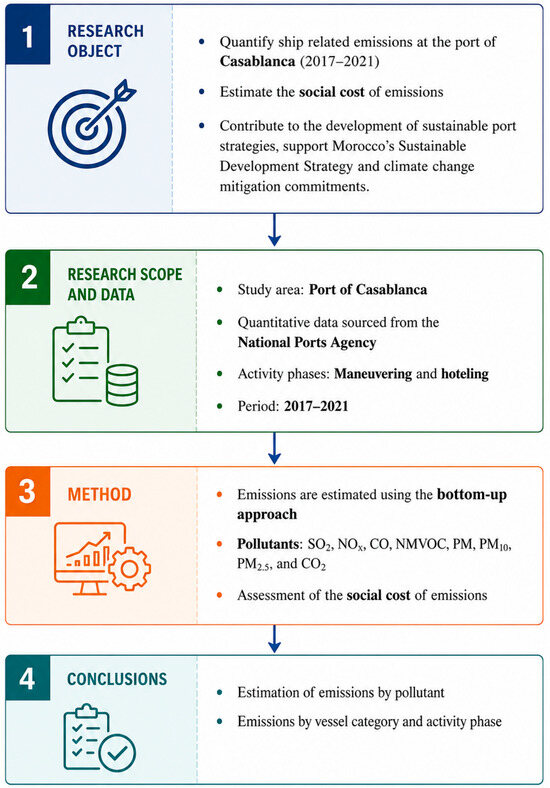
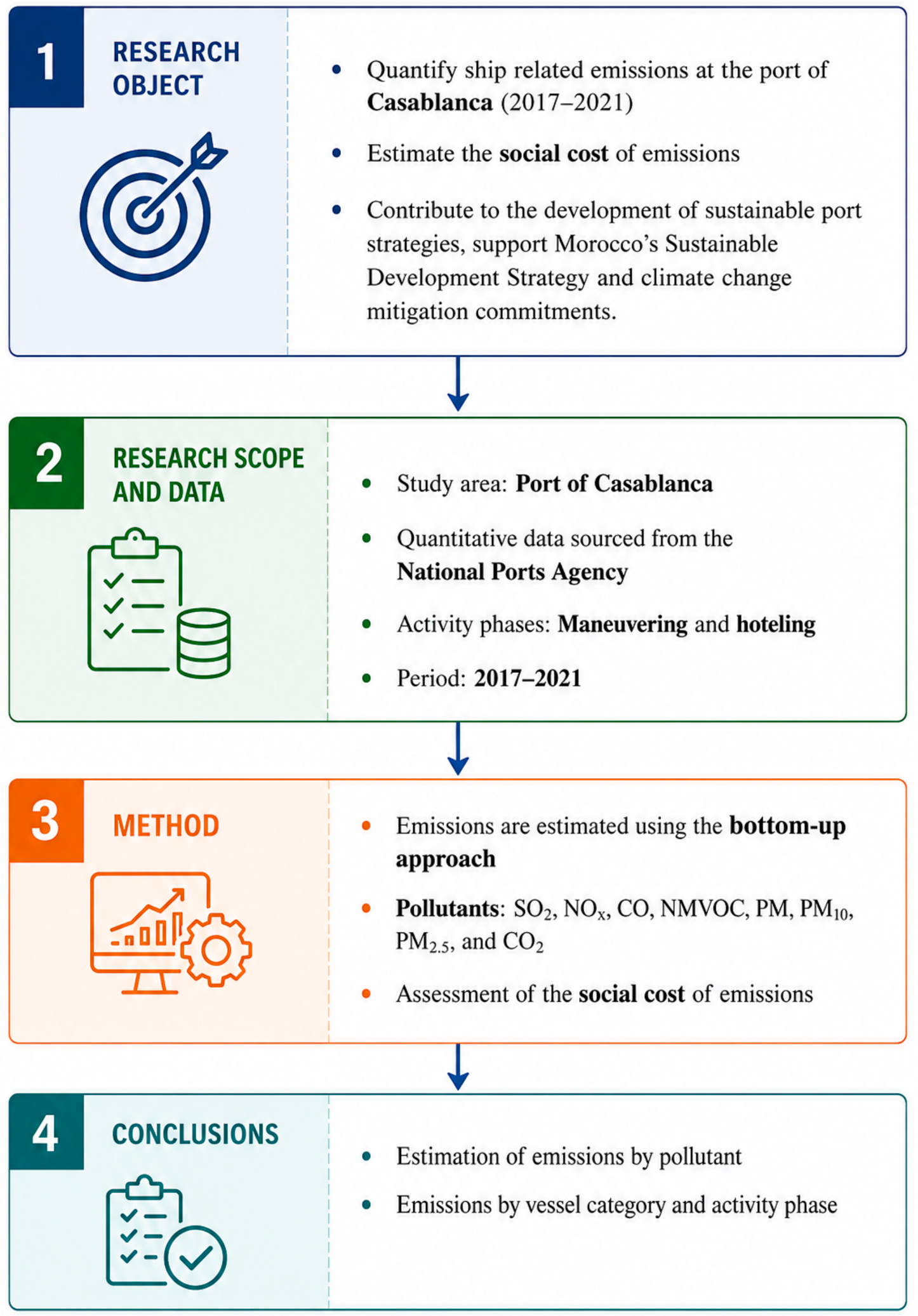
The remainder of this paper is organized as follows. Section 2 presents a review of the relevant literature on maritime emissions, associated environmental impacts, and methodological approaches. Section 3 describes the study area, data sources, and the methodology applied for emission estimation and social cost assessment. Section 4 presents and discusses the main results, highlights their policy implications and recommendations, and addresses the study limitations. Finally, Section 5 summarizes the main conclusions and outlines future research perspectives. The overall research framework is illustrated in Figure 1.
Figure 1.
Research Framework.
3. Materials and Methods
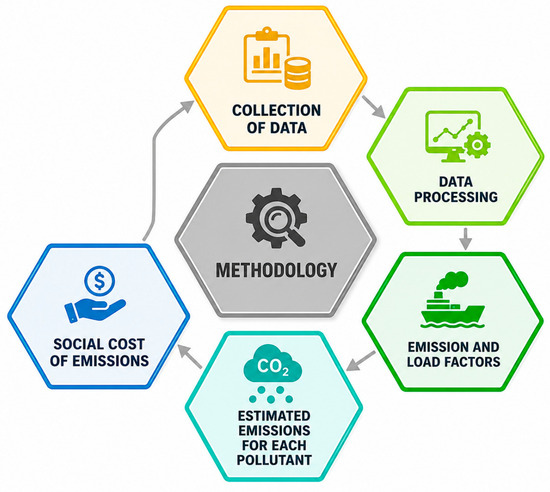
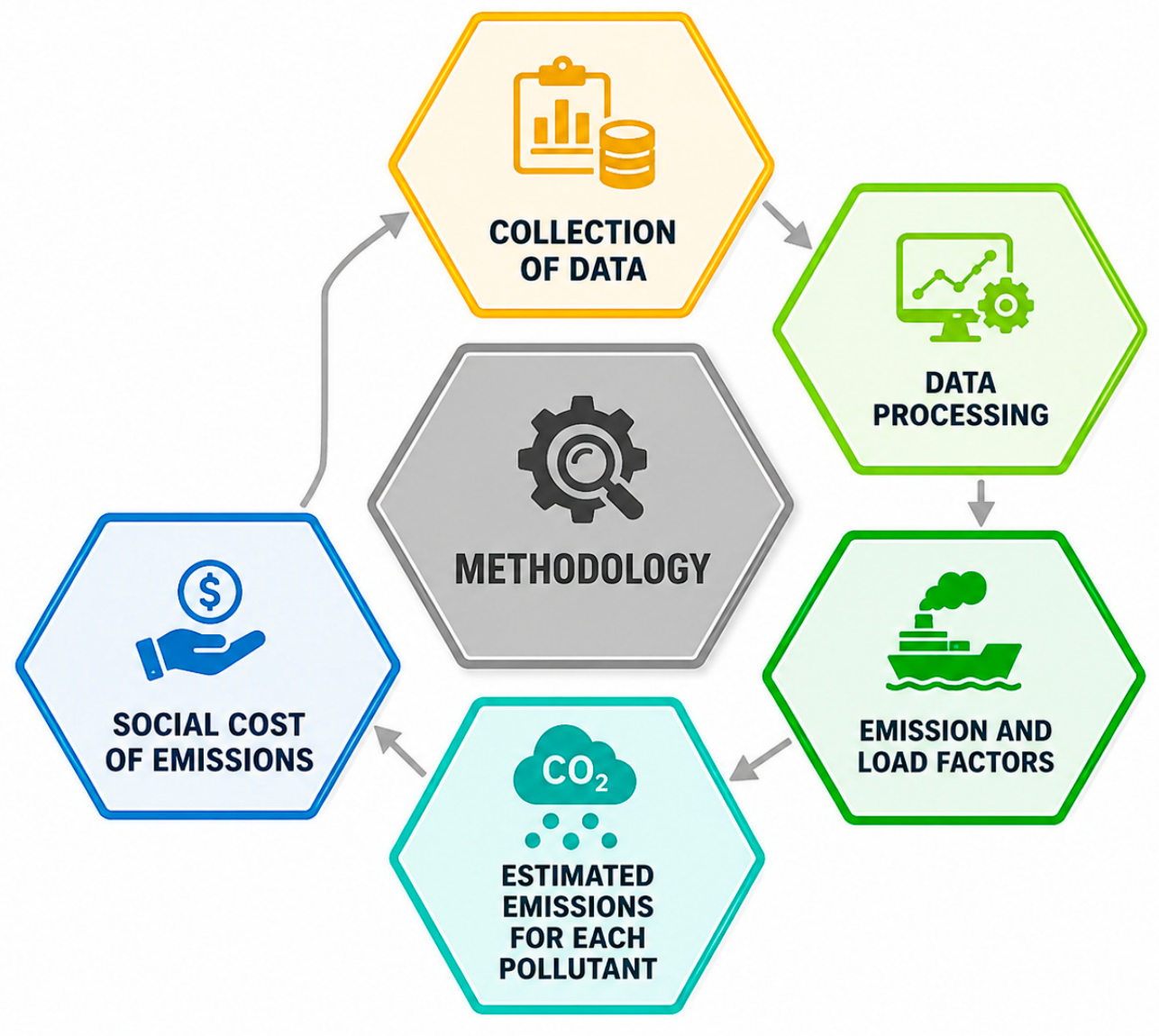
The study began by processing the Casablanca Port database, which contains information on vessel names, vessel types, gross tonnage, arrival and departure dates, and port calls for the period 2017–2021. Database processing enabled the calculation of the average gross tonnage, berth duration, and maneuvering time for each vessel category.
Next, the main engine (ME) power for each vessel type was estimated based on the corresponding average gross tonnage. The auxiliary engine (AE) power was then determined using the established ratio between the main and auxiliary engine power.
Subsequently, emission factors and engine load factors for both the ME and AE were assigned according to the operational phase (hotelling or maneuvering), vessel type, and pollutant. Pollutant emissions were then estimated by applying the corresponding emission factors.
Finally, the social cost of emissions was quantified using pollutant-specific social cost factors (SCFs). The overall calculation framework is illustrated in Figure 2.
Figure 2.
Methodology.
3.1. Study Area
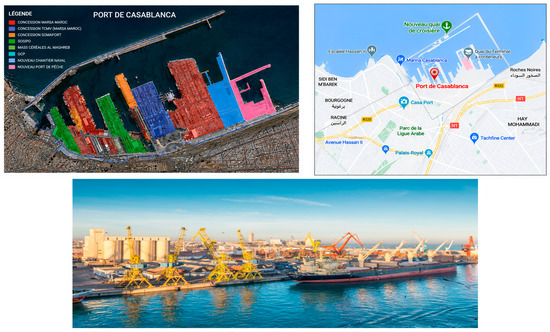
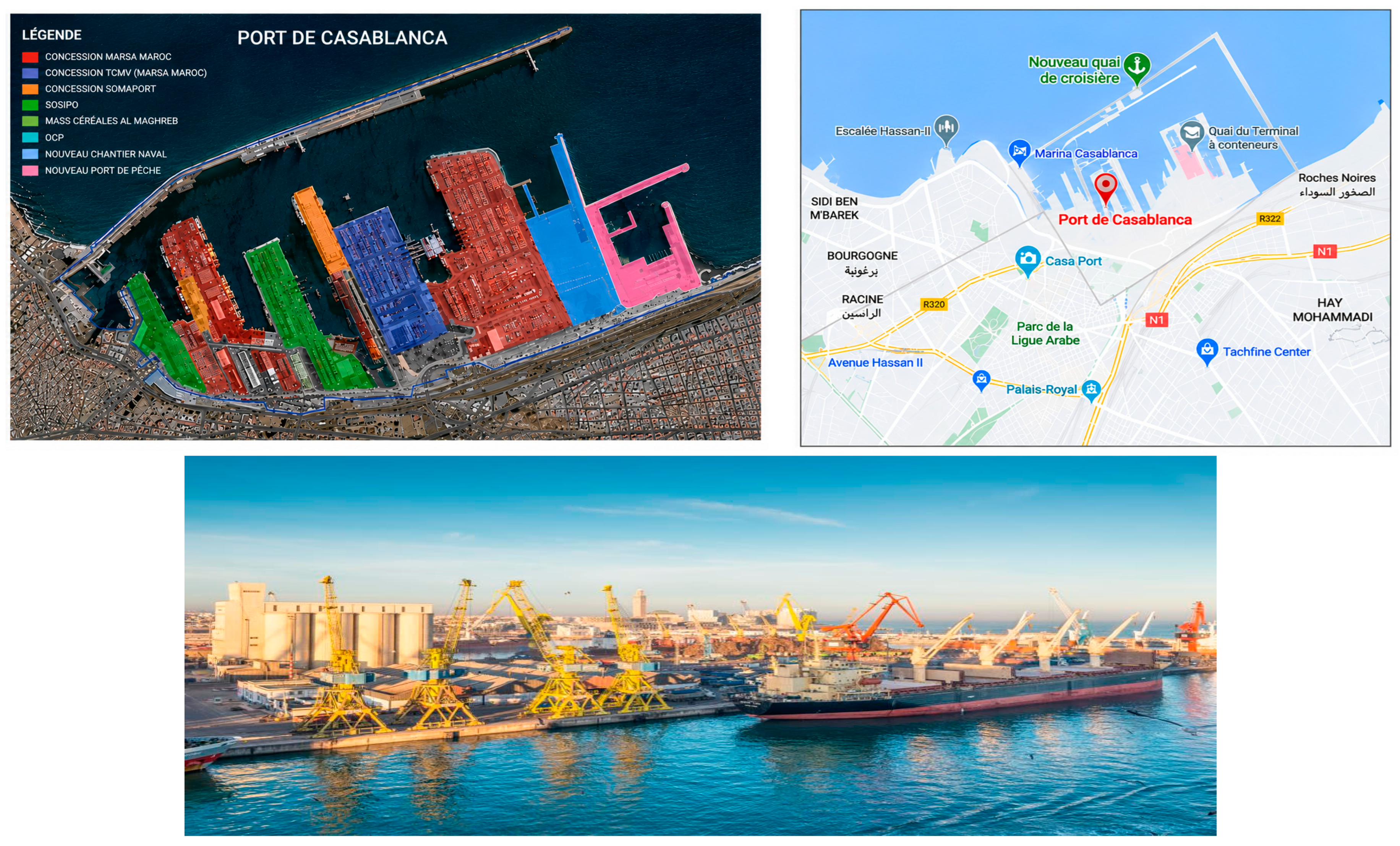
The Port of Casablanca, the largest port in Morocco, is a multifunctional facility primarily dedicated to commercial activities. It covers approximately 450 ha, including 256 ha of land area, and provides more than 8 km of quay infrastructure. The port can accommodate and handle up to 40 vessels simultaneously. It comprises a commercial port, a fishing port, and a marina, as well as shipyard facilities for vessel repair, maintenance, and dry docking.
The port is located on the central Atlantic coast of Morocco, within a relatively exposed bay bounded by the rocky headlands of El Hank to the west and Oukacha to the east. It is connected to the city’s road network via Ben Aïcha Boulevard to the east and the Almohades and FAR Boulevards to the west. These main roads provide access to the five entrance gates of the commercial port.
It is equipped with an ONCF railway network, 17,410 m long, which runs along the port fence from gate 1 of the station to beyond the phosphate pit, where the drawing area extends [18].
- Characteristics:
- Location: 33° 36′ N–7° 37′ O;
- Vocation: Trade, fishing, ship repair, and recreation;
- Water drawing: from 7 m to 14 m depth [18].
- Port traffic:
The volume of activity of the ports under the National Port Agency in 2021 is 91.0 million tons, of which 29.02 million tons are handled by the Port of Casablanca, representing 33% of national traffic [18].
Imports and exports recorded 18.1 MT and 11.4 MT, respectively, in 2021, a 4% decrease in both directions compared to 2020, due to declines in both bulk imports and exports and containerized traffic [18]. The study area is shown in Figure 3.
Figure 3.
Study area—Port of Casablanca [18].
3.2. Data Collection
Data on vessel characteristics and port operations, including vessel names, gross tonnage (GT), arrival and departure times, maneuvering time, and berth duration, were obtained from the Casablanca Port Authority.
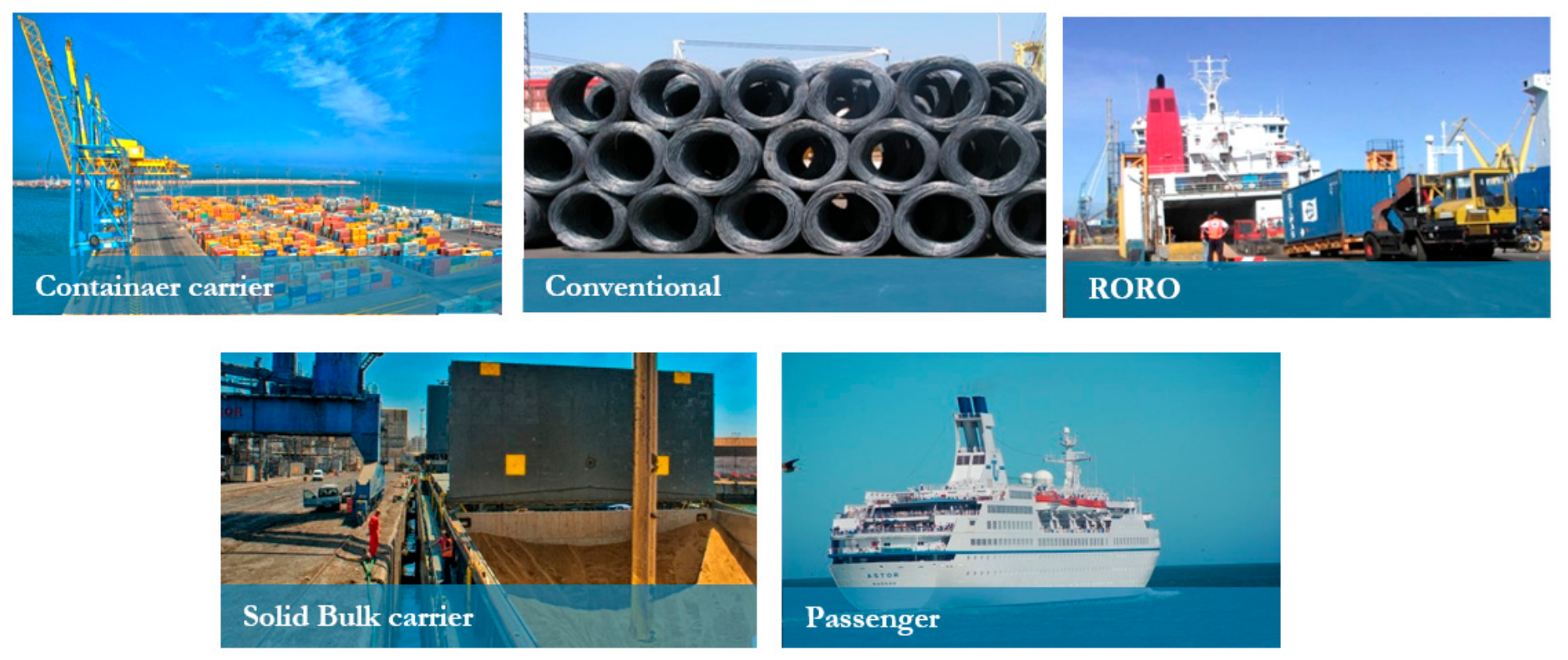
The Port of Casablanca receives a wide variety of vessels each year, including liquid and dry bulk carriers, container ships, roll-on/roll-off (Ro-Ro) vessels, conventional cargo ships, passenger vessels, and other categories such as government vessels, research ships, yachts, and dredgers. The distribution of vessel types is presented in Figure 4.
Figure 4.
Types of ships in the port of Casablanca.
Passenger ship traffic was heavily affected by the COVID-19 pandemic in 2020 and 2021 [18].
Tugboats were not considered in this study due to a lack of information on this traffic.
3.2.1. Power ME and AE
The ME power depends on the gross tonnage by ship type; it was determined by considering ships that arrived in port, according to Trozzi (2010) [19].
AE power was estimated according to Trozzi (2010) [19], using the AE/ME ratio for each ship type and multiplying it by the ME power. Table 1 shows the ME power and AE/ME ratio by vessel type.
Table 1.
Installed main engine power as a function of the gross tonnage (GT), and vessel ratio of the auxiliary engine (AE) to the main engine (ME).
3.2.2. Emission Factors
Due to the lack of data on emission factor values for ME and AE during the hotelling and maneuvering phases for each pollutant in the port of Casablanca, these were determined according to ENTEC (2002a) [20] and EMEP/EEA (2019) [21] (Table 2).
Table 2.
Emission factors (gpollutant/kWh) used for the maneuvering and hotelling phases of ships in the port of Casablanca, compiled from EMEP/EEA (2019) [21] and ENTEC (2002) [20].
In response to the implementation of the IMO 2020 global sulfur cap, the SO2 emission factors were updated for the years 2020 and 2021. The emission factors reported in the EMEP/EEA Guidebook (2019) [21] were applied for the period 2017–2019, whereas revised SO2 emission factors were adopted for 2020–2021, assuming compliance with the IMO regulation limiting the sulfur content of marine fuels to 0.50%. Accordingly, SO2 emission factors of 0.64 g/kWh for main engines (ME) and 0.61 g/kWh for auxiliary engines (AE) were used to estimate SO2 emissions during these two years. The emission factors for all other pollutants remained unchanged throughout the study period.
3.2.3. ME and AE Load Factors
The load factor taken into account was 20 percent for all vessels, except for liquid bulk carriers, which corresponds to 40 percent in the hotelling phase for the AE, according to ENTEC (2002a) [20] and Trozzi (2010) [19].
For the maneuvering phase, the supported load factor is 20% for all vessels for the ME and 50% for the AE, according to ENTEC (2002a) [20], and Trozzi (2010) [19].
3.3. Methodology Specific Application to the Port of Casablanca, Morocco
3.3.1. Equation for Calculating Emissions in the Hotelling and Maneuvering Phases
The method used to determine air emissions in the port of Casablanca is known as the “activity-based” method or “bottom-up method, it is based on information relating to ships’ movements and emission factors.
Emission factors are used to link the amount of a particular pollutant emitted to the energy spent by the ship during a given port activity.
The port activities considered in this study are:
- Maneuvering: refers to the ship’s maneuvering operations from the port access channel to its landing.
- Hotelling: constitutes the stay at the dock of the ship during which the loading/unloading operations are carried out:
ET: Total emission (g);
Emaneuvering: Atmospheric emission in the maneuvering phase (g);
Ehotelling: Atmospheric emission in the hotelling phase (g);
Tmaneuvring: Time spent in the maneuvering phase (h);
Thotelling: Time spent in the hotelling phase (h);
PME: ME Power (kW);
PAE: AE Power (kW);
LFME: Load factor of ME for each navigation phase;
LFAE: Load factor of AE for each navigation phase;
EFME: Emission factor of ME for each navigation phase (g/kWh);
EFAE: Emission factor of AE for each navigation phase (g/kWh).
3.3.2. Equation for Calculating Emissions Social Cost of Emissions
The social cost of emissions represents the monetary value of the environmental and health damages caused by maritime transport activities. These costs include material damage, crop loss, health effects, and loss of biodiversity [6,9,15].
The total emissions output (ton) and the social cost factor ($/ton) are the social cost of maritime transport emissions.
where
Social Cost = total calculated monetary value in dollars ($);
Emission = emission totals per pollutant type;
SCF = value of polluter ($/ton);
i = type of pollutant.
Because no Morocco-specific estimates of maritime emission damage costs are currently available, social cost factors (SCFs) were adopted from previous peer-reviewed studies conducted in Pakistan, China, and other international port regions [5,8,9,10,11,12]. These factors represent the estimated monetary damages associated with one tonne of pollutant emitted and include impacts on human health, ecosystems, agriculture, materials, and climate as mentioned in Table 3.
Table 3.
Social cost factors (SCFs) adopted for the estimation of the social costs of ship emissions.
It should be noted that damage costs are influenced by several factors, including local population density, income levels, healthcare costs, environmental conditions, and the valuation methodologies employed. Consequently, the estimated social costs presented in this study should be interpreted as indicative orders of magnitude rather than precise economic valuations for Morocco. Nevertheless, the use of internationally recognized social cost factors (SCFs) provides a consistent basis for comparing the relative impacts of different pollutants and supports environmental policy analysis in data-scarce contexts.
3.4. Assumptions and Uncertainty Analysis
First, the emission factors and load factors used in this study were obtained from international guidelines and previous studies. These parameters may vary depending on vessel age, engine condition, maintenance practices, fuel quality, and operational behavior. In addition, the analysis assumes constant technical characteristics of vessels throughout the 2017–2021 study period, which may not fully capture fleet renewal, technological improvements, or gradual increases in engine efficiency over time.
Second, a major source of uncertainty in this study is the absence of Automatic Identification System (AIS) data. AIS-based approaches have become the standard methodology for port emission inventories, as they provide vessel-specific information on position, speed, navigation status, arrival and departure times, and operational patterns.
In the present study, vessel activity was estimated using port-call records, average maneuvering durations, and average hotelling times. Consequently, vessel-specific variations in speed, engine load, waiting times, berth occupancy, and operational practices could not be explicitly considered.
The lack of AIS data may particularly affect the estimation of emissions during the maneuvering phase, where engine loads are strongly influenced by vessel speed and navigation conditions. Similarly, hotelling emissions may vary depending on auxiliary engine operation, onboard energy demand, and berth-specific operational requirements.
Consequently, some vessel emissions may be overestimated or underestimated compared with actual operating conditions. Nevertheless, the adopted methodology remains consistent with approaches commonly applied in data-limited contexts and provides a reasonable approximation of emission levels at the Port of Casablanca.
Third, the estimation of social costs is subject to inherent uncertainties, as damage cost coefficients vary according to regional characteristics, methodological approaches, valuation assumptions, and health impact assessment models. Therefore, the monetized impacts presented in this study should be interpreted as indicative estimates rather than definitive economic valuations.
Although the present study relies on deterministic emission calculations rather than direct measurements, a quantitative assessment of variability and uncertainty was conducted to evaluate the robustness and reliability of the reported results.
To evaluate the robustness of the estimated emissions and associated social costs, a sensitivity analysis was performed by varying the principal input parameters (emission factors, load factors, and social cost factors) by ±20%. This uncertainty range is consistent with the variability commonly associated with bottom-up maritime emission inventories, where uncertainties mainly arise from the use of literature-derived emission factors, operational assumptions, and activity data (Trozzi, 2010 [19]; ENTEC, 2010 [20]; EMEP/EEA, 2019 [21]).
It should be noted that the adopted approach represents a deterministic sensitivity analysis rather than a comprehensive uncertainty propagation method such as Monte Carlo simulation. The ±20% variation was applied to illustrate the influence of key input parameters on the final estimates and should therefore be interpreted as an indicative sensitivity interval rather than a statistically derived confidence interval.
The results indicate that, although absolute emission values and social costs vary proportionally within the selected range, the relative ranking of pollutants, vessel categories, and operational phases remains unchanged. Therefore, the principal conclusions of the study are considered robust despite the inherent uncertainties associated with the input data and methodological assumptions.
4. Results
4.1. Calculation of Emissions in the Hotelling and Maneuvering Phases
The total emissions of SO2, NOx, CO, NMVOC, PM, PM10, PM2.5, and CO2 (Mg/year) at the Port of Casablanca during the 2017–2021 period are summarized in Table 4. Among the studied years, 2019 recorded the highest total emissions, reaching 64,637.25 Mg, mainly due to the increased number of vessel calls and longer berthing durations. Similarly, 2018 exhibited substantial emission levels, with a total of 63,249.01 Mg, which was close to the 2019 value. This high level of emissions was associated with a combination of the highest average gross tonnage and frequent vessel movements during that year.
Table 4.
Total emissions in the hotelling and Maneuvering phases (Mg/year).
The observed relationship between port activity and emission levels is consistent with previous studies, which identified vessel traffic intensity, ship characteristics, and operational duration as major factors influencing port-related emissions (Corbett et al., 2007 [3]; Tzannatos, 2010 [6]).
In contrast, total emissions decreased in 2020 and 2021, reflecting reductions in both average gross tonnage and vessel calls, mainly due to the sharp decline in passenger ship traffic resulting from the COVID-19 pandemic. Similar reductions in maritime emissions during this period have been reported in European and Asian ports, confirming the strong dependence of port emissions on global trade dynamics and shipping activity (D. Chen et al., 2017; IMO, 2020) [22].
Regarding the contribution of individual pollutants, CO2 clearly dominated the emission profile, accounting for more than 97% of total emissions, followed by NOx (1.8%), SO2 (0.6%), CO (0.2%), NMVOC (0.07%), PM (0.05%), PM10 (0.04%), and PM2.5 (0.04%). Comparable results have been reported for several international ports, including the Portuguese ports of Leixões, Sines, Setúbal, and Viana do Castelo, where CO2 represented more than 93% of total emissions, followed by NOx (3.0–4.2%) and SO2 (1.5–1.6%) [16].
Overall, these results highlight the predominant contribution of CO2 emissions to the port’s overall environmental footprint. However, NOx and SO2 remain the main contributors to local air quality impacts, emphasizing the need for targeted emission reduction strategies.
For the years 2020 and 2021, SO2 emissions were recalculated using updated emission factors to account for the implementation of the IMO 2020 global sulfur cap, which limits the sulfur content of marine fuels to 0.50% (m/m), as presented in Table 5.
Table 5.
Total emissions in the hotelling and Maneuvering phases (Mg/year) during 2020 and 2021 by applying the new regulation.
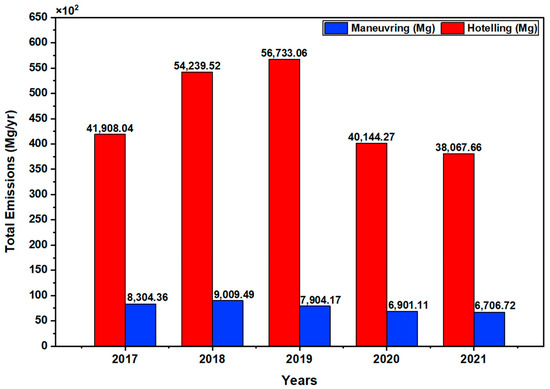
Figure 5 presents the total emissions for the hotelling and maneuvering phases from 2017 to 2021. As shown in the figure, the hotelling phase accounted for approximately 85% of total emissions, compared to only 15% during maneuvering. This difference is attributed to the extended time vessels spend at berth with auxiliary engines operating, consistent with findings from the Port of Veracruz, Mexico, where hotelling accounted for 80% of emissions versus 20% for maneuvering [14]. Similar proportions have been reported in European ports, where hotelling is identified as the dominant emission phase (Tzannatos, 2010) [6]. Studies in Chinese ports also confirm that hotelling accounts for the majority of emissions due to prolonged berthing times and energy consumption [22].
Figure 5.
Total emissions by operational phase (2017–2021).
In 2021, phase-specific emissions during the hotelling phase represented the following shares of total emissions for each pollutant: SO2 (85%), NOx (87%), CO2 (85%), CO (85%), PM (72%), PM10 (73%), PM2.5 (72%), and NMVOC (68%). These results indicate that, although CO2 and NOx dominate the overall emission profile, particulate matter and NMVOC emissions also represent important contributors, particularly regarding their impacts on local air quality.
The observed trends highlight the dominant contribution of the hotelling phase to port-related emissions and demonstrate the strong dependence of emission levels on port activity, vessel characteristics, and operational duration. The predominance of CO2 reflects the significant climate impact of maritime activities, whereas NOx, SO2, and particulate matter remain critical pollutants due to their effects on air quality and human health. These findings emphasize the need for integrated mitigation strategies, including the deployment of shore-side electricity, the use of cleaner fuels, improvement of energy efficiency in port operations, and targeted emission control measures during berthing activities.
Overall, the results provide robust and policy-relevant evidence to support sustainable port planning, in alignment with Morocco’s Sustainable Development Strategy, national air quality regulations, and international maritime decarbonization pathways.
4.2. Calculation of Emissions by Vessel Type
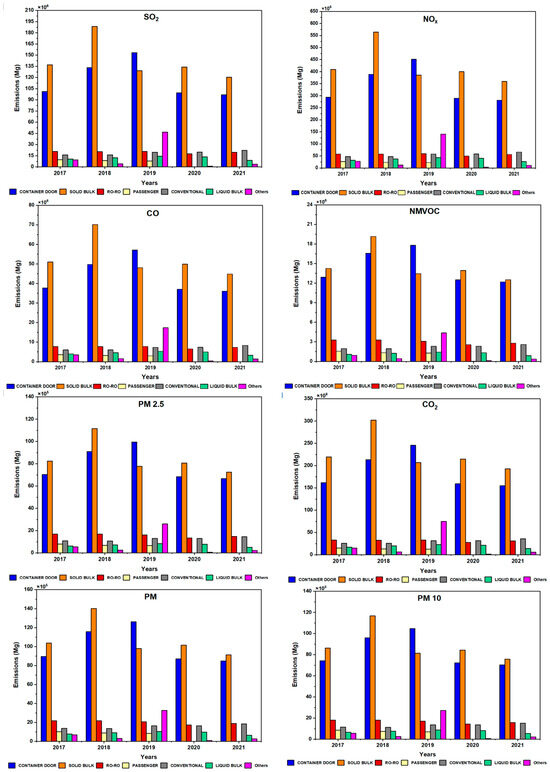
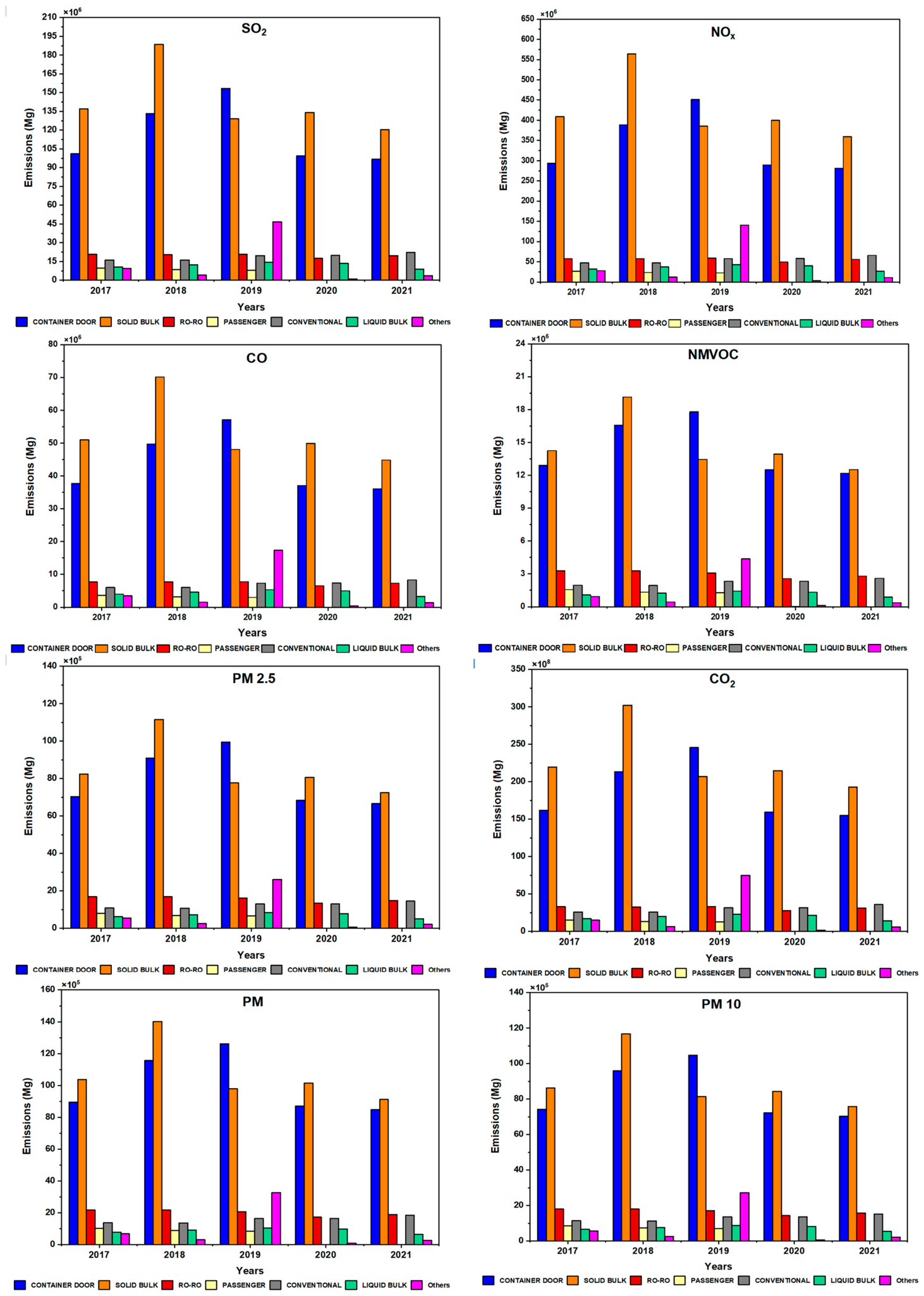
Figure 6 presents the annual air emissions by vessel type for SO2, NOx, CO, NMVOC, PM, PM10, PM2.5, and CO2.
Figure 6.
Annual emissions by vessel category (2017–2021).
Overall, container ships and solid bulk carriers are the dominant contributors across all pollutants. For the years 2017, 2018, 2020, and 2021, emissions from solid bulk carriers exceeded those from container ships, mainly due to their higher average gross tonnage (GT) and longer port residence times.
In contrast, during 2019, emissions from container ships surpassed those from solid bulk carriers, attributable to the increased port stay time of container vessels in that year. Compared with container ships and solid bulk carriers, emissions from RO-RO vessels and liquid bulk carriers are significantly lower, mainly due to their reduced number of port calls and, in the case of conventional ships, their lower average gross tonnage.
Similar trends have been reported for other international ports. For example, Ilberto Fuentes García et al. [14] identified container ships and solid bulk carriers as the main contributors to maritime emissions at the Port of Veracruz (Mexico), while RO-RO ships, conventional vessels, and liquid bulk carriers contributed the least.
Passenger ships and other vessel categories exhibit the lowest emission levels overall (except in 2019), largely owing to their limited port calls. This trend is particularly evident in 2020 and 2021, when maritime traffic was substantially reduced due to the COVID-19 pandemic.
From a sustainable environmental perspective, these findings highlight the critical role of targeting high-emitting vessel categories, particularly container ships and solid bulk carriers, in port air quality management strategies. Prioritizing mitigation measures for these vessels—such as reduced hotelling times, shore power deployment, cleaner fuels, and stricter emission standards—could yield substantial reductions in both air pollutants and greenhouse gas emissions. Moreover, the observed emission variability across years underscores the importance of adaptive and resilient port management policies that can respond to operational changes and external disruptions, such as those experienced during the COVID-19 pandemic. Similar conclusions have been drawn in recent studies that integrate environmental and economic assessments of maritime emissions, which emphasize the importance of combining emission inventories with policy-oriented analysis (Hussain et al., 2022) [5].
Overall, the results support the need for vessel-specific and activity-based emission control strategies to advance sustainable port operations and improve environmental and public health outcomes.
4.3. Calculation of the Social Cost of Emissions
The total social and environmental impacts associated with maritime transport operations within the port area are referred to as the social cost of emissions [23]. This cost includes damages related to human health, crop losses, material degradation, and biodiversity loss resulting from air pollutant emissions [15]. In the absence of studies addressing maritime emission costs in the Moroccan context, this case study adopts social cost factors (SCFs) reported in previous research [15,23].
The projected social costs obtained using Equation (2) are presented in Table 6.
Table 6.
Social cost of pollutant emissions at the port of Casablanca ($).
The results reveal that the social cost of NOx emissions reached USD 8.55 million in 2021, making NOx the most significant contributor in terms of both social and environmental burden. In comparison, the social cost of CO2 emissions was estimated at USD 1.26 million in the same year. This difference is primarily attributed to the substantially lower social cost factor associated with CO2 relative to NOx.
Overall, NOx accounted for approximately 52% of the total social cost, reflecting its higher marginal damage costs, as also reported in previous studies [24,25]. The year 2019 recorded the highest total social cost, estimated at USD 23.34 million, corresponding to the year with the greatest volume of maritime emissions due to increased port activity.
These findings are consistent with results reported in the literature. For instance, at the port of Bin Qasim (Pakistan), the social cost of NOx emissions was estimated at USD 66.62 million, while CO2-related costs reached USD 3.21 million, values that exceed those observed for the port of Casablanca due to higher emission levels [5]. Similarly, Song [23] estimated the total social cost of maritime emissions at the port of Yangshan (Shanghai, China) at approximately USD 281 million, reflecting very high vessel traffic (6518 container ships). In that study, NOx was identified as the most costly pollutant, followed by SO2 and particulate matter (PM2.5 and PM10).
From an environmental perspective, these results demonstrate that short-lived air pollutants, particularly NOx, dominate the social and environmental burden of maritime emissions in the port region, despite CO2’s large mass contribution. This highlights the need for immediate control strategies targeting NOx and particulate matter to improve local air quality and protect public health. From a decarbonization standpoint, although CO2 has a lower social cost factor, its cumulative impact remains significant, underscoring the importance of long-term measures such as energy-efficiency improvements, cleaner fuels, electrification of port operations, and the deployment of shore power. Overall, the findings support an integrated mitigation approach that simultaneously addresses air quality management and maritime decarbonization, aligning port sustainability strategies with international climate objectives and IMO emission reduction targets.
5. Discussion
5.1. Study Outcomes and Potential Emission Reduction Scenarios
The integrated analysis of emissions by operational phase, vessel type, and associated social costs provides a comprehensive assessment of the environmental and socioeconomic impacts of maritime activities at the Port of Casablanca.
First, the results demonstrate that the hotelling phase is the dominant contributor to port-related emissions, accounting for approximately 85% of total emissions, compared with 15% during maneuvering. This dominance is mainly attributed to extended berthing durations and the continuous operation of auxiliary engines. Although CO2 accounts for more than 97% of total emissions, NOx, SO2, and particulate matter remain the principal pollutants affecting local air quality and public health. These findings indicate that berthing operations represent the most effective intervention point for achieving immediate emission reductions within the port area.
Second, the analysis by vessel category reveals that container ships and solid bulk carriers are the main contributors to emissions across all pollutant categories, owing to their higher average gross tonnage, longer port residence times, and greater frequency of port calls. In contrast, emissions from Ro-Ro vessels, liquid bulk carriers, conventional ships, and passenger vessels are comparatively lower, particularly during 2020 and 2021, when maritime activity declined due to the COVID-19 pandemic. These results support the implementation of vessel-specific mitigation strategies, with priority given to high-emitting ship categories to maximize environmental benefits.
Third, the assessment of social costs confirms that NOx is the most economically and socially damaging pollutant, accounting for approximately 52% of the total social cost, despite the predominance of CO2 in terms of emission mass. The estimated total social cost reached its highest value in 2019 (USD 23.34 million), reflecting intensified port activity, while the lower costs observed in 2020–2021 correspond to reduced emission levels. This result highlights the disproportionate societal burden associated with short-lived air pollutants and emphasizes the importance of addressing NOx and particulate matter emissions alongside CO2.
From a sustainability and decarbonization perspective, the combined findings highlight the need for an integrated emission reduction strategy that addresses both climate change mitigation and local air quality improvement. The main policies at the national and local levels can be summarized as follows in Table 7:
Table 7.
Main national and local policies.
Measures such as shore-side electricity, reduced hotelling times, cleaner fuels, energy-efficient vessel operations, adopting alternative fuels (LNG, hydrogen), and stricter emission controls during berthing have been identified as effective mitigation options in numerous studies (Acciaro et al., 2014 [26]; Zis et al., 2014 [27]). These measures can deliver substantial co-benefits by lowering greenhouse gas emissions while simultaneously reducing health-related damages.
At the same time, the presence of air pollutants such as NOx and SO2 calls for stricter local emissions regulations, particularly through the establishment of Emission Control Areas (ECAs) or the requirement to use low-sulfur fuels.
Furthermore, these findings are part of an interdisciplinary approach linked to ecological footprint analysis and the fight against climate change. They emphasize the importance of integrating ports into broader sustainable development strategies and energy transition pathways.
Overall, this study provides policy-relevant evidence to support sustainable port management and maritime decarbonization strategies, aligning local actions at the Port of Casablanca with Morocco’s Sustainable Development Strategy, national air quality objectives, and international pathways for maritime emission reduction.
5.2. Comparison with Other Ports
The emission patterns identified at the Port of Casablanca are broadly consistent with those reported for several mediterranean and european ports. Studies conducted at the ports of Piraeus (Greece) [6] and portuguese ports (lexioes, Setubal, sines and viana do castelo) [16] have similarly shown that hotelling activities represent the dominant source of port-related emissions due to the prolonged operation of auxiliary engines during berthing.
The emission profile obtained for the Port of Casablanca is consistent with previous studies conducted in Mediterranean and European ports. Tzannatos (2010) [6] estimated annual emissions of 1790 tonnes of NOx, 722 tonnes of SO2 and 99 tonnes of PM2.5 for the Port of Piraeus, with NOx being the dominant pollutant. Similarly, CO2, NOx and SO2 were the main contributors to ship emissions in Portuguese ports [16].
Although emission magnitudes vary due to differences in vessel types, traffic intensity and operational conditions, the predominance of CO2, NOx and SO2 and the significant contribution of the hotelling phase observed in Casablanca agree with previous port emission inventories as mentioned in Table 8.
Table 8.
Comparison of ship emissions across ports.
5.3. Limitations of the Study
Despite providing valuable insights into maritime emissions and their associated impacts, this study presents several limitations that should be acknowledged. First, the emission estimates rely mainly on emission factors derived from international literature and guidelines, which may not fully represent the specific operating conditions and characteristics of vessels at the Port of Casablanca.
Second, the methodology is based on conventional emission estimation approaches that do not explicitly incorporate several operational parameters, including meteorological conditions, engine performance, fuel properties, and vessel-specific operating behaviors. These factors may influence actual fuel consumption patterns and emission levels.
Third, the lack of Automatic Identification System (AIS) data constitutes a significant limitation. AIS-based approaches allow the reconstruction of detailed vessel trajectories, navigation patterns, and operational profiles, thereby improving the accuracy of engine load estimation and fuel consumption assessment. In this study, vessel activity was estimated using port-call records, average maneuvering durations, and average hotelling times, which may not fully capture variations in vessel operations.
This limitation is particularly relevant for the maneuvering phase, where emissions are strongly influenced by variations in vessel speed, navigation conditions, and engine load. Therefore, the estimated emissions should be considered representative approximations of port activity rather than direct measurements of real-time vessel operations. Future research should incorporate AIS-based datasets to enhance the spatial and temporal resolution of emission inventories and reduce uncertainties associated with vessel movement and operational patterns.
Another limitation is related to the use of literature-based emission factors, which may not completely reflect the changes in marine fuel characteristics following the implementation of the IMO 2020 sulfur cap. As a result, SO2 emission estimates for the years 2020–2021 may still include a certain level of uncertainty.
Furthermore, the social cost assessment is based on damage cost coefficients obtained from international studies, which may not fully account for Morocco’s specific socioeconomic, demographic, healthcare, and environmental conditions. Consequently, the estimated monetary impacts should be interpreted as indicative values rather than definitive national economic assessments.
Finally, this study mainly focuses on environmental impacts and does not comprehensively integrate economic and social dimensions. Incorporating these additional perspectives in future research would provide a more holistic evaluation of sustainable port development and maritime transition pathways.
5.4. Research Prospects
Future research should further advance this work by integrating real-time vessel activity data, particularly Automatic Identification System (AIS) information, to improve the reliability and spatio-temporal accuracy of maritime emission inventories. Additional studies should investigate the influence of meteorological factors on pollutant dispersion processes and develop coupled modeling approaches that account for the interactions between ship emissions, atmospheric conditions, and weather variability.
Expanding the analysis to a wider range of ports at regional and international scales would provide a more comprehensive understanding of maritime emission dynamics and facilitate the identification of effective management strategies. Future efforts should also evaluate the performance of emission mitigation solutions, such as shore-side power supply, port infrastructure electrification, and the use of low-carbon alternative fuels. Furthermore, integrating health risk assessments for major air pollutants (NOx, SO2, and particulate matter) with economic impact analyses would offer a holistic evaluation of the environmental, societal, and economic benefits of sustainable port development and emission reduction policies.
6. Conclusions
This study aimed to quantify ship-related atmospheric emissions at the Port of Casablanca and assess their associated social costs using a bottom-up emission estimation approach. The main findings can be summarized as follows:
- Dominant emission drivers:
Ship emissions are mainly influenced by vessel characteristics (type and gross tonnage), operational activity (number of port calls), and time spent at berth. Among these factors, the hotelling duration emerges as the most influential parameter controlling port-related emissions.
- Operational phase contribution (research question 1):
The results confirm that the hotelling phase is the dominant contributor to total emissions, accounting for approximately 85%, while the maneuvering phase represents only about 15%. This highlights berthing operations as a key target for emission reduction strategies within the port area.
- Influence of vessel categories (research question 2):
Significant differences were observed among vessel categories, with solid bulk carriers identified as the largest contributors to overall emissions, followed by container ships. The temporal variations observed, particularly in 2019, demonstrate the importance of operational factors, such as increased vessel activity and extended berthing durations, in driving emission levels.
- Pollutant-specific impacts and social costs (research question 3):
From a societal perspective, NOx represents the most critical pollutant, associated with the highest estimated social cost (USD 8.55 million), reflecting its significant contribution to local air quality degradation and health impacts. In contrast, although CO2, presents a lower immediate social cost (USD 1.26 million), it remains central for long-term climate mitigation due to its dominant contribution to greenhouse gas emissions.
This duality underlines the need to jointly address short-lived pollutants and greenhouse gases through integrated mitigation strategies.
- Policy and operational implications: The findings support targeted mitigation strategies, including:
Reducing hotelling time through improved port logistics and operational management;
Adoption of shore-side electricity (cold ironing);
Transition to cleaner marine fuels;
Enhancing energy efficiency of port operations;
These measures align with both local air quality objectives and global decarbonization goals.
- Scientific contribution and positioning:
This study contributes to the limited body of knowledge on maritime emissions in developing port contexts, particularly in North Africa, by:
Providing a high-resolution bottom-up inventory;
Integrating the assessment of the social cost assessment;
Identifying the operational phase as a critical leverage point for emission mitigation, thereby contributing to ongoing research on sustainable port management and decarbonization strategies.
- Limitations:
Despite its contributions, the study has several limitations:
Reliance on secondary activity data and generalized emission factors;
Lack of real-time vessel operational data (e.g., AIS-based engine load profiles);
Absence of scenario analysis (e.g., fuel switching, electrification pathways);
Limited integration with dispersion modeling to assess local air quality impacts.
- Future research directions:
Further work should:
Develop scenario-based modeling to evaluate the effectiveness of emission reduction strategies;
Integrate AIS and real-time operational data to improve emission estimation accuracy;
Extend the proposed framework to other Moroccan ports to support a national-scale maritime emission assessment;
Couple emission inventories with air quality, exposure, and health impact models;
Engage with recent debates on green port transitions, energy system integration, and sustainable maritime development.
Author Contributions
Conceptualization, S.M.; methodology, S.M.; validation, S.O., T.E.M. and M.C.; formal analysis, S.M.; writing—original draft preparation, S.M.; writing—review and editing, S.O., T.E.M. and M.C.; visualization, S.O., T.E.M. and M.C.; supervision, S.O., T.E.M. and M.C.; project administration, S.O., T.E.M. and M.C. All authors have read and agreed to the published version of the manuscript.
Funding
This research received no external funding.
Data Availability Statement
Some data relating to this article can be found on the ANP website www.anp.org.ma; other data has not been published for reasons of confidentiality.
Acknowledgments
Declaration of generative AI and AI-assisted technologies in the manuscript preparation process: During the preparation of this work, the authors used artificial intelligence for the generation of Figure 1 and Figure 2 only, specifically chatgpt (GPT-5.6 Luna) and the Gemini software (3.1 Pro version). It was not used for generating scientific content, data interpretation, discussion, literature analysis, or any other figure or table in the manuscript.
Conflicts of Interest
The authors declare no conflict of interest.
Nomenclature
| ET | Total emission |
| PME | ME power (kW) |
| PAE | AE power (kW) |
| LFME | Load factor of ME for each navigation phase |
| LFAE | Load factor of AE for each navigation phase |
| EFME | Emission factor of ME for each navigation phase (g/kW-h) |
| EFAE | Emission factor of AE for each navigation phase (g/kW-h) |
| SCF | Social cost factor: Total calculated monetary value in dollars ($) |
References
- Note by the International Maritime Organization to the UNFCCC Talanoa Dialogue, Adoption of the Initial IMO Strategy on Reduction of GHG Emissions from Ships and Existing IMO Activity Related to Reducing GHG Emissions in the Shipping Sector. 2018. Available online: https://unfccc.int/sites/default/files/resource/250_IMO%20submission_Talanoa%20Dialogue_April%202018.pdf (accessed on 1 January 2022).
- Winnes, H.; Fridell, E. Particle Emissions from Ships: Dependence on Fuel Type. J. Air Waste Manag. Assoc. 2009, 59, 1391–1398. [Google Scholar] [CrossRef] [Scilit] [PubMed]
- Corbett, J.J.; Winebrake, J.J.; Green, E.H.; Kasibhatla, P.; Eyring, V.; Lauer, A. Mortality from Ship Emissions: A Global Assessment. Environ. Sci. Technol. 2007, 41, 8512–8518. [Google Scholar] [CrossRef] [Scilit] [PubMed]
- De Meyer, P.; Maes, F.; Volckaert, A. Emissions from international shipping in the Belgian part of the North Sea and the Belgian seaports. Atmos. Environ. 2008, 42, 196–206. [Google Scholar] [CrossRef] [Scilit]
- Hussain, I.; Wang, H.; Safdar, M.; Ho, Q.B.; Wemegah, T.D.; Noor, S. Estimation of Shipping Emissions in Developing Country: A Case Study of Mohammad Bin Qasim Port, Pakistan. Int. J. Environ. Res. Public Health 2022, 19, 11868. [Google Scholar] [CrossRef] [Scilit] [PubMed]
- Tzannatos, E. Ship emissions and their externalities for the port of Piraeus–Greece. Atmos. Environ. 2010, 44, 400–407. [Google Scholar] [CrossRef] [Scilit]
- Lonati, G.; Cernuschi, S.; Sidi, S. Air quality impact assessment of at-berth ship emissions: Case-study for the project of a new freight port. Sci. Total Environ. 2010, 409, 192–200. [Google Scholar] [CrossRef] [Scilit] [PubMed]
- Ho, Q.B.; Vu, H.N.K.; Nguyen, T.T.; Nguyen, T.T.H.; Nguyen, T.T.T. A combination of bottom-up and top-down approaches for calculating of air emission for developing countries: A case of Ho Chi Minh City, Vietnam. Air Qual. Atmos. Health 2019, 12, 1059–1072. [Google Scholar] [CrossRef] [Scilit]
- Song, S.-K.; Shon, Z.-H. Current and future emission estimates of exhaust gases and particles from shipping at the largest port in Korea. Environ. Sci. Pollut. Res. 2014, 21, 6612–6622. [Google Scholar] [CrossRef] [Scilit] [PubMed]
- Ng, S.K.W.; Loh, C.; Lin, C.; Booth, V.; Chan, J.W.M.; Yip, A.C.K.; Li, Y.; Lau, A.K.H. Policy change driven by an AIS-assisted marine emission inventory in Hong Kong and the Pearl River Delta. Atmos. Environ. 2013, 76, 102–112. [Google Scholar] [CrossRef] [Scilit]
- Saraçoğlu, H.; Deniz, C.; Kılıç, A. An Investigation on the Effects of Ship Sourced Emissions in Izmir Port, Turkey. Sci. World J. 2013, 2013, e218324. [Google Scholar] [CrossRef] [Scilit] [PubMed]
- Yau, P.S.; Lee, S.C.; Corbett, J.J.; Wang, C.; Cheng, Y.; Ho, K.F. Estimation of exhaust emission from ocean-going vessels in Hong Kong. Sci. Total Environ. 2012, 431, 299–306. [Google Scholar] [CrossRef] [Scilit] [PubMed]
- Kilic, A.; Deniz, C. Inventory of Shipping Emissions in Izmit Gulf, Turkey. Environ. Prog. Sustain. Energy 2009, 29, 221–232. [Google Scholar] [CrossRef] [Scilit]
- García, G.F.; Recio, J.M.B.; Echeverría, R.S.; Hernández, E.G.; Vargas, E.Z.; Duran, R.A.; Kahl, J.W. Estimation of atmospheric emissions from maritime activity in the Veracruz port, Mexico. J. Air Waste Manag. Assoc. 2021, 71, 934–948. [Google Scholar] [CrossRef] [Scilit] [PubMed]
- Bilgili, L.; Kuzu, L.; Kılıç, A. Estimation and dispersion analysis of shipping emissions in Bandirma Port, Turkey. Environ. Dev. Sustain. 2021, 23, 10288–10308. [Google Scholar] [CrossRef] [Scilit]
- Nunes, R.A.O.; Alvim-Ferraz, M.C.M.; Martins, F.G.; Sousa, S.I.V. Assessment of shipping emissions on four ports of Portugal. Environ. Pollut. 2017, 231, 1370–1379. [Google Scholar] [CrossRef] [Scilit] [PubMed]
- Fahdi, S.; Elkhechafi, M.; Hachimi, H. Machine learning for cleaner production in port of Casablanca. J. Clean. Prod. 2021, 294, 126269. [Google Scholar] [CrossRef] [Scilit]
- Agence Nationale des Ports, (n.d.). Available online: https://www.anp.org.ma/fr/ (accessed on 19 February 2024).
- Trozzi, C. Emission estimate methodology for maritime navigation. In Proceedings of the US EPA 19th International Emission Inventory Conference, San Antonio, TX, USA, 28–30 September 2010. [Google Scholar]
- ENTEC; Directorate General Environment. Service Contract on Ship Emissions: Quantification of Ship Emissions. Final Report; European Commission: Brussels, Belgium, 2002.
- EMEP/EEA Air Pollutant Emission Inventory Guidebook 2019. 2019. Available online: https://www.eea.europa.eu/en/analysis/publications/emep-eea-guidebook-2019 (accessed on 21 July 2026).
- Chen, D.; Wang, X.; Li, Y.; Lang, J.; Zhou, Y.; Guo, X.; Zhao, Y. High-spatiotemporal-resolution ship emission inventory of China based on AIS data in 2014. Sci. Total Environ. 2017, 609, 776–787. [Google Scholar] [CrossRef] [Scilit] [PubMed]
- Song, S. Ship emissions inventory, social cost and eco-efficiency in Shanghai Yangshan port. Atmos. Environ. 2014, 82, 288–297. [Google Scholar] [CrossRef] [Scilit]
- Berechman, J.; Tseng, P.-H. Estimating the environmental costs of port related emissions: The case of Kaohsiung. Transp. Res. Part Transp. Environ. 2012, 17, 35–38. [Google Scholar] [CrossRef] [Scilit]
- Muller, N.Z.; Mendelsohn, R. Measuring the damages of air pollution in the United States. J. Environ. Econ. Manag. 2007, 54, 1–14. [Google Scholar] [CrossRef] [Scilit]
- Acciaro, M.; Ghiara, H.; Cusano, M.I. Energy management in seaports: A new role for port authorities. Energy Policy 2014, 71, 4–12. [Google Scholar] [CrossRef] [Scilit]
- Zis, T.; North, R.J.; Angeloudis, P.; Ochieng, W.Y.; Bell, M.G.H. Evaluation of cold ironing and speed reduction policies to reduce ship emissions near and at ports. Marit. Econ. Logist. 2014, 16, 371–398. [Google Scholar] [CrossRef] [Scilit]

Disclaimer/Publisher’s Note: The statements, opinions and data contained in all publications are solely those of the individual author(s) and contributor(s) and not of MDPI and/or the editor(s). MDPI and/or the editor(s) disclaim responsibility for any injury to people or property resulting from any ideas, methods, instructions or products referred to in the content. |
© 2026 by the authors. Licensee MDPI, Basel, Switzerland. This article is an open access article distributed under the terms and conditions of the Creative Commons Attribution (CC BY) license.