


Abstract
Hybrid additive manufacturing (HAM) offers a viable solution to the size and cost limitations of conventional additive manufacturing of aluminum alloys. This study investigates the interfacial microstructural behavior of an AlSi7Mg alloy fabricated by laser powder bed fusion (L-PBF) onto a pre-machined AA6082 substrate. The results revealed a metallurgically bonded interface formed through partial substrate melting and elemental diffusion. The interface was characterized using optical microscopy, scanning electron microscopy with energy-dispersive spectroscopy, X-ray diffraction, JMatPro-based modeling, and microhardness testing. Phase analysis revealed that α-Al dominated solidification, with negligible secondary phases present in trace amounts, whereas X-ray diffraction confirmed α-Al as the primary phase throughout all zones. Microhardness assessments revealed a gradual transition from the additively built zone to the substrate, signifying mechanical compatibility. These findings indicate that L-PBF-based HAM facilitates the fabrication of a coherent AlSi7Mg/AA6082 interface with a transitional microstructure and microhardness.
1. Introduction
Additive manufacturing (AM) of metallic alloys has revolutionized contemporary production by offering remarkable design flexibility and swift prototyping and enabling the fabrication of simple and intricate new technical components [1]. Most notably in the automotive and aerospace sectors, enabling the fabrication of lightweight, complex, and high-performance components [2]. Although powder-bed technologies, such as selective laser melting (SLM), can fabricate components with intricate geometries and enhanced material efficiency or structural integrity, their relatively low build rates and restricted print volumes limit component sizes and the feasibility of many applications. The synergies between laser power bed fusion (L-PBF) as an AM technique and forging/casting as traditional manufacturing methods create a unique opportunity to harmonize intricate, customized components with production efficiency. This ensures that the future of metal additive manufacturing enables boundless design innovation and accelerates manufacturing prowess processes, addressing the growing demand for cost-effective, high-quality parts across diverse industries [3].
Aluminum alloy is an essential metal material, ranking just behind steel in terms of usage. It offers advantages such as low density, high specific strength, and good thermal and electrical conductivity, making it widely utilized in automotive manufacturing, aerospace, and other sectors [4]. Currently, the aluminum alloys used in SLM primarily consist of AlSi10Mg, AlSi7Mg, AlSi12, Al-Cu, Al-Zn, 6061, and aluminum alloys containing rare earth elements [5]. AlSi10Mg and AlSi7Mg exhibit favorable solderability and formability, while their isothermal solidification characteristics mitigate the risk of sample cracking during forming, making them widely utilized in SLM processing [6]. SLM demonstrates superior strength relative to materials produced by traditional casting processes, such as sand casting and high-pressure casting. This enhancement is attributed to its high cooling rate and the dense structure and fine-grain characteristics of the formed AlSi10Mg and AlSi7Mg alloys [7]. Nevertheless, the elevated laser reflectivity and thermal conductivity of AlSi10Mg and AlSi7Mg powders result in rough surfaces and defects post-forming, which can contribute to crack formation, stress concentration, reduced plasticity, and increased porosity [5,8].
This research has led to the development of novel techniques to enhance the applicability of AM processes for high-strength aluminum alloys, including hybrid additive manufacturing (HAM) technologies. For specific purposes and requirements, HAM integrates an AM process with one or more supplementary processes (usually other AM techniques and/or traditional manufacturing) to yield a superior end-product compared to what could be achieved using AM alone or conventional manufacturing methods [9,10]. In recent years, techniques, equipment, and multi-materials have been merged and combined in HAM approaches to enhance component quality, performance, and mechanical properties [11,12].
Recently, the benefits of additive and subtractive manufacturing processes have been utilized to produce components with specific characteristics and shapes. Additive techniques have been employed to create rough components, which are then finished through machining [13]. In 2015, Newman et al. [14] suggested a process planning method alongside a created framework to integrate the advantages of additive and subtractive technologies.
Further research has been conducted to include AM techniques in the production chain to evaluate the viability of AM in conjunction with traditional manufacturing processes, such as sheet, bulk metal forming, or fiber [15,16,17,18].
Based on this expanding body of work, this study investigates the interfacial microstructure and bonding phenomena in aluminum alloy HAM, specifically the joining bond between 3D-printed AlSi7Mg and pre-machined AA 6082 substrate. Few studies have performed microstructural and phase characterization of dissimilar aluminum alloy interfaces in HAM; however, HAM has been shown to be feasible, and interfacial integrity is essential. This study uses microstructural characterization and phase transformation to fill that gap. This research improves our understanding of interface behavior in aluminum-based HAM systems and advances hybrid manufacturing methods for lightweight, high-performance structural components.
2. Materials and Methods
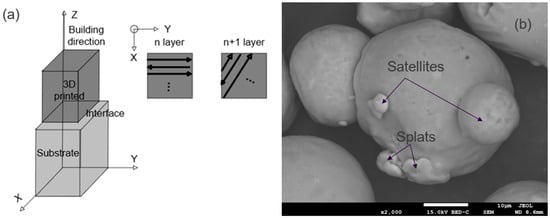
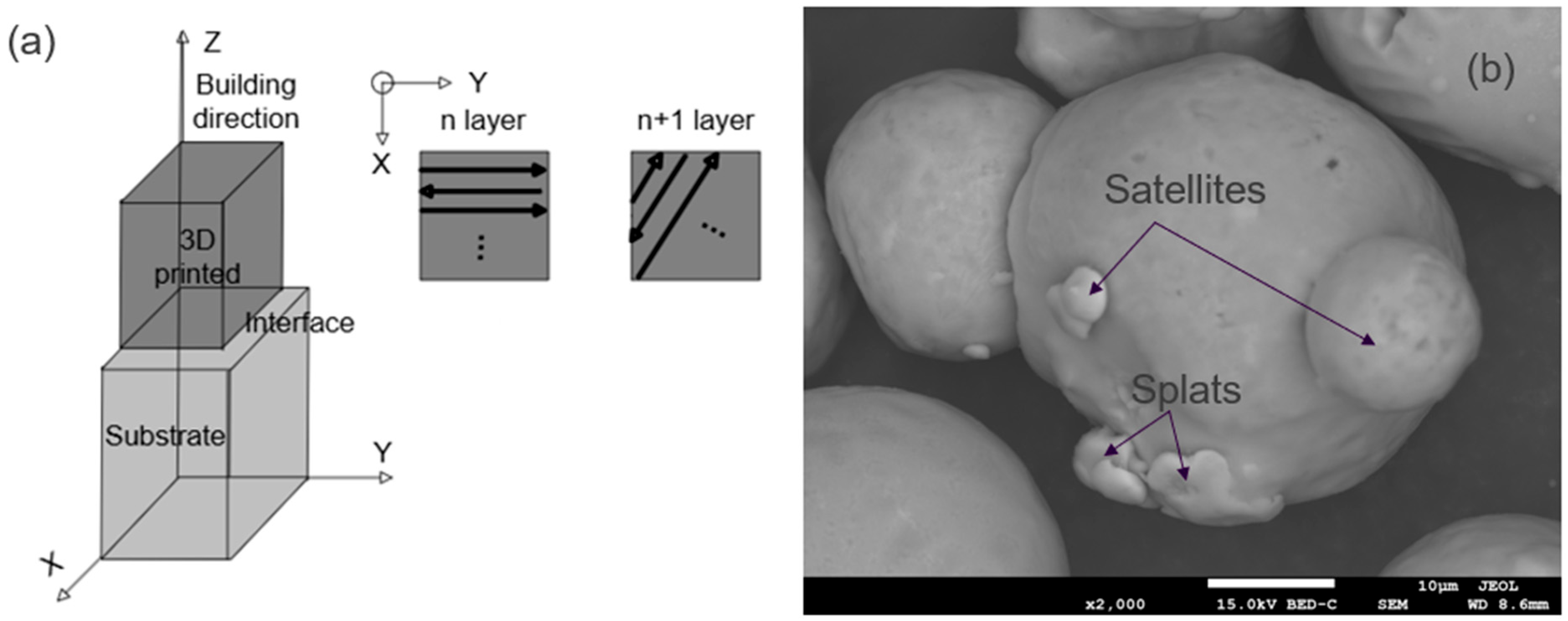
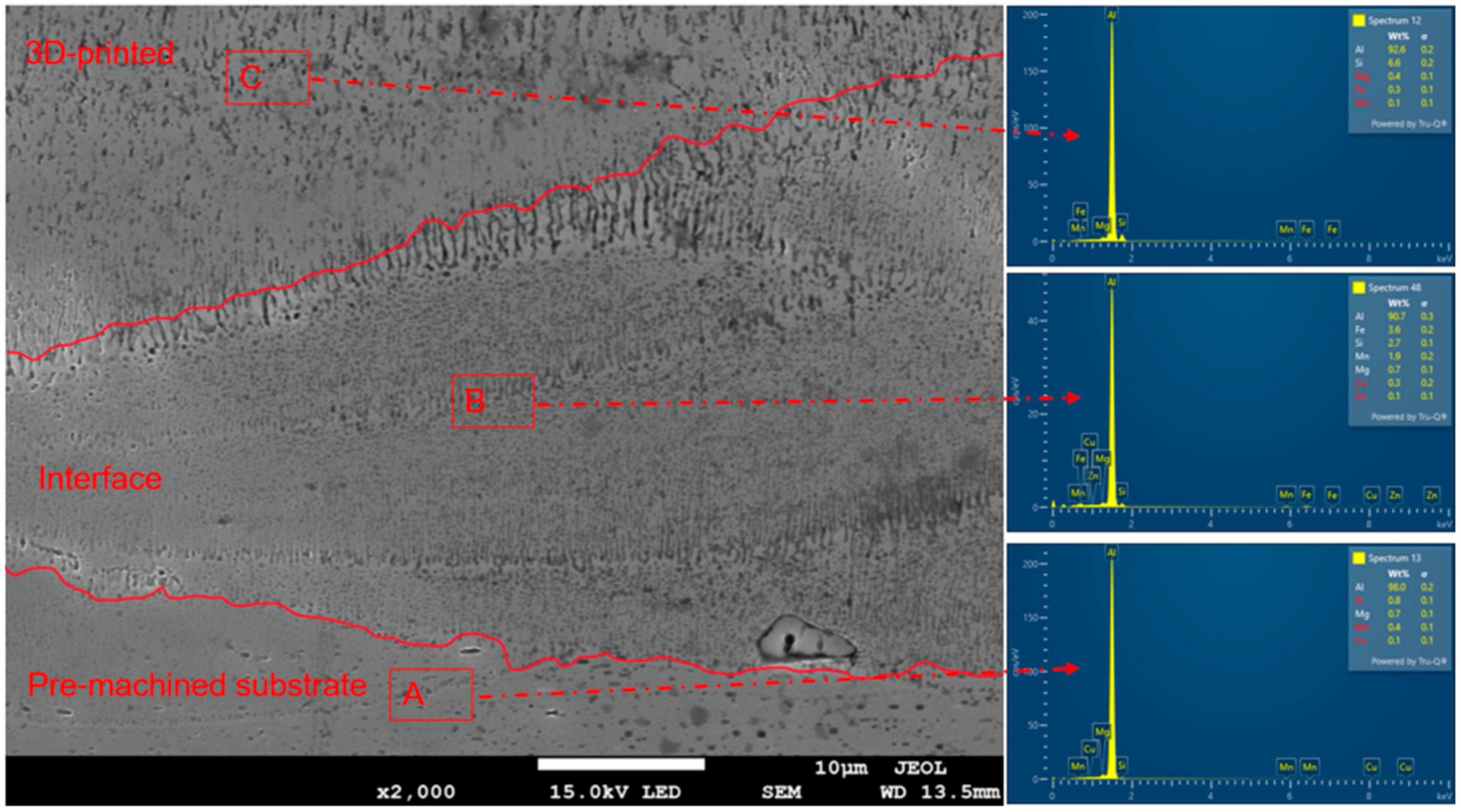
The gas-atomized AlSi7Mg powder was supplied by SLM Solutions Group AG, Germany. The particle size distributions were 44.42 µm, 30.89 µm, and 21.60 µm, respectively, corresponding to passing rates of 90%, 50%, and 10%. The SEM image of AlSi7Mg powder (Figure 1b) shows predominantly spherical grains, with observable satellites and splats. Hulamin (Pty) Ltd., Pietermaritzburg, South Africa, supplied the conventional AA 6082, selected as the base substrate. The chemical composition of the as-received substrates and 3D-printed alloys was analyzed using inductively coupled plasma optical emission spectroscopy (ICP-OES) and examined alongside the energy-dispersive spectroscopy (EDS) data obtained from the interface (Table 1).
Figure 1.
(a) Schematic diagram of hybrid additive manufacturing showing the building direction and the scanning strategy. (b) SEM image of the AlSi7Mg powder.
Table 1.
Chemical composition of materials.
The pre-machined AA 6082 substrate was washed with acetone at room temperature to remove any contaminants. An L-PBF process with an SLM®280 (Nikon SLM Solutions) and a continuous wave ytterbium-doped fiber laser was used to deposit AlSi7Mg powder gradually on the cleaned surface. The specimen was printed at dimensions of 10 × 10 × 20 mm3 using AlSi7Mg powders in an argon atmosphere to reduce the oxygen concentration to less than 0.1%. The commercially suggested printing parameters were as follows:
- Laser power: 370 W;
- Hatch spacing: 100 µm;
- Scan speed: 1650 mm/s;
- Layer thickness: 60 µm;
- Scan pattern: stripes, 10 mm wide, and 67° rotation angle.
This research focuses on the metallurgical properties of hybrid-built parts, especially at the fusion-joined interface. The corresponding specimen was sectioned in a way that the as-built, interface, and substrate were all mounted in the exact same MultiFast phenolic resin. An OM Olympus GX51 (Tokyo, Japan) and an SEM JOEL 7900F (JEOL Ltd., Tokyo, Japan) paired with EDX were used to conduct metallographic examinations on a previously mechanically ground and polished specimen at a mirror finish. Keller’s chemical etchant was employed to unveil the microstructure. The Innovatest Falcon 500 (Maastricht, Netherlands) microhardness tester made ten indentations in each zone. The applied load was set at 50 gf with a dwelling time of 10 s. The XRD provided for phase identification at various zones was performed using a Rigaku Ultima IV. The scanning range was 20–90°, with a 0.01° step width. The data were processed using the PDXL 2 software (version 2.1.3.2). The phase identification at the interface was predicted by JMatPro 7 (version 7.0).
3. Results and Discussion
3.1. Microstructure Analysis
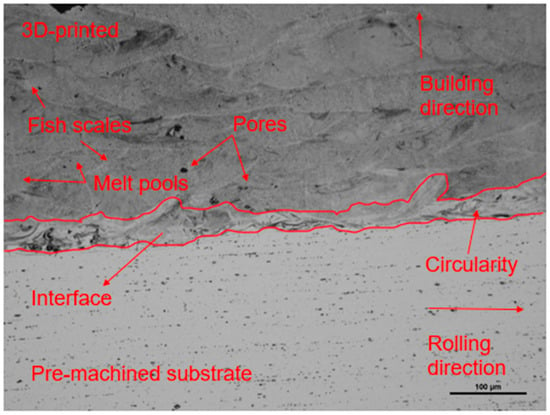
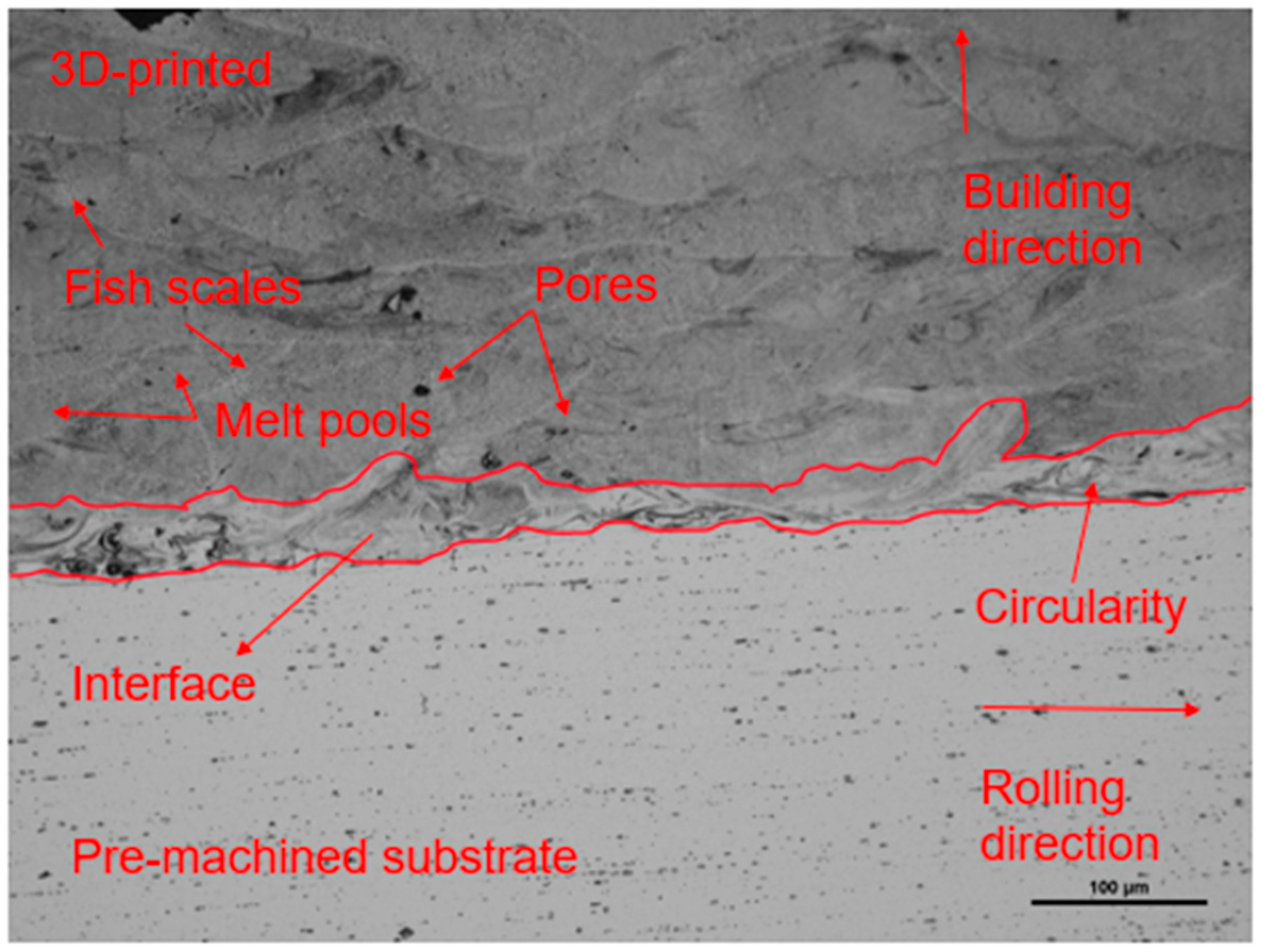
Three distinct zones are observed under microstructural examination: the pre-machined substrate, the interface, and the as-built zone, as shown in Figure 2. The interface width of 68 ± 17 µm was defined as the distance over which the transfer of the two primary alloy elements, Si and Mg, occurred between the built and substrate materials.
Figure 2.
Low magnification representation of the three main zones under the optical microscope.
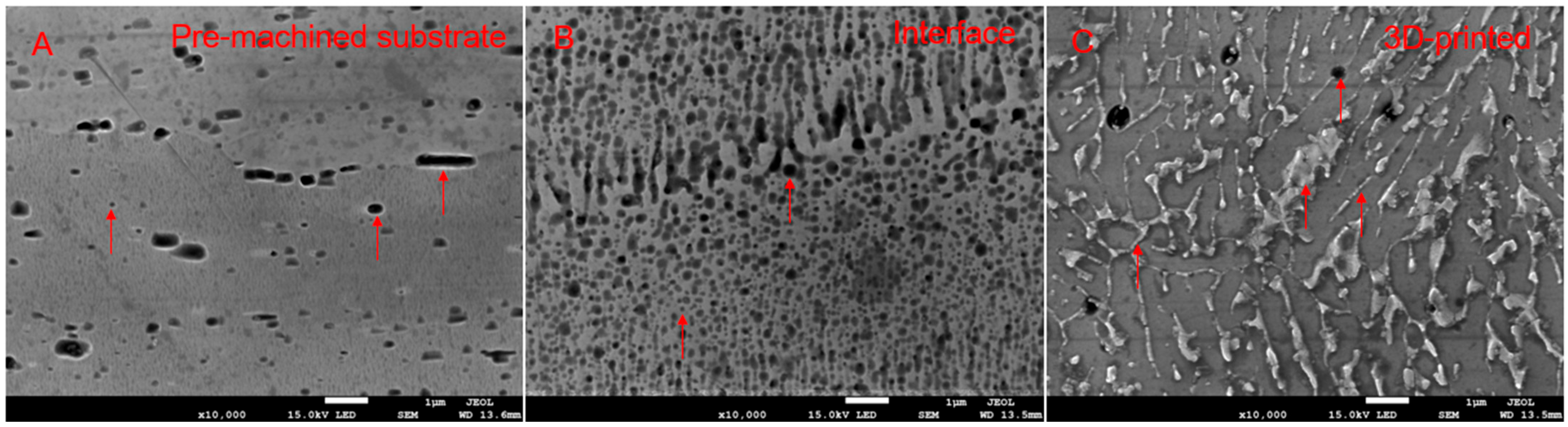
The interface microstructure displays voids and keyholes, which may negatively impact the metallurgical bond between the 3D-printed and the AA 6082 cold-rolled substrate (Figure 3 and Figure 4b). The interfacial porosities result mainly from intense thermal gradients, resulting in rapid solidification and gas trapping, alongside inadequate melt pool wetting, which leads to lack of fusion defects. The Hot Isostatic Pressing (HIP) [19] can mitigate these occurrences, whereas X-ray Computed Tomography (XCT) facilitates a comprehensive analysis of defects, including pores and cracks [20,21]. Preheating the substrate is an alternative method to prevent hot cracks. This will decrease thermal gradients, hence mitigating thermal-induced stresses and undercooling [21,22,23].
Figure 3.
SEM-EDX of the hybrid additive-manufactured aluminum alloy showing the three distinct zones.
Figure 4.
High magnification of the three distinct zones: (A) pre-machined substrate, (B) interface, (C) 3D-printed.
The formation of the metallurgical bond between the molten aluminum alloy powder and the substrate is significantly affected by the interaction of the laser power beam with both materials. An interface-bonded zone is formed as the laser beam fuses the Al alloy powder with a portion of the substrate. As a result, the alloying elements from both sides merge, leading to the solidification of a layer comprising mixed alloying elements [24].
The interaction of heat transfer at the interface between solidifying molten metal and a cold substrate is a critical factor in numerous material processes that involve solidification, including molding, strip casting, casting, and spray deposition. Phase selection, crystalline nucleation, and the resulting solidification process are influenced, which, in turn, govern the microstructure development of solidified parts. As the molten metal cools and begins to solidify, the interface transitions from an initial liquid–solid interaction to a solid–solid interaction, resulting in a significant dynamic variation in interfacial heat transfer rate. Upon initial contact between molten metal and a colder substrate, a connection is established solely at the asperities that extend from the surface, influenced by the surface tension of the liquid metal [25]. Imperfect contact results in thermal resistance developing between the metal and the substrate.
Upon cooling, the molten metal initiates nucleation of crystalline phases at contact points, which subsequently propagate rapidly to form a solid shell over the substrate. Numerous pores and gaps exist at the interface. As the liquid metal continues to solidify, the contraction of the solid layer caused by thermal stress may further widen the gaps at the interface, potentially leading to increased thermal resistance. A noticeable gap could potentially form between the molten metal and the substrate, significantly influencing the thermal resistance at the interface.
3.2. Phase Identification at the Interface of the Hybrid Additive Manufacturing
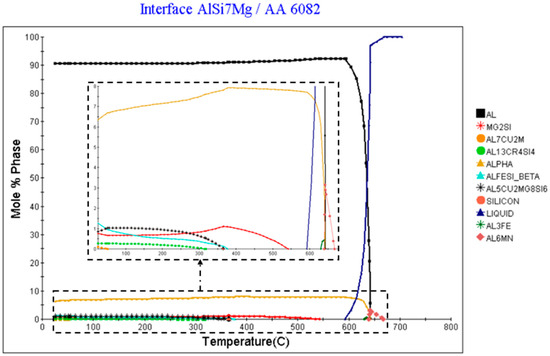
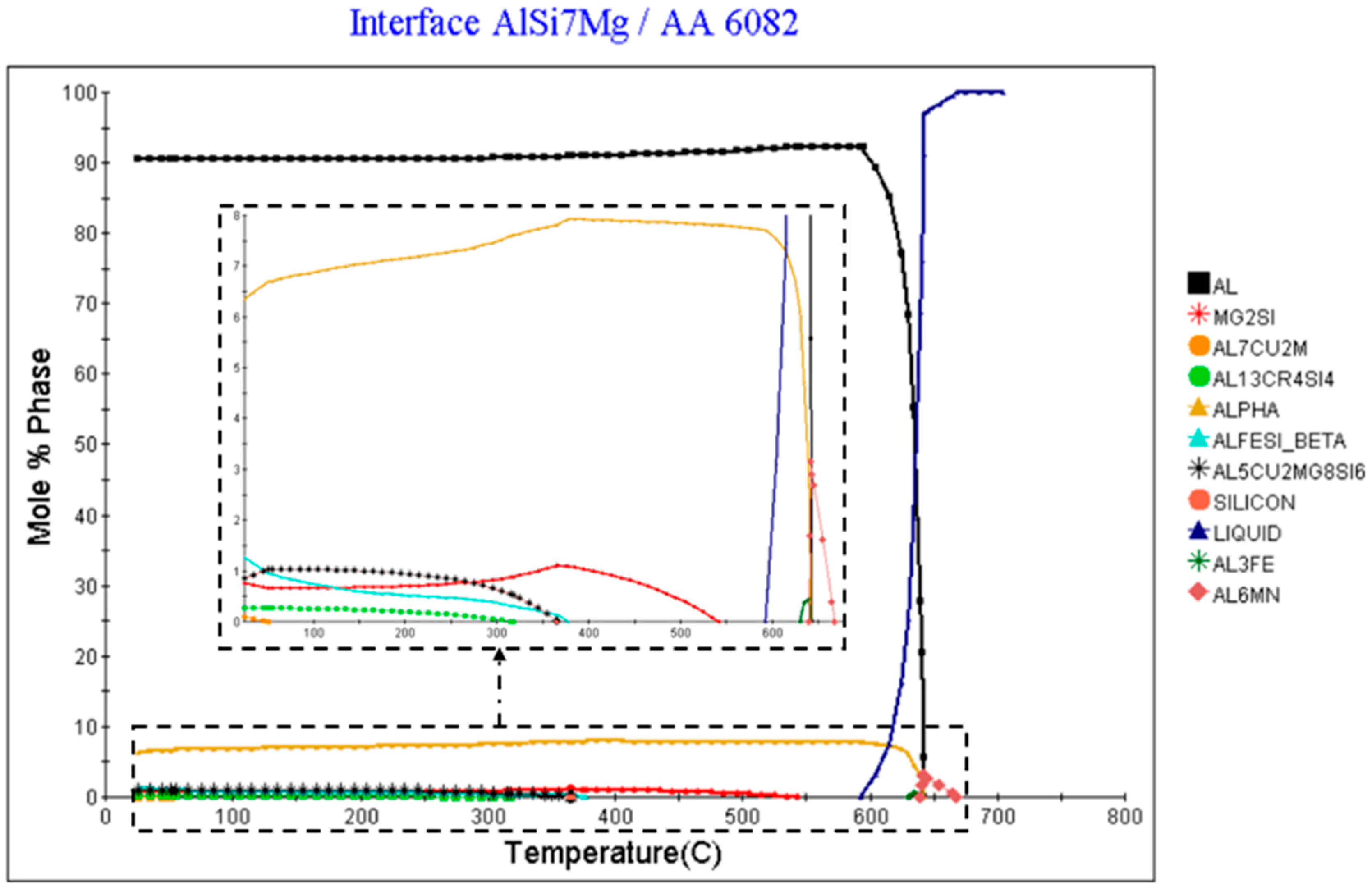
The calculated phase composition for the AlSi7Mg/AA6082 interface (Figure 5) indicates predominantly α–Al-controlled solidification and solid-state evolution, with secondary intermetallic phases forming at limited mole fractions as the temperature decreases. Above 640–650 °C, the system is fully liquid, consistent with the Al–Si eutectic-based composition of AlSi7Mg and the lower solidus temperature relative to AA6082 [26]. Upon cooling, rapid solidification of the face-centered cubic (FCC) α-Al phase dominates the phase constitution (>90 mol%) over a wide temperature range, as is typical for Al-rich alloys with moderate Si and Mg contents.
Figure 5.
JMartPro computed the amount of phases over temperature at the interface composition.
At lower temperatures, the diagram predicts the stabilization of Mg2Si-, Al–Fe–Si-, and Al–Cu–Mg–Si-type phases in minimal proportions. The formation of Mg2Si is thermodynamically anticipated due to Mg supersaturation from both AlSi7Mg and AA 6082, whereas Al–Fe–Si intermetallics result from Fe impurities often seen in wrought Al alloys. The restricted mole fractions (<5–8 mol%) of these phases indicate that, at the interface, solute dilution and the rapid heat cycles characteristic of laser powder bed fusion (LPBF) inhibit significant intermetallic development, promoting metastable solid solutions instead [27].
The sustained presence of α-Al across the entire solid-state temperature spectrum indicates favorable metallurgical compatibility and a low likelihood of brittle phase predominance at the interface, provided that elevated cooling rates are maintained. The anticipated production of Mg2Si and intricate Al–Cu–Mg–Si phases at intermediate temperatures may locally enhance hardness and residual stress, potentially serving as locations for crack initiation under cyclic loading if coarsening transpires during post-processing heat treatments [28].
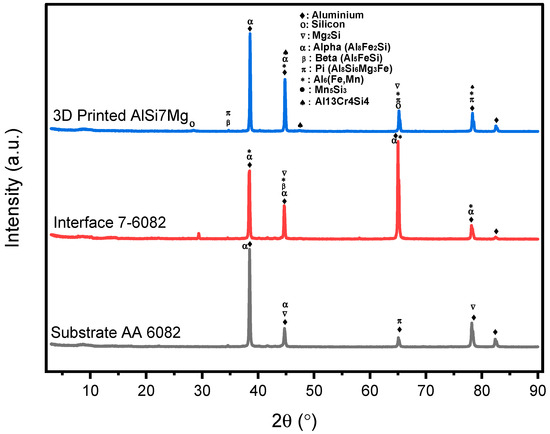
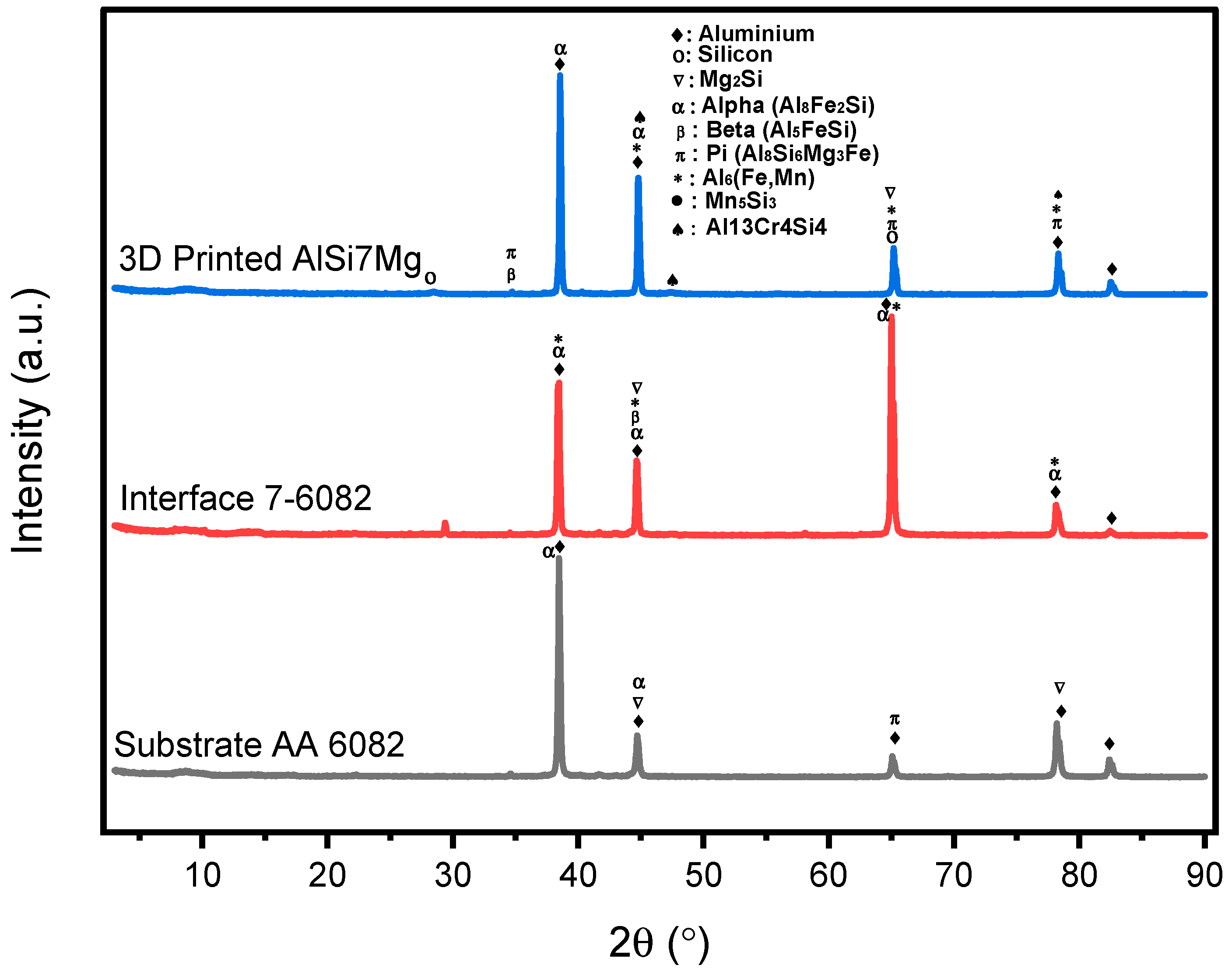
The X-ray diffraction patterns (Figure 6) of the 3D-printed AlSi7Mg, the AA6082 substrate, and their interfacial zone exhibit prominent reflections associated with FCC α-Al, signifying that the aluminum solid solution is the predominant crystalline phase in all three areas [29]. This discovery aligns entirely with the Al-rich compositions of both alloys and verifies that no crystallographic discontinuity or phase inversion transpires across the interface.
Figure 6.
The X-ray diffraction patterns of the substrate AA 6082, the interfacial zone, and the 3D-printed AlSi7Mg.
Weak but identifiable peaks associated with elemental Si are present in the 3D-printed AlSi7Mg region and persist with reduced intensity at the interface, which is expected due to dilution by the lower Si content of AA6082. The reduction in the Si peak intensity at the interface provides strong evidence for chemical intermixing and compositional grading, rather than a sharp metallurgical boundary.
Minor reflections attributable to Mg2Si and other intermetallics are detectable at low intensity. Given their weak nature and overlap with α-Al peaks, this confirms that Mg2Si and other intermetallics exist only in small volume fractions, consistent with either fine equilibrium precipitates or retained nonequilibrium phases formed during rapid solidification [30]. Importantly, no additional high-intensity peaks corresponding to brittle intermetallic compounds (e.g., Al–Cu, Al–Fe–Si with dominant volume fractions) are observed at the interface.
The similarity of peak positions between the interface and the substrate, combined with the absence of peak splitting or new phase emergence, indicates that the interface is metallurgically coherent and phase-compatible, with differences primarily reflected in relative peak intensities rather than phase identity. Any residual stresses or texture effects may influence peak intensity but do not alter phase constitution within the detection limits of conventional XRD.
3.3. Microhardness Testing
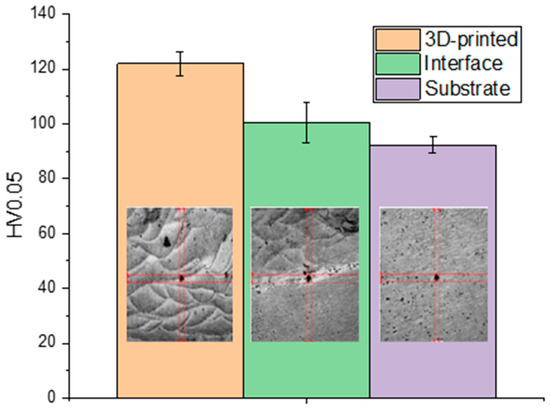
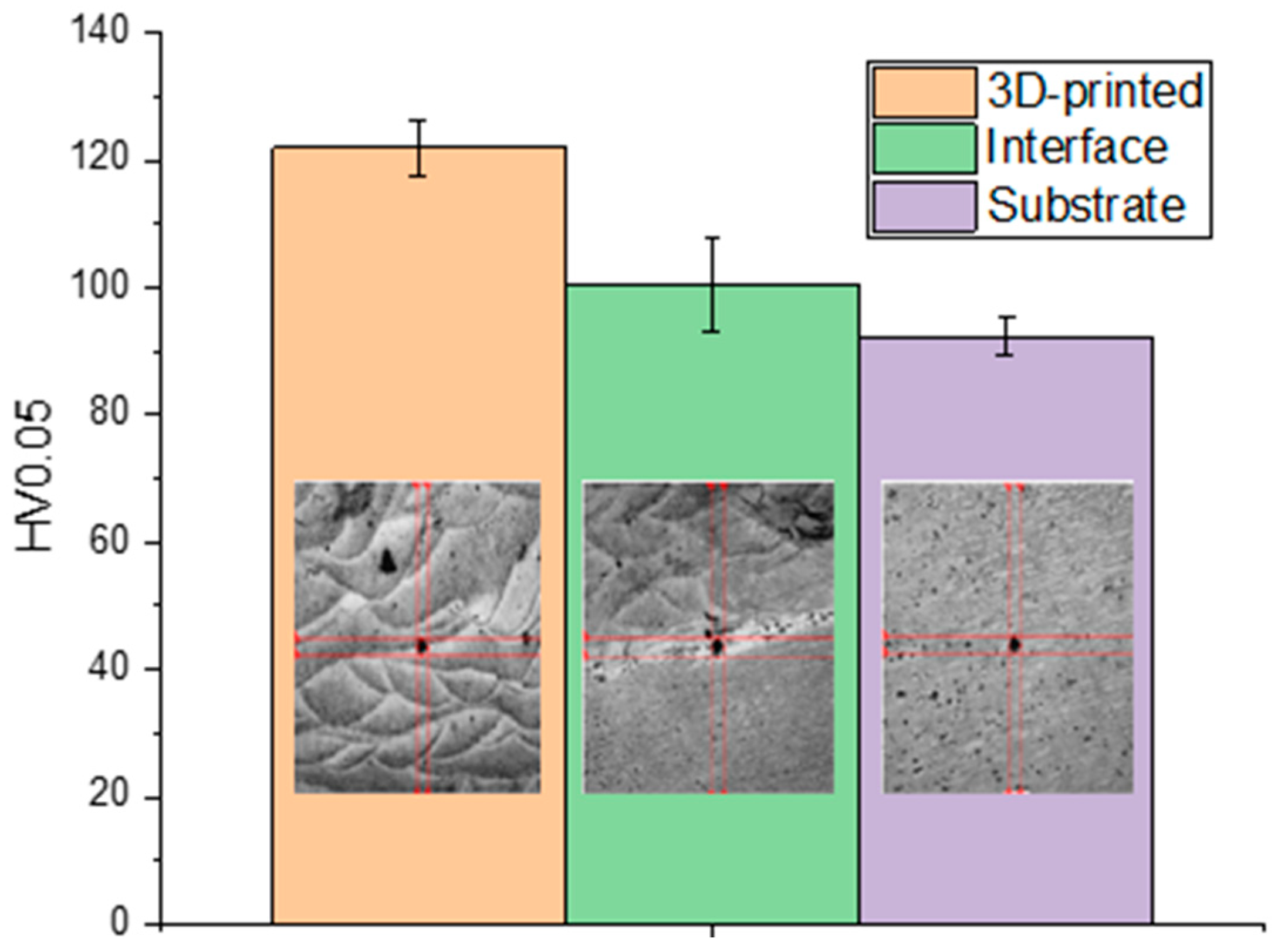
The Vickers microhardness (Figure 7) data demonstrate a distinct, systematic gradient throughout the material system, with the 3D-printed AlSi7Mg exhibiting the highest hardness, followed by the interfacial zone, and the substrate AA 6082 exhibiting the lowest hardness. The recorded values are roughly 121.9 ± 4.5 HV0.05 for the additively manufactured zone, 100.5 ± 7.5 HV0.05 for the interface, and 92.3 ± 2.9 HV0.05 for the substrate.
Figure 7.
Microhardness evaluation of the 3D-printed material, the interface zone, and the substrate.
The gradual reduction in hardness from the printed alloy to the substrate signifies a continuous mechanical transition rather than a sudden hardness discontinuity [31]. The intermediate hardness at the interface strongly indicates efficient metallurgical bonding and chemical intermixing, leading to a local composition and microstructure that are distinct from, yet compatible with, both parent materials.
The increased hardness of the 3D-printed AlSi7Mg may be confidently ascribed to microstructural refinement resulting from quick solidification, characterized by a fine cellular α-Al matrix and uniformly distributed Si-rich features [32]. In contrast, the reduced hardness of the AA6082 substrate aligns with its wrought aluminum microstructure and relatively finer strengthening characteristics [33].
The lack of a hardness peak or sharp drop at the interface indicates the absence of a mechanically deleterious brittle layer in the bonding zone. Instead, the hardness profile supports the conclusion that the interface acts as a load-transfer region, reducing stress concentration under mechanical loading.
Furthermore, the microstructural changes and mechanical response at the hybrid AlSi7Mg/AA6082 interface highlight the significance of interfacial integrity in determining overall component performance, particularly under varying service conditions. Previous studies on polymer composite systems, such as the work by Srinivasan et al. [34], have shown that environmental exposure (specifically hygrothermal aging) can degrade fiber–matrix adhesion, leading to reduced compressive strength and changes in failure modes. Although the present study focuses on metallic systems, the underlying principle is similar: environmental and operational factors can adversely affect the microstructural stability and mechanical compatibility at bonded interfaces. Understanding these effects in both polymer and metallic systems is crucial for ensuring the reliability and longevity of hybrid structures developed using advanced manufacturing techniques.
4. Conclusions
This research investigates the interfacial microstructural properties of an HAM Al alloy produced through L-PBF. AlSi7Mg powder was deposited onto a pre-machined AA 6082 substrate to assess metallurgical bonding, phase constitution, and hardness variation across the as-built, interfacial, and substrate zones.
A microstructural study using optical and scanning electron microscopy revealed a distinct yet well-bonded interface formed through partial substrate melting and elemental diffusion. Despite the presence of minor porosity and keyhole defects at the interface resulting from severe heat gradients, the overall interfacial integrity was preserved. JMatPro predictions suggested α-Al dominated solidification, with limited formation of Mg2Si and Al–Fe–Si phases in negligible quantities. X-ray diffraction confirmed that FCC α-Al was the predominant phase in every zone, with no significant amount of brittle intermetallic phase development at the interface.
Microhardness assessments revealed a gradual transition from the 3D-printed AlSi7Mg 121.9 ± 4.5 HV0.05 to the interface 100.5 ± 7.5 HV0.05 and the substrate AA 6082 92.3 ± 2.9 HV0.05, signifying mechanical compatibility and effective load transfer.
The findings indicate that hybrid additive manufacturing of AlSi7Mg on AA6082 yields a metallurgically coherent interface with advantageous microstructural properties, affirming the feasibility of HAM for aluminum structural applications.
Author Contributions
Conceptualization, M.B.M.; methodology P.A.O.; software, N.M.K.; validation, O.O.A.; formal analysis, M.C.U. and T.A.O.; investigation, M.B.M. and O.O.A.; resources, P.A.O.; data curation, M.B.M.; writing—original draft preparation, M.B.M.; supervision, P.A.O. and O.O.A.; funding acquisition, P.A.O. All authors have read and agreed to the published version of the manuscript.
Funding
This research received no external funding.
Institutional Review Board Statement
Not applicable.
Informed Consent Statement
Not applicable.
Data Availability Statement
The original contributions presented in this study are included in the article. Further inquiries can be directed to the corresponding authors.
Conflicts of Interest
The authors declare no conflicts of interest.
References
- Zhou, L.; Miller, J.; Vezza, J.; Mayster, M.; Raffay, M.; Justice, Q.; Al Tamimi, Z.; Hansotte, G.; Sunkara, L.D.; Bernat, J. Additive Manufacturing: A Comprehensive Review. Sensors 2024, 24, 2668. [Google Scholar] [CrossRef] [Scilit] [PubMed]
- Madheswaran, D.K.; Ganesamoorthy, R.; Selvi, S.; Vezhavendhan, R.; Ravi, R.; Suresh, G.; Chandramohan, P. An assessment of additive manufacturing technology for automotive and aerospace applications. In Proceedings of the Fourth International Conference on Advances in Physical Sciences and Materials, Coimbatore, India, 17–18 August 2023; p. 100012. [Google Scholar]
- Zainelabdeen, I.H.; Ismail, L.; Mohamed, O.F.; Khan, K.A.; Schiffer, A. Recent advancements in hybrid additive manufacturing of similar and dissimilar metals via laser powder bed fusion. Mater. Sci. Eng. A 2024, 909, 146833. [Google Scholar] [CrossRef] [Scilit]
- Sarıkaya, M.; Onler, D.B.; Daglı, S.; Hartomacıoğlu, S.; Günay, M.; Królczyk, G.M. A review on aluminum alloys produced by wire arc additive manufacturing (WAAM): Applications, benefits, challenges and future trends. J. Mater. Res. Technol. 2024, 33, 5643–5670. [Google Scholar] [CrossRef] [Scilit]
- Xu, S.; Lu, Q.; Ou, Y.; Zhang, P.; Yan, H.; Sun, T.; Ma, S.; Luo, Z.; Tian, Y. Effect of Heat Treatment on the Anisotropic Mechanical Properties of AlSi10Mg Fabricated by Selective Laser Melting. J. Mater. Eng. Perform. 2024, 33, 10401–10414. [Google Scholar] [CrossRef] [Scilit]
- Sun, S.; Liu, P.; Hu, J.; Hong, C.; Qiao, X.; Liu, S.; Zhang, R. E ff ect of solid solution plus double aging on microstructural characterization of 7075 Al alloys fabricated by selective laser melting (SLM). Opt. Laser Technol. 2019, 114, 158–163. [Google Scholar] [CrossRef] [Scilit]
- Wang, L.; Jiang, X.; Guo, M. Characterisation of structural properties for AlSi10Mg alloys fabricated by. Mater. Sci. Technol. 2017, 33, 2274–2282. [Google Scholar] [CrossRef] [Scilit]
- Aboulkhair, N.T.; Everitt, N.M.; Ashcroft, I.; Tuck, C. Reducing porosity in AlSi10Mg parts processed by selective laser melting ଝ. Addit. Manuf. 2014, 1–4, 77–86. [Google Scholar] [CrossRef] [Scilit]
- Koo, J.W.; Ho, J.S.; An, J.; Zhang, Y.; Chua, C.K.; Chong, T.H. A review on spacers and membranes: Conventional or hybrid additive manufacturing? Water Res. 2021, 188, 116497. [Google Scholar] [CrossRef] [Scilit]
- Strong, D.; Kay, M.; Conner, B.; Wakefield, T.; Manogharan, G. Hybrid manufacturing—Integrating traditional manufacturers with additive manufacturing (AM) supply chain. Addit. Manuf. 2018, 21, 159–173. [Google Scholar] [CrossRef] [Scilit]
- Strong, D.; Sirichakwal, I.; Manogharan, G.P.; Wakefield, T. Current state and potential of additive—Hybrid manufacturing for metal parts. Rapid Prototyp. J. 2017, 23, 577–588. [Google Scholar] [CrossRef] [Scilit]
- Klocke, F.; Roderburg, A.; Zeppenfeld, C. Design methodology for hybrid production processes. Procedia Eng. 2011, 9, 417–430. [Google Scholar] [CrossRef] [Scilit]
- Alexander, I.; Vladimir, G.; Petr, P.; Mihail, K.; Yuriy, I.; Andrey, V. Machining of thin-walled parts produced by additive manufacturing technologies. Procedia CIRP 2016, 41, 1023–1026. [Google Scholar] [CrossRef] [Scilit]
- Newman, S.T.; Zhu, Z.; Dhokia, V.; Shokrani, A. CIRP Annals—Manufacturing Technology Process planning for additive and subtractive manufacturing technologies. CIRP Ann.—Manuf. Technol. 2015, 64, 467–470. [Google Scholar] [CrossRef] [Scilit]
- Merklein, M.; Junker, D.; Schaub, A.; Neubauer, F. Hybrid additive manufacturing technologies—An analysis regarding potentials and applications. In Proceedings of the 9th International conference on photonic technologies-LANE 2016, Fürth, Germany, 5–8 September 2016; Physics Procedia; Volume 83, pp. 549–559. [Google Scholar]
- Bambach, M. Recent Trends in Metal Forming: from Process Simulation and Microstructure Control in Classical Forming Processes to Hybrid CombinationsBetween Forming and Additive Manufacturing. J. Mach. Eng. 2016, 16, 5–17. [Google Scholar]
- Ambrogio, G.; Gagliardi, F.; Muzzupappa, M.; Filice, L. Additive-incremental forming hybrid manufacturing technique to improve customised part performance. J. Manuf. Process. 2019, 37, 386–391. [Google Scholar] [CrossRef] [Scilit]
- Kotteesvaran, B.; Vijayakumar, S.; Suresh, G.; Vimalanathan, P. A Review on Technologists Interest on Natural Fibers. In Proceedings of the Fourth International Conference on Advances in Physical Sciences and Materials, Coimbatore, India, 17–18 August 2023; p. 100026. [Google Scholar]
- Sun, L.; Yang, Y.; Li, S.; Chen, W.; Wang, Y.; Yan, P.; Zhu, Y.; Wu, W.; Hu, B. Influencing mechanisms of hot isostatic pressing on surface properties of additively manufactured AlSi10Mg alloy. J. Mater. Process. Technol. 2024, 329, 118426. [Google Scholar] [CrossRef] [Scilit]
- Nezhadfar, P.D.; Thompson, S.; Saharan, A.; Phan, N.; Shamsaei, N. Structural integrity of additively manufactured aluminum alloys: Effects of build orientation on microstructure, porosity, and fatigue behavior. Addit. Manuf. 2021, 47, 102292. [Google Scholar] [CrossRef] [Scilit]
- Mao, Y.; Chen, H.; Xiong, J. Research progress in laser additive manufacturing of aluminum alloys: Microstructure, defect, and properties. J. Mater. Res. Technol. 2024, 30, 695–716. [Google Scholar] [CrossRef] [Scilit]
- Uddin, S.Z.; Murr, L.E.; Terrazas, C.A.; Morton, P.; Roberson, D.A.; Wicker, R.B. Processing and characterization of crack-free aluminum 6061 using high-temperature heating in laser powder bed fusion additive manufacturing. Addit. Manuf. 2018, 22, 405–415. [Google Scholar] [CrossRef] [Scilit]
- Shi, Y.; Yang, K.; Kairy, S.K.; Palm, F.; Wu, X.; Rometsch, P.A. Effect of platform temperature on the porosity, microstructure and mechanical properties of an Al–Mg–Sc–Zr alloy fabricated by selective laser melting. Mater. Sci. Eng. A 2018, 732, 41–52. [Google Scholar] [CrossRef] [Scilit]
- Mampuya, M.B.; Kibambe, N.M.; Umba, M.C.; Ayodele, O.; Olubambi, P.A. Study of interfacial microstructure in hybrid additive manufactured aluminium alloys. MATEC Web Conf. 2025, 417, 07006. [Google Scholar] [CrossRef] [Scilit]
- Prates, M.; Biloni, H. Variables Affecting the Nature of the Chill Zone. Met. Trans 1972, 3, 1501–1510. [Google Scholar] [CrossRef] [Scilit]
- Hoffmann, M. Surface & Coatings Technology Friction surfacing of aluminum alloys on Ti6Al4V—Investigation of process parameters, material deposition behavior and bonding mechanisms. Surf. Coat. Technol. 2025, 503, 131985. [Google Scholar] [CrossRef] [Scilit]
- Chowdhury, S.; Yadaiah, N.; Prakash, C. Laser powder bed fusion: A state-of-the-art review of the technology, materials, properties & defects, and numerical modelling. J. Mater. Res. Technol. 2022, 20, 2109–2172. [Google Scholar] [CrossRef] [Scilit]
- Curti, L.; Ghio, E. Main Heat Treatments Currently Applied on Laser Powder Bed-Fused Scalmalloy®: A Review. Crystals 2025, 15, 25. [Google Scholar] [CrossRef] [Scilit]
- Mathe, N.R.; Tshabalala, L.C. The validation of the microstructural evolution of selective laser—Melted AlSi10Mg on the in—House built machine: Energy density studies. Prog. Addit. Manuf. 2019, 4, 431–442. [Google Scholar] [CrossRef] [Scilit]
- Liu, Y.J.; Liu, Z.; Jiang, Y.; Wang, G.W.; Yang, Y.; Zhang, L.C. Gradient in microstructure and mechanical property of selective laser melted AlSi10Mg. J. Alloys Compd. 2018, 735, 1414–1421. [Google Scholar] [CrossRef] [Scilit]
- Ghanavati, R.; Naffakh-moosavy, H. Additive manufacturing of functionally graded metallic materials: A review of experimental and numerical studies. J. Mater. Res. Technol. 2021, 13, 1628–1664. [Google Scholar] [CrossRef] [Scilit]
- Snopiński, P.; Matus, K.; Tatiček, F.; Rusz, S. Overcoming the strength-ductility trade-off in additively manufactured AlSi10Mg alloy by ECAP processing. J. Alloys Compd. 2022, 918, 165817. [Google Scholar] [CrossRef] [Scilit]
- Vlach, M.; Smola, B.; Oc, V. Microstructure and mechanical properties of the AA6082 aluminium alloy with small additions of Sc and Zr. Int. J. Mater. Res. 2009, 100, 420–423. [Google Scholar] [CrossRef] [Scilit]
- Srinivasan, T.; Suresh, G.; Ramu, P.; Vignesh, R.; Harshan, A.V.; Vignesh, K.P. Materials Today: Proceedings Effect of hygrothermal ageing on the compressive behavior of glass fiber reinforced IPN composite pipes. Mater. Today Proc. 2021, 45, 1354–1359. [Google Scholar] [CrossRef] [Scilit]

Disclaimer/Publisher’s Note: The statements, opinions and data contained in all publications are solely those of the individual author(s) and contributor(s) and not of MDPI and/or the editor(s). MDPI and/or the editor(s) disclaim responsibility for any injury to people or property resulting from any ideas, methods, instructions or products referred to in the content. |
© 2026 by the authors. Licensee MDPI, Basel, Switzerland. This article is an open access article distributed under the terms and conditions of the Creative Commons Attribution (CC BY) license (https://creativecommons.org/licenses/by/4.0/).