
Proceeding Paper

Investigating the Effects of Cooking Oil-Based Cutting Fluids on Machining Parameters of AISI 1020 Mild Steel †

by
Kazeem Bello
1,*,
Rendani Maladzhi
1,
Mukondeleli Kanakana-Katumba
2 and
Samuel Balogun
3
1
Department of Mechanical Engineering, Durban University of Technology, Durban 4001, South Africa
2
Faculty of Engineering and Built Environment, Vaal University of Technology, Pretoria 0001, South Africa
3
Department of Mechanical Engineering, Federal University Oye Ekiti, Oye 370112, Nigeria
*
Author to whom correspondence should be addressed.
Presented at the 4th International Conference on Applied Research and Engineering, Pretoria, South Africa, 21–23 November 2025.
Mater. Proc. 2026, 31(1), 19; https://doi.org/10.3390/materproc2026031019 (registering DOI)
Published: 23 April 2026

Abstract

This study investigates how cooking oil-based cutting fluids (CKO-CFs) perform as sustainable alternatives to conventional mineral oil-based fluids when turning AISI 1020 mild steel. Waste cooking oil was cleaned, treated, and mixed with selected additives to improve stability, lubricity, and corrosion resistance. Machining experiments were designed using the Taguchi L9 orthogonal array to optimise cutting speed, feed rate, and depth of cut. The CKO-based cutting fluid showed lower surface roughness at 0.270 μm compared to conventional cutting fluids at 0.274 μm. This indicates better lubricity and a smoother surface finish. Tool-tip temperatures were reduced by up to 11.99% compared to conventional fluids. This improves heat dissipation and lowers thermal damage. Tool wear was reduced by up to 5.75% with the CKO-based fluid, suggesting better lubrication and a longer tool life than conventional cutting fluids. The findings show that CKO-based cutting fluids provide an eco-friendly and efficient option for sustainable machining operations.

1. Introduction

Cutting fluids are crucial in metal machining since they reduce friction, disperse heat, and extend tool life [1]. For a long time, mineral oil-based cutting fluids have been the go-to option in manufacturing because of their excellent lubrication and cooling abilities [2]. However, these traditional fluids raise significant environmental and health issues since they are mostly non-biodegradable and toxic. Their disposal can contaminate soil and water and pose health risks to machine operators. In response to the global push for sustainable manufacturing, researchers are working hard to create biodegradable and eco-friendly cutting fluid alternatives derived from natural sources [3].
Cooking oil (CKO) has been identified as a promising option for developing sustainable cutting fluids. The high usage of vegetable oils worldwide has led to a large amount of waste cooking oil, which creates serious disposal challenges for the environment [4]. Waste cooking oil (CKO) was selected due to its high local availability from food vendors, minimal procurement cost, and waste-to-resource potential. Compared to virgin vegetable or non-edible oils, CKO offers comparable fatty acid composition, good lubricity, high flash point, and improved sustainability through valorisation. Repurposing this waste oil into cutting fluids offers two benefits: it supplies an eco-friendly lubricant for machining and helps with waste management concerns.
Research has shown that vegetable oils have several appealing qualities for metalworking, such as a high viscosity index, excellent lubricity, biodegradability, and low toxicity [5,6]. Additionally, CKO-based cutting fluids demonstrate strong lubrication and cooling effects, which help reduce friction and heat during machining. This results in longer tool life, better surface finish, and lower cutting temperatures [3]. Moreover, the renewable and biodegradable nature of CKO supports the United Nations Sustainable Development Goals (UN-SDGs) 11 and 15, which focus on environmental protection and sustainable industrial growth.
Despite these benefits, the use of CKO-based cutting fluids in industry is still limited due to issues like oxidation instability, contamination, and inconsistent performance [7]. Waste cooking oil (CKO) was selected due to its high local availability from food vendors, minimal procurement cost, and waste-to-resource potential. Compared to virgin vegetable or non-edible oils, CKO offers comparable fatty acid composition, good lubricity, high flash point, and improved sustainability through valorisation. Tackling these challenges requires focused research to improve formulations and optimise machining parameters to achieve reliable performance under varying conditions.
AISI 1020 mild steel (manufactured by African Indusries Group, Lagos, Nigeria) is a low-carbon steel commonly used in making machine parts, shafts, and automotive components. It is a good test material for machining studies because of its strong machinability and moderate strength [8,9,10,11]. Turning, one of the most basic machining operations, remains essential for shaping and finishing this material. However, optimising turning parameters like cutting speed, feed rate, and depth of cut to achieve better surface quality, reduce tool wear, and ensure effective material removal is a constant challenge [12,13,14].
The Taguchi method, a statistical tool for design of experiments (DOE), provides an efficient way to optimise process parameters with fewer experimental runs while ensuring reliable processes [15,16,17]. When combined with analysis of variance (ANOVA), it offers a structured approach to identifying the most important factors that affect machining responses such as surface roughness, tool wear, and cutting temperature.
This study will investigate the effects of CKO-CF on the machining parameters of AISI 1020 mild steel. By using the Taguchi method, this research aims to establish optimal cutting conditions that boost machining efficiency while encouraging the use of eco-friendly lubricants in metal cutting operations.

2. Materials and Methods

2.1. Sample Collection and Processing of Cooking Oil (CKO)

Used cooking oil (CKO) was sourced from various food vendors in Ado-Ekiti, Ekiti State, Nigeria, where it had been utilised for deep-frying food items. This particular source was picked because there are large quantities of waste oil available daily, which makes it an economical and sustainable base material for formulating bio-based cutting fluids. The CKO samples collected were kept in airtight plastic containers to avoid contamination and oxidation before processing. The colour of the oil samples collected was dark, which was an indication of the suspended food particles, burnt residues, and impurities that had been accumulated in the oil during previous frying operations. The oil was then treated to a multi-stage purification process to remove contaminants and enhance its physicochemical properties. The purification and treatment processes were performed at the Chemistry Department Laboratory, Federal University of Technology, Akure (FUTA), in accordance with the standard laboratory procedures outlined by [18,19].

2.2. The Processing Included Several Stages, Which Were as Follows

  • i. Filtration: The oil derived from CKO collection was filtered through the clean filter paper and fine-mesh sieve to get rid of the solid impurities, food particles, and debris. This preliminary filtration step made sure that the oil was visibly free of contaminants that could be a hindrance to its being a good base fluid.
  • ii. Moisture Removal: Water remaining in the oil affects its quality and causes foaming, microbial growth, and eventually leads to reduced stability. Thus, the oil that had been filtered was gently heated to about 100 °C for a period of 30 min to evaporate the moisture. This process made it possible to have a stable and homogeneous oil phase that was ready for further treatment.
  • iii. Acid Treatment: The already dried oil was then subjected to the treatment with around 70 mL of phosphoric acid (H3PO4) which was manufactured by Tizara International, Gujarat, India but sourced from a local chemical supplier, Ojo Ajayi and Son Nigeria Limited, located in Ado Ekiti, Nigeria with a view to neutralising the existing free fatty acids and eliminating the other chemicals that could result in poor lubrication, lesser oxidation stability, and overall performance. The acid treatment not only refined the oil but also increased its chemical stability, so much so that the resulting oil could even be used as a base for mixing.
  • iv. Settling and Decantation: The oil after treatment with acid was allowed to stand still for 24 h, during which time the impurities and the byproducts formed during the reaction were separated by gravity. The purified oil of the clear upper layer was then slowly poured into the containers that had been rendered clean for later formulation.
  • v. Storage: The cooking oil that had been purified was kept in plastic bottles that were airtight and had labels affixed to them, to be able to tell what the oil was and, most importantly, to prevent oxidation and contamination of the oil before it is used in cutting fluid formulation.
The CKO that had undergone processing was not only lighter in colour but also much cleaner than the raw sample, indicating that most of the impurities had been removed.

2.3. Formulation of the Cooking Oil-Based Cutting Fluid

The CKO-CF was prepared according to the standard processing method described by [18], with some modifications to enhance the fluid’s slipperiness, cooling properties, oxidation resistance, and corrosion resistance. The refined CKO was used as the base fluid, and the necessary additives were mixed in to make it more suitable for machining applications. The supplements included an emulsifier, an antioxidant, an anti-corrosion agent, and a biocide, each being chosen for its specific purpose in making the fluid more stable and more efficient in machining.
A 1:9 oil-to-water ratio was used in the preparation, as previous studies had [20,21,22] suggested, to get an optimal balance between lubrication and cooling effects. The emulsifier helped in the miscibility and stability of the oil and water phases, while the antioxidant increased resistance to oxidation. An anti-corrosion agent, which consists entirely of natural materials, was added to the formula, and it is composed of onion extract (25%), acetone (30%), honey (40%), and (5%) diluted tetraoxosulphate (VI) acid (H2SO4) were sourced from a local chemical supplier, Koeman International Technical Services Ltd., Lagos, Nigeria. The H2SO4 was manufactured by Tizara International, Gujarat, India; the latter helps to protect metal surfaces from corrosion. The introduction of the biocide was deliberate to counteract microbial growth and thus extend the fluid’s life span.
The laboratory equipment used in this study included borosilicate glass beakers manufactured by Borosil Limited, Mumbai, India, an analytical weighing balance manufactured by OHAUS Corporation, Parsippany, New Jersey, USA, filter papers produced by Cytiva, Whatman brand, Marlborough, Massachusetts, USA, and a mechanical stirrer manufactured by IKA Works GmbH & Co. KG, Staufen im Breisgau, Germany. The formulation was carried out using beakers, matter weighing scales, filter papers, and a mechanical stirrer, which was mounted on a drill to get very good mixing as the mixture was made. The different components were weighed and added together as per the composition in Table 1; it shows that the final cutting fluid consisted of about 7.84% purified CKO and 90% distilled water with small percentages of the additives.
The prepared cutting fluid was then subjected to a series of tests for its physicochemical properties, like viscosity, pH, flash point, and density, to ensure that it was up to the machining performance standards. The resultant fluid proved to be stable, homogeneous, and eco-friendly, hence, fit for use in turning operations as a sustainable alternative to the regular mineral oil-based cutting fluids.
The experimental setup for developing the CKO-based cutting fluid involved various laboratory materials, including beakers, mini and medium test tubes, filter paper, distilled water, dishes, bowls, an electronic measuring scale, and a stopwatch.

2.4. Characterisations of the Formulated CKO-Based Cutting Fluid

The characterisation of the developed CKO-based cutting fluid was conducted to assess its key properties, including viscosity, stability, corrosion inhibition capability, and pH value, following the guidelines set by ASTM standards. Viscosity, which represents the internal resistance of the fluid to flow due to its molecular structure, was determined using the ASTM D445 standard [23]. To evaluate the stability of the formulated cutting fluid, a visual inspection method was employed, where the transparency of the fluid was monitored over a period of 72 h at a controlled room temperature of not more than 30 °C. This test aimed to determine the fluid’s ability to maintain its homogeneity and prevent phase separation over time, which is critical for ensuring its effectiveness in machining applications.
Furthermore, the corrosion inhibition potential of the formulated cutting fluid was analysed following the ASTM D4627 standard [24]. This assessment was performed using cast iron chips placed on a filter paper, adopting the methodology established in the ASTM D4627 standard, which is also adopted by [18]. The purpose of this test was to ascertain the fluid’s capacity to protect metal surfaces from corrosion, a vital property for cutting fluids used in machining operations. Additionally, the pH level of the CKO-based cutting fluid was measured using a digital pH meter at the Julius Okorie Central Laboratory, Federal University of Technology, Akure (FUTA), in strict compliance with ASTM D7946 standard. The pH value plays a crucial role in determining the fluid’s chemical stability and its compatibility with machining materials, as well as its ability to prevent microbial growth. These comprehensive evaluations ensure that the formulated CKO-based cutting fluid meets industry requirements for efficient and sustainable metal cutting applications.

2.5. Repeatability and Batch-to-Batch Consistency

Repeatability of the CKO-based cutting fluid was ensured through controlled purification steps (filtration, moisture removal, and acid neutralisation), fixed additive proportions, and a consistent 1:9 oil–water ratio. Batch-to-batch consistency was verified by monitoring viscosity, pH, stability, and corrosion behaviour using ASTM standards. Although waste oil composition may vary, standardised processing and physicochemical characterisation minimise variability. For industrial scalability, strict feedstock screening and quality control protocols are essential to maintain uniform performance.

2.6. Measurement of Machining Parameters in the Lathe Turning Process

To ensure precision and consistency in evaluating the performance of the cooking oil (CKO)-based cutting fluid, the measurement of machining parameters in the lathe turning process was conducted. The key parameters monitored included cutting speed (m/min), feed rate (mm/rev), depth of cut (mm), and the type of cutting fluid. These parameters were carefully recorded using precision instruments and standardised methodologies to maintain experimental accuracy and reliability. The research methodology employed in developing and evaluating a cutting fluid derived from CKO for machining AISI 1020 mild steel, and compared with a conventional cutting fluid. The study utilised a high-speed lathe machine for turning operations, with key machining parameters such as cutting speed, feed rate, and depth of cut, which were carefully selected based on industry standards.

3. Results and Discussion

3.1. Physicochemical Properties of Raw Purified CKO and Produced CKO-Based Cutting Fluids

The physicochemical properties (PCPs) and fatty acid compositions (FACs) of the purified CKO are presented in Table 2 and Table 3, respectively, while the properties of the produced CKO-based cutting fluids are presented in Table 4.

3.2. Experimental Results for the Cutting Fluid Parameters

The results of the machining performance of CKO and CCF under Taguchi L9 orthogonal array design with varying cutting conditions are presented in Table 5 and Table 6, respectively. The key machining responses, surface roughness (SRns), tool-tip temperature (CTempt), and tool wear (Twear), were evaluated for both fluids across different combinations of cutting speed (Csp), feed rate (Frt), depth of cut (dct), and spindle speed (Ssp). The results showed the comparative analysis between CKO and CCF.

3.3. Factor–Parameter Combinations

Table 7 presents the designations for the factor–parameter combinations (FCPs) employed in this study. The adoption of a systematic nomenclature for these factor combinations is essential for clarity and ease of reference throughout the study, particularly when discussing the experimental runs. By assigning designations to each experimental condition, the study ensures consistency in reporting and facilitates comparative analysis.
Therefore, each experimental run has been assigned an identifier in the form of FCP-1 through FCP-9, where “FCP” denotes “Factor–Parameter Combination.” Each designation corresponds to a specific set of experimental conditions comprising cutting speed (Csp), feed rate (Frt), depth of cut (dct), and spindle speed (Ssp). For instance, FCP-1 represents an experimental condition with a Csp of 173 m/mm, Frt of 0.4 mm/rev, dct of 0.8 mm, and Ssp of 1400 rev/min, respectively. This systematic approach is consistently applied across all the experimental runs from FCP-1 to FCP-9, as detailed in Table 7.

3.4. Properties of Raw Purified CKO and Produced CKO-Based Cutting Fluids

The properties of the purified cooking oil (CKO) and the produced CKO-based cutting fluid provide information about their suitability for machining applications. The purified CKO exhibits a dark brown colour with a specific gravity of 0.93, an acid value of 4.8 mg-KOH/100 g, and a pH value of 5.3. The viscosity at 40 °C is recorded at 41 mm2/s, indicating a moderately high fluid thickness that supports lubrication efficiency [25,26]. Additionally, its flash point of 260 °C suggests high thermal stability, reducing the risk of ignition under elevated machining temperatures. The saponification value of 195 mg-KOH/100 g implies a good balance between lubrication and emulsification properties, making it suitable for blending into cutting fluid formulations [27].
The fatty acid composition (FAC) analysis shows that the purified CKO contains 43.3% oleic acid, 38.6% linoleic acid, and 17.5% palmitic acid. Oleic acid, linoleic acid, and palmitic acid were manufactured by Sigma-Aldrich Merck Group, Burlington, MA, USA. The presence of these monounsaturated and polyunsaturated fatty acids contributes to the lubricity and oxidative stability of the oil. The produced CKO-based cutting fluid demonstrates an improved pH value of 8.23, which is more alkaline compared to the raw CKO, enhancing corrosion resistance. The viscosity is significantly reduced to 0.812 mm2/s, optimising fluidity and effective cooling. Furthermore, the cutting fluid is characterised by low corrosion levels and excellent stability, indicating its practical usability in machining processes [28].
Therefore, the transformation of raw CKO into a stable, low-viscosity, and pH-balanced cutting fluid ensures its compatibility with metal cutting applications. These enhancements play a crucial role in improving machining performance by reducing friction, dissipating heat efficiently, and preventing excessive tool wear. The emulsification capability and inherent lubricity of CKO contribute to its potential as an eco-friendly alternative to CCF.

3.5. Properties of Produced CKO-Based Cutting Fluids and CCF

The CKO-based cutting fluid, derived from vegetable cooking oil, demonstrated attributes that highlight its viability as an alternative to conventional cutting fluids. With a pH of 8.23, the fluid maintains a mildly alkaline profile suitable for machining applications, promoting rust inhibition without posing a significant risk to operators or equipment. Its low viscosity at 40 °C (0.812 mm2/s) suggests excellent flowability and minimal resistance during application, which enhances cooling and lubrication efficiency. Notably, the corrosion level is low, indicating the fluid’s potential for prolonging tool life and reducing degradation of workpieces. Its enhanced stability under storage or operational conditions further strengthens its industrial applicability. A distinct brown-milky colour, though different from conventional fluids, does not compromise its performance and may even reflect its organic composition, making it environmentally preferable.
On the other hand, conventional mineral oil-based soluble cutting fluids exhibit characteristics shaped by petroleum derivatives, with higher viscosities (41.9 mm2/s) that may hinder fluid mobility but provide a thicker lubrication film. The pH range of 8.5 to 9.5 is slightly more alkaline than the CKO fluid, which may offer marginally better corrosion resistance at the expense of possible skin irritation. Physicochemical attributes such as specific gravity (0.85–0.90), a high flash point (>150 °C), and a low pour point (−10 to −15 °C) suggest strong thermal stability across varied temperatures. However, properties like low saponification (<10 mg-KOH/100 g) and iodine values (<20 g/100 g) indicate a limited content of unsaturated fatty acids, which restricts biodegradability and renewable sourcing. While these fluids offer industrial reliability, their environmental impact and toxicity concerns render them less sustainable compared to the bio-based alternative.
Therefore, the CKO-based cutting fluid offers a cost-effective alternative to conventional petroleum-based fluids, particularly due to the widespread availability and low cost of used or fresh vegetable cooking oils. Unlike mineral oils, which rely on refined petroleum processes and imported additives, CKO can be locally sourced and processed with minimal overhead, reducing both production and procurement costs. Additionally, its low corrosion level and improved stability contribute to reduced maintenance expenses and longer tool life, translating to further operational savings. These economic benefits, combined with its environmentally friendly profile, justify the use of CKO-based cutting fluids in machining applications, especially in cost-sensitive or sustainability-focused operations.

3.6. Comparisons of the Cutting Conditions of Both CKO and CCF

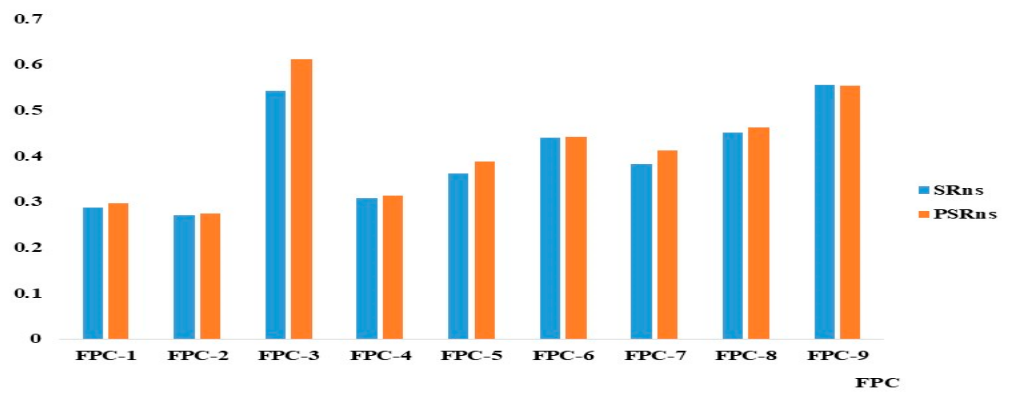
The machining performance of CKO and CCF was evaluated using the Taguchi L9 orthogonal array, focusing on surface roughness (SRns), tool-tip temperature (CTempt), and tool wear (Twear). The comparative analysis provides information about the effectiveness of CKO-based cutting fluid under different machining conditions.
SRns, as shown in Figure 1, demonstrates a varying trend across different factor–parameter combinations (FPCs). Figure 1 shows the comparisons between the SRns recorded from CKO and CCF, which are designated as SRns and PSRns, respectively. Therefore, from the analysis, the CKO-based cutting fluid slightly results in lower surface roughness values compared to its conventional counterpart. As can be inferred from the figure, under FPC-2 (Csp = 220 m/mm, Frt = 0.4 mm/rev, dct = 1.0 mm, Ssp = 1100 rev/min), the CKO-based cutting fluid records an SRns of 0.270 μm, while the conventional fluid records 0.274 μm. This represents a 1.46% reduction in surface roughness, indicating that the superior lubricity of CKO-based cutting fluid contributes to reduced friction, leading to a smoother surface finish. However, at higher feed rates and spindle speeds, the difference in surface roughness between the two fluids becomes more pronounced due to the enhanced cooling ability of the CKO-based fluid [29,30,31].
The environmentally friendly and superior performance of the CKO-based cutting fluid aligns with findings from other studies on vegetable oil-based lubricants. For instance, [32] reported that groundnut oil significantly improved surface finish during stainless steel machining compared to soluble oils, achieving a 58.3% enhancement in surface roughness. Similarly, [33] showed that non-edible vegetable oils, such as Karanja and Neem, effectively reduced cutting forces and surface roughness in mild steel drilling operations. Furthermore, [30] demonstrated that vegetable-based cutting fluids with extreme pressure additives enhanced tool life by reducing tool wear and cutting forces during the milling of AISI 304 stainless steel. These studies corroborate the potential of vegetable oil-based cutting fluids, like the CKO-based formulation, as sustainable and efficient alternatives to conventional products.
These findings in the studies collectively demonstrate that the improved lubrication, cooling efficiency, and oxidation stability of the CKO-based cutting fluid contribute to superior machining performance. By successfully reducing surface roughness, minimising tool-tip temperatures, and lowering tool wear, CKO-based cutting fluids are eco-friendly and offer a sustainable alternative with competitive machining performance compared to conventional fluids, which are usually referred to as soluble oil in laboratories. Using cooking oil as cutting fluids reduces environmental waste, is eco-friendly and safe for use, which agrees with Sustainable Development Goals (SDGs) 3 (ILO-SDGs-3, 2017), 8 (UN-SDGs-8, 2023), and 12 (GlobalGoals-SDGs-12, 2025), and also aligns with global trends toward adopting bio-based lubricants for environmental sustainability and cost-effectiveness in manufacturing industries.

4. Conclusions

This study showed the potential of cooking oil-based cutting fluids (CKO-CFs) as an eco-friendly alternative to traditional cutting fluids for turning AISI 1020 mild steel. Used cooking oil was purified, mixed with functional additives, and analysed to ensure better stability, corrosion resistance, and lubricity. Experimental results from the Taguchi L9 orthogonal array indicated that the CKO-based fluid performed better than conventional mineral oil-based fluids in key machining responses. The CKO-CF consistently resulted in lower surface roughness, reduced tool-tip temperature, and less tool wear across various cutting parameters. The better machining performance comes from the fluid’s high lubricity, stable emulsion, and improved cooling capability, which together decrease friction and heat generation at the tool and workpiece interface. The study found that cutting speed, feed rate, and depth of cut significantly impact machining outcomes, with feed rate being the most important factor affecting surface roughness. Additionally, the environmental and economic advantages of reusing waste cooking oil highlight how practical bio-based fluids can be in promoting sustainable manufacturing.
CKO-based cutting fluids offer a viable route to cleaner production, lower environmental impact, and cost-effective machining. Future research should look into nanofluid or additive-enriched formulations to boost thermal stability and oxidation resistance, allowing for wider industrial use of bio-based lubricants in precision metal cutting.

Author Contributions

Conceptualisation, K.B., R.M., and M.K.-K.; methodology, K.B., R.M., M.K.-K., and S.B.; software, K.B., and R.M.; validation, K.B., R.M., M.K.-K., and S.B.; formal analysis, K.B., R.M., M.K.-K., and S.B.; investigation, K.B., R.M., and M.K.-K.; resources, M.K.-K.; data curation, M.K.-K.; writing—original draft preparation, K.B., R.M., and M.K.-K.; writing—review and editing, K.B., R.M., and M.K.-K.; visualisation, K.B., R.M., and M.K.-K.; supervision, K.B., R.M., M.K.-K., and S.B.; project administration, R.M., and M.K.-K. All authors have read and agreed to the published version of the manuscript.

Funding

This research received no external funding.

Institutional Review Board Statement

This research involved experimental investigations on materials and machining processes and did not include human participants or animal subjects. Therefore, Institutional Review Board (IRB) approval was not required.

Informed Consent Statement

Informed consent was not required for this study as it did not involve human participants.

Data Availability Statement

The data that support the findings of this study are available from the corresponding author upon request.

Acknowledgments

The researchers wish to extend their sincere gratitude to the Durban University of Technology, Durban, South Africa, for the publication funding.

Conflicts of Interest

The authors declare no conflicts of interest.

References

  1. Kazeem, R.A.; Fadare, D.A.; Ikumapayi, O.M.; Adediran, A.A.; Aliyu, S.J.; Akinlabi, S.A.; Jen, T.C.; Akinlabi, E.T. Advances in the application of vegetable-oil-based cutting fluids to sustainable machining operations—A review. Lubricants 2022, 10, 69. [Google Scholar] [CrossRef]
  2. Anyanwu, B. Performance Evaluation of Selected Animal and Vegetable Oil-Based Cutting Fluids in Mild Steel Turning Operation. J. Eng. Res. 2023, 28, 13–23. [Google Scholar] [CrossRef]
  3. Gan, C.K.; Liew, P.J.; Leong, K.Y.; Yan, J. Biodegradable cutting fluids for sustainable manufacturing: A review of machining mechanisms and performance. Int. J. Adv. Manuf. Technol. 2024, 131, 955–975. [Google Scholar] [CrossRef]
  4. Wang, W.; Lin, H.; Zhou, M.; Xie, H.; Dai, B.; Han, S. Formulation, characterization, mechanism, and application of vegetable oil-based nano-cutting fluids. Int. J. Adv. Manuf. Technol. 2025, 136, 909–923. [Google Scholar] [CrossRef]
  5. Mori, R. Replacing all petroleum-based chemical products with natural biomass-based chemical products: A tutorial review. RSC Sustain. 2023, 1, 179–212. [Google Scholar] [CrossRef]
  6. Rapeti, P.; Pasam, V.K.; Gurram, K.M.R.; Revuru, R.S. Performance evaluation of vegetable oil-based nano cutting fluids in machining using grey relational analysis step towards sustainable manufacturing. J. Clean. Prod. 2018, 172, 2862–2875. [Google Scholar] [CrossRef]
  7. Deshpande, V.; Jyothi, P.; Shivaprasad, H.; Gouder, V.; Prasad, C.D. Physico-chemical properties of bio-oils as cutting fluids: A comparative investigation. J. Bio-Tribo-Corros. 2025, 11, 7. [Google Scholar] [CrossRef]
  8. Adeoti, M.O.; Jamiru, T.; Adegbola, T.A.; Beneke, L.W. Suitability Assessment of Organic Carbon Additives in the Carburization of Low Carbon Steel (AISI 1020) for Engineering Applications. Sci. Eng. Technol. 2025, 5, 44–52. [Google Scholar] [CrossRef]
  9. Ali, M.M.; Shah, M.A.M.; Alias, S.K.; Pahroraji, H.F.; Abdullah, B.; Hairi, H.M.; Shamsudin, A.H. Arachis hypogaea’s concentration effect on AISI 1020 carbon steel for corrosion protection. J. Eng. Appl. Sci. 2024, 71, 56. [Google Scholar] [CrossRef]
  10. Suresh, R. Investigation of heat treatment on mechanical properties of medium carbon steel. Int. J. Sci. Res. Sci. Eng. Technol. (IJSRSET) 2021, 8, 90–95. [Google Scholar] [CrossRef]
  11. K. Bello, A.; Bolaji, B.O. Optimization of Machining Parameters in AISI 304 Stainless Steel Using Response Surface Methodology. FUOYE J. Eng. Technol. 2025, 10, 321–325. [Google Scholar]
  12. Sousa, V.F.; Silva, F.J. Recent advances in turning processes using coated tools—A comprehensive review. Metals 2020, 10, 170. [Google Scholar] [CrossRef]
  13. Chen, Y.; Wang, J.; Chen, M. Enhancing the machining performance by cutting tool surface modifications: A focused review. Mach. Sci. Technol. 2019, 23, 477–509. [Google Scholar] [CrossRef]
  14. Kishawy, H.A.; Hosseini, A. Machining difficult-to-cut materials. Mater. Form. Mach. Tribol. 2019, 10, 973–978. [Google Scholar]
  15. Antony, J.; Bhat, S.; Mittal, A.; Jayaraman, R.; Gijo, E.V.; Cudney, E.A. Application of Taguchi design of experiments in the food industry: A systematic literature review. Total Qual. Manag. Bus. Excell. 2024, 35, 687–712. [Google Scholar] [CrossRef]
  16. Yingngam, B. Design of Experiments (DoE) in Manufacturing Process Optimization. In Sustainable Pharmaceutical Product Development and Optimization Processes: From Eco-Design to Supply Chain Integrity; Springer: Singapore, 2025; pp. 107–139. [Google Scholar]
  17. Hamzaçebi, C.; Li, P.; Pereira, P.; Navas, H. Taguchi method as a robust design tool. In Quality Control-Intelligent Manufacturing, Robust Design and Charts; IntechOpen: London, UK, 2020; pp. 1–19. [Google Scholar]
  18. Agu, C.; Lawal, S.A.; Abolarin, M.; Agboola, J.; Abutu, J.; Awode, E. Multi-response optimisation of machining parameters in turning AISI 304L using different oil-based cutting fluids. Niger. J. Technol. 2019, 38, 364–375. [Google Scholar] [CrossRef]
  19. Vasudevan, B.; Nagarajan, L.; Nachippan, N.M.; Mahadevan, S. Vegetable oils in minimum quantity lubrication: A comparative analysis of properties and performance. Interactions 2024, 245, 253. [Google Scholar] [CrossRef]
  20. Parida, A.K.; Maity, K. Modeling of machining parameters affecting flank wear and surface roughness in hot turning of Monel-400 using response surface methodology (RSM). Measurement 2019, 137, 375–381. [Google Scholar] [CrossRef]
  21. Pu, L.; Xu, P.; Xu, M.; Song, J.; He, M.; Wei, M. Enhanced stability of low oil-to-water ratio water-in-oil emulsions (oil-based drilling fluids): Synergistic effect of nano-SiO2 and emulsifiers. J. Pet. Sci. Eng. 2022, 219, 111053. [Google Scholar] [CrossRef]
  22. Gavrielatos, I.; Dabirian, R.; Mohan, R.; Shoham, O. Nanoparticle and surfactant oil/water Emulsions-Is different treatment required. In SPE Western Regional Meeting; SPE: Richardson, TX, USA, 2018; p. D051S013R003. [Google Scholar]
  23. Sentanuhady, J.; Majid, A.I.; Prashida, W.; Saputro, W.; Gunawan, N.P.; Raditya, T.Y.; Muflikhun, M.A. Analysis of the effect of biodiesel B20 and B100 on the degradation of viscosity and total base number of lubricating oil in diesel engines with long-term operation using ASTM D2896 and ASTM D445-06 methods. Teknik 2020, 41, 269–274. [Google Scholar] [CrossRef]
  24. Singh, A.K.; Sharma, V. Thermo-physical and tribological characteristics of ionic liquid-based rice bran oil as green cutting fluid. Proc. Inst. Mech. Eng. Part J J. Eng. Tribol. 2022, 236, 1091–1112. [Google Scholar] [CrossRef]
  25. Marjolaine, G. A New Approach of Lubricant Behavior in Highly Loaded Contact. Ph.D. Thesis, Université de Lyon, Lyon, France, 2024. [Google Scholar]
  26. Rahim, E.A.; Sani, A.A.; Talib, N. Tribological interaction of bio-based metalworking fluids in machining process. Lubr.-Tribol. Lubr. Addit. 2018, 11, 45–62. [Google Scholar]
  27. Yenge, G.B. Encapsulation of Garden Cress (Lepidium sativum L.) Seed Oil Using Spray Drying Technique. Doctorate Thesis, Mahatma Phule Krishi Vidyapeeth, Rahuri, India, 2017. [Google Scholar]
  28. AAbdelrazek, H.; Choudhury, I.; Nukman, Y.; Kazi, S. Metal cutting lubricants and cutting tools: A review on the performance improvement and sustainability assessment. Int. J. Adv. Manuf. Technol. 2020, 106, 4221–4245. [Google Scholar] [CrossRef]
  29. Debnath, S.; Anwar, M.; Basak, A.; Pramanik, A. Use of palm olein as cutting fluid during turning of mild steel. Aust. J. Mech. Eng. 2023, 21, 192–202. [Google Scholar] [CrossRef]
  30. Kuram, E.; Ozcelik, B.; Simsek, B.T.; Demirbas, E. The effect of extreme pressure added vegetable-based cutting fluids on cutting performance in milling. Ind. Lubr. Tribol. 2013, 65, 181–193. [Google Scholar] [CrossRef]
  31. Ehibor, O.; Abolarin, M.; Ndaliman, M.; Abdullahi, A.; Lawal, S. Performance Evaluation of Castor Seed Oil and Mineral Oil-Based Cutting Fluids in Turning Aisi 1020 Mild Steel. Niger. J. Trop. Eng. 2024, 18, 282–294. [Google Scholar] [CrossRef]
  32. Ogedengbe, T.S.; Awe, P.; Joseph, O.I. Comparative analysis of machining stainless steel using soluble and vegetable oils as cutting fluids. Int. J. Eng. Mater. Manuf. 2019, 4, 33–40. [Google Scholar] [CrossRef]
  33. Susmitha, M.; Sharan, P.; Jyothi, P. Influence of non-edible vegetable-based oil as cutting fluid on chip, surface roughness and cutting force during drilling operation of Mild Steel. IOP Conf. Ser. Mater. Sci. Eng. 2016, 149, 012037. [Google Scholar] [CrossRef]
Figure 1. Variation in the surface roughness during the application of CKO and CCF at different FPC.
Materproc 31 00019 g001
Table 1. Formulation of the CKO-based cutting fluid.
S-NComponentsPurposePercentage (%) of Each Component in CKO and Additives Mixture Only (Without Water)Percentage (%) of Each Component in the Total Produced Cutting FluidAmount of Each Component in cL
1EmulsifierAdditive9.360.9364.68
2Anti-OxidantAdditive0.630.0630.315
3Anti-corrosionAdditive10.601.065.30
4BiocideAdditive0.980.0980.49
5Purified CKO-78.437.84339.215
6Distilled water--90450
Total100%100%500 cL
Table 2. PCPs of the purified CKO.
Physicochemical PropertyPurified CKO
ColourDark brown
Specific Gravity0.93
Acid Value (mg-KOH/100 g)4.8
pH Value5.3
Viscosity at 40 °C (mm2/s)41
Flash Point (°C)260
Saponification Value (mg-KOH/100 g)195
Pour Point (°C)2
Peroxide Value (meq/kg)10
Iodine Value (g/100 g)75
Cloud Point (°C)8.5
Free Fatty Acid (mg-KOH/100 g)5
Table 3. FACs of the purified CKO.
Fatty AcidComposition (%)
Palmitic Acid (C16:0)17.5
Stearic Acid (C18:0)4.00
Oleic Acid (C18:1)43.3
Linoleic Acid (C18:2)38.6
Linolenic Acid (C18:3)6.5
Myristic Acid (C14:0)0.94
Lauric Acid (C12:0)0.85
Other Fatty Acids<3
Table 4. Properties of the produced CKO-based cutting fluid.
PropertyCKO-Based Cutting Fluid
pH Value8.23
Viscosity at 40 °C (mm2/s)0.812
Corrosion LevelLow
StabilityImproved (very stable)
ColourBrown-milikish
Table 5. Experimental results for CKO-based cutting fluid.
Csp
(m/mm)
Frt
(mm/rev)
dct
(mm)
Ssp
(rev/min)
SRns
(μm)
CTempt
(°C)
Twear
(mm)
1730.40.814000.28853.7430.186
2200.41.011000.27068.2630.201
2200.60.87700.54339.4850.54
1200.40.67700.30742.3150.18
1730.51.07700.36161.7790.26
2200.50.614000.43936.7980.38
1200.50.811000.38245.2830.239
1200.61.014000.45149.680.318
1730.60.611000.55628.7650.492
Table 6. Experimental results for CCF.
Csp
(m/mm)
Frt
(mm/rev)
dct
(mm)
Ssp
(rev/min)
SRns
(μm)
CTempt
(°C)
Twear
(mm)
1730.40.814000.29658.7430.211
2200.41.011000.27476.2630.236
2200.60.87700.61246.4850.569
1200.40.67700.31446.3150.25
1730.51.07700.38869.7790.309
2200.50.614000.44241.7980.415
1200.50.811000.41152.2830.264
1200.61.014000.46354.680.346
1730.60.611000.55333.7650.522
Table 7. Factor and parameter combinations (FCPs) used in the study.
FPCCsp
(m/mm)
Frt
(mm/rev)
dct
(mm)
Ssp
(rev/min)
FPC-11730.40.81400
FPC-22200.41.01100
FPC-32200.60.8770
FPC-41200.40.6770
FPC-51730.51.0770
FPC-62200.50.61400
FPC-71200.50.81100
FPC-81200.61.01400
FPC-91730.60.61100
Disclaimer/Publisher’s Note: The statements, opinions and data contained in all publications are solely those of the individual author(s) and contributor(s) and not of MDPI and/or the editor(s). MDPI and/or the editor(s) disclaim responsibility for any injury to people or property resulting from any ideas, methods, instructions or products referred to in the content.