


Abstract
Disabled people may not be able to express their physiological and medical needs easily and may have to depend on their caregivers to help them out. Nevertheless, conventional information and communication systems are ineffective and expensive, and they require specialized Communication, which takes a long time to respond to. This study offers a gaze-controlled communication framework to enhance the communication process of people with severe motor deficiency, where Python 3.11 and MediaPipe pipelines are used to track the eyes. The system uses eye-tracking technology, enabling users to navigate a virtual keyboard interface in which gaze fixation on specific areas activates pre-recorded messages. The system incorporates the Simple Mail Transfer Protocol (SMTP) to send instant caregiver notifications after a message choice has been established. It is available at a relatively low price and requires only standard webcams and open-source software, unlike a traditional system that may use complex hardware or touch-sensitive interfaces. The use of this design greatly improves the system’s scalability and user accessibility in both home care and clinical environments without requiring expensive or specialized equipment. This is because the system’s simplicity and cost-effectiveness are novel in the research, given that real-time Communication is possible without any physical interaction. The findings indicate that the system effectively translates eye movements into actionable caregiver notifications and provides a consistent channel of Communication for paralyzed persons. This allows critical needs to be addressed with the least possible delay, improving the quality of care and users’ independence.
1. Introduction
Eye-gaze tracking (EGT) has received considerable attention in assistive technology research for its ability to enable individuals with severe motor impairments to communicate effectively. Gaze tracking enables users to interact with digital systems simply by moving their eyes, something that cannot be achieved with a physical input device like a keyboard, mouse, or touchscreen. The technology has particularly been applied to those with neurological issues like ALS (Amyotrophic Lateral Sclerosis), locked-in syndrome, or spinal cord injuries that severely affect those individuals in terms of both movement and speech [1].
1.1. Eye-Gaze Tracking in Assistive Communication Systems
The hardware used in EGT systems was previously specialized and used infrared sensors. These systems were costly, complicated to install, and usable only in the laboratory, thereby limiting access for people in need. Nevertheless, gaze-tracking technology has become much more available and cheaper with the evolution of computer vision and the introduction of frameworks such as MediaPipe [2]. Models like Face Mesh and iris recognition in MediaPipe enable real-time gaze tracking with ordinary consumer-grade webcams, making it less expensive and simpler to implement. The developments make eye-tracking systems more affordable and easier to install, creating opportunities for people working in home-care and clinical environments who previously lacked access to the technology.
Access to inexpensive hardware with real-time gaze estimation provides people with motor impairments with an intuitive way to engage with the surrounding world. For example, when users focus on a specific part of the screen, they can either select predefined actions or choose messages. This feature provides people with locked-in syndrome or other severe motor impairments the freedom to express their needs and wants without physical interaction [3]. This is a major change compared to traditional systems, which usually rely on touch- or voice-based communication systems that might not be feasible for people who are severely paralyzed.
Moreover, with the ongoing progress and development of ML and synchronous data processing, gaze now enables more precise and efficient Communication. MediaPipe-based systems are effective across diverse lighting conditions and with minimal calibration, making them applicable to real-world use where optimal conditions are not always achievable. Through these cheap and user-friendly technologies, eye-gaze tracking may become a reliable and efficient means of facilitating Communication with individuals with severe motor disabilities.
1.2. Problem Statement and Research Objectives
People with a great degree of motor impairment usually have tremendous challenges in expressing their basic needs like food, medication, or hygiene assistance. They usually depend on others to fulfill their basic needs, but most conventional communication systems that can be used are very inefficient. As an illustration, people with limited mobility tend to use nurse-call systems that cannot be easily activated by people with disabilities and are operated manually via a button or switch. Additionally, voice-activated systems might not work for patients with certain neurological conditions that compromise speech. The fact that communication barriers may delay care delivery can lead to significant physical discomfort and psychological distress [4].
In the case of people with locked-in syndrome, spinal cord injuries, or advanced ALS, it is not always possible to communicate with those around them using manual Communication. Such patients tend to be unable to talk, use their hands, or use common communication tools. The shortage of available communication methods leads to feelings of isolation and frustration, as patients are unable to express their needs and desires [5]. Consequently, patients have to wait a long time for essential care, which may adversely affect their physical well-being and emotional state.
Assistive technologies have been hindering the use of costly, complex traditional communication aids in healthcare facilities. These typically rely on costly, specialized hardware or complex speech recognition frameworks and are therefore unaffordable for many people, particularly in domestic care [6]. The complexity of such systems can hinder effective use by patients with severe impairments, even in clinical settings where additional resources are readily available [7].
Considering these issues, the primary goal of this study is to develop a gaze-controlled communication system for people with severe motor impairments. The system will provide a low-cost, non-invasive, and easily accessible solution that enables users to self-report their needs [8]. The gaze-tracking system will enable the user to interact with a virtual keyboard interface, where they can select a pre-existing message, such as “I need medicine” or “I want to go to the washroom,” simply by directing their gaze to specific parts of the screen. When the user selects a message, an SMTP-based alert system will be activated to notify caregivers in real time, ensuring the user’s needs are met as quickly as possible.
The formulated objectives of the research are as follows:
- Create a virtual keyboard interface that can be operated using eye movements.
- Install gaze-tracking technology to detect gaze fixation and send a predetermined message.
- Include an SMTP notification system to provide real-time information to the caregivers.
- Test the system’s performance in terms of accuracy, reliability, and usability in real-world settings.
This study will enhance the quality of life and caregiving of severely disabled persons by offering them a cheaper and easily accessible alternative to the conventional communication systems. The system will also give users greater autonomy in defining their needs and wants without requiring physical contact [9].
1.3. Significance of the Study
The importance of this research is that it suggests a unique, low-cost solution to an old, longstanding problem: providing people with severe motor impairments an avenue to express their needs effectively and independently. With the combination of eye-gaze tracking and real-time caregiver notifications, there is an opportunity to establish real-time Communication between users and caregivers and to eliminate delays in care [10]. The solution is also straightforward, as it just requires consumer-grade webcams and open-source software; hence, it can be used at home and in clinical care settings.
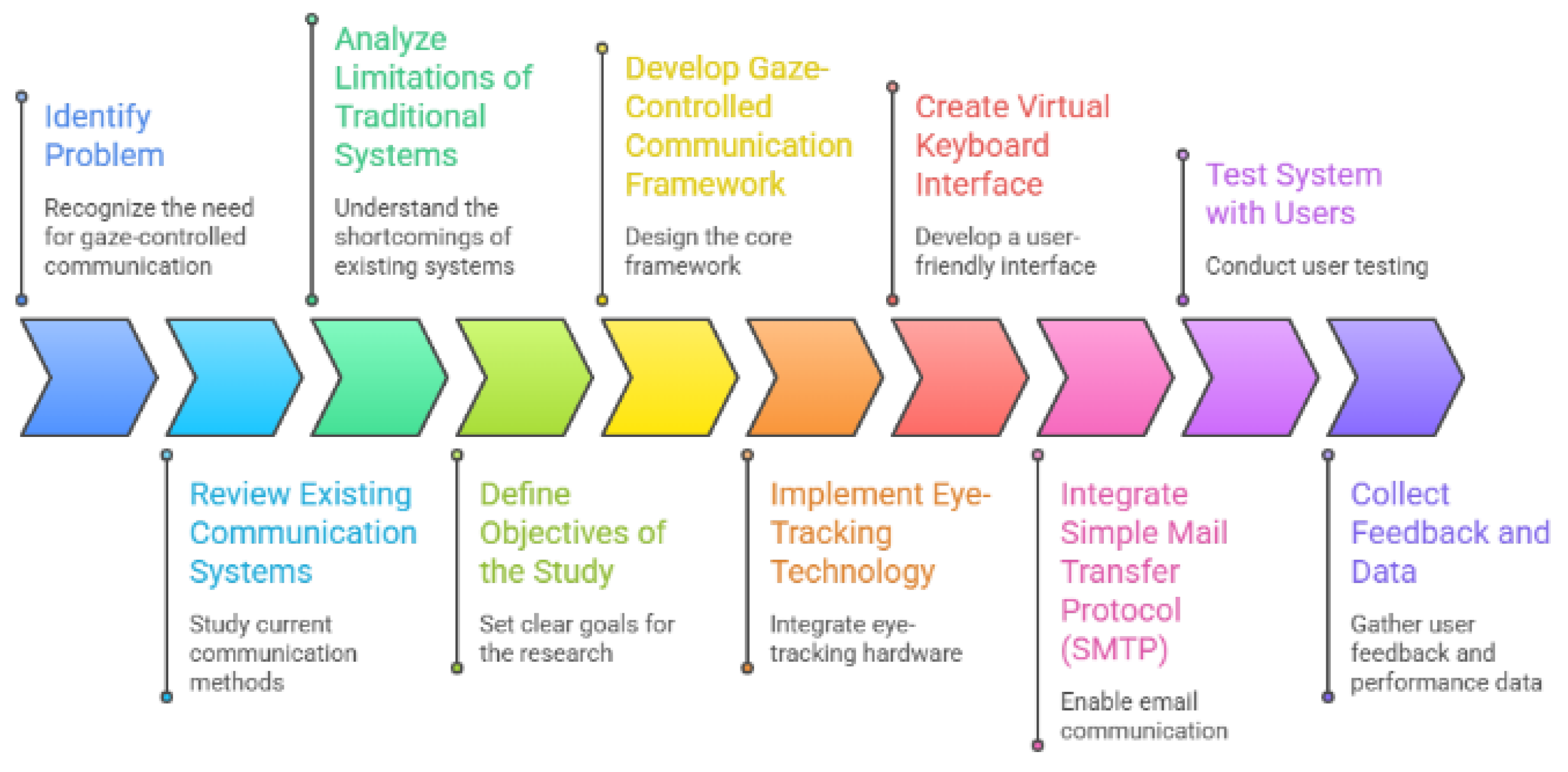
Moreover, the study is based on pre-existing research in the field of assistive technology, focusing on enhancing user autonomy, Communication, and the delivery of care to persons with motor disabilities [11]. Therefore, it is a significant contribution to the research on assistive robotics and human–computer interaction. This system may be further developed into a global solution to enhance the quality of life of people with severe physical impairments [12]. Figure 1 shows the chronological process that was involved in the development of the gaze-controlled communication system. It starts with identifying the problem and discussing the drawbacks of the existing communication systems. Subsequently, the framework is developed, including the generation of the virtual keyboard interface and the introduction of eye-tracking technology. The system is also improved by providing email communication via SMTP. The final step of implementing the system with users and gathering information and feedback to improve it further is crucial to advancing assistive technology and increasing users’ autonomy and means of Communication.
Figure 1.
Research flow diagram of the gaze-controlled system.
2. Literature Review
2.1. Evolution of Eye-Gaze Tracking Systems
The concept of eye-gaze tracking technology (EGT) began as very primitive, relying on infrared technology, but now more feasible software-based models are available. The original eye-gaze tracking system was highly dependent on infrared sensors and specialized video hardware, which were not only costly but also required specific environmental conditions to track gaze accurately [13]. These systems were accurate but not very practical for most users, especially in home-care settings, as they were costly and extremely difficult to install.
With the introduction of computer vision and machine learning algorithms, gaze-tracking moved towards software-based systems rather than hardware-based ones, which are cheaper and simpler to implement [14]. One of the most recent developments in this domain is the MediaPipe framework, which enables real-time detection of face meshes and iris tracking using regular webcams. The Face Mesh model by MediaPipe tracks 468 facial landmarks and accurately estimates gaze even in non-ideal scenarios, including changes in ambient lighting and camera position. This has led to gaze-tracking systems becoming cheaper and more scalable, enabling individuals with motor impairments to use the technology without specialized hardware [15].
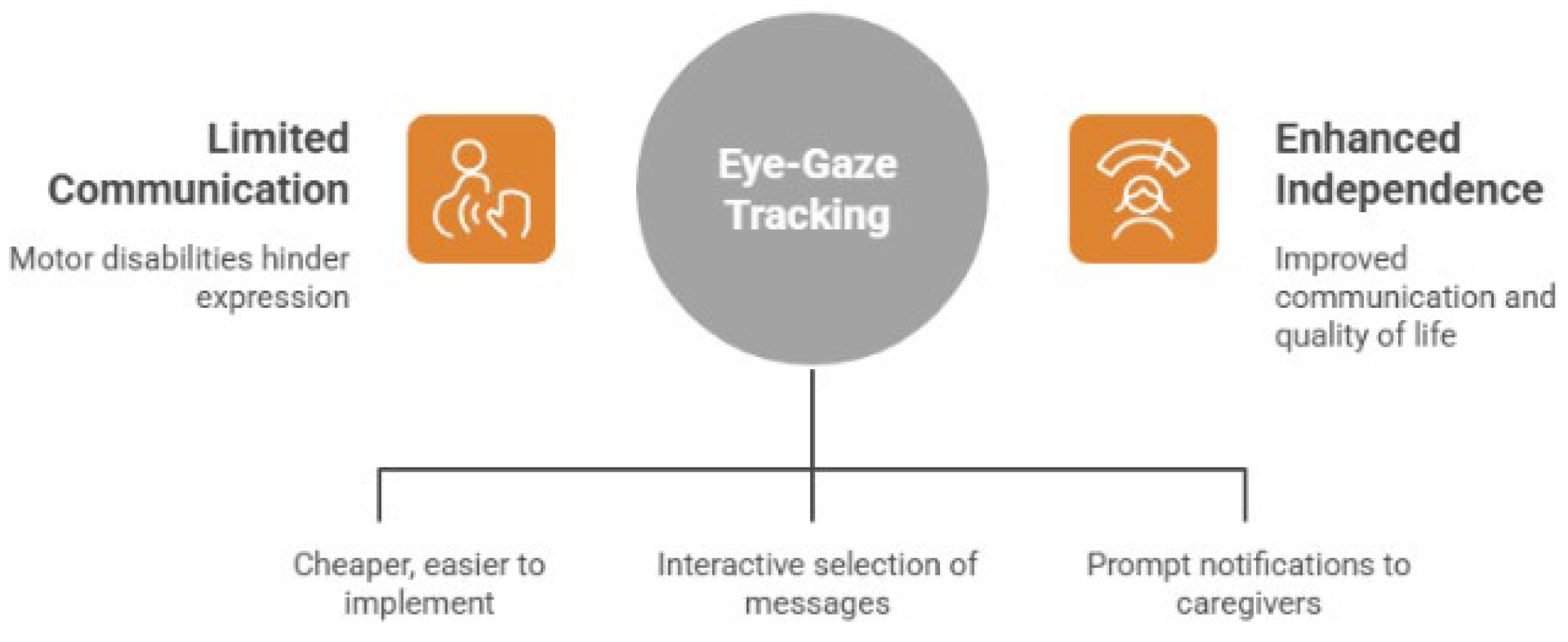
Figure 2 depicts the communication process that can be improved using eye-gaze tracking technology for a person with motor disabilities. Limited Communication is another major problem because motor disabilities tend to compromise the ability to express thoughts and needs. One such solution, which has been improved as a result of computer vision and machine learning algorithms, is eye-gaze tracking, which allows messages to be selected interactively in a more accessible and intuitive manner. With recent advancements in MediaPipe technology, real-time gaze tracking is now possible with regular webcams; therefore, the system is even cheaper and simpler to install than older hardware-based systems. Also, such technology enhances independence, as people with motor impairments can effectively communicate and provide immediate notifications to the caregiver, enabling the caregiver to respond to their user’s needs.
Figure 2.
Enhancing Communication for motor disabilities.
Recent research shows that such software-based models have greatly reduced the cost and complexity of eye-gaze tracking. Consequently, gaze-tracking technology has become more widely available, especially to persons with severe motor disabilities who need alternative ways of Communication. This is because a conventional webcam can be used to monitor eye movements, making the technology more feasible for use in home care settings, clinical settings, and research laboratories [16]. Such a move towards software-based solutions, rather than hardware-based ones, has played a crucial role in ensuring that eye-gaze tracking remains a viable alternative for users across a wide range of socioeconomic backgrounds.
2.2. Gaze-Controlled Communication for Paralyzed Individuals
One of the greatest contributions to assistive technology has been the application of gaze-controlled communication systems for people with paralysis. Individuals who have the locked-in syndrome, ALS (Amyotrophic Lateral Sclerosis), or injury to the spinal cord go through being in severe difficulties in articulating their fundamental needs because they have lost speech and motor capabilities. Conventional means of Communication, such as speech-generating devices or manual switches, cannot be used by people who cannot use their hands or speak [17]. Gaze-controlled communication systems have become a viable, non-invasive, and reliable alternative.
The systems track the user’s gaze and interpret eye movements to execute a command or a previously set message interactively. They usually have virtual keyboards, which are triggered by gaze fixation. Studies have established that when users can dwell their gaze on certain parts of the screen, say, within a specified time frame, they also have the option to select words, commands, or preset messages. Experiments show that these gaze-controlled systems can be highly accurate, with most reporting success rates over 90 percent [18]. The independence and agency of people with critical motor disabilities in their everyday lives are enabled by the ability to communicate independently simply by paying attention to a particular area.
Another notable advancement in gaze-controlled Communication is that the dwell time required to issue a command has been reduced. Early systems were designed so that users had to look longer, causing eye fatigue and reducing their usefulness. Recent developments in adaptive gaze-tracking algorithms have reduced the time required to validate selections, enhancing the user experience and eliminating discomfort [19]. In addition, multimodal input (e.g., blinking detection, head gestures) is being considered to provide even better access for users with varying degrees of impairment. These advancements are turning gaze-controlled Communication into a more reality-based endeavor, accommodating a wider range of motor disabilities in ways that make it easier for users to communicate with the technology and articulate their needs.
2.3. Real-Time Alerts and Integration with Communication Systems
One of the key characteristics of assistive communication systems is the ability to provide real-time alerts to caregivers. Gaze-controlled communication systems alone cannot do the job without a real-time notification mechanism that ensures caregivers are alerted whenever help is required. Conventional communication tools often introduce delays, especially when users cannot physically press a button or speak to get others’ attention.
A viable option is to combine SMTP-based alert systems with gaze-controlled Communication. When a user gazes at a message and fixes their gaze on it on a virtual keyboard, the system can immediately send an email notification to the caregiver. This allows caregivers to be notified in real time, wherever they are, and ensures that requests for medication, food, or hygiene assistance are addressed immediately [20]. The ability to send real-time notifications is especially useful in remote caregiving or home-care settings, where caregivers are not always in proximity to the patient.
Recent reports have focused on the power of integrating SMTP to issue real-time warnings to caregivers. These systems improve the timeliness of care and reduce response times by providing instant notification when a user selects a message. To illustrate, the SMTP alert provides the caregiver with instant information when a patient with locked-in syndrome taps the button labeled “I need medicine” or “I want to go to the washroom,” among others, to ensure the patient receives timely care. This assistive technology with real-time Communication greatly improves the speed and efficiency of the caregiving process [21]. This is because enabling caregivers to respond promptly when alerted will help meet patients’ needs without delay, reducing the risk of patients experiencing discomfort or other health problems associated with delayed responses.
Additionally, introducing multi-channel alerting features, including SMS, would further increase the system’s effectiveness. Caregivers would receive notifications in various forms of Communication, and nothing would go unheard, even when they are not at their workstations. This is flexible to ensure that caregivers will be enabled to offer effective and continuous care, irrespective of their location in the care facility or at home.
3. Methodology Design
3.1. System Design Overview
The suggested gaze-controlled communication device comprises three primary components that enable people with severe motor impairments to communicate their needs through eye movements. These elements are well coordinated to fit together perfectly, providing efficiency, precision, and real-time Communication.
3.2. Gaze Detection Module
The Gaze Detection Module traces the user’s eye movements. The module uses the MediaPipe Face Mesh model to detect key facial landmarks, including the iris and eyelids. The Face Mesh model of MediaPipe can identify 468 facial landmarks, including the eyes (pupils, irises, and eyebrows), which are crucial for accurately determining gaze direction.
The system uses these facial landmarks to calculate a gaze vector, the direction the user is concentrating on. The gaze direction is estimated using the relationship between the positions of the iris and eyelid marks. This enables the system to continuously track the user’s eye movements in real time without any special equipment. Through the examination of such gaze vectors, the system can identify whether the user is centered on any target areas that are defined in the virtual Interface, and this is essential in executing commands or actions.
This module is compatible with a regular web camera and is flexible, eliminating the need for costly infrared sensors. This technology is made accessible and affordable by the ability to track gaze using consumer-grade cameras, even in home-care settings, where resources are usually constrained.
3.3. Virtual Interface
The virtual Interface is a crucial element of the system, as it allows users to express their needs. The Interface is a high-contrast virtual keyboard that is shown on the screen, and every area on the screen represents a predefined request, e.g., I need medicine, I need food, I want to go to the washroom, and I want to walk. These areas are large and well-defined to suit users with limited head movement or who may not be able to concentrate on small, more detailed features.
The virtual keyboard is made easy to use and simple. The areas are well planned so that users can concentrate on them with minimal effort. Each area is associated with a specific action or request, allowing the user to independently convey their needs by directing their gaze to the target area.
The virtual Interface is designed to be optimal for those with severe motor impairments who may not be able to use touch-based interfaces. With proper focus on areas, the user can interact with the system without physically exerting additional effort, such as clicking buttons or using a touchscreen. Eye fatigue and comfort are also considered in the design, thereby reducing the time the user needs to concentrate on any part to initiate a request. This is done using adaptive dwell-time thresholds that can be adjusted based on user feedback.
3.4. SMTP Alert Mechanism
The last part of the system is the SMTP Alert Mechanism, which is intended to inform caregivers when a user selects a message or request. After the system detects that the user has paid attention to a predefined area for a specified duration (dwell time), it notifies a designated caregiver or healthcare provider with an email alert sent over Simple Mail Transfer Protocol (SMTP).
The email contains such crucial information as:
- The chosen request (e.g., “I need medicine” or “I want to go to the washroom”).
- A timestamp to ensure the caregiver is aware of when the request was completed.
- The user identifier (where applicable) or the correct patient or user is retrieved.
This will ensure that the caregiver is promptly informed of the patient’s needs and can respond as soon as they are informed. SMTP integration can be especially useful when a caregiver is not physically present in the same room as a patient, enabling remote monitoring and intervention.
The SMTP integration is also a fail-safe mechanism to ensure that notifications are sent and received reliably. This system can send multiple alerts in sequence without delay, ensuring the user’s needs are met in real time.
The email notifications are delivered via a secure server, which helps ensure that the information is confidential and secure and can therefore be used in both clinic and home-care settings. This is a real-time communication system that enhances the effectiveness of care delivery by eliminating delays, which is crucial in cases where quick help is needed.
3.5. Gaze Detection and Fixation Confirmation
The Gaze Detection Module will monitor the user’s gaze and ensure it does not leave predetermined areas on the virtual Interface. MediaPipe pipeline initially captures iris positions and eyelid shapes from the webcam feed, then uses them to determine a gaze vector. The vector will point to the direction the user is focused on, so the system will understand that the user wants to pick a specific message.
After the system determines the gaze direction, it will check whether the gaze remains within a target region for 3 s (dwell time). Generally, the system holds until the user focuses on an area for about 30 frames (about 1 s). This level depends on the user’s comfort and the response time.
When the system determines that the user has maintained gaze on the target area long enough (i.e., the dwell time is reached), the user’s selection will be confirmed. The next step that should be initiated at this point is to send an email alert through SMTP. This is a control mechanism to ensure that only intentional eye movements trigger activities, reducing the chances of false positives or random selections.
3.6. Virtual Interface Design
The virtual Interface should be easy to use and accessible to people whose motor abilities are so impaired that they cannot use a computer keyboard. It has four big and easy-to-distinguish areas that reflect popular demands of patients in a healthcare or home-care facility:
“I need medicine”
“I need food”
“I want to go to the washroom”
“I want to walk”
These are predetermined messages based on common needs of the severely motor-impaired. The Interface is highly color-cosntrasting to enhance visibility for users with visual impairments. It is also designed so that the user can center their gaze on a given area with minimal head movement, even when slightly off-center on the screen.
Also, the spacing between regions in the Interface is not excessive, so accidental eye fixation in neighboring spaces does not occur and result in erroneous selections. The system also enables interaction with the Interface without requiring elaborate movements, making it suitable for users with severe paralysis.
3.7. SMTP Integration
Upon fixation of gaze on a predetermined area, the system will send an email alert to the caregiver via SMTP. The major steps implemented in this process include:
- User selection: The system ensures that the user has directed their eyes towards a particular area and that dwell time is applied there.
- Email generation: After the selection is made, the system sends an email containing the selected message and the timestamp.
Email delivery: The message is sent to the caregiver’s address via SMTP. The email will be straightforward and clear enough for the caregiver to understand the user’s needs.
The SMTP integration plays a crucial role in ensuring the caregiver is notified in time and can respond to the user’s needs promptly and efficiently. The real-time notification service is necessary because it ensures that no requests go unanswered, and it is crucial for people who may need a caregiver’s help to perform their daily tasks.
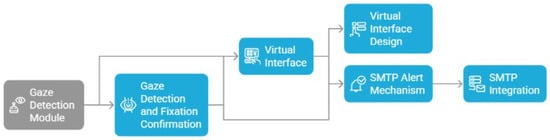
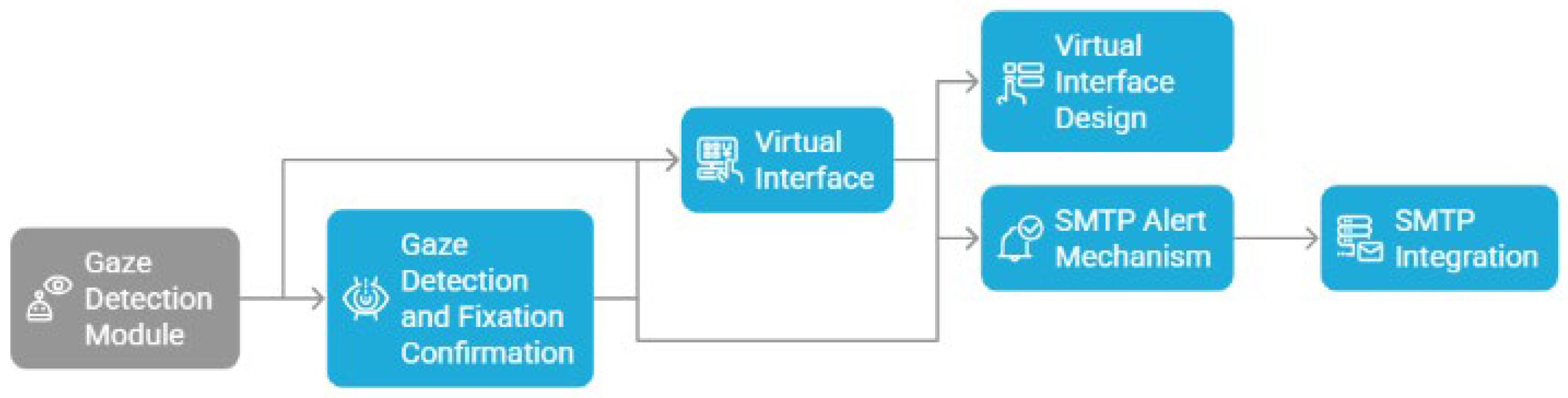
The architectural design in Figure 2 describes the communication device system that is controlled by eyes. This is initiated by the Gaze Detection Module, which tracks the user’s gaze fixation and confirms the user. The data in this module is fed into the virtual Interface, the main platform for interaction. The system subsequently shifts to virtual interface design and an SMTP Alert Mechanism, ensuring that the user receives real-time notifications, as shown in Figure 3. Lastly, the SMTP integration will help caregivers receive timely alerts, enabling them to address the user’s needs effectively. This is essential because the integration of SMTP facilitates timely Communication, which is critical to providing uninterrupted support to people who need caregivers to assist with their day-to-day activities.
Figure 3.
Design of gaze-controlled communication device system.
4. Results
The findings of this paper show that the gaze-controlled communication system achieves its major goals, including accurate recognition of user gaze and real-time notifications to caregivers. The next sections present the main findings from the trials conducted during the evaluation stage, including gaze detection, SMTP alert delivery speed, and the system’s overall performance.
4.1. Gaze Detection Accuracy
The degree to which the gaze-controlled communication system can detect gaze fixation on specific parts of the virtual keyboard interface is a critical performance indicator. This feature of the system, that is, its capability to accurately recognize the user’s gaze, is essential to ensuring that the system is effective and reliable in real-world conditions.
4.2. Gaze Detection Accuracy Testing Methodology
A series of tests was performed to determine the system’s accuracy in detecting gaze under varying lighting conditions and head positions. The system was also tested under both controlled and dim lighting, as in real-world conditions. In each trial, the user was asked to focus their gaze on one of the four areas of the virtual keyboard, and the system’s gaze-detection performance and ability to select the correct option were measured.
4.3. Findings of Gaze Detection Accuracy Tests
The system achieved a very high detection rate of 98% for the gaze regions in most trials. According to this outcome, the system is very reliable at identifying the location where the user is concentrating their gaze, even without ideal lighting conditions. The rate of accuracy was the same in both normal and low-light conditions, which indicates the strength of the MediaPipe Face Mesh model in dealing with various conditions.
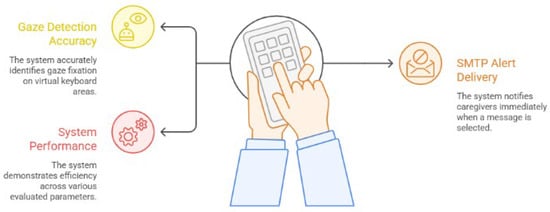
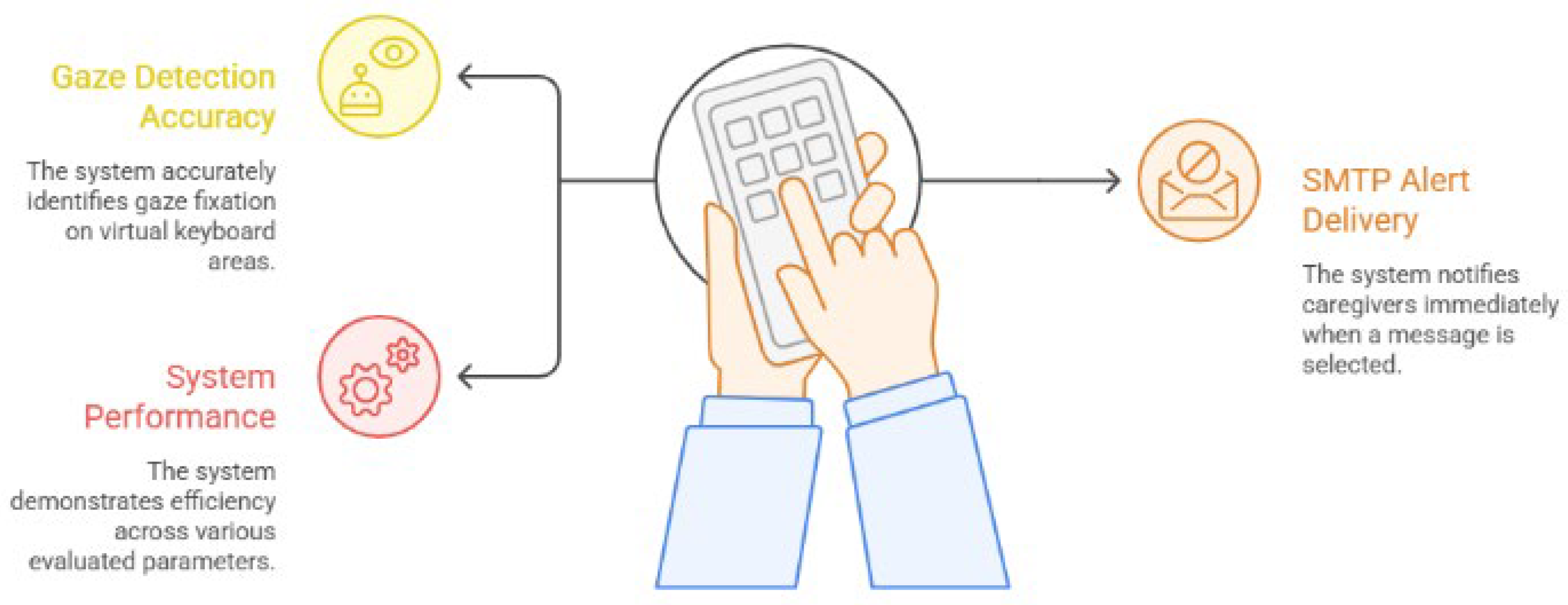
The system could also track minor head movements, in addition to lighting conditions. This has been achieved through MediaPipe facial landmark detection, which detects 468 facial landmarks and enables gaze estimation in continuous mode, even when the user’s head is slightly moved. This meant that the system could cope with minor positional changes while still achieving consistently high gaze-detection accuracy when the user was not exactly at the center of the camera. Figure 3 presents the analysis of the gaze-controlled communication system in three major parts: gaze detection accuracy, system performance, and SMTP alert delivery. High accuracy in detecting fixation on virtual keyboard areas is achieved even with minimal head movement, thanks to the incorporation of the MediaPipe facial landmark detection system for gaze estimation. The technology can detect 468 facial points, enabling the system to estimate gaze even with minor head movement, while maintaining high accuracy. In addition, the system’s performance is evaluated across a range of parameters, as shown in Figure 4, demonstrating its effectiveness in real-world settings. Lastly, the SMTP alert delivery functionality will provide caregivers with instantaneous notifications whenever a message is selected so that they can respond to the user’s request in good time.
Figure 4.
Complete System Evaluation with Alerts.
4.4. Figural Illustration of Accuracy of Gaze Detection
- Image Suggestion: A bar graph of the system’s accuracy across different lighting conditions (e.g., normal light, low light) would visually represent how the system performs in different environments. Also, it would be useful to include a scatter plot to demonstrate the relationship between head movement and accuracy. This would help emphasize that the system can withstand small head movements and lighting changes.
4.5. SMTP Alert Delivery
The gaze-controlled communication system requires the SMTP alert system, which allows the caregiver to be notified immediately when the user chooses a predetermined message with the fixation of their gaze. The success of such a system is determined by two factors:
- How quickly the security alert is dispatched after the user makes their selection.
- The dependability of email delivery to the caregiver’s inbox.
4.6. SMTP Alert Testing Methodology
The SMTP alert system was tested from the moment the user selected a region on the virtual keyboard (with gaze fixation) until an email notification was sent to the caregiver’s terminal. Also, network latency is a factor to consider, as delays may occur due to network issues during message delivery.
The experiment was conducted using different network speeds and devices, such as smartphones and laptops, to test the consistency of email delivery across interfaces. It was observed that the delivery speed and success rate of email notifications were monitored across several test cases to ensure the system’s reliability.
4.7. Conclusions of SMTP Alert Delivery Testing
The system sent email alerts with an average response time of 2.8 s, which is quite acceptable for real-time caregiving. The SMTP email alerts were timely in 96 percent of trials, and caregivers were informed almost instantly of the user’s request. The remaining 4% delays were caused by network problems, e.g., low internet speed or temporary connection loss, and were not inherent to the functionality of the given system.
The system was also very reliable for email delivery, with the SMTP notification achieving a 96-percent success rate. When emails were slow or not delivered, the problem was usually fixed by addressing network connection issues rather than SMTP integration issues.
4.8. Delivery Time of SMTP in Graphical Form
- Image Suggestion: A line graph of email delivery times across varying trials and network conditions (i.e., fast, moderate, slow) would provide a clear picture of the system’s speed. Also, a pie chart might be provided showing the success rate of email delivery (96% success and 4% delays), which proves the quality of the system in real-time use.
- System Performance Evaluation: The analysis of system performance is conducted by examining metrics such as throughput, response time, response time variability, and resource consumption.
- System Performance Evaluation: System performance is evaluated by assessing aspects such as throughput, response time, response time variability, and resource consumption.
The system’s performance was tested across the entire system to measure its accuracy, response time, and reliability in a real-world environment. The system proved very efficient in all these aspects, indicating that the gaze-controlled communication system may be useful for selecting different real-life situations.
4.9. Performance Summary
- Gaze Detection Accuracy: The system is 98 percent accurate at simultaneously detecting the user’s gaze and selecting the appropriate predefined message, even under varying lighting conditions and with minimal head movement.
- SMTP Alert Delivery: The SMTP alert system sent alerts to caregivers, with an average response time of 2.8 s and a 96 percent email success rate.
- User Interface: The system was found to be user-friendly by the participants, with a simple, easy-to-use interface. The users were not provided with sufficient training to use the system effectively, and the dwell time was reduced to lessen eye strain and fatigue.
4.10. User Feedback
The subjects in the test stage reported being highly satisfied with the gaze-controlled communication system, as they found it very convenient to have their needs met without necessarily interacting with one another. The system was applauded for its precision, speed, and simplicity. Caregiver feedback revealed that real-time alerts enabled them to attend to patients in a timely manner, enhancing overall caregiving effectiveness.
- Image Suggestion: It can also include a table of survey results or a bar chart showing user satisfaction rates for the system’s various attributes (e.g., accuracy, response time, ease of use). This would be a supplementary factor to the results, as it would provide quantitative feedback on the participants.
5. Discussion
5.1. System Evaluation
The gaze-controlled communication system that was created during the work offers a non-invasive and cost-effective solution for people with motor disabilities. Eye-tracking systems are known to be expensive, either due to specialized infrared sensors or costly equipment, which restricts their availability in low-resource or home-care settings. The proposed system, on the other hand, uses standard consumer-grade webcams, which makes it much cheaper and more scalable. This design enables users to communicate with the system simply by gazing at it, without needing to interact with it physically. This is very useful for individuals who are severely paralyzed or have severe neurological disorders like ALS or locked-in syndrome.
The ease of the system’s design, through its use of MediaPipe for gaze tracking and SMTP for real-time notifications, means the application can be easily installed in home-care facilities without requiring advanced technical expertise. Ease of use is an advantage, making it a convenient solution for individuals and caregivers who may lack access to specialized care facilities or high-cost assistive technologies. Additionally, the system’s capability to provide real-time caregiver alerts will help ensure that necessary care is delivered as soon as it is required, enabling effective and efficient caregiving in everyday life.
All in all, the system has demonstrated tremendous potential to enhance communication autonomy among persons with motor impairments. Its capacity to deliver autonomous Communication and real-time treatment is a significant improvement over prior manual systems, such as nurse-call buttons or speech-generating devices, which may not be readily available to individuals with severe disabilities.
5.2. Limitations
The system proved very efficient in testing, but there were some drawbacks. In this case, the current evaluation was conducted under a specific illumination range, camera-to-user distance, and user positioning. Hence, the reported 98% gaze detection accuracy reflects testing under a particular set of conditions and not necessarily across all real-world conditions.
It is important to note that lighting remains a crucial environmental variable, as the MediaPipe Face Mesh model requires good visibility of the eyes and the iris region. The system’s performance in detecting high- and normal-light conditions has been assessed. Still, it may suffer when the lighting is much lower than the low-light test condition, in the presence of strong backlighting, shadows, glare, or other less-than-optimal lighting arrangements.
There is also a limitation in camera positioning. The evaluation was limited to minimal camera motion and the face within the camera’s field of view (FOV). Face landmark detection may be affected by face image quality, small head movement, sufficient camera-user distance, partial occlusion of the face, and larger camera-user distance, which may also impact the accuracy of gaze estimation and face selection.
The restrictions suggest that the results obtained here are meaningful only within the experimental context and do not necessarily indicate robust behavior in all situations. The system should therefore be further tested under different illumination conditions, distances from the camera, viewing angles, head motions, and ambient conditions. In addition, several other techniques for robust lighting compensation, adaptive exposure, and 3D gaze tracking could be employed under such conditions.
5.3. Future Research Directions
Though this system has shown great potential, some dimensions require further study to improve its functionality and performance. The combination of multimodal interaction methods is one of the key directions in which the research needs to be developed in the future. The system currently relies exclusively on gaze fixation as its primary input method. Nonetheless, individuals with low head control or eye fatigue might experience difficulty maintaining fixation on the gaze for long periods. To address this, alternative input methods such as head gestures, blink detection, or voice commands would provide users with additional ways to interact with the system. For example, a user might blink or make a head gesture to confirm a choice, or use their voice to initiate an action. The multimodal approach would make the system more inclusive and enable more natural and diverse forms of interaction.
The other improvement that can be made is the establishment of custom gaze tracking algorithms. Gaze patterns and head movements are unique to each user, so a one-size-fits-all solution cannot be effective for everyone. The system can be enhanced with more responsive and precise tracking by adding machine learning algorithms that adapt to each user’s distinct gaze behavior. These custom algorithms might enable personalized dwell time, gaze sensitivity, and tracking thresholds based on user feedback, making the experience more personalized and comfortable.
Moreover, real-world testing and user feedback are key to identifying additional areas for improvement. Although the system has demonstrated encouraging outcomes under controlled conditions, its application in diverse real-life contexts (e.g., home-care facilities, hospitals) will yield useful insights into the system’s scalability and long-term usability. User, caregiver, and healthcare professional feedback will inform system development to address the heterogeneity among citizens with motor impairments.
6. Conclusions
This study demonstrates the great potential of a gaze-controlled communication system that uses MediaPipe for real-time eye-tracking and connects to SMTP to provide immediate caregiver notification. The main aim of this system is to empower people with severe motor impairment, e.g., those having ALS (Amyotrophic Lateral Sclerosis), locked-in syndrome, or spinal cord injuries, to speak on their own. The system allows users to choose preprogrammed messages or commands (e.g., “I need medicine” or “I have to go to the washroom”) by simply gazing at the corresponding sections of a virtual interface.
Autonomous Communication of critical needs is a core advance for people whose other abilities have been impaired and who cannot communicate through conventional communication channels. The incorporation of SMTP alerts ensures that caregivers are notified in real time, enabling them to respond promptly and effectively to the user’s requests. Not only does this real-time communication speed up the caregiving process, but it also greatly improves the quality of life for severely disabled individuals by reducing reliance on manual or speech Communication, which not everyone can use.
It was shown that the system was highly accurate at identifying gaze fixation, achieving 98 percent detection accuracy when the user’s gaze was on the predefined areas, even when lighting intensity varied and the user moved his head slightly. Also, the SMTP alert system was found to be efficient, with an average email delivery time of 2.8 s and a notification success rate of 96 percent. This information proves that the system can be implemented in a real-life environment and provide users with a feasible and cost-effective way to communicate autonomously.
The promising outcomes notwithstanding, some limitations exist that should be addressed in further work. Among the critical problems is the need to enhance the system’s efficiency under poor lighting and with head misalignment during gaze fixation. In the future, the study might be improved by incorporating lighting compensation and using 3D gaze tracking to address variations in head position. Also, the system might be improved by adding multimodal input methods, such as blink detection or head gestures, to make it more accessible and comfortable for users with broader needs.
It is not only in home-care set-ups where the application of this system can be useful, but also in clinical settings, where patients with severe motor impairments are, in most cases, challenged by the issue of Communication. Since the system is developed using low-cost, open-source technologies, it is scalable, making it easy to implement in various healthcare contexts, with or without resources. The combination of MediaPipe eye tracking and SMTP notification is a scalable and viable option because it enhances the effectiveness of caregiving and patient autonomy, especially for those who depend on caregivers daily.
To conclude, the study offers an original and affordable package to people with extreme motor disabilities to capture their Independence in Communication. A gaze-controlled communication system can become a key to Communication in homes and clinical settings with further refinement and adaptation, as this tool enables the user to be more independent and helps ensure that the caregiver can respond to others’ needs effectively and promptly. Further development of this technology, such as integrating customized algorithms and new forms of input, would also increase accessibility and improve the quality of life for people with motor impairments worldwide.
Author Contributions
Conceptualization, D.H.; methodology, D.H.; software, F.F.; validation, F.F.; formal analysis, F.F. and M.A.; investigation, F.F. and M.A.; resources, F.F.; data curation, F.F.; writing original draft preparation, D.H. and M.K.; writing—review and editing, D.H. and Z.R.; visualization, D.H.; supervision, D.H.; project administration, D.H. All authors have read and agreed to the published version of the manuscript.
Funding
This research received no external funding.
Institutional Review Board Statement
Not applicable.
Informed Consent Statement
Not applicable.
Data Availability Statement
The original contributions presented in this study are included in the article. Further inquiries can be directed to the corresponding author.
Conflicts of Interest
The authors declare no conflicts of interest.
References
- Chhimpa, G.R.; Kumar, A.; Garhwal, S.; Kumar, D.; Wani, N.A.; Wani, M.A.; Shakil, K.A. A Comprehensive Framework for Eye Tracking: Methods, Tools, Applications, and Cross-Platform Evaluation. J. Eye Mov. Res. 2025, 18, 47. [Google Scholar] [CrossRef] [Scilit] [PubMed]
- Plopski, A.; Hirzle, T.; Norouzi, N.; Qian, L.; Bruder, G.; Langlotz, T. The Eye in Extended Reality: A Survey on Gaze Interaction and Eye Tracking in Head-worn Extended Reality. ACM Comput. Surv. 2022, 55, 53. [Google Scholar] [CrossRef] [Scilit]
- Chhimpa, G.R.; Kumar, A.; Garhwal, S.; Dhiraj. Empowering individuals with disabilities: A real-time, cost-effective, calibration-free assistive system utilizing eye tracking. J. Real-Time Image Process. 2024, 21, 97. [Google Scholar] [CrossRef] [Scilit]
- Madhusanka, G.D.A.; Ramadass, S.; Rajagopal, P.; Herath, H.M.K.K.M.B. Artificial Intelligence-Based System for Gaze-Based Communication; CRC Press: Boca Raton, FL, USA, 2024. [Google Scholar]
- Namitha, K.; Girish, S.; Anuvind, M.P.; Kumar, R.S.H.; Nair, H.B.; Chandran, D. Advancing Autism Spectrum Disorder Diagnosis With Multimodal Data: A Survey. IEEE Open J. Comput. Soc. 2026, 7, 541–559. [Google Scholar] [CrossRef] [Scilit]
- Li, J.; Xie, L.; Chen, Z.; Shi, L.; Chen, R.; Ren, Y.; Wang, L.; Lu, X. An AIoT-Based Assistance System for Visually Impaired People. Electronics 2023, 12, 3760. [Google Scholar] [CrossRef] [Scilit]
- Shahria, T.; Sunny, S.H.; Zarif, I.I.; Ghommam, J.; Ahamed, S.I.; Rahman, M.H. A Comprehensive Review of Vision-Based Robotic Applications: Current State, Components, Approaches, Barriers, and Potential Solutions. Robotics 2022, 11, 139. [Google Scholar] [CrossRef] [Scilit]
- Sarvajcz, K.; Ari, L.; Menyhart, J. AI on the Road: NVIDIA Jetson Nano-Powered Computer Vision-Based System for Real-Time Pedestrian and Priority Sign Detection. Appl. Sci. 2024, 14, 1440. [Google Scholar] [CrossRef] [Scilit]
- Chen, Y.; Zhang, Y.; Xiao, B.; Li, H. A framework for the elderly first aid system by integrating vision-based fall detection and BIM-based indoor rescue routing. Adv. Eng. Inform. 2022, 54, 101766. [Google Scholar] [CrossRef] [Scilit]
- Hussain, D.; Ahmed, S.; Fauz, F.; Ahmad, F. An IoT-Enabled Remote-Controlled Oil Skimming Boat Using LoRa Communication for Real-Time Environmental Monitoring. In Proceedings of the IEEE International Conference on Smart Internet of Things (SmartIoT), Sydney, Australia, 17–20 November 2025; Volume 9, pp. 1–6. [Google Scholar] [CrossRef] [Scilit]
- Abbasi, F.L.; Hussain, D.; Arbab, S.K. Analyze the Deep Learning Algorithms for Image Enhancement. Int. J. Comput. Relat. Technol. 2025, 5, 48–56. [Google Scholar]
- Hussain, D.; Fauz, F.; Abbas, M. An AI-Powered Monitoring System for Employee Mental Health and Well-being in the Workplace. J. Workplace Behav. 2025, 6, 16–25. [Google Scholar] [CrossRef] [Scilit]
- Sultana, S.; Ahmed, B.; Paul, M.; Islam, M.R.; Ahmad, S. Vision-Based Robust Lane Detection and Tracking in Challenging Conditions. IEEE Access 2023, 11, 67938–67955. [Google Scholar] [CrossRef] [Scilit]
- Pavel, M.I.; Tan, S.Y.; Abdullah, A. Vision-Based Autonomous Vehicle Systems Based on Deep Learning: A Systematic Literature Review. Appl. Sci. 2022, 12, 6831. [Google Scholar] [CrossRef] [Scilit]
- Ortega, L.D.; Loyaga, E.S.; Cruz, P.J.; Lema, H.P.; Abad, J.; Valencia, E.A. Low-Cost Computer-Vision-Based Embedded Systems for UAVs. Robotics 2023, 12, 145. [Google Scholar] [CrossRef] [Scilit]
- Debnath, B.; O’bRien, M.; Yamaguchi, M.; Behera, A. A review of computer vision-based approaches for physical rehabilitation and assessment. Multimed. Syst. 2021, 28, 209–239. [Google Scholar] [CrossRef] [Scilit]
- Saini, M.; Sengupta, E. Artificial intelligence-inspired fog-cloud-based visual-assistance framework for blind and visually-impaired people. Multimed. Tools Appl. 2024, 84, 27867–27898. [Google Scholar] [CrossRef] [Scilit]
- Nye, A.; Delgadillo, J.; Barkham, M. Efficacy of personalized psychological interventions: A systematic review and meta-analysis. J. Consult. Clin. Psychol. 2023, 91, 389–397. [Google Scholar] [CrossRef] [Scilit] [PubMed]
- Molfino, R.; Cepolina, F.E.; Cepolina, E.; Cepolina, E.M.; Cepolina, S. Robots trends and megatrends: Artificial intelligence and the society. Ind. Robot Int. J. Robot. Res. Appl. 2023, 51, 117–124. [Google Scholar] [CrossRef] [Scilit]
- Walle, H.; De Runz, C.; Serres, B.; Venturini, G. A Survey on Recent Advances in AI and Vision-Based Methods for Helping and Guiding Visually Impaired People. Appl. Sci. 2022, 12, 2308. [Google Scholar] [CrossRef] [Scilit]
- Rawlley, O.; Gupta, S. Artificial intelligence-empowered vision-based self-driving assistance system for internet of autonomous vehicles. Trans. Emerg. Telecommun. Technol. 2023, 34, e4683. [Google Scholar] [CrossRef] [Scilit]
Disclaimer/Publisher’s Note: The statements, opinions and data contained in all publications are solely those of the individual author(s) and contributor(s) and not of MDPI and/or the editor(s). MDPI and/or the editor(s) disclaim responsibility for any injury to people or property resulting from any ideas, methods, instructions or products referred to in the content. |
© 2026 by the authors. Licensee MDPI, Basel, Switzerland. This article is an open access article distributed under the terms and conditions of the Creative Commons Attribution (CC BY) license.