


Abstract
The increasing demand for sustainable and safe mobility has driven research on hybrid electric bicycles, with particular attention to women’s safety in urban areas. This work introduces a hybrid bicycle design that combines solar and pedal-powered energy harvesting with advanced safety mechanisms. A boost converter ensures stable energy management by regulating voltage from renewable sources and supporting auxiliary functions like lighting, health monitoring, and communication systems. A permanent-magnet brushless DC (PMBLDC) motor is employed for higher efficiency, low maintenance, and enhanced torque. Safety features such as fingerprint authentication, GPS, GSM-based alerts, and a panic button promote independent and secure commuting for women. Simulations confirm reliable performance for both pedaling and solar energy harvesting. A 12 V battery, an MPPT controller, and a 9 V solar panel are used in the solar energy harvesting system. Hardware tests validate real-time operation, including solar charging, battery storage, and safety alerts, with solar energy delivering 6 V/h and pedaling contributing 0.09 V/min. The system’s viability is confirmed by hardware implementation and testing, which demonstrate efficient solar and pedaling energy collection, dependable motor performance, and operational safety alerts. The system addresses energy instability while ensuring a compact design and embedded security, making it a cost-effective, sustainable, and socially relevant solution.
1. Introduction
The increasing focus on developing safe and clean travel solutions and women’s safety improves the vision for green cycling systems. As seen in many urban areas, increasing pollution affects the environment and motivates a shift toward greener energy. Therefore, green cycling provides a solution for many developing countries to address these issues. Hybrid bicycles are not only used for commuting purposes, but also enable female independence by providing safety features for better protection in urban areas [1]. Women’s capacity to travel independently is restricted by challenges such as improper protection, social harassment, and gender inequality. This affects their opportunities for education, employment, and social involvement [2]. Safety can be improved by integrating safety devices such as activity tracking in real time, GPS tracking and distress notifications into hybrid bicycles. These features allow riders to move in a free and secure environment [3]. This enhancement of hybrid bicycles addresses women’s safety, thereby improving their mobility and transportation in urban areas.
In recent years, boost converters have been used in hybrid bicycles, enhancing the efficiency of the energy management system [4]. These converters play an important role in increasing voltage from a low-voltage source, i.e., pedal-powered generators, to match the demands of attached components in a hybrid bicycle for smoother operation. They provide continuous power for lights, health-monitoring devices, and communication systems for safe commuting by improving the overall performance of the bicycle [5]. Additionally, the incorporation of green energy sources in hybrid bicycles reduces dependency on carbon-based fuels, and pedal-powered generation with e-mobility helps the rider supply energy in parallel [6]. Hybrid energy not only promotes a greener environment but also encourages women’s independence. Performing physical activity such as cycling promotes both physical and mental health by connecting with society and the ecosystem [7].
Many studies on hybrid bicycles show improvements in power and reliability, while also highlighting the use of advanced power converters for better efficiency and greater user appeal in hybrid systems [8]. A constant voltage is achieved by using a boost converter to power the circuit components and ensure proper functioning in hybrid systems under different conditions. This is very useful in high power-demand scenarios, which affect safety and overall performance [9].
Moreover, improvements in anti-theft systems and user-friendly, attractive interfaces encourage the usage of hybrid bicycles in the modern world. These features protect the bicycle from misuse and give riders confidence [10]. Advancements in biometric lock systems and threat alarms make cycling a better mode of transportation for women. Also, promoting hybrid bicycles as the primary mode of transport offers reductions in noise pollution, traffic congestion, and emissions of greenhouse gases like CO2 in urban areas [11,12,13,14,15].
From the above observations, most existing hybrid bicycle studies rely heavily on simulations or controlled laboratory testing, lacking evaluation in diverse real-world environments and user scenarios. There is also a lack of focused development on integrating advanced safety features specifically tailored for female commuters into hybrid bicycle designs. Current hybrid systems show potential but require significant improvements in energy conversion efficiency, especially under variable power inputs and urban traffic conditions. Some renewable-powered bicycles (solar/wind) are highly dependent on environmental conditions, which affect their reliability and limit consistent usage. Also, advanced hybrid bicycles remain costly and complex, limiting accessibility, especially in low-income or developing regions where infrastructure and affordability are key constraints. Furthermore, integrating features like boost converters, GPS, mobile apps, and smart safety systems into a compact, durable, and user-friendly design remains technically challenging.
In view of the above, this paper presents a detailed analysis of a hybrid bicycle system designed with a focus on women’s safety and the implementation of a boost converter. A comprehensive examination of the system’s design and functionality is performed, including the integration of safety features and energy management strategies. A comparative analysis is made to highlight the advantages of utilizing a boost converter in hybrid bicycles over traditional energy management systems. The proposed hybrid bicycle effectively addresses the key research gaps identified above. By embedding both solar- and pedal-based energy conversions, the design overcomes the issue of weather dependency and inconsistent power availability, delivering dual, complementary sources. The use of a boost converter ensures efficient energy management, rectifying challenges related to voltage instability and conversion inefficiency in hybrid systems. The addition of a PMBLDC motor improves performance and reliability, meeting the need for real-world validation through simulation and hardware testing. Importantly, the design comprises gender-sensitive safety features (e.g., a fingerprint sensor, GPS, GSM, and a panic button), addressing the lack of user-specific security systems in earlier models. By keeping the system compact, the developed prototype mitigates concerns over system complexity and cost and also promotes accessibility and sustainability. Altogether, the proposed work demonstrates a practical, energy-efficient, and safety-focused solution tailored to urban mobility challenges, especially for women.
2. Design of Hybrid Bicycle
2.1. Proposed Hybrid Bicycle System
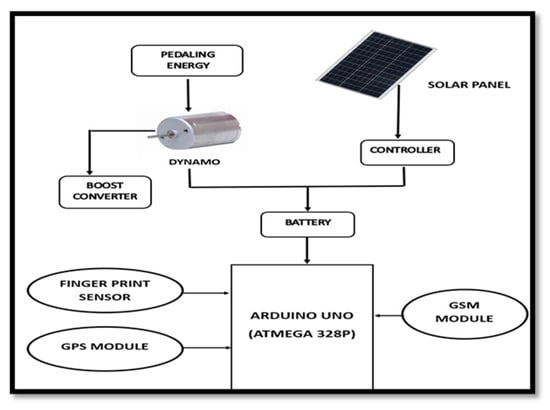
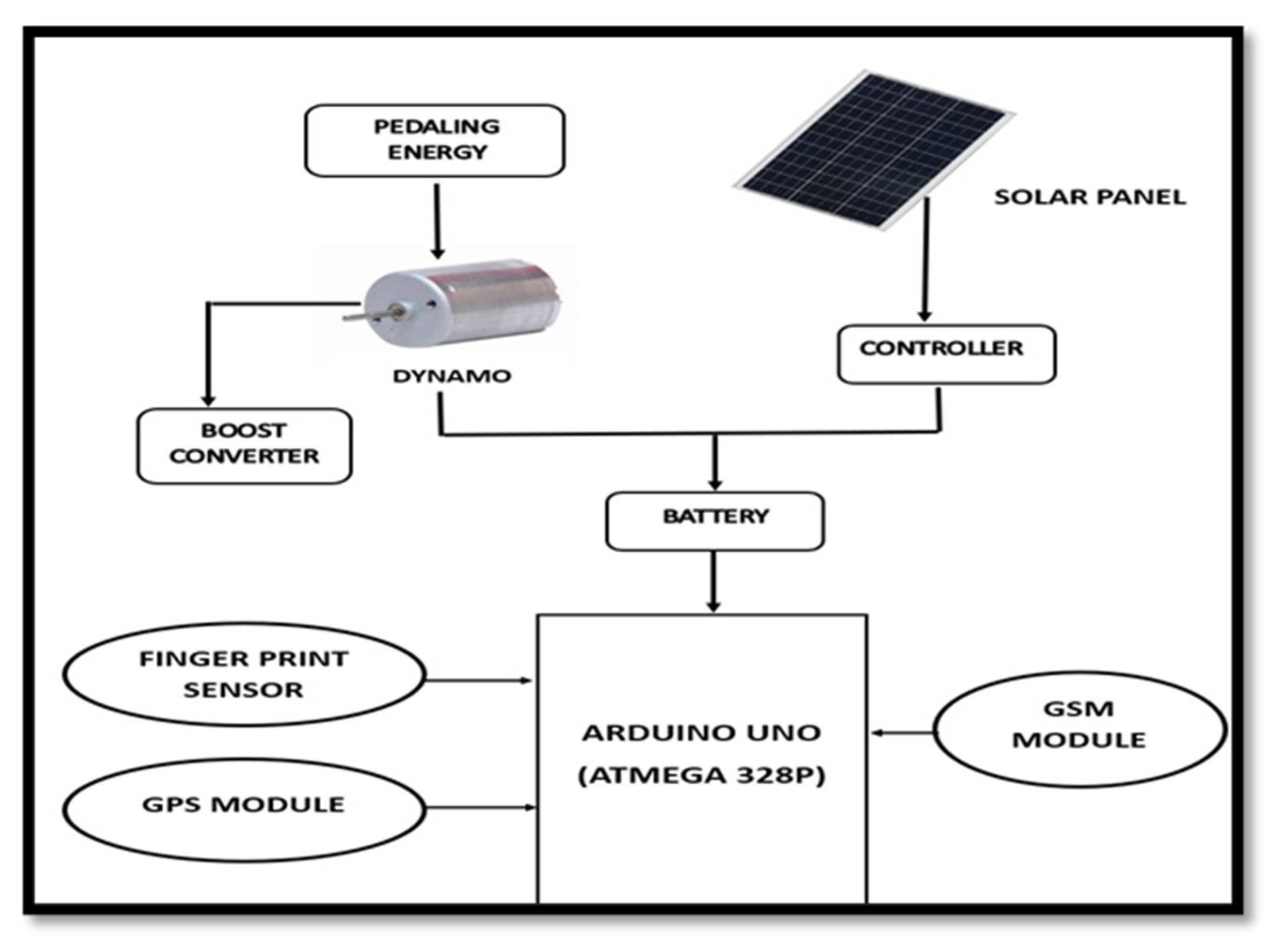
The proposed system combines pedal-powered and solar energy to power an electric bicycle. It uses a dynamo to convert pedaling energy into electricity, which then passes through a boost converter to charge the battery. Simultaneously, a solar panel feeds energy into a controller, as shown in Figure 1, which also charges the battery, ensuring efficient energy storage. The battery powers an Arduino Uno (ATmega328P) (Microchip Technology, Chandler, AZ, USA), which controls the bicycle’s features. Key components include a fingerprint sensor for security (allowing only authorized access), a GPS module for real-time location tracking, and a GSM module for communication and emergency alerts. The system’s hybrid energy source (pedal-powered and solar) provides sustainable power, while the Arduino manages security, tracking, and communication, enhancing safety and functionality for the rider.
Figure 1.
Architecture of proposed hybrid bicycle system.
Based on a comparison between various motors and converters, the required types were selected on the basis of requirements like renewable source, increased voltage output, higher power density, efficiency, weight, and area consumption (Table 1). After a thorough assessment of the available choices, a boost converter and a permanent-magnet brushless motor were chosen because of their unique benefits. In order to ensure appropriate power transmission and compatibility with the 24 V battery system, the boost converter effectively increases the voltage from the solar panel. This improves overall energy efficiency. Meanwhile, the PMBLDC motor (NIDE India PVT, Bengaluru, Karnataka, India) is perfect for the hybrid electric bicycle since it has excellent torque characteristics, minimal maintenance requirements, and great efficiency, as shown in Table 2. The system’s lightweight and dependable performance is further enhanced by its durable and compact design, which supports the design sustainability and user-friendliness objectives.
Table 1.
Types of converters.
Table 2.
Types of motors.
2.2. Modeling of Hybrid Bicycle System
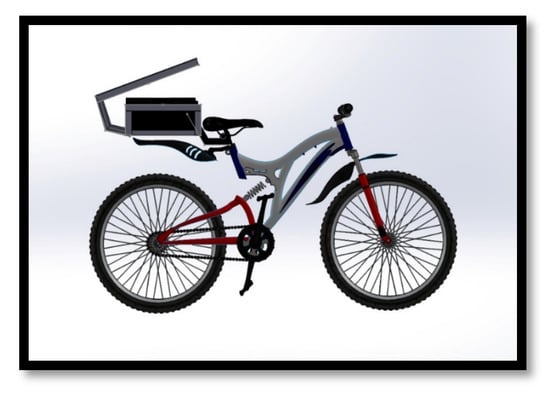
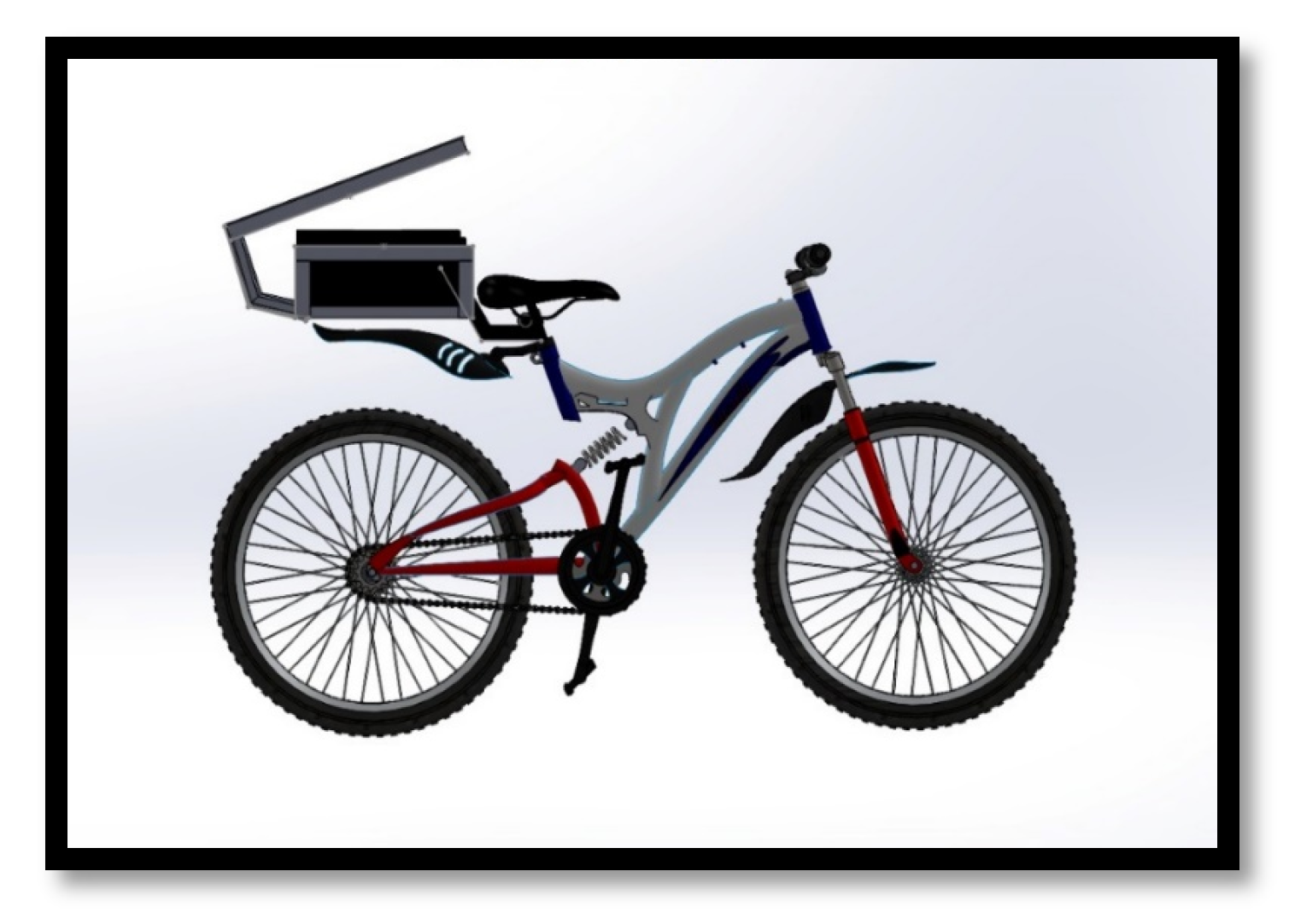
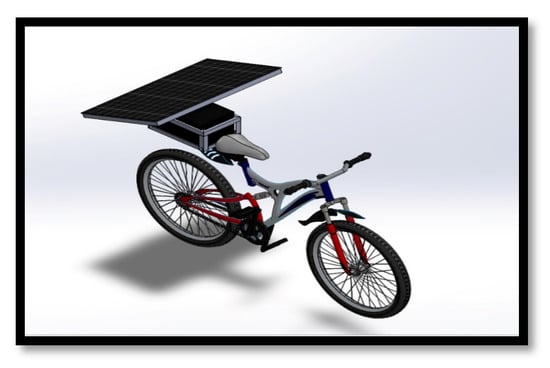
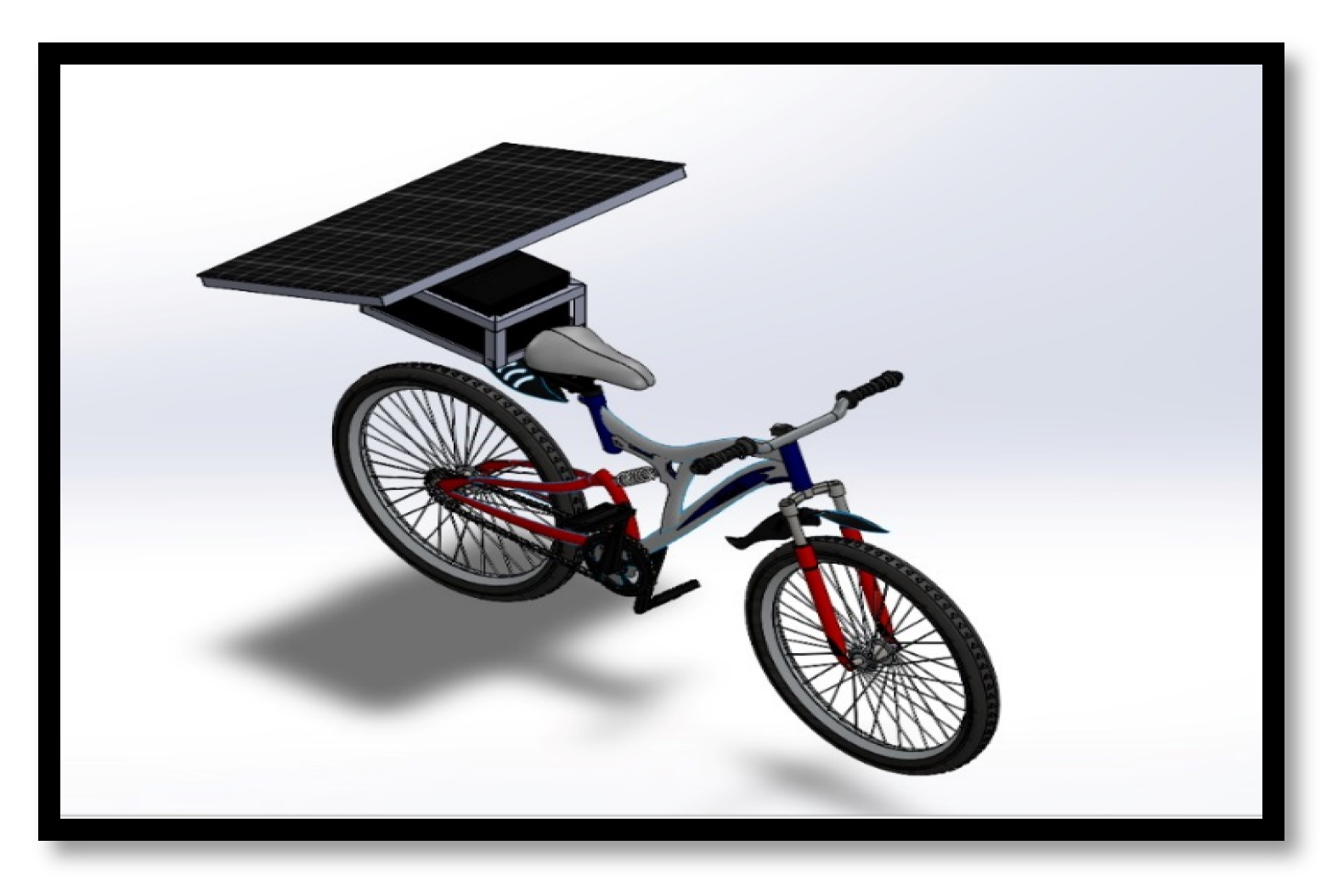
The side view of the bicycle highlights its aerodynamic frame, equipped with solar panels for renewable energy collection, a dynamo for pedaling energy conversion, and a battery for power storage. The handlebar includes a panic button, GPS, GSM, and a fingerprint sensor, ensuring the safety of the rider. The side and top view, shown in Figure 2 and Figure 3, emphasizes the placement of the solar panels, the integration of the handlebar with safety controls, and the overall layout of the bicycle, designed for both energy efficiency and rider protection, particularly for female cyclists.
Figure 2.
Side view.
Figure 3.
Top view.
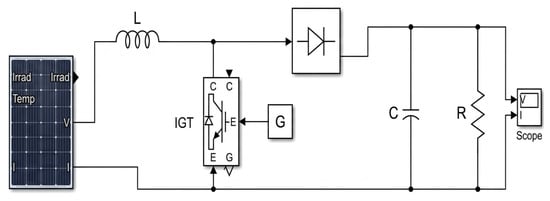
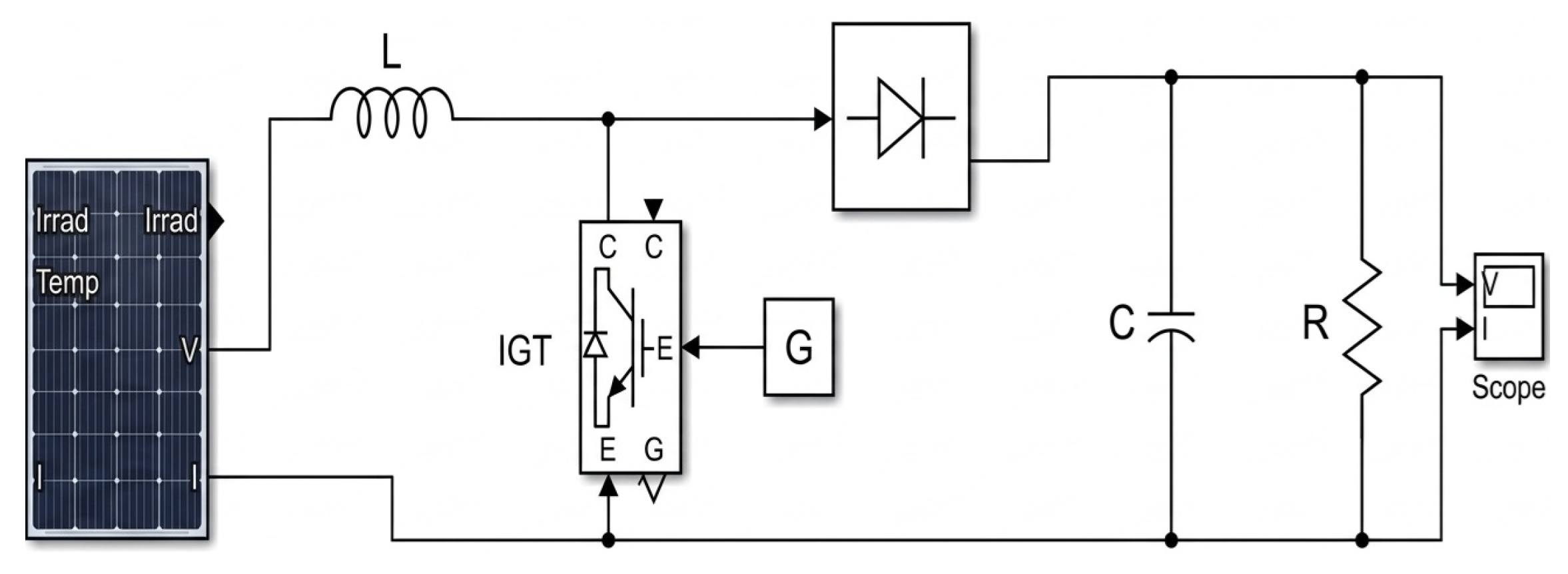
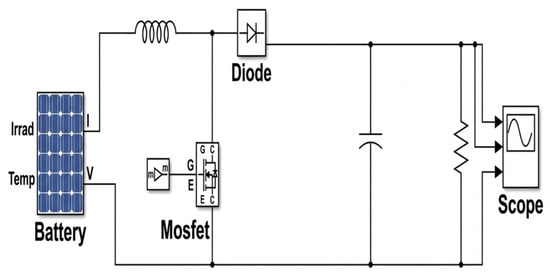
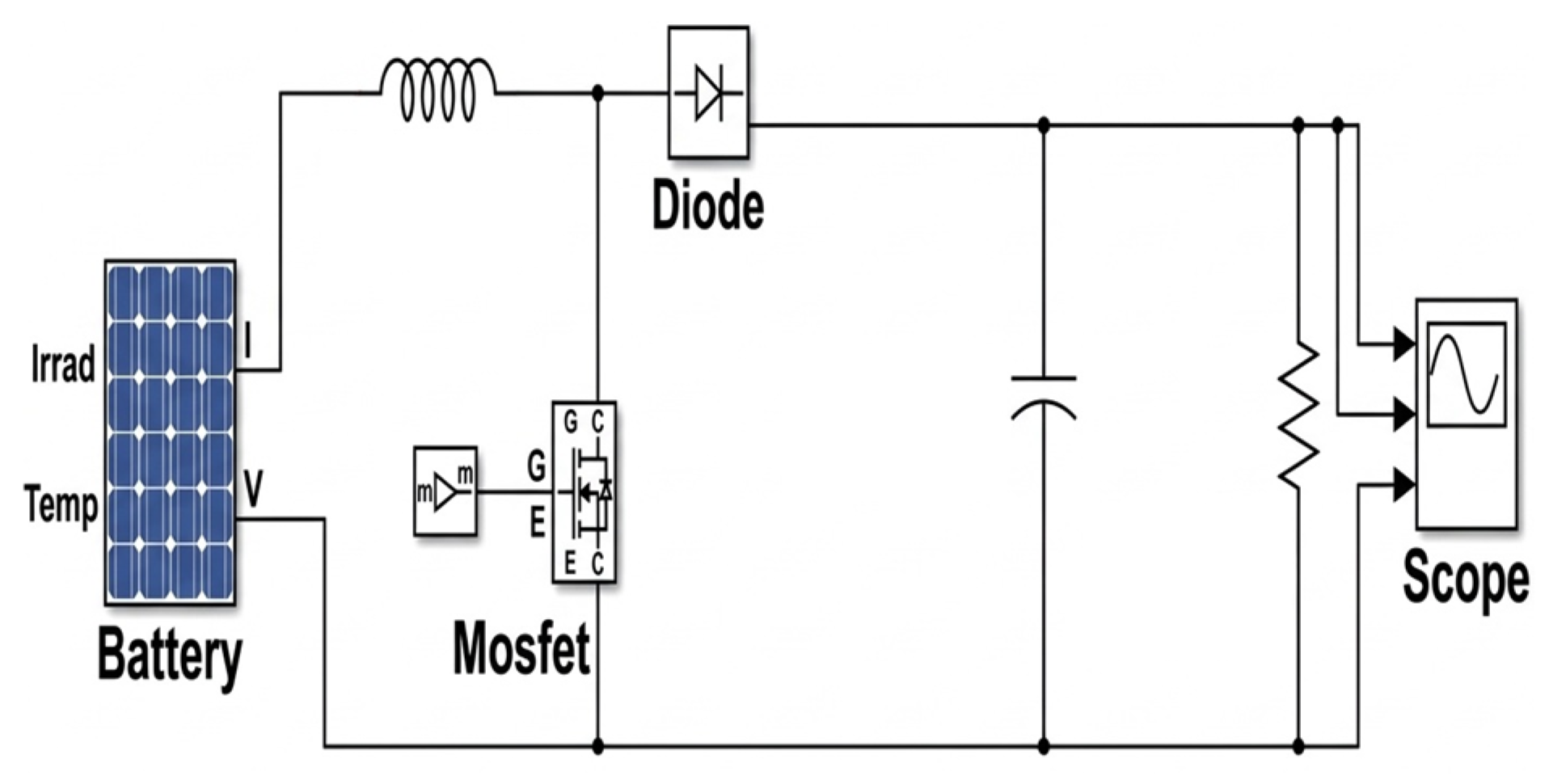
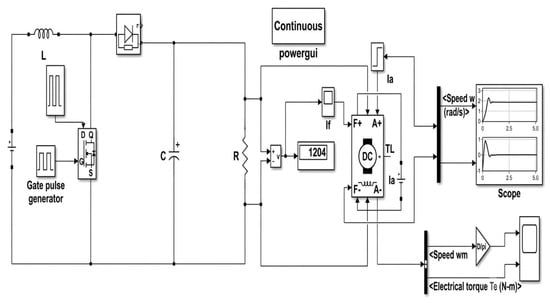
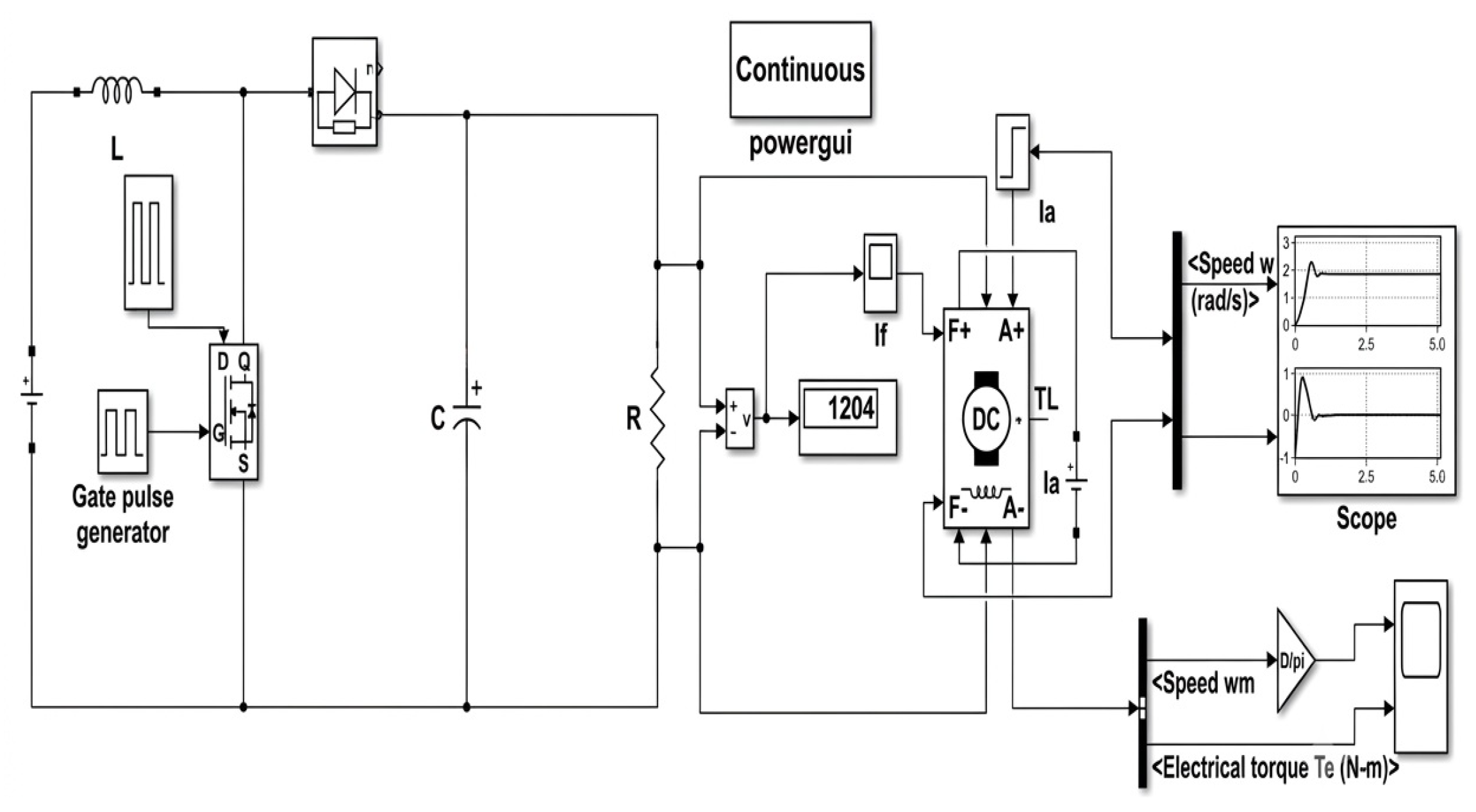
The solar panel provides DC power. The inductor stores energy when the switch is on, similar to a buck-boost topology. The MOSFET acts as a switch, controlling energy flow. The diode directs current to the load, preventing back flow, as shown in Figure 4. The capacitor filters the output, smoothing voltage fluctuations, and the resistor represents the load. The battery supplies the input voltage. The MOSFET switch and diode control the direction and flow of current. The inductor stores and releases energy to adjust the output voltage, as shown in Figure 5. The RLC branches filter and stabilize the output, with the last branch serving as the load.
Figure 4.
Converter circuit with solar panel.
Figure 5.
Converter circuit with battery.
3. Simulation and Experimentation of Hybrid Bicycle System
3.1. Discussion on Simulation of Hybrid Bicycle System
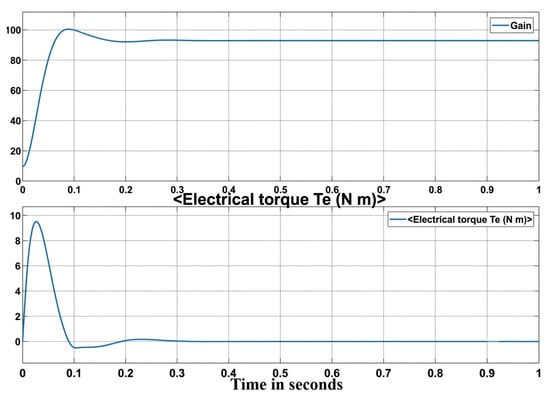
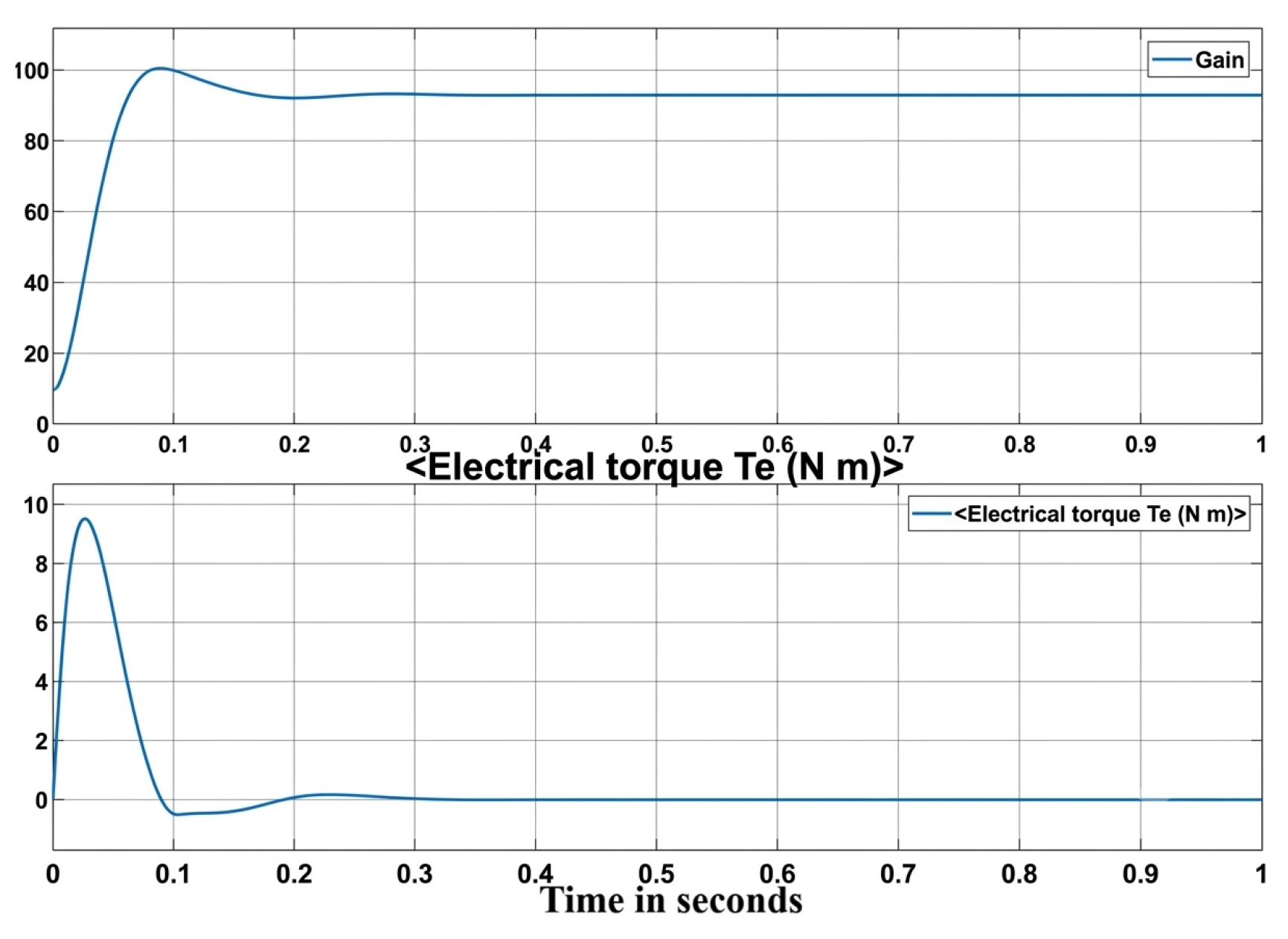
Electrical parts such as resistors, capacitors, and inductors are used in pedal-powered energy harvesting systems to transform the mechanical energy of cycling into electrical energy, as shown in Figure 6 (MATLAB/Simulink 2017b). A permanent-magnet DC generator transforms mechanical energy into electrical energy during pedaling. An inductor (L) filters the voltage, lowering ripple and increasing efficiency, while a capacitor (C) stores the resulting DC voltage, smoothing the output, as shown in Figure 7. A resistive load (R), like a battery, uses the energy that has been harvested to provide a sustainable power supply. Component values (R, L, and C) and pedaling frequency are two examples of parameters that affect the system’s efficiency. Pedal-powered energy harvesting systems may effectively produce electricity by adjusting these factors, which makes them appropriate for uses such as wireless sensor networks, wearable technology, and generators powered by bicycles. The calculations for the circuit components shown in Table 3 were performed below by considering Vin = 7 V, Vout = 12 V, f = 40,000, P = 7 W.
Figure 6.
Simulation of pedaling energy for the proposed bicycle system.
Figure 7.
Simulation result of pedaling energy.
Table 3.
Calculations of the circuit components for pedaling energy.
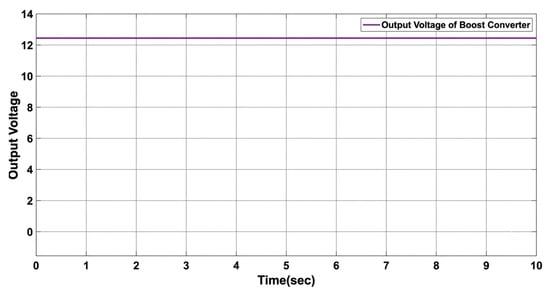
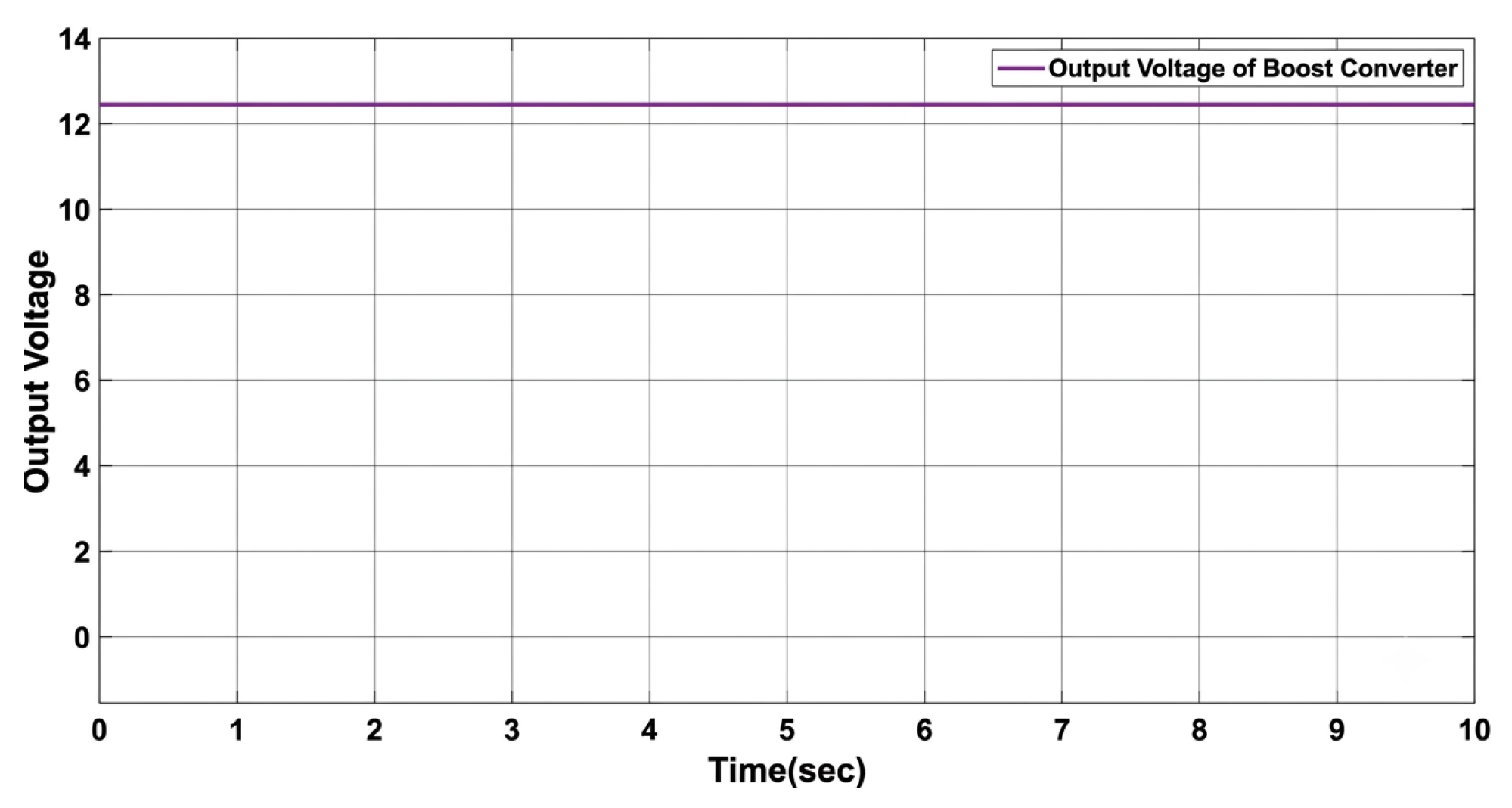
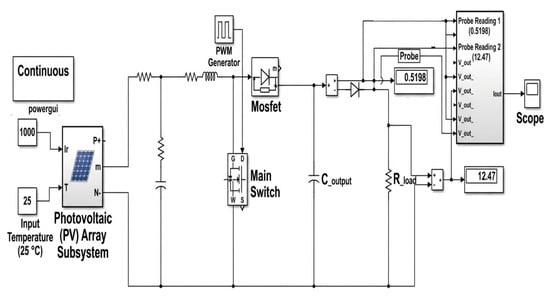
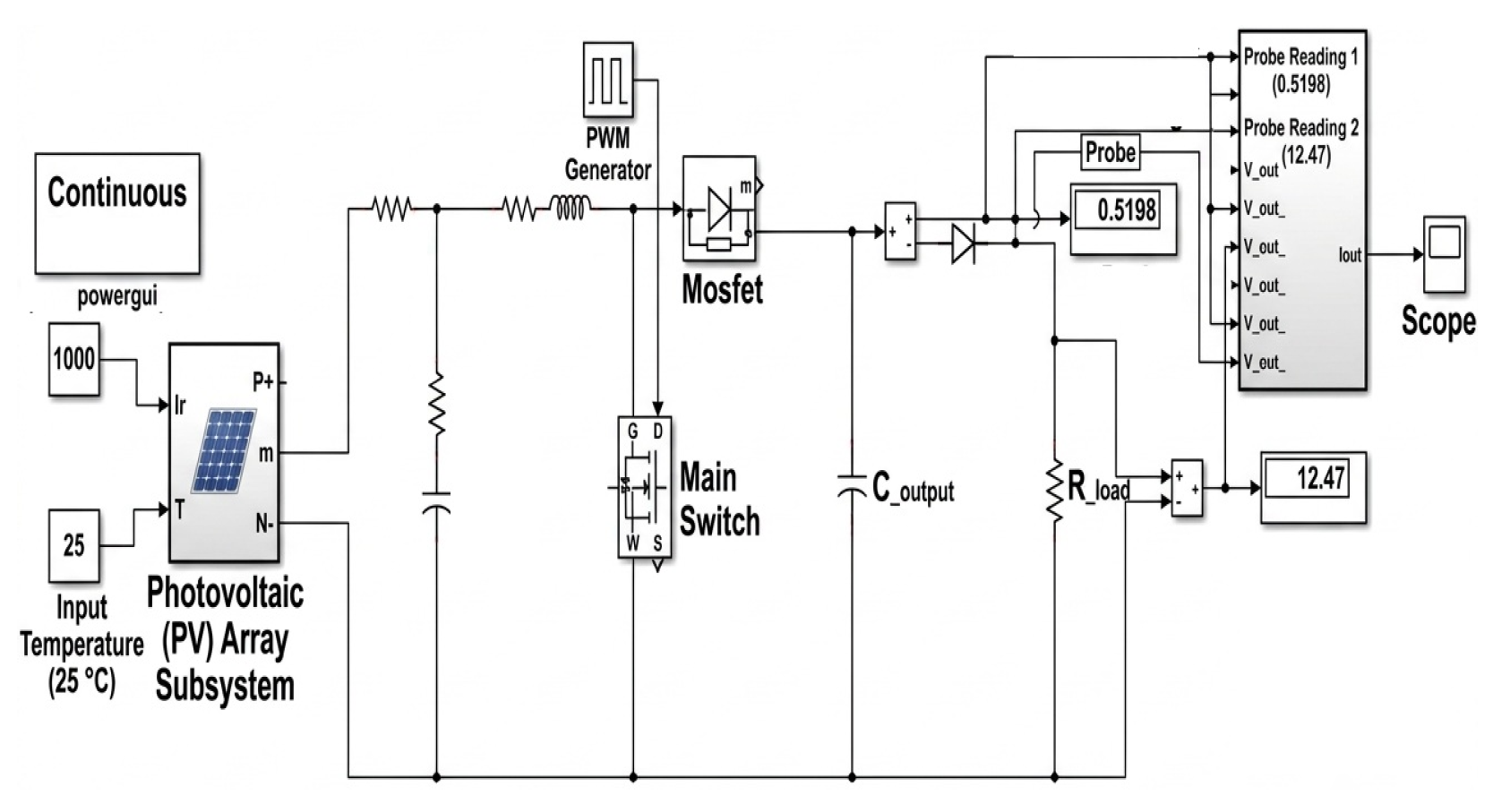
Electrical components are used in solar energy harvesting systems to transform sunlight into electrical energy, as shown in Figure 8. Solar radiation is converted into DC electrical energy via a photovoltaic (PV) cell or solar panel. A capacitor (C) retains the resulting DC voltage, smoothing the output, while an inductor (L) filters the voltage, decreasing ripple and boosting efficiency, as shown in Figure 9. The captured energy is used to generate a sustainable power source through a resistive load (R), like a battery or an electrical circuit. The calculations for the circuit components shown in Table 4 were performed below by considering Vin= 9 V, Vout = 12 V, f = 40,000, P = 7 W.
Figure 8.
Simulation of solar energy for the proposed bicycle system.
Figure 9.
Simulation result from solar energy.
Table 4.
Calculations of the circuit components for solar energy.
3.2. Discussion on Experimentation of Hybrid Bicycle System
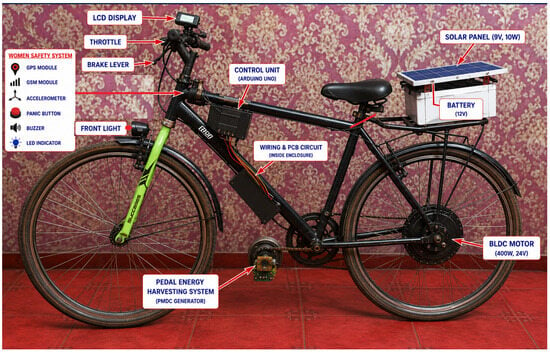
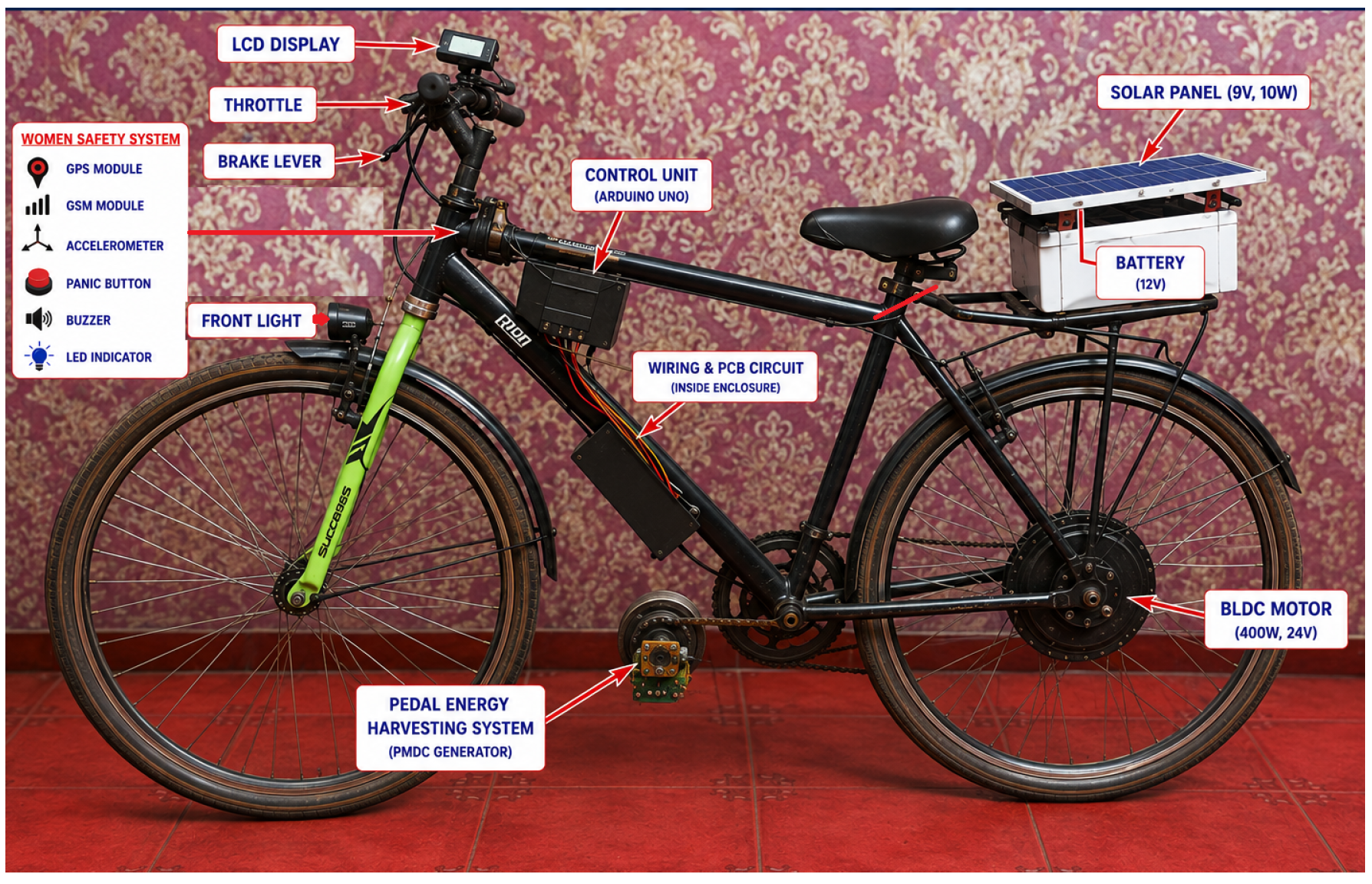
A pedal-powered energy collecting system, a solar energy harvesting system, and a women’s safety system are all integrated into the hybrid bicycle prototype. A permanent-magnet DC generator, diode bridge rectifier, inductor, capacitor, and resistor load make up the pedal-powered energy harvesting system. A 12 V battery, an MPPT controller, and a 9 V solar panel are used in the solar energy harvesting system. With its GPS, GSM, accelerometer, and panic button, the women’s safety system offers impact detection, audio/visual alerts, real-time location monitoring, and SOS messaging, as shown in Figure 10. The system, which is built inside a robust, water-resistant enclosure installed on the bicycle frame and controlled by an Arduino Uno microcontroller, ensures dependable safety features and effective energy harvesting.
Figure 10.
Experimentation of hybrid bicycle system.
Recharging of the battery is performed by a charging circuit fitted with a solar panel, as the solar panel has a tendency to convert sunlight into electricity. The user can recharge the battery present in the bicycle easily by placing it in sunlight. Battery voltage and current are regulated by the charging circuit, as it has the facility to cutoff overvoltage. The rating of the solar panel is selected as 10 W. The bicycle’s compact size, lightweight design, and regenerative braking system maximize energy efficiency. Integrated GPS and fingerprint sensor technologies ensure secure and convenient use (Figure 11). In a dangerous situation, the Arduino Uno is activated, and the fingerprint sensor scans every 1 min after activation. If an emergency is detected, the location is sent as a message from the GSM device, which is powered by a 9 V DC battery installed within the device. The components are connected to the digital pins, ground, and Vcc of the Arduino Uno through the PCB. A durable design and advanced suspension provide a smooth ride in various weather conditions. Smart features can be easily integrated with smart phones, setting a new standard for sustainable transportation with far-reaching implications for urban mobility.
Figure 11.
Hybrid bicycle system with women’s safety device.
The design calculations for the components of the hybrid bicycle are as follows.
Friction force calculation:
where:
F = μ × n
- μ = 0.35 (coefficient of friction),
- n = 450 N (perpendicular force),
- F = 0.35 × 450 = 157.5 N.
Torque calculation:
where:
T = F × r
- F = 157.5 N (friction force),
- r = 0.28 m (radius of the rim),
- T = 157.5 × 0.28 = 44.1 Nm.
Running speed (angular velocity) calculation:
where:
ω = v/r
- v = 2.8 m/s (estimated velocity),
- r = 0.28 m (radius of the rim),
- ω = 2.8/0.28 = 10 rad/s.
Rotational speed calculation:
where:
N = 60 × ω/2 × π
- ω = 10 rad/s (angular velocity),
- N = 60 × 10/2 × π = 95.49 rpm.
Power calculation:
where:
P = 2 × π × N × T/60
- N = 95.49 rpm (rotational speed),
- T = 44.1 Nm (torque),
- P = 2 × π × 95.49 × 44.1/60 = 439.69 W.
Motor rating calculation:
To account for efficiency losses (assumed at 85%), the required motor power is:
Motor Power = P/0.85 = 439.69/0.85 ≈ 517.28 W
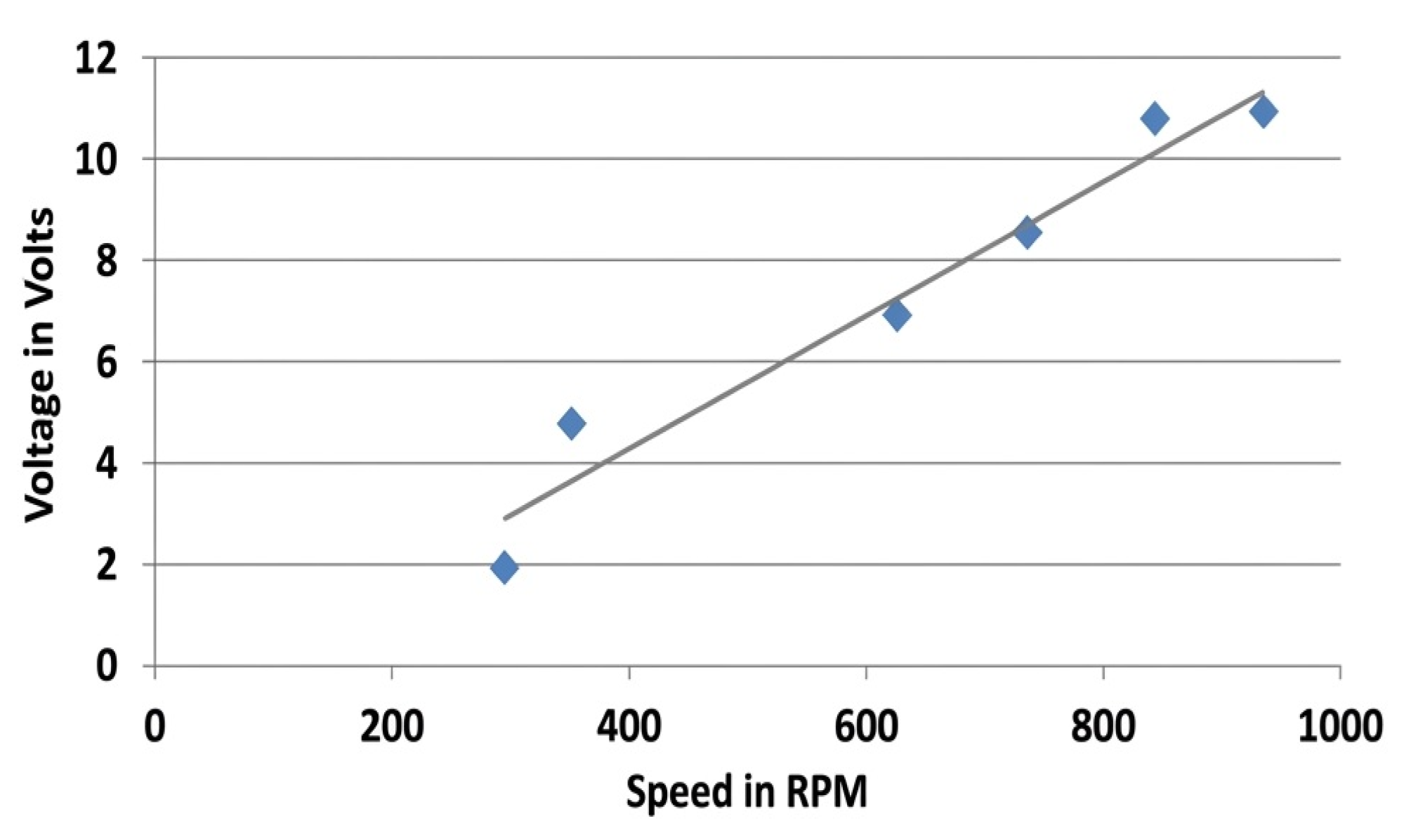
The selection of solar panels and batteries is tailored to meet the design requirements, with a focus on utilizing a standard 400 W, 24 V BLDC motor for the hybrid bicycle design. The battery in the hybrid electric bicycle is charged by the solar panel, which is fitted in the carrier of the bicycle. This supplies the input to the electric motor connected to the rear wheel. When the vehicle is climbing hills, the motor supports the pedaling resistance. When going downhill or when there is no sunlight, the battery receives power from a dynamo fitted across the pedal chain. Using a double-chain arrangement, both the pedals and motor are connected, and the speed of the motor is varied accordingly by the throttle controller. Both the battery system and solar panel are arranged on the bicycle carrier, and a real-time plot of vehicle speed versus propeller voltage is shown in Figure 12.
Figure 12.
Speed vs. voltage from experimental bicycle system.
3.3. Real-Time Testing and Observations of Hybrid Electric Bicycle System
The hybrid electric bicycle combines pedaling efficiency with dynamic solar charging capabilities and was built with a 20 kg frame, as shown in Figure 10. The electric bicycle was tested to support a maximum total payload of 135 kg (rider + passenger). Powered by a 24 V battery system, the electric bicycle reaches speeds of 25 km/h on a flat surface and 15 km/h on an uphill surface under light load. The motor in the hybrid electric system delivers a torque of 0.9 Nm at maximum speed, which maintains power on the go, and the onboard battery reaches maximum charge in approximately 4 h through the integrated 6 V/h solar panel (approx. 4.45 h–267 min using pedal-assist charging). Calculations of speed and battery charging time under unloaded and loaded conditions of the hybrid bicycle were performed in real time and are given in Table 5.
Table 5.
Calculation of speed and battery charging time.
Loaded and Unloaded Conditions:
- Flat road speed (unloaded): 25 km/h;
- Uphill speed: 15 km/h;
- Torque at max speed: 0.9 Nm;
- Pedaling charge rate: 0.09 V/min;
- Solar charge rate: 6 V/h;
- Weight of the bicycle: 20 kg;
- Weight of the rider: 55 kg;
- Weight of the additional person: 60 kg.
4. Conclusions
In conclusion, the pedal-powered energy harvesting system and the solar energy harvesting system have been analyzed using MATLAB/Simulink based on the computations. The findings indicate that ideal component values for the pedal-powered energy harvesting system are R = 21 Ω, L = 36 mH, and C = 51 μF, and for the solar energy harvesting system, the ideal values for the components are R = 21 Ω, L = 58 mH, and C = 30 μF, yielding maximum efficiency for the designed hybrid electric bicycle. These findings show how energy harvesting systems can be used to produce sustainable power from solar and pedaling energy. Furthermore, increases in power output and energy efficiency can be achieved by tuning the circuit component values and system architecture. The experimental model empowers individuals with eco-friendly transportation options and reduces carbon emissions. The hybrid electric bicycle is a pioneering step toward a sustainable transportation future, which ensures a culture of environmental responsibility and women’s safety. Thus, the hybrid solar-powered electric bicycle offers a sustainable and secure mode of urban transportation.
Author Contributions
Conceptualization, V.L. and D.R.; methodology, V.D.; software, U.M.K.; validation, V.L., V.D. and R.K.; investigation, R.K.; writing—original draft preparation, V.L. and V.D.; writing—review and editing, supervision, V.L. and U.M.K. All authors have read and agreed to the published version of the manuscript.
Funding
This research received no external funding.
Institutional Review Board Statement
Not applicable.
Informed Consent Statement
Not applicable.
Data Availability Statement
The original contributions presented in this study are included in the article. Further inquiries can be directed to the corresponding author.
Conflicts of Interest
The authors declare no conflicts of interest.
References
- Winters, M.; Teschke, K. Route Preferences among Adults in the near Market for Bicycling: Findings of the Cycling in Cities Study. Am. J. Health Promot. 2010, 25, 40–47. [Google Scholar] [CrossRef] [Scilit]
- Ali, D.; Sahu, P.K.; Majumdar, B.B.; Sharma, I.; Lakhani, J.A. Which Sociodemographic, In-Vehicle and Transit-Stop Attributes Influence Indian Women Commuters’ Safety and Security Perceptions of Public Transportation? Transp. Res. Rec. J. Transp. Res. Board 2026, 2680, 205–225. [Google Scholar] [CrossRef] [Scilit]
- Godfrey, D.; Song, M.-H. Safe Bike: Secure your Bicycle with this Smart Arduino Based GPS Device. Int. J. Adv. Smart Converg. 2016, 5, 16–26. [Google Scholar] [CrossRef] [Scilit]
- Manoj, E.; Isa, D.; Arelhi, R. Supercapacitor/Battery Hybrid Powered Electric Bicycle via a Smart Boost Converter. World Electr. Veh. J. 2010, 4, 280–286. [Google Scholar] [CrossRef] [Scilit]
- Hartanti, A.N.; Istiqomah, J.; Christyono, Y.; Ajulian, A. Perancangan Sistem Pengereman Regeneratif pada Sepeda Listrik dengan Menggunakan DC-DC Boost Converter. Transient J. Ilm. Tek. Elektro 2025, 14, 37–45. [Google Scholar] [CrossRef] [Scilit]
- Velázquez, J.S.; Cavas, F.; Valverde-Martínez, J.A.; Ignacio Mulero-Martínez, J. Design of a Modular Energy Production–Storage System for a Sustainable Bicycle. Appl. Sci. 2024, 14, 523. [Google Scholar] [CrossRef] [Scilit]
- Loo, B.P.Y.; Lian, T. Slow Mobility & Medicine: A Critical Review. Soc. Sci. Med. 2025, 382, 118347. [Google Scholar] [CrossRef] [Scilit]
- Patil, R.; Prakash, S.P. An Improved Bidirectional Dual-Output Multilevel Buck PFC Rectifier With Wide Load Scalability and Stability. Trans. Power Elect. 2023, 38, 12278–12287. [Google Scholar] [CrossRef] [Scilit]
- Toh, C.L. Design of DC-DC Converters for Electric-Bike’s Battery Charging Station. J. Energy Environ. 2018, 10, 6–12. [Google Scholar]
- Camposano, D.B.F.; Fajardo, L.A.V.; Malejana, K.G.L.; Reyes, M.R.F.D.; Tiboso, C.A.; Zoleta, M.C. Design and Development of an RFID-Based Anti-Theft Bicycle Lock with Alarm, SMS Notification, and Tile Tracking System. Int. J. Res. Sci. Innov. 2026, 13, 817–829. [Google Scholar] [CrossRef] [Scilit]
- Aldred, R.; Woodcock, J.; Goodman, A. Major investment in active travel in Outer London: Impacts on travel behaviour, physical activity, and health. J. Trans. Health 2021, 20, 100958. [Google Scholar] [CrossRef] [Scilit]
- Fraser, S.D.S.; Lock, K. Cycling for Transport and Public Health: A Systematic Review of the Effect of the Environment on Cycling. Eur. J. Public Health 2011, 21, 738–743. [Google Scholar] [CrossRef] [Scilit]
- Graystone, M.; Mitra, R.; Hess, P.M. Gendered Perceptions of Cycling Safety and On-Street Bicycle Infrastructure: Bridging the Gap. Transp. Res. Part D Transp. Environ. 2022, 105, 103237. [Google Scholar] [CrossRef] [Scilit]
- Jia, C. Design of Intelligent Bicycle Anti-Theft System Based on Internet of Things and Computer Technology. J. Comput. Electron. Inf. Manag. 2025, 18, 19–22. [Google Scholar] [CrossRef] [Scilit]
- Perdana, A.P.; Tsani, M.R.; Wibowo, H.; Widiandaru, N.O. The Smart Battery Safety and Anti-Theft Monitoring System for Electric Bicycles with Automatic Cut-Off and Dual-Channel Notification. J. Renew. Energy Smart Device 2026, 3, 103–128. [Google Scholar] [CrossRef] [Scilit]

Disclaimer/Publisher’s Note: The statements, opinions and data contained in all publications are solely those of the individual author(s) and contributor(s) and not of MDPI and/or the editor(s). MDPI and/or the editor(s) disclaim responsibility for any injury to people or property resulting from any ideas, methods, instructions or products referred to in the content. |
© 2026 by the authors. Licensee MDPI, Basel, Switzerland. This article is an open access article distributed under the terms and conditions of the Creative Commons Attribution (CC BY) license.