


Abstract
The paper presents tensile tests of hybrid steel–concrete joints for discrete reticulated timber structures. The hybrid steel–concrete joint consists of short steel tubes filled with polypropylene fiber-reinforced concrete. The anticipated concrete strength class was C25/30. The specimens were loaded perpendicularly to the steel tube’s longitudinal axis, resulting in split-tensile-test-like loading of the concrete infill (cylinders). The study focused on the contribution of the concrete infill to the stiffness of the steel tubes. It was demonstrated that tensile load-bearing capacity is governed by steel tube failure, which occurs before the onset of split-tensile cracking in the concrete infill. The tensile stiffness of the concrete-infilled specimens was several times greater than that of an empty steel tube. The stiffness of the hybrid steel–concrete joint was evaluated using an analytical model consisting of a compressive spring representing the concrete infill and a curved-beam model representing the steel tube. The calculated stiffness value showed reasonable agreement with the experimentally determined value. A parametric stiffness calculation was also performed to gain deeper insight into the behavior of the hybrid steel–concrete joint. An equivalent steel tube wall thickness was calculated to match the stiffness of the proposed hybrid steel–concrete joint using an empty steel tube. It was shown that the proposed hybrid steel–concrete joint outperforms an empty steel tube of equal tensile stiffness in terms of material cost, embodied energy, and embodied carbon.
1. Introduction
Discrete reticulated structures (gridshells) are typically composed of steel or timber members connected at discrete nodes. Although timber offers environmental advantages, steel joints remain essential and largely govern the structural behavior. Because joints can contribute significantly to the weight of long-span structures, reducing steel consumption is desirable. One possible solution is the use of concrete-infilled steel tubular joints, where part of the steel is replaced with concrete, a material with lower cost and lower environmental impact. Since the steel tube and concrete infill do not act as a conventional composite member, such joints can be classified as hybrid steel–concrete joints.
Study [1] is the only identified example of concrete-filled steel tube joints developed specifically for discrete reticulated structures. The proposed joint consisted of concentric steel tubes with concrete infill between them, leaving the inner tube hollow. Centric and eccentric compression tests demonstrated that the concrete infill significantly increased the joint’s load-carrying capacity and stiffness. Several studies have investigated concrete infilled steel tubular joints with gusset plates. However, these studies mainly considered one-sided load transfer from the gusset plate to the tubular chord rather than transverse load transfer between opposite gusset plates (cross or X-joints). Studies [2,3] showed that concrete infill effectively restrains chord wall deformation and increases the resistance of concrete-filled tubular gusset plate T-connections. Similarly, study [4] demonstrated increased tensile resistance of branch plate-to-rectangular hollow section joints due to concrete infill. Furthermore, studies [5,6] proposed analytical methods for predicting the stiffness of concrete-filled steel tubular joints and showed that concrete infill can significantly influence both joint stiffness and the global stiffness of truss structures. Although these studies investigated tubular T-, Y-, and K-joints rather than gusset plate connections, they provide valuable insight into the stiffness contribution of concrete infill and the associated load-transfer and deformation mechanisms.
A previous study by the author [7], conducted within the same research project, investigated the compressive behavior of hybrid steel–concrete joints for discrete reticulated timber structures. The results demonstrated the beneficial effect of the concrete infill on the joint’s compressive load-carrying capacity and stiffness. To further improve the understanding of the structural behavior of such joints, the present study investigates their response under tensile loading. Particular attention is given to the stiffness contribution of the concrete infill, the load-transfer mechanisms between steel and concrete, and the resulting structural efficiency of the proposed hybrid steel–concrete joint. In addition, the study evaluates the environmental efficiency of the proposed solution by comparing material costs, embodied energy, and embodied carbon with those of equivalent all-steel alternatives.
2. Materials and Methods
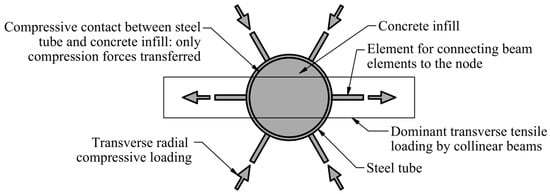
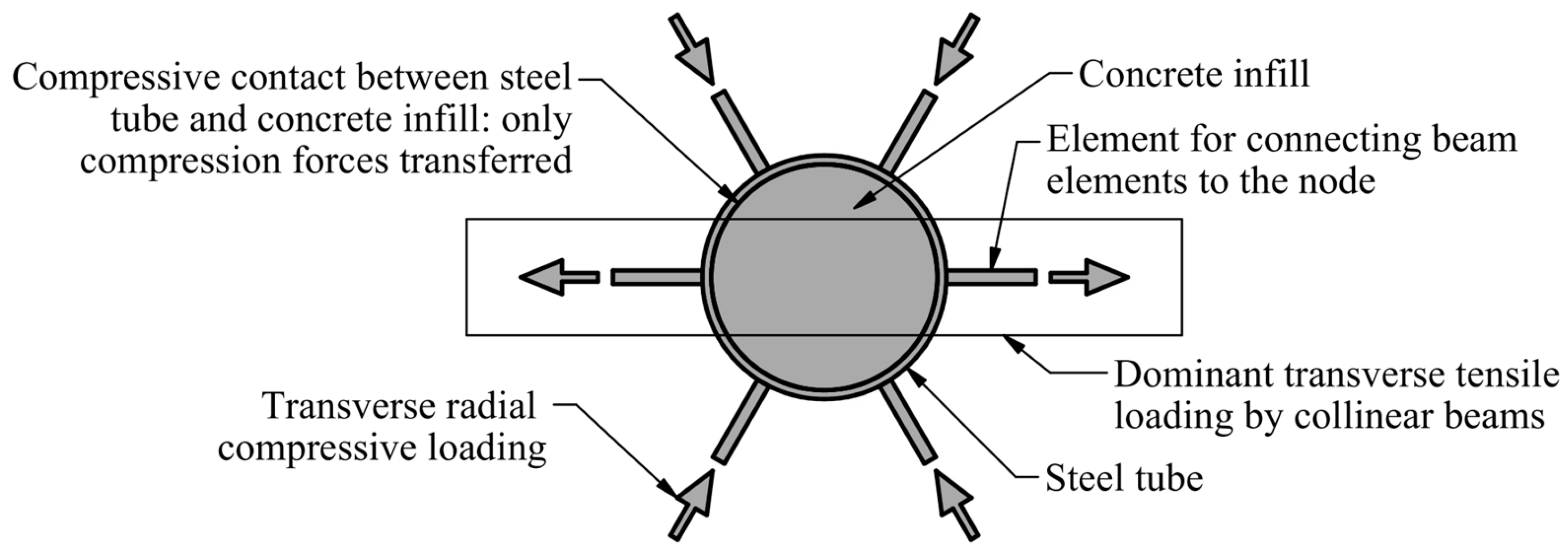
The experimental program was designed to investigate the transverse tensile response of concrete-infilled steel tubes used as hybrid steel–concrete joints in discrete reticulated timber structures. In such structures, forces are transferred to the node through several connected members (Figure 1). The selected loading arrangement represents a situation in which two dominant collinear tensile forces are transmitted through the joint between opposing members. Attention was given to the role of the concrete infill. Although the external loading is tensile, the force-transfer mechanism induces compressive stresses in the concrete infill, acting perpendicular to the applied tensile force.
Figure 1.
Motivation for the experimental methodology.
The experimental program included two specimen groups with glued laminated timber (GLT) beams connected to hybrid steel–concrete joints through different beam-to-joint connection details. However, the present study focuses solely on the behavior of the concrete-infilled steel tube. The concrete infill was subjected to transverse compression, acting perpendicular to the applied tensile load. Polypropylene fiber-reinforced concrete containing Barchip 48 high-performance macro-synthetic fibers [8] was used as infill. The fibers were included to assess their potential influence after split-tensile cracking. Since previous research [7] had already examined this effect and the expected transverse compressive stresses due to tensile loading were expected to be insufficient to cause splitting, no significant fiber contribution was anticipated during the tests. The specimens were designated B1–B4. In addition, specimen D4, consisting only of a concrete-infilled steel tube with welded steel loading (gusset) plates and previously tested under compressive loading without reaching its ultimate capacity [7], was subsequently tested in tension. After completion of the initial tensile test and removal of the GLT beam, specimen B4 was also loaded until failure.
The tensile tests were performed at the Slovenian National Building and Civil Engineering Institute. The specimens consisted of circular steel tubes with an outer diameter of 273 mm and a wall thickness of 10 mm. Collinear steel plates, 15 mm thick, were welded to the tubes to introduce the tensile load and connect the GLT beams. The fillet weld leg size was 11 mm, and all steel components were fabricated from grade S355J2H steel.
The anticipated concrete strength class was C25/30 in accordance with EN 1992-1-1 [9]. The experimentally determined concrete mechanical properties (the compressive strength was determined on cubes), reported in [10], are summarized in Table 1.
Table 1.
Mechanical properties of concrete (as determined in [10]).
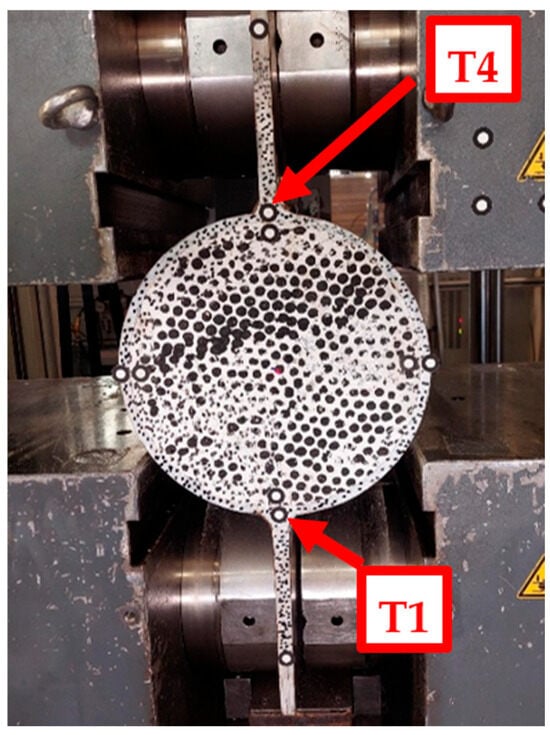
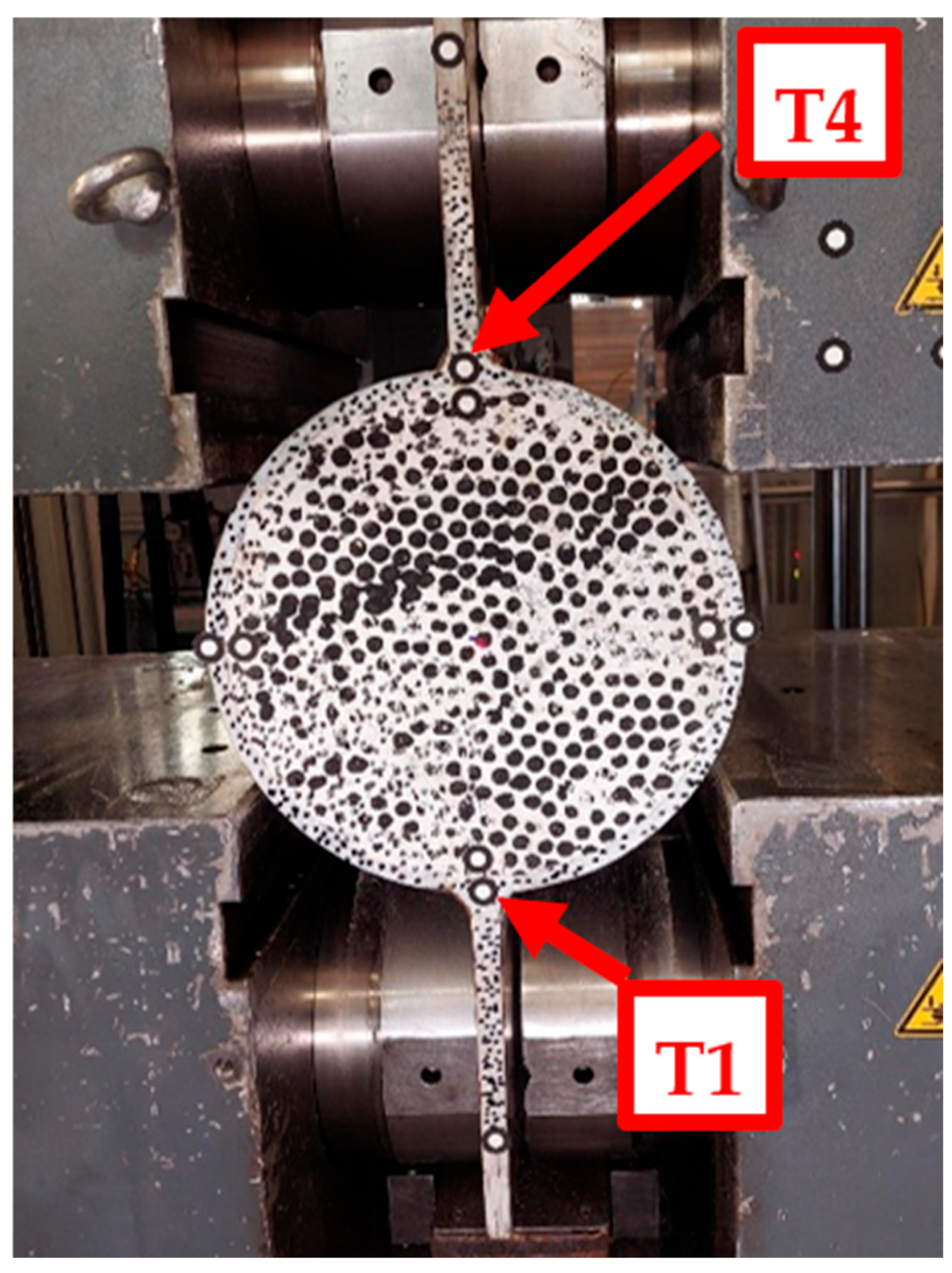
The tests were performed on a Zwick Z2500Y universal testing machine with a nominal tensile capacity of 2500 kN. Specimens B1–B3 were loaded under displacement control at a rate of 0.02 mm/s, while specimen B4 was tested at 0.2 mm/s. The additional tests on concrete-infilled steel tubes without GLT beams were also displacement-controlled. The node-only version of specimen B4 was loaded at 0.001 mm/s until failure. Specimen D4 was initially loaded at 0.001 mm/s up to approximately 740 kN and subsequently retested at 0.01 mm/s until failure. The higher loading rate in the second test was adopted because the primary objective was to obtain an additional load-bearing capacity result. Displacements were measured using the ARAMIS SRX optical measurement system, which continuously monitored the entire visible surface of the specimen throughout the tests. On the visible side of the steel tube, points T1 and T4 were used to measure deformation in the loading direction (Figure 2).
Figure 2.
Specimen D4 and load test configuration.
3. Results
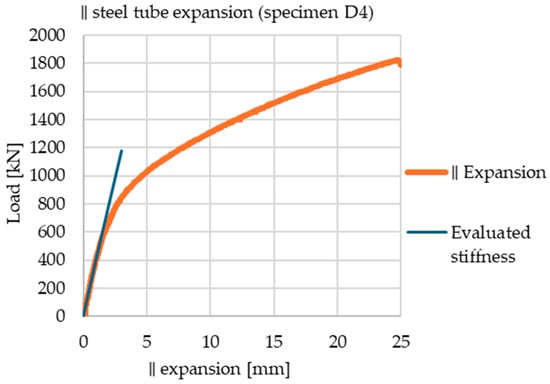
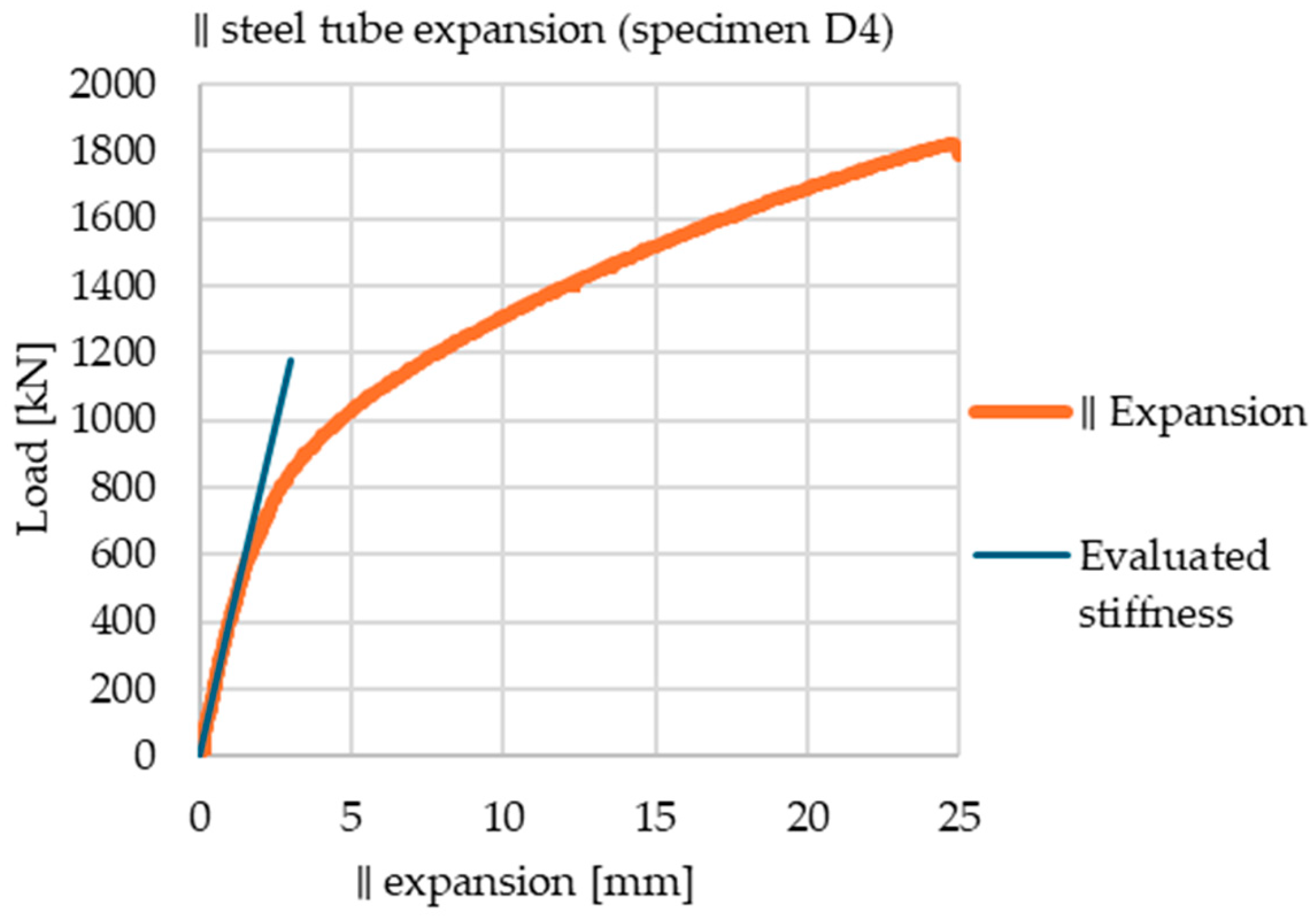
Table 2 summarizes the maximum load-bearing capacities and tensile stiffness values of the tested specimens. Ultimate load was reached only in the second test of specimen B4 and in specimen D4. For specimens B1–B3, the maximum applied load ranged between 400 kN and 500 kN and was limited by the load-bearing capacity of the GLT beam connections. The initial (tangential) tensile stiffness was determined from the measured expansion of the steel tubes in the loading direction over the load range from 100 kN to 400 kN. Since the load–expansion responses were similar for all specimens, only the curve for specimen D4 is presented in Figure 3. The figure shows a noticeable reduction in stiffness beyond approximately 600 kN. The reported average stiffness was calculated from specimens B1–B3 and the first test of specimen B4.
Table 2.
Load test results.
Figure 3.
Load–displacement curve of specimen D4 (∥ expansion).
An empty steel tube subjected to transverse tensile loading can be assumed to exhibit behavior similar to that observed under transverse compression, as investigated in [7], where an experimental stiffness of 18.4 kN/mm and a load-bearing capacity of 152.9 kN were obtained. Comparison with the concrete-infilled steel tubes tested in the present study demonstrates the significant contribution of the concrete infill to tensile performance: the tensile stiffness and load-bearing capacity increased by factors of approximately 24 and 11, respectively. Although the compressive stiffness reported in [7] for concrete-infilled steel tubes (3530 kN/mm) was more than seven times the tensile stiffness measured in this study, the tensile load-bearing capacity was only 38% lower than the corresponding compressive load-bearing capacity of 2387 kN.
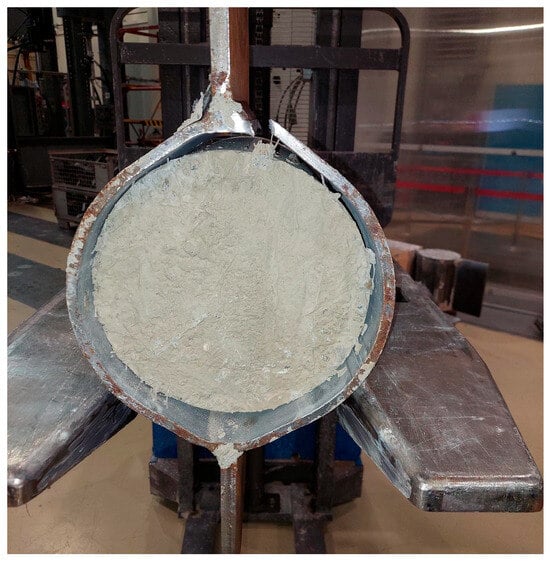
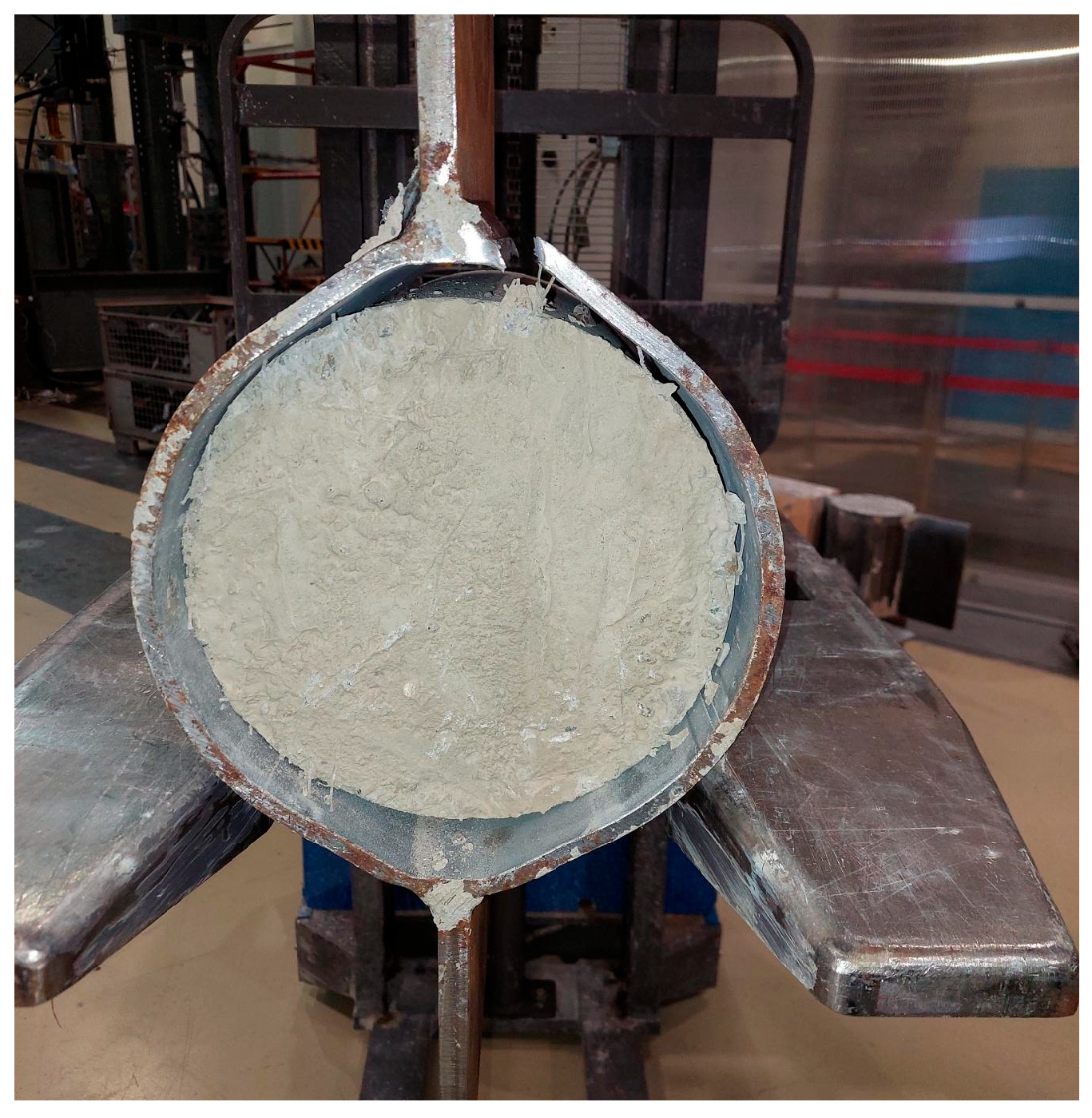
As anticipated, no split-tensile cracking occurred and the concrete infills remained essentially undamaged after testing. Failure was governed by a brittle through-thickness fracture at the weld toe of the steel tube (Figure 4), corresponding to a punching shear mechanism. This observation is consistent with the findings of [2], which showed that, for one-sided concrete-filled tubular longitudinal gusset plate connections, the concrete infill suppresses yielding of the chord face (steel tube wall). The load-bearing capacity (Nmax) can be estimated using the punching shear resistance expression given in Eurocode 3 (EN 1993-1-8) [11], presented here in a modified form for a tensile force acting in the connected steel (gusset) plate:
where tt is the tube wall thickness, fy is the steel yield strength (355 MPa), L is the length of the steel tube (36 cm). The expression yields a load-bearing capacity of 1475.7 kN, which falls below both measured load-bearing capacities but provides a relatively good approximation (15% lower than the average measured load-bearing capacity in Table 2).
Figure 4.
Brittle weld toe through thickness steel tube fracture (punching shear failure mode).
4. Analytical Parametric Calculation of the Tensile Stiffness
To further investigate the influence of key parameters, including the tube outer diameter, wall thickness, and concrete modulus of elasticity, a parametric stiffness study was conducted using analytical models. The stiffness of the empty steel tube was evaluated using a curved-beam idealization of the tube wall. The resulting model was statically indeterminate to the second degree and was solved using the force method. As the derivation was previously presented in [7], only the final expression for the compressive/tensile stiffness (Ktube) is given here:
where Dt is the outer tube diameter, tt is the tube wall thickness, ES is the modulus of elasticity of steel, It.y is the weak axis moment of inertia of the tube wall (a rectangular cross-section), At is the cross-section area of the tube wall, At.s is the shear area of the tube wall (the cross-section area (At) multiplied by a shear correction factor of 5/6) and GS is the shear modulus of steel.
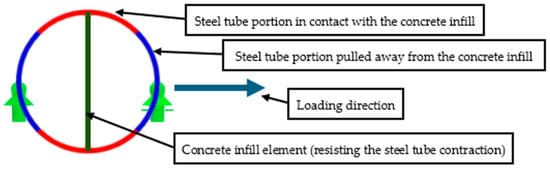
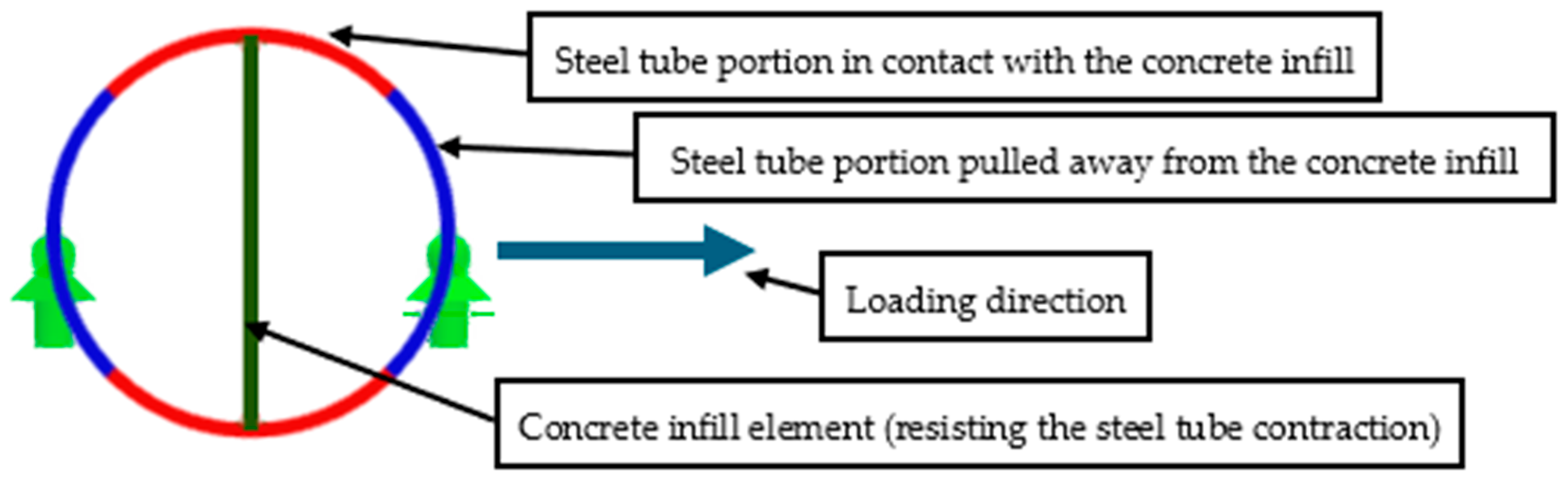
The tensile stiffness of the concrete infilled steel tube was calculated using a model similar to the empty steel stiffness model, with the difference that an additional compressive element (representing the concrete infill) was added at the tube’s symmetry plane, perpendicular to the load action line (see Figure 5).
Figure 5.
Model for calculating the concrete infilled steel tube stiffness.
The model was statically indeterminate to the third degree and was solved using the force method. The quarter-circle segments of the steel tube shown in red in Figure 5 were assumed to possess infinite flexural rigidity, as contact with the concrete infill restrains their flexural deformation, while friction between the concrete infill and the steel tube wall was neglected. The increased wall thickness resulting from the 11 mm fillet welds was included when calculating the tube wall’s weak-axis moment of inertia in the load-introduction regions. The concrete infill was represented by a linear element with a variable cross-sectional width defined by the circle geometry. Based on this idealization, the stiffness of the concrete infill (kinfill) was derived as
where EC is the modulus of elasticity of concrete and L is the specimen (tube) length. The analysis assumed that contact between the steel tube and the concrete infill is sufficient to mobilize the entire cross-section of the concrete infill. Consequently, the calculated infill stiffness is independent of the infill diameter. Since no sufficiently compact closed-form expression could be obtained for the tensile stiffness of the concrete-infilled steel tube, the corresponding expression is omitted.
In the parametric study, the tube diameter ranged from 10 cm to 80 cm, the wall thickness from 8 mm to 80 mm, and the concrete modulus of elasticity from 27 GPa to 37 GPa, corresponding approximately to concrete strength classes C12/15 to C50/60. The reference parameters listed in Table 3 were based on experimentally tested specimens. When one parameter was varied, the remaining parameters were kept at their reference values.
Table 3.
Basic parameters.
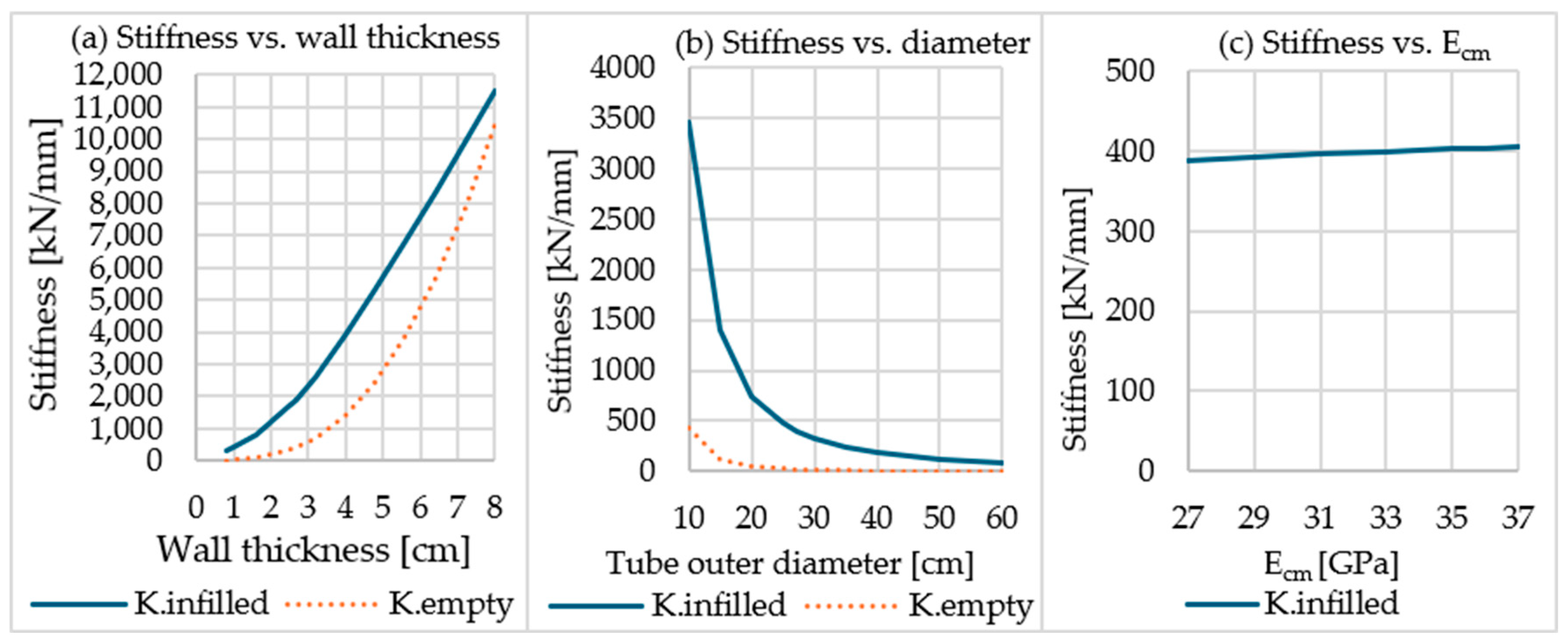
Using the reference parameters from Table 3, the proposed model predicts a tensile stiffness of 400.1 kN/mm, which differs by approximately 11% from the experimentally determined value. The model, therefore, provides a conservative estimate of the tensile stiffness. Improved accuracy could be achieved through a more realistic representation of the contact area between the steel tube and the concrete infill, for example, via finite element analysis. The remaining results of the parametric study are presented in Figure 6.
Figure 6.
Parametric tensile stiffness calculation results: (a) dependency on the tube wall thickness; (b) dependency on the steel tube diameter; (c) dependency on the concrete modulus of elasticity.
Figure 6a shows that, for a tube diameter of 273 mm, an empty steel tube would require a wall thickness of approximately 27 mm to achieve the same tensile stiffness as the concrete-infilled specimen. As illustrated in Figure 6b, the tensile stiffness decreases with increasing tube diameter, although the reduction becomes considerably less pronounced for diameters above 20 cm. The same figure also indicates that an empty steel tube would need a diameter of roughly 100 mm to match the stiffness of the investigated concrete-infilled tube. According to Figure 6c, the concrete modulus of elasticity within the range corresponding to strength classes C12/15 to C50/60 has only a minor influence on tensile stiffness, resulting in nearly constant predicted values. Even in the hypothetical case of an infinitely rigid concrete infill, the calculated stiffness reaches only about 460 kN/mm, which is only slightly higher than the experimentally observed stiffness. This demonstrates that even low-strength concrete provides most of the achievable stiffness enhancement.
5. Economic and Environmental Aspects of the Proposed Hybrid Steel–Concrete Joint
The economic efficiency of the proposed hybrid steel–concrete joint was evaluated by comparing the material costs of the tested concrete-infilled specimen with those of an empty steel tube of equal stiffness. Based on the parametric analysis, an empty steel tube with an outer diameter of 273 mm would require a wall thickness of approximately 27 mm to achieve the stiffness of the concrete-infilled steel tube. Material costs were estimated using unit prices of 100 EUR/m3 for concrete and 0.8 EUR/kg for steel hollow sections. These values were obtained from publicly available sources and should be regarded as approximate. The resulting cost comparison is presented in Table 4.
Table 4.
Estimated item costs.
Table 4 demonstrates a significant economic benefit of the hybrid steel–concrete joint, with a total material cost of 20.5 EUR. In comparison, the material cost of the equivalent steel-only tube is more than twice as high.
The environmental efficiency of the hybrid steel–concrete joint was evaluated by calculating embodied energy and embodied carbon. Based on the review presented in [12], average values of 0.89 MJ/kg and 0.13 kgCO2/kg were adopted for concrete, while values of 33.5 MJ/kg and 2.62 kgCO2/kg were used for steel. The resulting embodied energy and carbon values for the considered alternatives are summarized in Table 5.
Table 5.
The estimated item embodied energy and embodied carbon values.
Table 5 indicates a similar trend to that observed for material costs. The embodied energy and embodied carbon of the equivalent steel-only tube with a wall thickness of 27 mm are both more than twice those of the hybrid steel–concrete joint.
Compared with the compressive loading case investigated in [13], where an empty steel tube required a wall thickness of 57 mm to match the stiffness of the concrete-infilled tube and consequently exhibited approximately four times higher material costs, embodied energy, and embodied carbon, the benefits under tensile loading are less pronounced. Nevertheless, the proposed hybrid steel–concrete joint still offers substantial reductions in material costs, embodied energy, and embodied carbon compared with an equivalent steel-only solution.
6. Conclusions
This study investigated the tensile behavior of a hybrid steel–concrete joint for discrete reticulated timber structures consisting of a steel tube with concrete infill. Tensile loading was introduced through welded steel plates acting transversely to the tube axis. Compared with the previously tested empty steel tube, the concrete-infilled joint exhibited substantially greater tensile stiffness and load-bearing capacity. Furthermore, no split-tensile cracking or other damage was observed in the concrete infill.
A calculation model for the initial (tangential) tensile stiffness was developed and validated against experimental results. The model was shown to provide relatively accurate stiffness predictions. It was subsequently used in a parametric study in which the steel tube diameter and wall thickness were varied while the remaining parameters were kept constant. The results indicated that an empty steel tube would require a wall thickness of approximately 27 mm to achieve the stiffness of the investigated concrete-infilled tube. Increasing the tube diameter reduced the tensile stiffness, though the reduction became less pronounced beyond approximately 20 cm. The analysis also showed that even low-strength concrete can effectively increase the steel tube tensile stiffness.
The proposed hybrid steel–concrete joint was further assessed from economic and environmental perspectives by comparison with an empty steel tube of identical diameter and 27 mm wall thickness (and identical tensile stiffness). The material cost, embodied energy, and embodied carbon of the steel-only alternative were all more than twice those of the proposed hybrid solution. The investigated joint can therefore be considered a structurally, economically, and environmentally efficient alternative to conventional massive steel joints in reticulated structures, even when tensile stiffness is an important design criterion.
Further research should focus on determining the actual contact area between the concrete infill and the steel tube, thereby improving the accuracy of the proposed model, which currently provides conservative stiffness estimates.
Funding
This research was funded by the Slovenian Research and Innovation Agency [project number Z2-4425].
Institutional Review Board Statement
Not applicable.
Informed Consent Statement
Not applicable.
Data Availability Statement
Dataset available on request from the author.
Conflicts of Interest
The author declares no conflicts of interest. The funders had no role in the design of the study; in the collection, analyses, or interpretation of data; in the writing of the manuscript; or in the decision to publish the results.
References
- Zheng, L.; Qu, X.; Guo, H.; Geng, S. Experimental Study on a New Connection Method of Latticed Shell Joint. KSCE J. Civ. Eng. 2021, 25, 3409–3423. [Google Scholar] [CrossRef] [Scilit]
- Xu, F.; Chen, J.; Jin, W. Experimental Investigation of Concrete-Filled Steel Tubular Longitudinal Gusset Plate Connections. J. Constr. Steel Res. 2016, 124, 163–172. [Google Scholar] [CrossRef] [Scilit]
- Chen, J.; Zhu, J.; Xu, F.; Xue, W. 02.05: Design of Concrete-filled Steel Tubular Longitudinal Gusset Plate Connections. ce/papers 2017, 1, 471–478. [Google Scholar] [CrossRef] [Scilit]
- Xiong, Z.; Liu, Y.; Liu, B.; Jiang, L. Tension Strength Prediction of Transverse Branch Plate-to-Rectangular Joint with Concrete Filling. Fract. Struct. Integr. 2020, 14, 136–152. [Google Scholar] [CrossRef] [Scilit]
- Ma, Y.; Liu, Y.; Wang, K.; Liu, J.; Zhang, Z. Axial Stiffness of Concrete Filled Rectangular Steel Tubular (CFRST) Truss Joints. J. Constr. Steel Res. 2021, 184, 106820. [Google Scholar] [CrossRef] [Scilit]
- Ma, Y.; Wang, H.; Liu, Y.; Qin, F.; Wang, H. Axial Tensile and Compressive Stiffness of Concrete Filled Steel Tubular T Joints. J. Constr. Steel Res. 2025, 234, 109765. [Google Scholar] [CrossRef] [Scilit]
- Unuk, Ž. Transverse Compressive Behavior of Plain and Polypropylene Fiber-Reinforced Concrete Infilled Steel Tubes as Hybrid Steel-Concrete Nodes for Discrete Reticulated Shell Structures. Eng. Struct. 2025, 322, 119149. [Google Scholar] [CrossRef] [Scilit]
- Leaders in Concrete & Concrete Products: BarChipInc. Available online: https://barchip.com/product/ (accessed on 29 February 2024).
- EN 1992-1-1; Eurocode 2: Design of Concrete Structures—Part 1-1: General Rules and Rules for Buildings. European Committee for Standardization: Brussels, Belgium, 2004.
- Unuk, Ž.; Kuhta, M. Nonlinear Semi-Numeric and Finite Element Analysis of Three-Point Bending Tests of Notched Polymer Fiber-Reinforced Concrete Prisms. Appl. Sci. 2024, 14, 1604. [Google Scholar] [CrossRef] [Scilit]
- EN 1993-1-8; Eurocode 3: Design of Steel Structures—Part 1-8: Design of Joints. European Committee for Standardization: Brussels, Belgium, 2005.
- Cabeza, L.F.; Boquera, L.; Chàfer, M.; Vérez, D. Embodied Energy and Embodied Carbon of Structural Building Materials: Worldwide Progress and Barriers through Literature Map Analysis. Energy Build. 2021, 231, 110612. [Google Scholar] [CrossRef] [Scilit]
- Unuk, Ž. Compressive Behavior of a Hybrid Steel-Concrete Joint for Discrete Reticulated Timber Structures; Nenadálová, Š., Švejda Johová, P., Eds.; Czech Concrete Society: Prague, Czech Republic, 2024; pp. 466–477. [Google Scholar]

Disclaimer/Publisher’s Note: The statements, opinions and data contained in all publications are solely those of the individual author(s) and contributor(s) and not of MDPI and/or the editor(s). MDPI and/or the editor(s) disclaim responsibility for any injury to people or property resulting from any ideas, methods, instructions or products referred to in the content. |
© 2026 by the author. Licensee MDPI, Basel, Switzerland. This article is an open access article distributed under the terms and conditions of the Creative Commons Attribution (CC BY) license.