


Abstract
This study addresses the integration of a photovoltaic (PV) subsystem and a digital twin into the power supply system of bakery production. A four-level architecture is proposed, comprising a physical level, a data acquisition level, an analytical level implemented as a digital twin, and a control level. A low-power stand-alone PV installation that supplies sensors, telemetry units, controllers, and lighting is examined, and its daily operating cycle is analyzed. The PV output power varies from 10 W in the early morning to 300 W at midday, whereas the auxiliary load ranges from 120 to 160 W; the battery state of charge reaches 95–96% in the afternoon. Solar generation fully covers the auxiliary demand between 09:00 and 16:00 and supplies 77.0% of the daily auxiliary energy, with the remainder being provided by the battery storage (18.4%) and the external grid (4.6%). The proposed approach increases the transparency of energy processes and provides a basis for the intelligent management of the auxiliary energy infrastructure of bakery enterprises.
1. Introduction
Bread production is among the most energy-intensive sectors of the food industry, as its technological chain involves a series of highly energy-consuming stages—dough kneading, proofing, thermal processing (baking), cooling, product transportation, and packaging—all of which depend on a reliable and uninterrupted power supply. The key sources of increased energy consumption are baking ovens, ventilation systems, conveyor drives, refrigeration units, and auxiliary mechanisms. Given the rising electricity costs, the tightening of environmental regulations, and the rapid development of digital technologies, the transition to decentralized renewable energy sources and intelligent control systems is gaining increasing importance. Photovoltaic (PV) installations demonstrate particular potential, as they are capable of partially covering the daytime load of an enterprise, reducing dependence on external grids, and increasing the degree of energy self-sufficiency of individual production zones. However, the efficiency of such systems depends not only on the number of installed solar modules but also on the synchronization of their generation with changes in the actual technological load.
As noted in [1], a significant effect in bakeries is achieved through energy efficiency measures—optimizing equipment operation and reducing the specific consumption of energy resources. The environmental component of this production also remains highly relevant: studies [2,3] analyze the carbon footprint of bread, and the latter supplements the analysis with the impact of packaging materials and of organizational and production decisions. A general review [4] emphasizes the need to decarbonize thermal processes in the food industry and to widely implement environmentally friendly energy solutions, among which renewable energy sources hold a special place. One of the most promising directions for modernizing the power supply of bakery enterprises is the integration of photovoltaic systems with intelligent monitoring and control tools. In [5], a digital twin (the Department of Artificial Intelligence and Big Data, Faculty of Information Technology, Al-Farabi Kazakh National University, Almaty, Kazakhstan.) is considered a tool for improving the management efficiency of a solar photovoltaic system and its integration into the energy infrastructure. Another study [6] shows that a digital twin can also be used for the short-term forecasting of the output of a PV system, which is particularly important given variable insolation and the need to align generation with the load profile. A broader industrial context is revealed in a review [7], where energy digital twin technology is viewed as a promising foundation for managing energy flows, classifying operating modes, and making real-time decisions.
For the food industry, the concept of a digital twin acquires special significance, as it allows energy, technological, and organizational parameters to be combined into a single digital model. In [8], digital twins of food processes are considered the next stage in the development of food process models. A study [9] demonstrates the possibility of using process models and a digital twin in simulating production cycles and managing the production of food ingredients and finished products. Another paper [10] presents a general framework of a digital twin for controlling technological processes in the food industry, using two practical case studies as examples, which proves the feasibility of its implementation under real-world conditions. This study [11] investigates energy-efficient building solutions based on integrated solar technologies. Flat-plate and evacuated tubular solar collectors were experimentally compared under the climatic conditions of northern and southern Kazakhstan. Tubular collectors showed lower thermal conductivity and reduced heat losses, while an improved flat collector with reduced-pressure glazing and a corrugated stainless steel pipe was developed. The annual useful energy gain was about 12.78 million kJ/h for flat collectors and 20.1 million kJ/h for tubular collectors, with tubular collectors showing about 20% higher performance in northern Kazakhstan.
Despite the existing developments devoted to the energy efficiency of bakeries, to the analysis of the carbon footprint of bakery products, and to the creation of digital twins for photovoltaic systems and food enterprises, the problem of integrating photogenerating subsystems into bakery lines through a single energy–technological loop by means of a digital twin remains relatively unexplored. This underlines the importance of the present research. The implementation of this task is most expedient using a digital twin—a dynamic virtual model of the object capable of reproducing the current state of the equipment, the energy flows, and the technological operations in real time. At the same time, within the framework of a bakery, such a model must take into account not only the characteristics of the production line but also the energy system, which includes photovoltaic generators, inverters, energy storage systems, consumption profiles, and control algorithms. Such an approach ensures the transition from traditional static energy consumption accounting to adaptive predictive management of the production process.
The aim of this work is to develop the architecture of a bakery production system in which a low-power PV installation, a battery storage unit, and a digital twin are integrated into a single loop for monitoring, analysis, and control.
2. Materials and Methods
An uneven temporal load is observed at a bakery enterprise due to the alternation of the stages of the technological cycle and the phased launch of production units. At the same time, power generation by the photovoltaic system is determined by variable weather conditions—the level of solar radiation and the module temperature. This creates the need for the coordinated management of two dynamic processes: fluctuations in the generated power of the PV source and the variable energy demand of the technological processing line.
This study considers the bakery as a complex energy–technological facility that requires:
- Continuous data collection on solar generation, on the operating status of the inverter, on the charge level of the battery storage, and on the current load of the technological equipment;
- The creation of a digital model of the power distribution and of the current state of the technical components;
- Short-term energy balance forecasting;
- The selection of optimal operating modes that ensure the maximum utilization of internal solar generation;
- A reliable power supply for the key production elements.
The object of this study is a bakery production facility, considered as a unified energy–technological complex that combines the key stages of the technological chain: dough preparation and kneading, proofing, baking, cooling, and packaging of the final product. The energy part of the system includes photovoltaic modules, maximum power point tracking (MPPT) controllers, inverters, storage batteries, alternating current (AC) networks, and devices for measuring and recording electrical parameters.
2.1. Multi-Level Architecture of the System
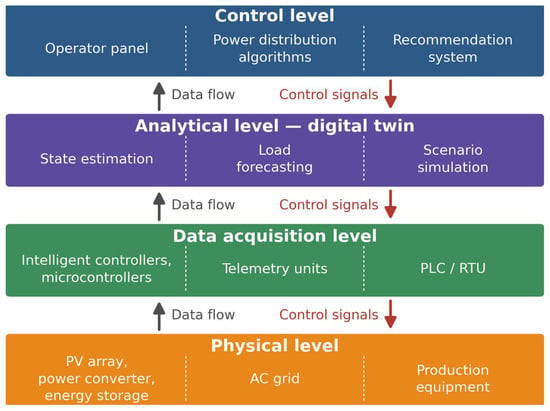
The system is implemented using a multi-level architecture, the general structure of which is shown in Figure 1.
Figure 1.
Multi-level architecture of the power supply system for bakery production based on photovoltaic generation and a digital twin.
The physical level houses the PV modules, power converters, energy storage devices, the electric drives of the technological equipment, oven installations, and sensors for temperature, current, voltage, power, illumination, and equipment condition. This level is responsible for energy generation, conversion, and consumption, as well as for collecting the initial data on the operating state of the facility.
The data acquisition level focuses on receiving, transmitting, and pre-processing the telemetry information. It consists of smart controllers, microcontrollers, PLC/RTU devices, telemetry units, and communication gateways that provide the interconnection between the real equipment and the digital environment. Its main task is to form a reliable data stream for subsequent analytical processing.
The analytical level (digital twin) is where the actual metrics are synchronized with the virtual model of the facility. It evaluates the current state of the system, forecasts the load, calculates the energy efficiency indicators, and simulates various operating scenarios. This represents the transition from basic observation to a deep understanding of the energy and technological processes.
The control level includes graphical control panels, energy consumption distribution algorithms, recommendations for the optimal selection of operating modes, and commands for managing the energy storage system and non-critical loads. Its goal is to make decisions that contribute to improving energy efficiency, minimizing peak loads, and ensuring the uninterrupted operation of the production line.
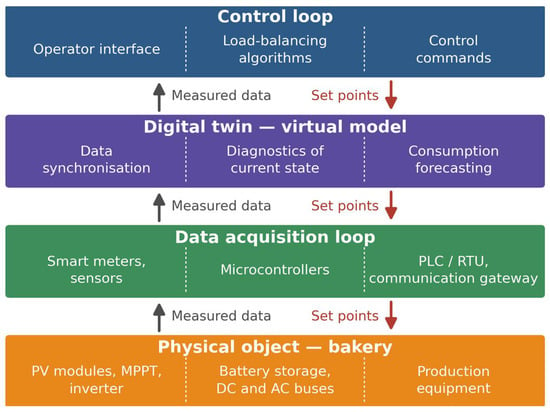
Figure 1 shows the multi-level structure of the power supply system of a bakery based on the application of photovoltaic generation and digital twin technology. The physical level consists of photovoltaic modules, a power converter, battery units, an AC network, and technological equipment—a set of elements that form the controlled object. The data acquisition level ensures the receipt of telemetry data from smart regulators, microcontrollers, and PLC/RTU modules. The analytical level implements a digital twin that synchronizes the data flows, diagnoses the current state of the system, and evaluates various energy operating modes. At the upper control level, there are operator interfaces, load balancing algorithms, and a recommendation system, ensuring the integration of the energy and production processes into a single control loop. The corresponding structure of the digital twin itself is presented in Figure 2.
Figure 2.
Architecture of the digital twin of the bakery, integrating the monitoring, analysis, and control loops in a single digital environment.
Figure 2 illustrates the architecture of the digital twin of the bakery, integrating the observation, analysis, and control functions within a unified virtual environment. The upper layer is responsible for control—where recommendations are generated, power distribution is carried out, and information exchange with the operator is organized. The analytical level ensures data consistency and manages the diagnostics of the current state of the system, the prediction of electricity consumption, and the simulation of various operating modes. The data acquisition level acts as an interface between the real object and its virtual copy, ensuring the flow of telemetry information from control devices, measuring instruments, and PLC/RTU modules. The lower part of the architecture represents the physical component—the photovoltaic system, the battery unit, the DC and AC power buses, and the production equipment of the bakery.
2.2. Photovoltaic Subsystem of the Bakery
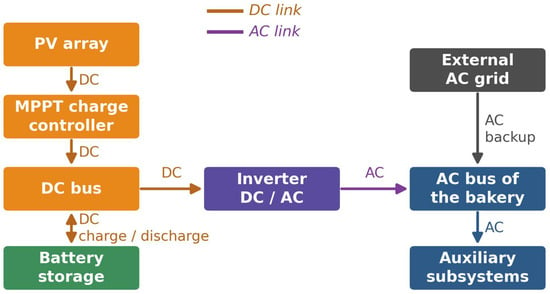
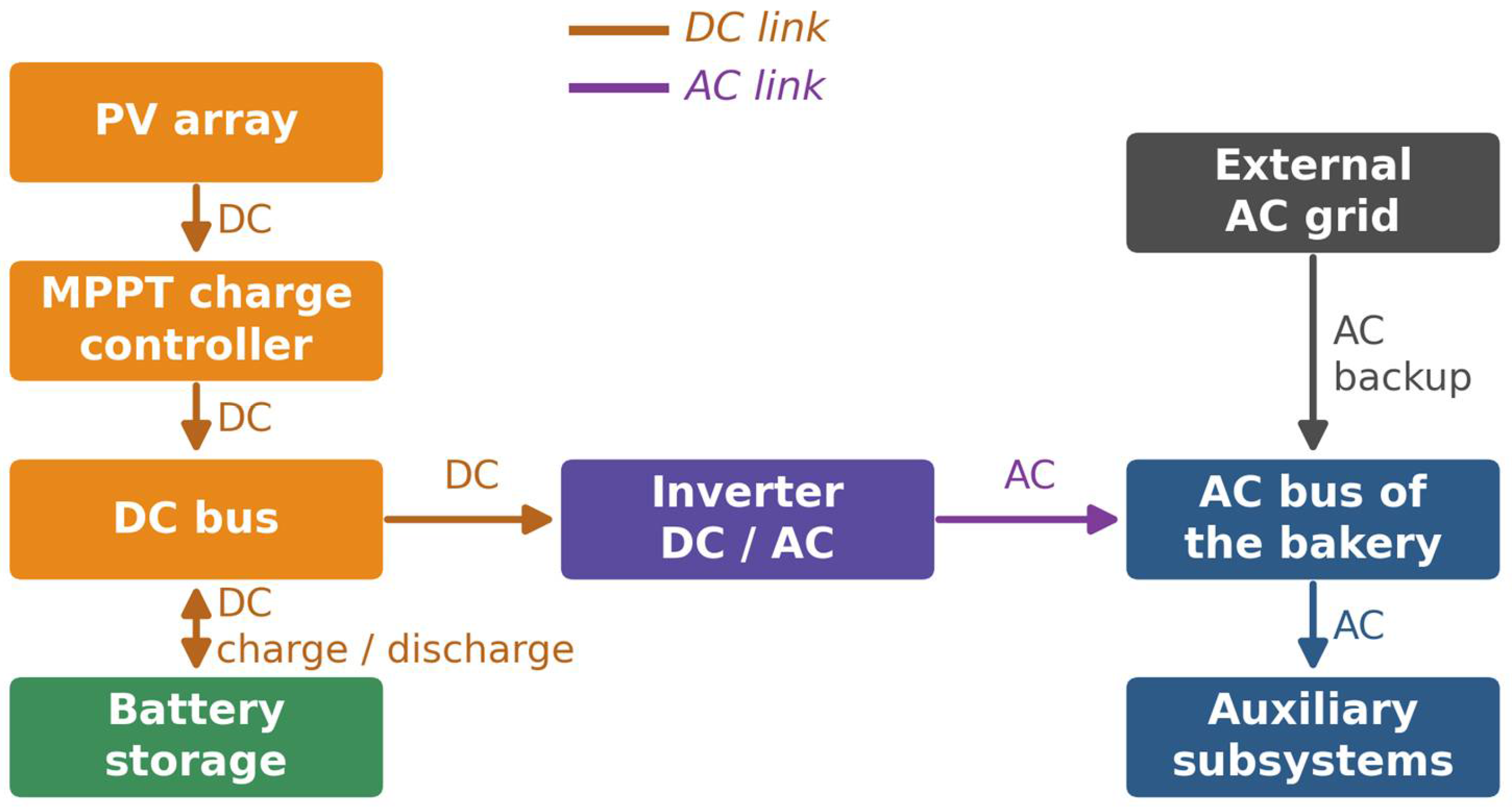
Within the physical level described above, the energy conversion chain of the bakery is formed by the photovoltaic subsystem, whose structure is shown in Figure 3.
Figure 3.
Block diagram of the photovoltaic subsystem of bakery production.
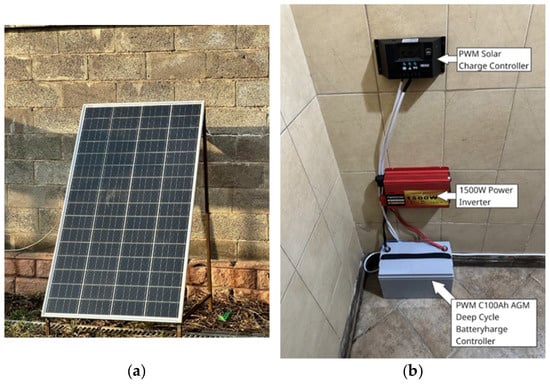
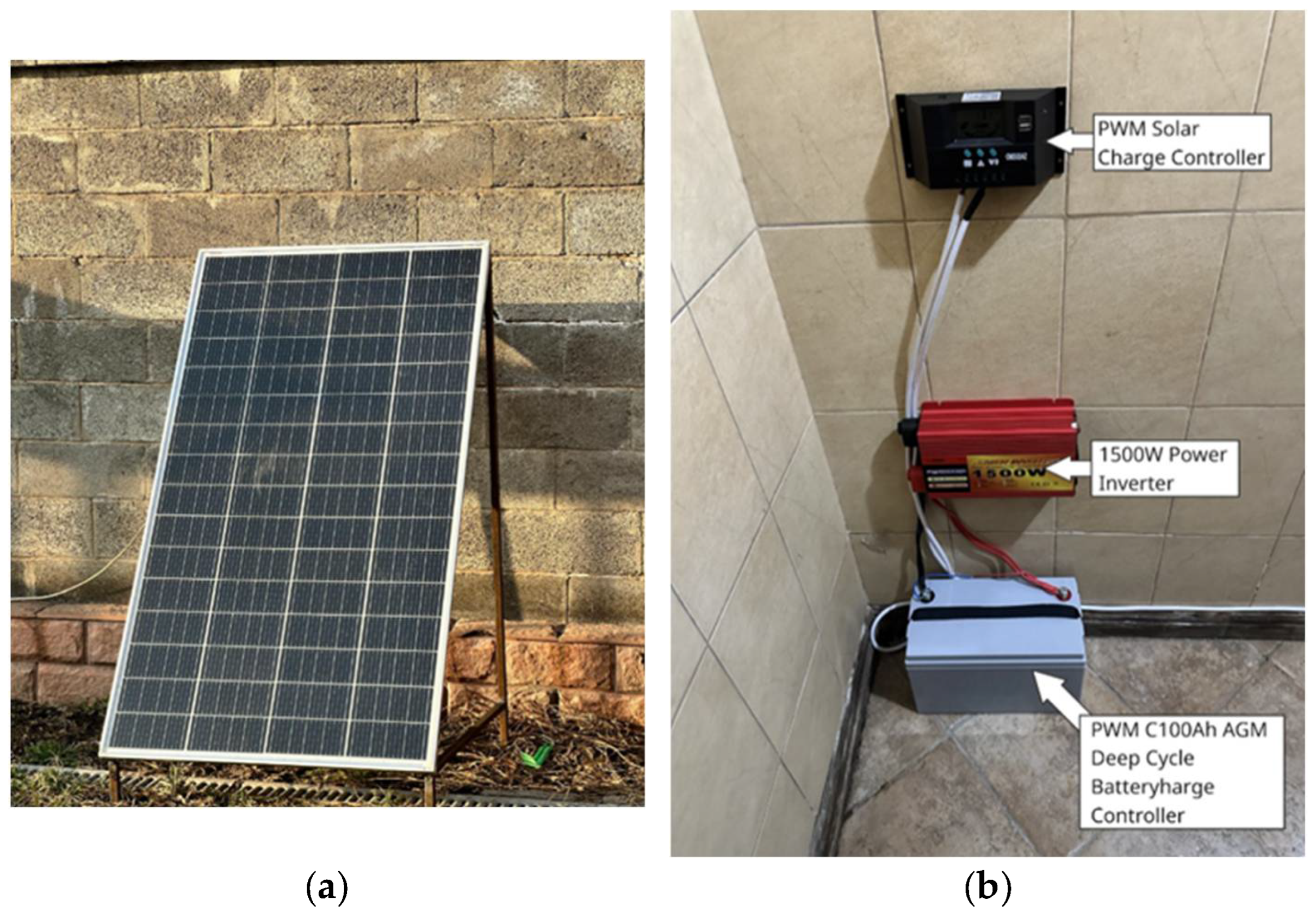
Figure 3 shows the block diagram of the photovoltaic subsystem included in the layout of the bakery workshop. It comprises the solar generation field, a maximum power point tracking (MPPT) charge controller, an inverter, an energy storage device, the DC bus, and the AC bus that feeds the load characteristic of a bakery. Such a structure allows solar radiation to be converted into electrical energy, the optimal operating conditions of the modules to be maintained, and the excess generated electricity to be stored. It also ensures the operability of the auxiliary equipment. The presented diagram demonstrates the possibility of using a photovoltaic installation as an element of a hybrid energy system, which helps to increase the overall energy efficiency and reliability of the enterprise. The physical implementation of this subsystem is shown in Figure 4.
Figure 4.
Low-power photovoltaic installation supplying the auxiliary subsystems of a bakery: (a) photovoltaic panel; (b) power and storage unit comprising the charge controller, the inverter, and the battery.
Figure 4 shows the low-capacity stand-alone photovoltaic installation designed to provide electricity to the auxiliary and measurement-information systems of bread production. Given its design and energy parameters, it is not capable of functioning as the main power source of the bakery—it consists of a single solar module, a PWM-type charge controller, a 1500 W inverter, and a battery of limited capacity. Such a configuration belongs to the category of low-performance stand-alone or backup photovoltaic systems focused on operating with minimal consumers. In practice, such an installation can be used to supply lighting fixtures, telemetry units, sensors, communication devices, local PLCs, and elements of the digital twin. However, its power is too low to run highly energy-consuming units such as dough-mixing equipment, dough retarder proofers, ovens, cooling systems, and packaging lines. Thus, this system represents an experimental auxiliary PV node within the digital energy infrastructure of the bakery, supporting the functioning of the intelligent, measuring, and control subsystems.
2.3. Mathematical Description of the Energy Balance
The operation of the PV subsystem within the digital twin is described by a set of relationships that link the generated power, the auxiliary load, and the state of the battery storage. The instantaneous output power of the PV array is determined by the incident solar irradiance and by the cell temperature [5,6]:
where PPV(t) is the output power of the PV array, W; ηPV is the conversion efficiency of the module under reference conditions; A is the total module area, m2; G(t) is the incident solar irradiance, W/m2; β is the temperature coefficient of power, 1/°C; Tc(t) is the cell temperature, °C; and Tref is the reference cell temperature, equal to 25 °C.
PPV(t) = ηPV A G(t) [1 − β (Tc(t) − Tref)]
At every instant, the auxiliary load of the bakery is covered by three sources—the PV array, the battery storage, and the external grid—so that the power balance of the supply node is written as
where Pbat(t) > 0 corresponds to the discharge of the battery and Pbat(t) < 0 to its charge. Pgrid(t) is the power drawn from the external grid, W, and Pload(t) is the power consumed by the auxiliary subsystems, W.
PPV(t) + Pbat(t) + Pgrid(t) = Pload(t)
The state of charge of the battery is updated over the sampling interval Δt according to
where SOC is the state of charge of the battery, %; Pch and Pdis are the charging and discharging powers, W; ηch and ηdis are the corresponding charge and discharge efficiencies; and Ebat is the rated energy capacity of the battery, W·h.
The degree to which in-house solar generation covers the auxiliary demand over the observation period is estimated by the solar self-sufficiency ratio
where EPV(t) and Eload(t) are the hourly energy supplied by the PV array and the hourly energy consumed by the auxiliary subsystems, W·h. Relations (1)–(4) form the computational core of the analytical level of the digital twin and are used in Section 3 to evaluate the daily energy balance of the installation.
3. Results and Discussion
Based on the research conducted, a structural–functional model of bakery production with an integrated photovoltaic system and a digital twin has been developed, uniting the energy and technological processes into a single monitoring and control loop. It has been shown that the implemented architecture ensures the interconnection between the physical level of energy generation and consumption, the data acquisition level, the analytical module of the digital twin, and the control decision-making level, which creates a basis for the comprehensive management of the operation of the bakery.
The study of the structure of the system demonstrated that the use of a photovoltaic installation within a bakery workshop is most expedient in the central part of the working day, when solar generation can be used to supply the auxiliary equipment—electric drives, automation systems, ventilation units, lighting, telemetry devices, and other low-load nodes. The presence of a battery storage unit allows the fluctuations of the generated power to be partially compensated and temporary supply interruptions to be eliminated, which improves the reliability of the energy supply and reduces the dependence on external grid sources. The composition of the installation under consideration is summarized in Table 1.
Table 1.
Composition and functional purpose of the low-power photovoltaic installation used to supply the auxiliary subsystems of the bakery; items (a) and (b) correspond to the panels of Figure 4.
Table 1 shows that the low-power photovoltaic installation under consideration includes two main functional blocks: a photovoltaic module and a power and storage unit. The first provides the generation of electrical energy by converting solar radiation, while the second performs the functions of energy storage, stabilization, and conversion for the subsequent supply of the auxiliary subsystems of the bakery. The measured operating data of this installation over a working day are given in Table 2.
Table 2.
Initial data of the low-power PV system supplying the auxiliary subsystems of the bakery.
Table 2 presents the initial data used to construct Figure 5, Figure 6, Figure 7, Figure 8, Figure 9, Figure 10, Figure 11 and Figure 12, which characterize the operation of the low-power photovoltaic system as part of the auxiliary subsystems of the bakery. It provides, by time interval, the values of the PV panel power, the load of the auxiliary consumers, the battery state of charge, and the distribution of the supplied energy among the photovoltaic source, the battery, and the external grid. This form of data presentation allows a comprehensive assessment of the daily generation profile, the storage and consumption modes, and the degree of load coverage by in-house solar generation.
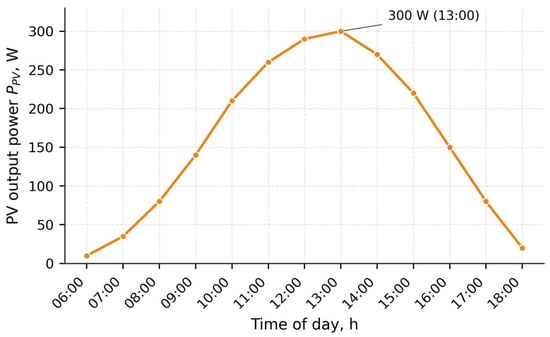
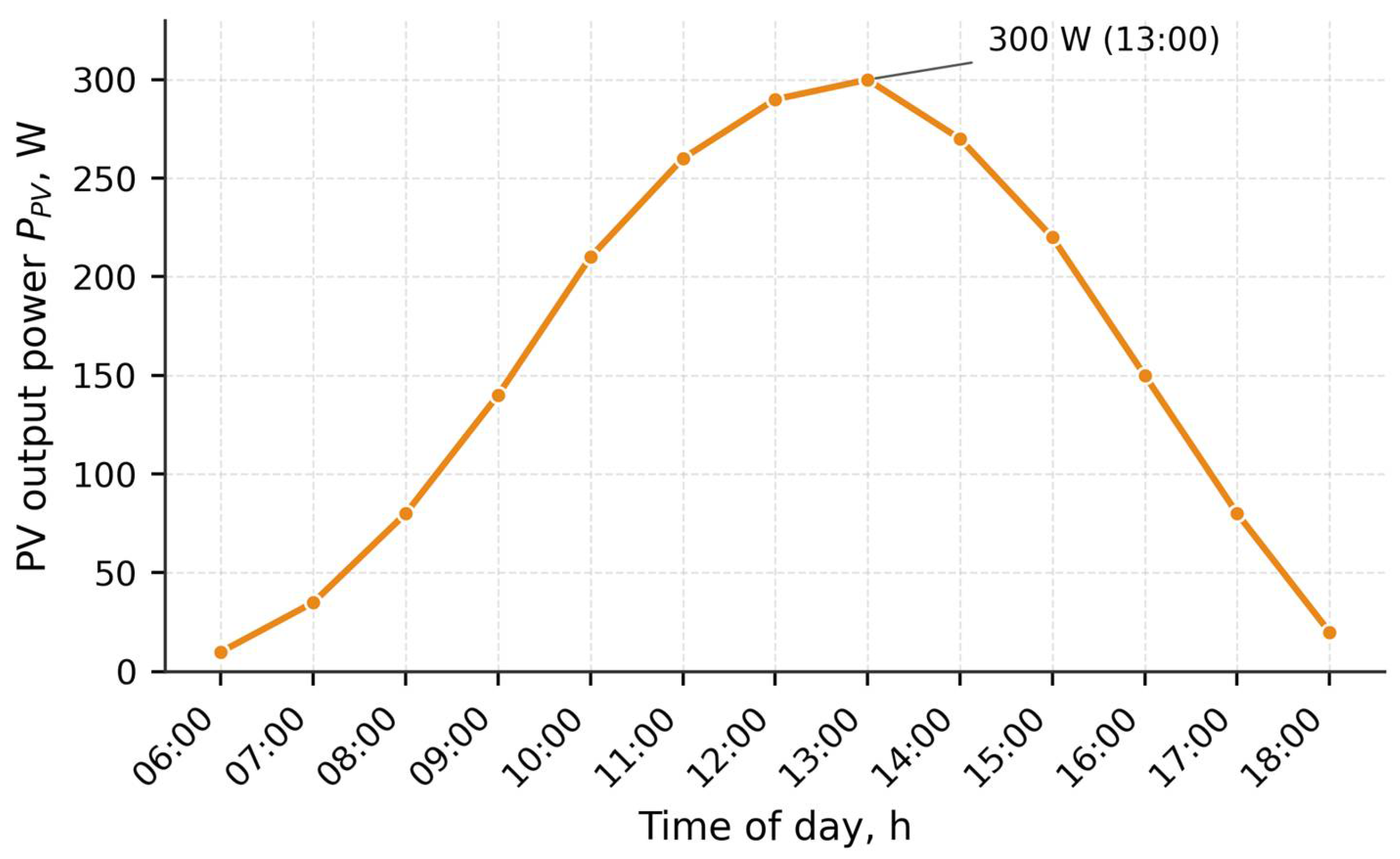
Figure 5.
Daily variation of the output power of the photovoltaic panel.
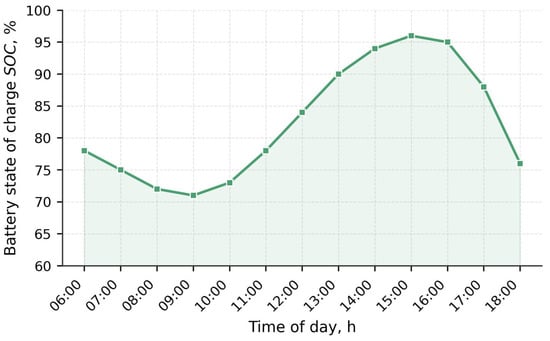
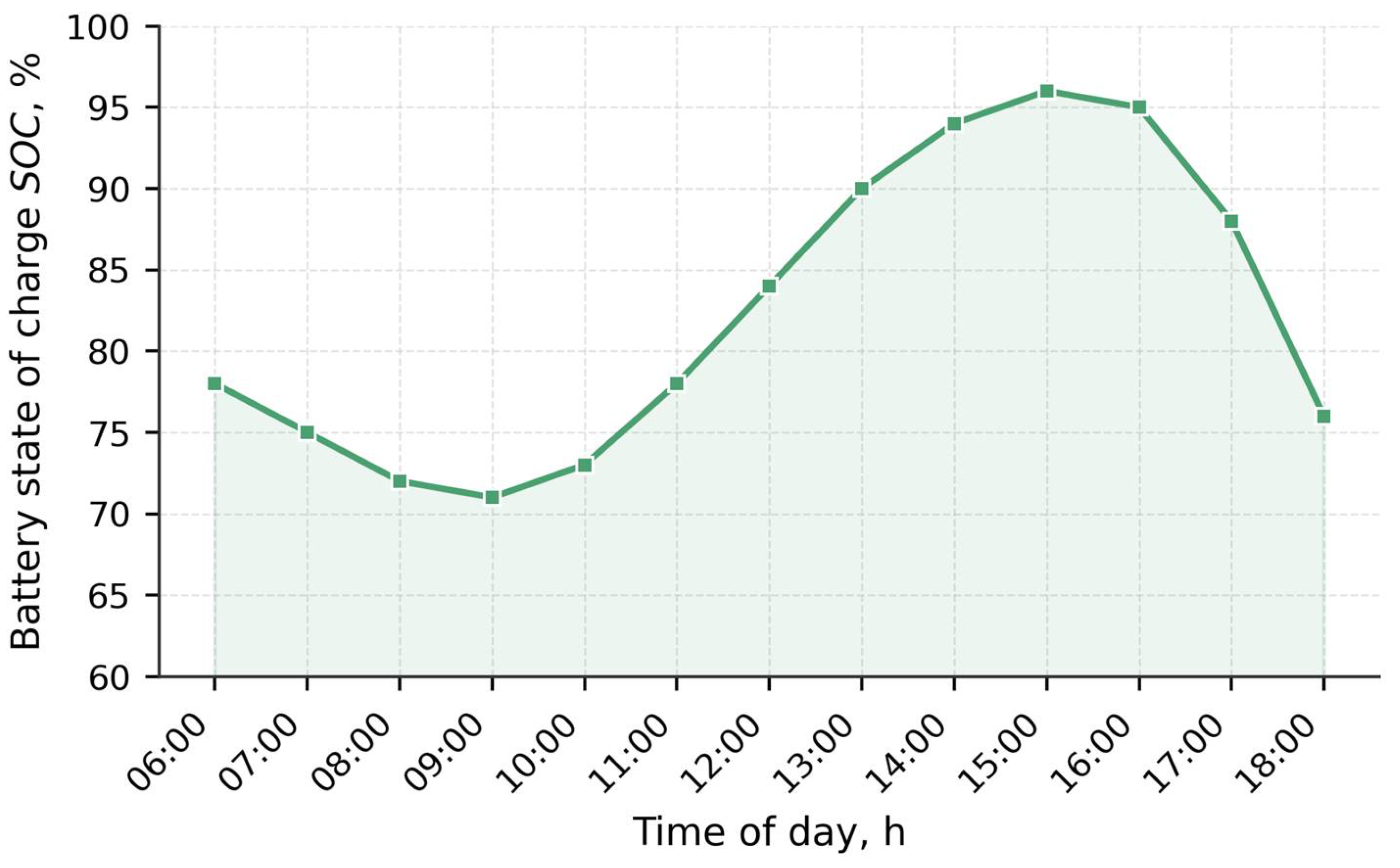
Figure 6.
Daily variation of the state of charge of the battery.
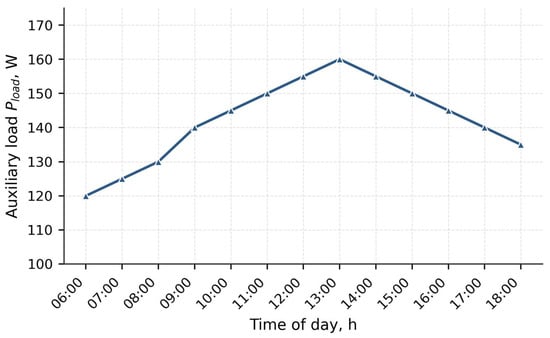
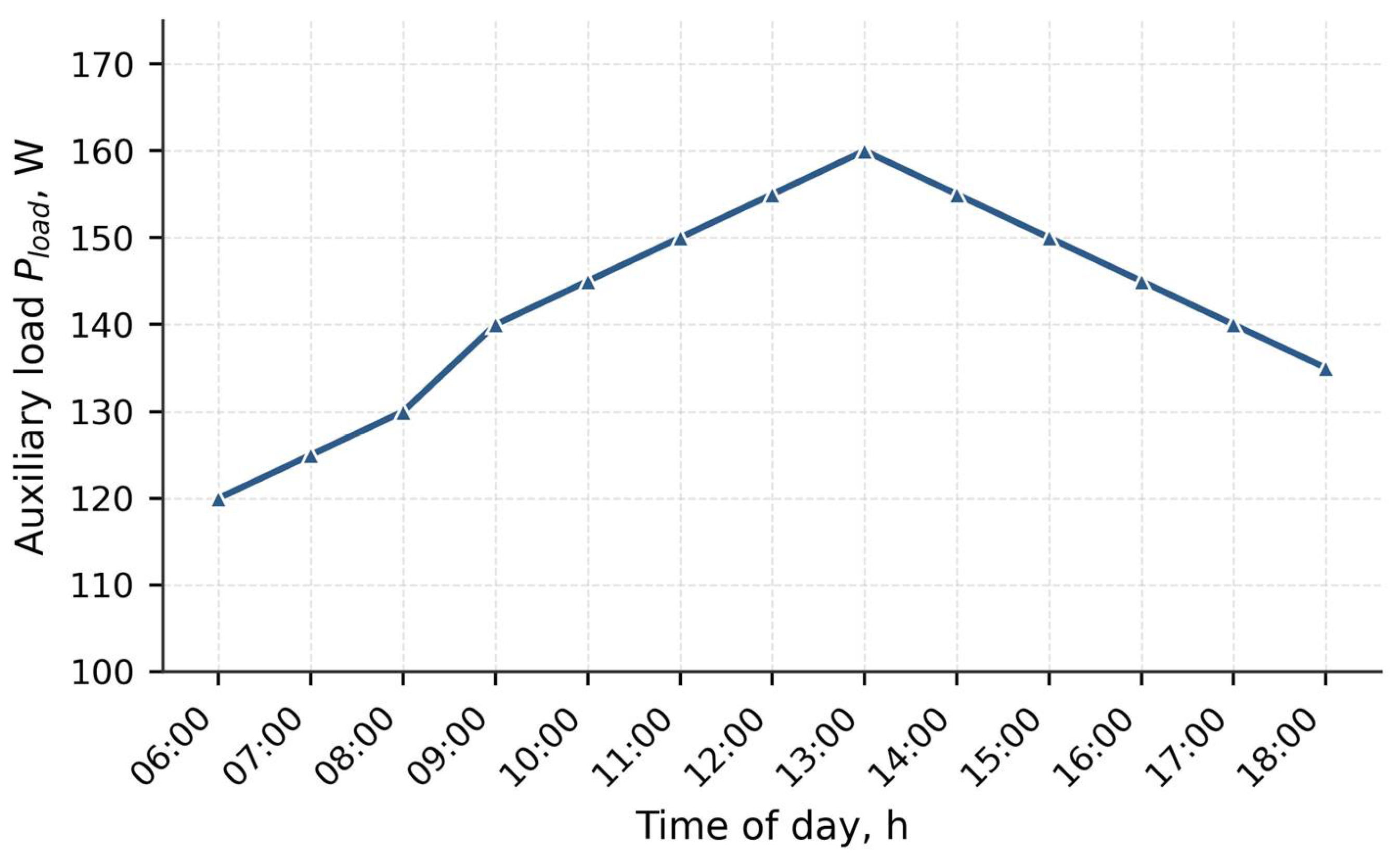
Figure 7.
Daily variation of the load of the auxiliary subsystems of the bakery.
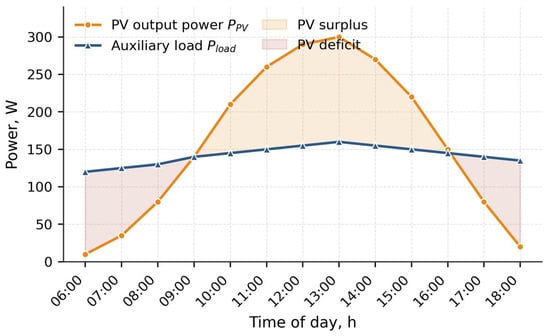
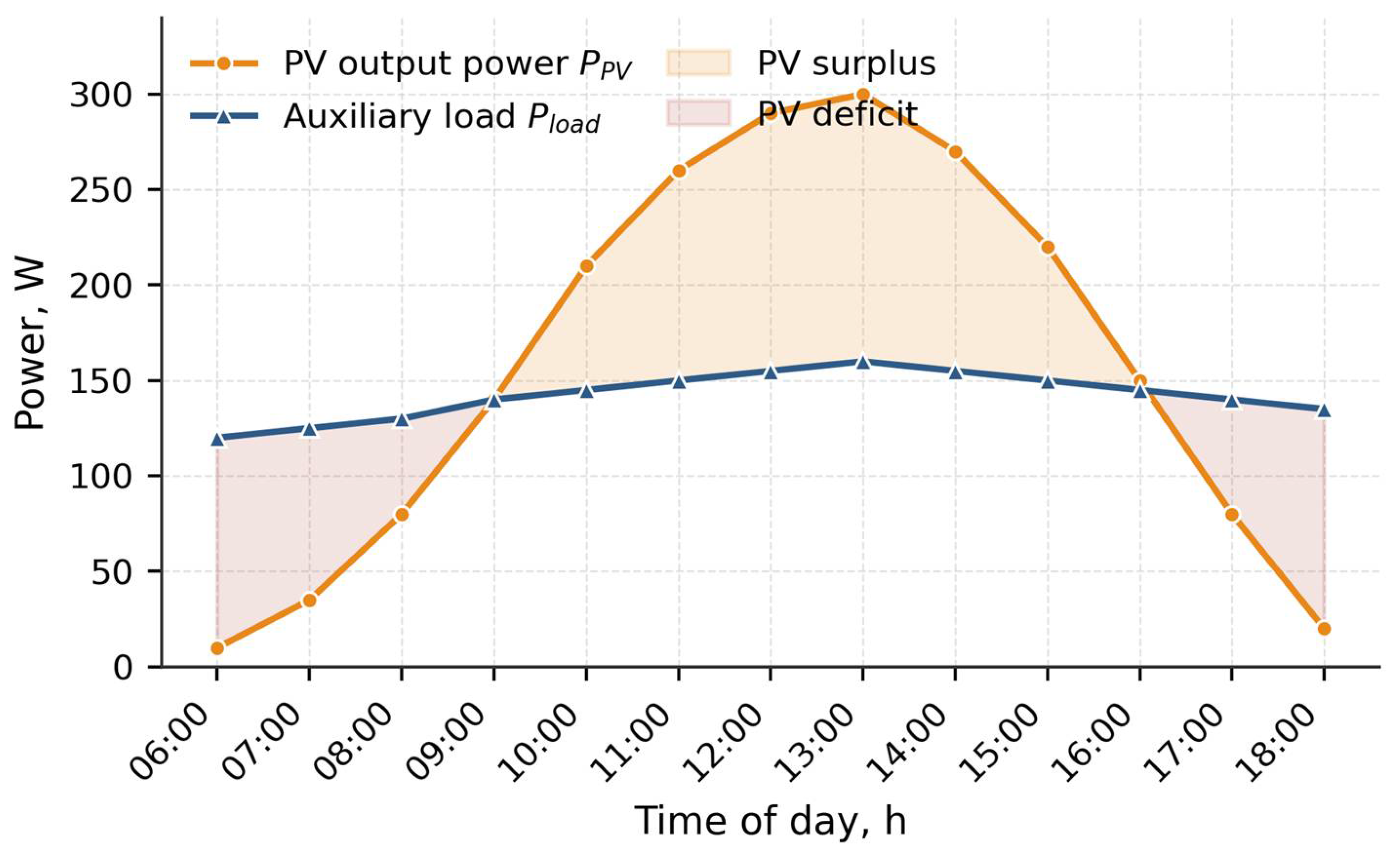
Figure 8.
Comparison of the photovoltaic output power and the load of the auxiliary subsystems of the bakery during the day.
Figure 9.
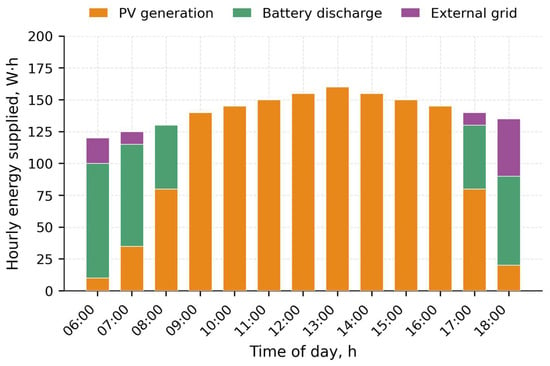
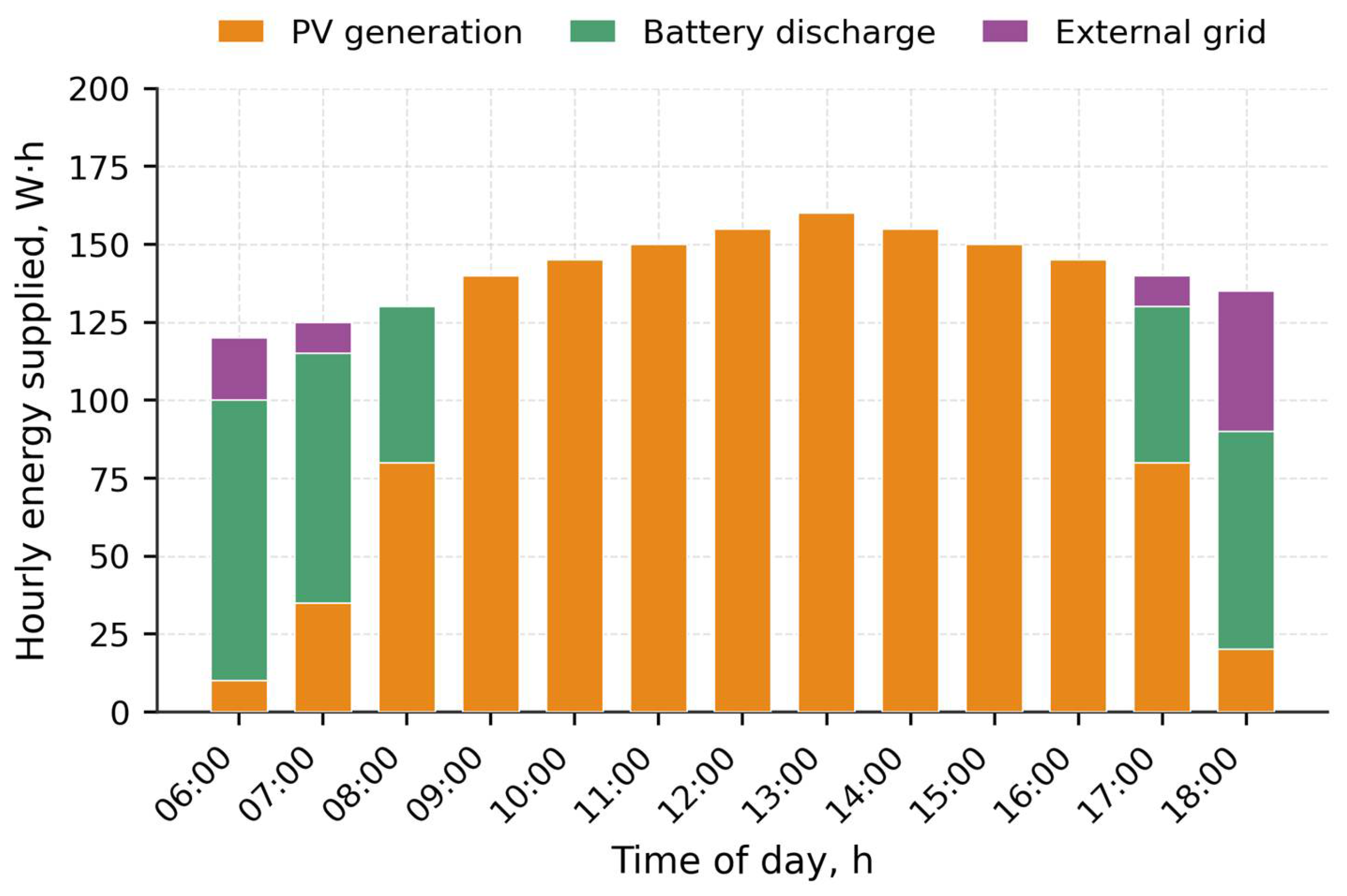
Hourly structure of the energy supplied to the auxiliary subsystems by the photovoltaic array, the battery storage, and the external grid.
Figure 10.
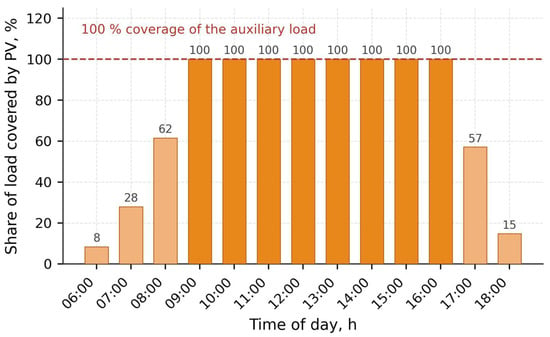
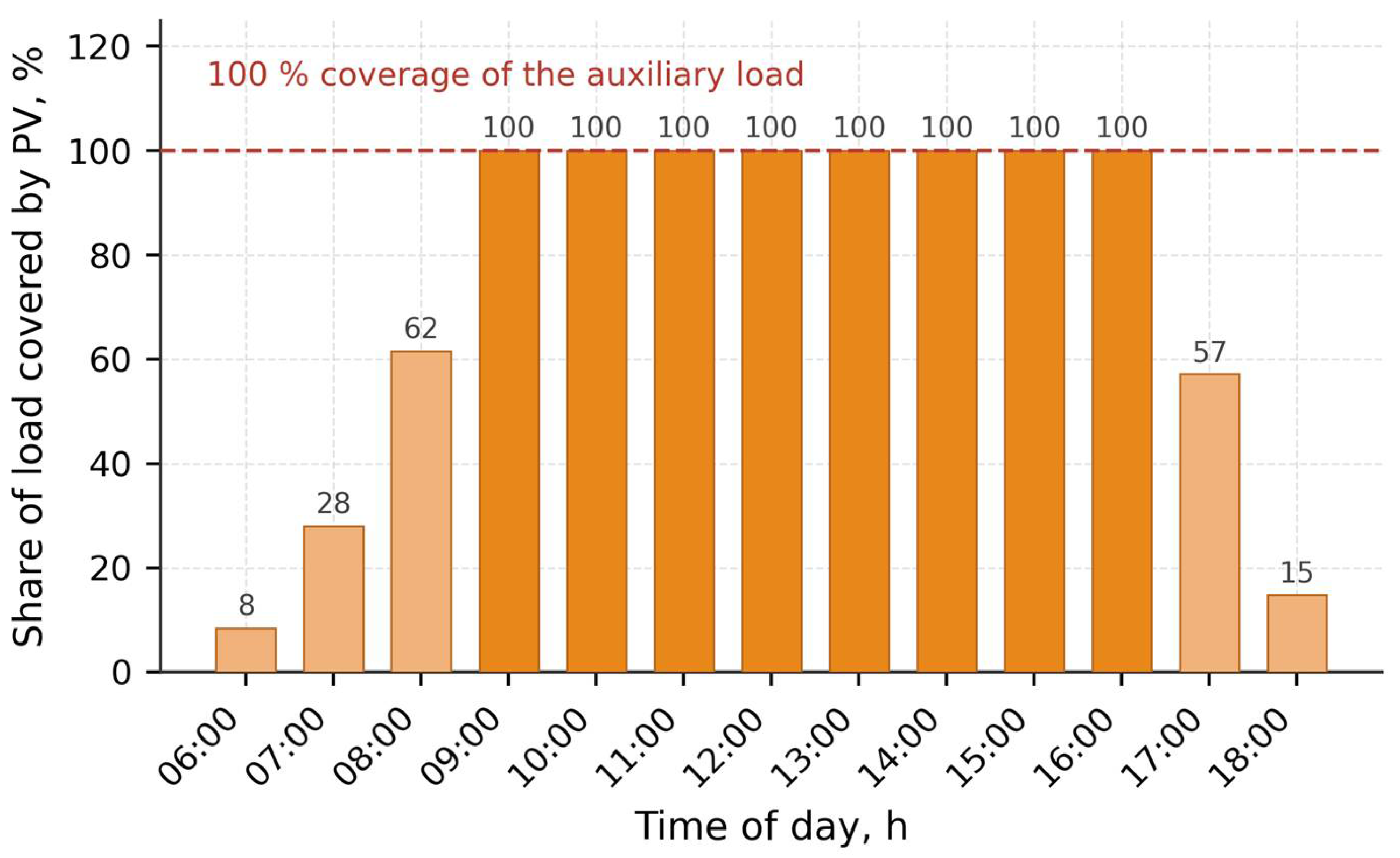
Hourly share of the load of the auxiliary subsystems covered by photovoltaic generation.
Figure 11.
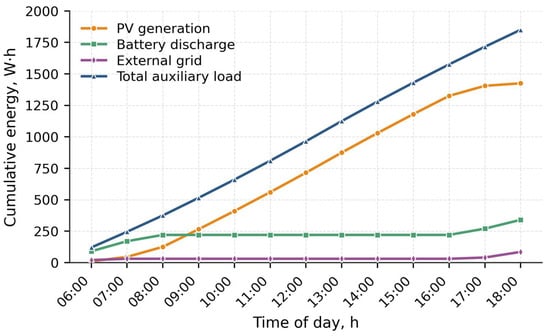
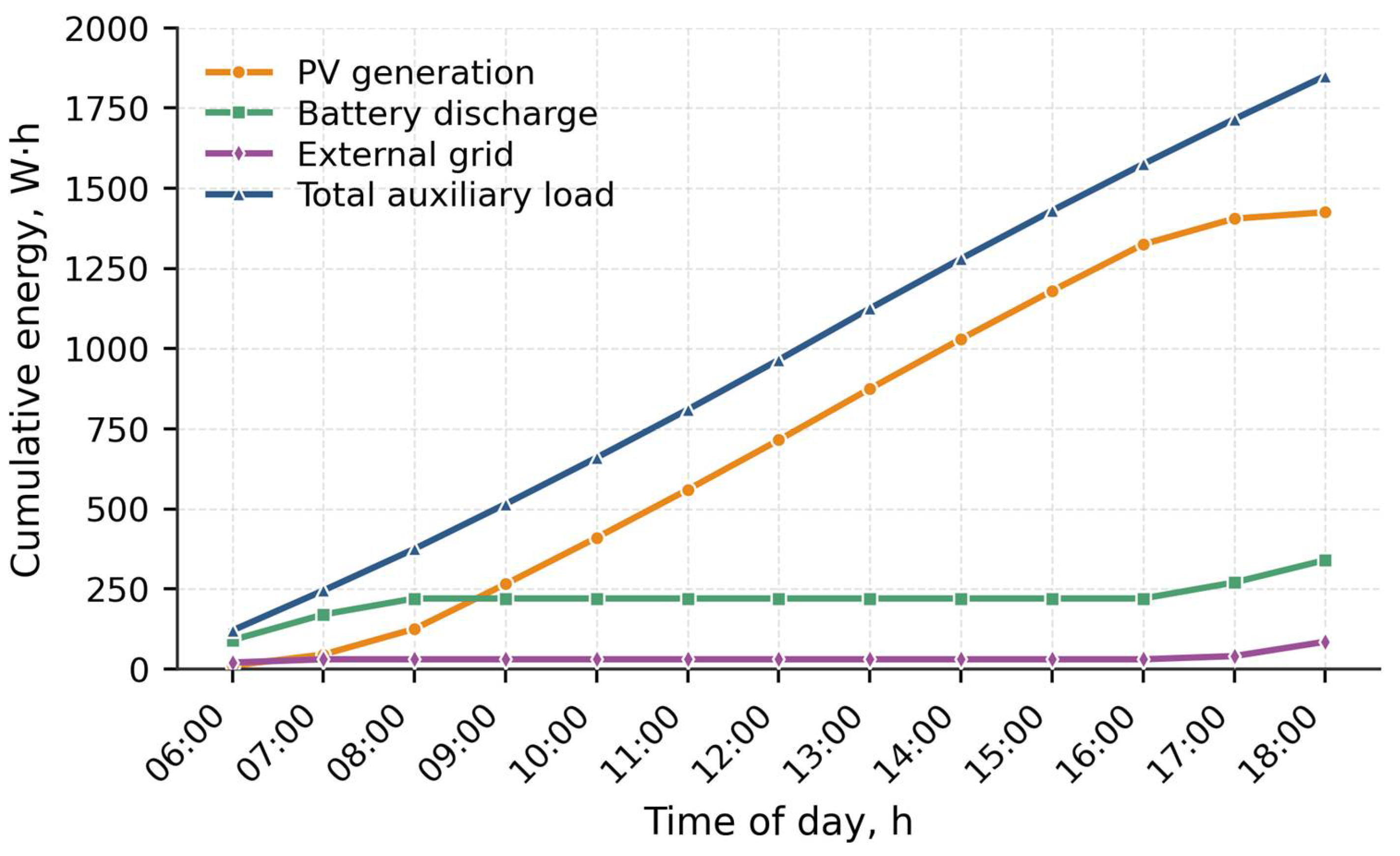
Cumulative energy supplied by each source and cumulative demand of the auxiliary subsystems during the working day.
Figure 12.
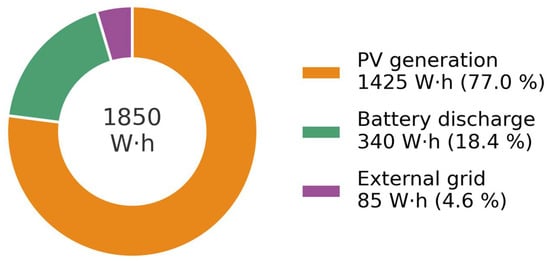
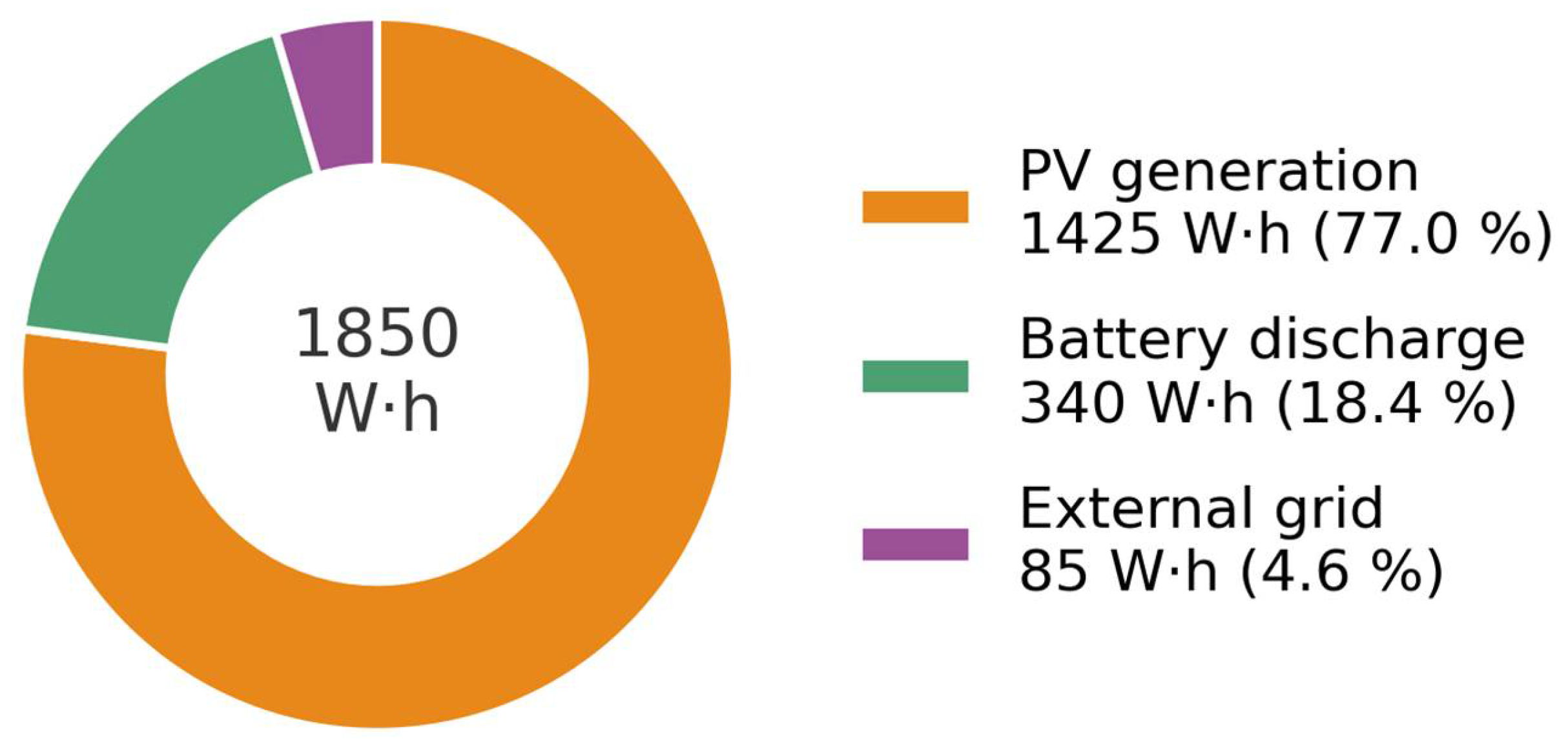
Structure of the daily energy supply of the auxiliary subsystems of the bakery.
Figure 5 shows the daily variation of the output power of the photovoltaic panel. The generated power gradually increases from approximately 10 W at 06:00 to a maximum of about 300 W at 13:00, after which it smoothly decreases to approximately 20 W by 18:00. The shape of the curve corresponds to a typical daily profile of solar generation, in which the highest output is observed around noon. The obtained results show that the photovoltaic subsystem operates most effectively in the central part of the daylight hours, when it is most capable of covering the load of the auxiliary subsystems of the bakery.
Figure 6 presents the variation of the battery state of charge during the day. In the morning hours, a decrease in the state of charge from approximately 78% to 71–72% is observed, which is associated with the energy consumption of the auxiliary subsystems while solar generation is still insufficient. From the late morning onwards, the charge level gradually increases and reaches a maximum of about 95–96% in the interval 15:00–16:00, following the period of maximum photovoltaic output. After 16:00, a repeated decrease in the state of charge to approximately 76% by 18:00 is recorded, which indicates the transition to the consumption of stored energy as the output of the PV system decreases.
Figure 7 shows the variation in the load of the auxiliary subsystems of the bakery during the day. In the morning hours, the power demand gradually increases from 120 W at 06:00 to a maximum of 160 W at 13:00, which is associated with the activation of lighting, sensors, controllers, telemetry modules, and other low-power consumers. After the peak value is reached, a smooth decrease in the load is observed: to 150 W at 15:00, 140 W at 17:00, and 135 W by 18:00. Such a profile indicates an uneven characteristic of the energy consumption of the auxiliary subsystems and confirms the feasibility of supplying them from a low-power photovoltaic installation in combination with a battery storage unit.
Figure 8 presents a comparison of the photovoltaic output power and the load of the auxiliary subsystems during the day. In the morning hours, from 06:00 to 08:00, the load exceeds the output of the PV system: at 06:00, the generated power is about 10 W against a load of 120 W, and at 08:00, it is about 80 W against a load of 130 W. From approximately 09:00, the photovoltaic generation becomes comparable with the load and then significantly exceeds it, reaching a maximum of about 300 W at 13:00 against a load of 160 W. After 16:00, the PV panel power decreases, and by 17:00–18:00, it again falls below the load level, which indicates the need to use the battery storage unit or the external grid. Thus, the graph shows that, in the central part of the day, the photovoltaic system is capable of fully covering the needs of the auxiliary subsystems of the bakery, whereas an additional energy source is required in the morning and evening hours.
Figure 9 shows the hourly structure of the energy supplied to the auxiliary subsystems, decomposed into the contributions of the photovoltaic array, the battery storage, and the external grid in accordance with Equation (2). Between 09:00 and 16:00, the entire hourly demand, from 140 to 160 W·h, is covered by photovoltaic generation alone, and the battery and grid contributions are zero. The battery makes its largest contribution at 06:00 and 07:00, supplying 90 and 80 W·h, respectively, and again in the evening, supplying 50 W·h at 17:00 and 70 W·h at 18:00. The external grid is used only as a supplementary source at the boundaries of the daylight period, with its maximum hourly contribution reaching 45 W·h at 18:00. This distribution confirms that the grid performs a backup function rather than a primary one.
Figure 10 presents the hourly share of the auxiliary load covered by photovoltaic generation. The coverage increases from 8% at 06:00 to 28% at 07:00 and 62% at 08:00, reaches 100% over the interval 09:00–16:00, and then decreases to 57% at 17:00 and 15% at 18:00. The continuous eight-hour interval of complete coverage confirms the conclusion drawn from Figure 8 and defines the time window within which the auxiliary subsystems of the bakery can be operated without drawing energy from the storage unit or from the external grid.
Figure 11 shows the accumulation of the supplied energy over the working day. The cumulative curve of photovoltaic generation rises steeply between 09:00 and 16:00 and reaches 1425 W·h by the end of the observation period, whereas the cumulative demand of the auxiliary subsystems amounts to 1850 W·h. The cumulative curves of the battery and of the external grid remain flat throughout the central part of the day and increase only at its boundaries, reaching final values of 340 W·h and 85 W·h, respectively. The sum of the three source curves coincides with the demand curve at every point, which verifies the consistency of the energy balance expressed by Equation (2).
Figure 12 summarizes the structure of the daily energy supply of the auxiliary subsystems. Of the total demand of 1850 W·h, the photovoltaic array supplies 1425 W·h, the battery storage supplies 340 W·h, and the external grid supplies 85 W·h. Substituting these values into Equation (4) gives a solar self-sufficiency ratio of 77.0%, while the battery covers 18.4% and the external grid only 4.6% of the daily demand. Since the energy delivered by the battery is itself accumulated from the surplus of the photovoltaic generation during the midday hours, the share of the daily auxiliary demand ultimately met from solar energy reaches 95.4%, and the dependence of the auxiliary infrastructure on the external grid is reduced to a residual level. This result quantitatively confirms the feasibility of supplying the measurement, telemetry, and control subsystems of a bakery from a low-power stand-alone photovoltaic installation managed through a digital twin.
4. Conclusions
This study demonstrated that it is expedient to integrate a photovoltaic subsystem into the energy network of bakery production in order to supply the auxiliary and measurement-information nodes. It was shown that low-performance stand-alone PV systems are not capable of supplying powerful technological installations, but they can reliably supply sensors, telemetry units, local controllers, lighting elements, and the components of the digital twin.
The analysis of the daily operating schedules confirmed the maximum efficiency of solar generation in the central part of the daylight hours: over the interval of 09:00–16:00, the photovoltaic array fully covers the auxiliary load, and over the working day, it supplies 1425 W·h out of a total demand of 1850 W·h, which corresponds to a solar self-sufficiency ratio of 77.0%. The morning and evening periods are characterized by a stable power supply owing to the operation of the battery storage unit, which contributes a further 18.4%, and, if necessary, to a connection to the external grid, whose share does not exceed 4.6%. These results indicate the feasibility of a hybrid operating mode even within small-scale stand-alone solutions.
A key outcome is the substantiation of the function of the digital twin as the central element for managing the interaction between energy generation, storage, and consumption. It synchronizes the information on the current state of the PV module, the load level, and the energy reserves, performs a prompt calculation of the energy balance according to Equations (1)–(4), and creates a foundation for implementing the adaptive management of the energy modes. The proposed approach represents an effective basis for the step-by-step digitalization and the improvement of the energy efficiency of bakery facilities. Further work will be aimed at extending the digital twin to the main technological equipment of the bakery and at validating the model on a longer measurement series covering seasonal variations of insolation.
Author Contributions
Conceptualization, G.A. and M.K.; methodology, B.A.; software, A.R.; validation, M.K., A.R., and A.A.; formal analysis, G.A.; investigation, B.A.; resources, A.A.; data curation, G.A.; writing—original draft preparation, M.K.; writing—review and editing, A.R.; visualization, M.K.; supervision, G.A.; project administration, B.A.; funding acquisition, M.K. All authors have read and agreed to the published version of the manuscript.
Funding
This research was funded by the Ministry of Science and Higher Education of the Republic of Kazakhstan under the project “Development of a digital twin of a food processing enterprise using artificial intelligence and IIoT technologies” (2024–2026), grant number BR24992975. The APC was funded by the same grant.
Institutional Review Board Statement
Not applicable.
Informed Consent Statement
Not applicable.
Data Availability Statement
The raw data supporting the conclusions of this article will be made available by the authors on request.
Acknowledgments
During the preparation of this manuscript, the authors used a generative AI tool to check spelling, English correctness, and formatting. The authors have reviewed and edited the output and take full responsibility for the content of this publication.
Conflicts of Interest
The authors declare no conflicts of interest. The funders had no role in the design of the study; in the collection, analysis, or interpretation of data; in the writing of the manuscript; or in the decision to publish the results.
References
- Briceño-León, M.; Pazmiño-Quishpe, D.; Clairand, J.-M.; Escrivá-Escrivá, G. Energy Efficiency Measures in Bakeries toward Competitiveness and Sustainability—Case Studies in Quito, Ecuador. Sustainability 2021, 13, 5209. [Google Scholar] [CrossRef] [Scilit]
- Espinoza-Orias, N.; Stichnothe, H.; Azapagic, A. The carbon footprint of bread. Int. J. Life Cycle Assess. 2011, 16, 351–365. [Google Scholar] [CrossRef] [Scilit]
- Moresi, M.; Nionelli, L.; Cimini, A. Packaged Bread and Its Carbon Footprint: Balancing Convenience and Waste. Sustainability 2025, 17, 9957. [Google Scholar] [CrossRef] [Scilit]
- Faraldo, F.; Byrne, P. A Review of Energy-Efficient Technologies and Decarbonating Solutions for Process Heat in the Food Industry. Energies 2024, 17, 3051. [Google Scholar] [CrossRef] [Scilit]
- Olayiwola, O.; Cali, U.; Elsden, M.; Yadav, P. Enhanced Solar Photovoltaic System Management and Integration: The Digital Twin Concept. Solar 2025, 5, 7. [Google Scholar] [CrossRef] [Scilit]
- Xiang, C.; Li, B.; Shi, P.; Yang, T.; Han, B. Short-Term Photovoltaic Power Prediction Based on a Digital Twin Model. J. Mar. Sci. Eng. 2024, 12, 1219. [Google Scholar] [CrossRef] [Scilit]
- Yu, W.; Patros, P.; Young, B.; Klinac, E.; Walmsley, T.G. Energy digital twin technology for industrial energy management: Classification, challenges and future. Renew. Sustain. Energy Rev. 2022, 161, 112407. [Google Scholar] [CrossRef] [Scilit]
- Verboven, P.; Defraeye, T.; Datta, A.K.; Nicolai, B. Digital twins of food process operations: The next step for food process models? Curr. Opin. Food Sci. 2020, 35, 79–87. [Google Scholar] [CrossRef] [Scilit]
- Koulouris, A.; Misailidis, N.; Petrides, D. Applications of process and digital twin models for production simulation and scheduling in the manufacturing of food ingredients and products. Food Bioprod. Process. 2021, 126, 317–333. [Google Scholar] [CrossRef] [Scilit]
- Tancredi, G.P.C.; Bottani, E.; Vignali, G. Digital twin-enabled process control in the food industry: Proposal of a framework based on two case studies. Int. J. Prod. Res. 2024, 62, 4331–4348. [Google Scholar] [CrossRef] [Scilit]
- Kunelbayev, M.; Mansurova, M.; Tyulepberdinova, G.; Sarsembayeva, T.; Issabayeva, S. Comparison of the parameters of a flat solar collector with a tubular collector to ensure energy flexibility in smart buildings. Int. J. Innov. Res. Sci. Stud. 2024, 7, 240–250. [Google Scholar] [CrossRef] [Scilit]

Disclaimer/Publisher’s Note: The statements, opinions and data contained in all publications are solely those of the individual author(s) and contributor(s) and not of MDPI and/or the editor(s). MDPI and/or the editor(s) disclaim responsibility for any injury to people or property resulting from any ideas, methods, instructions or products referred to in the content. |
© 2026 by the authors. Licensee MDPI, Basel, Switzerland. This article is an open access article distributed under the terms and conditions of the Creative Commons Attribution (CC BY) license.