1. Introduction
Polymer composites are considered to be one of the most important materials used for high-performance applications and have recently replaced many conventional metal components due to their low weight, effective strength and the fact that manufacturing parts from them does not require complex technological processes. Thermosetting polymers, and in particular epoxy, vinylester and polyester resins, are essential materials in modern engineering due to their excellent thermal stability, chemical resistance and high cohesive strength. Due to their tightly crosslinked structure, they are widely used as matrices of composites intended for the aerospace, automotive and electronics industries. However, their inherent brittleness and low electrical conductivity limit their application in sectors requiring multifunctional characteristics, such as electromagnetic interference (EMI) shielding or structural monitoring. One of the main problems when working with thermosetting polymers is their recyclability. The most well-known recycling methods are thermal and mechanical recycling. In recent years, the issue of recycling thermoset plastics has been widely studied and, although it is still an unsolved problem, some technologies are suitable for large-scale recycling. Chemical recycling of thermoset materials can be successfully carried out considering different methods that break the 3D bonds between the polymer chains, facilitating the recovery of mono-oligomers and fillers in the case of composites [
1]. To reduce the weight of polymer composites and to increase their mechanical and performance properties, various fillers and reinforcing micro- and nano-sized particles are used.
Carbon nanotubes (CNTs) have good mechanical, electrical and thermal properties and therefore they are extremely suitable for use in reinforcing polymer composites [
2,
3]. To improve the functional properties of the composites, carbon fillers with different morphologies are integrated into the polymer matrix. Multi-walled carbon nanotubes (MWCNTs) are used because of their exceptional aspect ratio, which allows for the construction of conductive networks at minimal concentrations. Their incorporation into polymer matrices significantly improves the conductivity, strength and elasticity of the resulting composites [
4,
5,
6,
7,
8,
9]. Amorphous carbon is a waste product generated during the production of pure hydrogen by the catalytic decomposition of methane [
10,
11,
12,
13,
14,
15]. Amorphous carbon, characterized by a disordered structure and a high content of both sp2 and sp3 bonds, offers an economical alternative for improving hardness and thermal resistance. Currently, waste amorphous carbon is mainly used in the processing and vulcanization of rubber compounds due to its average particle diameter and its morphology.
To further reduce the weight of polymer composites, various fillers are used, including cenospheres [
16,
17]. Cenospheres are waste products of electricity production from thermal power plants and are spherical hollow particles with an aluminosilicate shell, with sizes in the range of 5–500 µm [
18,
19,
20,
21]. Their integration turns the material into a syntactic foam with extremely low density. The combination of carbon particles and cenospheres in polymer matrix composites is of interest due to the synergistic effect: the cenospheres act as an “exclusion volume” that forces the carbon particles to concentrate in the narrow spaces between the spheres, optimizing charge and electron transfer.
The development of innovative polymer matrix composites with enhanced mechanical and performance characteristics is a current engineering topic. With the increasing need for protection against electromagnetic effects in modern combat systems, the development of lightweight, effective and technologically applicable radio-absorbing materials (RAMs) is becoming a strategic priority in the defense industry. Polymer composites modified with electrically conductive and/or magnetic fillers represent a promising direction in the development of electromagnetic shielding coatings intended for integration into military platforms (armored vehicles, drones, communication and electronic units, etc.).
The aim of this work is to investigate the mechanical properties of composites based on thermosetting polymers with embedded carbon particles and aluminosilicate microspheres. The objectives are to characterize the attenuation of a radio frequency signal during transmission and reflection from the developed composites and to evaluate the potential of these materials as coatings for radio frequency shielding and stealth applications.
2. Materials and Methods
In the present study, thermosetting (epoxy“LETOXIT” PR 227, polyester-“DISTITRON” 429 BSX25Q and vinylester-“DISTITRON” VE 100) resins, production of 5M s.r.o. company, Kunovice, Czech Republic with the appropriate hardeners, namely “LETOXIT” EM 315, “MEKR 50”, and “MEKR 50”, respectively, and the accelerator “MEKR” were used as matrices of the developed composites, and the manufacturer’s instructions were followed for the preparation of the resin systems [
22].
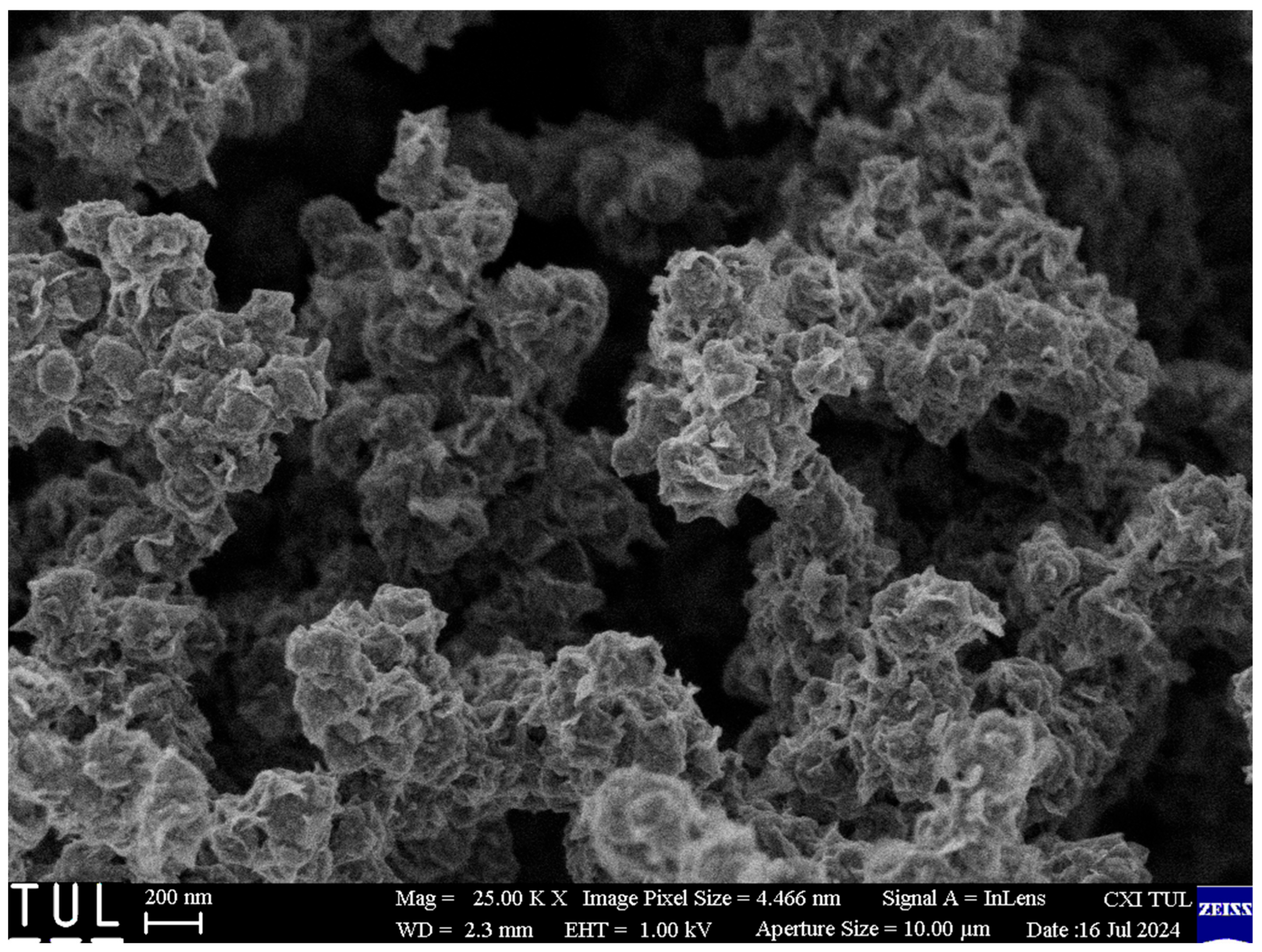
To obtain the composites, the following functional fillers were used: multi-walled carbon nanotubes (MWCNTs), waste amorphous carbon from the production of green hydrogen by plasma decomposition of methane in an amount of 1 wt% and 2 wt% of the polymer mass and cenospheres (hollow ceramic microspheres) with a constant concentration of 5 wt.%. The characteristics of the multi-walled carbon nanotubes used are as follows: length ≥ 2 µm, diameter 10–40 nm, number of walls 10–20, and specific surface area 55 m
2/g. The results of studies on the amorphous carbon used show that the carbon (C) content in its composition is 99.1 at%, while the oxygen (O
2) content is 0.9 at% (
Figure 1), and its structure is shown in
Figure 1 [
22].
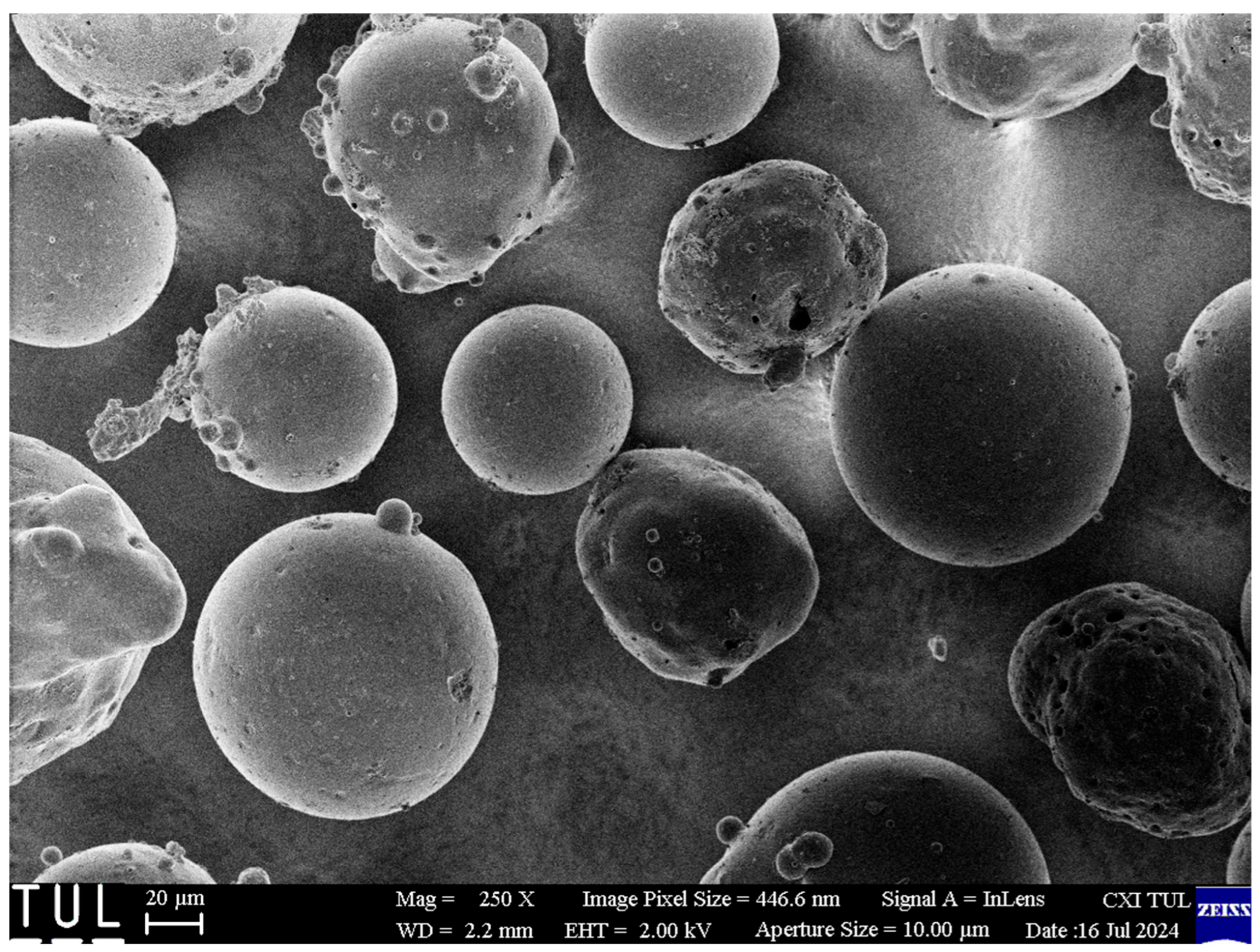
The reason for using cenospheres as a filler in the developed resin systems is their hollow microstructure, which not only implies a lightening of the matrix, but also potentially synergizes with the used carbon particles, confining them in intersphere spaces, facilitating the formation of conductive paths at lower concentrations of the used carbon particles. In all developed composites, a constant concentration of 5 wt.% microspheres with a density of 0.4 g/cm
3, sizes in the range of 50-250 µm, and a main fraction of 100 µm in size were used (
Figure 2).
The composites were obtained by mechanical dispersion, first adding carbon particles (1 wt% or 2 wt%) to the liquid resin; in order to ensure maximum homogeneous breaking of the larger agglomerates, intensive mechanical stirring was carried out. Then, the cenospheres (5 wt%) were added, which were integrated into the mixture by slow mechanical stirring, in order to preserve the integrity of their hollow structure and to avoid their cracking. After adding the appropriate catalyst, test specimens were cast (gravitational) from the resulting mixtures for mechanical testing and radio frequency attenuation. The preparation, casting and curing of the composites were carried out at room temperature (25 °C, according to the manufacturers’ instructions), with the test specimens based on epoxy resin undergoing secondary polymerization at the manufacturer’s prescribed temperature (55 °C) and process duration (12 h). The following composites were developed and tested:
Epoxy resin + 1 wt% amorphous carbon + 5 wt% cenospheres;
Epoxy resin + 1 wt% MWCNTs + 5 wt% cenospheres;
Epoxy resin + 2 wt% MWCNTs + 5 wt% cenospheres;
Vinyl ester resin + 1 wt% amorphous carbon + 5 wt% cenospheres;
Vinyl ester resin + 2 wt% amorphous carbon + 5 wt% cenospheres;
Vinyl ester resin + 1 wt% MWCNTs + 5 wt% cenospheres;
Polyester resin + 1 wt% amorphous carbon + 5 wt% cenospheres;
Polyester resin + 1 wt% MWCNTs + 5 wt% cenospheres.
The uniaxial tensile test was conducted using a Zwick Roell Z050 testing machine, and the hardness of the developed composites was measured using the Shore method (D-HSD scale) using an EQUOTIP hardness tester.
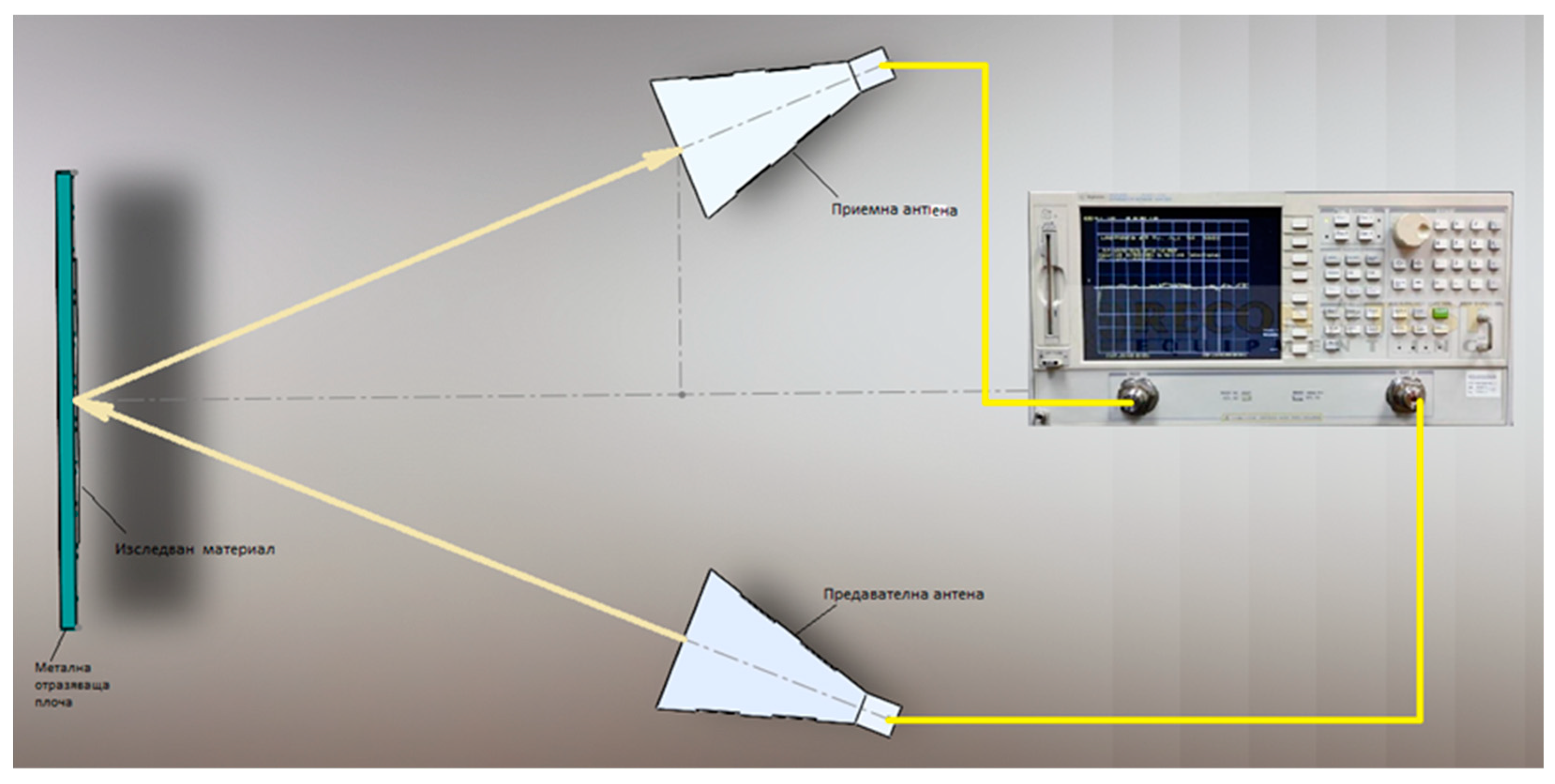
The electromagnetic attenuation study of the developed polymer composites was carried out using a Vector Network Analyzer (VNA), which was connected to transmitting and receiving antennas directed at a sample under study, mounted in front of a metal reflective substrate. The configuration allows for the measurement of reflected energy in the presence of the sample and a comparison with standard reflected energy from a metal substrate without a sample. The tested sample is mounted vertically between the antennas. The electromagnetic signal passes through or is reflected from it, with the receiving antenna registering the changes in the power (S21 parameters) in the X-band frequency range (9.3–9.4 GHz) (
Figure 3). The sample bodies used for the electromagnetic attenuation study have dimensions of 100 × 100 × 2 mm.
The measurement principle is as follows: a signal of known power is emitted by the transmitting antenna, and the receiving antenna registers the reflected power, which is compared with the reference value obtained when measuring from a clean metal substrate. The electromagnetic attenuation is calculated as the difference according to Formula (1):
The resulting value reflects the total signal loss in the material due to reflection, absorption and scattering.
3. Results
The results of the mechanical tests conducted on the epoxy resin-based composites reinforced with both types of carbon particles and cenospheres are shown in
Table 1.
The results obtained show that the combination of the used amounts of carbon particles and microspheres in the epoxy resin system does not positively affect the tensile strength of the composites. The use of MWCNTs1 wt% and cenospheres5 wt% leads to an increase of ≈6% in hardness and a decrease of ≈13% in tensile strength of the resulting composite compared to the base starting material. With an increase in the amount of MWCNTs2 wt%, while maintaining the amount of microspheres, a significant decrease in the tensile strength of the newly obtained material is observed; its hardness is higher compared to the pure resin, but is comparable to the value of the same indicator for the composite with 1 wt% MWCNTs integrated into it. When combining amorphous carbon (a/Carbon) in an amount of 1 wt% and cenospheres in an amount of 5 wt%, the highest hardness of the newly obtained materials was registered, which is ≈11% greater than the hardness of the base material. The tensile strength is reduced compared to the strength of the pure resin, but the values of this indicator are approximately the same as the strength of the composite with MWCNTs—1 wt% and 5 wt% microspheres.
Table 2 shows the results of the mechanical tests conducted on the composites developed based on polyester resin.
The use of MWCNTs1 wt% and a/Carbon1 wt% in combination with cenospheres in an amount of 5 wt% does not lead to a positive impact on the mechanical properties of the presented composites based on polyester resin “DISTITRON” 429 BSX25Q. Apparently, in this particular case, the combinations of particles used act as stress concentrators in the hard and brittle matrix, which leads to additional embrittlement of the polymer.
The results of the mechanical tests of the composites based on vinyl ester resin with integrated carbon particles and cenospheres are shown in
Table 3.
Unlike the studies with epoxy and polyester resins, in which the integrated carbon particles and microspheres had a positive effect only on the hardness (epoxy resin) or did not have a positive effect at all (polyester resin) on the mechanical properties, positive results were observed with vinylester resin. In the three developed composites with a vinylester resin matrix, an increase in tensile strength and relative elongation at break was recorded. The composites in which MWCNTs1 wt% and a/Carbon2 wt% in combination with cenospheres5 wt% were used have hardness values identical to those of pure vinylester resin. The combination of a/Carbon1 wt% and cenospheres5 wt% recorded the highest measured hardness from the studies of composites based on vinylester resin, this composite also has the most balanced mechanical properties (tensile strength, relative elongation, hardness).
The results of studies conducted on radio frequency attenuation in the X-band range (9.3–9.4 GHz) for the developed composites, which are based on epoxy, polyester, and vinylester resins with integrated carbon particles and cenospheres, are shown in
Table 4.
It was found that in composites based on the epoxy resin used, the integration of both types of carbon particles and microspheres has a positive effect on the radio frequency attenuation in the studied range. Comparable values are observed when using 1 wt% MWCNTs and a/Carbon in combination with the amount of cenospheres. In composites based on polyester resin, the addition of MWCNTs—1 wt% and microspheres—5 wt % does not lead to an improvement in radio frequency attenuation, but this is observed in the combination of amorphous carbon and microspheres in the amounts used. A positive effect is registered in composites based on vinylester resin, when combining a/Carbon in both amounts used and combined with cenospheres.
4. Discussion
The results of the mechanical tests of the epoxy resin-based composites show that the integration of the combinations of the two types of carbon particles and cenospheres does not positively affect the tensile strength. In the three combinations used, the hardness of the newly obtained materials was increased compared to the base polymer. The data from the radio frequency attenuation test are positive: all three combinations used have a beneficial effect on the developed composites. Epoxy resin-based composites with integrated carbon particles and microspheres can be recommended for: MWCNT (1 wt%) and cenosphere (5 wt%)radome housings, MWCNT (2 wt%) and cenosphere (5 wt%) precision shells, a/Carbon (1 wt%) and cenosphere (5 wt%) radome housings. As with epoxy resin-based composites, so with the developed polyester resin-based materials, the combinations of the carbon particles used do not have a positive effect on the tensile strength, but in this case they do not increase the hardness of the materials either. Again, a positive effect on the radio frequency attenuation of the composites was registered. The composite based on polyester resin and MWCNTs (1 wt%) and cenospheres (5 wt%) can be recommended for the production of communication shells, and the one with a/Carbon (1 wt%) and cenospheres (5 wt%) for various types of hulls and drones. The combinations of carbon particles and cenospheres used increase the mechanical properties of the vinylester resin-based composites. It is noteworthy that in addition to the tensile strength and hardness, the values of the relative elongation after fracture are also increased, which is an indicator of the improved plasticity of the composites. As a result of the results of the conducted radio frequency attenuation studies, the developed composites can be recommended as materials for the manufacture of radome housings, communication enclosures, panels, internal shielding and RAM coatings.
In the case of the epoxy and polyester resins used, due to their relatively high mechanical strength and brittleness, the integrated particles clearly play the role of stress concentrators and, for this reason, additionally embrittle the composites; i.e., their use does not cause an increase in all mechanical indicators. Even in the case of composites based on polyester resin, no positive influence on the studied mechanical properties has been established. The poor adhesion between the matrix and the integrated particles can also be noted as a reason. In the case of vinylester resin, which has lower mechanical strength compared to epoxy and polyester resins, the particles used increase the mechanical and plastic properties of the developed composites. The use of combinations of carbon particles and cenospheres aims to create a hybrid system that, in addition to the mechanical reinforcement of the composites, also exhibits radar-absorbing properties (RAM). The use of MWCNTs and amorphous carbon provides high dielectric losses through conduction and polarization mechanisms, while the hollow cenospheres contribute to multiple internal reflection of electromagnetic waves. This design allows the material to “capture” and dissipate the incident radar radiation, converting it into heat, which is critical for achieving stealth characteristics in the frequency ranges of modern radar systems (X-band). The measurement data show a significant difference in the electromagnetic behavior of the materials depending on the type and concentration of the materials used. The highest attenuation was measured for the composite based on polyester resin and 1 wt% a/Carbon and 5 wt% cenospheres (2.6 dB). The combinations of the used carbon particles and microspheres increase the dissipative and reflective properties of the developed composites. They can be used as materials for radio frequency shielding, radio absorption (RAM coatings; radars; drones; radomes and antennas with reduced RCS; electromagnetic pulse (EMP) protection), and structural elements with integrated shielding (housings of communication devices; transport cases and boxes for sensitive electronics). They can also be used for unmanned systems and light platforms (drone and sensor shells; internal panels of unmanned aerial vehicles), the protection of electronic systems (local shielding of electronics) and structural components with electromagnetic functionality (panels with vibration and thermal insulation and electromagnetic protection).
5. Conclusions
In this work, the possibility of expanding the spectrum of polymer matrix composite materials is examined by using thermosetting polymers with two types of carbon particles and cenospheres integrated into them. It has been established that the used particle combinations do not always improve the mechanical properties of the developed composites, but they positively affect the radio frequency attenuation of the materials. The results of the conducted studies show that the developed composites show effectiveness for electromagnetic protection in the X-band range. The combination of a polymer matrix and suitable fillers demonstrates potential for attenuation of the radio frequency signal. This makes them suitable for integration into various defense systems—from coatings to structural elements with functional purpose.
Author Contributions
Conceptualization, B.D., Y.B. and F.U.; methodology, B.D., Y.B., K.V. and D.D.; software, K.V., D.D. and N.T.; validation, B.D., Y.B. and F.U.; formal analysis, F.U., D.D., K.V. and N.T.; investigation, B.D. and D.D.; resources, B.D., Y.B., F.U., K.V., D.D. and N.T.; data curation, B.D.; writing—original draft preparation, B.D., Y.B. and K.V.; writing—review and editing, D.D., F.U. and N.T.; visualization, B.D. and N.T.; supervision, Y.B., K.V. and F.U.; project administration, B.D. and D.D.; funding acquisition, B.D. and D.D. All authors have read and agreed to the published version of the manuscript.
Funding
This research was funded by the European Regional Development Fund within the OP “Research, Innovation and Digitalization Programme for Intelligent Transformation 2021-2027”, Project № BG16RFPR002-1.014-0005 Center of competence “Smart Mechatronics, Eco- and Energy Saving Systems and Technologies”.
Institutional Review Board Statement
Not applicable.
Informed Consent Statement
Not applicable.
Data Availability Statement
Data are available upon request.
Conflicts of Interest
The authors declare no conflicts of interest.
Abbreviations
The following abbreviations are used in this manuscript.
| MWCNTs | Multi-walled Carbon Nanotubes |
| EMI | Electromagnetic Interference |
| CNTs | Carbon Nanotubes |
| RAM | Radio Absorbing Material |
| VNA | Vector Network Analyzer |
| a/Carbon | Amorphous Carbon |
| RCS | Radar Cross-Section |
| EMP | Electromagnetic Pulse |
References
- Morici, E.; Dintcheva, N.T. Recycling of Thermoset Materials and Thermoset-Based Composites: Challenge and Opportunity. Polymers 2022, 14, 4153. [Google Scholar] [CrossRef] [Scilit] [PubMed]
- Mohamed, A.E.-M.A.; Mohamed, M.A. 2-Carbon nanotubes: Synthesis, characterization, and applications. Carbon Nanomater. Agri-Food Environ. Appl. 2020, 21–32. [Google Scholar] [CrossRef] [Scilit]
- Gupta, N.; Gupta, S.M.; Sharma, S.K. Carbon nanotubes: Synthesis, properties and engineering applications. Carbon Lett. 2019, 29, 419–447. [Google Scholar] [CrossRef] [Scilit]
- Kausar, A.; Rafique, I.; Muhammad, B. Review of Applications of Polymer/Carbon Nanotubes and Epoxy/CNT Composites. Polym.-Plast. Technol. Eng. 2016, 55, 1167–1191. [Google Scholar] [CrossRef] [Scilit]
- Iqbal, A.; Saeed, A.; Ul-Hamid, A. A review featuring the fundamentals and advancements of polymer/CNT nanocomposite application in aerospace industry. Polym. Bull. 2021, 78, 539–557. [Google Scholar] [CrossRef] [Scilit]
- Hema, S.; Chandran, G.U.; Sajith, M.; Sulthan, K.R.; Sambhudevan, S. 8-Polymer blend nanocomposites with CNTs for energy storage applications. Polym. Blend Nanocompos. Energy Storage Appl. 2023, 241–270. [Google Scholar] [CrossRef] [Scilit]
- Mohd Nurazzi, N.; Asyraf, M.R.M.; Khalina, A.; Abdullah, N.; Sabaruddin, F.A.; Kamarudin, S.H.; Ahmad, S.; Mahat, A.M.; Lee, C.L.; Aisyah, H.A.; et al. Fabrication, Functionalization, and Application of Carbon Nanotube-Reinforced Polymer Composite: An Overview. Polymers 2021, 13, 1047. [Google Scholar] [CrossRef] [Scilit] [PubMed]
- Prusty, R.K.; Rathore, D.K.; Ray, B.C. CNT/polymer interface in polymeric composites and its sensitivity study at different environments. Adv. Colloid Interface Sci. 2017, 240, 77–106. [Google Scholar] [CrossRef] [Scilit] [PubMed]
- Penchev, H.; Zaharieva, K.; Dimova, S.; Grancharov, G.; Petrov, P.D.; Shipochka, M.; Dimitrov, O.; Lazarkevich, I.; Engibarov, S.; Eneva, R. Hybrid Cellulosic Substrates Impregnated with Meta-PBI-Stabilized Carbon Nanotubes/Plant Extract-Synthesized Zinc Oxide—Antibacterial and Photocatalytic Dye Degradation Study. Nanomaterials 2024, 14, 1346. [Google Scholar] [CrossRef] [Scilit] [PubMed]
- Franchi, G.; Capocelli, M.; De Falco, M.; Piemonte, V.; Barba, D. Hydrogen Production via Steam Reforming: A Critical Analysis of MR and RMM Technologies. Membranes 2020, 10, 10. [Google Scholar] [CrossRef] [Scilit] [PubMed]
- Aramouni, N.A.K.; Touma, J.G.; Tarboush, B.A.; Zeaiter, J.; Ahmad, M.N. Catalyst design for dry reforming of methane: Analysis review. Renew. Sustain. Energy Rev. 2018, 82, 2570–2585. [Google Scholar] [CrossRef] [Scilit]
- Voitic, G.; Hacker, V. Recent advancements in chemical looping water splitting for the production of hydrogen. RSC Adv. 2016. [Google Scholar] [CrossRef] [Scilit]
- Alves, L.; Pereira, V.; Lagarteira, T.; Mendes, A. Catalytic methane decomposition to boost the energy transition: Scientific and technological advancements. Renew. Sustain. Energy Rev. 2021, 137, 110465. [Google Scholar] [CrossRef] [Scilit]
- Arku, P.; Regmi, B.; Dutta, A. A review of catalytic partial oxidation of fossil fuels and biofuels: Recent advances in catalyst development and kinetic modelling. Chem. Eng. Res. Des. 2018, 136, 385–402. [Google Scholar] [CrossRef] [Scilit]
- Alptekin, F.M.; Celiktas, M.S. Review on catalytic biomass gasification for hydrogen production as a sustainable energy form and social, technological, economic, environmental, and political analysis of catalysts. ACS Omega 2022, 7, 24918–24941. [Google Scholar] [CrossRef] [Scilit] [PubMed]
- Nakonieczny, D.; Antonowicz, M.; Paszenda, Z. Cenospheres and their application advantages in biomedical engineering—A systematic review. Rev. Adv. Mater. Sci. 2020, 59, 115–130. [Google Scholar] [CrossRef] [Scilit]
- Irtiseva, K.; Lapkovskis, V.; Mironovs, V.; Ozolins, J.; Thakur, V.K.; Goel, G.; Baronins, J.; Shishkin, A. Towards Next-Generation Sustainable Composites Made of Recycled Rubber, Cenospheres, and Biobinder. Polymers 2021, 13, 574. [Google Scholar] [CrossRef] [Scilit] [PubMed]
- Yadav, V.K.; Fulekar, M.H. Advances in Methods for Recovery of Ferrous, Alumina, and Silica Nanoparticles from Fly Ash Waste. Ceramics 2020, 3, 384–420. [Google Scholar] [CrossRef] [Scilit]
- Strzałkowska, E.; Adamczyk, Z. Influence of chemical composition of fly-ash cenospheres on their grains size. Int. J. Environ. Sci. Technol. 2020, 17, 809–818. [Google Scholar] [CrossRef] [Scilit]
- Ngu, L.N.; Wu, H.; Zhang, D.K. Characterization of Ash Cenospheres in Fly Ash from Australian Power Stations. Energy Fuels 2007, 21, 3437–3445. [Google Scholar] [CrossRef] [Scilit]
- Yoriya, S.; Intana, T.; Tepsri, P. Separation of Cenospheres from Lignite Fly Ash Using Acetone–Water Mixture. Appl. Sci. 2019, 9, 3792. [Google Scholar] [CrossRef] [Scilit]
- Dochev, B.; Dimova, D.; Zagorski, M.; Ublekov, F.; Tomanov, N.; Valeva, D. Investigation of the Mechanical Properties of Thermosetting Polymers Reinforced with Carbon Particles. Eng. Proc. 2025, 100, 21. [Google Scholar] [CrossRef] [Scilit]
| Disclaimer/Publisher’s Note: The statements, opinions and data contained in all publications are solely those of the individual author(s) and contributor(s) and not of MDPI and/or the editor(s). MDPI and/or the editor(s) disclaim responsibility for any injury to people or property resulting from any ideas, methods, instructions or products referred to in the content. |




 ,
,