


Abstract
This study develops workflows derived from the non-contact survey of small anthropic markers along the northern stretch of Pompeii’s urban walls. For valid reasons currently being verified, these indentations have been attributed to the impact of darts fired by Sulla’s artillery in 89 BC. Consistent with published findings, the morphometric data obtained from the casts of the impressions generated by the metal tips were used to obtain measurement modules suitable for measuring the reconstruction of SCORpiò-NIDI. To achieve this result, calibration formulas handed down directly from the Greeks and Romans were used. The method adopted reverses the usual sequence, starting from the effects and arriving at the causes. According to the principles handed down by ancient treatise writers, typical 2D-3D graphic modeling investigations guided the commensuration of parts. A family of dart-launcher prototypes was created based on the measurement module, to be tested and mechanically analyzed through reverse engineering processes. The creation of virtual models was not based on the dimensions of the findings, but rather on parameters that study the reaction of stone blocks to the impact of blunt objects. The results aim to raise operational criticism, contributing to the debate on “certified” typological families of reconstructions based on objective data and verifiable calculations.
1. Introduction
The unique nature of Pompeii’s history (Naples, Italy) allows the pinpointing of the precise time period of the events brought to light by the excavations conducted by Amedeo Maiuri [1] (pp. 280–286). Since their discovery, the causes of the spherical impacts have been clear. Large, rounded stones struck the wall violently, missing their intended target.
Sulla was the last to besiege the city before it was buried and then hidden and protected for centuries by the layer of debris erupted from nearby Vesuvius in 79 AD. The purpose of the ballistae (ball-throwing missiles) was to damage the lightweight structures built for the occasion on top of the walls. Catapults which threw javelins or small rounded stones (Figure 1) were instead anti-personnel weapons [2].
Figure 1.
The Emporion Catapult (or scorpion), Archaeological Museum of Catalonia, Barcelona. This piece is one of the most complete examples of torsion artillery from the ancient world.
The external surface of the wall, however, does not only show signs of impacts caused by large stone spheres. The army was equipped with a variety of projectiles and different types of weapons, including catapults of varying power, onagers, slingshots, and composite bows.
Mike Burns examined some of the impact typologies. His study, part of the Anglo-American Pompeii Project (AAPP, 2003–2004), has proven to be of fundamental importance [3]. The documentary evidence he collected is based on manual and analog approaches, which are limited when compared to the potential offered by the advanced surveying and modeling technologies widely available today. The implementation of digital tools and methods allows the creation of precise and accurate impact models that are shareable, interoperable, reproducible, and adaptable to different types of analysis [4].
SCORpiò-NIDI, the project funded by the Ministry of Education, Research and Training (MUR-PRIN22), proposed a highly professional investigation and critical documentation of the digitally detected damage as the basis for the workflow. The goal is to renew the image of Pompeii, renowned for its urban and architectural appearance but still little known from a historical and military perspective. The city walls emerge today as a dynamic monument bearing fundamental information and objective evidence [5]. Bringing to light what has been forgotten, overlooked, or known only to a small scientific community means making an important contribution to cutting-edge research [6]. Effective government policy can rely on a deeper scientific understanding of the legacy to revitalize local economies and provide socio-economic models applicable in similar contexts.
From this perspective, the project focuses on the possibility of integrating high-resolution 3D acquisitions, computational modeling, experimental archaeology, and visualization techniques to document, analyze, and interpret the data and information crystallized along the walled section of the route, which was only fully excavated at the beginning of the 20th century [7].
The procedure adopted highlights the originality of the proposed approach. The necessary data are objectively obtained from the effects of documented damage rather than from measurements of the findings. Therefore, virtual models are created to verify the dimensions, functions, and power of demonstrative prototypes or physically constructed models, using appropriate materials and technologies [8]. Reverse engineering processes will verify the interaction between the projectiles and the response of the stone material. The morphometric definition of the “scorpions” [9] precedes the structural verification resulting from the analysis of the terminal ballistic p arameters conducted on casts of the identified intentions [10,11,12,13].
This article aims to illustrate the methods used to identify the measurement module needed to construct typological “families” of Roman catapults [14], based on the non-contact survey of the indentations. The required data are derived objectively from the effects of the documented damage rather than from outcome measurements. Therefore, models are developed that are currently limited to the metric and dimensional aspects of propulsion-induced motions.
Artillery supplied to the Roman army testifies to the existence of a sophisticated engineering and sequential organization that was lost with the fall of the Empire [15]. After centuries of relative neglect, the study of telekinetic weapons was brought back to scholarly attention through the humanistic investigations initiated during the Renaissance by Bernardino Baldi [16] and later advanced by Hermann Köchly and Wilhelm Rüstow [17]. Subsequent archaeological discoveries in the nineteenth and twentieth centuries provided further impetus to scientific research in this field.
The exegesis of Belopoeica by Philo of Byzantium (3rd century BCE), composed in Alexandrian Greek, the common language that spread throughout the eastern Mediterranean and the Near East following the conquests of Alexander the Great, remains an indispensable reference work for anyone seeking an in-depth understanding of the subject. In 1971, E. W. Marsden assembled in a single volume the extant ancient texts documenting Hellenistic scientific knowledge on this topic, while simultaneously providing a critical scholarly interpretation of them [18]. The authors aim to extract from this corpus evidence and data that can be correlated with the analysis of objectively identified and verified impact damage documented at Pompeii [19].
2. Materials and Methods
The research carried out during the project “SCORpiò-NIDI” argues that some of the small dents found along Pompeii’s northern fortifications are the result of damage caused by metal spikes. Additional research is necessary to substantiate more firmly the interpretation proposed here. For a more detailed examination of its underlying premises, readers are referred to the papers presented at the conference Siege of Pompeii I, held in Aversa on 27 February 2025 [8]. Various software applications were used for the research, in particular Autodesk AutoCAD 2025 for the preparation of technical drawings and McNeel Rhinoceros 7 for the development of the weapon models.
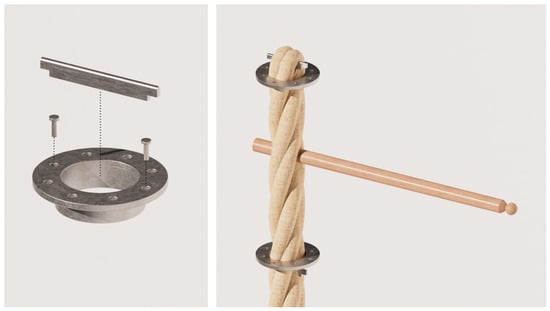
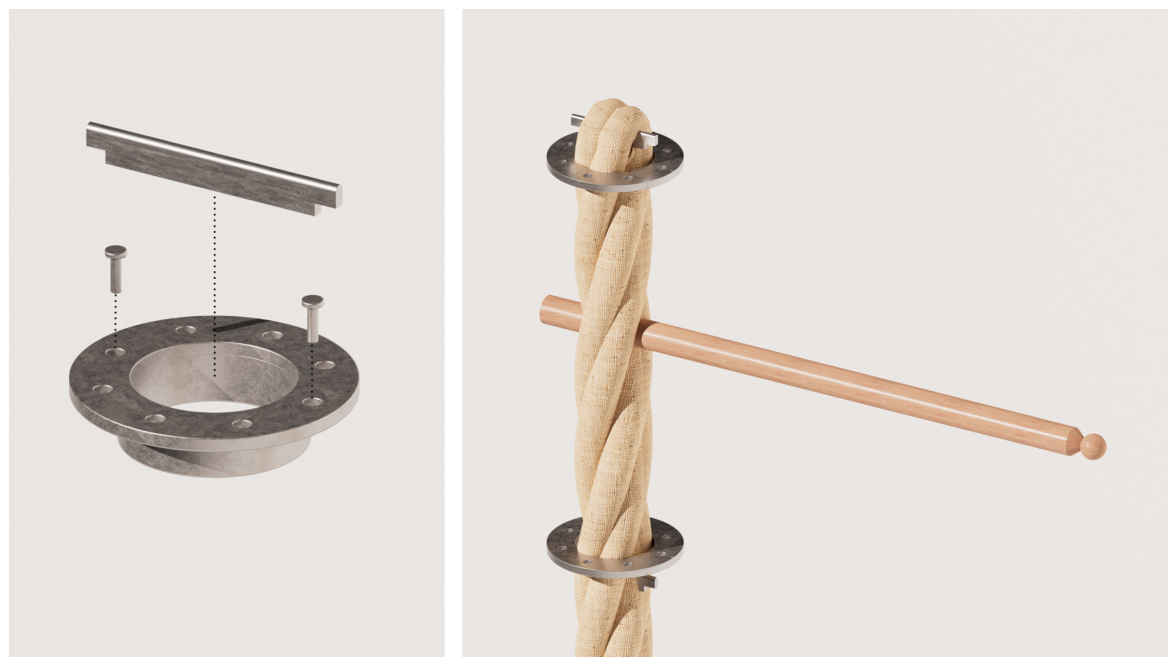
The state of the art is therefore limited to what is necessary to meet the scientific standards relied upon by the arguments put forward in the article. The premise originates from the source: “One must start from a module and construct the machines according to strictly defined proportions” [18]. The tònos—explains Philo βελοποιικά (111.10)—that is the module measured in ‘fingers’- is given by the diameter of the bundle fibers constituting the weapon’s spring (Figure 2 and Figure 3). The length and width of the power unit must be a multiple or a submultiple of this module. Vitruvius, drawing on the principles inherited from Philo, focuses on the on the designs of scorpions [18] (pp. 186–187).
Figure 2.
The diameter of the ring to which the elastic band is attached represents the measuring module of the machine (elaboration created by the authors).
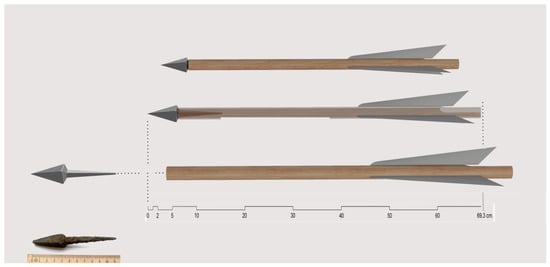
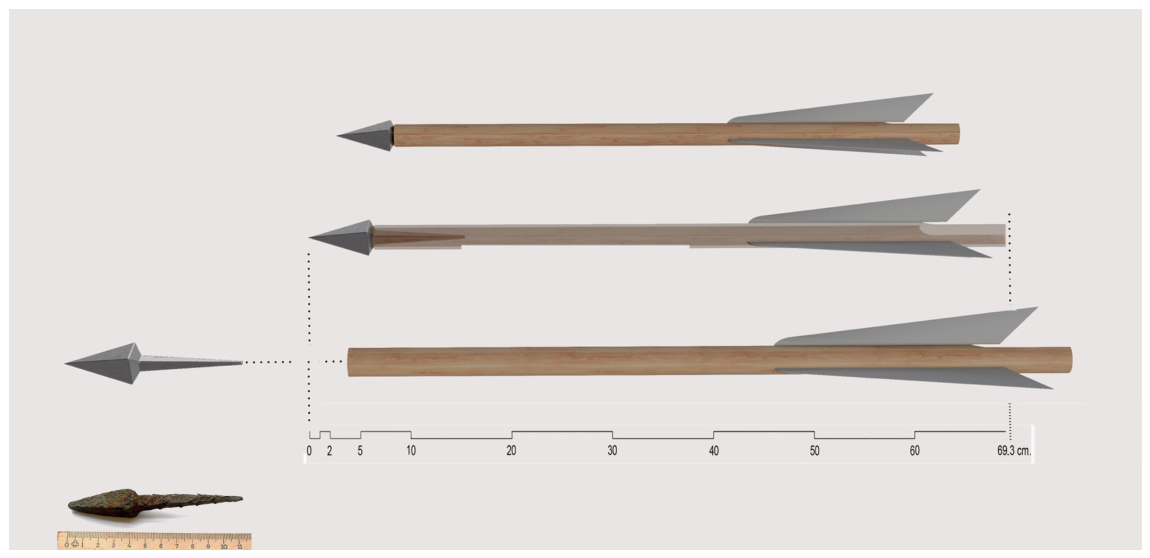
Figure 3.
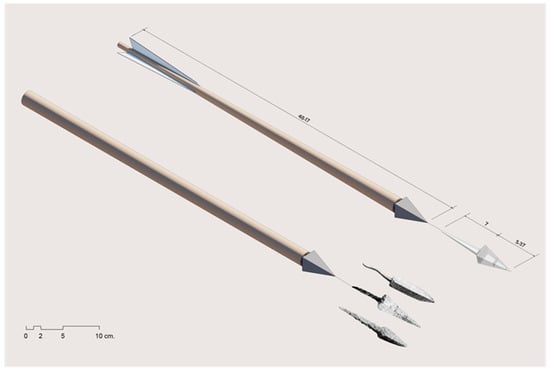
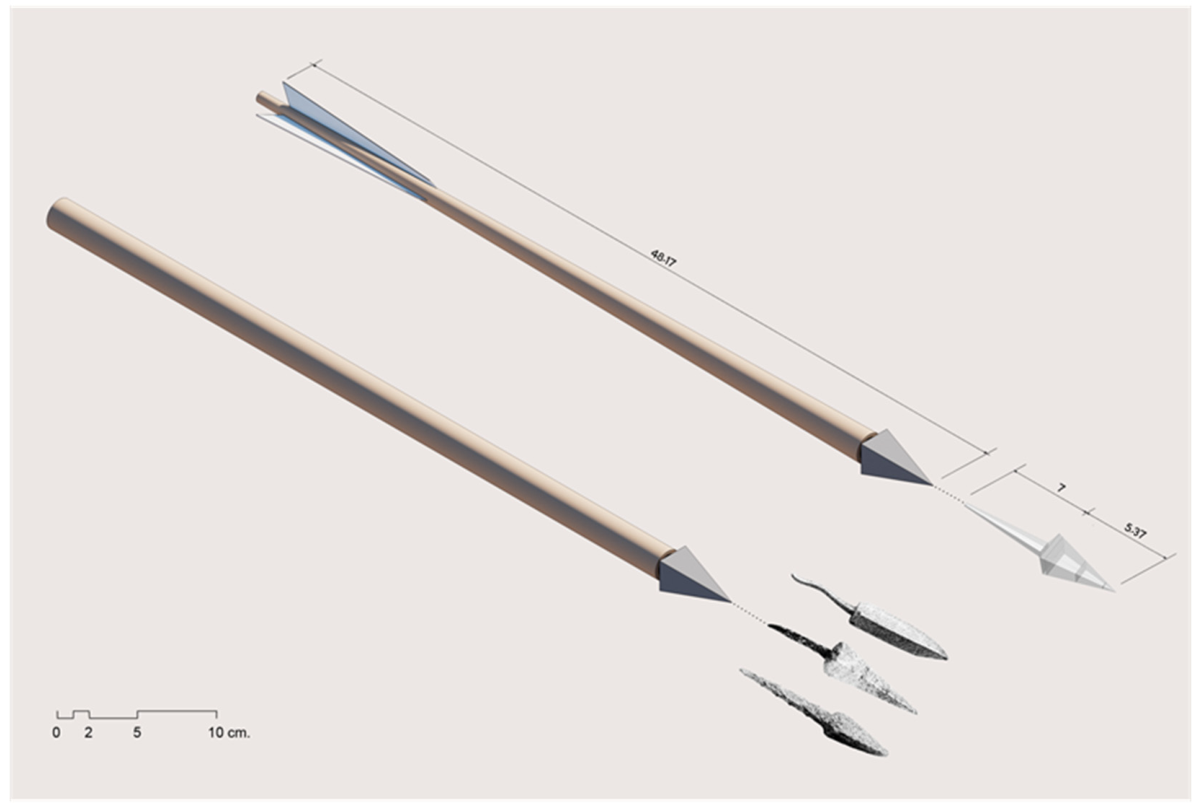
Darts reconstructed on the basis of contemporary finds and the light descriptions of the treatise of Ammianus Marcellinus [20] (elaboration created by the authors).
“Now I shall describe machines invented for protection in war and preservation of security, that is the designs of scorpions and ballistae, and to what proportions they can be constructed. All dimensions of these engines are calculated from the given length of bolt which the particular engine is intended to shoot. Let the diameter of the holes in the frames, through which are stretched the twisted sinews that hold the arms, be one ninth of this (i.e., of the length of the bolt).
The height and width of the frame should be designed in accordance with the diameter of these same holes. Let the beams, which are at the top and bottom of the frame and are called hole-carriers, be made 13/4 f thick, 11/2 f wide, 1ff wide at the ends. The right and left side-stanchions are to be 4f high excluding tenons, 5/8f thick; the height of the tenon is 1/2f. The height and width of the frame should be designed in accordance with the diameter of these same holes. Let the beams, which are at the top and bottom of the frame and are called hole-carriers, be made 13/4 f thick, 11/2 f wide, 1ff wide at the ends. The right and left side-stanchions are to be 4f high excluding tenons, 5/8f thick; the height of the tenon is 1/2f. The distance from side-stanchion to hole is to be 1/4f, and likewise the distance from hole to center-stanchion is to be 3/4f. The thickness of the center-stanchion is to be 13/4 f, its width 1f. Let the aperture, where the arrow is placed in the center-stanchion, be 1f wide. Let the four external corners be fitted, both on the sides and on the front and rear faces, with iron plates and bronze bolts or nails” (Vit. X, 10.1) (Figure 4).
Figure 4.
Designs of scorpions according to the proportions dictated by Vitruvius (elaboration created by the authors).
The instructions are not always clear, but the texts of Schramm [21], Baatz [22] and Marsden [18,23] help to resolve doubts by offering a substantially similar interpretation of the original text written in Alexandrian Greek.
The relationships between the measuring module and the diameter of the hole through which the tensioners of the twisted skeins pass provide a basis for determining the dimensions of each part of the machine.
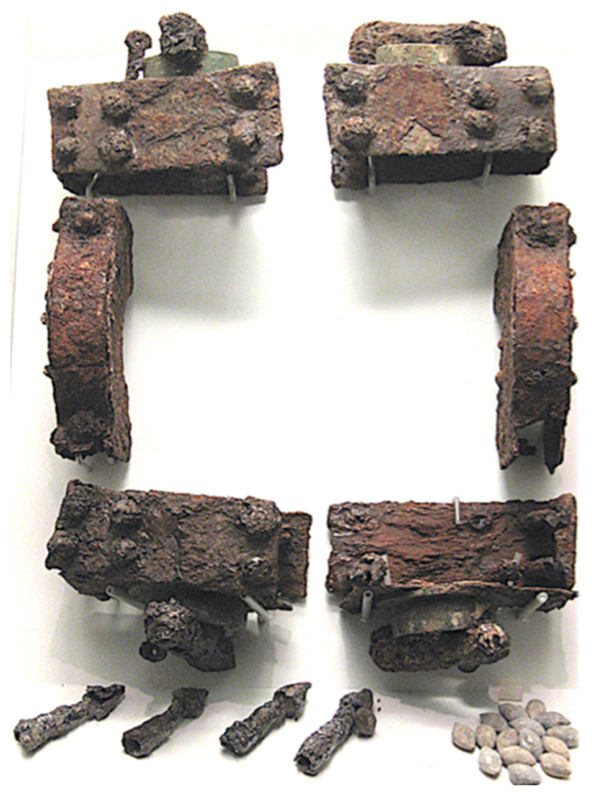
From a construction point of view, a torsion engine consisted of a sturdy square wooden frame, reinforced with iron straps. The frame was divided into three separate sections: the central section housed the shaft, while the lateral sections contained the two coils of twisted rope. The optimal ratio between coil diameter and length has recently been verified [24,25,26]. The arms that twisted the skeins, moving them “in the right direction” (hence the term euthyton), were inserted inside the coils. Significant improvements were made by replacing some wooden parts with metal (iron and bronze) ones (Figure 1). This allowed the arms’ movement to be reversed in the opposite direction (hence the name palintona). This led to the construction of smaller but equally powerful machines [27,28].
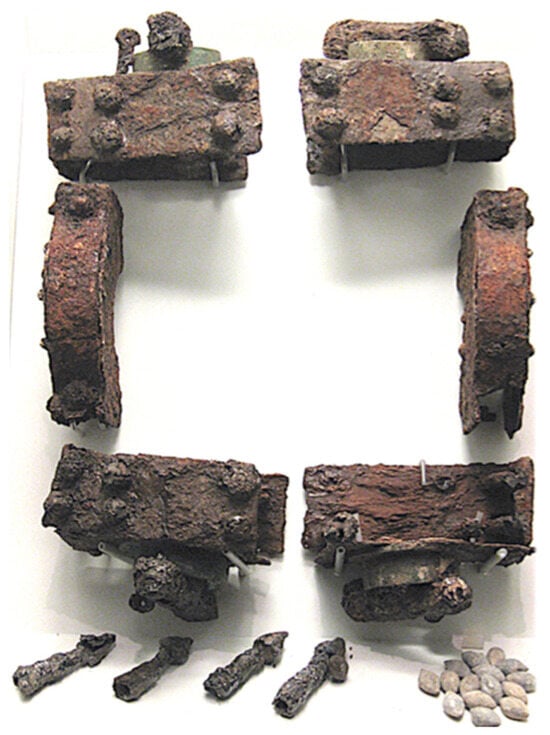
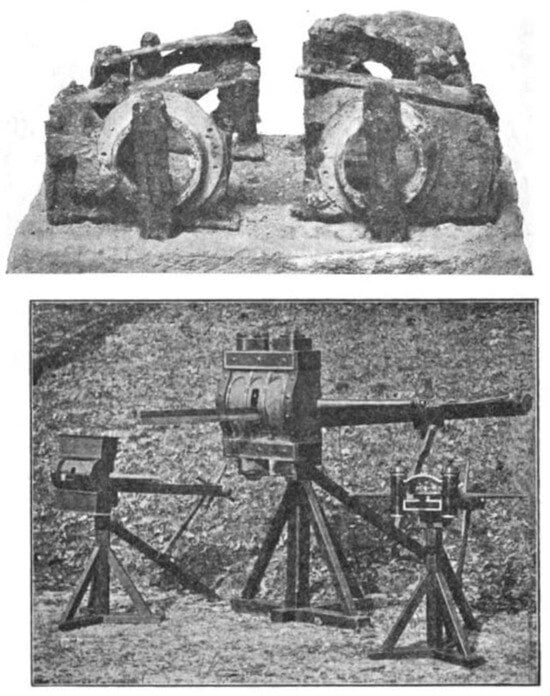
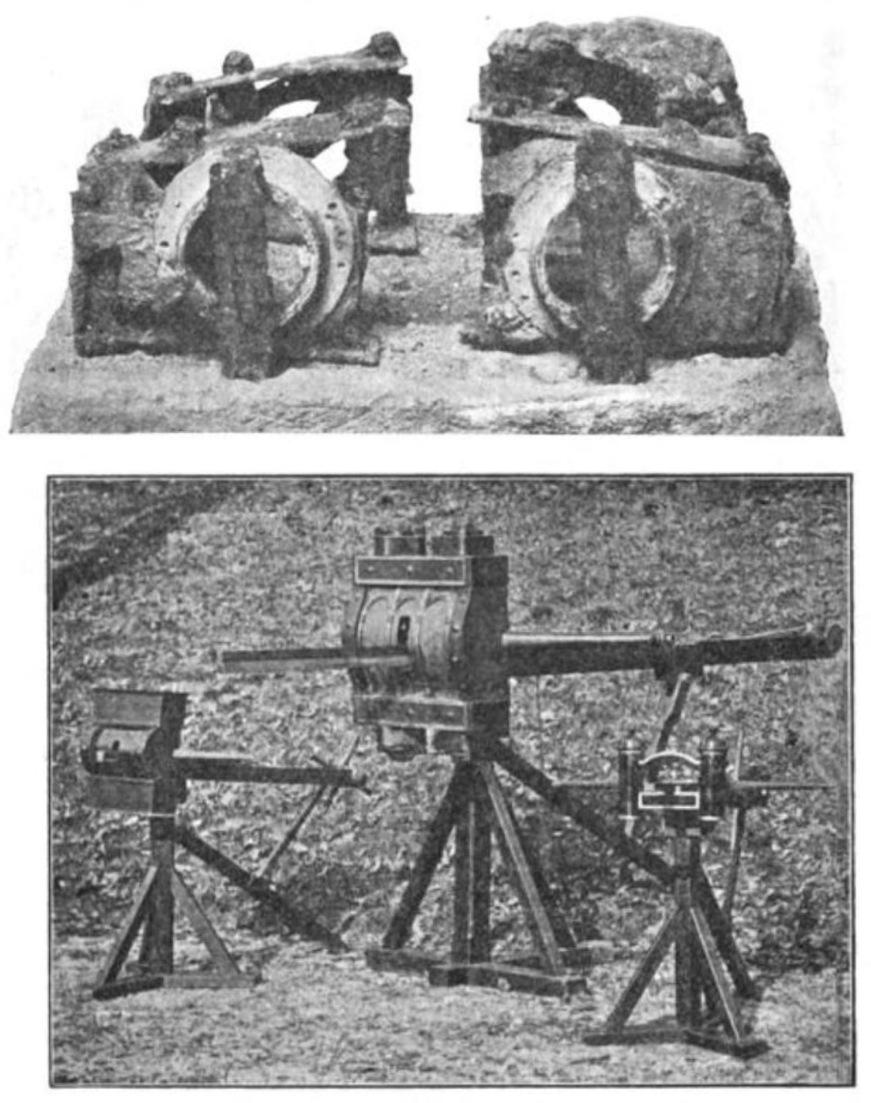
Erwin Schramm (1856–1935) was one of the first to pursue this objective. The artefacts discovered near Ampurias (Barcelona, Spain) and now housed at the Saalburg Museum (Germany) were fundamental in initiating the reconstruction process (Figure 5 and Figure 6). The expert archaeologist, who was a colonel in the army at the time, tested his full-scale prototypes in the presence of the Kaiser, whilst the conclusions of his studies were made public a few years later. If the innovative approach proposed by the SCORpiò-NIDI research group is to be pursued—using the observed damage effects to calculate the power of the impact and assess how it interacted with the characteristics of the stone block—it needs to be noted that, to date, no metal arrowheads, arrow shafts or pieces of artillery have been found or identified in Pompeii. Therefore, there are no objective data, as was the case with the spherical projectiles found on site. Consequently, both variables that could influence the algebraic expression derived from the calibration formula inherited from the ancient Greeks and Romans are unknown.
Figure 5.
Above: Findings of the Ampurias iron frame; in the foreground, the measuring module of the machine. Below: According to Vitruvius, a double-span catapult in its central position [21] (cap.IV, Figure 15, p. 42; Figure 5, p. 22).
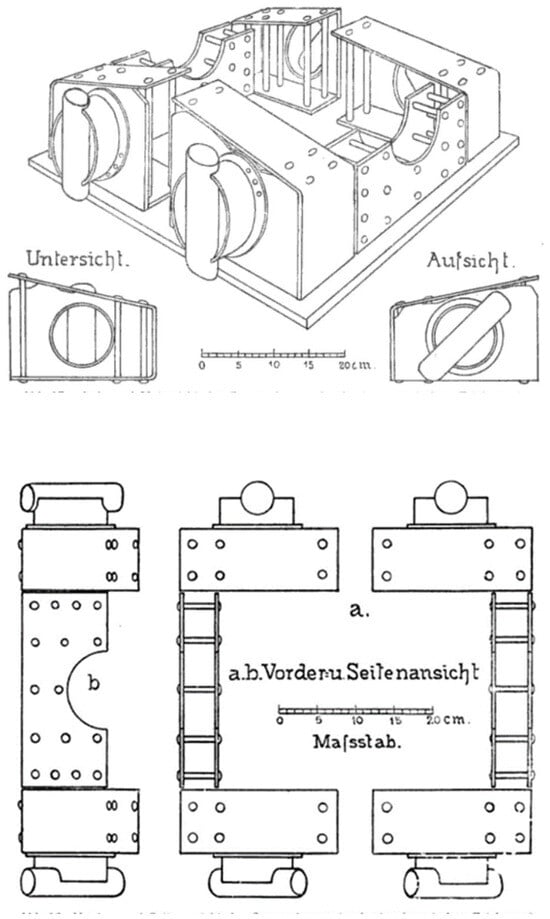
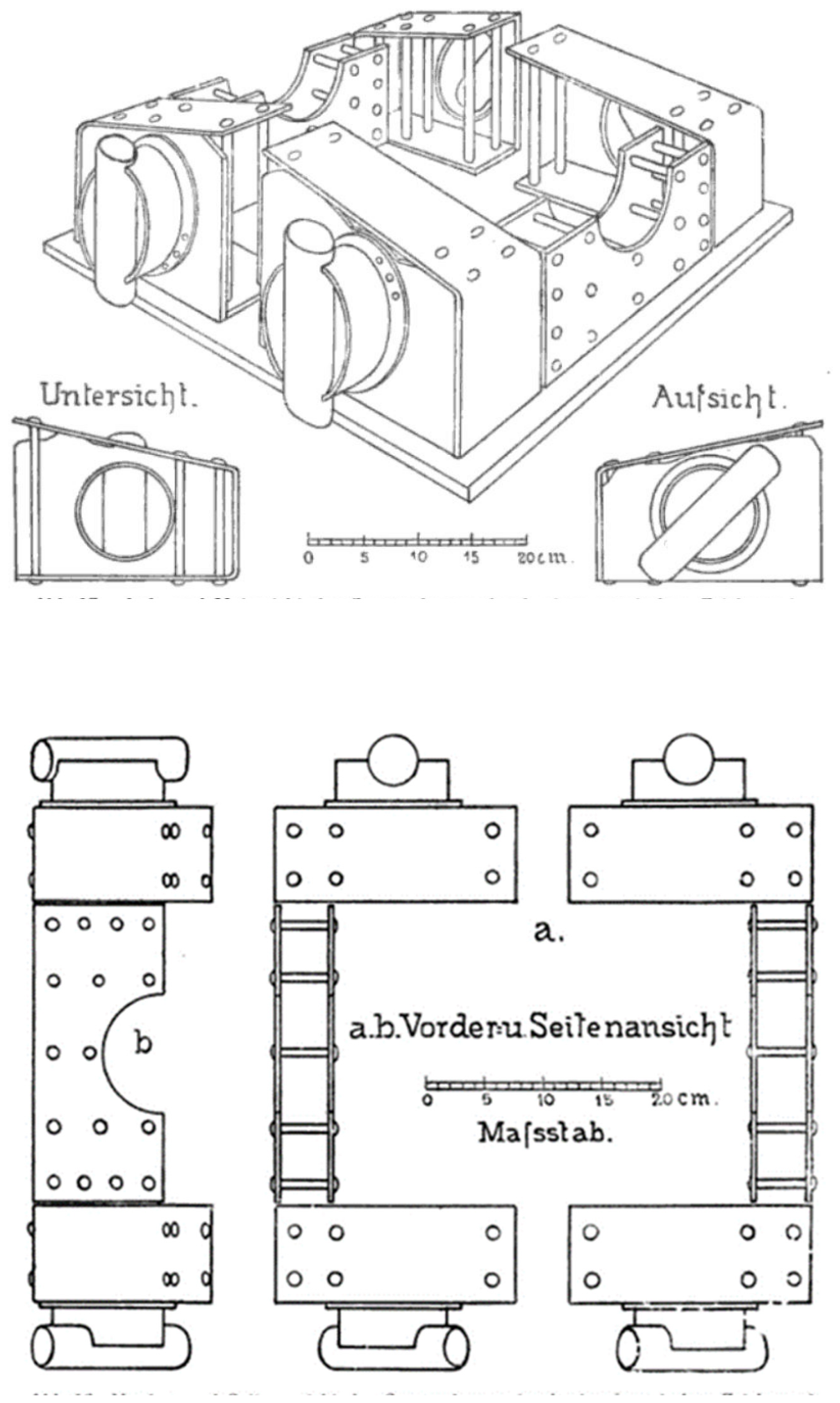
Figure 6.
(Top): Axonometric view of the tensioned framePowertrain. (Bottom): Front and side armor of the powertrain (by Schramm 1918, Figures 16 and 17, pp. 44–45) [21].
To proceed, it is necessary to hypothesize an estimated length of the dart, based on an objective datum, namely the length precisely specified for a repeating “small catapult”. The little scorpion was not much larger than a one-cubit engine, and not much smaller than a three-span, and it fired a missile one cubit one dactyl long (Philon, 74, 3–4). According to the conversion table for measurement systems developed by E.W. Marsden [18] (pp. XVII–XVIII) to facilitate discussion and comparison between different types of artillery (Table 1), the projectiles must not be shorter than 462 mm (equal to 2 spans) or longer than approximately 693 mm (equal to 462 + 19.3 = 481 mm).
Table 1.
Conversion table by E.W. Marsden [17] (pp. XVII–XVIII).
The power delivered by the machine is therefore determined by the bore sizes ranging from 51 to 78 mm, given that:
where D is the bore diameter measured in fingers (D) and L is the length of the dart [18] (p. 194, note 2).
D = 1/9 (Bel. 54.26 − 55.1)
For Vitruvius, who held the title of “military engineer” in Caesar’s army, the most common caliber corresponded to a standard unit of approximately 78 cm. Applying the calibration formula, one would expect a dart measuring 702 cm in length, the maximum measurement within the range established by the surveyors (Table 2).
Table 2.
Dimension of the dart’s meausements according to the different weapons, by authors.
3. Results
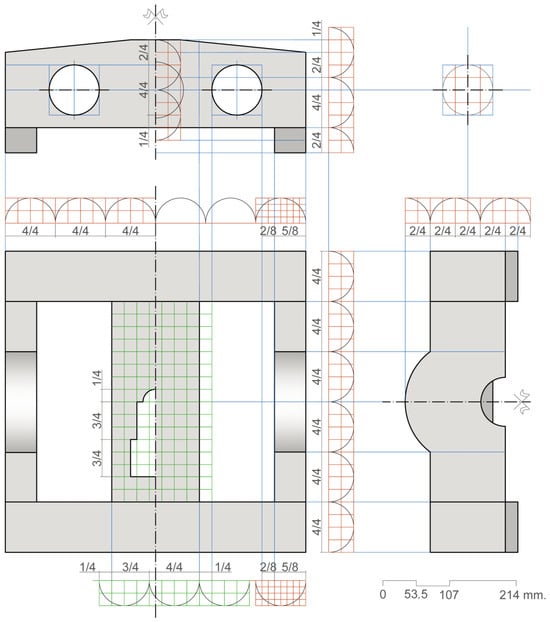
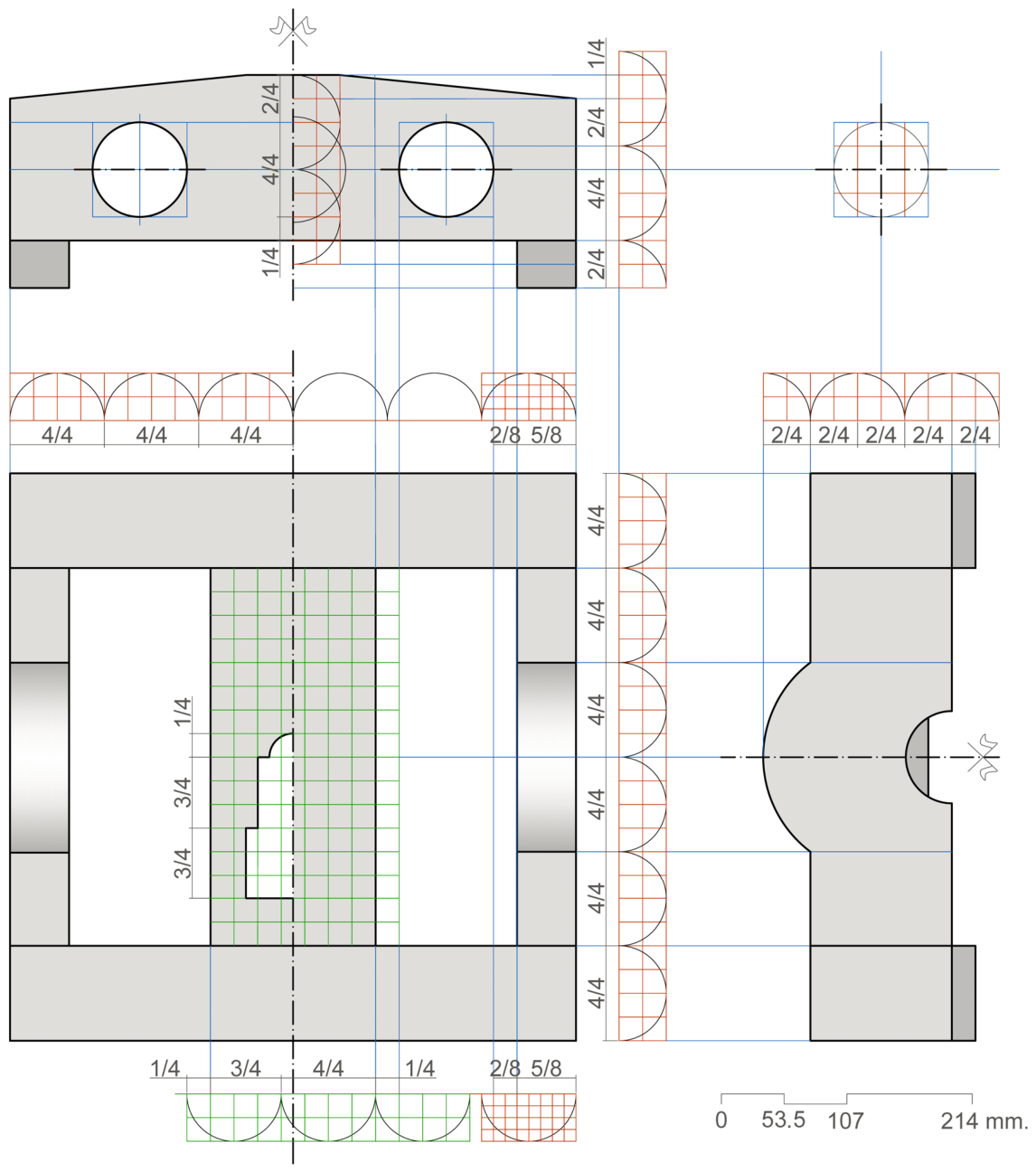
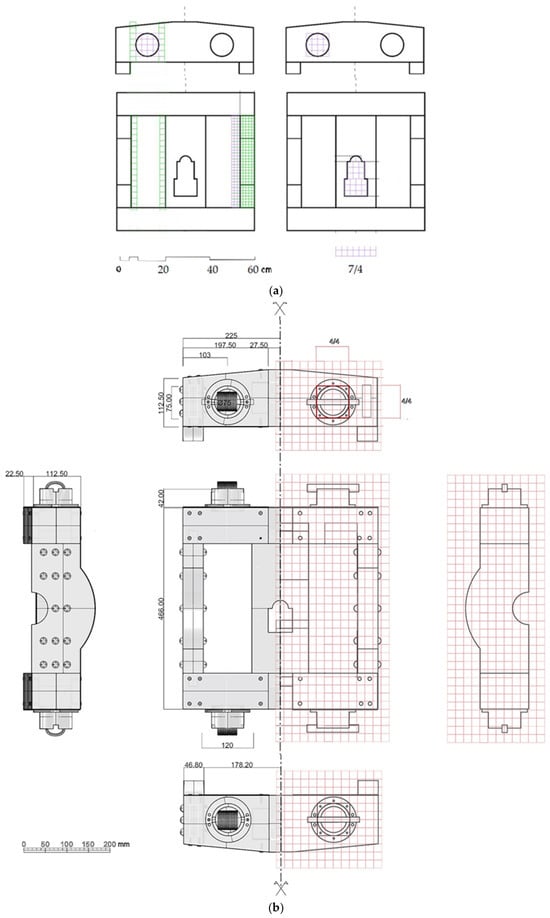
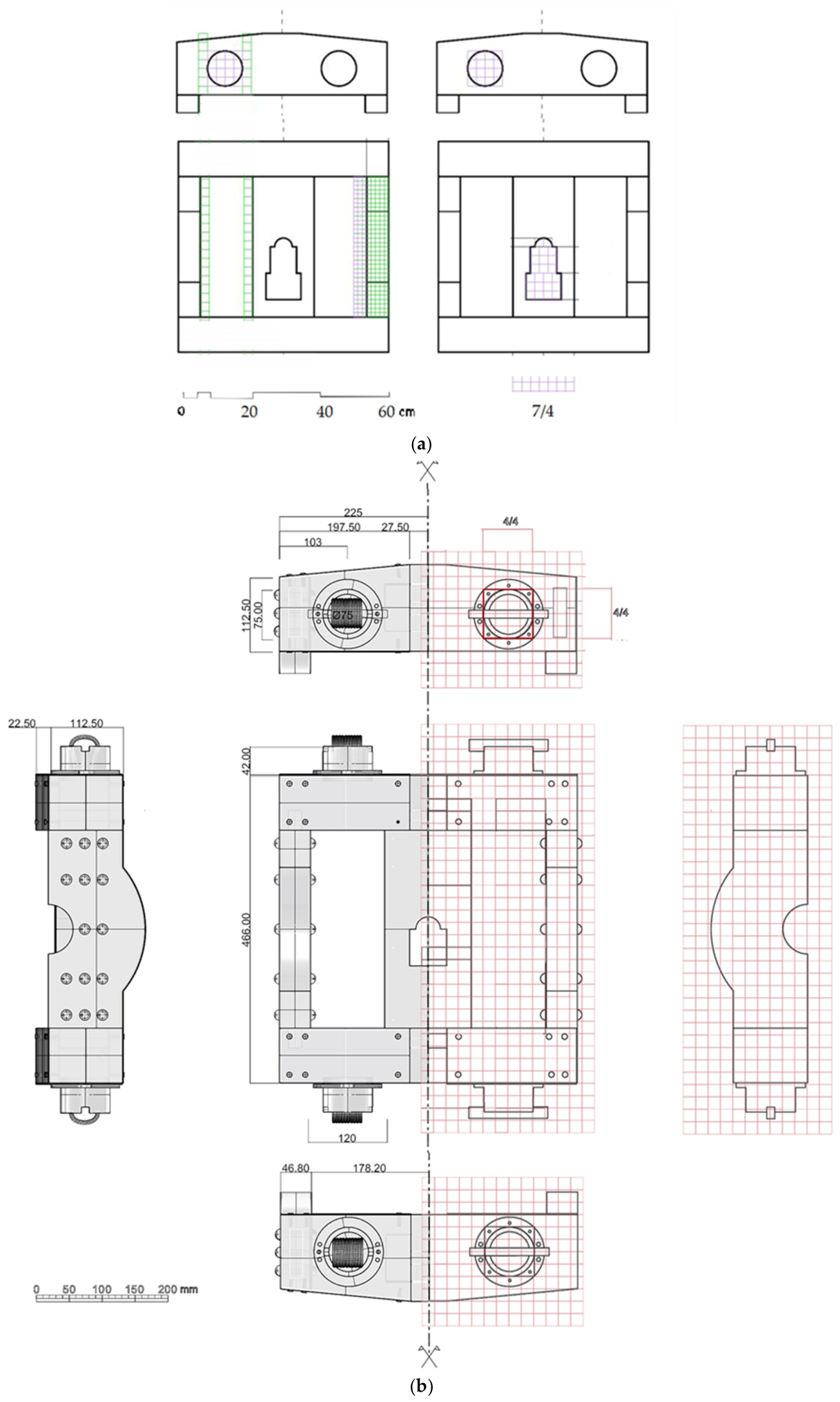
Before Christ, a standardized approach was far from a given. Regular measurements for firearm construction were necessary to allow for the reassembly of disassembled components. This facilitated transport and the replacement of damaged parts, but above all provided a benchmark for predicting damage. At agreed distances, projectiles of similar weight/mass ensured predictable terminal ballistics and thus predictable military operations. The measurement exercises the authors have undertaken have proven to be essential training. The location at which to drill the hole through which the tensioners of the twisted skeins pass can only be determined through a careful study that places the plan and elevation in a bionic correspondence, dividing the modules into 5/8 and 3/4. This is a clear and essential procedure for those of us accustomed to reasoning using the method of double orthogonal projections (Figure 7b).
Figure 7.
(a) Measurement of the structure according to the proportions by Vitruvius (elaboration created by the authors). (b) Determination of the position of the hole based on the measurements canonized (elaboration made by the authors).
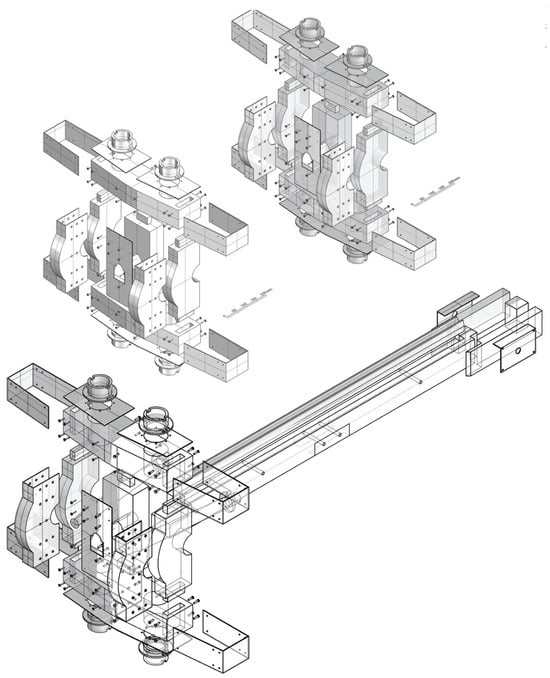
As canonized by Vitruvio [18] (p. 186–187), the dimensions of the upper and lower plates are 6 Modules (1.3/4 M). The height of the side and central uprights is 4 M, whilst the width is 5/8M; the width of the central upright is 1 and ¾ Modules (Figure 8).
Figure 8.
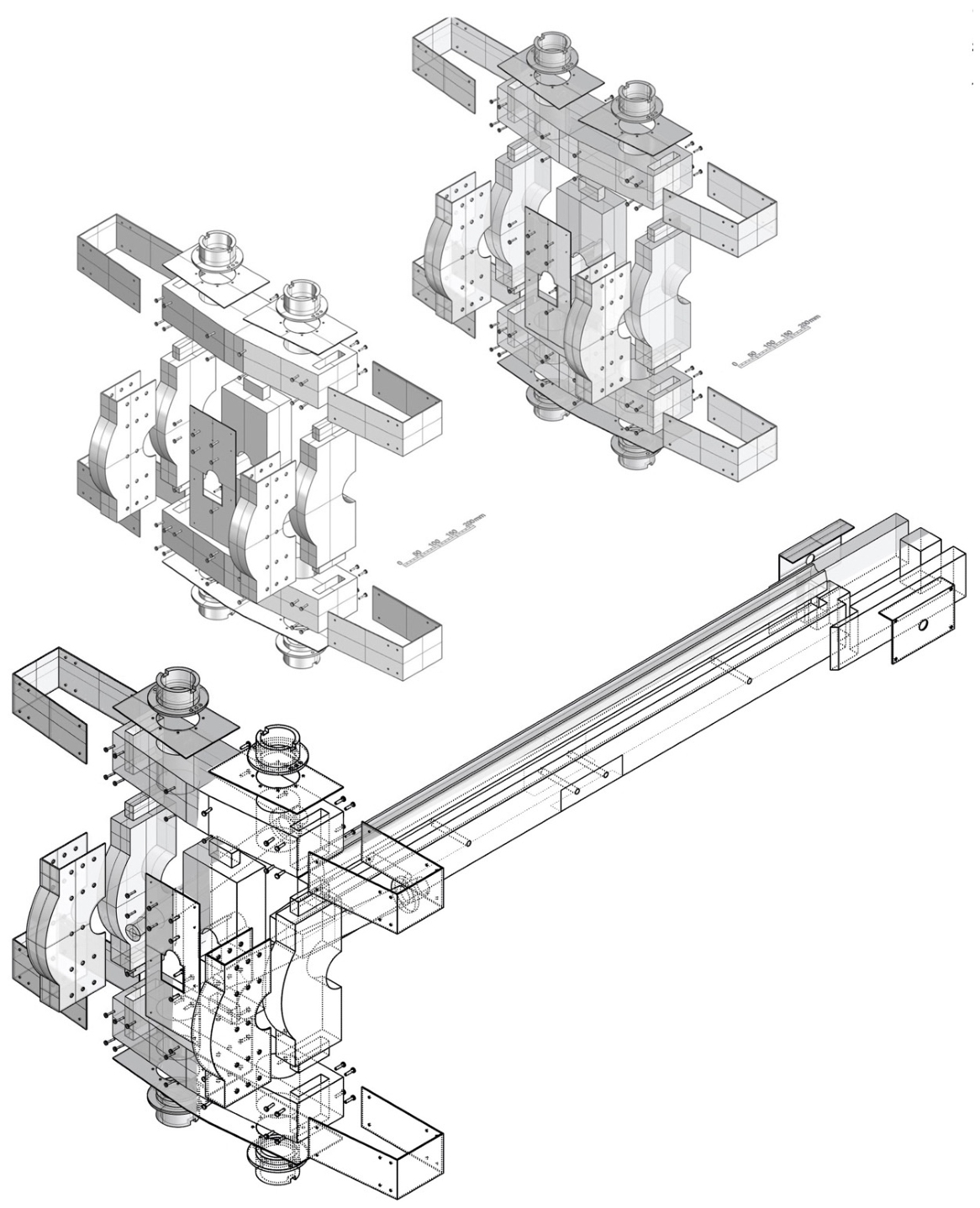
Axonometric exploded view of the powertrain. On the following page: (Above): two different positions of the arm movement. (Below): Proportionate reconstruction of the euthython scorpion on the modiolus of Ampurias (elaborazion by C.F.).
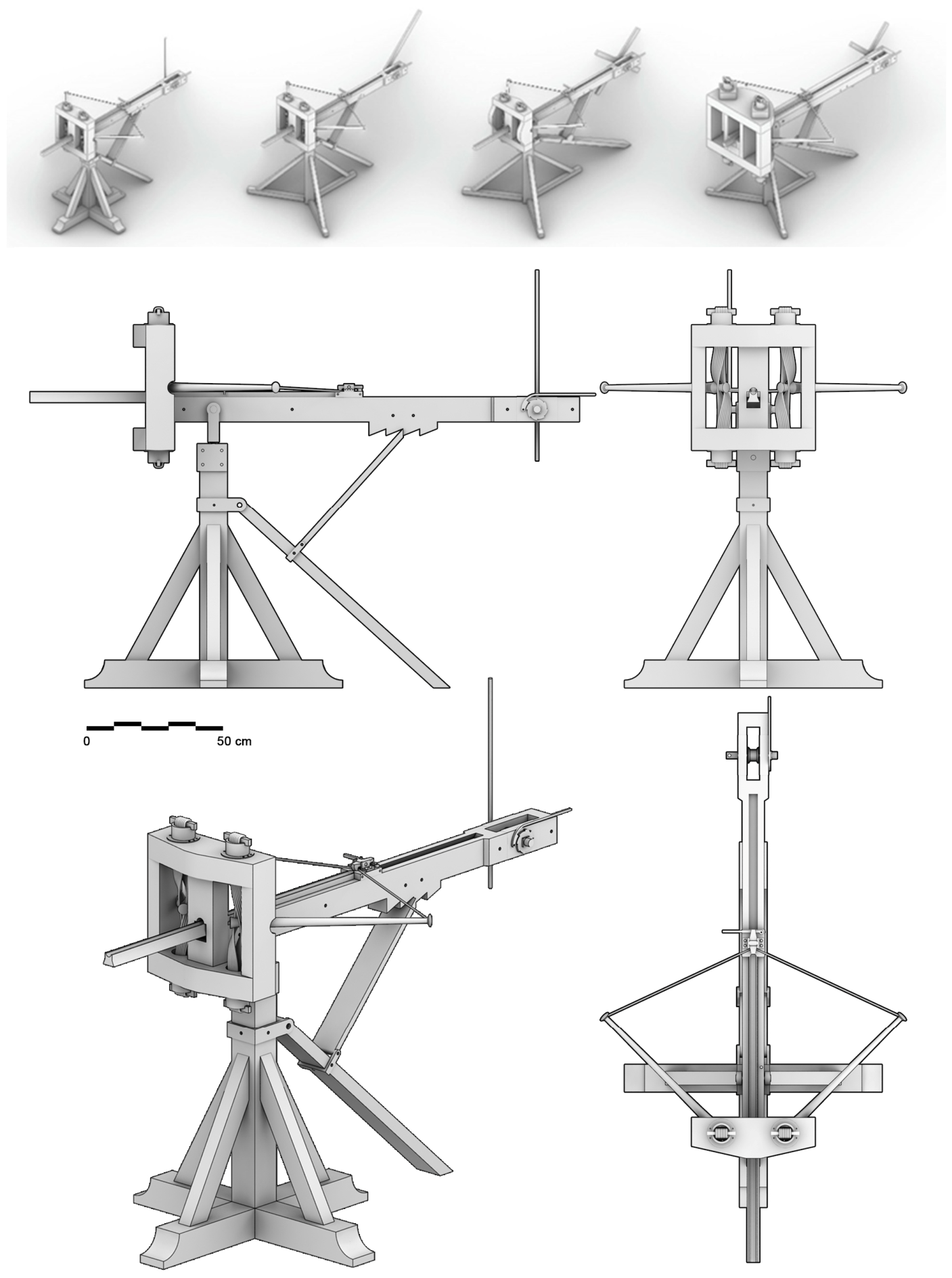
The investigations typical of traditional drawing appear to guide the reasoning, orienting the results applied to the reconstruction of the weapon. The “constructive” drawings, to use Vitruvius’s term [29] (p. 5) (Figure 9 and Figure 10), are translated into vector elaborations. The details resolve functional, as well as morphological, structural questions. Through the interpretation of historical sources and technological experimentation, the demonstrators identify the characteristics of a pilot line to be prototyped and subjected to inductive verification through experience. Significant optimizations were advocated by Filone. Many were implemented using iron or bronze instead of wood for the brackets to reinforce the frame. This made it possible to reduce the size of the dart-launching machines without compromising their power.
Figure 9.
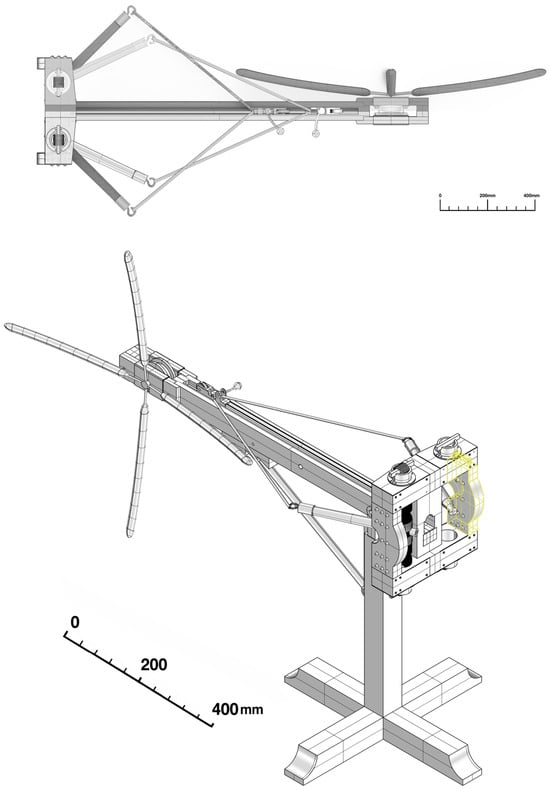
An axonometric view of the 3D model of a Roman weapon, called the scorpion. Model and rendering (elaboration by C.F.).
Figure 10.
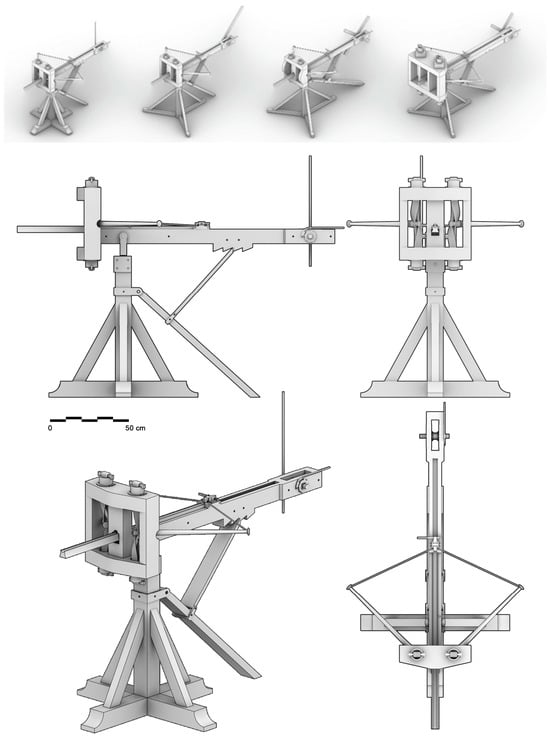
Above: Typological families of Roman catapults. Below: Orthographic and axonometric views of the 3D model of a Roman weapon (elaboration by C.F.).
Filone called for significant optimizations. Many of these improvements were achieved with iron or bronze reinforcements to strengthen the structure, and by replacing the wooden arms used to twist the elastic cords with iron arms. This made it possible to reduce the size of the machines whilst maintaining the power of the propulsion system. A typological family of virtual catapults has been derived. These models have much in common with current practices for formalizing ready-to-use information required for the standardized production of components.
4. Discussion
The investigation conducted by the research group of SCORpiò-NIDI proceeded from the documentation of the physical evidence towards the identification of the most probable causes. To test the hypothesis that the fan-shaped clusters of holes, chosen as emblematic of the analysis, were produced by repeating scorpions (polybolos), it is necessary to consider: (i) the length of the dart, set at “one cubit and one dactyl” (Figure 11) (462.4 mm + 19.3 mm = 48.17 cm), and (ii) the diameter of the hole obtained from the calibration formula:
D = Ø 53.5
Figure 11.
Reconstruction of the dart based on the measurements prescribed by Philo of Byzantium for the small repeating catapult (by S.L.G.).
The module’s small size, compared to the standard 70–80 cm recommended by Vitruvius, comes as no surprise (Figure 12). During the Imperial period, examples with a diameter of less than 50 mm were discovered. In June 1945, two small-diameter bronze flanges with a pronounced flaring were found at Volubilis, in Mauritania. These were a pair of projectile launchers for a weapon of modest size, perhaps a manuballista or a further miniaturized version of a cheiroballista.
Figure 12.
Above, Vitruvius’ catapult; below, small Xanten-Wardt catapult (elaboration made by the authors).
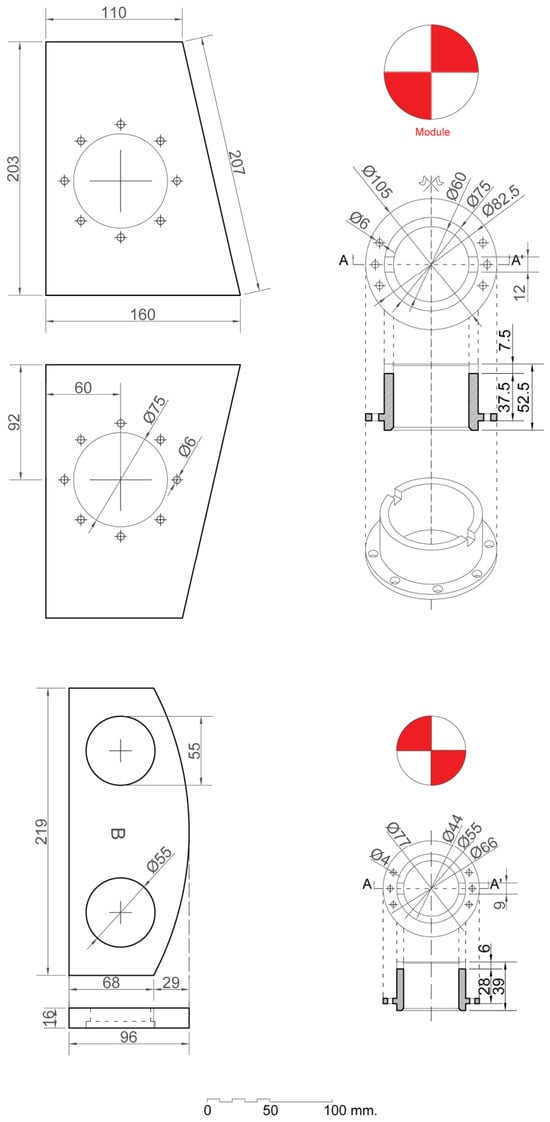
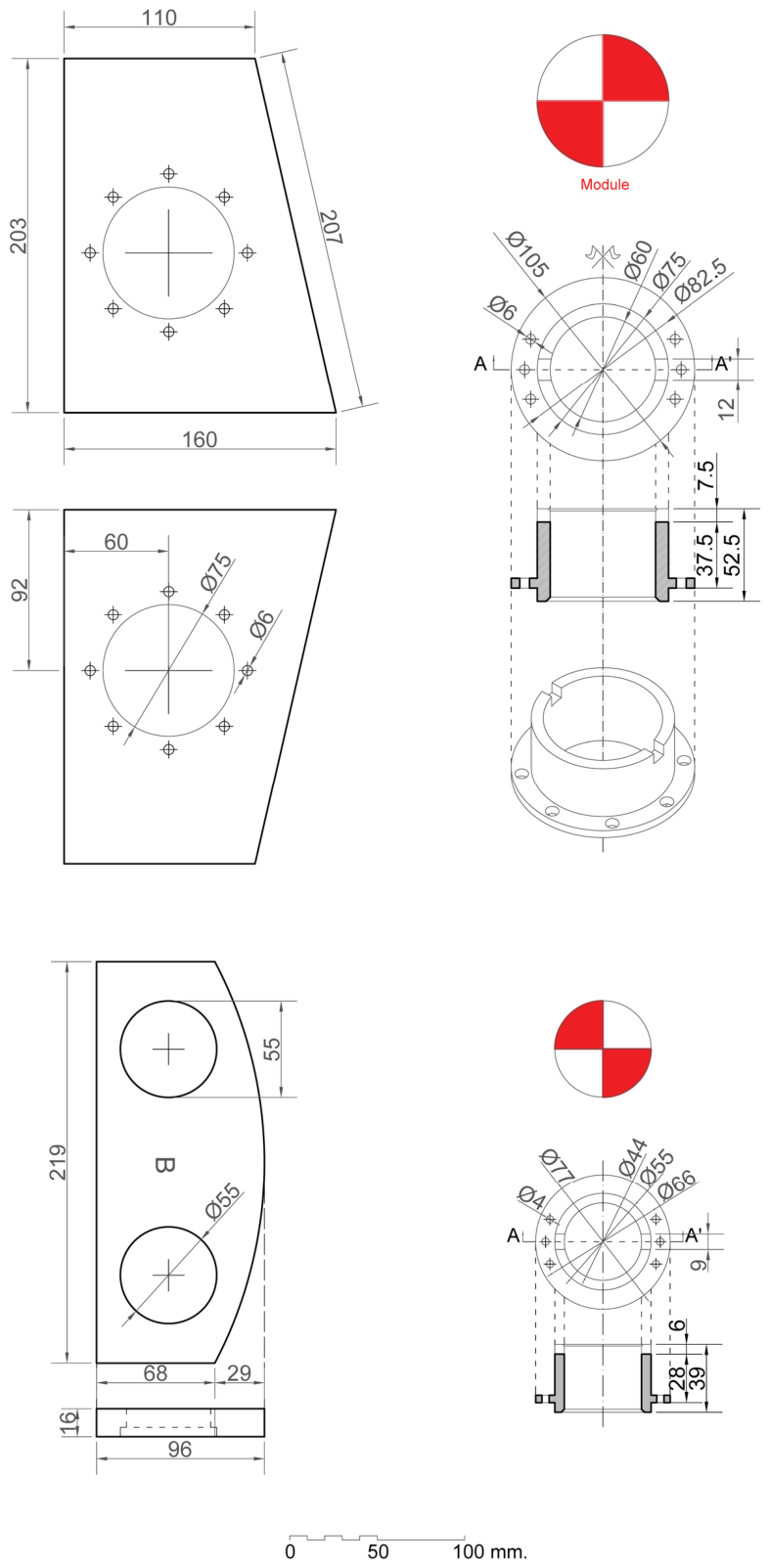
Fifteen years later (1960), again in Morocco, an unusual bronze object resurfaced in Sala (not far from Rabat and Volubilis). The find had the shape of a parallelepiped completely open on two sides and with two large circular holes on the upper and lower faces of the frame. It resembled a heavy box, with the longest side measuring approximately 40 cm. A detail suggested its identification. One of the two uprights featured a prominent semicircular recess in the center of the side, corresponding to a convexity on the opposite side. Thanks to the recess and the two opposite holes on the shorter faces, it was not difficult to recognize the find as a support for a catapult. It was a more massive and robust bronze variant than the one found in Lyon over a century earlier, with similar dimensions and diameters of the holes and lateral brackets oriented orthogonally to the longitudinal axis of the catapult.
The integrity of the wooden structure preserved at the Römer Museum and the Archaeological Park of Xanten (Germany) demonstrates that even for small dart launchers, standardized criteria and proportions were used.
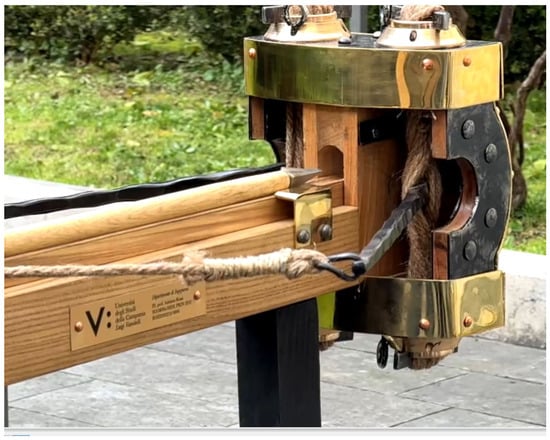
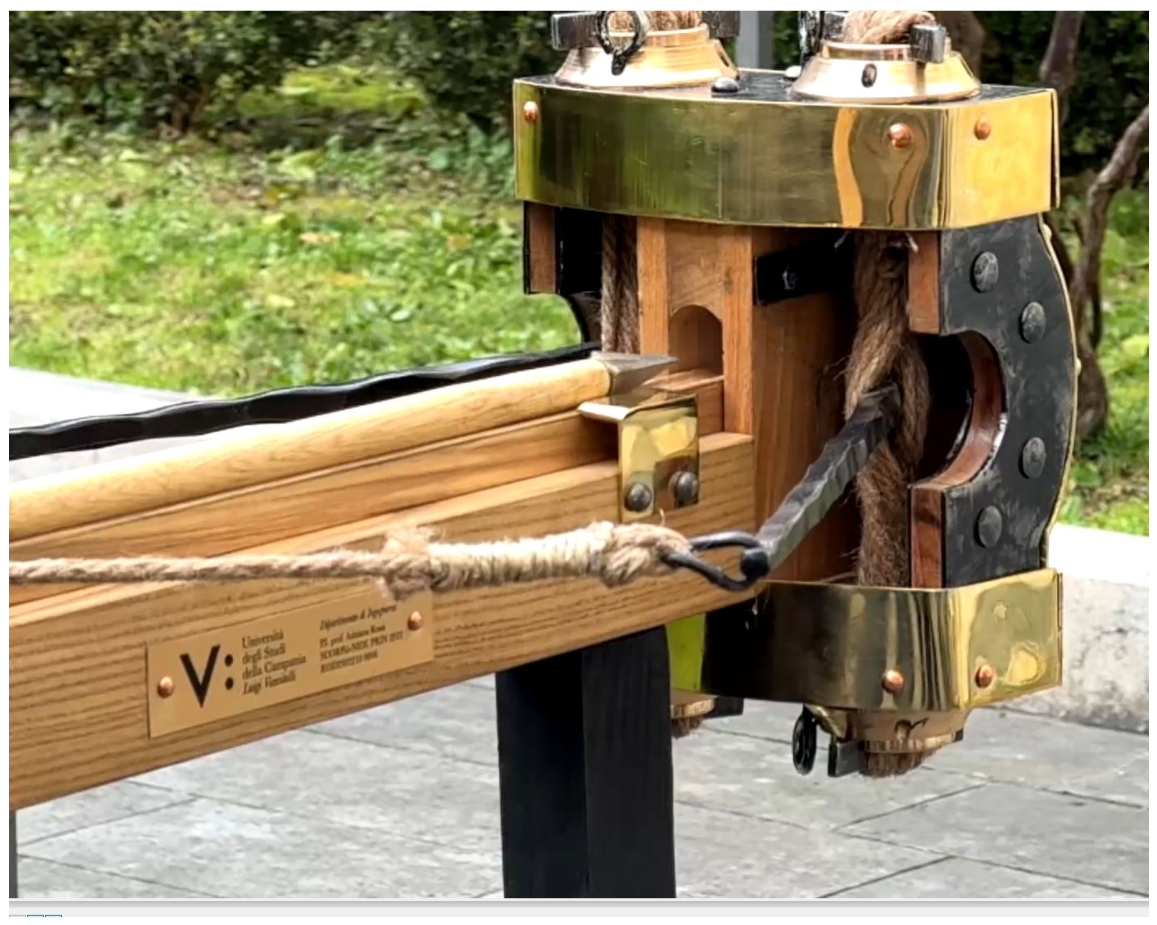
Len Morgan and Tom Feeley, under the guidance of Alan Wilkins [30], reconstructed the small dart launcher, found at the bottom of the river that ran through Castra Vetera. Starting from the holes drilled in the wooden structure, a fact precisely documented in the technical drawings of the Xanten find, the SCORpiò-NIDI team attempted a similar activity (Figure 13). The physical reconstruction, created with materials and technologies compatible with the Sullan era, was useful for experimentally verifying some characteristics studied in relation to the fortification criteria that anticipated field operations at Pompeii [31]. The study converges with the choice made by historians at the Museum of Antiquities in Mainz, who have reconstructed in full scale the river patrol vessel of the fleet assigned to supply the Roman forts. The prow of one of the vessels is armed with a polybolos, an imitation of the model built by Schneider in 1912. Despite the temporal distance, its use confirms its function as theoretically compatible with the needs of Sulla’s siege. Once the ballistae had breached the top of the fortification, the polybolos was used to target moving archers, either on their patrol route or based on the towers. However, the weapon’s power has yet to be demonstrated. Factors to consider include topographical conditions, a sufficient range for the intended purpose in situ [32], and the need for a retention mechanism to make the polybolos preferable to the range of the Scythian composite bow.
Figure 13.
Reconstruction of the “Xanten-Wardt” by Michele Fratino for SCORpiò-NIDI (author’s executive plans) [8] (112–127).
Furthermore, and not secondarily, it is necessary to verify the parameters tested by those credited with reconstructing and demonstrating its functionality in the modern era (Alan Wilkim 2000, BBC television series). The calculations and verifications could be compared with others derived from a reversal of the premises. The research team argues that the mechanisms were optimized in the two centuries between the writing of the βελοποιικά and the siege of Pompeii.
5. Conclusions
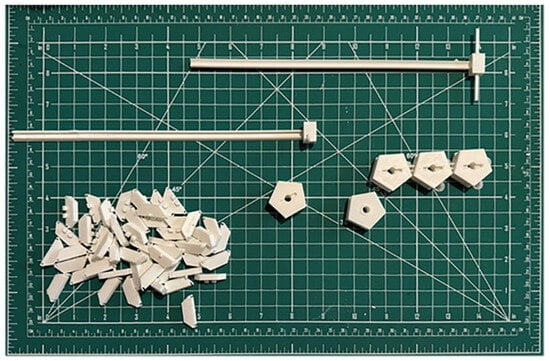
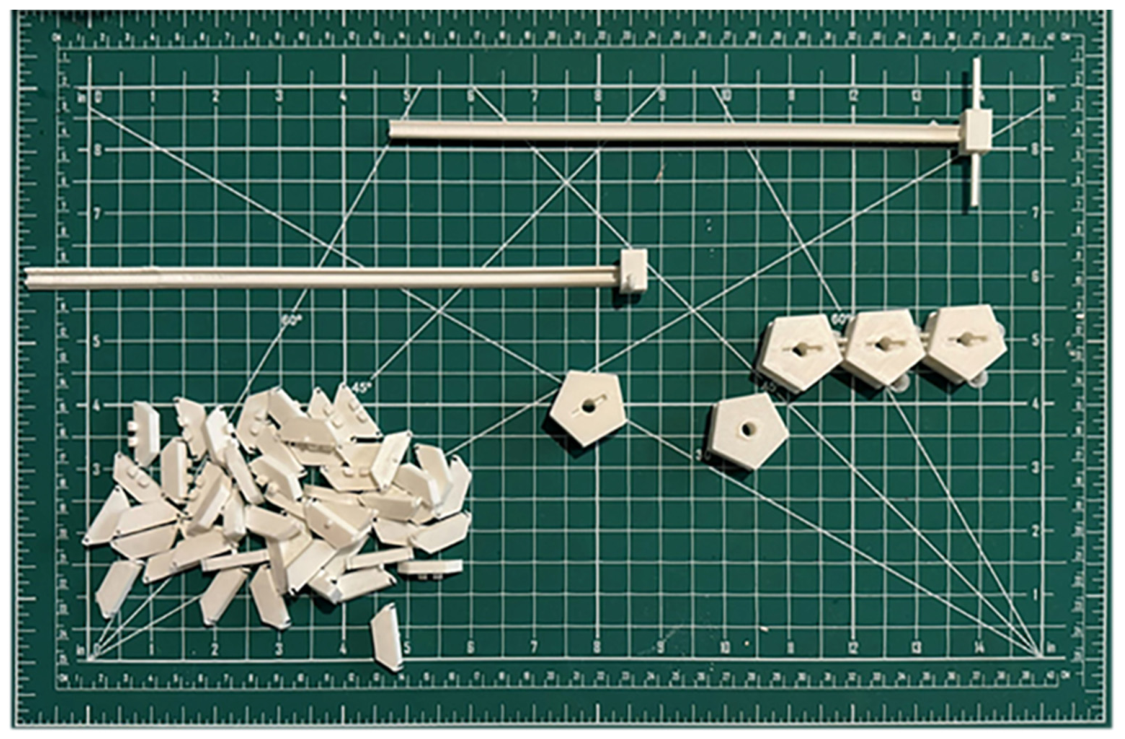
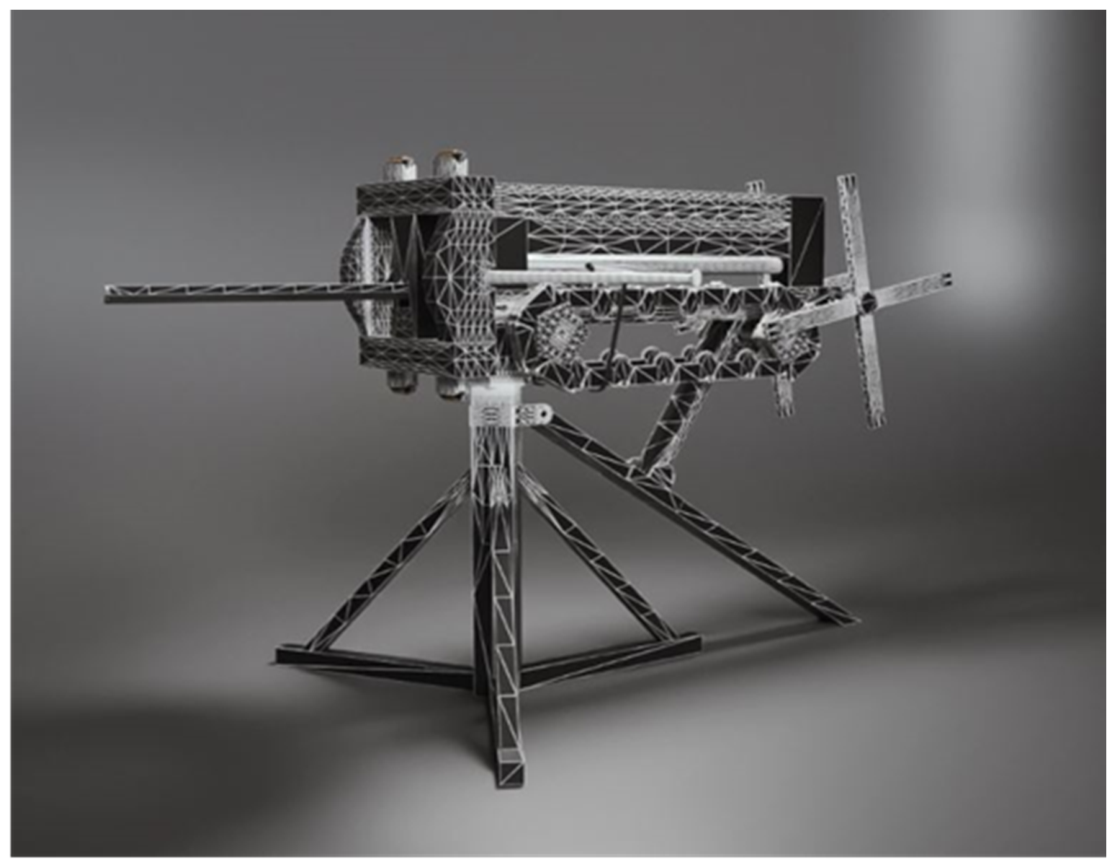
The methodological and philological process that allowed the modeling of the typological families of SCORpiò-NIDI follows clear and consolidated procedures thanks to previous studies (see the Appendix A). The developed applications were partially tested through the prototyping of fully operative models, printed using the additive manufacturing technique Fused Deposition Modeling (FDM). The tangibility of the polyacrylic latex (PLA) or polyethylene terephthalate (PET) prints facilitated the understanding and approval of the project, allowing for the refinement of details (Figure 14 and following). The ergonomics of the mechanisms serving the weapon is obviously independent of the size and power of the propulsion system. Hence, they do not require reductions.
Figure 14.
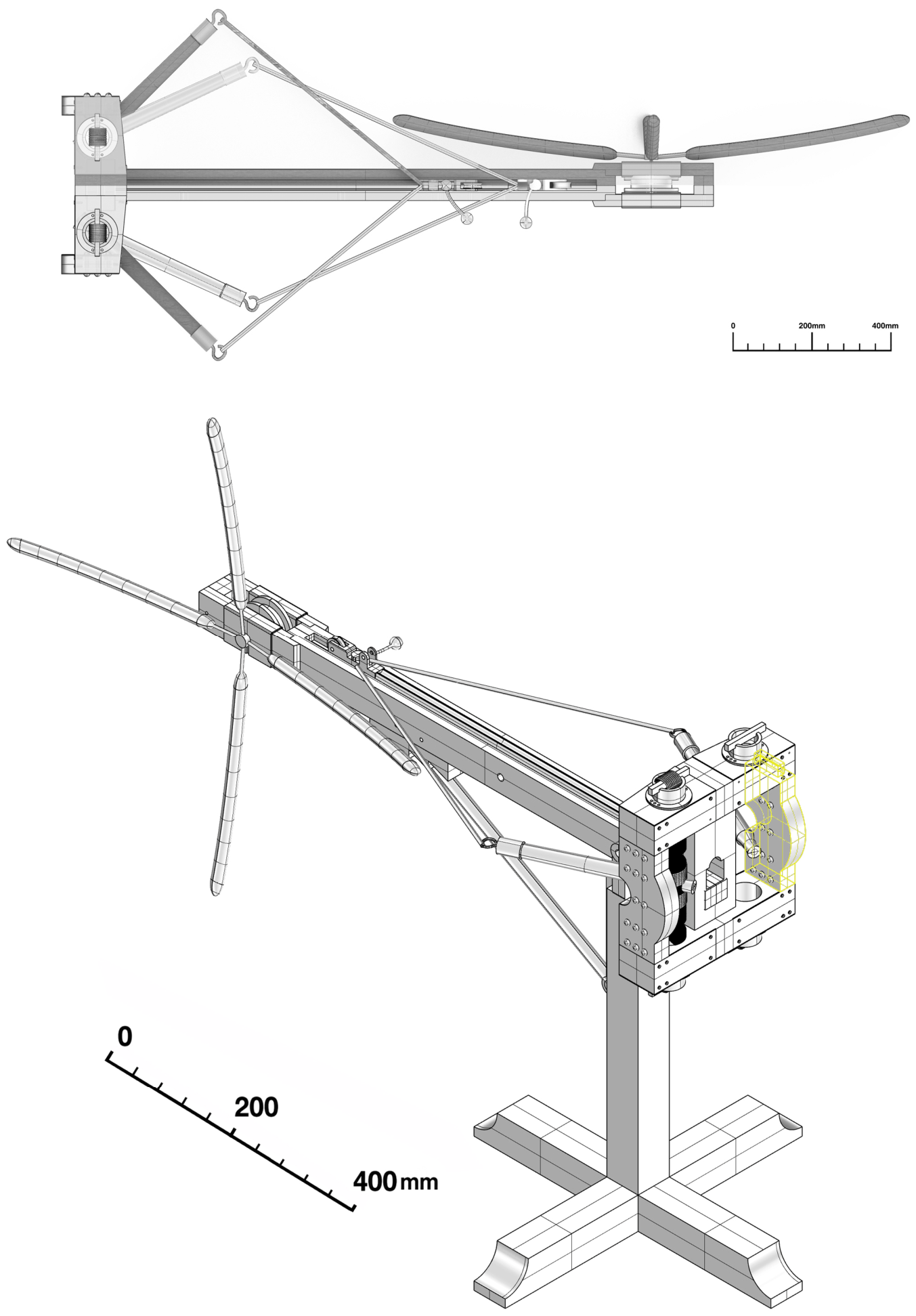
Polybolos modeling in Rhinoceros. Prototyping of chain elements (by C.F.).
A study is underway on the mechanical compatibility between the hypothetical use of the polybolos (Figure 15) and the groups of fan-shaped holes discovered by the authors and detected along the fortification. Reverse engineering processes guide the development of reconstructive hypotheses on the impact dynamics and the transfer of kinetic energy between the projectile and the stone blocks, while mechanical simulations and comparative analyses provide quantitative validation against which to inductively test the hypothesized measurement modules.
Figure 15.
Polybolos. Perspective view of the model. (Reconstruction by C.F.).
Unlike any previous study, this one relies on the calculation of the effects observed at Pompeii, digitally processed and analyzed for sharing, and interoperability with an interdisciplinary group of experts, professionally qualified to answer specific questions. The proposal should be understood as a working hypothesis, still under evaluation, for improving weapon performance. The reconstruction of the polybolos remains a constantly evolving field of research. We are currently testing various mechanisms with the aim of improving their performance, which—if strictly based on traditional reconstruction—would be limited in their effectiveness. However, it seems reasonable to consider that, while maintaining established mechanical principles, Roman empirical practice may have introduced adaptations or refinements capable of improving the device. A systematic analysis and a methodologically rigorous framework will contribute to the academic debate on this topic.
Author Contributions
Conceptualization, A.R.; methodology A.R. software, C.F. and S.L.G.; formal analysis and investigation, A.R.; drafting of the Italian draft, A.R.; translation, C.F.; supervision, S.L.G.; funding acquisition, A.R.; material preparation, C.F.; rapid prototyping of the models, C.F.; Figures: S.L.G. All authors have read and agreed to the published version of the manuscript.
Funding
This research was supported by the project “SCORPiò-NIDI”, CUP B53D23022100006 (DD n. 1012/2023), funded by the Italian Ministry of Research under the PRIN (call DD n. 104/2022) funding initiative. Claudio Formicola was supported by a scholarship co-financed by DM 118/23 PNRR (M4C1—Inv. 3.4 TDA).
Institutional Review Board Statement
Not applicable.
Informed Consent Statement
Informed consent was obtained from all subjects involved in the manuscript.
Data Availability Statement
Contact the corresponding author for data requests; data will be made available upon reasonable request with the permission of the competent authorities.
Acknowledgments
The author would like to express her gratitude to the management offices of the Pompeii Archaeological Park for granting authorization for site access and survey operations.
Conflicts of Interest
The authors declare no conflicts of interest.
Abbreviations
The following abbreviations are used in this manuscript:
| AAPP | Anglo-American Pompeii Project |
| 3D | Three-dimensional |
| FEM | Finite-element modeling |
| FEA | Finite element analysis |
| REM | Reverse engineering modeling |
| FDM | Fused Deposition Modeling |
| BBC | British Broadcasting Corporation |
| PLA | Polyacrylic latex |
| PET | Polyethylene terephthalate |
| Bel. | Belopoeica |
Appendix A
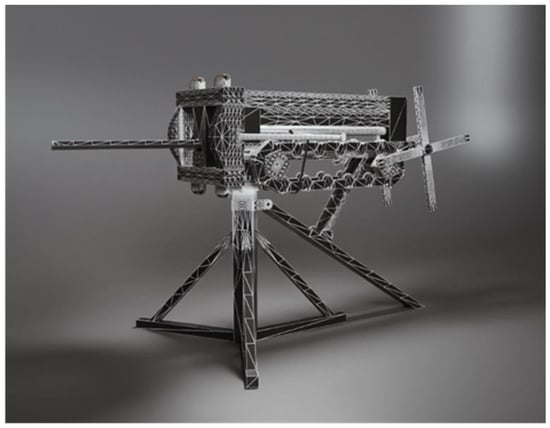
Exhibition of prototyped and reconstructed models; Aula Magna Dipartimento di Ingegneria Aversa (CE), Italy, 13th February 2026 (by authors).
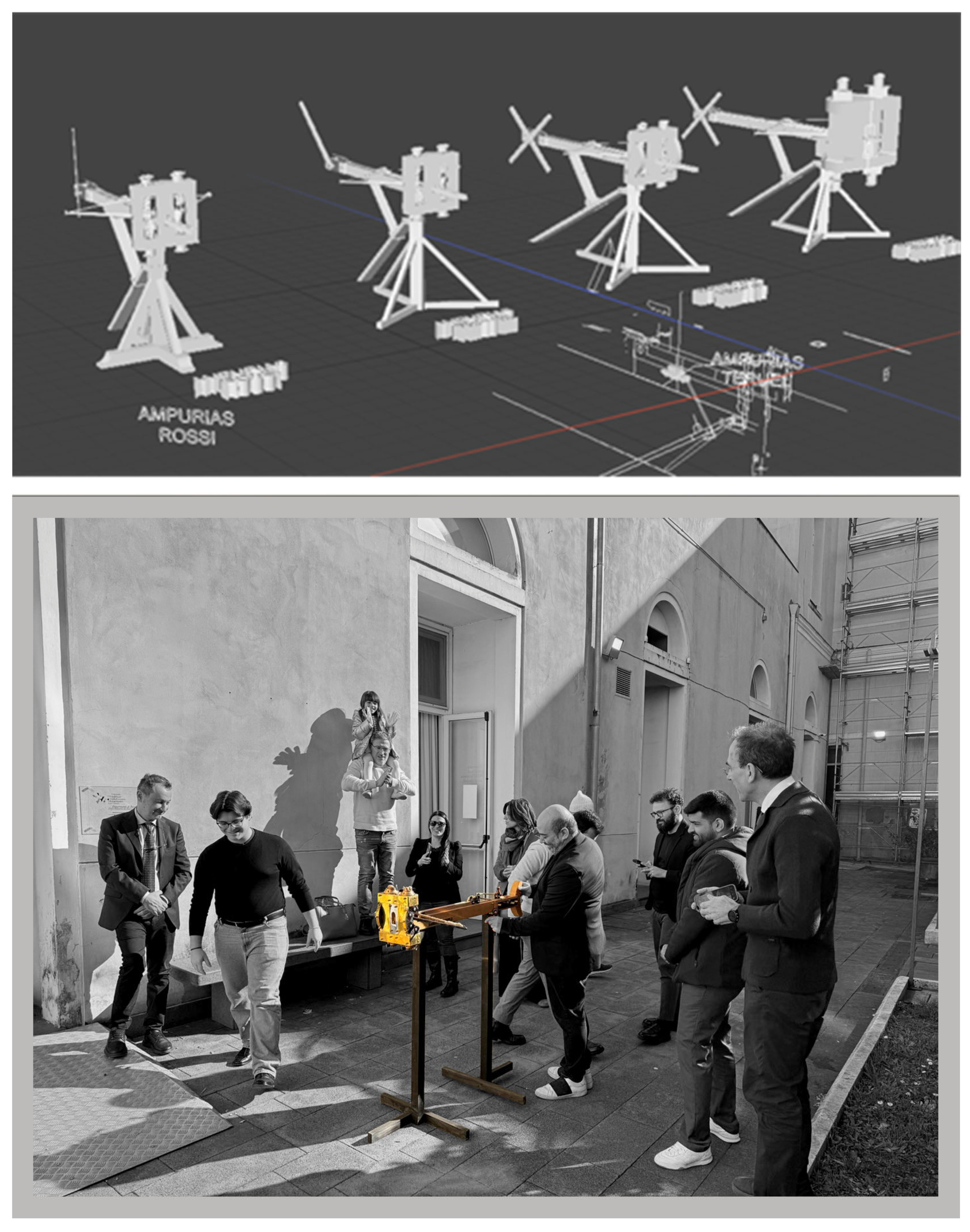 |
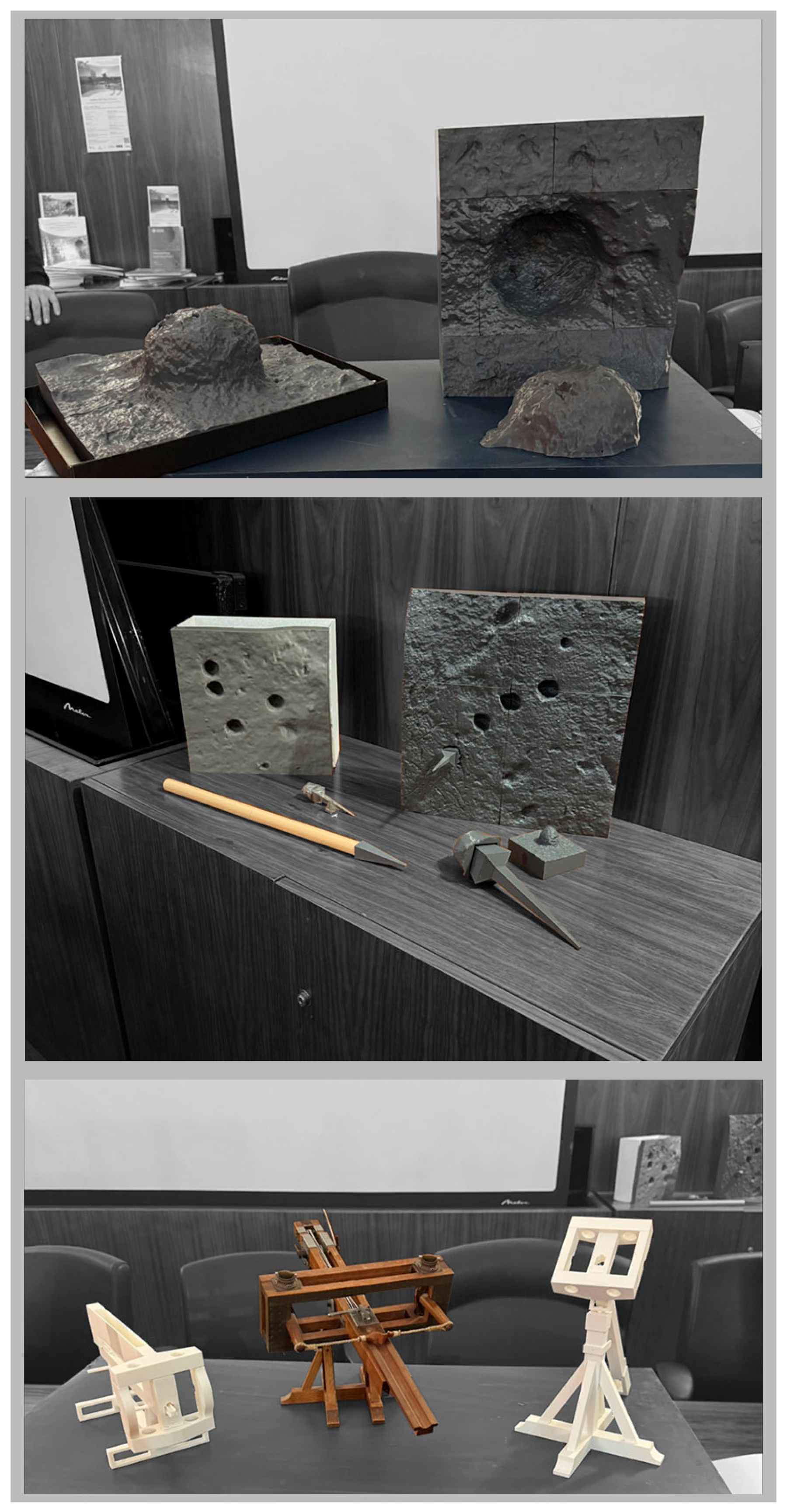 |
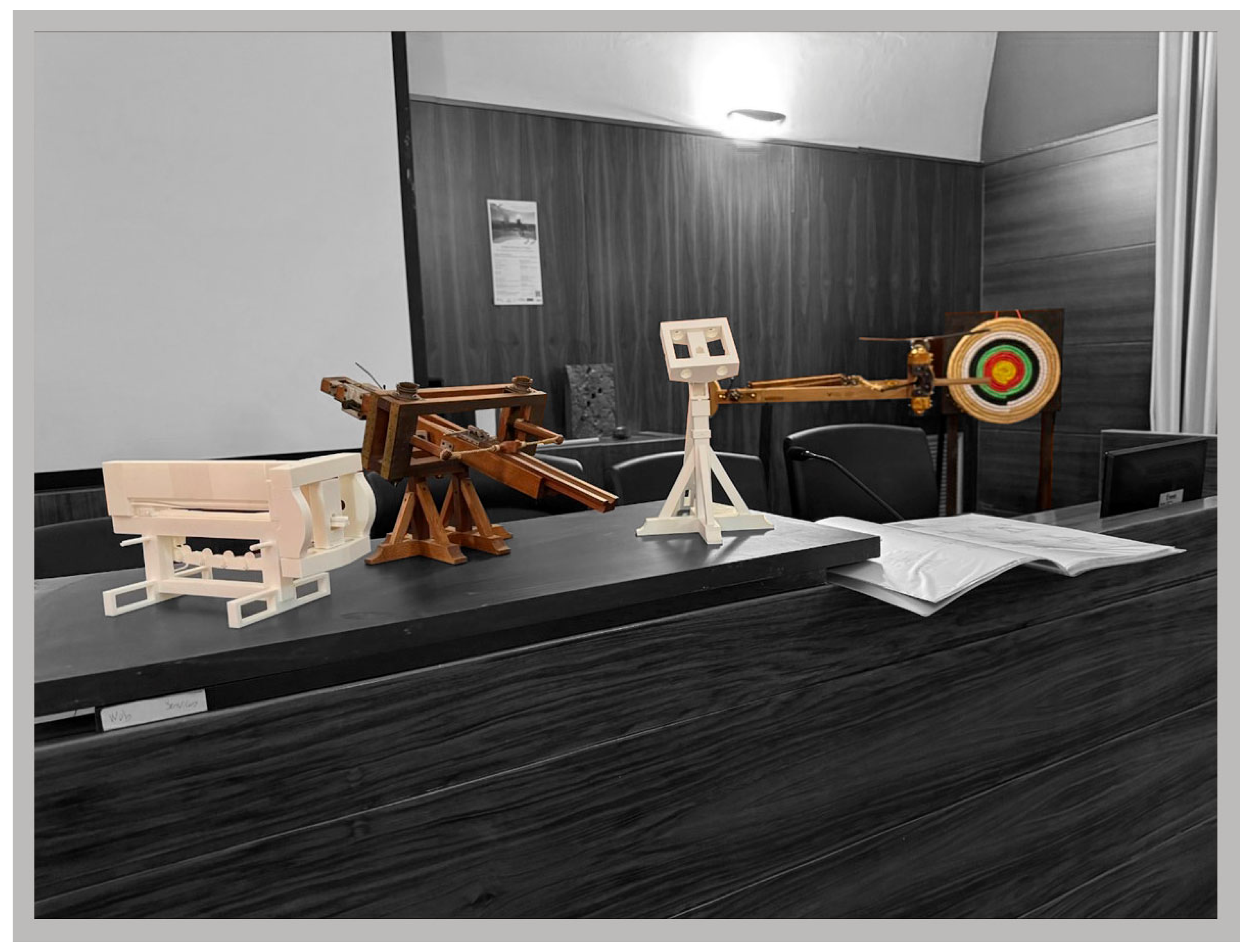 |
References
- Maiuri, A. Studies and research on the fortification of Pompeii (Studi e ricerche sulla fortificazione di Pompei). In Monumenti Antichi Pubblicati per Cura Della R; Accademia dei Lincei: Milan, Italy, 1930; Volume 33, pp. 114–286. (In Italian) [Google Scholar]
- Whiston. W. The works of Flavius Josephus; Chatto and Windus: London, UK, 1860. [Google Scholar]
- Burns, M. Pompeii under siege: A missile assemblage from the Social War. J. Rom. Mil. Equip. Stud. 2004, 14/15, 1–9. [Google Scholar]
- Sylaiou, S.; Tsifodimou, Z.E.; Evangelidis, K.; Stamou, A.; Tavantzis, I.; Skondras, A.; Stylianidis, E. Redefining Archaeological Research: Digital Tools, Challenges, and Integration in Advancing Methods. Rev. Appl. Sci. 2025, 15, 2495. [Google Scholar] [CrossRef] [Scilit]
- van der Graaff, I. The Fortifications of Pompeii and Ancient Italy; Routledge: New York, NY, USA, 2019; Volume 352. [Google Scholar]
- Fabbri, M.; Ducatelli, V.; Zabotti, F. The Fortifications of Pompeii. New Investigations Near Tower XI, Known as Tower of Mercury. (Le fortificazioni di Pompei. Nuove indagini in prossimità della Torre XI detta di Mercurio). In Studies and Research at the Archaeological Park of Pompeii. Research and Discoveries in Pompeii: In Memory of Enzo Lippolis; Osanna, M., Ed.; The Herm of Bretschneider: Rome, Italy, 2021; Volume 45, pp. 73–92. (In Italian) [Google Scholar]
- Maiuri, A. Isolation of the wall between Porta Vesuvio and Porta Ercolano (Isolamento della cinta murale tra la Porta Vesuvio e la Porta Ercolano). Not. Degli Scavi Antich. 1943, VII, 275–314. (In Italian) [Google Scholar]
- Rossi, A. (Ed.) Discovering Pompeii: From Effects to Causes—From Surveying to the Reconstructions of Ballistae and Scorpiones; MDPI—Multidisciplinary Digital Publishing Institute: Basel, Switzerland, 2025. [Google Scholar]
- Campbell, D.B. Greek and Roman Artillery 399 BC–AD 363; Vanguard 89; Osprey Publishing Ltd.: Oxford, UK, 2003. [Google Scholar]
- Rossi, A.; Gonizzi Barsanti, S.; Bertacchi, S. Use of Polybolos on the City Walls of Ancient Pompeii: Assessment on the Anthropic Cavities. Nexus Netw. J. 2024, 27, 243–272. [Google Scholar] [CrossRef] [Scilit]
- Rossi, A.; Bertacchi, S.; Formicola, C.; Gonizzi Barsanti, S. The small anthropic traces found in the unearthed city walls of Cornelia Veneria Pompeianorum (Piccole indentazioni antropiche rinvenute nella riesumata cinta urbica di Cornelia Veneria Pompeianorum). Disegn. Idee Immaging 2024, 69, 54–67. (In Italian) [Google Scholar]
- Thakkar, M.M.; Ardeshiri Lordejani, A.; Guagliano, M. Structural Integrity Assessment of Pompeii’s City Wall Under Roman Artillery Fire: A Finite Element Approach. Eng. Proc. 2025, 96, 7. [Google Scholar] [CrossRef] [Scilit]
- Thakkar, M.M.; Ardeshiri Lordejani, A.; Guagliano, M.; Bertacchi, S.; Gonizzi Barsanti, S.; Rossi, A. FEM Simulation of Ballistic Impacts on Pompeii Walls for the Reconstruction of Roman Throwers War Machine. Int. Arch. Photogramm. Remote Sens. Spat. Inf. Sci. 2025, XLVIII-M-9–2025, 1491–1497. [Google Scholar] [CrossRef] [Scilit]
- Wilkins, A. Roman Imperial Artillery: Outranging the Enemies of the Empire, 3rd ed.; Archaeopress Roman Archaeology 114; Archaeopress: Oxford, UK, 2024. [Google Scholar]
- Schiefsky, M.J. Technē and Method in Ancient Artillery Construction: The Belopoeica of Philo of Byzantium. In The Frontiers of Ancient Science: Essays in Honor of Heinrich von Staden; Holmes, B., Fischer, K.-D., Eds.; De Gruyter: Berlin, Germany, 2015; pp. 613–651. [Google Scholar] [CrossRef] [Scilit]
- Hero of Alexandria; Baldi, B. Hero of Belopoeca’s Scholia & Life of Hero of Alexandria (Heronis Belopoeeca scholia & Heronis Alexandrini vita); Baldi, B., Translator; Typis Davidis Franci: Augsburg, Germany, 1616. (In Latin) [Google Scholar]
- Köchly, H.; Rüstow, W. Greek Military Writers: Greek and German with Critical and Explanatory Notes (Griechische Kriegsschriftsteller: Griechisch und Deutsch mit Kritischen und Erklärenden Anmerkungen); Verlag von Wilhelm Engelmann: Lipsia, Germany, 1853. (In German) [Google Scholar]
- Marsden, E.W. Greek and Roman Artillery; Technical Treatises; Oxford and Claticton Press University Press: Oxford, UK, 1971. [Google Scholar]
- Rossi, A.; Bertacchi, S.; Casadei, V. From Pompeii to Rhodes, from Survey to Sources: The Use of Polybolos. Heritage 2026, 9, 96. [Google Scholar] [CrossRef] [Scilit]
- Ammianus, M. The Surviving Books of Deeds (Rerum Gestarum Libri Qui Supersunt); Antonio, S., Ed.; Unione Tipografico-Editrice Torinese: Turin, Italy, 1965. (In Latin) [Google Scholar]
- Schramm, E. The Ancient Cannons of Saalburg: Remarks on Their Reconstruction (Die Antiken Geschütze der Saalburg: Bemerkungen zu Ihrer Rekonstruktion); Weidmann: Belin, Germany, 1918; Charpter 4. (In German) [Google Scholar]
- Baatz, D.; Feugère, M. Elements of a Roman Catapult Found in Lyon. Gallo. Excavation and Monument (Éléments d’une Catapulte Romaine Trouvée à Lyon. Gallo. Fouill et Monum). Archéologiques Fr. Métropolitaine 1981, 39, 201–210. (In French) [Google Scholar]
- Marsden, E.W. Greek and Roman Artillery Historical Development, 2nd ed.; Oxford University Press: Oxford, UK, 1969. [Google Scholar]
- Chondros, T.G. The development of machine design as a science from classical times to modern era. In Proceedings of the International Symposium on History of Machines and Mechanisms (HMM 2008), Tainan, Taiwan, 11–14 November 2008; Springer: Dordrecht, The Netherlands, 2008. [Google Scholar]
- Chondros, T.G. Archimedes (287–212 BC) History of Mechanism and Machine Science 1, Distinguished Figures in Mechanism and Machine Science, Their Contributions and Legacies, Part 1; Marco, C., Ed.; University of Cassino: Cassino, Italy; Springer: Dordrecht, The Netherlands, 2007. [Google Scholar]
- Iriarte, A. The Inswinging Theory. Gladius 2003, XXIII, 111–140. [Google Scholar] [CrossRef] [Scilit]
- Russo, F. The Artillery of the Roman Legions (L’artiglieria delle legioni Romane), 1st ed.; Poligrafico dello Stato: Roma, Italy, 2004. (In Italian)
- Russo, F.; Russo, F. The Scorpions of the Roman Republic: Historical Overview, Archaeological Finds, and Reconstruction Plates (Gli Scorpioni della Repubblica. Cenni Storici, Reperti, Tavole Ricostruttive). In La Catapulta di Ampurias; ESA: Torre del Greco, Italy, 2008. (In Italian) [Google Scholar]
- Galiani, B. The Architecture of Marcus Vitruvius Pollio, Translated and Commented upon by the Marquis Berardo Galiani (L’architettura di Marco Vitruvio Pollione Tradotta e Comentata dal Marchese Berardo Galiani); Vitruvius 1758; Stamperia Simoniana: Naples, Italy, 1758; p. 5. (In Italian) [Google Scholar]
- Wilkins, A.; Morgan, L. Scorpio and cheiroballistra. J. Rom. Mil. Equip. Stud. 2000, 11, 77–101. [Google Scholar]
- Schalles, H.-J. The Early Imperial Period Manuballista from Xanten-Wardt; Banda Xantener Berichte (Die Frühkaiserzeitliche Manuballista aus Xanten-Wardt); Banda Xantener Berichte; Philipp von Zabern: Magonza, Germany, 2010. (In German) [Google Scholar]
- Russo, F.; Russo, F. 89 BC. The Siege of Pompeii: The Dynamics and Military Technologies of Sulla’s Conquest of Pompeii (89 a.C. Assedio a Pompei: La Dinamica e le Tecnologie Belliche della Conquista Sillana di Pompeii); Edizioni Flavius: Pompei, Italy, 2005. (In Italian) [Google Scholar]

Disclaimer/Publisher’s Note: The statements, opinions and data contained in all publications are solely those of the individual author(s) and contributor(s) and not of MDPI and/or the editor(s). MDPI and/or the editor(s) disclaim responsibility for any injury to people or property resulting from any ideas, methods, instructions or products referred to in the content. |
© 2026 by the authors. Licensee MDPI, Basel, Switzerland. This article is an open access article distributed under the terms and conditions of the Creative Commons Attribution (CC BY) license.