


Abstract
This paper investigates exhibit design strategies for communicating siege scenarios through integrated digital resources, including polyfunctional models, reality-based 3D assets, and AI generated pre-visualizations. The study reorganizes heterogeneous materials into a coherent methodological workflow grounded in high resolution documentation acquired for archaeological research. Results derive from the case of the northern walls of Pompeii, where ballistic imprints attributed to the Sullan siege present challenges of accessibility and intelligibility. The evaluation demonstrates how digital models, physical replicas, and media code frameworks support inclusive dissemination for diverse audiences, including visitors with visual or mobility impairments.
1. Introduction
The rapid expansion of digital technologies in cultural heritage research, accelerated during the COVID-19 pandemic, altered how museums record, communicate, and disseminate collections. In the span of just a few years, an extensive body of literature has emerged, and numerous projects have been funded in this direction. This body of literature spans multiple domains, including large scale digitization, model optimization for real time rendering applications, the creation of specialized equipment, interactive visualization systems designed for dedicated kiosks or touchscreen interfaces, and the development of ad hoc narratives based on museological and edutainment criteria [1,2,3,4,5,6,7,8,9,10]. Digitization workflows supported remote visualization during restricted access periods and strengthened online museum networks. In the post-pandemic context, new opportunities arise from AI-based tools capable of producing preliminary visualizations, multimedia outputs, and exhibit design concepts that once required extensive production resources [11,12,13,14]. Their apparent immediacy, however, must align with established museological frameworks responsible for narrative accuracy, proxemic coherence, and the relationship between collections and their spatial settings, and with the professional practices of architects and exhibition designers who develop display cases, support systems, corporate identity, and coordinated communication materials. These professionals, who traditionally acted as intermediaries between curators, conservators, and technical teams, remain largely distant from research groups working on digitization pipelines and interactive 3D applications, revealing a significant gap between digital specialists and those responsible for the spatial and material articulation of museum displays [15,16].
Concerns over non-specialist uses of digital tools have emerged in the broader digital humanities community. Although these technologies reduce production time and costs, they raise questions of scientific legitimacy and narrative correctness. To address these issues, the present contribution reorganizes diverse materials concerning polyfunctional 3D assets, tactile replicas, and exhibition prototypes, with a focus on the dissemination of historical siege scenarios.
The case of the Sullan siege of Pompeii (1st century BC) illustrates the communication challenges inherent in disseminating events with limited visible archaeological traces [17,18,19,20]. Ballistic imprints documented through high resolution 3D models remain difficult to detect on site due to morphological variability, material heterogeneity, vegetation, and limited public accessibility. The northern fortification system is currently closed to visitors, creating both physical and cognitive barriers. These constraints motivate the development of multimodal exhibit solutions capable of conveying complex archaeological interpretations to general audiences and individuals with visual or mobility impairments.
The paper integrates materials from one comprehensive reference study on reality-based modeling, tactile assets, and dissemination strategies, combined with general contextual notes on museum practices and accessibility. The aim is to reorganize these contributions into a unified workflow for exhibit design pre-visualization.
2. Materials and Methods
Over the past decade, our research area has focused on the use of digital models for scientific analysis [21,22,23], dissemination [24,25], and as operational support for complex restoration activities [26,27,28]. The relationship with exhibit design has been consistently present in our research team, as many of the survey campaigns were conducted through workshops and training initiatives on new technologies, as well as during excavation and documentation activities [29]. However, the challenge of developing digital tools and methodologies capable of establishing a substantive and genuinely integrated dialogue among archaeologists, engineers, art historians, and exhibition designers should not be underestimated. This difficulty arises because the disciplinary backgrounds of these professionals often diverge significantly or even operate in opposite directions [30]. Only in very recent years have the first critiques emerged regarding workflow models provided by widely adopted software solutions which, despite their diffusion, have long exhibited clear cultural limitations [31].
The experiences carried out on the World Heritage sites of Ravenna (Italy) and on the archaeological area of Hadrian’s Villa in Tivoli (Rome, Italy) served as practical testing grounds for developing concrete solutions that, starting from digital survey data, resulted in specific outputs: multipurpose models, suitable for a wide range of applications.
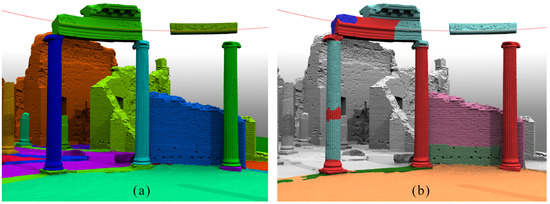
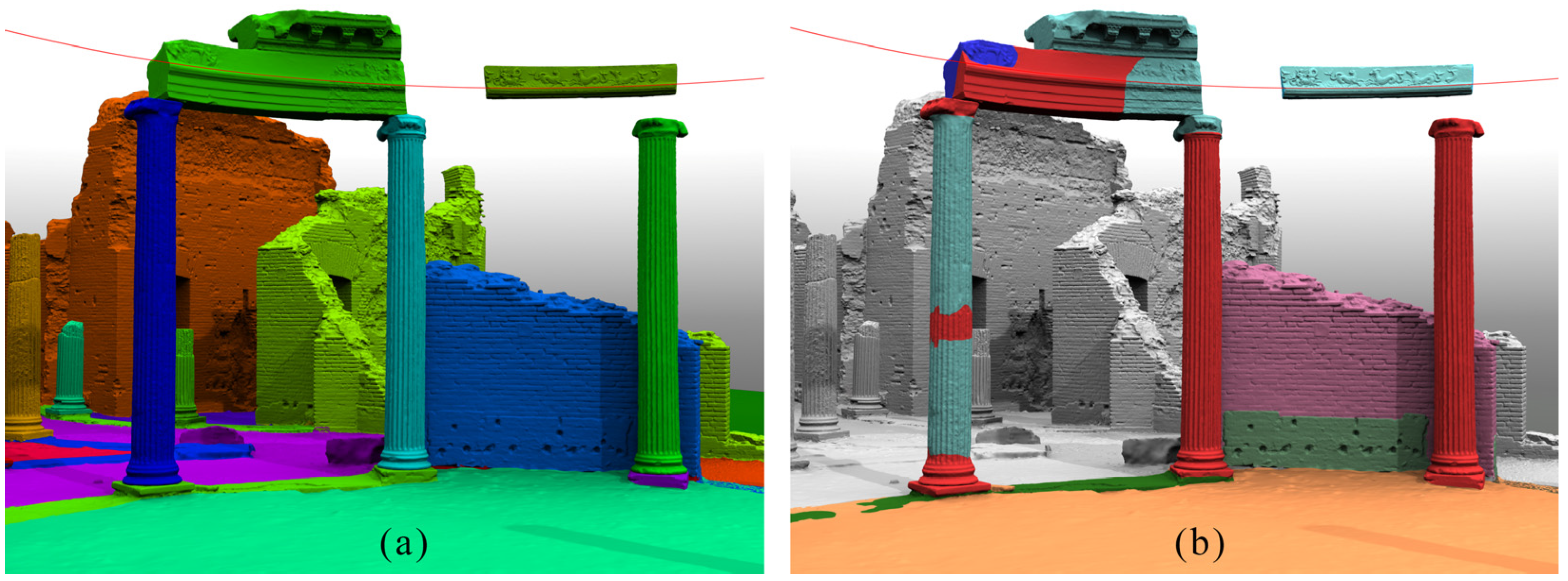
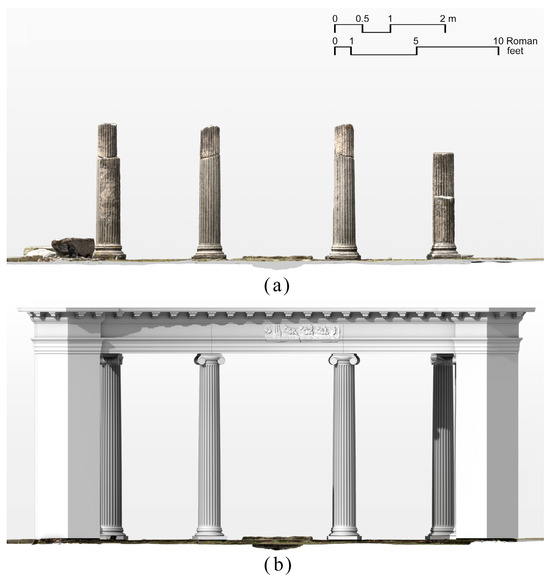
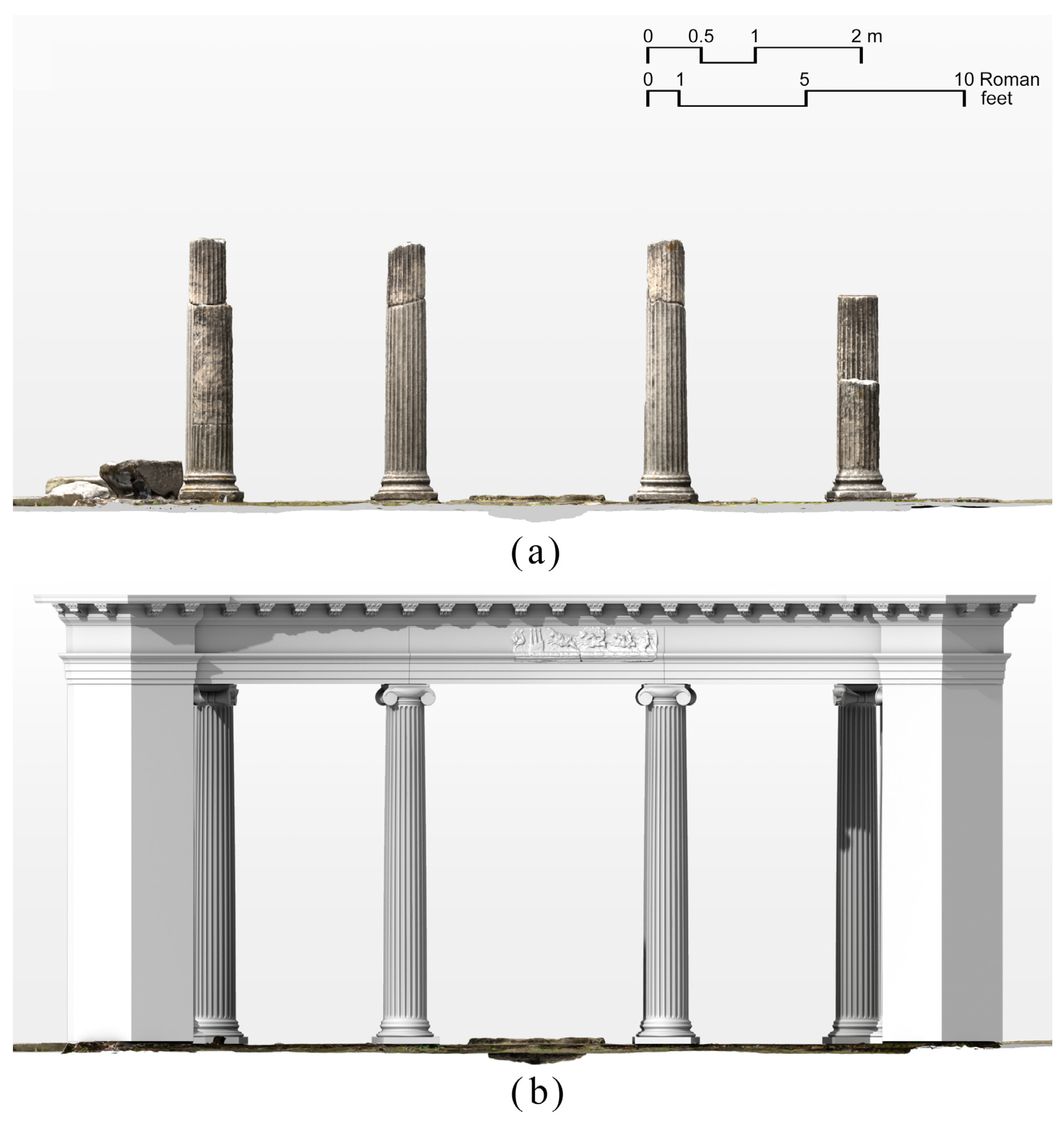
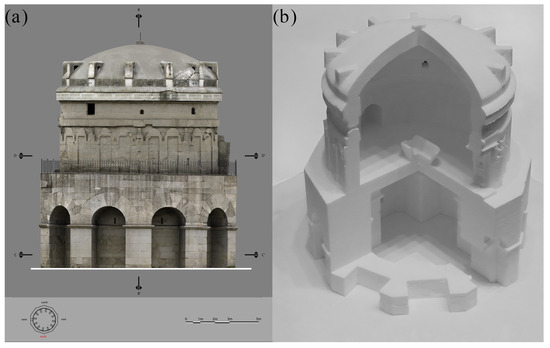
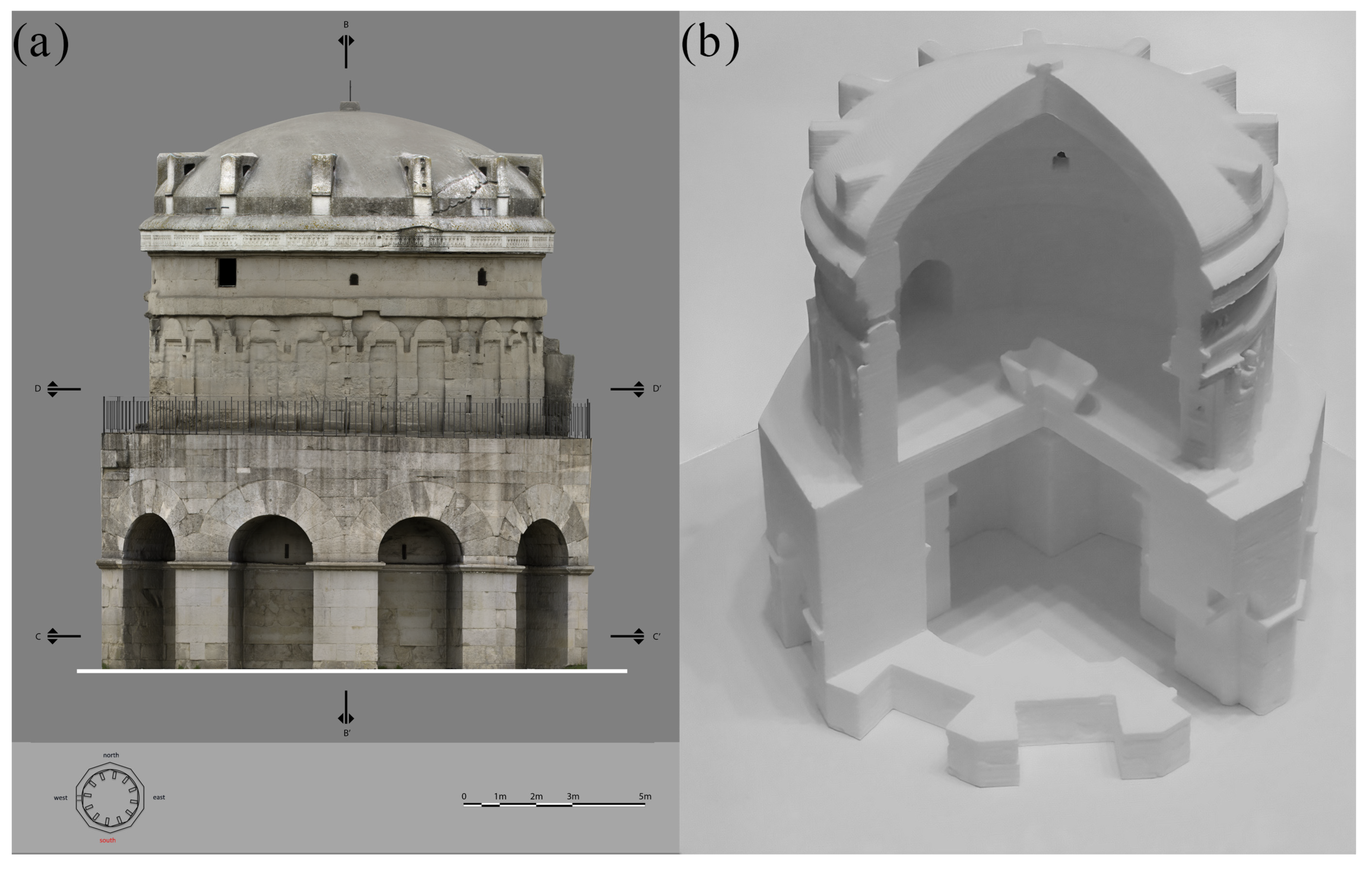
Multipurpose models are produced through a workflow that integrates multiple forms of expertise—photogrammetry, laser scanning, and CGI techniques for the creation of lightweight models—and they exhibit several characteristics that make them suitable for analytical outputs (Figure 1), for documentation and reconstructive hypotheses (Figure 2), and, with appropriate adjustments, for 3D printing (Figure 3). Last but not least, these assets are suitable for interactive visualization and exploration through game engine environments.
Figure 1.
Maritime Theater, Hadrian’s Villa (Tivoli). (a) Primary semantic segmentation of the polygonal model derived from photogrammetry and laser scanning data (random colors assigned by the software). (b) Secondary segmentation distinguishing original components from restored elements (chromatic maps used to differentiate original elements and restored areas) In both images, the repositioning of a figurative frieze originating from the Villa’s Antiquarium is shown. Image by F.F.
Figure 2.
Central portico of the Maritime Theater at Hadrian’s Villa (Tivoli). (a) Current state. (b) Reconstructive hypothesis with the addition of the figurative frieze originating from the Antiquarium. Image by Gianna Bertacchi and F.F.
Figure 3.
Mausoleum of Theoderic (Ravenna, Italy). (a) Orthophoto derived from the digital model (image by Marco Neri). (b) 3D-printed model produced from the same dataset. Final model setup by Silvia Bertacchi.
Setting aside the technical procedures required for generating multipurpose models, we provide here a summary of their characteristics:
- They are produced through the combined use of photogrammetry and laser-scanning techniques. In particular, marble elements are generated through photogrammetry in order to avoid the evident morphological distortions that affect time-of-flight instruments and, even more significantly, phase-shift systems [32].
- The segmentation process must be carried out in collaboration with archaeologists and conservators so that the semantic subdivision can be used effectively and according to a dual objective: the optimization of the models [33,34] and the consistency with the stratigraphic reading of the masonry. This ensures that the segmentation follows both the constructive logic of the structure and the identification of additional components such as restorations and integrations.
- The models are processed in order to get medium (mid-poly) or even low (low-poly) resolution representations and are typically produced through square-dominant remeshing, which facilitates segmentation, the time-consuming parametrization process (UV mapping), and, compared to triangle-based meshes, provides greater adherence to curvature lines and sharp edges [35].
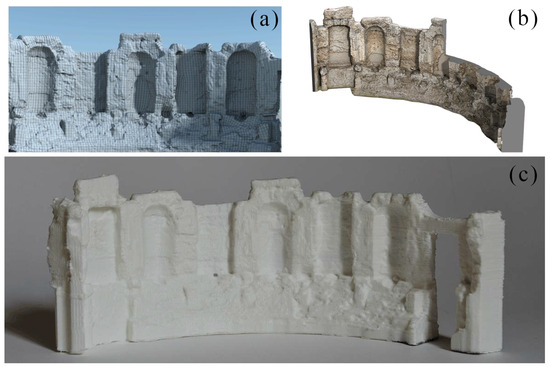
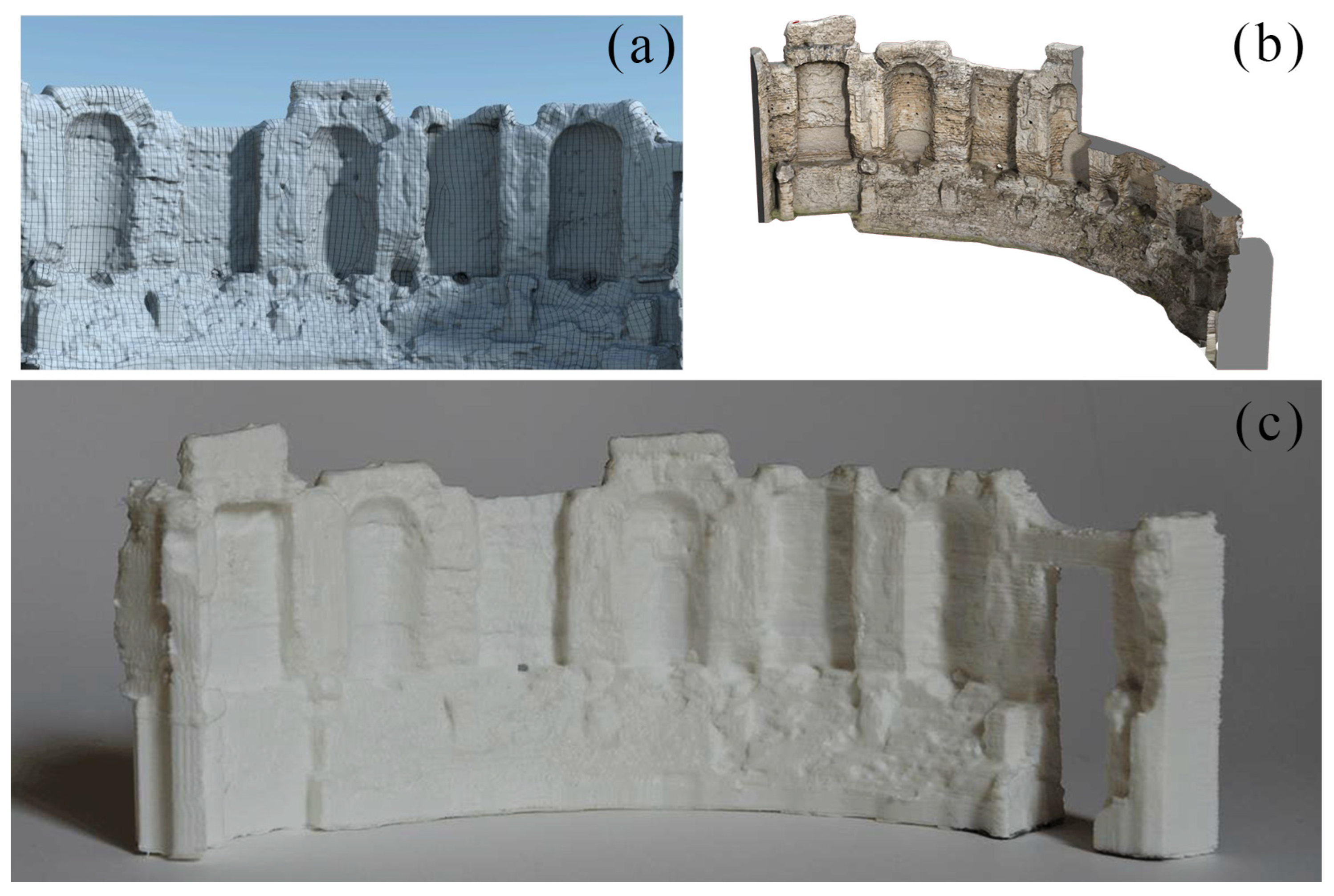
- In polyfunctional models, visual outputs require the use of multiple textures—applied across different channels such as normal, roughness, albedo, and others—which collectively provide the basis for fully exploiting the material optical-simulation features offered by the “principled” shader model [36,37], now established as the standard in Visual Effects (VFX) production. For physical models intended for prototyping, we developed a workflow based on displaced subdivision surfaces, which allows low-detail meshes to be mapped with OpenEXR [38] images so that displacement can restore the geometric detail present in the original sensor-based model (whether acquired through active or passive systems) (Figure 4).
Figure 4.
South nymphaeum of Golden Court, Hadrian’s Villa (Tivoli, Italy). (a) Displaced subdivision surface model with variable detail. (b) Interactive Boolean operations performed on the model. (c) 3D-printed model derived from the same dataset. 3D modelling by Giacomo Mussoni.
3. Results
Taken together, the methods developed in recent years through research on UNESCO-protected heritage sites and museum collections have enabled us to refine a range of techniques and to establish a workflow (from documentation to visualization and interaction) whose primary limitation lies in the breadth of its operational chain—integrated survey techniques, color processing, point-cloud and mesh processing, and model optimization. In this section we present three outputs related to the relationship between digital models, creative processing, and interaction with artifacts and archaeological areas. A key aspect of this comparison is the differing temporal relationship between creative production through AI solutions and scientific documentation, which shapes how each process is validated, interpreted, and integrated within research teams.
3.1. SMA Experience: Semantics and Interaction Design
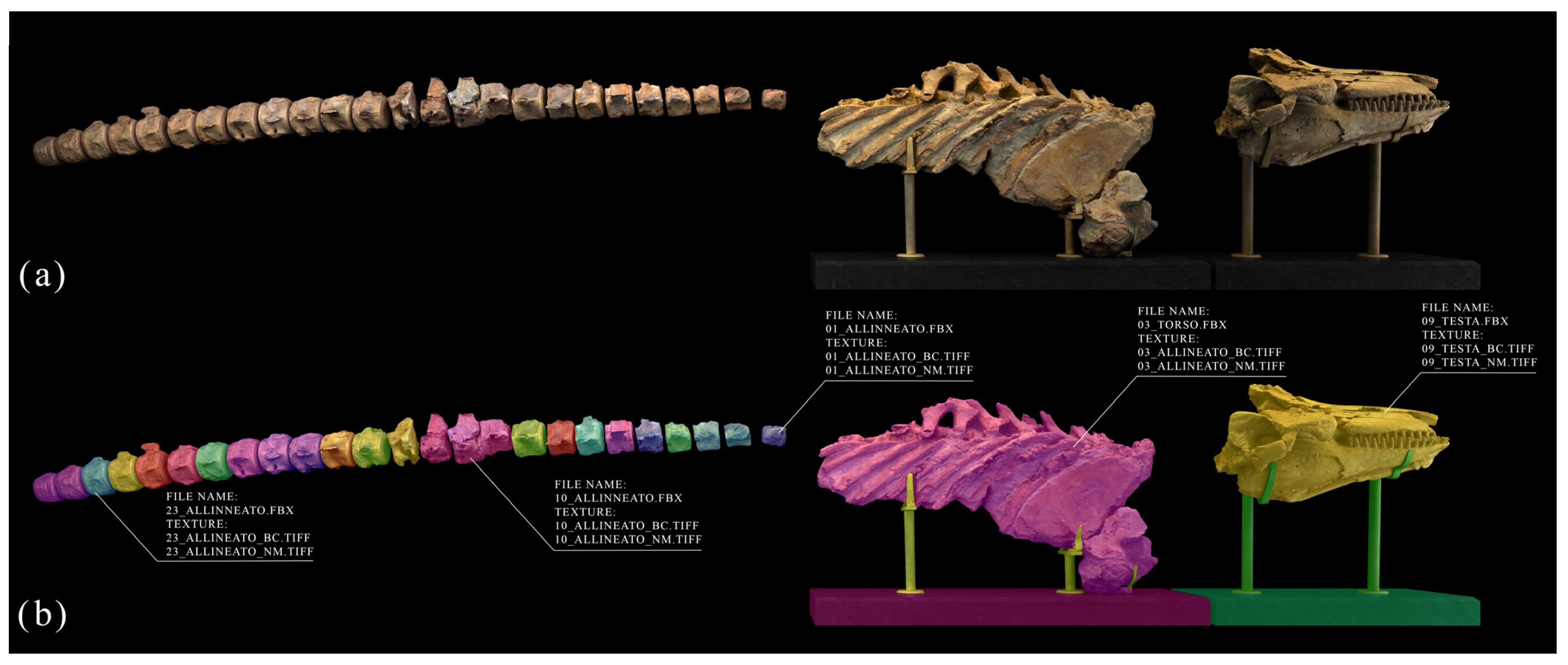
Within the framework of our internship activities and thesis-based experiments, it was shown that acquiring the necessary know-how to generate polyfunctional models enables students to deepen and better understand many of the underlying mechanisms of documentation and visualization in the heritage domain. The experiments conducted in collaboration with the University Museum System of the University of Bologna (Sistema Museale di Ateneo—SMA), and, in particular, with the Geology Collection Museo Giovanni Capellini (the oldest geo-paleontological museum in Italy) [39], led on the one hand to the complete digitization of the Orcinus citoniensis (a rare paleontological find of great significance), and on the other to the development of a multi device application primarily designed for children within the exhibition “Mente et Malleo. Da Ulisse Aldrovandi a Giovanni Capellini: storie dal primo museo geologico” (15 October 2022–31 August 2023).
The concept of semantic organization within the models can be understood as a general framework for deepening the knowledge of material reality—not only archaeological artifacts or architectural structures—as demonstrated by the collaboration with the curators of the Geology Collection. In this case as well, the initial planning phase conducted with museum conservators resulted in effective and well-structured survey operations (Figure 5), while the logic of part-based representation facilitated both the modeling workflow and the subsequent implementation within a game engine environment (via Unreal Engine 5).
Figure 5.
Orcinus citoniensis (Museo Capellini, SMA, Bologna). (a) Final model optimized for Unreal Engine 5. (b) Semantic subdivision of the digital model, including annotations and planning codes for modeling and texturing operations. 3D modeling and rendering by Giorgio Lecci.
The game mechanics, developed in collaboration with the museum’s conservators and the indie developer LKA (www.lka.it), leveraged the segmented 3D model to create a puzzle-based interactive application. Through the touchscreen interface, users could reassemble the skeleton and ultimately visualize Orcinus citoniensis in its original anatomical form. The entire process lasted eight months and involved numerous specialists. The interactive application, designed primarily for large-format touch screens, required several rounds of debugging to ensure adequate flexibility while remaining suitable for interaction by a very young audience.
3.2. AI Generated Pre-Visualization
The team developed a didactic experiment grounded in a series of archaeological survey activities: in particular, the survey campaign conducted on the Egyptianizing area of Hadrian’s Villa (Aegyptica/Aigyptiakà) [40,41,42] provided a metrically reliable basis for design-oriented explorations that explicitly connected the physical remains of the monument with the curatorial concept and collection of the exhibition “Antinoo, il fascino della bellezza” [43].
AI tools were used to produce pre-visualizations of exhibit components (kiosks, showcases, and outdoor structures) based on textual descriptions and reference images derived from the digitized materials. These operations were supported by continuous scientific collaboration during the survey phases, which provided the interpretative framework necessary to understand the site—specifically the position, orientation, dimensions, and communicative intent of the Aegyptica/Aigyptiakà—together with a substantial body of information drawn from the mentioned exhibition.
Furthermore, the availability of preliminary design ideas in the form of sketches and volumetric 3D models for a temporary pavilion enabled a broader experimental workflow in which AI tools were employed not only to generate pre-visualizations but also to support the museological articulation of topics related to the figure of Antinous.
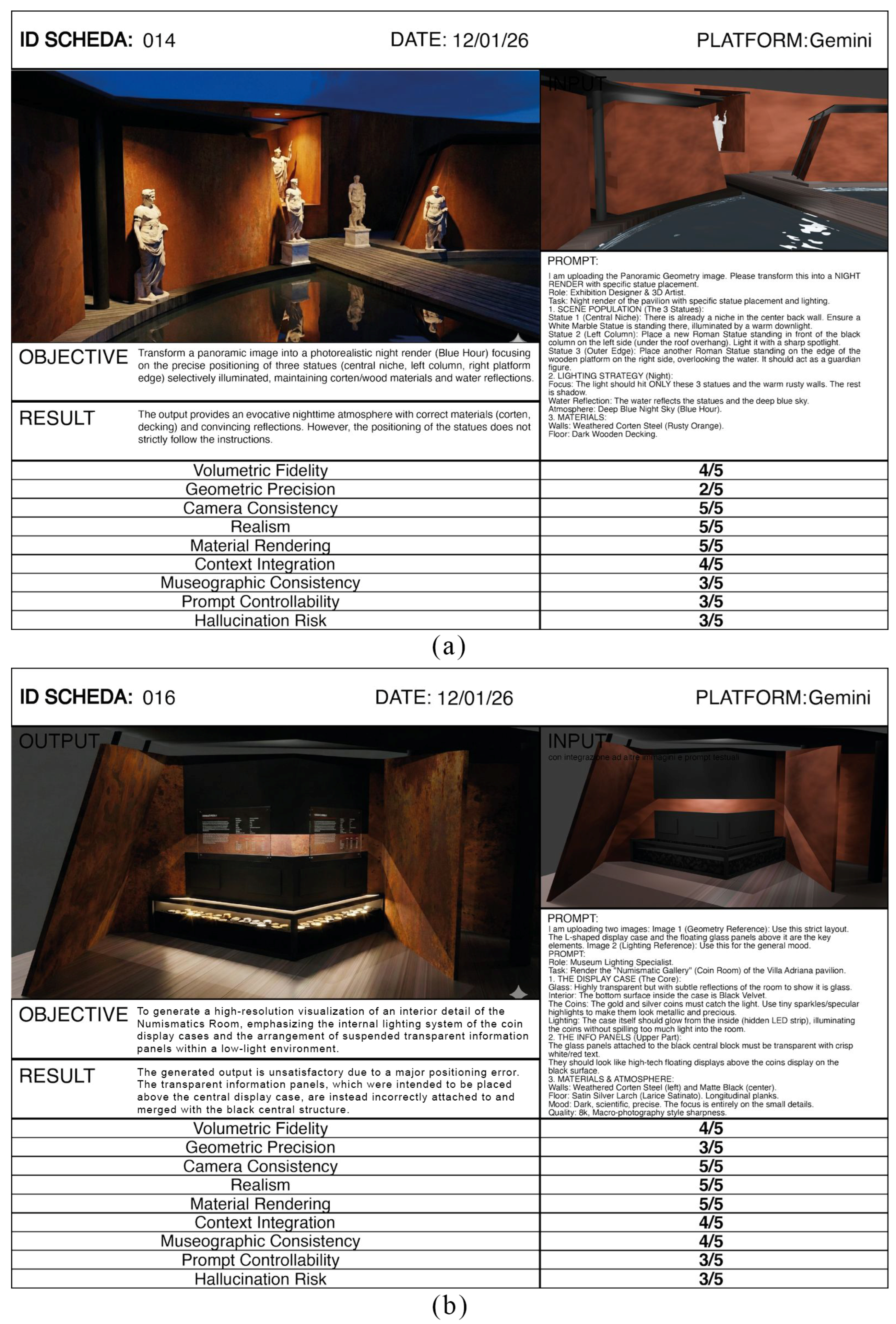
In the renderings produced during the experiment (Figure 6), AI tools demonstrated strong performance in reproducing atmospheric conditions and material appearance, while consistently failing to preserve fine-scale metric accuracy. A structured evaluation sheet and the prompts employed in the tests were used to assess these limitations.
Figure 6.
Examples of evaluation sheets used to assess the AI generated pre-visualization outputs. The forms specify the prompt employed, the intended objectives, and the results evaluated by category. (a) Example of an exterior pre-visualization. (b) Interior view of the exhibition (numismatic section). Draft modeling and prompts by Nina Serra.
From a methodological standpoint, the approach adopted can be described as “human-led, AI-assisted”: AI does not replace the designer but accelerates the pre-visualization phase, enabling rapid exploration of atmospheric, chromatic, and material variants that would require substantially longer times through conventional methods. Once the workflow protocol had been established on the basis of the most effective AI model, the time required to set up the scenes could be considered drastically reduced compared with traditional modeling systems, including for achieving adequate levels of photorealism.
As a final consideration, this reduction highlights the operational efficiency attainable in a workshop or brainstorming context, rather than in the production of a finalized professional digital representation. From this perspective, AI tools appear to facilitate participatory design processes by removing the barrier related to the ability of some actors to imagine and visualize forms and materials during the development of an exhibition project. However, this applies only insofar as the limits—and therefore the appropriate value—of such outputs are clearly understood (e.g., concept design, masterplan, or preliminary-stage material).
3.3. Strategies for the Storytelling of Siege Techniques
The opportunity to work on such a compelling concept as the northern walls of Pompeii—rich in evidence related to siege techniques—allowed us to apply, albeit at a conceptual level, a set of ideas articulated across three domains: collection, exhibition design, and museum (in this case, the archaeological site as container).
Within the exhibition device we propose to develop, the collection would rely on scale models and replicas of artifacts: models of siege engines, sections of the walls, and projectiles (both bolts and stone balls). Physical models from active and passive sensor pipelines, or direct modelling are essential due to their inclusive nature, as they facilitate comprehension for visitors with visual impairments. The replicas of the siege engines should allow users to intuitively and engagingly activate—even only partially—the elastic-torsion mechanisms underlying projectile propulsion.
Relevant experiments in this direction have been carried out at the Museo Galileo—Istituto e Museo di Storia della Scienza in Florence (Italy) (https://www.museogalileo.it/it/ accessed on 21 July 2026), using simple yet effective analogic solutions that nonetheless clarify the concepts of range and parabolic trajectory in Renaissance artillery.
From an exhibition-design perspective, we hypothesize that one strategy could involve the creation of an integrated system of display cases, organized by thematic sections, to be installed either in indoor spaces or in semi-open areas—such as porticoes or covered passages—near the northern walls, ideally by obtaining space within the towers. The museographic component—conceived as the construction of an independent environment—would consist of one or more small, box-shaped, self-standing rooms to be positioned outside the walls. The latter should function as a mirador, that is, a telescope-like display case equipped with information useful for interpreting the siege, particularly its logistics.
In this respect, the possibilities offered by interactive museology are numerous and rely on the creation of “projective devices” capable of superimposing onto the view of a building or archaeological ensemble a graphic representation printed on a glass panel. Examples of this type are present at the Ename archaeological site [44] and, more recently, at the Museo Leonardiano in Vinci (Italy) [45].
From an applied perspective, generating the concept images for the solutions described above relied on a workflow based on the integrated use of several available AI tools—both for prompt generation and for their practical application to produce concept images. We used freehand sketch-based studies and the preliminary rendering phases.
A consistent workflow was used:
Microsoft 365 Copilot (Microsoft Corp., Redmond, WA, USA; cloud-based version, GPT-5 chat model; accessed on 16 March 2026) was used to draft and refine the textual prompts to be uploaded with specific images. These prompts were subsequently processed within Google AI Gemini 3.1 Flash Image, using the Nano Banana 2 model [46] to generate the visual proposals for the exhibition layouts. A limited final stage of post-processing was conducted in Adobe Firefly, where selected areas were adjusted to enhance local detail and achieve a more coherent level of realism in portions of the images that initially appeared less convincing.
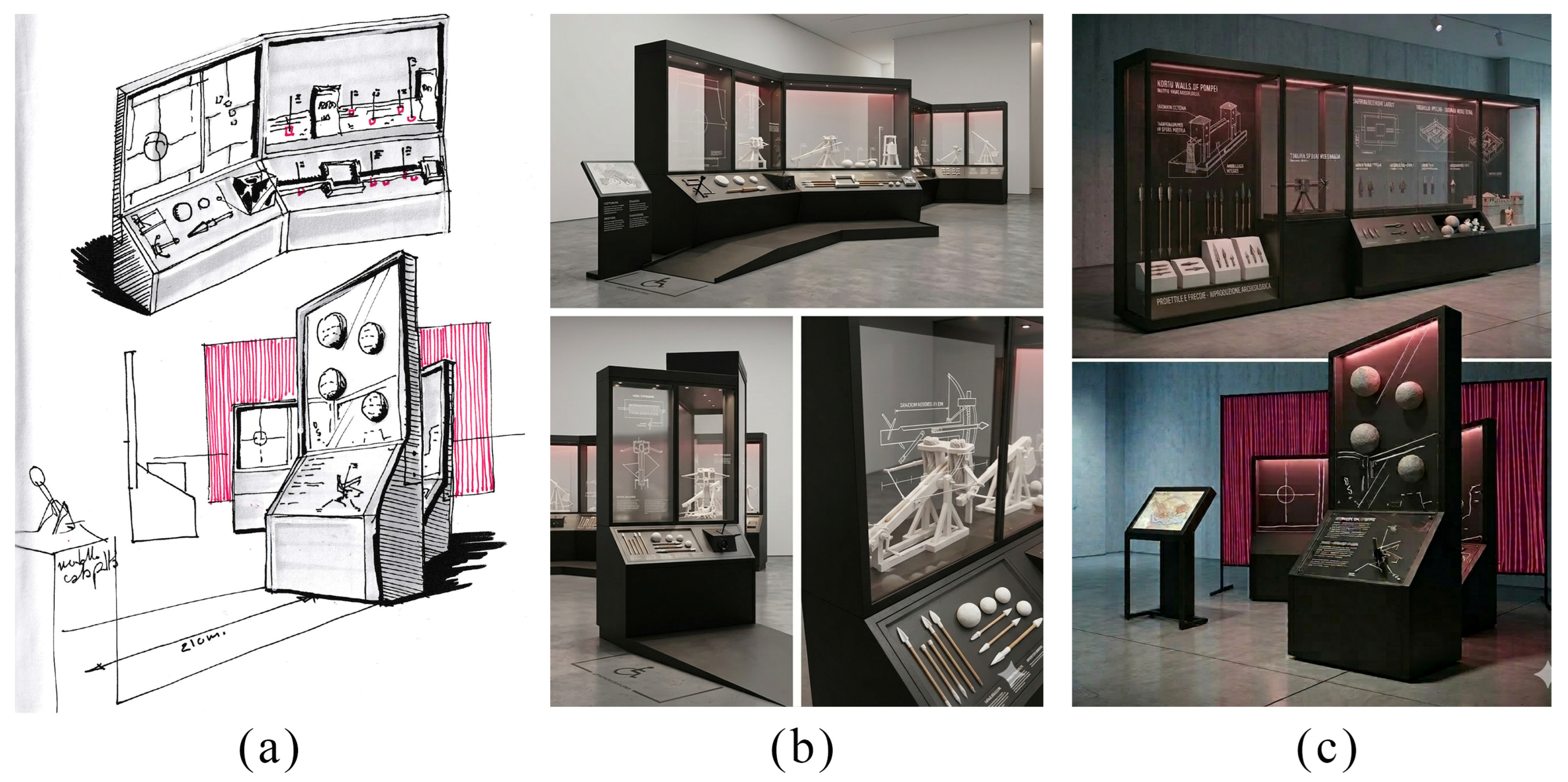
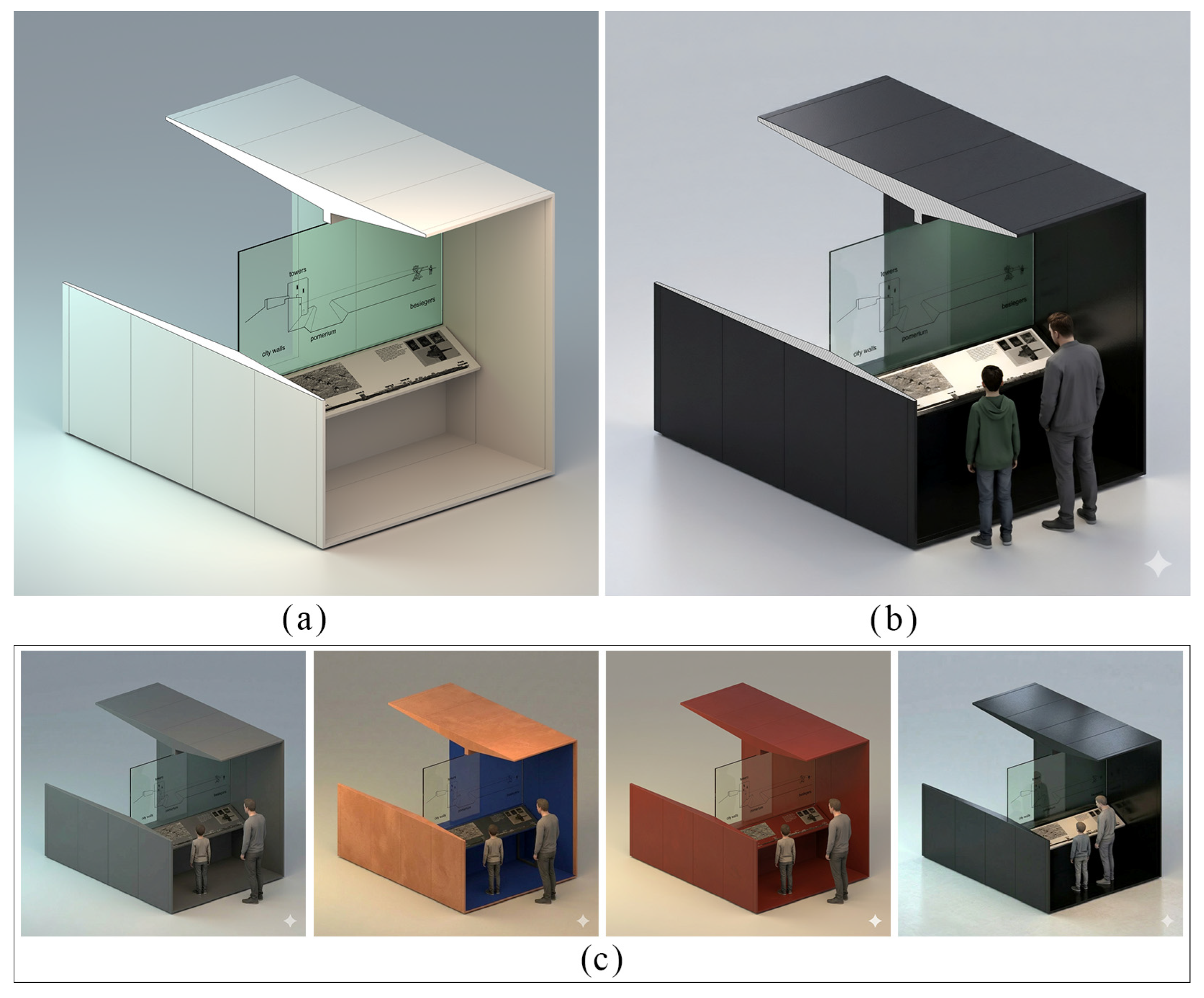
Paradoxically, hand-drawn sketches—precisely because they do not impose strict metric or projective constraints—produce more coherent AI-generated outputs than geometrically rigid reference models. This observation suggests that, at the present stage of technological development, AI tools are most effective when used as flexible amplifiers of curatorial and design intent rather than as systems operating under strict morphological fidelity (Figure 7 and Figure 8).
Figure 7.
Example of pre-visualization obtained through the integration of: (a) freehand sketches by F.F.; (b,c) Microsoft Copilot for prompt development, and two sample images generated with Google AI Gemini 3.1 Flash Image/Nano Banana 2. Images by F.F.
Figure 8.
Pre-visualization of a “mirador” represented in an axonometric section, focusing visitors’ view on the northern walls of Pompeii affected by Sulla’s siege. (a) Image rendered through a conventional pipeline. (b) Output generated using the proposed AI workflow and local refinements produced in Adobe Firefly. (c) Additional material and environmental tests produced through AI. Image by F.F.
4. Discussion and Conclusions
These considerations provide a framework for exploring how AI-assisted methodologies may be mobilized in future work to develop exhibition concept design. In this regard, the combination of reality-based models and controlled AI visualizations offers a promising direction for interpreting archaeological evidence through accessible and multi-scalar exhibition strategies. The software solutions employed in this study are based on text-to-image diffusion models which, starting from random noise, iteratively reconstruct an image through successive denoising steps guided by the prompt vocabulary [47,48]. However, these tools still present significant constraints, particularly in relation to fine metric control, sensitivity to lexical variations, and the frequent occurrence of “hallucinations”—unintended spatial distortions, volumetric errors, or incorrect interpretations of specialized jargon (lack of contextual understanding).
Given that the research group responsible for the digital documentation of the North walls of Pompeii [49,50] has extensively examined the causes and effects of siege techniques, numerous topics remain available for visualization through diverse and more specific exhibition solutions. The possibility of producing maquettes—derived from reality-based surveys—of siege engines and projectiles (e.g., spherical, darts, bolts) enables the development of display cases and outdoor installations capable of supporting coherent storytelling for weaker or more vulnerable user groups while maintaining scientific accuracy.
Within the museographic and exhibition-design context, the results of this research underline a complementary yet asymmetric relationship between polyfunctional models and AI-assisted visualization tools. Polyfunctional models remain essential for generating scientifically reliable assets that reinforce the communicative framework defined by curators and conservators. Their main limitation, however, lies in the substantial time and computational effort required for their production, which makes them less suitable for the early conceptual phases of exhibition design—phases that typically rely on rapid, multi-author contributions.
From the initial exhibition concept to its material implementation, the fragmentation of tasks among separate working groups represents a constant risk, particularly today. This tendency reflects a broader contemporary approach that favors a positivist, task-oriented division of labor, structured around vertically specialized competencies, similar to the operational logic of nationally or European-funded projects. Several authors have critically examined this model, noting that the rhetoric of interdisciplinarity often exceeds its practical realization and that such organizational patterns may reproduce disciplinary hierarchies rather than dissolve them [51,52].
Taken together, these reflections underscore the need for workflow models capable of integrating reality-based assets and AI-assisted visualizations without reproducing rigid disciplinary partitions, thereby supporting exhibition-design processes that remain both scientifically grounded and operationally coherent.
Author Contributions
Conceptualization, L.C.; methodology, F.F.; writing—original draft preparation, F.F.; writing—review and editing, L.C. and F.F.; visualization, F.F. All authors have read and agreed to the published version of the manuscript.
Funding
This research received no external funding.
Institutional Review Board Statement
Not applicable.
Informed Consent Statement
Not applicable.
Data Availability Statement
Contact the corresponding author for data requests that will be available upon reasonable request with the permission of the competent authorities.
Acknowledgments
The authors would like to thank Adriana Rossi, principal investigator of the SCORPiò-NIDI project, for making the material used in the AI pre-visualizations available. During the preparation of this manuscript/study, the authors used [Microsoft 365 Copilot (Microsoft Corp., Redmond, WA, USA; cloud-based version, GPT-5 chat model; accessed on 16 March 2026, and Google AI Gemini 3.1 Flash Image, using the Nano Banana 2 model)] for the purposes of drafting and refining textual prompts used for AI-assisted image generation. The authors have reviewed and edited the output and take full responsibility for the content of this publication.
Conflicts of Interest
The authors declare no conflict of interest.
Abbreviations
The following abbreviations are used in this manuscript:
| SMA | Sistema Museale di Ateneo—Università di Bologna |
| VFX | Visual Effects |
References
- Guidi, G.; Beraldin, J.-A.; Atzeni, C. High-Accuracy 3D Modeling of Cultural Heritage: The Digitizing of Donatello’s “Maddalena”. IEEE Trans. Image Process. 2004, 13, 370–380. [Google Scholar] [CrossRef] [PubMed]
- Gonizzi Barsanti, S.; Caruso, G.; Micoli, L.L.; Covarrubias Rodriguez, M.; Guidi, G. 3D Visualization of Cultural Heritage Artefacts with Virtual Reality Devices. Int. Arch. Photogramm. Remote Sens. Spat. Inf. Sci. 2015, XL-5/W7, 165–172. [Google Scholar] [CrossRef] [Scilit]
- Apollonio, F.I.; Fantini, F.; Garagnani, S.; Gaiani, M. A Photogrammetry-Based Workflow for the Accurate 3D Construction and Visualization of Museums Assets. Remote Sens. 2021, 13, 486. [Google Scholar] [CrossRef] [Scilit]
- Russo, M.; Senatore, L.J. Low-Cost 3D Techniques for Real Sculptural Twins in the Museum Domain. Int. Arch. Photogramm. Remote Sens. Spat. Inf. Sci. 2022, XLVIII-2-W1-2022, 229–236. [Google Scholar] [CrossRef] [Scilit]
- Farella, E.M.; Morelli, L.; Grilli, E.; Rigon, S.; Remondino, F. Handling Critical Aspects in Massive Photogrammetric Digitization of Museum Assets. Int. Arch. Photogramm. Remote Sens. Spat. Inf. Sci. 2022, XLVI-2-W1-2022, 215–222. [Google Scholar] [CrossRef] [Scilit]
- Farella, E.M.; Morelli, L.; Rigon, S.; Grilli, E.; Remondino, F. Analysing Key Steps of the Photogrammetric Pipeline for Museum Artefacts 3D Digitisation. Sustainability 2022, 14, 5740. [Google Scholar] [CrossRef] [Scilit]
- Bacci, G.; Bozzola, M.; Gaiani, M.; Garagnani, S. Novel Paradigms in the Cultural Heritage Digitization with Self and Custom-Built Equipment. Heritage 2023, 6, 6422–6450. [Google Scholar] [CrossRef] [Scilit]
- Apollonio, F.I.; Zannoni, M.; Fantini, F.; Garagnani, S.; Barbieri, L. Accurate Visualization and Interaction of 3D Models Belonging to Museums’ Collection: From the Acquisition to the Digital Kiosk. J. Comput. Cult. Herit. 2025, 18, 5. [Google Scholar] [CrossRef] [Scilit]
- Barzaghi, S.; Bordignon, A.; Collina, F.; Fabbri, F.; Fanini, B.; Ferdani, D.; Gualandi, B.; Heibi, I.; Mariniello, N.; Massari, A.; et al. A Reproducible Workflow for the Creation of Digital Twins in the Cultural Heritage Domain. Transformations 2025, 1, 1–63. [Google Scholar] [CrossRef]
- Kimura, A. The Impact of the COVID-19 Pandemic on Digitization in Museums: The Lithuanian Case. Curator Mus. J. 2025, 68, 612–621. [Google Scholar] [CrossRef] [Scilit]
- Ferracani, A.; Bertini, M.; Pala, P.; Nannotti, G.; Principi, F.; Becchi, G. Personalized Generative Storytelling with AI-Visual Illustrations for the Promotion of Knowledge in Cultural Heritage Tourism. In Proceedings of the 6th Workshop on the analySis, Understanding and proMotion of heritAge Contents; Association for Computing Machinery: New York, NY, USA, 2024; pp. 28–32. [Google Scholar]
- Antoniou, A.; Theodoropoulos, A.; Chaleplioglou, A.; Roinioti, E.; Dafiotis, P.; Lepouras, G.; Chalari, P.; Gujt, G.; Lamprou, I.; Sousa, C. AI-Enabled Cultural Experiences: A Comparison of Narrative Creation Across Different AI Models. Electronics 2025, 14, 4043. [Google Scholar] [CrossRef] [Scilit]
- Xie, Y.; Dou, Y.; Yao, L.; Wang, Y.; Li, Y.; Ji, C. AI-Enhanced Interactive Storytelling for Cultural Heritage: A Prototype System for Dunhuang Murals. In Proceedings of the 2025 International Joint Conference on Neural Networks (IJCNN), Rome, Italy, 30 June–5 July 2025; pp. 1–8. [Google Scholar]
- Sánchez-Martín, J.-M.; Guillén-Peñafiel, R.; Hernández-Carretero, A.-M. Artificial Intelligence in Heritage Tourism: Innovation, Accessibility, and Sustainability in the Digital Age. Heritage 2025, 8, 428. [Google Scholar] [CrossRef] [Scilit]
- Ciolfi, L.; Petrelli, D.; McDermott, F.; Avram, G.; van Dijk, D. Co-Design to Empower Cultural Heritage Professionals as Technology Designers. In Empowering Users Through Design: Interdisciplinary Studies and Combined Approaches for Technological Products and Services; Bihanic, D., Ed.; Springer International Publishing: Cham, Switzerland, 2015; pp. 213–224. [Google Scholar]
- Brunazzi, P. Virtual Experiences for a New Musealization of Ancient Heritage (Esperienze Virtuali per Una Nuova Musealizzazione Del Patrimonio Antico). 4A J. 2025, 4, 70–79. (In Italian) [Google Scholar]
- Formicola, C.; Bertacchi, S.; Rossi, A. (Im)Material Casts from the Sullan Period. Eng. Proc. 2025, 96, 5. [Google Scholar] [CrossRef] [Scilit]
- Fantini, F.; Bertacchi, S. Beyond the Museum: Virtual and Physical Replicas of Pompeii’s Siege Marks. Eng. Proc. 2025, 96, 11. [Google Scholar] [CrossRef] [Scilit]
- Rossi, A.; Bertacchi, S.; Formicola, C.; Barsanti, S.G. Il Museo Fuori Dal Museo: Impatti Balistici/The Museum Outside the Museum: Ballistic Impacts. In Èkphrasis. Descriptions in the Space of Representation, Proceedings of the Atti del 46° Convegno Internazionale dei Docenti delle Discipline della Rappresentazione; Carlevaris, L., Ed.; FrancoAngeli Series: Milano, Italy, 2025; pp. 3259–3282. [Google Scholar]
- Rossi, A.; Bertacchi, S.; Casadei, V. From Pompeii to Rhodes, from Survey to Sources: The Use of Polybolos. Heritage 2026, 9, 96. [Google Scholar] [CrossRef] [Scilit]
- Ippolito, A.; Borgogni, F. I 3D Models in Architectural Surveys (Modelli 3D Nei Rilievi Di Architettura). In Metodologie Integrate per Il Rilievo, Il Disegno, la Modellazione Dell’architettura e Della Città; Chiavoni, E., Filippa, M., Eds.; Gangemi: Roma, Italy, 2011; pp. 71–77. (In Italian) [Google Scholar]
- Apollonio, F.I. The Three-Dimensional Model as a ‘Scientific Fact’: The Scientific Methodology in Hypothetical Reconstruction. Heritage 2024, 7, 5413–5427. [Google Scholar] [CrossRef] [Scilit]
- Münster, S.; Apollonio, F.I.; Bluemel, I.; Fallavollita, F.; Foschi, R.; Grellert, M.; Ioannides, M.; Jahn, P.H.; Kurdiovsky, R.; Kuroczyński, P.; et al. Handbook of Digital 3D Reconstruction of Historical Architecture; Synthesis Lectures on Engineers, Technology, & Society; Springer Nature: Cham, Switzerland, 2024; Volume 28. [Google Scholar]
- García-León, J.; Sánchez-Allegue, P.; Peña-Velasco, C.; Cipriani, L.; Fantini, F. Interactive Dissemination of the 3D Model of a Baroque Altarpiece: A Pipeline from Digital Survey to Game Engines. SCIRES-IT—Sci. Res. Inf. Technol. 2019, 8, 59–76. [Google Scholar] [CrossRef] [Scilit]
- Mezzino, D. Digital Visualization for Cultural Dissemination. SCIRES-IT—Sci. Res. Inf. Technol. 2023, 13, 135–152. [Google Scholar] [CrossRef]
- Apollonio, F.I.; Gaiani, M.; Basilissi, W.; Rivaroli, L. Photogrammetry driven tools to support the restoration of open-air bronze surfaces of sculptures: An integrated solution starting from the experience of the neptune fountain in bologna. Int. Arch. Photogramm. Remote Sens. Spat. Inf. Sci. 2017, XLII-2-W3, 47–54. [Google Scholar] [CrossRef] [Scilit]
- Apollonio, F.I.; Gaiani, M.; Bertacchi, S. Managing Cultural Heritage with Integrated Services Platform. Int. Arch. Photogramm. Remote Sens. Spat. Inf. Sci. 2019, XLII-2-W11, 91–98. [Google Scholar] [CrossRef] [Scilit]
- Adembri, B.; Cipriani, L.; Fantini, F. Initial Reflections on the Octagonal Hall of the Small Baths of Hadrian’s Villa in Light of Recent Restorations (Prime Riflessioni Sulla Sala Ottagonale Delle Piccole Terme Di Villa Adriana Alla Luce Dei Recenti Restauri). Annu. Della Sc. Archeol. Atene Delle Mission. Ital. Oriente 2021, 99, 327–343. (In Italian) [Google Scholar]
- Ottati, A.; Bertacchi, S.; Adembri, B. Integrated Methods for Documentation and Analysis of Archaeological Heritage: The Residential Building along the Western Side of the Canopus at Hadrian’s Villa. Initial Results and Research Perspectives. SCIRES-IT—Sci. Res. Inf. Technol. 2019, 8, 85–106. [Google Scholar] [CrossRef] [Scilit]
- Adembri, B.; Cipriani, L.; Fantini, F.; Bertacchi, S. Reverse Designing: An Integrated Method for Interpreting Ancient Architecture. SCIRES-IT—Sci. Res. Inf. Technol. 2015, 5, 15–32. [Google Scholar] [CrossRef] [Scilit]
- De Luca, L.; Gaiani, M. Ceci n’est Pas Un HBIM. Disegn. Idee Immagin. 2025, 70, 20–35. [Google Scholar] [CrossRef]
- Adembri, B.; Cipriani, L.; Fantini, F. Chapter 10: The Maritime Theatre at Hadrian’s Villa and Its Decoration: Analysis, Interpretation, and Integration of Digital Models. In Conservation, Restoration, and Analysis of Architectural and Archaeological Heritage; IGI Global: Hershey, PA, USA, 2019; pp. 225–255. [Google Scholar]
- Cohen, J.; Olano, M.; Manocha, D. Appearance-Preserving Simplification. In Proceedings of the 25th Annual Conference on Computer Graphics and Interactive Techniques; Association for Computing Machinery: New York, NY, USA, 1998; pp. 115–122. [Google Scholar]
- Cipriani, L.; Fantini, F. Digitalization Culture vs. Archaeological Visualization: Integration of Pipelines and Open Issues. Int. Arch. Photogramm. Remote Sens. Spat. Inf. Sci. 2017, XLII-2-W3, 195–202. [Google Scholar] [CrossRef] [Scilit]
- Cipriani, L.; Fantini, F. (Eds.) Multi-Purpose 3D Models: Optimization and Characterization for Game Engines (Modelli 3D polifunzionali: Ottimizzazione e caratterizzazione per il game engine). In Chiuro dal Passato il Futuro: Metodi e Strategie per la Documentazione Digitale di Centri Storici Minori; Edizioni Quasar: Roma, Italy, 2025; pp. 167–186. (In Italian) [Google Scholar]
- Burley, B. Physically Based Shading at Disney. In Proceedings of the SIGGRAPH ’12 Courses; ACM: New York, NY, USA, 2012; pp. 1–27. [Google Scholar]
- Burley, B.; Adler, D.; Chiang, M.J.-Y.; Driskill, H.; Habel, R.; Kelly, P.; Kutz, P.; Li, Y.K.; Teece, D. The Design and Evolution of Disney’s Hyperion Renderer. ACM Trans. Graph. 2018, 37, 33. [Google Scholar] [CrossRef] [Scilit]
- Cipriani, L.; Fantini, F. Integration of Pipelines and Open Issues in Heritage Digitization. In Latest Developments in Reality-Based 3D Surveying and Modelling; Remondino, F., Georgopoulos, A., González-Aguilera, D., Agrafiotis, P., Eds.; MDPI: Basel, Switzerland, 2018; pp. 171–191. [Google Scholar]
- Sarti, C. 1860–2010: 150 Years of the Capellini Museum (University of Bologna), the Most Ancient Italian Geo-Paleontological Museum. GeoActa 2012, 11, 1–26. [Google Scholar]
- Mari, Z.; Sgalambro, S. The Antinoeion of Hadrian’s Villa: Interpretation and Architectural Reconstruction. Am. J. Archaeol. 2007, 111, 83–104. [Google Scholar] [CrossRef] [Scilit]
- Renberg, G.H. Hadrian and the Oracles of Antinous (Sha Hadr. 14.7); with an Appendix on the so-Called Antinoeion at Hadrian’s Villa and Rome’s Monte Pincio Obelisk. Mem. Am. Acad. Rome 2010, 55, 159–198. [Google Scholar]
- Bertacchi, S.; Adembri, B. Entering the Emperor’s Villa: An Integrated Methodology to Enrich Cognitive Accessibility of an Archaeological Site. Disegnarecon 2024, 17, 3.1–3.14. [Google Scholar] [CrossRef]
- Sapelli Ragni, M. Antinous: The Charm of Beauty (Antinoo. Il Fascino Della Bellezza); Electa: Milan, Italy, 2012. (In Italian) [Google Scholar]
- Brizard, T.; Derde, W.; Silberman, N. How Can ICT Support Cultural Heritage? In Basic Guidelines for Cultural Heritage Professionals in the Use of Information Technologies. Know-How Books—Heritage Sites collection; Gottlieb, H., Ed.; The Interactive Institute: Stockholm, Sweden, 2007; pp. 1–26. [Google Scholar]
- Foschi, R.; Garagnani, S.; Zannoni, M.; Martini, B. Understanding Leonardo’s Drawing: The Interaction Between Real Artefacts and Digital Transpositions in the Museum Visit Experience (Comprendere il disegno di Leonardo: L’interazione tra artefatti reali e trasposizioni di-gitali nell’esperienza di visita nei percorsi museali). In The Leonardo’s Anatomic Drawing at the Time of Salvator Mundi; Barsanti, R., Gaiani, M., Marani, P.C., Eds.; BUP—Bologna University Press: Bologna, Italy, 2023; pp. 81–92. (In Italian) [Google Scholar]
- Sun, W.; Yin, X.; Dong, C. Can Nano Banana 2 Replace Traditional Image Restoration Models? An Evaluation of Its Performance on Image Restoration Tasks. In Proceedings of the IEEE/CVF Conference on Computer Vision and Pattern Recognition; IEEE: Piscataway, NJ, USA, 2026. [Google Scholar]
- Rombach, R.; Blattmann, A.; Lorenz, D.; Esser, P.; Ommer, B. High-Resolution Image Synthesis with Latent Diffusion Models. In Proceedings of the 2022 IEEE/CVF Conference on Computer Vision and Pattern Recognition (CVPR); IEEE: Piscataway, NJ, USA, 2022; pp. 10674–10685. [Google Scholar]
- Jo, H.; Lee, J.-K.; Lee, Y.-C.; Choo, S. Generative Artificial Intelligence and Building Design: Early Photorealistic Render Visualization of Façades Using Local Identity-Trained Models. J. Comput. Des. Eng. 2024, 11, 85–105. [Google Scholar] [CrossRef] [Scilit]
- Rossi, A.; Gonizzi Barsanti, S.; Bertacchi, S. Discovering Pompeii. Sulla’s Ballistic Testimonies. Digital Casts (Conoscere Pompei. Testimonianze Balistiche Sillane. Calchi Digitali); Libreriauniversitaria.it: Padova, Italy, 2025; Volume 6. (In Italian) [Google Scholar]
- Rossi, A. (Ed.) Discovering Pompeii: From Effects to Causes—From Surveying to the Reconstructions of Ballistae and Scorpiones; MDPI—Multidisciplinary Digital Publishing Institute: Basel, Switzerland, 2025. [Google Scholar]
- Jasanoff, S. (Ed.) States of Knowledge: The Co-Production of Science and the Social Order; Routledge: London, UK, 2004. [Google Scholar]
- Barry, A.; Born, G. (Eds.) Interdisciplinarity: Reconfigurations of the Social and Natural Sciences; Routledge: London, UK, 2013. [Google Scholar]
Disclaimer/Publisher’s Note: The statements, opinions and data contained in all publications are solely those of the individual author(s) and contributor(s) and not of MDPI and/or the editor(s). MDPI and/or the editor(s) disclaim responsibility for any injury to people or property resulting from any ideas, methods, instructions or products referred to in the content. |
© 2026 by the authors. Licensee MDPI, Basel, Switzerland. This article is an open access article distributed under the terms and conditions of the Creative Commons Attribution (CC BY) license.