


Abstract
This paper presents the SCORPiò-NIDI project as a case study for the implementation of collaborative digital workflows aimed at enhancing the value and accessibility of archaeological heritage through 3D modelling. The study outlines a replicable pipeline that integrates rigorous CAD-based scientific modelling, functional animation, high-quality rendering, and web-based dissemination, aligned with FAIR principles and international standards for cultural heritage visualisation. The 3D models of the scorpion and ballista are conceived not merely as visual assets but as epistemic and narrative instruments, enabling scientific analysis, effective communication, and immersive, interactive engagement through collaborative platforms such as ATON and WordPress.
1. Introduction
In recent decades, the digitisation of cultural heritage has become a critical discipline at the intersection of Human–Computer Interaction (HCI), Digital Humanities, and interdisciplinary heritage studies. The integration of digital methodologies into archaeological and historical research has enabled not only the documentation and preservation of artefacts and monuments but also the interpretation and communication of complex knowledge through dynamic and interactive representations [1]. The production of three-dimensional (three-dimensional) models is no longer seen solely as a technological exercise; rather, it fosters complex cognitive processes, supports the understanding of historical and archaeological contexts, and promotes participatory engagement, providing users with tools for immersive exploration of virtual environments and simulations of historical phenomena [2]. Within this framework, 3D models assume a central epistemic role: they do not merely depict objects or monuments but function as instruments of investigation and argumentation. They can synthesise geometric data, historical evidence, archaeological interpretations, and technical expertise into a single integrated and interactive representation. Recent studies indicate that digital modelling can serve as a primary source of knowledge, enabling hypothesis testing, visualisation of complex mechanisms, and the generation of new interpretations, extending beyond a purely display-oriented function [3,4]. The SCORPiò-NIDI project operates within this context as an applied case study aimed at advancing research on Roman Republican artillery. This is achieved through the digital reconstruction and dissemination of 3D models embedded in interactive environments. The project implements a collaborative and replicable workflow conceived as a distributed digital ecosystem, in which archaeological, historical, and technical data are acquired, processed, and shared according to open standards. The workflow integrates scientific modelling methodologies with advanced digital representation techniques, ensuring transparency, traceability, and interoperability in accordance with international guidelines, including the London Charter [5] and the Seville Principles [6]. Specifically, the geometric analysis of wall cavities and impact craters along the northern walls of Pompeii [7] allows differentiation between natural and anthropogenic damage, enabling precise visualisation of ballistic traces through the integration of historical, archaeological, and technical data [8]. The digital model is conceived not only as a visual object but also as a tool for research and communication. Three-dimensional models developed in Rhinoceros 8 [9] are subsequently imported into Blender 4.3 [10] for texturing and animation, then integrated into immersive 3D environments created with Twinmotion 2023.2 [11] and Lumion Student 2024 [12] to virtually reconstruct the original context. Interdisciplinarity is further demonstrated through the use of collaborative platforms such as ATON [13] and WordPress [14], which enable team members to modify, annotate, and access digital content in a shared, updatable, and remotely accessible manner.
The remainder of this paper is structured as follows. Section 2 presents the collaborative and replicable workflow adopted in the SCORPiò-NIDI project, detailing the transition from the scientific 3D model to the digital communication product through a distributed and interdisciplinary process. This section describes the main stages, from CAD modelling to texturing, animation, and integration into collaborative platforms such as ATON and WordPress. Section 3 discusses the publication and use of digital content, highlighting accessibility and sustainability considerations. Finally, Section 4 provides the conclusions, summarising the main findings and outlining potential directions for future research.
2. Tools, Methods, and Materials
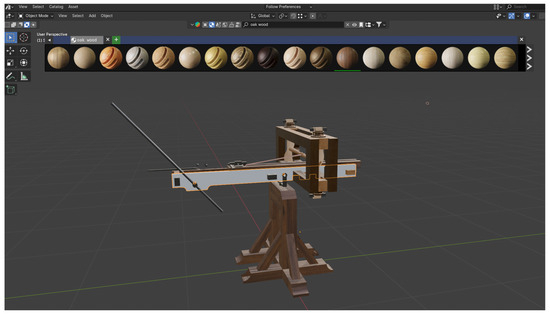
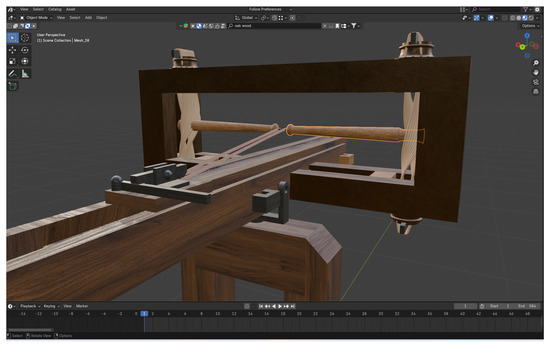
The SCORPiò-NIDI project is based on a collaborative and replicable workflow, conceived as a distributed digital ecosystem in which archaeological, historical, and technical data are acquired, processed, and shared according to open standards and FAIR principles [15]. This integrated approach employs scientific modelling methodologies and advanced digital representation techniques, ensuring data transparency, traceability, and interoperability in accordance with international guidelines for the digital visualisation of cultural heritage, such as the London Charter and the Seville Principles [5,6]. The geometric analysis phase of wall cavities and impact craters along the northern walls of Pompeii enables a precise distinction between natural and anthropogenic damage. By documenting ballistic traces and integrating archaeological, historical, and technical data, this process demonstrates that 3D models are not merely objects of visual representation, but conceptual and argumentative tools essential for the documentation, analysis, and scientific validation of data [16]. The three-dimensional models, developed by partners at University Vanvitelli using Rhinoceros [17] and based on high-precision metric data, were subsequently imported into Blender. There, they were converted into meshes, textured with PBR (Physically Based Rendering) materials, and animated according to the logic of transparent interpretation (paradata), in line with best practices in 3D modelling for cultural heritage [18] as shown in Figure 1. The reconstruction of the original spatial context is further supported by integrating these digital models into interactive virtual environments created with Twinmotion and Lumion [11,12].
Figure 1.
Using the BlenderKit library to quickly select and apply realistic PBR materials (such as oak wood) directly onto the 3D model.
The interdisciplinary nature of the workflow is also demonstrated by the use of collaborative platforms such as ATON and WordPress [14,19] which enable all team members to access, modify, and annotate 3D models, textual content, and multimedia information [20]. Consequently, each digital object becomes part of a shared, updatable ecosystem accessible both in situ and remotely, ensuring sustainable and open data management [20,21].
Every phase of the workflow—from scientific modelling to digital fruition—is designed to guarantee the reproducibility, sustainability, and continuous updating of digital data [22]. This forms the methodological foundation for the subsequent subsections, which detail the stages of modelling, texturing, animation, rendering, interactive integration, and web publishing. Developed and validated, these 3D models serve as conceptual and argumentative tools for documenting, interpreting, and communicating archaeological and historical data. When embedded in immersive digital environments and collaborative platforms, they form a shared digital twin of cultural heritage, combining scientific accuracy, interpretive transparency, and communicative accessibility into a replicable model for the digital management of historical and archaeological heritage.
2.1. The SCORPiò-NIDI Digital Pipeline: From CAD Scientific Rigour to Functional Narrative
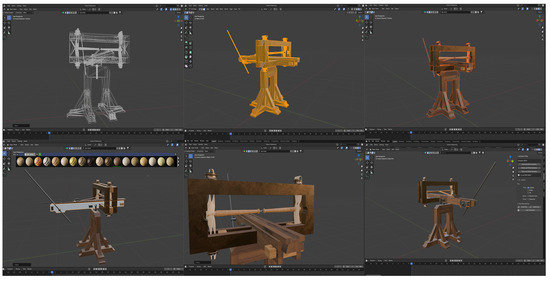
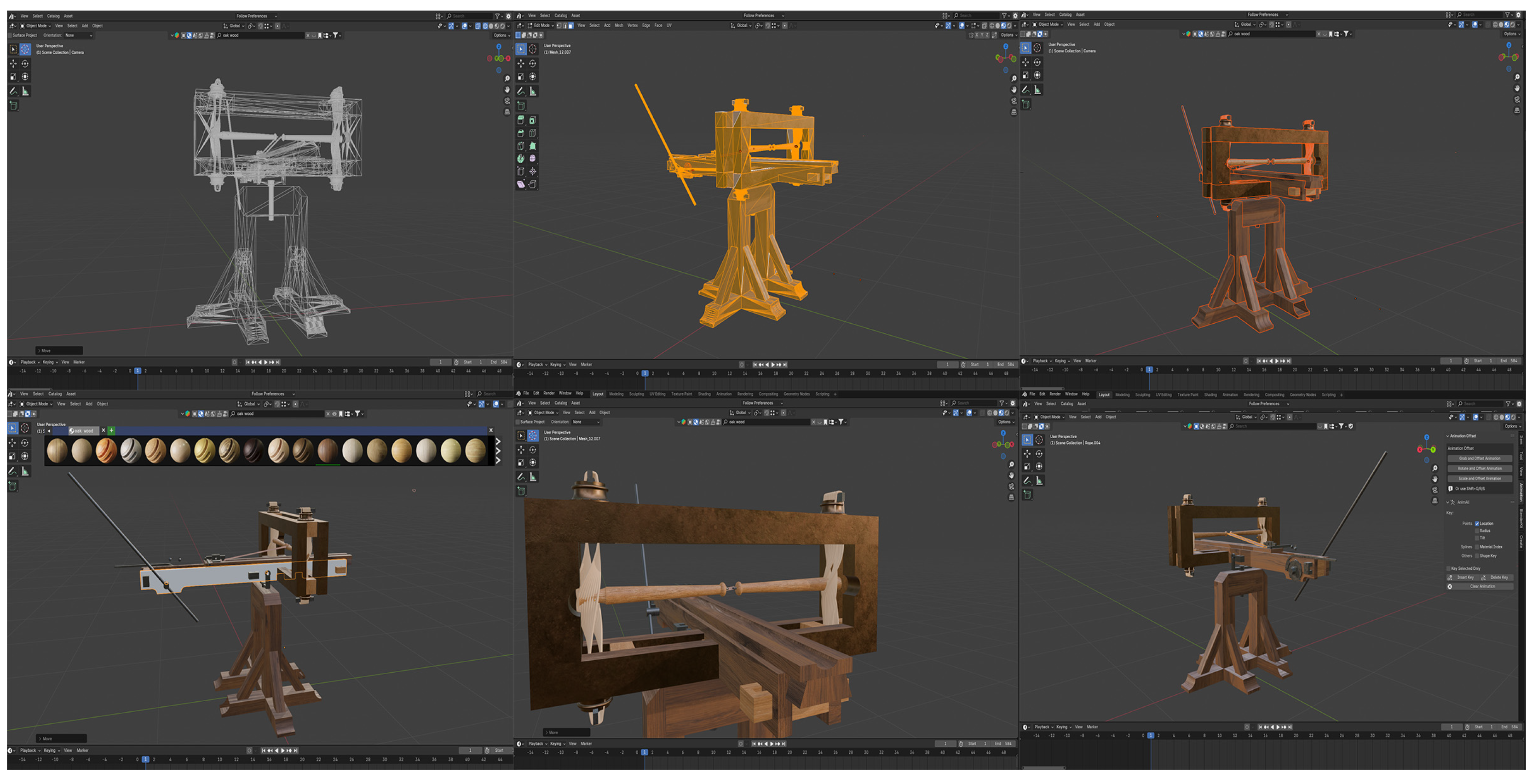
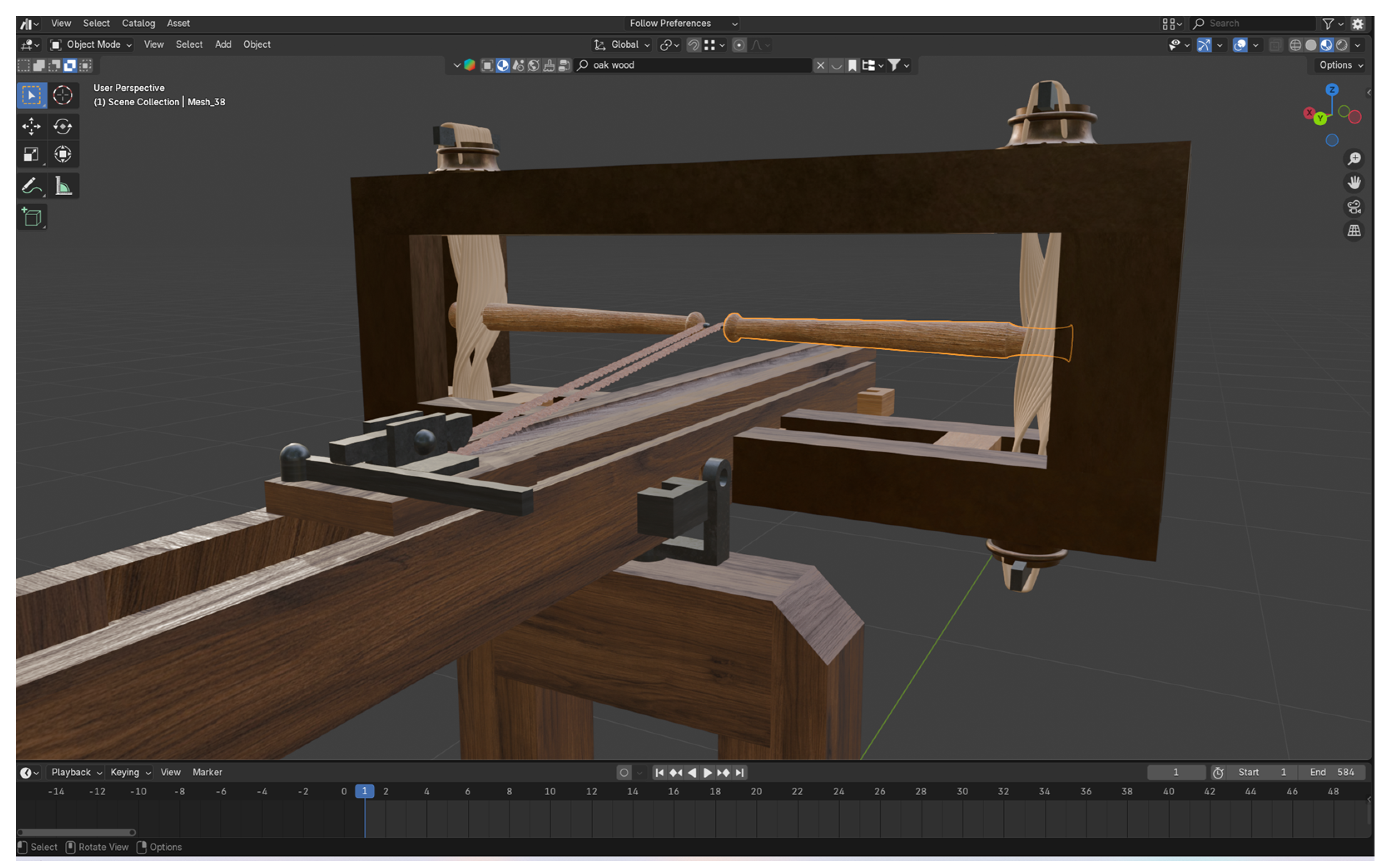
The SCORPiò-NIDI workflow is based on a methodological framework that clearly distinguishes the 3D model as a metric data repository from the model as a heuristic tool for knowledge production and communication. The initial phase involved generating high-precision three-dimensional models of the scorpion and ballista, developed by project partners at the University of Campania “Luigi Vanvitelli” [23]. These models serve as the scientific reference framework, providing the geometric and functional parameters essential for validating mechanical construction and ballistic hypotheses [23,24]. For scientific dissemination and narrative synthesis, these models undergo a definitive epistemological shift: they are converted into optimised polygonal meshes and imported into Blender, transitioning from mathematical-CAD models to communicative and interpretative objects [3,24]. In this environment, while preserving the metric integrity of the source data, the models are enhanced with Physically Based Rendering (PBR) materials and advanced lighting. In this pipeline, texturing is not treated as a mere aesthetic overlay, but as an interpretative act intended to formulate explicit visual hypotheses about the material states and functional mechanisms of the devices, Figure 2.
Figure 2.
Workflow within Blender: from wireframe geometry study to PBR material application via BlenderKit, through to the final texture verification.
The technological core of this transition is functional animation, which serves as an animated explanatory model [18]. This tool is intended to make complex mechanical interactions and the operational logic of ancient artillery immediately comprehensible, ensuring accessibility for non-specialist audiences. The transformation into a dynamic asset was managed in Blender using keyframe animation, enabling scientifically rigorous simulation of loading, tensioning, and release dynamics, as shown in Figure 3.
Figure 3.
Details of the arm animation in Blender: the use of realistic PBR materials emphasises the mechanical movement and the rendering of the tensioned components.
A significant technical challenge was the modelling of the torsional ropes. To manage the geometric complexity of these flexible elements, a procedural approach was adopted using the Curvify plugin (based on Geometry Nodes) [25]. This enabled the generation of fibre bundles capable of following curved paths, realistically depicting the state of tension during the firing cycle. However, the use of procedural nodes required a crucial step for web dissemination: to ensure compatibility with Web3D standards (glTF/GLB formats), the meshes underwent a baking process. This process converts dynamic node-based geometries into static meshes, preventing the loss of visual and structural coherence when transferring data between the project’s various digital ecosystems. In conclusion, this integrated workflow—bridging Rhinoceros’s geometric rigour and Blender’s dynamic flexibility—ensures scientific consistency, transparency, and traceability. This approach fully accords with the London Charter and the Seville Principles. The technical object is thus elevated to a shared digital twin, combining scientific accuracy with communicative accessibility.
2.2. Rendering Production and Video Storytelling
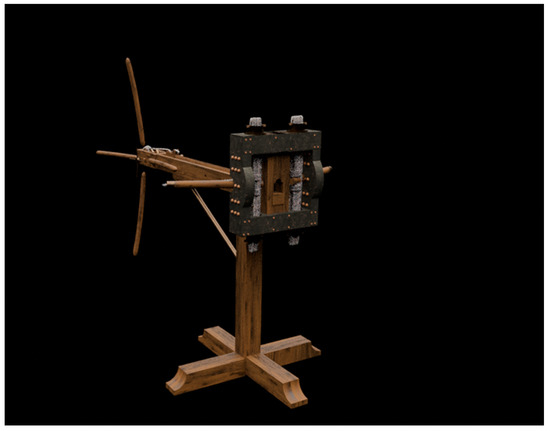
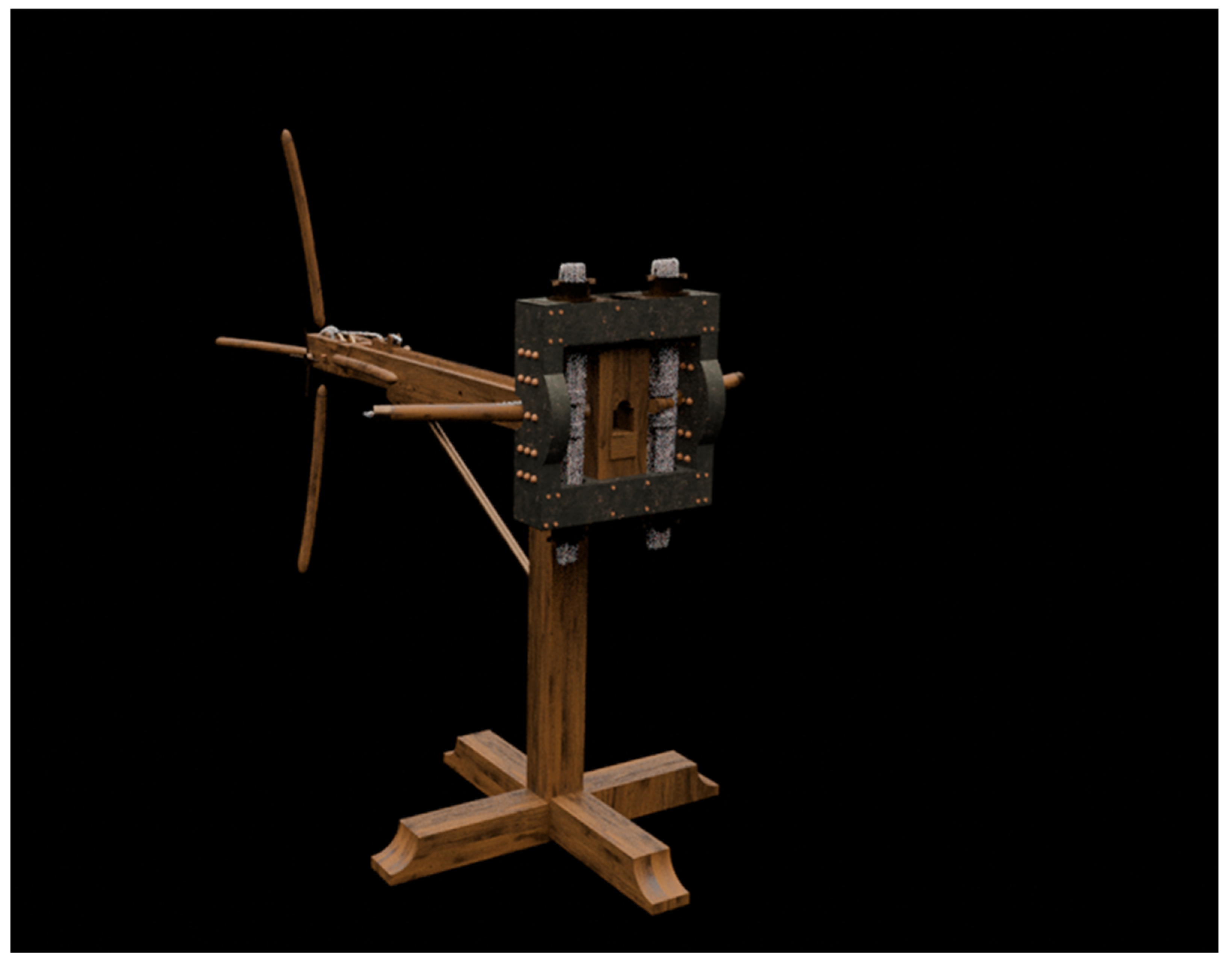
The visual production phase of the SCORPiò-NIDI project encompassed the generation of high-fidelity renderings and videos tailored for both scientific communication and institutional dissemination [26]. The visual documentation was generated through real-time screen capture of the Blender workspace, with the final sequences being compiled and refined using external post-production software. The Cycles engine, a physically based path-tracing renderer, was utilised to simulate realistic light propagation and interactions with PBR materials (wood, metal, and cordage), as shown in Figure 4 [25,27].
Figure 4.
Cycles render of the Roman scorpion: the integration of PBR materials and light simulation allow for a perceptual validation of the model’s accuracy.
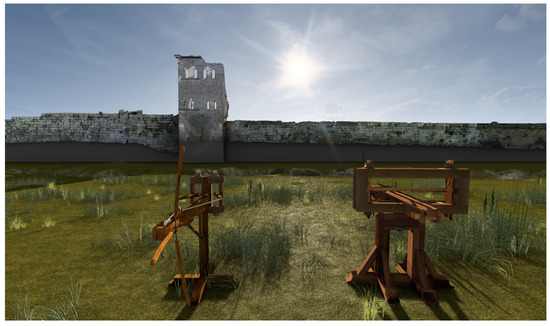
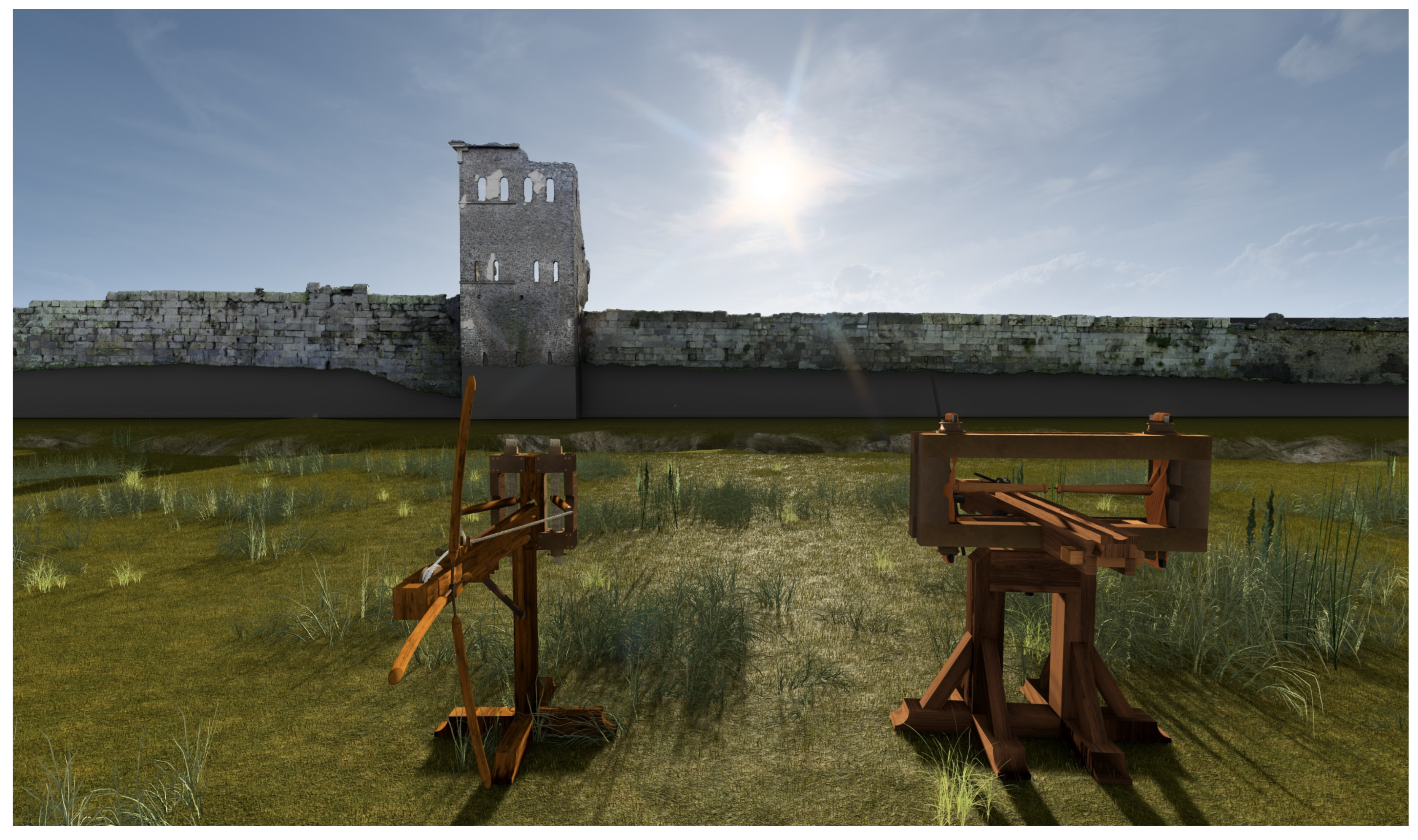
This approach ensured the visual fidelity necessary for the perceptual validation of the models and the effective communication of constructive hypotheses. Furthermore, the animations accurately depict the torsion, tension, and release of mechanical components, rendering the machines operation immediately comprehensible while maintaining a non-speculative approach to fragmentary or missing parts [5]. To achieve spatial contextualization, the project employed Lumion and Twinmotion, both industry-standard real-time architectural visualisation tools. Lumion facilitated the integration of HDRI maps, global illumination, and volumetric atmospheric effects, producing photorealistic sequences with optimised processing times. Conversely, Twinmotion, powered by Unreal Engine, provided real-time ray tracing, VR/AR support, and direct interoperability with CAD and BIM assets. These features enabled the creation of high-presence immersive environments for historical exploration. The synergy between Blender’s functional animations and the real-time capabilities of Lumion and Twinmotion resulted in a cohesive and scientifically rigorous visual output. By embedding these assets into collaborative platforms, the digital models are transformed into scientific storytelling tools, as shown in Figure 5. These tools guide the observer through the technical and historical complexity of Roman artillery via contextualised and interactive scenarios [20]. In summary, the SCORPiò-NIDI visual pipeline successfully integrates scientific accuracy with multimedia narrative. By converting 3D research data into communicative assets suitable for institutional dissemination and metaverse exploration, the project demonstrates the efficacy of integrated digital workflows in the valorisation of cultural heritage.
Figure 5.
Environmental rendering of the scorpion (left) and ballista (right) produced in Lumion Student.
2.3. Integration into ATON as a Collaborative Environment and Dissemination Platform
Within the SCORPiò-NIDI project, the ATON framework functions as a collaborative Web3D environment supporting distributed workflows among multiple scientific partners. Following optimisation and animation in Blender, the models were exported in the standard glTF (.glb) format and deployed on a dedicated, specially configured web server to ensure remote accessibility. The platform’s architecture, based on profiled access via personal credentials, allows team members to operate independently within the same digital ecosystem. This configuration enables seamless asynchronous collaboration across institutions, overcoming physical proximity constraints and supporting continuous updates to models and interactive scenes. During this phase, experimental trials were conducted to implement a virtual gallery of Roman artillery, designed as a space for technical consultation and detailed inspection. Owing to the framework’s cross-device compatibility, these tests confirmed that models can be accessed via standard web browsers on both desktop and mobile devices, allowing users to manipulate, rotate, and examine mechanical components interactively. A key aspect of these trials was the integration of semantic annotations. Anchored spatially to specific parts of the scorpion or ballista, these annotations provide descriptive and functional metadata, enriched with multimedia content such as critical texts and video storytelling. This system enhances the readability of interpretive hypotheses and the understanding of kinematic principles adopted during reconstruction. Overall, the integration within ATON demonstrates that the platform functions not merely as a 3D viewer but as a shared digital infrastructure. Here, the 3D model acts as a nexus between interdisciplinary research and scientific communication, ensuring both reproducibility and long-term sustainability of the collaborative workflow.
2.4. WordPress as a Narrative Hub and Project Unfrastructure
WordPress [14] was selected as the central platform for disseminating SCORPiò-NIDI content, serving as a narrative, scientific, and organisational hub. Preliminary wireframes defined content structure, hierarchy, and navigation logic, ensuring a clear and coherent interface.
The platform goes beyond a simple digital showcase, providing structured access to research outputs, including team presentations, project descriptions, scientific documentation, educational materials, and links to ATON interactive experiences. Through collaborative management with authorised accounts, project partners can independently update texts, images, and links to 3D models, keeping the site aligned with the evolving digital content. WordPress thus complements ATON, supporting team collaboration and ensuring transparency in data dissemination. Beyond scientific documentation, the platform also facilitates educational and outreach initiatives, integrating videos, images, and explanatory texts to help users-from specialists to students-understand the reconstructed roman siege machines and their historical context.
3. Results and Discussion
The implementation of the SCORPiò-NIDI workflow has successfully established an integrated digital ecosystem where scientific CAD models and communicative mesh/PBR versions coexist without loss of precision or detail. This structure facilitated cross-institutional synergy among project partners, allowing for the real-time review and updating of models via platforms such as ATON and WordPress, while simultaneously ensuring remote accessibility and the long-term sustainability of digital assets. The three-dimensional models of the scorpion and ballista proved effective not only as documentation tools but also as vehicles for functional storytelling. The animation of mechanical components rendered the operational logic of Roman artillery [8] immediately intelligible, while the renderings and immersive environments authored in Twinmotion and Lumion enabled the recreation of original historical contexts, fostering public engagement and educational fruition. The coordinated use of Blender, Twinmotion, and Lumion struck a balance between scientific rigour and visual communication. Precise metric data from the CAD models were preserved during the transition to animatable meshes, allowing for the empirical testing of construction and ballistic hypotheses and the faithful representation of operational dynamics. Furthermore, model access through ATON and content management via WordPress consolidated a replicable paradigm. In this framework, the production, peer review, and dissemination of digital data occur within a collaborative, interactive, and sustainable environment. In summary, the results confirm that the SCORPiò-NIDI workflow effectively integrates scientific and communicative tools into a single digital ecosystem. This approach supports both specialist analysis and public outreach, serving as a scalable model for the digital valorisation of cultural heritage.
4. Conclusions
The SCORPiò-NIDI project demonstrates that the valorisation of digital archaeological heritage relies on collaborative and transparent workflows. The integration of Rhinoceros, Blender, ATON, and WordPress constitutes a replicable pipeline capable of transforming static 3D models into dynamic epistemic tools. Future developments will focus on the implementation of Augmented Reality (AR) systems for in situ fruition along the northern walls of Pompeii. Additionally, the project aims to expand the metadata framework in strict accordance with FAIR principles, ensuring the long-term preservation and findability of the digital knowledge produced.
Author Contributions
Author Contributions: Conceptualization, V.C. and G.D.M.; methodology, V.C. and R.M.; software, V.C.; validation, R.M.; formal analysis, V.C. and R.M.; investigation, V.C. and R.M.; resources, V.C. and G.D.M.; data curation, V.C. and G.D.M.; writing—original draft preparation, V.C.; writing—review and editing, V.C., R.M. and G.D.M.; visualisation, V.C. and G.D.M.; supervision, G.D.M.; project administration, G.D.M.; funding acquisition, G.D.M. All authors have read and agreed to the published version of the manuscript.
Funding
This research was supported by the project “SCORPiò-NIDI”, CUP J53D23012930006, funded by the Italian Ministry of Research under the PRIN funding initiative.
Institutional Review Board Statement
Not applicable.
Informed Consent Statement
Not applicable.
Data Availability Statement
No new data were created or analyzed in this study. Data sharing is not applicable to this article.
Conflicts of Interest
The authors declare no conflicts of interest.
Abbreviations
The following abbreviations are used in this manuscript:
| CAD | Computer-Aided Design |
| BIM | Building Information Modelling |
References
- Allegrezza, S. Digitization of Cultural Heritage: Guidelines, Standards, and Experiences (La Digitalizzazione del Patrimonio Culturale: Linee Guida, Standard, Esperienze); Civita Editoriale: Rome, Italy, 2021. (In Italian) [Google Scholar]
- Apollonio, F.I. The Three-Dimensional Model as a ‘Scientific Fact’: The Scientific Methodology in Hypothetical Reconstruction. HERITAGE 2024, 7, 5413–5427. [Google Scholar] [CrossRef] [Scilit]
- Barzaghi, S.; Colitti, S.; Moretti, N.; Renda, G. From Metadata to Storytelling: A Framework for 3D Cultural Heritage Visualization on RDF Data. arXiv 2025, arXiv:2505.14328. [Google Scholar] [CrossRef] [Scilit]
- Guarnieri, A.; Pirotti, F.; Vettore, A. Cultural heritage interactive 3D models on the web: An approach using open source and free software. J. Cult. Herit. 2010, 11, 350–353. [Google Scholar] [CrossRef] [Scilit]
- The London Charter for the Computer-Based Visualisation of Cultural Heritage 2.1. Available online: https://londoncharter.org/index.html (accessed on 19 January 2026).
- The Seville Principles. International Principles of Virtual Archaeology. Available online: http://sevilleprinciples.com/ (accessed on 19 January 2026).
- Bertacchi, S.; Gonizzi Barsanti, S.; Rossi, A. Geometry of Wall Degradation: Measuring and Visualising Impact Craters in the Northern Walls of Pompeii. SCIRES-IT-Sci. Res. Inf. Technol. 2024, 14, 111–128. [Google Scholar] [CrossRef] [Scilit]
- Rossi, A. The Survey of the Ballistic Imprints for a Renewed Image of Unearthed Pompeii. Nexus Netw. J. 2024, 26, 307–324. [Google Scholar] [CrossRef] [Scilit]
- Rhinoceros 8 User Guide. Available online: https://www.rhino3d.com/en/docs/guides/user-guide/ (accessed on 20 January 2026).
- Blender. Available online: https://www.blender.org/ (accessed on 20 January 2026).
- Twinmotion 2023.2. Available online: https://www.twinmotion.com (accessed on 20 January 2026).
- Lumion. Available online: https://www.lumion3d.it/ (accessed on 20 January 2026).
- Aton. Available online: https://osiris.itabc.cnr.it/aton/ (accessed on 20 January 2026).
- WordPress. Available online: https://it.wordpress.org/ (accessed on 21 January 2026).
- Barzaghi, S.; Bordignon, A.; Gualandi, B.; Heibi, I.; Massari, A.; Moretti, A.; Peroni, S.; Renda, G. A Proposal for a FAIR Management of 3D Data in Cultural Heritage: The Aldrovandi Digital Twin Case. Data Intell. 2024, 6, 1190–1221. [Google Scholar] [CrossRef] [Scilit]
- Rossi, A.; Gonizzi Barsanti, S.; Bertacchi, S. Natural or Anthropic? Measurement and Visualisation of Wall Cavities in City Walls (Naturali o Antropiche? Misura e Visualizzazione Delle Cavità Murarie in Cerchie Urbiche). In Proceedings of the Misura/Dismisura|Measure/Out of Measure. Ideare Conoscere Narrare|Devising Knowing Narrating; FrancoAngeli s.r.l.: Milan, Italy, 2024; pp. 1957–1978. (In Italian) [Google Scholar] [CrossRef] [Scilit]
- Formicola, C.; Bertacchi, S.; Gonizzi Barsanti, S.; Rossi, A. Advanced and accessible knowledge: Ballistic impact marks on the northern walls of Pompeii (Conoscenza avanzata e accessibile: Le impronte balistiche delle mura settentrionali di Pompei). In Proceedings of the XVII Conferenza Internazionale Sull’espressione Grafica Applicata ALL’EDILizia—APEGA 2025, Cartagena, Spain, 2–4 October 2025. (In Italian) [Google Scholar] [CrossRef] [Scilit]
- Central Institute for the Digitalization of Cultural Heritage—Digital Library. National Plan for the Digitalization of Cultural Heritage 2022–2026; Ministry of Culture: Rome, Italy, 2022. Available online: https://digitallibrary.cultura.gov.it/linee-guida/ (accessed on 22 January 2026).
- Casadei, V.; Di Modica, G. Access to Digital Cultural Heritage: Exploring Future Perspectives Through Open Tools of Research. Eng. Proc. 2025, 96, 10. [Google Scholar] [CrossRef] [Scilit]
- Fanini, B.; Ferdani, D.; Demetrescu, E.; Berto, S.; D’Annibale, E. ATON: An Open-Source Framework for Creating Immersive, Collaborative and Liquid Web-Apps for Cultural Heritage. Appl. Sci. 2021, 11, 11062. [Google Scholar] [CrossRef] [Scilit]
- Remondino, F.; Rizzi, A. Reality-based 3D documentation of natural and cultural heritage sites—techniques, problems, and examples. Appl. Geomat. 2010, 2, 85–100. [Google Scholar] [CrossRef] [Scilit]
- Barzaghi, S.; Bordignon, A.; Collina, F.; Fabbri, F.; Fanini, B.; Ferdani, D.; Gualandi, B.; Heibi, I.; Mariniello, N.; Massari, A.; et al. A reproducible workflow for the creation of digital twins in the cultural heritage domain. Transformations 2025, 1, 1–62. [Google Scholar] [CrossRef]
- Rossi, A.; Formicola, C.; Gonizzi Barsanti, S. Ingegna Romana. From Sources to Models, from Artefacts to Reconstructions. Diségno 2024, 229–238. [Google Scholar] [CrossRef]
- Thakkar, M.M.; Ardeshiri Lordejani, A.; Guagliano, M.; Bertacchi, S.; Gonizzi Barsanti, S.; Rossi, A. FEM Simulation of Ballistic Impacts on Pompeii Walls for the Reconstruction of Roman Throwers War Machine. Int. Arch. Photogramm. Remote Sens. Spat. Inf. Sci. 2025, XLVIII-M-9–2025, 1491–1497. [Google Scholar] [CrossRef] [Scilit]
- Blender Online Manual. Curve Tools—Blender 4.1 Manual, 2025. Available online: https://docs.blender.org/manual/en/4.1//addons/add_curve/curve_tools.html (accessed on 22 January 2026).
- Apollonio, F.I.; Gaiani, M.; Sun, Z. 3D modeling and data enrichment in digital reconstruction of architectural heritage. Int. Arch. Photogramm. Remote Sens. Spat. Inf. Sci. 2013, XL-5/W2, 43–48. [Google Scholar] [CrossRef] [Scilit]
- Belec, A. Photorealistic Materials and Textures in Blender Cycles, 4th ed.; Packt Publishing Limited: Birmingham, UK, 2023. [Google Scholar]
Disclaimer/Publisher’s Note: The statements, opinions and data contained in all publications are solely those of the individual author(s) and contributor(s) and not of MDPI and/or the editor(s). MDPI and/or the editor(s) disclaim responsibility for any injury to people or property resulting from any ideas, methods, instructions or products referred to in the content. |
© 2026 by the authors. Licensee MDPI, Basel, Switzerland. This article is an open access article distributed under the terms and conditions of the Creative Commons Attribution (CC BY) license.