


Abstract
Renewable energy system (RES)-based electric vehicle (EV) charging infrastructure enhances energy security. The need for intelligent routing techniques that achieve low latency, high reliability and adaptive path selection under extremely dynamic traffic situations has increased owing to the quick growth of Internet of Things (IoT)-enabled vehicular networks. With an emphasis on recurrent neural networks (RNNs), deep belief networks (DBNs), radial basis function neural networks (RBFNNs), and long short-term memory (LSTM) networks, in addition to convolutional neural networks (CNNs), this analysis looks at cutting-edge AI-based models used for shortest-path routing in IoT-driven vehicular ad hoc networks (VANETs). The paper examines how various designs handle issues such as connection instability, heterogeneous sensor data, quick topological changes, and real-time decision making. A comparative analysis shows that DBN and CNN display strong feature learning for intricate mobility patterns and congestion recognition, while sequence-aware techniques like RNN and LSTM advance spatiotemporal traffic estimation. For low-latency route evaluation, RBFNN compromises rapid nonlinear representation. The examination shows that CNN models greatly improve the scalability, adaptability and optimality of routing, confirming AI-enabled structures as a promising path for next-generation IoT-based vehicular routing methods.
1. Introduction
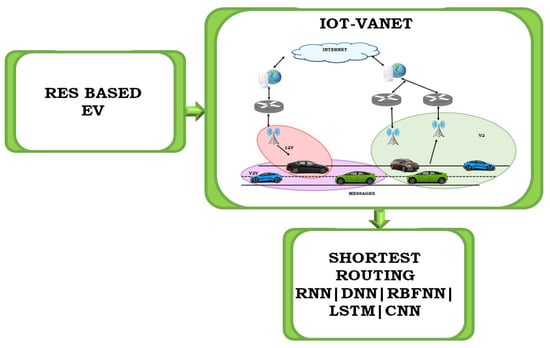
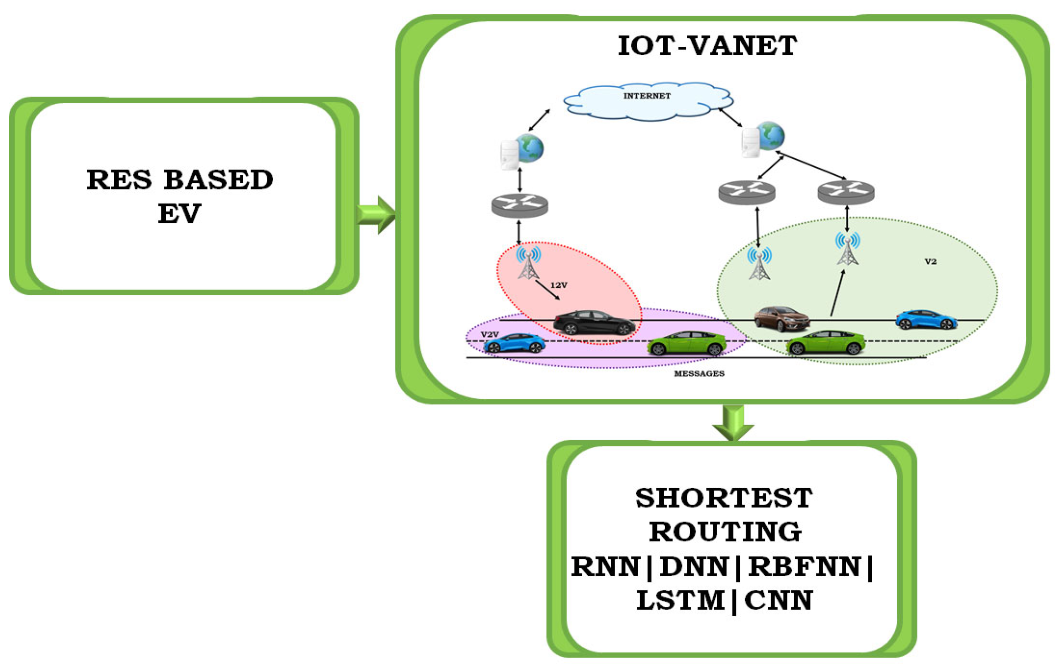
RES-powered EVs, when charged by solar, wind or other clean energy sources, significantly reduce greenhouse gas emissions and dependence on fossil fuels, contributing to sustainable and low-carbon transportation systems. Consequently, use of VANETs allows vehicles to interconnect with one another as well as with roadside structures. This enhances road safety, supports a wide variety of service areas like navigation assistance, and facilitates automatic driving in smart city environments [1]. Consequently, VANETs characterize an advanced wireless networking model that connects vehicles and fixed infrastructure arranged along highways and urban roads with the primary goal of improving driver safety and travel convenience. In a VANET, vehicles act as mobile nodes that exchange information directly with one another using vehicle-to-vehicle (V2V) messaging, and exchange information with fixed structures using vehicle-to-infrastructure (V2I) messaging. Figure 1 displays the structure of the system.
Figure 1.
Structure of the system.
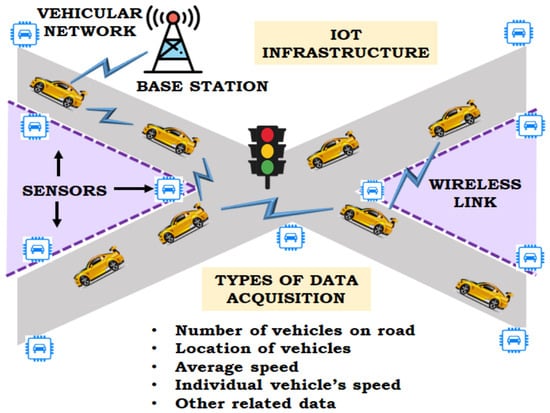
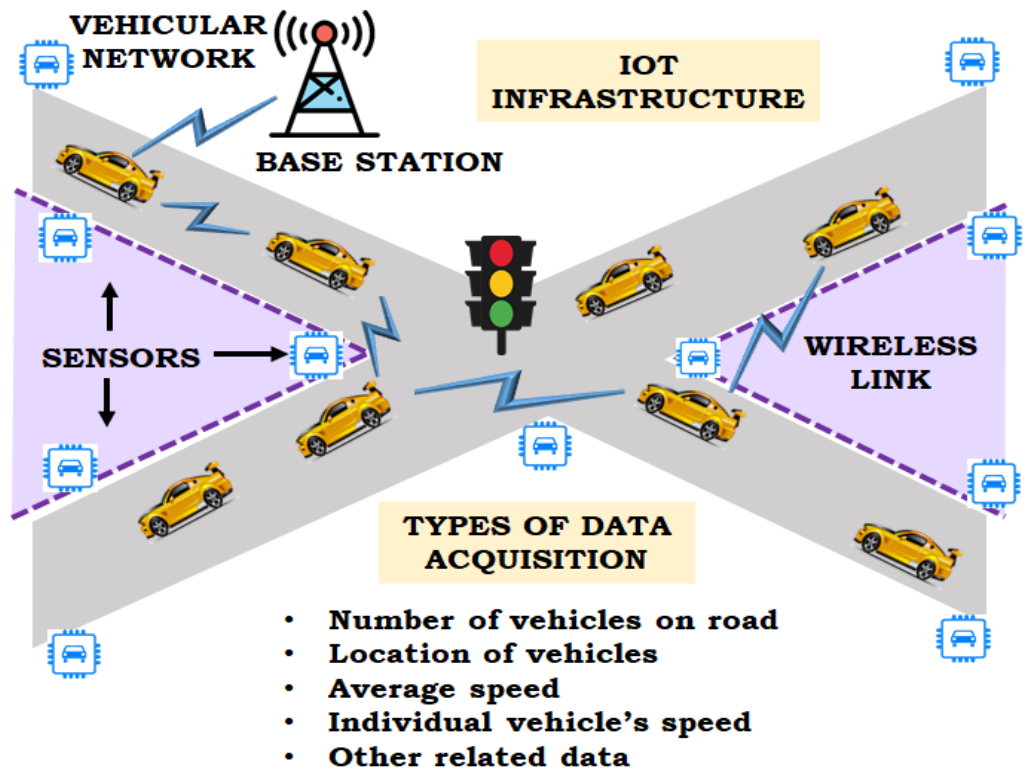
In recent years, significant research efforts have focused on VANETs [2], particularly in the areas of routing protocol design and efficient information dissemination. Furthermore, applications like target tracking, which leverage vehicle-mounted sensors, are widely used to enhance passenger safety and driving assistance. However, the highly dynamic nature of VANETs [3], characterized by frequent topology changes due to vehicles continuously entering and leaving the network, poses substantial challenges in selecting reliable performance metrics for tasks such as cluster head selection and cluster membership management. Furthermore, VANETs have mainly focused on important areas like data dissemination, routing protocols, security, localization, and malicious information detection to improve network reliability, efficiency, and scalability. These developments have significantly contributed to the advancement of VANETs and the Internet of Vehicles (IoV), enabling wider real-world applications in intelligent transportation systems [4]. Moreover, the routing protocol incorporates a privacy protection mechanism to prevent unauthorized access and ensure secure transmission of EV data during communication between charging stations and user locations [5]. Intelligent vehicles communicate with nearby vehicles and traffic infrastructure to exchange information, enabling applications such as real-time traffic management, route optimization, driver safety enhancement, and collision avoidance. Consequently, these structures also support automatic traffic damage monitoring, documentation, and assurance privilege handling through exact fault documentation. However, adding vehicles through communication networks presents major tests related to security, privacy protection, and network scalability [6]. Throughout the EV charging procedure, numerous tasks are required to ensure secure communication and privacy safety. Also, information distribution and cooperation between dissimilar charging stations are both inadequate. This affects large-scale danger recognition and decreases the efficiency of privacy maintenance. Managing large-scale EV charging networks involves handling complex, multi-dimensional decision-making processes while still maintaining computational efficiency and supporting real-time operations [7]. In this paper, several limitations are addressed through use of a unified, intelligent, and energy-aware security structure capable of providing reliable safety for EV charging environments [8]. Even with these developments, most existing studies address mobility optimization, EV charging management, and IoT-enabled architectures as separate research areas rather than integrating them into a unified structure [9]. Figure 2 displays the structure of VANET.
Figure 2.
Structure of VANET.
Table 1 summarizes studies of RBFNN and LSTM methods, revealing their benefits and drawbacks for IoT-enabled RES-based EVs in VANETs.
Table 1.
Evaluation of RBFNN and LSTM networks.
1.1. Problem Statement
Using an IoT-enabled VANET is challenging for intelligent routing mechanisms that ensure low latency, high reliability, and adaptive path selection. Existing routing protocols are insufficient for handling frequent topology changes and intermittent connectivity [12]. AI-based routing techniques like RNN, DBN, RBFNN, LSTM, and CNN have presented promising outcomes. Both DBN and CNN effectively learn complex mobility and congestion patterns from multidimensional data.
However, all these models lack the temporal awareness essential for dynamic traffic prediction. Sequence-based models like RNN and LSTM capture spatiotemporal dependencies but require high computational latency. RBFNN provides fast nonlinear route estimation but faces scalability issues in dense networks. No single AI model sufficiently satisfies all VANET routing requirements. Therefore, hybrid AI-driven routing frameworks are needed for scalable, adaptive, and optimal IoT-based VANET routing. To handle catastrophic forgetting in rapidly changing vehicular topologies, existing models combine online learning, replay buffers, transfer learning, weight regularization methods, and metaheuristic optimization, as well as temporal sequence modelling.
1.2. Key Contributions
- We explore the use of AI models, namely, RNN, DBN, RBFNN, LSTM, and CNN, for shortest-path routing in an IoT-enabled VANET integrated with an RES-based EV charging structure.
- AI-driven routing mechanisms effectively integrate with IoT-enabled vehicular networks and renewable energy-based EV charging systems to maintain energy-efficient mobility, intelligent charging station access, and adaptive route planning.
- A relative study is used to estimate the capacity of different AI models in dynamic topology changes, network congestion, connection instability, and heterogeneous sensor data processing.
- RNN and LSTM improve spatiotemporal traffic prediction, whereas CNN and DBN enhance feature extraction from complex mobility and traffic patterns, and RBFNN provides efficient nonlinear mapping for low-latency routing estimation.
1.3. Novelty of the Paper
In this paper, we present a comprehensive analysis of AI-based shortest-path routing models for IoT-enabled VANETs using RNN, DBN, RBFNN, LSTM, and CNN architectures. The paper highlights the effectiveness of sequence-aware models like RNN and LSTM for spatiotemporal traffic prediction and real-time routing decisions. It identifies CNN-based routing frameworks as highly scalable and adaptive solutions for congestion detection and optimal route selection in intelligent transportation systems. The paper demonstrates the potential of AI-driven routing frameworks to enhance low-latency, reliable, and intelligent communication in next-generation IoT-based VANET environments.
2. Review of Deep Learning Techniques
2.1. Recurrent Neural Network
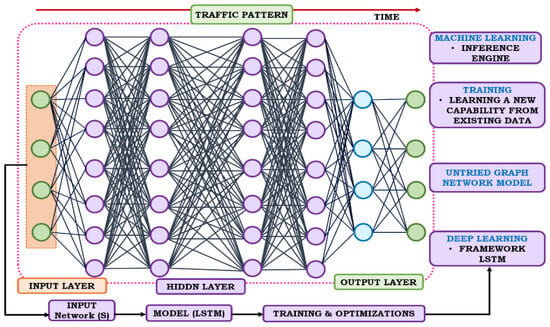
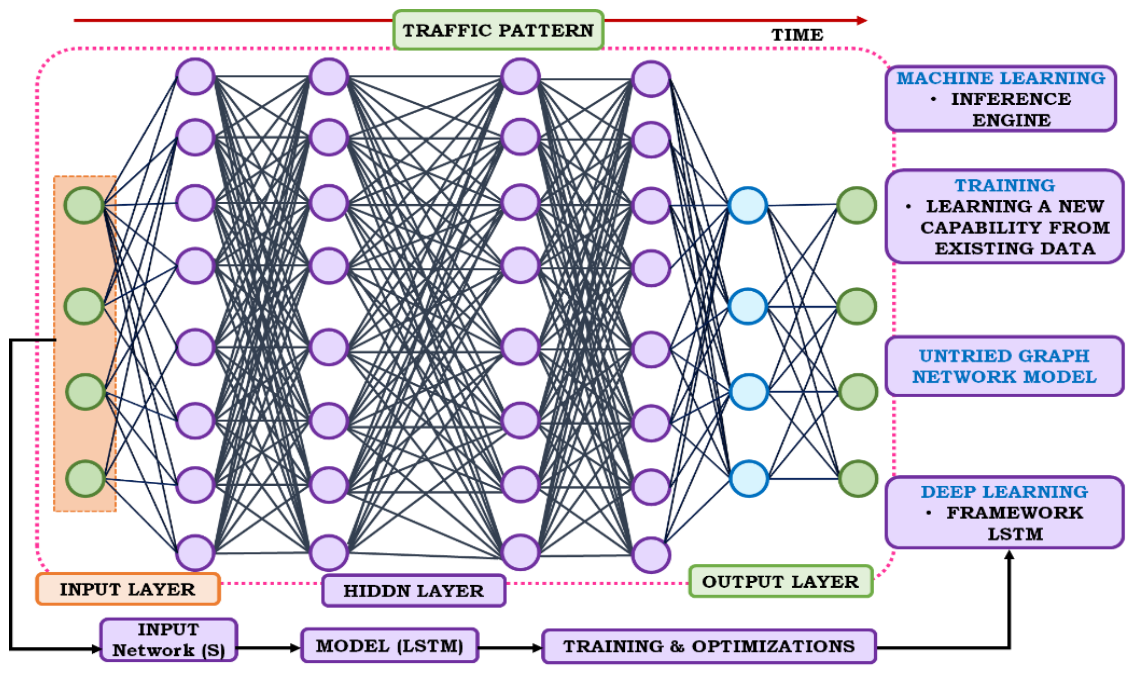
An AI–based tree routing (TR) mechanism integrates RNN with the ZigBee protocol for IoT environments. The structure of RNN [13] as shown in Figure 3. To achieve energy-efficient communication in environment-aware interactions, a ZigBee protocol is effectively used. TR is an AI-based routing approach that operates on a tree network topology, which is regarded as a simple and low-overhead routing protocol for ZigBee networks. In a tree topology, each node is uniquely identified as either a parent or a child of another node, thereby eliminating routing loops. However, the primary limitation of TR is the increased number of hops required to deliver data to the destination.
Figure 3.
Structure of RNN.
2.2. Deep Belief Networks
A DBN is used to detect obstacles and determine path availability in vehicular communication environments. Initially, the characteristics of vehicle nodes are collected. During data transmission, the proposed model identifies obstacles and evaluates available paths using an optimized hybrid learning (OHL) framework that integrates an RBF network with a DBN. Finally, by incorporating multiple constraints, including distance, residual energy, link availability, network lifetime, and link period, as well as node movement, the DBN component enhances adaptability to changing network topology, traffic density, and environmental conditions. However, DBNs require routine rests on features as well as an assortment of training data [14].
2.3. Radial Basis Function Neural Networks
The RBFNN offer fast training speed, as well as strong nonlinear plotting capability. Its unseen layer employs a Gaussian RBF as the activation utility, enabling each hidden node to generate a limited response to the input excitation. RBFNN is expressed as
The Gaussian kernel is calculated as follows:
where
In Equation (2), denotes an -dimensional input route, denotes the centre of the base utility, and indicates an easily selectable limitation that controls the size of the base utility. The variable indicates the number of unseen level nodes, while represents the rule of the vector , signifying the space around the input vector as well as the centre . The term corresponds to the reaction of the base utility to the input route. This response attains a single extreme at , then rapidly decays toward zero as increases. However, improper selection of RBF centres and of kernel width affects overall performance [15].
2.4. Long Short-Term Memory
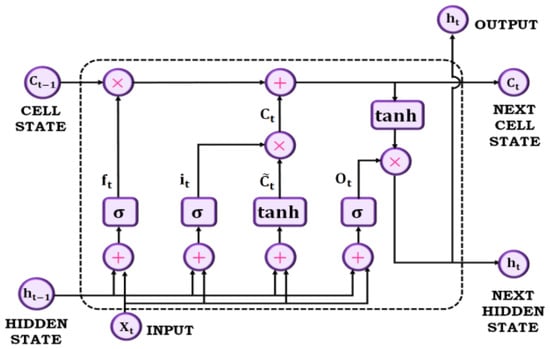
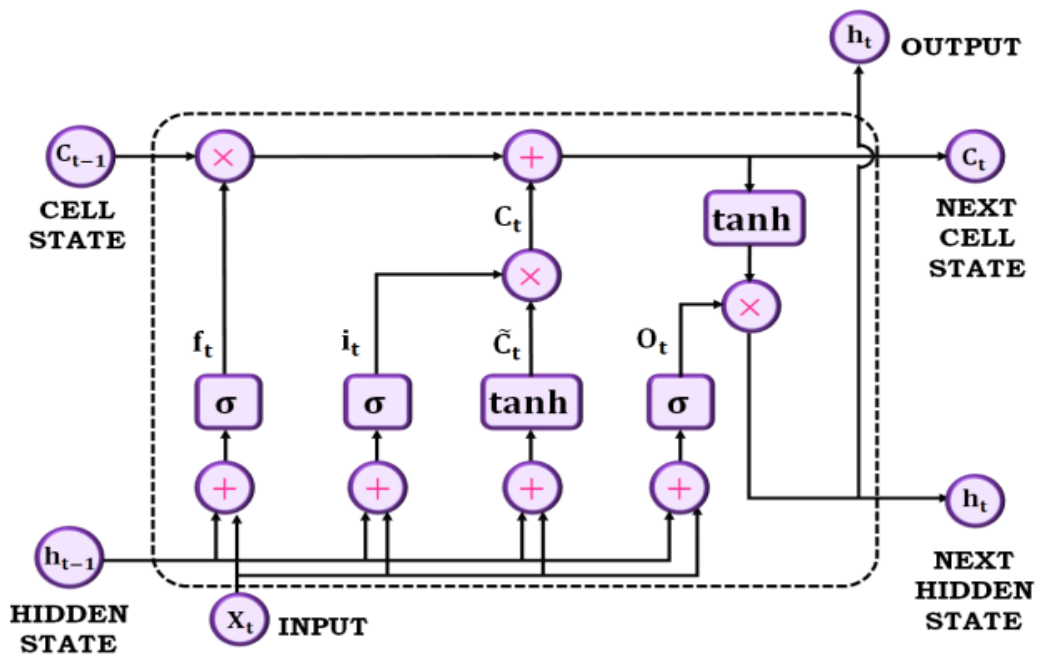
Every vehicle intermittently collects ideal communications from neighbouring vehicles, in addition to extracting real-time movement information. Upon receiving an emergency message, the intrusion detection system (IDS) activates its incorrect spare message detection algorithm. Initially, a time-series data concatenation route is worked out, in which traffic-related features are aggregated into a multidimensional time-series representation to serve as indication for traffic instance arrangement. A pre-trained LSTM is employed to identify existing traffic events. Lastly, it performs incorrect spare message detection based on classification outcomes [16]. The architecture of LSTM [17] as shown in Figure 4. However, dependence on a central server for model training introduces delays, especially in highly dynamic vehicular environments.
Figure 4.
LSTM architecture.
2.5. Convolutional Neural Networks
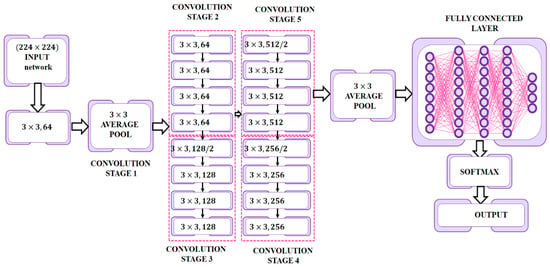
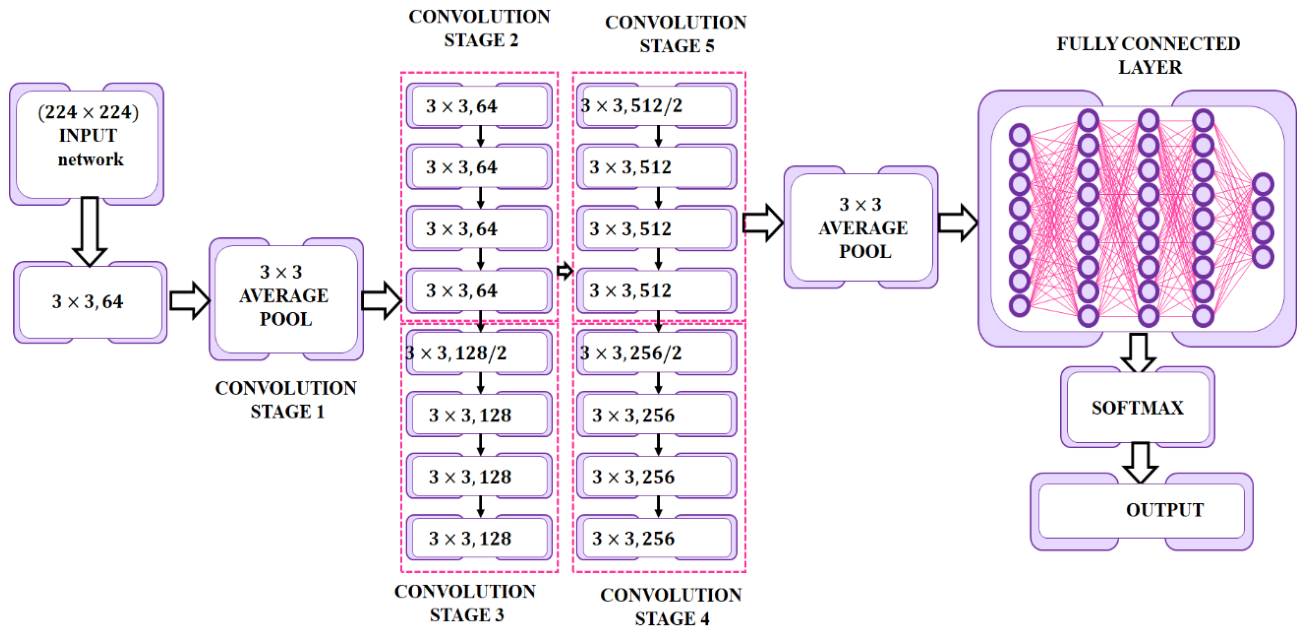
A one-dimensional CNN [18] as shown in Figure 5, with a decision tree (1DCNN–DT) is specifically intended to report the distinctive system, as well as the highly active communication location, of a software-defined VANET (SD-VANET). Furthermore, the SD-VANET Guard framework combines an AI model with real-time traffic observation, thereby improving recognition speed and precision compared to conventional approaches. The suggested system accurately classifies DDoS attacks while maintaining robustness against significant traffic flow variability in SD-VANETs, an aspect that has previously attracted only limited attention. It achieves higher recognition rates as well as lower latency, providing a useful as well as accessible clarification for SD-VANET security. These nodes possess higher computational resources, and they can process routing predictions more quickly. However, CNN feature extraction with decision tree classification increases processing requirements.
Figure 5.
CNN architecture.
Table 2 shows a comparative analysis of RNN, LSTM and CNN techniques.
Table 2.
Comparative analysis.
3. Results and Discussion
In this section, we report the use of DL techniques like RNN, RBFNN, LSTM, CNN, and AI-based models for shortest-path routing in an IoT-driven VANET using an NS3 simulator. Table 3 shows the performance of AI-based techniques in terms of energy, packet delivery ratio, throughput and network lifetime. In the case of RNN, energy is 0.058 and PDR is 5. In the case of LSTM, energy is 0.035, PDR is 2, throughput is 1.18 and network lifetime is 0.0554.
Table 3.
Performance analysis.
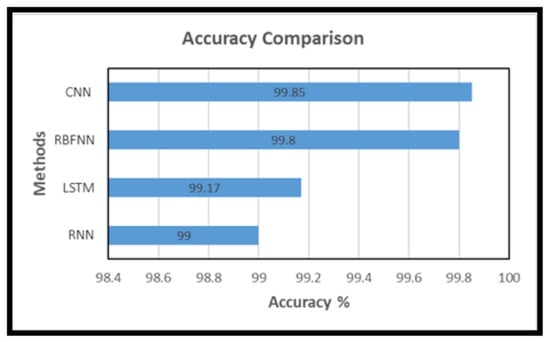
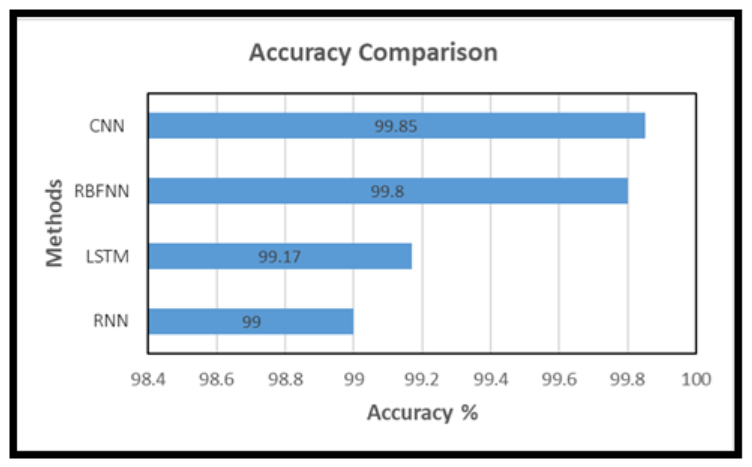
Figure 6 shows an accuracy comparison in the AI-based models used for shortest-path routing in the IoT-driven VANET. RNN has 98% accuracy, RBFNN 99.33%, and LSTM 99.9%, with CNN having the highest accuracy of 99.85%.
Figure 6.
Accuracy comparison.
Table 4 shows precision and recall results for the AI-based models used for shortest-path routing in the IoT-driven VANET, all results being obtained using Python version 3.14.6 software. Precision and recall for RNN are 99% and 95%, respectively; for LSTM they are 99.17% and 99.06%, respectively; for RBFNN they are 99.8% and 99.2% respectively. CNN has the highest precision and recall values of 99.85% and 99.85%, respectively.
Table 4.
Evaluation metrics.
3.1. Research Challenges
The highly dynamic network topology caused by vehicle mobility makes stable route selection difficult for AI-based models. Moreover, integration of RES-based EV charging stations requires energy-aware routing strategies that consider charging availability and renewable energy utilization. Real-time routing decisions also require low-latency processing of large volumes of heterogeneous sensor data. Furthermore, data heterogeneity, security vulnerabilities, and privacy concerns all pose significant challenges to IoT-enabled vehicular networks.
3.2. Scope of Future Work
Future work will focus on emerging lightweight and adaptive AI models which incorporate edge intelligence for present decisions. Future work will also involve improving security through privacy-preserving structures, and designing hybrid DL approaches that combine the strengths of CNN, RNN, LSTM, and RBFNN to develop more efficient and intelligent vehicular routing systems.
4. Conclusions
In this paper, we review RES-based EV and intelligent routing techniques for an IoT-enabled VANET driven by adaptive path selection in highly dynamic traffic environments. By examining AI-based routing models containing RNN, DBN, RBFNN, LSTM, and CNN, the paper validates different learning models, addressing critical challenges like rapid topology changes, link instability, heterogeneous sensor data, and real-time decision-making. A comparative analysis shows that CNN excels in extracting complex spatial features for mobility and congestion awareness, while sequence-based models such as RNN and LSTM provide superior spatiotemporal traffic prediction. RBFNNs allow fast nonlinear mapping appropriate for route valuation. The AI-driven routing structures effectively combine the strengths of individual models, leading to improved scalability, adaptability, and routing optimality. The CNN displays high performance for AI-enabled routing solutions, and thus represents a promising direction for IoT-based vehicular communication systems.
Author Contributions
Conceptualization, B.V.; methodology, T.B.S. and M.B.D.; software, B.D.V. and B.V.; validation, M.E. and T.B.S.; formal analysis, B.D.V. and M.B.D.; investigation, B.V.; resources, B.V.; writing—original draft preparation, B.V. and T.B.S.; writing—review and editing, B.V., T.B.S. and M.B.D.; visualization, M.E.; supervision, T.B.S.; project administration, B.V. All authors have read and agreed to the published version of the manuscript.
Funding
This research received no external funding.
Institutional Review Board Statement
Not applicable.
Informed Consent Statement
Not applicable.
Data Availability Statement
The data presented in this study are available on request from the corresponding author.
Conflicts of Interest
The authors declare no conflicts of interest.
References
- Masood, S.; Saeed, Y.; Ali, A.; Jamil, H.; Samee, N.A.; Alamro, H.; Muthanna, M.S.A.; Khakimov, A. Detecting and preventing false nodes and messages in vehicular ad-hoc networking (VANET). IEEE Access 2023, 11, 93920–93934. [Google Scholar] [CrossRef] [Scilit]
- Kannan, S.; Dhiman, G.; Natarajan, Y.; Sharma, A.; Mohanty, S.N.; Soni, M.; Easwaran, U.; Ghorbani, H.; Asheralieva, A.; Gheisari, M. Ubiquitous vehicular ad-hoc network computing using deep neural network with iot-based bat agents for traffic management. Electronics 2021, 10, 785. [Google Scholar] [CrossRef] [Scilit]
- Sepasgozar, S.S.; Pierre, S. Network traffic prediction model considering road traffic parameters using artificial intelligence methods in VANET. IEEE Access 2022, 10, 8227–8242. [Google Scholar] [CrossRef] [Scilit]
- Arellano, W.; Mahgoub, I. A VANET, Multi-Hop-Enabled, Dynamic Traffic Assignment for Road Networks. Electronics 2025, 14, 559. [Google Scholar] [CrossRef] [Scilit]
- Amudhavalli, P.; Zahira, R.; Umashankar, S.; Fernando, X.N. A smart approach to electric vehicle optimization via IoT-enabled recommender systems. Technologies 2024, 12, 137. [Google Scholar] [CrossRef] [Scilit]
- Priya, S.; Kumar, S.; Anjani; Khasawneh, A.M.; Kaiwartya, O. HBV-IoT: Hierarchical Blockchain-Based Vehicular IoT Network Model for Secured Traffic Monitoring and Control Management. Sensors 2026, 26, 2511. [Google Scholar] [CrossRef] [Scilit] [PubMed]
- Alshahr, S.; Alshahir, A.; Alnuman, H.; Alanazi, M.D.; Yousef, A.; Abbas, G. Dynamic renewable energy integration for EV charging via model-based reinforcement learning. Ain Shams Eng. J. 2026, 17, 104040. [Google Scholar] [CrossRef] [Scilit]
- Biswas, P.; Singh, S.K.; Rishiwal, V. An Information-Driven and Intelligent Federated Energy-Timing Watermark Framework for Man-in-the-Middle Attack Detection in Electric Vehicle Charging Networks. J. Inf. Intell. 2026; in press. [CrossRef] [Scilit]
- Reis, M.J.C.S.; Branco, F.; Gupta, N.; Serôdio, C. An IoT Architecture for Sustainable Urban Mobility: Towards Energy-Aware and Low-Emission Smart Cities. Future Internet 2025, 17, 457. [Google Scholar] [CrossRef] [Scilit]
- Anyanwu, G.O.; Nwakanma, C.I.; Lee, J.M.; Kim, D.S. Optimization of RBF-SVM kernel using grid search algorithm for DDoS attack detection in SDN-based VANET. IEEE Internet Things J. 2022, 10, 8477–8490. [Google Scholar] [CrossRef] [Scilit]
- Saleem, M.A.; Shijie, Z.; Sarwar, M.U.; Ahmad, T.; Maqbool, A.; Shivachi, C.S.; Tariq, M. Deep learning-based dynamic stable cluster head selection in VANET. J. Adv. Transp. 2021, 2021, 9936299. [Google Scholar] [CrossRef] [Scilit]
- Sumathi, A.C.; Javadpour, A.; Pinto, P.; Sangaiah, A.K.; Zhang, W.; Mahmoodi Khaniabadi, S. NEWTR: A multipath routing for next hop destination in internet of things with artificial recurrent neural network (RNN). Int. J. Mach. Learn. Cybern. 2022, 13, 2869–2889. [Google Scholar] [CrossRef] [Scilit]
- Alladi, T.; Gera, B.; Agrawal, A.; Chamola, V.; Yu, F.R. DeepADV: A deep neural network framework for anomaly detection in VANETs. IEEE Trans. Veh. Technol. 2021, 70, 12013–12023. [Google Scholar] [CrossRef] [Scilit]
- Dhanapal, S.K.; Thenmozhi, R. OHRDBN: An optimized hybrid model of RBF and DBN for obstacle-aware routing with optimal path selection in VANET sector. Int. J. Commun. Syst. 2024, 37, e5713. [Google Scholar] [CrossRef] [Scilit]
- Fu, Y.; Guo, D.; Li, Q.; Liu, L.; Qu, S.; Xiang, W. Digital twin based network latency prediction in vehicular networks. Electronics 2022, 11, 2217. [Google Scholar] [CrossRef] [Scilit]
- Yu, Y.; Zeng, X.; Xue, X.; Ma, J. LSTM-based intrusion detection system for VANETs: A time series classification approach to false message detection. IEEE Trans. Intell. Transp. Syst. 2022, 23, 23906–23918. [Google Scholar] [CrossRef] [Scilit]
- Abdellah, A.R.; Muthanna, A.; Essai, M.H.; Koucheryavy, A. Deep learning for predicting traffic in V2X networks. Appl. Sci. 2022, 12, 10030. [Google Scholar] [CrossRef] [Scilit]
- Bibi, R.; Saeed, Y.; Zeb, A.; Ghazal, T.M.; Rahman, T.; Said, R.A.; Abbas, S.; Ahmad, M.; Khan, M.A. Edge AI-based automated detection and classification of road anomalies in VANET using deep learning. Comput. Intell. Neurosci. 2021, 2021, 6262194. [Google Scholar] [CrossRef] [Scilit] [PubMed]
- Wang, J.; Li, H.; Sun, Y.; Phillips, C.; Mylonas, A.; Gritzalis, D. CPCROK: A Communication-Efficient and Privacy-Preserving Scheme for Low-Density Vehicular Ad Hoc Networks. Future Internet 2025, 17, 165. [Google Scholar] [CrossRef] [Scilit]
- Jayakrishna, N.; Prasanth, N.N. Detection and mitigation of distributed denial of service attacks in vehicular ad hoc network using a spatiotemporal deep learning and reinforcement learning approach. Results Eng. 2025, 26, 104839. [Google Scholar] [CrossRef] [Scilit]
- Chougule, A.; Kohli, V.; Chamola, V.; Yu, F.R. Multibranch reconstruction error (mbre) intrusion detection architecture for intelligent edge-based policing in vehicular ad-hoc networks. IEEE Trans. Intell. Transp. Syst. 2022, 24, 13068–13077. [Google Scholar] [CrossRef] [Scilit]

Disclaimer/Publisher’s Note: The statements, opinions and data contained in all publications are solely those of the individual author(s) and contributor(s) and not of MDPI and/or the editor(s). MDPI and/or the editor(s) disclaim responsibility for any injury to people or property resulting from any ideas, methods, instructions or products referred to in the content. |
© 2026 by the authors. Licensee MDPI, Basel, Switzerland. This article is an open access article distributed under the terms and conditions of the Creative Commons Attribution (CC BY) license.