


Abstract
Improving foundational mathematical competency remains an important challenge in educational technology and instructional system design. This study presents the design, development, and evaluation of Z-Card, a game-based instructional framework intended to improve students’ mastery of fundamental integer operations. The instructional intervention was developed using the ADDIE instructional design model and validated through expert evaluation based on instructional objectives, design quality, organizational structure, playability, and instructional usefulness. A quasi-experimental pre-test–post-test design involving Grade 7 students was employed to evaluate learning effectiveness using paired sample t-tests and ANCOVA. The results demonstrated statistically significant improvements in mathematical performance among students exposed to the Z-Card framework, with a large treatment effect after controlling for prior knowledge. Expert evaluations likewise indicated high acceptability across all design dimensions. The findings demonstrate that structured game-based instructional systems can effectively integrate learner engagement, conceptual reinforcement, and assessment-driven instructional support. The proposed framework contributes to educational technology by providing a scalable model for designing interactive learning environments that enhance foundational mathematics instruction.
1. Introduction
In mathematics, integers consist of positive numbers extending to infinity, negative numbers extending to negative infinity, and zero. Integers are symbolized by the double-struck capital letter Z, derived from the German word Zahlen, meaning “numbers” [1]. Mastery of integer operations is not merely an isolated skill but a foundational competency in mathematics. Proficiency in performing integer operations is a prerequisite for success in secondary school mathematics [2]. Without a solid understanding of integer rules, particularly in addition, subtraction, multiplication, and division, students often struggle to progress in algebra and higher mathematical reasoning.
From an educational technology perspective, improving mathematical learning requires instructional systems that integrate pedagogical principles with structured learning interactions. Rather than serving solely as teaching aids, modern game-based instructional environments function as educational systems that combine instructional content, learner interaction, assessment, and feedback mechanisms to improve learning outcomes. Designing such systems requires systematic development methodologies capable of translating instructional requirements into scalable learning solutions.
Despite their importance, competence integer operations remains a persistent challenge. Many Filipino students reach their senior year of high school without mastering integer operations [3,4]. This concern is reflected in large-scale international assessments. The Program for International Student Assessment 2022 conducted by the Organization for Economic Co-operation and Development reported that only 16% of Filipino students attained at least Level 2 proficiency in mathematics, which is considered the baseline level of competency [5]. Similarly, the Trends in International Mathematics and Science Study 2019 ranked the Philippines lowest among 58 participating countries in mathematics and Science [6]. These results suggest systemic weaknesses in foundational mathematical skills, including operations on integers, further aggravated by pandemic-related disruptions in education [7]. At the local level, similar concerns were observed at a public high school in Romblon. In August 2022, the mathematics Department administered a numeracy assessment titled “Math-tuto sa Brigada at maging MDASig” to Grade 7 enrollees. The results revealed that 50% of students scored below average, while 11% were identified as non-numerate. These findings indicate significant gaps in fundamental operations even before formal secondary instruction begins. Limited instructional materials and insufficient teacher resources contribute to students’ low interest and achievement in mathematics in the Philippines [8].
Recent advances in educational computing have emphasized the development of interactive instructional technologies that increase learner engagement while providing structured cognitive support. Game-based instructional systems, digital learning environments, and adaptive educational resources increasingly utilize learner-centered design principles to improve conceptual understanding through active participation. Within this context, educational engineering focuses not only on measuring learning outcomes but also on designing instructional frameworks that systematically improve classroom learning processes.
The development of instructional innovations increasingly follows engineering-oriented design methodologies in which educational problems are analyzed, prototype solutions are developed, validated, implemented, and iteratively refined [9]. Such approaches position instructional materials as engineered educational products whose effectiveness depends upon systematic design, usability evaluation, and empirical performance assessment. Consequently, instructional innovations should be evaluated not only for learning effectiveness but also for their design quality, scalability, usability, and potential integration into broader educational technology ecosystems.
Alarmed by these results, the researchers developed the Z-Card game as an intervention to support the teaching and learning of fundamental integer operations. The rationale for transforming integer operations into a card-based manipulative is supported by literature on gamification and game-based learning. Traditional instructional approaches often appear repetitive and disengaging, whereas gamified activities make learning more appealing and interactive [10]. Game-based numeracy learning encourages discussion, conceptual clarification, and collaborative exploration of ideas [11]. Moreover, a structured card game significantly improved students’ rapid mental computation skills across multiple numerical domains [12]. Parallel research consistently identifies integer operations as an area marked by misconceptions, rule mix-up, and superficial memorization [13]. While drill-based strategies improve performance [14,15] and manipulative or multi-representational approaches deepen understanding [16], few interventions integrate structured rule reinforcement, conceptual scaffolding [17], and collaborative engagement into a compact and scalable instructional tool [18]. Although existing studies confirm the effectiveness of drills, manipulatives, enactive strategies, and game-based instruction [19,20,21,22], persistent misconceptions and foundational gaps remain. Many interventions either emphasize procedural repetition without deep conceptualization or require substantial technological and material resources that may limit classroom scalability.
Although numerous studies have demonstrated the effectiveness of game-based learning, comparatively fewer investigations have examined instructional innovations as integrated educational frameworks combining instructional design, structured gameplay, expert validation, and quantitative effectiveness evaluation. Developing low-cost instructional systems that can be readily deployed in resource-constrained educational environments remains an important research direction within educational technology and instructional systems engineering.
Therefore, the present study addresses the need for an instructional framework that combines systematic instructional design, structured game mechanics, expert validation, and empirical performance evaluation within a single educational technology solution. The proposed Z-Card framework seeks to provide a scalable, low-cost instructional system capable of reinforcing conceptual understanding while supporting learner engagement, assessment, and classroom implementation. Accordingly, this study presents the design, development, validation, and evaluation of the Z-Card instructional framework using the ADDIE instructional design methodology and quasi-experimental assessment. Beyond evaluating learning outcomes, the study demonstrates how systematically engineered game-based instructional systems can improve foundational mathematical competencies while providing a reusable instructional framework suitable for broader educational technology applications.
Research Questions
This study was conducted to test the effectiveness of Z-Card as a game-based approach in performing the fundamental operations on integers of Grade 7 students. Specifically, it sought to answer the following questions:
- 1.
- What is the level of acceptability of Z-Card as a game-based approach in teaching and learning the fundamental operations of integer in terms of the different criteria for evaluation such as:
- 1.1.
- Goals and objectives;
- 1.2.
- Card design;
- 1.3.
- Components and organizations;
- 1.4.
- Playability and playfulness;
- 1.5.
- Usefulness?
- 2.
- What is the pre-test and post-test mastery level of the students in the fundamental operations across treatments?
- 3.
- Is there a significant difference between the students’ mean pre-test and post-test scores when grouped across treatment?
- 4.
- Is there a significant difference between the student’s mean post-test scores when grouped according to treatment in the presence of the pre-test as a covariate?
2. Methods
2.1. Research Design
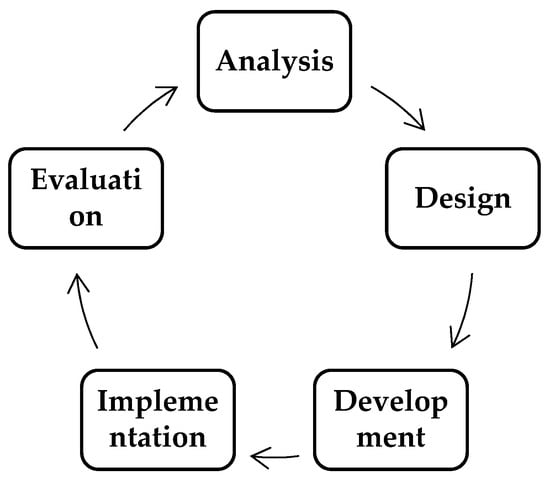
The study utilized the iterative developmental cycle of the ADDIE framework (Figure 1), as elaborated by Peterson [23], in conjunction with a quasi-experimental research design (Figure 1). This methodology was systematically implemented through a structured procedure encompassing field testing and rigorous evaluation, continuing iteratively until the developed product met its predefined specifications and criteria.
Figure 1.
ADDIE’s development framework.
Phase 1. The recognized prevalence of non-numeracy and insufficient mastery across the learning competencies associated with the four fundamental operations on integers provided the foundational rationale for the development of the Z-Card.
Phases 2–3. The design and development of Z-Card was guided by the design-based research framework [24] which identifies seven key distinctions that set it apart from conventional psychological research methodologies. This phase encompassed the design, development, and pre-implementation stages of the Z-Card game. Central to this phase was the construction of a game manual, which delineated the rules, mechanics, and procedural guidelines governing gameplay. The manual further elaborated on the conceptual underpinnings of Z-Card as they relate to foundational operations involving integers.
Phase 4. Four high school, and three college math teachers validated and evaluated the card game based on the different criteria for evaluation to further improve the Z-Card focusing on five main criteria: (1) goals and objectives; (2) design; (3) components and organization; (4) playability and playfulness; and (5) usefulness [25]. Comments, suggestions and recommendations of the validation were used to enhance and improve further the development of Z-Card prior to its actual testing and evaluation in classroom instruction.
Phase 5. The research team utilized the quasi-experimental pre-test/post-test design amongst Grade 7 students at a public high school in Romblon to evaluate the effectiveness of the card game.
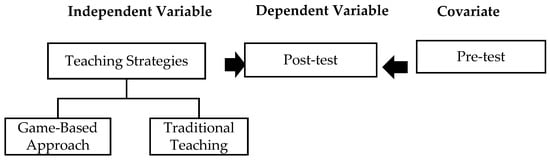
The framework shown in Figure 2 is grounded on the principle that instructional strategies significantly influence student learning outcomes, particularly in mathematics. The independent variable in this research is teaching strategies, which include two levels: (1) game-based teaching with Z-Card utilization, and (2) traditional teaching methods. The Z-Card, a specially designed instructional game, serves as an innovative intervention aimed at improving student performance in mastering the four fundamental operations involving integers addition, subtraction, multiplication, and division. The dependent variable is the post-test scores, which measure the students’ performance and mastery of integer operations after the intervention. This outcome is used to determine whether the type of teaching strategy employed has a significant effect on the learning gains. By comparing the post-test results of students taught using the Z-Card against those taught traditionally, the study aims to assess the effectiveness of game-based instructional innovation in improving mathematical proficiency.
Figure 2.
The Quasi-Experimental ANCOVA Design.
The pre-test scores serve as a covariate, functioning as a control variable to statistically account for the learners’ initial knowledge or skill levels prior to the intervention. The inclusion of pre-test data allows the researchers to isolate the true effect of the teaching strategy by adjusting for pre-existing differences in student ability. This statistical control strengthens the internal validity of the study by ensuring that improvements in post-test performance are attributable to the instructional method rather than prior knowledge alone. Furthermore, after the intervention, the students evaluated the Z-Card to gather valuable feedback based on their experiences in the teaching and learning process of the fundamental operations of integers.
2.2. Population and Sampling Techniques
The respondents of the study were the Grade 7 students at a public high school in Romblon, Philippines. A total of 177 students were enrolled during the Academic Year 2023–2024 grouped into seven sections homogeneously. From the seven sections two sections serve us samples of the study, Section 1 class with 27 students and Section 5 class with 28 students for a total of 55 students, who were selected based on the results of ANOVA test and post hoc analysis.
Table 1 shows the results of the pre-test descriptive statistics of all Grade 7 students across sections, with Section 7 having the highest score (M = 16.74, SD = 4.38) and Section 1 having the lowest score (M = 10, SD = 3.93). Moreover, the ANOVA results (Table 2) revealed a statistically significant difference in the pre-test mean scores across the seven sections, F(6, 170) = 10.52, p = 0.001, indicating that students’ initial understanding of integer operations varied notably among groups.
Table 1.
Descriptive analysis of pre-test results.
Table 2.
Test for pre-tests mean difference across sections.
The substantial difference between the mean square between groups (154.895) and within groups (14.724) suggests that these variations were not due to chance. Given this significant result, a post hoc test is necessary to determine specifically which sections differed from one another in their pre-test performance, ensuring accurate interpretation of the intervention’s impact. Furthermore, the results of the Tukey HSD post hoc analysis indicate meaningful differences in pre-test performance across the sections under study. Specifically, Section 1 obtained notably lower mean scores relative to Section 4 (MD = −3.25185, p = 0.027), Section 6 (MD = −5.61376, p = 0.001), and Section 7 (MD = −7.25536, p = 0.001), with all corresponding confidence intervals excluding zero a statistical condition that lends credibility to these observed differences. (See Table 3).
Table 3.
Post hoc test for pairwise differences across sections.
In contrast, the comparisons between Section 1 and the remaining sections, namely Section 2 (p = 0.174), Section 3 (p = 0.544), and Section 5 (p = 0.999), yielded no statistically significant differences, suggesting that these groups entered the study at roughly equivalent levels of academic readiness. However, Section 5 was assigned purposively as a control group since it has the highest p-value of 0.999 indicating comparable mastery level to Section 1 wherein usual motivation and varied activities given to them such as seat works, board works, quizzes, and assignments while Section 1 was experimental group through Z-Card game-based approach intervention while Section 5 will the control group exposed to traditional teaching.
2.3. Instrumentation
To assess the degree of acceptability of the developed Z-Card as a game-based instructional approach for teaching and learning the fundamental operations on integers, a research instrument was adapted comprising 25 indicators organized under five evaluative criteria: (1) goals and objectives; (2) design; (3) components and organization; (4) playability and playfulness; and (5) usefulness [26]. The standardized survey instrument was subjected to validation procedures and demonstrated satisfactory reliability, yielding a Cronbach’s alpha coefficient of 0.862, which confirms its consistency as a measurement tool. In addition, a 30-item multiple-choice achievement test was developed to measure the instructional effectiveness of the Z-Card in classroom settings. The construction of test items was guided by a Table of Specifications (TOS) aligned with the Revised Bloom’s Taxonomy of Learning. Content validity of the instrument was established through review by seven mathematics education experts—three from a public high school in Romblon, one from Odiongan National High School, and three from Romblon State University—whose feedback informed minor revisions to improve the overall quality of the test items. To further determine the reliability of the achievement test, pilot administration was conducted among Grade 7 students who were not included in the treatment groups. The results indicated an acceptable level of internal consistency, as evidenced by Cronbach’s alpha value of 0.771, confirming the instrument’s reliability for use in the study.
2.4. Data Gathering Procedure
The study employed a survey instrument to assess the acceptability of the Z-Card prior to its integration into classroom instruction. To ensure the methodological rigor of the research, the validity and reliability of the survey questionnaires were first established before the experimentation commenced. These foundational steps provided the necessary empirical basis upon which the subsequent phases of the study were designed and executed. Prior to the intervention, both the control and experimental groups were given pre-tests to establish their baseline performance levels on the subject matter. This preliminary assessment was essential in determining the comparability of the two groups before exposure to their respective instructional conditions, thereby strengthening the internal validity of the experimental design. In contrast, the experimental group participated in a game-based learning activity known as the “Z-Card game,” which served as the primary pedagogical tool for reinforcing the targeted learning competencies. Upon the conclusion of the intervention, a post-test was administered to both groups to measure and compare post-instructional performance outcomes. Additionally, the experimental group evaluated the Z-Card using predetermined acceptability criteria, generating data to assess the instrument’s viability as a game-based instructional approach for teaching the fundamental operations of integers. All data gathered from both the pre-test and post-test, as well as the acceptability evaluation, were subsequently collated and subjected to formal statistical analysis.
2.5. Data Analysis
All the data were tallied, tabulated, and analyzed. Tables were used to illustrate the gathered data. The following statistical treatments are applied:
- Cronbach Alpha (KR-20)—it is used to test the reliability of the developed 30 items tests.
- Percentage/proportion is used to determine the mastery level of the students in their pre-test and post-test across treatments.
- Sample mean and sample standard deviation were used to estimate the level of acceptability of Z-Card in terms of the different factors for testing. The interpretation of the mean scores was based on the following descriptors as shown in Table 4.Table 4. Z-Card evaluation mean score interpretation.
- A paired sample t-test was employed to determine whether statistically significant differences existed between the pre-test and post-test mean scores of students across both the control and intervention groups. This allowed for a within-group examination of performance change over the course of the study.
- To further investigate group differences, an Analysis of Covariance (ANCOVA) was conducted to assess whether meaningful disparities existed in the post-test mean scores of students when classified according to treatment condition, with pre-test scores incorporated as a covariate. This statistical approach was deemed appropriate as it effectively controls pre-existing differences in student performance prior to the intervention, thereby enhancing the precision of the comparative analysis. Complementing this, partial eta squared (η2) was computed to quantify the proportion of variance in the dependent variable attributable to the independent variable (treatment conditions) while accounting for the influence of the covariate. This measure served as an index of practical significance, providing a more nuanced interpretation of the magnitude and real-world relevance of the observed treatment effects beyond what statistical significance alone could convey.
3. Results
3.1. Evaluation of the Z-Card
The Z-Card was evaluated in terms of the five criteria: (1) goals and objectives, (2) card design, (3) components and organizations, (4) playability, and (5) usefulness with very acceptable ratings. Table 5 presents the overall descriptive evaluation of the Z-Card, revealing a consistently high level of acceptance across all assessed dimensions. The overall mean rating was 4.88 (SD = 0.12), interpreted as very acceptable, indicating that respondents perceived the Z-Card as highly satisfactory. Among the specific criteria, playability and playfulness (M = 4.91, SD = 0.09) and usefulness (M = 4.91, SD = 0.08) obtained the highest mean ratings, suggesting that the material is both engaging and functionally valuable in the learning process. Meanwhile, components and organization (M = 4.87, SD = 0.11), goals and objectives (M = 4.86, SD = 0.15), and card design (M = 4.86, SD = 0.16) also received very high ratings, demonstrating that the instructional alignment, structural coherence, and visual presentation of the Z-Card were strongly appreciated. The relatively low standard deviation values across all indicators indicate a high level of agreement among respondents, reflecting consistency in their positive evaluations.
Table 5.
Overall descriptive evaluation of Z-Card.
The findings imply that the Z-Card is not only well-designed in terms of structure and content alignment but also effective in fostering learner engagement through its playful and interactive features. The high ratings in playability and usefulness suggest that integrating game-based elements into mathematics instruction can significantly enhance students’ motivation and perceived learning value. Moreover, the strong acceptance of the goals, objectives, and organization indicates that the Z-Card aligns well with instructional targets, reinforcing its potential as a reliable supplementary learning tool. These results support the continued implementation and possible wider adoption of the Z-Card as an innovative instructional intervention, particularly in addressing foundational mathematical skills and promoting positive attitudes toward learning mathematics.
3.2. Mastery Level of the Students
Mastery of the learning competencies on the fundamental operations of integers for both group is evident after the experiment. Table 6 presents the mastery levels of students in performing the fundamental operations of integers across intervention and control groups in both pre-test and post-test conditions based on the evaluation criteria from DepEd [27]. The results indicate that both groups began with generally weak competencies, particularly in subtraction, multiplication, and division. The intervention group demonstrated substantial improvement across most competencies after the treatment. For instance, performance in addition increased from 50.36% (Average Mastery) to 73.04% (Moving Towards Mastery), while solving addition problems improved from 48.1% (Low Mastery) to 70.4% (Moving Towards Mastery). Notably, large gains were observed in multiplication and division, where mastery levels moved from Very Low Mastery (27.25% and 27.15%, respectively) to Average Mastery (58.94% and 51.23%, respectively). Although solving subtraction problems remained in the Very Low Mastery category (33.3%), this reflected a marked improvement from the pre-test result of 3.7% (Absolutely No Mastery). Overall mastery in the intervention group increased from 35% (Very Low Mastery) to 65% (Moving Towards Mastery), reflecting a 30-percentage-point gain. In comparison, the control group also showed improvement, but gains were generally smaller and remained within lower mastery bands. Their overall mastery increased from 36% (Low Mastery) to 55% (Average Mastery), suggesting progress but at a comparatively modest level.
Table 6.
Mastery level in the different learning competencies in performing fundamental operations of integers across treatment.
These findings imply that while traditional instruction may contribute to incremental improvement, the intervention using Z-Card as a game-based approach produced stronger advancement across most integer competencies, particularly in procedural skills such as multiplication and division.
The movement of the intervention group from very Low Mastery to Moving Towards Mastery at the overall level suggests that structured and engaging instructional support can significantly enhance foundational understanding of integer operations. However, the persistently low performance in solving subtraction word problems indicates that higher-order application skills require further scaffolding and sustained conceptual emphasis. The results underscore the importance of integrating targeted reinforcement strategies that combine procedural fluency with conceptual problem-solving opportunities. Pedagogically, these findings support the continued implementation and refinement of interactive and structured interventions to address foundational gaps in integer operations, particularly in transitioning students from rule-based computation to flexible problem-solving competence.
3.3. Effectiveness of the Z-Card as a Game-Based Approach
Table 7 shows the test for significant difference in the pre-test and post-test mean scores of the students from the controlled and intervention groups. Findings revealed that there is a significant difference in the mean scores of the students in the intervention class, t(24) = −8.27, p = 0.000 between pre-test and post-test score of the students. This suggest that implementations a game-based approach through Z-Card contributes significantly to the improvement of the students in post-test than in pre-test. Moreover, it was found that there was a significant difference in the mean scores of the students in the controlled class in their pre-test and post-test, t(24) = −4.26, p = 0.000, which indicates a significant difference in pre-test and post-test in the controlled group.
Table 7.
Test for significant difference in the mean pre-test and post-test scores of the students from the controlled and intervention group.
These findings suggest that the performance of the students in both controlled and intervention classes improved significantly, indicating an increase in the attainment of the different learning competencies in the fundamental operations in integers. Moreover, the results demonstrated a larger mean difference in intervention groups, which implies that the use of intervention, Z-Card game in teaching integers contributes significantly to the student’s learning. The results confirms that card games are excellent in enhancing the performance of students in the learning integers [28]. They also added that a card game encouraged the students to think critically and understand how to deal with the sign roles in the operations of integers. Despite the significant improvement across treatment (traditional method and game-based approach in teaching the fundamental operations of integers educators should consider what pedagogy enhances the attainment of mathematical learning competencies. Based on the results, both pedagogy is effective in improving the mathematical skills of the students in learning the fundamental operations of integer but utilizing a game-based approach through Z-Card enhances more the student’s mastery level.
Table 8 presents the test for significant difference in the mean post-test scores of students when grouped according to treatment. Findings revealed there is a significant difference in the post-test scores of the students when grouped according to treatment (F(1, 47) = 9.59, p < 0.05). From this study, the partial eta squared value was discovered to be η2 = 0.169. This suggests that, after adjusting for the pre-test scores, the teaching approach could account for about 16.9% of the variability in the test scores; this indicates that the treatment used in the study has a notable influence on post-test scores. It is recommended that, a η2 value of 0.01 is regarded as a having a small effect, 0.06 as a medium effect, and 0.14 as a large effect [28]. The observed value of η2 = 0.169 in this study would be considered a large effect and would indicate a large effect of the implementation of Z-Card as a game-based approach in teaching and learning the fundamental operation of integers.
Table 8.
Test for significant difference in the post-test mean scores when grouped according to treatment when pre-test is a covariate.
Moreover, the adjusted means (Table 9) indicated that students in the intervention group performed significantly better than those in the control group ) after controlling for pre-test scores . This implies that students in the intervention performed better compared to the controlled class. To conclude, students exposed to the game-based approach using Z-Card improved significantly in terms of mastering the fundamental operations of integers as compared to students who were exposed to the traditional teaching method suggesting that differentiated instruction equates to different learning outcomes for the learners. Hence, facilitator of learning should equip themselves with the different pedagogies and strategies in teaching for them to become an effective and efficient.
Table 9.
Adjusted means across treatments.
4. Discussion
The evaluation of the Z-Card revealed its strong potential as an innovative instructional material for enhancing student learning in the operations of integers. The consistently high ratings across all evaluation criteria indicate that the tool effectively addresses the needs of both teachers and learners, particularly in terms of its playability, usefulness, and content organization. The positive feedback from both groups suggests that the Z-Card promotes active participation, reinforces conceptual understanding, and fosters motivation in mathematics learning key challenges in the Philippine educational context. These outcomes are supported by literature emphasizing the efficacy of game-based learning in improving engagement, facilitating cognitive retention, and making abstract mathematical concepts more accessible [29,30]. By integrating fun and structured gameplay into the learning process, the Z-Card positions itself as a practical solution for addressing low numeracy and learner disengagement often observed in early secondary mathematics education. This reflects the core principles embedded in various DepEd mandates. Its emphasis on learner engagement, contextual relevance, and formative feedback aligns with DepEd Order No. 8, s. 2024, which promotes classroom assessment that informs instruction and improves learning outcomes [31]. The tool also supports the competencies outlined in DepEd Order No. 42, s. 2017 (PPST), particularly in innovating instruction and assessing learning effectively [32]. Likewise, it complements the goals of the MATATAG curriculum reform, which aims to strengthen foundational learning, especially in numeracy, through inclusive and learner-centered strategies. The Z-Card’s integration into classroom practice therefore not only addresses immediate pedagogical needs but also contributes to broader systemic goals of improving mathematics education in the Philippines through innovation and policy-aligned practices.
The implementation of the Z-Card as a game-based instructional tool positively impacted students’ understanding of the fundamental operations of integers. Both the control and intervention groups demonstrated improvement in their post-test mastery levels, but the intervention group showed a more notable advancement. This supports existing literature that highlights the efficacy of game-based learning (GBL) in improving engagement, motivation, and conceptual understanding in mathematics [33]. The Z-Card, which incorporates problem-solving through gamified strategies, likely contributed to a more enjoyable and participatory learning environment, thus leading to measurable gains in student mastery. The results validate that innovations in instructional delivery, particularly those that are constructivist and activity-oriented, can enhance mathematical literacy in early secondary education [28,34]. These findings also align with the Department of Education’s thrust for inclusive, learner-centered pedagogy as mandated by the DepEd Order No. 42, s. 2017 (PPST), which emphasizes the use of innovative strategies to address learners’ diverse needs 32. Furthermore, DepEd Order No. 8, s. 2015 on the Policy Guidelines on Classroom Assessment reinforces the importance of using assessment data to inform instruction and enhance learner outcomes, which is evident in how Z-Card contributed to learning gains post-assessment31. Additionally, the Matatag Curriculum encourages differentiated and game-based approaches to facilitate mastery of foundational competencies, especially in mathematics. Therefore, adopting innovations like Z-Card not only adheres to national policy directions but also strengthens the implementation of outcome-based education by ensuring that even learners with initially low mastery levels are given engaging, equitable opportunities to succeed35.
The findings of the study revealed that both the traditional and game-based teaching approaches led to statistically significant improvements in students’ performance in the fundamental operations of integers. However, the implementation of the Z-Card as a game-based intervention demonstrated a greater effect on students’ post-test scores, as indicated by the larger mean difference and a large effect size. This supports the growing body of literature affirming that educational games can significantly enhance cognitive engagement and conceptual understanding in mathematics [29,34]. The significant improvement in the intervention group’s post-test results suggests that the integration of Z-Card facilitated a more engaging and interactive learning experience, which enhanced student mastery of mathematical competencies beyond what the traditional lecture method could achieve [21]. These results carry meaningful implications for basic education in the Philippines. In alignment with the Department of Education’s (DepEd) policies promoting contextualized, engaging, and learner-centered pedagogies, such as those outlined in DepEd Order No. 8, s. 2015 [31] and DepEd Order No. 42, s. 2017 [32], the study underscores the need to incorporate innovative and game-based strategies to address learning gaps in mathematics. The enhanced performance of students through Z-Card also supports the Matatag Curriculum’s emphasis on foundational learning and learner engagement [35]. Furthermore, the findings contribute to the realization of DepEd Order No. 21, s. 2019, which calls for the strengthening of numeracy skills through differentiated instruction and contextualized learning activities [35]. As such, teachers and curriculum developers are encouraged to adopt gamified instructional tools like Z-Card to make mathematics more accessible, meaningful, and enjoyable, improving learning outcomes in foundational mathematics [12,28,34].
5. Conclusions
Proficiency in integer operations is a requirement for higher-level mathematical contents, but non-numeracy is still a problem despite the numerous studies by researchers, curriculum designers, and facilitators of learning. In this study, the researcher explores developing a game-based approach in teaching and learning the fundamental operations of integers through Z-Card. The study demonstrated that the Z-Card is an effective and innovative instructional tool for teaching the fundamental operations of integers to early secondary students. Its game-based design fosters active participation, enhances conceptual understanding, and promotes motivation, addressing common challenges in mathematics learning, particularly low numeracy and learner disengagement. The consistently higher post-test scores of students in the intervention group compared to the control group validate the effectiveness of the Z-Card in improving both mastery and attitudes toward mathematics. These findings reinforce the existing literature on the positive impact of game-based learning and highlight the importance of integrating interactive, activity-oriented strategies in mathematics instruction [12,29,30,33,34].
Additionally, the Z-Card aligns with national educational directives, including DepEd Order No. 8, s. 2015 and DepEd Order No. 42, s. 2017, by supporting learner-centered pedagogy, formative assessment, and innovative instructional practices [31,32]. Its implementation complements the objectives of the MATATAG curriculum reform by strengthening foundational competencies in numeracy while providing equitable learning opportunities for students with varying levels of initial mastery. The tool’s adaptability and contextual relevance make it a practical solution for addressing persistent learning gaps in mathematics classrooms in the Philippines [35]. Moreover, it is recommended that teachers integrate the Z-Card into regular classroom practice as a supplement to traditional instruction, particularly when teaching integer operations. Teacher training and orientation on effective use of game-based instructional materials should be provided to ensure maximum engagement and learning gains. Furthermore, curriculum developers and school administrators should consider adopting and scaling similar gamified learning interventions to enhance foundational mathematics skills across grade levels. Future research could explore the long-term impact of game-based tools like the Z-Card on higher-order mathematical thinking, as well as their applicability to other mathematics topics beyond integers [12,34].
Author Contributions
Conceptualization, M.M.G., G.T.G., T.J.G.G., K.J.F.F., R.J.M.G., R.R.M.; methodology, M.M.G., G.T.G., T.J.G.G., K.J.F.F.; data Collection, M.M.G., G.T.G., T.J.G.G., R.J.M.G., R.R.M.; formal analysis, M.M.G., G.T.G., K.J.F.F.; validation, K.J.F.F.; writing—original draft, M.M.G., G.T.G., T.J.G.G., K.J.F.F., R.J.M.G., R.R.M.; writing—review and editing, M.M.G., G.T.G., T.J.G.G., K.J.F.F.; visualization, M.M.G., K.J.F.F.; supervision, M.M.G., G.T.G., K.J.F.F.; project administration, M.M.G., G.T.G., T.J.G.G., K.J.F.F. All authors have read and agreed to the published version of the manuscript.
Funding
This research received no external funding.
Institutional Review Board Statement
Not applicable.
Informed Consent Statement
This study adhered to the provisions of the Data Privacy Act of 2012 (Republic Act 10173) during the data collection process. Participation of respondents required informed consent, voluntary, and all collected data were securely processed and stored to ensure confidentiality and were used solely for research purposes. Furthermore, the study upheld ethical standards of transparency, respect, and integrity, with findings reported without revealing any sensitive financial or personally identifiable information.
Data Availability Statement
The corresponding author can provide the datasets used and analyzed in this study upon reasonable request.
Acknowledgments
The researchers express their sincere appreciation to the school administrators, mathematics teachers, and student participants whose cooperation and enthusiasm greatly contributed to the completion of this study. They also extend their gratitude to the evaluators, panel members, research teacher, and coordinators for their valuable insights, constructive feedback, and continuous guidance, making the success of this research a shared accomplishment among all who participated.
Conflicts of Interest
The authors assert no conflict of interest.
Abbreviations
The following abbreviations are used in this manuscript:
| DEPED | Department of Education |
| OECD | Organization for Economic Co-operation and Development |
| PISA | Program for International Student Assessment |
| PPST | Philippine Professional Standards for Teachers |
| TIMMS | Trends In International Mathematics And Science Study |
References
- Dummit, D.S.; Foote, R.M. §0.1 Basics. In Abstract Algebra, 3rd ed.; Wiley: Hoboken, NJ, USA, 2004; p. 1. [Google Scholar]
- Loveless, T. The 2014 Brown Center Report on American Education: How Well Are American Students Learning; Brookings Institution: Washington, DC, USA, 2014. [Google Scholar]
- Verzosa, D.M.B.; Tulao-Fernando, M.T.; Vistro-Yu, C.P. Professional Development of Mathematics Teachers: An Asian Perspective; Springer: Singapore, 2017; pp. 89–96. [Google Scholar]
- Jalandoni, J.F.; Futalan, M.C. Scaffolding students’ difficulties in addition and subtraction of integers through game-based instruction. J. Interdiscip. Perspect. 2024, 2, 195–203. [Google Scholar] [CrossRef] [Scilit]
- Organization for Economic Co-Operation and Development. PISA 2022 Results (Volume I and II)—Country Notes: Philippines. 2023. Available online: https://www.oecd.org/en/publications/pisa-2022-results-volume-i-and-ii-country-notes_ed6fbcc5-en/philippines_a0882a2d-en.html (accessed on 15 March 2024).
- Mullis, I.V.S.; Martin, M.O.; Foy, P.; Kelly, D.L.; Fishbein, B. TIMSS 2019 International Results in Mathematics and Science; TIMSS & PIRLS International Study Center: Chestnut Hill, MA, USA, 2020. [Google Scholar]
- Balasabas, J.A. Understanding the Effects of Modular Distance Learning on Junior High School Students’ Mathematics Academic Performance in Post pandemic: A Teacher’s Perspective. Int. J. Multidiscip. Educ. Res. Innov. 2024, 2, 241–251. [Google Scholar] [CrossRef]
- Trinidad, J.E. Material resources, school climate, and achievement variations in the Philippines: Insights from PISA 2018. Int. J. Educ. Dev. 2020, 75, 102174. [Google Scholar] [CrossRef] [Scilit]
- Barab, S. Design-Based Research: A Methodological Toolkit for Engineering Change. In The Cambridge Handbook of the Learning Sciences; Sawyer, R.K., Ed.; Cambridge University Press: Cambridge, UK, 2014; Chapter 8; pp. 151–170. [Google Scholar]
- Gogia, B. Impact of gamification on achievement in mathematics. Int. J. Sci. Res. 2022, 11, 972–977. [Google Scholar] [CrossRef] [Scilit]
- Ramani, G.B.; Rowe, M.L.; Eason, S.H.; Leech, K.A. Math talk during informal learning activities in Head Start families. Cogn. Dev. 2015, 35, 15–33. [Google Scholar] [CrossRef] [Scilit]
- Singh, P.; Hoon, T.S.; Nasir, A.M.; Ramly, A.M.; Rasid, S.M. Card game as a pedagogical tool for numeracy skills development. Int. J. Eval. Res. Educ. 2021, 10, 693–705. [Google Scholar] [CrossRef] [Scilit]
- Khalid, M.; Embong, Z. Sources and possible causes of errors and misconceptions in operations of integers. Int. Electron. J. Math. Educ. 2019, 15, em0568. [Google Scholar] [CrossRef] [Scilit] [PubMed]
- Anton, J.; Abrahamson, D. Walking the number line: Toward an enactive understanding of integer arithmetic. Instr. Sci. 2025, 53, 657–677. [Google Scholar] [CrossRef] [Scilit]
- Gacutan, D.C. Effectiveness of 5-minute rule review and drills in improving the performance of Grade 7 learners in integer operations. Int. J. Res. Appl. Sci. Eng. Technol. 2025, 13, 2099–2103. [Google Scholar] [CrossRef] [Scilit]
- Langi, E.L.; Kondolayuk, M.L.; Domassang, K.D. Construction of integer operations using the Gasing mathematics method from the perspective of APOS theory. QALAMUNA 2025, 17, 1551–1566. [Google Scholar] [CrossRef] [Scilit]
- Barzilai, S.; Blau, I. Scaffolding game-based learning: Impact on learning achievements, perceived learning, and game experiences. Comput. Educ. 2014, 70, 65–79. [Google Scholar] [CrossRef] [Scilit]
- Merdekawati, S. Enhancing students’ understanding of operations in integers through joyful learning with GeoGebra applet. Southeast Asian Math. Educ. J. 2022, 12, 161–170. [Google Scholar] [CrossRef] [Scilit]
- Acosta, C.P.; Soliba, B.L. The pedagogical approach of grade 7 teachers in teaching the learning competency of integers. Educ. Technol. Q. 2024, 2024, 38–55. [Google Scholar] [CrossRef] [Scilit]
- Ndiung, S.; Kabut, L.; Sennen, E.; Menggo, S. Assessing the pedagogical impact of interactive game-based instruction on improving elementary students’ integer learning concepts. J. Math. Instr. Soc. Res. Opin. 2025, 4, 1339–1350. [Google Scholar] [CrossRef] [Scilit]
- Santos, A.M.S.; Protasio, F.B.V.; Martins, J.D.C.; Melo, R.J.S. Teaching operations with integers through playful activities. Ensino Multidiscip. 2023, 9, e1723. [Google Scholar] [CrossRef] [Scilit]
- Trisnawati, T.; Anjely, P.A.E. Educational game application for learning integer operation materials for elementary students school based on Android. J. Ethics Character Educ. (JECE) 2023, 1, 59–68. [Google Scholar] [CrossRef] [Scilit]
- Peterson, C. Bringing ADDIE to life: Instructional design at its best. J. Educ. Multimed. Hypermedia 2003, 12, 227–241. [Google Scholar]
- Barab, S.A.; Squire, K. Design-based research: Putting a stake in the ground. J. Learn. Sci. 2004, 13, 1–14. [Google Scholar] [CrossRef] [Scilit] [PubMed]
- Gall, M.D.; Borg, W.R. Educational Research: An Introduction, 3rd ed.; Longman Publishing Group: New York, NY, USA, 1983. [Google Scholar]
- Gutierrez, A.F. Development and effectiveness of an educational card game as supplementary material in understanding selected topics in biology. CBE Life Sci. Educ. 2014, 13, 76–82. [Google Scholar] [CrossRef] [Scilit] [PubMed]
- Department of Education. DepEd Memo No. 160, s. 2012: Maximizing the Utilization of the National Achievement Test (NAT) Results to Raise the Awareness Levels in Low Performing Schools. 2012. Available online: https://www.deped.gov.ph/wp-content/uploads/2012/09/DM_s2012_160.pdf (accessed on 5 April 2024).
- Cohen, J. Statistical Power Analysis for the Behavioral Sciences, 2nd ed.; Routledge: New York, NY, USA, 1988. [Google Scholar] [CrossRef] [Scilit]
- Chong, W.W.N.; Shahrill, M.; Asamoah, D.; Latif, S.N.A. Non-digital card game and year 8 students’ performance in integers. J. Math. Sci. Teach. 2022, 2, em007. [Google Scholar] [CrossRef] [Scilit] [PubMed]
- Plass, J.L.; Homer, B.D.; Kinzer, C.K. Foundations of game-based learning. Educ. Psychol. 2015, 50, 258–283. [Google Scholar] [CrossRef] [Scilit]
- Department of Education. DepEd Order No. 8, s. 2015: Policy Guidelines on Classroom Assessment for the K to 12 Basic Education Program. 2015. Available online: https://depedph.com/deped-order-8/ (accessed on 17 April 2024).
- Department of Education. DO 42, s. 2017: National Adoption and Implementation of the Philippine Professional Standards for Teachers. 2017. Available online: https://www.deped.gov.ph/2017/08/11/do-42-s-2017-national-adoption-and-implementation-of-the-philippine-professional-standards-for-teachers/ (accessed on 19 April 2024).
- White, K.; McCoy, L.P. Effects of game-based learning on attitude and achievement in elementary mathematics. Netw. Online J. Teach. Res. 2019, 21, 1–17. [Google Scholar] [CrossRef] [Scilit]
- Barclay, S.M.; Jeffres, M.N.; Bhakta, R. Educational card games to teach pharmacotherapeutics in an advanced pharmacy practice experience. Am. J. Pharm. Educ. 2011, 75, 33. [Google Scholar] [CrossRef] [Scilit] [PubMed]
- Department of Education. DO 021, s. 2019: Policy Guidelines on the K to 12 Basic Education Program. 2019. Available online: https://www.deped.gov.ph/2019/08/22/august-22-2019-do-021-s-2019-policy-guidelines-on-the-k-to-12-basic-education-program/do_s2019_021/ (accessed on 28 April 2024).

Disclaimer/Publisher’s Note: The statements, opinions and data contained in all publications are solely those of the individual author(s) and contributor(s) and not of MDPI and/or the editor(s). MDPI and/or the editor(s) disclaim responsibility for any injury to people or property resulting from any ideas, methods, instructions or products referred to in the content. |
© 2026 by the authors. Licensee MDPI, Basel, Switzerland. This article is an open access article distributed under the terms and conditions of the Creative Commons Attribution (CC BY) license.