Proceeding Paper

Development of Alumni Information Management System in a State University †
1
College of Science and Technology, Guimaras State University, Jordan 5045, Philippines
2
College of Education, Romblon State University, Odiongan 5505, Philippines
*
Author to whom correspondence should be addressed.
Presented at the 8th International Global Conference Series on ICT Integration in Technical Education & Smart Society, Aizuwakamatsu City, Japan, 20–26 January 2026.
Eng. Proc. 2026, 143(1), 38; https://doi.org/10.3390/engproc2026143038
Published: 17 July 2026

Abstract

This study developed a web-based Alumni Information Management System in a state university to centralize alumni data, enhance networking opportunities, and support career development. Designed to be intuitive and user-friendly, the AIMS allows alumni to easily update their personal profiles, specify job preferences, and upload resumes. The system’s design is informed by frameworks such as the Information Systems Success Model and UTAUT, ensuring high usability and acceptance. The Alumni Information Management System (AIMS) effectively enhances communication between the institution and its alumni. Centralizing alumni information has demonstrably improved engagement, streamlined networking, and empowered alumni to identify relevant career opportunities through features like job alerts, integrated application tools, and an intuitive interface. These features are effective in strengthening the bond between alumni and the institution, ultimately fostering enhanced career support and expanded networking possibilities. This research identifies and addresses a previously unrecognized need specific to state university alumni. While existing studies contribute valuable insights to alumni engagement and career support, a research gap exists regarding the integration of these services within a tailored platform for state university alumni. This study’s system offers a practical and scalable solution for universities facing similar challenges.

1. Introduction

Alumni networks have long served as vital conduits for connection among graduates, educational institutions, and the broader community [1]. While universities have traditionally maintained alumni records to facilitate communication and engagement, many institutions have struggled to effectively manage this information in scalable, accurate ways [2,3]. The proliferation of digital technologies has created new opportunities for data management and service delivery in higher education, catalyzing the development of specialized alumni information systems and portals that streamline communication, support networking, and generate actionable institutional insights [4,5].
Such platforms can centralize and standardize alumni data, enable targeted outreach, and reduce fragmentation that otherwise undermines relationship-building [6,7].
The growing importance of alumni engagement extends far beyond record-keeping [8,9]. Research indicates that strong alumni relationships are associated with institutional reputation and can materially influence advancement outcomes when engagement is cultivated with data-informed practices [6]. Robust feedback loops with graduates—enabled by modern information systems—help institutions assess program relevance and long-term outcomes, informing iterative, data-driven improvements to curricula and student support [10,11]. Contemporary systems address persistent data management challenges—such as scattered records and outdated contact details—through unified architectures, unique identifiers, and data quality governance, which improve accuracy and reduce outreach failures [9,12]. At the same time, effectiveness depends on solving adoption and trust barriers, including user participation and data privacy concerns in a post-GDPR landscape [13,14]. Evidence from digital engagement research also shows that well-designed notifications can drive near-term participation—useful for event reminders and career alerts—when used judiciously and ethically [15,16].
Within Guimaras State University, alumni frequently report difficulty securing roles aligned with their degrees, reflecting skills mismatches and gaps between academic preparation and evolving industry needs. Compounding this issue, many institutions still struggle to maintain accurate, centralized alumni records; information dispersed across legacy systems and social platforms leads to errors, stale contacts, and missed connection opportunities [17]. This fragmentation weakens the institution’s ability to provide career support, track graduate trajectories, and demonstrate outcomes to stakeholders [4,8,18]. These challenges—in employment matching, institutional follow-through, and sustained engagement—are widely observed. Studies highlight the need for stronger career transition supports, structured mentoring, and network effects that bridge graduates to employers and to one another [19]. Data spread across multiple platforms also hampers targeted services and alumni mentoring programs that rely on timely, accurate profiles [20,21]. Without reliable longitudinal data on career milestones, institutions miss opportunities to showcase graduate success and bolster recruitment [22]. Moreover, engagement strategies must adapt to generational preferences and digital habits, emphasizing user experience, personalization, and value-adding services [21,23].
The proposed Alumni Information Management System targets these pain points for the College of Science and Technology. It provides a centralized, user-centric platform where alumni can connect, maintain up-to-date profiles (skills, job preferences), and access resources [24,25,26]. A unified database architecture and data quality processes address fragmentation and improve integrity [27]. A configurable notification service supports timely outreach about jobs, deadlines, and events—an approach shown to increase near-term engagement when thoughtfully implemented [28]. Built-in résumé/profile management and application tracking streamline job search workflows and create institutional visibility on outcomes [23]. The design is grounded in human–computer interaction principles and accessibility/usability research for higher-education portals, which is critical for sustained adoption across diverse alumni cohorts [29]. Collectively, these capabilities are expected to strengthen the alumni community, enhance career development services, and generate credible evidence for continuous program improvement [30].

2. Materials and Methods

In the development of the Alumni Information System, researchers adopted the Modified Waterfall Model as the project management methodology [1,31]. This approach allowed for a structured and sequential process while providing flexibility to revisit previous stages when necessary. The following outlines the key phases of the methodology: requirements modeling, analysis, design, implementation, testing and maintenance phases.
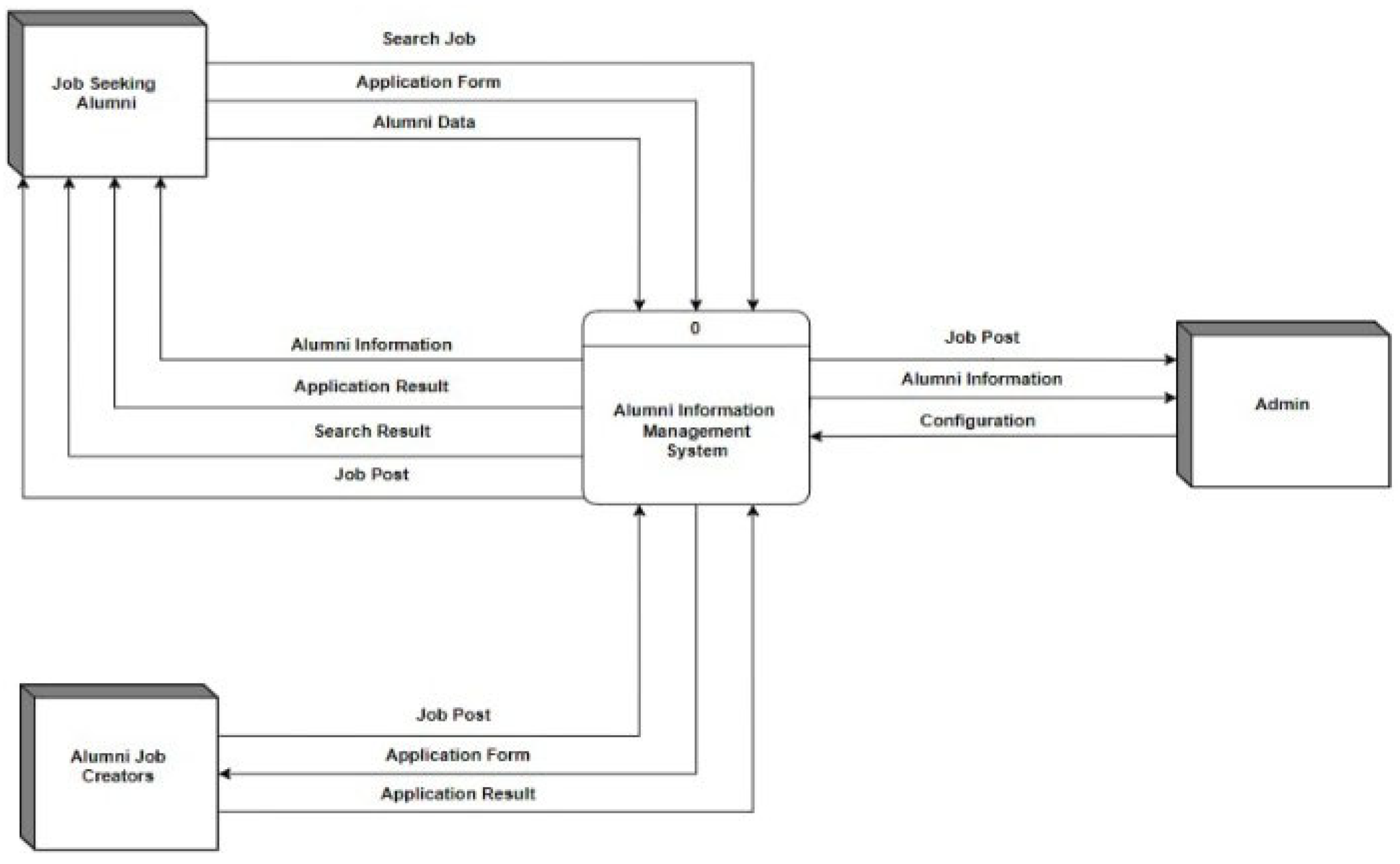
This study employed the modified waterfall model as a software development life cycle that enhances the traditional approach by incorporating feedback loops for greater flexibility. It starts with thorough requirements gathering and analysis, followed by design and implementation phases that integrate periodic reviews and validations. Finally, rigorous testing and ongoing maintenance ensure the system meets requirements and adapts to changes, allowing for revisions at any stage shown in Figure 1.

2.1. Software Development Phases

2.1.1. Requirements Gathering

To determine the user requirements of the Alumni Information Management System, the researchers conducted interviews with administrative units at the College of Science and Technology involved in alumni relations. This phase involved comprehensive administrative units to understand current processes and identify areas for improvement.

2.1.2. Analysis Phase

In the analysis phase, with reference to the data collected in the requirements gathering phase, the problems in the Alumni Information Management System were described and evaluated. These involved gaps in data management, communication and engagement processes. These issues were addressed by a thorough assessment of potential alternative solutions. This phase was important in the establishment of areas that require enhancement to provide a system that is more efficient and effective.

2.1.3. Design Phase

The design phase marked the initiation of the system design. The researchers focused on developing the framework for the Alumni Information Management System, utilizing a Windows application as the platform. The system interface was designed using CSS to enhance its appearance. PHP was employed to create interactive window pages, and MySQL was used as the relational database management system. Design documents, including unified modeling language (UML) diagrams, were created to visualize the system logical structure and workflows.
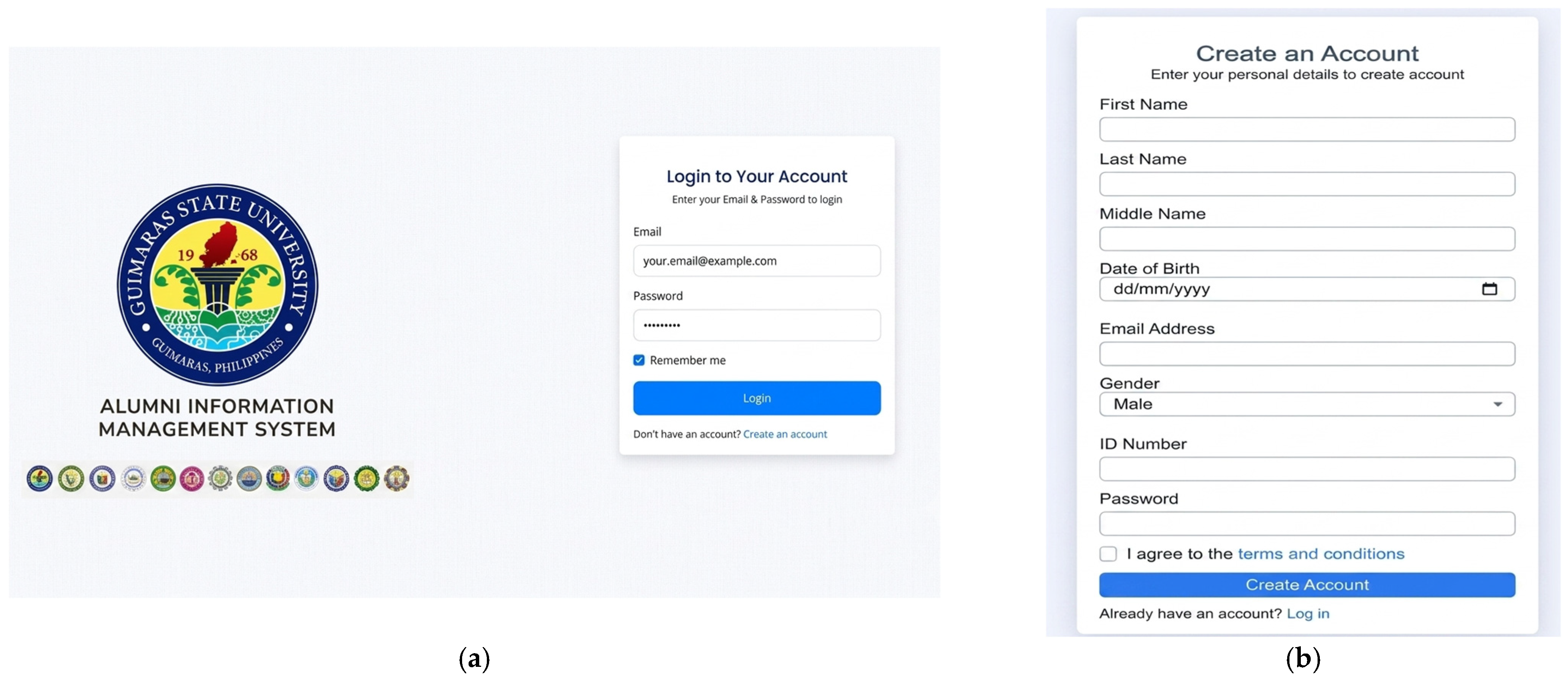
The context diagram as shown in Figure 2 defines and clarifies the boundaries of the software system to establish the context and boundaries of the system to be modeled, what things were inside and outside of the system being modeled, and what the relationship of the system was with these external entities.

2.1.4. Implementation Phase

The design of the Alumni Information Management System (AIMS) was implemented in the implementation phase as a fully functional system. A breakdown of these was the alumni profile management system, job notification system, and resume upload feature. Each module was developed, tested and refined on its own before being integrated into the overall system. This phase ensured that the Alumni Information System was fully functional, user-friendly, and aligned with the university’s goals for alumni engagement and career support.

2.1.5. Testing and Maintenance Phase

The final phase focused on rigorous, as emphasized, testing to ensure the system’s smooth operation and functionality. This included assessments of accuracy, effectiveness, functionality, and security. Unit testing, integration testing, system testing, and user acceptance testing were conducted. Additionally, ongoing system maintenance was performed to identify and rectify errors and enhance overall system performance.

3. Results

The Alumni Information Management System (AIMS) should incorporate an Alumni Feedback Mechanism to allow alumni to easily provide feedback on the system’s functionality, usability, and features. This mechanism should enable alumni to suggest improvements, report issues, and share their overall experiences with the platform, ensuring continuous enhancements based on user input. Additionally, the job search experience should be improved by implementing personalized recommendations. The system should utilize algorithms to proactively identify and suggest job opportunities that align with each alumnus’s unique skills, preferences, and career goals, making the job-seeking process more efficient and tailored.
Furthermore, AIMS should foster diverse mentorship connections by introducing a feature that allows alumni to volunteer as mentors. This mentorship feature should support various forms of guidance, including one-on-one mentoring, group mentoring sessions, workshops, and seminars. It should also enable students and fellow alumni to easily search for and connect with mentors who align with their needs and professional interests, strengthening alumni engagement and career development opportunities.

3.1. Output and User-Interface Design

3.1.1. Login and User Creation Forms

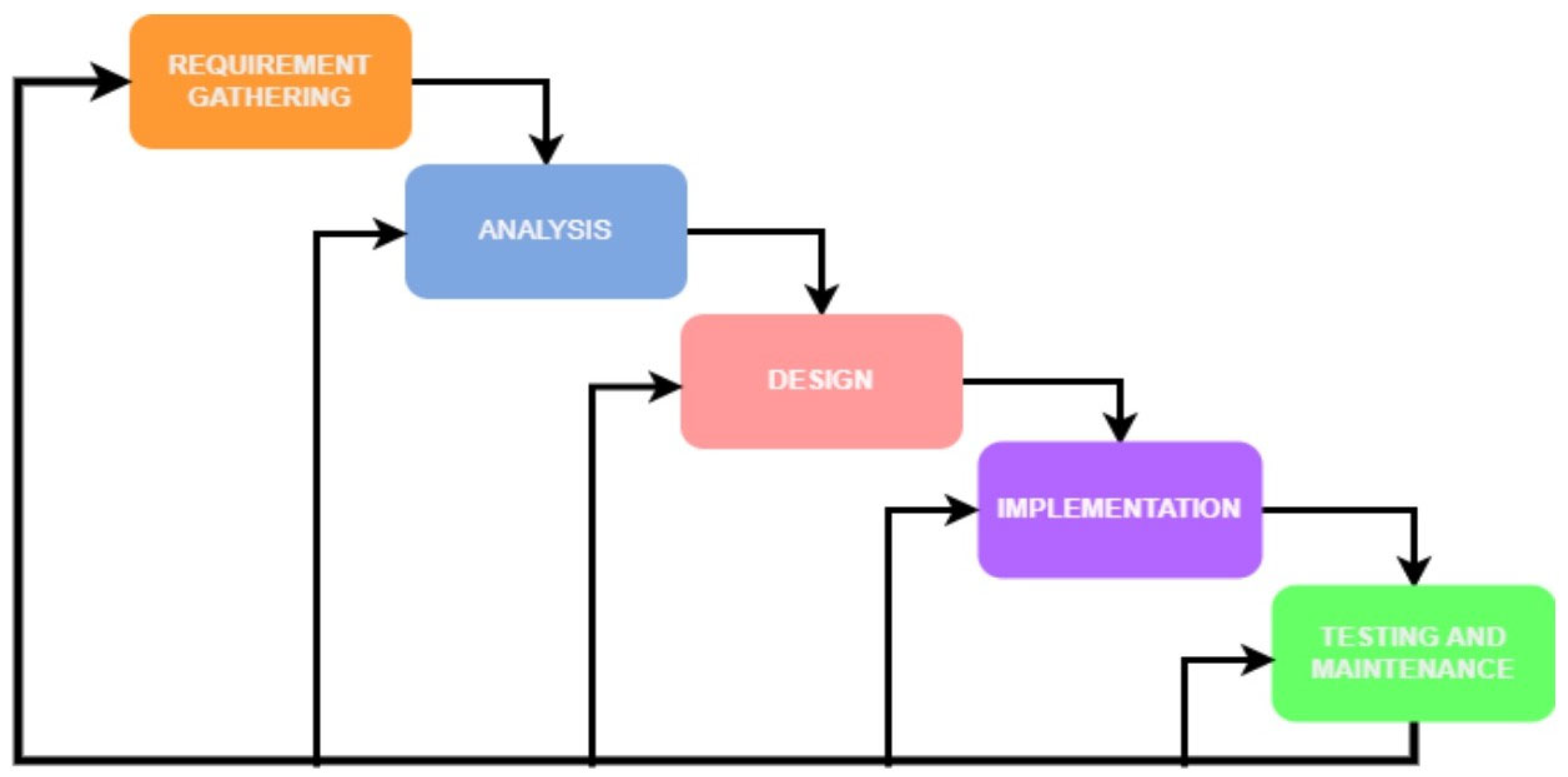
Figure 3a presents the prototype of the login interface for the Alumni Information Management System, serving as the primary access point for users. This simple yet crucial screen ensures security by requiring users to input their username and password, effectively authenticating their identities before granting access to personalized information and system functionalities. On the other side, Figure 3b shows the account creation form, prioritizing essential information and user-friendly functionality. The form fields are arranged in a clear hierarchy, guiding users through the process. Key elements include standard text fields for personal details like name and email, a date picker for birthdate, and a masked field for password entry. A checkbox ensures users explicitly agree to terms and conditions, while a prominent “Create Account” button serves as the primary call to action. The inclusion of a login link offers an alternative for existing users. While this prototype effectively showcases the basic structure and functionality, a real-world implementation would need to address aspects like error handling, mobile responsiveness, and accessibility for a seamless user experience.

3.1.2. Internal System Dashboards and Access Controls

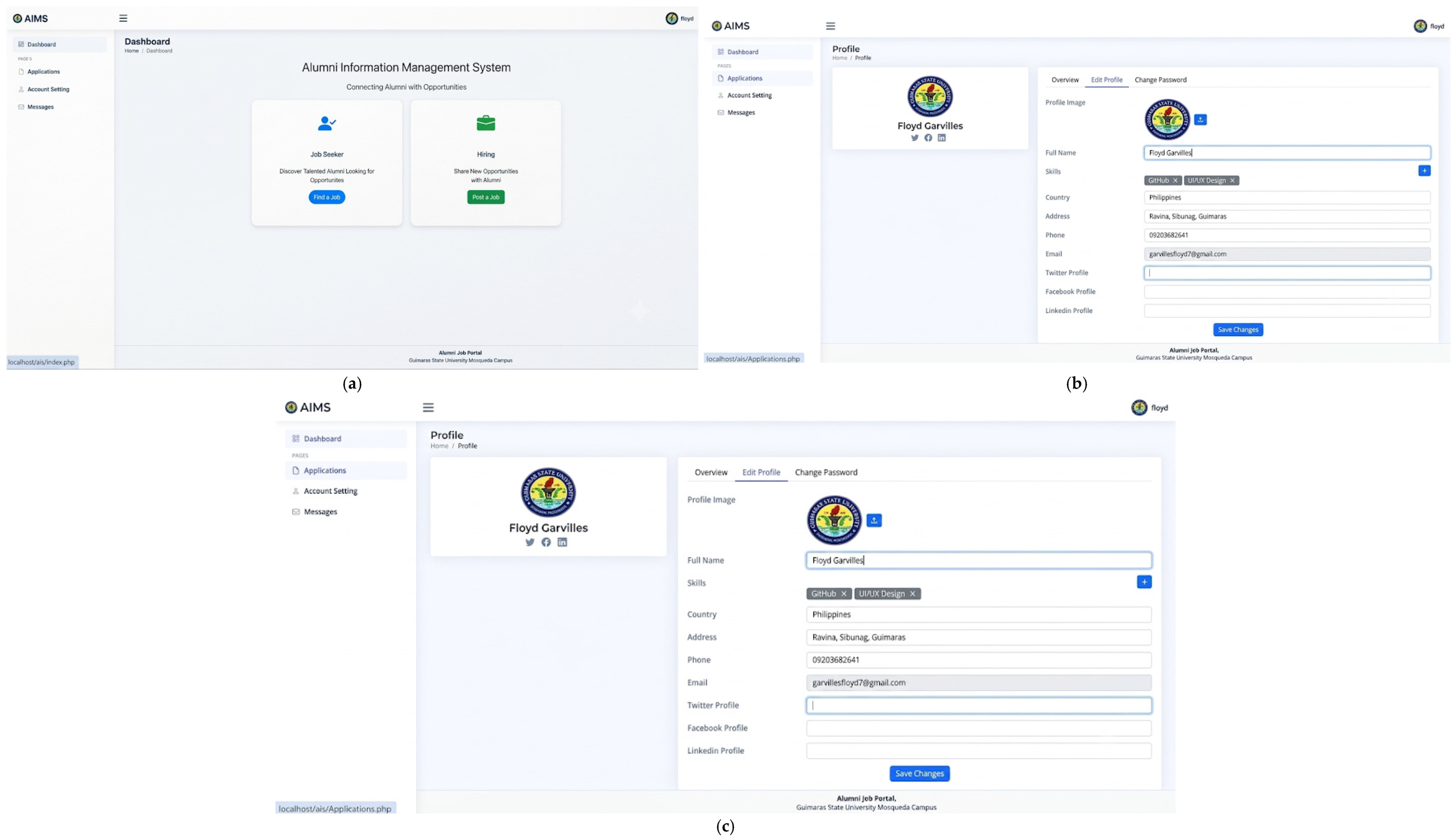
Once logged in, the system provides various levels of access depending on the access classification shown (Figure 4), as described, and offers a robust platform that fosters alumni engagement and career development (Figure 4a). It provides opportunities for alumni to find jobs through dedicated postings and networking.
The interface shown in Figure 4b for the Alumni Information Management System is designed to connect state university alumni with job opportunities through its “Job Seeker” and “Hiring” sections. Additionally, users have the capacity to update the profile as shown in Figure 4c. This user-friendly design caters to both alumni seeking jobs and employers looking to hire qualified alumni. In essence, this interface presents a promising solution for bridging the gap between alumni and potential employers within the state university.

4. Discussion

This study developed an Alumni Information Management System (AIMS) for a state university, designed to strengthen institutional connections with its graduates and address persistent challenges in alumni data management and engagement. Universities increasingly rely on digital platforms to manage alumni records, facilitate communication, and support institutional development; however, many institutions still face difficulties in maintaining accurate, centralized, and up-to-date alumni information across fragmented systems [28,29]. In response, AIMS provides a centralized and scalable platform that consolidates alumni records and improves the efficiency of data management processes. Similar digital alumni portals and tracer systems have been shown to enhance data accessibility, improve record accuracy, and strengthen communication between graduates and their alma mater [7,19,32].
A key feature of the proposed system is its comprehensive alumni profile module, which allows graduates to maintain updated professional information such as skills, employment status, job preferences, and contact details. Maintaining updated alumni profiles is crucial for institutions seeking to monitor graduate outcomes and provide career support services, as reliable alumni data enables universities to better understand workforce transitions and career trajectories after graduation [2,23]. Previous studies highlight that digital alumni management systems can significantly improve graduate tracking, support career transition initiatives, and provide valuable feedback for curriculum evaluation and institutional improvement [5,16,21]. By enabling alumni to update their own profiles, AIMS also reduces the burden on administrative units responsible for records management and helps ensure higher data accuracy and completeness.
Beyond profile management, the system serves as a dynamic platform that facilitates professional networking and employment opportunities for graduates. Alumni networking platforms and digital engagement systems have been widely recognized as effective tools for connecting graduates with employers, fostering mentorship relationships, and strengthening alumni communities [9,22,24]. Through its searchable database and profile visibility features, AIMS enables employers to discover qualified candidates within the state university alumni network, thereby creating new pathways for recruitment and collaboration. Similar platforms that integrate alumni databases with employment opportunities have demonstrated the potential to bridge the gap between higher education institutions and industry by connecting skilled graduates with organizations seeking qualified professionals [32,33].
Furthermore, the design and implementation of AIMS were guided by established software development and information system practices that emphasize structured system design, usability, and scalability. Research on software development life cycle (SDLC) methodologies underscores the importance of adopting systematic development processes to ensure reliable and maintainable information systems [1,28,34]. Incorporating these principles allows AIMS to provide a sustainable digital infrastructure that supports long-term alumni engagement and institutional data management. As universities increasingly adopt technology-driven solutions to strengthen alumni relations, integrated systems such as AIMS can serve as strategic tools for enhancing graduate employability support, institutional feedback mechanisms, and community engagement [4,35,36]. By bridging the gap between alumni seeking career opportunities and employers seeking skilled professionals, the system contributes to professional development while reinforcing the university’s role as a valuable resource for its graduates and the broader community.

5. Conclusions

The Alumni Information Management System (AIMS) developed for a state university addresses the need for a centralized and efficient platform to manage alumni information and strengthen connections between the institutions and their graduates. Many universities struggle to maintain accurate and updated alumni records because information is often scattered across different sources or becomes outdated over time. AIMS solves this problem by consolidating alumni data into a single platform where graduates can easily update their profiles, including their skills, job preferences, employment status, and contact details. The system was designed to be simple and user-friendly to encourage alumni participation and ensure that information remains current and reliable. In addition to profile management, AIMS also supports career development and networking by allowing alumni to upload resumes, receive job alerts, and explore employment opportunities, while employers can identify potential candidates within the alumni network. By bridging the gap between graduates seeking career opportunities and organizations looking for skilled professionals, the system enhances communication, supports professional growth, and strengthens the long-term relationship between the university and its alumni. Overall, AIMS provides a practical and scalable solution that improves alumni engagement, supports career development, and offers a model that other universities can adopt to enhance alumni services and institutional connections.

Author Contributions

F.G. and J.C.T.; methodology: R.B. and A.G.; software: J.G. and G.V.B.; validation: F.G., G.V.B., J.G. and J.R.G.; formal analysis: F.G.; writing—original draft preparation: J.G. and G.V.B.; writing—review and editing: G.V.B. and J.R.G.; supervision: F.G. and J.R.G.; project administration: J.G. All authors have read and agreed to the published version of the manuscript.

Funding

The Implementation of this project received no funding. Meanwhile, the Article Processing Charge was funded by Romblon State University.

Institutional Review Board Statement

Not applicable.

Informed Consent Statement

Not applicable.

Data Availability Statement

The data presented in this study are available on request from the corresponding author.

Acknowledgments

The authors would like to thank Guimaras State University and Romblon State University for the support in the conduct of this study. During the preparation of this manuscript/study, the authors used Gemini 3 Flash for the purposes of checking the grammar. The authors have reviewed and edited the output and take full responsibility for the content of this publication.

Conflicts of Interest

The authors declare no conflicts of interest.

References

  1. Abdulaxatov, M. MODELS AND METHODOLOGIES SOFTWARE DEVELOPMENT. 2024. Volume 3. Available online: https://research.nordicuniversity.org/index.php/nordic/article/view/1092 (accessed on 14 February 2025).
  2. Akkermans, J.; da Motta Veiga, S.P.; Hirschi, A.; Marciniak, J. Career transitions across the lifespan: A review and research agenda. J. Vocat. Behav. 2024, 148, 103957. [Google Scholar] [CrossRef] [Scilit]
  3. Ayala-Rivera, V.; Portillo-Dominguez, A.O.; Pasquale, L. GDPR compliance via software evolution: Weaving security controls in software design. J. Syst. Softw. 2024, 216, 112144. [Google Scholar] [CrossRef] [Scilit]
  4. Patil, L.; Vaibhaw, A.; Tripathi, S.; Ambade, A.; Sonekar, M.; Rajak, V. A Bridging Platform for Students and their Alumni using a Social Media Platform. Int. J. Comput. Sci. Eng. 2025, 13, 33–40. [Google Scholar] [CrossRef] [Scilit]
  5. Babu, P.; Deepadharshini, G.; Priya, S.D.; Janani, A. Automated alumni data tracking system. Int. J. Health Sci. 2022, 6, 1310–1325. [Google Scholar] [CrossRef] [Scilit]
  6. Belle Azzarello, C.; Arakawa, L.; Edi, D.; Sutton, M.; Larkins, R. Perceived Life-Readiness from Real-World Curriculum Experiences of Alumni. Int. J. High. Educ. 2021, 10, 33–44. [Google Scholar] [CrossRef] [Scilit]
  7. Bista, B.; Shakya, A.; Joshi, B.; Pokhrel, A.; Dangol, L.; Kedia, M.; Baral, D.S. An Alumni Portal and Tracking System. J. Inst. Eng. 2021, 16, 7–14. [Google Scholar] [CrossRef] [Scilit]
  8. Dean, A.; McLean, J.G. Creating future alumni donors: Exploring critical aspects of an enriched undergraduate experience. Qual. High. Educ. 2025, 31, 223–244. [Google Scholar] [CrossRef] [Scilit]
  9. Dedeepya, P.; Yarrarapu, M.; Vallurupalli, J.M.; Polimetla, V.; Sangam, H.K.; Vanapalli, S.K. Enhancing Alumni Engagement Through Digital Platform: A Case Study on Alumni Connect. In Proceedings of the 2025 Third International Conference on Augmented Intelligence and Sustainable Systems (ICAISS), Trichy, India, 21–23 May 2025; pp. 1305–1311. [Google Scholar] [CrossRef] [Scilit]
  10. Deros, B.M.; Mohamed, A.; Mohamed, N.; Kamal, A.; Mohd Ihsan, A. A Study of Alumni Feedback on Outcome Based Education in the Faculty of Engineering & Built Environment, Universiti Kebangsaan Malaysia. Procedia-Soc. Behav. Sci. 2012, 60, 313–317. [Google Scholar] [CrossRef] [Scilit]
  11. Enihe, R.; Omopariola, V. Alumni Portal System for Nigerian Universities (A Case Study). Int. J. Sci. Res. 2023, 12, 1047–1055. [Google Scholar] [CrossRef] [Scilit]
  12. Gilbert, C.; Gilbert, M.A. Impact of General Data Protection Regulation (GDPR) on Data Breach Response Strategies (DBRS). Int. J. Res. Innov. Soc. Sci. 2025, 9, 760–784. [Google Scholar] [CrossRef] [Scilit]
  13. Guballa, M.J.S.; Burgos, A.M.C.; Hipolito, J.C.; Miranda, J.I.S.R.; Tugade, A.D.; Wagan, R.M.S. Overcoming Career-Entry Dilemmas: A Phenomenological Analysis of Graduating Psychology Students’ Perception Towards College-to Professional Transition. Int. J. Res. Innov. Soc. Sci. 2024, 8, 1–23. [Google Scholar] [CrossRef] [Scilit]
  14. Jack, S.; Bujang, A.; Ali, J.K.; Andrew, L. The Role of Social Influence in Alumni Engagement: Examining Behavioural Intention and Digital Platform Usage. Int. J. Res. Innov. Soc. Sci. 2025, 9, 1340–1349. [Google Scholar] [CrossRef]
  15. Katwale, S.; Fujo, M. Enhancing Alumni Interaction and Progress Tracking Through Innovative Web-Mobile Solutions: A Case Study of Moshi Cooperative University (MoCU). Available online: https://zenodo.org/records/15780322 (accessed on 25 August 2025).
  16. Keyan Andy, D.F.; Lynch Nico, F.; Abdul, M.; Jener Kevin, O.; Gabriel Mit, C.E.; Prudente Mit, R.S. Alumni Tracking System for SEAIT: Ensuring an Easy to Track Alumni Records. Int. J. Innov. Sci. Res. Technol. 2025, 10, 1245–1252. [Google Scholar] [CrossRef] [Scilit]
  17. Khan, N.A.; Masih, A.; Siddiqi, U.; Ahmad, M. Development of Intelligent Alumni Management System for Universities. Asian J. Basic Sci. Res. 2021, 3, 51–60. [Google Scholar] [CrossRef] [Scilit]
  18. Kini, S.K. ALUMNI PORTAL A Phase 1 Report on Building a Scalable Web Platform for Alumni Engagement Using MERN Stack. J. Emerg. Technol. Innov. Res. 2025, 12, 994–997. [Google Scholar]
  19. Lacuesta, R.D.; Ibanez, G.S.; Apostol, M.T. An Online Alumni Tracer System for the Graduates of Cavite State University. J. Inf. Syst. Eng. Manag. 2025, 10, 513–519. [Google Scholar] [CrossRef] [Scilit]
  20. Abong, K.; Luyombya, D. Records Management Practices and Service Delivery: A Case of Academic Registrar’s Department at the All-Saints University Lango. In Proceedings of the 26th Standing Conference of Eastern, Central and Southern African Library and Information Associations (SCECSAL XXVI), Mombasa, Kenya, 22–26 April 2024; pp. 2–10. Available online: https://ecommons.aku.edu/eastafrica_fhs_sonam/558 (accessed on 12 February 2025).
  21. Maidawa, M.S. Design and Implementation of Alumni Information System (Final Year Project). 2021. Available online: https://www.academia.edu/49383866/Design_and_Implementation_of_alumni_information_system (accessed on 12 February 2025).
  22. Manepatil, S.; Nadaf, R.; Sawant, P.; Sutar, Z. ALUMNI NETWORK PLATFORM: A Digital Bridge Between Students and Alumni. Int. Res. J. Eng. Technol. 2025, 8, 3458–3465. Available online: https://www.irjet.net/archives/V12/i6/IRJET-V12I639.pdf (accessed on 1 June 2026).
  23. Melander, C.; Löfqvist, C.; Haak, M.; Smedegaard Bengtsen, S.E.; Edgren, G.; Iwarsson, S. Well prepared yet uncertain: Experiences of the early career transition after affiliation with an interdisciplinary graduate school. PLoS ONE 2025, 20, e0321039. [Google Scholar] [CrossRef] [Scilit] [PubMed]
  24. Mohan, B.; Esvinth, A.; Viola, M.C.; Mary, S. Alumni Connect: A Networking Platform. Int. J. Res. Publ. Rev. 2025, 6, 9434–9441. [Google Scholar]
  25. Rubejes-Silva, S.M. Bridging the Gap Between Universities and Alumni: A User-Centered Evaluation of a Digital Alumni Engagement Platform. J. Innov. Technol. Converg. 2024, 6, 49–58. [Google Scholar] [CrossRef] [Scilit]
  26. Trillano, H.J.E.; Prudente, R.S.; Mondejar, L.A. Alumni Tracer and Management System with Data Analytics: Enhancing Alumni Engagement and Data Management for South East Asian Institute of Technology, Inc. Int. J. Res. Innov. Soc. Sci. 2025, 9, 5142–5155. [Google Scholar] [CrossRef] [Scilit]
  27. Muralidhar, D.; Chandra Sekhar, P.; Yogesh, V.; Charan Sai, T.; Praveen Raj, Y. Alumni Association Platform Using Machine Learning. Int. J. Adv. Res. Comput. Commun. Eng. 2025, 8, 78–85. [Google Scholar] [CrossRef] [Scilit]
  28. Occiano, L.L.; Jons, A.; Reyes, V.; Soberano, K.T. Web-based Alumni Management Information System: Its Efficiency and Usability in reaching out graduates. Int. J. Res. Eng. Sci. (IJRES) 2023, 11, 28–32. [Google Scholar]
  29. Olufumilola, D.R.; Taiwo, O. Records Management Practices and Organizational Effectiveness of Universities Registries in South-West, Nigeria. Int. J. Res. Innov. Soc. Sci. 2024, 8, 46–61. [Google Scholar] [CrossRef] [Scilit]
  30. Pargaonkar, S. A Comprehensive Research Analysis of Software Development Life Cycle (SDLC) Agile & Waterfall Model Advantages, Disadvantages, and Application: Suitability in Software Quality Engineering. Int. J. Sci. Res. Publ. 2023, 13, 120–124. [Google Scholar] [CrossRef] [Scilit]
  31. Saravanos, A.; Curinga, M.X. Simulating the Software Development Lifecycle: The Waterfall Model. Appl. Syst. Innov. 2023, 6, 108. [Google Scholar] [CrossRef] [Scilit]
  32. Rashmi, K.; Vishnuvardhan, K.; Bharath, K.; Goutham, S. Alumni and Student Interconnect Platform. Int. J. Eng. Innov. Manag. Strateg. 2025, 1, 1–13. [Google Scholar] [CrossRef] [Scilit]
  33. Patil, P.K.; Gharde, S.; Ghate, S.; Harpale, S. Institutional Strategies for Maximizing Alumni Network Potential. Int. J. Adv. Res. Sci. Commun. Technol. 2025, 5, 421–428. Available online: https://www.ijarsct.co.in/Paper24859.pdf (accessed on 1 June 2026).
  34. Samsudin, S.; Lubis, R.S. Development Of Alumni Portal Application Based Android. Sinkron 2022, 7, 2518–2529. [Google Scholar] [CrossRef] [Scilit]
  35. Prayagkar, A.; Shinde, P.; Bhatia, H.; Lunge, V.; Israni, K.; Singh, S. College Buddies: Empowering Alumni to Connect, Contribute, and Thrive. Int. J. Mod. Eng. 2025, 4055. [Google Scholar]
  36. Sasikumar, R.; Haritha, B.; Vincy, T.B.; Kamali, M. Alumni Info-Com Management with Distinct Classification of Data. Int. Res. J. Multidiscip. Technovation 2020, 2, 42–50. [Google Scholar] [CrossRef] [Scilit]
Figure 1. Modified waterfall model.
Engproc 143 00038 g001
Figure 2. Context diagram.
Engproc 143 00038 g002
Figure 3. The design of the user login and account creation interfaces. (a) User Login Interface, (b) User Create an Account Interface.
Engproc 143 00038 g003
Figure 4. Internal system access dashboards and access control. (a) Selection Dashboard, (b) Summary Dashboard, (c) User Profile.
Engproc 143 00038 g004
Disclaimer/Publisher’s Note: The statements, opinions and data contained in all publications are solely those of the individual author(s) and contributor(s) and not of MDPI and/or the editor(s). MDPI and/or the editor(s) disclaim responsibility for any injury to people or property resulting from any ideas, methods, instructions or products referred to in the content.