1. Introduction
Educational technology (EdTech) refers to the strategic integration of digital tools and technological innovations to enhance teaching and learning processes. It encompasses the use of interactive media, online platforms, and modern instructional approaches to create more engaging, efficient, and learner-centered educational environments. By accommodating diverse learning styles and individual learner needs, EdTech supports personalized, inclusive, and flexible instruction. Furthermore, it fosters the development of essential 21st-century skills, such as collaboration, critical thinking, and problem-solving, through simulations, interactive systems, and real-world applications [
1]. The integration of EdTech makes instructional materials more appealing and student-centered, as learners can interact with pre-recorded videos at their own pace.
On the other hand, the agri-fishery course encompasses both agricultural and fishing activities, aiming for sustainable crop production, particularly in remote areas. Agriculture and fisheries are crucial to the country’s economy, contributing to food security and livelihoods in rural communities. The nature of activities in Agri-Fishery, namely aquaculture, fish farming, and integrated farming systems, enhances the sustainability of its production. By integrating agriculture and fisheries, agri-fishery practices efficiently maximize land and water resources, supporting crops and aquatic food production [
2]. The field of fisheries arts encompasses numerous specializations, including land cultivation, crop production, aquaculture, fish capture, fish processing, and fish husbandry. It is one of the five areas of Technology and Livelihood Education (TLE), which teaches students to develop their technical and entrepreneurial skills in agriculture and fishing. Agri-fishery is popularized as a sustainable economic model that will drive the whole country to export goods worldwide. To address its demand, it was included in formal education [
3]. Agri-fishery is popularized as a sustainable economic model that will drive the whole country to export goods worldwide. To address its demand, it was included in formal education. Agricultural science is widely recognized as essential for delivering quality education and preparing students for both higher education and practical life. However, studies in Delta State, Nigeria, reveal that students often perceive the subject as less important compared to core disciplines such as mathematics and English and associate it with limited career opportunities. These perceptions negatively influence teaching practices, resulting in inadequate delivery of practical agricultural instruction and limited teacher effectiveness. Although some instructional materials are available, there remains a significant shortage of essential resources, including processing equipment, storage facilities, and farm tools. To address these challenges, the government should strengthen support for agricultural education by providing adequate resources, developing practical, context-relevant instructional materials, and reinforcing the inclusion of agricultural science as a required subject in secondary education [
4]. Similarly, farming and fishing have long been among the most significant agricultural subsectors in the Philippines. However, the Philippine agriculture and fisheries sector continues to face numerous challenges, including climate change, inadequate organizational support, low-quality fish products due to improper handling and processing, and limited understanding of the economic, social, and environmental aspects of agri-fisheries [
5]. These challenges highlight the growing need for educational institutions to equip learners with relevant competencies and practical knowledge that address real-world agricultural and fisheries concerns.
Despite the recognized importance of agri-fishery education, its implementation in many educational institutions continues to face several limitations. In many Technology and Livelihood Education (TLE) programs, particularly in state universities and public schools in the Philippines, agri-fishery instruction is often constrained by insufficient laboratory facilities, outdated instructional materials, and limited access to modern agricultural and aquaculture technologies. In some cases, teaching approaches tend to focus more on theoretical discussions than on practical skill development due to a lack of appropriate instructional resources. For instance, institutions may lack operational fishponds, aquaculture tanks, hatchery equipment, or updated instructional modules that demonstrate contemporary practices such as sustainable aquaculture systems, climate-resilient farming, and value-added fish processing. As a result, students may gain conceptual knowledge but have fewer opportunities to develop the hands-on competencies required by the agriculture and fisheries industries [
6].
Barak Rosenshine’s model is notably recognized for its distinct approach to developing learning materials that emphasize clarity, reinforce activities, and promote active student engagement. This principle breaks down complex concepts into a more comprehensive technique, which is critical in aquaculture. Through guided practices, feedback, and review, the model ensures that learners possess adequate knowledge before being introduced to new and advanced lessons. This methodical approach enhances the retention and application of skills, making it particularly suitable for aquaculture education, where both theoretical understanding and practical expertise are essential [
7]. Insufficient instructional materials in Agri-Fishery created a gap in educators’ ability to effectively deliver relevant knowledge and skills. To further enhance learners’ learning outcomes, the use of Canva, a free, web-based visual communication and collaboration platform, integrates creativity, design, and artificial intelligence.
Despite these pedagogical frameworks, the lack of technology-enhanced, contextually relevant instructional materials in Agri-Fishery education continues to pose challenges for educators in delivering relevant knowledge and practical skills. Existing instructional resources may not fully align with current industry standards and practices, making it difficult for students to develop competencies directly applicable to employment in the agri-fishery sector. Bridging this gap requires developing comprehensive learning materials that integrate theoretical knowledge, technology, and practical competencies into engaging, structured, and industry-relevant instructional resources. By strengthening instructional materials and aligning them with modern agri-fishery practices, educational institutions can better prepare students to meet the evolving demands of the agriculture and fisheries industries.
2. Methodology
The developed Instructional Material aims to deliver interactive, self-directed, and outcome-based learning with tools and technologies for advanced learning.
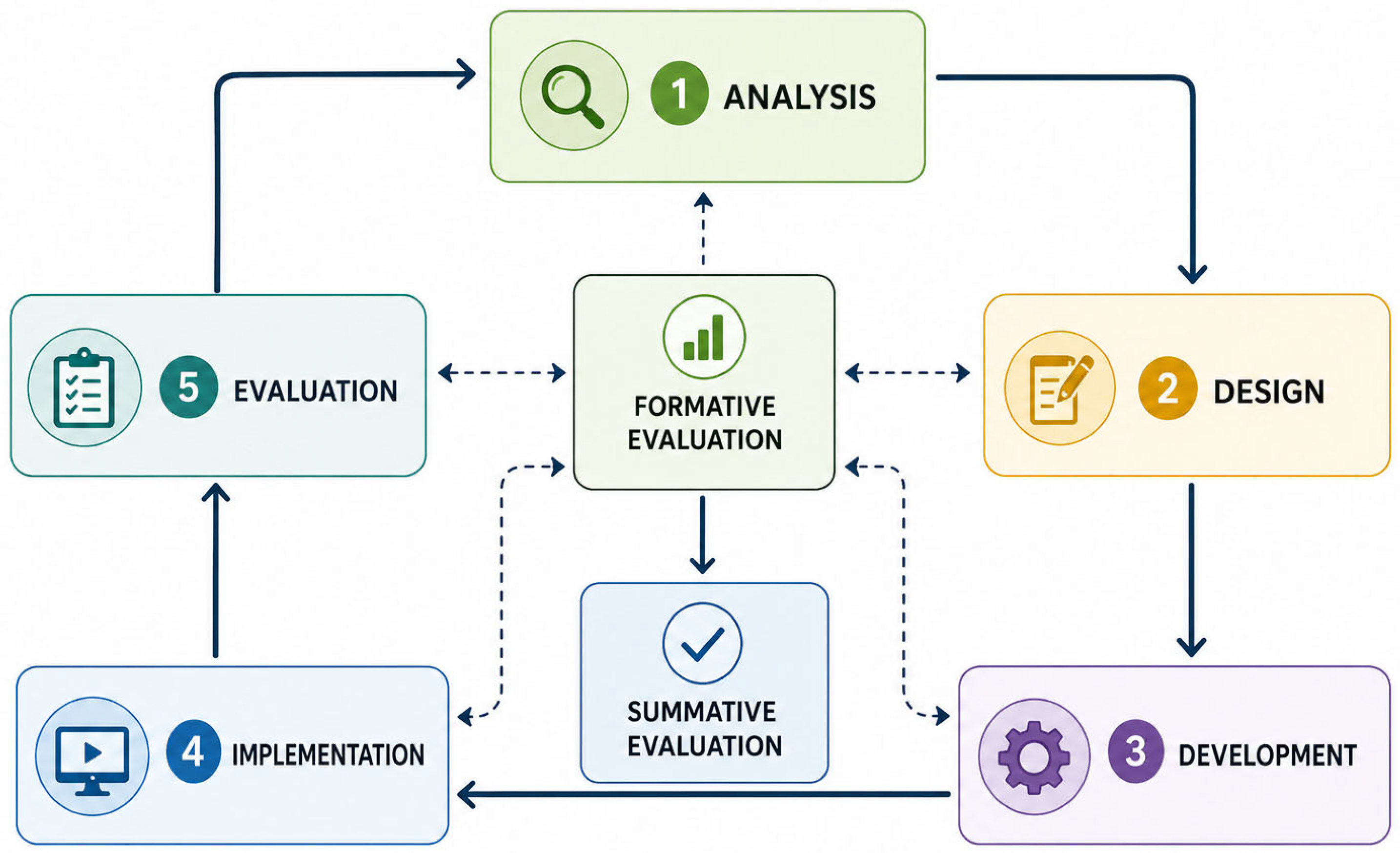
Figure 1 shows the ADDIE model, which instructional designers typically use as a methodological framework for developing instructional materials, serves as the foundation for their design and development. Initially developed by the Center for Educational Technology (CET) at Florida State University (FSU) in 1975 for the U.S. Army, the ADDIE approach is now the most widely used instructional design and development method. The ADDIE model has five stages, including the Analysis Phase, also known as the “Objective Setting Stage,” in which the researchers focus on students as the primary audience in defining the educational objective. To ensure that students’ knowledge is not duplicated, factors such as competencies, learning objectives, and students’ levels of expertise and intelligence are crucial in selecting the right information dissemination strategy during the teaching and learning process. The Design Phase focuses on learning objectives, content, topics, assessments, exercises, lesson planning, and evaluation instruments utilized. This is the planning stage for developing the material, involving the manipulation of components determined in the previous phase. 3. The Development Phase begins with the production or development of instructional materials. It includes three tasks: drafting, production, and evaluation. The researchers started drafting the lessons with detailed outlines and carefully curated content. The lesson plan acts as reinforcement for the final learning material. An evaluation followed, during which errors were consolidated for revision during the final development of the learning materials. Canva Pro (version 1.122.0) was used as an online software platform to integrate developed learning materials for students. It allows students to read and watch recorded videos within the course topics online. The Heyzine Flipbook operates as cloud-based SaaS (Software as a Service) Platform and PDF format of the developed instructional materials was converted for offline use.
The Implementation Phase is where the researchers implement their developed instructional materials in the classroom for use by instructors and students. The objective is to assess the appropriateness, viability, and relevance of the created learning materials in an authentic setting to gather data for further improvement. The Evaluation Phase is when the learning material is tested, and the goals of the entire project are met. This stage consists of two evaluation parts: formative and summative. During development, the formative evaluation consolidates corrections for improvement and assesses them before implementation. On the other hand, summative evaluation is done after the project has been implemented. This provides data to interpret the project and determine its effectiveness.
Moreover, the development of the content and flow of the learning materials is based on the ten principles of Barak Rosenshine, divided into four (4) strands according to Tom Sherrington: Strand 1. Reviewing Material, Strand 2. Questioning, Strand 3. Sequencing Concepts and Modeling, and Strand 4. Stages of Practice.
Once the learning materials were ready, the critiquing started. The critiquing included the participation of the experts in the field and the use of the Instructional Materials Evaluation Checklist (IMEC). The evaluators then described and commented on the instructional materials. The checklist contains parameters that the evaluator group can check. The following information shows the expert evaluation.
Table 1 shows the scoring rubric was designed to assess the level of evidence in a structured, objective manner. It consists of four categories corresponding to specific numerical ranges, allowing consistent evaluation of the criteria. Scores ranging from 3.31 to 4.00 indicate High Evidence, suggesting that the assessed elements are strongly present and frequently observed in the instructional materials. A range of 2.51–3.30 represents Enough Evidence, indicating that while the factor is present, some aspects require improvement. Scores between 1.71 and 2.50 reflect Little Evidence, indicating the factor appears only occasionally and suggesting weaknesses in implementation. Finally, a range of 1.00–1.70 represents Very Little Evidence, indicating minimal presence of the essential components and the need for significant intervention. This rubric provides a systematic approach to evaluating instructional effectiveness and identifying areas for refinement.
3. Results and Discussion
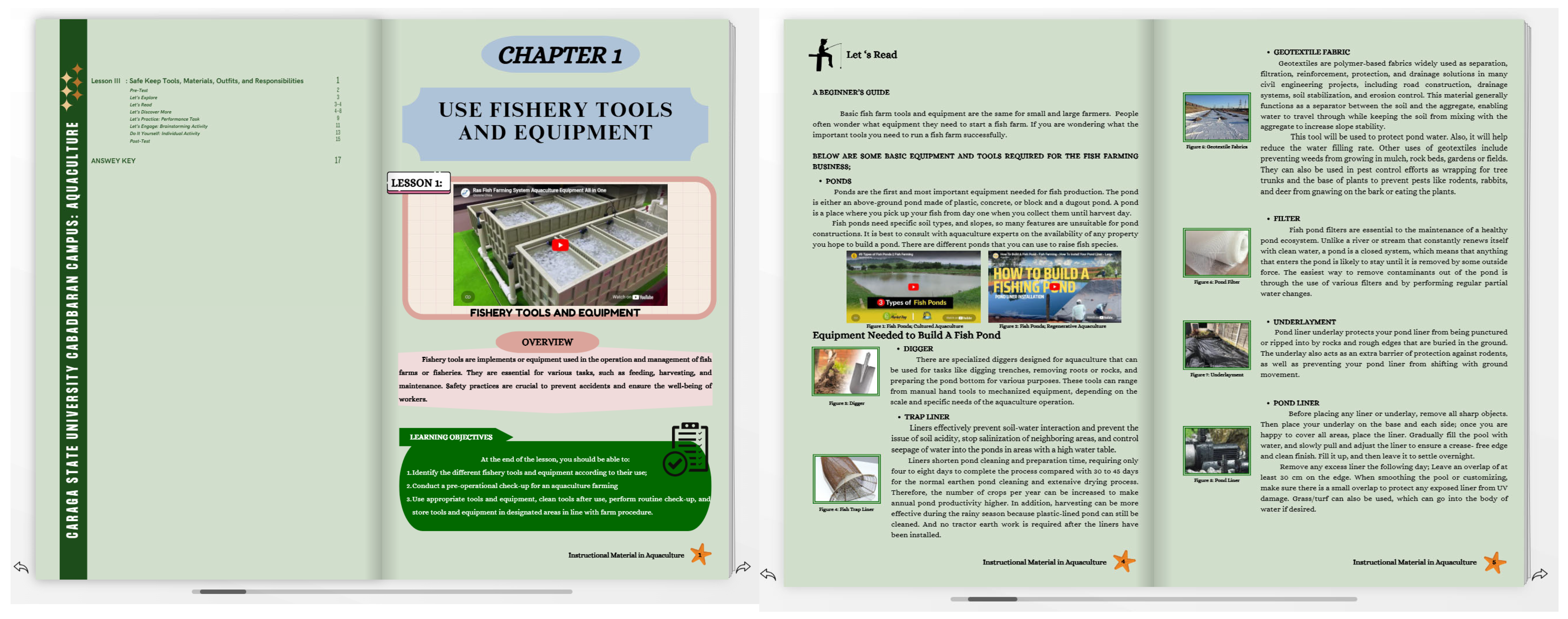
The instructional materials were developed in both flipbook and PDF formats, reflecting the integration of educational technology to enhance accessibility, usability, and learner engagement.
Figure 2 shows the flipbook format provides an interactive and visually engaging learning experience by simulating a real book interface with dynamic page transitions and structured navigation. This format enhances learner engagement by presenting content in a more appealing, immersive way, helping sustain attention and improve comprehension. Its interactive features also support exploratory learning, allowing students to navigate content non-linearly while maintaining clarity in instructional flow.
On the other hand,
Figure 3 shows the PDF format ensures practicality and accessibility by offering a stable, portable, and device-compatible version of the instructional materials. It allows learners to access content offline, making it particularly beneficial in contexts with limited internet connectivity. The PDF format also supports self-paced learning, as students can easily review, download, and annotate the material according to their individual learning needs.
Together, these formats support flexible, self-directed learning by enabling access to instructional content anytime, on any device. They also accommodate diverse learning preferences and enhance understanding through well-organized and visually supported materials. Overall, the use of both flipbooks and PDFs demonstrates how educational technology can effectively improve the delivery of learning experience in agri-fishery education.
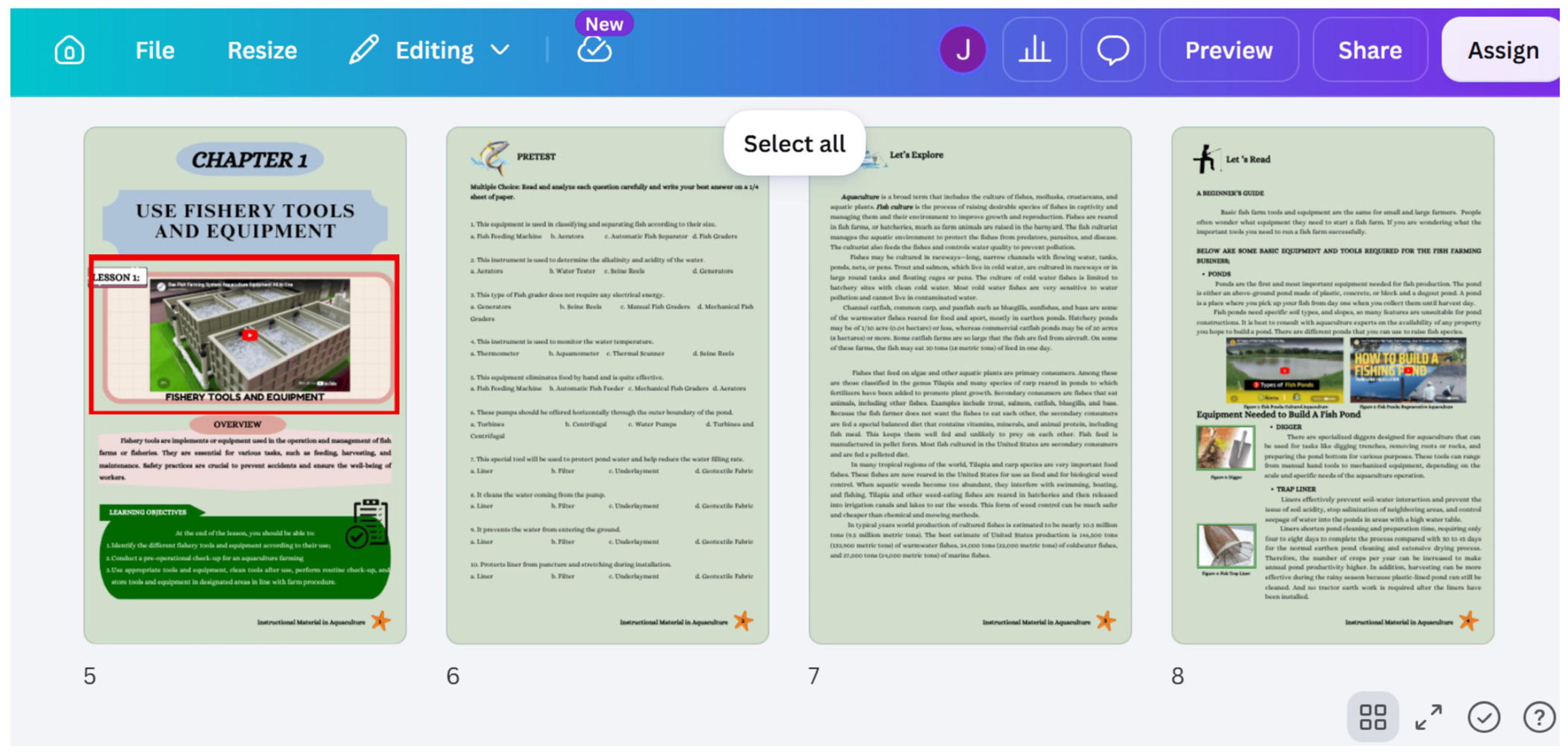
Figure 4 shows Canva open access for students further provide an avenue for learners who can access the internet,
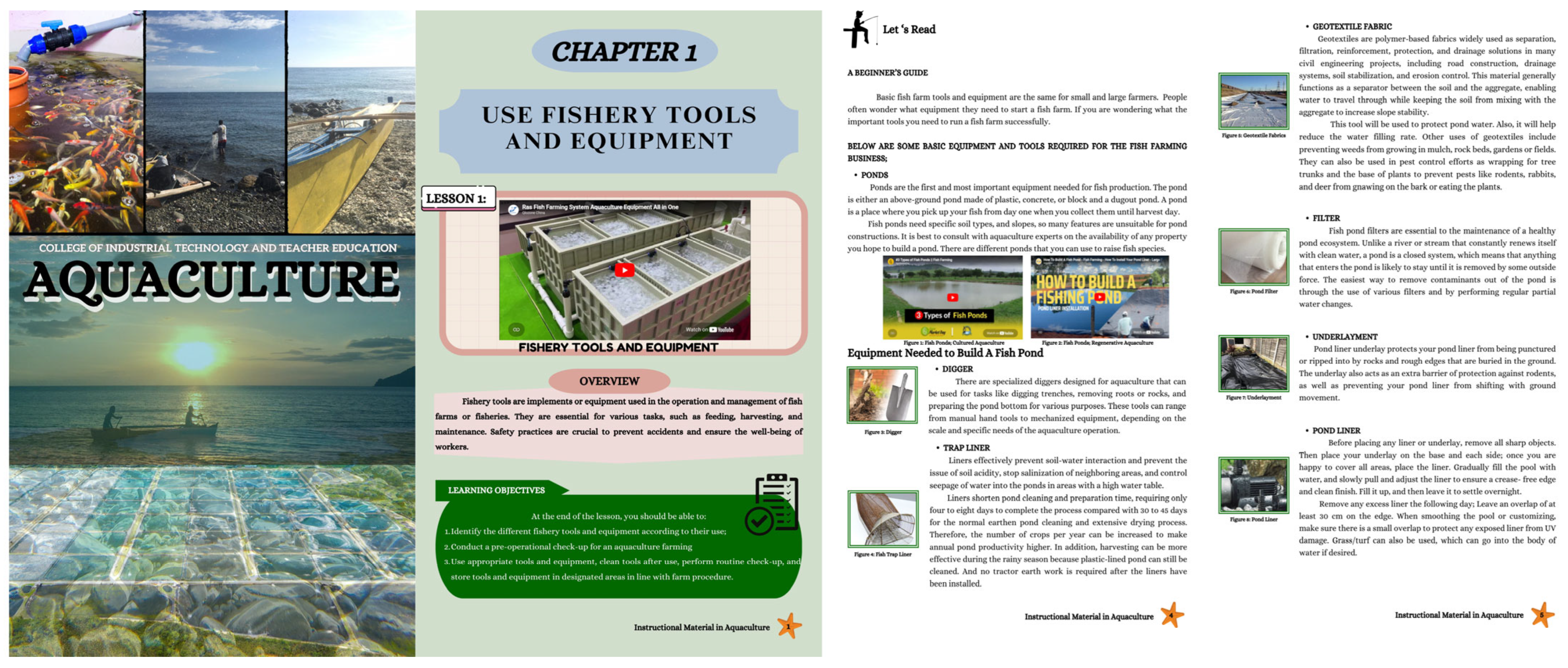
Figure 3 shows the interactive slide in Canva was also created, allowing learners to read and watch recorded videos directly in Canva without opening another website. The embedded videos are meticulously selected and recorded to align with the learning outcome of the topic presented. Hence, it gives the learner an avenue to further develop their technological skills and knowledge.
Table 2 shows the results indicate that the instructional materials have an overall mean score of 3.31, which falls within the High Evidence range, suggesting that the developed materials effectively support student learning and instructional delivery. This level of evidence indicates that the materials provide structured guidance, clear learning pathways, and opportunities for active engagement, which are essential characteristics of effective instruction.
In terms of curriculum alignment, the evaluation examined seven parameters: course requirements, relevance, difficulty level, interdisciplinary connections, hands-on activities, critical thinking skills, and thematic organization. The findings show that the materials are strongly aligned with course requirements and hands-on activities, both of which received High Evidence ratings (mean = 3.40, SD = 0.89). This indicates that the instructional materials successfully integrate practical learning activities that support the development of industry-related competencies. Such alignment is essential in technical and vocational education, where students must acquire not only conceptual understanding but also applied skills relevant to real-world contexts.
Other parameters, including content relevance (mean = 3.20), difficulty level (mean = 3.20), interdisciplinary connections (mean = 3.00), promotion of critical thinking (mean = 3.20), and thematic organization (mean = 3.20), received Enough Evidence ratings. These results suggest that while the materials meet the minimum academic expectations, further refinement could improve consistency and engagement across different learning components [
9]. Variations in standard deviation (SD = 1.00–1.30) indicate that students may have different perceptions of the clarity and effectiveness of certain content areas, suggesting opportunities to further enhance learning activities and instructional sequencing [
10].
Project-based and experiential learning approaches may help strengthen these areas by connecting academic concepts with practical industry applications. Educational research emphasizes that project-based learning enhances real-world problem solving, collaboration, and critical thinking, enabling students to develop competencies relevant to professional environments [
11]. Similarly, effective curriculum alignment ensures that students acquire the knowledge and practical skills necessary for their future careers [
12]. Differentiated instruction and interdisciplinary learning strategies can also support diverse learners and foster higher-order thinking skills [
13].
Table 3 show the evaluation of organizational structure and design further supports the effectiveness of the instructional materials. Experts rated this component with a mean score of 3.31 (SD = 0.80), classified as High Evidence. This indicates that the instructional materials are logically structured, clearly presented, and easy for learners to navigate. One of the strongest aspects identified in the evaluation is the navigation and accessibility of learning resources, which received one of the highest ratings (mean = 3.60, SD = 0.55). The inclusion of navigational tools such as tables of contents, structured sections, and guided instructions allows students to locate information efficiently and follow the learning process systematically.
This finding is consistent in instructional principles [
14], which highlight the importance of clear instructional organization and guided learning steps in supporting student understanding. Well-structured instructional materials enable learners to focus on task completion, reinforce previously learned knowledge, and gradually progress toward more complex learning objectives.
Table 4 shows another key strength of the developed instructional materials is their ability to support collaborative and task-based learning. The evaluation results show that collaborative learning and task-based activities both received High Evidence ratings (mean = 3.60, SD = 0.55). These results indicate that the materials effectively encourage peer interaction, teamwork, and hands-on engagement. In technical and vocational fields such as agri-fishery and industrial technology education, collaborative and experiential learning approaches are particularly valuable because they mirror the cooperative nature of real-world work environments. Although most aspects of the materials demonstrated strong performance, several areas received Enough Evidence ratings, indicating opportunities for further improvement. These include variety of teaching strategies (mean = 3.00), assessment alignment (mean = 3.20), provision of rubrics (mean = 3.00), and citation integrity (mean = 2.60). These findings suggest that while assessment tools and instructional strategies are present, they may require additional refinement to ensure stronger alignment with learning outcomes and professional standards.
In particular, the relatively lower rating for citation integrity and referencing practices highlights the need for more consistent documentation of sources within the instructional materials. Proper citation is essential in maintaining academic credibility and promoting ethical scholarship. Research indicates that integrating explicit academic integrity guidelines and citation practices in instructional materials helps reduce plagiarism and fosters responsible academic behavior among students [
15]. Strengthening this aspect will enhance the professional quality and reliability of the developed materials.




 ,
,