


Abstract
In recent years, there has been a proliferation in the launch of small satellites or low-cost constellations for operations related to the Internet of Things (IoT), the measurement of conditions in the space environment, and the testing of commercial instruments in the New Space sector. Controlling the internal temperature of the satellite plays a key role in the durability of onboard electronics for the success of these missions, making the components responsible for this task a critical part of the space platform. The module developed selects and conditions the temperature signals from the sensors of a satellite in low Earth orbit (LEO) for reading by the onboard computer (OBC), as well as implementing the power supply interface for the internal temperature stabilisation heaters. The design is characterised by its small size and optimal cost, as well as being manufactured with commercial electronic components, which have been manufactured under IPC inspection and testing quality standards and UNE-EN standards for the aerospace sector. The engineering qualification model (PFM) has been characterised through electronic tests at room temperature, vibration tests and tests in a thermal vacuum chamber (TVAC) to simulate space environment conditions, obtaining initial results with average temperature errors of less than 0.25–0.5 °C. Based on these satisfactory results, the flight module (FM) is expected to undergo qualification testing in a clean room together with the rest of the satellite’s avionics and instruments, and to be integrated into the flight platform for launch into space in the near future.
1. Introduction
Driven by the New Space paradigm, the satellite sector has shifted from costly, bespoke spacecraft toward smaller, affordable platforms. Nanosatellites and CubeSats now enable agile scientific, technological, and commercial missions under strict budget and schedule constraints [1]. The rapid expansion of small satellite constellations driven by growing demand for global connectivity and Earth observation has accelerated the deployment of safety-critical, highly autonomous systems in orbit [2]. Operating predominantly in Low Earth Orbit (LEO) and Very Low Earth Orbit (VLEO) offers key operational benefits, including reduced communication latency, lower launch energy, and enhanced spatial resolution. However, these orbital regimes, particularly in VLEO, introduce severe engineering constraints, such as atmospheric drag, atomic oxygen erosion, and rapid orbital decay, necessitating rigorous design across power, thermal, and mechanical subsystems. A pivotal enabler of this New Space paradigm is the strategic adoption of commercial off-the-shelf (COTS) components, defined as terrestrial commercial hardware not specifically qualified for space applications [3]. Compared to conventional radiation-hardened systems, COTS devices offer superior computational capability, reduced procurement costs, high availability, and accelerated development timelines [4,5]. These advantages render COTS hardware increasingly attractive for resource-constrained small satellites and safety-critical domains operating under strict mass, volume, power, and schedule limits [6]. Nonetheless, integrating terrestrial hardware introduces critical reliability vulnerabilities, as components remain susceptible to environmental stressors such as thermal cycling, vibration, vacuum conditions, total ionizing dose, and single-event effects [7]. Consequently, maximizing COTS utility requires adapted testing methodologies and reliability frameworks focused on availability and mean time between failures [3].
The impact of radiation depends strongly on the selected orbit. Satellites in medium Earth orbit (MEO) and geostationary Earth orbit (GEO) are exposed to more severe radiation conditions because they operate within or near regions influenced by the Van Allen belts and long-duration particle exposure. In contrast, many LEO missions experience a comparatively less demanding radiation environment, particularly at moderate altitudes and inclinations [8]. Radiation risks are not eliminated, since LEO satellites may still be affected by the South Atlantic Anomaly, solar particle events, galactic cosmic rays, and trapped particles. However, the lower accumulated dose, shorter mission duration, and partial protection provided by the Earth’s magnetosphere make COTS-based solutions more feasible in LEO when suitable risk assessment, component derating, shielding, redundancy, and validation strategies are applied [5,7]. Within this framework, thermal control is a critical subsystem for ensuring the reliability and operational lifetime of onboard electronics. Small satellites have strict mass, volume, and power limitations, which restrict the use of complex thermal architectures. Therefore, accurate temperature acquisition, signal conditioning, and heater control are essential functions for maintaining the spacecraft within acceptable operational limits [9].
The avionics unit developed in this article belongs to the New Space framework, as it employs COTS components and follows a top-down design methodology combined with an incremental development model. Its main function is to acquire and condition temperature signals generated by sensors installed in a LEO satellite, enabling their reading by the onboard computer (OBC), as in UPMSat-3, developed by the Instituto Universitario “Ignacio Da Riva” of the Universidad Politécnica de Madrid (Madrid, Spain). The unit also integrates the power interface supplied by the electrical power system (EPS) for the heaters responsible for internal thermal stabilization. It is also distinguished by its reduced size and the use of COTS electronic components manufactured according to IPC standards and UNE-EN regulations. The engineering qualification model (EQM) is validated through electronic tests at ambient temperature, vibration tests, and thermal vacuum chamber (TVAC) tests. The results show mean errors below 0.25–0.5 °C, which support the subsequent validation of the flight model (FM) with the final harness before cleanroom integration and assembly into the UPMSat-3 platform.
The remainder of this article is structured as follows: Section 2 introduces the design and architecture of the developed module. Then, in Section 3, a description of the development and experimental qualification is presented. Section 4 outlines the integration in the scientific microsatellite UPMSat-3. Section 5 includes an analysis focused on the comparison with existing implementations of temperature control modules. Finally, Section 6 presents the conclusions and future directions of research.
2. Design and Architecture
The unit design was carried out using a methodology that combined a top-down approach with an incremental development model. This strategy allowed the design process to start from a high-level functional and architectural definition and then to decompose the system into progressively verifiable electronic, mechanical, and interface blocks. In the initial stage, the global requirements of the unit were established, including temperature acquisition, signal conditioning, power distribution, heater control, mechanical compatibility, and interaction with the onboard computer. Based on this general architecture, the design was divided into independent functional modules, such as input stages for 27 temperature sensors, analog signal-conditioning circuits, routing lines to the OBC, power interfaces from the EPS, and channels for heater activation. This strategy facilitated the progressive validation of each increment before full integration, reduced design risks, and allowed functional deviations to be detected during early development stages. From a mechanical perspective, the unit was implemented in a compact format, smaller than 100 mm × 100 mm, compatible with the usual constraints of the CubeSat standard and with the stacking philosophy associated with the PC/104 format [1].
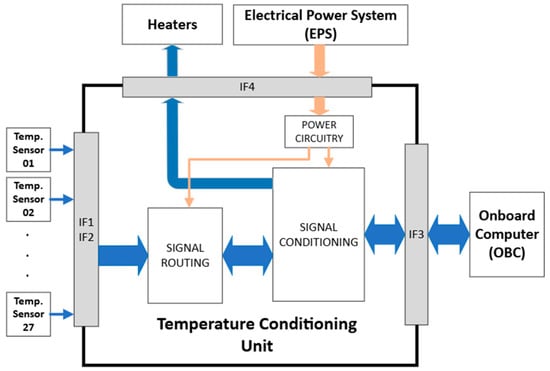
This compatibility facilitated its integration into small satellite platforms, where available volume, mass, and printed circuit board area were limited. The use of a PC/104-type architecture allowed multiple electrical and functional interfaces to be concentrated on a single board, while maintaining an organized distribution of signals, power lines, and reference returns. Thus, the unit acted as an intermediate node between the temperature sensors distributed throughout the satellite, the OBC responsible for data acquisition and management, the EPS responsible for power supply, and the heaters used for internal thermal stabilization. This concentration of functions reduced harness complexity, simplified the integration of the thermal subsystem, and improved signal traceability during verification activities. Overall, the design provided a compact, modular, and scalable solution suitable for New Space missions in LEO that required low cost, ease of integration, and progressive validation of onboard electronic units. Figure 1 shows an overview of the interfaces of the temperature-conditioning module, including sensor inputs, signal-conditioning stages, the OBC connection, heater control lines, and the EPS interface.
Figure 1.
Overview of the temperature-conditioning module functions and interfaces. Sensor-to-OBC signals are shown as thick blue lines, heater power outputs as medium blue lines, and EPS power inputs in orange.
3. Development and Experimental Qualification
The manufacturing of the unit was performed in accordance with IPC electronics standards applicable to soldering processes, electronic component assembly, and printed circuit board fabrication to ensure repeatable and traceable production quality for an embedded electronic unit intended for small satellite platforms. These standards allowed critical manufacturing aspects to be controlled, including solder joint quality, correct component placement, surface cleanliness, visual inspection criteria, rework acceptance, and electrical integrity of the interconnections. In addition, UNE-EN quality management standards were applied during the design, manufacturing, inspection, and documentation stages. This approach enabled the definition of controlled procedures, manufacturing records, acceptance criteria, and traceability of materials, components, and processes. Production and integration activities were carried out in ISO 8 cleanrooms, with the aim of limiting particulate contamination and reducing the risk associated with residues, dust, or surface contamination that could affect the electrical, thermal, or mechanical behaviour of the unit, according to standard ISO 14644-1.
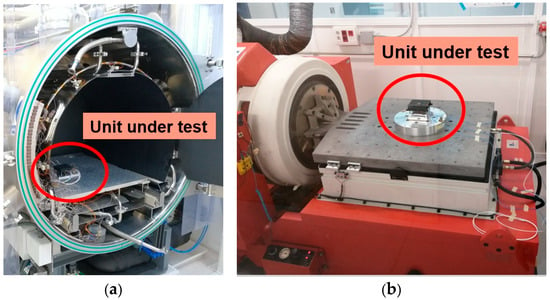
Fault injection techniques were also applied at specific stages to evaluate the response of the system under abnormal operating conditions and to increase confidence in its functional robustness [3]. Environmental validation and qualification were conducted at the space environment testing laboratory of IDR-UPM. The test campaign included sinusoidal and random vibration tests, as well as thermal vacuum chamber tests. The vibration tests reproduced the mechanical loads induced during launch and allowed the structural resistance of the board, the robustness of solder joints, the fixation of components, and the electrical continuity of the unit to be verified after exposure to representative dynamic profiles, such as sinusoidal and random vibration. In turn, the thermal vacuum tests carried out in the TVAC reproduced conditions analogous to the space environment by combining low pressure with controlled thermal cycles. These tests allowed the behaviour of the unit under vacuum, temperature variations, thermal dissipation constraints, and functional stability requirements to be assessed. Figure 2 shows some images of the qualification process carried out in the facilities of the IDR-UPM, such as the TVAC and the vibration bed.
Figure 2.
Images of the qualification process carried out in the TVAC (a) and the vibration bed (b).
These validation activities were essential to verify that the module maintained its capacity for signal acquisition, conditioning, and routing under demanding environmental conditions. Overall, the application of IPC standards, UNE-EN quality management procedures, ISO 8 cleanroom processes, and environmental vibration and thermal vacuum testing provided a coherent quality assurance and qualification strategy for a COTS-based electronic unit intended for New Space missions in LEO. Mechanical validation mandates a low-level sine sweep from 5 to 2000 Hz at 0.5 g for resonance identification, followed by triaxial random vibration testing. This random profile reaches an overall acceleration higher than 10 Grms across the 20 to 2000 Hz spectrum. Furthermore, TVAC testing replicates the orbital space environment by maintaining a high vacuum of ≤10−5 mbar. The module is subjected to 8–10 complete thermal cycles between qualification limits of −25 °C and +65 °C, including a 2 h dwell time at each temperature plateau to guarantee stabilization. Structural integrity and heat dissipation are subsequently secured through mechanical component stacking and adequate thermal dissipation via arrays and the ground plane, ensuring nominal operability and no performance degradation before, during, and after both environmental test campaigns.
To quantitatively evaluate environmental stability beyond basic electrical continuity, initial performance measurements were conducted on the EQM before and after mechanical vibration tests and TVAC cycling. The module exhibited a nominal baseline offset of approximately 237 mV, which served as a constant output pedestal and was digitally subtracted prior to accuracy evaluation. Post-environmental testing confirmed excellent performance retention and signal integrity across all channels, and thermal stability evaluated across several cold–heat cycles. The module demonstrated a measurement accuracy within ±5 mV and a precision (repeatability) of approximately ±1.3 mV, supported by near-ideal linearity with R2 > 0.999997 across all channels. Furthermore, thermal stability during TVAC cycling remained robust, with output drift constrained to approximately ±0.25 mV, corresponding to initial average temperature errors of less than 0.25–0.5 ∘C. These quantitative results verify that environmental stress caused no structural degradation or parameter drift. Based on these satisfactory initial outcomes for the EQM, the campaign will continue with additional electrical and environmental tests to completely validate the EQM. Furthermore, the FM is scheduled to undergo qualification testing in a cleanroom facility, followed by “relaxed” environmental testing integrated alongside the remaining satellite avionics and scientific instruments.
4. Integration in the Scientific Microsatellite UPMSat-3
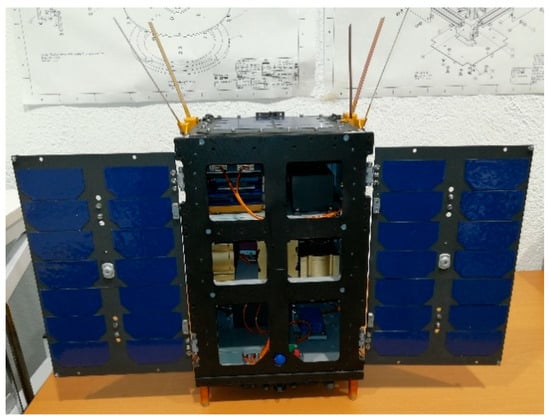
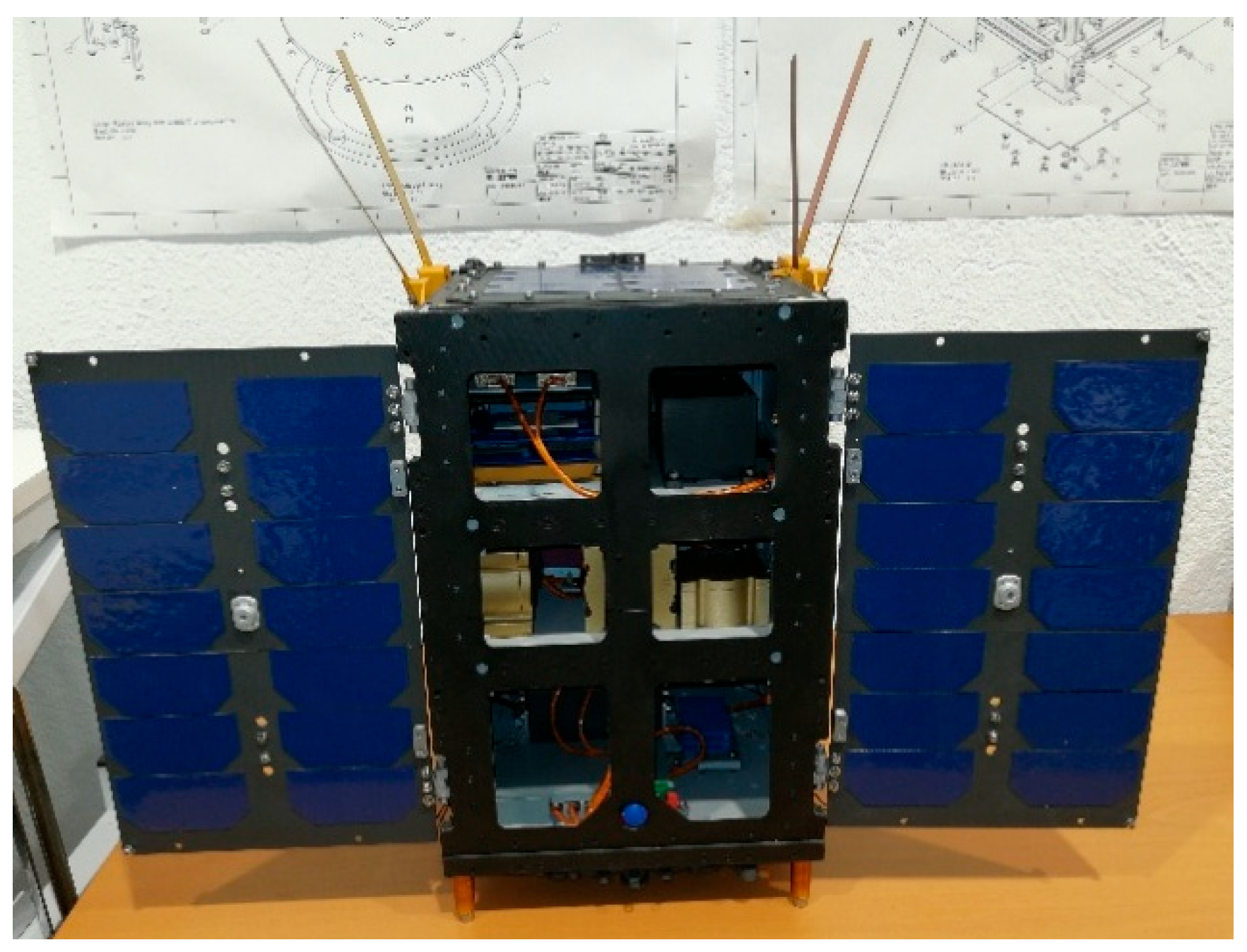
The UPMSat-3 microsatellite, developed by the Instituto Universitario “Ignacio Da Riva” of the Universidad Politécnica de Madrid, represents the third spacecraft of the UPMSat series and constitutes an evolution of the previous UPMSat-1 and UPMSat-2 missions. The platform is conceived as a low-cost university microsatellite for scientific experimentation, technology demonstration, and practical training in space systems engineering. It has a maximum mass of approximately 22 kg and external dimensions of 250 mm × 250 mm × 366 mm, with a modular internal structure based on stacked trays for the accommodation of avionics units, service subsystems, and scientific instruments. The satellite is planned to operate in a sun-synchronous low Earth orbit at an altitude of approximately 500 km, with a 10:30 local time of descending node, which provides repeatable illumination conditions suitable for observation, payload validation, and thermal analysis activities. The ground station, operating in the UHF band, will be located at the centre of the IDR-UPM on the UPM Montegancedo Campus. Figure 3 shows an image of a full-scale prototype of UPMSat-3 and the different levels of trays for housing the mission’s avionics and scientific instruments.
Figure 3.
Full-scale prototype of the UPMSat-3 showing its modular tray-based structure.
This mission profile aligns with contemporary small-satellite trends in LEO, which leverage compact platforms to deliver flexible, scalable, and cost-effective operational services [10]. UPMSat-3 will be launched using the Spectrum vehicle developed by Isar Aerospace in Germany, a two-stage European micro-launcher engineered to afford dedicated, flexible orbital access for institutional, academic, and commercial small and medium-sized payloads. Within UPMSat-3, a specialized temperature-conditioning module plays a critical role in integrating the thermal control subsystem. Installed in the avionics bay adjacent to the OBC, this unit minimizes analog harness length to preserve signal integrity. Operating as a centralized hub for 27 platform-wide temperature sensors, the module manages sensor power supply, signal acquisition, analog conditioning, and routing to the OBC, while interfacing directly with the EPS and internal heaters for thermal stabilization. This integrated architecture simplifies electrical integration and enables homogeneous thermal monitoring across the compact platform. Such functional design addresses critical challenges highlighted in the recent literature, where thermal management remains a limiting factor in compact aerospace electronics under severe volume, mass, and power constraints [11].
5. Discussion and Comparison with Similar Studies
Compared to similar developments reported in the space literature, the proposed module offers an optimal trade-off between high channel density, compact form factor, and cost-effective based on the use of COTS components. While basic CubeSat telemetry modules used in LEO CubeSats with errors close to ±1.0 ∘C to ±1.5 ∘C [12] and active thermoelectric Peltier conditioning circuits [13] exhibit temperature measurement errors ranging from ±1.0 ∘C to ±2.0 ∘C, and other Cubesat thermal units used in formation-flying also based on COTS with only 8–12 thermistors obtain measurement errors of ±0.5 ∘C [14], the proposed module achieves significantly higher accuracy below the range of ±(0.25–0.5) ∘C under conventional environmental thermal-vacuum chamber and vibration tests. This precision even improves advanced formation-flying CubeSat thermal systems that show errors of ±0.5 ∘C [14] and the HERMES 3U constellation avionics unit with errors of ±(0.3–0.8) ∘C [15], while markedly exceeding their capacity by managing 27 analog sensor channels and dedicated heater power lines within a standard PC/104 envelope. Specialized sub-millikelvin metrology units for deep-space missions [16] deliver extreme precision (<1 μK) but require complex bridge conditioning circuitry and higher power budgets. Similarly, calibrated payload thermometry modules [17] offer high precision (<0.1 K) across restricted channels. Ultimately, by integrating COTS components manufactured under IPC inspection and UNE-EN aerospace quality standards, the UPMSat-3 architecture provides a flight-qualified and centralized temperature management solution tailored for low-cost scientific microsatellite platforms.
None of the considered studies provide specific details regarding development costs; however, they do report certain measurement characteristic, such as the repeatability of the thermal sensor calibration, confirming, much like the study presented here, that the voltage–temperature response curve exhibits neither deviations nor cumulative hysteresis after the thermometry modules are subjected to prolonged thermal cycling. As noted regarding the development presented, the analyzed research studies demonstrate that cost-efficiency stems from physical standardization (e.g., PC/104 or CubeSat), which reduces non-recurring engineering and integration costs during serial satellite manufacturing [14,15], and from the use of COTS or industrial-grade components (such as sensors or microcontrollers) that do not undergo individualized qualification testing [12,13].
6. Conclusions
This article presents the design, manufacturing, validation, and integration of a compact temperature-conditioning module developed for the UPMSat-3 microsatellite. Framed within the New Space paradigm, the module incorporates COTS components and follows a hybrid top-down and incremental development methodology. This strategy enables the systematic definition and verification of electronic, mechanical, and interface blocks for temperature acquisition, analog conditioning, heater control, and OBC/EPS communications. By centralizing the interface for 27 platform-distributed sensors, the compact architecture reduces harness complexity and streamlines integration within the avionics bay. Manufacturing adhered to IPC standards and UNE-EN quality procedures, with assembly executed under ISO 8 cleanroom conditions. Environmental qualification at IDR-UPM facilities comprised functional, vibration, and thermal vacuum testing, simulating launch and orbital conditions. Experimental results demonstrated high accuracy, yielding mean temperature measurement errors below 0.25–0.5 °C, validating the module’s suitability for low-cost LEO microsatellite missions. Future work focuses on flight model validation with the final harness, full satellite-level integration, and correlation between ground testing data and in-orbit telemetry.
Author Contributions
Conceptualization, J.-C.G.-R.; methodology, J.-C.G.-R. and E.R.-M.; software, J.-C.G.-R.; validation, J.-C.G.-R. and O.H.-O.-K.; formal analysis, J.-C.G.-R.; investigation, J.-C.G.-R. and O.H.-O.-K.; resources, J.-C.G.-R. and E.R.-M.; data curation, J.-C.G.-R. and O.H.-O.-K.; writing—original draft preparation, J.-C.G.-R., E.R.-M. and O.H.-O.-K.; writing—review and editing, J.-C.G.-R.; visualization, J.-C.G.-R.; supervision, J.-C.G.-R.; project administration, J.-C.G.-R. and E.R.-M.; funding acquisition, J.-C.G.-R. and E.R.-M. All authors have read and agreed to the published version of the manuscript.
Funding
This work was partially funded by the IDR-UPM (Instituto Universitario “Ignacio Da Riva”) research institute of the Universidad Politécnica de Madrid (UPM) under the project “MLPLUS-CM: Consolidación de una Plataforma de Microsatélite y Tecnologías para Investigación Científica Espacial Avanzada” (Ref.: TEC-2024/TEC-263) of the Spanish regional call for proposals 2024 titled “Grants for R&D projects carried out in collaboration between research groups belonging to universities and research organisms of the Community of Madrid” in the modality of R&D Activity Programs in Technologies. The research work was also partially funded by the IDR-UPM research institute under the project “OAPES-CM: Operación Avanzada de Pequeños Satélites” (Ref.: Y2020/NMT-6427) of the Spanish regional call for proposals 2020 titled “Synergistic R&D Projects in New and Emerging Scientific Areas at the Frontier of Science and Interdisciplinary Nature” of the Community of Madrid.
Institutional Review Board Statement
Not applicable.
Informed Consent Statement
Not applicable.
Data Availability Statement
The data is contained within the article.
Acknowledgments
We are grateful for the support in developing the activities from the Instituto Universitario “Ignacio Da Riva” (IDR-UPM), the Escuela Técnica Superior de Ingeniería de Sistemas Informáticos (ETSISI) and the Escuela Técnica Superior de Ingeniería Aeronáutica y del Espacio (ETSIAE) of the Universidad Politécnica de Madrid.
Conflicts of Interest
The authors declare no conflicts of interest.
References
- Poghosyan, A.; Golkar, A. CubeSat Evolution: Analyzing CubeSat Capabilities for Conducting Science Missions. Prog. Aerosp. Sci. 2017, 88, 59–83. [Google Scholar] [CrossRef] [Scilit]
- Perez-Cerrolaza, J.; Abella, J.; Borg, M.; Donzella, C.; Cerquides, J.; Cazorla, F.J.; Englund, C.; Tauber, M.; Nikolakopoulos, G.; Flores, J.L. Artificial Intelligence for Safety-Critical Systems in Industrial and Transportation Domains: A Survey. ACM Comput. Surv. 2024, 56, 1–40. [Google Scholar] [CrossRef] [Scilit]
- Gamazo-Real, J.-C.; Zamorano-Flores, J.R.; Sanz-Andrés, Á. Integration of COTS Processing Architectures in Small Satellites for Onboard Computing Using Fault Injection Testing Methodology. In Proceedings of the 3rd International Workshop on Automated and Verifiable Software System Development (ASYDE 2021), L’Aquila, Italy, 6 December 2021. [Google Scholar] [CrossRef] [Scilit]
- Esposito, S.; Albanese, C.; Alderighi, M.; Casini, F.; Giganti, L.; Esposti, M.L.; Monteleone, C.; Violante, M. COTS-Based High-Performance Computing for Space Applications. IEEE Trans. Nucl. Sci. 2015, 62, 2687–2694. [Google Scholar] [CrossRef] [Scilit]
- Brunetti, G.; Campiti, G.; Tagliente, M.; Ciminelli, C. COTS Devices for Space Missions in LEO. IEEE Access 2024, 12, 76478–76514. [Google Scholar] [CrossRef] [Scilit]
- Schwierz, A.; Forsberg, H. Assurance Case to Structure COTS Hardware Component Assurance for Safety-Critical Avionics. In Proceedings of the AIAA/IEEE 37th Digital Avionics Systems Conference (DASC), London, UK, 23–27 September 2018. [Google Scholar] [CrossRef] [Scilit]
- Budroweit, J.; Patscheider, H. Risk Assessment for the Use of COTS Devices in Space Systems under Consideration of Radiation Effects. Electronics 2021, 10, 1008. [Google Scholar] [CrossRef] [Scilit]
- Ottavi, M.; Gizopoulos, D.; Pontarelli, S. (Eds.) Dependable Multicore Architectures at Nanoscale; Springer: Cham, Switzerland, 2017. [Google Scholar] [CrossRef] [Scilit]
- Ekpo, S.C. Thermal Subsystem Operational Times Analysis for Ubiquitous Small Satellites Relay in LEO. Int. Rev. Aerosp. Eng. 2018, 11, 48–57. [Google Scholar] [CrossRef] [Scilit]
- Ganau, A.; Rincon Charris, A. 2U CubeSat Design to Provide Space-Based ICNS Services. Eng. Proc. 2026, 133, 24. [Google Scholar] [CrossRef] [Scilit]
- Ersoy, K. Review of Electronic Cooling and Thermal Management in Space and Aerospace Applications. Eng. Proc. 2025, 89, 42. [Google Scholar] [CrossRef] [Scilit]
- Addaim, A.; Kherras, A.; Zantou, E.B. Design of Low-Cost Telecommunications CubeSat-Class Spacecraft. In Aerospace Technologies Advancements; Arif, T.T., Ed.; IntechOpen: London, UK, 2010. [Google Scholar]
- Bennett, N.S.; Hawchar, A.; Cowley, A. Thermal Control of CubeSat Electronics Using Thermoelectrics. Appl. Sci. 2023, 13, 6480. [Google Scholar] [CrossRef] [Scilit]
- Park, Y.-K.; Kim, G.-N.; Park, S.-Y. Novel Structure and Thermal Design and Analysis for CubeSats in Formation Flying. Aerospace 2021, 8, 150. [Google Scholar] [CrossRef] [Scilit]
- Quirino, M.; Sciarrone, G.; Piazzolla, R.; Fuschino, F.; Evangelista, Y.; Morgante, G.; Guilizzoni, M.; Marocco, L.; Silvestrini, S.; Fiore, F.; et al. HERMES CubeSat Payload Thermal Balance Test and Comparison with Finite Volume Thermal Model. Appl. Sci. 2023, 13, 5452. [Google Scholar] [CrossRef] [Scilit]
- Roma-Dollase, D.; Gualani, V.; Gohlke, M.; Abich, K.; Morales, J.; Gonzalvez, A.; Martín, V.; Ramos-Castro, J.; Sanjuan, J.; Nofrarias, M. Resistive-Based Micro-Kelvin Temperature Resolution for Ultra-Stable Space Experiments. Sensors 2023, 23, 145. [Google Scholar] [CrossRef] [Scilit] [PubMed]
- Zhang, K.; Wang, X. High-Precision Measurement of Sea Surface Temperature with Integrated Infrared Thermometer. Sensors 2022, 22, 1872. [Google Scholar] [CrossRef] [Scilit] [PubMed]
Disclaimer/Publisher’s Note: The statements, opinions and data contained in all publications are solely those of the individual author(s) and contributor(s) and not of MDPI and/or the editor(s). MDPI and/or the editor(s) disclaim responsibility for any injury to people or property resulting from any ideas, methods, instructions or products referred to in the content. |
© 2026 by the authors. Licensee MDPI, Basel, Switzerland. This article is an open access article distributed under the terms and conditions of the Creative Commons Attribution (CC BY) license.