


Abstract
This paper presents an investigation into the effect of dissolved gases (DGs) on the insulating properties, such as breakdown strength, of Midel EN 1204 natural ester oil and Poweroil TO 1020 60U mineral oils. The gasses were generated by simulating thermal fault/s at 130 °C, 210 °C, 340 °C, 400 °C, and 450 °C. Dissolved gas analysis (DGA) was conducted according to IEC 60567 to determine the concentrations of H2, CH4, C2H6, C2H4, C2H2, and CO in each of the twelve oil samples. Moisture was measured using the Karl Fischer Method according to IEC 60814. The breakdown voltage (BDV) was measured according to IEC 60156. The results show that total dissolved gas concentration and rate of rise increased with fault temperature in both oils. For this relatively short time experiment, the rise in concentration of DGs had minimal effect. The overall BDV 73.7 kV (virgin ester oil BDV) increased to 76.3 kV at 450 °C for natural ester oil, whereas the BDV of mineral oil decreased from 68.7 kV to 63.1 kV. These findings showed that natural ester oil has better insulation stability under thermal stress.
1. Introduction
The reliable and continuous operation of power transformers depends on the quality of the insulation system, particularly the solid and liquid insulation [1]. Traditionally, mineral oil has been the insulating oil because of its good insulation and cooling properties [2]. However, its poor biodegradability and low fire point raise safety and environmental concerns [2]. Ester oil, which has recently been introduced in power transformers, offers a high fire point, higher dielectric strength and greater biodegradability, making it a promising alternative material to mineral oil [2]. However, its higher viscosity and pour point can limit oil circulation at low temperatures and cooling performance, which is a cause of concern [2]. Increased thermal stress in the insulation leads to the high generation of dissolved gases (DGs) in the insulating oil [3]. There are many studies related to the gas generation on mineral oil, while studies on ester oils remain limited [4]. Hence, this study aims to investigate the effect of DGs on the breakdown strength of ester and mineral oil under controlled thermal fault conditions for a fault which is deteriorating relatively slowly.
2. Background
2.1. Chemical Composition of Mineral and Ester Oils
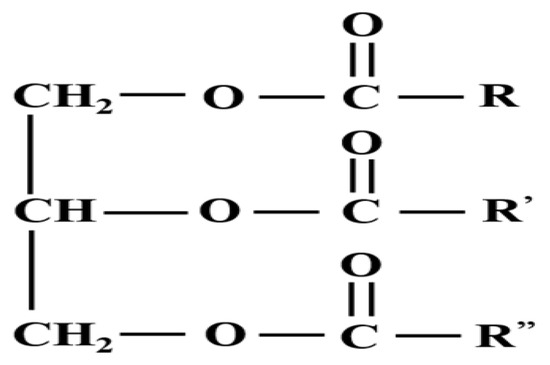
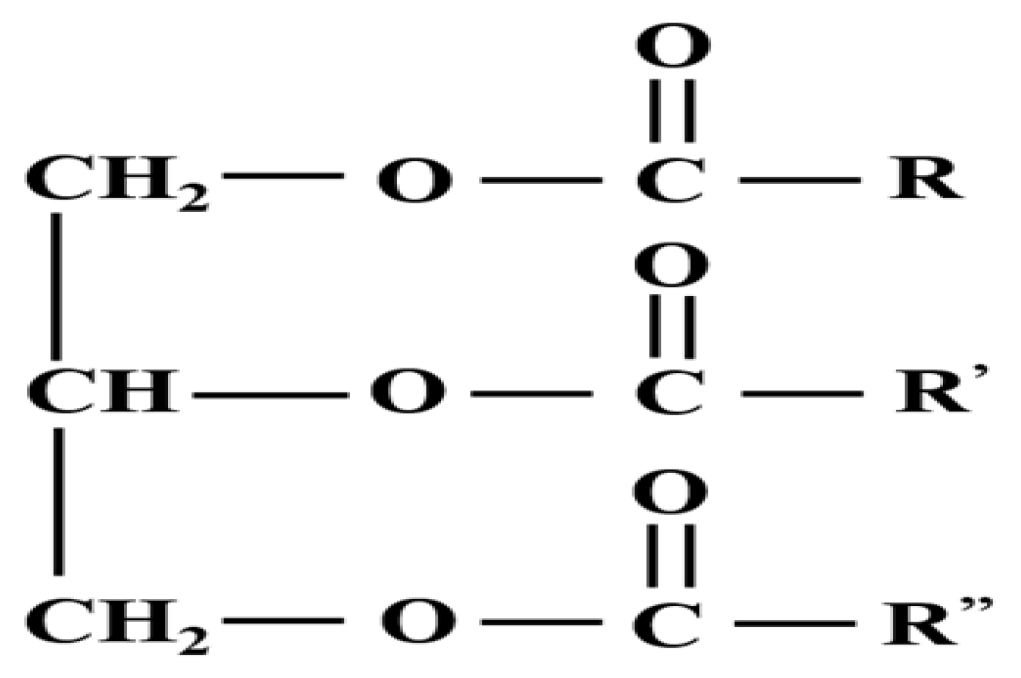
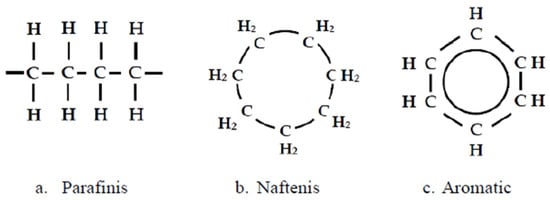
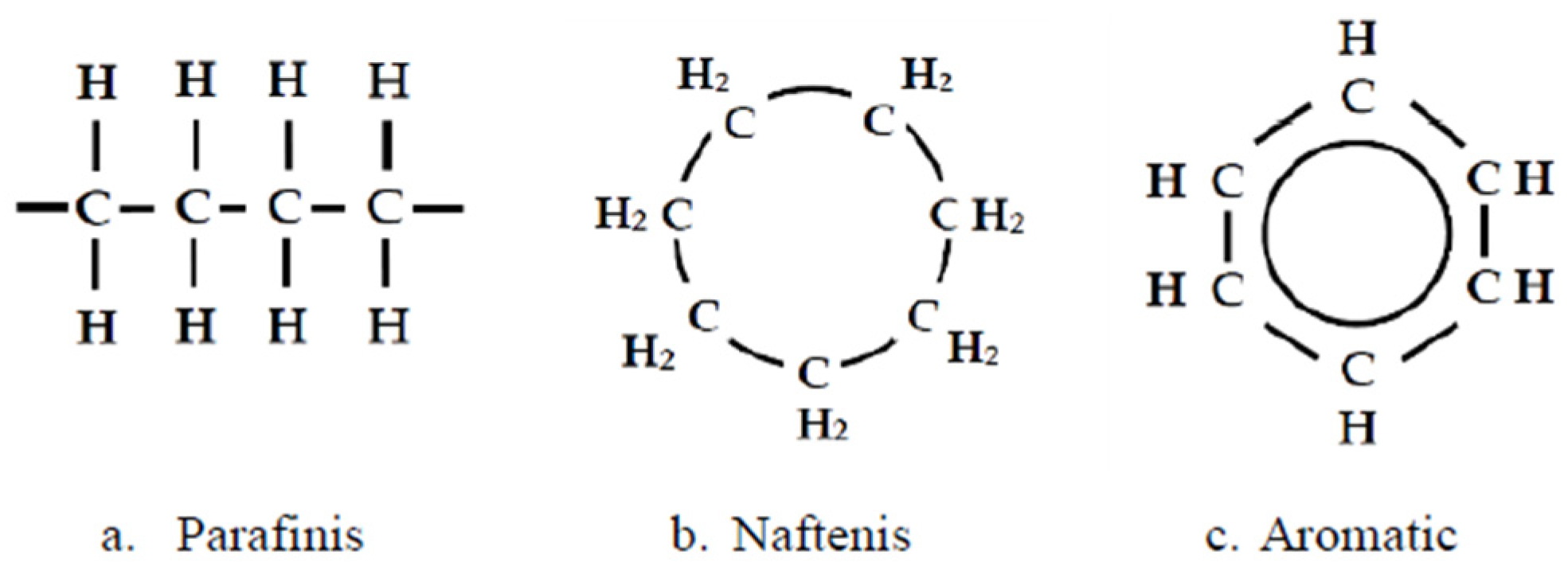
The chemical structures of natural ester and mineral oils are shown in Figure 1 and Figure 2, obtained in [5] and [6] respectively. The bond types determine the gases generated at different thermal faults [7]. The bond strengths from weakest are as follows: C-O, C-H (338 kJ/mol), C-C (607 kJ/mol), C-C double bond (720 kJ/mol), and C-C triple bond (960 kJ/mol) [7].
Figure 1.
Chemical structure and composition of ester oil.
Figure 2.
Chemical structure and composition of mineral oil.
2.2. Generation of Dissolved Gases in the Transformer Oil
Gases in the oil are generated because of the breaking of chemical bonds in the oil chemical structure when it is subjected to thermal faults [7]. Reference [7] defines thermal fault as excessive temperature rise in the conductor and insulation [8]. Kraft paper is normally used as insulation in transformers, and it consists of 80% cellulose (C6H10O5)ₙ [7]. During operation, the thermal stress from the windings releases thermal energy that breaks the chemical bonds, generating hydrocarbons such as methane (CH4), ethane (C2H6), ethylene (C2H4), and acetylene (C2H2), Consequently, the kraft paper decomposes, releasing carbon monoxide (CO), carbon dioxide (CO2), and moisture [7]. Reference [7] defined three thermal faults, shown in Table 1.
Table 1.
Thermal faults and gases generated [7].
2.3. Dissolved Gases Analysis
Dissolved gas analysis (DGA) detects transformer faults by quantifying the dissolved gases in the insulating oil [8]. DGA uses standard techniques including IEEE key gas ratios, IEC standards, Roger’s and Doernenburg’s ratios, as well as Duval’s triangle method to analyze dissolve gases in transformer oil [7,9]. According to IEC 60599 [7], DGA classifies transformer faults into two main categories, electrical and thermal, that are further divided based on the magnitude of the fault energy [7]. The electrical faults are partial discharges (PD), low-energy discharges (D1), and high-energy discharges (D2). The thermal faults are T1, T2, and T3 as presented in Table 1. The thermal fault characteristics and corresponding transformer faults are shown in Table 2.
Table 2.
Thermal fault characteristics and associated transformer fault type [7].
2.4. Existing Solutions
Reference [3] investigated the effect of DGs on the BDV of ester and mineral oils and reported that there is no clear trend in the relationship between DGs and the BDV. Reference [4] investigated the effect of moisture on the BDV, and the results showed a negative correlation, indicating that higher moisture levels reduce the BDV. Reference [10] studied the effect of H2, CO2, and N2 on the BDV of mineral oil, and found that these gases had negligible impact on the BDV. Reference [11] investigated the effect of O2 on the BDV of mineral oil, while Reference [12] investigated the effect of SF6 on the BDV. In studies [11,12], O2 and SF6, respectively, showed a positive relationship with the BDV of the insulating oil. Based on these findings, Reference [13] stated that the impact of DGs on the BDV does not depend only on the concentration of DGs, but rather on the type and combination of DGs. Hence, this study aims to fill the research gap by studying the combined effect of H2, CH4, C2H6, C2H4, (C2H2), CO and CO2 on the BDV of insulating oils.
3. Methodology
3.1. Test Vessel Design
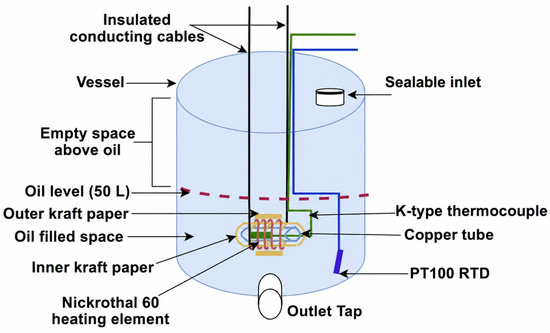
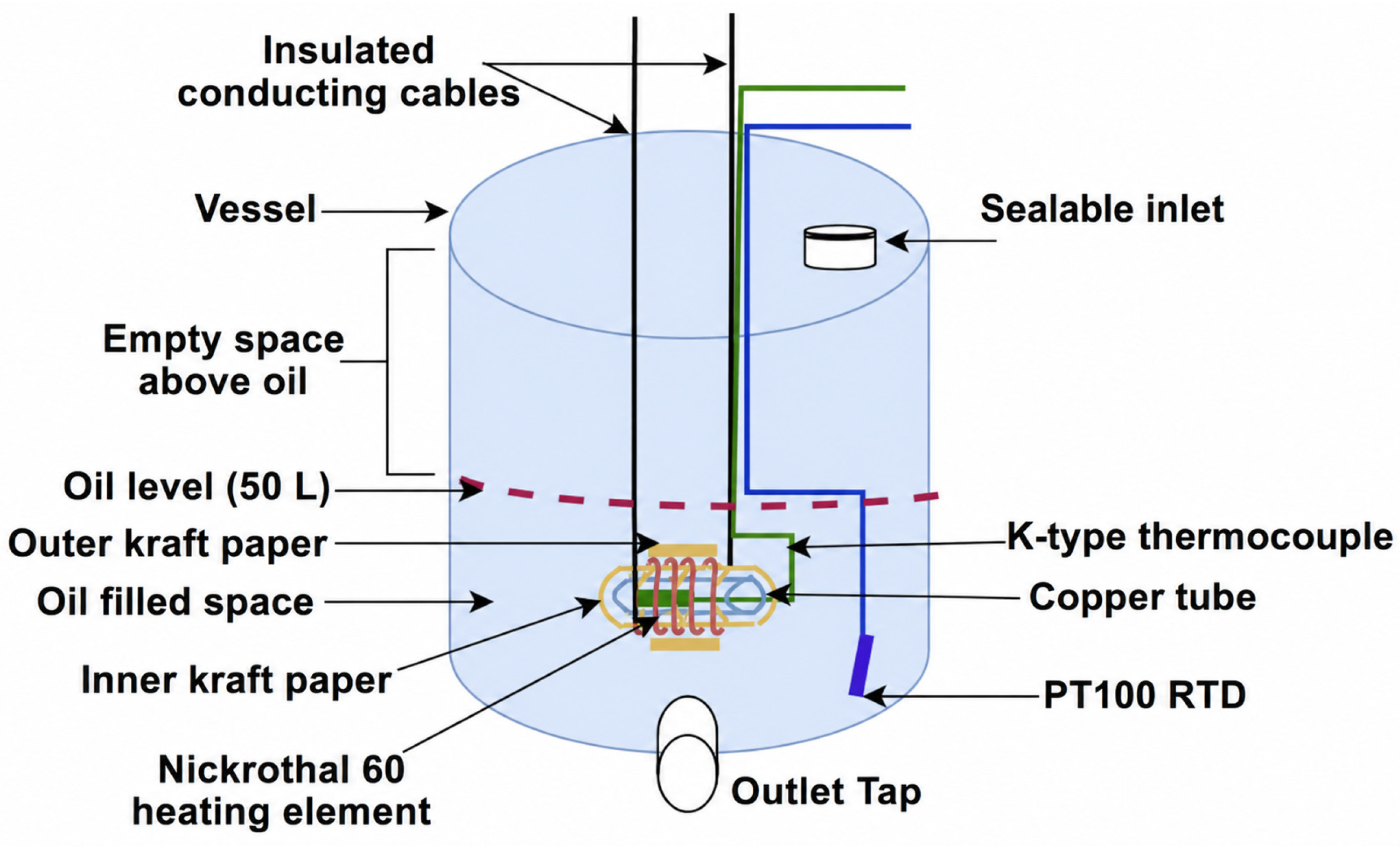
Two pentagonal prism-shaped vessels were used to perform the experiment; one used for mineral oil and the other for natural ester oil. Each vessel had a total capacity of 170 L and was equipped with an outlet valve for sampling, as well as a inlet valve for refilling oil. One vessel was filled with 50 L of mineral oil (Poweroil TO 1020 (60U)) and the other with the natural ester oil (MIDEL EN 1204), and carefully sealed to prevent external air ingress and to retain all the gases generated inside the vessels during the experiment. The heating element was made from a Nichrome wire (Nickrothal 60) wound into a four-turn coil around a copper tube with a diameter of 10 mm and a length of 30 mm. The heating element had a resistance of 0.4 Ω. Kraft paper was used as solid insulation, with two layers wrapped on the copper tube under the heating element to insulate the copper tube from the current carrying Nichrome wire. Four additional layers of paper were wrapped over the heating element to mimic the cellulose winding insulation in real-life transformers [3]. In both vessels, the heating elements were placed at the center of the bulk oil to ensure that the generated gases were evenly dispersed throughout the bulk oil [14]. The model of each test vessel is shown in Figure 3.
Figure 3.
Model of the test vessel.
3.2. Test Circuit Design
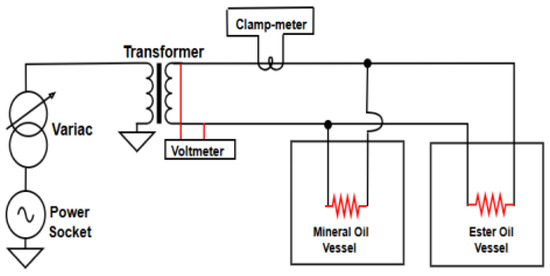
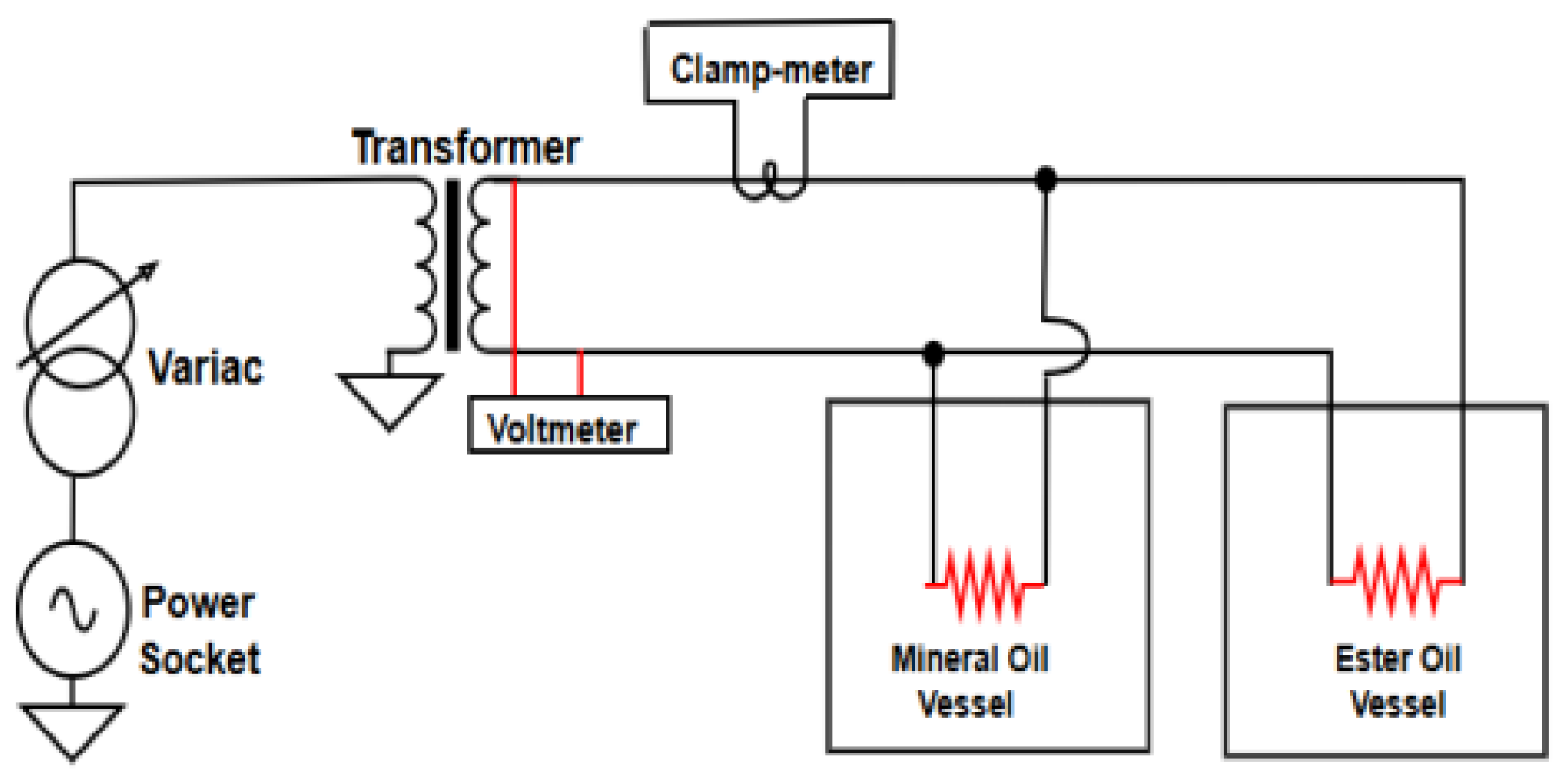
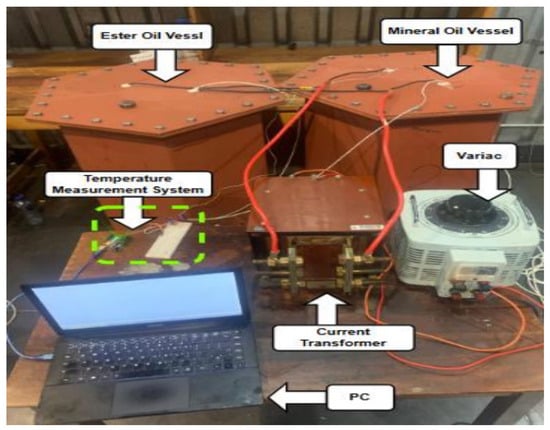
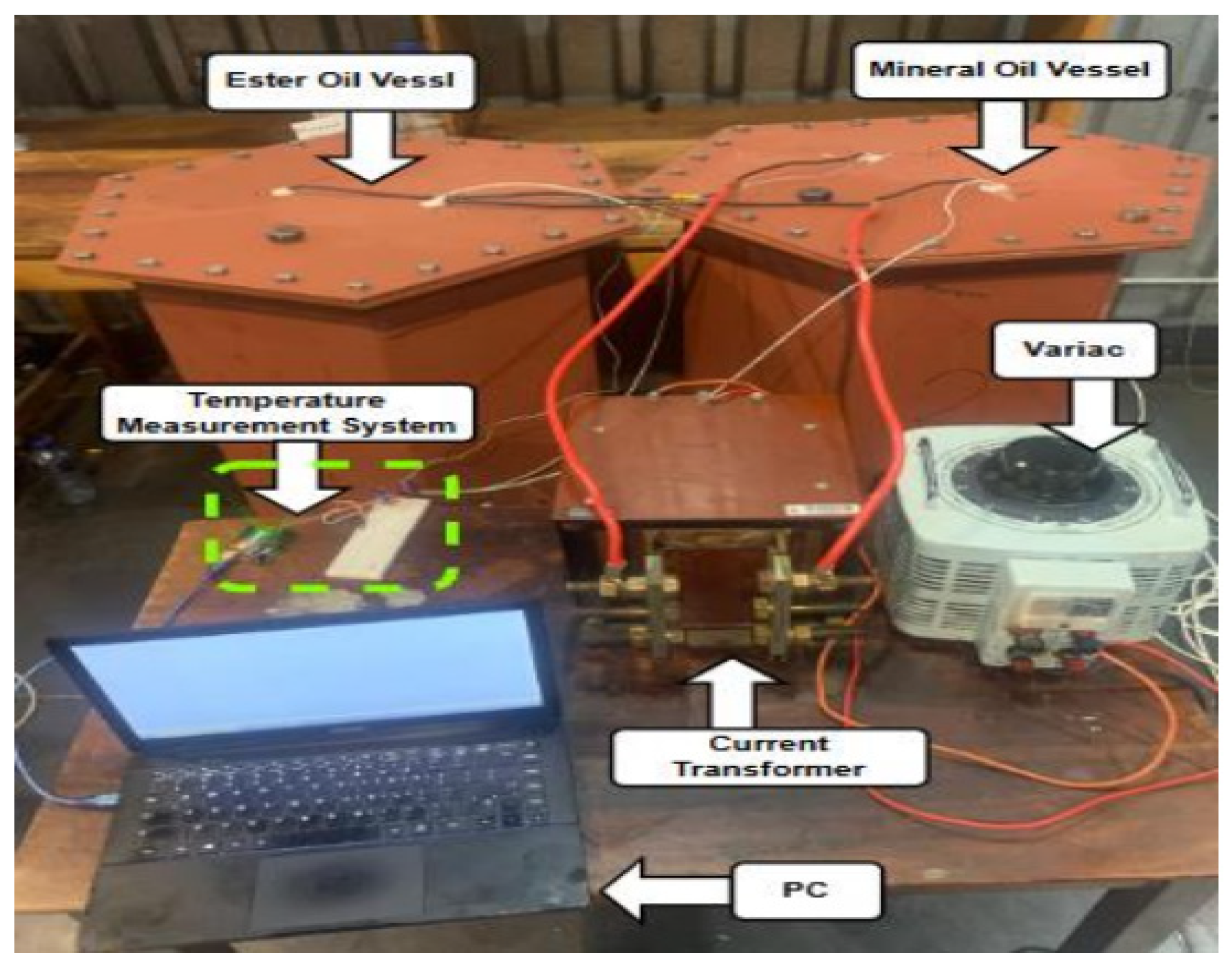
The current for the thermal fault was supplied with a single-phase high-current transformer controlled by a variac 0–250 V rated at 20 A. The high-current transformer is rated at 1667 A V, supplying current to the heating elements in the bulk oil. The heating elements in the mineral and natural ester oil vessels were connected in parallel to ensure a low equivalent resistance. Additionally, their equal resistance ensured equal current flow. The complete circuit design is illustrated in Figure 4 and the photograph of the setup is shown in Figure 5.
Figure 4.
Model of the test circuit.
Figure 5.
Actual experiment setup photograph.
3.3. Temperature Measurement System Design
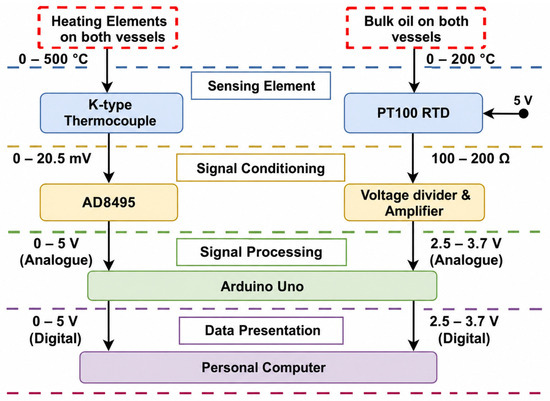
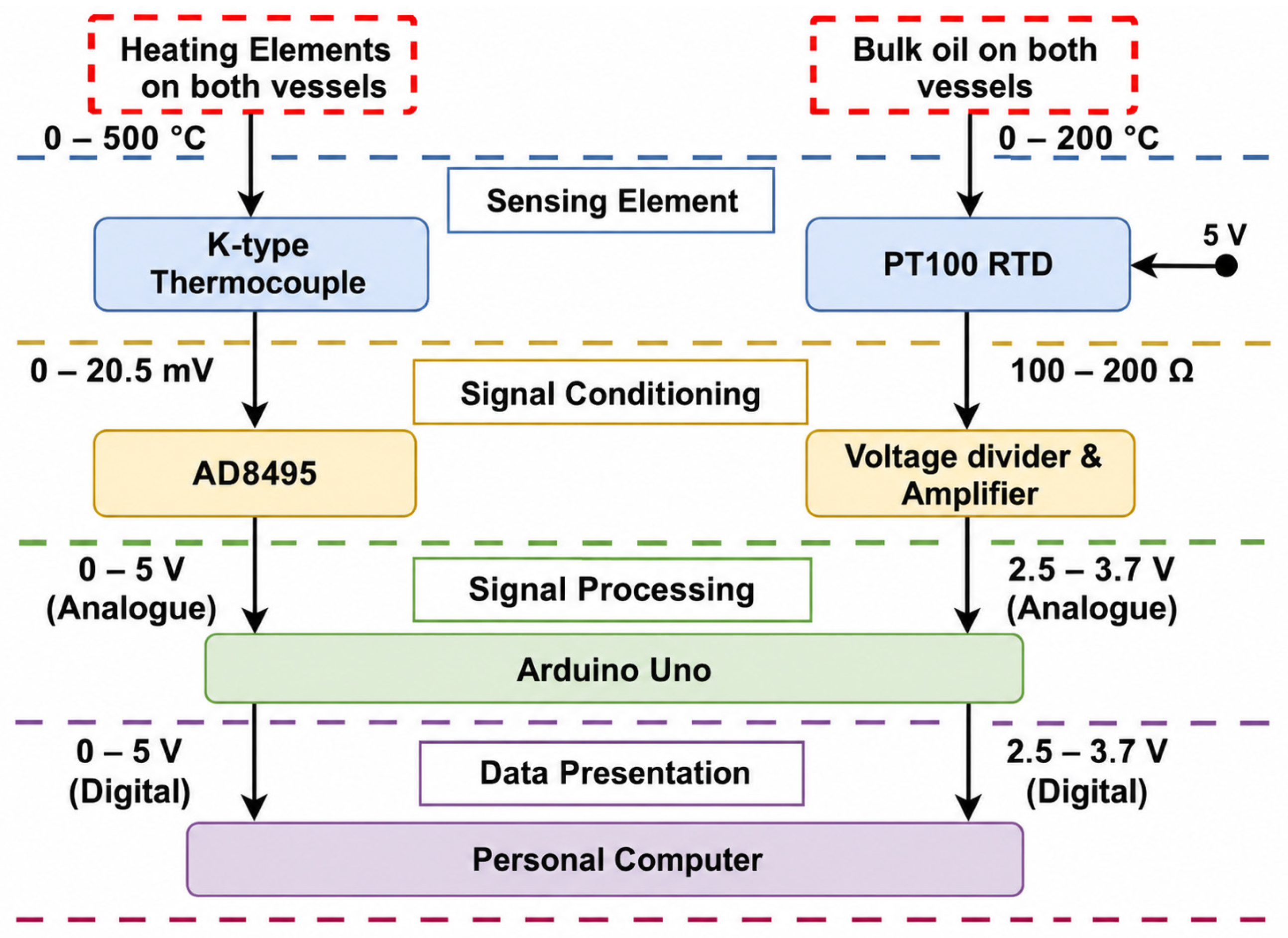
The temperature measurement system was designed to monitor both the heating element and bulk oil temperatures for mineral and natural ester oil using K-type thermocouples and PT100 RTDs. The thermocouples were placed inside copper tubes, while a PT100 RTD was submerged in the bulk oil. The thermocouples’ output voltage signals were amplified using an AD8495 analogue module and processed with an Arduino Uno. The PT100 RTD outputs a resistance, which connects in series with a 100 Ω fixed resistor in a 5V voltage divider circuit to convert the resistance signal into a voltage signal for processing with the Arduino Uno for temperature measurement. Temperature data were recorded and displayed on a personal computer in real time using CoolTerm software (version 2.4.0.1425). The flow diagram below in Figure 6 shows the temperature measurement system.
Figure 6.
Temperature measurement system design.
3.4. Experimental Procedure
A total of 12 oil samples were collected, six for mineral oil and six for natural ester oil. Each set included one fresh oil sample that served as the baseline to the remaining five samples that were subjected to thermal faults at different temperature levels. The oil was sampled in 1 L glass bottles that were clean and rinsed with the sample oil before sampling. The collected samples were analyzed to investigate the relationship between BDV, dissolved gas concentration and moisture content. The simulated thermal faults were studied at different temperatures such as 130 °C, 210 °C, 340 °C, 400 °C, and 450 °C.
The thermal fault tests were conducted for durations that allowed sufficient generation of gas, with 168 h at 130 °C for the first test, 168 h at 210 °C for the second test, and 120 h at 350 °C, 400 °C, and 450 °C for the third, fourth, and fifth tests, respectively. After each thermal test, 1 L oil samples from both types of oil were extracted in accordance with the IEC 60475 standard [14]. After sampling, 1 L of fresh oil was replaced in each vessel. The system was constantly monitored to ensure the proper operation of the experiment setup, temperature monitoring, and power supply. The actual setup at the WITS HV lab is shown in Figure 5 above.
The BDV test was performed in accordance with IEC 60156 [15] using an automatic oil breakdown tester, the BAUR DTA E, at ambient temperature [15]. The test uses spherical electrodes spaced 2.5 mm apart. A total of 400 mL of transformer oil was used in each test. The voltage was increased at a constant rate of 5 kV/s, with a two-minute interval between successive breakdowns. Six breakdown voltage readings were obtained for each oil test sample, and the average value was calculated for analysis. The moisture content was measured in accordance with IEC 60814 [16] using a BAUR KFM 3000 Coulometer. DGA was performed in accordance with IEC 60567 [17], and gases were analyzed using a MYRKOS portable DGA micro gas chromatograph with an error of ±6%. Each oil sample was placed in a tightly sealed 100 mL syringe, and each DGA test took approximately two minutes for each sample.
4. Results and Analysis
It is important to mention that the BDV tests were conducted before the DGA test. Oil samples exposed to the BDV tests were returned to their containers afterwards. During the BDV test, the spark that occurs between the electrodes introduces an electric fault which can generate small amounts of H2, CH4, and C2H2 [7]. As each sample undergoes six sparks, this elevated the concentration of dissolved gases, introducing a minor error in the DGA results.
4.1. Concentration of Dissolved Gases in the Transformer Oil
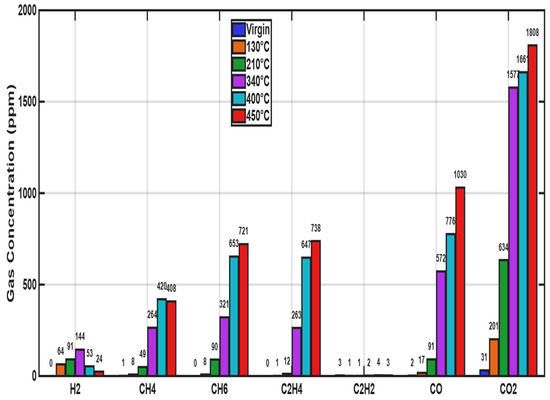
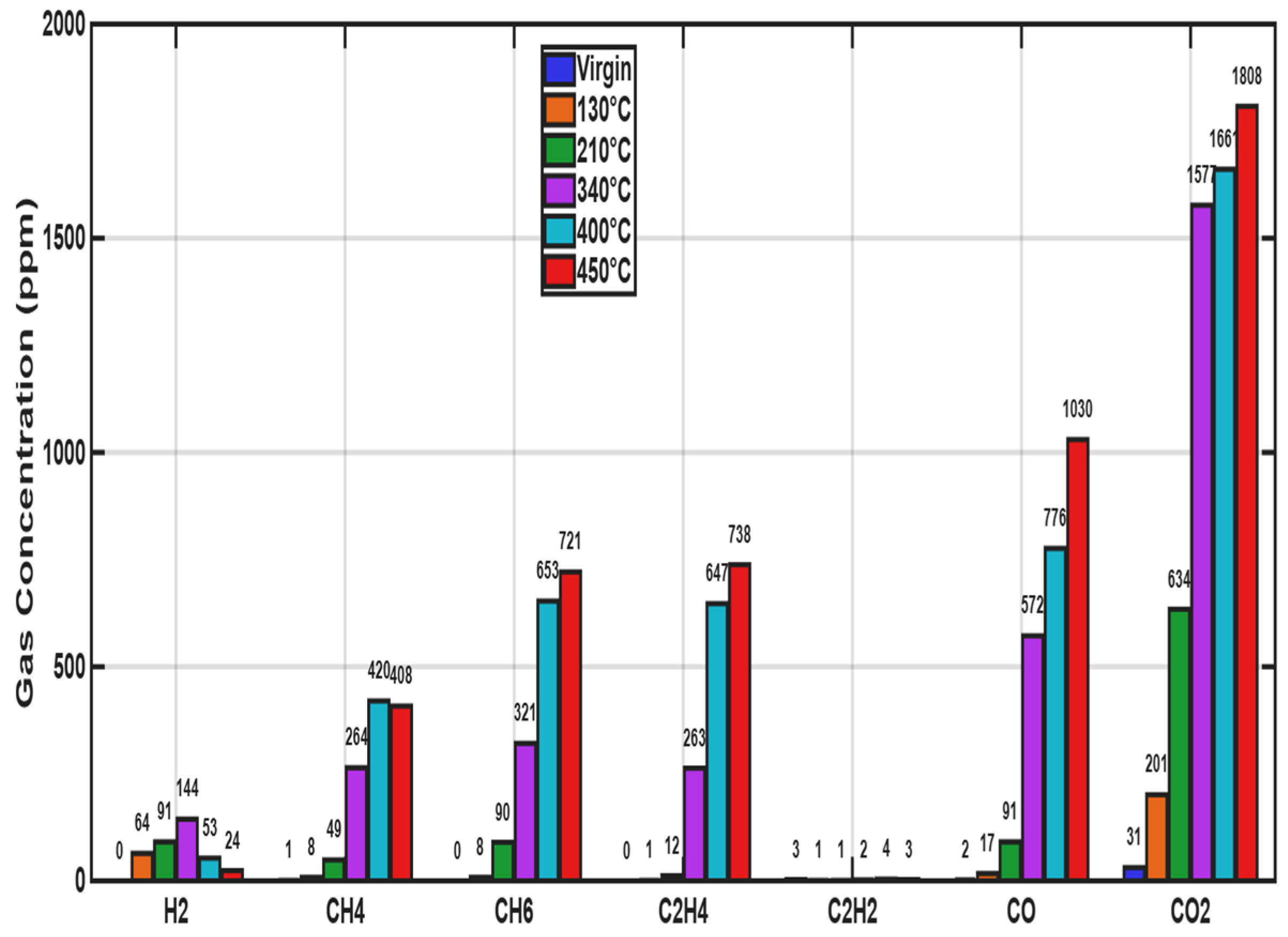
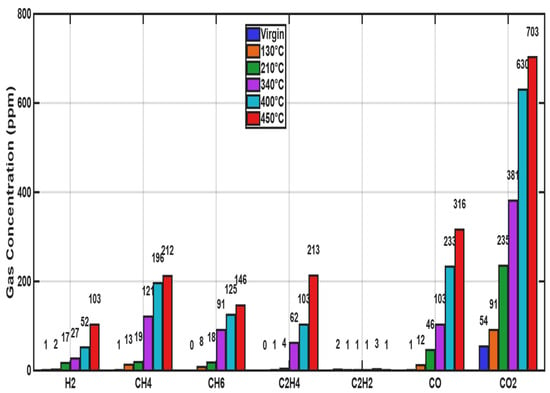
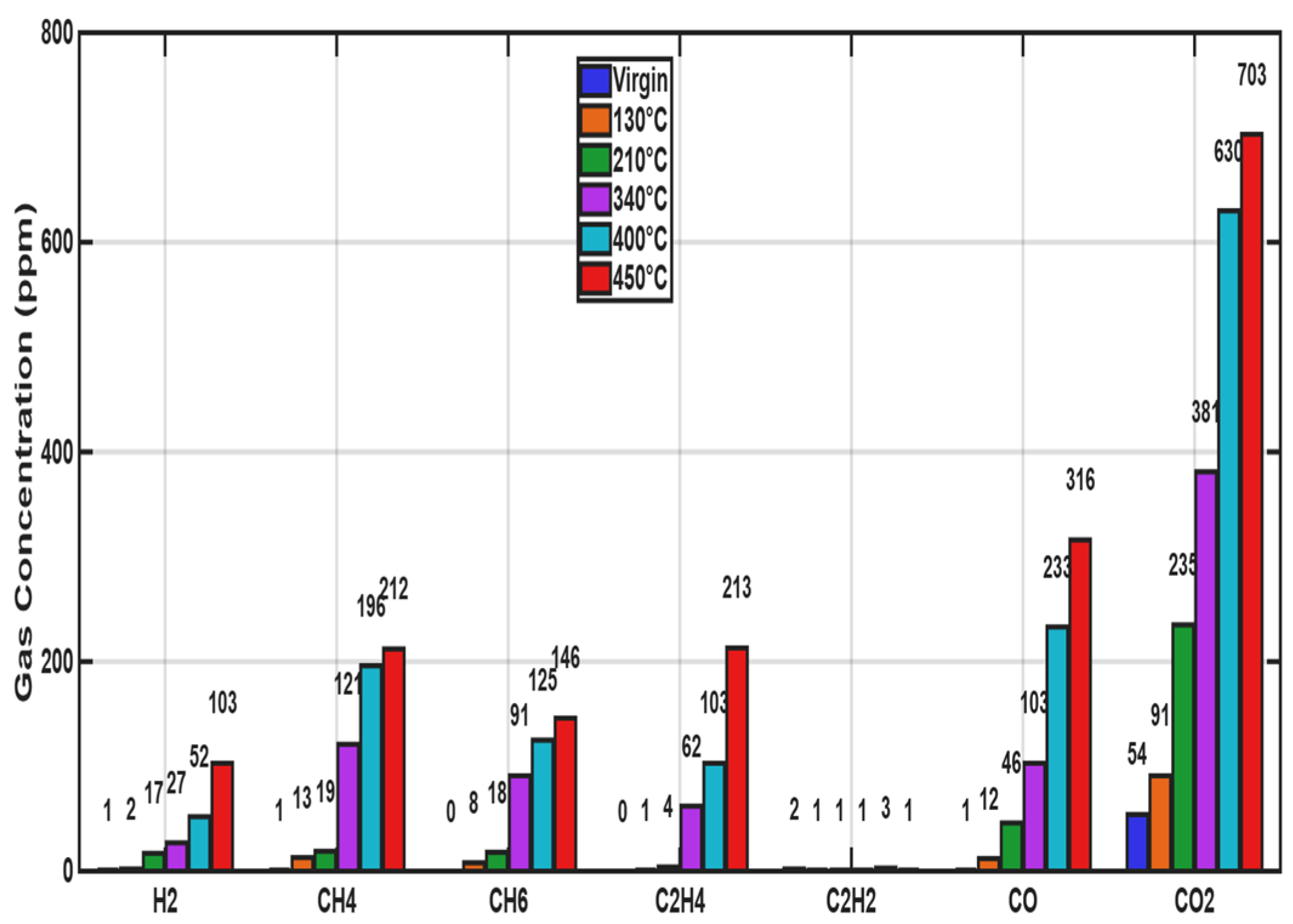
A concentration of zero of C2H2 was expected in all oil samples as the thermal faults investigated were below 700 °C, the threshold temperature for C2H2 generation [7]. However, small amounts of C2H2 were detected in all test samples of both oil types, as shown in Figure 7 and Figure 8. This is attributed to the procedural error where the same samples were used for BDV tests and later used for DGA testing. This procedural error is supported by the small traces of H2 and CH4 detected in the oils of both types, as observed in Figure 7 and Figure 8 [7]. The presence of C2H2 in these samples is considered an artefact, as discharges during the BDV test may have introduced traces of C2H2.
Figure 7.
Dissolved gas concentrations at each thermal fault level in natural ester oil.
Figure 8.
Dissolved gas concentrations at each thermal fault level in mineral oil.
From Figure 7 and Figure 8, it is observed that the concentrations of CO and CO2 are higher in the virgin mineral oil sample compared to the virgin natural ester oil sample. However, as the thermal fault test temperature increase, the concentrations of CO and CO2 in the natural ester oil increase significantly compared to the in mineral oil, due to the thermal degradation and partial decomposition of the Kraft paper, which begins at temperatures above 105 °C and releases CO and CO2 [7]. It is further observed that CO and CO2 increased drastically at 340 °C and 400 °C in natural ester and mineral oil, respectively. The increase in CO and CO2 slowed afterwards, indicating that the kraft paper had been carbonized and fully consumed. This aligns with findings IEC 60599 [7], which explained that kraft paper carbonization occurs above 300 °C.
The concentration of H2 in natural ester oil increased from the virgin oil up to 340 °C, and dropped at 400 °C and 450 °C. According to [7], this behavior of H2 concentration is due to the recombination of H2 atoms with unstable CH3 and C2H5 fragments, generating high concentrations of CH4, C2H6, and C2H4. C2H6 was found as a dominant hydrocarbon gas up to 400 °C, after which its increase slowed at 450 °C. This is consistent with findings in [18]. C2H4 became a dominant hydrocarbon gas at 450 °C. The dominance of C2H6 and C2H4 aligns with IEC 60599 [7], in that C2H4 dominates from 500 °C. Additionally, these results are consistent with the findings in [3,18]. In mineral oil, H2 had an increasing trend up to 450 °C. In mineral oil, CH4 was found to be a dominant hydrocarbon gas over C2H6 and C2H4 for thermal faults up to 400 °C. These findings are consistent with findings in [3,19]. Low concentrations of C2H6 indicate that the recombination of H2 atoms with unstable fragments is not significant in mineral oil, resulting in high H2. C2H4 dominated at 450 °C, which aligns with expectations [7].
4.2. Effect of Gas Concentration on the Breakdown Voltage
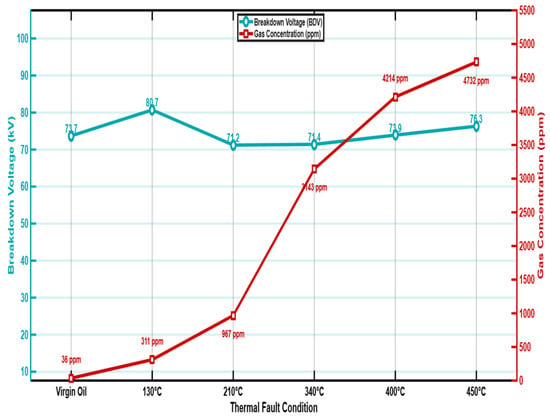
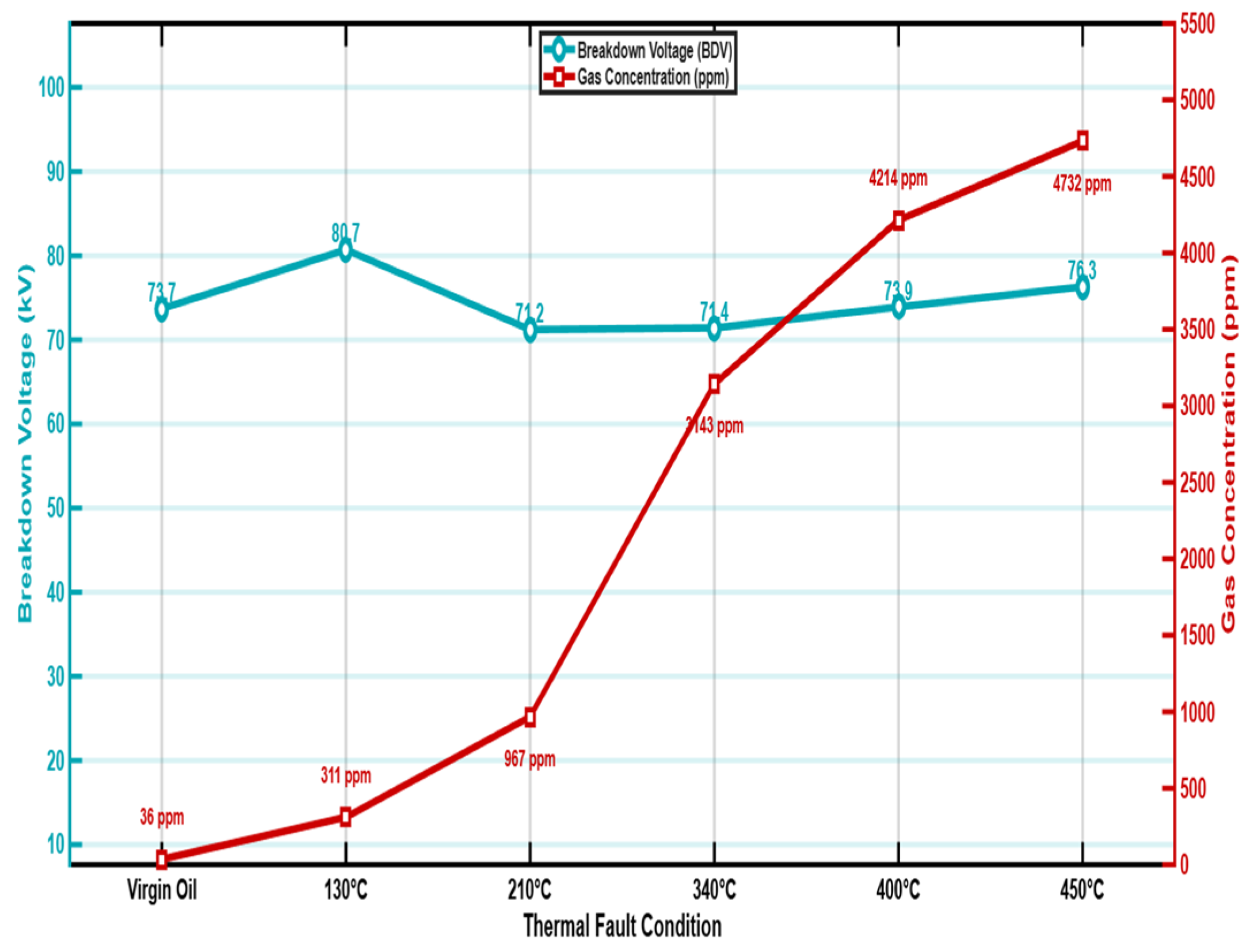
Figure 9 shows the relationship between the total concentration of gases generated during thermal fault tests and the BDV. It is observed that as the fault increases, the total gas concentration also increases. However, the BDV initially showed no clear trend in its response to dissolved gases at lower temperatures. At the 130 °C thermal fault test, the BDV increased compared to the virgin sample. The BDV improvement is linked to the good thermal stability of natural ester oil, which limited decomposition and resulted in a low concentration of free-ionizable gases. The reduced gas formation minimizes potential cavitation sites, requiring a higher voltage to initiate and sustain streamer propagation [3,20]. The other possible reason for the large increase in BDV at the 130 °C thermal fault test may be an error from the BDV testing machine. At 210 °C, the BDV decreased. The higher temperature caused significant thermal degradation of the oil, leading to a higher concentration of dissolved gases. The increase in dissolved gas content lowered the partial discharge inception voltage, created more sites for electron activity, and promoted faster streamer development, which reduced the overall dielectric strength. From 210 °C to 450 °C, the BDV increased slightly as the total gas concentration increased. Overall, the BDV from the virgin oil to 450 °C showed minor improvement despite the rise in total dissolved gas concentration.
Figure 9.
Total gas concentration and the BDV in ester oil.
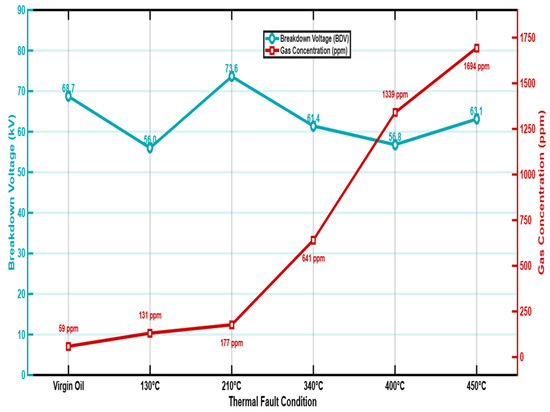
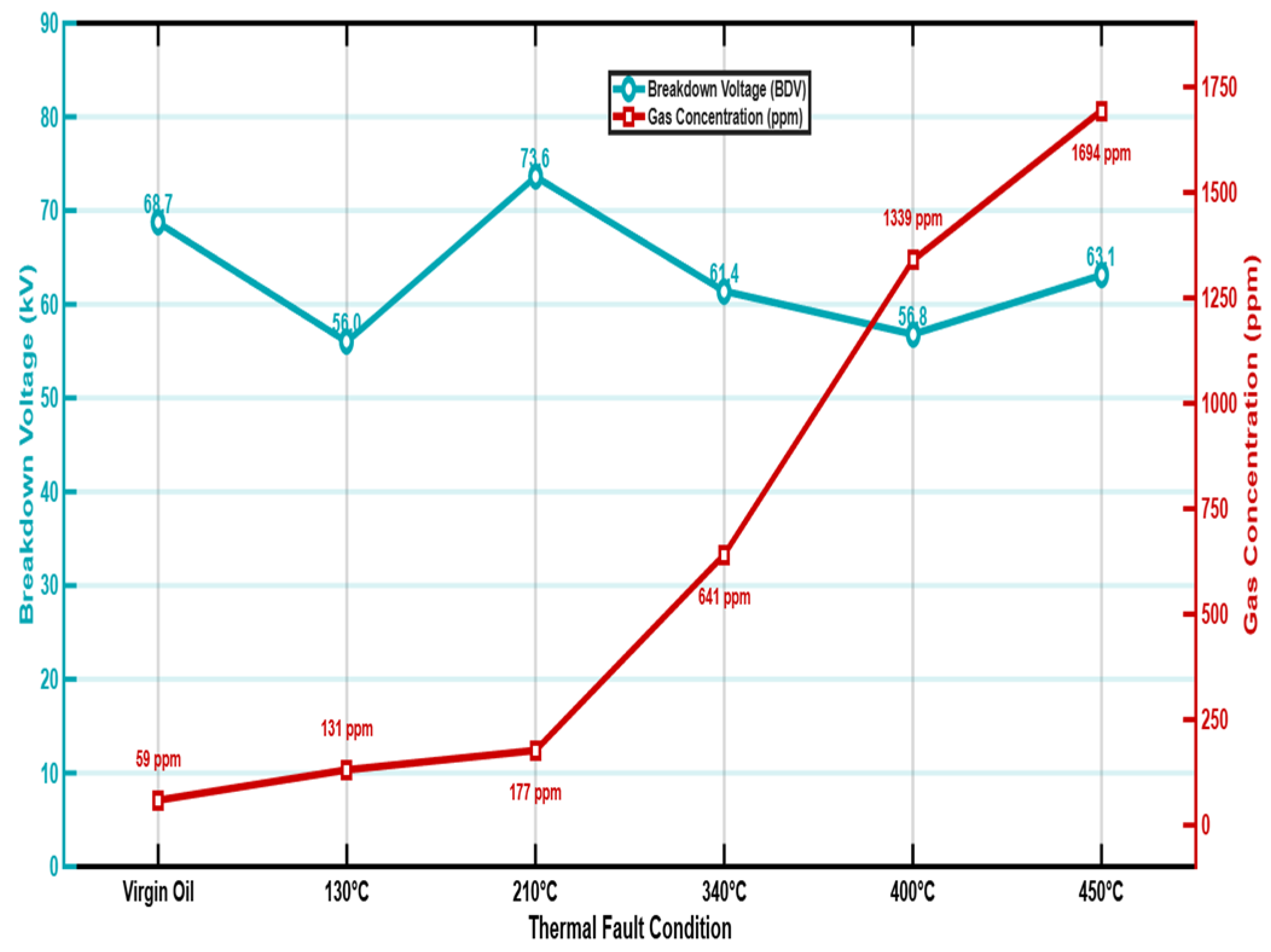
Figure 10 below shows the relationship between the total dissolved gas concentration generated under thermal fault conditions and the BDV of the mineral oil samples. It can be observed that as the thermal fault level increases, the total gas concentration also increases. The BDV of mineral oil, however, does not follow a clear trend with the increase in thermal fault levels. The overall effect of the gas concentration showed that the BDV decreased by 8.15% from the virgin oil (68.7 kV) test sample to the 450 °C (63.1 kV) fault test.
Figure 10.
Total gas concentration and BDV in mineral oil.
4.3. The Effect of Moisture on the Breakdown Voltage
Moisture in oil-paper-insulated transformers reduces insulation dielectric strength, accelerates paper degradation, and causes bubble formation at higher temperatures [21]. This study measures moisture content to assess its impact on the breakdown voltage of mineral and natural ester oils. The increase in moisture content results from the degradation of the kraft paper and oxidation reactions that release moisture into the bulk oil [7]. Additionally, IEC 60475 [14] emphasized the importance of the proper sealing of oil sample containers, saying that improper sealing can enable gas leakage and environmental moisture ingress.
The decrease in moisture content occurs when the water evaporates into vapor form when oil reaches the boiling point of water [4]. Table 3 shows the relationship between the breakdown voltage (BDV) and the moisture content of the natural ester oil under the fault tests.
Table 3.
Effect of moisture on the BDV of ester oil.
The virgin oil sample, measured at ambient temperature (23 °C), showed a high moisture content of 932.6 mg/kg. This high moisture content in ester oil is due to the esterification process that occurs during production of ester oils to produce ester functional groups (-COO-) and water [22]. The ester groups are polar, which enables ester oils to absorb high amounts of water with minimal effect on the dielectric strength [23]. Hence, ester oils have high BDV even with such high moisture content. When the oil was subjected to a thermal fault at 130 °C, the moisture content decreased to 635.6 mg/kg, suggesting partial evaporation of moisture into vapor form. The BDV increased from 73.7 kV to 80.7 kV. As the thermal fault level increased, the moisture content continued to decrease, reaching 298.9 mg/kg at 450 °C. However, the BDV showed only small variations, reaching 76.3 kV at 450 °C. This decreasing trend was expected as high moisture evaporation was expected as the thermal fault temperature increased.
The relationship between the moisture content in mineral oil and its effect on the BDV under thermal fault conditions is presented in Table 4 below. In virgin oil (23 °C), the moisture content is 16 mg/kg, which is very low compared to 932.6 mg/kg in natural ester oil. This is due to the absence of the ester group in the chemical structure of mineral oil [6], which is present in ester oil [5]. As shown in Table 4, the results show that an increase in moisture content decreases the BDV of mineral oil. The BDV increases when the moisture content decreases. Unlike ester oil which showed stability against moisture, mineral oil cannot absorb water due to the absence of the ester group [6]. Hence, mineral oil cannot tolerate moisture.
Table 4.
Effect of moisture on mineral oil.
5. Recommendations
The investigation results showed that dissolved gases (DGs) affect the breakdown strength of mineral and natural ester oil differently. Some gas formation was linked to experimental error, as BDV tests were conducted before DGA tests on the same samples. It is therefore recommended that DGA testing be performed first, or that separate samples be used for BDV testing to avoid electrical fault contamination. Future studies could extend the duration of thermal fault tests to allow gas concentrations to approach near-saturation. Increasing the number of samples would allow trends beyond the 450 °C fault level to be identified and improve the reliability of the conclusions. Measures must be taken to minimize moisture ingress into sampling bottles, as moisture can obscure the exact effect of DGs. Additionally, the paper should undergo vacuum treatment before testing to minimize moisture content.
This was a relatively short-term experiment. A long-term investigation is essential to see the complete behavior with high DG and moisture values.
6. Conclusions
The effect of dissolved gases on the breakdown strength of ester and mineral oils was investigated under different thermal faults conditions; 130 °C, 210 °C, 340 °C, 400 °C, and 450 °C. The concentration of dissolved gases increased with increasing thermal fault temperature in both ester and mineral oils. Ester oil generated higher concentrations of dissolved gases compared to mineral oil.
The increase in concentration of dissolved gases had no significant effect on the breakdown strength of ester oil. This can be attributed to the esterification process where water is absorbed by the molecular structure of the ester oils. However, the increase in concentration of dissolved gases and moisture decreased the breakdown strength of mineral oil since there is no known water attachment mechanism in mineral oil resulting in the lower BDV.
Author Contributions
Conceptualization, S.M.; methodology, C.G. and S.M.; formal analysis, T.M. and B.H.; investigation, T.M. and B.H.; data curation, T.M. and B.H.; writing—original draft preparation, T.M., B.H., S.M. and C.G.; writing—review and editing, S.M. and C.G.; visualization, T.M. and B.H.; supervision, S.M. and C.G.; project administration, S.M. and C.G.; funding acquisition, C.G. All authors have read and agreed to the published version of the manuscript.
Funding
This research received no external funding.
Institutional Review Board Statement
Not applicable.
Informed Consent Statement
Not applicable.
Data Availability Statement
All relevant information is contained within the manuscript.
Acknowledgments
The authors would like to extend their appreciation to Free State Transformers for supplying the vessels, Actom Transformer Laboratory for their assistance with BDV and moisture testing, and Doble Engineering Africa for their assistance with DGA testing. Lastly, special thanks are extended to Wits Genim and the HV Laboratory staff for their assistance throughout the project. During the preparation of this manuscript/study, the author(s) used ChatGPT, 5.2 for the purposes of proof reading. The authors have reviewed and edited the output and take full responsibility for the content of this publication.
Conflicts of Interest
The authors declare no conflicts of interest.
Abbreviations
The following abbreviations are used in this manuscript:
| BDV | Breakdown Voltage |
| kV | Kilovolts |
| MO | Mineral oil |
| DGA | Dissolved gas analysis |
References
- Rouse, T.O. Mineral insulating oil in transformers. IEEE Electr. Insul. Mag. 1998, 14, 6–16. [Google Scholar] [CrossRef] [Scilit]
- Chakraborty, M.; Baruah, N.; Sangineni, R.; Nayak, S.K.; Maiti, P.K. Dissolved gas analysis (DGA) of thermally aged, blended transformer oil. In Proceedings of the IEEE Conference on Electrical Insulation and Dielectric Phenomena (CEIDP), East Rutherford, NJ, USA, 18–30 October 2020; pp. 204–207. [Google Scholar]
- Nxumalo, S.; Maluleka, L.; Minhas, S. The effect of dissolved gases on the breakdown strength of ester transformer oil. In Proceedings of the 33rd Southern African Universities Power Engineering Conference (SAUPEC), Pretoria, South Africa, 29–30 January 2025; pp. 1–6. [Google Scholar]
- Ab Ghani, S.; Bakar, N.A.; Chairul, I.S.; Khiar, M.S.A.; Ab Aziz, N.H. Effects of moisture content and temperature on the dielectric strength of transformer insulating oil. J. Adv. Res. Fluid Mech. Therm. Sci. 2019, 63, 107–116. [Google Scholar]
- Danikas, M.; Sarathi, R. Alternative fluids-with a particular emphasis on vegetable oils-as replacements of transformer oil: A concise review. Eng. Technol. Appl. Sci. Res. 2020, 10, 6570–6577. [Google Scholar] [CrossRef] [Scilit]
- Husnayain, F.; Latif, M.; Garniwa, I. Transformer oil lifetime prediction using the Arrhenius law based on physical and electrical characteristics. In Proceedings of the 14th International Conference on Quality in Research (QiR), Lombok, Indonesia, 10–13 August 2015; pp. 115–120. [Google Scholar]
- IEC 60599; Mineral Oil-Impregnated Electrical Equipment in Service—Guide to the Interpretation of Dissolved and Free Gases Analysis. International Electrotechnical Commission: Geneva, Switzerland, 2022.
- Nanfak, A.; Samuel, E.; Fofana, I.; Meghnefi, F.; Ngaleu, M.G.; Kom, C.H. Traditional fault diagnosis methods for mineral oil-immersed power transformer based on dissolved gas analysis: Past, present and future. IET Nanodielectr. 2024, 7, 97–130. [Google Scholar] [CrossRef] [Scilit]
- Sun, H.C.; Huang, Y.C.; Huang, C.M. A review of dissolved gas analysis in power transformers. Energy Procedia 2012, 14, 1220–1225. [Google Scholar] [CrossRef] [Scilit]
- Sletten, A.M.; Lewis, T.J. The influence of dissolved gases on the dielectric strength of N-hexane. Br. J. Appl. Phys. 1963, 14, 883–888. [Google Scholar] [CrossRef] [Scilit]
- Sletten, A.M. Electric strength and high-field conduction current in n-hexane. Nature 1959, 183, 311–312. [Google Scholar] [CrossRef] [Scilit]
- Nosseir, A.; Hawley, R.; Clothier, N. Effect of a dissolved electronegative gas (sulphur hexafluoride) on the breakdown strength of liquid dielectrics. Nature 1965, 206, 494. [Google Scholar] [CrossRef] [Scilit]
- Wang, X. Partial Discharge Behaviours and Breakdown Mechanisms of Ester Transformer Liquids Under AC Stress. Master’s Thesis, The University of Manchester, Manchester, UK, 2011. [Google Scholar]
- IEC 60475; Method of Sampling Insulating Liquids. International Electrotechnical Commission: Geneva, Switzerland, 2011.
- IEC 60156; Insulating Liquids—Determination of the Breakdown Voltage at Power Frequency—Test Method, 4th ed. International Electrotechnical Commission: Geneva, Switzerland, 2025.
- IEC 60814; Insulating Liquids—Oil-Impregnated Paper and Pressboard—Determination of Water by Automatic Coulometric Karl Fischer Titration. International Electrotechnical Commission: Geneva, Switzerland, 1997.
- IEC 60567; Oil-Filled Electrical Equipment—Sampling of Free Gases and Analysis of Free and Dissolved Gases in Mineral Oils and Other Insulating Liquids—Guidance, 5th ed. International Electrotechnical Commission: Geneva, Switzerland, 2023.
- Meira, M.; Verucchi, C.; Álvarez, R.; Catalano, L. Dissolved gas analysis in mineral oil and natural ester liquids from thermal faults. IEEE Trans. Dielectr. Electr. Insul. 2021, 28, 1317–1325. [Google Scholar] [CrossRef] [Scilit]
- Perrier, C.; Beroual, A. Experimental investigations on insulating liquids for power transformers: Mineral, ester, and silicone oils. IEEE Electr. Insul. Mag. 2009, 25, 6–13. [Google Scholar] [CrossRef] [Scilit]
- Oparanti, S.O.; Rao, U.M.; Fofana, I. Natural esters for green transformers: Challenges and keys for improved serviceability. Energies 2022, 16, 61. [Google Scholar] [CrossRef] [Scilit]
- Koch, M.; Krüger, M.; Tenbohlen, S. Comparing various moisture determination methods for power transformers. Power 2009, 3, 1–6. [Google Scholar]
- Yelubay, M.A.; Yerbolat, O.; Aitkaliyeva, G.S.; Massakbayeva, S.R. Production of esters based on waste vegetable oils. Int. J. Environ. Sci. Dev. 2020, 11, 530–534. [Google Scholar] [CrossRef] [Scilit]
- Mnisi, H. Dissolved Gas Analysis (DGA) of Canola-Based Ester Fluid. Master’s Thesis, University of the Witwatersrand, Johannesburg, South Africa, 2021. [Google Scholar]

Disclaimer/Publisher’s Note: The statements, opinions and data contained in all publications are solely those of the individual author(s) and contributor(s) and not of MDPI and/or the editor(s). MDPI and/or the editor(s) disclaim responsibility for any injury to people or property resulting from any ideas, methods, instructions or products referred to in the content. |
© 2026 by the authors. Licensee MDPI, Basel, Switzerland. This article is an open access article distributed under the terms and conditions of the Creative Commons Attribution (CC BY) license.