Proceeding Paper

Rethinking Cabin Linings: From Waste Carbon to High-Performance Structures †
1
Institute of Structural Mechanics and Lightweight Design, RWTH Aachen University, 52066 Aachen, Germany
2
Institut für Textiltechnik Augsburg gGmbH, 86159 Augsburg, Germany
*
Author to whom correspondence should be addressed.
Presented at the 15th EASN International Conference, Madrid, Spain, 14–17 October 2025.
Eng. Proc. 2026, 133(1), 96; https://doi.org/10.3390/engproc2026133096
Published: 8 May 2026

Abstract

Reducing the ecological footprint of aviation is a key objective in the development of future aircraft. This is particularly relevant in the emerging field of Urban Air Mobility, which demands sustainable yet industrially feasible solutions due to expected high production rates. As part of the cooperative research project KONKAV, innovative materials and manufacturing methods are being explored to meet these demands. One such approach is the partial consolidation of nonwovens made from recycled carbon fibers, aimed at producing multifunctional, recyclable components for Urban Air Mobility cabin linings for high bending stiffness requirements. This study presents the experimental characterization of various nonwoven architectures, focusing on how different levels of consolidation affect their specific mechanical properties. The partially consolidated structure enables tailored stiffness profiles, making it possible to optimize structural performance while integrating functions such as thermal insulation and acoustic damping directly into the lining. An analytical material model has been developed by analyzing the experimental results. The findings demonstrate that partially consolidated nonwovens can achieve a competitive stiffness-to-weight ratio, with advantages over conventional glass-fiber-reinforced composites in terms of eco-efficiency and circularity. The proposed construction method offers potential for cost-effective, lightweight solutions that support closed-loop material use in aviation interiors.

1. Introduction

Reducing the ecological footprint of aviation is a key objective in the development of future aircraft. This challenge is particularly relevant in the emerging field of Urban Air Mobility, where sustainable yet industrially feasible solutions are required due to the expected high production rates [1]. Traditionally, lightweight parts in aviation are produced from carbon-fiber-reinforced plastics (CFRP). These materials offer excellent specific mechanical properties, but their production is associated with high CO2 emissions and negative impacts on human health, as shown by life cycle assessments [2,3,4]. The high value of CFRP products, combined with their environmental footprint, motivates the development of recycling strategies to extend material lifetimes and enable circular use [2,3]. The recycling of CFRP into recycled carbon fibers (rCF) and recycled composites (rCFRP) has been shown to significantly reduce both costs and CO2 emissions [2,3,4]. However, large-scale industrial applications remain limited [2]. At present, rCF are not yet used in structural applications, leading instead to downcycling into products with lower performance requirements. This downcycling prevents the establishment of a true circular economy in the composites sector [2,3]. To overcome this barrier, better modeling of mechanical properties, as well as precise models for costs and life cycle assessments, are needed to provide decision support in the design process and increase the acceptance of recyclates [2,3].
Several authors have investigated processing routes for rCF nonwovens, exploring combinations with thermosets, thermoplastics, or hybrid yarns and nonwovens [2,5]. Among the different processing concepts, nonwovens have emerged as a particularly promising approach for making recycling scalable, as they allow flexible fiber architectures and enable efficient utilization of recycled material [3].
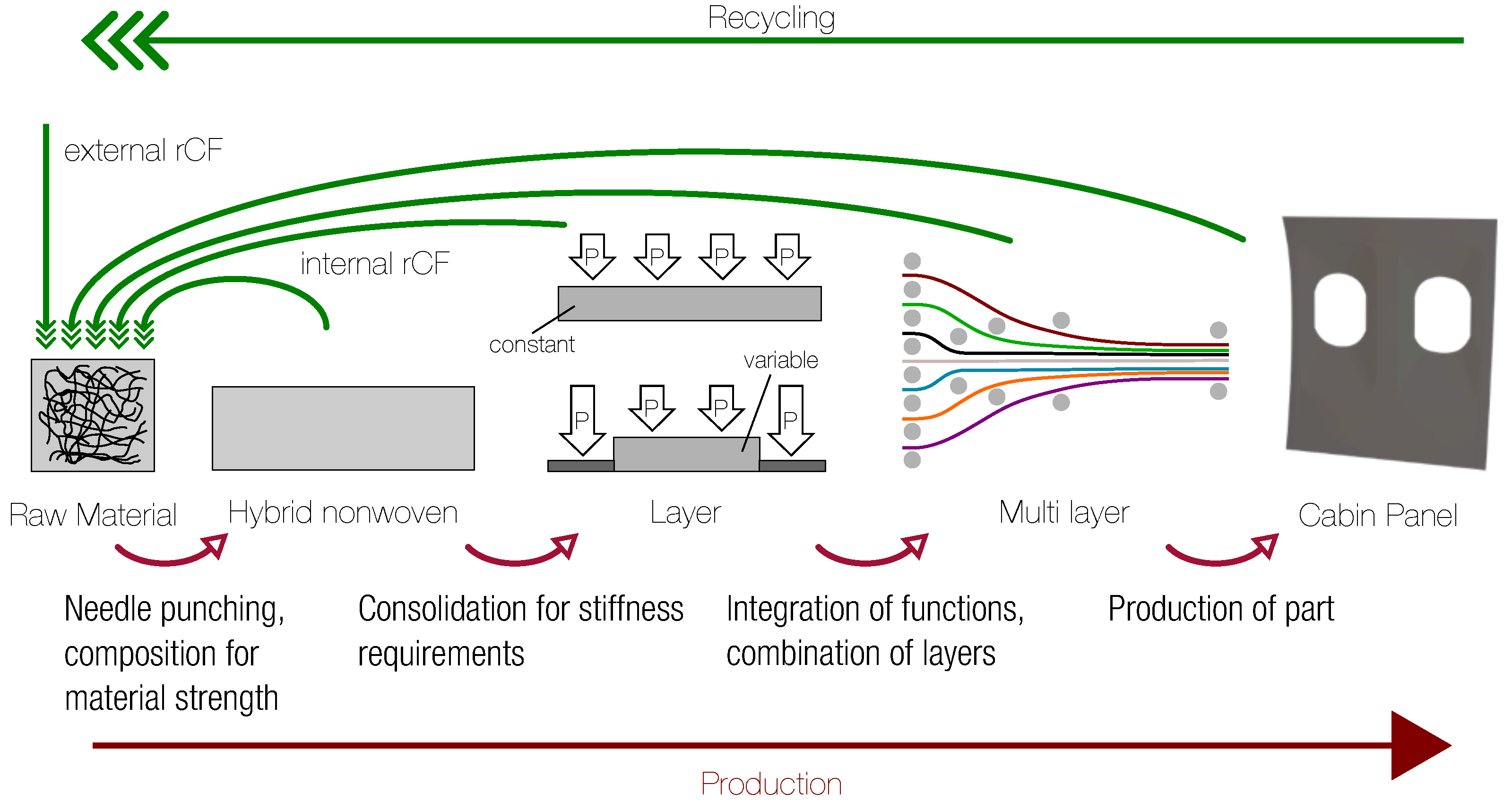
As part of the cooperative research project KONKAV, innovative materials and manufacturing methods are being explored to meet these demands. One such approach is the partial consolidation of rCF-based hybrid nonwovens, aimed at producing multifunctional, recyclable components for Urban Air Mobility cabin linings with high bending stiffness requirements, as investigated by Nuño et al. [6]. The considered manufacturing process, as seen in Figure 1, integrates multiple stages:
1.
Use of raw material from externally rCF, supplemented by additional recycled scrap material from subsequent processing steps.
2.
Creation of a hybrid nonwoven with thermoplastic fibers.
3.
Partial consolidation to achieve tailored mechanical properties.
4.
Integration of additional functions and assembly into a multistack sheet.
5.
Post-processing of the component.
This concept not only addresses structural performance but also enables multifunctional integration, such as thermal insulation and acoustic damping, due to the voids in the material. However, this aspect is not covered in this paper. It represents a pathway toward scalable and sustainable use of rCF in aviation interiors. Building upon this motivation, the present study experimentally characterizes different nonwoven architectures and investigates how varying levels of partial consolidation affect their specific mechanical properties. Furthermore, the experimental findings are used to develop an analytical material model, providing a foundation for design and future structural applications of partially consolidated rCF-based nonwovens.

2. Materials and Methods

For the material characterization, several rCF-nonwoven variants were produced from scrap material derived from virgin CFRP wovens; see Table 1. The mechanical properties of the virgin fibers were not tested. The variants differ in fiber weight fraction, number of layers and consolidation degree, enabling a systematic investigation of their influence on mechanical properties. To determine the stiffness and strength of the materials, uniaxial tensile tests were performed. The measured force–displacement data were used to derive the normal and bending stiffness, Young’s modulus and tensile strength for each nonwoven architecture and consolidation state. Based on the experimental results, an analytical material model was developed to describe the relationship between the consolidation degree K and the resulting mechanical properties and provides a framework for predicting effective properties in partially consolidated structures. A sizing and optimization strategy was formulated to explore structural designs with locally varying consolidation degrees. This approach enables tailoring of stiffness properties within a component to achieve multifunctional performance while maintaining lightweight design. Finally, the developed material solutions were compared against conventional structural materials commonly used in aircraft interiors, with respect to stiffness-to-weight ratio. This benchmarking serves to evaluate the competitiveness of partially consolidated rCF nonwovens in the context of sustainable aviation structures.

3. Results

3.1. Mechanical Tests

The mechanical characterization of the partially consolidated rCF nonwovens was conducted using uniaxial tensile testing in accordance with DIN EN ISO 527-4/2/2 [7]. Due to the low thickness of certain nonwoven configurations, specimen thicknesses deviated from the standard, but all other test requirements were maintained. Specimen variants (Table 1) were manufactured with different numbers of layers n and consolidation degrees K, defined as:
K = t 0 t
where t 0 is the nominal thickness of the fully consolidated nonwoven and t is the thickness of the partially consolidated state. The measured force–displacement curves were used to derive the normal stiffness E A , Young’s modulus E, bending stiffness E I and ultimate tensile strength σ m a x . Bending tests were carried out on a sample basis and compared with the Young’s moduli determined from the tensile tests. In addition, micrographs of the samples were examined. As no significant inhomogeneity was found, the bending properties are determined from the tensile tests in this paper.
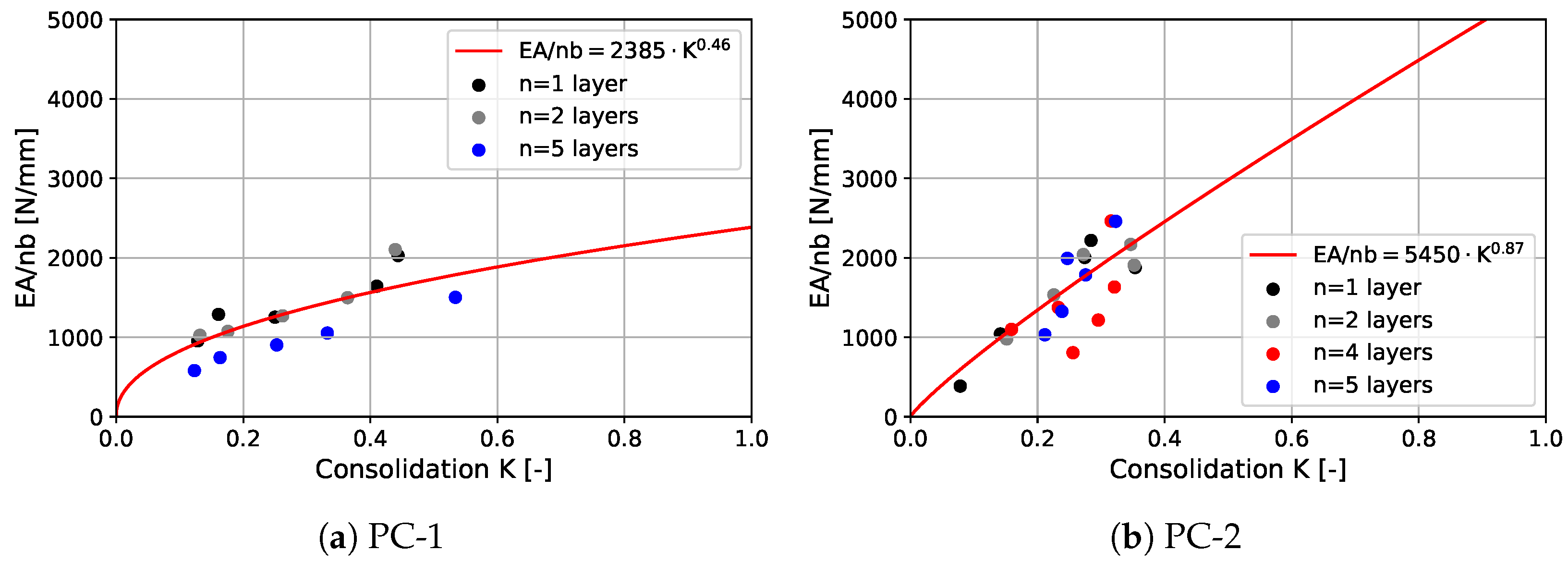
Figure 2 shows the axial stiffness normalized by specimen width b and number of layers n, demonstrating a clear increase in stiffness with rising consolidation degree K.
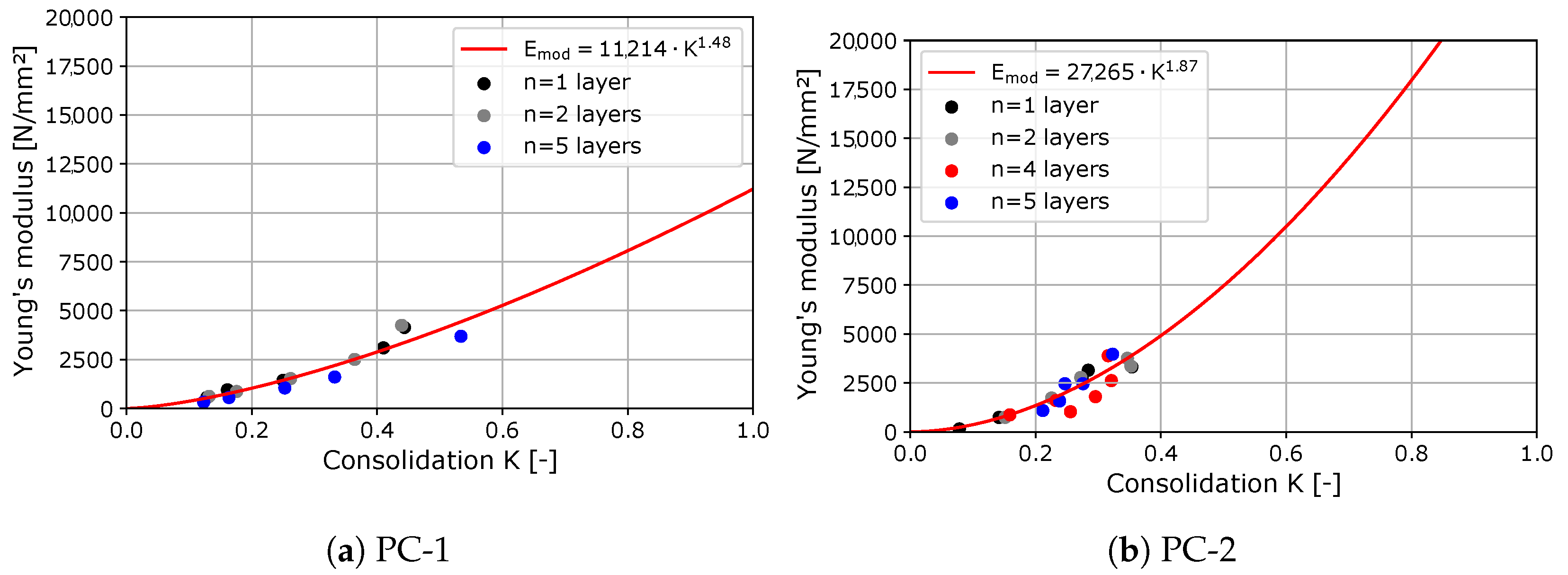
Figure 3 presents the resulting Young’s modulus, which exhibits the same monotonic dependency on K, confirming progressive stiffening through fiber compaction and improved load transfer.
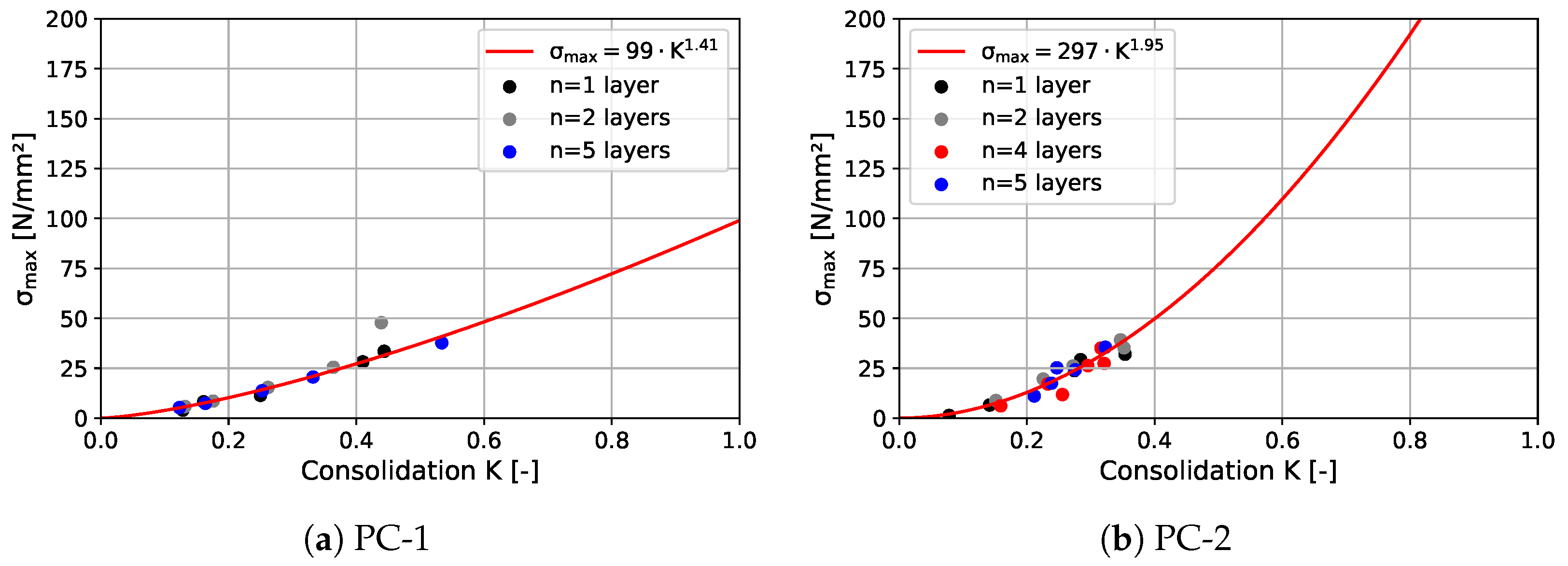
Figure 4 depicts the tensile strength, which follows a similar trend, increasing consistently with higher consolidation levels. Overall, the results confirm that consolidation significantly enhances mechanical performance and enables tunable stiffness and strength through controlled compaction of the nonwoven architecture.

3.2. Material Model

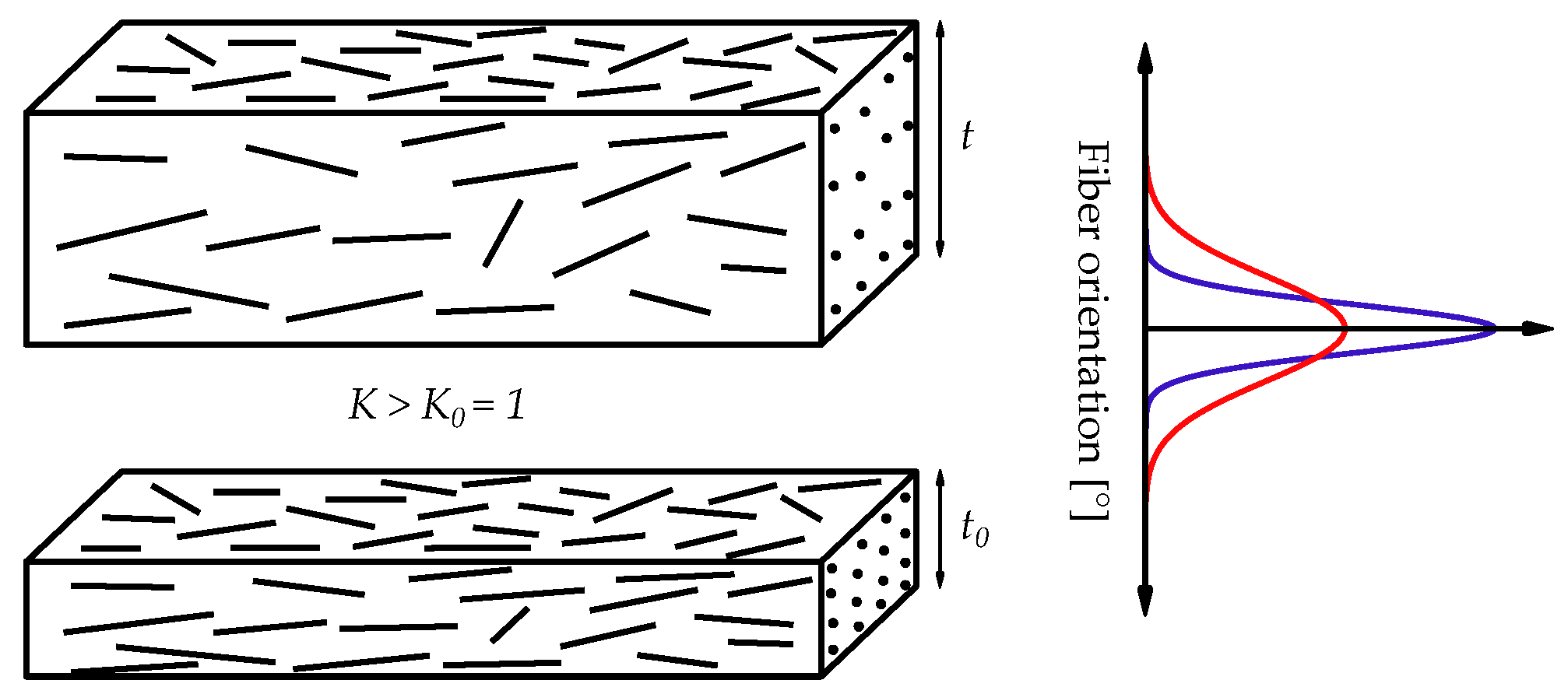
The material model is based on the idealization shown in Figure 5, where the nonwoven is represented as short, randomly oriented carbon fibers embedded in a polymer matrix. In a classical rule-of-mixtures approach by Jones [8], the axial stiffness E A would remain constant with respect to the consolidation degree defined as
K = t 0 t
where t 0 is the sheet thickness of a fully consolidated nonwoven without any voids and t is defined as the sheet thickness of the partially consolidated nonwoven. In practice, however, consolidation increases fiber orientation, which leads to a measurable stiffening of the material, while the absence of cohesion—particularly at K = 0 —requires the assumption of zero normal stiffness. To capture this behavior, an exponential relationship of the form
y = a K b
is adopted. This function ensures zero stiffness at K = 0 and provides a monotonic increase consistent with the observed compaction effect. Curve fitting is applied to the experimental data of the investigated materials by minimizing the L1 objective
min a , b i a x i b y i
corresponding to a least absolute deviations fit of the power-law model y = a K b . The same functional form is employed for both the Young’s modulus and tensile strength, with distinct parameters determined in each case. The fitted mechanical properties of PC-1 and PC-2 can be found in Table 2 and are shown in Figure 2, Figure 3 and Figure 4. The model is phenomenological, providing an efficient description of the experimental trends and enabling use in structural design studies with varying local consolidation degrees.

3.3. Sizing and Optimization Strategy

The derived material model may be used for sizing and optimization of structures, where the section forces in the structure are non uniform and the local change in consolidation degree is beneficial, as a lower consolidation degree yields in higher bending stiffness. For the structural assessment, the section forces M (bending moment) and N (normal force) were calculated for the sizing procedure. The maximum allowable stress is defined as
σ a l l o w = σ 0 K b
according to Equation (3) and Table 2. The applied stresses result from two contributions: the bending-induced stress
σ M = 6 M K 2 b n 2 t 0 2
and the stress due to normal loading
σ N = K N b n t 0
The design requirement is therefore formulated as
σ M + σ N σ a l l o w K N b n t 0 + 6 M K 2 b n 2 t 0 2 σ 0 K b
For the general case, the sizing problem is a coupled problem that cannot be solved analytically and instead requires numerical solution strategy. This approach makes it possible to identify feasible combinations of the number of layers and the local consolidation degree that satisfy the stress constraints. In the special case of pure bending ( N = 0 ), a closed-form expression can be derived for the admissible consolidation degree
K 6 M b n 2 t 0 2 1 b 2
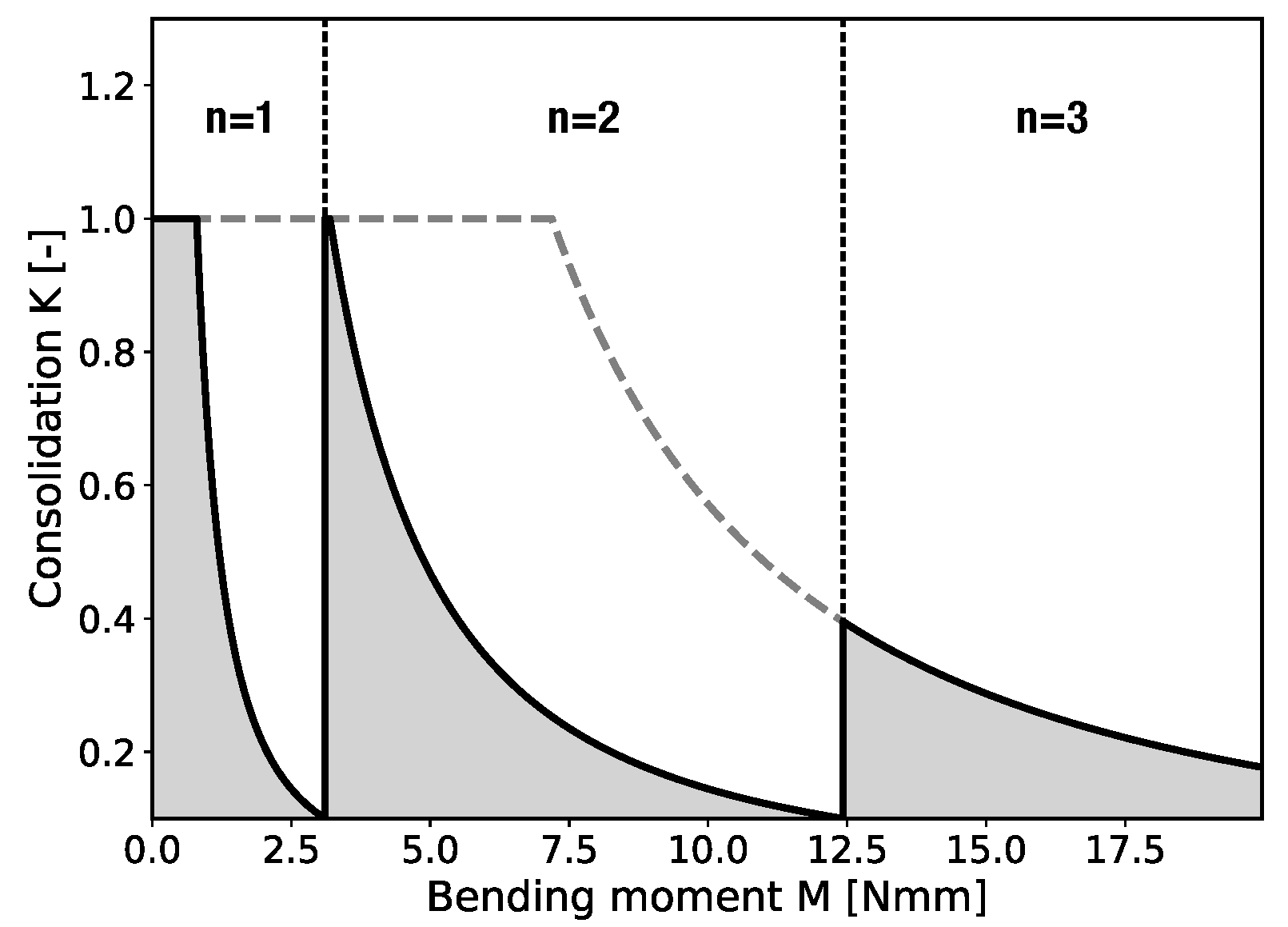
This relation enables an analytical determination of the optimal K for a given bending moment. Figure 6 illustrates the lightest feasible configuration for pure bending, expressed as the minimum number of layers and the corresponding consolidation degree that satisfies the stress constraint. A lower bound for the consolidation degree was set to K = 0.1 . The optimization procedure may be expanded to stiffness driven optimizations.

4. Discussion

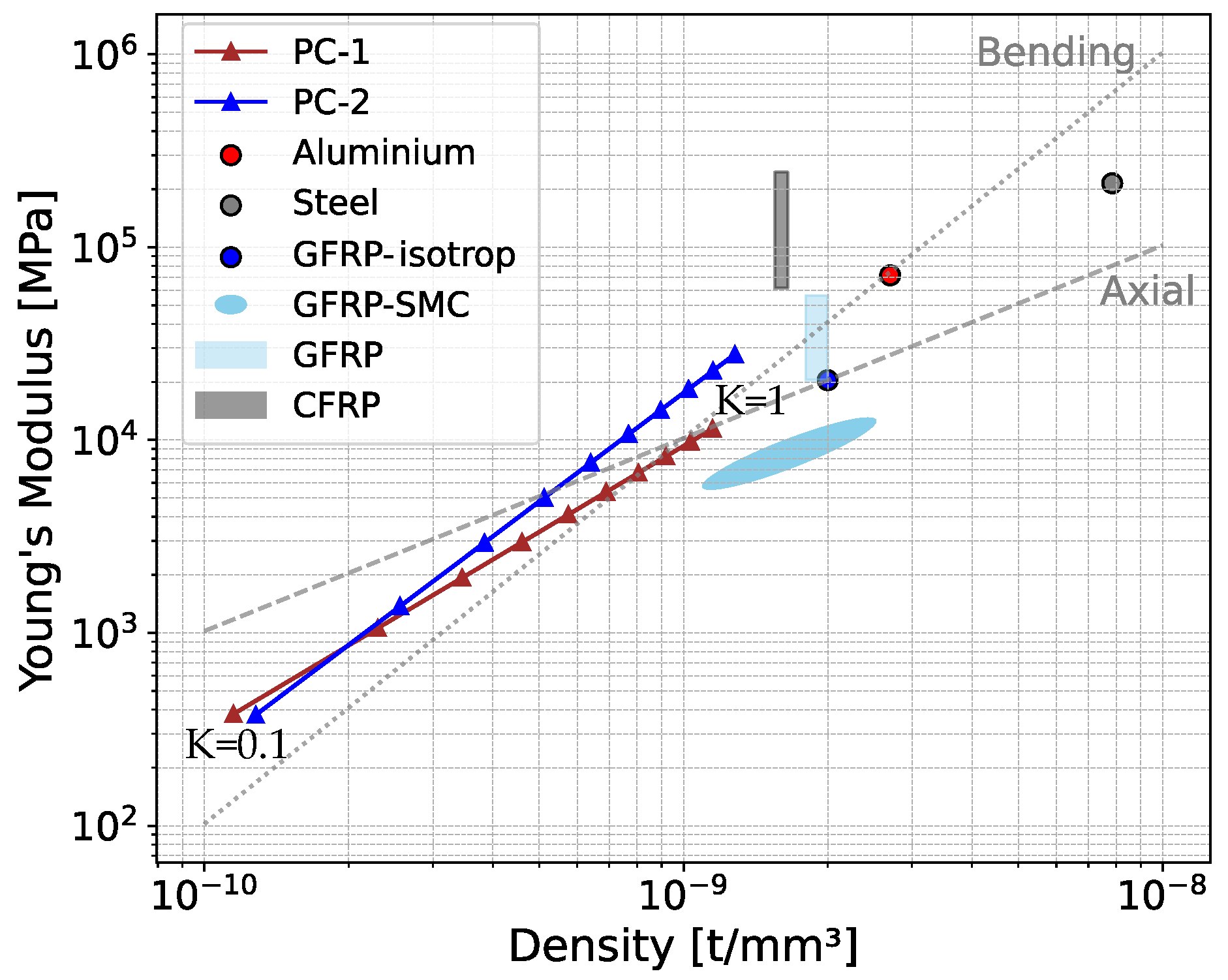
The material properties of the nonwovens are shown the Ashby diagram in Figure 7, comparing the Young’s modulus and density with conventional lightweight structural materials. At high consolidation degrees, the specific axial stiffness of PC-1 and PC-2 reaches the range of quasi-isotropic GFRP. With respect to specific bending stiffness, the partially consolidated nonwovens PC-1 and PC-2 outperform aluminum. The beneficial effect of partial consolidation on bending stiffness is clearly evident.
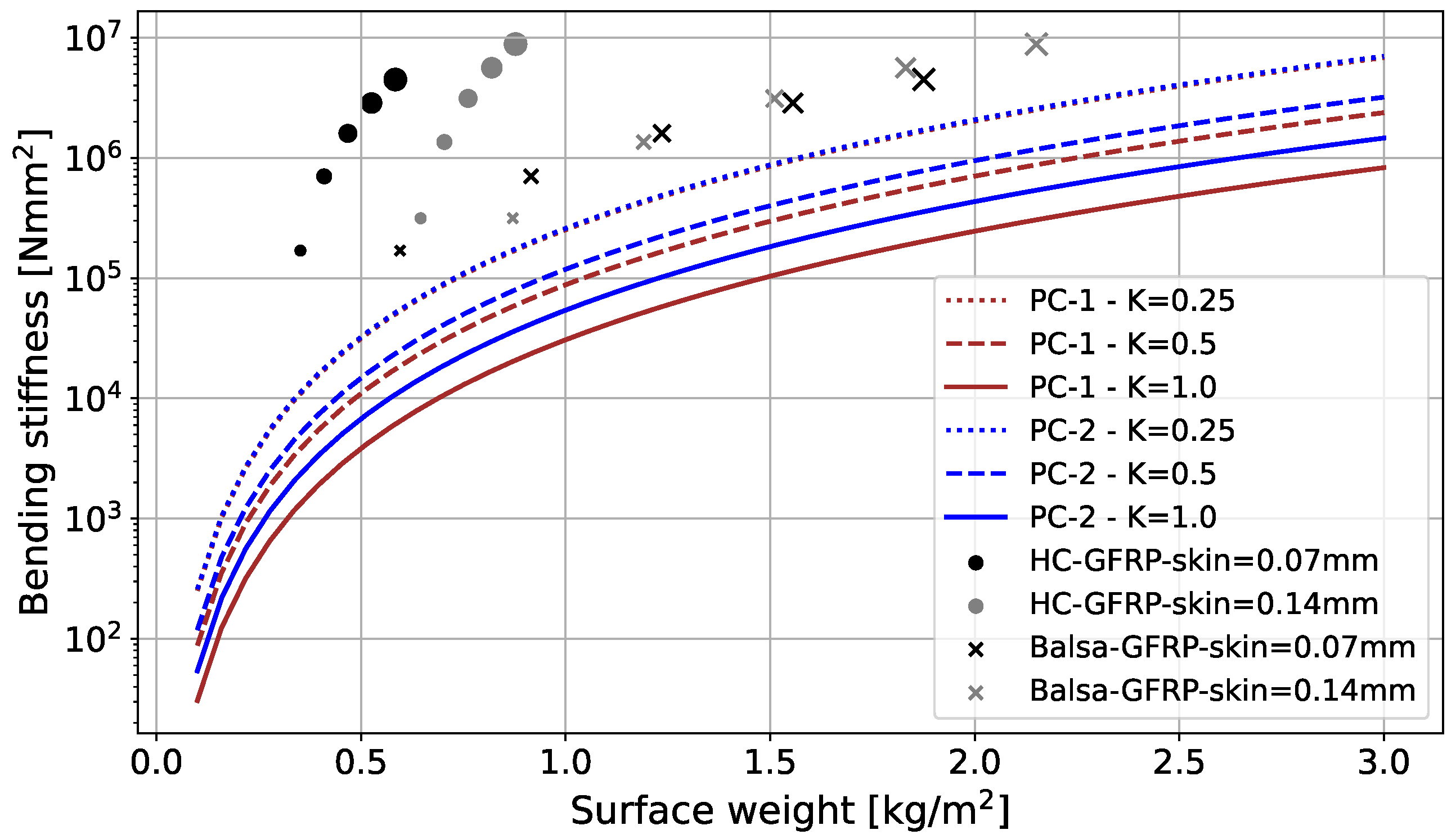
Figure 8 compares the bending stiffness per surface weight of the partially consolidated nonwovens with honeycomb (HC) and balsa-core sandwich structures. The core thickness is varied between 2 mm and 10 mm, represented by the marker size, and two face sheet thickness configurations are included. The results show that the bending stiffness of the honeycomb sandwich exceeds that of the partially consolidated nonwovens by approximately one to two orders of magnitude. Using denser balsa-core material reduces this gap, with stiffness values less than one order of magnitude higher than those of the nonwovens. The comparison indicates that low consolidation degrees can yield structurally efficient bending configurations, but that the nonwovens do not reach the performance level of high-efficiency sandwich structures.

5. Conclusions

The experimental investigation confirmed that the consolidation degree has a significant influence on the mechanical behavior of rCF-nonwovens. The developed phenomenological material model, based on an exponential relation, successfully describes the dependence of stiffness and strength on the degree of consolidation and provides a reliable basis for structural design. The results demonstrate that partial consolidation enables local tailoring of properties, allowing structural optimization through variation in stiffness within a component. In terms of axial stiffness, the nonwovens achieved values comparable to conventional GFRP. For bending performance, the partially consolidated nonwovens showed a clear advantage over GFRP laminates, underlining their potential for lightweight interior applications. However, when compared to sandwich materials, the bending stiffness was found to be significantly lower. In particular, honeycomb sandwiches exhibited bending stiffnesses one to two orders of magnitude higher, while balsa core sandwiches were superior by less than one order of magnitude. These comparisons highlight both the potential and the current limitations of rCF nonwovens: while they cannot compete with high-performance sandwich structures in bending-dominated applications, they offer a recyclable, multifunctional, and cost-effective alternative for secondary structural elements and cabin interior components.

Author Contributions

Conceptualization, M.B., K.-U.S., M.W., B.A. and M.C.; methodology, M.B., K.-U.S. and M.W.; validation, M.B., K.-U.S. and M.W.; formal analysis, M.B. and M.W.; investigation, M.B., M.W. and B.A.; resources, K.-U.S. and M.C.; data curation, M.B. and M.W.; writing—original draft preparation, M.B.; writing—review and editing, M.B. and M.W.; visualization, M.B.; supervision, K.-U.S. and M.C.; project administration, K.-U.S. and M.C.; funding acquisition, K.-U.S. and M.C. All authors have read and agreed to the published version of the manuscript.

Funding

The work in this paper was realized in the course of the federal aviation research program LuFo VI., 3rd call funded by the Federal Ministry of Economic Affairs and Energy (Bundesministerium für Wirtschaft und Energie) of the German government under the funding code 20K2105H.

Institutional Review Board Statement

Not applicable.

Informed Consent Statement

Not applicable.

Data Availability Statement

Data are contained within the article.

Conflicts of Interest

The authors declare no conflicts of interest.

Abbreviations

The following abbreviations are used in this manuscript:
CFRPCarbon-Fiber-Reinforced Plastics
GFRPGlass Fiber Reinforced Plastics
rCFRecycled Carbon Fiber
rCFRPRecycled Carbon-Fiber-Reinforced Plastics

References

  1. Dyer, W.; Kumru, B. Polymers as Aerospace Structural Components: How to Reach Sustainability? Macromol. Chem. Phys. 2023, 224, 2300186. [Google Scholar] [CrossRef] [Scilit]
  2. Pakdel, E.; Kashi, S.; Varley, R.; Wang, X. Recent progress in recycling carbon fibre reinforced composites and dry carbon fibre wastes. Resour. Conserv. Recycl. 2021, 166, 105340. [Google Scholar] [CrossRef] [Scilit]
  3. Pimenta, S.; Pinho, S.T. Recycling carbon fibre reinforced polymers for structural applications: Technology review and market outlook. Waste Manag. 2011, 31, 378–392. [Google Scholar] [CrossRef] [Scilit] [PubMed]
  4. Van de Werken, N.; Reese, M.S.; Taha, M.R.; Tehrani, M. Investigating the effects of fiber surface treatment and alignment on mechanical properties of recycled carbon fiber composites. Compos. Part A Appl. Sci. Manuf. 2019, 119, 38–47. [Google Scholar] [CrossRef] [Scilit]
  5. Wölling, J.; Schmieg, M.; Manis, F.; Drechsler, K. Nonwovens from Recycled Carbon Fibres—Comparison of Processing Technologies. Procedia CIRP 2017, 66, 271–276. [Google Scholar] [CrossRef] [Scilit]
  6. Nuño, M.; Krause, M.; Abel, P.; Schröder, K.-U. Nonwoven-Based Composite Sheets with Constant Areal Weight as Fuselage Skin Material for Light-Aircraft Applications. In Proceedings of the Deutscher Luft- und Raumfahrtkongress 2020 (DLRK 2020), Online, 1–3 September 2020. [Google Scholar]
  7. DIN EN ISO 527-4:1997-07; Plastics—Determination of Tensile Properties—Part 4: Test Conditions for Isotropic and Orthotropic Fibre-Reinforced Plastic Composites. Deutsches Institut für Normung (DIN): Berlin, Germany, 1997.
  8. Schürmann, H. Konstruieren mit Faser-Kunststoff-Verbunden; Springer: Berlin/Heidelberg, Germany, 2007. [Google Scholar]
Figure 1. Production of a partially consolidated rCF-nonwoven.
Engproc 133 00096 g001
Figure 2. Normal stiffness E A normalized with number of layers n and width b of partially consolidated nonwovens.
Engproc 133 00096 g002
Figure 3. Young’s modulus E of partially consolidated nonwovens.
Engproc 133 00096 g003
Figure 4. Tensile strength σ m a x of partially consolidated nonwovens.
Engproc 133 00096 g004
Figure 5. Model concept for consolidation of rCF-nonwoven.
Engproc 133 00096 g005
Figure 6. Lightest configuration for PC-1 with t 0 = 0.22 mm optimized for strength requirements.
Engproc 133 00096 g006
Figure 7. Ashby diagramm with conventional materials and partially consolidated nonwovens.
Engproc 133 00096 g007
Figure 8. Bending stiffness over surface weight of partially consolidated nonwovens compared to honeycomb and balsa sandwiches.
Engproc 133 00096 g008
Table 1. Variants of produced and tested rCF-nonwovens.
VersionFiber TypeMatrix TypeSheet Thickness K = 1 Fiber Mass FractionFiber Volume Fraction
PC-1SGL-blend fiber length 60 mmPP-IFG Asota250 g/m230%19.5%
PC-2SGL-blend fiber length 60 mmPP-IFG Asota250 g/m250%36.1%
Table 2. Material model of different nonwoven variants.
VersionNormal StiffnessYoung’s ModulusTensile Strength
PC-1 E A n b = 2385 K 0.46 E = 11,214 K 1.48 σ m a x = 99 K 1.41
PC-2 E A n b = 5450 K 0.87 E = 27,265 K 1.87 σ m a x = 297 K 1.95
Disclaimer/Publisher’s Note: The statements, opinions and data contained in all publications are solely those of the individual author(s) and contributor(s) and not of MDPI and/or the editor(s). MDPI and/or the editor(s) disclaim responsibility for any injury to people or property resulting from any ideas, methods, instructions or products referred to in the content.