Proceeding Paper

Climate-Responsive Vernacular Architecture for Flood-Prone Regions in East Malaysia †
1
ABB Malaysia Sdn. Bhd., Petaling Jaya 47300, Malaysia
2
Faculty of Engineering and Quantity Surveying, INTI International University, Nilai 71800, Malaysia
*
Author to whom correspondence should be addressed.
Presented at the 7th International Conference on Architecture, Construction, Environment and Hydraulics 2025 (ICACEH 2025), Kaohsiung, Taiwan, 5–7 December 2025.
Eng. Proc. 2026, 136(1), 8; https://doi.org/10.3390/engproc2026136008

Published: 7 May 2026

Abstract

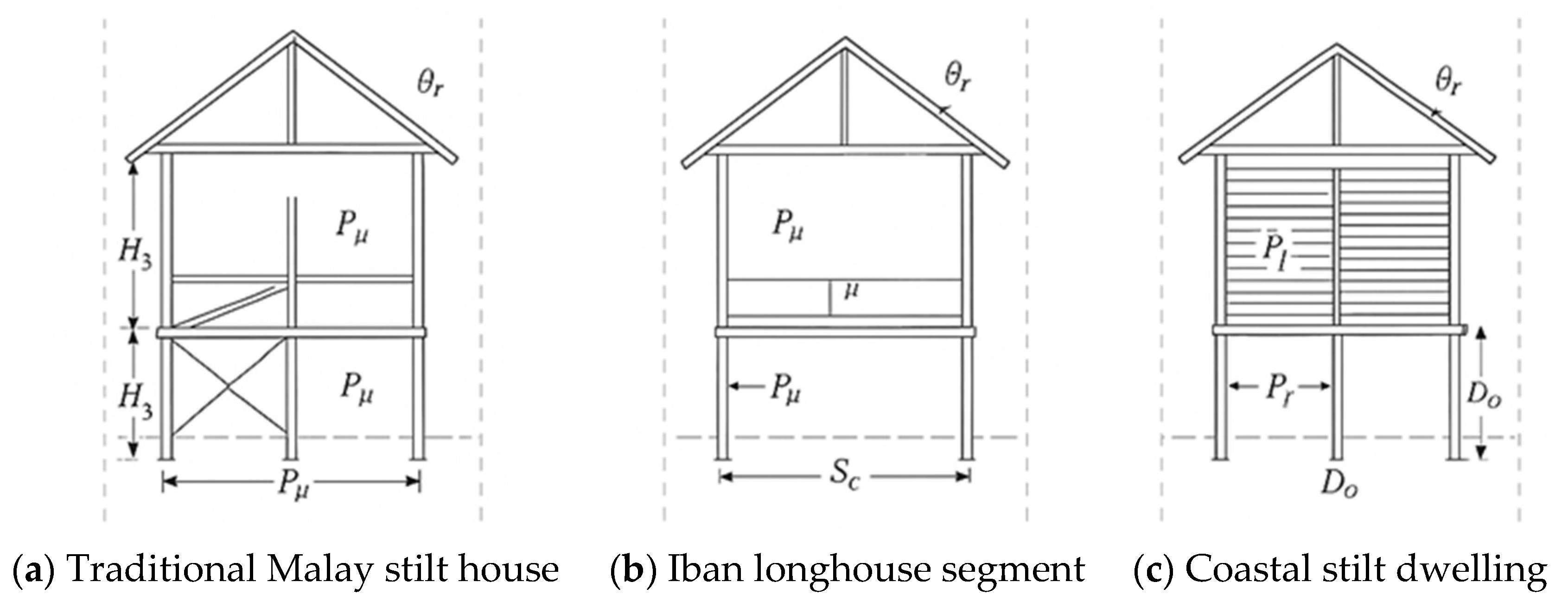
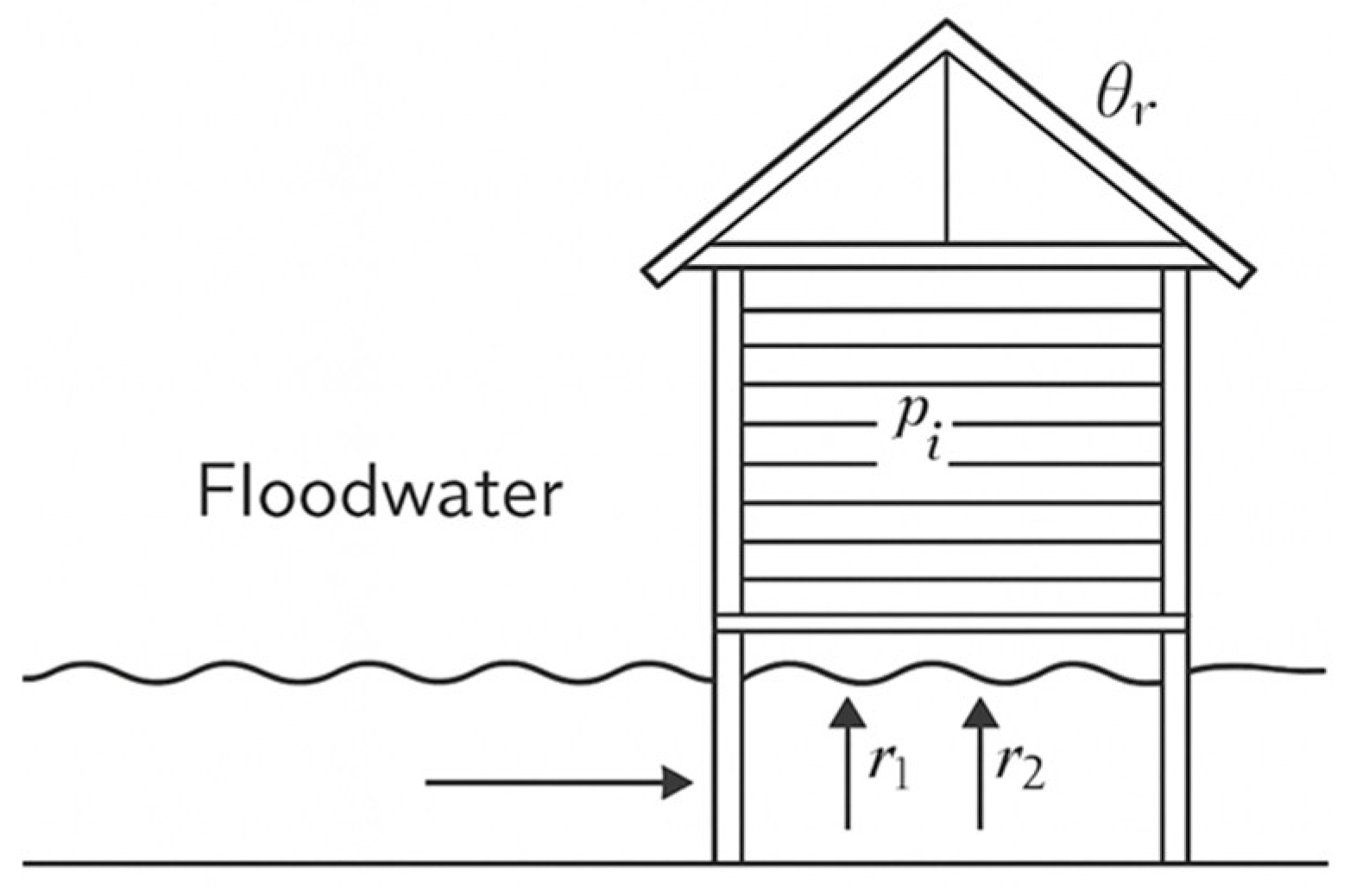
Low-lying and riverine areas of Sabah and Sarawak in East Malaysia are increasingly exposed to compound flood hazards driven by intensified monsoon rainfall, sea-level rise, and land-use change. Recent projections indicate stronger extreme rainfall, fewer dry days, but more high-intensity events, and significant increases in annual rainfall and sea level, all of which elevate fluvial, pluvial, and coastal flood risk. In this study, climate-responsive vernacular architecture is investigated as a passive, low-carbon strategy for enhancing residential flood resilience in East Malaysia. Traditional stilted Malay kampung houses, Bornean longhouses, and coastal stilt settlements were explored since they have historically evolved to cope with seasonal inundation, high humidity, and tropical thermal loads. In this study, the following was conducted: (1) historical flood and climate analysis for key basins (Rajang, Sarawak, Kinabatangan); (2) morphological and typological analysis of vernacular dwellings; (3) parametric physical and hydrodynamic simulation of elevated and amphibious configurations; and (4) multi-criteria performance assessment based on structural robustness, flood safety, thermal comfort, cultural acceptability, and embodied carbon. Results from scenario-based simulations show that well-configured stilted typologies, with optimized floor elevation, breakaway panels, and porous undercroft zones, can reduce flood damage depth by 60–80% and expected annual loss by 30–55%. By translating these findings into a design guideline and decision matrix for climate-responsive housing in East Malaysia, contemporary reinterpretations of vernacular strategies were embedded into Malaysian building codes, state-level planning policies, and community-led upgrading programmes.
Keywords: vernacular architecture; climate-responsive design; flood resilience vernacular architecture; climate-responsive design; flood resilience