


Abstract
The rapid growth of electronic waste (e-waste) demands sustainable recovery solutions based on green chemistry. Conventional recycling relies on energy-intensive pyrometallurgical routes that cause emissions and material losses. This study applies Molecular Recognition Technology™ (MRT™) for selective energy-efficient recovery of base (Cu, Ni, Fe, Sn) and precious/platinum group metals (Ag, Pd, Pt) from a collector metal alloy. A hydrometallurgical process combining electrowinning, sequential acid leaching, and MRT™ separations achieved >99% metal purity with minimal waste generation. The results demonstrate MRT™ as a scalable green alternative for high-efficiency metal recovery from e-waste, supporting circular economy objectives.
1. Introduction
The growing accumulation of electronic waste (e-waste) presents both environmental and economic challenges [1]. Exposure to e-waste is associated with adverse health outcome, including thyroid disfunction, DNA damage, respiratory issues, and adverse neonatal effects, particularly in children and individuals living or working in e-waste recycling areas [2]. The rapid growth of e-waste, driven by expanding electronic industries and product obsolescence, necessitates sustainable management through design for environment, extended producer responsibility, recycling, and remanufacturing.
E-waste contains a complex mixture of base metals (BMs) and precious/platinum group metals (PMs/PGMs), including copper (Cu), nickel (Ni), iron (Fe), tin (Sn), platinum (Pt), palladium (Pd), silver (Ag), and gold (Au). Traditional processing methods for e-waste include pyrometallurgical, conventional hydrometallurgical, and biohydrometallurgical techniques, each with distinct advantages and drawbacks [3].
In contrast, Molecular Recognition Technology™ (MRT™) provides a highly selective and efficient approach for metal extraction, enabling sustainable e-waste recycling with minimal environmental impact [4,5,6,7]. Unlike conventional hydrometallurgical techniques, MRT™ operates under milder conditions, reducing reagent consumption, minimising waste production, lowering energy use and improving the purity of recovered metals [8].
This study explores the application of MRT™ for the selective separation of valuable metals from anodic slime residues (ASR) generated during electrowinning processes. By employing a hydrometallurgical approach, this work aims to optimise metal extraction using sulfuric acid leaching for BMs and aqua regia leaching for PMs/PGMs. The research demonstrates the feasibility of high-purity metal recovery through MRT™, offering an innovative solution for circular economy initiatives in e-waste management.
2. Materials and Methods
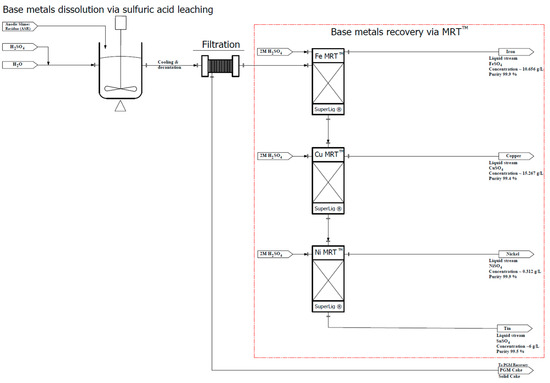
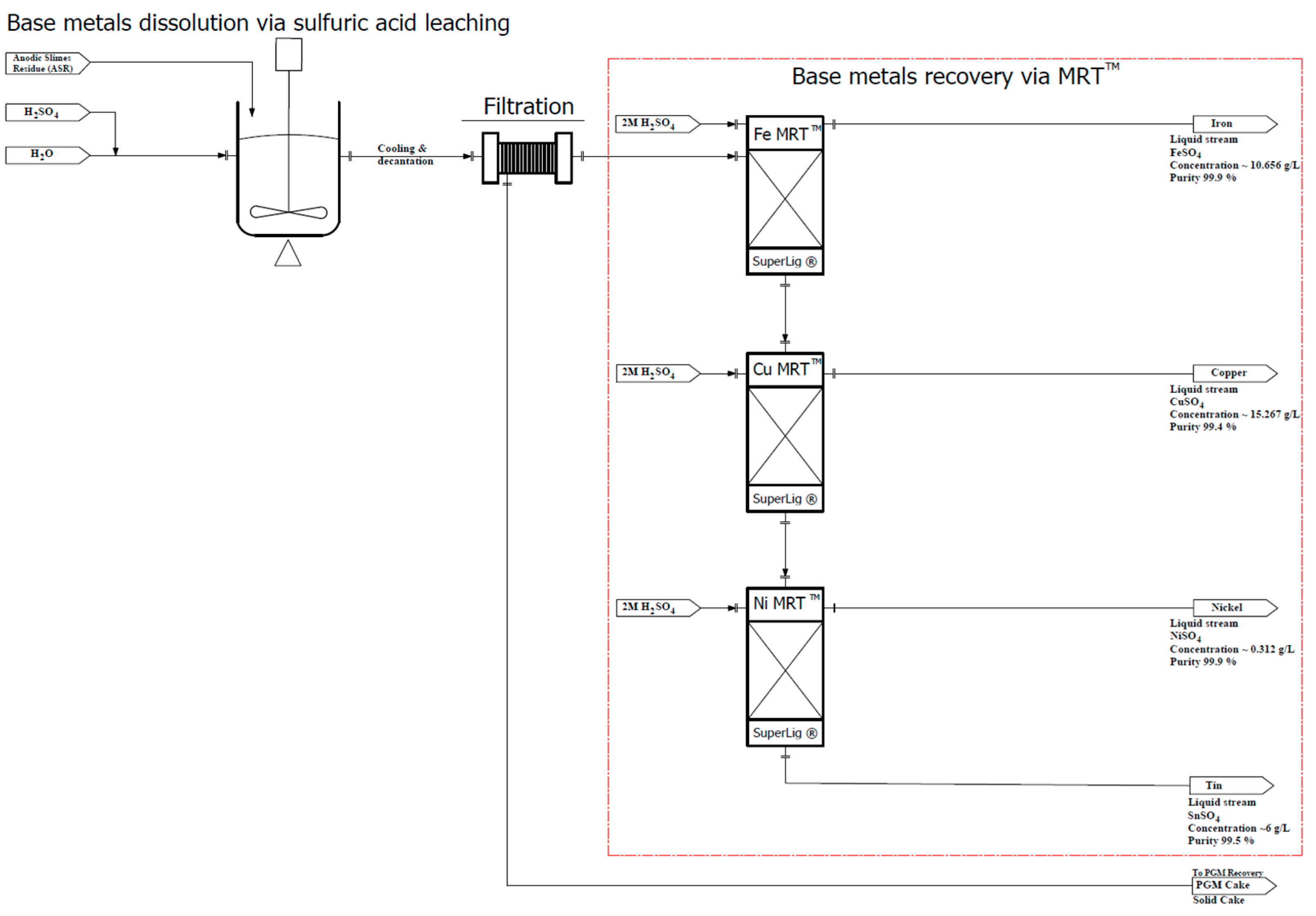
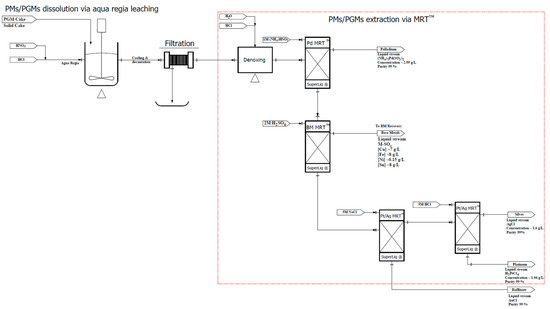
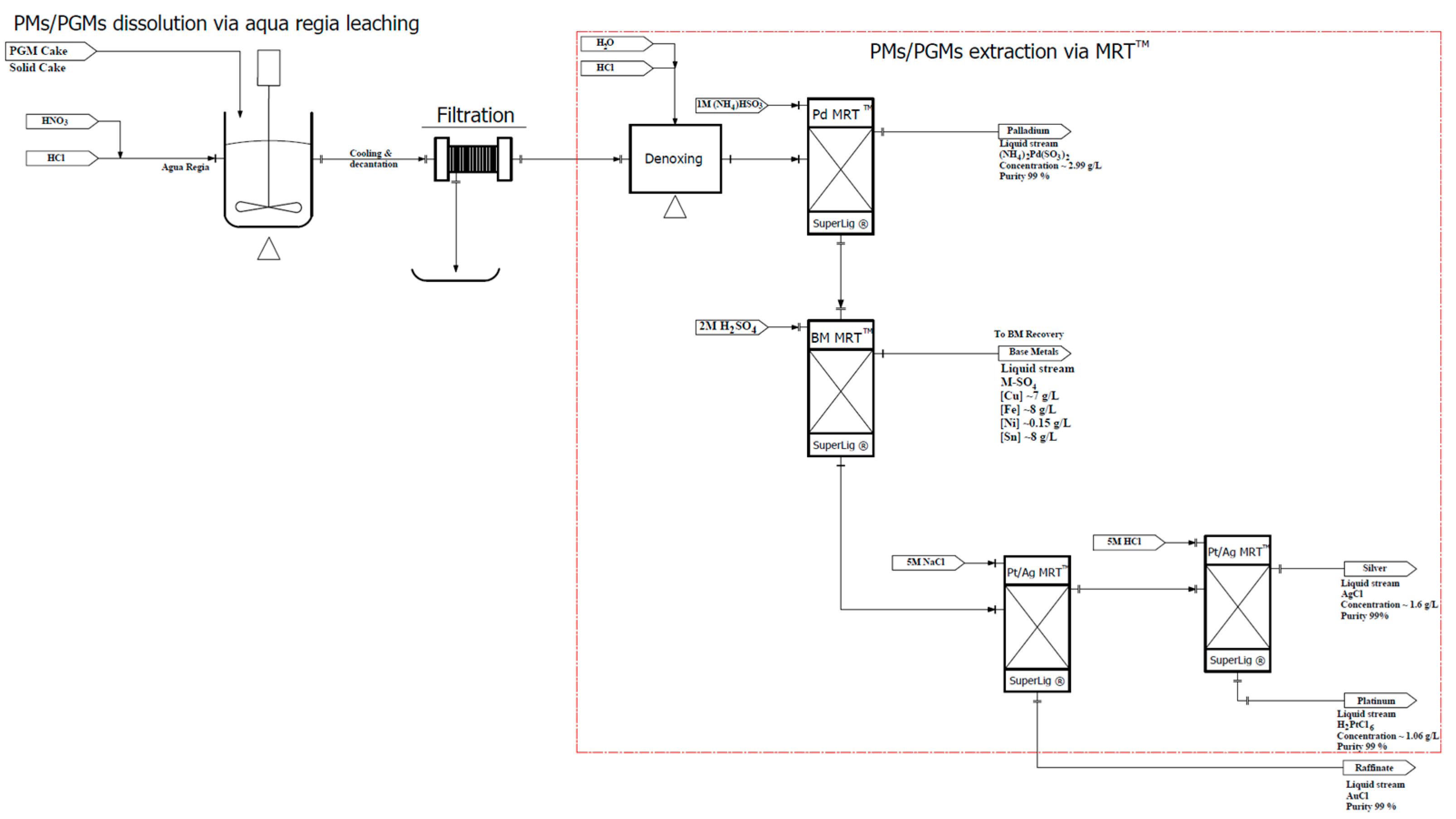
A hydrometallurgical process incorporating MRTTM was designed to recover valuable metals from an e-waste collector metal alloy (CMA). The process begins with electrowinning to recover copper in a single pass, leaving PMs/PGMs and some BMs undissolved as ASR. This by-product is then processed through a four-stage workflow (Figure 1 and Figure 2): Stage 1 involves sulfuric acid leaching; Stage 2 consists of the individual recovery of the BMs via MRT™ separations. The filter cake resulting from the initial sulfuric acid leaching (Stage 1) undergoes a subsequent aqua regia leaching in Stage 3, followed by Stage 4, which involves the extraction, separation, and recovery of PMs/PGMs using MRT™.
Figure 1.
Schematic flow diagram of Stage 1 (sulfuric acid leaching) and Stage 2 (BM recovery via MRT™) of the hydrometallurgical process. The red dashed box delineates the MRT™-only recovery section.
Figure 2.
Schematic flow diagram of Stage 3 (PMs/PGMs aqua regia acid leaching) and Stage 4 (PMs/PGMs recovery via MRT™) of the hydrometallurgical process. The red dashed box delineates the MRT™-only recovery section.
3. Results
Figure 3, Figure 4, Figure 5, Figure 6 and Figure 7 illustrate the MRT™ performance for each metal: the loading, washing, and elution profiles highlight the efficient binding and recovery with minimal impurity crossover. The capacity values ranged from 0.048 to 0.432 mM/g depending on the SuperLig® resin used and the metal target.
3.1. Base Metals Recovery (Stages 1 and 2)
Sulfuric acid leaching was performed under various oxygenation conditions to extract base metals (Cu, Ni, Fe, Sn). The results indicated enhanced extraction with oxygen flow, reaching over 80% recovery for Cu, Ni, Fe, and Sn. The base metals leach liquor (BMLL) was processed through MRT™ columns: Fe was first recovered using SuperLig® 92 (Figure 3), followed by Cu using SuperLig® 146 (Figure 4), and Ni using SuperLig® 132 (Figure 5). Each separation showed high selectivity and >99% product purity (Table 1), while Sn remained in solution.
Figure 3.
Optimal cycle data for Fe initial separation from BMLL feed loading, followed by 0.01 M H2SO4 wash, followed by 2 M H2SO4 elution at a 0.3 mL/min flow rate, with a 1 g column of SuperLig® 92.
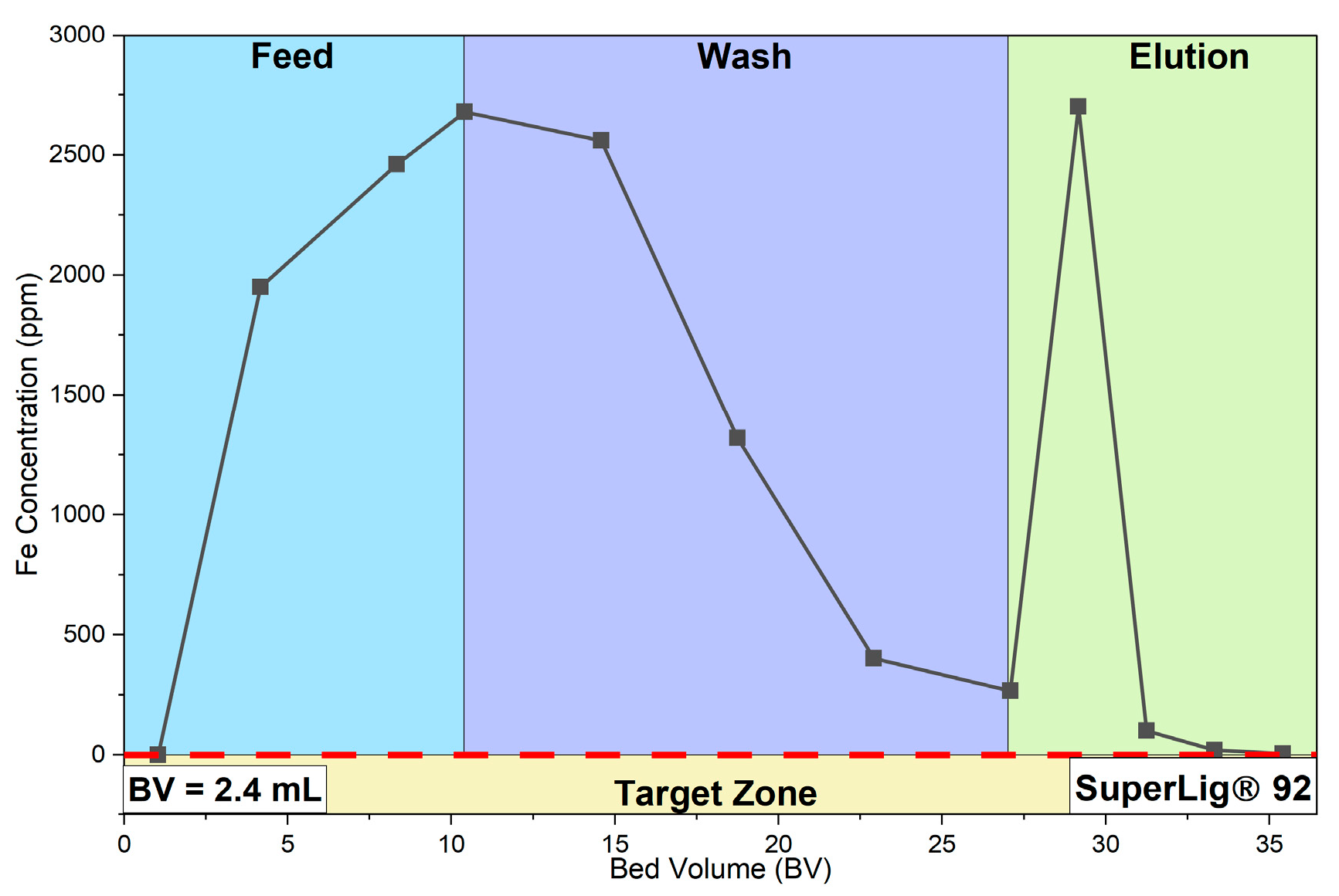
Figure 4.
Optimal cycle data for Cu separation from BMLL Fe-free feed loading, followed by water wash, followed by 2 M H2SO4 elution at a 0.6 mL/min flow rate, with a 3 g column of SuperLig® 146.
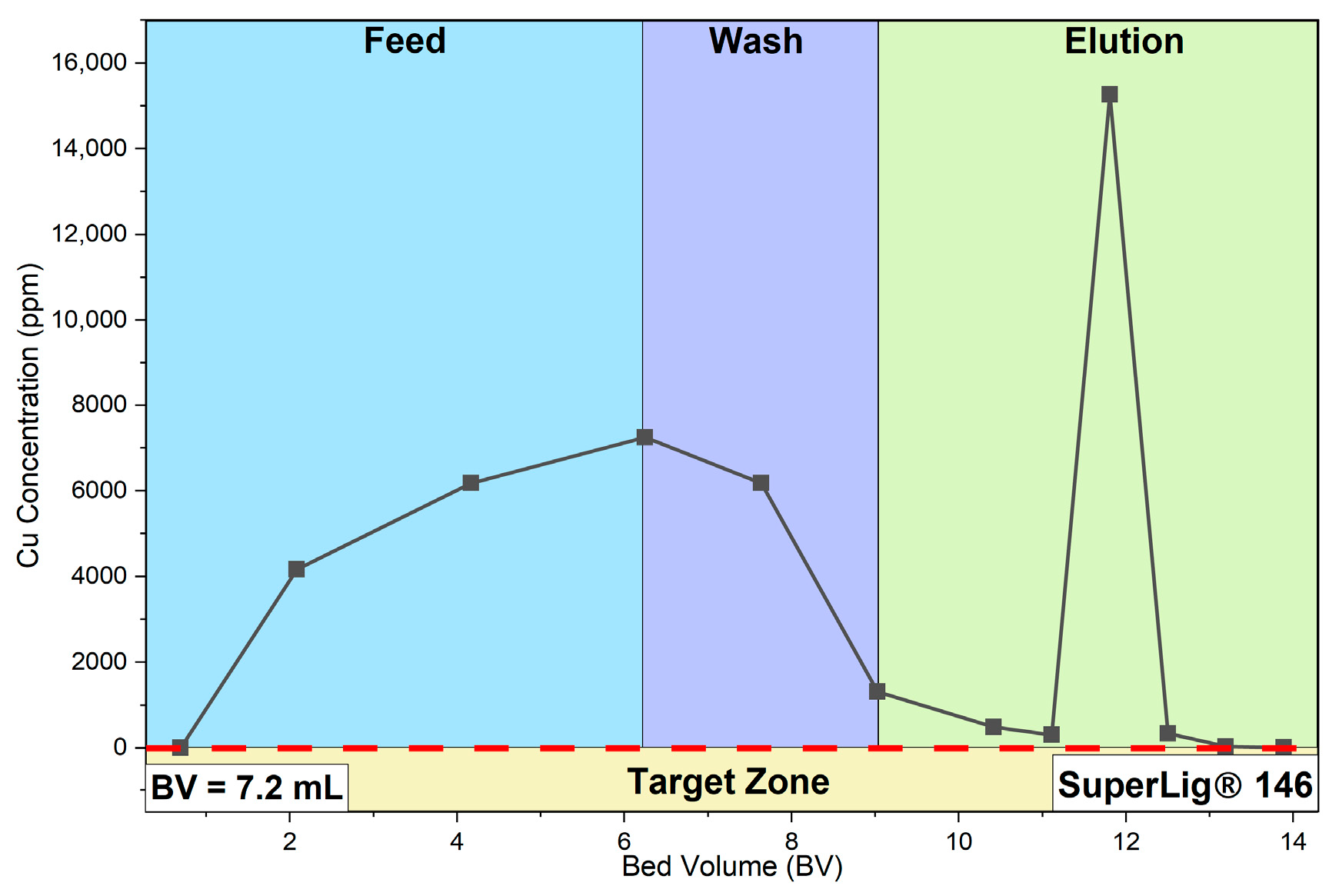
Figure 5.
Optimal cycle data for Ni initial separation from BMLL Fe/Cu-free feed loading, followed by 0.1 M H2SO4 wash, followed by 2 M H2SO4 elution at a 0.6 mL/min flow rate, with a 3 g column of SuperLig® 132.
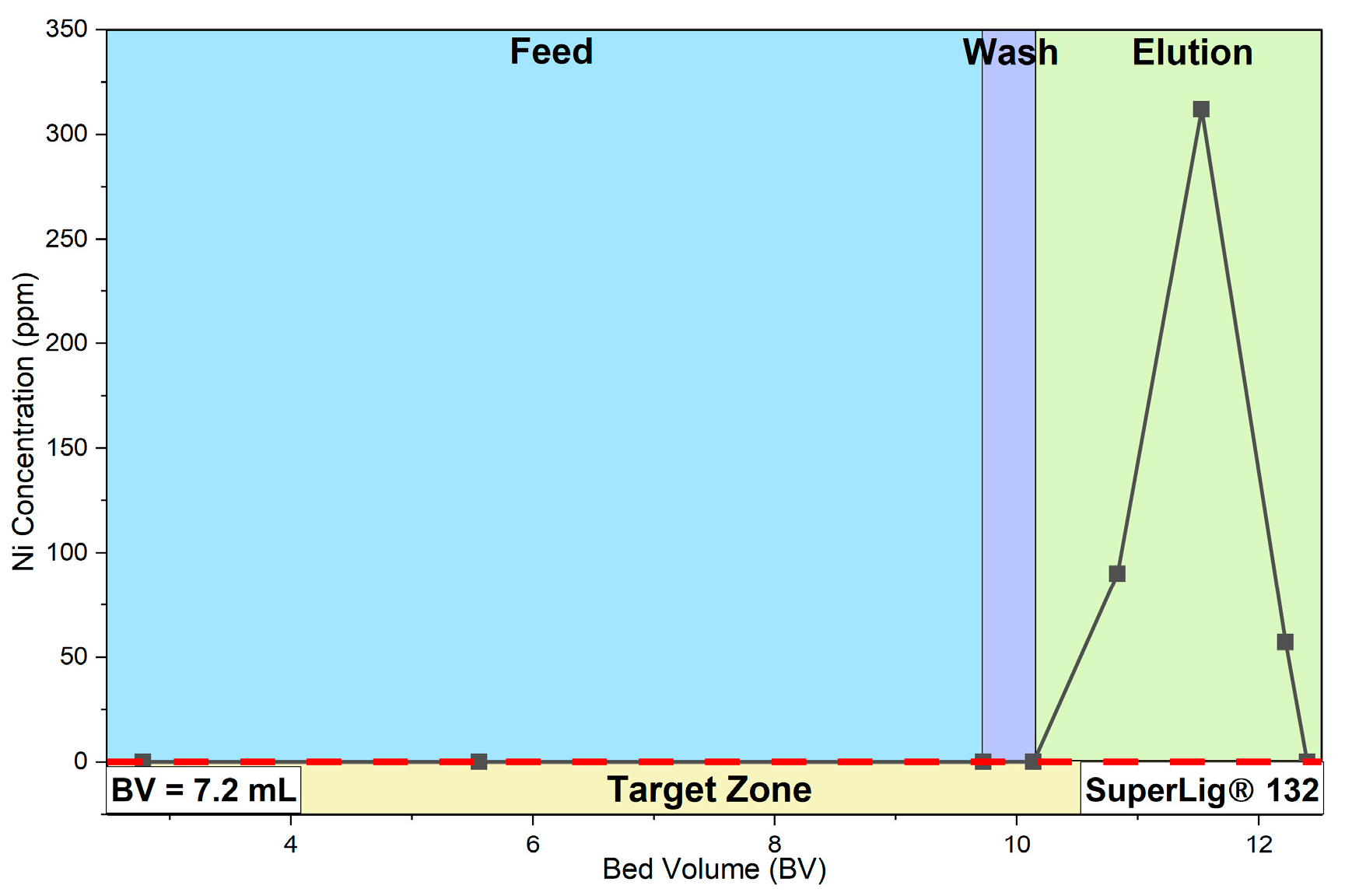
Table 1.
Stage 2 MRTTM individual separations results.
3.2. Precious and Platinum Group Metals Recovery (Stages 3 and 4)
The PM/PGM-rich residue was leached with aqua regia, producing an aqua regia leach liquor (ARLL), followed by denoxing and oxidation–reduction potential (ORP) adjustment. Palladium was selectively captured using SuperLig® 2 (Figure 6). The remaining base metals were removed with SuperLig® 132 before the final recovery of Ag and Pt using SuperLig® 186 (Figure 7), which enabled effective separation at 700 mV ORP. The product purities exceeded 99% for Pd, Pt, and Ag (Table 2).
Figure 6.
Optimal cycle data for Pd separation from ARLL feed loading, followed by 0.01 M H2SO4 wash, followed by 2 M H2SO4 elution at a 0.6 mL/min flow rate, with a 3 g column of SuperLig® 2.
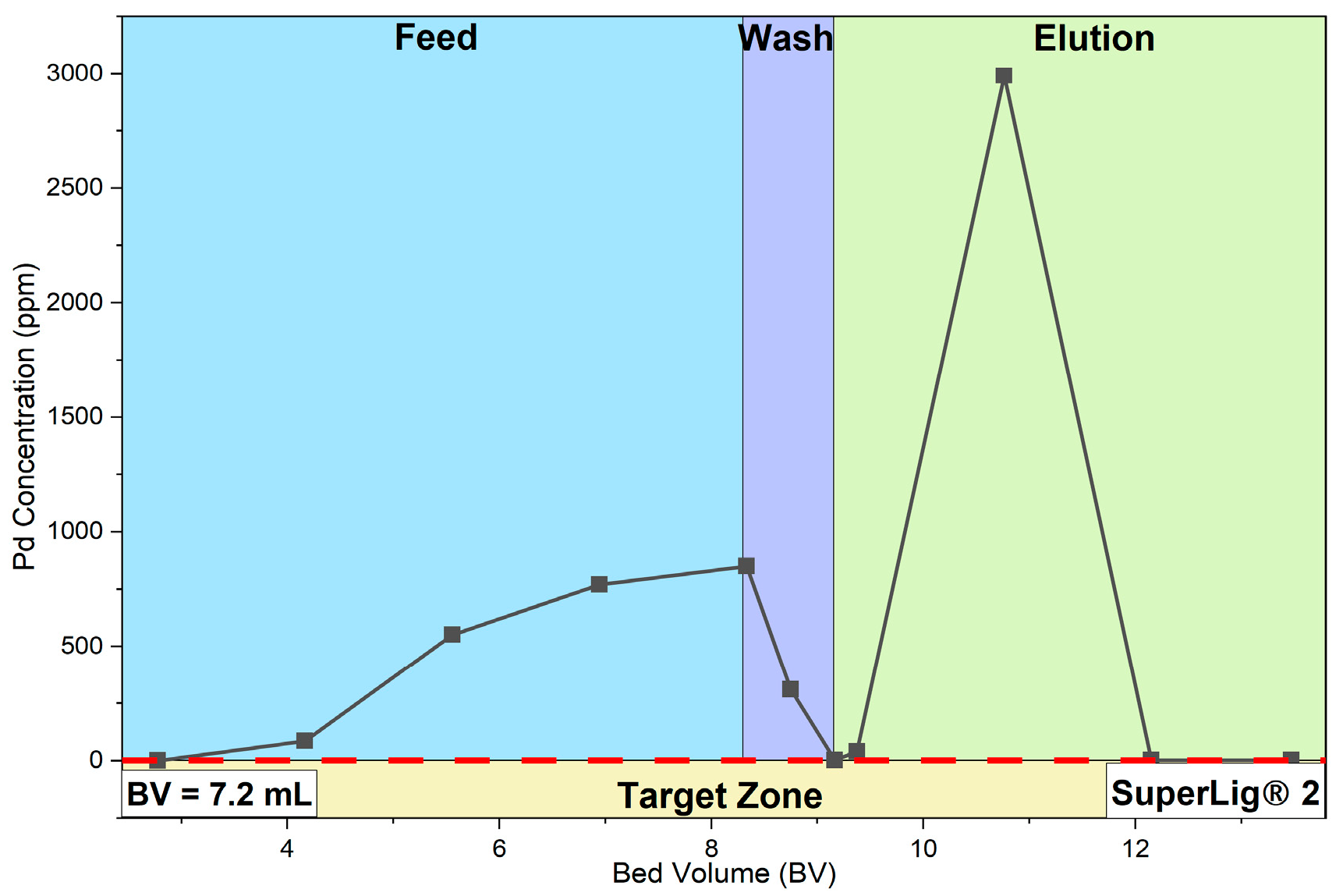
Figure 7.
Optimal cycle data for Ag/Pt separation from Pd-Free ARLL feed loading, followed by 2 M H2SO4 wash, followed by 8 M HCl elution at 0.33 mL/min for a 1 g column of SuperLig® 186, at an ORP of separation of Pt and Ag of 700 mV.
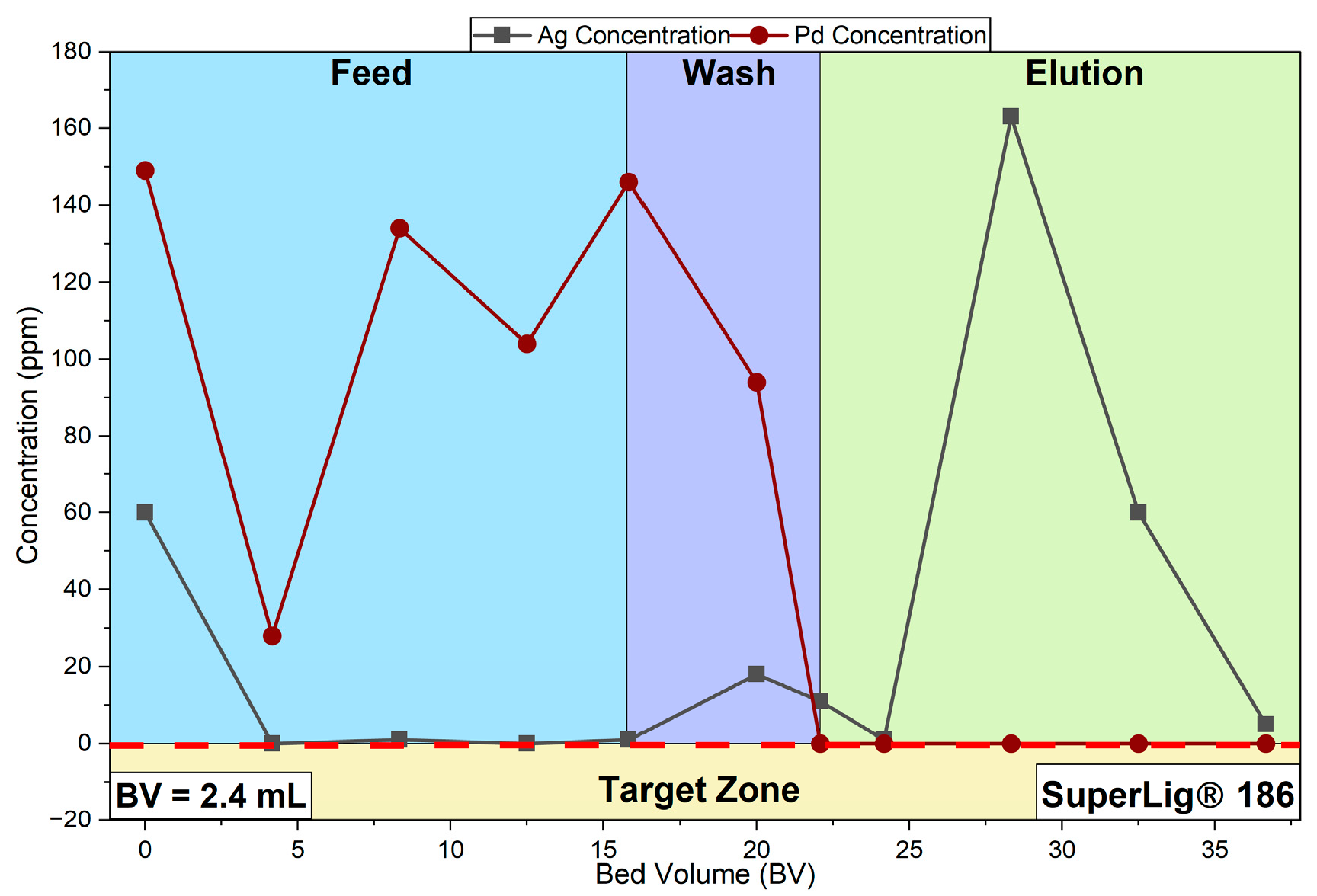
Table 2.
Stage 4 MRTTM individual separation results.
This experimental demonstration confirms the feasibility of MRT™ for the selective and scalable recovery of valuable metals from ASR. The process aligns with green chemistry principles, minimises chemical waste, and achieves high-purity outputs using targeted SuperLig® resin–metal interactions.
4. Conclusions
This study confirms that Molecular Recognition Technology (MRT™) is a sustainable efficient solution for recovering valuable metals from e-waste collector metal alloy products. Using selective sulfuric acid and aqua regia leaching, followed by MRT™ separation, >99% metal purity was achieved with minimal waste. The process aligns with green chemistry principles and offers a scalable environmentally friendly alternative to traditional methods. IBC’s test work validated, through confirmatory testing, that MRT™ is suitable for the extraction of valuable metals from anode slime residues derived from collector metal alloy. Future work will target large-scale implementation and reagent recovery to enhance sustainability.
Author Contributions
Conceptualisation, R.N.-T. and L.G.N.-T.; methodology, M.D.L.; validation, formal analysis, investigation, data curation M.D.L., R.N.-T. and L.G.N.-T.; resources, S.R.I.; writing—original draft preparation, visualisation R.N.-T.; writing—review and editing, L.G.N.-T. and S.R.I.; supervision, L.G.N.-T. and S.R.I.; project administration, funding acquisition S.R.I. All authors have read and agreed to the published version of the manuscript.
Funding
This research received no external funding.
Institutional Review Board Statement
Not applicable.
Informed Consent Statement
Not applicable.
Data Availability Statement
The data used in this study are available upon request to the correspondence authors.
Conflicts of Interest
Authors L.G.N.-T, M.D.L, and S.R.I. were employed by the company IBC Advanced Technologies, Inc. The remaining author declare that the research was conducted in the absence of any commercial or financial relationships that could be construed as a potential conflict of interest.
References
- Perkins, D.N.; Brune Drisse, M.-N.; Nxele, T.; Sly, P.D. E-Waste: A Global Hazard. Ann. Glob. Health 2014, 80, 286–295. [Google Scholar] [CrossRef] [Scilit] [PubMed]
- Grant, K.; Goldizen, F.C.; Sly, P.D.; Brune, M.-N.; Neira, M.; van den Berg, M.; Norman, R.E. Health consequences of exposure to e-waste: A systematic review. Lancet Glob. Health 2013, 1, e350–e361. [Google Scholar] [CrossRef] [Scilit] [PubMed]
- Shahabuddin, M.; Uddin, M.N.; Chowdhury, J.I.; Ahmed, S.F.; Uddin, M.N.; Mofijur, M.; Uddin, M.A. A review of the recent development, challenges, and opportunities of electronic waste (e-waste). Int. J. Environ. Sci. Technol. 2023, 20, 4513–4520. [Google Scholar] [CrossRef] [Scilit]
- Izatt, N.E.; Bruening, R.L.; Krakowiak, K.E.; Izatt, S.R. Contributions of Professor Reed M. Izatt to Molecular Recognition Technology: From Laboratory to Commercial Application. Ind. Eng. Chem. Res. 2000, 39, 3405–3411. [Google Scholar] [CrossRef] [Scilit]
- Izatt, R.M.; Izatt, S.R.; Izatt, N.E.; Krakowiak, K.E.; Bruening, R.L.; Navarro, L. Industrial applications of molecular recognition technology to separations of platinum group metals and selective removal of metal impurities from process streams. Green Chem. 2015, 17, 2236–2245. [Google Scholar] [CrossRef] [Scilit]
- Navarro, L.; Navarro-Tovar, R.; Bruening, R.; Izatt, R. The Application of Green Chemistry SuperLig® Molecular Recognition Technology and Other Sustainable Processes at Copper Electrorefineries. In Proceedings of the Sustainable Industrial Processing Summit SIPS2019 Volume 6: Parameswaran Intl. Symp./Sustainable Mining and Smelting, Montreal, Canada; Flogen Star Outreach: Mont-Royal, QC, Canada, 2019; pp. 72–77. [Google Scholar]
- Izatt, S.; Izatt, R.; Bruening, R.; Krakowiak, K.; Navarro, L. Highly Selective Separations by MRT™ (Molecular Recognition Technology™)—Review of Individual Separations of Palladium, Platinum, Rhodium, Iridium, and Ruthenium from Industrial Feedstocks and Comparison with classical PGM Separation Processes. IPMI 2023, 4, 78–115. [Google Scholar]
- Navarro, L.; Morris, T.; Read, W. Copper Refining Electrolyte Purification by the Use of Molecular Recognition Technology (MRT) for Bismuth Removal. In TT Chen Honorary Symposium on Hydrometallurgy, Electrometallurgy and Materials Characterization; John Wiley & Sons: Hoboken, NJ, USA, 2012; pp. 141–149. [Google Scholar]
Disclaimer/Publisher’s Note: The statements, opinions and data contained in all publications are solely those of the individual author(s) and contributor(s) and not of MDPI and/or the editor(s). MDPI and/or the editor(s) disclaim responsibility for any injury to people or property resulting from any ideas, methods, instructions or products referred to in the content. |
© 2026 by the authors. Licensee MDPI, Basel, Switzerland. This article is an open access article distributed under the terms and conditions of the Creative Commons Attribution (CC BY) license.