


Abstract
This study evaluates the performance of a semi-synthetic emulsifiable fluid with anticorrosive properties, tested as a potential substitute for temporary corrosion protection during the production of thrust bearings. Samples were exposed to 48 h in a condensation chamber in accordance with ČSN 03 8131. The fluid provided partial protection; however, initial signs of pitting corrosion were observed. Although the emulsion reduced the extent of corrosion, it was not fully effective under the tested conditions, indicating the need for further formulation improvements or alternative protective measures.
1. Introduction
Corrosion is a natural process of degradation of metallic materials due to chemical or electrochemical interactions with the surrounding environment [1,2,3,4]. The most common types include atmospheric corrosion, occurring under normal outdoor conditions. It is initiated by the presence of moisture on the metal surface, resulting from the condensation of water vapour or adsorption of water by hygroscopic impurities such as salts or other pollutants [5]. The rate of corrosion is influenced by a number of factors—temperature, relative humidity, precipitation, air flow, air pollution or solar radiation. Temperature variations and the properties of any passivation layer also have a significant effect [6,7]. In industrial applications, coolants and lubricating fluids are used for metal protection and provide temporary corrosion protection in addition to their primary function [8,9,10]. Their effect depends on the chemical composition and exposure time.
The detection and assessment of corrosion encounters limitations associated with the destructiveness of conventional methods and the limited ability to monitor the evolution of local damage over time [2,11]. Accelerated laboratory tests, in particular static tests (e.g., neutral salt spray test according to ASTM B117 and EN ISO 9227) and cyclic tests (e.g., according to VDA 233102), allow for faster assessment of corrosion resistance [12,13,14,15,16,17]. Cyclic tests better simulate real conditions due to the alternation of different environmental phases.
Atmospheric corrosion represents a significant economic burden, with the total cost of corrosion damage reaching up to 3.4% of the world GDP [2,18].
The aim of this study is to verify the anti-corrosion effect of a specific cooling emulsion used in the production of thrust bearings. If its short-term protective function is confirmed, it could replace additional protective measures during intermediate storage, leading to a reduction in costs, environmental impact and risks associated with exposure to other chemicals.
2. Methodology
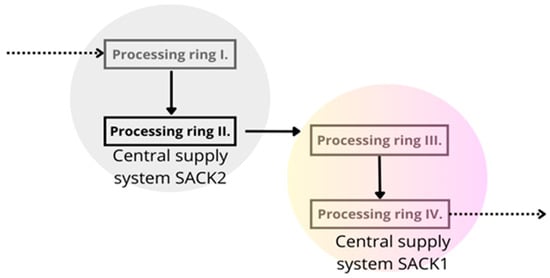
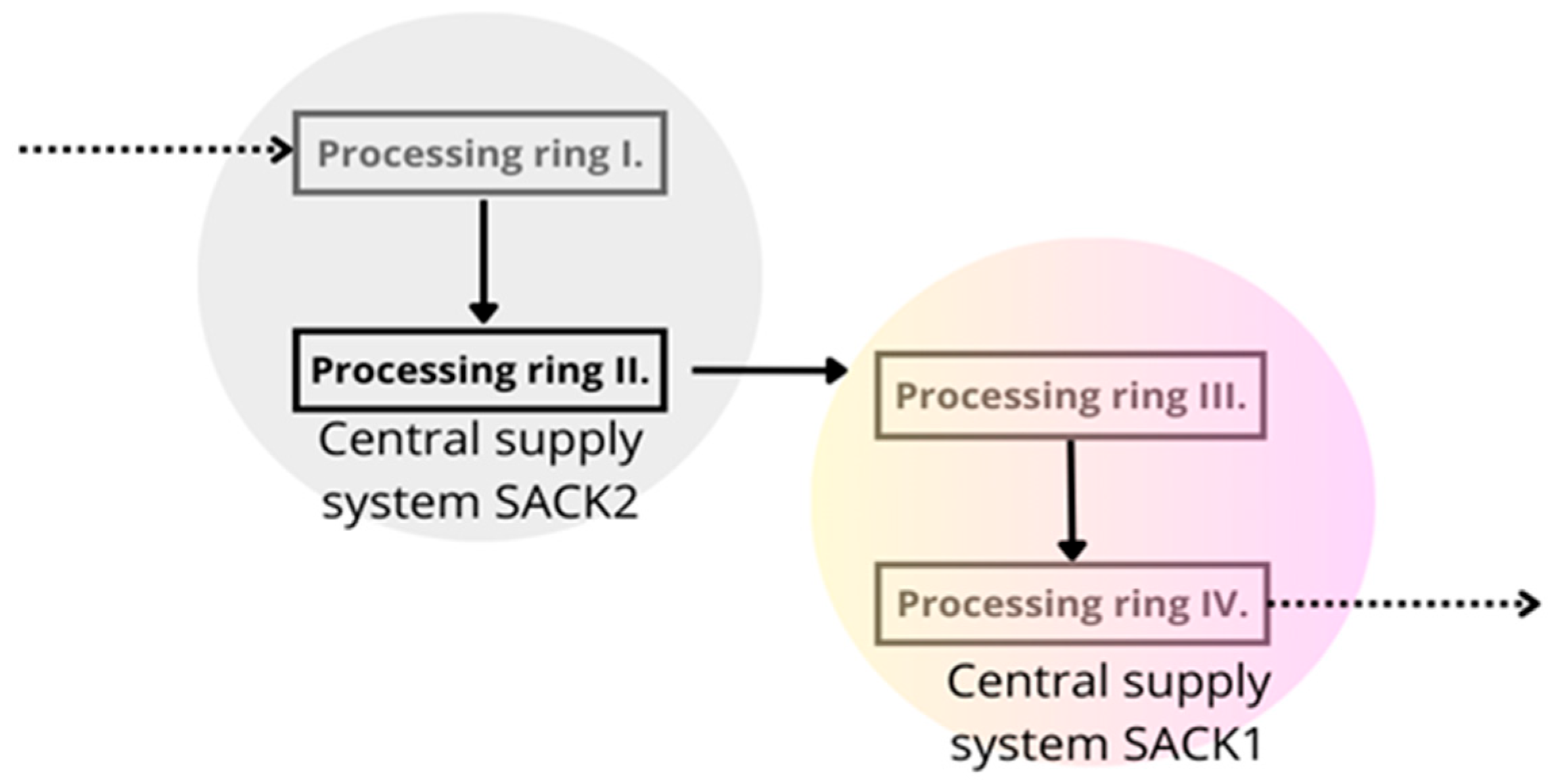
The study focuses on the occurrence and development of corrosion during key machining operations in the production of bearing rings at ZKL Klášterec nad Ohří, a. s. (Czech Republic). The scheme of the production process and the central Sack coolant distribution system, where the occurrence of corrosion was most frequent, is shown in Figure 1.
Figure 1.
Specification of production technology—highest occurrence of corrosion.
The increased risk of corrosion is related to the surface layer damage during machining, especially on turned surfaces where coolant is applied during grinding. The emulsion is circulated in two separate tanks (Sack 1 and Sack 2), and in both cases the water-dilutable liquid S COOOL GG (SAPTEC s.r.o., Czech Republic), designed for steel machining, is used. The emulsion is characterized by good cooling effect, temporary corrosion protection and long service life, which makes it suitable for series production.
2.1. Laboratory Tests
On October 2023, a set of 20 turned rings was removed for laboratory testing after the coolant in the Sack 2 circuit was replaced. After visual inspection, only rings with no signs of corrosion were inserted into the condensing chamber. At the same time, coolant samples were taken from both circuits (Sack 1 and Sack 2) for analysis.
The samples were divided into four groups of five:
- Group I: cleaned in petrol, without preservation—reference sample.
- Group II: cleaned and exposed to emulsion from the Sack 1 system (in operation since August 2022).
- Group III: exposed to the new emulsion from Sack 2.
- Group IV: exposed sequentially to emulsions from Sack 2 and Sack 1—simulation of operational mixing.
The corrosion resistance was evaluated by condensation test according to ČSN 038131 (ČSN 03 8131 describes a laboratory method that simulates moisture condensation on metal samples. It is used to determine how resistant metals or their protective coatings are to atmospheric corrosion) [19]. The rings were suspended in the chamber (Kovofiniš a.s., Ledeč and Sázavou, Czech Republic) on anticorrosive wire (KVelektro a.s., Brno, Czech Republic) with 10 cm spacing to prevent contact corrosion. The samples were checked daily.
2.2. Metallographic Analysis
All rings were analyzed by optical metallography to evaluate the character, shape and depth of corrosion damage. Samples exposed to the outdoor environment were cut, ground and cast in Bakelite using a metallographic press to create standard etalon.
Sample preparation involved two basic operations:
- Grinding—multi-stage with fine abrasives, under cooling, with continuous cleaning and change in grinding direction.
- Polishing—on a disc with a soft paste, for a mirror-smooth surface, finished by rinsing and etching with 1.5% Nital.
- The evaluation was performed with a Keyence VK-X3000 confocal microscope (Keyence International, Mechelen, Belgium) (200×).
2.3. Evaluation of the Corrosion Protection Qualities of the Tested Product
Due to the increase in corrosion effects, the additive ML-EM 10-1 (SAPTEC s.r.o., Čáslav, Czech Republic) was added to the Sack 2 emulsion. To verify its effectiveness, 10 turned rings were taken after grinding. Five samples were immediately inserted into the condensation chamber, and the other five were exposed to the modified emulsion for 3 h before exposure.
After a five-day test, the samples were acclimatized. One individual from each group was further tested under outdoor conditions (0–12.2 °C, 65–93% RH) for five days. The remaining rings were left in the laboratory (20.9–21 °C, 40–43% RH).
For the analysis of the chemical composition in the areas with proven deep corrosion, a Tescan VEGA4 scanning electron microscope with EDX analysis (Tescan s.r.o., Brno, Czech Republic) was used. The mass distribution of the elements was measured at one point for each variant of the turned rings.
3. Results
3.1. Qualitative Evaluation of Corrosion Tests
The qualitative analysis of corrosion damage was based on a visual assessment of surface changes according to the relevant standards, depending on the type of damage or the extent of the affected area. After an initial macroscopic assessment, a detailed analysis of the surface morphology was performed using a 3D laser scanning microscope (Keyence International, Mechelen, Belgium). The experiment started on October 2023, with the first control after 24 h. Table 1 summarizes the results of the initial phase of the test with different cooling media. The declared temporary corrosion protection of SS COOL GG was approximately 5 working days.
Table 1.
Results of the first signs of corrosion as a function of time.
The samples of Group I showed signs of corrosion already within the first 24 h. On the other hand, Group II (degreased in petrol, treated with Sack 1) showed the first degradation only after 48 h, while Sack 1 showed satisfactory anticorrosion properties. Group III showed corrosion after 24 h, which was crucial for further experimental steps. Group IV (combination of Sack 2 and Sack 1) resisted corrosion within 48 h.
The aim was not only to compare the effectiveness of the emulsions, but also to monitor the development of corrosion under different conditions. After the main phase, one sample from each group was placed in a laboratory environment (20.7–20.9 °C and 40–47% RH), and the other in an outdoor environment (10–25 °C and 47–53% RH).
Corrosion was documented in detail at 1000× magnification. Contact corrosion was observed most frequently at the points of contact with the metal wire. Based on these findings, the methodology was modified samples were then suspended on polypropylene twine.
3.2. Metallographic Evaluation
Metallographic samples were prepared from both variants of the anticorrosion agent and analyzed using a 3D laser microscope (Keyence VK-X3000, Japan) at 200× magnification. The results showed that deep corrosion progressed more slowly at laboratory temperature, with a maximum material loss of 88 µm. With longer exposure to Sack 2 and ML-EM 10-1, only 23 µm loss was observed. The outdoor environment caused more significant damage, with a maximum loss of 209 µm, but this dropped to 79 µm with longer exposure.
3.3. Evaluation of the Corrosion Protection Properties of the Tested Product
The first manifestations of pitting and contact corrosion were observed after 72 h for the samples without prolonged exposure, while, for the samples with prolonged exposure, they were observed after 96 h. The results of the condensing chamber test are summarized in Table 2.
Table 2.
Test of the anti-corrosion agent in the condensing chamber.
3.4. Evaluation of Changes in the Corrosive Environment
The structural steel 100Cr6 according to ČSN ISO 683–17 (CSN ISO 683-17 specifies requirements for steels used in the manufacture of bearings (e.g., ball or roller bearings) [20]. It specifies their composition, mechanical properties and delivery conditions) was chosen for the research, intended for hardening. Table 3 shows the declared composition according to ČSN EN 10204–3.1 from the manufacturer of the turned ring blanks [21].
Table 3.
Chemical composition of 100Cr6 steel according to the manufacturer (% wt.).
Chromium (1.46%) had the highest representation after iron (81.9%), while oxygen was minimally represented. The material conforms to the standard and shows no defects.
3.4.1. Laboratory Exposure: Short-Term Effect of Sack 2 + ML-EM 10-1 Emulsion
After the application of corrosion protection in laboratory conditions, significant changes in composition occurred. Table 4 shows the composition of the rings after exposure to Sack 2 coolant and ML-EM 10-1 anticorrosion agent under laboratory conditions.
Table 4.
Short-term exposure—composition (% w/w).
There was a significant increase in carbon, sulphur and especially oxygen content (+28%) compared to the manufacturer’s declared values, indicating ongoing oxidation and the presence of sulphidized abrasive. The iron content fell below 50%.
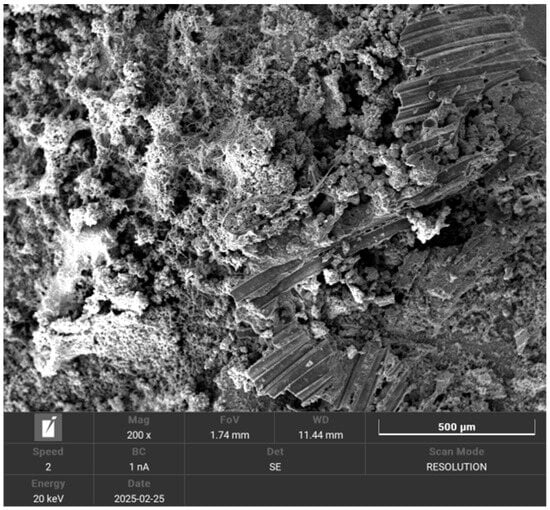
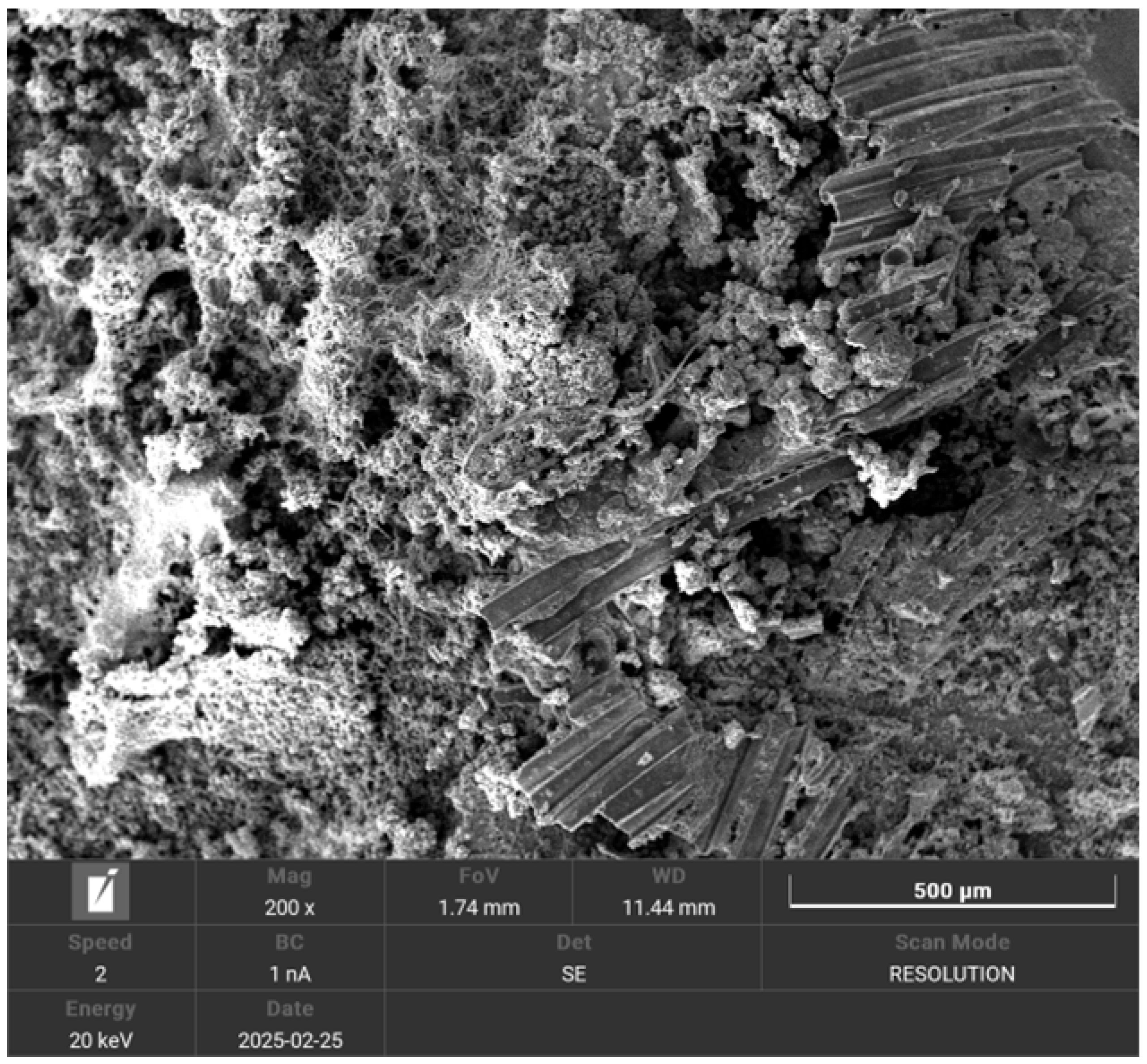
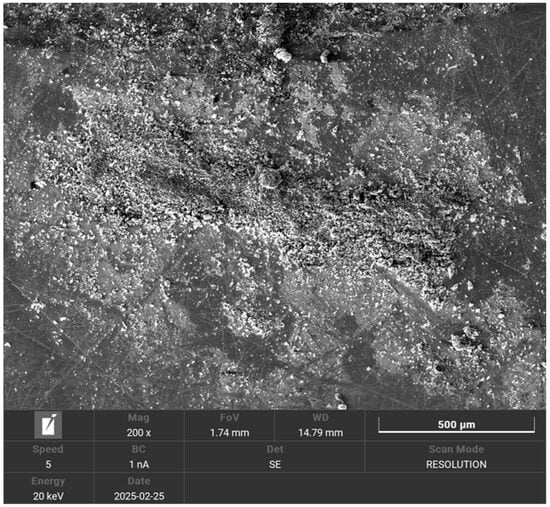
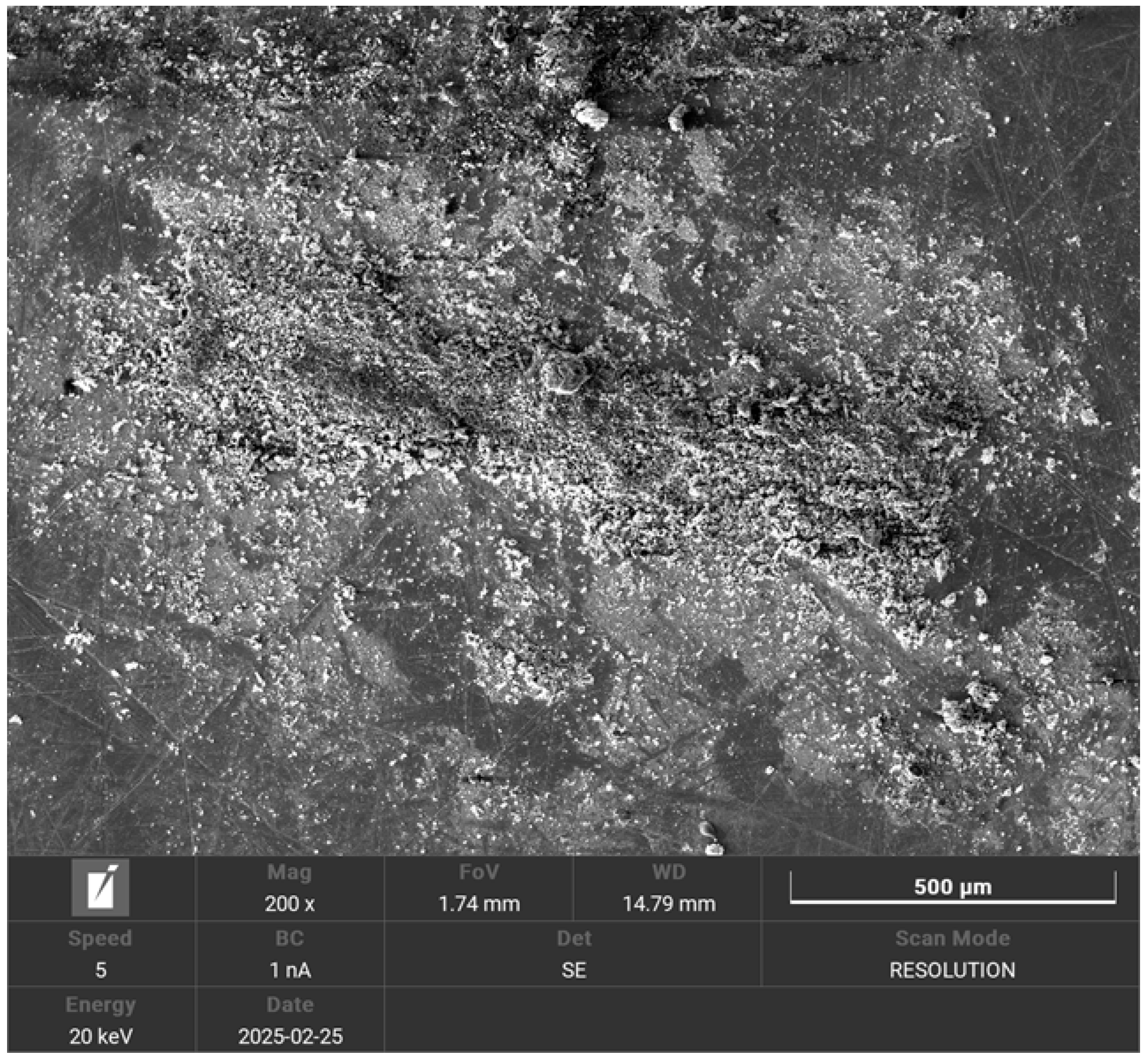
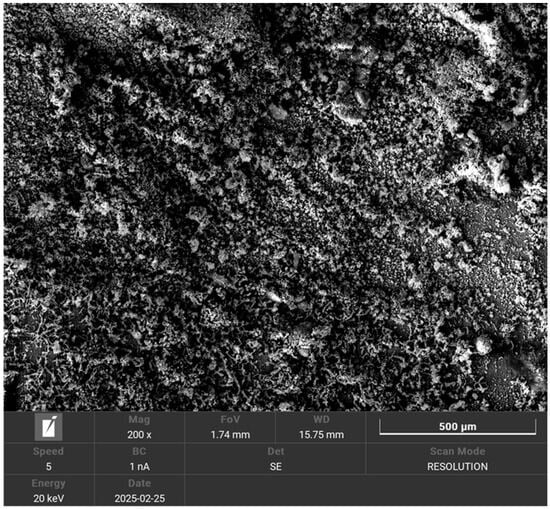
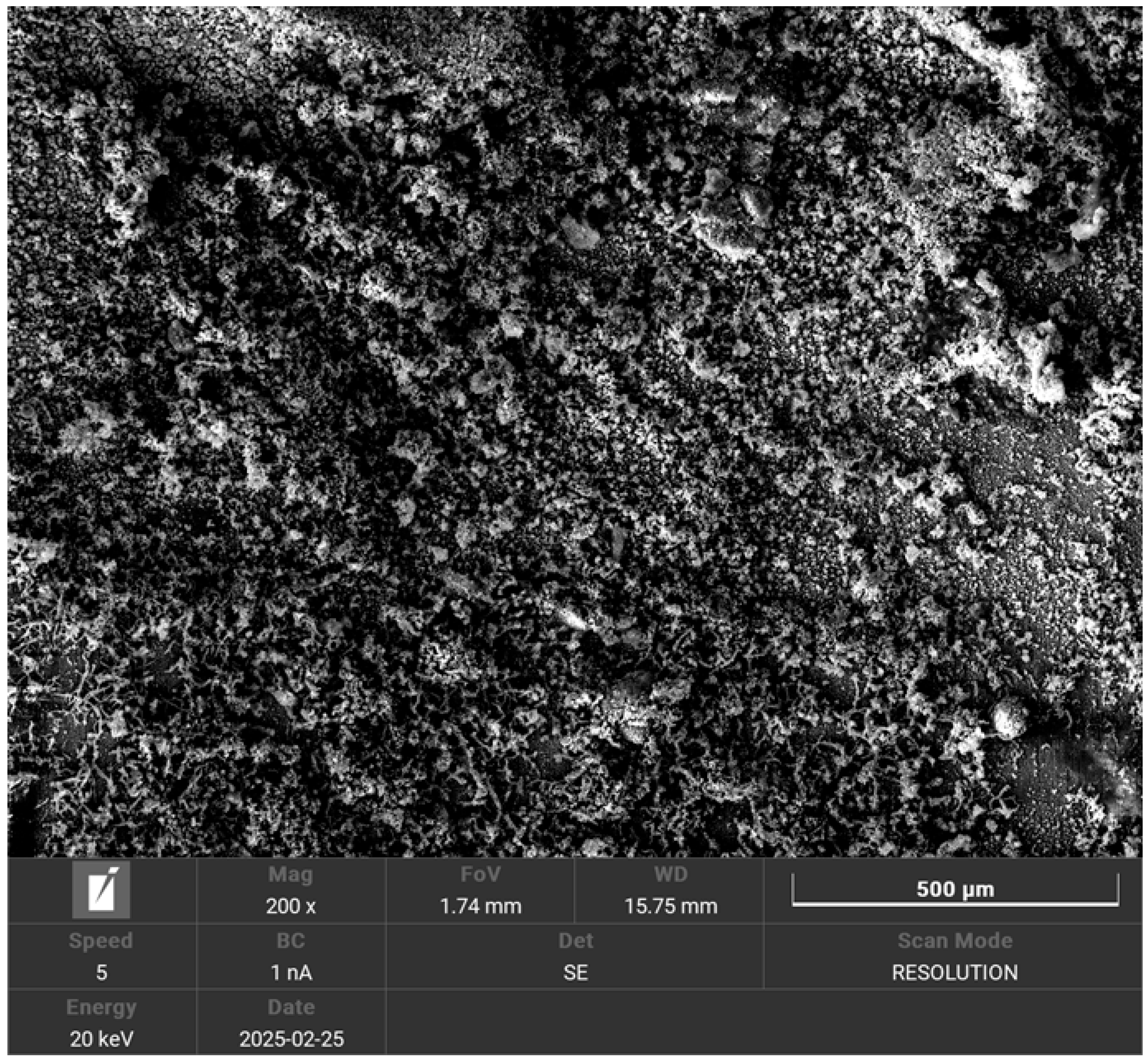
A detailed view of the deep corrosion from which the chemical composition analysis was performed is shown in Figure 2.
Figure 2.
Detail of deep corrosion−short-term laboratory exposure.
3.4.2. Laboratory Exposure: Long-Term Exposure to Sack 2 + ML-EM 10-1 Emulsion
With prolonged exposure under laboratory conditions, the changes were even more pronounced (see Table 5).
Table 5.
Long-term laboratory exposure—composition (% w/w).
Silicon was not detected, probably due to its oxidation to SiO2. Again, an increase in oxygen and carbon was confirmed. The chemical reactions were enhanced by the presence of pollutants in the laboratory environment. A detailed view of the development of deep corrosion is shown in Figure 3.
Figure 3.
Detail of deep corrosion−long−term laboratory exposure.
3.4.3. Outdoor Exposure: Short-Term Effect
Exposure to outdoor conditions brought further changes. There was a significant increase in oxygen and a decrease in iron. Surprisingly, calcium, which was not present in the starting material, has appeared (see Table 6).
Table 6.
Short-term outdoor exposure—composition (% w/w).
Contamination from the air or residues from production is likely. Elements such as Cr, Al, P and Ni were not detected—they may have been exported in oxides.
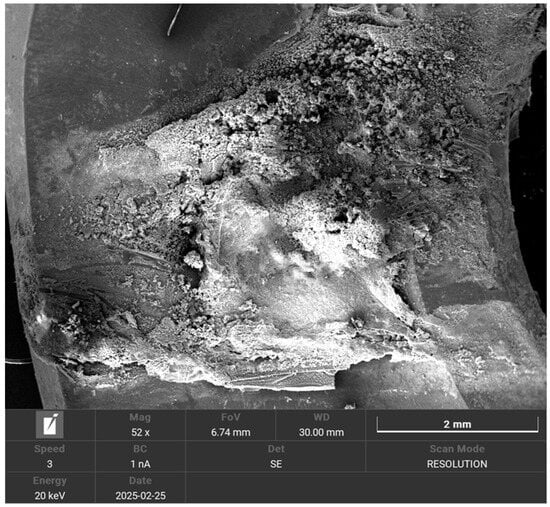
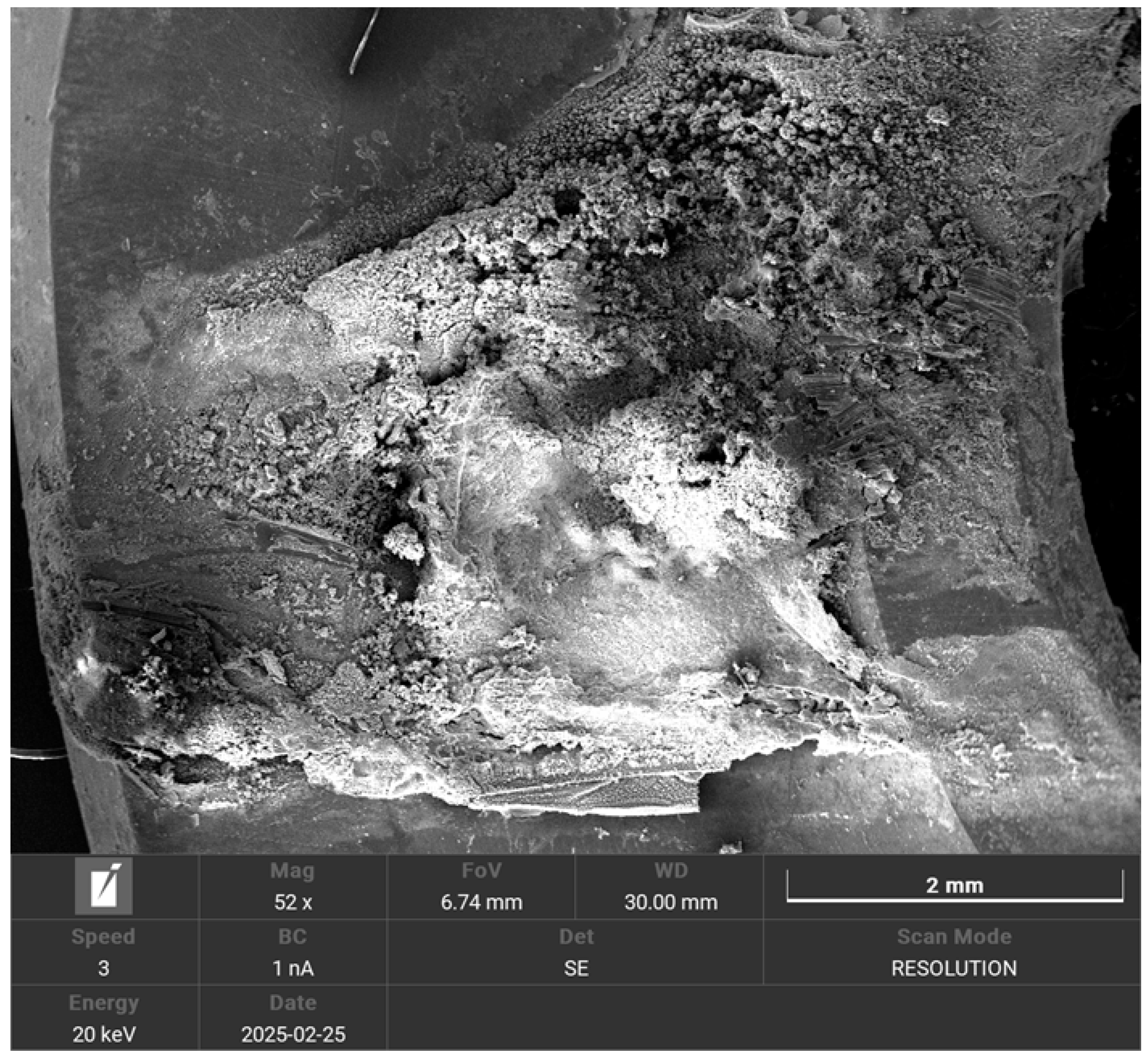
A detailed view of the deep corrosion of a ring exposed to outdoor conditions and treated with Sack 2 + ML-EM 10-1 emulsion is shown in Figure 4.
Figure 4.
Detail of deep corrosion of a turned ring treated in Sack 2 emulsion and ML−EM−1 anti-corrosion agent in an outdoor environment.
3.4.4. Outdoor Exposure: Long-Term Exposure
Prolonged outdoor exposure resulted in a further decrease in iron, a decrease in chromium and a higher proportion of oxygen, aluminum and carbon (see Table 7).
Table 7.
Long-term outdoor exposure—composition (% w/w).
The loss of chromium is due to insufficient passivation in the carbon steel, which led to its equilibration with the carbon and subsequent leaching. The presence of calcium again indicates contamination or interaction with the surrounding environment. A detailed view of the deep corrosion after prolonged exposure in the outdoor environment is shown in Figure 5.
Figure 5.
Detail of deep corrosion−long−term outdoor exposure.
4. Conclusions
Based on the findings, the following partial conclusions can be made. The first sign of localized corrosion is known as pitting corrosion. This type of corrosion affects only certain parts of the surface in the form of spots. This corrosion was visible after more than 24 h. However, the most common type of corrosion observed on the rings was contact corrosion, which occurred between the anti-corrosion wire where the ring was attached. Furthermore, during the experiment, spot corrosion was observed, which affects parts of the material in the form of random spots. No surface corrosion was confirmed during the analysis. In conclusion, the experiment demonstrated significant changes in chemical composition as a result of corrosion. Both laboratory and outdoor exposure resulted in oxidation, iron loss and an increase in non-metallic elements. The results confirm the strong influence of the environment on the degradation of carbon steel and underline the importance of appropriate corrosion protection.
Author Contributions
Conceptualization, L.B. and P.B.; methodology, L.B.; software, L.B.; validation, L.B. and P.B.; formal analysis, L.B.; investigation, L.B.; resources, L.B.; data curation, L.B.; writing—original draft preparation, L.B.; writing—review and editing, L.B.; visualization, L.B.; supervision, L.B.; project administration, L.B.; funding acquisition, P.B. All authors have read and agreed to the published version of the manuscript.
Funding
The publication of the manuscript was supported by VŠB-TUO, Faculty of Mining and Geology—grant numbers SP2025/014.
Institutional Review Board Statement
Not applicable.
Informed Consent Statement
Not applicable.
Data Availability Statement
The original contributions presented in this study are included in the article. Further inquiries can be directed to the corresponding author.
Conflicts of Interest
The authors declare no conflict of interest.
References
- Sil, A.; Kumar, V.N. Comprehensive Empirical Equation for Assessing Atmospheric Corrosion Progression of Steel Considering Environmental Parameters. Corros. Sci. Technol. 2020, 19, 174–188. [Google Scholar] [CrossRef]
- de Kerf, T.; Hasheminejad, N.; Blom, J.; Vanlanduit, S. Qualitative Comparison of 2D and 3D Atmospheric Corrosion Detection. Methods Mater. 2021, 14, 3621. [Google Scholar] [CrossRef] [Scilit] [PubMed]
- Baradnidharan, K.; Kumaran, S.T.; Uthayakumar, M.; Parameswaran, P. Comprehensive Review of Various Corrosion Behaviours on 316 Stainless Steel. Metall. Mater. Eng. 2020, 27, 115–135. [Google Scholar] [CrossRef] [Scilit]
- Koushik, B.G.; van Den Steen, N.; Terryn, H. Investigation of the importance of heat transfer during thin electrolyte formation in atmospheric corrosion using a novel experimental approach. Corros. Sci. 2021, 189, 109542. [Google Scholar] [CrossRef] [Scilit]
- Koushik, B.G.; van Den Steen, N. Review on modelling of corrosion under droplet electrolyte for predicting atmospheric corrosion rate. J. Mater. Sci. Technol. 2021, 62, 254–267. [Google Scholar] [CrossRef] [Scilit]
- Townsend, H.E. Status of a Cooperative Effort by the Automotive and Steel Industries to Develop a Standard Accelerated Corrosion Test; SAE Transactions; SAE International: Warrendale, PA, USA, 1989; Volume 98, pp. 928–940. [Google Scholar] [CrossRef] [Scilit]
- Soufeiani, L.; Foliente, G. Corrosion protection of steel elements in façade systems—A review. J. Build. Eng. 2020, 32, 101759. [Google Scholar] [CrossRef] [Scilit]
- Özkan, D.; Erarslan, Y.; Yagci, M.B. Wear and corrosion resistance enhancement of chromium surfaces through graphene oxide coating. Surf. Coat. Technol. 2020, 391, 125595. [Google Scholar] [CrossRef] [Scilit]
- Adler, D.P.; Hii, W.W.S.; Michalek, D.J.; Sutherland, J.W. Examining the rol of cutting fluids in machining and efforts to address associated environmental/health concerns. Mach. Sci. Technol. 2006, 10, 23–58. [Google Scholar] [CrossRef] [Scilit]
- Kazeem, R.A.; Fadare, D.A.; Abutu, J. Performance evaluation of jatropha oil-based cutting fluid in turning AISI 1525 steel alloy. CIRP J. Manuf. Sci. Technol. 2020, 31, 418–430. [Google Scholar] [CrossRef] [Scilit]
- Noell, P.J.; Schindelholz, E.J.; Melia, M.A. Revealing the growth kinetics of atmospheric corrosion pitting in aluminum via in situ microtomography. npj Mater. Degrad. 2020, 4, 32. [Google Scholar] [CrossRef] [Scilit]
- Wang, T.; Nymberg, D. A Comparative Study of Corrosion Test Environments at Three Proving Grounds; SAE Technical Paper; SAE International: Warrendale, PA, USA, 2003. [Google Scholar] [CrossRef] [Scilit]
- Van Den Steen, N.; Simillion, H.; Thierry, D.; Terryn, H.; Deconinck, J. Comparing Modeled and Experimental Accelerated Corrosion Tests on Steel. J. Electrochem. Soc. 2007, 164, 554–562. [Google Scholar] [CrossRef] [Scilit]
- Meade, C. Accelerated corrosion testing. Metal Finish. 2010, 98, 540–545. [Google Scholar] [CrossRef] [Scilit]
- ASTM B117-19; Standard Practice for Operating Salt Spray (Fog) Apparatus. ASTM International: West Conshohocken, PA, USA, 2019.
- ISO 9227:2017; Corrosion Tests in Artificial Atmospheres—Salt Spray Tests. ISO: Geneva, Switzerland, 2017.
- Popova, K.; Prošek, T. Mechanism of Carbon Steel Corrosion in Accelerated Corrosion Tests. Mater. Corros. 2025, 76, 486–509. [Google Scholar] [CrossRef] [Scilit]
- Kumar, V.N.; Sil, A. Assessment and spatial mapping of atmospheric corrosion amelioration using empirical equation considering environmental parameters. Corros. Eng. Sci. Technol. 2020, 55, 400–410. [Google Scholar] [CrossRef] [Scilit]
- CSN 03 8131 (038131); Corrosion Test in a Condensation Chamber. Česká Agentura pro Standardizaci: Prague, Czech Republic, 1973.
- ČSN EN ISO 683-17 (420240); Steels for Heat Treatment, Alloy Steels and Free-Cutting Steels-Part 17: Steels for Rolling Bearings. Česká Agentura pro Standardizaci: Prague, Czech Republic, 2015.
- ČSN EN 10204 (420009); Metallic Products–Types of Inspection Documents. Česká Agentura pro Standardizaci: Prague, Czech Republic, 2005.

Disclaimer/Publisher’s Note: The statements, opinions and data contained in all publications are solely those of the individual author(s) and contributor(s) and not of MDPI and/or the editor(s). MDPI and/or the editor(s) disclaim responsibility for any injury to people or property resulting from any ideas, methods, instructions or products referred to in the content. |
© 2025 by the authors. Licensee MDPI, Basel, Switzerland. This article is an open access article distributed under the terms and conditions of the Creative Commons Attribution (CC BY) license (https://creativecommons.org/licenses/by/4.0/).